DNFs means “Did Not Finish,” i.e., a driver fails to complete the race due to issues like mechanical failure, crashes, or being unable to continue. In Monaco, DNFs are common because the narrow track and close walls make errors and damage more likely.
Runoff is extra space next to the track that helps a car slow down if it goes off the road. If there’s little runoff, crashes are more likely to be severe because there’s less room to recover.
Aero is short for aerodynamics—how the car interacts with air. In F1, aero is crucial because it generates downforce (pushing the car into the track), which improves tire grip, especially in slow, twisty circuits like Monaco.
Tires work best when they’re at the right temperature. If a team can get the tires hot quickly, the car grips sooner—so it can accelerate and turn better right from the start.
A safety car restart is when the race goes back to normal after a slower period. It’s a tricky moment because the tires may not be at their best temperature yet, so getting traction quickly matters.
Term
geometry of the tires
“Geometry of the tires” here refers to how the tire’s shape and contact patch behave under load—how it deforms and where it touches the track. Teams tune setups so the tire contact patch works well, helping keep heat in the tire and improving grip.
The contact patch is the part of the tire that’s touching the road. If that area works well, the car grips better and the tire can perform more consistently.
Charles Leclerc is one of Ferrari’s top race drivers. The hosts are saying that even if Ferrari has been struggling lately, Leclerc still knows how to win races.
Lewis Hamilton is a very successful Formula 1 driver. The point of mentioning him is that a driver like him knows how to turn a good car into a win, even after a rough stretch.
The chassis is the car’s main frame. It’s what the suspension and steering attach to, and it affects how the car turns and stays stable—especially in tight, slow corners.
Paul Ricard is a famous race track in France. It has a variety of corner types, so it’s a good place to see how well an F1 car’s setup works in different conditions.
Person
Charlotte Clair
This sounds like the driver Charles Leclerc. In Formula 1, drivers are judged a lot on how fast they can be in qualifying—especially on a single lap.
“Pit stops” are when the car comes into the pits to change tires and follow the team’s strategy. At Monaco, when you pit can strongly affect whether you stay near the front.
Suzuka is a well-known F1 track in Japan. The point here is that it has lots of corners, so it rewards drivers who are good at turning—similar to Monaco.
Qualifying is the session where drivers set their fastest laps to decide where they start the race. The hosts are using qualifying results to judge who might do well at Monaco.
Person
Charles Leclerre
Charles Leclerc is a Formula 1 race driver. The hosts are saying he’s been very fast in qualifying and has a good chance at Monaco based on past results.
On many F1 tracks, the lap is split into sections called sectors. Being fastest in the first sector means he was doing especially well in that part of the track.
Pole position means starting first in the race. It’s earned by being fastest in qualifying, and the hosts are saying Leclerc has a strong history of getting it at Monaco.
Person
Louis Hamilton
The hosts are comparing Leclerc’s Monaco pole record to other big-name drivers. They’re saying Hamilton isn’t on the same specific pole-count list.
The world championship is the big F1 season title decided by points. The hosts are saying Leclerc’s Monaco pole record is rare even compared to other champions.
Term
raw power
“Raw power” means how strong the car’s engine is. It’s basically the car’s ability to make a lot of force to accelerate, even if other things like handling aren’t perfect.
Monza is a track that’s famous for going very fast, especially on long straight sections. It’s a good comparison point because it rewards power and top speed more than Monaco does.
Top speed is the fastest the car gets. Some tracks don’t give you enough long straight sections to use top speed much, so other things like cornering matter more.
Toto Wolff is the boss of Mercedes in Formula 1. When he talks about upgrades and race results, he’s basically explaining how the team thinks their car is doing.
The optimal racing line is the best way to drive through a corner to be fastest. If two cars get in each other’s way, they can’t take that ideal path and they end up slower.
Sergio Pérez is a Formula 1 race driver. The hosts mention him because he had a crash in qualifying that shows how hard that Monaco corner is to get right.
In F1, “not only out of qualifying” but “doesn’t race on safety grounds” means the driver is prevented from continuing because officials judge it unsafe. This can be due to car damage, track conditions, or—like in the next sentence—medical concerns.
Concussion protocols are the safety rules doctors use when someone might have a concussion. They can force a driver to stop racing and only return after medical clearance.
Active Arrow is an F1 tech that adjusts the rear wing while the car is running. The goal is to make the car stick better and go faster by changing how much downforce it produces.
Term
straight line mode
It means the driver is focusing on going as fast and as smoothly as possible on the straight sections. Instead of worrying about corner feel, they’re trying to keep the car stable and fast until the next braking area.
Stopping power is how well the car can slow down when you brake. If it’s weaker, you have to brake earlier; if it’s stronger, you can brake later and still make the turn.
They’re debating whether Monaco is more dangerous than other races. The point is that modern safety systems make crashes less likely to be fatal, even at Monaco.
The halo is a protective bar above the driver’s head. It’s there to help shield the driver from debris and some types of crashes.
Term
Macarena wings
In F1, teams use wings to push the car down so it sticks to the track. “Macarena wings” is a nickname for a particular wing setup, and the hosts are saying Ferrari won’t be using that exact setup this weekend.
Downforce is what makes the car feel “grippier” by pressing it toward the road. In F1, teams tune wings and aero so the tires can hold the car better in turns.
Compression ratio is how much an engine squeezes the air-fuel mixture inside the cylinder. Changing it can affect how efficiently the engine makes power and how safely it can run.
Tyre management means using the tires in a way that keeps them working well for the whole race. If the tires overheat or wear out too fast, the car loses grip and becomes slower.
Saudi Arabia is mentioned because the speaker is talking about recent races and results before Monaco. It’s part of the story of who’s been in great form lately.
Wheelbase is how far apart the front and rear wheels are on a car. That spacing changes how the car feels when turning and when hitting bumps. A shorter wheelbase often makes a car feel a bit more nimble, which can be helpful on twisty tracks.
A Mini Cooper is a small car. In this comparison, it represents a car that’s easier to steer and maneuver than a long limousine, especially at lower speeds.
High-speed cornering means going through a turn fast. Some cars can feel stable at slow speeds but start to feel twitchy or unstable when you’re going faster.
A front-wing upgrade is a change to the front aerodynamic element on an F1 car. The front wing strongly affects downforce and balance, so if it “isn’t working as it should,” it can hurt stability or cornering performance.
Red Bull is the racing team in Formula 1 that the speakers are talking about. They’re saying the team’s car might be a bit too heavy for Monaco, but Verstappen can still drive it very well.
F1 cars have rules about how heavy they’re allowed to be. If a car is heavier than it should be, it can feel slower and harder to change direction—especially on a tight track like Monaco.
Max Verstappen is the driver for Red Bull. The hosts are basically saying that even if the car isn’t perfect for Monaco, his talent could still help it perform well.
Qualifying is when drivers try to set their best single-lap time to decide where they start the race. At Monaco, starting position matters a lot because it’s hard to pass.
In racing talk, “nimble” describes how quickly a car can change direction and respond to steering inputs. On Monaco’s tight street layout, a nimble car can help drivers place the car precisely through slow corners and chicanes.
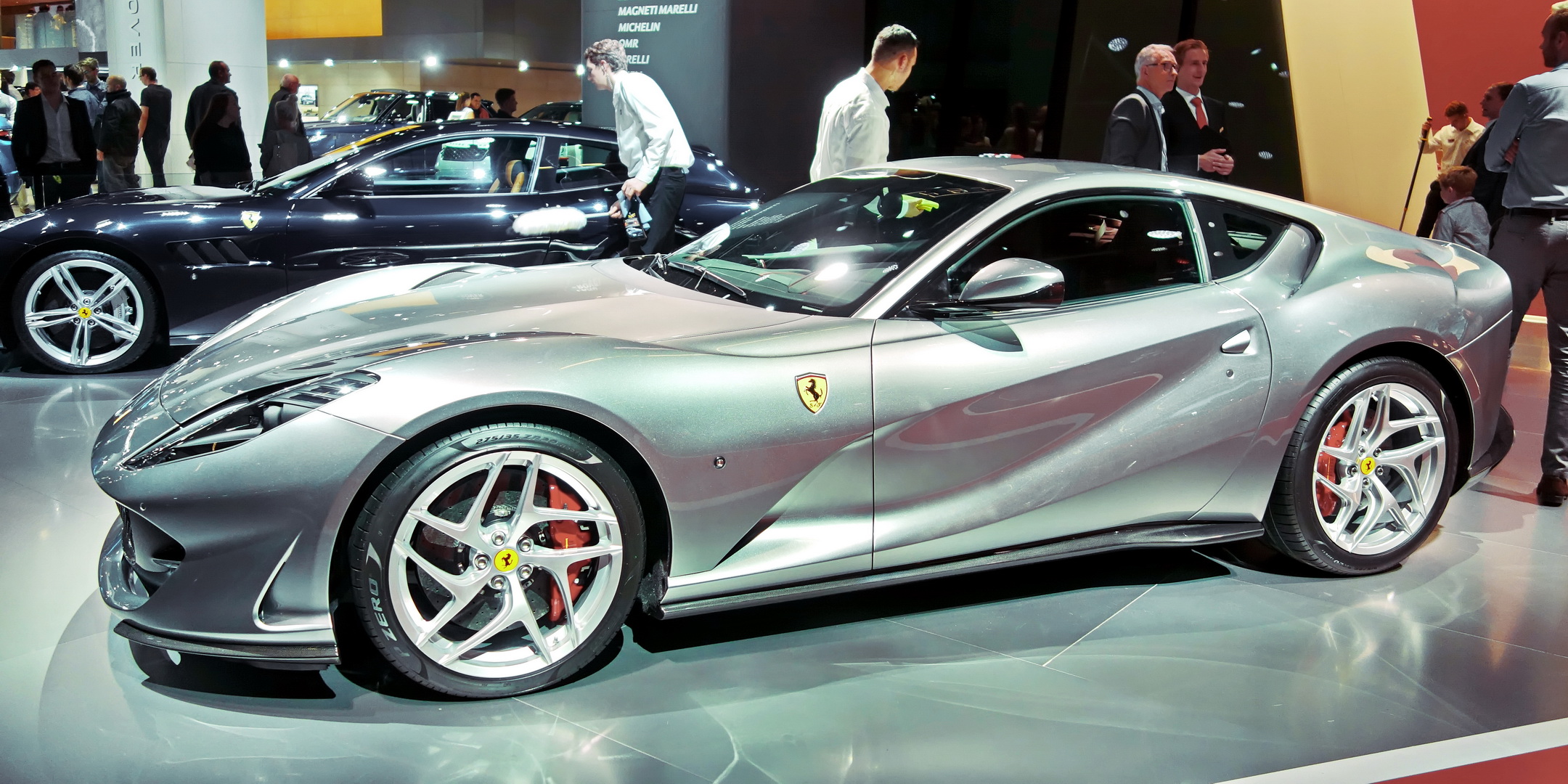
The Ferrari 812 Superfast is a very powerful luxury sports car made by Ferrari. It’s designed for quick acceleration and high-speed driving on normal roads as well as spirited trips. The podcast brings it up as part of a discussion about Ferrari performance and results.
Michael Schumacher was one of the most successful Formula 1 drivers ever. Here, the hosts mention him because he’s associated with a Monaco Grand Prix winning streak record.
Bernie Ecclestone was a major figure in Formula 1. In this story, they say he tried to qualify for the 1958 Monaco Grand Prix, but he was far off the speed of the field.
Jack Brabham was a famous early Formula 1 driver from Australia. Here they’re talking about how he defended his position at the end of the 1970 Monaco race.
It means the brakes were so strong that the tires stopped gripping and started sliding. When that happens, the car can lose control and slide toward the wall.
The Chevrolet Corvette is a sports car made for fast driving and track-style performance. The podcast mentions it in connection with tires, because the type of tire can change how the car grips the road. They also reference different Corvette generations, like the C8, to explain how things may differ on track.
LIVE
Thank you for listening to the late breaking F1 podcast. Make sure to check out new episodes every Wednesday and every Sunday
Hello and a very welcome to the late breaking F1 podcast presented by Sam sage and me Ben Hawking for a preview of
the 2026 Monaco Grand Prix. Sam, we're starting to get back into some serious F1 action. The European season starts properly.
Now we're going to have these races, thick and fast sooner rather than later.
You're European. You're a kind of speak.
Oh, yeah, you warm up.
My vocal warm ups.
I was going to say your European season starts right here in the way that does it on the X factor.
Absolutely. Conquered it back quickly.
It's good to get this really.
We have that whole chat about build up and getting together and I literally did what we said about hilarious.
Anyway, hello, it's Monaco week.
It's the most iconic week in Formula one.
Let's see how good it could be with these new regulations.
Let's see if we could turn over a new leaf and have a bigger fun this week and a bit of fun on this podcast as well.
We're going to be playing true or false Monaco GP edition later on in the show.
Oh, good. So you've set me up with a logo 50 50s where famously I am the worst in the world that gets in 50 50s.
I've got faith in you today.
Don't know why I got faith in you.
I reckon you got it wider.
We've got under pressure submissions, bold predictions, our poll 123 predictions as well
and everything to do with the Monaco GP.
Of course, because from Montreal, we go to Monaco for round six of the 2026 season
with teams set for one of the most unique challenges of the year,
as well as the obvious glitz and glamour of the principality.
Monaco is a place steeped in F1 heritage with the race going back nearly 100 years at this point
and was the second ever race in the history of the F1 championship back in 1950.
The track, though, has remained relatively unchanged over the years
and presents itself as a test for the car's low and medium speed cornering.
It also presents itself as a test for overtaking, which means qualifying is often pretty essential.
We've had a few wet Monaco Grand Prix in recent years.
This ain't going to be one of them.
The current forecast is beautiful sunshine about 26 degrees.
That's 79 Fahrenheit for our American friends.
Mercedes have won all five races so far this year, with Antonelli having won four in a row.
But they don't come into this race as favorites, according to the bookmakers.
Instead, that privilege goes to Ferrari.
So before Sam, we get into maybe some of the chat about Leclerc and whether he can win on home soil
or Hamilton claiming his first ever win a proper race win for Ferrari.
In terms of the car itself, do you think Ferrari do have a car that can win here?
Firstly, I'm really glad that it is going to be a dry race.
In previous years at Monaco, I will applaud for a big rain or something to mix up the race
so we get something different.
It's the new regulations.
The cars are lairy.
You've seen how often we've seen mistakes happen.
The race we've just had, of course, had so many DNFs, lockups, spings,
you know, moments that you wouldn't have expected normally.
Monaco is terrifying.
The walls are so close.
There's no runoff almost anywhere around this racetrack.
And I think that a dry challenge in these new cars where they're able to push
could be really fascinating.
So really exciting to see what is going to be done in the dry weather here at Monaco.
Equally, the cars, as you mentioned, are so important.
It's unique in the sense that maybe Ferrari could actually have the upper hand over
someone else. And why?
It's all about chassis and aero here.
It's all about that grip.
And something that's come out most importantly in terms of the research of the first few
Grand Prix is that Ferrari have a very unique way of warming up their tires, firing up their tires.
And that's part of the reason why on these safety car restarts and Grand Prix starts
themselves, they get away so much better than the competition around them.
You look at how Russell specifically, but also Antony and the McLarens,
haven't been able to get off the mark too fast.
The Ferrari guys have both on pretty much all safety cars that we've had gone forward.
They passed someone, most notably George Russell in the most recent races.
And that's because the car is able to get off the mark quickly.
They've got something going on, whether it's the geometry of the tires, the brakes or the
suspension is allowing heat to remain in those tires.
So a track like Monaco, which actually it's really hard to keep walked in those tires
and a track that requires a lot of shatty downforce, which apparently the Ferrari
have a fantastic car build.
The engine isn't important here.
And that's why suddenly you see Ferrari jump up to being a particular
favourite for the bookmakers.
Yeah, I think they might have a car that can get this done.
But it's Ferrari we're talking about.
So I'm not going to put my mortgage on it.
They are magicians, a Ferrari in that they managed to turn the winnable into very much
not winnable at a moment's notice.
And the 27th of October, 2024.
What might be significant about that date?
It might that be the last time that they won a Grand Prix?
It might be the last time they won a Grand Prix.
And it was so long ago.
It was neither of their current drivers that took it.
That was Carlos Sainz back in Mexico.
Also, the week before that, the 20th of October was the last time
Charles Leclerc won a race.
And I'm still maintaining I'm his lucky charm because we were there at that race.
I bought a Ferrari cap for that day and he won.
He's never won since.
I think they should start flying you out to Grand Prix with that cap.
I don't know if it's you or the cap, but either way, you have to stay together
and you must not separate it because it is the cap and you are screwed.
They will just take the cap.
Yeah, exactly.
I'm playing onto the cap's glory, aren't I, really?
But in theory, they've got something they can fight with.
But it is tough to break the habit of losing, which sounds really brutal to Ferrari.
But as a lifelong loser, we really know this sort of stuff.
This is where we're experts.
It's just Ferrari haven't actually been in winnable situations for a long time.
I'm not even talking where they've been in a winnable situation and not one.
They've just been languishing for so long, consistently, really last year
in fifth and sixth place finishes that they're not used to being in these fight
for victories and that I don't think Leclerc and Hamilton would have forgotten
how to get it done. But equally, the team might be a bit rusty in that regard.
So that is a bit of a concern.
But yeah, I think the car itself has a real chance.
And you've already mentioned the chassis of Ferrari looks very good this year.
Low speed corners look really, really strong.
The irony, of course, in that is that Enzo Ferrari, of course,
the man himself used to always say that aerodynamics are for for people
who can't build engines. Ironically, that is now you Ferrari.
But yeah, a real 180 180 degree turn there.
Right. But yeah, I think they can have a chance to get it done.
I think they do have a chance to get it done.
The fact that we haven't seen Ferrari in a season long title fight, six watt 2018.
Now we're Sebastian Vettel.
Hang on a second stab at it.
I mean, you've got half a season under Charlotte Clair,
where he was up against Max Verstappen and that ended in the wall at Paul
Ricard with the big famous scream that he does so well.
That frustration still goes across history of four in a one.
Poor boy, poor boy.
That's why he's still there.
He's just got just can't leave now.
He's waiting for redemption at the French GP.
That's never going to happen again.
They're never going to renew it until he retires.
And then they'll bring it back the next year.
This is the closest thing. It's his home Grand Prix.
We've had some momentous moments in Monaco.
And one of those was Charlotte Clair, of course, taking the victory
is home Grand Prix.
There's every chance he could do it again.
Qualifying is a mastery round here.
You need to be the creme de la creme of one lap pace to make it work round here.
And guess what Ferrari have?
The best qualifier of all time.
And arguably the current and Lewis Hamilton and Lewis Hamilton.
That is horrible.
You should have a time out for one minute.
All right, go.
You know, Lewis Hamilton has the most polls of all time
across his entire career.
And we've seen that with this current Ferrari car, the way it hustles,
the way you've got to move it a lot more on his profound confidence
that he is able to now deliver better.
He's beating Charlotte Clair and qualifying more regularly than he ever has.
I'm not saying it's consistent, but it's much better.
Charlotte Clair, when he's happy with the car and the regulations,
which currently isn't right now, he's able to deliver one lap pace,
which I think is almost unmatched up and down the grid right now.
And it matters most here on Saturday in Monaco.
And I think that Ferrari of the car to actually give them a real fighting
chance if they can get one of those cars on the front row.
Next to her Mercedes, next to Max Verstappen, of course,
who go back and watch his lap from a couple of years ago,
because that third sector alone is absolutely phenomenal.
And I do think that actually the speed they get off the line at,
they have every chance to then go on and leave this Grand Prix.
As we mentioned, overtaking is very, very limited.
So if they can stay in front, there's a real chance
if they get the pit stops right and that man with the blue thing,
he doesn't really appear in the pit.
Oh, God, your number one nemesis is back.
Stay away from me and from Ferrari.
I generally think that they can have a chance to go on and win this race.
Yeah, I was looking back at some of the other qualifying sessions
we've had so far this year, and obviously Ferrari haven't been
necessarily fighting for pole positions.
But one thing that did catch my eye was going back to
the qualifying session we had at Suzuka, when Charles Leclerre
didn't end the session brilliantly well.
He was the fastest driver in the first sector, all throughout qualifying.
Hamilton was second, proving that that Ferrari was great.
In that small part of Suzuka, very specifically, why that's important,
that's where all the corners are, and it's not a straight line section.
And that is what you're going to get with Monaco this weekend.
So that should give them some encouragement.
And Charles Leclerre in particular, he is an understandable favourite here.
Like he, if we put to one side the horrid luck
that he's had here at times over the years, he's been very quick here.
Pole position in 2021, only his third visit to the circuit, by the way,
in an F1 car pole position that year, pole position in 2022.
And finally, 2024, he gets pole and converts it to the win.
Only nine drivers all time have three poles or more here.
So he's in a very elite club, like Louis Hamilton is not on that list.
Sebastian Vettel is not on that list.
Max Verstappen is not on that list.
Fernando Alonso isn't.
And you might say, well, they're all on another list,
which is they've won a world championship.
But yeah, Charles Leclerre, that is pretty elite company that he's clear of.
So I was to say, so early in his career, but he's got so many years left
that he's got many more years to add to those three pole positions.
So he does understandable favourite.
I can understand why the bookies are backing here.
But on the flip side, they're also benefited by the fact
that the strength that Mercedes have is raw power.
You joked about Enzo, you know, being like aerodynamics
is for those that can't make engines.
Famously, Mercedes can make an engine and they make them very quick.
And you know what?
Useless around Monaco, top battery power, useless around Monaco.
There's only one part of the racetrack where you go, I think,
into weight's gear and that's through the tunnel.
And you're straight back out of it again anyway.
So it is almost irrelevant that you can go quickly
in a straight line around Monaco.
So the balance has been equalised.
You know, they are on a level playing field for the first time,
I think all season.
Well, I think and apologies if these numbers are wrong.
You don't go over 180 miles an hour anywhere at Monaco.
And that was with DRS last year, so that might even be lower this year.
But Max Verstappen, if you remember,
he's completed the fastest race of all time at Monza.
I don't think anyone's ever mentioned that.
The average speed he had at that race was 164 miles an hour.
So the average speed at Monza is not far off being quicker
than the top speed we have at Monaco, just to prove your point.
In perfect conditions.
Yeah, yeah, yeah.
In perfect conditions.
Right, that's on a perfectly dry day with assistance,
nothing getting in the way on the right tyre.
And Batchery has been a real talking point as well this season.
And Batchery won't be a problem here at Monaco, of course.
There's so many slow speed corners, breaking zones.
You never get up to full speed.
With theory, there shouldn't be any forward super clipping.
So if qualifying again is going to be more outright,
it should be here over most other places again,
benefiting the likes of Charlotte Clair and Lewis Hamilton.
So if you were to stack the deck, it shouldn't be very much on Ferrari's side.
But that is the fate of Ferrari.
And they will do things that hurt all of us in the soul.
They like doing that a lot.
Mercedes, though, even though we are looking at a bit of a unique challenge at Monaco,
there's a reason why they have won every single Grand Prix this season
and most of them very comfortably.
They introduced upgrades at Canada, a lot of which were targeting downforce,
which will be relevant for this weekend.
So I think it would be, to quote Mr.
Harry Yead, like, rule them out of your peril.
Like, they are going to be in this fight somewhat you feel.
Can they keep winning?
Well, I mean, yes, the answer is yes.
I think the question is, can they overcome such a unique challenge?
And Mercedes, even through their highly dominant era,
doesn't have particularly massive success at Monaco.
You know, they were regularly overrun by the likes of Red Bull, who beat them here.
I think Ferrari beat them here as well during their long run here.
Hamilton has only won here twice in his whole career.
And he's won it pretty much every... Is it three?
I think it might be three.
Every single racetrack we pretty much visited,
Hamilton has some kind of dominant record, six, you know, 20, 20 years back.
So the fact that he's being so down on his luck when it comes to Monaco tells you
it's really not being the focus of Mercedes.
And understandably so.
We should rather be done at Monaco and not win anywhere else.
Or go, you know what, we'll chance our luck.
We might get a good result at Monaco,
but I'd rather win at the other 23 Grand Prix this season.
So I can see why they don't focus on a Monaco build.
And actually, this looks at a challenge where others might rise to the top.
Do you remember how I said massing?
I think in 2023, Fernando Alonso was one rubbish pit stop away
from winning that Grand Prix.
Oh, I remember when they were actually OK.
Yeah, yeah.
I had that one season.
Oh, yeah.
Yeah, that's a shame.
It's a good man.
That feels a long time ago.
It does. Anyway, the same is who we're talking about.
Kimmy Antigelli, he's won four in a row.
There's only two drivers in the record books who have won more races in a row
than Kimmy Antigelli at this point.
Lewis Hamilton is on five.
Max Verstappen is on nine.
So he's currently third alongside Fernando Alonso.
Current drivers, yeah.
Yeah, in terms of current drivers, one in a row,
which is pretty mega that he's got alongside Lewis Hamilton
if he wins the Monaco GP.
It shows you just how potent that line appears,
despite being so young, so fresh.
The car is sensational.
And George Russell on the other side will be looking for...
He's in his Anglican Skywalker era.
Pure vengeance.
He's turned into the dark side.
You saw the reaction of the steering wheel as he threw it out of the car in Canada.
He will be hungry like the WOLF, the Toto WOLF, for a victory.
And he needs it now.
Master Anakin.
That's quite crofting, that hungry like the Toto WOLF.
Yeah, a little bit. Sorry.
I was going to try and soften the blow, but no, that's pretty cropped.
It was one of the many games I was associated with on Patreon, so it's fun.
Very true.
Yeah, I mean, away from the result that they had in Canada,
which obviously wasn't perfect based on the Russell retirement,
the Mercedes upgrade to me seemed to work pretty well.
Like, it wasn't an absolute unmitigated success,
and Toto Wolf has kind of said that afterwards.
He's been quite cautious to say that we were quite good at Canada last year,
and McLaren weren't in the fight,
so we're not 100% sure these upgrades are working as they should do.
But given they had both of their cars scrapping out front
and the Stappen and Hamilton couldn't catch up despite that,
you think, you know, if Antonelli and Russell are fighting all the time
and they're taking away the optimal racing line from each other,
they should be slowing each other down,
and they kind of weren't relative to the competition.
So I still think they'll be pretty strong.
Antonelli, like you say, is looking to,
not only in terms of current drivers,
look to really get up there in the record books.
Only nine drivers all time have won five in a row, so he would be number 10.
And Russell did look much better in Canada,
even if the result wasn't there.
I think this is still fair game for Mercedes.
They could very well...
Yeah, team who has won five in a row might win six in a row.
Massive shock.
Yeah.
Antonelli will need to learn from last year, though.
Crashing Q2.
He could go too well. Yeah.
Megas raced a lot harder.
Couldn't get back into the points properly,
but we don't have the silly two-stop rule that we did last year.
We are back to normal strategy,
where you won't have a teammate just backing up the entire grid
and then swapping over again, so it can beat them fast.
It will be most likely a one-stop race,
unless there is a safety car,
unless we do happen to get some rain, it feels unlikely.
It will be a one-stop shootout.
The picker have got a lot of work to do.
It couldn't have got me more important anywhere than here.
It'd be fascinating to see who gets that right.
We've seen plenty of Monaco Grand Prix lost in the pits, and...
Is Valtteri Bottas still there?
He might be, you know.
But yes, you're right.
They won't have to at least make double the pit stops
that they had to last year.
F's in the chat for the two-stop, gone before it's time.
No, go F's in the chat. I'm like, you're gone.
Bye-bye.
Let's take our first break on this episode.
On the other side, we're getting into some of the rule changes
at Monaco here.
Support for today's episode comes from Square,
the all-in-one system that makes running a business simpler.
Starting a business is exciting.
Managing payments, inventory, staff, scheduling,
online orders and reporting, that's the hard part.
Square brings it all together in one connected platform
so business owners can spend less time fixing problems
and more time serving customers.
I always notice when a business uses Square.
Places like SOS Coffee in London, it just feels smoother.
It's quick checkout, easy receipts,
everything works the way it should.
Square keeps everything synced in one system.
You can take payments anywhere, track sales automatically,
manage your team and even access your earnings faster
with Square Banking.
It's built for businesses of all sizes,
whether you're running a single shop
or expanding to multiple locations.
No complicated setup, no hidden fees
and no need for an IT department.
Businesses using Square online earn 36% more revenue on average
and more than 77% of invoices have paid within a day.
If you're starting a business or running one
that deserves better tools,
Square helps you sell, manage and grow without slowing down.
Right now, you can get up to $200 off Square hardware
at square.com, forward slash go, forward slash late.
That's S-Q-U-A-R-E dot com slash G-O slash L-A-T-E.
Run your business smarter with Square.
Get started today.
Welcome back, everyone.
We touched on this a little bit before the break,
but to get into it properly,
active aerodynamics will not be used this weekend
after the FIA opted against it on safety grounds.
Concerns were raised that the cars could become
too fast on the run out of the tunnel
where runoff areas are quite limited.
As a result, the race will be contested
with fixed aerodynamic settings and no straight line mode.
And it marks a significant departure, of course,
from previous years, given DRS
is also no longer available.
I was thinking, Sam, obviously we have these races
where DRS wasn't enabled in previous years,
but this must be the first time since the end of 2010
that we've gone into a weekend
knowing that active aero will not be a thing.
Yeah, over 15 years since we had a dry race
without any form of active aerodynamics,
which is crazy.
The last time we had this, I was also 15 years old.
So it's a little while ago, just a few years,
but a little while ago, since we saw a rear wing pop up
and then pop down again during a straight.
What do you think of this?
Do you think it's a good show?
Do you think the safety is the right call,
or do you think maybe they're being too cautious?
I don't love the decision, personally,
in that I completely get the safety aspect of this
because the runoff areas are, as I mentioned,
quite limited as you get out of the tunnel.
You are obviously going from, I don't want to say nighttime,
but the darkness of the tunnel.
The fresh man of the tunnel.
The night night of the tunnel to the day of the outside world.
So it is a difficult one to get right,
and we have seen plenty of incidents at that corner.
The one that immediately springs to mind
is Sergio Perez from 2011, I think it was,
where it was a qualifying one.
He goes straight across after hitting the wall
on the right-hand side,
and he is not only out of qualifying.
He doesn't race on safety grounds,
and two weeks later in Canada,
he also has to withdraw because of concussion protocols.
So I understand the safety aspect of this,
but I think with Active Arrow,
at least the way I understood it when it was introduced
or it was announced to be introduced,
was that outside of just being the cars will be quicker
because in a straight line,
they will be optimized through the corners.
They'll be optimized.
There was also going to be something
of a strategic element to this.
Like if you want to risk things,
if you want to risk being in straight line mode longer
than someone else, that is your prerogative,
and that's your decision,
and you take whatever comes from it,
the good and the bad.
But it feels like, and it's not just this decision,
it feels like there isn't that strategic element,
which I find a bit disappointing.
Yeah, I ranked this a BFB.
Big, fat, boo.
Oh, no, sorry, not him.
No way.
Okay.
I hate this.
We're racing at Monaco.
If you're worried about a few extra miles per hour
on a straight line and a slight adjustment in stopping power,
you probably should be racing at Monaco at all
because they're still doing 175 miles an hour
hurtling towards essentially a metal wall
with some tires in front of it.
It's still incredibly dangerous.
The run-offs are still incredibly small.
I get why they are slightly concerned,
but the cars, the crash cell,
it's phenomenally safe these days.
If you're not going,
if you're going to worry rather about Monaco safety,
you should worry about that as a whole.
And actually, we raced here with DRS.
We've raced here where the cars are worse.
We raced here without the halo.
And now we're deciding now is the year
that actually the decision is too unsafe.
I just think it's a bit of a cop-out
and I'm not here for it.
We've seen enough accidents at Monaco
in modern Formula One,
where people like you mentioned with Sergio Perez,
they're impacted.
But they got out.
They were able to walk away.
They were fine.
They came back.
We ended up seeing them race.
It could have been far worse,
but the safety of Formula One is so good now
that actually I think we can mitigate it.
I think we can bypass it.
I am very much disappointed
that we won't see drivers
being able to play the game
to kind of push others along
to see who can be gutsy enough
to kind of run that straight line mode
into the braking zone
and a little five meters further
than those around them.
That might make up one hundredth of a second,
which might be enough to put them on pole position.
It all matters.
And that is what Formula One is great for.
And now we've been restricting in that sense.
That fine line between bravery and stupidity
should be tested.
And I think too frequently,
it isn't being tested at the moment
amongst these F1 drivers,
which is a bit of a disappointment.
Can you remember the Catrae's engineering sanity?
Oh, yes.
That's what we used to run on.
Now it does feel like it's like
engineering sanity,
but we've also got a bit of a lead
so we can tell it to go back to bed
when we're done with it.
Engineered sanity doesn't quite
have the same ring to it, does it?
An architecture that is just normal.
That's just how we all live
on a day-to-day basis.
I feel like the impact of it is going to be...
of not having this
is still going to be relatively limited
just based on...
We now know, obviously,
that the Macarena wings, for example,
the ones that Ferrari have got,
they won't be in effect this weekend.
But I imagine the setups
would have all been relatively similar anyway.
So I don't think it's going to change too much
in terms of pecking order
or what the teams are intending to do.
All of the teams are still going to be
100% all out downforce.
That's not going to change.
Yeah, exactly.
Agreed.
If you could put a zero to 100% setting
for layman's terms on a wing,
it will be at 100% for every single car.
Yeah.
Do you think any team is going to opt for
a Monaco-specific front wing?
Sometimes we see with the likes of Monaco and Monzo,
which are completely opposite ends of the spectrum,
they are such a unique challenge
that sometimes teams like to bring upgrades
very specifically for that race.
Can you see any team doing that here?
Yeah, it's an interesting phenomenon
that we're getting in Formula One
where certain events,
Monzo being the main one,
you'll see what is usually dubbed the T-Trait,
the T-Trait rear wing,
where it is so tiny,
and it's this flat line that sits on the top of the car
that you will just pop your cup of tea
on the top of it, and that's all it can hold.
I feel like a T-Trait wing is going to outlive T-Trays.
Do you think so?
It's not having them be restaurants and things.
Yeah, it's just going to be at some point,
it's T-Trays, what were they?
Hang on, here comes that robot with my cup of tea
on the T-Trait wing that pops it off to your table.
I don't think we'll see a total extreme.
I don't think we'll see, you know,
the biggest rear wing,
you know, like you sometimes get boy racers
to put a rear wing on like a Nissan Micro,
it's the size of the car.
I don't think we'll see that, for example.
That's so sexy.
Yeah, yeah. You know what, when I feel lonely,
I go down to a B&Q car block at night time,
that's what I hope to say.
Good.
Oh, good. Anyway, you won't,
I don't think you'll see like a custom Monaco wing,
but I do think you'll see a rear wing that will feature
similarly across high downforce racetracks.
So for example, the Hungarian Grand Prix,
I think will probably be another event
where you'll see it come to fruition.
Qatar might be a similar one
where it's a very corner-heavy racetrack.
There'll be instances where it'll be very similar,
but I don't think you'll see a one-off only on a team.
I don't think it's worth the investment cost
for a one-off wing.
I agree with you.
I'm doubtful these teams will go down that development path,
and it's going to be really funny when this episode goes live
and people are able to check the upgrade log
and see that all the teams have done this.
I agree with the reasoning that you laid out there.
We are in year one of these regulations,
and because of that, a lot of these upgrades
need to be pretty generic.
Yeah, there's just so much time to be found across the board
that wasting time on one specific upgrade
that is only going to impact one race.
There will be tweaks, no doubt, from all of these teams,
but going too much on one upgrade,
I can see that happening in future years,
maybe not this year.
We've got McLaren who are reportedly
not bothering with a Monaco upgrade,
and they'll make the most of what they have already.
Ferrari have an upgrade coming in Spain,
which is, of course, the race directly after Monaco,
so it feels unlikely they'll do anything here
as a bit of a stopgap.
And you look at someone like Red Bull,
who are still operating something like
six to seven kilograms overweight.
They're going to be targeting that,
you would think, far more than something very Monaco specific.
I mean, similar to maybe Aston Martin as well.
Aston Martin have got too many things to fix
to be worried about what's going to work here.
This whole race has got their thought process at all.
Speaking of McLaren, I know you love this chat.
They've got another livery out, mate.
They do.
It is their 1,000th Grand Prix in Formula One.
Have you seen it? What are your thoughts?
I have seen it. Not only is it their 1,000th Grand Prix,
it's actually their 1,000th best livery.
That is one of the best burns I've ever heard,
and I will not speak any more on the matter.
It's all flighted.
I actually would rather just did that for their normal livery.
I love that they have the retro ones
that they've done in previous years.
And now they don't. don't do that.
Where's the white with the green wing
and the green stripe down the middle
that you could have done for a 1,000th?
They've done some belters here.
Yeah. Remember the Sanger-specific livery they had here
and the Golf livery they've done here?
Yeah. The Golf one was brilliant.
I appreciate they can't do that now
because it's Golf 4 with Williams.
But still, there's so much you can do.
They've had some cracker liveries in the past.
They could have done the bloody MP4-4.
Right? That's not brand-specific.
Oh, Kerski, that's a very good point.
Maybe they've thought of that.
Oh, what, that it's technically not their 1,000th race
because they didn't start China?
Yeah. Yes. Yeah, I know what you mean.
Yeah. Okay.
Yeah. Which is quite funny.
Let us know if they thought about that.
You see that somewhere.
But people are pretty fuming as well
that McLaren have gone through a whole history book
on their social media showing off some of their biggest moments.
And they've been teasing this like chrome-esque style
for the last week.
And then they've delivered a papaya McLaren
with like a black check and flag on the side.
I'm not going to lie. It's pretty weak.
Yeah. I said before we started recording
that I didn't have anything negative written down in my notes today.
Forgot about one thing. Apologies.
Tomorrow, though, there's apparently a new Aston Martin delivering coming.
Oh, great. Yeah, that'll source it.
So, you know, when you don't see that throughout the weekend,
at least it might be nice.
The only thing better than a slow green thing
is a slow slightly different from the green thing.
Great. That's, I've heard that before, actually.
Yeah. Yeah. It'd be interesting to see what that looks like, though.
Speaking of McLaren, do you think they can feature
in the conversation for the win this weekend?
Well, that's really interesting
because the compression ratio, of course, is coming to effect here.
So, Mercedes Engings are going to be, in theory, reduced
in their overall output of power.
But as we've already mentioned,
Monaco doesn't really come under that effect.
It's not really relevant here.
And some have argued that McLaren
have actually got a better chassis than Mercedes,
but they don't understand the engine
in the same way Mercedes do,
so they can't extract the full power of it that Mercedes can.
Therefore, where power is most limited
and chassis and tyre management
and the aerodynamics of the car are most important,
there is a real risk that Mercedes may end up being
the third fastest team,
rather than just maybe the second or fighting for first.
I do think they've got a good chance here.
Both McLaren drivers have previously done a right here,
although Piaz could have a bit of a stinker here last year.
But Norris was very good.
So, I do think there's a chance they could challenge.
Norris was very good last year,
at a time where he needed to be very good as well.
If you remember the situation in the championship
coming into Monaco last year,
Piaz was on this brilliant run where he'd won
Saudi Arabia, he'd won at Bahrain,
I'm missing one in there as well,
where he won three in a row.
So, Piaz was very much in control of the championship
and Lando Norris was kind of needing a big win over his teammate
and the entire field.
And he delivered an excellent weekend.
But Piastri has formed here as well.
I know last year wasn't great.
The year before, he was challenging Charles Leclerc
for that win.
He was the one in contention to win that thing.
And arguably maybe should have done.
He had, I think I remember this correctly,
he had the best ideal lap in qualifying that weekend.
And if he'd put it all together,
maybe he gets the pole and goes on to win it.
So, both drivers, I think, have enough form here
to show that they can do something.
And in terms of the McLaren itself,
you mentioned that maybe the chassis is pretty good.
They have the shortest wheelbase on the grid at the moment,
which is quite significant here.
So, wheelbase is essentially the distance between
the middle of the front tire and the middle of the rear tire.
So, it's smaller than any other team on the grid.
The reason that's important is because
when you have a shorter wheelbase, that will usually
make your car a lot more nimble, agile,
and a lot more, a lot better.
Compare a limousine to a Mini Cooper.
Sure.
It's a lot better at dealing with these lower speed corners.
Now, there are disadvantages to it as well,
but they mainly relate to high speed cornering, instability,
things you're not really going to be worried about at Monaco.
So, if they can use that to their effect,
maybe they could be in the fight.
The thing that gives me a bit of doubt about McLaren though,
is not just what happened at Canada in terms of the result,
because that was a very tough weekend for them.
They had a planned front-wing upgrade for Canada.
They put it on the car in practice.
They then took it off the car afterwards,
because it wasn't working as it should have done.
And at the moment, they are on the fence
about whether they're going to use it this weekend or not.
So, that's...
At least they have practice time to run it, right?
Yeah, yeah.
It's not a spring weekend.
They will get through practice sessions.
So, in theory, they can run the first practice session with it on,
and when they don't like it, they get two more with it off.
Yeah, yeah. I agree with that.
What about Red Bull?
Because Verstappen wasn't a million miles away, I guess,
in Canada, at least compared to some of the other races
we've seen so far this year.
But as we know, that car is a little bit over the weight limit.
Is that going to cost them here?
I mean, Count Max Verstappen out at your peril,
because the man is a force to be reckoned with.
And as I mentioned already, I think it is his 2023 qualifying lap here,
was just something special.
It does go like the Hamilton Singapore
and the Michael Schumacher at Monaco.
That is up there.
It is really that special.
So, I think if anyone can elevate the car,
of course, it's Max Verstappen.
Unfortunately, the car is chunky.
She's a bit chunky than the others around her.
And look, I think you'll hustle it,
but when you need to be light and you need to be nimble,
you need to be elegant to get through the streets of Monaco.
I just don't think that Red Bull has got what it takes
to actually fully compete here.
I think it would take a bit of a miracle.
Maybe a red flag at the right moment.
Maybe, you know, the session being stopped with debris,
which means that Max has already got himself right up to the front.
I don't know.
I think how Joe might be out of this one.
But I think Max, I think so.
I think so.
I think it's just a tricky challenge.
And whilst he's a phenomenal qualifier,
it poses a different threat.
Max is on another level.
I think he can maybe get top four.
I'd be shocked if he's challenging for Paul.
Yeah, it's been tough to track the Red Bull progress this year
in terms of where they've been better and worse,
because it's been a bit inconsistent.
But largely speaking, they have been slightly better
at energy staff tracks versus those where energy recovery is a lot easier.
And as you've kind of already referenced,
this is going to be, I think of all the races this year,
going to be the easiest to recover that energy.
If you think you're looking at two things, basically,
you're looking at what is the deployment per lap.
And in that respect, Monaco isn't right at the top.
But it's somewhere close to the top.
I think the likes of maybe Baku and Singapore,
you can recover a little bit more energy per lap
thanks to some very heavy braking zones.
Monaco is still fairly high.
But the reason why this is the easiest,
I think it's going to be the easiest track to recover energy all year,
is it's not just that.
It's also how much you're using it throughout the lap,
which is full throttle.
You're not going to be on full throttle enough.
Monaco is number one, or depending which way you do the scale,
it's at the extreme of the scale by quite some margin.
So if Red Bull don't suit that style of track,
maybe they're in for a tough weekend.
Yeah, we saw in Canada as well that they were really good
in the high power sections of the race track.
Max was able to keep Hamilton away for quite some time.
And when Hamilton got past,
Max was able to hold onto the back of Lewis Hamilton quite easily.
It shows that the Red Bull powertrain is very good.
Again, as already mentioned, the engine doesn't really matter here.
Good news, Sam, is we're going to be here, of course, all weekend long.
We're going to be here for a qualifying review on Saturday.
We're going to be here for the race review on Sunday.
But that's not where our Monaco GP weekend ends.
Ends on Monday with our power rankings.
We have power rankings and we do them after every single Grand Prix.
And if you think, well, our power rankings,
I've heard of this, I don't know what that is.
Well, it gives us time to go through every single driver
and their performance and what we think of it.
And the lovely people in the city of Patreon,
which you can find in the link below,
they can also get their chance to rank their drivers
and they go up against our ranking.
So it's really interesting to hear what our community think of the drivers,
their ratings, and it's really fun to have that conversation.
Now, if you want a little bit extra access,
you want some more content, you're thinking, where do I find it?
Well, for just a few quid, a few bucks, if you're in the US, of course,
then you can hang out with Patreon.
And by doing that, you unlock a lot of benefits.
You get two extra episodes a month.
You get a historic race review, which by the looks of it,
we're doing 1998 Silverstone this month,
which would be great fun to go through.
You also get beer breaking, where that's just us kicking back,
having a beer, answers the questions and being very, very silly,
which is good fun.
Top tier also gets birthday shoutouts.
And then, of course, power rankings after every single race.
Now, everything that goes into Patreon goes straight back into the show.
It goes into making the show better.
It just allows us to reinvest.
So if you do love the show and you think,
I'd like to give something, if I could,
you get something for your money there and it's really appreciated.
So thanks for the supports.
Check it out.
Cancel it after a month if you're interested.
But it means the world to me.
Appreciate it.
Absolutely.
Beautiful stuff.
Okay.
Coming up on the other side,
we've got chat about Charlotte Clair's new contract.
Welcome back, everyone.
Wait, no, that's far too positive.
Welcome back, everyone.
You can see that both myself and Sam have decided,
not because we're doing this a day later,
but because we're so sad about this news to go into black t-shirts here.
We are in mourning because of the news today.
Charlotte Clair has signed a contract extension at Ferrari.
He previously signed an extension back in 2024,
which was taking him through until the 2029 season.
But we know an extension will at least see him through to the 2030
or maybe even 2031 season.
That's right.
The number three has started to become involved in the conversation
when it comes to La Clair contracts.
Sam, are you shocked?
Are you sad?
Are you a bit of both?
Or is there another emotion that I wasn't anticipating?
It's a dark, dark day in the world of Formula One,
where Charlotte Clair has decided to spend more time in Ferrari,
particularly.
It has been cold and wet and thundery across the United Kingdom today,
as I am sure the universe has decided to show us that this indeed is dark times.
Shocked at the timing, yes.
But shocked at the decision from Charles?
At this point, no.
It feels like a big of a given that Charlotte Clair is truly wet
in his life to Ferrari.
We know it's a dream of his to be in the red car.
And clearly, he's a sucker for punishment.
He's a glutton for it because he just wants a couple more years
in the red where he struggles.
Ben, what about you?
Were you immediately shocked or did you see this one coming?
Well, I'll give you a bit of insight, folks.
This isn't tea.
Um, oh boy.
Am I surprised?
No.
Does that mean I'm not going to ask the following question?
No, I need to ask a question of Charlotte Clair,
and I know he's listening.
Why?
What are you doing?
There's just no need for this.
The guy already had an extension until 2029.
We're still in, we're not halfway through 2026 yet.
We don't know if F1 will exist in 2029.
Goodness me.
Maybe we won't.
Maybe we'll just end because honestly, it's better.
Spontaneous combustion as a result of Charlotte Clair
giving me a heart attack.
Like, that seems very reliable.
Um, I don't know why he's done this.
That's what I'm surprised about.
That's the question.
I don't get why.
I know why he's done it.
I just don't like it.
That's more accurate.
I don't understand why.
I know why, I don't understand why.
Charlotte Clair holds all the power, all of the power.
If there's anyone that has control in that situation,
you think it's Ferrari, it's not.
Charlotte Clair, all the cards are in his hand,
and he can do what he wants with them.
He's highly desired up and down the grid.
He's one of the best races that we've got on the grid right now.
He's a generational talent, sensational qualifier.
Ferrari have let him down season after season after season,
and he had a contract with them that lasted
for another two or three seasons.
At least see out this year, at least see how the car
improved or developed this year.
Come on, man, why have you signed it
to the new generation of cars?
Well, you don't know how this generation of cars
is even going to go.
This is crazy, Ben.
This, I am shocked that it's happened this early
in the new regulations.
I've seen so many comments today
of, like, the reasons for this happening,
and I'm not saying there aren't any reasons
for this happening, there are,
but I've seen multiple people suggest,
the multiple news articles suggest as well,
with opinion pieces, that, well, Mercedes at the moment,
Antonelli, Russell, they're pretty locked up,
and if anyone was going to disrupt that,
it would be Max Verstappen and not Charlotte Clair.
Okay, and then I've seen, well,
Lando Norris and Oscar Piastri,
they both have longer-term contracts.
There's not going to be an opening there.
Therefore, Ferrari is his best bet at the moment,
which is true when you add in the point at the moment.
That's where everything stands right now.
That's, maybe that is the situation still in 2030.
There's a good chance it isn't.
We don't know what the F1's going to look like at that point.
We don't know whether the McLaren relationship blows up.
We don't know whether George Russell leaves Mercedes
at some point.
Like, this all sounds very far-fetched,
but we're not talking about whether this is going to happen
in the next two weeks.
We're talking about whether this could happen.
It's any point in the next four years.
There's a lot that can happen in four years.
Come back to us in four years and see what's changed,
because I bet you it's huge.
I think what blows my mind with Charlotte Clair,
I understand his dream, his love, the passion,
and we'll get into his word shortly.
But it's the way that he can't seem to see
past this romantic side of Ferrari
for the results that he's been offered by Ferrari
so far in his career.
Just to put that in perspective for you,
he currently sits second in terms of all-time appearances
at Ferrari, only behind Michael Schumacher,
and he will surpass Michael Schumacher next season.
Michael Schumacher, fun fact, won some titles.
There you go.
That brings me on to my next point.
Currently, Charlotte Clair sits ninth
on the all-time list of winners in Ferrari,
because he only has eight victories so far.
Above him are Rubens Barrichello.
He has 53 less races than Charlotte Clair at Ferrari.
Kimmy Rikingham, he has 10 wings,
with four less races than Charlotte Clair.
Felipe Massa, he has 16 less races,
but three more wings.
Fernando Alonso has well over 50 less races,
and yet he still has more wings.
You've got Ascari in there, Vettel in there,
and you've got Nicky Louder in there.
All of these people have significantly less races at Ferrari,
and yet they still have significantly more victories.
Charlotte Clair is a colossal for punishment.
He has put himself in a position
where they have refused to provide him with a tool for success,
and yet he still decides to sign on for another couple of years.
It is a little bit baffling.
It is worth mentioning that the details of the contract
are very limited right now,
in that we know it's a multi-year extension,
and that pretty much ends what we know about it right now.
There might be significant exit clauses.
Who knows? The problem is,
there might be significant exit clauses
in his current contract that he hasn't chosen to use at any point.
I was looking, and I put this out to my audience on Twitter
to see if someone could tell me otherwise,
and no one was able to, so I'm going to go ahead with it.
I'm pretty sure if Charlotte Clair races for Ferrari
into the new decade,
he will be the first driver in F1 history
to race for a team in three different decades.
And in that same year, I was calculating it
kind of off the basis of 24 races per season,
it looks like at the beginning of 2030,
he will break the record of most races completed
for a single constructor currently held by his teammate, ironically,
but of course at Mercedes, Lewis Hamilton.
So it looks like in a few years' time,
Charlotte Clair is going to have these longevity records in F1,
and you've just got to hope at that point
he's at least got some of the success records to go along with it.
One title. Just one. Just one title.
If he's going to sit there above Michael Schumacher appearances,
beat Lewis Hamilton in terms of consecutive races
with one constructor.
One title is all you can ask for. I don't get the man.
What I don't get even more is like this year,
we know that it's a bit of a tumultuous year for the sport.
We don't know what the outlook of the sport
is going to be for future years.
And even for the rest of this year,
we've got all of this chat about Ferrari might well have the best chassis.
They might have a good chance of winning Monaco this weekend.
We've discussed that at length today.
But even with all that,
like just show it to him first
and then do something about it.
Not the other way round.
There could be good times on the horizon for Ferrari,
but just let them happen before you sign an extension.
It's not like he's not signed for the good times that might happen.
That's the thing. It's like it runs out at the end of the year.
It's also, there's no threat externally.
There is not a single driver that they will replace Charlotte Clair with.
They kick out Lewis Hamilton first.
I believe that wholeheartedly
that Lewis Hamilton next season,
season after, would go well before they get rid of Charlotte Clair.
The man's bulletproof.
I don't think they could do anything to get rid of him.
And yet he still did not need to sign this contract.
Five races into a brand new era of Formula One,
where they have not been the best team and a single Grand Prix yet.
I'd like to read you a quote from Fred Versailles,
because I think it speaks quite well
to where Charlotte Clair is at in his F1 journey right now.
He said,
Do you know what is interesting about those comments?
Tell me then.
He didn't make them today.
He made those comments in January 2024,
when he last signed his extension.
And it's just the same thing all over again.
Absolute sucker punch.
I mean, copy and paste it.
Send it back to Charlotte Clair again,
because copy and paste.
I can't believe it.
Back then they're talking about shared goals,
getting him a winning car.
Here we are, middle of 26.
Same story.
My man's got amnesia.
Stockholm syndrome, possibly.
Call it Charlotte Clair's syndrome, if you can.
You know what?
He might have done enough to change the name of it.
Do you think for him, it's just that important
that not only he wins a title, but it's at Ferrari?
How much does that add on to the achievement
if he was to ever do it?
You know what? I don't know.
I can't quantify about that.
It must be high.
I don't understand that.
This is maybe sad.
I don't have anything in my life that isn't a human being
that I am not that committed to.
You know, there is nothing that if it was that detrimental
to my ability to have growth and success
and be rewarding, that I couldn't step away from it
if it was really holding me back that much.
Charlotte Clair must have such a different view of Ferrari
that I can't understand right now to make him go through this.
I think it's admirable.
I also think it's reckless.
And I think it's a bit of a shame,
because I do think Mercedes were taken.
I do think McLaren were taken.
And I do think Red Bull were taken.
I think he is hot property.
And I think other than maybe Max Verstappen,
he's the next best thing on this grid.
And I think it's a real shame that there is a real shot
in 10 years' time when we're still doing this blooming show.
And I'm 41 years old that Charlotte Clair
will still only have a handful of victories
and no championship wins.
Oh, dear. Well, as mentioned,
there's pretty limited information out there at the moment
in terms of the exacts of this contract.
So if more comes out,
we'll discuss that on the show as and when.
Shall we do under pressure for this Monaco Grand Prix weekend?
Because we know that all the drivers,
the teams are listening to us.
Why wouldn't they?
And sometimes we...
This isn't a negative segment.
We like to light a fire under a particular driver.
It worked for Colopinto.
It worked for Colopinto.
No doubt about that.
So who's it going to work for this week?
I'm going for Oscar Piascu this week.
OK.
He had a tricky day back in Montreal.
It didn't go well then.
Let's face it, the season,
whilst he had a good result in Suzuka,
has not really gone the way that he would have wanted to.
Of course, the crash in Australia,
the different start in China.
He was slower than his teammate in Miami.
He struggled massively in Canada.
So arguably he's had one really solid race weekend.
And that was Suzuka.
I just think he needs to get out of that headspace.
He needs to beat his teammate.
He's going to hit the ground running for this weekend.
No issues, solid result.
And forget what happened at Monaco last year as well.
I'm going to go with,
and I know I mentioned him for Canada as well,
but he's still under pressure, is Esteban Ocon.
And the reason I've gone with him this week
is because Monaco has been quite a happy hunting ground
for him in the past.
What do you mean, taking out Pierre Gasly?
Apart from that year.
But every other year he's been great.
Little hunting.
Had a really good race here last year.
It was seventh, which was his second best result of the year.
And we know you've already referenced that 2023 qualifying
where Max Verstappen got pole.
There was a little part of me for about a minute
before that happened where it looked like
Ocon might get pole position for this race.
And honestly, I kind of hate that we never saw it.
But Ocon does go very well here.
And he needs to go well here
because Bearman at the moment, even with Canada,
was kind of nothing for Haas.
They were too slow anyway.
But if they're a little bit better here,
he needs to take advantage of his relative experience
over Bearman at Monaco and get a result in.
I agree.
I agree.
He needs a good couple of races.
Well, it feels like the order could be a bit topsy-turvy
this weekend.
So maybe that will lead to something interesting.
Sam, you are going for what could be an unprecedented three
bold predictions in a row.
What have you got?
Well, the issue is I've relied on Ferrari.
So yeah, it was fun when I asked it.
I am going to play it safe.
It's about Ferrari.
Ferrari 1-2.
I mean, you've just gone with what the bookmakers think.
I know.
And therefore it's not bold at all, is it?
It must be the easiest option in the world.
It's Ferrari.
They won for 18 months.
Well, I am going to go with it.
It's maybe adjacent to your bold prediction.
Ferrari adjacent, sure.
But it's not quite about Ferrari.
I am going with no Mercedes on the podium.
Love that as well.
I love that as well.
We're obviously the first time throughout the entire season
that we would have seen that.
So how does that shape your poll 1-2-3?
Poll, Charles Leclerc.
The win, Charles Leclerc.
Lewis Hamilton will be in second place.
And in third place, I think we'll be George Russell.
And I'm going with poll position, Charles Leclerc.
The win, also to Charles Leclerc.
Second place, Lando Norris.
Third place, Oscar Piastri.
Okay.
So we are all doing with Glove Mercedes,
which means they will walk this weekend.
So Mercedes are going to be 1-2.
Ferrari double DNF.
McLaren won't start again.
So their 1,000th race will roll over again.
Yeah.
I wish I had my no-negative chip.
Yeah, that's an interesting...
I mean, if you're not a part of fantasy already,
make sure you get involved.
F1 fantasy, all of the necessary details are in the description.
But yeah, an interesting one.
Sometimes it's a good one to play some chips here,
because you've got some confidence in the top teams
that will be quite clear in the midfield.
I think so.
But it doesn't always work that way.
It doesn't.
And crashes do occur.
Safety car moments do happen.
And the rain, maybe not this year,
can cause a bit of an upheaval.
See how that goes.
Let's take our final break on this episode.
And on the other side, we've got a true or false game.
Yay!
Sam's favorite.
Is it true that Sam loves 50-50s?
True.
Damn it!
Welcome back, everyone.
We've just had a break
where we've had a row over what this should be called.
We're current winners are Monaco GP, true or false,
or Mona no, or Mona not no, maybe yes.
What about Monaco?
Mona go.
Mona, let's go.
Let's go!
That's a Harry reference there.
Good throwback.
So what we've got?
We've got eight questions.
True or false, they're all about the Monaco GP.
How many do you think you can get out of eight, Sam?
It's true or false.
And famously, terrible at those.
So I'm going to try to be optimistic with three.
Okay.
That's the target.
Can we get better than three?
And play along at home as well.
Can you beat three?
Can you get eight out of eight here?
First thing I should mention,
to start off planning this segment,
I was like, let me just see if there's an easy win out there.
I'm just going to type into Google, like,
Monaco GP, you know, true or false.
Monaco GP, true or false.
See if there's an easy one out there.
Google AI.
The Monaco Grand Prix is true.
Thanks, AI.
Thanks.
Yeah, the Monaco Grand Prix is true.
It happens every year in Monaco.
Beautiful.
Okay, I'm just going to run through these
rather than ask you to give me numbers.
First one, the only person to win three Monaco Grand Prix
in a row this century is Michael Schumacher.
True or false?
You think it's false?
You're off to a good start.
It is false.
Any guesses as to why it's false other than he could do it?
But did anyone else?
David Coulthard.
Oh, no, he was close to be fair.
He won two in three years with one in the...
I think it was actually Schumacher in the middle of them.
The only person to win three Monaco Grand Prix in a row
since Ayrton Senna back in 1993 is Nico Rosberg.
He won it in 2013, 14, and 15.
Big up, Brittany.
And big up, Sam Sage, because one up.
Here we go.
First one's good.
Second one, Bernie Ecclestone.
Getting another mention on this show.
Wow.
Bernie Ecclestone attempted to qualify
for the 1958 Monaco Grand Prix,
but was over a minute off the pace.
True.
That one is true.
He did.
Real on go, real coming in there.
Yeah, that one there.
That one's making a real appearance, I think.
He attempted to qualify for this race
and did a lap time of two minutes and 43 seconds.
Tony can run it faster.
Tony Brooks went round in one minute 39 for the pole position,
so he was about a minute and four seconds too slow for the pole.
Wow.
That is the only race Bernie Ecclestone ever attempted to qualify for.
He was so defeated and so angry that he decided to buy the entire franchise
and wreak havoc for decades.
If I can't race in it, I'll have it.
Yeah, that's mine.
I don't mind that.
Yeah, good one, Bernie.
Okay, two right out of two, going well.
Number three, the team with the most wins at Monaco is Ferrari.
I'm going to say that is false.
You've already met your target.
Three questions.
Like a retire.
End of segment.
Yes, it is false.
Who do you think it is?
McLaren.
It is McLaren.
Well done, yes.
McLaren have 16 wins at Monaco.
16.
16.
And Ferrari have either 10 or 11,
depending on if you're including a non-championship race that we had there once.
But in either case, the answer is McLaren.
So false.
Number four.
After crashing out at the Saint-Devoit corner in the 1987 Monaco Grand Prix,
Jonathan Palmer, dad of Julian, got into an argument with a spectator
culminating in the line, Devoit might have been a saint, but I'm a doctor.
If you've written this and it's a lie, then go write a rap song,
because that is sensational.
But I'm going with true.
Unfortunately, that is completely made up.
Damn it, it's so good.
You know the meme where he writes with flames?
Yeah, that was me earlier.
That is a sensational line.
I would love for Jonathan Palmer to have said that.
I believe too hard in the line.
I mean, a tricky one, but if you know Jonathan Palmer commentary as well,
you'll know he doesn't say Devoit, he says Saint-Devoit.
Back in the day when he used to commentate.
Just call me the Icarus of true or false, because I flew close to the Saint.
It's all right.
These are all freebies.
You've already got your three.
That's true.
Number five.
Heinz-Harold Frenzen, Mika Salo and Mika Hakkinen
all retired from the 1996 Monaco GP and scored points.
Oh, I'm trying to think if it was that GP, that one.
Is it the one that Panis won because everyone else wants a win?
True.
It is true for that very reason.
Yes. Olivier Panis won his one and only Grand Prix at the 1996 Monaco race.
But only three drivers actually finished.
Frenz and Salo and Hakkinen all technically finished four, fifth and sixth.
They've done enough laps to be classified and scored points,
but they didn't actually make it to the checkered flag.
Okay. Four out of five.
Number six.
In 2004, Jaguar ran a promotional livery featuring a $200,000 worth of diamonds
mounted in the nose cones of both cars.
After a crash involving Christian Cleon, one diamond went missing and was never recovered.
Now, I know this happened, but I can't remember if it was with Jaguar.
I don't know if you're just being naughty.
You're changing the team.
I'm going to say true because technically that did happen.
Yeah. I wasn't in a mischievous mood today because all of those details are correct.
Yes. It was never, never recovered.
And there were plenty of theories as to what happened here.
What's a stupid idea?
Well, there are theories that have been denied about whether it was all a promotional activity,
whether they actually changed the diamond before he got in the car.
It's like a movie scene. It's like Ocean's Eleven.
It's like an ultimate heist.
We'll pretend to put it in the Formula One car.
It will be lost. We'll take it.
No one will know. It's ridiculous.
Okay. Number seven.
Monaco has the best pole-to-win conversion on the F1 calendar.
The current F1 calendar.
It's got to be false.
It is false. Yes.
Like that's like a red herring. That should be true, but it's not.
Yeah. You would think it is, but it's actually towards the middle of the pack.
I think mostly because it's been around since the 50s to 60s, 70s,
when there were so many retirements that pole position didn't quite mean as much as it does now.
It means that it does lag behind some like Barcelona,
which is number one, I think, at the moment, and Singapore's up there as well.
But Monaco, yeah, not number one.
And the final question.
Jack Brabham lost the lead of the 1970 Monaco Grand Prix at the very last corner.
False.
That one is true.
Yeah. Brabham defended the inside line at the final corner to prevent Jochen Rint from passing.
Brabham locked the wheels under braking and the car skidded across the track towards the barriers.
Brabham was able to reverse out and take second place.
That tells you how slow the rest of the field were if he was able to do that.
Yeah. I mean, you don't do that to Jochen Rint.
My guy's got Jochen Rint around the outside.
There you go, Jochen Rint.
And that would have been Jack Brabham's last ever win as well.
I don't think he won one after that.
Well, that serves you right.
Pretty good effort there. So I'm six out of eight.
I'll take that. Six out of eight is double what I predicted.
So, you know, just like the octro capital investment, I've doubled my money.
Good work, my man.
Well, let's keep up this positive momentum because that leads us on to our final segment,
which is, of course, the greatest segment in all of podcasting.
To the point I nearly forgot what we said because we haven't done it in so long.
It's time for the LB Question of the Week!
Grammar turn. Brilliant. It's been like three weeks or so, isn't it?
Yes. It needed a f. We gave it a f. We're back. What was the question?
What was the question? We were essentially asking
what was going to happen at Monaco this weekend to shut up some of the haters?
Not that that's us. We're not haters.
Oh, no, shut me up. I want to shut me up. I want it to be good.
But what is going to happen? What unexpected thing is going to happen?
I love this first one from Dugrain Bolt, who's a long time
listener of the show and a big supporter, always gets involved.
Tony Stark will replace Franco Colopinto in the Alpine.
Or he'd have a face-off against an electrified energy whip wielding even Vanco.
It is Mark V's suitcase armour.
If you replace Franco Colopinto, you deserve everything that goes your way, honestly.
No, exactly. Can't be doing that.
Answer from Woody.
Martin Brundle would declare the race more disappointing than Shrek 2.
Oh, no. No.
No. Scotty Orscott said,
the boys all visit Mama Leclerc for some high and tight racing lines.
In their hair.
Yeah, that one made me chuckle.
She is a cut above the rest I've had.
Oh, shut up.
What? That's that normal saying, isn't it?
That's the worst thing I've ever heard.
John said, Ocon last the first, pandering to your audience there, but I appreciate it.
Very good.
Hillary said, at the first pit stop, drivers must swap to their Lego car versions.
You know what? That could be quite entertaining, apart from Max Verstappen wouldn't take part,
because he wasn't interested in that.
I've got an answer from Michael, which kind of made me chuckle as well.
Tire compound, the C8, which we've only ever gone up to C6 in Monaco,
so I presume a C8 tire would literally like you look at it and it disintegrates,
but that could be exciting.
Take it out the fridge and it just melts.
Yeah, just in your hands.
I like this one from Pash Bandicoot.
Brian will be replaced as Charles's engineer by R2-D2,
who will accidentally autopilot Charles into the league by driving onto the ceiling in the tunnel.
Don't mind that at all.
That's sensational.
Lot of Star Wars references, as always.
We're becoming a very nerdy show.
Yeah, becoming.
One from Camo, Muhammad Ben-Suleim,
will dunk the winner in the harbour like a Monaco baptism.
If you touch one of those people, I swear.
No touching.
This one, I don't think I'm famous.
C-Mendos said,
live sacrifice of anybody who DNFs.
So extreme.
That feels a bit too extreme, sir.
Right. It's just a race.
Last one from me, from X, is Coleslaw Mimar.
Mandatory two-stop works every time.
Sorry, Coleslaw Mimar is so good.
It's good, though, isn't it?
That is so good.
Last one from me, then, from Tylerhorn.
They leave the track open to local traffic during the race.
That's not good news for Charles Leclerc,
if you remember a few years ago, when he crashed his, whatever, his actual car is.
Yes.
And then walked home.
See, I nearly did this.
I told you I wasn't in a mischievous mood earlier.
Well, I almost put-
I had a crash at Monaco.
I almost put true or false.
Charles Leclerc has made contact with another car at the Lowe's hairpin.
Oh, that one.
Which he has not in an F1 car.
That would have been very naughty.
It would have been.
It would have been.
Thank you so much to all of those answers, by the way,
on question of the week.
Massively appreciated.
I appreciate it's been away for a few weeks as our schedules were a little bit
all over the place in May,
but we will do our best to bring that back as soon as possible.
But before then, we've got a qualifying review on Saturday.
We've got a race review on Sunday and plenty, plenty more.
Could be the ultimate qualifying for the qualifying review,
to be the ultimate review of.
So you never know, you tune back in.
A lot of ultimates going on there, little words, a lot of things happening.
Ultimate sign-off.
This is the ultimate sign-off.
You'll never hear a Begov sign-off than this,
because, you know what?
Like our Facebook page, Late Breaking F1, if you want to be involved.
Follow on all other somewhat relevant social media channels under the same name.
And you know what?
CXMikicMackingist has dropped a little comment on question of the week.
The number 50 has arisen.
So what does that pertain to?
Maybe you should venture to another potential area of late breaking goodness
where our faces may appear.
Anyway, thanks for listening.
Thanks for being a part of it.
Get in the discord, by the way,
because that's where all the good stuff happens over the weekend,
and you could be a part of the submissions as well.
We love a first-timey, and we love a trackside watcher.
So if you're there this weekend, get on involved.
It'd be great fun.
We'll see you for Saturday, we'll see you for Sunday,
and Patreon, we'll see you on Monday.
In the meantime, I've been Samuel Sake.
And I've been Ben Hawking.
And remember, keep breaking late.
About this episode
Monaco’s back on the calendar, and the hosts frame it as the European stretch opener and the “most iconic week in Formula one.” With tight racing, limited overtaking, and a forecasted dry weekend, they argue qualifying, chassis/aero, and tire warm-up can decide everything—especially for Ferrari. They debate Ferrari’s win drought versus Leclerc’s Monaco pole-and-win history, then weigh Mercedes and Red Bull through Monaco’s power limits, DRS/active-aero changes, and likely one-stop strategy.
Ferrari are dominating the F1 conversation right now, and not just because they might have a shot at Monaco glory... Ben and Sam preview the Monaco GP, assessing Ferrari's chances of victory, exploring the race's rule changes, and reacting to Charles Leclerc's million-year commitment to the Scuderia.