2026 Monaco GP Preview | Could Ferrari ACTUALLY win Monaco?
About this episode
Monaco’s back on the calendar, and the hosts frame it as the European stretch opener and the “most iconic week in Formula one.” With tight racing, limited overtaking, and a forecasted dry weekend, they argue qualifying, chassis/aero, and tire warm-up can decide everything—especially for Ferrari. They debate Ferrari’s win drought versus Leclerc’s Monaco pole-and-win history, then weigh Mercedes and Red Bull through Monaco’s power limits, DRS/active-aero changes, and likely one-stop strategy.
Ferrari are dominating the F1 conversation right now, and not just because they might have a shot at Monaco glory... Ben and Sam preview the Monaco GP, assessing Ferrari's chances of victory, exploring the race's rule changes, and reacting to Charles Leclerc's million-year commitment to the Scuderia.
Get involved in F1 Fantasy this season! Join the Late Braking league and see if you can beat us... LEAGUE CODE: C6Y6R4ZUY02
Want more Late Braking? Support the show on Patreon and get:
- Ad-free listening
- Full-length bonus episodes
- Power Rankings after every race
- Historical race reviews
- & more exclusive extras!
Don't forget! You can also gift a Late Braking Patreon subscription—perfect for loved ones or your own wish list. Choose anything from 1 month up to a full year of top-notch F1 content: https://www.patreon.com/latebrakingf1/gift
Connect with Late Braking:
- You can find us on YouTube, Instagram, X (Twitter) and TikTok
- Come hang out with us and thousands of fellow F1 fans in our Discord server and get involved in lively everyday & race weekend chats!
- Join our F1 Fantasy League and see if you can beat us!
- Get in touch any time at [email protected]
Hosted by Simplecast, an AdsWizz company. See pcm.adswizz.com for information about our collection and use of personal data for advertising.
low and medium speed cornering
"The track, though, has remained relatively unchanged over the years [127.7s] and presents itself as a test for the car's low and medium speed cornering."
This is about how the car handles the slower turns. Monaco has lots of tight corners, so the car’s grip and balance at low speeds matter a lot.
Low- and medium-speed cornering describes how well a car turns and stays stable through slower bends rather than high-speed sweepers. Monaco’s layout emphasizes this because many corners are tight and require strong traction and precise steering.
qualifying is often pretty essential
"It also presents itself as a test for overtaking, which means qualifying is often pretty essential. [138.3s] We've had a few wet Monaco Grand Prix in recent years."
At Monaco, passing other cars is really hard. So where you qualify (your starting position) can make a big difference to your chances in the race.
The idea is that qualifying matters a lot because Monaco is difficult for overtaking. If you start near the front, you’re more likely to avoid getting stuck in traffic or trapped behind slower cars in the narrow streets.
wet Monaco Grand Prix
"We've had a few wet Monaco Grand Prix in recent years. [141.9s] This ain't going to be one of them."
This means the Monaco race is happening in the rain. Rain makes the track slippery, so drivers are more likely to make mistakes and spin out.
A wet Monaco Grand Prix refers to the race being run in rain or damp conditions. At Monaco, low grip and reduced visibility can dramatically increase the chance of mistakes, lockups, and spins, especially in slow-speed corners.
Mercedes
"Mercedes have won all five races so far this year, with Antonelli having won four in a row. [155.6s] But they don't come into this race as favorites, according to the bookmakers."
Mercedes is one of the F1 teams. The hosts are saying Mercedes has been winning a lot of races recently.
Mercedes is the Formula 1 constructor mentioned here as having won all five races so far that season. In F1, a constructor’s recent race wins often reflect the competitiveness of its car package and setup choices.
Ferrari
"Instead, that privilege goes to Ferrari. [162.7s] So before Sam, we get into maybe some of the chat about Leclerc and whether he can win on home soil"
Ferrari is another F1 team. The hosts are saying Ferrari is expected to be the favorite for this Monaco race.
Ferrari is the constructor the hosts say is the bookmakers’ favorite for Monaco. The discussion frames Ferrari’s chance as tied to whether its current car can handle Monaco’s tight, low-speed demands and overtaking difficulty.
DNFs
"The race we've just had, of course, had so many DNFs, lockups, spings, [196.8s] you know, moments that you wouldn't have expected normally."
DNFs means “Did Not Finish,” i.e., a driver fails to complete the race due to issues like mechanical failure, crashes, or being unable to continue. In Monaco, DNFs are common because the narrow track and close walls make errors and damage more likely.
spings
"The race we've just had, of course, had so many DNFs, lockups, spings, [196.8s] you know, moments that you wouldn't have expected normally."
A spin is when the car rotates and you lose control. On a tight track like Monaco, it’s hard to recover without hitting the walls.
Spins are when the car rotates uncontrollably around its vertical axis, typically from losing traction under braking or cornering. Monaco’s slow corners and close barriers make spins particularly costly because there’s little room to recover.
lockups
"The race we've just had, of course, had so many DNFs, lockups, spings, [196.8s] you know, moments that you wouldn't have expected normally."
Lockups happen when the tires stop turning while braking. That usually means the brakes are skidding, which can make the car harder to control.
Lockups are when a car’s wheels stop rotating during braking, usually because the tires lose grip. In racing, lockups can reduce braking effectiveness and make the car unstable—especially on street circuits like Monaco.
runoff
"There's no runoff almost anywhere around this racetrack."
Runoff is extra space next to the track that helps a car slow down if it goes off the road. If there’s little runoff, crashes are more likely to be severe because there’s less room to recover.
Runoff is the paved or gravel area next to the track that gives drivers extra space to slow down if they leave the racing line. Monaco is famous for having very little runoff, which makes mistakes more dangerous and raises the importance of precision.
aero
"It's all about chassis and aero here."
Aero is short for aerodynamics—how the car interacts with air. In F1, aero is crucial because it generates downforce (pushing the car into the track), which improves tire grip, especially in slow, twisty circuits like Monaco.
warming up their tires
"Ferrari have a very unique way of warming up their tires, firing up their tires."
Tires work best when they’re at the right temperature. If a team can get the tires hot quickly, the car grips sooner—so it can accelerate and turn better right from the start.
Warming up tires means bringing the tire temperature into an optimal operating range so the rubber can generate grip efficiently. The host argues Ferrari’s specific method helps them get away better at safety car restarts and race starts because the tires are ready sooner.
safety car restarts
"And that's part of the reason why on these safety car restarts and Grand Prix starts themselves, they get away so much better than the competition around them."
A safety car restart is when the race goes back to normal after a slower period. It’s a tricky moment because the tires may not be at their best temperature yet, so getting traction quickly matters.
A safety car restart is when the race resumes after the safety car period, and cars accelerate back to racing speed. Restarts are especially sensitive to tire temperature and traction because drivers need immediate grip to launch cleanly and avoid losing positions.
geometry of the tires
"whether it's the geometry of the tires, the brakes or the geometry of the suspension is allowing heat to remain in those tires."
“Geometry of the tires” here refers to how the tire’s shape and contact patch behave under load—how it deforms and where it touches the track. Teams tune setups so the tire contact patch works well, helping keep heat in the tire and improving grip.
contact patch
"whether it's the geometry of the tires, the brakes or the geometry of the suspension is allowing heat to remain in those tires."
The contact patch is the part of the tire that’s touching the road. If that area works well, the car grips better and the tire can perform more consistently.
The contact patch is the portion of the tire that actually touches the track surface. Tire setup and suspension settings influence its size and shape, which affects grip and how efficiently the tire builds and holds temperature.
Charles Leclerc
"that I don't think Leclerc and Hamilton would have forgotten how to get it done. But equally, the team might be a bit rusty in that regard."
Charles Leclerc is one of Ferrari’s top race drivers. The hosts are saying that even if Ferrari has been struggling lately, Leclerc still knows how to win races.
Charles Leclerc is a Ferrari driver whose role is central to whether the team can convert strong car performance into race wins. The hosts mention him in the context of remembering how to win, implying Ferrari’s recent lack of title-fight results.
Lewis Hamilton
"that I don't think Leclerc and Hamilton would have forgotten how to get it done. But equally, the team might be a bit rusty in that regard."
Lewis Hamilton is a very successful Formula 1 driver. The point of mentioning him is that a driver like him knows how to turn a good car into a win, even after a rough stretch.
Lewis Hamilton is a top-tier F1 driver known for winning championships and mastering racecraft under pressure. Here, the hosts reference him alongside Leclerc to argue that elite drivers don’t forget how to execute when a car is capable of fighting for victory.
chassis
"And you've already mentioned the chassis of Ferrari looks very good this year. Low speed corners look really, really strong."
The chassis is the car’s main frame. It’s what the suspension and steering attach to, and it affects how the car turns and stays stable—especially in tight, slow corners.
In racing, the chassis is the car’s main structure that everything else mounts to—suspension, steering, and bodywork. Its stiffness and geometry strongly affect how the car handles, especially in low-speed corners where balance and grip matter a lot.
Paul Ricard
"where he was up against Max Verstappen and that ended in the wall at Paul Ricard with the big famous scream that he does so well."
Paul Ricard is a famous race track in France. It has a variety of corner types, so it’s a good place to see how well an F1 car’s setup works in different conditions.
Paul Ricard is a motorsport circuit in France known for its mix of fast and slow corners and its long straights. It’s often used in F1 for testing setups and race strategies because the track layout stresses both aerodynamic efficiency and mechanical grip.
Charlotte Clair
"He's beating Charlotte Clair and qualifying more regularly than he ever has. I'm not saying it's consistent, but it's much better. Charlotte Clair, when he's happy with the car and the regulations,"
This sounds like the driver Charles Leclerc. In Formula 1, drivers are judged a lot on how fast they can be in qualifying—especially on a single lap.
The speaker is referring to Charles Leclerc, a Ferrari driver. In F1, drivers’ qualifying consistency and how well they can exploit a car’s setup under specific track conditions are often discussed in terms of “one-lap pace.”
one lap pace
"which currently isn't right now, he's able to deliver one lap pace, which I think is almost unmatched up and down the grid right now."
“One lap pace” means how quickly the car can go on its best single lap. It’s what matters most in qualifying when drivers try to set the fastest time.
“One lap pace” is how fast a car and driver can be over a single timed lap, usually measured in qualifying. It reflects peak grip and balance—how well the car can be pushed at the limit without needing to manage tires or fuel for many laps.
front row
"if they can get one of those cars on the front row. Next to her Mercedes, next to Max Verstappen, of course,"
“Front row” means starting in the first two spots on the grid. At Monaco, that’s important because it’s hard to pass once the race starts.
The “front row” is the two-car starting position at the very front of the grid (pole and second place). On circuits like Monaco, starting on the front row is especially valuable because overtaking is limited.
overtaking is very, very limited
"As we mentioned, overtaking is very, very limited. So if they can stay in front, there's a real chance if they get the pit stops right"
They mean it’s hard to pass other cars on track. On Monaco, you often need to qualify well and then manage the race so you can stay ahead.
“Overtaking is very, very limited” describes Monaco’s race reality: the track is narrow with few safe passing zones. That makes strategy and staying in front—especially around pit stops—more decisive than on tracks with more overtaking opportunities.
pit stops
"So if they can stay in front, there's a real chance if they get the pit stops right and that man with the blue thing, he doesn't really appear in the pit."
“Pit stops” are when the car comes into the pits to change tires and follow the team’s strategy. At Monaco, when you pit can strongly affect whether you stay near the front.
“Pit stops” are scheduled stops where teams change tires and can adjust strategy. In Monaco, pit timing and execution can be race-defining because track position is hard to regain on a street circuit.
Suzuka
"the qualifying session we had at Suzuka, when Charles Leclerre didn't end the session brilliantly well... that's where all the corners are, and it's not a straight line section."
Suzuka is a well-known F1 track in Japan. The point here is that it has lots of corners, so it rewards drivers who are good at turning—similar to Monaco.
Suzuka is a famous Formula 1 circuit in Japan, known for its complex layout and heavy emphasis on cornering rather than pure straight-line speed. The hosts use Suzuka’s “sector” characteristics to explain why Monaco’s corner-heavy nature matters for qualifying.
qualifying session
"the qualifying session we had at Suzuka, when Charles Leclerre didn't end the session brilliantly well. He was the fastest driver in the first sector, all throughout qualifying."
Qualifying is the session where drivers set their fastest laps to decide where they start the race. The hosts are using qualifying results to judge who might do well at Monaco.
A qualifying session in Formula 1 determines the starting order for the race. This segment emphasizes qualifying pace (fastest in the first sector, strong overall) as a predictor of race competitiveness at Monaco.
Charles Leclerre
"the qualifying session we had at Suzuka, when Charles Leclerre didn't end the session brilliantly well... Charles Leclerre in particular, he is an understandable favourite here."
Charles Leclerc is a Formula 1 race driver. The hosts are saying he’s been very fast in qualifying and has a good chance at Monaco based on past results.
Charles Leclerc is a top Formula 1 driver known for strong qualifying pace and race execution. In this segment, the hosts connect his Suzuka qualifying performance and Monaco results to his overall speed and likelihood of winning.
first sector
"He was the fastest driver in the first sector, all throughout qualifying. Hamilton was second, proving that that Ferrari was great."
On many F1 tracks, the lap is split into sections called sectors. Being fastest in the first sector means he was doing especially well in that part of the track.
F1 tracks are divided into sectors (time segments) so teams can diagnose where a car is strong or weak. The “first sector” being fastest suggests Leclerc’s car balance and traction were particularly good early in the lap.
pole position
"Pole position in 2021, only his third visit to the circuit, by the way... in an F1 car pole position that year, pole position in 2022."
Pole position means starting first in the race. It’s earned by being fastest in qualifying, and the hosts are saying Leclerc has a strong history of getting it at Monaco.
Pole position is the right to start first on the grid, awarded to the driver who sets the fastest qualifying lap. The hosts highlight Leclerc’s pole record at Monaco as evidence of his elite qualifying performance there.
Louis Hamilton
"So he's in a very elite club, like Louis Hamilton is not on that list. Sebastian Vettel is not on that list."
The hosts are comparing Leclerc’s Monaco pole record to other big-name drivers. They’re saying Hamilton isn’t on the same specific pole-count list.
The host is comparing Leclerc’s pole-count “elite club” to other famous drivers. In this segment, “Louis Hamilton” is mentioned as not being on the same list of drivers with three or more poles at Monaco.
Sebastian Vettel
"like Louis Hamilton is not on that list. Sebastian Vettel is not on that list. Max Verstappen is not on that list."
Sebastian Vettel is another well-known F1 driver. The hosts mention him to show that not many drivers have the same Monaco pole record as Leclerc.
Sebastian Vettel is referenced as another driver not included in the specific Monaco pole-count group being discussed. The segment uses his absence to emphasize how rare Leclerc’s pole tally is at this circuit.
Fernando Alonso
"Max Verstappen is not on that list. Fernando Alonso isn't. And you might say, well, they're all on another list,"
Fernando Alonso is another famous F1 champion. The hosts mention him as not matching Leclerc’s specific Monaco pole record.
Fernando Alonso is included in the list of world champions who, according to the host, are not on the specific Monaco pole-count list. This supports the segment’s claim that Leclerc’s Monaco qualifying record is particularly elite.
world championship
"And you might say, well, they're all on another list, which is they've won a world championship."
The world championship is the big F1 season title decided by points. The hosts are saying Leclerc’s Monaco pole record is rare even compared to other champions.
A world championship in Formula 1 is the season-long competition for the most points, culminating in a driver being crowned champion. The host contrasts that broader achievement with the narrower, Monaco-specific pole-count achievement.
raw power
"But on the flip side, they're also benefited by the fact [663.4s] that the strength that Mercedes have is raw power."
“Raw power” means how strong the car’s engine is. It’s basically the car’s ability to make a lot of force to accelerate, even if other things like handling aren’t perfect.
“Raw power” refers to the engine’s ability to produce high output (often discussed as horsepower/torque) without emphasizing efficiency or traction. In F1 discussions, it’s contrasted with factors like aerodynamics and chassis balance that can matter more on certain tracks.
Monza
"But Max Verstappen, if you remember, [710.9s] he's completed the fastest race of all time at Monza. [713.5s] I don't think anyone's ever mentioned that."
Monza is a track that’s famous for going very fast, especially on long straight sections. It’s a good comparison point because it rewards power and top speed more than Monaco does.
Monza is a high-speed circuit known for long straights and heavy emphasis on top speed and engine power. Comparing Monza to Monaco highlights how different tracks reward different car strengths.
top speed
"So the average speed at Monza is not far off being quicker [724.1s] than the top speed we have at Monaco, just to prove your point."
Top speed is the fastest the car gets. Some tracks don’t give you enough long straight sections to use top speed much, so other things like cornering matter more.
Top speed is the maximum velocity a car reaches, usually on the longest straights. On circuits like Monaco, top speed can be less important because there aren’t many long sections where the car can fully exploit it.
Toto Wolf
"He will be hungry like the WOLF, the Toto WOLF, for a victory. And he needs it now. ... And Toto Wolf has kind of said that afterwards."
Toto Wolff is the boss of Mercedes in Formula 1. When he talks about upgrades and race results, he’s basically explaining how the team thinks their car is doing.
Toto Wolff is the team principal of Mercedes-AMG Petronas Formula One Team. In F1 coverage, he’s often quoted about whether upgrades are working and how the team is tracking versus rivals.
optimal racing line
"if Antonelli and Russell are fighting all the time and they're taking away the optimal racing line from each other, they should be slowing each other down,"
The optimal racing line is the best way to drive through a corner to be fastest. If two cars get in each other’s way, they can’t take that ideal path and they end up slower.
The “optimal racing line” is the fastest path through a corner sequence, balancing braking points, turn-in, apex, and exit. In traffic, if two cars interfere, one or both may be forced off that line, which can reduce corner speed and overall lap time.
rear wing pop up and then pop down
"since we saw a rear wing pop up and then pop down again during a straight. What do you think of this?"
They’re describing the rear wing moving between two positions. Changing the wing position changes how much grip the car has and how fast it can go.
A rear wing that “pops up” and then “pops down” describes an aero device moving between configurations. That kind of motion is characteristic of adjustable aero systems, which can change downforce and drag depending on where the car is on track.
Sergio Perez
"The one that immediately springs to mind [1272.8s] is Sergio Perez from 2011, I think it was, [1274.6s] where it was a qualifying one."
Sergio Pérez is a Formula 1 race driver. The hosts mention him because he had a crash in qualifying that shows how hard that Monaco corner is to get right.
Sergio Pérez is a Formula 1 driver who has competed for multiple teams since his F1 debut. In this episode segment, he’s referenced for a specific Monaco qualifying incident (hitting the wall and going straight across), which helps illustrate how tricky the tunnel-exit corner is.
safety grounds
"and he is not only out of qualifying. [1289.2s] He doesn't race on safety grounds, [1292.1s] and two weeks later in Canada, [1293.8s] he also has to withdraw because of concussion protocols."
In F1, “not only out of qualifying” but “doesn’t race on safety grounds” means the driver is prevented from continuing because officials judge it unsafe. This can be due to car damage, track conditions, or—like in the next sentence—medical concerns.
concussion protocols
"and two weeks later in Canada, [1293.8s] he also has to withdraw because of concussion protocols. [1297.9s] So I understand the safety aspect of this,"
Concussion protocols are the safety rules doctors use when someone might have a concussion. They can force a driver to stop racing and only return after medical clearance.
Concussion protocols are the medical procedures and rules used in motorsport to manage suspected head injuries. If a driver is diagnosed with a concussion (or suspected to have one), these protocols can require withdrawal from racing and a step-by-step return-to-competition process.
Active Arrow
"but I think with Active Arrow, [1303.1s] at least the way I understood it when it was introduced [1305.7s] or it was announced to be introduced, [1308.1s] was that outside of just being the cars will be quicker"
Active Arrow is an F1 tech that adjusts the rear wing while the car is running. The goal is to make the car stick better and go faster by changing how much downforce it produces.
Active Arrow refers to an F1 aerodynamic system that changes the rear wing’s behavior to improve performance. The idea is that it can help the car generate the right balance of downforce and drag as conditions change, so the car can be quicker through corners and/or on straights depending on how it’s configured.
straight line mode
"Like if you want to risk things, if you want to risk being in straight line mode longer than someone else, that is your prerogative,"
It means the driver is focusing on going as fast and as smoothly as possible on the straight sections. Instead of worrying about corner feel, they’re trying to keep the car stable and fast until the next braking area.
“Straight line mode” refers to a driving strategy where the car prioritizes maximum efficiency and stability while accelerating or holding speed on the fastest sections. In racing terms, it usually means you’re less focused on turning-in/rotation and more focused on reducing losses until you reach the braking zone.
stopping power
"If you're worried about a few extra miles per hour on a straight line and a slight adjustment in stopping power, you probably should be racing at Monaco at all"
Stopping power is how well the car can slow down when you brake. If it’s weaker, you have to brake earlier; if it’s stronger, you can brake later and still make the turn.
“Stopping power” is the car’s ability to slow down effectively, mainly governed by brake performance and tire grip under braking. In a race context, small changes in stopping power can affect how late you can brake and how consistently you can hit the same corner entry speed.
crash cell
"I get why they are slightly concerned, [1373.2s] but the cars, the crash cell, [1374.8s] it's phenomenally safe these days."
The crash cell is the strong “protective box” around the driver. In a crash, it’s built to keep the driver’s space from collapsing.
A crash cell is the reinforced survival space around the driver in an F1 car. It’s designed to absorb and redirect crash forces so the driver’s compartment stays intact in severe impacts.
Monaco safety debate
"If you're not going, [1378.0s] if you're going to worry rather about Monaco safety, [1380.0s] you should worry about that as a whole."
They’re debating whether Monaco is more dangerous than other races. The point is that modern safety systems make crashes less likely to be fatal, even at Monaco.
This segment argues about whether Monaco should be considered uniquely unsafe compared with other modern F1 venues. The hosts contrast current safety hardware (like the crash cell, halo) and past races at Monaco with safety outcomes.
DRS
"And actually, we raced here with DRS. [1384.0s] We've raced here where the cars are worse. [1385.6s] We raced here without the halo."
DRS is a system that makes the rear wing open up to reduce drag. That gives the car a speed boost, which can make passing easier.
DRS (Drag Reduction System) is an F1 feature that temporarily reduces aerodynamic drag by adjusting the rear wing. It’s used to help cars build speed and improve overtaking, especially on straights.
halo
"We've raced here where the cars are worse. [1385.6s] We raced here without the halo. [1387.0s] And now we're deciding now is the year"
The halo is a protective bar above the driver’s head. It’s there to help shield the driver from debris and some types of crashes.
The halo is a titanium cockpit protection device that sits above the driver’s head in modern F1 cars. It helps deflect debris and provides additional protection in impacts, reducing the risk of serious head injury.
Macarena wings
"We now know, obviously, that the Macarena wings, for example, the ones that Ferrari have got, they won't be in effect this weekend."
In F1, teams use wings to push the car down so it sticks to the track. “Macarena wings” is a nickname for a particular wing setup, and the hosts are saying Ferrari won’t be using that exact setup this weekend.
“Macarena wings” is a nickname for a specific rear-wing configuration used in Formula 1 that changes how the wing generates downforce. In this segment, the hosts say Ferrari’s version won’t be in effect for the Monaco weekend, implying a rules/availability change that affects aero setup choices.
downforce
"All of the teams are still going to be 100% all out downforce. That's not going to change."
Downforce is what makes the car feel “grippier” by pressing it toward the road. In F1, teams tune wings and aero so the tires can hold the car better in turns.
Downforce is the aerodynamic force that pushes the car toward the ground, increasing tire grip—especially in corners. In F1, teams constantly optimize downforce through wing and bodywork “setups,” and this segment emphasizes that teams will still be maximizing it despite the wing change.
McLaren
"that McLaren have gone through a whole history book on their social media showing off some of their biggest moments."
McLaren is a famous Formula 1 racing team. Here, they’re talking about McLaren’s social media post and a new look for the car.
McLaren is a Formula 1 constructor known for its long-running history of competitive cars and distinctive livery. In this segment, the hosts are reacting to McLaren’s social-media teaser and a “papaya” themed reveal.
Aston Martin
"Tomorrow, though, there's apparently a new Aston Martin delivering coming. [1814.8s] Oh, great. Yeah, that'll source it."
Aston Martin is a well-known car brand that also races. They’re saying Aston Martin is bringing out something new for the weekend.
Aston Martin is a British automaker that also competes in motorsport, including Formula 1. The hosts mention a “new Aston Martin delivering,” implying a new car livery or promotional reveal tied to the race weekend.
compression ratio
"Well, that's really interesting [1836.7s] because the compression ratio, of course, is coming to effect here. [1840.1s] So, Mercedes Engings are going to be, in theory, reduced"
Compression ratio is how much an engine squeezes the air-fuel mixture inside the cylinder. Changing it can affect how efficiently the engine makes power and how safely it can run.
Compression ratio is the ratio between the volume in an engine’s cylinder when the piston is at its lowest point versus when it’s at its highest point. Higher compression generally improves thermal efficiency, but it can also increase the risk of knock, so teams tune it carefully for the rules and fuel.
tyre management
"Therefore, where power is most limited and chassis and tyre management and the aerodynamics of the car are most important, there is a real risk that Mercedes may end up being the third fastest team"
Tyre management means using the tires in a way that keeps them working well for the whole race. If the tires overheat or wear out too fast, the car loses grip and becomes slower.
Tyre management is how a team and driver control tire wear and temperature over a race. In Monaco especially, managing grip and degradation matters because the track is slow, traction is critical, and mistakes are punished.
Saudi Arabia
"If you remember the situation in the championship coming into Monaco last year, Piaz was on this brilliant run where he'd won Saudi Arabia, he'd won at Bahrain, I'm missing one in there as well,"
Saudi Arabia is mentioned because the speaker is talking about recent races and results before Monaco. It’s part of the story of who’s been in great form lately.
Saudi Arabia is referenced as part of the championship context—where a driver won a race on the way to Monaco. In F1 coverage, these “recent wins” are used to gauge form and momentum heading into the next event.
wheelbase
"And in terms of the McLaren itself, you mentioned that maybe the chassis is pretty good. They have the shortest wheelbase on the grid at the moment, which is quite significant here."
Wheelbase is how far apart the front and rear wheels are on a car. That spacing changes how the car feels when turning and when hitting bumps. A shorter wheelbase often makes a car feel a bit more nimble, which can be helpful on twisty tracks.
Wheelbase is the distance between the front and rear axles (or, as described here, between the centers of the front and rear tires). It strongly affects how a car behaves over bumps and through corners, including stability and rotation. On tight, twisty circuits like Monaco, small setup differences can matter a lot.

Mini Cooper
"Compare a limousine to a Mini Cooper. Sure. It's a lot better at dealing with these lower speed corners."
A Mini Cooper is a small car. In this comparison, it represents a car that’s easier to steer and maneuver than a long limousine, especially at lower speeds.
The Mini Cooper is a compact car used here as a reference point for handling. Compared with a limousine, its shorter wheelbase and smaller size generally make it feel more agile in tight corners.
high speed cornering
"Now, there are disadvantages to it as well, but they mainly relate to high speed cornering, instability, things you're not really going to be worried about at Monaco."
High-speed cornering means going through a turn fast. Some cars can feel stable at slow speeds but start to feel twitchy or unstable when you’re going faster.
High-speed cornering refers to maintaining stability and grip through turns taken at relatively high velocities. Some car setups or design choices can be more sensitive at high speed, leading to instability even if low-speed handling feels fine.
instability
"but they mainly relate to high speed cornering, instability, things you're not really going to be worried about at Monaco."
Instability means the car doesn’t feel steady. Instead of tracking smoothly through a corner, it can feel unpredictable or hard to control.
Instability in race-car terms means the car doesn’t stay predictable and composed as conditions change—like speed, steering input, or aerodynamic load. In F1, instability often shows up as the car feeling “nervous” or difficult to control through corners.
front-wing upgrade
"They had a planned front-wing upgrade for Canada. They put it on the car in practice. They then took it off the car afterwards, because it wasn't working as it should have done."
A front-wing upgrade is a change to the front aerodynamic element on an F1 car. The front wing strongly affects downforce and balance, so if it “isn’t working as it should,” it can hurt stability or cornering performance.
Red Bull
"What about Red Bull? Because Verstappen wasn't a million miles away... But as we know, that car is a little bit over the weight limit... I just don't think that Red Bull has got what it takes"
Red Bull is the racing team in Formula 1 that the speakers are talking about. They’re saying the team’s car might be a bit too heavy for Monaco, but Verstappen can still drive it very well.
Red Bull is the Formula 1 team and car manufacturer brand being discussed here, specifically in relation to how their car’s mass and balance might affect performance at Monaco. The hosts connect Verstappen’s ability to “elevate” the car with the track’s need for light, agile handling.
weight limit
"But as we know, that car is a little bit over the weight limit. Is that going to cost them here?"
F1 cars have rules about how heavy they’re allowed to be. If a car is heavier than it should be, it can feel slower and harder to change direction—especially on a tight track like Monaco.
In Formula 1, there’s a minimum weight rule for the car (including required components). If a team’s car is “over the weight limit,” it can mean they’re carrying extra mass or are close to the limit in a way that affects acceleration, braking, and tire wear.
Max Verstappen
"I mean, Count Max Verstappen out at your peril... So, I think if anyone can elevate the car... it's Max Verstappen."
Max Verstappen is the driver for Red Bull. The hosts are basically saying that even if the car isn’t perfect for Monaco, his talent could still help it perform well.
Max Verstappen is the Red Bull driver referenced as the key factor that could still make the car competitive at Monaco. The hosts argue his driving skill can “elevate” the car even if it’s heavier than ideal for the street circuit.
qualifying lap
"And as I mentioned already, I think it is his 2023 qualifying lap here, was just something special."
Qualifying is when drivers try to set their best single-lap time to decide where they start the race. At Monaco, starting position matters a lot because it’s hard to pass.
A qualifying lap is the single fastest lap a driver sets during the qualifying session, used to determine starting position for the race. Monaco is especially sensitive to qualifying because overtaking is difficult on its narrow streets.
nimble
"but when you need to be light and you need to be nimble, you need to be elegant to get through the streets of Monaco."
In racing talk, “nimble” describes how quickly a car can change direction and respond to steering inputs. On Monaco’s tight street layout, a nimble car can help drivers place the car precisely through slow corners and chicanes.
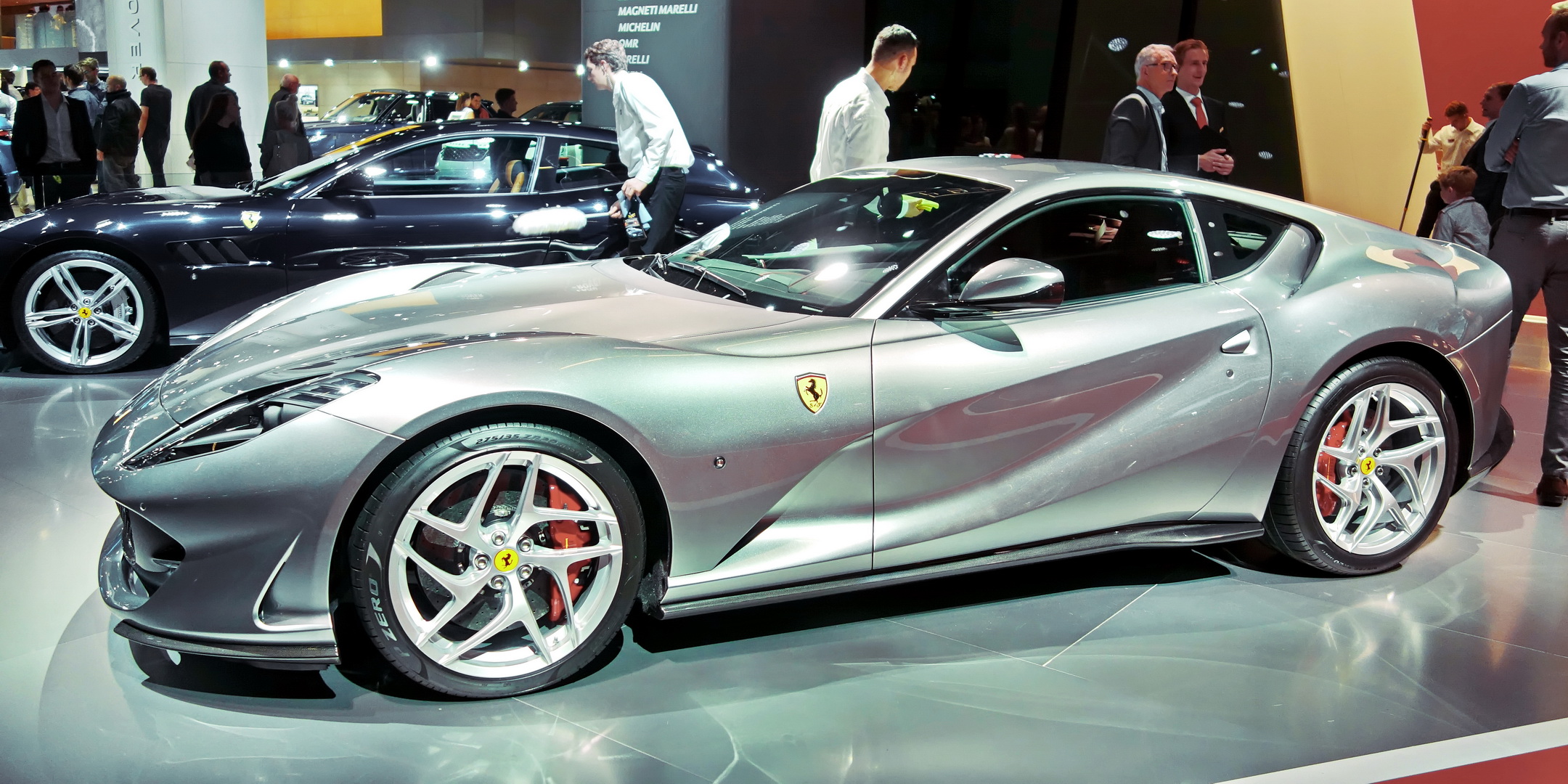
Ferrari 12
"It's about Ferrari. Ferrari 1-2. I mean, you've just gone with what the bookmakers think."
The Ferrari 812 Superfast is a very powerful luxury sports car made by Ferrari. It’s designed for quick acceleration and high-speed driving on normal roads as well as spirited trips. The podcast brings it up as part of a discussion about Ferrari performance and results.
The Ferrari 812 Superfast is a high-performance grand tourer from Ferrari, built for very fast road driving and strong straight-line power. It’s discussed in the episode alongside other Ferrari talk, where the conversation references expectations and outcomes like a “Ferrari 1-2.” That kind of mention usually points to the car’s reputation and how it fits into performance-focused comparisons.
Michael Schumacher
"in a row this century is Michael Schumacher. [3370.4s] True or false?"
Michael Schumacher was one of the most successful Formula 1 drivers ever. Here, the hosts mention him because he’s associated with a Monaco Grand Prix winning streak record.
Michael Schumacher is a legendary German Formula 1 driver, widely regarded as one of the sport’s greatest. In this segment, he’s referenced for winning three Monaco Grand Prix races in a row (a record being debated).
Nico Rosberg
"The only person to win three Monaco Grand Prix in a row since Ayrton Senna back in 1993 is Nico Rosberg. [3402.4s] He won it in 2013, 14, and 15."
Nico Rosberg is a Formula 1 driver. The hosts are saying he won the Monaco Grand Prix three years in a row: 2013, 2014, and 2015.
Nico Rosberg is a German Formula 1 driver who won the Monaco Grand Prix three times in a row in the 2010s (2013, 2014, 2015), as stated in the segment. The hosts use him to correct the earlier “true or false” claim about who achieved the streak.
Bernie Ecclestone
"Second one, Bernie Ecclestone. [3413.9s] Getting another mention on this show. ... [3416.0s] Bernie Ecclestone attempted to qualify [3418.0s] for the 1958 Monaco Grand Prix,"
Bernie Ecclestone was a major figure in Formula 1. In this story, they say he tried to qualify for the 1958 Monaco Grand Prix, but he was far off the speed of the field.
Bernie Ecclestone (Formula 1’s long-time commercial boss) is mentioned here in a historical context. The segment claims he attempted to qualify for the 1958 Monaco Grand Prix but was over a minute off the pace.
Jack Brabham
"Jack Brabham lost the lead of the 1970 Monaco Grand Prix at the very last corner. Brabham defended the inside line at the final corner to prevent Jochen Rint from passing."
Jack Brabham was a famous early Formula 1 driver from Australia. Here they’re talking about how he defended his position at the end of the 1970 Monaco race.
Jack Brabham was an Australian Formula 1 driver and team founder, and a three-time World Champion. In this story about the 1970 Monaco Grand Prix, his defensive driving at the final corner is used as an example of how racecraft can decide results on street circuits.
inside line
"Brabham defended the inside line at the final corner to prevent Jochen Rint from passing."
The inside line is the part of the track closest to the inside of the turn. Defending it means you make it harder for the other car to pass you there.
The inside line is the racing path closest to the apex/inner edge of a corner. Defending the inside line is a common racecraft move because it forces the other driver to either back out or attempt a harder, higher-risk pass.
Jochen Rint
"Brabham defended the inside line at the final corner to prevent Jochen Rint from passing. My guy's got Jochen Rint around the outside."
Jochen Rint was a Formula 1 driver from Germany. In this story, he’s the driver trying to get past Jack Brabham at the last corner.
Jochen Rint (often spelled Jochen Rindt) was a German Formula 1 driver known for his aggressive style. In this Monaco 1970 moment, the hosts describe Rint trying to pass Brabham at the final corner, which sets up the key defensive and braking behavior.
locked the wheels under braking
"Brabham locked the wheels under braking and the car skidded across the track towards the barriers."
It means the brakes were so strong that the tires stopped gripping and started sliding. When that happens, the car can lose control and slide toward the wall.
“Locked the wheels under braking” means the driver applied enough brake force that the tires stopped rotating. That typically causes skidding and reduced steering control, which is why the car “skidded across the track towards the barriers” in the example.

Chevrolet C8
"...nd of made me chuckle as well. Tire compound, the C8, which we've only ever gone up to C6 in Monaco, s..."
The Chevrolet Corvette is a sports car made for fast driving and track-style performance. The podcast mentions it in connection with tires, because the type of tire can change how the car grips the road. They also reference different Corvette generations, like the C8, to explain how things may differ on track.
The Chevrolet Corvette is a long-running American sports car known for strong performance and a focus on driver feel. In this podcast context, the discussion is about tire compound and how the Corvette—specifically the C8 generation—is used or compared in track conditions like Monaco. It’s brought up because tire choice and generation-specific behavior can strongly affect lap times and consistency.
Request an Explanation
Heard something you'd like explained? We'll add it to this episode.
Sign in to request explanations for terms you heard.
Want to learn more?
Browse our glossary for plain-English explanations of automotive terms, jargon, and concepts.
Help improve this episode
See something that's not quite right? Our annotations are AI-generated and can sometimes miss the mark. Click the flag icon on any annotation to suggest a correction.