Is Russell right about Antonelli's championship lead?
About this episode
Russell’s take on Antonelli’s championship lead sparks a debate: the hosts point to a 25-point gap after nine rounds and argue the narrowing came largely from reliability swings rather than a major pace change. They also weigh whether Antonelli has found a “click with the car” or whether Russell is simply at his ceiling. Examples like Silverstone, plus safety-car timing and “drop points,” shape their championship math. They then broaden into team-order and upgrade/technical discussions.
Ben and Sam discuss Russell's recent comments on the growing points gap between the Mercedes teammates and whether he can turn it around. They also cover Adrian Newey's explanation of what went wrong for Aston Martin this season, the latest plans to re-introduce V8 engines by 2031, and round things off with some Formula Fortunes...
Get involved in F1 Fantasy this season! Join the Late Braking league and see if you can beat us... LEAGUE CODE: C6Y6R4ZUY02
Want more Late Braking? Support the show on Patreon and get:
- Ad-free listening
- Full-length bonus episodes
- Power Rankings after every race
- Historical race reviews
- & more exclusive extras!
Don't forget! You can also gift a Late Braking Patreon subscription—perfect for loved ones or your own wish list. Choose anything from 1 month up to a full year of top-notch F1 content: https://www.patreon.com/latebrakingf1/gift
Connect with Late Braking:
- You can find us on YouTube, Instagram, X (Twitter) and TikTok
- Come hang out with us and thousands of fellow F1 fans in our Discord server and get involved in lively everyday & race weekend chats!
- Join our F1 Fantasy League and see if you can beat us!
- Get in touch any time at [email protected]
Hosted by Simplecast, an AdsWizz company. See pcm.adswizz.com for information about our collection and use of personal data for advertising.
Formula One title fight
"if he is to remain in the Formula One title fight this season... After nine rounds, Russell sits 25 points behind Mercedes teammate Kimmy Antonelli in the championship, although the gap narrowed significantly..."
A “title fight” means the race to win the championship for the whole season. If a driver is still in it, they still have a real chance to end up champion.
A Formula One title fight is the season-long battle for the World Championship points lead. When the hosts say someone must “remain in the title fight,” they mean they still have a realistic chance to finish the season with the most points.
Kimmy Antonelli
"After nine rounds, Russell sits 25 points behind Mercedes teammate Kimmy Antonelli in the championship, although the gap narrowed significantly from the 68-point deficit he faced just a few races ago."
Kimmy Antonelli is a Formula 1 driver mentioned as Russell’s main rival in the championship. They’re talking about how many points he’s ahead and whether Russell can catch him.
Kimmy Antonelli is discussed as the Mercedes teammate leading the championship after nine rounds. The key point is the points gap between him and Russell, and how it has changed over the season.
Russell
"After nine rounds, Russell sits 25 points behind Mercedes teammate Kimmy Antonelli in the championship, although the gap narrowed significantly from the 68-point deficit he faced just a few races ago... And the only way he's actually caught back so many points is mainly due to reliability problems."
Russell is the driver the hosts are talking about in the championship race. They’re debating if he’s doing enough—on track and mentally—to catch the person in front of him.
Russell is the driver being evaluated for whether he can stay in the Formula One title fight. The discussion focuses on his points deficit, his mental approach, and how reliability issues have affected his ability to close the gap.
ground effect era
"He had to go through the trials and tribulations of the Williams in the previous era, then he mastered the Mercedes in the ground effect era, beating Lewis Hamilton two years in a row."
The ground effect era is a time in F1 when the cars used the air under them to create extra grip. It made the cars feel different and often faster in corners.
The ground effect era refers to a period in Formula 1 when cars generated significant downforce by using the airflow under the car (via underbody tunnels/diffusers). That downforce increased grip and changed car behavior compared with earlier “non-ground-effect” designs.
Lewis Hamilton
"then he mastered the Mercedes in the ground effect era, beating Lewis Hamilton two years in a row."
Lewis Hamilton is one of the most successful F1 drivers ever. Mentioning him is meant to show how impressive it is that Antonelli could beat a driver of that caliber.
Lewis Hamilton is referenced as a benchmark for performance, with the claim that Antonelli “mastered the Mercedes” and beat Hamilton two years in a row. The point is to support the argument that Antonelli adapts quickly to car changes and can outperform top-level rivals.
Kimi Antonelli
"arguably not maximising the points that him and Antonelli was able to maximise when Russell was losing out due to reliability problems."
Kimi Antonelli is an F1 driver. The hosts are comparing his performance to George Russell and saying the points gap is mostly because of reliability issues, not because Antonelli suddenly got much faster.
Kimi Antonelli is a Formula 1 driver discussed here as the teammate whose pace and race results are being compared directly to George Russell. The hosts attribute a large part of the points swing to reliability rather than a major change in on-track speed.
reliability problems
"arguably not maximising the points that him and Antonelli was able to maximise when Russell was losing out due to reliability problems. So I do think that that points telling that's rocked from, like you mentioned, what was it, about 68 points?"
Reliability problems are when the car has mechanical issues. In F1, that can cause retirements or slowdowns, which then affects how many points a driver scores.
In Formula 1, reliability problems are mechanical or systems failures that prevent a driver from finishing, finishing at reduced performance, or losing time. In this segment, the hosts say Russell lost out on points because of reliability, which helps explain why the points gap changed.
Monaco
"Antonelli was definitely stronger in Monaco. Antonelli was definitely stronger when he was overtaking Russell in Barcelona as well."
Monaco is a famous F1 race on narrow streets. The hosts are saying Antonelli did especially well there compared with Russell.
Monaco refers to the Monaco Grand Prix, a race known for tight streets and a high premium on qualifying and driver precision. The hosts say Antonelli was “definitely stronger” there, implying he had an advantage in a track type where small margins matter a lot.
China
"Because he was talking earlier in the season after he swept Australia and the first half of China as well. He was basically leading every session,"
China is another F1 race location on the calendar. The hosts bring it up to describe Russell’s strong early-season run before things became more complicated.
China refers to the Chinese Grand Prix on the F1 calendar, mentioned here as part of the early-season stretch where Russell was reportedly dominating sessions. The hosts use it to contrast early form with later uncertainty about whether Russell’s performance dropped or Antonelli improved.
Australia
"Because he was talking earlier in the season after he swept Australia and the first half of China as well."
Australia is an early-season F1 race. The hosts mention it to show Russell started the season strongly before the later points gap and reliability swings.
Australia refers to the Australian Grand Prix on the F1 calendar, which the hosts use as an early-season reference point. They say Russell was leading every session after “swept Australia,” framing how his form later compared to Antonelli’s progression.
ceiling of capability
"There is every chance that Russell is actually at his ceiling of capability right now that we don't realise..."
The “ceiling of capability” idea means there may be a limit to how good someone can be. Here, the host is wondering if Russell is already at his best level, or if he can still get better.
“Ceiling of capability” is the idea that a driver has a maximum performance level they can reach consistently. The host uses it to question whether Russell can still improve beyond his current results, or whether he’s already operating near his top.
Grand Prix
"he starts actually beating Antonelli on pace alone in Grand Prix."
A Grand Prix is the official name for a Formula 1 race weekend. The host is saying the real question is whether Russell can be faster than Antonelli in the races themselves.
A Grand Prix is a Formula 1 race event, typically held over a weekend with practice, qualifying, and the race itself. The host uses it to talk about whether Russell can beat Antonelli on pace during actual race weekends, not just in isolated moments.
multi-car fight for victories
"This is now becoming a multi-car fight for victories on a regular basis."
This means more than one car or team is now capable of winning races. Instead of one dominant group, several different drivers are fighting for the top spot regularly.
A multi-car fight for victories means multiple teams and drivers are capable of winning, rather than one dominant car consistently controlling the race. The host uses it to describe how recent Grands Prix have featured different winners and stronger competition across the field.
Max Verstappen
"If it isn't McLaren, Max Verstappen has put his car on the front row of the grid now."
Max Verstappen is a top Formula 1 driver. Here, he’s mentioned as someone who’s now showing up at the front of races—so the competition isn’t just one or two drivers anymore.
Max Verstappen is a Formula 1 driver referenced as a key reason the race-winning fight has expanded beyond one team. The host notes he has put his car on the front row, implying strong qualifying pace and immediate competitiveness.
pole positions
"Before that, it was essentially a mass production line of Mercedes 1-2, 1-2 with pole positions all the way along."
Pole position is the starting spot at the very front of the grid, earned by the fastest car in qualifying. The host contrasts earlier dominance—Mercedes taking pole repeatedly—with the newer situation where other teams and drivers are also achieving strong qualifying results.
Oscar Piastri
"It's got Antonelli at the very top, but within that, you've got Verstappen, you've got Landner and Norris, Oscar Piastri,"
Oscar Piastri is a Formula 1 driver. The hosts mention him as one of the drivers who could be in the mix at the front, not just as an afterthought.
Oscar Piastri is a Formula 1 driver named as part of the group challenging for top results. In this segment, he’s listed alongside other front-running drivers, reinforcing that the championship picture is becoming multi-driver and multi-team.
Silverstone
"let's say, 18 points. He's overhauled it to be larger. Let's take Silverstone, for example. [692.2s] Russell, at that point, I think is what? P4, maybe P5, when Antonelli actually ends up having the problem..."
Silverstone is a well-known F1 race track in the UK. Here it’s mentioned because something happened during that race that changed who scored points.
Silverstone is the famous Formula 1 circuit in the UK, and it’s used here as a specific example of how race incidents affected the points. The hosts reference Russell’s position before Antonelli’s problem and how penalties and safety-car timing changed the outcome.
penalties
"when Antonelli actually ends up having the problem and dropping back through the rankings and then ended up picking up the [702.9s] penalties, lading the other down. We know he doesn't get points."
Penalties are official punishments in F1 for breaking the rules. In this segment, Antonelli gets penalties that cost him positions and points, which helps Russell.
Penalties in Formula 1 are official time or position penalties applied for rule infringements (for example, unsafe driving, track limits, or procedural violations). Here, Antonelli’s penalties are described as a key reason he dropped back and didn’t score points, while Russell gained.
safety curve
"We know he doesn't get points. Russell gains from that, [707.0s] and then also, of course, gains from the safety curve. That's not Antonelli's fault."
This sounds like the Safety Car period. When the Safety Car comes out, the race pace changes and gaps can shrink, which can help some drivers score more points than they otherwise would.
“Safety curve” appears to be a mis-transcription of “safety car,” which is the period in a race when the Safety Car is deployed. The host is saying Russell benefited from the timing of that Safety Car relative to Antonelli’s situation.
slow puncture
"Now, I know that Russell at that point had the [735.1s] slow puncture or whatever, but the pace wasn't there. He wasn't on the same pace as his teammate."
A slow puncture is a tire failure where the tire loses pressure gradually rather than instantly. In F1, that typically forces a driver to slow down or pit, hurting lap times and track position—something the host contrasts with the idea that Russell’s pace wasn’t matching his teammate.
reliability strike
"so he's already at a three-point deficit. When Antonelli then has a reliability strike from Barcelona and Russell gets back past, he's not just gaining the 18 points by finishing second."
A “reliability strike” means the car had a mechanical problem. In F1, that can force a driver to retire early or finish far lower than expected, costing championship points.
“Reliability strike” is an informal way of saying a driver’s car suffers a mechanical failure or other issue that prevents a normal race result. In F1 points calculations, these events can cause a DNF or a reduced finish, directly affecting the championship gap.
Barcelona
"so he's already at a three-point deficit. When Antonelli then has a reliability strike from Barcelona and Russell gets back past, he's not just gaining the 18 points by finishing second."
Barcelona is a race track on the Formula 1 calendar. Here it’s mentioned because something went wrong for Antonelli there, changing how many points he and Russell had.
Barcelona refers to the Circuit de Barcelona-Catalunya, a recurring Formula 1 venue used for races and testing. The segment uses Barcelona as a reference point for when Antonelli’s reliability issue affected the points gap.
bad luck gimmick
"I am glad that George Russell has dropped the bad luck gimmick at this stage because it was valid for a while, and it's definitely not valid anymore."
“Bad luck gimmick” here means blaming some results on unlucky events (like mechanical issues or race incidents) instead of driver skill. They’re saying Russell’s luck-related explanation doesn’t fit as well anymore.
“Bad luck gimmick” is a conversational label for the idea that a driver’s points deficit is partly due to unlucky race incidents rather than pure performance. The hosts argue Russell’s situation has changed, so the “bad luck” framing is no longer as applicable.
DNFs
"I think what you're saying is right, that when it comes to DNFs and reliability issues for one driver, it does impact the other one as well..."
DNF means the driver didn’t finish the race. If that happens, they usually score no points, which can swing the championship standings.
DNF stands for “Did Not Finish.” In Formula 1, a DNF happens when a car can’t complete the race due to mechanical failure or an accident, usually resulting in zero points (unless the driver is classified under specific conditions).
drop points
"but if you look at George Russell, his drop points due to bad luck this year, you've essentially got Suzuka, Monaco, and Canada."
“Drop points” means the championship rules let drivers ignore their worst results. So if you have a bad race due to a problem or incident, those points might not count the same way.
“Drop points” refers to a points system where a driver’s worst results are excluded from the championship total. The hosts use this to estimate how many points Russell and Antonelli effectively lost due to reliability and incident outcomes.
Suzuka
"but if you look at George Russell, his drop points due to bad luck this year, you've essentially got Suzuka, Monaco, and Canada. I calculate that to be about 46 points dropped."
Suzuka is a famous Formula 1 track in Japan. In this segment, it’s one of the races used to estimate how many points Russell lost due to bad luck.
Suzuka is the Japanese circuit (often called Suzuka Circuit) known for its high-speed layout and challenging corner sequence. The hosts reference Suzuka as one of the races where Russell’s “bad luck” drop points are being tallied.
Canada
"you've essentially got Suzuka, Monaco, and Canada. I calculate that to be about 46 points dropped. Antonelli, his two are Silverstone and Barcelona."
Canada is another Formula 1 race on the calendar. Here it’s used in a “what if” points calculation about how a DNF might have changed the result.
Canada refers to the Canadian Grand Prix venue on the F1 calendar. The hosts use Canada in their hypothetical points swing discussion, weighing whether Russell would have held position through a DNF event.
safety car
"Well, he didn't DNF in Suzuka, but he benefited from the safety car in Suzuka. I think Canada, whilst it would have been close, Russell was ahead at the time of the DNF..."
The safety car is used when there’s a hazard on the track. It slows everyone down and can change race strategy, so it can affect who gains or loses positions and points.
A safety car is deployed in Formula 1 to control the pace of the race when there’s danger on track (like debris or an accident). It can bunch up the field and change pit-stop timing, which can benefit or hurt drivers depending on their position.
Ferrari
"You mentioned Ferrari a little bit earlier on. Do you think the fret of Ferrari helps or hinders George Russell?"
Ferrari is one of the biggest Formula 1 teams. The hosts are discussing whether Ferrari’s results or strategy make it easier or harder for George Russell to win the points battle.
Ferrari is a Formula 1 constructor and one of the sport’s most prominent teams. In this segment, Ferrari is mentioned in relation to whether its presence or performance helps or hinders George Russell’s championship situation.
front row of the grid
"ahead, they could qualify on the front row of the grid, and all he's got to do is beat out one teammate, one driver."
The grid is where cars line up before the race. The front row is the best starting spot: the pole sitter and the car starting right next to them.
In Formula 1, the grid is the starting lineup for the race. The front row is the two cars that start on the very first row—pole position on the left and second place on the right—so they usually have the best chance to control the start and early laps.
intra-team battles
"teammate, one driver. We've seen these inter-team battles before, where basically the garages almost go to war with each other."
This is just a fancy way of saying races where cars from different teams are fighting for position—like who gets past who, and who ends up winning the race.
Inter-team battles are on-track rivalries between drivers from different teams, often involving strategy, overtakes, and position fights that can affect both drivers’ results and the teams’ championship standings.
Papa rules
"That's where Papa rules comes from, right? [916.6s] Papyrus. Papa rules now. Sensational soundbite."
“Papa rules” here means some kind of team rule about how drivers are supposed to act—especially when teammates are competing. It’s basically a slogan for the team’s approach to team orders.
“Papa rules” is a reference to a team-internal rule or guideline about how drivers should behave—typically around team orders and how aggressively teammates should race each other. In this context, it’s being used as a memorable “soundbite” for how teams manage intra-team competition.
blow diffuser
"Now, with Ferrari coming into the mix alongside Antonelli and Spa coming up on the horizon where Ferrari have got to remove their blow diffuser."
A blow diffuser is a type of aerodynamic system used in F1 that uses engine exhaust (or related airflow) to energize the airflow under the car. By improving underbody downforce, it can increase speed and grip—so removing it for a race changes the car’s performance.
Macarena wind
"That's an extra few horsepower. They've got an improved Evo version of the Macarena wind."
That sounds like a nickname for a specific aero upgrade on the car. The point is that Ferrari has a newer version that should help their speed or grip.
“Macarena wind” appears to be a nickname for a specific aerodynamic update (an airflow/wing-related package) on the car. The host is saying Ferrari has an improved “Evo version” of it, implying a development step aimed at better efficiency or downforce.
straight line mode
"There's five straight line modes, which mean the battery harvesting is not as important for them."
F1 cars can switch between different power settings. “Five straight line modes” means there are several acceleration/top-speed settings the driver can choose depending on the situation.
In F1, “modes” refer to selectable power/energy settings that change how the car deploys power and manages energy. “Five straight line modes” suggests multiple performance levels optimized for acceleration and top speed, which affects how the battery/energy system is used.
battery harvesting
"There's five straight line modes, which mean the battery harvesting is not as important for them."
Battery harvesting means the car recovers energy—especially when you slow down—so it can store it and use it later for faster acceleration.
Battery harvesting is the process of recovering energy to recharge the car’s battery, typically during braking and other deceleration phases. In F1’s hybrid power units, how much energy you can harvest and when you can deploy it strongly influences race strategy.
constructors' championship
"Lewis Hamilton 32 points behind Antonelli, which means he's seven behind George Russell, and Ferrari 78 behind Mercedes in the constructors championship."
This is the team championship. Teams score points based on how both of their drivers finish, and the total decides who wins the season.
The Constructors’ Championship is the season-long points battle between teams, based on the combined results of their drivers. It’s separate from the Drivers’ Championship and can be affected by how well both teammates perform across races.
one twos
"What's interesting, you mentioned one twos for Mercedes earlier on. I don't think I'm incorrect on this."
“One-twos” means a team got both top spots in a race—first and second at the same time. That usually gives the team a huge points boost.
“One-twos” is shorthand for a team finishing first and second in the same race. It’s a big deal because it maximizes points for both drivers and can swing the Constructors’ Championship.
Aston Martin
"Newie now, who I keep forgetting this is still Aston Martin team principal. Yeah, what is happening there? He's given new insight into the cause of the team's dire problems with its 2026 car..."
Aston Martin is the Formula 1 team being talked about. The discussion is about why their newer car has had trouble, and how earlier development choices may have contributed.
Aston Martin is the Formula 1 team brand being discussed here, specifically in relation to its 2026 car’s development problems. The hosts connect the team’s issues to inherited processes and design trade-offs that affected both chassis weight and aerodynamic direction.
patched and bodged for years
"He said, we were relying on tools and processes that had been patched and bodged for years. You could trace some of them right back to the very early days of the Jordan team."
They’re describing a situation where a team keeps using quick fixes instead of solving the real underlying problem. Over time, those workarounds can stop working and make the car-building process harder and less reliable.
This describes a development approach where problems are repeatedly “fixed” with temporary workarounds rather than fully redesigned. The segment argues that once those patched processes accumulate, they stop being effective and lead to frustrating build and delivery outcomes.
Jordan
"You could trace some of them right back to the very early days of the Jordan team. At some point, a system that's just patch on, patch stops being fit for purpose."
Jordan refers to the former Formula 1 team Jordan Grand Prix, which the hosts use as a historical reference point for where Aston Martin’s inherited development processes originated. The idea is that some of the team’s current systems trace back to early Jordan-era practices.
power unit
"On the chassis side, we're quite a long way overweight. Some of that comes from integrating the power unit, but we also didn't do as good a job as we should have on our side at saving weight."
In F1, the power unit is the car’s main engine-and-hybrid system that makes it move. Here, they’re saying fitting it into the car made the overall car heavier than they wanted.
In Formula 1, the power unit is the complete hybrid engine system (engine plus energy recovery components) that provides propulsion. The segment notes that integrating the power unit contributed to the car being overweight, which then affects performance and packaging.
aerodynamic direction
"Aerodynamically, we also took a bold direction, which was largely pushed by me, without the luxury of exploring multiple concepts in depth because time was against us."
Aerodynamic direction is the team’s overall plan for shaping the car so it grips the track better. In this segment, they’re saying they committed to a big aero idea quickly, and that caused problems they didn’t fully predict.
Aerodynamic direction refers to the chosen design philosophy for how the car generates downforce and manages airflow (e.g., wing and body shaping). The hosts say Aston Martin took a bold aerodynamic direction, but without enough time to explore alternatives, which led to unexpected challenges.
archaic gear in the terms of Formula One
"almost. We're so using archaic gear in the terms of Formula One, that is, that it's just not able [1518.3s] to compete with McLaren and Mercedes, a Ferrari."
They’re saying the team is using outdated methods. In F1, that can mean your car setup or development approach isn’t modern enough to compete.
In Formula One, “gear” here is being used loosely to mean the team’s technical approach or setup choices that are outdated. The host is arguing that these old methods can’t keep up with the pace of top teams like McLaren and Mercedes.
processes underneath
"if the systems and the processes underneath all of that are not fit for [1570.2s] purpose, it doesn't matter what you're building on top of it."
They mean the team’s internal workflow—how decisions get made and how parts get built and delivered. If that foundation is broken, even good people and ideas won’t help much.
“Processes underneath” refers to the underlying workflows and systems a Formula One team uses to plan, design, approve, and deliver parts. The host’s argument is that if those core processes aren’t fit for purpose, improvements on top won’t fix the performance gap.
parts being ordered late
"because he's talking here about processes that are old and that they're not working. Well, that [1625.2s] then leads to, as he's outlined, parts being ordered late..."
This describes a supply-chain and development timing failure: components are requested later than needed, even if the people doing their jobs are not the root cause. In F1, late ordering can cascade into late delivery and force rushed design decisions.
parts being delivered late
"but because the systems are telling them to do that. And then parts being delivered [1635.5s] late, that's leading to a rush in terms of the design."
It means the actual parts arrive after the team needed them. That delay can force the team to rush the car changes.
“Parts being delivered late” is the next step in the same timing chain: even if ordering happens, the actual components arrive too late for the intended development schedule. The host links this directly to rushed design work.
overweight car
"and a rush in terms of design inevitably [1642.0s] leads to an overweight car. An overweight car is pretty awful when it comes to F1."
An “overweight car” just means the car is heavier than it should be. In F1, that usually makes it slower and harder on the tires.
An “overweight car” is a car that exceeds the target weight (or is heavier than ideal within the rules). In F1, extra mass hurts acceleration, braking, and tire wear, and it can also upset balance and handling.
Honda factory
"The fact that they didn't visit the Honda factory until November of last year [1686.6s] still and probably forever will baffle me."
The “Honda factory” means Honda’s main engineering/production site. In F1, teams often need close coordination with engine suppliers to get the car working right.
“Honda factory” here refers to the manufacturer’s production and engineering base, which matters in F1 because engine and power-unit development is tightly linked to how teams integrate and calibrate the hardware. The speaker criticizes Aston Martin for not visiting Honda’s facilities early enough.
Adrian Newey
"We've had Mike Crack, we've had Adrian Newey, who's now the team principal, [1707.0s] we've had good old Martin Whitmash,"
Adrian Newey is one of the most famous F1 car designers. He’s known for helping teams build very fast cars, and here he’s being discussed in a leadership role.
Adrian Newey is a highly influential Formula 1 race car designer known for repeatedly delivering competitive cars through aerodynamic and systems engineering. In this segment, he’s mentioned as the team principal, highlighting how leadership and technical direction are being debated.
team principal
"We've had Mike Crack, we've had Adrian Newey, who's now the team principal, [1707.0s] we've had good old Martin Whitmash,"
The “team principal” is basically the team’s top boss in Formula 1. They help decide how the team runs and what direction it takes.
A “team principal” is the top leadership role at an F1 team, responsible for overall direction and decision-making across engineering, strategy, and operations. In the transcript, it’s used to describe Adrian Newey’s role within the team hierarchy.
Andy Cowell
"Dan Fallow has obviously had a spell. Nothing's come together. Andy Cowell has been there and [1718.8s] now they've sent him off to Japan never to return."
Andy Cowell is a senior figure in Formula 1 engineering and operations, closely associated with power unit development and team technical leadership. The transcript frames his departure as part of a broader problem with getting the team’s people and systems aligned.
engine cupboard
"Well, in theory, though, that's what's happened, [1765.6s] right? They've gone, we're going for first. And to do that, we need to go down this route... [1776.0s] Why is the cargo, why is Stoffel van Doorn inside of the engine cupboard?"
“Engine cupboard” just means the area of the car where the engine sits—on an F1 car, that’s in the back. The line is meant as a joke about where people are being put.
“Engine cupboard” is a colloquial way to refer to the rear compartment where the engine/power unit sits in an F1 car. The question about “Stoffel van Doorn inside of the engine cupboard” is a humorous way of saying the team’s personnel placement and priorities don’t make sense.
engine sorted
"Audi actually, if they got their engine sorted, could be essentially a top team."
“Engine sorted” means the team has fixed the engine so it works properly. In racing, that usually means it’s both fast and dependable.
“Engine sorted” is shorthand for getting the engine’s performance and reliability issues resolved. In F1 discussions, it implies the team has fixed problems that were limiting speed, consistency, or both.
Spain upgrade
"Remember those that came out? Those at the Spain upgrade or something will bring out knock off half a tenth, half a second, sorry, not half a tenth, and doesn't."
The “Spain upgrade” is a set of changes a team brought for the race in Spain. F1 teams plan upgrades around certain events so they can see how much faster the car gets.
The “Spain upgrade” refers to a specific development package Ferrari introduced around the Spanish Grand Prix. Teams often time major aero and engine updates to particular races to evaluate their impact under real track conditions.
overhaul
"if this overhaul genuinely works, and it will have to be a true overhaul, not just we've made a couple of proper changes and hope is better, I'm talking weight down, I'm talking side pod, rejuvenation, I'm talking the way the engine operates and the car is completely shifted, a proper new car."
An “overhaul” means the team is making big changes, not just small adjustments. It’s like rebuilding the car’s setup so it works differently and better.
An “overhaul” in F1 means a major redesign rather than small tweaks. The host contrasts a true overhaul with minor changes, implying a comprehensive shift in how the car is built and how it behaves.
side pod
"I'm talking weight down, I'm talking side pod, rejuvenation, I'm talking the way the engine operates and the car is completely shifted, a proper new car."
The “side pod” is the car’s side body section. It often helps cool the engine and also shapes airflow, so redesigning it can make the car faster.
“Side pod” refers to the side-mounted bodywork on an F1 car that houses key components like radiators and contributes heavily to aerodynamics. Changing side pods can improve cooling efficiency and airflow, which can translate into better lap times.
weight down
"not just we've made a couple of proper changes and hope is better, I'm talking weight down, I'm talking side pod, rejuvenation, I'm talking the way the engine operates..."
“Weight down” means making the car lighter. A lighter car can accelerate and slow down more easily and usually handles better.
“Weight down” means reducing the car’s mass, which can improve acceleration, braking, and tire behavior. In F1, even small weight reductions can help the car feel more responsive and maintain performance over a stint.
Q1
"Maybe one car out of Q1 is a possibility, because they are two seconds away from safety currently."
“Q1” is the first part of qualifying. Drivers try to qualify well enough to avoid being knocked out before the later qualifying rounds.
“Q1” is the first segment of F1 qualifying where drivers compete to avoid elimination. If the host says “one car out of Q1 is a possibility,” they mean getting through that first cut and into later qualifying rounds.
two seconds away from safety
"Maybe one car out of Q1 is a possibility, because they are two seconds away from safety currently."
They mean the team is currently much slower than the pace needed to comfortably qualify. So they’re saying the car is behind by a big margin compared with what’s required to move on.
“Two seconds away from safety” is a qualifying-performance gap, implying the team is far from the pace needed to reliably make the cut. In F1 qualifying terms, it suggests they’re struggling to reach the “safe” threshold for advancing past elimination.
Hungary
"And I think that's a fair start. The simplest way I can put this is, if when this upgrade comes in in Hungary,"
“Hungary” means the race in Hungary. The idea is that the team’s new parts will show up there and we’ll see if they work.
“Hungary” refers to the Hungarian Grand Prix, where teams often bring scheduled upgrades. The host is setting expectations for when the performance package will arrive and be evaluated.
VA engines
"because he has spoken further about plans to reintroduce VA engines by 2031, whilst also highlighting proposals to reduce the influence manufacturers have over customer teams."
They’re talking about a particular kind of engine for F1. The idea is to bring that engine type back by 2031, which would change how teams build their race cars.
“VA engines” refers to a specific engine architecture being discussed for Formula 1’s future. In this context, it’s about reintroducing that engine type by 2031, which would affect how teams design and develop their power units.
independent engine supply
"A central part of this vision is to guarantee teams access to an independent engine supply, allowing customer outfits to operate without relying on manufacturers."
This is about teams getting their engines from an outside supplier rather than relying on the same company that runs the top team. It’s meant to make it fairer for smaller “customer” teams.
An “independent engine supply” means teams would get engines from a supplier that isn’t the same manufacturer running the works team. The goal is to reduce manufacturer control and let customer teams compete using a more neutral, shared supply.
independent supplier
"One option under consideration is for the FIA to appoint an independent engine supplier like Cosworth, so they would produce a standardized cost-effective VA engine that any team could purchase off the shelf."
This would be a company that builds engines for several teams. Teams could buy the same basic engine package instead of depending on their own manufacturer.
An “independent engine supplier” is a third party that produces engines for multiple teams under a common specification. The transcript frames Cosworth as an example, producing a standardized engine that teams can buy.
standardized cost-effective VA engine
"like Cosworth, so they would produce a standardized cost-effective VA engine that any team could purchase off the shelf."
They’re describing an engine that’s the same for everyone and designed to be cheaper. The idea is to reduce expensive engineering while still letting teams race competitively.
A “standardized cost-effective VA engine” is an engine design intended to be uniform across teams and cheaper to produce and run. Standardization is meant to lower development spending while keeping performance within a controlled range.
Cosworth
"One option under consideration is for the FIA to appoint an independent engine supplier like Cosworth, so they would produce a standardized cost-effective VA engine that any team could purchase off the shelf."
Cosworth is mentioned as a company that could make engines for several teams. The idea is that it would be independent from the teams’ main manufacturers.
Cosworth is named as a potential independent engine supplier that could produce a standardized engine for multiple teams. In this proposal, Cosworth would sit outside the usual manufacturer-customer hierarchy.
Alpine
"there are teams that could build their own power units, citing McLaren and Alpine as examples."
Alpine is named as another example of a team that might be able to build its own engine system if costs come down. It’s part of the argument that more teams could become self-sufficient.
Alpine is mentioned alongside McLaren as an example of a team that could build its own power units under a lower-cost engine framework. The transcript uses these teams to make the proposal feel plausible.
engine manufacturer
"I would just be really surprised if any engine manufacturer would want to do this because I don't see what the benefit is for them."
In F1, the engine manufacturer is the company that makes the engine the teams use. This part of the discussion is about who should control or supply those engines.
In Formula 1, an engine manufacturer is the company that designs and builds the power unit used by one or more teams. The host is arguing about whether those manufacturers should be tied to teams in a more independent way.
Haas
"They don't have the same love and care that maybe a Ferrari engine, in theory, giving to Haas would actually be given"
Haas is used as the example team that might receive an engine from another brand. The host is arguing that the engine supplier’s involvement could be different depending on who owns the engine program.
Haas is mentioned as the team that would receive a Ferrari engine in the host’s hypothetical. The host’s point is that teams with less direct engine ownership might not get the same level of development attention.
Pirelli
"A Pirelli of engines, essentially. Yeah. And maybe Cosworth is that engine."
Pirelli is a company that makes the tires used in Formula 1. The tires matter a lot because they affect how much grip the cars have and how teams plan their race strategy.
Pirelli is an Italian tire manufacturer that supplies Formula 1 with the tires teams race on. In F1, tire choice and tire behavior can strongly affect grip, strategy, and lap times.
McLaren
"Or you have to be brave and go out on your own and create your own engine, as McLaren could possibly do. I think it leaves an interesting dilemma for those teams."
McLaren is a well-known racing team in Formula 1. Here, they’re used as an example of a team that might build its own engine instead of buying one from another supplier.
McLaren is a Formula 1 team and automotive brand that has built its own engineering capabilities over time. In this segment, the hosts use McLaren as an example of a team that could “create your own engine,” highlighting the strategic choice between buying an engine and developing one in-house.
engine supplier
"forced to make a decision to not sit and buy an engine straight off of a manufacturer that's already within the sport. It's being a weakness of Formula One for not just recent times,"
An engine supplier is a company that provides engines to racing teams. If only a few suppliers can offer the best engines, it can make it harder for smaller teams to compete for championships.
An engine supplier is the external company that provides engines to F1 teams, rather than each team designing and building its own. The segment frames this as a structural issue in F1: smaller teams can be disadvantaged if the biggest outfits dominate the best engine technology.
monopolise the market
"And I'm talking about the automotive industry here are able to essentially monopolise the market of Formula One based on the fact that they know how to make useful, driv able, reliable engines."
To monopolise the market means one or a few large players dominate the supply so others have limited options. Here, the hosts argue that major automotive companies can effectively control access to the most competitive, proven F1 engines.

Escort Ford Cosworth
"... Ford relationship with Cosworth, as we know that Ford Cosworth have been a thing for many a year, then actually,..."
The Ford Escort is a smaller car made by Ford. It’s mentioned in racing conversations because Ford used it as a base for faster, competition-focused versions. When people bring up Cosworth, they’re usually referring to the performance parts or engines that were developed for racing Escorts.
The Ford Escort is a compact car that became especially well known in motorsport through Ford’s performance programs. In discussions about Ford’s relationship with Cosworth, the Escort often comes up because it was one of the platforms that helped showcase Ford–Cosworth engineering in rally and racing contexts. It’s frequently mentioned when people talk about how Ford built a long-running performance partnership with Cosworth.

Honda cars
"block the Honda cars, because we don't want the Honda cars to be at the Toyota cars?"
Honda is a big Japanese car company. Here, “Honda cars” means Formula 1 cars connected to Honda, not a specific street car.
Honda is a Japanese automaker that competes in Formula 1 and supplies engines to teams. In this segment, “Honda cars” refers to F1 entries associated with Honda rather than a specific road car model.
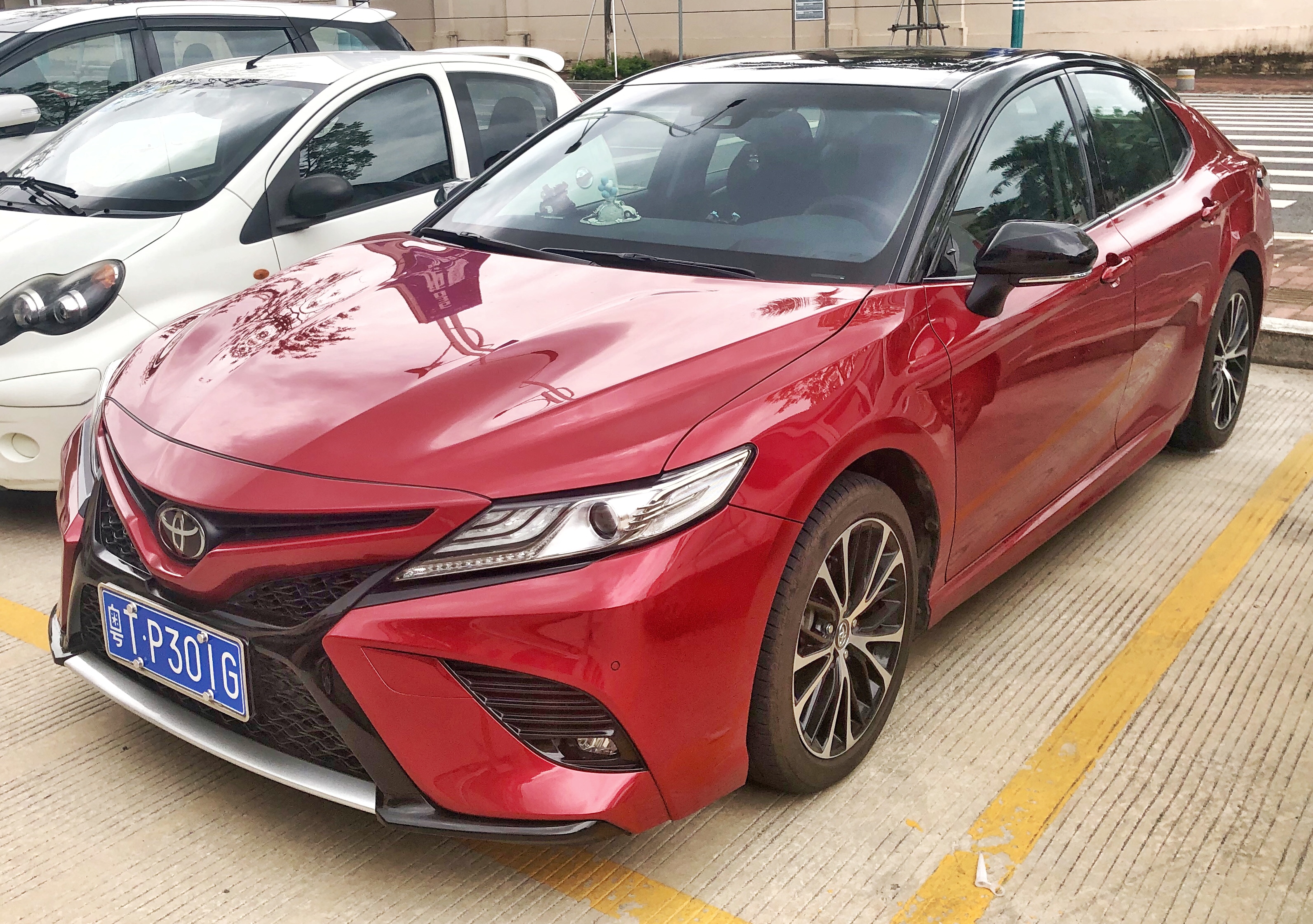
Toyota Cars
"...because we don't want the Honda cars to be at the Toyota cars? We've heard it before, it's possible."

Toyota cars
"because we don't want the Honda cars to be at the Toyota cars?"
Toyota is a large Japanese car company. In this context, “Toyota cars” means Formula 1 cars tied to Toyota.
Toyota is another major Japanese automaker with an F1 history, including engine programs. “Toyota cars” here means F1 cars associated with Toyota, used as an example in the discussion about blocking teams.
rule set
"The engines in 2031 will be X. The rule set will be, you must provide your own engine."
A rule set is the official list of rules for how the cars have to be built and run. In this segment, the rules are about who supplies the engine.
A rule set is the specific set of regulations that governs how Formula 1 teams must build and run their cars. Here, it’s tied to an engine requirement: teams must provide their own engine or partner under defined conditions.
provide your own engine
"The rule set will be, you must provide your own engine."
This means teams would have to use an engine they develop or control themselves, instead of just buying one from elsewhere. The discussion is about how the future engine rules might work.
“Provide your own engine” describes a regulation where teams are required to supply their own power unit rather than relying on a single shared supplier. The host frames this as one option in the 2031 engine rules.
partner with a manufacturer
"Or version B, you partner with a manufacturer that is not a part of the sport."
Instead of building the engine alone, a team could team up with another company that will help supply or develop the engine. It’s presented as a second option in the rules.
This refers to an alternative engine regulation path where a team can partner with an outside manufacturer to get an engine program. The host contrasts it with the option of building the engine themselves.
BMW
"or something like that. You might get BMW come back into the sport."
BMW is a major car company that the host thinks could come back to Formula 1. They’re using it as an example of how the new engine rules might attract manufacturers.
BMW is mentioned as a potential return to Formula 1 under the discussed engine rule framework. The host is using BMW as an example of a manufacturer that could re-enter the sport via partnerships or engine supply.
V8 engine
"The V8, in theory, would be more cost-efficient. And a lot of these manufacturers have experience in making a V8 engine."
A V8 engine is a type of engine with eight cylinders arranged in two banks that form a V shape. The point here is that it might be cheaper to run and easier for companies to build because they’ve done it before.
A V8 engine is an internal-combustion engine with eight cylinders arranged in a “V” shape. In Formula 1 rule discussions, the host is arguing that a V8 could be more cost-efficient and that many manufacturers already know how to build V8s.
build their own engine
"because Ben Sullyem has mentioned as part of these comments, both McLaren and Alpine, as maybe teams that could go ahead and build their own engine."
In F1, “building their own engine” means the team designs and makes its own engine instead of using one from another company. It’s a big decision because it can change how much control the team has over performance and how expensive it is.
In Formula 1, “building their own engine” means a team develops and produces its own power unit rather than buying one from an engine supplier. That choice affects technical control, cost, and how quickly the team can iterate on performance.
V8s come back
"But if V8s come back and they decide they do want to create their own,"
“V8s come back” means F1 might switch back to engines with eight cylinders in a V shape. That would change how the cars feel and how teams design the engine and cooling system.
“V8s come back” refers to a potential return of V8-cylinder engines in F1 regulations. A V8 layout changes engine character, packaging, and how teams manage power delivery and cooling compared with the current hybrid-era power units.
v6 hybrids
"they've essentially ditched the V6 hybrids for the last few years that they'll be needed,"
“V6 hybrids” are the current F1 engines: a V6 gas engine plus hybrid parts that store and reuse energy. If a team moves away from them, it’s a major change in how the car makes power.
“V6 hybrids” refers to the current F1 power-unit formula: a V6 internal-combustion engine combined with hybrid energy recovery systems. Teams that “ditch” V6 hybrids are essentially moving away from the current generation of F1 power units.
V6 hybrid engines
"taken another team's very good V6 hybrid engine,"
A “V6 hybrid engine” is the F1 power unit that uses a V6 gas engine along with hybrid tech to reuse energy. The speaker is saying it could be about using someone else’s version instead of making their own.
A “V6 hybrid engine” is the specific F1 power-unit type built around a V6 combustion engine plus hybrid components for energy recovery and deployment. In this context, the speaker contrasts creating their own V6 hybrid versus taking another team’s existing V6 hybrid engine.
off-the-shelf engine
"then if this off-the-shelf engine goes ahead, [2977.4s] then, in theory, to red bull keep Ford,"
It means an engine that’s basically “off the rack,” not custom-built just for one team. In racing, custom parts can be a big advantage, so using a standard engine can level the playing field.
An off-the-shelf engine is a power unit that’s built as a standard, reusable product rather than a fully bespoke engine designed from scratch for one team. In F1, that can change how much advantage a team can gain through unique engineering.
B-Team
"I have been so against B teams in Formula One, [2997.7s] and there have been talks for years about Mercedes having a possible B team."
A “B team” is like a second team connected to a bigger F1 team. The concern is that it can make the championship less fair because it adds extra cars/drivers that can affect results.
In Formula One, “B teams” are effectively second teams linked to a larger team, often sharing resources and sometimes operating with a different competitive focus. Critics argue they can distort the sport by adding extra drivers/cars that influence outcomes and reduce the number of independent championship variables.
Mercedes
"I have been so against B teams in Formula One, [2997.7s] and there have been talks for years about Mercedes having a possible B team."
Mercedes is a major Formula One team. Here it’s mentioned because the host says Mercedes has been linked to ideas about running a B team.
Mercedes is an F1 constructor and engine/power-unit supplier that has been central to discussions about team structures and engine supply arrangements. In this segment, the host mentions talks about Mercedes having a possible B team and its ties with Williams.
Williams
"We know that they had quite interesting ties with Williams, [3004.6s] with the way they sold them in engines,"
Williams is an F1 team. The host mentions it because Mercedes had engine-related ties with Williams, which comes up in the debate about whether engine independence rules are being followed.
Williams is a historic Formula One team. The host references “ties with Williams” in the context of how Mercedes sold engines, implying a relationship that could matter when discussing independence and competitive fairness.
Bottas
"and we've had secondary drivers sitting there in the lights of, [3008.7s] you have Bottas, and then we've had Russell, of course,"
Valtteri Bottas is an F1 driver. In this conversation, he’s mentioned as an example of a driver who could be positioned in a way that influences how teams compete over a season.
Valtteri Bottas is a Finnish Formula One driver who has raced for multiple teams and has also been used as an example of a “secondary driver” in the context of linked team structures. Here, he’s referenced as part of the discussion about how extra drivers can affect championship dynamics.
secondary drivers
"and we've had secondary drivers sitting there in the lights of, [3008.7s] you have Bottas, and then we've had Russell, of course,"
Secondary drivers are drivers who aren’t the main race drivers every weekend. In this discussion, they’re mentioned because their involvement can still affect who wins and how the championship plays out.
Secondary drivers are drivers who are not the primary race starters for a team, but who may be positioned to step in or be used across a team structure. In the context of B teams and linked operations, secondary drivers can influence results and therefore the competitive balance of a championship.
Concord Agreement
"If this independent engine ruling aligns with the concord agreement, [3039.6s] we actually can have a rule that says,"
The Concorde Agreement is the big long-term contract that governs how F1 teams and the sport operate. It matters because new rules—like engine independence—have to fit within that agreement.
The Concorde Agreement is the long-term contract framework between F1’s governing bodies and the teams that sets key commercial and sporting rules. When the host mentions it aligning with an “independent engine ruling,” they’re referring to whether that engine-independence rule can be formally adopted within F1’s existing legal structure.
independent engine ruling
"If this independent engine ruling aligns with the concord agreement, [3039.6s] we actually can have a rule that says,"
This is a proposed rule meant to stop teams from gaining an unfair advantage by sharing engine technology or control. The goal is to keep competition more even.
An independent engine ruling is a regulatory requirement intended to ensure teams use power units that are not effectively shared or controlled in a way that undermines fair competition. In this segment, it’s discussed as a potential rule that would force teams to keep their power unit relationships truly separate.
Request an Explanation
Heard something you'd like explained? We'll add it to this episode.
Sign in to request explanations for terms you heard.
Want to learn more?
Browse our glossary for plain-English explanations of automotive terms, jargon, and concepts.
Help improve this episode
See something that's not quite right? Our annotations are AI-generated and can sometimes miss the mark. Click the flag icon on any annotation to suggest a correction.