The Dodge Charger RT is a performance version of the Charger. It’s meant to feel more powerful and exciting than a basic model, and the show is using it as a contrast to a much wilder truck.
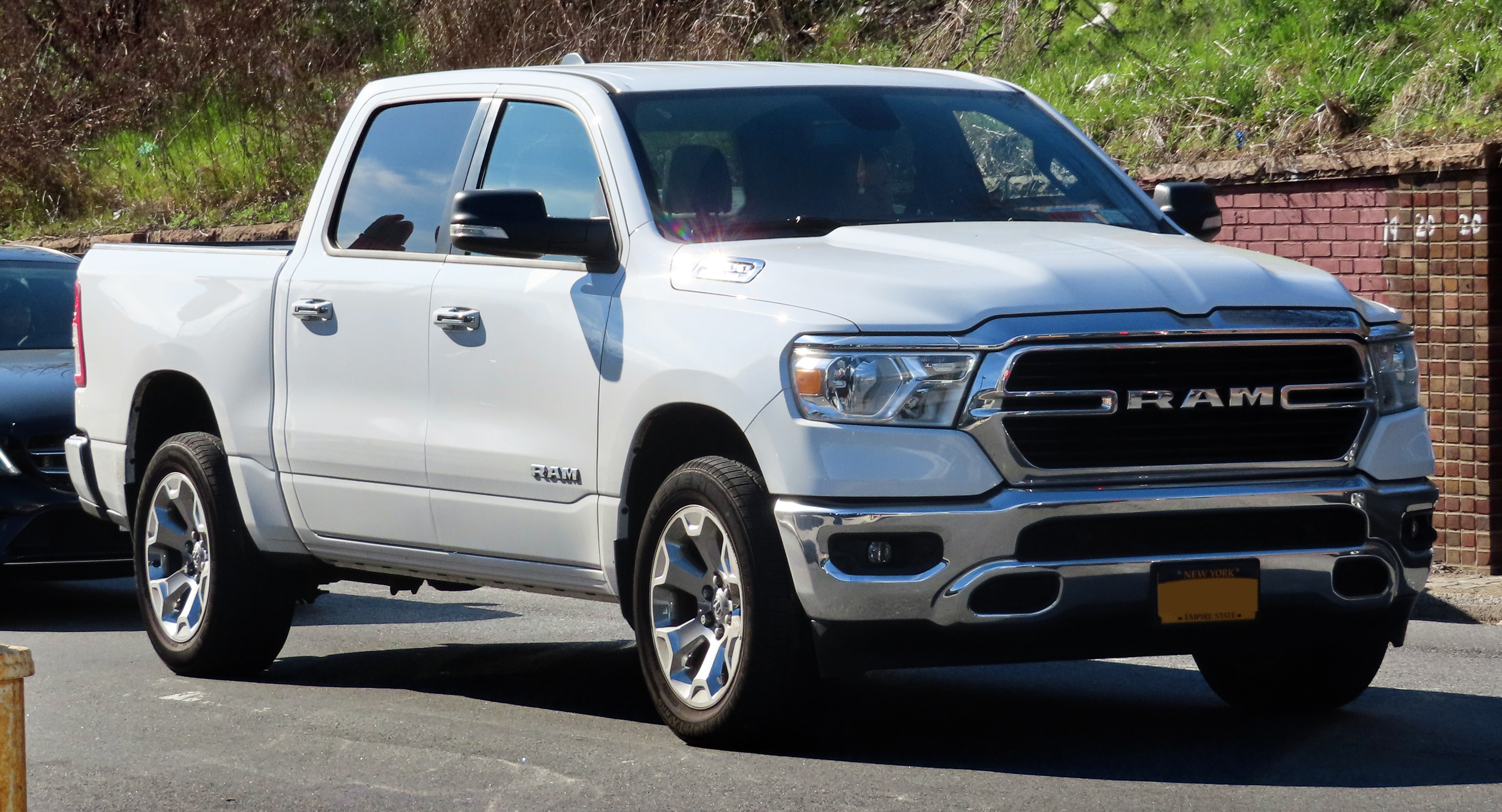
The Ram 1500 TRX is a super-powerful version of the Ram 1500 pickup. It’s designed to be fast and tough, and the hosts are treating it like the wild, standout truck of the lineup.
The Dodge Ram is a large pickup truck. It’s made for towing, hauling, and general truck use, and some versions are built to be much faster than typical trucks. The podcast mentions a powerful TRX version to highlight the top-performance end of the lineup.
“Powertrain options” means the car will be offered with different ways to power it. That can include different engines or motor setups and how power gets to the wheels.
The Ford F-150 Lightning is an electric pickup truck. Instead of using gasoline, it runs on batteries, and different versions can offer different power and range. It’s talked about because it brings electric driving to a truck shape people already use for work.
The Honda Element is a weird-looking Honda SUV that many people loved for being practical and easy to live with. The hosts are talking about the possibility of it coming back.
“Hurricane” is the name of the engine family they’re talking about. “In-line six” means the engine has six cylinders lined up in a row, which can make it run smoothly.
The Dodge Charger Daytona is the electric version of the Charger. It’s basically the same Charger name, but powered by electricity instead of a gas engine.
Term
all-electric version
All-electric means the car runs on electricity stored in a battery. It doesn’t use a gas engine to make power.
The Dodge Charger Scat Pack is a higher-performance version of the Charger. In this segment, they’re using it as the benchmark to compare horsepower and how the car feels versus other Charger trims.
Concept
platform that was built for both electric and for gas
This means the car’s basic design is flexible enough to be made as either an electric car or a gas car. That helps manufacturers reuse the same body layout and manufacturing approach.
This is a 3.0-liter engine that uses two turbochargers to make more power. The podcast is saying the Charger trims share this engine family, but tune it differently.
Torque is the engine’s pulling force. More torque usually means the car feels stronger when you accelerate, even if the peak horsepower number is lower.
Active exhaust means the car can change how the exhaust sounds or flows using valves. The podcast is saying the RT doesn’t have that extra exhaust control feature.
Term
sedan and coupe
Sedan and coupe are two different car body shapes. The podcast is saying the Charger’s electric and gas versions can be bought in either style, with the main difference being the number of doors.
Line lock is a button feature that keeps the car from rolling by holding the brakes. That lets you rev the engine and do burnouts more easily and consistently.
Launch control is a mode that helps the car accelerate from a stop as fast as possible. It manages things like traction and shifting so you get a strong, consistent launch.
A sports suspension is a stiffer, more performance-focused suspension setup. It helps the car stay flatter in turns and feel more controlled, especially when you drive it hard.
A “handling group” is an option bundle that adds performance parts to help the car handle better. Here, they’re saying it includes upgrades that make the car feel more track-capable.
Brembo brakes refer to braking hardware made by Brembo, a well-known performance brake supplier. In this segment, they’re discussing how the RT’s handling package includes upgraded Brembo brakes compared with other Charger trims.
The Ford Mustang is a sporty American car that comes in different versions. Some versions use a V8 engine and others use a V6, so you can choose more or less power. It’s widely talked about because it’s a famous performance car model.
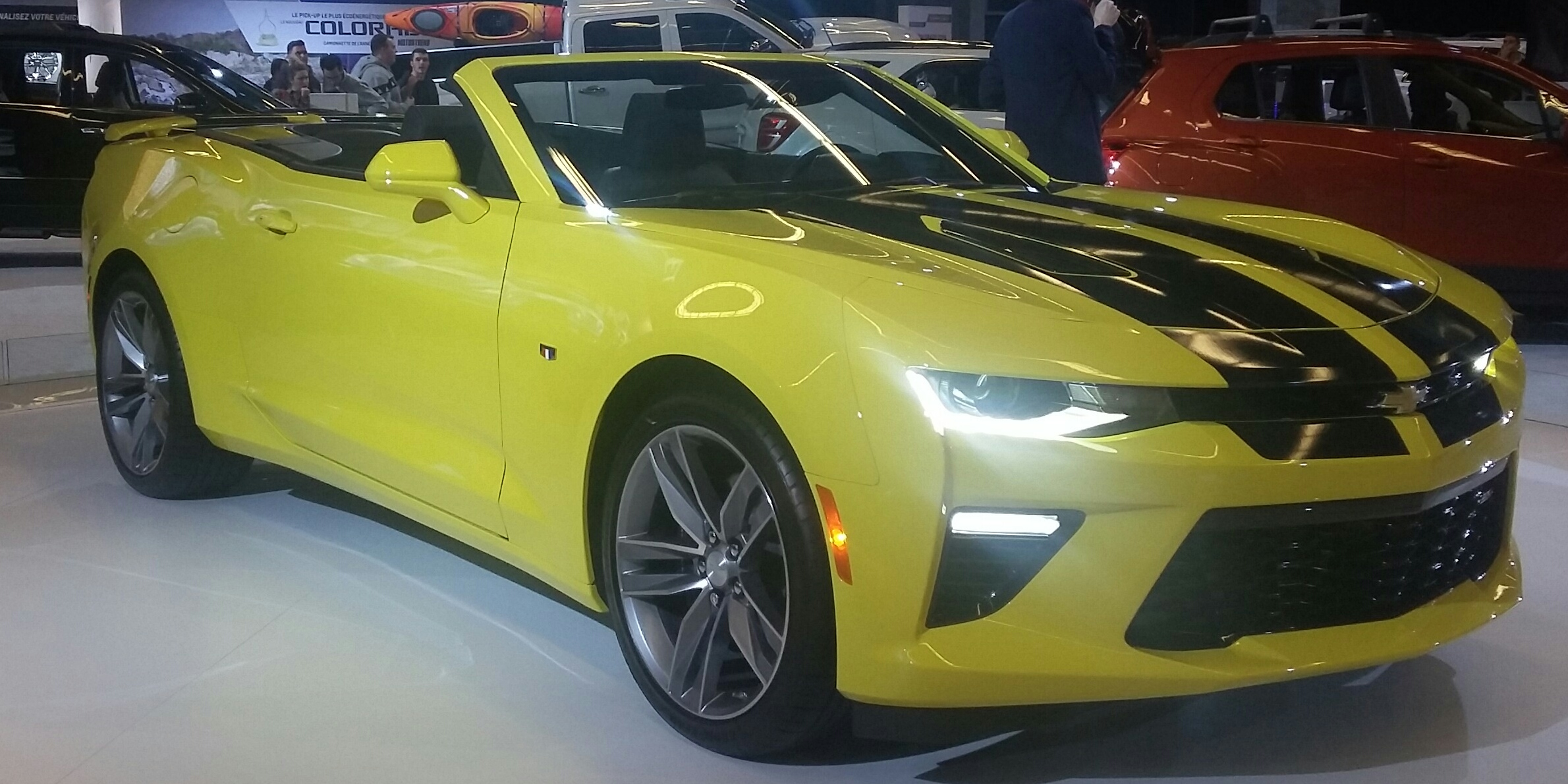
The Chevrolet Camaro is a sporty two-door car. It can be built with different engines, including a V8 or a V6, so buyers can pick how much power they want. It’s mentioned a lot because it’s one of the most recognizable muscle-style cars.
“Rear drive” here refers to a selectable drivetrain mode that limits power delivery to the rear wheels. That can help traction and enable features like line lock and burnout-style behavior.
Race mode is a driving setting that changes how the car behaves when you drive hard. It usually makes the throttle and shifting more aggressive and may loosen traction control a bit.
Shifting is when the transmission changes gears. In performance settings, it usually tries to keep the engine in the right rev range for stronger acceleration.
A custom setting lets you tailor the car’s driving behavior to your preferences. Instead of using one preset mode, you can adjust multiple parts of how it drives.
Term
electric Daytona
“Electric Daytona” is a name for an electric version of the Daytona. In this discussion, it’s used as a reference point for how the front end looks compared to the other cars.
“Two door” means the car has two doors instead of four. They’re saying they like the way it looks, and they’re also pointing out the back seat isn’t cramped.
Fuel economy is how far the car can go on a gallon (or how much fuel it uses). They’re asking whether the sportier version gets meaningfully worse gas mileage.
The Dodge Challenger is a sporty two-door car built for performance. Some versions are very powerful, and the podcast mentions a special Hellcat-powered Rumblebee SRT street truck concept. It comes up because it’s known for muscle-car style and strong engines.
Off roading is driving on rough dirt or trail surfaces instead of regular roads. Trucks built for it are designed to handle bumps, ruts, and low-traction ground.
This is a supercharged, high-power version of the RAM 1500 pickup. The big idea is that it’s meant to feel fast and aggressive, but still behave like a real truck with big tires and lots of suspension movement.
SRT is a performance label that means the vehicle has been tuned and upgraded to be faster and more aggressive. Putting the badge on the truck is basically the manufacturer saying, “this is the high-performance version.”
“Hellcat” is the name people use for a supercharged V8 that makes huge power. Here, the hosts are saying the truck’s engine is officially in that same family.
It’s a big 6.2-liter V8 that’s supercharged, which helps it make more power than a normal engine. The supercharger forces extra air in, so it can burn more fuel and go faster.
The Ford F-150 is a large pickup truck. It’s available in different versions, including off-road-focused models like the Raptor. The podcast is mentioning the high-performance versions and how they’re being talked about.
18-inch wheels are the size of the rims. Rim size can affect how the ride feels, but the tire size and suspension setup are what really determine comfort and off-road ability.
Bilstein shocks are the parts that help control the ride when the suspension moves. They help keep the truck from bouncing too much after hitting bumps.
Suspension travel is how much the suspension can move up and down. More travel usually helps the tires stay on the ground over bumps and uneven terrain.
Term
off road track
An off-road track is a rough, obstacle-filled course made to test a truck on dirt and bumps. They built one specifically to show what the TRX can do over jumps and uneven ground.
“Hellcat V8” is a famous engine used in some Dodge cars. It’s known for sounding loud and throaty, and the host says the truck’s start-up rumble feels similar.
Noise cancellation is technology that tries to reduce annoying sounds inside the cabin. They’re saying the truck uses microphones to help lessen tire and wind noise you’d normally hear.
The A pillar is the vertical frame piece at the front of the cabin, near the windshield. They moved the grab handles there because the truck is so tall that reaching the ceiling is awkward.
The Renault Wind is a small convertible, meaning the roof can open for fresh air. Convertibles often have more wind and road noise, and the podcast is talking about ways it tries to reduce that. It’s a compact car meant for fun, open-air driving.
A “supercharged Hemi” is a powerful V8 engine (the Hemi) that has a device that pushes extra air into it. More air usually means more power, so it feels much stronger.
“RHO” here sounds like a special trim/variant name for an off-road-focused truck. The hosts are treating it like a specific version, not just a generic description.
A “launch” is when you accelerate hard from a stop to see how fast the car or truck can get up to speed. It’s a common way to judge real-world acceleration.
A “rock rail” is like a narrow raised obstacle on a test track that acts like a rock ledge. It makes the vehicle climb carefully and shows whether it can handle rough, uneven ground without scraping or losing stability.
A “full length sunroof” is a big glass opening in the roof that runs farther back than a smaller sunroof. People pay for it because it lets in more light and can make the cabin feel more open.
A “suede headliner” means the roof lining inside the truck uses a soft, suede-like material. It’s a nicer-looking interior detail than basic roof fabric.
“Premium packages” are groups of upgrades you can add to a car or truck. Instead of buying one feature at a time, you get a bundle of nicer stuff together.
These are extra strengthening parts added to the truck’s main body structure. They help the truck stay solid when you hit bumps, carry weight, or drive off-road.
“Hemi orange” is a specific bright orange paint color that’s used on some performance RAM trucks. It’s basically a signature look for the Hemi-powered models.
A supercharger is a device that helps the engine breathe more air. When it’s working, it can make a distinctive high-pitched sound, and people call that sound “supercharger wine.”
A “V8” is an engine with eight cylinders arranged in a V shape. It’s known for making strong pulling power, which is why it shows up in many trucks and muscle cars.
Fuel mileage means how far the vehicle can go on a gallon of gas (or how much gas it uses). Higher fuel mileage usually means cheaper driving.
Term
real time four-wheel drive
This means the truck/SUV can automatically decide when to send power to all four wheels. It watches what the road is doing and helps the car stay grippy, especially on wet or rough surfaces.
A five-speed manual is a car where you choose the gears yourself using a clutch and a shifter. You’re more involved in driving, and it can feel more connected to the road.
In this context, “modular” means the vehicle is built with flexible, interchangeable components or layouts that make it easier to adapt for different uses. That’s why it’s associated with camping and outdoor lifestyles—more versatility for carrying gear and configuring the interior.
Concept
last year production
“Last year production” refers to the final model year before a vehicle is discontinued or replaced. In sales discussions, it helps explain why a specific generation might have a known production window and a finite number of buyers.
“Hold their value” means the car doesn’t get cheap as fast as others when you go to sell it. They’re saying these older cars can still be worth a lot because people keep wanting them.
The Honda Fit is a small hatchback that’s famous for using its space really well. Here, they’re talking about why Honda stopped making it, and they connect that to new emissions rules and Honda choosing not to update the car’s platform.
Emissions requirements are laws about how clean a car’s exhaust has to be. If a car can’t meet the rules without major changes, the company might stop selling it or redesign it.
Concept
business decision
A business decision is what a company chooses to do based on money and strategy. In this case, they’re saying Honda didn’t think it was worth redesigning the car because of regulations and how well it was selling.
A hybrid system is a setup where the car uses both a gas engine and an electric motor. It can switch between them (or use both) to help the car use less fuel.
The Honda Pilot is a family SUV with three rows of seats. The host is saying Honda may add a hybrid system to it, which can help it use less gas in everyday driving.
The Honda Passport is Honda’s midsize SUV. The host is saying Honda plans to put a new hybrid setup into it, which could make it more fuel-efficient than a non-hybrid version.
The Honda Odyssey is a minivan. The host is saying Honda may bring a hybrid system to it, which could help it get better gas mileage for family driving.
A trim level is the version of a car with a certain set of features. “Limited” usually means the car is more fully loaded with options than the cheaper versions.
The Toyota RAV4 is a popular compact SUV. The host is saying many reviewers talk about it using a higher-equipped version, because that’s what the manufacturer typically provides.
This means the car can help with steering and speed, but you still have to watch the road and be ready to take over. It’s not the same as a car that drives itself.
The Rolls-Royce Cullinan is a very expensive luxury SUV. It’s famous for being over-the-top comfortable and fancy, so a bold color like purple really stands out.
The Plymouth Prowler is a quirky, retro-looking sports car from the early 1990s. People still talk about it because it has a very unique style and a loyal fan base.
The BMW X5 is BMW’s main SUV. It’s a luxury family SUV that’s also meant to drive more like a sporty car. Here, they’re talking about a new generation of the X5 and how BMW is offering several different engine/drive options.
Spartanburg, South Carolina is where BMW builds the X5 in the U.S. They’ve been making it there for a long time, and other BMW X models are also produced at the same factory.
The Tesla Model X is an all-electric SUV, meaning it uses batteries instead of gasoline. It’s designed to carry passengers and cargo like a typical SUV, but with an electric drivetrain. The podcast is referencing how Tesla’s X models are connected through their production approach.
A multi powertrain approach means one car model can be bought with different kinds of power systems. Instead of everyone getting the same engine, BMW is planning several different options for the X5.
“M model” means the performance version from BMW’s M division. It’s usually faster and more track-capable than the regular version, with upgrades to things like the engine and handling.
A V8 is an engine with eight cylinders. More cylinders often means more power and smoother acceleration, which is why it’s popular in performance cars and big SUVs.
A hydrogen version uses hydrogen fuel instead of gasoline or a battery you plug in. It makes electricity onboard, so the car can drive like an electric vehicle but refuel with hydrogen.
A mild hybrid is a car that has a small electric assist. It helps the gas engine and can recover energy when you slow down, but it usually isn’t meant to run for long on electricity alone.
All-wheel drive means the car can send power to all four wheels. That usually helps it grip better on wet or snowy roads and can make launches feel more stable.
Term
B58
The B58 is BMW’s inline-six engine. It’s a 3.0-liter engine design BMW has used in a lot of models, and the hosts are saying this new X5 variant uses that same basic engine family.
“Three liter in line six” describes an inline-six engine with a 3.0-liter displacement. Inline-six engines are known for smooth operation because the cylinder layout provides good balance and steady power delivery.
LIVE
Welcome to the podcast of Motor Week, television's original automotive magazine.
Motor Week is made possible by AutoValue and Bumper2Bumper and TireRack.com.
Here's your Motor Week podcast host, Jessica Ray.
Welcome, everyone, to Motor Week Podcast number 381.
I am your host, Jessica Ray.
And on today's episode, it's Pure Americana, from muscle cars to pickup trucks, and an
American-made German SUV.
We'll start things off with our recent time behind the wheel of two performance models
from the Stellantis umbrella that are on very opposite ends of the spectrum, a base Dodge
Charger RT, and the return of the powerful prehistoric Ram 1500 TRX.
Then, BMW unveils the fifth-generation X5 Utility with their newer-class design language
and a whopping five different powertrain options.
Then it's a lightning round that ponders the return of the quirky yet beloved Honda Element,
and a viewer has a question about the press cars we test.
Joining me today are senior executive producer Dave Scrivner, writer-producer Brian Robinson,
and staff writer Alex Kellum.
Outie.
Sweet.
All right, let's get started.
So, we put the all-new 2026 Dodge Charger Scat Pack to the test at Roebling Road Raceway
earlier this year.
We did our typical track testing on it.
But it was sporting the high-output Hurricane in line six.
So, how does the standard output version fare?
Brian Robinson, we recently spent two weeks with the Charger RT.
How does it compare?
Well, I'm just going to back up a little bit, go back to 2024 when the Dodge Charger
returned as the Dodge Charger Daytona, which was all-electric version of the Dodge Charger.
It was available in a Scat Pack version, which was 670 horsepower and an RT version at 496
horsepower.
And this was an all-new platform that was built for both electric and for gas.
That is correct.
2026, as you mentioned, the Scat Pack version of the gasoline powertrain came out at 550
horsepower with the three-liter twin-turbo Hurricane engine from the Ram.
So this RT version has that same three-liter twin-turbo Hurricane rated at 420 horsepower.
So you can see the kind of de-escalation there from electric to Scat Pack to RT.
420 horsepower still has 468 pound-feet of torque, though, which is quite healthy.
And the engine's exact same as in the Scat Pack.
The big difference being the turbos are smaller, physically smaller, not just less boost.
They are physically smaller turbos on the engine, and it doesn't get the exhaust side.
It doesn't get the active exhaust that the Scat Pack gets.
So with that, the smaller turbos do not spin up as much boost, obviously, but they spin
up quicker because they are smaller.
So I don't know, driving it on the street, I didn't feel like the RT was really that
much.
It didn't feel that much slower than the Scat Pack.
Because of that, it's worth pointing out all of these, all three of the electric and
the both versions of the gas, they're all available in sedan and coupe.
The bodies are exactly the same regardless of which one you get.
Just the number of doors are different.
As far as specifically our RT that we had in, it had an added handling group, which gives
you a sports suspension and line lock, launch control, and stuff like that, which was great.
The also Brembo brakes, the brakes are smaller in the RT than the Scat Pack, but the handling
package does add upgraded Brembo's, which were great.
We were stopping at the track and 99 feet with them, which was pretty impressive.
So I guess the essence of it is a lot of it is carryover or can be carried over to the
Scat Pack version, like this handling package.
Yeah, we were talking about that when I was at the track.
Back in the last charger and in the muscle car Camaro Mustang era, you get the V8 or
you get the V6.
So with the V6, you get a handling benefit because you're taking a couple hundred pounds
off the front axle, but that wasn't really the case in this car because it's the same
exact engine.
You don't really get that benefit.
But it is all well-drive, just like the Scat Pack, but it's got it with the handling group.
It's got a button right there on the infotainment.
You can just hit rear drive and just have rear drive if you want and hit that line lock
and just burn out to your heart's content.
And so it feels every bit to me.
It feels every bit the muscle car as the Scat Pack and running times.
We got a 46 in the zero to 60 was only about a half second off the Scat Pack.
I believe I don't remember seeing to me.
It was like three point three point nine.
Yeah.
So it's almost as quick and they claim a 12 nine in the quarter.
Now I did everything I could.
I got a 13 flat multiple runs in like 1303, 1307.
But I just could not get it down to 12 nine, but a lot of fun and handles.
It's heavy car still, but handle handles just fine in our handling course.
And everything I think is just stupid, easy to use.
Like as far as the all the dialing in launch control, programming, all your settings,
you can go in a deep dive into, you know, race mode or whatever sport mode.
And just every aspect of from throttle response to shifting.
And you can it's super easy to come up with a custom setting and just get into all that stuff.
I mentioned their coupe and sedan.
They both look like the same, same as the, it doesn't have like the R wing in the
front that the electric Daytona does, but they still look cool.
And it was the fun to drive the track.
I know Alex, we've talked previously on the podcast a little bit about that.
You didn't have me talk about this car because I talked about it so much.
You've talked about this vehicle quite, quite, quite a lot.
But this is like the first time that we've really got to spend any extended time
with this, this, the standard output version.
So you got to drive it for a little bit.
What did you think?
Yeah, yeah.
And I driven it previously.
I've driven like Brian here.
I've driven every iteration of it at this point.
Well, I guess now we all pretty much have.
So that's a moot point.
But just like I said in my first drive earlier this year of the of the RT,
it's kind of like if all you care about is what that little slip at the end of
the quarter mile says, then yeah, the battery electric Daytona is going to be
the quickest one.
That's that's the one I guess you should go for.
But if you're looking at internal combustion, like you like performance,
you don't want to sacrifice internal combustion.
The scat pack is there to get you a little bit quicker.
But when you're driving the RT, if you did not drive both of them back to back,
you really would not be able to tell.
And like Brian said, the turbos, like that little bit of engineering there
by making them smaller, that certainly helps.
Yeah, I think the RT, like again, if you didn't drive it back to back with
with a scat pack, you really wouldn't be able to tell.
I gave people rides in it and super roomy to fit people in.
Obviously, the four door makes entry and exit a lot easier.
I'm still team two door.
I just I like the proportions.
I think it looks good.
I do.
I mean, the backseat on the two door is still pretty roomy too.
Yeah, yeah, absolutely.
Exactly the same.
It's the same leg room and everything.
It's just getting in and out.
Is there a fuel economy difference?
I haven't driven the RT.
I miss this one.
Yes.
When I drive cars like this, I don't think about the fuel economy.
There is, but it's it's minimal.
I bet insurance might be a little cheaper.
Yeah, sure, cheaper.
Just I mean, when we're talking about pricing to like the RT in the two
door configuration starts a little over $50,000 after destination, whereas
actually the the scat pack is actually oddly not that much more expensive.
It starts a little over $55,000.
So that's about five grand for an extra.
It's about five grand.
And then the coupe is two grand cheaper than the sedan you pay to you.
$1,000 for a door.
I actually like the exhaust better in the RT than the scat pack.
What exactly about it?
You didn't like the Daytona's?
Fred's I'm in love with the Fred's on it.
That's the name for the electrical engineer.
We talk more of a fart sonic.
And this one just this one has more of a natural sound to it.
I mean, that active exhaust just has kind of a fake noise.
So it's not V8, you know, but it's not trying to sound like one either.
It just sounds like a pretty good in line six.
Nice. Well, thank you.
Thank you for for that.
Definitely an interesting vehicle.
I'm sure we will drive it again as there are rumblings that
well, the the rumblings that the Hemi V will return next.
Well, it needs it.
We don't know when we'll see it, but we will certainly talk about it when we do.
So awesome. Well, I just sat in a Hemi car or truck.
That's right. Let's actually move on to that.
So it's a great transition.
So now with the current state of affairs, when it comes to fuel economy
standards or the regression of them, it shouldn't be that much of a surprise
that Ram has resurrected what is arguably its coolest 1500 model,
the TRX, affectionately known as the T Rex.
Now, Brian Robinson, you talked recently on a podcast about the Hellcat powered
Rumblebee SRT street truck specifically, but this TRX is made for the off road.
Dave, you had the honor to head to Michigan and get some real off roading
experience in this TRX.
What were your thoughts?
Well, it's back.
There's a sticker on my door at the office.
It's God created asphalt so you could go off roading.
This is not that truck.
Right. Right.
This is the real deal.
Yeah, they call it the apex predator of trucks.
And it's got they now put it under the SRT badge, which is officially on the truck
now, which wasn't before.
So they can officially call it the Hellcat engine.
And it has the 6.2 liter Hemi V8 supercharge with 777 horsepower and 680
pound feet of torque.
So plenty to get up and go.
And it's more.
I mean, I think initially the last TRX was they had at about 700 horsepower.
So they've made it even more powerful.
They decided to bring it back.
They knew they're going to blow away the Ford, but the number they had, 720 or
something, they're going to go way beyond that.
Raptor and Raptor R.
So 777 triple seven, as I call it, was their horsepower.
No matter if it really gets up and goes, it's not overwhelming power.
It's controllable.
The ride's a bit tall and bouncy.
It feels big and bouncy.
Got the 35 inch tires on 18 inch wheels and huge suspension, huge
suspension, the Bilstein shocks with all the damping and stuff.
Almost 12 inches of ground clearance.
But what's really cool is that the suspension travel is 13 in the front
and 14 in the rear.
And they had a, we went to a motorcycle, a BMX, a motocross course in Michigan
and we stayed in South Bend and drove half an hour across the border.
And they made their own off road track for the TRX for this event.
There was four or five waves of journalists.
And they had set up a couple of jumps where you get 23 feet in the air
and carry that for 30, 40 feet.
And they said, we broke two bumpers just the right angle and right speed.
So we launched at 60, but not 65.
So they had a course set up tailored for us, but still shows the car off
in a good light and shows what it can do.
It wasn't a fakey course here.
So tiptoe across the tulips off road course.
It all seemed too many of, I think it's a heck of a nice truck for what it is.
I mean, a hundred and 2000 dollars, it ought to be.
Right. But they really put all into it and come out with what they thought
would be a home run.
I think they've nailed it.
And the, like the sounds from that engine.
Oh, God, as soon as the start was, you know, a big, deep rumble you expect
from a Hellcat V8, but they've also done like, like noise cancellation too.
Yeah, they move the grab handles from the ceiling down to the A pillar,
because it's so tall, you can't reach the ceiling.
And in place, they put microphones for your voice commands as well as noise
canceling, so it rubs out some of the tire and wind noise from the outside of the truck.
No, no, you're not buying that.
I can't believe Dodge would even consider something like that.
I guess it must be a balance because of this type of buyer, right?
You're spending a hundred, you're a hundred grand on a vehicle.
You do, while you want like the cool factor of the supercharged Hemi,
you also do, you're going to be daily driving this potentially.
Yeah.
When a little bit of comfort.
I have to, you know, but they do have that RHO, which is also a pretty beefy
off-road truck. And like Brian just said, the Rumblebees, are they SRTs as well?
Only the top one is labeled with an SRT with this same engine.
Yeah. What are your thoughts on them
like bringing back like the SRT to put on trucks like this?
I think it's an awesome move.
It seemed odd that it wasn't on there previously.
That's their AMG, basically, you know, it's the top dog.
I should have the top performance moniker with it.
The SRT is it for first to land, to sendage and rim.
Were you able to do any like launches from like a zero to 60?
Did they have any of that set up or any?
No, we went on the street and did some driving.
I did a couple of launches for camera and I believe the 3.5 to 60, it gets up and goes.
It just, it feels tall and big on the road.
It's a big hunker. It's tall.
I'm 6'2 and the bed double was to my neck and the loading height is at my waist.
It's a pretty hefty climb up in the step.
They give you a little narrow. It's really a rock rail.
A little bit of a narrow step on top of it.
It's like a gymnast's balance beam is so narrow.
Balancing on it.
I don't tend to use those things anyway and just climb over them.
But the grab panel move was I would I might need you would need that.
Step ladder, I think.
I was hopping up into it.
What about the inside?
I mean, you're spending 100 grand on a truck.
Is this like the nicest interior for a Ram or it's everything option.
Dan, it's not.
I don't think there's too many options you can get except for the full length sunroof.
There is the suede and the suede headliner and things and the red stripes
and red belts and things that extra touches.
They give to the performance cars, but everything's kind of option.
Dan, it's like the premium packages that you didn't feel bare bones to me.
My stretch and felt appropriate for that price level.
It's still a truck with me, a little bit rugged, not so luxurious.
Sure.
So I thought it was good, good all around.
Well, job.
Do you feel like it felt like a little bit of an upgrade compared to
like one of the last TRX's that we've driven, if you can recall?
I think it's it's not.
It's almost a little more subtle in the styling.
It's certainly aggressive looking.
But the last one, the color choice, they had a dark green one.
It looked very sedate almost.
Gotcha.
Unless you buy the look at me orange or the red, I assault yellow.
Yeah, it's, you know, not that over the top.
Gotcha.
We saw a few of the old ones that were the new ones.
Is that one of the new ones?
I couldn't tell from looking at them.
I feel like the styling from last generation to this generation
really didn't change all that much.
Not a whole lot of difference.
Not a ton.
They pointed out things to us and I'm like, OK, if you say so.
Maybe like the the hood is a little different or whatever.
Yeah, cool.
Well, it's back and it's it's out there.
You're older now.
Brian, what are your thoughts?
You've seen the the street version now.
This is the off road version.
Yeah, I mean, I think they did a lot underneath as well.
Compared to last frame reinforcements and suspension reinforcements,
I guess to help it hold up a little better for people that actually
do take them off road.
And yeah, I mean, that kind of power definitely more than what the raptor are.
Is I mean, we were jumping them four or five feet in the air
and landed hard and just kept on.
I'm bracing for impact.
They didn't come.
It just kind of kept on going.
Yeah, if you got the money, that's the one to get.
I'm stuck with my old four ram for now.
Wonder if we can maybe like take some of these upgrades and throw it on your ram.
Yeah, I'll take that.
Do you think your ram would survive a three or five foot jump in the air?
I don't think so.
Even once. OK.
I really got my 47 for that engine, a hurricane engine, at least.
True, true.
Alex, any any comments on it?
Yeah, I mean, I always find myself saying,
I don't know how much of a truck guy I really am.
And then trucks like this come out or I drive a truck like this.
And, you know, I get all excited and giddy about it.
I'm like, I like trucks. That could be fun.
Yeah, if I were to get one, give me the the hemi orange
or the whatever obnoxious color they can possibly give me.
Like, I'm going all out with this thing.
Yeah, just we watched some of the footage that you guys got in my office
and like the supercharger wine and everything from that six point two is just
it's gnarly like, yeah, this is a truck. This thing's rad.
So I'll leave it there before I start foaming at the mouth over another V eight.
I'll make my midnight blue, though.
Well, we we're going to have a first drive on that coming very, very soon.
And then a full road test later this fall.
So stay tuned for that.
So thank you, everybody, for your contributions in there.
Now, our listeners, make sure you stay tuned, as we're going to talk
about all the details of the recently unveiled fifth generation BMW X five
very soon. And what exactly new a class?
New. Am I am I butchering new class new class means.
So we'll we'll find out what it means.
But before we move on, I'd like to thank the sponsors of this podcast
and of Motor Week, Auto Value and Bumper to Bumper and Tire Act.com.
We know our viewers and listeners appreciate your support of Motor Week.
Now it's on to our lightning round.
Panelists traditionally have 30 seconds to give their trending their take
on a trending automotive topic.
For some reason, the bell's over there.
There we go.
Now, a recent report from Automotive News alleged that the Honda element
would be revived in the near future as early as 2029
and speculated to feature a hybrid powertrain and outdoorsy vibes.
Honda is yet to confirm or deny the possibility.
But what do we think about the return for the element?
Why not?
I think it was very popular.
It's more kind of a cult following now when it's gone.
I think that things like the the cube and the key of soul and they had a purpose
and a little quirky, little square, but kind of cool element, especially.
It wasn't a power power machine by any stretch.
Right.
The people love them and there's, you know, versatile and packed cargo into them
and maybe give it all we'll drive this time.
Didn't have all we didn't have all we'll drive before.
Hmm. That's a good question.
I think I think we should look at it and I will look it up.
I would guess that they did, but thought they were front.
Could be.
I'm looking it up as we speak.
No, I'd love to see it come back while you're doing that.
I can feel some time.
Just all the flexibility, like you mentioned, with all the doors open.
A guy, I know he bought a half dozen of them right before they went.
Just for his fleet for his company, just because like there,
the fuel mileage was so good and just his guys loved working out of them.
So I don't know.
Like they're going to stop because he had a bunch already.
And it's like they're going to stop making these things.
So he just went out and bought like six of them for his company.
And because of you.
And I think five of them are still in use.
I mean, I think one, they lost one along the way.
But yeah, he loves, he loves it for his businesses.
Guys love working out of them.
Super comfortable vehicle with a ton of room and great fuel economy.
I mean, that's what a lot of people want right now.
So absolutely bring it back.
Yeah, I mean, I've seen like photos where people put their like bikes
in the back and everything.
So as long as I can put a moto compacto back there or two.
Yeah, I mean, Jess made a social media post about this
when the news first broke and I then wrote a follow up piece.
And it was one of those.
I'm going to go through the comments and see what everyone has to say.
And like so many people are like, yeah, bring it back.
Like I love this.
There are people saying they've they've got stories about it.
There was a I think for the most part, people were very happy about
the potential of a hybrid in here, not only because Honda hybrids are typically
very good, but because this thing's about as aerodynamic as a sofa.
So, you know, having a hybrid might help.
There were some people who were saying, no, you know, I want to see
five speed, six speed manual in there and whatever engine.
And, you know, maybe they'll make a type R version for you, but they probably won't.
So I mean, it's more likely an element at side, but no, I mean,
I think like Dave said, and that's probably the best way of putting it.
Why not?
So I can confirm it did have real time for wheel drive as an option
and a standard five speed manual.
And it did have five speed manual.
Now we will not see a manual transmission in a revived element.
That's just not going to happen.
But as plus shift, you never know.
I do think, you know, this brings up a really interesting kind of point
in the market, which is that the element like Brian was saying,
had like a ton of utility to it.
Like it purely was like a vehicle that that people used to go camping
for like an outdoor lifestyle because of its like out in the elements,
to be out in the elements because of how modular it was.
It's last year production, 2011.
They sold 11,000 of them.
So I think I guess it's appeal was like it was it
everybody who wanted one bought one.
And then eventually, yeah, eventually they're like, I guess nobody else wants one.
So I think maybe they can't have it and then they want one.
Well, there's it's been 2011.
It's been 15 years and you're somebody, you know, still hasn't quite a few.
You'll see him on like Facebook Marketplace and stuff.
People would just went on.
Look, I'm up and they hold their value.
All I say hold their value.
But for for a for 15 to 20 year old cars, they're easily anywhere
between five to 15,000 dollars, 80,000 miles on the clock.
It's a honder, you know.
I guess it's I guess my understanding about why it went away was that,
well, 2011, a lot of like emissions requirements.
And because it didn't sell that many back in its last year of production,
Honda did not feel that it was.
Pertinent, a pertinent business decision to redesign the chassis and they were
coming out with a fit, which is such a much better vehicle.
Well, it's so interesting, too.
Well, the fit, the fit has a lot of lot of love, too.
Yeah, people love the fit.
People love the fit because it's no element though.
It's no element, but it's like the elements baby in a way.
I think you utility wise.
Anyway, sure.
Great discussion.
We'll see and we'll we'll keep you posted if we hear anything more
about a new revived element.
What we can tell you is that Honda's new hybrid system is coming
and it's going to be coming to the passport, the pilot, hopefully the
odyssey, I think, as well.
So we'll have news on that.
And ideally that powertrain would go into, say, a revived element.
So stay tuned for more information on that.
Can you can you ring our bell?
Thank you. Excellent.
Now, let's move on to our viewer question.
It's a YouTube comment from SSJ to Trunks 103.
I wish I had a better name, but that's what it was.
They ask, you know, I noticed that almost every content creator talking
about the RAV4, they're using the limited trim of the vehicle.
Why?
That's what Toyota sends around because they want to send the high,
highest trim level.
So that's usually what we get.
There are a few exceptions, a couple of manufacturers,
but usually every vehicle you get will be the highest trim level.
You get the loaded version.
It's just something to talk about, showcase the features.
I mean, sometimes it's, well, yeah, I was just going to say,
despite the name, it's actually not that limited.
They made a bajillion of them, so they can send them wherever they want.
But yeah, that's the one that they want to send us.
It's got the most features.
It's sometimes sometimes what happens to is like the new
the new feature that they're debuting on this car, like, I don't know.
Maybe it's like automated driving system, like a level two driving system.
Like it's only available on that top trim.
So our only opportunity to test it is via a limited.
So we give the base price in our tests, but our tester is
X thousand dollars more because we get the top of the line.
Yeah, we try to point out what features are not standard, you know,
and what is standard.
So yeah, yeah, it is always refreshing when they do send us.
That's the luck of the draw for us.
They don't we don't determine which cars we get.
Yeah, that is true.
Sometimes color maybe, but please don't send me a white car again or whatever.
And then we don't get that.
Oftentimes we don't get that option either, which is how we ended up
with a white Dodge Charger Artie.
OK, the white paint.
First of all, that's the official name.
Yeah, they've always got some clever names for them, at least.
OK, well, wouldn't be my choice.
I get with the orange, always like a salt orange.
I don't know if they've got that yet.
It's just coming out.
They just announced it. Really?
What's it called? Plum crazy.
Oh, that's the purple one purple.
Yeah, nice.
They work.
We we love to see color.
We once tested a purple Rolls Royce.
Was it the was it that like purple?
It was the Cullinan.
It was a Cullinan.
It was Barney and a guy came out of the wall.
I said, yeah, it's a real Suggs Ravens edition.
They believe me.
It was very purple.
You would not miss that.
And it's funny.
And who can forget the Plymouth Prowler also?
Oh, yeah. That's a great.
That's a great call.
Oh, yeah. Maybe that's another.
That's a car they should bring back.
No, we should definitely move on from this side.
Go on going.
All right, we're going to head to our last topic of the day.
Yes, that's our.
The BMW X5 was the brand's first SUV back in 1999.
And it has been made in their Spartanburg,
South Carolina plant ever since.
And actually over 25 years later,
almost every X model that came after it is also made in that
same plant right here in the U.S.
But as the brand's flagship SUV,
the X5 sees a pretty significant update for its fifth generation
that includes maybe some controversial new styling
and five different powertrain options.
Alex, where do we even start?
Well, first, we're going to start with why Jessica had a hard time
pronouncing it earlier or question the pronunciation.
That's because new class is spelled N-E-U-E space K-L-A-S-S-E.
I felt like it needed a German flair.
Yeah, so there's a lot to this.
I'll start with the good and that's the.
Well, you know, this is cause a little bit of controversy,
I think, like what people are saying online.
But we'll start with the stuff that I think is,
I would say, undoubtedly good.
And that is the multi powertrain approach.
And when we say multi powertrain,
I mean, they are really doing a lot.
We don't have details on it yet.
There will be an M model with a V8.
There's also going to be a hydrogen version of the IX5.
That's what I'm waiting for.
So I figured, yeah.
Very interesting that they're still committing to this.
Yeah, I read that and was like, who?
I didn't know we were still doing that, but cool.
But what we're kind of getting at the onset here,
we're getting a hybrid version or one
with a mild hybrid in it.
That is going to be the just X540.
You can get that with all-wheel drive if you want.
394 horsepower out of, well, it's the B58.
So very familiar engine.
Yeah, three liter in line six.
There's also going to be the X550E,
which that one's the plug-in hybrid.
So 480 horsepower give or take.
And that one's got a 26 kilowatt hour battery.
So it is capable of going about 40,
a little over 40 miles of just pure EV-only range.
And then we have the IX5,
which if you don't know some of the BMW nomenclature stuff,
like when they put the IX or something,
or I3, something like that,
that is the all-electric version of it.
This is going to be deemed the 60X drive.
I don't know if there will be other trims or variants of it.
570 horsepower, it's an 800-volt architecture
with a 144 kilowatt hour battery.
So a pretty sizable battery, yeah.
And it is currently rated at 435 miles of range.
I think that is just manufacturer estimate, not EPA,
but generally speaking,
we see that the manufacturer estimates
are pretty dang close to what the EPA will come out with.
So you can expect somewhere around there.
So that's definitely, it's a smart move from them
just to offer a little bit of everything.
Some people, like if the IX5 is going to be a popular SUV
and you want it to have the widest market appeal,
why not try and go after every little niche
of that audience, people who want an electric one,
a plug-in, or some sort of hybrid.
And I think it's smart doing electrification
of some sort at every level,
whether it's all the way or just a little bit.
So, and then we get into the styling.
Do you like the letter X?
Because if you do, you're going to love the X5.
LED lighting elements have become
such a integral part of design language.
New class styling, if you haven't seen it,
we've talked about it a little bit on this podcast.
It really is something that you need to kind of look up
to fully grasp.
And it kind of changes a little bit per vehicle.
We don't have a lot of new classes out yet.
It started with the, was it the X3 or?
No, I, the IX3.
IX3, okay.
The IX3, we also had the,
also the I3, and then they had an M,
the newest one before this was the M concept new class.
And that's obviously just a concept.
And throughout these, we've seen some similar things,
like very sharp elements in the front
with the lighting, chiseled out air pockets.
The twin kidney grill is different on all of these.
For example, the M concept,
and I'm not just saying that because it's a concept,
and I also mispronounced it just there,
but it like had a smaller grill
and it didn't have like too many, bring the bell,
but it didn't have too many like extra flair to it, I guess.
I mean, it did because it had bucket seats
and a roll bar and all that stuff,
but it tried to keep it a little bit more mellow.
With this, it's so hard to kind of describe the way it looks.
The headlights, I'm not kidding, they are Xs.
It's an X, it's two on each side.
You have this big twin kidney grill.
It's not as big as maybe some of the like three
or four series that we've seen as of late,
but it's tall, it's very narrow,
and it's surrounded by LEDs.
You get to the back and or actually go to the side,
and you'll see right above the wheels.
Instead of doing over fenders,
it's almost like the bodywork is like punched in a little bit.
So it almost looks like it gets a little narrower
at the wheels, and then when you look at it in the back,
and I just noticed this before the podcast,
it looks like someone took the cabin and pinched it,
because you have these haunches in the rear,
these rear fenders almost, and it.
Yeah, that's a good way to describe it, a pinch.
Yeah, I'm not a fan, it looks very disproportionate to me.
It's very chiseled, the whole thing is very like.
Yeah, and from the side, you have all the paint work
and everything, there's not a lot of stuff now
that like, I don't know, the side profile of vehicles
always, to me, they start to blend together,
and this one kind of does it as well.
So a styling is obviously a subjective thing,
so it's kind of like beauties in the eye of the beholder.
You go inside, and I'll say from the seats back,
everything is pretty much what you would expect
from a modern BMW, and that's a good thing.
We haven't sat in it or anything,
this is just fresh, debuted, but it looks like
all the materials are about the quality
that you would expect, it's very plush,
you know, they kind of have some of those like crystal,
kind of like knobs and switches at the center console,
which is great.
Yeah, all that looks normal.
It's the dash, which is quite the departure
or that whole area.
Again, if I could kind of go with the whole good
and bad approach, just again, as an observer,
we haven't really spent a lot of time with this.
Some of the good, the BMW Panoramic Display,
they showed that off here,
which is a pillar-to-pillar projection
that it's right at the bottom of the windscreen
and it shows all your important information
right in front of you, basically takes the place
of your gauges, and then there's some other details,
less important stuff as it goes towards
the passenger side pillar.
We've driven cars with similar kind of layouts
with their screens, and I think for the most part,
it is kind of interesting to kind of have it up there
and you don't have to divert your eyes as much
for some of that pertinent information.
You do also get a head-up display with this,
so you've got that, and you also have a head-up display.
You don't have any actual gauges behind the steering wheel,
and to make sure you're not gonna be dared
to look down there, the steering wheel,
they have decided to put a cross in it for your,
so you've got four spokes.
Like a force, yeah, spoke design, but they're a cross.
Yeah, it's...
Different.
That is an adjective that describes it.
You have a giant screen in the center,
you have a passenger screen there,
because your front passenger needs a screen now, too,
and yeah, it's just...
God forbid you talk to each other.
If you're one of these people who's like,
tech overload, I'm tired of everything,
you're about to fall asleep.
This is not your car.
Yeah, maybe this isn't it.
So that's, for the most part,
that's the rundown of everything that we know,
short of, again, actually spending time with it.
So, it's the quick of it.
All right.
We have started pricing for us.
Have they even put pricing out yet?
Yeah.
Well, then it sounds like you've got it.
Give it up, Jesse.
I just remember seeing it somewhere,
unless I'm wrong.
I think it was like, it starts at high 60s,
low 70s, don't quote me on this,
but I believe it's somewhere around there.
Dave, what do you think about this multi-power train?
I believe it's a great idea.
They've got as many bases covered as possible.
I think, you know, electrification is still has a place.
The pure EVs aren't gonna be the power train
for the future, I don't think,
but hybrids still have a very important role,
especially plug-ins.
Hydrogen, good for them.
They keep after it.
People keep buying them back on the fueling stations.
I don't know where you're gonna fuel one,
but someone's gotta be an advocate for hydrogen,
and why not?
It's a good fuel, and there's a future in that too.
I think, good on them for diversifying their offerings.
If there's a butt for every seat, there's a...
That's a good point, good point.
Brian, any thoughts?
Yeah, I agree.
They came out with the I-X, which looked super wacky,
but then when they came out with the seven series
and five series,
they just integrated electric power trains into those,
which is what they got going on here.
So you can get the electric version,
get the gas version, I think it's a great idea.
As far as the styling,
like every BMW that comes out now,
it's so controversial,
but then everyone just goes and buys them anyway,
so I don't know.
Yeah, I was gonna say.
In three years, people aren't gonna care.
It's gonna be normal, right?
Stop them.
So, yeah, it's not even worth talking about.
That's a good point, that's a good point.
I do think we've commended BMW too,
that they've done a really good job
of translating the driving experience
from their gas-powered models
that share the same platform as their electrics,
that they seem to still are able to incorporate
that BMW feel in them.
Yeah, for sure.
So I think we're expecting that when we finally do test
both a gas-powered X5 and then the I-X5 that we're hoping
and we're expecting that will kind of remain the same
in that aspect of it.
All right, wait and see.
Well, more on that, obviously that was just unveiled,
so it'll be some time before we actually get our hands on one,
but stay tuned.
Give it six months or so.
Well, I'm sure we'll have some more thoughts on it
when we all get to actually drive it for the first time,
so great, well thank you, everybody.
Now, before we move on to our last segment of the show,
I wanna remind everyone about the Motor Week app,
the all-in-one place to watch all of the latest
Motor Week content from our road test reviews
to feature stories to full episodes,
find it all for free on the Motor Week app
available on mobile devices and tablets.
Now, we are here to our final segment of the show,
the classic rant or rave.
Does anybody have a rant or a rave?
Come on, Alex.
I've always got one in the chamber,
but yeah, I gotta give everybody an opportunity, yeah.
What have we got today, Alex?
I'm just trying to think of the thing
that annoyed me most recently.
So a rant?
Yeah, I mean, it's gonna be a rant for sure.
It's a rant for folks.
No, okay, so I had to drive back from the airport
a few weeks ago, I had to drive back from Dulles,
which, you know, it's-
It's a good two hour hike.
Yeah, yeah.
Now, without traffic, it's a bit less,
but there's always traffic, so yeah.
And so coming back there,
it'll give you a couple different route options,
and so the way I had it set up
was Google Maps through Apple CarPlay,
and it's giving me a couple options on the map.
And it's got the map right in front of me.
It's like, this one's gonna take this long,
this one's gonna take this long,
this one's gonna take this long.
Great.
Oh, I don't wanna take this one, I wanna take this one.
Just want the route up so I can see the traffic,
how it's gonna change.
Unless I'm doing something wrong or something's busted,
I go to tap it, and I keep tapping it,
and it just won't select,
and this has been going on for a very long time.
You just can't apparently select it on there.
You have to go through the route options,
and you have to scroll through it,
and of course, they're all labeled the same thing at first,
you know, 495 to this,
because most of it's the same route.
What car are we in?
My car, my personal car.
And it's just, it's frustrating.
Like, I can see it right there.
The whole point of a touchscreen
is that I can touch the screen,
and I can just select the next routes,
and then I gotta go through this list of options,
and then if I don't like any of those,
I gotta try and figure that out,
and obviously, you shouldn't do that when you drive,
so it turns into a whole thing.
I just had to come up with something.
No, I mean, actually,
that kind of brings up this interesting point
that I know for a fact,
Brian Robinson has no input on at all whatsoever.
Well, I don't know about that.
Minimal input, maybe?
Because you're not an Apple CarPlay guy.
I have never paired a phone to a car.
The both of you, yes.
The both of you don't pair phones to cars.
Well, one thing I have noticed with, in this area,
I can't speak for every area,
we have all these expressed tollings now,
where you pay more just because you have money
and you wanna get to where you're going faster
than the people who don't have as much money.
That's a whole another rave
that I can get onto at some point,
but a lot of, oh, yeah, not a rave.
I was gonna say money bags over here.
You have to make sure that you have,
or I have to make sure you have tolls turned off
because, or acknowledge that,
because I recently did the same deal around DC
and I didn't have that turned off,
so it wanted me to get in those lanes.
If you didn't though, you're stuck in traffic,
just sitting there, which I was doing
because I'm not about to pay that.
So you have to make sure that,
because there was better options
that would have avoided the Beltway altogether,
but I didn't think it was gonna try to put me
on the express lanes,
so that's something to keep in mind with your GPS.
That is a really good point.
I was gonna bring up that car play is different
for every automaker, if that makes sense.
So for example, they can't really do too much customization
because it's Apple or it's Android based or whatever,
but Chevrolet, for example, when you're driving,
like actively driving,
you can't really search through much of your music.
They only show most recently played playlists
or something like that.
If you were to go into Spotify or Apple Music
or something like this.
Not at, no, that's not the case for every automaker,
but just for whatever reason,
GM has shut that down within their applications
of which I guess is only in their gas powered cars these days,
but so I wonder if that is the case with your...
Actually, I'm possibly,
but I actually would default more to the interplay
between Google Maps, so a Google application,
and Apple cars.
Maybe then.
Because I've noticed that some make sense,
Apple apps will work better through Apple CarPlay,
and then when I used to have Android Auto,
some of the Google applications worked differently.
So it could just be an interplay on the OS side
and less to do with the actual vehicle.
It could also be that I'm a dingus
and I just don't know what I'm doing,
but it's just, it was frustrating.
Thank you.
It was incredibly frustrating,
and it's one of those like,
it's not that I need to know how to get home from Dulles.
I've driven back from there,
I don't know how many times at this point,
but it's because traffic is always evolving,
and I wanna stay on top,
like what is gonna be the fastest route
while avoiding tolls?
Yeah, exactly.
And if I see one that looks better
and I just wanna tap the screen,
I should be able to just do it.
I don't disagree with you.
I think it brings up a good point,
especially when the thing is driving back from Dulles,
you're hitting two types of traffic.
You're hitting both DC traffic
and you're hitting Baltimore traffic.
Yeah, I go through Frederick.
It's a 75-mile drive for me.
That's...
I almost went that way.
Sometimes the GPS is wrong.
I always think I'm oftentimes smarter than the GPS.
Just ask it, you'll tell him.
Okay, well, that was a good rant.
It was a rant.
Thank you for providing a rant.
Thank you for filling the time.
And Brian had a little bit of a rant in there too,
so thank you for adding your toll rant.
I think that's super educational.
Especially because it's tricky
because I don't wanna get on the express lanes,
but also if there's a bridge that I have to take,
like I don't wanna drive around the entire bay,
I wanna take the bridge.
So I don't wanna turn all the tolls off,
so it's frustrating.
Selective tolls.
There should be an option like avoid express lanes.
Yeah, exactly.
Hey, I just came up with a solution.
Call Google.
Call them right now.
Call them after this podcast.
I want royalties.
All right.
Well, thank you everybody.
Well, that is our show today.
So I want to thank Dave Scrivener,
Ryan Robinson, Alex Cullum for joining me today.
I produce this podcast.
Our audio engineer is Jillian Cookman.
Our podcast creator is Bob Mixter.
Remember, you can catch new episodes of Motor Week
every single week on PBS stations nationwide.
Visit motorweek.org slash watch
to find air dates in your local area.
But if you've cut the cord, no worries.
The PBS app is available for most smart TVs.
I actually think we're on LG TVs now,
which apparently was a very big deal.
And new episodes stream there for free
every Saturday morning.
Plus all of our reviews and feature story segments
can be found on our YouTube channel with new videos
uploaded every Saturday too.
Basically, if you have a screen,
you can watch Motor Week on behalf of myself
and John Davis.
Until next time, thanks for being a part of Motor Week.
You've been listening to the podcast of Motor Week,
television's original automotive magazine.
Motor Week is made possible by AutoValue
and Bumper to Bumper and Tyarac.com.
Visit our website at MotorWeek.org
for more car reviews and the latest automotive news.
And watch Motor Week, television's longest running
automotive magazine series each week
on your local PBS station or the Motor Week app.
About this episode
MotorWeek swings from American muscle to German SUV tech: the crew compares the 2026 Dodge Charger RT to the faster Scat Pack and even the electric Charger Daytona, noting the RT’s smaller turbo setup, quicker spool, and near-similar feel despite lower horsepower. They praise the RT’s handling group, launch-control ease, and real-world performance numbers, plus its more natural-sounding exhaust. Next up, the 2027 Ram 1500 TRX returns as an SRT-branded off-road monster with a 777-hp Hellcat V8 and serious suspension travel, showcased on a purpose-built Michigan course.
In Podcast #381, Jessica Ray steps in as host and it’s pure Americana…from muscle cars to pickup trucks…and an American-made German SUV. We’ll start things off with our time behind the wheel of two “performance” models from the Stellantis umbrella that are on very opposite ends of the spectrum…a base Dodge Charger R/T and the return of the powerful prehistoric RAM 1500 TRX. Then BMW unveils the 5th-generation X5 utility with their “Neue Klasse” design language and a whopping 5 different powertrain options. Then it’s a lightning round that ponders the return of the quirky yet beloved Honda Element and a viewer has a question about the press cars we test…