A lively discussion unfolds as the Tappet Brothers explore the philosophical implications of automatic transmissions, humorously linking them to societal laziness. They tackle a listener's dilemma involving a daughter's car repair mishap, where a dealership forgets to install a radiator, leading to concerns about engine damage. The brothers provide practical advice on handling the situation. The episode also features humorous anecdotes and a puzzler about a fire truck race, showcasing the brothers' signature blend of automotive wisdom and comedic banter.
Charlotte and her husband have woven a tangled web, indeed. They just adopted four kids between 10 and 6 years old and the little darlings are getting into everything! Charlotte wonders if they should buy a junk car for her little mechanics to while away their young days taking it apart in the driveway. Click and Clack relive their youth on this episode of the Best of Car Talk.
"Well, I will say that the good folks at Mercedes-Benz have done their little bit to negate the negative effects of the automatic transmission by making the radios and the heater controls impossible to understand."
Mercedes-Benz is a famous car brand from Germany that makes luxury cars. They are known for their high-quality engineering and advanced technology.
Mercedes-Benz is a German automotive brand known for luxury vehicles, buses, and trucks. The brand is recognized for its engineering excellence and innovative technology in the automotive industry.
"Well, I will say that the good folks at Mercedes-Benz have done their little bit to negate the negative effects of the automatic transmission by making the radios and the heater controls impossible to understand."
An automatic transmission is a system in cars that changes gears automatically, so the driver doesn't have to do it manually. This makes driving easier, especially in traffic.
An automatic transmission is a type of vehicle transmission that automatically changes the gear ratios as the vehicle moves, allowing the driver to focus on driving without needing to manually shift gears.
"She called me last Thursday and said that her car was running a little warm. It's a 92 Toyota Camry."
The Toyota Camry is a popular car that many people use for everyday driving. The 1992 version is known for being dependable and easy to maintain.
The Toyota Camry is a midsize sedan known for its reliability and comfort. The 1992 model is part of the third generation of the Camry, which was produced from 1991 to 1996.
"she notices that the radiator's bubbling in the front. She said, what's that? And they said, oh, it looks like a crack in your radiator."
The radiator helps keep the engine cool by circulating coolant. If it gets damaged, it can cause the engine to overheat.
The radiator is a crucial component of a car's cooling system, responsible for dissipating heat from the engine coolant. If the radiator is cracked, it can lead to overheating and engine damage.
"If it turns out that the thing begins to burn in an inordinate amount of oil, which is entirely possible, because that's one of the things that happens when you badly overheat an engine."
Overheating happens when an engine gets too hot, which can cause serious problems. It can be caused by things like not having enough coolant or a broken cooling system.
Overheating refers to a condition where an engine's temperature exceeds its normal operating range, which can lead to severe damage. This can occur due to various reasons, such as coolant loss or a malfunctioning cooling system.
"...because the temperature gauge wouldn't work without cooling it in the system. If that sensor isn't immersed in water, it won't read."
A temperature gauge shows how hot the engine is running. If it gets too high, it can mean the engine is overheating, which is not good.
A temperature gauge is a device that measures the temperature of the engine coolant, providing information about the engine's operating temperature. If the gauge indicates high temperatures, it may signal overheating.
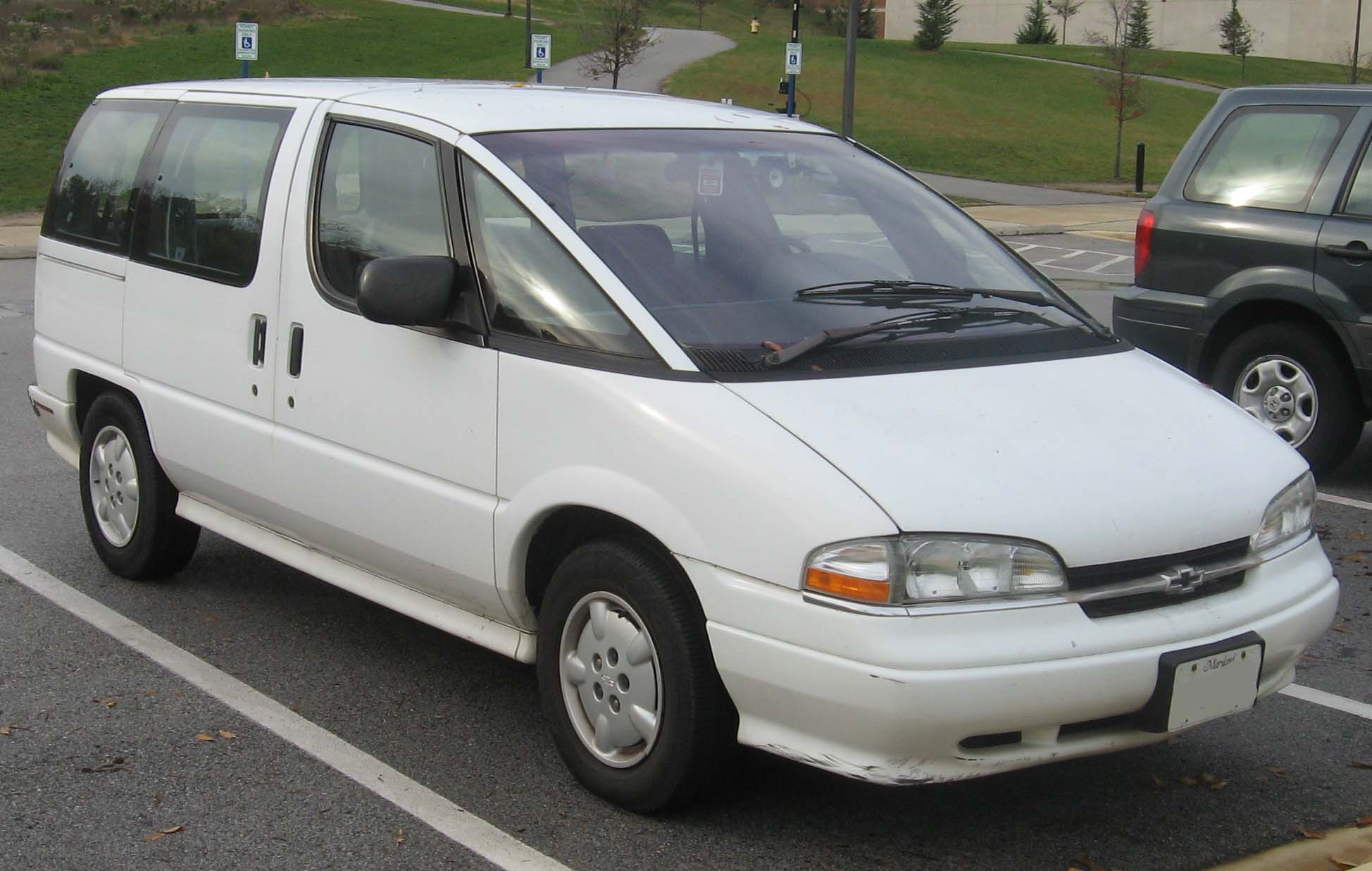
"Jeff's 97 Chevy Lumina was making a three stooges type of noise when he applied the brakes."
The Chevy Lumina is a car made by Chevrolet that was popular in the 1990s. It was known for being roomy and comfortable for families.
The Chevy Lumina is a mid-size car that was produced by Chevrolet from 1990 to 2001. It was known for its spacious interior and comfortable ride, making it a popular choice for families during its production years.
"...the warped part of the disc is coming around, it is slapping at the brake pad and moving it in the caliper bracket and giving you the bup, bup, bup, bup, bup noise."
Brake pads are parts of your car's brakes that push against the wheels to help stop the car. If they are damaged, they can make noise and not work well.
A brake pad is a component of the braking system that presses against the brake disc to create friction and slow down or stop the vehicle. Worn or warped brake pads can cause noise and reduced braking performance.
"...moving it in the caliper bracket and giving you the bup, bup, bup, bup, bup noise. You can find this out by, if it is the front, you can take it to your repair shop..."
The caliper bracket is a part that holds the brake caliper, which squeezes the brake pads against the wheels to stop the car. It helps keep everything in the right position when you brake.
The caliper bracket is a component that holds the brake caliper in place and allows it to move when the brakes are applied. It plays a crucial role in the braking system's functionality.
"...that it was caused by a warp disc rotor, that it was occasionally slapping against the pad."
The disc rotor is the flat metal part that the brake pads squeeze against to stop the car. If it's warped, it can cause noise and make it harder to stop smoothly.
A disc rotor is a circular metal component that rotates with the wheel and is clamped by the brake pads to create friction and slow down the vehicle. Warped rotors can lead to uneven braking and noise.
"What it was was the CV joint. Had a crack in it."
A CV joint is a part of the car's drive system that helps the wheels turn while the car goes up and down on bumps. If it gets damaged, it can cause problems with how the car drives.
A CV joint, or constant velocity joint, is a crucial component in front-wheel drive and all-wheel drive vehicles. It allows for the transfer of power from the transmission to the wheels while accommodating the up-and-down motion of the suspension and the steering angle.
"So the clicking I was hearing was actually the traction control kicking in."
Traction control is a system in cars that helps keep the wheels from spinning too much when you accelerate. It helps the car stay stable and not slide around, especially on wet or slippery roads.
Traction control is a safety feature in vehicles that helps prevent wheel spin during acceleration by reducing engine power or applying brakes to individual wheels. This system improves vehicle stability and control, especially on slippery surfaces.
"...because what the ABS does is it detects a difference in speed among the different wheels."
ABS is a safety feature in cars that helps prevent the wheels from stopping completely when you brake hard. This helps you steer better and avoid skidding.
ABS stands for Anti-lock Braking System. It prevents the wheels from locking up during braking, allowing the driver to maintain steering control during an emergency stop.
"In 1999, Coniac Grand Prix, drove it from Los Angeles up to Big Sur and was up there."
The Pontiac Grand Prix is a type of car made by the Pontiac brand. The 1999 version is known for being stylish and having good performance.
The Pontiac Grand Prix is a mid-size car that was produced by Pontiac from 1962 until 2008. The 1999 model is part of the fourth generation, known for its sporty design and performance features.
The oil light is a warning light on the dashboard of a car. It tells you if there is a problem with the oil, which is important for keeping the engine running well.
The oil light is an indicator on the dashboard that alerts the driver when the oil pressure is low or when there is a problem with the oil system. It's crucial for engine health as low oil pressure can lead to severe engine damage.
"...is by not spilling the oil on the hot exhaust manifold. That is the only part of the engine that's..."
The exhaust manifold is a part of the engine that helps get rid of the gases produced when the engine runs. If oil spills on it and the manifold is hot, it can catch fire, which is dangerous.
The exhaust manifold is a critical component of an engine that collects exhaust gases from multiple cylinders and directs them to the exhaust outlet. If oil spills onto a hot exhaust manifold, it can ignite and cause a fire, which is a serious safety hazard.
"...the ignition point, as we call it, of motor oil is somewhere around 750 degrees."
The ignition point is the temperature at which oil can start burning. For motor oil, this happens at about 750 degrees Fahrenheit.
The ignition point refers to the temperature at which a substance, such as motor oil, can ignite and catch fire. For motor oil, this temperature is typically around 750 degrees Fahrenheit.
"...the ignition point, as we call it, of motor oil is somewhere around 750 degrees."
Motor oil is a special oil that helps keep car engines running smoothly by reducing friction and cleaning the engine parts.
Motor oil is a lubricant used in internal combustion engines to reduce friction and wear on moving parts. It also helps to cool the engine and keep it clean by suspending contaminants.
"...running the car for 10 minutes is enough to get that steel manifold up to 750 degrees."
A steel manifold is a part of the engine that helps move air or exhaust gases. It's made of steel because it can handle high temperatures.
A steel manifold is a component in an engine that directs the flow of air or exhaust gases. It is typically made from steel due to its strength and heat resistance.
"Not a cast iron manifold like cars of yesteryear had."
A cast iron manifold is another type of part that carries exhaust gases away from the engine. It's made from heavy iron, which makes it strong but also heavier than newer materials.
A cast iron manifold is a type of exhaust manifold made from cast iron, known for its durability and heat resistance. However, it is heavier than stamped steel and can be more expensive to manufacture.
"to get eventually to the muffler. And don't forget, if you spill just a drop of oil on there."
A muffler is a part of the car that helps make the engine sound quieter. It takes the loud noises from the exhaust and makes them less noticeable as they leave the car.
The muffler is a component of the exhaust system that reduces noise produced by the engine's exhaust gases. It helps to quiet the sound of the engine while also directing exhaust gases out of the vehicle.
Select text to request an explanation
This message comes from NPR sponsor, Capella University.
Interested in a quality online education?
Capella is accredited by the Higher Learning Commission.
A different future is closer than you think with Capella University.
Learn more at capella.edu.
Hello and welcome to Car Talk from National Public Radio.
With us, click and clack the Tappet Brothers, and we're broadcasting this week from the
Center for the Study of the Decline of Western Civilization, or from Pythagoras to the Cheese
Steak here in Car Talk Plaza.
Go, Tommy.
Well, I mean, I have here this tome.
I mean, literally a tome by PB Warmbat, the automatic decline of Western morals.
And basically, I'll summarize it for you in a sentence or two.
Basically what PB Warmbat says is that the decline of America is due to the automatic transmission,
which actually came way back in the 40s.
It made us lazy.
Made us lazy.
I'm thinking.
And I'll just read you a couple of quotes, and he says, the evil doings of the automatic
transmission are hidden, of course.
We don't know that our wills and desires are being taken away while we are driving.
It is simply a matter, after all, of not thinking.
We don't need to think about the differences between shifting and not shifting because
the shifting happens for us.
We don't think about being responsible for getting the car moving by any coordinated
action of our own.
It just happens.
Slowly this decline in personal responsibility creeps into other aspects of our lives.
We don't want to be responsible for getting up and changing the channel so we have a remote
control.
We don't want to do the right thing and do the dishes so we have a dishwasher.
We don't want to bother with actually raising our own children so we give them their own
TV.
Should we really be surprised when they shoot up the school on a lock?
Of course not.
They're just like us, not able to conceive of themselves as in any way responsible
for their own actions.
Like us, they have become shiftless.
Shiftless.
Oh, how profound.
Well, I will say that the good folks at Mercedes-Benz have done their little bit to negate the
negative effects of the automatic transmission by making the radios and the heater controls
impossible to understand.
Boy, you got to think when you drive one of those.
I guess that's the test.
It isn't the money that determines whether or not you can afford a Mercedes.
Oh, right.
So if you can work the radio.
Brain power.
Brain power.
If you can't work the radio and the heater then you don't buy the car.
All right.
Well, that's it.
I don't know if the automatic transmission has been the decline of America.
Maybe he's right.
I don't know.
Who knows?
Anyway, if you want to talk to us about your automatic transmission or your automatic up
windows or something like that, the number is 1-888-CAR-TALK, that's 888-227-8255.
Hello, you're on Car Talk.
This is Helen from Durham, North Carolina.
How are you?
Oh, Helen.
It's a pleasure.
Hi, Helen.
Durham.
Durham.
North Carolina.
My week often is laughing at, I mean with you guys.
Oh, yes.
Of course.
Oh, that's slip, Helen.
Sorry.
So what's on your mind today?
Well, I have an interesting dilemma and I want to tell you the story real quick before
I ask my question.
Yeah.
My daughter's a sophomore at East Carolina University.
It's just in Greenville where they had a lot of flooding.
She called me last Thursday and said that her car was running a little warm.
It's a 92 Toyota Camry.
I said, just take it to the Toyota dealer.
So she goes there, they look at her fluid, say your fluid's a little low, and while they're
standing there, she notices that the radiator's bubbling in the front.
She said, what's that?
And they said, oh, it looks like a crack in your radiator.
We can probably repair it, but we may have to replace it.
If we have to replace it, the way you need to use Toyota or Off-Brand, we chose the
Off-Brand.
So she gets it.
Oh, they gave her the option.
The dealer gave it.
Wow.
They gave her the option.
They were very generous.
Do you want the $750 radiator?
Exactly.
You're not going to believe this.
Friday morning, she goes and picks up her car, writes them a check for $530, goes home, and
the phone rings as soon as she got home, and they said, Sarah, can you bring your car
back?
We forgot to put the coolant in.
No, they forgot to put the radiator in.
They took out the old one, and they didn't put in a radiator.
They just charged for it.
Really?
Yeah, really.
Write that down.
Wait a minute.
Wait a minute.
This might not be good.
How far did she drive?
Well, that's, I think, the good news.
Only about four miles.
Too far.
About 60 degrees.
She said the thermostat never got warm like it had been.
Well, duh, without any coolant in it, the thermostat won't move at all.
Won't work.
Won't work.
Well, look, then they had the nerve to ask her to drive the car back to them.
That was pretty nervy.
Yeah.
Well, then as soon as she was willing to, she's 19, she was going to drive it back.
They changed their mind, called her back, and said they were sending a tow truck.
Good idea.
The tow truck guy opens up her hood and says, have you called your dad?
Well, that was good advice.
So she called her mom instead.
Close enough.
All right.
So anyway, my concern is, how much damage could have been done?
What do we need to look for, and how long will it take to show up?
They also have the nerve to say she had 120,000 miles on the car.
They don't want to necessarily do a warranty on the motor.
Well, the answer to your question is who knows, but this could have been it.
Well, so how do we wait for it?
You don't do nothing.
Okay.
You haven't put the radiator in this time.
Yeah, that's done.
And not to be sarcastic, but ask them if they could actually put even the hoses
and the clamps and the antifreeze in also.
Exactly.
And circulate it and make sure the fan works.
Okay.
And then you drive it.
Okay.
If it turns out that the thing begins to burn in an inordinate amount of oil, which is entirely
possible, because that's one of the things that happens when you badly overheat an engine.
Okay.
And we don't know how badly she overheated it because the temperature gauge wouldn't
work without cooling it in the system.
If that sensor isn't immersed in water, it won't read.
Well, no wonder it didn't get warm.
Exactly.
And if you had been able to measure the temperature, although you'd be measuring
the wrong temperature, it might have been off the charts.
Oh my gosh.
It might have been.
I mean, driving four miles is pretty far.
Yeah.
I mean, if I were a lawyer, I would be thinking about, gee, when I do start burning a quart
of oil every couple of days, how am I going to prove that this happened?
I mean, did they acknowledge?
They should.
They should have put it in writing.
Well, that was the thing.
They offered to give us half the money back and a 30-day warranty.
Well, I would do that.
I would take that.
I would take half the...
No, listen, when she picked it up, they didn't give her back any money, and they gave her
nothing in writing, so we just stopped payment on the check.
Good.
So now you've given them nothing.
Right.
But still...
Here's what I would accept from them, because I think this would be of great benefit
if you had to go to court, 120,000 miles notwithstanding.
You would say, we will pay you whatever you want for the job, pay you the full
amount even, but we want a letter from you saying that we forgot to put the
radiator in the car.
And she drove it home, which was four miles, and then we asked her to bring the
car back, and she did, and we put the radiator in.
And that's all you need.
That makes a good sense.
If you had to go to court, that alone would hang them.
Right.
So if the car began to burn oil at a tremendous rate, you would expect them to
rebuild the engine for free, and if you took them to court, you'd win the
case.
Right.
Because they made a stupid mistake.
But everyone made...
All mistakes are stupid, almost all mistakes.
And if they made one, they should have to be responsible for making that
mistake.
And the consequences, and one of the consequences might be having to rebuild
your engine.
Right.
Well, that just makes good sense.
I think so.
But you want the letter.
Say, we'll pay you if, in fact, you write us this letter on your letterhead.
And if you don't want to do that, then sue us, and you'll never hear
from them again.
Right.
That's what I would do.
Well...
I hope none of my customers are listening.
Have you ever forgotten to put a radiator in?
Boy, that's tough.
Not a radiator, but I've forgotten a few other things.
Yeah, me too.
But not a radiator.
There's a large hole there where it belongs.
That's a very big hole, and I know exactly how it happened.
The guy, the mechanic, took out the radiator.
The hood is up.
He's waiting for the new radiator to come.
It's lunchtime.
He's sitting there having his lunch, and he lowers the hood to put
his sandwich on top of the hood, because he got to balance his
coffee somewhere.
Right.
And he gets sick for the afternoon, because of the bad lunch to the
day.
He leaves, and they assume that he's finished with the job, and they
just pull it out and call you up and say, come and get it.
Yeah, and write the check.
And he comes in later and finds the radiator sitting there in the
box and says, oh my God.
I'm sure that's exactly what happened.
Oh yeah, three days later, he came back.
Well, fortunately, she didn't drive to home or anything.
Oh yeah.
Helen, good luck.
That's an interesting story.
Thank you so much, gentlemen.
I thought you'd get a kick out of it, and I appreciate your
suggestions.
See you later.
Bye.
Bye-bye.
All right, Tommy.
Do you remember last week's puzzler?
It wasn't that lame puzzler about the pendulum, was it?
No, it was a different lame puzzler.
This message comes from BetterHelp.
The new year isn't about doing more.
It's about carrying less.
Therapy can help you unpack what's been heavy and bring more
clarity, calm, and perspective into 2026.
It's a small act that can lead to big relief and real perspective for the year ahead.
You can't step into a lighter version of yourself without leaving behind what's been weighing
you down.
Visit BetterHelp.com slash NPR for 10% off.
This message comes from Babbel.
Babbel's conversation-based language technique teaches you useful words and phrases to
get you speaking quickly about the things you actually talk about in the real world
with lessons handcrafted by over 200 language experts and voiced by real native speakers.
Start speaking with Babbel today.
Get up to 55% off your Babbel subscription right now at Babbel.com slash NPR.
Spelled B-A-B-B-E-L dot com slash NPR.
Rules and restrictions may apply.
This message comes from Alian's travel insurance.
You wanted to take your travel adventures to new heights, so you decided to take
on a hiking tour of the Dolomites.
You were ready for the climb.
Your knee?
Not so much.
Now you've had to swap out your hiking boots for a leg brace.
Emergency medical benefits can help when injuries or illness knock you off your feet.
Learn more at alianstravelinsurance.com.
This message comes from Instacart.
Did you see the game last night?
Of course you did, because you used Instacart to do your grocery restock.
Plus, you got snacks for the game, all without missing a single play.
And that's multitasking.
So Instacart isn't saying it's a hack for game day, but it might be the ultimate
play this football season.
Enjoy $0 delivery fees on your first three orders.
Service fees apply.
Valid on three orders within 14 days.
Excludes restaurants.
Instacart.
We're here.
Hi.
We're back.
You're listening to Car Talk with us, Click and Clack the Tappet Brothers, and we're here
to talk about cars, car repair, and of course the answer to last week's historic puzzlers.
First the question.
What was it about?
Folkloric?
I don't remember what it was.
I don't either.
Give me a hint.
I have no idea.
I do know that this came via the internet from a fellow named Dan Gallaghert, the
date is June 96th.
Oh, I remember that.
Here it is.
I'm just going to just read what Dan sent us, because I couldn't have improved it.
In qualifying for the Camel Trophy Off-Road Race, potential drivers were told that they
had to match the lap time of their partners as closely as possible without the use of
timepieces.
I don't know if wristwatches are clocks or anything really, and you couldn't use
a radio in the car or a pendula.
For example, the first man of the two-man team would drive the course through the
woods over bridges to Grandma's house through the streams, and then return to the starting
point and give his truck to his partner, who would then drive the same course and try
to finish in the same time.
Right?
Yeah.
So the first guy finishes the course in like four minutes and 29 seconds.
The second driver would try to duplicate that.
You got you with me?
We're on the same page?
Yeah, I'm with you.
But how could he do that without the use of a clock or a watch?
And this has nothing to do with a string and a lighter, but I said it's close.
And that was the hint.
It's close.
They were not allowed any timepieces per se.
But it doesn't mean you couldn't measure time somehow if it weren't with a timepiece.
Right.
I mean, you could use the sun.
And I'm sure people were trying to think of how to use the odometer or singing a song.
You could do that.
They could sing the Star Spangled Banner.
Oh, that's good.
That would be pretty good.
I haven't thought of that.
But better than all of those is you turn on the windshield wipers and you count
the swipes.
Wow.
And you can't get a better timepiece than that.
That's a good time, unless you're in the MG.
Right.
Who's our winner?
That's very good.
And the prize this week goes to Julie Johnson from Washington, D.C.
All right.
And for having her answer selected at random among the thousands of correct answers that
we got.
Julie is going to get a copy of our brand new CD about fathers and cars, which is called
Why You Should Never Listen to Your Father When It Comes to Cars.
The collection includes the call about the stupid little book.
I remember that call.
Oh, yeah.
Remember the stupid little book?
My father made his daughter fill out the stupid little book every time she got gas
or checked the oil.
And one day she told him, I'm not filling out the stupid book and she threw it
out the window.
No, that's not exactly what she did.
Well, that's just one of the many fatherly calls featured on Why You Should Never Listen
to Your Father When It Comes to Cars.
Good luck to you, Julie.
And I hope you have a good time hearing and listening to it.
Indeed.
And we'll have a new.
I can't really decide.
I have a non-automotive and an automotive.
I think I'm going to use the semi quasi coming up in the third half of today's
show.
So stay tuned for that.
Hey, do you know what it's time for, pal?
It's time to rate the leaves out of your MG.
No, no, not yet.
It's time to play Stump the Chumps.
So once again, our producers have invited back a lucky, lucky to be alive,
that is caller, from a previous car talk show to find out just what happened
when he or she followed our advice.
It's not a liability insurance.
You bet it is.
OK, then who's this week's chump stumper?
I don't know.
It's Jeff from Moten.
Moten, Pennsylvania.
Jeff's 97 Chevy Lumina was making a three stooges type of noise when he applied
the brakes.
That's it.
More of a classic.
It's more classic.
All right.
All right.
Now I remember it.
I remember knowing exactly what it was.
And I, of course, said you were completely full of baloney.
Well, you did it first.
OK, and what's happening is as the warped part of the disc is coming around,
it is slapping at the brake pad and moving it in the caliper bracket
and giving you the bup, bup, bup, bup, bup noise.
You can find this out by, if it is the front, you can take it to your
repair shop and have them put it up on the lift and you can run the car
in gear and you can step on the brake and you'll be able to hear
and see this.
OK.
You'll actually be able to see the pads moving left to right, which they
shouldn't be doing.
OK.
I take it back.
I like it.
I like it too.
I mean, it's definitely the sound of pads.
Yeah.
It's the sound of one pad slapping.
All right.
So it appears that you convinced me that it was brake pad noise and that
it was caused by a warp disc rotor, that it was occasionally slapping
against the pad.
Is that still your position?
Are you sticking with it?
Not really.
Can I talk to Jeff first?
Sure.
Jeff, are you there?
I am there.
All right.
Before we allow you to single-handedly ruin my brother's reputation,
we have to be sure this is all on the up and up.
Do you affirm, Jeff, that you have not been offered any cash or
prices by our staff?
The staff of National Public Radio are any member of the Atlanta
Brave starting lineup?
Sure.
OK.
What happened?
Well, I did take it in, and I do it thank you guys because, you know.
It was serious.
You advised me to address the situation, so I did that.
Uh-oh.
It doesn't sound good.
It doesn't sound good at all.
Took it in.
Yeah.
They said they did not see any problem with a warp disc.
Oh, man.
Bummer.
But were they able to hear the sound?
Oh, they heard the sound.
And?
Here's what they did.
What it was was the CV joint.
Yeah?
Had a crack in it.
Oh, that's possible.
And what was happening was the crack in the CV joint was actually causing my anti-life
breaks.
Oh.
Oh.
To come on all the time.
Oh, man.
I love it.
Isn't that good?
Geez.
So the clicking I was hearing was actually the traction control kicking in.
Exactly.
Oh, man.
Wow.
That is very good, because what the ABS does is it detects a difference in speed among the
different wheels.
Okay.
And the crack CV joint.
See, now had you been more discerning, Jeff, you would have told us that your ABS was
deploying instead of some bogus, the heck is that about?
Yeah, I knew you were going to get me right now.
No, come on.
They're going to blame it on him.
Of course.
We had the option to ask him a hundred times what the noise was.
You wanted to go into your little three stooges routine, and you paid for it.
All right.
Well, okay.
So the CV joint was replaced, and the problem went away.
Well, no kidding.
Yeah.
We could have figured, no, you couldn't have.
Well, anyway, Jeff, thanks for playing Stump The Chumps.
You were a good contestant.
Thanks a lot, man.
Thank you.
Now, if anyone out there hears someone you'd like us to invite back on Stump
The Chumps, our staff is eager to hear your suggestions.
They love to humiliate us.
Yeah.
Drop us a note or email us from the car talk section of cars.com and say, I got an idea
for Stump The Chumps.
Now, if you'd like to embarrass us like right now, the number to call is 888-CARTALK.
That's 888-278-2555.
Hello, the extra fives don't matter.
Hello, you're on CARTALK.
This is Charlotte in New Mexico, fair acres in New Mexico.
Hi, Charlotte.
Are you from New Mexico?
Well, it's fair acres.
It's near Las Cruces, which is in southwestern New Mexico.
That's right near the Alabama border, right?
Oh, absolutely.
Yeah.
You're right.
I know my geography.
Geology.
Geology.
No, my bryology.
I'm a marine bryologist.
Yeah.
So, Charlotte, what's up?
Well, we need help with a problem here.
We need some advice from you.
Yeah.
My husband and I decided to life and up our dull middle age, and we looked at a number
of options, and finally decided that adopting four little kids was just the ticket.
Really?
Yeah.
Awesome.
Human kids are dogs.
Human kids, but we have four dogs, too.
Four human kids.
But the problem involves the four little kids.
Now, this was several years ago, and they're adjusting and doing real well, but they're
real busy, active little kids.
Aren't they, though?
How old are these little brats?
How old are these wonderful children?
Yeah, they're wonderful.
I'm sorry.
Did something else slip out?
Well, they are currently 10, 9, 8, and 6.
Oh, my God.
Yeah.
It's a package.
How much Prozac do you take a day?
Let's not talk about that.
Oh, man.
10, 9, 8.
It must be like a three-ring circus in your house.
Yes.
Four.
Four-ring circus.
Man.
My sister says it's more like the army, and we're more like drill boys.
Oh, you'd have to be.
Yeah.
Wow.
Two boys and two girls?
If that's it.
Yeah.
That's it.
And, you know, these are busy little kids.
Oh, you ain't kidding.
They like to dismantle things, and I got this brilliant idea of getting an old car
for them.
Oh, man.
And that's where you came in.
Charlotte.
Am I not a guy?
You're crazy.
Let's explore it though.
I mean, it might have some potential.
Well, this is our thinking that, you know, they could play driving on the inside,
and we would disable it so that they couldn't get it to roll because our property's on
a slant.
What's the matter with a jungle gym?
Well, because they can't take that apart.
These kids evidently have the exploratory nature, and they want to take stuff apart.
They do.
The only thing that concerns me about your idea, I think it's a great idea, but a car
is dangerous.
Well, yeah.
And, you know, I don't want engine parts falling on them.
I mean, I have to advise against the car because there are fluids and greases.
I mean, you'd never be able to clean out all the stuff that you needed to clean out.
There are sharp things.
There are heavy things which, once you move, could fall on delicate, crushable little fingers.
And I know.
I mean, I've been doing it for 26 years and things fall on my delicate, crushable little
fingers all the time.
And I'm careful.
I'm just wondering if there's some way that we could, like, what if you removed
all the doors?
That way you wouldn't get any fingers smashed in the doors.
Yeah.
But it's only a matter of time before they decide to remove the alternator.
And the alternator drops on somebody's fingers.
Yeah.
If only we could take the fun element.
Do you plan to let them back into the house at night or are they going to have to live
in the car?
Well, it might depend on how greasy they were.
Yeah.
Well, that's the other thing too.
Your laundry is going to suffer tremendously.
I see it, Charlotte.
You have invented the newest new product that click and clack take apart car.
That's it.
Isn't it?
Right.
That is it.
It could be made out of materials.
Space-age materials.
Space-age materials that wouldn't be harmful to kids.
You could take it all apart, put it all back together again.
We could sell our own line of craftsperson tools.
Yeah.
And old clothes.
And old clothes.
And then we could, we could branch out into dish washing and clothes washing
compounds.
Like the jumpsuits.
The jumpsuits.
Charlotte.
They have the toolkits.
You're a ticket out of this dump.
Well, maybe you should call me when you're done.
We'll have our people call your people.
We might want to use your 10, 9, 8, and 6-year-old kids as product testers.
Oh, they would love it.
We'll have the prototype up and running in two weeks.
I think you're going to have to wait until we have our product on the market because
I don't think I want to recommend that you let your kids play with a real car, unfortunately.
Well, I think you're right.
But have the four kids really put some new spice into the life of you and your husband?
Oh, yeah, you would.
More spice than I can handle.
Good for you.
Good for you.
Well, you've done a noble thing, obviously.
Yeah.
But you've got some crazy ideas, Charlotte.
You're going to have to see a doctor.
It's obvious that the four of these kids are driving you nuts.
Do whatever you can to save yourself.
Increase your dosage, and we'll call you in the morning.
All right, I'll wait for the prototype.
See ya.
Thanks so much.
That's all right.
Well, it wasn't really a bad idea.
No, it was just a bad idea.
All right, it's time to take a short break.
Yeah, and when we come back, my brother will present us with another in his long line of barely acceptable puzzles.
Is that the reverential enough?
Yes.
Okay, we'll be back in a minute.
This message comes from NPR sponsor OnePassword.
Anyone else feel like 99% of your emails and texts are password reset codes?
Trusted by millions of users and over 175,000 businesses,
OnePassword lets you skip the resets and sign in securely with strong, unique passwords
that auto-fill across all your devices.
You can safely share logins, store cards and files,
and finally stop using your pet's name as a password.
Try it free for two weeks at OnePassword.com slash NPR.
This message comes from Babbel.
Babbel's conversation-based language technique teaches you useful words and phrases
to get you speaking quickly about the things you actually talk about in the real world
with lessons handcrafted by over 200 language experts and voiced by real native speakers.
Start speaking with Babbel today.
Get up to 55% off your Babbel subscription right now at Babbel.com slash NPR.
Spelled B-A-B-B-E-L dot com slash NPR.
Rules and restrictions may apply.
This message comes from Intuit TurboTax.
With TurboTax Expert Full Service,
match with a dedicated expert who will do your taxes for you from start to finish
getting you every dollar you deserve.
It's that easy.
Visit TurboTax.com to match with an expert today.
Ha! We're back.
You're listening to Car Talk with us.
Click and collect the Tapper Brothers and we're here to discuss cars, car repair
and the new puzzler.
I can hardly wait.
Well, I fall one.
You may have to wait a while.
It's rather lengthy.
But this came from a guy named Bob Cofield from, I don't know where, Cyberspace.
Maybe even farther away than that.
He says, I am disappointed that in all of your shows that I have listened to,
you have never paid tribute to the great and venerable patron saint
of automotive diagnosticians Gus Wilson.
Surely remember that Gus was the proprietor of Gus's model garage
whose stories appeared in popular science monthly several years ago.
Several, several decades ago.
Yeah. Well, I realized until I read the letter came to us in 1982.
Anyway, he goes on and on and on.
He says, I know how desperate you are for puzzles, et cetera, et cetera.
So I thought you might be interested in a Gus Wilson classic.
Don't worry about copyright infringement.
He's dead.
And I will read what he said.
This is stolen right from the Gus Wilson archives.
It seems that there was an intense but friendly rivalry
between the volunteer fire departments of two nearby towns,
Jeffersonville and East Norerton.
Pride was at stake as their rivalry climaxed each year
in the fireman's competition at the county fair.
That's what they do with county fairs.
So closely matched with the two fire brigades
and skill and experience that the preliminary hook and ladder events
were virtually a tie leading up to the final showcase event
of the race of fire trucks.
There's going to be a race. Got it? Got it.
20 laps were raced counterclockwise
around the quarter mile dirt track at the fairgrounds.
Both brigades drove identical pumpers,
scrupulously maintained and adjusted to peak performance.
The rules require that they be set to factory configuration
fully loaded and equipped in the crew's identical
and total weight to the nearest ounce.
Wow. Oh, this is serious stuff.
Wow. There's quite a rivalry, you know,
between Jeffersonville and the other place.
East Norerton. Both drivers were skilled
and experienced, wily veterans of the road.
So you'd imagine that they would balance out.
Anyway, the Jeffersonville team had come away disappointed
for four years in a row having lost a final event
by the closest of margins each time.
Kind of like the Atlanta Braves.
They appealed to Gus to provide them
with some small competitive advantage.
Gus took a look at the high-wheeled pumpers
in the dirt track and mused while he knocked the ashes
from his pipe.
And Bob writes a dramatic affectation
that you might consider adopting yourselves.
He then stepped forward and without tools,
without violating the rules
and without even opening the hood of this fire truck.
He makes a quick adjustment
that enables Jeffersonville
to take home the trophy that year.
What did he do?
Give me the rules again.
Oh, come on.
They're going to be tuned to factory specifications
and the weights of the guys that were then announced.
Right.
Okay. He didn't do anything illegal
because Gus Wilson, he's the patron saint
of automotive diagnosticians.
And being a saint, he wouldn't do anything illegal
or immoral.
He would throw the ashes out of his pipe
without any tools, without even opening the hood.
He makes an adjustment.
Is that important?
He makes an adjustment, yes.
I would say the adjustment is the operative word here.
Yeah.
He makes an adjustment, but he doesn't open the hood.
Yeah.
He doesn't even set foot inside the truck.
Oh, man.
Do you need any more hints needed?
No.
Excellent.
I had an answer that was within reason.
Well, send it to the Jeffersonville flying department
because they really didn't win.
If you think you know the answer,
write it on the back of a $20 bill
or a block of Pecorino Romano.
Imported Pecorino Romano
and send it to
Puzzler Tower, Car Talk Plaza,
Box 3500,
Harvard Square, Cambridge.
Our fair city.
Matt 02238.
Of course, you can email your answer from the Car Talk section
or call us.
If you'd like to call us.
The number is 1-888-CAR TALK.
That's 888-278-25.
Triple five.
Triple five.
Hello, you're on Car Talk.
Hi.
You've got Glenn from White Bear Lake, Minnesota.
White Bear Lake.
I'm writing this down.
M-N. Does anyone ever see a White Bear
near that lake in Minnesota?
I doubt it.
There's a huge White Bear
on top of a car dealership in town.
That'll do it. That's good enough.
Oh, it's B-E-A-R.
I wrote B-A-R-E.
I thought it was a nudist calling it.
Oh, God.
All right, so Glenn, what's up, man?
Okay, well, I've got a question.
And this is about
a rental car that I had.
I was on a trip.
I was out in California.
I picked up this rental car.
In 1999,
Coniac Grand Prix,
drove it from Los Angeles
up to Big Sur
and was up there.
And one day,
was driving around, was only on the road
for maybe about 10 minutes,
and the oil light came on.
Isn't it great to be driving
a rental car with something like that?
In the middle of nowhere.
And the car only had about 3,000 miles on it.
So I stopped
to check the oil.
And it looked like it might need a little.
It wasn't showing like it would need a full court.
I stopped in this little service station
with just a
one or two pumps and a shack
for a
where there was one person
just kind of sitting inside.
So I went and got a quarter oil.
I put the oil in.
And you know when you put oil into a car
that sometimes a little bit of it spills?
Mm-hmm.
That's a tablespoon of oil spilled.
I can see it plenty.
That's plenty to cause havoc.
And what happened
is the engine caught on fire.
Yeah, I know.
Or the oil caught on fire.
And I have put oil in cars.
I don't know how many times where that's happened.
And I couldn't figure out why
all of a sudden my car was on fire.
What were the first two words out of your mouth?
Why didn't I mind my own business?
Well,
I mean, you do know I think
and you just didn't think of it
at the time
that being down a half a quart of oil
would never turn on the
the oil light. You know that.
Oh, sure I do.
Then why'd you go putting oil in the thing full?
No, I don't.
He didn't know.
He knows now.
I embarrassed him in front of
2.7 million listeners. Now he knows.
I'm just telling you that you could have avoided the whole thing
knowing that the oil
light doesn't come on when you're down anything.
You're going to be down
5 quarts for the oil light to come on.
Well, at least 4 anyway.
Okay. His mother's probably
listening. The poor guy.
So you could have avoided the fire.
All right. But I just want to get that straight.
The other way you could have avoided
is by not spilling the oil on the
hot exhaust manifold.
That is the only part of the engine that's
hot enough to actually start a fire.
I believe
the ignition point,
as we call it, of motor oil
is somewhere around
750 degrees.
And running the car
for 10 minutes
is enough to get that steel manifold
up to 750 degrees.
This car has a stamped steel manifold.
Not a cast iron manifold
like cars of yesteryear had.
And boy, that gets hot within about a minute.
Yeah, and it's really hot, man.
And that's the part.
That's the conduit for the hot exhaust
to get eventually to the muffler.
And don't forget, if you spill just a drop
of oil on there,
it's gonna just go.
Okay. Well, he knows that now.
Yeah, I learned that.
So how did you put the fire out?
You ran, didn't you?
I ran over to this little shack
and there was a person in there.
And I said,
my engine is on fire.
And they started
and they got very upset
and they grabbed this old fire extinguisher
and I brought it out there
and tried to use it and it didn't work.
Of course.
And so now the flames are getting bigger
and there's some smoke because what happened
is the top of the dipstick
where you got that plastic little body.
Well, that's melted by now.
And anything else that has rubber
or anything is starting to burn
and you can see the flames now.
It all happens.
And I'm standing there saying,
my God, I'm gonna burn down the,
all these redwoods here.
I'm gonna get arrested.
And I started panicking
and it was a, it happened to be a woman
who was in this little shack.
She came out and she started
yelling at me,
drive away, drive away.
Yeah, right, sure, lady.
Yeah, fan the flames.
It's gonna explode.
I'm gonna go to the bar and drive it away.
So luckily there were these two guys
who were, you know, like a pump over from me
who had a pickup truck
and they had a cooler full of beer.
So they took the beer out of the cooler
and dumped the cooler
full of water and ice
on the engine with the fire.
Yeah, they never would have used the actual beer.
No, they saved the beer.
But that's how we put the fire out.
Great, very good.
Well, lucky they were there.
I was just wondering because
I have done this, I've put oil in cars
I don't know how many times and that's never happened.
You know what I want?
You had what's called the right alignment
of the planets.
You just turned the engine off,
you added oil and you spilled it
on the hot manifold
and you spilled the sufficient quantity
of it and you've been driving up hill
so the engine was even harder
than it would have been ordinarily
and you were nervous so your hand was shaking
so that's why you spilled it.
All the factors were there.
It could happen the very next time you do it
but you'll never do this again, Glenn.
Never again.
But what I really want to know, Glenn
what I want to know what's been troubling me
since the beginning of the story
did you tell them at the rental car company
that you had done this
or did you just bring it in
fill out the little form with the mileage
and say have a nice day?
Did you add any oil? Nope.
Well, I was afraid that you were going to ask me.
Yeah.
And to be honest, that's why I only use my first name here
is when I brought it back
they asked me if everything was okay.
And I said
and I didn't lie, I said everything turned out okay.
You mentioned
that you were almost responsible
for the largest ecological disaster
since the Exxon Valdez
but it turned out okay.
I got it back to LA.
And the light never came on again?
No, it never came on after I added the oil.
So, I don't know if the fire
put the light out or what?
I think the fire put the light out.
But it is a lesson.
Don't ever add stuff to a
or at least flammable stuff
to a very hot engine.
I think that's a good lesson.
And so is
power steering fluid
and transmission, all those things are flammable.
So any of those that you add
you spill onto a hot manifold
where fires start.
It will burst right at the flame.
Yeah, but I mean I'm surprised
that the flame lasted as long as it did.
I mean you must have spilled a fairly
large amount of stuff.
I think that when the plastic caught fire
that probably added fuel
to the flame.
Well, Glenn, your secret is safe with us.
Don't worry. See you later.
Thanks you guys.
How many guys named Glenn can live in White Bear Lake, Minnesota?
I'm never going there.
That's dangerous.
It's happened again.
You've squandered another perfectly good hour
listening to Car Talk. Our esteemed producer
is Doug the Subway Fugitive.
Not a slave to fashion, Berman.
Our social producer is Ken the Diaper Slayer Rogers.
Our assistant producer is
Frau Catherine Fenolosa.
Our engineer is Dennis the Menace Foley.
Our senior web lackey is Doug Sheepboy,
Mayor and our technical, spiritual
and menu advisor is the Bugster
who is here and
straight from Bugsy World.
He's here. He's not conscious, but he's here today
and John Bugsy did somebody say
Free Lunch Lawler.
Our public opinion pollster is Paul Murky
of Murky Research, assisted by Statistician Marge
in O'Vara.
Marge in O'Vara.
Customer care representative
is Haywood Jabuzov.
Our director of medical research is
placebo domingo
and our official football widow is
Eliza the Couch.
Our filmmaker is Robin D. Cradle.
Our sexual harassment counselor is Pat McCann
and our director of sycophantic activity
is Eileen Yourway,
our chief counsel from the law firm of
Dewey Chudam and Howe.
Is you, Louis Dewey, known to the very important
alumni as you and Louis Dewey.
Thanks so much for listening.
We're clicking clack to tap it.
Brothers, don't drive like my brother.
Don't drive like my brother.
Yeah, indeed. Don't drive like him either.
We'll be back next week. Bye-bye.
And now, here is
Car Talk Plaza's chief mechanic,
Mr. Vinnie Gumbatz. Vinnie?
Thank you very much. Now, if you
want a copy of this year's show,
try to sound more like I'm
with the mob, you know?
Which is number 45.
Just pick up your phone and call this number
1-888-CAR-JUNK.
Hey, Vinnie, what if I wanted the new
Car Talk CD? Why you should never listen
to your father when it comes to cars?
Would I call that very same number, Vinnie?
No, you'd call Derek Jeter's social secretary
or dope. Of course you'd call
the same number. You'll call the
Shameless Commerce Division at
888-CAR-JUNK or visit it
online at the Car Talk section
of Cars.com. No, thank you, Vinnie.
That was very, very revealing. They revealed this, okay?
Car Talk is a production of
Jim and Howe and WP, who are in Boston.
And even though Jim Learrow looks at Ray
Suarez funny whenever we say it, this is
NPR National Public Radio.
This message comes from Bombas.
When you're playing sports, you're focused.
Your socks should be, too. Bombas
engineers socks to fight sweat and
cushion impact for every sport.
Visit Bombas.com slash NPR
and use code NPR for 20% off
your first purchase.
This message comes from Intuit
TurboTax, which is a
brand-new product of the
company. This message comes from
Intuit TurboTax, which is a
brand-new product of the
company. This message comes from
Intuit TurboTax. With TurboTax
Expert Full Service, match with a
dedicated expert who will do your
taxes for you from start to finish
getting you every dollar you deserve.
It's that easy. Visit
TurboTax.com to match with an
expert today.
Request an explanation for:
3 cars
3 cars featured
Request an Explanation
Heard something you'd like explained? We'll add it to this episode.
Sign in to request explanations for terms you heard.
Want to learn more?
Browse our glossary for plain-English explanations of automotive terms, jargon, and concepts.
See something that's not quite right? Our annotations are AI-generated and can sometimes miss the mark.
Click the flag icon on any annotation to suggest a correction.