The Tappet Brothers tackle the humorous complexities of gift-giving for men, sharing quirky rules and insights on what makes a perfect present. They also dive into car troubles with callers, offering advice on issues like low engine compression and heater blower problems. A standout moment includes a call from Antarctica, where a listener describes vehicle issues in extreme cold. The episode blends automotive wisdom with light-hearted banter, making it a fun listen for anyone interested in cars and the quirks of life.
A lot of cars don’t like operating in the cold of a normal winter and Matt and his Delorean are having a tough go of it… at the South Pole. ‘Penguin in the tailpipe?’ Perhaps. Find out on this episode of the Best of Car Talk.
"Hey, isn't that a starter for a 68 Ford Fairlane? Wow, thanks."
The Ford Fairlane is a classic car made by Ford, popular in the late 1960s. The 1968 model is known for its good looks and powerful engine options.
The Ford Fairlane is a full-size car that was produced by Ford from 1955 to 1970. The 1968 model is part of the fifth generation of Fairlanes, known for its stylish design and performance options.
"...we'll buy an Acura. It's a 1990 Acura Integra GS."
The Acura Integra GS is a small car from the 1990s that many people liked for its fun driving experience and good reliability. It's often seen as a great choice for those looking for a sporty vehicle.
The Acura Integra GS is a sporty compact car that was popular in the 1990s. Known for its reliability and performance, it features a high-revving engine and a lightweight chassis, making it a favorite among enthusiasts.
"...they said cylinder number two is operating at 25 psi. Oh, bummer. First of all, what does that even mean? How many psi is it supposed to run at? Well, it's supposed to have at least 125."
PSI is a way to measure pressure. In cars, it tells us how much pressure is inside the engine's cylinders when the pistons move up and down.
PSI stands for pounds per square inch, a unit of pressure commonly used to measure the compression in an engine's cylinders. In this context, it indicates how much pressure is being generated during the compression stroke of the piston.
Term
compression stroke
"...what that number actually means is the number of pounds per square inch of compression that's generated when each piston comes up on its compression stroke."
The compression stroke is when the piston in the engine moves up to squeeze the air and fuel together before it ignites. This helps the engine run smoothly and efficiently.
The compression stroke is a phase in the engine cycle where the piston moves up in the cylinder, compressing the air-fuel mixture before it is ignited. This is crucial for engine performance, as proper compression ensures efficient combustion.
"...you would simply unplug that fuel injector and just drive the car. And at the very least, you would prevent that unburned gas from getting into the converter and fouling it..."
A fuel injector is a part of the engine that sprays fuel into the engine's cylinders. This helps the engine run smoothly and efficiently by mixing the fuel with air.
A fuel injector is a component in an internal combustion engine that delivers fuel into the combustion chamber. It atomizes the fuel for better mixing with air, which is crucial for efficient combustion and engine performance.
"...prevent that unburned gas from getting into the converter and fouling it and the air that we all have to breathe."
A catalytic converter is a part of the car's exhaust system that helps clean up the gases that come out of the engine. It makes the car's emissions less harmful to the environment.
A catalytic converter is an emissions control device that reduces harmful pollutants in exhaust gases by converting them into less harmful substances before they exit the vehicle. It plays a key role in meeting environmental regulations.
"We're thinking about getting a used engine, but that might, we might spend $1,000 and have it last for another two months. And then someone said that if we get just one cylinder fixed..."
A used engine is an engine that someone has taken out of a car and is selling it for someone else to use. It's usually cheaper than buying a new engine, but you might not know how long it will last.
A used engine refers to an engine that has been previously installed in another vehicle and is being sold for reuse. These engines can be a cost-effective solution for repairs but may come with risks regarding their reliability and lifespan.
"And I would, I think I'd do a valve job on it. I would too."
A valve job is when you fix or replace the valves in an engine to make sure they work properly. This is important for the engine to run well.
A valve job involves servicing the engine's valves, which can include grinding or replacing them to ensure proper sealing and function. This is often necessary when an engine shows signs of wear or performance issues.
"Well, we thought it might be rings because it's burning oil and it's got a lot of blue smoke. Oh, you didn't mention that, Sylvia?"
Blue smoke coming from a car's exhaust means that the engine is burning oil, which usually means there's a problem with the engine. It can be caused by worn parts inside the engine.
Blue smoke from an engine indicates that oil is being burned in the combustion process. This is often a sign of engine wear or failure, particularly with the piston rings or valve seals.
"Well, we thought it might be rings because it's burning oil and it's got a lot of blue smoke. Oh, you didn't mention that, Sylvia?"
Burning oil happens when oil leaks into the engine's combustion area and gets burned up, which can cause blue smoke to come out of the exhaust. It's usually a sign that something is wrong with the engine.
Burning oil refers to the condition where engine oil enters the combustion chamber and is burned along with the fuel. This can lead to blue smoke from the exhaust and indicates potential engine issues such as worn piston rings or valve seals.
"...recommend a used engine or a rebuilt engine. Because you don't want it to a valve job if you're already burning excessive oil."
A rebuilt engine is an engine that has been fixed and updated with new parts so it can work like new again. It's often cheaper than buying a brand new engine.
A rebuilt engine is one that has been disassembled, inspected, and repaired or replaced with new parts to restore it to good working condition. This can be a cost-effective solution for older vehicles with significant wear.
"Well, I got a 1996 Chevy Cavalier. And now that the mercury is falling and the temperatures are going down here in the northeast..."
The Chevy Cavalier is a small car made by Chevrolet that people often bought because it was cheap and reliable. It was made for many years, from the early 1980s until 2005.
The Chevy Cavalier is a compact car that was produced by Chevrolet from 1982 to 2005. It was known for its affordability and practicality, making it a popular choice among budget-conscious buyers.
"...what you want is a blower motor resistor. The way the thing works and the way you get four speeds is you don't have four motors in there, you have one motor..."
The blower motor resistor helps control how fast the air blows from the vents in your car. It does this by changing the amount of electricity that goes to the blower motor, allowing you to choose different speeds for the fan.
A blower motor resistor is a component in a vehicle's heating and air conditioning system that controls the speed of the blower motor. By adjusting the voltage supplied to the motor, it allows for multiple fan speeds without the need for multiple motors.
"I've got this Toyota Tercel. It's a 1987, and it's an automatic."
The Toyota Tercel is a small, affordable car that Toyota made from the late 1970s to the late 1990s. It's known for being economical and easy to drive.
The Toyota Tercel is a subcompact car that was produced by Toyota from 1978 to 1999. It was known for its affordability and fuel efficiency, making it a popular choice among budget-conscious consumers.
"I mean, the most likely thing for it to be on this car is something called the oil pressure switch, the UPSU. And that device is what's responsible for turning the idiot light on on the dashboard to alert you when you run out of oil."
The oil pressure switch is a part that checks the oil pressure in your car's engine. If the pressure gets too low, it turns on a warning light on the dashboard to let you know there's a problem.
The oil pressure switch, often abbreviated as UPSU, is a crucial component in an engine's lubrication system. It monitors the oil pressure and activates a warning light on the dashboard if the oil pressure drops too low, indicating potential engine issues.
"Is your rear main seal. Is your rear main seal blown? Or the front seal or the oil pump or the oil pan is leaking."
The rear main seal is a part of the engine that keeps oil from leaking out. If it gets damaged, it can cause a lot of oil to escape, which can be bad for the engine.
The rear main seal is a critical component that prevents engine oil from leaking out of the rear of the engine, where the crankshaft exits. A blown rear main seal can lead to significant oil loss and engine damage if not addressed promptly.
"...because you know what the oil pressure sending unit is. Yeah."
The oil pressure sending unit is a part that checks how much oil pressure is in the engine and tells you if it's too low or too high. This is important to keep the engine running well.
The oil pressure sending unit is a sensor that measures the oil pressure in the engine and sends this information to the dashboard gauge. It helps the driver monitor the engine's oil pressure, which is vital for engine health.
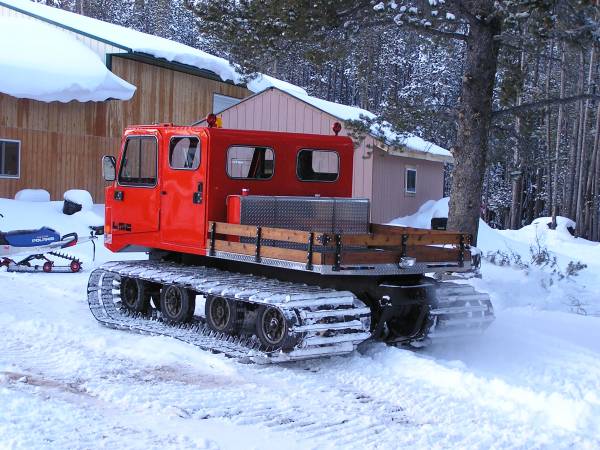
"We've got an LMC 1200. It's an old vehicle made by a subsidiary of the DeLorean Motor Company."
The LMC 1200 is a car made by a company that was part of the DeLorean Motor Company. It has a Ford engine and is known for its distinctive look.
The LMC 1200 is a vehicle produced by a subsidiary of the DeLorean Motor Company, known for its unique design and engineering. It features a Ford six-cylinder engine, which is notable for its performance characteristics.
Part
Ford six-cylinder engine
"It's got a Ford six-cylinder engine in it. And it works fine when it's warmer than minus 40 outside."
A Ford six-cylinder engine is a type of engine with six cylinders that helps the car run. It's known for being powerful but also efficient.
A Ford six-cylinder engine is a type of internal combustion engine that has six cylinders arranged in a straight line or V configuration. This engine configuration is known for providing a good balance of power and efficiency.
"It has a carburetor, doesn't it? Yeah, it's got a carburetor."
A carburetor helps engines get the right mix of air and fuel to run. It's an older technology that many cars used before they switched to a different system called fuel injection.
A carburetor is a device in internal combustion engines that mixes air with a fine spray of liquid fuel. It was commonly used in older vehicles before the widespread adoption of fuel injection systems.
Term
nozzle effect
"...it's going to ice right up again because of something called the nozzle effect. Every time the air goes pouring through the carburetor, it gets colder."
The nozzle effect is when air gets colder as it moves quickly through a narrow space, like in a carburetor. This can cause problems, especially in cold weather, making the engine stop running.
The nozzle effect refers to the phenomenon where air passing through a carburetor becomes colder as it accelerates through the narrowing of the nozzle. This cooling effect can lead to issues like icing in cold conditions, causing the engine to stall.
"...you might want to have them rig up a pipe that runs from the exhaust, from the vicinity of the exhaust manifold up to the air cleaner..."
The exhaust manifold is a part of the engine that collects gases produced when the engine runs and sends them out of the car. It's important for the engine to work well and run smoothly.
The exhaust manifold is a component that collects exhaust gases from multiple cylinders and directs them to the exhaust outlet. It plays a key role in the engine's efficiency and performance by ensuring that exhaust gases are expelled quickly.
Part
warped rotors
"the mechanic is at a loss and replaces the warped rotors. Yeah."
Warped rotors are parts of the brake system that can get bent or misshaped, making it hard for the brakes to work properly. This can cause shaking when you press the brakes.
Warped rotors refer to brake rotors that have become uneven or distorted, often due to excessive heat or wear. This can lead to poor braking performance and vibrations during braking.
The Cadillac DeVille is a large, comfortable car that was made for luxury. It has a lot of space inside and is designed to provide a smooth driving experience.
The Cadillac DeVille is a full-size luxury car that was produced by Cadillac from 1949 to 2005. It is known for its spacious interior and smooth ride, making it a popular choice among luxury vehicle buyers.
"Have they tried anything like changing the shock absorbers or changing the springs or do..."
Shock absorbers are parts of a car that make the ride smoother by reducing bumps and vibrations. They help keep the tires on the road for better control.
Shock absorbers are components of a vehicle's suspension system that dampen the impact of bumps and vibrations, ensuring a smoother ride. They help maintain tire contact with the road and improve handling.
"Have they tried anything like changing the shock absorbers or changing the springs or do..."
Springs are parts of a car that help absorb shocks from the road and support the car's weight. They make the ride smoother and help the car handle better.
Springs are crucial components of a vehicle's suspension system that absorb shocks and support the weight of the vehicle. They help maintain ride height and improve handling by allowing the wheels to move independently over bumps.
Part
stabilizers
"Well, they put the stabilizers in the front and I'm getting this little switcheroo in the rear end."
Stabilizers are parts that help keep the car steady when turning. They connect the wheels on either side of the car to reduce leaning or rolling during turns.
Stabilizers, often referred to as sway bars or anti-roll bars, are components that help reduce body roll during cornering. They connect the left and right wheels and improve vehicle stability and handling.
"...especially a front wheel drive car that has very little weight in the back, to kind of bounce around a little"
Front wheel drive means that the front wheels of the car are the ones that get the power from the engine. This helps the car grip the road better, especially in bad weather.
Front wheel drive (FWD) refers to a vehicle design where the engine's power is directed to the front wheels. This layout typically provides better traction in slippery conditions and allows for more interior space since there is no need for a driveshaft to the rear wheels.
Term
lurching and hesitating under load
"If I drive it for 15, 20 minutes, it starts lurching and hesitating under load or if I'm trying to pass somebody or go up a hill, which happens quite a bit here in Colorado."
Lurching and hesitating under load means the car has trouble moving smoothly, especially when you need to speed up or go uphill. It can feel like the car is shaking or not getting enough power.
Lurching and hesitating under load refers to a situation where a vehicle struggles to maintain power and smooth acceleration, often due to issues like fuel delivery problems or ignition system failures. This can lead to a jerky driving experience, especially when accelerating or climbing hills.
"But what's strange is if I change the spark plug... It fixes it. I was just going to ask you that."
Spark plugs help start the engine by creating a small spark that ignites the fuel. If they are dirty or worn out, the engine may not run well.
A spark plug is a component in gasoline engines that ignites the air-fuel mixture, enabling the engine to run. If spark plugs are worn or fouled, they can cause misfires or poor engine performance.
"I have to. When there are no rabbits left in the hat you have to... How can you expla..."
The Volkswagen Rabbit is a small car that is easy to drive and great for everyday use. It has a hatchback design, which means the back opens up for more storage space, making it practical for carrying things. People like it because it's reliable and fun to drive.
The Volkswagen Rabbit, known as the Golf in many markets, is a compact car that gained popularity for its practicality and fun driving experience. Introduced in the mid-1970s, it has become a staple in the automotive world, known for its reliability and versatility. Its significance lies in its role as one of the first successful hatchbacks, influencing the design of compact cars that followed.
Select text to request an explanation
This is our class. On This American Life, one thing we like is a good mystery.
Sometimes about really big things, but most times, the little mysteries are the best.
Our lost and found is currently filled with pants. I don't know, I've never seen this happen.
Wait, is this true?
This is true.
Mysteries of every size, each week. This American Life, wherever you get your podcasts.
Music
Hello and welcome to Car Talk from National Public Radio.
With us, Click and Clack, the Tappet Brothers.
And we're broadcasting this week from the Gender-Based Procurement Division here at Car Talk Plaza.
I.e. gifts from men.
We figure that some of you are faced with this very dilemma at this time of year.
What to buy for the man in your life?
And Richard Pullman from ufl.edu.
Is that University of Florida or is it an unidentified flying educator?
Sent us this treatise on the subject.
What it says is gifts for men.
Buying gifts for men is not nearly as complicated as it is for women.
Follow these rules and you should have no problems.
And then there are three pages of rules.
I'll just give you a couple of them.
Summarize.
Rule number one.
When in doubt, buy him a cordless drill.
It does not matter if he already has one.
I have a friend who owns 17 cordless drills and he has yet to complain.
As a man, you can never have too many cordless drills.
No one knows why.
That's true.
Isn't that the truth?
I bought my nephew three of them.
That's right, you did.
Oh well.
I mean, the second time it was excusable, but the third time.
Come on.
I read out of ideas.
Rule seven.
Buy a man a label maker.
Almost as good as a cordless drill.
Within a couple of weeks, there will be labels absolutely everywhere.
Socks, shorts, cups, sauces, sink.
Labels.
No one knows why.
Jesus, it's true.
Rule nine.
Good places to shop for men include Northwest Ironworks, Paralumber, Home Depot, John Deere,
Valley RV Center, and Les Schwab Tire.
Napa Auto Parts and Sears Clearance Centers are also excellent men's stores.
It doesn't matter if he doesn't know what it is.
Ah, it's from Napa Auto.
Must be something I need.
Hey, isn't that a starter for a 68 Ford Fairlane?
Wow, thanks.
I mean, isn't it true?
Pretty much.
Here's the last one.
Rope.
Men love rope.
It takes us back to our cowboy origins, or at least the Boy Scouts.
Nothing says love like a hundred feet of three-eighths inch Manila rope.
No one knows why.
Whoever put that together, and there are many others, they'll all be on the website,
thecattalksection, thecars.com.
I think this is the kind of stuff that's helpful, especially in these times when
women are trying to buy gifts for us.
Yes.
I wish there was such a list for men.
The other way around.
Oh, man.
Well, I'm sure.
How many pairs of earrings am I going to buy?
Oh, I don't know.
Help me out.
It is complicated.
It is complicated.
It gets harder and harder every year.
Isn't it, though?
Well, you know, part of the reason it gets harder is because over the years,
you learn more about your failures, like buying lingerie.
I mean, how did I know that was a mistake?
It took me 15, 20 years to figure out that that wasn't a gift for her.
Yeah.
That was a gift for me.
Yeah.
We need help.
If you have any help for us, write soon.
Man.
If you'd like to talk to us about your car, the number is 888-CAR-TALK.
That's 888-227-8255.
Hello, you're on car talk.
Hi.
Hi.
How are you?
Good.
I'm glad to hear that because I need your help.
Well, what kind of gifts do you like for Christmas or New Year's or a birthday or whatever?
What do you give to a woman?
You know, I don't know.
You're a woman, right?
I think so.
Yeah.
My husband thinks so.
He does.
Excellent.
What does he give you?
Are you thrilled with the things he gives you?
Or you just say, oh, thank you, honey, just to make him feel good.
Actually, it has much better taste than I do.
So I love everything he gets me.
And we've only been married for eight months.
So we're still in that newlywed phase.
So he could get me a wrench and I would probably jump up and down.
I'd be really happy.
Oh, or he could get you something from that Victoria's Secret catalog.
Well, like you said, that would be more for him.
Yeah.
Yeah.
Yeah, maybe, but...
All right, well...
...the difference is who it's for.
As long as it's wrapped up in a box or a ribbon.
As long as it works.
All right.
What's your name?
Sylvia.
Sylvia, where are you from, Syl?
I'm up here in Seattle.
Oh, everyone knows where Seattle is now.
Oh, yeah.
And a few who didn't know.
Who to thunk in, huh?
I always think of everyone sitting around casually drinking cappuccino.
That's what did it.
That's what incited all those riots, all that caffeine, man.
You said we have to help you.
Why?
Well, because we have a car that's in bad shape.
We bought it right before we got married because we had a car before that that was just a complete death trap.
So we thought, okay, we'll buy an Acura.
It's a 1990 Acura Integra GS.
We bought it down in Utah, drove it all over the country for receptions and stuff, and then we came up to Seattle.
And within a month, it started running really rough.
So I took it to the little guys at Precision Tune and they ran an engine check on it.
And they said cylinder number two is operating at 25 psi.
Oh, bummer.
First of all, what does that even mean?
How many psi is it supposed to run at?
Well, it's supposed to have at least 125.
So 25 is 50 even.
What that number actually means is the number of pounds per square inch of compression that's generated when each piston comes up on its compression stroke
and compresses the gas and air in the cylinder.
And the minimum is pretty much 125, but your car might be 150 or 160, but 25 ain't good.
It's basically not working.
That cylinder's out.
Yeah.
It's gone so.
But it's not the end of the world necessarily.
Well, what I was going to ask you is that somebody who shall remain nameless unless you decide this is a good idea said that maybe we'd try shutting down that cylinder and just running on three cylinders.
He's a moron.
Is it your father?
No.
Your husband.
Of course not.
That knucklehead.
Yeah, no, that's a silly idea.
Okay.
You can't do it, and even if you could, it would be terrible.
Well, I mean, you could do it.
No.
But it would depend on how much longer you expect to keep the car.
Yeah.
If you wanted to live for too long.
If it's like less than a week.
Yeah.
Right.
If the timeframe is a week or two, then you would simply unplug that fuel injector and just drive the car.
And at the very least, you would prevent that unburned gas from getting into the converter and fouling it and the air that we all have to breathe.
If they thought that that was going to make it run better, duh.
Oh, no, it's not going to make it run better because then the compression is going to be zero.
So the effect of that cylinder is going to be even less than it is now.
So it's going to run worse.
You know, you would say, well, if it runs on four cylinders, why not three?
But it doesn't work that way.
Did you get a price to fix this, Sylvia?
Well, we're thinking that it's a ring problem.
No.
So we're not sure what we're going to do.
We're thinking about getting a used engine, but that might, we might spend $1,000 and have it last for another two months.
And then someone said that if we get just one cylinder fixed and the other three are going to go bad pretty soon.
Whoever your friends are, they are full of platitudes and old wives tales.
And misinformation.
Completely bogus information.
It's unlikely to be a ring.
Okay.
What it is is valves.
Oh, yeah.
When you do a valve job, you do all the valves, of course.
You don't just do the one that's burned.
You may notice it burns a little more oil afterwards, but I would certainly take the cylinder head off.
And I would, I think I'd do a valve job on it.
I would too.
It's going to cost you $1,000.
It is.
Yeah.
Well, we thought it might be rings because it's burning oil and it's got a lot of blue smoke.
Oh, you didn't mention that, Sylvia?
I mean, was it doing this when you bought it?
No.
It just started around probably late August.
We started noticing that it was burning oil a lot.
And then all of a sudden we were driving back from his parents' house and it started running really rough.
Well, there were a lot of reasons why it could be burning oil.
But you could have broken rings, but the fact that you're burning oil certainly adds another dimension to the problem,
which is going to require us to recommend a used engine or a rebuilt engine.
Because you don't want it to a valve job if you're already burning excessive oil.
If you're going to spend the money, then I would definitely, as my brother suggested, go for a used engine.
All right.
You should find someone to do the work and have that person buy the engine.
That'd be great.
Good luck, Sylvia.
Thanks a lot.
See you later.
Okay, kid.
One 888 car talk.
That's 888-227-8255.
Hello, your own car talk.
Hi, guys.
This is Russell from Hartford, Connecticut.
How are you doing?
Good, Russell.
What's happening?
Well, I got a 1996 Chevy Cavalier.
And now that the mercury is falling and the temperatures are going down here in the northeast,
my heater blower has decided to only work on high.
Bummer.
That's the only thing it works on, which I guess is better than nothing.
Better than low.
All better than no.
Exactly.
But it pretty much drones out any conversation.
So I get to take all the people that I don't really like out on rides now.
And I won't have to talk to them.
But that's it.
I can't figure it out.
It doesn't work on the first, second, or third setting, but it only works on high.
So you haven't tried anything, but you are interested in affecting this repair yourself?
I'd like to, because I've been told by a friend that it's something that the dealer would have
to deal with, and I'd rather not deal with it.
Well, that's not true.
It's not something that the dealer has to do.
No, you could take this to your local repair shop.
He may have to buy the part from the dealer, but that's no big deal.
Does it sound like something I can do myself?
Sure.
I mean, I'm fairly competent with tools, but I don't know if it's a mystery to me.
Well, I think you can do this yourself.
I don't know exactly where this piece is located, but when you go to the dealer to buy it, because
the dealer is the only one from whom you can get it, you can ask them to tell you where
it is, and you'll have the added advantage of having the new piece in your hands and
you can scout around, so to speak.
Okay.
So you find the thing that looks just like it.
Okay.
And what you want is a blower motor resistor.
Okay.
The way the thing works and the way you get four speeds is you don't have four motors
in there, you have one motor, and the way they get the four speeds is by cutting the voltage
to the motor down.
By passing it through a resistor.
So in one case, you're passing it through one series of resistors that makes it go at
the lowest speed, so you're supplying like seven volts to the motor, and then you turn
it to speed number two, and you make it go through another path of resistors, which is
giving you like nine volts, and then you get the picture, and every time you do that,
the motor speed increases until finally.
There's no resistance.
Which is why it works on high all the time.
Okay.
Which is great because that's the default mode, and wouldn't you want it to work on high
as opposed to anything else?
Yeah, I'm thankful for what I got.
So stop your complaining.
So I mean, it's a simple thing, it's inexpensive, but it might be buried.
Well, it's either going to be under the dash or it's under the hood.
Where else could it be?
Okay.
On the roof.
On the trunk.
And in all likelihood, it's pretty easy to get at.
It'll be held on by a couple of screws, and you unplug the new one, pop the new one in,
and your friends and loved ones will think you're a bleeding genius.
Well, that's great.
Good luck, Russell.
Thank you guys.
See you, Russell.
Bye-bye.
Bye-bye.
Hey, don't go anywhere because we've got a lot more calls.
Well, a few anyway.
And the puzzler ants are coming up right after this.
This year on NPR's throughline, life, liberty, the pursuit of happiness.
For centuries, America's pursuit has changed the world.
Now, 250 years later, who are we?
Where are we headed?
Join us every Tuesday for a brand new series, America in Pursuit.
On throughline, listen on the NPR app or wherever you get your podcasts.
Alaska Halibut Derby, Planet Money.
If you can ask it, we have probably answered it.
Planet Money, listen on the NPR app or wherever you get your podcasts.
I know I didn't know the answer.
Some months ago, I read an Elmore Leonard novel called Out of Sight.
And he mentioned this in the book, and I had never noticed it before, but here it is.
Last weekend, I was doing a little shopping and I was doing my errands in our fair city.
And as you might expect, I was going from one business establishment to another.
You know, opening doors, closing doors, getting thrown out of places, transacting business.
You know, the usual routine.
Yeah.
And at one of the places I entered, I was surprised to see something affixed to the door that I had just opened.
Attached to that door were three horizontal brass strips.
Each was about four inches long, about a half an inch wide, and they were nice and shiny.
And each was affixed with two little screws.
You got it?
I mean, it's pretty descriptive, right?
Yes, I like it.
It didn't matter what kind of a door it was.
No.
So I opened the door to this establishment, and one of these little horizontal strips is right at eye level for me.
One was six inches higher than that, and one was six inches below it.
I went to another place of business and saw no such little bars.
Yeah.
So I went back to this first place, and I looked at several doors in that same building, and they all had these three little strips.
So here's the question.
What building had I entered?
And I had entered the bank.
I figured that, but I still don't know what it means.
Oh, you don't?
Why wouldn't the hardware store have these things?
What significance could these things have?
What did Willie Sutton say?
That's where the money is.
Why do you rob banks?
When bank robbers are making their escape, it is easy because these things are situated so that one is five feet above the ground,
the next thing is five and a half feet, and the highest one is six feet high.
So when the guy is making his escape with the bags of money, the teller can say,
and he was over six feet tall.
That little runt was under five feet.
Excellent.
Who's our winner this week?
The winner is Steve Wagner, or Wagner, from Mechanicsburg, Pennsylvania,
and for having his correct answer selected from among the thousands of correct answers that we have.
Steve is going to get a $25 gift certificate to the Card Talk Shameless Commerce Division.
Now, Steve Wagner from Mechanicsburg, Pennsylvania, when you get this $25 gift certificate,
you can pick up our brand new CD, Why You Should Never Listen to Your Father When It Comes to Cars,
and if you don't want anything from the Shameless Commerce Division,
you can usually give certificate as kindling since it's made of paper.
You just roll it up and you put it in the fireplace and put a match to it,
and that baby will go right up and help all that wood to burn.
So thanks very much.
Anyway, we'll have a new, I believe, automotive puzzler.
We haven't had an automotive puzzler in a while,
and that will be coming up in the third half of today's show, so stay tuned for that.
In the meantime, of course, you can call us at 1-888-CAR-TALK.
That's 888-227-8255, our lawyer on Car Talk.
Hi.
Hi.
I'm Grace from Pleasanton, California.
How you doing?
Hi, Grace.
I'm fine.
So what's up, Grace?
I've got this Toyota Tercel.
It's a 1987, and it's an automatic.
It's just dripping oil all over the place, and it's time for me to take it in, I'm sure,
but I want to have a little bit more information than just,
hey, guys, my car is dripping oil.
Well, how long has it been dripping oil, like a year or two?
Just recently, the past three weeks.
Why's that too bad?
And have you been keeping an eye on the oil level to make sure you don't run out of oil
and, therefore, destroy the engine?
Yes, definitely.
And how much oil have you had to replace?
A couple of bottles.
There's a lot in bottles out there in California.
To deliver it to your house in the morning in a little truck with a horse?
A couple of bottles over what period of time, or how many miles?
I put one in last Saturday, and then I had to put one in the Saturday before.
And how much did you drive that week?
Probably about 100, maybe 110.
Oh, you got troubles.
I don't drive far, and it sits a lot, the car just sits.
And does it leak whether it sits or it's driven?
In other words, if you were to let it sit in the same spot for days and days,
would the stain on the ground get bigger and bigger and bigger?
That's funny, because it does not.
That's all right, that's an acceptable answer.
You don't have to be embarrassed or ashamed about that answer.
That's great.
That's a perfectly good answer.
What's your budget?
What can you afford?
Because that will determine the answer we give you.
Yeah, I mean, you're driving a 25-year-old car here.
So, I mean, is your budget more like $50 or is it up to say $500?
Because I have answers for all of those and everything in between.
Well, I could probably afford maybe $500, yeah.
$500.
Oh, you could.
Really?
Then we can give you the real answers.
We can give you all the answers now.
I mean, the most likely thing for it to be on this car is something called the oil pressure switch, the UPSU.
And that device is what's responsible for turning the idiot light on on the dashboard to alert you when you run out of oil.
Right.
And it's a metal and plastic switch which has pressure behind it when the engine is running.
And when the bond between the metal and the plastic gives out after like 13 years,
it will leak oil and it will leak oil pretty fast because there's pressure behind it.
And it will leak out much, much faster, of course, when you're driving.
And it won't leak at all hardly when you're stopped.
Okay, because that's what's going on.
I mean, that's a possibility.
And on this car, it's located right behind the alternator.
So, if you know where your alternator is, you can look at this thing
and you might even see oil just pouring right out of it.
Is this fixable?
Yeah, oh yeah.
Oh, very fixable.
Not only fixable, but cheap as dirt.
Yeah, I mean, that's the $50 solution.
Fantastic.
Now, the other possibilities are...
Is your rear main seal.
Is your rear main seal blown?
Or the front seal or the oil pump or the oil pan is leaking.
There's a gas in the oil pan.
I mean, who knows?
Yeah, those are all the $500 ones.
The head gasket is leaking oil.
Any one of those things could be wrong and they're all pretty expensive.
So, you have to really hope for the $50 solution because everything else starts to get expensive.
And this is the sort of thing that if you take it to your mechanic,
he's going to be able to figure it out probably easily.
Oh, good.
Especially if you suggest, say, gee, somebody told me that my oil switch might be leaking.
All right.
I would make that post-hypnotic suggestion because if you suggest that,
first of all, it's going to steer him toward that.
All right.
And he'll stick his hand right on it and say,
my God, it's floating in oil here.
All right.
Yeah.
And it does take away the option of spending a lot of your money.
Right.
When you sound like you know what you're talking about.
He's not going to try to sell you the rear main seal for $500.
Great.
Because you know what the oil pressure sending unit is.
Yeah.
And that's going to be...
Oh, write it down, Grace, so you don't forget.
Oil pressure sending unit.
All right.
See you, Grace.
Write it in Latin.
Really scrum up.
All right.
Thank you so much, car guys.
Bye-bye.
Thanks, Grace.
Bye.
1-888-CAR-TALK.
That's 888-227-8255.
Hello.
You're on Car Talk.
Hi.
This is Matt Newcomb.
And I'm calling you from the one and only Ammons and Scott South Pole Station in Antarctica.
No.
Really?
How are you?
I'm doing just fine.
I'm trying to stay warm down here.
It's a nice and balmy minus 40 degrees Fahrenheit down today.
The wind chill's a little high.
It's down in the minus 60s today.
But summer's coming.
So, hey, I'm hoping.
Summer's coming.
That'll mean it's going to go up to, like, 20 below.
Wow.
Maybe.
How long have you been down there, Matt?
I've just been down here since beginning of November.
Oh.
I'm just one of the summer-type people.
Oh, so you still have toes.
Yeah, well, I'm looking forward, though, to get back to the place when someone says,
oh, it's 40 degrees out.
They mean positive 40 degrees.
Exactly.
So what actually are you doing there?
I'm here with a group called CARA, Center for Astrophysical Research in Antarctica.
I'm working on a two-meter microwave telescope named Vapor.
So do you have a vehicle problem?
Is that why you called us?
Or you just had squat to do?
Oh, no.
We actually do have a vehicle problem.
It's got tracks and not tires.
It doesn't matter.
We don't care.
We've got an LMC 1200.
It's an old vehicle made by a subsidiary of the DeLorean Motor Company.
It's got a Ford six-cylinder engine in it.
And it works fine when it's warmer than minus 40 outside.
But when it gets colder, you can only drive it slow.
If you start driving it quickly, it eventually starts bogging down losing speed, losing speed,
and then just stall and you can't start it again.
And you end up having to call the mechanics to come pull it off with a big caterpillar tractor.
How old is it?
It's probably close to 20 years old.
It has a carburetor, doesn't it?
Yeah, it's got a carburetor.
That's it.
Take that carburetor right off, Matt, and replace it with a polar bear.
Take it off.
What's it going to do?
I think you have carburetor icing.
I'm surprised it doesn't happen sooner.
Okay, so I'll carry a heat gun next time I take this thing out.
Well, exactly.
And when the guys tow it back to the shop and they warm it up to like, you know, zero,
it may be that enough of that ice melts that the thing will start and run again.
And they, of course, they can't find anything wrong with it.
They can have it in the shop where I'm sure it's heated in probably 40 or 50 degrees above zero.
And they rev the thing up and check all its vital signs and everything is okay,
but out in the road, so to speak, it just can't take the weather.
Alternatively, it could have low compression.
See, the trouble with the solutions to the carburetor icing problem are that you say
that you take a hairdryer or something with you, but that's not really going to work
because that will only work when you stop and you may be able to get it restarted.
But as soon as you start to drive again, it's going to ice right up again because of something called
the nozzle effect.
Every time the air goes pouring through the carburetor, it gets colder.
So as soon as you try to drive it, it's going to keep stalling out unless you put
some kind of a permanent heater around the carburetor.
Yeah, actually, you might want to have them rig up a pipe that runs from the exhaust,
from the vicinity of the exhaust manifold up to the air cleaner so that the air cleaner
can suck in hot air through that conduit and it's warmed up by the proximity of the exhaust manifold.
And that might be enough to keep the thing from freezing up.
How much longer is your stint in Antarctica?
Oh, I'm just down here for another two or three days.
Two or three days?
I'm just down here for the weekend, you know?
Well, move it up and make sure to put on your sunblock.
Good luck, Matt. Thanks for calling.
Thank you.
Bye-bye.
All right, look, it's time to take a short break.
Yeah, and when we come back, my brother will regale us with this week's literate,
challenging new puzzler.
40 years ago, the space shuttle Challenger exploded shortly after liftoff.
The nation was shocked, but the night before, engineers had pleaded for a launch delay.
He said the Challenger's going to blow up, everyone's going to die.
An NPR investigation into why last-minute warnings about the launch were dismissed.
Listen now on the NPR app to the Sunday story from the Up First podcast.
For 47 years, Iranians have lived under a dictatorship many no longer want.
Now the country may have reached a breaking point.
Iranians have recognized that they need to take matters into their own hands,
pushing back against authority.
We ask three central questions about how Iran got here and what comes next.
Listen to Throughline on the NPR app or wherever you get your podcasts.
This year's Oscar nominations are here,
and we are unpacking record-breaking nominations for sinners,
plus nominations for Marty Supreme and One Battle After Another,
and we'll talk about some of the surprises and snubs.
Listen to Pop Culture happy hour in the NPR app or wherever you get your podcasts.
This week on Up First, more violence in Minneapolis.
Democrats say they will block a spending bill in the Senate after another deadly ice shooting.
How will Republicans respond?
And could the Trump administration rethink its strategy on immigration?
We'll keep you posted every morning with three stories you need to know to start your day.
Up First.
Listen on the NPR app or wherever you get podcasts.
Ha, we're back.
You're listening to Car Talk with us, Click and Clack the Tapper Brothers,
and we here to discuss cars, car repair, and the new puzzler.
And I've got to say that I like this one because it's automotive.
I haven't had an automotive puzzler in a while, and I've heard the clamoring about that.
And more than that, this is actually was sent to us pretty recently.
This year?
Decade. Decade.
This comes from someone named Brad Hamill.
Here it is. I really can't improve it much, so I'll just read it,
and you guys will have to figure it out.
Alright.
Do you ride the brake?
Have you tightened your lug nuts with a high-powered air wrench, or has anyone done that?
Hmm.
Etc. What, new tires?
The owner answers no to all questions.
In fact, answers no all the time to everything.
The mechanic is at a loss and replaces the warped rotors.
Yeah.
A thousand miles later, the guy comes back, and guess what?
He has an oil leak this time.
But a thousand miles after that, he comes back with the same problem.
This time, the mechanic asks straight up what the heck he's doing to the car
that could be causing this problem, knowing that there's nothing wrong with the parts
and nothing wrong with the installation.
The fellow says, I don't know.
He says, I go on a lot of long car trips, and it's always the day after I arrive home from these trips
that I start feeling the pulsing, but never, never during the trip.
This is great.
The mechanic asks him one question, and he knows the answer to the puzzle.
What question did he ask him?
What is your mother-in-law way?
I already asked some two questions.
Now, if you think you know the answer, write it on the back of a $10 bill or a stale gingerbread man,
something that's been hanging on your tree for a few weeks,
and send it to Puzzler Tower, Car Talk Plaza, Box 3500, Harvard Square, Cambridge,
Matt02238, or you can email your answer from the cartalksectionofcars.com if you'd like to call us.
You didn't ask any questions along the way.
You felt it didn't require any...
No, I thought it was perfectly clear, and there was very little obfuscation going on.
Yeah, I didn't get a chance to obfuscate.
I didn't feel it necessary to what called you to task.
Really?
I didn't.
Well, I'll see how unfortunate.
I'll remedy that by next week.
Did you sneak something by me?
I'm sure I did.
1-888-CARTALK, that's 888-227-8255.
Hello, you're on Car Talk.
Hello.
Hello.
My name is Evelyn.
Evelyn.
Yes.
Hi, Evelyn.
Where are you from, Praytell?
Virginia.
Yes.
How nice.
Any place in particular in Virginia?
No, the whole state.
Well, there is a special place, but do I have to tell you that?
No, you don't.
No, you don't.
There may be reasons why you shouldn't.
I think I have reasons.
If you would like to protect your anonymity, you feel free to do that because I'm surprised
that others don't.
Yeah.
What can we do for you?
Well, I have a 96 Cadillac, and every time I hit a bump in the road, I get this little
switcheroo in the back, which...
Well, it looks like the back end of the car just swings to the right and then back to
the left.
Yeah.
And I'm wondering if what's wrong with it?
I thought maybe you would know.
Roughly how many miles are on this car?
About 55,000.
And have you driven around your fair city most of the time?
No, it's been in the country.
Country.
Does that mean good roads or not so good roads?
Well, it's been on good roads, surfaced roads.
And when you first began to notice the problem, was it subtle and then got worse over time?
Well, it's not worse.
It's not any better, but you just get this little switch every time you hit a rough place
in the road.
So you bought it brand new?
Yes.
And it's always been this way?
What kind of a Cadillac is it?
It's a DeVille.
Yeah.
So all the forces that the Cadillac dealership and the manufacturer have been able to muster,
they've been unable to solve this to your satisfaction.
Have they tried anything like changing the shock absorbers or changing the springs or
do...
Well, they put the stabilizers in the front and I'm getting this little switcheroo in
the rear end.
So maybe we need to put stabilizers in the back.
Well, it probably has a re-stabilizer already and it probably had a stabilizer in the front
too.
They might have just painted the one you had in there.
How fast do you drive, Evelyn?
You sound like a sane person, but are you a wacko?
No, I'm not a wacko, but I don't mind the speed, especially if I don't in the state.
Yeah.
Which is not that much over the speed limit.
But on those...in the country roads, how fast do you drive?
Well, maybe about 60.
Yeah, I don't think there's anything wrong, meaning broken or worn out.
I think something about it needs to be adjusted.
Yeah, I don't think so.
I don't think so either.
I think there's...there is one thing that needs to be adjusted down.
Yeah.
That's your speed.
You mean lift up my foot a little bit.
There you go.
I think you're going too fast on roads that aren't as smooth as you think they are.
Okay.
And then when you hit these bumps, I mean, it's normal for any car, especially a front
wheel drive car that has very little weight in the back, to kind of bounce around a little
bit.
You might be able to improve it by putting a couple of weights in the trunk.
Okay.
Here's what you do.
You're going on a trip, don't ever take the luggage out of the trunk when you come home.
Just leave the stuff right in there.
That's right.
Well, how do you do the laundry?
You just throw the stuff away, buy new clothes.
If you don't throw it away, it's in the trunk.
If you ever need it, you're out of underwear, open the trunk.
This is a basic design feature of the Cadillac.
Don't forget, Cadillacs are not designed like sports cars, and so the result is that
they're sort of mushy.
So you get a nice soft ride because many people who buy Cadillacs like a nice soft ride.
The trouble with a nice soft ride is that the car will tend to bounce when you hit bumps
because the springs are soft, so to speak.
Okay.
And if the shock absorbers are not really hard to make sure that they doesn't keep bouncing,
then you're going to have the very symptom that you describe.
You're going to hit a bump and the back end is going to feel like it's flying around.
In other words, you don't think my problem is very bad.
It's bad because it's dangerous.
Because if it's bouncing around like that, it means there are times when the back wheels
aren't really on the ground.
I mean, they are physically on the ground, but there's no real heavy weight on them.
Okay.
But if you were on wet leaves or something, you could get into an accident.
So I would say that the quickest solution is, as my brother said, raise your foot just a little bit.
Well, thank you very much.
All right, Evelyn.
Appreciate your information.
All right.
Thanks for calling.
Bye-bye.
She sounds like a...
She sounded like a sane normal.
Well, so do you sometimes.
Well, 1-888-CAR-TALK, that's 888-227-8255, a lawyer on CAR-TALK.
Hello, this is Kai Stotz calling from Loveland, Colorado.
How are you guys this morning?
What's your name?
Kai, K.A.I.
So what's going on, Kai?
Well, I've got a Subaru hatchback 1985.
When it gets a tune up, it runs great for about four, sometimes if I'm lucky, 5,000 miles.
And then, gradually it gets worse and worse.
If I drive it for 15, 20 minutes, it starts lurching and hesitating under load or if I'm
trying to pass somebody or go up a hill, which happens quite a bit here in Colorado.
You shouldn't be climbing hills anymore with this car.
Hey, it's got 90% of the original compression still in the engine, so it's doing well.
But what's strange is if I change the spark plug...
It fixes it.
It fixes it.
I was just going to ask you that.
Right.
And when you take out those spark plugs, you find that they're all black, don't you?
Actually, I don't.
That's the strange thing.
Don't!
I'm going to suggest you find crud on one of them.
Deposits.
I think there's a minor deposit on one or two of them.
And my mechanics claim that it's never the same spark plug twice.
Whoa!
Which is really odd because I'm hoping it was a bad cylinder or something.
I've never used that explanation.
Yeah.
What would Perry Mason call it?
Wondering.
The case of the wandering spark plug.
The case of the wandering crud.
Wondering crud.
That's it.
They may just be getting confused.
Maybe they're standing on the left side of the car one time.
And the right side of the car...
Like the hump!
On an igor.
Like an igor's hump right.
But what's happening is you have...
And the car is certainly justified in having perhaps any ailment at once.
It's aged.
It says 20 years old here.
You have a bad valve guide seals.
And you are sucking oil into the cylinders.
And you are oil fouling one or more of the plugs.
And one will do it.
I mean this thing is so underpowered anyway.
It may be meandering.
Because they may all be leaking.
And the one that happens to get worse...
Fastest.
Is the one that causes him to change them.
I just had all those seals replaced.
And there's no oil lost.
And there's no smoke.
This is adding a degree of difficulty.
I'm wondering if it is an electrical one.
Oh guy, will you give us a break?
The plugs are not black.
The plugs are not followed.
But changing the plugs makes it get better.
Yes it does.
And it only happens after it warms up for about 20 minutes.
It runs great when I first turn it on.
Well there is one last possibility.
What's that?
And this is a desperate effort.
It could be.
Alien intervention.
No we're saving that for later.
It could be a weak ignition coil.
I was just going to say.
You're not going to go for the coil idea.
I have to.
When there are no rabbits left in the hat you have to...
How can you explain the 5,000 miles of good running?
I dismissed the coil idea 20 minutes ago.
The coil is marginal.
When the plugs are new and they're perfect.
There's enough voltage in the coil to fire off the plugs properly.
As the electrodes begin to burn down.
I'm going to suggest something here.
In the interest of science.
Instead of replacing the plugs.
You clean them and re-gap them.
Just close up the gap period.
If they're supposed to be gapped I think it's 30,000.
Set them at 28.
And put the same old plugs back in.
Don't do anything to them.
Just reset the gap at 28.
And put them back in.
And my brother's betting that it will work for another 3,4,000 miles.
I think you're on to something.
If that's true then I can replace the coil.
Yeah I talked about 9 bucks.
I presume someone has replaced the spark plug wires in all of this?
Of course.
Just before we ran out of ideas.
Alien abductee theory.
See ya Kai.
Thank you.
Where is he?
We made a space for him.
We'll be back next week. Bye bye.
Thank you Vinny.
We'll be back.
What if the secret to cleaning up hazardous waste or slowing down climate change
lives in our bathroom?
Weird slimy things in shower heads.
Stuff growing in dishwashers, hot water heaters.
They're really strange environments.
Join us on a treasure hunt for microbes, which may hold clues for saving the world.
Listen to Shortwave on the NPR app or wherever you get your podcasts.
Request an explanation for:
6 cars
6 cars featured
Request an Explanation
Heard something you'd like explained? We'll add it to this episode.
Sign in to request explanations for terms you heard.
Want to learn more?
Browse our glossary for plain-English explanations of automotive terms, jargon, and concepts.
See something that's not quite right? Our annotations are AI-generated and can sometimes miss the mark.
Click the flag icon on any annotation to suggest a correction.