
#2625: The Click and Clack Creed
About this episode
Click and Clack field a mix of cold-weather driveline oddities, anti-theft steering lock headaches, and long-sitting car stalling mysteries. A Denver caller’s 4x4 Toyota makes a front-axle noise in freezing temps that’s traced to viscous grease in locking hubs; the advice is to avoid opening it unless the noise changes. Another caller battles a Subaru steering-wheel lock that prevents key release, using tape as a workaround. Later, a Tercel that sat for years stalls on decel and may involve EGR or carbon—walnut-shell “remedy” and a carb-cleaning “motor vac” are discussed. The puzzler and a 1961 Volvo P544 restoration question close out the show.
To manage podcast ad preferences, review the links below:
See pcm.adswizz.com for information about our collection and use of personal data for sponsorship and to manage your podcast sponsorship preferences.
Learn more about sponsor message choices: podcastchoices.com/adchoices
NPR Privacy Policy
eBay
"This message comes from eBay. The worst part about loving cars might just be buying them. And all the parts. From Toyota's to Aston Martin's, eBay has thousands of cars"
eBay is a website where people sell things to each other. Car owners use it to find car parts and sometimes whole cars, especially when they’re looking for something specific.
eBay is an online marketplace where people buy and sell cars, parts, and accessories. In the context of car ownership, it’s often used to source hard-to-find components or shop for deals from many different sellers.
first and second gear
"Once I came to Denver, as the weather would get cold, either close to freezing or below freezing, both in first and second gear, the truck makes this horrible sound up in the front axle area."
First and second gear are the “hard-working” gears because they apply more torque. If the noise only happens there, it suggests the problem shows up when the drivetrain is under heavier load.
First and second gear are the lowest ratios, so they multiply torque and load the drivetrain more than higher gears. If a noise appears specifically in low gears, it can indicate gear/differential noise under higher load or driveline lash that becomes more noticeable when the oil is cold.
four-wheel drive
"I throw it into four-wheel drive. It usually takes away the problem instantly, and then it will come back just a short while later... The grease in the locking hubs for your four-wheel drive."
Four-wheel drive means the car can send power to all four wheels. Some systems also use special front-wheel “locks” so the front wheels only connect when you need them.
Four-wheel drive (4WD) is a drivetrain setup that sends power to both the front and rear axles. Many 4WD systems use locking hubs to connect the front wheels to the drivetrain, especially on part-time designs.
Toyota
"So finally, I called Toyota on it, and a technician said something to the effect of the rick-rack of the hook and gurney is kaput because the thermal nozzle can't operate."
The speaker called Toyota because the problem was happening on their Toyota. Getting the explanation from the manufacturer can help you understand what part is failing.
Toyota is the vehicle manufacturer the speaker contacted for a 4WD-related issue. Toyota’s technicians and service guidance are often model-specific, especially for part-time 4WD systems with locking hubs.
wheel bearing
"And you may eventually damage the wheel bearing, but you'll get a different kind of noise. ... if the noise changes ... changes to a growling kind of noise that's there all the time, then you may have damaged the bearing."
A wheel bearing is what helps your wheel spin smoothly. When it starts to wear out, it can make noises—often a growling or humming sound—that get worse over time.
A wheel bearing is a set of parts that lets a wheel spin smoothly while supporting the vehicle’s weight. When it wears out, it can create noises that change with speed or driving conditions, and it may eventually lead to more serious damage.
growling kind of noise
"not just gets louder, but changes to a growling kind of noise that's there all the time, then you may have damaged the bearing."
If you hear a growling sound that keeps showing up while you drive, it can be a sign something in the wheel area is wearing out—often the wheel bearing.
A growling noise that’s present all the time (or becomes more noticeable as you drive) is a common symptom of a failing wheel bearing. The key clue is that the sound changes in character—not just gets louder—suggesting the bearing’s condition is worsening.
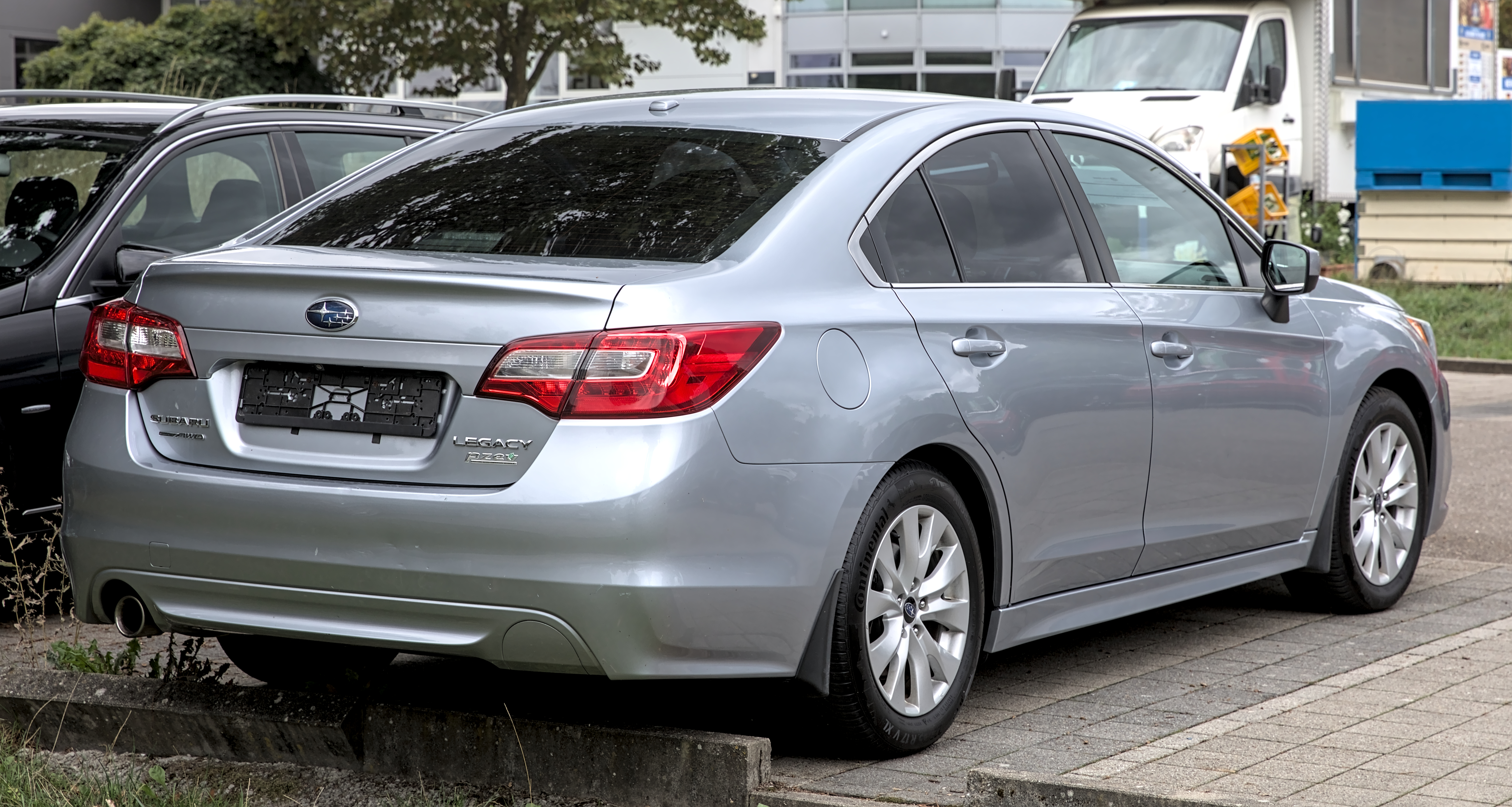
Subaru Legacy wagon
"Yes. I have a 98 Subaru Legacy wagon, and I absolutely love it."
They’re talking about a 1998 Subaru Legacy wagon. It’s a Subaru car (a mid-size model) in a wagon body style.
The speaker has a 1998 Subaru Legacy wagon. The Legacy is Subaru’s mid-size model, and the wagon body style is popular for practicality and all-weather use.
Subaru dealer
"If your husband wants confirmation of that, you can take it to any Subaru dealer, and they will also tell you that it doesn't happen."
A Subaru dealer is the official repair shop for Subaru cars. They can check the problem using Subaru’s own diagnostic steps and tell you if it’s a known issue.
A Subaru dealer is an authorized service center that can diagnose issues using Subaru-specific procedures and parts. Dealer confirmation is often used to validate whether a known problem exists and whether it’s covered by warranty or a service bulletin.
wheel lock
"But I found that if I jiggle the wheel. Now, this isn't a question of wheel jiggling. What it is, it's the wheel lock that's preventing you from starting it."
A wheel lock is a safety lock that can lock the steering when the key is out. If it sticks, the car may not start even though the battery and other systems are fine.
A wheel lock is the steering-lock mechanism that locks the steering column when the key is removed or turned off. If it doesn’t release properly, it can prevent the ignition from turning and stop the car from starting.
anti-theft device
"I mean, it's purely an anti-theft device because if someone does somehow to get your car started, he will be forced to drive around either straight ahead or in circles wherever the steering wheel happens to be pointing."
Anti-theft devices are things added to a car to make it harder to steal. They either stop the car from being used or make it annoying/risky for a thief.
An anti-theft device is any feature meant to deter or prevent vehicle theft. In this segment, the steering wheel lock is framed as a purely anti-theft measure that interferes with driving if the car is started.
driving impairment when stolen
"because if someone does manage somehow to get your car started, he will be forced to drive around either straight ahead or in circles wherever the steering wheel happens to be pointing."
The idea is that even if someone manages to start the car, the lock makes it hard for them to steer properly. So they can’t drive away like normal.
The steering wheel lock is described as impairing a stolen vehicle’s ability to maneuver, forcing the car to go straight or circle depending on wheel position. This is a common anti-theft idea: even if the car starts, the thief can’t drive normally.
new key
"And of course, they'll give you a new key when they do that and that may solve it."
If they replace the lock cylinder, the key usually has to match it. That’s why they may give you a new key after the change.
When a lock cylinder is replaced, the key often needs to be recut or reprogrammed to match the new cylinder. The speaker notes the dealership would provide a new key as part of the repair.
barn find
"Like a 1973 Dodge Charger tucked away in an Arizona barn for more than 40 years. Just 55,000 miles on it."
A “barn find” is a car that’s been sitting unused for years, usually in a barn or garage. It can be exciting because it might be in better original condition, but it could also have problems from sitting too long.
A “barn find” is a vehicle that’s been stored away for a long time—often in a barn or garage—before being discovered and sold. These cars can be attractive because they may have less wear and sometimes more original parts, but they can also hide issues from long-term storage.
low mileage
"Just 55,000 miles on it. Still in great writing order with a rare sunroof."
Low mileage means the car hasn’t been driven much. That sounds great, but a car that sat for years can still have problems, so you still want to check condition carefully.
Low mileage generally means the odometer shows relatively few miles driven, which can be a selling point—especially for classic cars. However, mileage alone doesn’t guarantee condition; long storage can still cause issues like dried seals, corrosion, or stale fluids.
trade it in
"And I said, oh, well, we, you know, we could figure that out. Don't trade it in. They were going to give her, you know, 500 bucks to trade it in on something."
“Trade it in” means you hand your old car to the dealership and use it toward buying a new one. Dealers often pay less than you could get selling it yourself.
“Trading it in” is when you give your current car to a dealer as part of the purchase of another vehicle. The dealer typically offers a lower value than a private sale, so the caller is questioning whether accepting a small trade-in offer makes sense given the car’s condition and mileage.
exhaust valves were sticking
"what was happening was the exhaust valves were sticking because of excessive carbon buildup on them and the remedy was to take the manifold off..."
If an exhaust valve sticks, it doesn’t move the way it should. That can mess up how the engine breathes and can cause rough running or stalling.
When exhaust valves “stick,” they don’t close or move freely due to deposits or varnish buildup. Sticking exhaust valves can cause poor combustion and drivability problems, including stalling.
EGR
"But check the EGR first because that's a little easier to do than the walnut. And they should check the EGR valve to see if it's sticking."
EGR is a system that recycles some exhaust gases back into the engine. If it doesn’t work right, the engine can run rough or even stall.
EGR stands for exhaust gas recirculation, a system that routes some exhaust back into the engine to lower combustion temperatures. When EGR components stick or leak, they can cause stalling, rough running, and vacuum-related drivability problems.
vacuum leak check
"they should just generally check to see if it has a vacuum leak. Yeah. But you"
A vacuum leak check means looking for air leaks that can mess up engine idle. It’s one of the first things mechanics try when the engine won’t stay running.
Checking for a vacuum leak is a common diagnostic step when an engine stalls or runs rough, because vacuum issues can affect idle and throttle response. The transcript suggests it as a general “next check” after considering EGR-related causes.
solvent
"it'll run a solvent through the carburetor and clean out any crud that's in there."
Here, a solvent is a cleaning chemical that helps dissolve sticky gunk inside the carburetor.
In this context, a solvent is a chemical cleaner used to dissolve deposits inside the carburetor. It’s chosen to break down carbon and other buildup so the fuel/air mixture can return to normal.
thermostat
"I noticed that it started to overheat, so I decided I would be brave and replace the thermostat. ... So, in the process of changing the thermostat,"
The thermostat is a valve that helps control when the engine coolant can flow to the radiator. If it’s not working right, the engine can run too hot.
A thermostat regulates engine coolant flow by controlling when coolant can circulate to the radiator. If it sticks closed or opens at the wrong time, the engine can overheat even if the radiator is new.
spark plug wire
"And I broke a spark plug wire, and then my friend and I got laughing while we were doing that, so we put it on in the wrong order. And my poor little car was bucking and spitting"
Spark plug wires deliver the spark to each cylinder. If one breaks or gets connected to the wrong plug, the engine can stumble and run badly.
Spark plug wires carry high voltage from the ignition system to each spark plug. If a wire is broken or connected in the wrong order, the engine can misfire, buck, and run very poorly.
overheating
"So within a matter of seconds? 15 seconds, 20 seconds? It'll go from overheating or very near hot, right down to the middle."
Overheating means the engine is getting too hot. If the cooling system isn’t doing its job, the engine can be damaged.
Overheating is when an engine’s temperature rises beyond its normal operating range. It can happen if cooling isn’t working correctly, and it can quickly lead to damage if ignored.
diagnosing a cooling-system issue by fan behavior
"Well, that has all the makings of trouble with the fan... And you'd hear that come on if you were sitting at a stop light... Okay, either the fan motor is gone or there's something wrong with the wiring or the sensor..."
They’re using a simple clue: when the engine gets hot, the fan should turn on. If it doesn’t, they focus on the fan, its wiring, or the temperature sensor.
The hosts diagnose the problem by correlating engine temperature behavior with when the electric fan should activate. This approach narrows the likely causes to the fan motor, wiring, or the temperature sensor.
needle is up near H
"In fact, when that needle is up near H, that fan should be on all the time. And if it isn't, that's what's wrong."
The “H” mark on the temperature gauge indicates the engine is approaching the high end of its normal temperature range. If the fan isn’t running when the gauge is near H, it suggests a cooling control problem.
fan motor
"Okay, either the fan motor is gone or there's something wrong with the wiring or the sensor that reads the temperature and makes the fan come on is something wrong with that."
The fan motor is what actually spins the cooling fan. If it’s bad, the fan won’t turn on when the engine gets hot.
The fan motor is the component that physically spins the cooling fan. If it fails, the fan may never run even when the engine temperature rises.
brake pedal
"One day, a problem. I push on the brake pedal and it goes almost to the floor. He writes, I owned a VW where this happened all the time, so I didn't panic."
If the brake pedal suddenly sinks toward the floor, it usually means the brakes aren’t building pressure the way they should. That can be dangerous and often points to a problem in the brake system.
A brake pedal that goes unusually far toward the floor usually indicates a hydraulic problem in the braking system. Common causes include air in the lines, a failing master cylinder, or issues with wheel cylinders/calipers depending on the brake design.
intermittent brake issue
"...the problem persisted, but only occasionally. After much observation, I determined that it only happened after the car had been driven above 40 miles an hour for like 10 minutes or more."
If the brake problem only shows up after driving for a while, it often means something changes with heat or temperature. Mechanics look for issues that only happen after the car has been running long enough.
An intermittent problem that appears only after sustained highway driving suggests a heat-related or condition-dependent cause. In brake diagnostics, that pattern often points toward overheating, fluid condition, or components that only fail after reaching operating temperature.
stuck calipers
"Seeking the truth. Stuck calipers, taking the brake fluid, is overheating and causing the pedal to sink because of insufficient pressure in the system."
Stuck calipers mean the brake caliper doesn’t let go completely. The brakes can keep rubbing, which heats things up and can cause brake problems later.
“Stuck calipers” means the caliper doesn’t fully release after braking, so the pads continue to drag on the rotor. That can overheat the brakes and brake fluid, leading to fading performance and pedal feel problems after sustained driving.
sunroof
"If you think you know the answer, write it on a postcard or a fully assembled 14 by 20 foot sunroof. Dougie, we cashed in on any of these things."
A sunroof is a window in the roof of a car. Some open for fresh air and some stay closed for extra light.
A sunroof is a glass or metal panel in the roof that can open to let in air and light. In this segment it’s exaggerated as a huge “14 by 20 foot” prize, but the term still refers to the roof opening feature found on many cars.

Volvo PV 544
"Last summer, I was having one of those kind of important midlife birthdays, and I decided I needed to have the 1961 Volvo P544. [1994.9s] Really? [1996.1s] Yeah."
You’re talking about a classic Volvo from 1961 called the P544. It’s an older, simpler car that people buy today because it feels more like the cars of that era.
The Volvo P544 is a classic Volvo model from the early 1960s, and the 1961 example is from the P544’s production era. It’s a compact, enthusiast-friendly car that’s often discussed today for its period styling and simple, mechanical feel compared with modern Volvos.
sunk cost
"We'll do nothing but damage your reputation. It doesn't matter because it's sunk cost. What's the question?"
“Sunk cost” means money you already spent and can’t get back. The idea is: don’t let that past spending force you into more bad decisions—focus on whether the next steps are worth it.
“Sunk cost” is money you’ve already spent that can’t be recovered. The point here is that even if the purchase was a bad deal, the decision-making shouldn’t be driven by what was already paid—only by what makes sense going forward (like repair costs).
carburetor
"New engine, new carburetor, new..."
A carburetor is the part that helps the engine get the right mix of fuel and air. If it needs replacing, it usually means the engine’s fuel system isn’t working correctly.
A carburetor is a fuel-delivery device used on many older engines to mix air and gasoline before it enters the cylinders. The mention of replacing a “carburetor” suggests the car may be older and that the fuel system is part of the restoration scope.
structurally sound body
"[2144.2s] I wouldn't condemn Denise right away because, first of all, if the body is in good shape [2152.6s] and structurally the thing is good, then $3,000 may not have been so much to pay."
“Structurally the thing is good” refers to the car’s frame/unibody integrity—meaning the crash damage didn’t compromise the load-bearing structure. That distinction matters because a cosmetically rough car with a solid structure can often be repaired for far less than a car with frame damage.
Volvo Car Club of America
"[2216.6s] No, you need to find, you need to log on to the Volvo Car Club of America site. [2222.1s] Okay. [2222.8s] And they, and believe me, there are juniors of these 544s around."
The Volvo Car Club of America is an enthusiast organization that connects Volvo owners with resources like knowledgeable members, event info, and guidance for maintaining older Volvos. In this context, it’s being recommended as a way to find the right people to help with a specific older Volvo.
Request an Explanation
Heard something you'd like explained? We'll add it to this episode.
Sign in to request explanations for terms you heard.
Want to learn more?
Browse our glossary for plain-English explanations of automotive terms, jargon, and concepts.
Help improve this episode
See something that's not quite right? Our annotations are AI-generated and can sometimes miss the mark. Click the flag icon on any annotation to suggest a correction.