
About this episode
A mix of classic Car Talk calls and puzzler banter centers on weird, hard-to-diagnose car problems. Dale’s 1991 Nissan Centra loses power when spark plug wires pop loose under load; the fix is likely loose plugs or missing gaskets. Hope debates whether to repair a cracked exhaust manifold on her 1985 Chevy Celebrity, with health-and-safety fumes concerns. The puzzler answer explains an intermittent “brake pedal to the floor” issue caused by an unbalanced recently installed tire. Later, Amy’s 1998 Civic gets a surprise rat in the cabin—Car Talk doubts the “vent opening” explanation and suggests it was likely a prank or rare one-off.
To manage podcast ad preferences, review the links below:
See pcm.adswizz.com for information about our collection and use of personal data for sponsorship and to manage your podcast sponsorship preferences.
Learn more about sponsor message choices: podcastchoices.com/adchoices
NPR Privacy Policy
eBay
"This message comes from eBay. The worst part about loving cars might just be buying them. And all the parts. From Toyota's to Aston Martin's, eBay has thousands of cars"
eBay is a website where people sell things to each other. Car folks use it to find used parts and sometimes whole cars, but you have to double-check listings carefully.
eBay is an online marketplace where people buy and sell vehicles, parts, and accessories. For car enthusiasts, it’s often used to source discontinued parts, used components, and project-car deals—though quality and fitment can vary.
Aston Martin
"And all the parts. From Toyota's to Aston Martin's, eBay has thousands of cars"
Aston Martin is a luxury/exotic car brand mentioned as an example. Parts for cars like this can be harder to find and more expensive, so online marketplaces can help.
Aston Martin is referenced as another brand with parts available on eBay. Exotic brands like Aston Martin often have fewer parts suppliers and can be more expensive, so marketplaces can be especially useful for sourcing hard-to-find components.
Toyota
"And all the parts. From Toyota's to Aston Martin's, eBay has thousands of cars"
Toyota is a car brand mentioned as an example of what you can find parts for. Because Toyota is so common, parts are often easier to locate.
Toyota is referenced as one of the vehicle brands with parts available on eBay. Toyota is known for broad parts availability and strong aftermarket support, which can make repairs and upgrades easier.
conversion units
"All right. I'll give you a couple of test questions here. Oh, this is a quiz for me? Yeah. Conversion units is the issue here."
They’re talking about changing measurements from one unit to another. For cars, this comes up a lot because different places report things differently (like miles vs kilometers or pounds vs kilograms).
The hosts are talking about converting between different measurement systems and units. In car contexts, this matters for things like tire sizes, weight ratings, and fuel economy figures that may be reported in different standards.
spark plug wires
"Okay, imagine if you will, the little wire that goes down in the little hole. Yeah, yeah, yeah. When I'm giving it the goose... they don't stay down in the little holes, the wires. They come flying off?"
Spark plug wires carry electricity to the spark plugs. If they don’t stay firmly connected, the engine can start misfiring, especially when you accelerate.
Spark plug wires deliver high-voltage electricity from the ignition system to the spark plugs. When the wire ends (boots/clips) wear out, they can vibrate loose—especially under load—causing misfires and rough running.
spark plugs
"either the spark plugs weren't tightened enough, or your friend who replaced the plugs forgot to put the little gaskets on them."
Spark plugs are what create the spark that lights the fuel in each cylinder. If they’re not installed right, the engine can run rough or not make power.
Spark plugs ignite the air-fuel mixture in the engine’s cylinders. If a spark plug isn’t tightened correctly or its sealing parts are missing, combustion can leak and the engine may misfire or lose power.
gasket
"Each plug has a little gasket that screws onto the end of the plug. That's at the bottom of it? At the bottom, yeah. So that gasket gets squashed when the plug is screwed down into the cylinder head."
That gasket is a small seal that sits between the spark plug and the engine. If it’s missing or not installed right, the engine can leak gases and run badly.
A spark plug gasket (or sealing washer) sits between the spark plug and the cylinder head to prevent combustion gases and oil from leaking. If the gasket is missing or not seated correctly, you can get poor sealing and performance issues after a plug replacement.
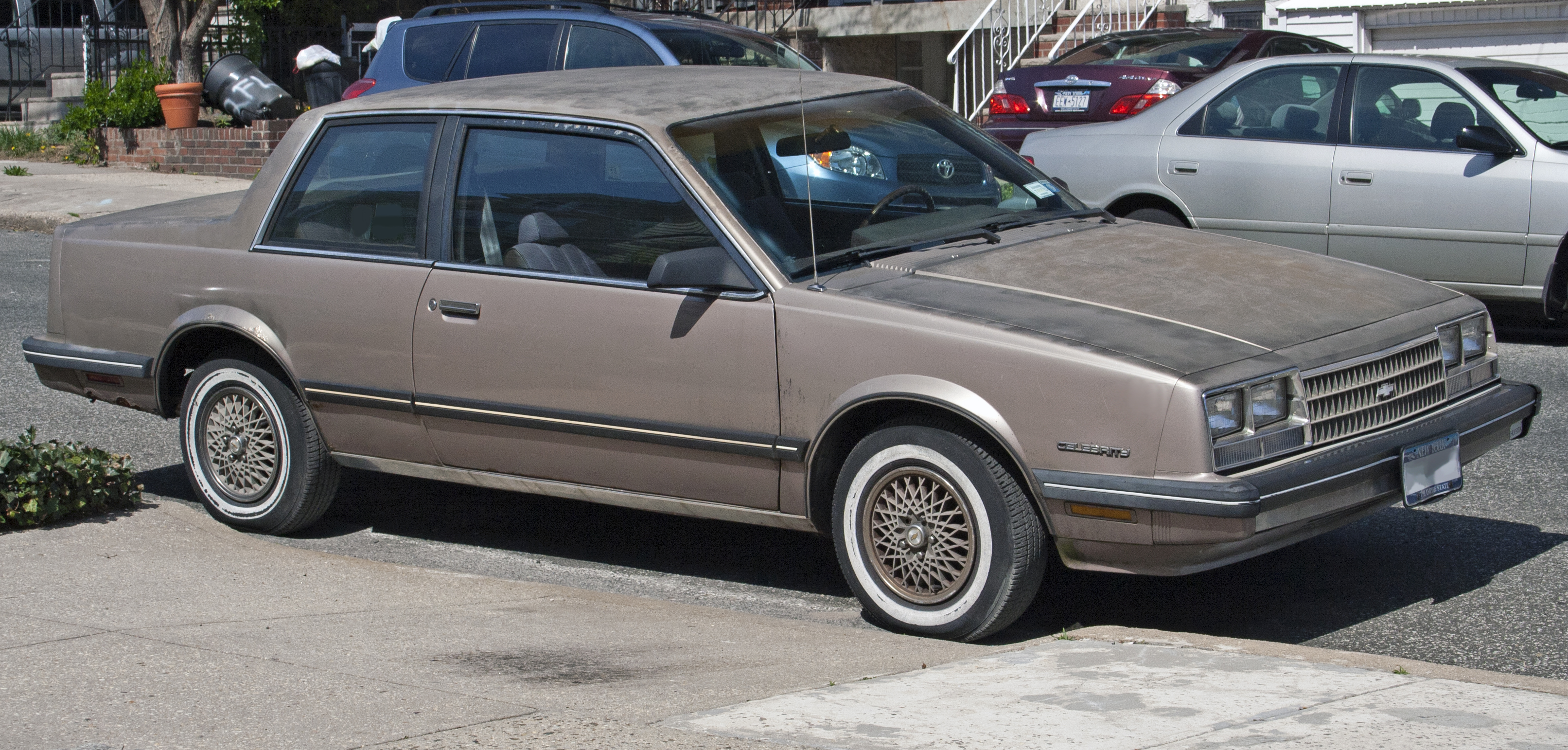
85 Chevy Celebrity
"Hi, Tom and Ray. I have a problem with my 85 Chevy Celebrity. I have a cracked exhaust manifold, and I'm wondering, do I really need to repair it?"
This is a Chevrolet Celebrity from 1985. The caller’s car has a cracked part in the exhaust system, and they’re trying to decide whether it’s worth fixing.
The Chevrolet Celebrity is a mid-size car from the 1980s. In this call, the listener’s 1985 Celebrity has an exhaust manifold crack, which affects exhaust leaks and noise.
cracked exhaust manifold
"I have a problem with my 85 Chevy Celebrity. I have a cracked exhaust manifold, and I'm wondering, do I really need to repair it? It's pretty loud, I bet."
The exhaust manifold is part of the engine’s exhaust system that gathers the exhaust gases. If it cracks, exhaust can leak out, making the car louder and possibly causing heat problems.
The exhaust manifold collects exhaust gases from the engine cylinders and routes them toward the rest of the exhaust system. If it cracks, it can leak hot exhaust gases, increase noise, and potentially create heat damage around nearby components.
cast iron manifold
"A 4-cylinder, and if I'm not mistaken, I believe that car may have not a cast iron manifold, but it may have a steel manifold."
Some exhaust manifolds are made from cast iron, which is good at handling heat. But it can still crack over time as the engine heats up and cools down.
Cast iron is a common exhaust manifold material because it handles heat well and is relatively inexpensive to produce. However, cast iron can crack with thermal cycling, and repairs like welding may be more difficult depending on the exact manifold and crack location.
steel manifold
"A 4-cylinder, and if I'm not mistaken, I believe that car may have not a cast iron manifold, but it may have a steel manifold. Really?"
Some exhaust manifolds are made of steel. Steel can sometimes be welded, which may be a cheaper repair than replacing the whole part.
Steel exhaust manifolds are typically more weldable than cast iron, depending on the steel type and the repair method. That’s why the conversation pivots to whether the manifold can be welded instead of replaced.
welded
"I thought you were going to give her the Vanadium-Titanium story. No, I think you can have this welded. Welded. They've welded a lot on my car."
Welding means melting and joining metal to fix the crack. For exhaust parts, it can work, but the repair has to handle very high heat.
Welding a cracked exhaust manifold is a repair strategy that can restore sealing and reduce leaks. Whether it’s a good idea depends on the manifold material, crack severity, and whether the weld can survive exhaust heat cycles.
labor
"...but the trouble is it's all labor. Right. Mucho labor. And I'm not sure how much longer I'm going to have the car."
Labor is what you pay the mechanic for their time. Exhaust work can take longer than you’d expect, so labor can be the biggest part of the bill.
Labor is the technician’s time and shop charges for diagnosing, removing, and installing parts. In exhaust repairs, labor can dominate the total cost because access can be difficult and the work may involve multiple steps.
exhaust gases
"...the one drawback to not fixing it is that you're inhaling fumes because of where the leak is under the hood. The exhaust gases that escape there are not going through the exhaust system and out the tailpipe."
Cars make exhaust gases when they burn fuel. Normally they go out the tailpipe, but if something leaks, the fumes can get into the area where you breathe.
“Exhaust gases” are the hot, toxic byproducts of combustion that normally travel through the exhaust system and exit at the tailpipe. If there’s a leak, those gases can escape into the engine bay instead of going out the back of the car.
firewall
"...it's going to sneak through all the little holes in the firewall and all that stuff."
The firewall is the wall that separates the engine compartment from the inside of the car. If fumes find a path through openings, they can get into the cabin.
The firewall is the barrier between the engine bay and the cabin. It has openings and passages for wiring and plumbing; the transcript suggests exhaust can sneak through those paths if it’s accumulating near the intake area.
brake pedal
"one day I pushed on the brake pedal and it went almost to the floor. I had owned a VW where this happened all the time so I didn't panic."
The brake pedal is the driver’s input that starts the hydraulic braking system. If it goes “almost to the floor,” it usually points to air in the system, low fluid, a failing master cylinder, or a problem with hydraulic pressure.
tire balance
"But he bought was a new tire and when they installed the tire in the car, they didn't balance it correctly or didn't balance it perhaps at all."
Tire balance is the process of matching weights to the wheel/tire assembly so it spins smoothly at speed. If a tire is not balanced (or is balanced incorrectly), it can cause shaking that can excite other components, including the brake rotor and caliper behavior described here.
brake pad
"...because that caliper piston is now not touching the brake pad. And then finally, when it does make contact, the second pump is okay."
Brake pads are the parts that squeeze onto the spinning disc to slow the car down. If they’re not close enough at first, the pedal can feel like it goes too far before braking happens.
Brake pads are the friction material clamped by the caliper onto the rotor. If the caliper piston is not positioned correctly (due to vibration or clearance), the pad may not contact the rotor immediately, increasing pedal travel on the first press.
lunge forward
"Okay. So the problem is when I put it in park, it lunges forward and it kind of rocks back and forth in a big way."
A “lunge forward” means the car jerks as you shift into Park. That usually points to the automatic transmission not locking correctly right away.
A “lunge forward” when shifting into Park suggests the drivetrain is still moving or not being held immediately by the parking mechanism. Common causes include a sticking/worn parking pawl, low hydraulic pressure, or a transmission that’s not fully engaging the Park position.
front wheel drive
"All modern cars do it. All front wheel drive modern cars do it to some extent. But there's something broken on your car."
Front-wheel drive means the engine’s power goes to the front wheels. Because of how the drivetrain is laid out, worn engine supports can show up as rocking or jerking more noticeably.
Front-wheel drive (FWD) places the engine and transaxle over the front axle, which changes how torque reacts through mounts and links. The speaker claims FWD cars are more prone to this “rocking” behavior when torque-control components like struts or bushings wear.
torque strut
"But there's something broken on your car. Something is broken? Yeah. What's broken is the thing called the torque strut. There is actually a thing that looks like a dog bone."
A torque strut is a support link that helps hold the engine in place. If the rubber bushing inside gets worn out, the engine can move more than it should, and the car may jerk or rock when you shift or come to a stop.
A torque strut (sometimes called an engine torque strut) is a suspension-style link that controls how the engine moves under acceleration, braking, and shifting. When its bushing wears out, the engine can rock back and forth, causing the kind of lurching the speaker describes.
dog bone
"There is actually a thing that looks like a dog bone. If you open the hood... you will see this dog bone that's right in fact, some of these cars have actually two of these dog bone looking things..."
“Dog bone” is a nickname for a shaped engine support link. It’s called that because it looks like a dog bone, and the speaker says mechanics will recognize it by that description.
“Dog bone” is a common nickname for certain torque strut/engine mount links that have a thicker center and narrower ends. The speaker uses the nickname to help the listener communicate the issue to a mechanic or parts counter.
bushing
"And what's wrong is that the bushing part of it is all worn out. So he'll see it move. He'll see the thing move and he'll say, hey, there's something broken here."
A bushing is the soft part inside a mount or link that cushions movement. When it wears out, the part can move too much and you’ll feel jerking or shaking.
A bushing is a rubber (or elastomer) insert that allows controlled movement while absorbing vibration. Worn bushings in a torque strut reduce damping and allow excessive movement, which can translate into noticeable rocking or clunks.
push-start
"...the car is parked in such a location that he could never hope to push it out of there. In any event, he couldn't push start it because it's an automatic transmission."
Push-starting means getting the car moving and trying to start it that way. It works much more reliably on manual cars than automatics.
Push-starting (also called bump-starting) can work on many manual-transmission cars by using the drivetrain’s momentum to spin the engine. Automatics generally aren’t set up for this, and attempting it can be ineffective or risky depending on the vehicle.
extra virgin olive oil
"...He's got a. And one of them is a bottle of extra virgin olive oil. He's got a gallon of very extra virgin olive oil."
Olive oil can’t start a car or fix a dead battery. This part is mainly a comedy bit about grabbing the wrong thing.
Olive oil is not a legitimate fix for a car that won’t start due to a drained battery. The joke here is that the character rummages for something in the trunk, but the “solution” is obviously unrelated to starting systems.
jumper cables
"He's got a pair of pliers. That's pretty good. And jumper cables. But alas, no one to jump to."
Jumper cables are thick wires you use to “borrow” battery power from another car. They help you start your car when your battery is dead.
Jumper cables are heavy-duty cables used to start a car with a dead battery by connecting it to a working battery (usually another car). They’re commonly used when the starter won’t crank due to low battery voltage.
NPR
"Don't let any of those letters bother you. They're just three letter words or NPR for that matter."
NPR is a public radio network in the U.S. Here it’s just mentioned because it’s also a set of three letters.
NPR stands for National Public Radio, a U.S. public radio network. The hosts mention it as a comparison for “three-letter words,” not as an automotive topic.
888-CAR-TALK
"what is that number? It's 888-CAR-TALK. That's 888-227-8255. Hello, you're on car talk."
That’s the show’s phone number. It uses letters on a phone keypad so “CAR-TALK” turns into numbers you can dial.
888-CAR-TALK is the phone number used to call the Car Talk show. It’s a mnemonic-style number where letters map to digits (CAR-TALK → 227-8255) for easier dialing.
windows were up
"eight hours later, nine hours later, I was coming back to get into my car, and the car was completely closed, shut, and all the windows were up, everything."
They’re saying the windows were closed, so the rat probably didn’t just crawl in through an open window. It likely got in through some other small opening.
The speaker emphasizes that all the windows were up, meaning the rat likely entered through another route (door seals, gaps around the hood/trunk, or ventilation/cowl areas). This is a key clue for diagnosing how the animal got inside.
recirculation
"And what he said was that because I had not depressed the recirculation button, there was an opening from the outside of the car into the inside of the car that any animal could crawl."
Recirculation means the car keeps using the same air inside instead of pulling in new air from outside. That can reduce how much outside air (and anything with it) gets pulled in.
Recirculation is the HVAC mode that reuses cabin air instead of drawing fresh air from outside. It reduces the amount of outside air entering the ventilation system, which can limit how much an external entry pathway is “active.”
owner's manual
"Well, I was going to say, why isn't it in the owner's manual? Do you have any enemies in? Tell the truth."
The owner’s manual is the book that comes with the car and explains how to use it and what to do if something goes wrong. It usually doesn’t list weird, rare events like this.
The owner’s manual is the factory guide that covers normal operation, maintenance, and troubleshooting. People often expect it to mention unusual problems, but it typically focuses on common issues and safety procedures.
Cars.com
"Now if you want to copy this here show, which is number 19, you can get one on the web. Just head on over to the online store at the Car Talk section at Cars.com."
Cars.com is a website where people shop for cars. Here they’re also pointing you to the site for something connected to the show.
Cars.com is an automotive marketplace where you can browse listings and also access show-related content. In this segment, it’s referenced as the place to get the show’s merch or related items.
Request an Explanation
Heard something you'd like explained? We'll add it to this episode.
Sign in to request explanations for terms you heard.
Want to learn more?
Browse our glossary for plain-English explanations of automotive terms, jargon, and concepts.
Help improve this episode
See something that's not quite right? Our annotations are AI-generated and can sometimes miss the mark. Click the flag icon on any annotation to suggest a correction.