Edmunds is an automotive information and pricing site that provides reviews, specs, and cost estimates. When a caller says they’re speaking with someone from Edmunds, it signals the show may be referencing market/ownership guidance rather than only mechanical diagnosis.
Four-wheel drive means the car can send power to all four wheels for better grip. If it starts acting jerky or lurching, it could be because something in the power delivery to the wheels isn’t working smoothly.
Bucking is when the car feels like it’s jerking or kicking instead of pulling smoothly. That can happen for a few reasons, including problems with how the engine is running or how the transmission is applying power.
They’re saying it feels like the parking brake is partially on, which would make the car feel like it’s fighting you. That could be from a brake that isn’t fully releasing, or from another system that feels similar.
Your fuel filter is like a screen that keeps dirt out of the fuel system. If it gets clogged, the engine doesn’t get enough fuel, so it can lose power and eventually shut off.
Sometimes a car seems okay around town, but when you ask for more power (like going up a hill), it starts to run out of fuel. That’s why it can slow down, then stall.
A gas filter is like a screen that keeps dirt out of the fuel. If it gets clogged, the car may not get enough clean fuel and can run rough, especially when you drive for a while.
Term
fast oil places
These are the quick-change oil shops. They’re great for oil changes, but they might not be the best place for other jobs like fuel-filter work.
Spark plugs create the spark that lights the fuel in the engine. If they’re worn out or dirty, the engine can run rough or misfire. That can make the car feel like it has a fuel problem even when it’s really ignition-related.
The air filter keeps dust out of the air going into the engine. If it gets clogged, the engine can’t breathe well, and performance can suffer. Replacing it is a simple maintenance step that can improve how the car runs.
A tune-up is a routine maintenance check to make sure the engine is running the way it should. It often includes checking things like spark plugs and filters. If your car is acting up, a tune-up can help find and fix the cause.
Car
93 Nissan pickup
They’re talking about a Nissan pickup from around 1993. They’re using it as the example while describing a squeaking sound they’re trying to figure out.
The squeaking is described as happening only when the truck is moving, specifically during acceleration and also during deceleration or when braking. That pattern is useful because it narrows the likely sources—often related to belts, brakes, suspension bushings, or drivetrain components that load/unload with throttle and braking.
“Idle” refers to the engine running while the vehicle is stationary. Not having the noise at idle is a key diagnostic clue because it suggests the sound isn’t coming from things that run continuously at rest (like the engine itself) and instead comes from components that only operate under motion or load.
They notice the squeak when slowing down and when braking. That often means it’s related to the brakes or parts that move/shift when the car’s weight transfers during stopping.
They suspect the belt because belts can squeak when they’re worn or not gripping properly. If the noise changes with engine speed or with accessory loads, it’s a strong clue the belt or one of its pulleys is the problem.
The defroster is the part that clears the windshield. It uses power, so turning it on can make belt-related noises change—helping you narrow down the cause.
In this context, “accessories” are the car’s electrical/comfort systems—like headlights and the defroster. Turning them on increases demand on the car’s charging system, which can affect noises you hear from belts or pulleys.
They mention headlights because turning them on makes the car use more electricity. That extra electrical load can change how the belt-driven parts sound.
They’re telling you to raise the engine speed a bit and listen. If the squeak gets louder when the RPM goes up, it often points to something like a belt or pulley.
If a part of the exhaust isn’t tight, it can wiggle when you accelerate. That wiggle can make a rattle or clunk sound. When you change throttle/load, the sound may go away.
The manifold is the part on the engine that gathers exhaust gases from the cylinders. Where it connects to the exhaust pipe uses gaskets and bolts. If that connection is loose, it can make noise when the engine is working hard.
The front pipe is the exhaust pipe right after the engine. If the bolts or gasket there get loose, it can rattle or make noise when you press the gas. Tightening and checking the seal can fix it.
In this context, “converter” refers to the catalytic converter, which is typically bolted into the exhaust stream after the manifold/front pipe. If the converter’s mounting bolts or flange joints loosen, it can shift under engine load and create rattling noises. It can also contribute to exhaust leaks if gaskets fail.
When you accelerate, the engine has to work harder and twist more. That extra force can make a loose exhaust part shake and rattle. If you ease off, the shaking may stop.
They’re describing a way to recreate the sound safely: keep your foot on the brake (and use the handbrake) so the car can’t roll, then rev it to see if the noise happens again. If the noise shows up the same way, it helps point to the cause. Don’t do it near people or anything you could hit.
The crankshaft is the main rotating shaft inside the engine. It turns the engine’s internal motion into the spinning motion that ultimately drives the wheels.
Engines shake as they run, and that shaking can make the exhaust pipes or parts of the exhaust hit or rub. When that happens, you hear a rattle or clunk that can sound like it’s coming from near you.
A stethoscope helps a mechanic “listen” for the exact spot where a noise is happening. They put it near parts under the car while the engine is running to find the source.
Revving the engine increases RPM and changes vibration and load, which can make intermittent noises appear or disappear. It’s a common technique for diagnosing rattles, exhaust contact, and other vibration-related issues.
A steam locomotive makes power by heating water into steam. That steam pushes pistons, which turn the wheels that actually pull the train.
Concept
locomotive of the 282 type
“282 type” is basically a particular model/class of steam locomotive. Different classes can pull different amounts of train, depending on their design and power.
Locomotives have different sets of wheels. The front and back wheels help guide and stabilize the locomotive, while the middle “driving” wheels are the ones that get power to pull the train.
Going downhill can help a heavy vehicle keep moving faster, so it has an easier time climbing the next hill. It’s like getting a “push” from gravity before the climb.
Car
1991 Mercedes 350SDL
This is a specific Mercedes-Benz sedan from 1991. In this case, it’s a diesel car that uses a turbocharger to make it feel stronger. The host is describing a problem on this exact model.
A turbocharger is a device that uses the engine’s exhaust to spin a compressor. It pushes extra air into the engine so the car makes more power. If something’s wrong with the turbo system, it can sometimes cause unusual sounds.
A turbo diesel is a diesel engine that has a turbocharger. The turbo helps the engine breathe better, which usually means more pulling power. It’s a common setup on many older Mercedes diesels.
Describing a noise by location (right rear) and timing (only when the engine is running, repeating every few seconds) helps narrow down the likely subsystem. Rear-area noises can come from components like wheel bearings, brakes, suspension bushings, or exhaust-related parts depending on the exact sound and when it occurs. The “every five seconds” pattern is a key clue that the noise may be tied to a repeating mechanical or control cycle.
If a noise happens every few seconds in a predictable pattern, it usually means something is turning on and off by a schedule. When it gets faster and louder, that can be a clue that the part is getting worse or the car is trying harder to make it work. Patterns like this are useful for diagnosing what system is involved.
A solenoid is like an electrically powered “push-button” inside the car. When the car sends electricity to it, it moves and can make a clicking sound. If you hear the noise every few seconds, it may be something that’s turning on and off by itself.
The fuel pump is what moves gas from the tank to the engine. It’s usually located near the rear of the car because that’s where the fuel tank is. If it starts making louder or more frequent noises, it can be a sign the pump (or something it controls) is having trouble.
The injector pump is the diesel engine’s fuel “pressure and timing” control. It makes sure the right amount of fuel gets sent to the injectors at the right time.
Diesel engines don’t use spark plugs like many gas engines. They squeeze air so much that the fuel ignites on its own, which means the fuel system has different parts.
The feed pump’s job is to pull fuel from the tank and send it forward to the rest of the fuel system. Think of it as the “fuel delivery” step before the engine’s main injection parts.
A Mercedes dealership is an official repair shop for Mercedes cars. It can matter because brand-specific shops often know the car’s systems better and use the right parts.
The emission system helps keep the car’s exhaust cleaner. Some of its parts move or switch on and off, and that can create sounds you might mistake for an engine problem.
Mercedes cars often have lots of electronic parts that control different systems. If you hear a weird noise, it might be one of those electronic components doing its job (or acting up).
They’re saying they like diesel cars or trucks. Diesel engines run differently than gas engines, and people often choose them for better fuel economy and long-life—though they may need different care.
A bug bomb is like a can of insect-killing chemical that makes a fog. People use it to kill bugs in a closed space, but the chemicals can be dangerous to breathe, so you have to be careful.
When you spray bug-killing chemicals inside a car, the air can get filled with fumes. That can make you feel sick, and it may take time for the smell and chemicals to clear out.
Agent Orange is a well-known toxic chemical from history. Here it’s mentioned just to make a point that the pesticide being discussed is extremely harmful.
Cars have lots of computers and sensors. If you spray harsh chemicals in the cabin, those chemicals can land on wiring and electronic parts and cause trouble.
They’re using a business that makes and stores ice, with big freezers, to keep bugs away. The cold environment makes it harder for flies to survive. It’s basically a “use the right environment” trick.
This is a 1999 Volkswagen Jetta GL. The “standard” means a manual transmission, while an automatic is the other option. They’re debating whether you can change a car from manual to automatic after the fact.
They’re saying this kind of conversion is safest when a dealership does it. A dealership is more likely to use the right parts and follow the correct steps, instead of guessing.
Concept
factory-installed option vs dealer add-on
They’re basically talking about whether the car was built with the option from the factory or added later. Factory options are usually easier and more reliable because the car’s systems are set up to work together from the start.
They’re warning that changing a major drivetrain option later can be complicated. It’s not only about the parts—you might also need extra work so the car’s systems all communicate correctly.
The “computer” is the car’s electronics that control things like shifting and engine behavior. If you swap transmission types, the car may need software changes so it knows how to run the new setup.
Rather than modifying the car to change how it shifts, the idea is to buy a different car that already has the automatic. That’s often simpler and can avoid expensive, complicated work.
They’re talking about going back to the dealer to switch to an automatic. Usually that kind of change involves trade-in or price differences, and it can cost more than you expect.
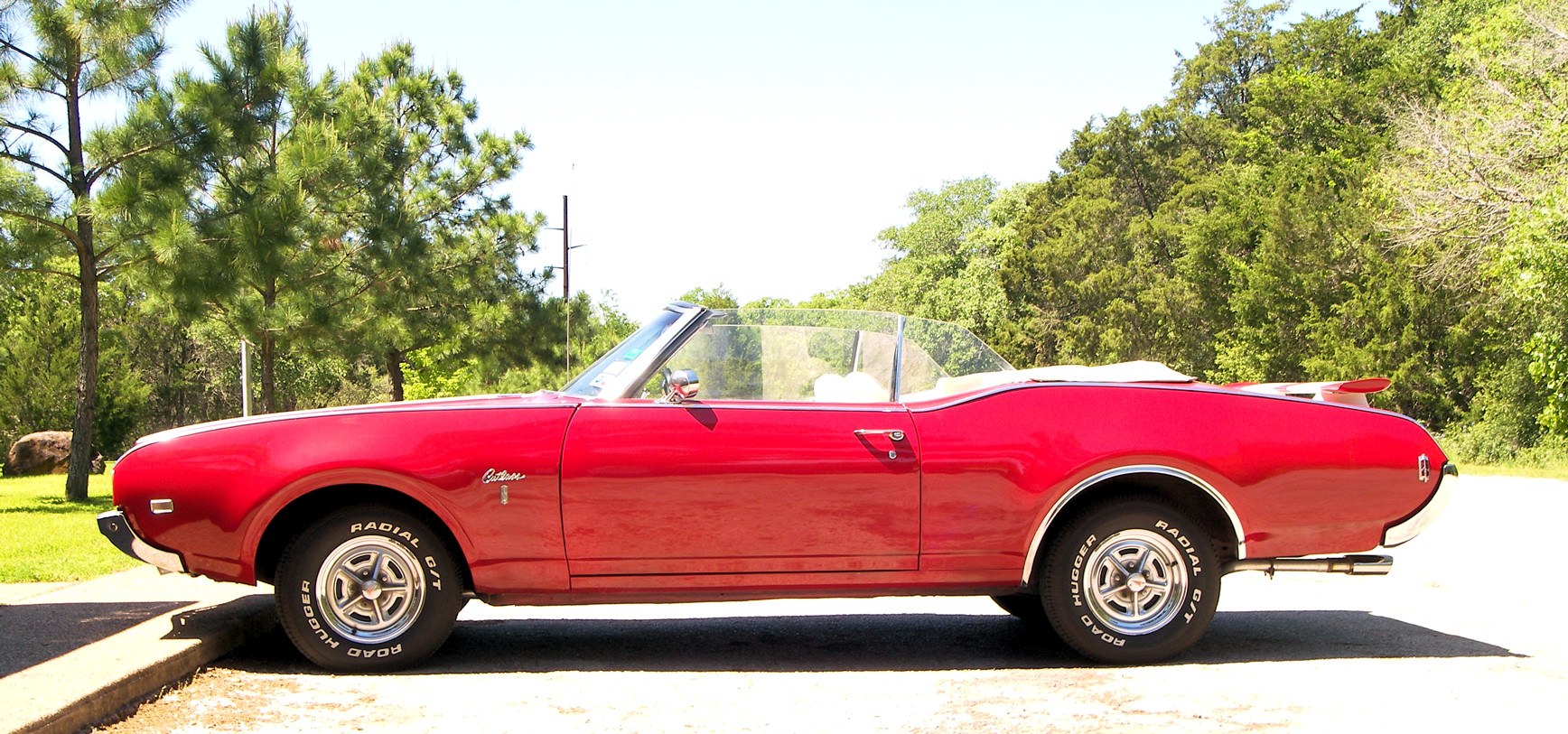
They’re talking about an Oldsmobile Cutlass from around 1989. The important part is that it makes a loud clunk when they brake, so the problem is probably in the wheels, brakes, or suspension—not the engine.
A loud clunk when you brake usually means something is loose or worn near the wheels. It could be in the suspension parts or the brake hardware, and it’s worth checking because it can get worse quickly.
They’re saying the problem happens specifically when they brake. That clue helps a mechanic focus on parts that are stressed during stopping, instead of guessing randomly.
They’re saying the sound seems to come from the passenger side. That’s helpful because it tells you which wheel area to inspect first for loose or worn parts.
They’re not only hearing the clunk—they can also feel movement. That usually means a part is actually shifting when the car slows down, which is a strong reason to get it inspected carefully.
A fender is the metal (or plastic) panel above the wheel. If it was taken off and put back on, something could be loose or not lined up, which can cause rattles or clunks.
When a shop replaces a body panel like a fender, it has to be bolted and clipped back on correctly. If any mounting hardware is loose, the panel can move and make a clunking sound.
Term
break shop
They’re likely talking about a place that sells used car parts. It can save money, but you have to make sure the part matches your car and isn’t damaged.
Concept
pre-diagnosis / "diagnosed the problem already in advance"
They’re talking about figuring out what’s wrong before the shop really checks it. If you guess wrong or miss something, the repair can get more complicated and more expensive.
The control arm bushing is like a soft cushion in your suspension. It helps the suspension move smoothly without rattling. If it gets worn out, you may hear noises or feel the car doesn’t handle as well.
The front suspension is what helps the front wheels stay planted and ride smoothly. If you hear a noise that seems to come from the front of the car, it might be something like a worn part that connects the wheel to the car.
They’re saying you’ll get better results if you take the car to someone who can look at the whole problem, not just one category. Noises can be caused by more than one system, so a broad-thinking shop is less likely to miss the real cause.
A noise that appears when you “step on the brake” is a key diagnostic clue because braking changes load transfer and can alter how suspension and brake components behave. Even if the driver suspects it’s not the brakes, the timing with braking often points to brake hardware, suspension bushings, or mounting points that move under deceleration.
Concept
fix it no matter what it costs
They’re saying it helps to tell the mechanic you want the real problem solved, not a temporary workaround. That can push the shop to do the extra checking needed to find the true cause.
If the steering wheel feels loose, it means there’s extra movement before the wheels actually respond. That can make the car harder to control, so it’s worth fixing quickly.
Rack-and-pinion is a common steering setup. The mount is what holds the steering mechanism in place—if it’s loose, the steering can feel wobbly and unsafe.
Tie rod ends are small steering link parts that help move the wheels when you turn the wheel. If one is worn out, the steering can feel loose and the car may not track straight.
If your steering has too much looseness, the car may not turn the way you expect. That’s risky, so it’s smart to limit driving and get it checked right away.
LIVE
This message comes from Instacard.
Let's talk groceries, specifically your groceries, with Instacard.
You want your groceries just the way you like them, right?
Well, the Instacard app lets you do just that.
They have a new preference picker that lets you pick how ripe or unripe you want your bananas.
Shoppers can see your preferences up front, helping guide their choices.
Instacard, get groceries just how you like.
Hello and welcome to Car Talk from National Public Radio with us, Click and Clack the Tapper Brothers.
And we're broadcasting this week from the Return to Sender Department here at Car Talk Plaza.
This is an interesting little story, man.
One day, God was looking down at Earth and saw all of the evil that was going on.
And we know all about that.
Much of that indeed.
He decided to send an angel down to Earth to check it out.
He called one of his best angels, Mario, and sent St. Mario to the Earth for a little while.
When Mario returned, she told God, yes, it is bad on Earth.
95% of it is bad and about 5% of it is good.
Well, he thought for a moment and thought maybe he'd better send down a second angel to get another point of view.
God called another angel and sent him to Earth for a time.
The angel went back to God and he said, yes, the Earth is in decline.
95% is bad and 5% is good.
God said, this is not good.
So he decides to send an email to the 5% who were good.
He wanted to encourage them to give them a little something to help them keep going.
Oh, yeah?
And do you know what the email said?
Well, no, no.
Oh, you didn't get one either, huh?
That was a dirty trick.
Well, if your car was one of the 95% that ain't good.
Give us a call at 888-CAR-TALK.
That's 888-227-8255.
We're here to help.
Hello, you're on Car Talk.
Hi, this is Nancy from Edmunds, Washington.
Hi, Nancy.
Did you get an email from God?
Yeah, I did.
You did?
Yeah.
He had it, Nancy with a Y.
Oh, excellent.
What's going on, Nancy?
I have a Izuzu Rodeo 1994 six-cylinder four-wheel drive automatic.
And it's been a great car.
I use it primarily for my catering business.
And about in the last two months, it's been like pulling back, almost like bucking, and
then every once in a while it would just fly forward and then I'd be pulling back almost
like I had my parking brake on.
How long has it been doing this?
I'd say about two months.
And at first I suspected I always go to the same gas station, but I went to a different
gas station.
So I thought, okay, I have that gas.
The gas is always a good gas.
This thing has like 60,000 miles.
Oh, many more.
More than that.
How many more?
Oh, I think it's more about 80.
Yeah, I could feel.
I felt 80.
What you describe to me is a classic clogged fuel filter.
And I would be willing to bet if you could find the hill long enough.
You wouldn't make it.
The thing would begin to lose power and it would lose more and more and more until finally
it would just choke and die by the side of the road and then roll over.
Oh, and I would of course be on the way to do a big event.
Exactly.
Right, with a thousand salmon croquettes.
Okay, I'm going to ask a dangerous question here.
I don't know if I can take it.
How about on, what do you call them out there?
Freeways, highways or what?
Freeways, yeah.
Freeways.
How about on the freeway if you get up to like 65 or 60 miles an hour for a long time?
Yes, I drove myself to the airport the other day.
Yeah, and, and, and.
And it was doing it.
Ah, the right answer.
That was close.
I had to ask it though.
I mean, it would not have been ethical to not ask that question and send Nancy off.
Oh, I do it every week.
But I think you should take it to your local filling station or wherever you get its service
and ask them to change the gas filter.
Is that something that one of those fast oil places does?
No, I wouldn't take it to them.
No, they may change the oil filter instead.
Don't you have a mechanic that you sort of go to?
Tell the truth.
A general practitioner?
No.
An internist?
Your primary care physician?
No.
You don't have one?
I've been lucky.
My car has been great.
Well, it has.
Until now that the fuel filter is all plugged up, when you get that filter changed, you
can drive this thing without a worry in the world.
While you're at it, you may want to have them checked like the spark plugs and the air filter
and those things because those could cause the same kind of symptom.
Okay.
So you might need a good general tune up.
If you don't have a good primary care physician, you could go, no, you go to our website,
the cartalksectionofcars.com, and you go to the Mechanics Files, Mechanic X Files.
And you put in Edmunds, Washington, and you could even put in Rodeo, Zuzu.
And it will find you a bunch of mechanics who have been recommended by cartalk listeners
and cartalk visitors to the website.
Oh, great.
Give it a shot, Nancy.
Not that they're any good, but somebody thinks they're good.
They may be their own mothers for all we know.
See you later.
Okay.
Thank you.
Bye-bye.
Yeah.
1-888-CARTALK, that's 888-2278-255.
Hello, you're on Car Talk.
Hi, this is Bill from Henderson, Kentucky.
Hey, Bill from Henderson, Kentucky.
What's happening?
Oh, I got a 93 Nissan pickup.
It sounds like it has mice under the hood.
Oh, yeah?
Yeah, I've got this strange squeaking noise.
It's been happening for about two months now.
Oh, really?
Yeah.
And does it happen if it's sitting at idle?
No.
It has to be moving.
Yes, it happens on two occasions.
One, when I'm accelerating.
And two, when I'm decelerating or putting on the brake.
Oh.
So tell us a little bit about Henderson, Kentucky.
I knew you were heading in that direction.
Is that a quiet little term?
Yes, it is.
It is.
Which end of Kentucky is it?
Middle, North, South, what?
Not that he even knows where Kentucky is.
I can tell you all the states that border Kentucky.
Go ahead.
California's on the left.
Virginia's on the right.
North Dakota's on top of it.
And Texas must be right underneath it.
Well, right, I guess.
Did I hit any one of them?
No.
Virginia.
Virginia.
Virginia, you hit Virginia.
I did?
Yeah.
Are there any cities in Kentucky?
Oh, Louisville is in Kentucky.
Yes.
Is it anywhere in Louisville?
One of my favorite places.
Yes.
I'm in the western part of Kentucky.
And so is Louisville.
Yes, it is.
It is.
I knew that.
Near California.
Well, I would have to say.
Go ahead.
Say something, because I'm still working on it.
Well.
You have to make the noises.
Is it really like a mouse or is it...
It's not even that good.
It's just a...
Just like that.
Just a short squeak.
One time?
At the most, it's done it twice.
And I'm thinking that it's a belt.
Here's a good way to find out if it's a belt.
Turn on all the accessories like the headlights, the defroster and all that jazz.
Uh-huh.
And see if it does it with greater intensity when you rev the engine with all that stuff
on.
And if it is the belt, you don't have to be in motion to get that noise.
Okay.
So if in fact you do get the noise with all the accessories on and it's diminished in
intensity with the accessories off, then it would lend credence to the belt theory.
Yeah, but the belt wouldn't just go...
The belt would go...
It usually would make a lot.
But if it's been the same for a period of time?
Almost two months.
So you're driving along and you accelerate and as you're accelerating, you hear a one
or two time...
And then it stops.
Even though you're still accelerating.
I think it's more likely to be a loose exhaust system component.
You know, for example, where the front pipe bolts to the manifold.
I like that.
The converter bolts to the front pipe.
If there's any movement there and you will get that movement of the engine under load
only.
Okay.
So when you rev the engine and you might be...
Is this an automatic transmission?
Yes, it is.
Put the thing in drive with your foot firmly planted on the brake.
Your left foot, that is.
Okay.
And don't point it at your house or anything.
Point it at like a neighbor's house in the event that something goes wrong.
And you're going to give it some gas like you were trying to drive it.
But of course, having the foot brake on and the handbrake too will keep the car from moving
and see if you can duplicate the noise.
I like this.
See if you can...
Because then you'll get the torque of the engine and you simulate what's going on when
you accelerate and decelerate on the road.
See, as the crankshaft turns, as the engine crankshaft turns in one direction, usually
clockwise, the engine, i.e. the whole block tries to rotate in the other direction.
And when that happens, you can set up a dynamic which will cause two pieces of metal, like
parts of the exhaust system, to move against one another and make this...
noise.
And does it sound like it's coming right from almost under you but a little forward?
Yes, exactly.
Like it's right in the dash.
We're getting all the right answers here.
I'm with you.
I'm with you, man.
So, try to duplicate it.
And if you can duplicate it, you can take it someplace and you can have somebody lie
under the car with a stethoscope and listen.
Okay.
Yeah.
While you're in there with revving up the engine, someone's going to lie under the car.
Yeah.
Try to find a real dumb...
Try to...
I was going to my guys to do it.
Good luck, Bill.
Thank you very much.
See you.
Thanks for calling.
Thank you.
All right, Tommy, did you take your Ginkgo Rocky Balboa this morning?
Uh, no, I forgot.
So, I guess you don't remember the puzzler.
Who are you anyway?
You look so familiar.
We'll be back in a minute.
Every day, NPR reports stories that keep you informed without fear or favor.
That's the promise of a free press and a democracy.
It's in the First Amendment.
I'm Tom Bowman and I cover the Pentagon for NPR.
Stand up for independent news coverage today by donating early for public media giving days,
coming up on May 1st and 2nd.
Give now at donate.npr.org.
Hi, we're back.
You're listening to Car Talk with us.
Click and Clack the Tapper Brothers and we're here to talk about cars, car repair, and the
the answer to last week's puzzler.
And this one came from someone named Tim Sullivan.
And I don't know if the facts are right, but the flavor was just so good.
I had to use it.
I'm beginning to remember it.
It was good.
Tim writes years ago when the railroads used steam locomotives and that isn't even relevant.
The Baltimore and Ohio Railroad had a busy freight line running south from Rochester, New York.
And they used a locomotive of the 282 type, also irrelevant.
Meaning there are two wheels in the front which don't do anything.
Eight wheels behind those, which are the drivers, those are the ones that are connected to the steam engine.
And then two trailing wheels.
And a 282 could handle a train of 80 cars.
But on this particular run, it couldn't handle a train of 60 cars.
It had to have 80.
Does it make sense?
Does it make sense.
And the hint is there's something unusual between Rochester and wherever the train is headed.
And what's unusual?
Bandits.
No.
Bandits.
Bandits would be good, but that's not the answer.
Still on the downward slope of the previous hill and helping by the force of gravity to push the train up over the next hill.
Sonja.
What do you think of that?
Love it.
This is great.
We have a winner.
All right.
We do have a winner.
The winner is Ray Johnson from Titusville, Florida.
Ray Johnson from Titusville, Florida.
Have won the Puzzler Prize.
You may say, what did I win?
What did I win?
Well, don't get your shorts in a bunch, Ray, because all you won is a $25 gift certificate to the Car Talk Shameless Commerce Division on our website.
Hey, you get our new t-shirt.
The Car Talk t-shirt emblazoned with our model non-impediti ratione cogitationes.
I had one on yesterday.
Yes.
Loved it.
Yes.
Which means, of course, unencumbered by the thought process.
We'll have a new non-automotive puzzler coming up in the third half of today's show.
In fact, it's algebraic.
It's for the kids who are on summer vacation whose brains are getting mushy, and they what?
Have what?
Squat to do.
They have squat to do.
So stay tuned for that.
In the meantime, you can call us and ask us questions about your car even.
And the number is 1-888-CARTALK that's 888-227-8255.
Hello, you're on Car Talk.
Yes, this is Gene, calling from Lubbock, Texas.
Gene.
Is it Eugene?
Yeah, short for Eugene.
Yeah.
Before I tell you about my car's problem, I want to ask you about something that you said a couple of minutes ago, about something coming up in the third half.
Well, I always thought that things had two halves, the first and second half.
Well, that's because you're from Texas, Gene.
Yeah.
We don't have third halves down here.
Well, here in the east.
Yeah, we're doing so much back east that we can't put it onto two halves.
No, we need a show and a half to make a whole show.
And we will admit, it's only recently that the third half has been discovered.
Up until a few years ago, no one even knew that a third half existed.
That's nice to know.
And I think, thanks to the Hubble Telescope, we now know that there are three halves.
Right, it's made football games more interesting.
That's what we need, more of that.
So what's going on, Gene?
Okay, I have a 1991 Mercedes 350SDL, which is the big sedan with a turbocharger.
Turbo diesel.
Yes.
Yeah.
There's a noise emanating from the right rear part of the car.
Whenever the engine is running, it's sort of a quick crock sound every five seconds.
Whenever the engine is running, even if you're not moving.
Yes, the engine is running.
It doesn't matter if you're going fast or slow or standing still, but the engine has to be running.
Yeah.
And this has been going on for a number of months.
Everything seems to work in the car.
Give us the description again of what the sound is.
Well, it's hard to put it in words, but I call it a quick crock.
My wife says blink, blink or something like that.
Okay, I like it.
I like it.
I think of, in terms of a solenoid, cutting it on and off.
Exactly what I was thinking, too.
And it's that regular that it has a timing to it?
Yes, it's just about every five seconds.
Now, recently, it's gotten more urgent.
It's gone to a single clunk louder and about every three seconds.
And the sound seems to be emanating from behind the right rear seat and in front of the trunk.
And there's nothing there that I know of.
And apparently there's nothing there that the mechanic knows about either that could be making noise.
Well, the fuel pump is there.
Yeah.
Well, I don't know.
Do we have to give the disclaimer?
All right, Gene, we know absolutely nothing about this car.
We've never even seen one.
Oh.
But we're going to, just to show how brilliant we are.
We're going to come up with an answer anyway.
All right, do that.
We're going to figure it out.
You're going to have to give us a minute.
Okay.
Doug, we're going to get the book out of there.
Well, here's a wild guess for you.
Okay.
This is a diesel engine car.
And as such, has an injector pump that is run by the engine that's under the hood.
Yes.
But it probably has a feed pump.
Of course it would.
That runs from the tank to the injector pump.
Could be.
How does that sound, Gene?
Does that sound good?
Sure.
And your mechanic, is it a Mercedes dealership?
Not here anymore.
They closed it down a couple of years ago.
Ah, okay.
So you went to...
He used to be the number one mechanic and he set up his own shop.
So he's good at it.
Oh, so he's the guy.
Yeah.
I suspect that noise is emanating from the fuel tank.
Yeah, that's what I think too.
And especially since you describe it as a solenoid kind of noise.
Boy, I'm surprised it didn't occur to him though.
Because if we don't know that there's another pump back there, he certainly does.
Well, I'll pursue that idea.
But it's something like that.
It's a pump or a solenoid or something in the fuel or emission system that's made.
It isn't a mechanical thing because there's nothing mechanical back there.
But who knows what, you know, the car...
These Mercedes cars have all kinds of fancy little doodads.
And it could be that one of the doodads has something going on back there.
What would we know?
We wouldn't.
And what would we care?
Well, we care only because Gene is a nice guy.
Yeah.
He's a gentleman.
And he's a very nice person, I can tell.
I'm a former Yankee.
Illinois.
Oh, yeah?
Oh, you are?
So you're retired to Texas?
I'm retired.
Yes, I am.
You're retired to Lubbock?
I was the office manager for the local McTwack distributor.
Oh, hence the affinity for diesels.
Yeah, thank you.
That may be it.
Yeah, must have been the fumes they got here.
Hey Gene, thanks for calling and good...
If you find out, give us a call.
Okay, we're always willing to learn.
You have a great show and I enjoy listening to you.
Thanks a lot.
Okay, thank you.
Take care.
Bye-bye.
Wait a minute, he just said he was a Yankee from Illinois?
Well, I mean, compared to Lubbock.
Right, in fact, people from...
From Carrillo.
Yankee.
Yeah.
Hey, do you happen to know what time it is?
Time to roll our clocks back four weeks to summer savings time?
No.
It's time to play Stump the Chumps.
This is that part of the show where we revisit a previous caller
to see if our advice was jaded, faded, or underrated.
So who's our lucky caller?
I don't have any idea, but we have notes.
The note says it's Bob from Fort Worth, Texas.
And do you remember Bob's Tale of Volny the Dwight?
Does it involve cattle trailers and beehive hairdos?
No, but you're very close, I think.
It involves flies and horses.
Bob went to horse shows, and every time he got back in his truck,
it would be filled with huge flies, and the poor guy,
he had to drive around with a can of raid in the cup holder.
Remember that?
Yeah, yeah.
Yeah.
But someone suggested that I set off a bug bomb at night,
but I'm concerned...
About your health?
Well, no, no, no, I mean, put it in the car.
I know, but I don't think you want to get into a car
that's just been sprayed with deadly poison.
Well, I'm concerned...
You might as well throw Agent Orange in there.
I mean, come on.
I'm concerned more about the bug juice
getting in the electronics of the car and messing up the car.
The electronics?
What about your lungs, man?
Oh, you're respoking those atura fuentes,
so you don't care about your lungs.
I don't care about my lungs.
I don't think you should worry about your lungs, either.
In a few years, you'll be able to buy a lung.
You were rather cavalier about that.
Well, we ended up disagreeing on this, I think.
Right.
I think you took the environmentally incorrect position
and you said,
bomb them into next Tuesday.
Bomb those little boogers.
For which I might add, we got dead huge with calls
and emails saying that your brother is nuts.
Ah, a bunch of sissies.
I said, no way.
I thought it was crazy to set off a bug bomb in the car,
cover the seats in fly paper instead.
So, we disagreed.
So, it's possible that one of us is going to be right
and one of us is going to be wrong.
Yeah, which is better than we usually do,
since we're usually both wrong.
Bob, are you there?
I'm here.
All right, Bob, before we find out whether the flies
are history or you are,
we need to make sure that the answer you're about to give
has not been influenced by our staff,
the staff of National Public Radio,
or the Better Living Through Pesticides Foundation.
Is that correct?
Well, it's correct, but Hope Springs Eternal
and I run to the mailbox every day looking for the bride.
You didn't get one.
All right, whose advice did you follow?
Was I right about the bomb and do you still have any hair?
Well, let me tell you what happened.
My wife went to the grocery store
and I asked her to bring back a bug bomb.
When she brought it back, it scared me to death.
All the warning labels, all the chemicals.
And I never had a product in my hand
that had so many pictures of skulls and crossbows.
I said, this is not going to work.
So, I thought about it and thought about it
and I realized that when the weather gets cold here,
which is not often and not for long,
we don't have flies.
So, I have a friend who is in the ice business,
the commercial ice business.
So, I took my car and drove it to his warehouse.
He manufactures these ice cubes
that they put in the 10 pound bags
that you buy at convenience stores.
He just drove right into the freezer.
I put it into the freezing storage facility,
not the freezing where the machinery is,
but where they store the ice.
I rolled the windows down, left it there for three days.
Goodbye flies, no more problems.
Wow, boy.
What a brilliant man you are.
We should have called you.
No.
Man, it's not safer than the bug bomb.
So, now what are you going to do with the bomb
now that you have it?
Well, I'm just curious.
I don't like my next door neighbor,
so I'm going to do the next one.
Hey, Bob, you're a good sport.
Thanks for playing Stump the Jumps.
Thanks, guys.
Bye.
Okay, Tommy, it's time to take a short break
so that stations can identify themselves.
And simultaneously deny any knowledge
of how we managed to sneak onto their airwaves.
Go to it, guys.
We'll be back in a minute.
Ha, we're back.
You're listening to Car Talk with us.
Click and collect the Tappet Brothers.
And we're here to discuss Cars, Car Repair,
and the last puzzler of this current puzzler season.
I can hardly wait.
Recently, after we finished one of our Car Talk shows,
we and the rest of the Car Talk staff
decided to go out for a few drinks
and some fun drinks.
We had some buffalo wings.
So the gang of us goes to a local eatery,
and we sit down and we have a drink
and some snacks.
And just before the bill comes,
my brother and I
each go to the bathroom
and climb out the window.
It was a coincidence.
Hey, fancy meeting you here.
Yeah, the restaurant was on the third floor.
That's why I always carry a rope.
We were in the hospital for months.
The bill comes, and it's $63.
Bugsy says, oh, those guys stiffed us.
But look, if everyone throws in an extra two bucks,
we'll cover the bill.
So the question is, how many people
were in the original group?
That sounds simple enough.
Prove your answer.
Prove it.
Prove that there's only one answer.
Now, if you think you know the answer, write it.
These are the hardest kinds.
Yeah, that's always...
Pardon the pronunciation, but I call him Fermat.
And everyone else calls him Fairmont.
But that's basically what his problem was.
Prove that this is the only thing.
Yeah, it's easy to hypothesize.
It's easy to generalize.
It's easy to stereotype.
And it's not easy to climb out the bathroom window.
Especially with my brother on my back.
Now, if you think you know the answer, write it on a postcard
or etch it into the shell of a diamond
and ruby-encrusted Fabergeier.
And send it to Puzzler Tower,
Car Talk Plaza,
Box 3500,
Harvard Square, Cambridge,
Matt 02238,
or you can email your answer from the Car Talk section
of cars.com.
If you'd like to call us, the number is
1-888-CARTALK.
It's 888-227-8255
a lawyer on Car Talk.
Hey guys, this is Michael.
I'm calling from New Orleans. How you doing?
Michael, we're doing great. How you doing?
I'm doing fantastic. Listen, I got a couple problems.
Wait, wait, wait, slow it down.
You must be from New York. Where are you really from?
Seriously, from New Orleans. We talk just like we're from Boston.
No kidding.
Yeah, really. Everybody, that's the great thing.
People could come down from Boston to New Orleans
or go from New Orleans up to Boston
and there's no difference.
So, we should move down there.
Absolutely, you'd be welcomed here.
I love it. We were there once. They showed us to the airport.
Exactly.
What's up? What's going on?
Like I said, I got a couple of problems.
This one's the interesting one.
My wife and I are one car family
and I told her we were going to buy a new car.
We replaced our old Audi
and she said that's fantastic
and I told her I'd handle everything
and she went out of town
and I decided to buy a car that I liked.
It was fun.
I bought a 1999 Jetta GL
standard.
That's the kicker.
And you didn't tell her. Exactly.
She comes back in town. She looks at the car.
She loves it. She gets in and she turns to me.
She said, you bought a standard
and she called around
and she found out that you can get it
transferred between the standard to an automatic.
I can't believe, number one,
that it can be done
and if it is done, doesn't it
kind of screw up the works?
This would be the second biggest
third biggest mistake.
Hold on a second.
That's my wife you're talking about.
You got it.
I think it would be a mistake to do this.
Why?
It is certainly doable.
First of all, if you're going to have it done,
you must have it done at the dealership.
It's going to cost you a few thousand bucks.
That's more than they said.
They said, well, we could do it for 600.
It's not a problem.
600?
When you went to buy the car,
how much more was it with an automatic transmission?
It was several thousand bucks.
Several thousand dollars more
and they were doing it at the factory.
So the only thing I can imagine
is that they're going to sell,
they have a ready, willing, enabled buyer
for your standard transmission.
They're going to charge him the three thousand.
But it should cost you three thousand
but there are just so many things that will go wrong.
Not to mention the fact that I think
you may even have to
change things like the computer.
Oh wow, I didn't even consider that.
Can she tough it out?
She's going to have to tough it out.
Well, I mean,
did you buy the car new?
Oh, brand new.
How long ago?
Three months.
So now I have to buy the bullet
and buy her a separate car.
But I think so, you have to buy her own car
and she will, when she has to
drive this car, but for the most part
she'll be driving her own car with an automatic.
See, the trouble is now,
I mean, I was going to suggest
that you just swap it.
Go back to the dealer and say
I want an automatic.
Well, you could do that too. You take a serious hit.
But I mean, you can get a
used 99 with automatic
transmission
and sell this one.
And I don't think it's going to be
all that expensive
to do that.
I'd recommend that as opposed to having them
put an automatic in yours. I think you
because don't forget, your wife is not going
to forgive you.
And the sooner you can get the memory of this
out of her head.
She's already in the counselor.
We're already in the counseling over this.
Trust me, she will say, sure,
I'll tough it out.
If you could only read her mind
at that very moment.
You know that there's no amount of money
too high
to prevent you from doing this
because it's in your best interest.
Trust me.
I think I'm with you on this with Guy.
I think you are. Appreciate it.
Say a mic. Good work, Mike.
Bye bye.
1-888-CAR-TALK
that's 888-227-8255
Hello, you're on CAR-TALK.
This is Louise and have a camp in Pennsylvania.
Where town?
Haver Town, Pennsylvania.
Haver Town? Haver, H-A-V-E-R.
That's right. Haver Town.
Well, you guys would say Haver Town.
Why wouldn't you?
Because she lives there and she knows
it's pronounced Haver.
Haver Town, right?
We're right outside of Philadelphia.
I thought that was Philadelphia.
Philadelphia?
I don't know.
What's up, Louise?
But anyway, I have an 89-old cutlass ear.
Okay?
Well, we want to hold on to it a little more,
but every time we put the brake on,
we hear a loud clunk.
Now, I have had it too.
Three different mechanics.
And they all assure me
that nothing is wrong with it.
When we put the brake on,
the clunk comes through
on the door side of the passenger.
And sometimes,
I can even feel something
moving under there.
But everyone tells me
there's nothing wrong with it.
I'm sorry. Go ahead.
I mean, of course something's wrong with it.
Well, that's how I feel.
Well, you're absolutely right.
And the next guy that says to you
there's nothing wrong with it, tell him he's a moron.
They say they can hear it.
They agree it's there.
And the only thing that I...
We had to have a fender,
a new fender put on.
This has been going on for almost a year.
Really?
And the last fellow,
it was like a month ago,
he said that every one of the boats
to the fender, they were all loose.
So they have to come off.
I keep thinking, well, maybe they left
something in there and there's something
clunking.
Did this noise begin after they did the fender?
Yes.
How serious was the accident?
I mean, they had to replace the fender.
Did they replace other stuff?
No, a fellow was gone by.
I was parked and he did a job on the fender.
He had one of those high trucks
and he wasn't looking where he was going.
And are the guys who are telling you
that there's nothing wrong,
the same guys who did the fender?
No. No, I went to a break shop.
Ah, that's your mistake.
Ah, Louise! Louise!
Good God, Louise!
You went to a break shop
Buy what? Right!
Did you go to a break shop?
Who the hell are you to go to a break shop?
I put my photo on the break.
Yeah, but see, you diagnosed the problem
already in advance.
That's why you're in so much trouble here.
I see.
And I'm here to help you, Louise.
I'll be going out for coffee.
No, see, when you...
I realized that it happened when you
stepped on the break.
But you then concluded that the noise
had to do with the break.
You went to a break guy.
You had a pain in your stomach.
You go to a stomach guy.
And the stomach guy doesn't know what's wrong
because actually it's a back problem
that's causing your stomach to hurt
and the stomach guy says
there's nothing wrong with your stomach
because it's your back.
Yeah, so you got to go to
a general practitioner first
to find out what kind of specialist
you have to go to.
Yeah, I suspect you have
a bad
control arm bushing
some place. Out of the tens
of thousands of pieces of a car
you went
right to a control arm bushing.
I mean, I knew it wasn't like the
speedometer or the volume knob or the radio.
I knew it wasn't either of those.
Yeah, I knocked those right out
of the picture.
And my vast experience suggested
it's something akin to that.
But it's probably something in the front
suspension
that's causing the noise. But I wouldn't
go to a suspension specialist like Tommy
says you want to go to someone who
covers all the disciplines.
Someone who doesn't have preconceived notions.
You know what I mean?
Someone whose scope isn't limited.
Someone who's open minded
and say look I have a noise
and it occurs when I step on the brake
but I don't think it's the brakes.
Don't even say that. Just say I have no idea
about nothing. You tell me where the noise
is coming from. And it always helps to say
I want to fix it no matter what
it costs.
The few customers
that we have still
who take
that position are treated very well.
The other question is
the steering wheel was very loose.
Would that give you any...
Oh, see
Louise, you know more than you think.
You could have a loose
rack and pinion mount.
You could have a bad tie rod end?
Yeah. Take it. You know I'm going to suggest you take it
to the dealer. And I
and I bet you they're going to figure it out in 10 minutes.
Oh well that would be great.
But get it fixed because it has the potential to be dangerous.
It does have the potential to be dangerous
and all joking aside
I wouldn't mess around. Take it
tomorrow.
And certainly between now and
then don't drive fast.
We're supposed to leave for New York City tonight.
Don't. I would not take the car.
Take the train.
I know your husband's going to convince you.
Tell him you'll meet him there.
Take the train.
And buy the insurance policy on him.
See you, Louise.
Thank you so much. Bye.
Bye.
While it's happened again, you frittered away
another perfectly good hour listening to car talk.
Our steam producer is Doug.
I had some fritters for breakfast the other day.
Doug, the subway fugitive.
Not a slave to fashion.
And what's this? Cute, cute, cute.
Berman, our associate producer is our
frow, and you thought I'd forget.
Our frow, Catherine Fenelosa.
Ah yes, and Louis Cronin the barbarian.
Our engineer is Michael Garth.
Our senior web lackey is Doug, the old
gray mayor. And our technical,
spiritual and menu advisor
who's back from his triumph at the Pan
Pacific Free Lunch Atoll Hop
is John Bugsy Lawler.
Our public opinion pollster is Paul
Murky of Murky Research.
Assisted by statistician Marge Inovera.
Our customer care representative is Heywood
Jabuzov. Our director of
new product repair is Warren T. Myfoot.
And our shop foreman is Luke Busy.
Our student consultant is Noam Diplom.
Our dermatologist for teenagers is Don Pickett.
Our emergency room physician is Henrietta
Badklam. The car talk musical
director is Donna E. Mobiley.
And our child transportation specialist
is Minnie VanDriver.
Our divorce attorney is Carmine
Nautios. And our seat cushion tester is Mike
Easter. And of course, our Russian
chauffeur is Bikov Andropov.
Our chief counsel from the law firm of
Dewey Chiedman Howe is U. Lewis Dewey
known to the heat stroke summer school
students in Harvard Square as U.E. Louis
Dewey. Thanks so much for listening.
We're clicking clack the tappin' brothers. And remember
above all, don't drive like my brother.
And by the way, don't drive like my
brother. We'll be back next week. Bye-bye.
Music
And now it is our great pleasure to
have in the studio Car Talk
Quas's chief mechanic, Mr. Vinnie Gumbaz.
Thank you very much. Now if you
want to copy this here show, which is
number 28, you can get one on the
web. Just head on over to the
online store at the Car Talk
section at cars.com. You know what I
mean? That's very good. But what if I wanted
something else? I mean, what if I wanted to buy
that new CD, why you should never listen to
your father when it comes to cars?
Would I go to the same site, Vincent?
No, you dope. You go to
www.algorsafunkybrother.com
Of course you go
to the same site, the Car Talk
section at cars.com
Or you'll order by phone. You'll
call an 888 car junk.
And yes, that really is the number
888 car junk. Thank you, Vinnie.
That was truly innovative. Yeah, I got
your innovation right here, pal.
Car Talk is a production of Dewey
Tudum and Howe and WBOR in Boston.
And even though Nina Totenberg tries to vote us
off the island, whatever she hears us say it,
this is NPR, National Public Radio.
Download the Instacart app and shop today.
About this episode
A pair of listener car mysteries drive the show: Nancy’s 1994 Isuzu Rodeo bucks and surges like it’s starving for fuel, and the brothers zero in on a clogged fuel filter, while also suggesting a broader tune-up. Bill’s 1993 Nissan pickup makes a brief squeak only under load, leading to a lively diagnosis of either belt issues or, more likely, a loose exhaust component that shifts when the engine torques. The episode also includes the usual goofy banter and a puzzler recap.
The Brothers suggested Bob from Texas could rid his car of horseflies by using a ‘bug bomb’ to flood the passenger compartment with insecticide. Bob returns for our in-show ’Quality Control’ program, “Stump the Chumps”, where we all get to find out if that suggestion met the standards of sound mechanical advice or, as is more likely in Bob’s case, a negligence lawsuit. Order in the Court! for this episode of the Best of Car Talk.
See pcm.adswizz.com for information about our collection and use of personal data for sponsorship and to manage your podcast sponsorship preferences.