
About this episode
A pair of listener car mysteries drive the show: Nancy’s 1994 Isuzu Rodeo bucks and surges like it’s starving for fuel, and the brothers zero in on a clogged fuel filter, while also suggesting a broader tune-up. Bill’s 1993 Nissan pickup makes a brief squeak only under load, leading to a lively diagnosis of either belt issues or, more likely, a loose exhaust component that shifts when the engine torques. The episode also includes the usual goofy banter and a puzzler recap.
See pcm.adswizz.com for information about our collection and use of personal data for sponsorship and to manage your podcast sponsorship preferences.
NPR Privacy Policy
Edmunds
"Hello, you're on Car Talk. Hi, this is Nancy from Edmunds, Washington. Hi, Nancy."
Edmunds is an automotive information and pricing site that provides reviews, specs, and cost estimates. When a caller says they’re speaking with someone from Edmunds, it signals the show may be referencing market/ownership guidance rather than only mechanical diagnosis.
four-wheel drive
"I have a Izuzu Rodeo 1994 six-cylinder four-wheel drive automatic. And it's been a great car."
Four-wheel drive means the car can send power to all four wheels for better grip. If it starts acting jerky or lurching, it could be because something in the power delivery to the wheels isn’t working smoothly.
Four-wheel drive (4WD) sends power to both the front and rear axles, improving traction in low-grip conditions. When a 4WD vehicle starts bucking or surging, it can be related to drivetrain components like the transfer case, driveline angles, or how torque is being applied to the wheels.
automatic
"I have a Izuzu Rodeo 1994 six-cylinder four-wheel drive automatic. And it's been a great car."
“Automatic” means the car changes gears by itself. If it’s jerking or suddenly lurching, the transmission may not be shifting smoothly.
An automatic transmission shifts gears without the driver using a clutch pedal. Symptoms like bucking, pulling back, or sudden forward surges can indicate issues with shift timing, hydraulic pressure, or internal transmission wear.
bucking
"And about in the last two months, it's been like pulling back, almost like bucking, and then every once in a while it would just fly forward and then I'd be pulling back almost like I had my parking brake on."
Bucking is when the car feels like it’s jerking or kicking instead of pulling smoothly. That can happen for a few reasons, including problems with how the engine is running or how the transmission is applying power.
Bucking is a jerky, uneven motion during acceleration or load changes, often felt as the car repeatedly surges and then resists. In drivability complaints, bucking can come from fuel/ignition issues, but in a 4WD automatic it can also be caused by transmission shift problems or driveline binding.
parking brake
"...it would just fly forward and then I'd be pulling back almost like I had my parking brake on. How long has it been doing this?"
They’re saying it feels like the parking brake is partially on, which would make the car feel like it’s fighting you. That could be from a brake that isn’t fully releasing, or from another system that feels similar.
The parking brake is a mechanical or cable-based system used to hold the vehicle stationary. The caller’s comparison (“almost like I had my parking brake on”) suggests they feel resistance or dragging, which can sometimes be caused by brake caliper drag or a stuck brake component, though it could also be a drivetrain/transmission symptom.
clogged fuel filter
"What you describe to me is a classic clogged fuel filter. And I would be willing to bet if you could find the hill long enough."
Your fuel filter is like a screen that keeps dirt out of the fuel system. If it gets clogged, the engine doesn’t get enough fuel, so it can lose power and eventually shut off.
A clogged fuel filter restricts how much fuel can flow to the engine. As the filter gets more blocked, the engine can feel like it’s losing power under load, then eventually stall and fail to restart.
fuel starvation under load
"You wouldn't make it. The thing would begin to lose power and it would lose more and more and more until finally it would just choke and die by the side of the road and then roll over."
Sometimes a car seems okay around town, but when you ask for more power (like going up a hill), it starts to run out of fuel. That’s why it can slow down, then stall.
When a car can’t get enough fuel—often from a restriction like a clogged filter—it may run fine at light throttle but struggle on hills or during acceleration. The driver feels progressive power loss until the engine stalls.
gas filter
"...you should take it to your local filling station or wherever you get its service and ask them to change the gas filter."
A gas filter is like a screen that keeps dirt out of the fuel. If it gets clogged, the car may not get enough clean fuel and can run rough, especially when you drive for a while.
A gas filter is a service part that helps keep fuel clean before it reaches the engine. Over time it can clog, which may cause poor fuel delivery and drivability issues, especially under sustained highway load.
fast oil places
"Is that something that one of those fast oil places does? No, I wouldn't take it to them."
These are the quick-change oil shops. They’re great for oil changes, but they might not be the best place for other jobs like fuel-filter work.
“Fast oil places” are quick-service shops that commonly handle oil changes and basic maintenance. They may not be set up to do more specialized fuel-system work like replacing a fuel filter, depending on the vehicle.
oil filter
"No, they may change the oil filter instead. Don't you have a mechanic that you sort of go to?"
The oil filter cleans the engine’s oil as it circulates. It’s different from a fuel filter, which cleans the gas going to the engine.
An oil filter is a maintenance part that removes contaminants from engine oil. The transcript contrasts oil-filter service with fuel-filter service, which are different systems with different symptoms and maintenance intervals.
spark plugs
"While you're at it, you may want to have them checked like the spark plugs and the air filter and those things because those could cause the same kind of symptom."
Spark plugs create the spark that lights the fuel in the engine. If they’re worn out or dirty, the engine can run rough or misfire. That can make the car feel like it has a fuel problem even when it’s really ignition-related.
Spark plugs ignite the air-fuel mixture in the engine’s cylinders. Worn or fouled spark plugs can cause misfires, rough running, and reduced power—symptoms that can feel similar to other fuel/air problems. Checking them during a tune-up helps rule out ignition-related causes.
air filter
"While you're at it, you may want to have them checked like the spark plugs and the air filter and those things because those could cause the same kind of symptom."
The air filter keeps dust out of the air going into the engine. If it gets clogged, the engine can’t breathe well, and performance can suffer. Replacing it is a simple maintenance step that can improve how the car runs.
The air filter cleans the air entering the engine. If it’s clogged, the engine may not get enough airflow, which can lead to poor acceleration, rough idle, or reduced fuel economy. It’s commonly checked alongside spark plugs during routine maintenance.
general tune up
"Okay. So you might need a good general tune up. If you don't have a good primary care physician, you could go, no, you go to our website,"
A tune-up is a routine maintenance check to make sure the engine is running the way it should. It often includes checking things like spark plugs and filters. If your car is acting up, a tune-up can help find and fix the cause.
A “tune-up” is a maintenance visit aimed at restoring correct engine operation by checking or replacing common wear items. Depending on the vehicle, it may include inspecting ignition components, filters, and other basics that affect drivability. The goal is to eliminate causes of symptoms like hesitation or rough running.

93 Nissan pickup
"Oh, I got a 93 Nissan pickup. It sounds like it has mice under the hood."
They’re talking about a Nissan pickup from around 1993. They’re using it as the example while describing a squeaking sound they’re trying to figure out.
The speaker mentions a “93 Nissan pickup,” which likely refers to a 1993-era Nissan truck. In this context, it’s the vehicle they’re diagnosing for a squeaking noise, so the make and approximate model year matter for common causes and parts availability.
squeaking noise
"I've got this strange squeaking noise. It's been happening for about two months now. And does it happen if it's sitting at idle? No. It has to be moving."
The squeaking is described as happening only when the truck is moving, specifically during acceleration and also during deceleration or when braking. That pattern is useful because it narrows the likely sources—often related to belts, brakes, suspension bushings, or drivetrain components that load/unload with throttle and braking.
idle
"And does it happen if it's sitting at idle? No. It has to be moving."
“Idle” refers to the engine running while the vehicle is stationary. Not having the noise at idle is a key diagnostic clue because it suggests the sound isn’t coming from things that run continuously at rest (like the engine itself) and instead comes from components that only operate under motion or load.
decelerating or putting on the brake
"One, when I'm accelerating. And two, when I'm decelerating or putting on the brake."
They notice the squeak when slowing down and when braking. That often means it’s related to the brakes or parts that move/shift when the car’s weight transfers during stopping.
The noise occurs during deceleration and when braking, which points toward systems that change load and friction during slowdown. Common culprits include brake hardware (pads/rotors), brake dust and glazing, or suspension/driveline components that shift as weight transfers.
belt
"And I'm thinking that it's a belt. Here's a good way to find out if it's a belt. Turn on all the accessories like the headlights, the defroster and all that jazz."
They suspect the belt because belts can squeak when they’re worn or not gripping properly. If the noise changes with engine speed or with accessory loads, it’s a strong clue the belt or one of its pulleys is the problem.
A “belt” in this context is almost certainly the engine’s accessory drive belt (often a serpentine belt) that powers components like the alternator and sometimes the power steering and A/C. Squeaks can indicate belt wear, glazing, misalignment, or a failing tensioner/pulley.
accessories
"Here's a good way to find out if it's a belt. Turn on all the accessories like the headlights, the defroster and all that jazz. Uh-huh."
In this context, “accessories” are the car’s electrical/comfort systems—like headlights and the defroster. Turning them on increases demand on the car’s charging system, which can affect noises you hear from belts or pulleys.
“Accessories” here means electrical and HVAC loads like headlights and the defroster. Turning them on increases the load on the alternator and can change how belt-driven systems behave, which is why it’s used as part of the noise diagnosis.
defroster
"Turn on all the accessories like the headlights, the defroster and all that jazz. Uh-huh. And see if it does it with greater intensity when you rev the engine..."
The defroster is the part that clears the windshield. It uses power, so turning it on can make belt-related noises change—helping you narrow down the cause.
The defroster is another accessory load that increases electrical demand. Using it in the test helps determine whether the squeak is related to engine accessory load (often belt-driven) versus something unrelated.
headlights
"Turn on all the accessories like the headlights, the defroster and all that jazz. Uh-huh. And see if it does it with greater intensity when you rev the engine..."
They mention headlights because turning them on makes the car use more electricity. That extra electrical load can change how the belt-driven parts sound.
Headlights are used as an example of an accessory load. When you switch them on, the alternator has to work harder, which can influence belt tension and the sound of belt-driven components.
rev the engine
"And see if it does it with greater intensity when you rev the engine with all that stuff on. And if it is the belt, you don't have to be in motion to get that noise."
They’re telling you to raise the engine speed a bit and listen. If the squeak gets louder when the RPM goes up, it often points to something like a belt or pulley.
“Rev the engine” means increasing engine speed (RPM) while observing the noise. Many belt and pulley issues become more noticeable at higher RPM, so this is a common way to reproduce and localize squeaks.
loose exhaust system component
"I think it's more likely to be a loose exhaust system component. You know, for example, where the front pipe bolts to the manifold."
If a part of the exhaust isn’t tight, it can wiggle when you accelerate. That wiggle can make a rattle or clunk sound. When you change throttle/load, the sound may go away.
A loose exhaust component can shift slightly when the engine torques under acceleration. That movement can create intermittent rattling or ticking noises that may stop once the load changes. Common spots include where exhaust sections bolt together.
manifold
"You know, for example, where the front pipe bolts to the manifold. I like that. The converter bolts to the front pipe."
The manifold is the part on the engine that gathers exhaust gases from the cylinders. Where it connects to the exhaust pipe uses gaskets and bolts. If that connection is loose, it can make noise when the engine is working hard.
An exhaust manifold is the engine-mounted casting that collects exhaust gases from the cylinders and routes them into the exhaust system. Exhaust manifold connections use flanges and gaskets, and looseness there can cause vibration and intermittent noises under load. It’s a common diagnostic point for rattles.
front pipe
"You know, for example, where the front pipe bolts to the manifold. I like that. The converter bolts to the front pipe."
The front pipe is the exhaust pipe right after the engine. If the bolts or gasket there get loose, it can rattle or make noise when you press the gas. Tightening and checking the seal can fix it.
The front pipe is the section of exhaust piping that connects the exhaust manifold to the rest of the exhaust system. If its flange bolts loosen, it can leak or vibrate, producing noises especially under acceleration. It’s often checked for tightness and gasket condition.
converter
"I like that. The converter bolts to the front pipe. If there's any movement there and you will get that movement of the engine under load only."
In this context, “converter” refers to the catalytic converter, which is typically bolted into the exhaust stream after the manifold/front pipe. If the converter’s mounting bolts or flange joints loosen, it can shift under engine load and create rattling noises. It can also contribute to exhaust leaks if gaskets fail.
engine under load
"If there's any movement there and you will get that movement of the engine under load only. Okay. So when you rev the engine and you might be..."
When you accelerate, the engine has to work harder and twist more. That extra force can make a loose exhaust part shake and rattle. If you ease off, the shaking may stop.
“Engine under load” means the engine is producing higher torque—like during acceleration—so mounts and exhaust joints experience more force. Loose exhaust connections often rattle only in this condition because vibration/movement increases with throttle. When the load changes, the noise may stop.
brake-and-rev noise duplication test (in Drive)
"Put the thing in drive with your foot firmly planted on the brake. Your left foot, that is. Okay. And don't point it at your house or anything. Point it at like a neighbor's house in the event that something goes wrong. And you're going to give it some gas like you were trying to drive it. But of course, having the foot brake on and the handbrake too will keep the car from moving and see if you can duplicate the noise."
They’re describing a way to recreate the sound safely: keep your foot on the brake (and use the handbrake) so the car can’t roll, then rev it to see if the noise happens again. If the noise shows up the same way, it helps point to the cause. Don’t do it near people or anything you could hit.
This is a “duplicate the noise” diagnostic technique: with the car in Drive, the brake is held firmly (and the handbrake too) to prevent movement while the engine is revved. By matching the conditions that trigger the sound (engine load), you can confirm whether it’s related to exhaust/driveline movement. It should be done carefully to avoid overheating or unsafe behavior.
torque
"Because then you'll get the torque of the engine and you simulate what's going on when you accelerate and decelerate on the road."
Torque is the engine’s pulling power. More torque usually means the car feels stronger when you press the gas, especially when you’re not at high RPM.
Torque is the twisting force an engine produces, and it’s what largely determines how strongly the car accelerates, especially at lower speeds. When the hosts talk about “getting the torque,” they’re describing how engine output changes as you accelerate and decelerate.
crankshaft
"See, as the crankshaft turns, as the engine crankshaft turns in one direction, usually clockwise, the engine, i.e. the whole block tries to rotate in the other direction."
The crankshaft is the main rotating shaft inside the engine. It turns the engine’s internal motion into the spinning motion that ultimately drives the wheels.
The crankshaft converts the up-and-down motion of the pistons into rotational motion. Its rotation direction matters because it influences engine vibration and how forces are transmitted to the rest of the car.
engine vibration / dynamic forces causing exhaust contact noise
"And when that happens, you can set up a dynamic which will cause two pieces of metal, like parts of the exhaust system, to move against one another and make this... noise."
Engines shake as they run, and that shaking can make the exhaust pipes or parts of the exhaust hit or rub. When that happens, you hear a rattle or clunk that can sound like it’s coming from near you.
The segment describes how engine rotation can create reactive forces that make parts of the exhaust system move and rub against each other. That movement can generate a rattling or clunking noise that seems to come from underneath or slightly forward of the driver.
stethoscope
"And if you can duplicate it, you can take it someplace and you can have somebody lie under the car with a stethoscope and listen."
A stethoscope helps a mechanic “listen” for the exact spot where a noise is happening. They put it near parts under the car while the engine is running to find the source.
A mechanic’s stethoscope is used as a diagnostic tool to pinpoint where a noise is coming from by listening at different points on the vehicle. In this case, the idea is to have someone listen under the car while the engine is revved to correlate the sound with a specific component.
revving up the engine
"While you're in there with revving up the engine, someone's going to lie under the car."
Revving the engine increases RPM and changes vibration and load, which can make intermittent noises appear or disappear. It’s a common technique for diagnosing rattles, exhaust contact, and other vibration-related issues.
steam locomotives
"Tim writes years ago when the railroads used steam locomotives and that isn't even relevant. The Baltimore and Ohio Railroad had a busy freight line running south from Rochester, New York."
A steam locomotive makes power by heating water into steam. That steam pushes pistons, which turn the wheels that actually pull the train.
Steam locomotives use a boiler to generate steam that drives pistons connected to the locomotive’s wheels. The discussion’s wheel layout is tied to how the steam engine delivers power to the driving wheels.
locomotive of the 282 type
"And they used a locomotive of the 282 type, also irrelevant. ... And a 282 could handle a train of 80 cars. But on this particular run, it couldn't handle a train of 60 cars."
“282 type” is basically a particular model/class of steam locomotive. Different classes can pull different amounts of train, depending on their design and power.
“282 type” refers to a specific locomotive class/series used by the railroad, which typically implies a particular wheel arrangement and performance capability. The hosts use it to reason about how much train weight/length the locomotive can haul under different conditions.
locomotive wheel arrangement (leading / driving / trailing wheels)
"Meaning there are two wheels in the front which don't do anything. Eight wheels behind those, which are the drivers, those are the ones that are connected to the steam engine. And then two trailing wheels."
Locomotives have different sets of wheels. The front and back wheels help guide and stabilize the locomotive, while the middle “driving” wheels are the ones that get power to pull the train.
The wheel arrangement described—two front wheels, multiple driving wheels, and trailing wheels—affects traction, stability, and how well the locomotive negotiates track. In steam locomotives, the driving wheels are the ones mechanically connected to the steam engine’s power.
force of gravity on a downhill slope
"Still on the downward slope of the previous hill and helping by the force of gravity to push the train up over the next hill. Sonja. What do you think of that?"
Going downhill can help a heavy vehicle keep moving faster, so it has an easier time climbing the next hill. It’s like getting a “push” from gravity before the climb.
The segment highlights how a downhill grade can help a train build momentum and reduce the effective work needed to climb the next hill. This is analogous to vehicle dynamics on grades: energy gained descending can be spent overcoming resistance ascending.
1991 Mercedes 350SDL
"Okay, I have a 1991 Mercedes 350SDL, which is the big sedan with a turbocharger. Turbo diesel. Yes."
This is a specific Mercedes-Benz sedan from 1991. In this case, it’s a diesel car that uses a turbocharger to make it feel stronger. The host is describing a problem on this exact model.
The 1991 Mercedes 350SDL is a Mercedes-Benz diesel sedan from the early 1990s. The “SDL” designation is commonly associated with a turbocharged diesel configuration, and in this case the host clarifies it’s a turbo diesel. These cars are known for using a turbocharger to help a diesel engine make more power and torque.
turbocharger
"Okay, I have a 1991 Mercedes 350SDL, which is the big sedan with a turbocharger. Turbo diesel. Yes."
A turbocharger is a device that uses the engine’s exhaust to spin a compressor. It pushes extra air into the engine so the car makes more power. If something’s wrong with the turbo system, it can sometimes cause unusual sounds.
A turbocharger is an air compressor driven by exhaust gases that forces more air into the engine. On a diesel, that extra air helps burn more fuel efficiently, improving power and torque. Turbochargers can also be a source of noises if there’s wear, boost leaks, or exhaust-related issues.
Turbo diesel
"Turbo diesel. Yes. Yeah."
A turbo diesel is a diesel engine that has a turbocharger. The turbo helps the engine breathe better, which usually means more pulling power. It’s a common setup on many older Mercedes diesels.
“Turbo diesel” refers to a diesel engine that uses a turbocharger. Compared with a naturally aspirated diesel, a turbo diesel can produce more torque and power because it can move more air through the engine. That’s why turbo diesels are often described as feeling stronger, especially at lower speeds.
noise emanating from the right rear part of the car
"Yes. Yeah. There's a noise emanating from the right rear part of the car. Whenever the engine is running, it's sort of a quick crock sound every five seconds."
Describing a noise by location (right rear) and timing (only when the engine is running, repeating every few seconds) helps narrow down the likely subsystem. Rear-area noises can come from components like wheel bearings, brakes, suspension bushings, or exhaust-related parts depending on the exact sound and when it occurs. The “every five seconds” pattern is a key clue that the noise may be tied to a repeating mechanical or control cycle.
rhythmic clicking/clunking that changes frequency
"Yes, it's just about every five seconds. Now, recently, it's gotten more urgent. It's gone to a single clunk louder and about every three seconds."
If a noise happens every few seconds in a predictable pattern, it usually means something is turning on and off by a schedule. When it gets faster and louder, that can be a clue that the part is getting worse or the car is trying harder to make it work. Patterns like this are useful for diagnosing what system is involved.
A noise that occurs on a steady interval (like every five seconds) suggests a system that cycles on a timer or in response to a control strategy. When the interval shortens and the sound becomes a single louder clunk, it often points to a component that’s degrading or being commanded more aggressively. This kind of pattern helps narrow the search to actuators, pumps, or valves rather than random mechanical wear.
solenoid
"I think of, in terms of a solenoid, cutting it on and off. Exactly what I was thinking, too. And it's that regular that it has a timing to it?"
A solenoid is like an electrically powered “push-button” inside the car. When the car sends electricity to it, it moves and can make a clicking sound. If you hear the noise every few seconds, it may be something that’s turning on and off by itself.
A solenoid is an electrically controlled switch that moves a small plunger when current is applied. In cars, solenoids are often used to turn systems on/off or to actuate valves and pumps, which can create a clicking or clunking sound. If the sound happens in a regular rhythm, it can point to something being energized repeatedly.
fuel pump
"Well, the fuel pump is there. Yeah. Well, I don't know. Do we have to give the disclaimer?"
The fuel pump is what moves gas from the tank to the engine. It’s usually located near the rear of the car because that’s where the fuel tank is. If it starts making louder or more frequent noises, it can be a sign the pump (or something it controls) is having trouble.
The fuel pump supplies pressurized fuel from the tank to the engine. Many fuel pumps (and related components like the fuel level sending unit) are located inside or near the fuel tank area, which can make noises that seem to come from the rear of the car. A change in the pump’s sound frequency or intensity can indicate a failing pump, a pressure/flow issue, or an electrical control problem.
injector pump
"This is a diesel engine car. And as such, has an injector pump that is run by the engine that's under the hood."
The injector pump is the diesel engine’s fuel “pressure and timing” control. It makes sure the right amount of fuel gets sent to the injectors at the right time.
An injector pump pressurizes and meters diesel fuel so it can be injected precisely into the engine. On many diesel setups, the pump is mechanically driven by the engine, which is why the host connects it to what’s under the hood.
diesel engine
"This is a diesel engine car. And as such, has an injector pump that is run by the engine that's under the hood."
Diesel engines don’t use spark plugs like many gas engines. They squeeze air so much that the fuel ignites on its own, which means the fuel system has different parts.
A diesel engine uses compression ignition instead of spark plugs. That difference drives a different fuel system design, including high-pressure fuel delivery components.
feed pump
"But it probably has a feed pump. That runs from the tank to the injector pump."
The feed pump’s job is to pull fuel from the tank and send it forward to the rest of the fuel system. Think of it as the “fuel delivery” step before the engine’s main injection parts.
A feed pump moves fuel from the tank toward the injector pump, helping maintain supply pressure and flow. In diesel systems, it’s common to have a separate low-pressure feed pump upstream of the high-pressure injection components.
Mercedes dealership
"And your mechanic, is it a Mercedes dealership? Not here anymore. They closed it down a couple of years ago."
A Mercedes dealership is an official repair shop for Mercedes cars. It can matter because brand-specific shops often know the car’s systems better and use the right parts.
A Mercedes dealership is an authorized service center for Mercedes-Benz vehicles, typically staffed and equipped for that brand’s specific diagnostics and parts. The hosts are using it to narrow down what kind of diesel system and service history the car might have had.
fuel tank
"I suspect that noise is emanating from the fuel tank. Yeah, that's what I think too."
Your fuel tank holds the fuel. Some important fuel parts are located near the tank, so if you hear a weird noise, it might be coming from that area.
The fuel tank is where the car stores gasoline (or diesel) before it’s sent to the engine. Many modern cars also place key fuel-related components—like the fuel pump and sometimes a fuel-level sensor—near or inside the tank, so noises can originate there.
emission system
"It's a pump or a solenoid or something in the fuel or emission system that's made. It isn't a mechanical thing because there's nothing mechanical back there."
The emission system helps keep the car’s exhaust cleaner. Some of its parts move or switch on and off, and that can create sounds you might mistake for an engine problem.
The emission system includes components that reduce pollutants before they leave the exhaust. Some emission-related valves and controls are electrically actuated (like solenoids) and can make noises, especially during certain driving conditions or key-on/key-off events.
Mercedes cars
"But it's something like that. It's a pump or a solenoid or something in the fuel or emission system that's made. It isn't a mechanical thing because there's nothing mechanical back there. But who knows what, you know, the car... These Mercedes cars have all kinds of fancy little doodads."
Mercedes cars often have lots of electronic parts that control different systems. If you hear a weird noise, it might be one of those electronic components doing its job (or acting up).
Mercedes-Benz vehicles are known for packing in a lot of electrically controlled modules and actuators (“doodads”), which can make it harder to pinpoint an odd noise. When diagnosing, it’s common to suspect in-tank or electrically actuated components rather than purely mechanical parts.
diesels
"Oh, hence the affinity for diesels. Yeah, thank you. That may be it. Yeah, must have been the fumes they got here."
They’re saying they like diesel cars or trucks. Diesel engines run differently than gas engines, and people often choose them for better fuel economy and long-life—though they may need different care.
The caller mentions an “affinity for diesels,” meaning they prefer diesel-powered vehicles. Diesel engines use compression ignition and typically emphasize fuel economy and durability, though they can have different maintenance needs than gasoline engines.
bug bomb
"But someone suggested that I set off a bug bomb at night, but I'm concerned... About your health? Well, no, no, no, I mean, put it in the car."
A bug bomb is like a can of insect-killing chemical that makes a fog. People use it to kill bugs in a closed space, but the chemicals can be dangerous to breathe, so you have to be careful.
A bug bomb is a pesticide fogger that you activate inside a vehicle to kill insects. It disperses chemicals through the cabin, so it can be effective for infestations but also poses exposure risks if used incorrectly.
pesticide exposure risk in enclosed spaces
"But someone suggested that I set off a bug bomb at night, but I'm concerned... About your health? Well, no, no, no, I mean, put it in the car."
When you spray bug-killing chemicals inside a car, the air can get filled with fumes. That can make you feel sick, and it may take time for the smell and chemicals to clear out.
Using pesticide foggers in a car is an example of how chemical exposure risk increases in enclosed spaces. Even if the goal is to kill insects, the fumes can irritate lungs and eyes and may linger after activation, so ventilation and timing matter.
Agent Orange
"Well, I'm concerned... You might as well throw Agent Orange in there. I mean, come on."
Agent Orange is a well-known toxic chemical from history. Here it’s mentioned just to make a point that the pesticide being discussed is extremely harmful.
Agent Orange is a historically infamous herbicide associated with severe environmental and health impacts. In the transcript it’s used as a hyperbolic comparison to emphasize how dangerous the pesticide would be.
electronics of the car
"Well, I'm concerned... You might as well throw Agent Orange in there. I mean, come on. I'm concerned more about the bug juice getting in the electronics of the car and messing up the car."
Cars have lots of computers and sensors. If you spray harsh chemicals in the cabin, those chemicals can land on wiring and electronic parts and cause trouble.
Modern cars have many electronic modules (for example, sensors, control units, and infotainment) that can be harmed by chemical exposure. Pesticide residue or mist can interfere with connectors, wiring insulation, and surfaces around control modules.
commercial ice business
"So, I have a friend who is in the ice business, the commercial ice business. So, I took my car and drove it to his warehouse. He manufactures these ice cubes"
They’re using a business that makes and stores ice, with big freezers, to keep bugs away. The cold environment makes it harder for flies to survive. It’s basically a “use the right environment” trick.
The speaker describes using a commercial ice supplier’s warehouse/freezer to solve a pest problem. This is an example of using an industrial cold-storage environment rather than a home setup. The key idea is that cold conditions can reduce or eliminate certain insects like flies.

Volkswagen Jetta
"I bought a 1999 Jetta GL standard. That's the kicker."
This is a 1999 Volkswagen Jetta GL. The “standard” means a manual transmission, while an automatic is the other option. They’re debating whether you can change a car from manual to automatic after the fact.
A Volkswagen Jetta GL from 1999 is a late-90s compact sedan that could be ordered with either a manual (“standard”) or an automatic transmission. In this segment, the hosts are discussing whether the car’s transmission type can be changed after purchase.
standard
"standard. That's the kicker. And you didn't tell her. Exactly."
“Standard” here means the car has a manual transmission. Instead of the car shifting for you, you use a clutch and your own gear changes.
In North American car talk, “standard” usually means a manual transmission. The episode uses it as the opposite of “automatic,” which is why the conversation turns to swapping or converting transmission types.
dealer-only conversion
"First of all, if you're going to have it done, you must have it done at the dealership. It's going to cost you a few thousand bucks."
They’re saying this kind of conversion is safest when a dealership does it. A dealership is more likely to use the right parts and follow the correct steps, instead of guessing.
The hosts argue that if you’re going to do a transmission conversion, it should be handled at a dealership. That’s because dealer service departments are more likely to have the correct parts, procedures, and factory-level knowledge for a complex retrofit, reducing the risk of mismatched components or incomplete integration.
factory-installed option vs dealer add-on
"and they were doing it at the factory. So the only thing I can imagine is that they're going to sell, they have a ready, willing, enabled buyer for your standard transmission."
They’re basically talking about whether the car was built with the option from the factory or added later. Factory options are usually easier and more reliable because the car’s systems are set up to work together from the start.
The transcript contrasts factory installation (“they were doing it at the factory”) with a later conversion or dealer-installed change. Factory builds are typically engineered and calibrated as a matched system, while dealer conversions can require extra parts and programming to make everything work together reliably.
conversion risk (things that will go wrong)
"But it should cost you three thousand but there are just so many things that will go wrong. Not to mention the fact that I think you may even have to change things like the computer."
They’re warning that changing a major drivetrain option later can be complicated. It’s not only about the parts—you might also need extra work so the car’s systems all communicate correctly.
The speaker is highlighting that retrofitting or converting a car to a different transmission isn’t just swapping parts—it can introduce compatibility issues. Beyond mechanical fitment, electronics, wiring, and calibration can be required, which is why the cost may not be a simple “pay three thousand and it’s done.”
computer
"Not to mention the fact that I think you may even have to change things like the computer. Oh wow, I didn't even consider that."
The “computer” is the car’s electronics that control things like shifting and engine behavior. If you swap transmission types, the car may need software changes so it knows how to run the new setup.
Modern cars use an onboard computer (engine/transmission control module) to manage how the drivetrain behaves. If you change from a standard transmission to an automatic, the control software and sensor inputs may need to be updated so the transmission shifts correctly and the car doesn’t throw faults.
swap it (buying a different transmission-equipped car)
"...I was going to suggest that you just swap it. Go back to the dealer and say I want an automatic..."
Rather than modifying the car to change how it shifts, the idea is to buy a different car that already has the automatic. That’s often simpler and can avoid expensive, complicated work.
Instead of retrofitting a different transmission into an existing car, the speaker suggests swapping by buying a different vehicle that already has the desired automatic transmission. This can reduce labor complexity and the risk of mismatched parts or incomplete integration.
buying from a dealer and negotiating a different drivetrain
"Go back to the dealer and say I want an automatic. Well, you could do that too. You take a serious hit."
They’re talking about going back to the dealer to switch to an automatic. Usually that kind of change involves trade-in or price differences, and it can cost more than you expect.
The speaker references going back to the dealer to request an automatic-equipped option, which implies using dealer inventory or exchange/upgrade paths. Dealer swaps can involve trade-in math and additional costs, so the “serious hit” comment highlights that changing plans can be expensive.
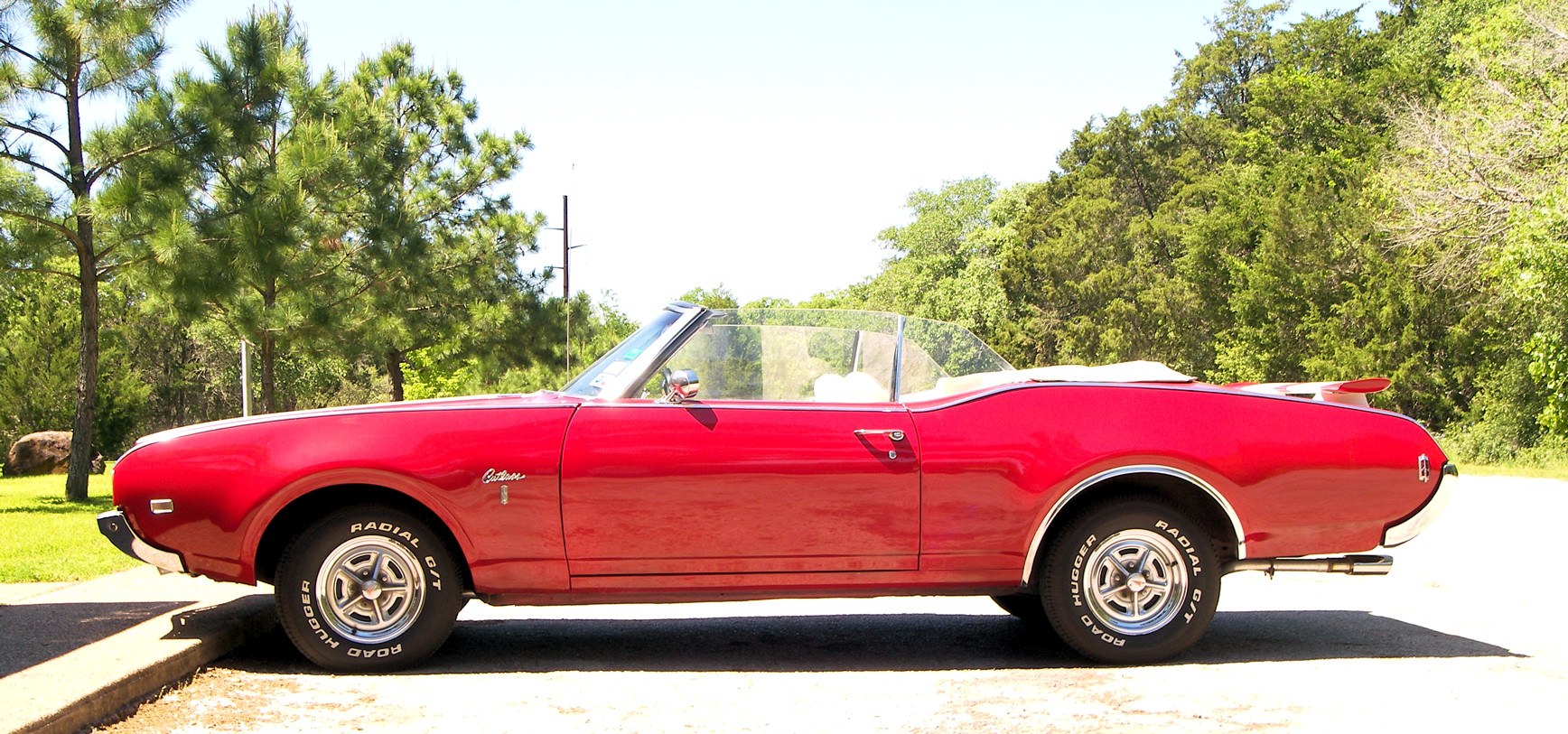
Oldsmobile Cutlass
"What's up, Louise? But anyway, I have an 89-old cutlass ear. Okay? Well, we want to hold on to it a little more, but every time we put the brake on, we hear a loud clunk."
They’re talking about an Oldsmobile Cutlass from around 1989. The important part is that it makes a loud clunk when they brake, so the problem is probably in the wheels, brakes, or suspension—not the engine.
The speaker is describing an Oldsmobile Cutlass from the late 1980s (likely a 1989). They’re using it as the context for a recurring noise when braking, which points to a suspension/brake-related issue rather than something engine-related.
loud clunk
"but every time we put the brake on, we hear a loud clunk. Now, I have had it too. Three different mechanics."
A loud clunk when you brake usually means something is loose or worn near the wheels. It could be in the suspension parts or the brake hardware, and it’s worth checking because it can get worse quickly.
A loud clunk when braking often indicates a mechanical looseness or play in the front suspension or brake hardware. Common causes include worn ball joints, loose control-arm bushings, failing wheel bearings, or brake components that aren’t properly seated.
brake on
"but every time we put the brake on, we hear a loud clunk. Now, I have had it too. Three different mechanics."
They’re saying the problem happens specifically when they brake. That clue helps a mechanic focus on parts that are stressed during stopping, instead of guessing randomly.
“When we put the brake on” describes the specific condition that triggers the noise—braking load. That timing helps narrow the diagnosis to components that move or load up under deceleration, like suspension links, caliper mounts, and wheel bearings.
clunk comes through on the door side of the passenger
"When we put the brake on, the clunk comes through on the door side of the passenger. And sometimes, I can even feel something moving under there."
They’re saying the sound seems to come from the passenger side. That’s helpful because it tells you which wheel area to inspect first for loose or worn parts.
Pinpointing the noise location—“door side of the passenger”—is a key diagnostic step. It suggests the issue is on the passenger-side front corner, where suspension travel and brake torque can create a clunk if there’s looseness or wear.
feel something moving under there
"And sometimes, I can even feel something moving under there."
They’re not only hearing the clunk—they can also feel movement. That usually means a part is actually shifting when the car slows down, which is a strong reason to get it inspected carefully.
Feeling movement under the passenger area alongside a braking clunk points toward a physical looseness—like worn suspension bushings, a loose mounting bracket, or play in a wheel bearing. When a noise and vibration are both present, it often indicates the component is shifting under load rather than just making sound.
fender
"We had to have a fender, a new fender put on. This has been going on for almost a year. Really?"
A fender is the metal (or plastic) panel above the wheel. If it was taken off and put back on, something could be loose or not lined up, which can cause rattles or clunks.
A fender is the body panel over the wheel that helps protect the car from road debris and water. When a fender is removed and reinstalled, it can be secured with clips, bolts, or brackets that may loosen if not torqued or aligned correctly.
loose fasteners after body work
"he said that every one of the boats to the fender, they were all loose. So they have to come off."
When a shop replaces a body panel like a fender, it has to be bolted and clipped back on correctly. If any mounting hardware is loose, the panel can move and make a clunking sound.
After a fender replacement, noises can come from loose fasteners or brackets—often described as “everything is loose” at the panel-to-body mounting points. This is a common cause of clunks or rattles because the panel can shift slightly under load or vibration.
break shop
"No. No, I went to a break shop. Ah, that's your mistake... You went to a break shop Buy what? Right!"
They’re likely talking about a place that sells used car parts. It can save money, but you have to make sure the part matches your car and isn’t damaged.
A “break shop” in this context appears to mean a salvage yard or parts recycler where you can buy used parts. People sometimes use these shops to reduce cost, especially for body panels like a fender, but fitment and condition can vary.
pre-diagnosis / "diagnosed the problem already in advance"
"Yeah, but see, you diagnosed the problem already in advance. That's why you're in so much trouble here."
They’re talking about figuring out what’s wrong before the shop really checks it. If you guess wrong or miss something, the repair can get more complicated and more expensive.
The transcript describes a situation where someone already identified the likely issue before the repair shop looked at the car. In real-world repairs, that can affect how the shop estimates labor and parts, and it can also create friction if the diagnosis turns out to be incomplete.
control arm bushing
"Yeah, I suspect you have a bad control arm bushing some place. Out of the tens of thousands of pieces of a car you went right to a control arm bushing."
The control arm bushing is like a soft cushion in your suspension. It helps the suspension move smoothly without rattling. If it gets worn out, you may hear noises or feel the car doesn’t handle as well.
A control arm bushing is a rubber (or rubber-like) mount that connects the control arm to the vehicle’s chassis. It allows controlled movement while isolating noise and vibration, but it can wear out and cause clunks, vague steering feel, or abnormal tire wear. When it fails, mechanics often inspect the whole suspension corner because related parts can be affected too.
front suspension
"But it's probably something in the front suspension that's causing the noise. But I wouldn't go to a suspension specialist like Tommy says you want to go to someone who covers all the disciplines."
The front suspension is what helps the front wheels stay planted and ride smoothly. If you hear a noise that seems to come from the front of the car, it might be something like a worn part that connects the wheel to the car.
“Front suspension” is the set of components that connects the front wheels to the car’s body and controls ride comfort and steering feel. If a noise is suspected to come from the front suspension, it could be related to worn bushings, ball joints, struts, or other mounting points.
covers all the disciplines
"But I wouldn't go to a suspension specialist like Tommy says you want to go to someone who covers all the disciplines. Someone who doesn't have preconceived notions."
They’re saying you’ll get better results if you take the car to someone who can look at the whole problem, not just one category. Noises can be caused by more than one system, so a broad-thinking shop is less likely to miss the real cause.
The hosts are advocating for a “full-scope” diagnostic approach rather than sending the car to a shop that only specializes in one area. Complex noises—especially those that show up under braking—often require cross-checking multiple systems (suspension, brakes, steering, drivetrain mounts) to avoid misdiagnosis.
preconceived notions
"Someone who doesn't have preconceived notions. You know what I mean? Someone whose scope isn't limited."
They’re warning against guessing what the problem is before checking. If a mechanic has an idea in their head, they might miss the real cause.
“Preconceived notions” refers to bias in diagnosis—assuming a likely cause before gathering evidence. In automotive troubleshooting, that can lead to replacing the wrong parts; a better process is to start with symptoms, verify with tests, and only then narrow down the cause.
step on the brake
"and say look I have a noise and it occurs when I step on the brake but I don't think it's the brakes."
A noise that appears when you “step on the brake” is a key diagnostic clue because braking changes load transfer and can alter how suspension and brake components behave. Even if the driver suspects it’s not the brakes, the timing with braking often points to brake hardware, suspension bushings, or mounting points that move under deceleration.
fix it no matter what it costs
"And it always helps to say I want to fix it no matter what it costs."
They’re saying it helps to tell the mechanic you want the real problem solved, not a temporary workaround. That can push the shop to do the extra checking needed to find the true cause.
This is about communicating diagnostic intent: telling the shop you want the root cause fixed, not just a quick guess. When a customer is clear that the goal is a proper repair, it can encourage thorough testing and a more complete troubleshooting plan.
loose steering wheel
"The other question is the steering wheel was very loose. Would that give you any..."
If the steering wheel feels loose, it means there’s extra movement before the wheels actually respond. That can make the car harder to control, so it’s worth fixing quickly.
A “loose” steering wheel usually means there’s excessive play between the steering wheel and the road wheels. That play can come from worn steering components (like tie rods) or loose mounting points, and it can degrade handling and safety.
rack and pinion mount
"You could have a loose rack and pinion mount. You could have a bad tie rod end?"
Rack-and-pinion is a common steering setup. The mount is what holds the steering mechanism in place—if it’s loose, the steering can feel wobbly and unsafe.
A rack-and-pinion steering system uses a toothed rack that moves left/right to steer the wheels. The “mount” is the bracket(s) that secure the rack to the car’s body; if it’s loose, steering can feel sloppy and may worsen over time.
tie rod end
"You could have a loose rack and pinion mount. You could have a bad tie rod end?"
Tie rod ends are small steering link parts that help move the wheels when you turn the wheel. If one is worn out, the steering can feel loose and the car may not track straight.
Tie rod ends connect the steering linkage to the steering knuckles, helping translate steering input into wheel movement. If a tie rod end is worn or loose, you can get wandering, clunks, and reduced control—especially dangerous at speed.
steering play can be dangerous
"But get it fixed because it has the potential to be dangerous. It does have the potential to be dangerous and all joking aside I wouldn't mess around. Take it tomorrow. And certainly between now and then don't drive fast."
If your steering has too much looseness, the car may not turn the way you expect. That’s risky, so it’s smart to limit driving and get it checked right away.
Excess play in the steering system can reduce driver control, increase stopping distance, and make the car respond unpredictably—particularly during emergency maneuvers. That’s why the advice is to avoid driving fast and get it inspected immediately.
Request an Explanation
Heard something you'd like explained? We'll add it to this episode.
Sign in to request explanations for terms you heard.
Want to learn more?
Browse our glossary for plain-English explanations of automotive terms, jargon, and concepts.
Help improve this episode
See something that's not quite right? Our annotations are AI-generated and can sometimes miss the mark. Click the flag icon on any annotation to suggest a correction.