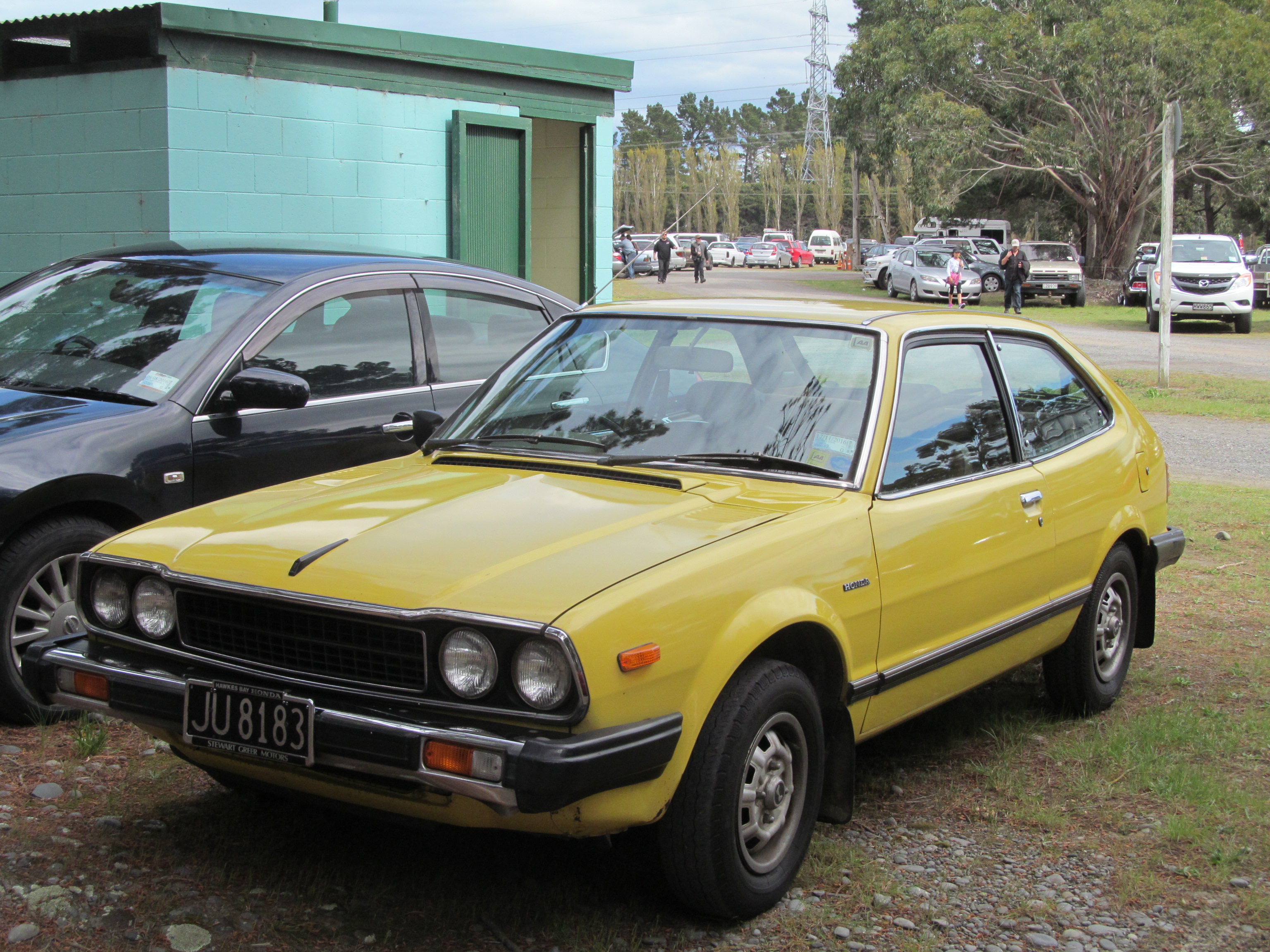
They’re talking about a 1989 Honda Accord (LX I trim). It’s an older Honda, and the problem they’re having involves the car’s throttle/engine speed control.
They’re talking about the car’s computer that controls how the engine runs. If it’s not working right, it can cause weird throttle or idle behavior even if the pedal and cable seem fine.
A throttle cable is the physical cable that connects your gas pedal to the engine’s air/throttle valve. If it gets sticky or damaged, the car can feel like it’s stuck on the gas.
The throttle body is a part that controls how much air the engine can breathe. When you press the gas, it opens a valve; when you let off, it closes so less air goes in.
The intake manifold is the passage that carries air from the air intake to the engine. The throttle body sits at the entrance so it can control how much air gets through.
A carburetor is an older way cars used to mix fuel and air. The discussion is comparing how the throttle flap controls airflow in today’s setup versus how the carburetor’s throat worked.
Inside the throttle body there’s a small valve (the flap) that opens and closes. If it sticks, the engine may not get the air it needs when you press the gas.
Carbon is a sticky black residue that can build up from engine combustion. Too much of it can make the throttle area dirty and affect how the car runs.
They’re saying the cause is likely something physical—like a sticky throttle or cable—rather than an electronic problem. If the car acts up but improves when you press the gas, that often suggests a mechanical sticking issue.
A Mazda Miata is a small two-seat sports car that’s popular because it’s light and easy to drive. Here, the speaker says theirs is a 1994, so it’s an older car and more likely to have normal wear-and-tear issues.
The clutch is what you press when you want to change gears in a manual car. If it starts to feel “spongy,” it can mean the fluid system isn’t working right—often because of air or a worn-out part.
A differential is a part in the drivetrain that lets the wheels spin at different speeds when you turn. If someone thinks it’s the differential, they’re usually worried about a drivetrain noise or problem near the axle.
“Popping out of gear” means the car won’t stay in the gear you selected. That can be caused by clutch problems or other issues that prevent the transmission from staying engaged.
A “spongy” clutch pedal usually means the clutch doesn’t feel firm and responsive. That often happens when there’s an issue with the clutch fluid or air in the hydraulic system.
In many cars, the clutch is controlled by fluid pressure. The slave cylinder is the part that uses that pressure to push the clutch mechanism so the clutch can release.
The master cylinder is the part that creates the hydraulic pressure used to operate the clutch. If it’s leaking, the clutch won’t release properly, so shifting becomes difficult.
Those rubber seals help keep the hydraulic fluid inside the clutch system. If they wear out, the system can lose pressure and the clutch won’t work right.
The bore is the inside wall of the cylinder that the piston slides in. If it changes (for example with heat), it can make the seals not seal as well, so the clutch system loses pressure.
Sometimes air gets into the hydraulic lines. Air is squishy, so instead of pushing the brakes/clutch right away, it compresses first—making the pedal feel soft or delayed.
A quadratic equation is a math equation that has a squared term, like x². It’s used when the relationship you’re modeling curves instead of being straight.
The head gasket is like a tight seal inside your engine. If it goes bad, the engine can start mixing fluids that shouldn’t mix, which can lead to overheating and rough running.
Piston rings are parts on the piston that help it seal tightly in the cylinder and keep oil under control. If they get overheated or damaged, the engine can start making bad noises and may burn oil.
Piston slap is a knocking/tapping sound from inside the engine. It usually means the piston isn’t fitting as tightly as it should, often due to wear or damage.
The exhaust manifold is the part that gathers the engine’s exhaust gases and sends them down the exhaust pipe. If it leaks, you can hear noise and sometimes smell exhaust.
This means the top part of the engine (the cylinder head) has a crack. That can let fluids leak or stop the engine from working properly, so the car may need major repair.
“Rebuild” means fixing the car by taking the important parts apart and replacing the worn pieces. People do it when the car is starting to fail but they want to keep using it.
Concept
put the grill on upside down
Putting the grille on upside down is a clear mistake during reassembly. Here, they’re using that mistake as evidence that something else may have been assembled wrong too.
A connecting rod is the metal link between the piston and the crankshaft. It helps turn the engine’s motion into rotation, and it usually has to be installed the right way so everything lines up correctly.
A junkyard engine is a used engine pulled from a wrecked or totaled car. It can save money, but you don’t really know how healthy it is until it’s installed and tested.
They’re talking about the risk of waiting to fix something when you don’t know when it will fail. If you keep driving, it could break at an inconvenient time or cause more damage.
A GMC Sierra is a pickup truck made by GMC. Here, the caller says it’s a 1994 model, which helps narrow down what could be making the knocking sound.
Term
turn the key on
“Turn the key on” means you power up the car before it’s really running. If you hear a knock right then, it can mean the noise is tied to start-up conditions rather than normal driving.
A “knock” is a sharp, tapping/banging sound from the car. When it happens right when you turn the key on or off, it usually means something mechanical is making noise during start-up or shutdown, not just while you’re driving.
“Automatic” means the car shifts gears by itself. That’s relevant because some noises only show up when you put the car in Park or when you shut it off.
“Park” is the gear position that locks the car so it stays still. If the knocking happens when you put it in Park or right after turning it off, it can point to where the problem is coming from.
The glove compartment is the little storage box in the front of the car, usually on the passenger side. If the noise seems to come from that area, it often means the problem is behind the dashboard.
The fuel pump is the part that sends gas from the gas tank to the engine. If it’s going bad, it can make strange noises and can also cause the car to run poorly or not start.
The AC evaporator is where the air conditioner cools the air inside the car. It’s usually hidden under the dashboard, so problems there can cause odd noises.
A power antenna is an antenna that moves in and out using a small electric motor. Instead of you manually extending it, the car does it for you.
Term
water sheet
A “water sheet” sounds like a paper checklist the shop uses to make sure the right parts go on the right car. They’re checking it because the wrong antenna type seems to be getting installed.
A regular antenna is the simpler kind that doesn’t move in and out. It’s being contrasted with the power antenna that uses a motor.
Concept
motor underneath
They’re saying there’s a motor hidden behind the parts you can see. Even if the antenna looks right, that hidden motor could still be making noise.
LIVE
This message comes from Stars with Amadeus.
Starring Will Sharp and Paul Bettany comes the new Star's original series, Amadeus.
Experience a tale of genius, jealousy, and rivalry.
Amadeus.
Series premieres May 8th only on Stars and the Stars app.
Hello and welcome to Car Talk from National Public Radio.
With us, Click and Clack, the Tapper Brothers.
And we're broadcasting this week from the can't be too careful department here at Car Talk Plaza.
Well, I mean, this is a series of warning labels.
This was sent to me, I think, by my old pal, Johnny Mellum, who has got what?
Squat to do.
Squat to do.
So all he does is send me stuff.
This is warning labels.
And it seems as though it came from England because there are some British brand names.
But here's some of the warning labels that appear on actual products.
On tiramisu dessert printed on the bottom of the box.
It says, do not turn upside down.
This is a good one.
On a Korean made kitchen knife, warning, keep out of children.
On a string of Christmas lights for indoor or outdoor use only.
I like my personal favorite was on a bag of Fritos.
It says, you could be a winner.
No purchase necessary.
Details inside.
Okay, that's referred to as the shoplifter special.
No purchase necessary.
What are the event that you find a bag that's half eaten?
Now, you suppose you would avail yourself of that opportunity?
You want to alert us to some unforeseen hazard regarding your car?
Yeah.
Or anything else for that matter.
The number is 888-CAR-TALK.
That's 888-227-8255.
A lawyer on CAR-TALK.
Yeah, this is Jeff from Washington, DC.
How you doing today?
Hey, how you doing?
Are you a lawyer or a politician?
No, neither, fortunately.
Good.
We'll talk to you.
You're aspiring to be either of those.
Architect.
Oh, just as bad.
Architect is good, you know?
Architect is a noble profession.
You're dealing with aesthetics and utility.
And you're not really hurting anybody unless you make a balcony that falls off.
But stuff like that happens.
Oh, yeah.
Sure.
But it's a nice profession.
It's clean.
You don't have to get dirty.
You deal with paper.
Yeah, well, you have to go to the job site once in a while.
Wear the hard hat.
Oh, yeah, just make it look good.
Make it look good.
You wear the hard hat.
You get your shoes muddy a lot.
You get your shoes muddy and make it look good.
So you can tell your wife you weren't working that day.
I was on the site today.
I was on the site.
How would you find out?
I don't know.
They have good coffee.
The coffee truck comes at 10.30.
And you make less money.
And you have to eat off the coffee truck,
even though you know your stomach can't take it.
Because you've got to be one of the guys.
You've got to be one of the guys.
Yeah.
I guess that's the big problem with being an architect.
You ain't one of the guys.
Yeah, you break out a brioche and an espresso.
And they're going to lay a beaten on you.
All right, Jeff, what the heck do you want, man?
All right, I've got it.
Your time's almost up.
Yeah, what's up?
I've got an 89 Accord LXI, about 145,000 miles on it.
And for the last couple of years, I've had a problem,
very sporadic problem, where the throttle sticks.
Not a good problem to have.
You know for sure the throttle is sticking or is it just racing?
It's just racing.
No, I don't know it's the throttle sticking.
So I took it to the dealer and they said, well, it's one of two things.
It's either that we need to replace the throttle cable for 500 bucks
or you need a new computer module for 500 bucks.
And we don't know which one.
Did they say which one do you want?
Did they have a two for a deal?
Like two for 750?
Two for 2,000.
It's not the throttle cable they wanted to replace a 500.
I think rather it's the throttle body.
Okay.
That is the actual part of the car that bolts to the intake manifold
that is actuated by the throttle cable because the throttle cable is cheap.
The part's probably 40 bucks and it's certainly no $460 to install.
Yeah, the throttle body is sort of part of what would have been the throat of the carburetor.
Right.
It's the flap that gets moved as you step on the gas pedal so that when the gas pedal,
when your foot is off the gas pedal, the flap is essentially closed.
And then as you step on the gas, that gradually opens to allow more air to enter the engine.
And it could be that that is sticking.
Right.
And you obviously tried punching the gas pedal or pulling it back with your hand to get it to stop.
I punch it and it stops every time.
I put in the clutch and punch the throttle and it stops.
Oh, really?
Yeah.
Oh, and they knew that and they still wanted to study the computer?
Yep.
Those sly little devils.
Now, I took it to an independent shop and they told me that they,
and again, they said throttle cable.
They said they needed to lubricate the throttle cable.
No.
So they did that for 30 bucks.
It had no effect.
No, throttle cables don't get lubricated because the lubrication just attracts dirt
and makes them even more likely to stick.
Okay.
I would go ahead and replace the cable first off,
but at the same time, you might want to ask them to clean the throttle body.
Okay.
And make sure they get all the carbon and varnish build up out of the throttle area.
And that might help too.
Okay.
But it's one of those two things.
I doubt it's the computer.
If you can fix it by punching the pedal, it's a mechanical thing and not an electrical.
Yeah.
And don't go back to the place that wanted maybe to study the computer.
Fantastic.
See you, Jeff.
Thanks, guys.
Bye-bye.
1-888-CAR-TALK, that's 888-227-8255, a lawyer on CAR-TALK.
Hi, this is Alex in New York.
Alex.
Alex.
Hi.
In New York City?
New York City, the belly of the beast.
Where do you live?
Upper west side?
Upper east side.
East.
Yeah.
Yeah.
I was on the upper east side.
I have a little Mazda Miata.
And it's a 94.
And I've never had any trouble with it at all.
And I have to go to this retirement party up in Eastchester.
So Friday afternoon, height of rush hour.
It's like 90 degrees.
And I'm cruising up the Harlem River Drive.
I'm going like, you know, two miles an hour.
You know, it's New York.
And roll stop.
Roll stop.
Roll stop.
And I'm dressed up because I'm going to this retirement party.
And I'm wearing this big pair of heels, which I usually don't wear.
So cruising along.
And I put my clutch starts to feel spongy.
And of course, my first reaction is, oh, it's the heels.
You know, I'm not used to driving.
Right, right, right.
So I go forward like maybe 10 more feet.
And I realize, oh, no, I have about three quarters of an inch of clutch left.
Like I can barely shift it at a first.
Now, mind you, it's like,
like the, it's like 630.
Traffic is like not moving.
And the last thing you want to do is like stall on the Harlem River Drive.
Oh, man.
Height of rush hour.
So I'm panicking.
So and now I'm realized I, even though I've got my clutch all the way down,
I can't get it out of first.
So I say a little pair of the powers would be, I jam it out of first.
And then I get hit with this inspiration that you can drive anywhere in third.
So I, oh man, Alex, you are right on top of the situation.
I shove it into third.
Wow.
And, and, and, you know, I, once I get past the George Washington Bridge,
I can start going like 45 miles.
And I get to this retirement party.
I get my little talk, everything's fine.
I now have to get back in my car and drive home.
And this guy, I was telling these people at this party about it.
And they said, oh, one guy said, oh, no, it's differential.
No problem.
Just pump your clutch.
You'll be fine.
Right.
So I get in my little car and I pump my clutch and it pops out of gear.
And I drive home and I'm able to shift and my clutch is no longer spongy.
Now it still feels a little bit rough.
And since this happened, whenever I, whenever I'm like, uh, um,
slowing down and I'm in, in, I'm in neutral, my air conditioner goes.
You don't hear any knocking or anything.
No knocking.
No, no, no, no paranormal forces here.
But my question is now, it seems to be fine.
And I'm about to drive eight hours to Maine.
So my questions are, will I be safe?
Will it happen again?
And is my air conditioner about to go?
Or is my air conditioner related to my clutch problem?
No, yes and no.
Yeah.
And whereabouts of Maine are you going?
Because I'm going to Bailey Island.
Bailey Island.
That's good.
That's, that's, yeah.
Yeah.
That's important.
It's very important.
Are you kidding?
In Bailey Island, not only have they never heard of a Mazda Miata,
they have never heard of a Mazda Miata clutch master cylinder,
which is what you need.
No.
Yeah.
Yeah, you do.
And what happened was the day you were driving to East Chester.
See that, the clue, if you were giving a puzzler, was the heat.
Oh man, it was good too.
You just, you just, you just sneaked it in.
You just sneaked it in at once.
You just cooled off.
Okay.
And, and because the master cylinder was beginning to fail,
the master cylinder is attached to your pedal.
And as you step on the pedal, the master cylinder creates pressure
and pushes the pressure to what's called the slave cylinder.
Yeah.
I know these are politically incorrect terms,
but this is what they've been called for years.
It's a cabin in New York.
We can handle anything.
And, and the slave cylinder is actually what disengages the clutch.
But if the master cylinder, because it's leaking,
cannot produce enough pressure, then you push your pedal to the floor
and it doesn't disengage the clutch or you can't shift it.
And worse than that, when you begin to move,
as you lift your foot off the floor,
the car begins to move almost immediately upon releasing the pedal
instead of halfway up like it used to.
Yeah.
And, and because the clutch is basically almost always engaged.
And there's nothing much you can do about it,
because the thing that makes it disengage ain't working.
It isn't pumping because the, the rubber seals in it have worn out.
And it's been worsened by the fact that the hot weather has made the bore.
That is the cylinder in which the piston moves bigger in diameter.
But then why, why would pumping the clutch?
Well, pumping it would help because it would tend to compress the air
that had leaked into the system.
And that's why even though it's corrected itself since it's cooled off.
Yeah.
Okay.
It isn't.
And when you left the party, it was cool.
It was cooler.
It was cool.
Yeah, it was night.
And it worked.
And, and, and the air that was in there didn't become such a big factor
and pumping it did compress the air somewhat.
So that you have air in the system,
but it's because the thing has begun to fail.
The master cylinder has begun to leak.
So how much is this going to cost me?
Oh, not much.
Oh, come on, I live in New York.
All right, 300.
For the estimate.
Not a penny less.
Well, and they may want to replace the slave cylinder as well.
And if they suggest that, do it.
Okay.
I'm going to guess it at New York prices to replace the slave cylinder
and the master cylinder.
I'm going to write down the number right here.
Okay.
I'm going to write down my number too.
I got my number.
Let's see how close we become.
Okay.
My number is 449.
Mine is 472.
Oh, you guys are good.
I was going to say 500.
Well, that's close enough.
Yeah.
I mean 300 in any other place in the country.
He said 500.
He said 449.
And what's right exactly in the center of those two numbers?
472.
472.
All right.
All right.
So you get 10 points.
Good luck, Alex.
But get it fixed before you go to Maine because you'll never come back.
You'll never make...
That would be so bad.
Might not.
They'll be filming the remake of the birds while you're up there on Bailey Island
or whatever the heck it's called.
I'll keep my top up.
Good luck.
Enjoy your summer.
Bye-bye.
Bye.
Okay, look, I'm going to try a little telepathic experiment here.
I'm going to think of last week's puzzler
and I'm going to send it to you by ESP.
Terrific.
I'm ready.
I mean, what do I have to do?
Just clear out your mind completely.
Never mind.
We'll be back in a minute.
This message comes from Total Wine and More.
Total Wine and More is the go-to for Cinco de Mayo celebrations,
especially from Margaritas.
Grab a great tequila, beer, and wine so there's something for everyone.
With the lowest prices, it's easy to stock up.
Make your Cinco de Mayo plans official.
Shop Total Wine and More in-store or online.
Spirits not sold in Virginia and North Carolina
drink responsibly, must be 21.
This message comes from Jerry.
Are you tired of your car insurance rate going up,
even with a clean driving record?
That's why there's Jerry, your proactive insurance assistant.
Jerry compares rates side by side from over 50 top insurers
and helps you switch with ease.
Jerry even tracks market rates and alerts you when it's best to shop.
No spam calls, no hidden fees.
Drivers who save with Jerry could save over $1,300 a year.
Switch with confidence.
Download the Jerry app or visit jerry.ai.npr today.
This message comes from BetterHelp.
May is Mental Health Awareness Month,
a reminder that you don't have to do this life alone.
From loneliness to anxiety to financial stress,
right now people everywhere are struggling.
But having a licensed therapist with you
by video, phone, or chat can make a difference
and BetterHelp makes it easy.
Sign up now and get 10% off at betterhelp.com.npr.
That's BetterHELP.com.npr.
Hi, we're back.
You're listening to Car Talk with us.
Click and Clack the Tappet Brothers.
And we're here to talk about cars, car repair,
and the answer to last week's puzzler.
This is an algebraic puzzler for the vacationing school kids
with atrophying brains.
Can you think?
Berman spent two weeks on it.
I don't really care.
I'm watching TV.
What do I care about atrophy?
Recently, after we finished one of our car talk shows,
we and our staff decided to go out for a little snack.
So the whole gang goes to the Tomaine deli down the street
and we order a bunch of food and whatever.
And as luck would have it, just before the bill comes,
my brother and I excuse ourselves and go to the bathroom
and climb out the window.
I mean, what else would you do when the bill was going to come?
It was interesting that I met you there.
We hadn't planned it in advance.
Anyway, the bill comes and it's 63 bucks.
Everyone figures after a while that we ain't coming back.
So Bugsy says, oh, those guys, they stiffed us.
But look, if everyone throws in an extra two bucks,
we'll cover the bill.
So the question very simply was,
how many people were in the original group
and show you work?
Right?
Yeah.
Well, it doesn't take too much.
The only two numbers I know that makes 63
would multiply together at nine and seven.
So that must be the answer.
So you're going to work backwards and write the equation.
So we're going to write two equations.
So we're going to write.
We have to write.
If x equals the number of people.
Yeah, let me write these down.
Go ahead.
x is the number of people.
And y equals the amount paid.
So x times y equals 63, the original number of people.
So if we hadn't stinked out the window,
then x times y would have been 60.
It would have been enough and you wouldn't have been able to figure it out.
Got it.
So x times y is 63.
That's good.
We can solve that.
So then, but you also know that if you add two to the number of people,
so x plus two times in parentheses, y minus two,
which is the number of people that we're short,
is going to equal 63 also.
Oh, how sweet it is.
So you just go multiply stuff together.
Well, you multiply it all out.
And what you get is you get a long expression with a,
and what you end up doing is just substitute.
You get rid of the y and you substitute the 63 over x for y.
And when you do that, you wind up with something called a quadratic equation.
Is that right?
Of course.
Everyone knows.
And all you got to do is give them those two equations.
And any kid will figure this out in five minutes.
Just give them those two equations.
x plus two times y minus two is 63.
And x times y is 63.
Solve that.
You can't do that.
You're out.
That's it.
But you finally wind up with x squared minus two x minus 63 equals zero.
Oh, yeah.
And when you factor that, it comes out to x plus seven times x minus nine.
Right?
Yeah, I see it.
Right?
Yes, that's correct.
I see it.
And so one answer is x equals nine.
And the other one is x equals minus seven.
That's how many people there were originally.
Minus seven.
No one showed up.
Well, in the anti-matter universe, the minus seven answer is valid.
But otherwise, there were nine people in the original group.
Right, and we left.
And we left and we stiffed them.
So they had to come up with two more bucks a piece.
If you think you have any questions about that right to my brother, who won?
So each of the seven people pays nine bucks.
Right.
Whereas each of the nine people would have paid seven bucks.
Seven bucks.
Oh, man.
Right.
And if you hadn't climbed out the window with me, they never would have figured it out.
The winner is Tucker Metzic from Lombard, Illinois.
And Tucker, for having your answer selected at random from among the thousands of correct answers
that we got, you will get a $25 gift certificate to the Car Talk shameless commerce division of
our website, which is cartalk.cars.com.
And you can get a copy of our new book in our humble opinion, which we have found makes an
excellent doorstop, fills in for a broken couch leg, or is a spare kitty seat at the dinner table.
Really?
Yes.
Sometime, you know, the kid can't reach the top, you put, you might want to get two of these kids
real small or if he's got very wide, but you might need to look side by side.
Those of you who don't know the drill, the puzzler is going on vacation.
Oh, yes.
Yes.
In fact, it's already left the building.
So don't hang around outside.
Anyway, we'll have some listener mail and some more of your questions in the third half of the show.
In the meantime, instead of a puzzler, in the meantime, you can call us at 888 Car Talk.
That's 888-227-8255, a lawyer on Car Talk.
My name is Jerry.
I'm Glen O in California.
Jerry with a J.
With a G.
Oh, I wrote J.
Well, I don't know what to say.
So what's up?
Well, I was in the last winter house down in Southern Mexico and a guy called me up
and who was house at my house and said, uh, wondering if he could borrow my truck.
Something had gone wrong with his van.
And I said, yeah.
And a week later, he called up and said that he thought I had a problem with my truck.
He thought I had a head gasket problem.
And then he said that he felt a little responsible for it.
And that since he was a mechanic, which I didn't know at the time,
he'd fixed it if I'd buy the parts.
And I said, okay, 80 bucks for a head gasket.
That sounds okay.
Because I'd replace one of my other trucks.
And when I came back, it turned out it cost about $800.
And I started looking at the bill and everything and realized that he had had the head welded.
And when I walked around outside, I found some piston rings lying around.
And now I got a real problem with what mechanic describes as piston slap.
And when I first started up the truck, all I heard was a little leak from the exhaust manifold.
I figured that's not a big deal.
But after a week of driving this noise, just I'm not using the word auto digestion.
You know, we drive down the road, you just, it's just making all this noise.
But what kind of a truck is this?
It's like a Chevrolet truck or something?
It's 86's.
He must have said he was driving this thing.
I think it overheated like serious.
He must have overheated the bejesus out of this, as they say.
Because in order to have melted the piston rings, which he undoubtedly did.
You think that's what happened?
He melted them?
Well, he cooked them.
He cooked them.
He cracked the head.
So how much did this end off costing you?
$800?
Well, it was interesting.
I started looking around my checks and I realized he'd written himself a check for $929.
He was renting a house, so he figured it was okay.
No, he was living in it for free.
Oh, so he figured it was okay to use your checkbook.
Yeah.
Anyway, should I just keep driving this truck or should I get it rebuilt?
I mean, it sounds like it's beaten itself to death.
Well, I mean, how much do you love it?
Well, it was a perfect truck when I left.
And what do you use the truck for?
Just like work.
You drive a lot with it.
Well, not really.
I remodel houses around town and I sometimes like to take trips in them.
I wouldn't take a trip.
Define a trip, like more than 10, 15 miles from your house.
Well, right now I just drove up to a ranch about three hours away.
Oh, I wouldn't do that again.
Now, I mean, if you drove it around town sort of, you know, 10 miles in some direction or another
and you didn't rev it up a lot and you drove very carefully,
it would probably run for a long time.
What's a long time?
Hours.
This kid who worked on it, I imagine he's a kid.
Young man.
Yeah, he's 30.
You're right, he's a kid.
Oh, 30.
He was the one who did the work or did he have some notes?
No, he told me he was an auto mechanic and I said, oh, really?
And I didn't know that.
And you know, the key thing was I sitting on my other truck
and I was looking at this thing at my truck
and I realized there was something wrong with the grill
and I couldn't read the grill.
And it's because he put the grill on upside down.
That says something, doesn't it?
It told me a lot about what happened on the inside of the engine.
That's why I thought I'd call you.
Yeah.
Well, he could easily have put, if he took the pistons off,
I think what's likely to have happened
is he put a connecting rod on backwards.
Really?
Because there is a preferred direction for the connecting rods
and only one direction works.
And so that's my guess.
But that being the case, I mean, if you're willing to drive it around town,
I would drive it till it breaks.
It's not going to cost you anymore to fix it
because what you need is a complete engine rebuild.
That's what I was thinking, yeah.
Or a junkyard engine.
And if you are determined to take it on vacation and the like,
then I would just go ahead and have the engine rebuilt tomorrow.
Well, you're going to have to do it sooner or later.
Can you live with the uncertainty of when it's going to break down
or not knowing when it's going to break down?
Good point.
Then you might as well do it right now.
Right.
And you'll get another 100,000 out of it.
Good.
Okay.
Yeah.
And send them the bill.
I'm going to do that.
See you, Jerry.
Okay, thanks a lot.
Can I write you a check on your check?
The lines.
Hey, thanks for calling.
Good luck.
Okay, Tommy.
Look, it's time for us to take a little break
and give our listeners a chance to stretch their legs.
And readjust their earphones.
This message comes from Jerry.
Are you tired of your car insurance rate going up,
even with a clean driving record?
That's why there's Jerry, your proactive insurance assistant.
Jerry compares rates side by side from over 50 top insurers
and helps you switch with ease.
Jerry even tracks market rates and alerts you
when it's best to shop.
No spam calls, no hidden fees.
Drivers who save with Jerry could save over $1,300 a year.
Switch with confidence.
Download the Jerry app or visit jerry.ai.npr today.
This message comes from Capella University.
That spark you feel?
That's your drive for more.
Capella University's FlexPath Learning Format
lets you earn your degree at your pace
without putting life on pause.
Learn more at capella.edu.
This message comes from Prolon.
Want to look and feel your best this spring?
Prolon's five-day fasting mimicking diet
is a clinically developed nutrition program
with the goal of promoting fat loss
while protecting lean body mass.
Developed at USC's Longevity Institute,
it aims to assist the body in entering a fasting-like state
that helps reset metabolism, target visceral fat,
and support healthy metabolic markers.
Get 15% off plus a bonus gift
when you subscribe at prolonlife.com slash npr.
We're back.
You listen to car talk with us,
click and clack the tapping brothers,
and we're here to discuss cars, car repair, and the...
And the a short quiz to test your intelligence.
Are you ready?
Duh.
Who sent me this?
Probably Johnny Melamy.
He sends me everything.
How do you put a giraffe into a refrigerator?
One leg at a time.
That's close.
The correct answer is you open the refrigerator,
you put it in the giraffe, you close the door.
Yeah.
Okay, this question is testing whether you tend to do
simple things in an overly complicated way.
That's good, right?
Okay.
How do you put an elephant into a refrigerator?
I mean, open the door, put the elephant, and close the door.
No, of course not.
Of course not.
You open the refrigerator, you take out the giraffe.
You can't fit both of them.
See, this question tests your ability to think through
the repercussions of your actions.
Right, right, of course, of course.
Okay, here's another one.
We'll change the subject a little bit.
It's still animals, but it's different.
The Lion King, you saw that movie,
is hosting an animal conference.
All the animals attend, except one.
What animal doesn't attend the Lion King's animal conference?
She went in.
I did not see the Lion King.
You didn't.
Well, you don't have to.
I don't have to.
The king of the jungle, right?
Right.
The Lion King has an annual animal conference.
All the animals come except one.
The elephant, he's in the refrigerator.
All right, you still got one more chance.
There is a river that you must cross,
but it is inhabited by crocodiles.
How do you manage it?
Throw your brother in first,
and while they're eating him, you walk across their backs.
Not bad.
Actually, you can just swim across,
because all the crocodiles are where?
At the animal conference.
Okay, you got four out of five wrong.
Which shows that you-
I have no creativity, no imagination.
No adaptability.
This test, evidently, is given by the Anderson Consulting
Worldwide Group.
And they say that around 90% of the professionals
that they tested got all the answers wrong.
But many preschoolers got several correct answers.
And Anderson Consulting says,
this conclusively disproves the theory
that most professionals have the brains of a four-year-old.
They have less.
They have less than the brains of a four-year-old.
Anyway, if you're going to cross something amusing
and interesting and enlightening like this,
send it to my brother,
because you know he'd love to see it.
I would.
Send your items to
Interesting Male Division,
Car Talk Plaza,
Box 3500,
Harvard Square, Cambridge.
Our fair city.
Map 02238,
or you can email stuff to us
from the Car Talk section of cars.com.
If you'd like to call us right now,
or next week, for that matter,
the number is 888-CARTALK.
That's 888-227-8255, a lawyer on Car Talk.
Hi there.
Hi.
This is Deborah.
And I'm calling from Bellingham, Washington.
With an O?
With an RA.
With an RA.
Okay, no O.
No O.
Yeah, so what's up?
Well, I have a GMC Sierra pickup.
It's a 1994.
When I first noticed this,
I was just driving along, and it was hot,
and I needed to use my air conditioner.
So I turned it on, and it did this knocking thing.
And I thought, oh my god,
my air conditioner's going out.
But then the knock just went away.
It was like this.
Just like someone knocking at the door.
Come in.
Yeah, and it went away.
And then it didn't come back for probably about two weeks.
And then the next time I noticed it,
I was just, I was getting in to drive somewhere,
and I turned the key on,
and the knock happened before I even got my truck started.
Get out.
Yes.
Oh, come on, Deborah.
Give us a break here.
This is the real, it gets weirder.
Any idea where it's coming from?
Yeah.
Well, no.
But I think I know it is.
I'll tell you where.
Yeah, well, no.
I'll tell you where it's not coming from.
Ah, it's good.
It's not coming from under the hood.
Really?
So now I'm driving my truck,
and I've forgotten that I have this problem
until I'm ready to park.
So I pull up to wherever it is I'm going,
and it's an automatic.
So I put it in park, and I turn it off.
I take the key out, and it knocks again.
And it'll be knocking while I'm walking away from it.
Oh, man.
I mean, it's loud enough.
Doesn't anybody scream these calls?
Katherine, you're fired.
And stay out.
As you were walking,
now you get a different perspective on the sound.
Did you get any sense of where it might have been coming from then?
It sounds like it's coming from inside the glove compartment.
So I open that up, and it's not,
I think it's under the glove compartment.
And it, you know, is there a fan or something in there?
If you want there to be, you can arrange it.
It will help me.
Well, I tell you, I have no basis for this whatsoever.
But when you described this problem, I heard fuel pump.
Really?
Now, it can't be the fuel pump.
We know that for a fact.
It makes no logical sense.
But I could see in my mind's eye the fuel pump.
No kidding.
Get out.
I'm glad there's two of you there.
Now, what did you think?
Here's what I came up with.
I mean, if you think his answer is wacky,
you ready for mine?
Yeah, go ahead.
I'm not even sure your car has one.
At least we know your car has a fuel pump.
But I think your car might have one of these,
and it might not.
But if it does have it, this is it.
I know what it is.
Power antenna.
It doesn't have one.
It doesn't have one.
That would have been great.
Let me make this a little easier, maybe.
Yeah, go ahead.
So, underneath the glove compartment,
there's like a covering to something
that looks like it might be the air conditioner
or the heating.
Well, the heater core is under there.
The heater in the air conditioner evaporator
and all that stuff is under there.
Is that where it kind of sounds like the noise is coming from?
Well, then we'd have to go with the idea of the fan,
because there's a fan under there, too.
There is a fan under there.
And if the fan were loose and every once in a while,
one ought to kilter and started banging against the housing.
More likely, something stuck in there.
There's a twig or something in there.
So, you get the boom, boom, boom, boom.
And then it moves out of the way.
That would also explain why when you turned the key on,
but hadn't started it, it would come on,
because the fan runs then,
even though the air conditioner is under there.
And then when you got out.
Yeah, now we're going to explain that one.
Go ahead.
It's just spinning.
The fan is, you know, winding down,
and you get out of the car and boom, boom, boom, boom.
You might have even noticed, Deborah,
that as you walked away, the frequencies went boom, boom, boom.
No, I didn't.
But Deborah, you are the worst.
Uncooperate.
It might be.
I was probably trying to get away from it real fast.
So, nobody knew it was my truck making all that noise.
We'd have to go with the fan.
No, I'm sticking with the power antenna.
You are.
I'm sticking with it.
She doesn't have one.
That's the best answer.
Hey, maybe they were going to give her the power antenna.
They started to install it, and it was Friday afternoon.
Oh, and somebody read the water sheet and said,
hey, wait a minute, this isn't getting a power antenna.
Well, I've already put in,
just stick the regular antenna in there.
No one will notice the motor underneath.
Have someone take off that box and take a look at the fan,
if it's not really impossible to do,
and see if that fan is loose, or if there's a twig in there.
I think that's it.
That would be great.
I'm on my way to the shop right now.
I see it there.
Very much.
Hey, Deborah, don't call again.
Well, it's happened again.
You've misspent another perfectly good hour listening to car talk.
Our esteemed producer is Doug, the Subway Fugitive.
Cute, cute, cute.
What was that?
It wasn't there.
What happened?
Yeah, I don't know.
Our bourbon, our associate producers,
our Frau Catherine Pickle Fenelosa.
Ah, yes, and Louie Cronin the Barbarian,
our engineer is George Hicks,
our senior web lackey is Doug, the old gray mayor,
and our technical, spiritual, satorial, and menu advisor,
just back from his sold out lunch of peluzet tour,
is John Bugsy Lawler.
Our public opinion pollster is Paul Murky of Murky Research,
assisted by Statistician Marge in Overa.
Our customer care representative is Haywood Jabuzoff.
Our staff acupuncturist is O Howard Hertz,
and our shop form is Luke Busy.
Our pseudonym consultant is Noam DePlume.
Our dermatologist for teenagers is Don Pickett.
Our emergency room physician is Henrietta Badklam.
The car talk musical director is Donna E. Mobiley.
Our divorce attorney is Carmine Not Yours.
Our seat cushion tester, of course, is Mike Keaster,
and our Russian chauffeur is Picov and Ropov.
Our chief counsel from the law firm is Dewey Chevenhowes,
Uluis Dewey, known to the dumpster diving oracle
execs in Harvard Square as U.E. Louis Dewey.
Thanks so much for listening.
We're clicking clack the Tapper Brothers.
Don't drive like my brother.
Don't drive like my brother.
Don't drive like my brother.
Don't drive like my brother.
Don't drive like my brother.
We'll be back next week.
Bye-bye.
And now, here is Car Talk Plaza's chief mechanic,
Mr. Vinnie Gumbaz.
Vinnie?
Thank you very much.
Now, if you just want to copy this year's show,
which is number 29, you can get one on the web.
Just head on over to the online store
at the cartalksectionofcars.com.
And what if I wanted something else, you know,
like our CD, why you should never listen to your father
when it comes to cars?
Wouldn't I go to that same site, Vincent?
No, you dope.
You go to www.Madalinalbright'shiphopfavorite.com.
Of course, you go to the same site,
the cartalksectionofcars.com.
Or you'll order by phone.
You know, you'll call 888-COD-JUNK.
Thank you, Vinnie.
That was very, very believable.
Hey, believe this, will you?
Car Talk is the production of Dewey Cheetahman Howe
and WBUR in Boston.
And even though Vladimir Putin says,
see, democracy is dangerous.
Whatever he hears us say it,
this isn't PR, National Public Radio.
This message comes from Travel Nevada.
Sand dunes, old saloons, high noons,
pioneer trails and cowboy tails, snooze emails.
Get a little out there.
Plan your trip at www.travelnavada.com.
That's join M-I-D-I dot com.
About this episode
The hosts bounce from joke warnings to a string of diagnosis calls, including a Honda Accord that races, a Miata with clutch trouble, and a truck engine that likely needs a full rebuild. They also solve the week’s puzzler, then help a GMC Sierra owner track down a mysterious knocking sound that seems to come from the HVAC area under the glove compartment. Along the way, the show leans on classic mechanical reasoning and a few very specific parts.
…”Who’s there?” Debra with her impossible knocking noise, that’s who. All we know is that it isn’t coming from the engine compartment. Wild guessing ensues on this episode of the Best of Car Talk.
See pcm.adswizz.com for information about our collection and use of personal data for sponsorship and to manage your podcast sponsorship preferences.