
#2642: Overtightening Our Belts
About this episode
A survey from the National Association of Attorneys General flips the “most hated” rankings, with telecommunications taking the top spot. Then a caller’s $11.43 long-distance charge leads into a belt-tension fire story: a 1992 Saturn SL2 gets a belt replacement, smells like burning rubber, and ends up with flames. The hosts connect the risk to an overly tight serpentine belt. Later, they troubleshoot ignition misfires (RFI vs. bad secondary ignition) and wrap with brake-noise diagnosis and fixes on a 1986 Volvo.
See pcm.adswizz.com for information about our collection and use of personal data for sponsorship and to manage your podcast sponsorship preferences.
NPR Privacy Policy
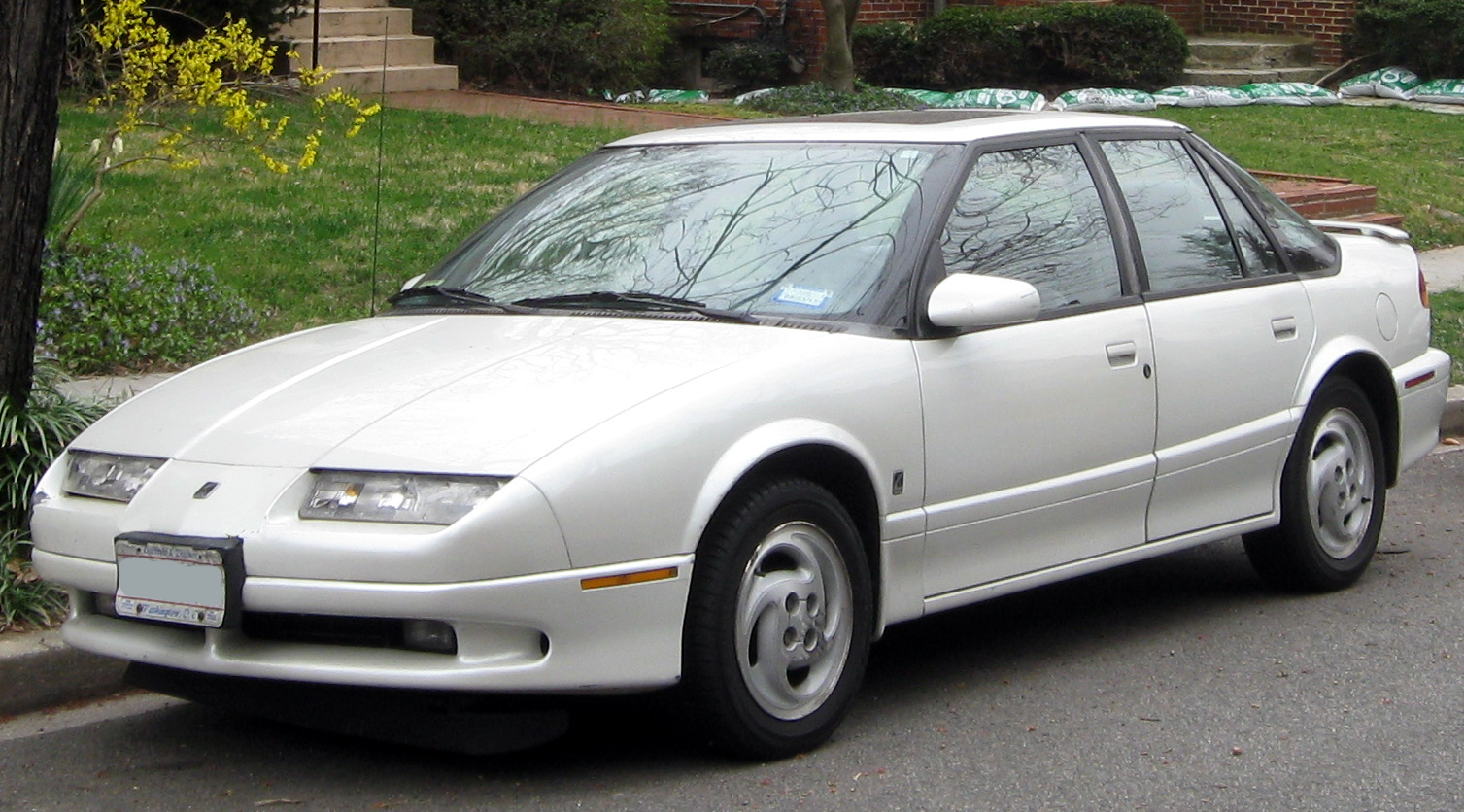
92 Saturn SL2
"Okay, well, I had a 92 Saturn SL2. And I really loved the Saturn. Had very few problems with it. But one day I went out to use the car, turned the key, and the battery light came on and the steering didn't work."
A Saturn SL2 is a small car made by Saturn (part of GM). In this call, something went wrong with a belt, and that’s what the person thinks started the chain of problems.
The Saturn SL2 is a compact car from Saturn (a GM brand) that was popular in the 1990s and early 2000s. In this story, the key issue is that a belt came off, which then leads to overheating/smoke and ultimately a fire.
belt had just fallen off
"So anyway, Stacey, what's the nature of your call to us? Okay, well, I had a 92 Saturn SL2... turned the key, and the battery light came on and the steering didn't work. So a friend of mine... figured out pretty quickly that the belt had just fallen off."
That belt is what helps run important parts of the car. If it comes off, the car can lose charging and power steering, so the warning lights and steering problems make sense.
A drive belt (often called a serpentine belt in many cars) transfers engine power to accessories like the alternator and power steering pump. If it falls off, the alternator may stop charging (battery light on) and power steering can fail, which matches the symptoms described.
Pep Boys
"So I brought it into Pep Boys. And they replaced the belt. It took them a few hours."
Pep Boys is a car shop that sells parts and does repairs. In this story, they replaced the belt and then the car later caught fire.
Pep Boys is an automotive parts and service retailer that also employs mechanics for repairs. In the story, Pep Boys replaced the belt and the caller later reports a fire after the job.
belts were a bit too tight
"It took them a few hours. But when they were done, the mechanic mentioned to me that, you know, he had a really difficult time. The belts were a bit too tight, but he finally got one on. And that sounded kind of hinky to me."
Belts have to be adjusted to the right tightness. If they’re too tight, they can run hotter than they should and wear out faster, which can create smoke or other serious problems.
Belt tension is how tightly the belt is adjusted on its pulleys. If a belt is too tight, it can increase friction and heat, accelerate wear, and in worst cases contribute to belt damage that can lead to smoke or fire.
burning rubber smell
"So anyway, Stacey... we left there at about 330. And as we were driving home... we could smell this burning rubber smell coming through the vents. So we closed the vents, rolled down the windows."
A burning rubber smell usually means something under the hood is getting too hot. Here it happens after the belt work, so it’s a warning sign that the problem may be related.
A burning rubber smell is a common sign of belt or hose friction/overheating. In this context, it appears right after the belt replacement and before visible smoke, suggesting something is overheating under the hood.
smoke coming out from my hood
"We got into the driveway and there was some smoke coming out from my hood. And I'm eight months pregnant."
Smoke from under the hood means something is overheating or burning. Since it happened after the belt was replaced, it suggests the repair may have caused a problem.
Visible smoke from the hood indicates an active overheating or ignition source in the engine bay. When it follows recent belt service, it raises the possibility of belt damage, misrouting, or excessive tension causing heat buildup.
engine was on fire
"But by the time he opened it, my engine was on fire and flames were shooting out of the headlights."
If the engine area catches fire, it can spread fast because there are lots of flammable parts nearby. That’s why the timing after the belt work matters in the story.
An engine bay fire can spread quickly because there are many flammable materials nearby, including rubber belts, hoses, and wiring insulation. The transcript links the timing to the belt replacement, which is why the caller is asking whether belt tension could have caused it.
engine to burst into flame
"Well, there are many things that could cause an engine to burst into flame. Not the least of which is a belt that's too tight, which he already admitted to you,"
They’re describing a situation where the engine bay catches fire. Here, they’re saying a belt that’s too tight can get extremely hot and potentially ignite the belt and other things nearby.
“Engine to burst into flame” describes an under-hood fire event, typically caused by ignition of hot components or flammable materials. In this segment, the hosts link it to belt overheating from improper tension, which could then ignite the belt itself and nearby combustibles.
belt that's too tight
"Not the least of which is a belt that's too tight, which he already admitted to you, and is creating so much heat that it may be able to, I've never seen it happen, but it may have created enough extra heat to set the belt on fire,"
If a belt is tightened too much, it can rub harder than it should and get hotter. That heat can damage the belt and, in worst cases, lead to a fire under the hood.
Belt tension that’s too high increases friction and heat in the belt drive system. That extra heat can accelerate belt wear and, in extreme cases, create enough heat to ignite the belt and other flammable materials under the hood.
serpentine belt
"When we need a belt for a Saturn, it's called a serpentine belt. It's one long belt that runs everything. We get them from the dealer."
A serpentine belt is one long belt that powers several parts of the engine at the same time. If it’s installed wrong or gets too hot, it can wear out fast and even cause a fire risk under the hood.
A serpentine belt is a single, continuous belt that routes around multiple engine accessories (like the alternator, power steering pump, and air-conditioning compressor). Because it drives several systems at once, a belt that’s too tight or failing can overheat and potentially ignite other under-hood materials.

Dacia Duster
"...ah. Since your car scope recommended that I get a duster, and that's just not acceptable to me. The car sc..."
The Dacia Duster is a small SUV. It’s meant to be practical and affordable, with a driving position that feels higher than a regular car. The podcast brings it up because it’s the specific model being recommended to the speaker.
The Dacia Duster is a compact SUV built around practical, budget-minded ownership. It’s often discussed for offering SUV-like capability and higher ground clearance without the cost of many larger, more expensive SUVs. In the podcast context, it’s mentioned because the speaker reacts to the idea of getting a “duster,” tying it to the car recommendation they received.

MG MGB
"...me it is? Time to order a fleece bodysuit for the MGB. No. It's time to play Super Choops. Hey, we have..."
The MG MGB is an older sports car made for driving for fun. People like it because it’s a classic and there are lots of parts and tips available for owners. The podcast mentions it as a recognizable classic car.
The MG MGB is a classic British sports car known for its simple, lightweight design and enthusiast-friendly character. It’s frequently discussed because it has a large parts and support community and is often used as a hobby car. In the podcast context, it’s referenced in a playful way, highlighting its classic status and the kind of accessories people associate with it.
actuator
"When you hit on the twigs and all that, it wasn't the twigs, but it was a really good clue for my mechanic. Really? Yeah. It turned out to be the actuator."
An actuator is like a tiny motor or controller that moves something inside the car. In the heating/AC system, it helps move the doors that decide where the air comes out.
An actuator is a small device that converts an electrical signal into physical motion. In a car’s climate-control system, actuators typically move blend doors or vent doors to route air to the right place (defrost, face vents, floor, etc.).

Hyundai Santa Cruz
"...alf an hour south of San Francisco, just north of Santa Cruz. Oh, it's a half an hour Moon Bay. Half an hour s..."
The Hyundai Santa Cruz is a small vehicle that looks like an SUV but has a short truck bed. It’s meant for everyday driving and light hauling. The podcast mentions it while describing where the speaker is driving near Santa Cruz.
The Hyundai Santa Cruz is a compact pickup-style vehicle that blends SUV comfort with a small truck bed. It’s often discussed because it offers a “truck-like” utility without being a full-size truck. In the podcast context, it’s mentioned in a travel description near Santa Cruz, tying the vehicle to the speaker’s route and timing.
81 two-wheel drive Toyota pickup
"I've got an 81 two-wheel drive Toyota pickup. The problem is... whenever I get up to a certain speed at a certain RPM, she starts to misfire and sputter and she gives the old kind of pat, and sometimes even backfires."
The host is talking about an older Toyota pickup that starts running badly at the same speed and engine speed. The problem causes misfires and backfires, and the discussion is about figuring out what part of the ignition system is failing.
This is an older Toyota pickup (the speaker says “81” and “two-wheel drive”), and the key issue is a repeatable misfire/sputter at a specific speed/RPM in 4th gear. The episode focuses on diagnosing ignition-related drivability problems on a carb/early-ECU-era truck where ignition components and timing can cause backfires.

Chrysler Pacifica
"...s one hill on highway one as I'm coming up out of Pacifica going into San Francisco. It always does it in th..."
The Chrysler Pacifica is a minivan made for families. It’s built to fit more passengers and gear, and it’s meant for comfortable driving on longer trips. The podcast mentions it because the speaker is driving it on a route near San Francisco.
The Chrysler Pacifica is a family-focused minivan designed to carry people comfortably with practical sliding doors and lots of interior space. It often comes up in everyday driving stories because it’s a common choice for road trips and highway commuting. In the podcast context, it’s mentioned as the car the speaker is driving while traveling along Highway 1 toward San Francisco.
RFI
"Yeah, this is a classic case of RFI, Radio Frequency Interference. Is there a microwave tower near your truck?"
RFI means “radio interference.” It’s when outside electronic noise messes with the car’s electronics, which can make the engine misfire or backfire.
RFI (radio frequency interference) is unwanted radio-frequency noise that can disrupt electronics. In cars, it can interfere with ignition or sensor signals, leading to misfires, sputtering, or backfires—especially when the problem is repeatable at certain operating conditions.
secondary ignition
"Well, actually, it sounds like a classic case of bad secondary ignition. Secondary ignition in your car is all those components responsible for taking the 20 or and any one of those pieces could be at fault."
The secondary ignition is the “spark-making” part of the ignition system. If something in that chain—like the coil, wires, cap, or spark plugs—doesn’t work right, the engine can misfire and even backfire.
Secondary ignition is the part of the ignition system that generates the high-voltage spark at the spark plugs. It includes components like the coil, coil wires/spark plug wires, distributor cap/rotor (on distributor-equipped engines), and the spark plugs—any of which can cause misfires and backfires if they fail.
coil
"For example, you could have a bad coil, you could have a bad coil wire, you could have spark plug wires, you could have a bad plugs, bad distributor cap."
The ignition coil converts low-voltage electrical power into the high voltage needed to create a spark. If the coil is weak or failing under load (like climbing a hill at a certain RPM), it can cause intermittent misfires and backfires.
spark plug wires
"For example, you could have a bad coil wire, you could have spark plug wires, you could have a bad plugs, bad distributor cap."
Spark plug wires send electricity to the spark plugs. If the wires are worn or damaged, the spark can get weak or intermittent, and the engine will misfire.
Spark plug wires deliver high voltage from the ignition system to each spark plug. When they degrade (insulation breakdown, internal resistance, moisture intrusion), they can cause intermittent spark and misfire—often showing up at specific RPM/load points.
distributor cap
"For example... bad plugs, bad distributor cap. I've replaced the things I've done in my own half baked diagnosis... I've replaced the plugs, the wires, the distributor cap..."
The distributor cap is a cover that helps route the spark to the right cylinder. If it gets cracked or worn, the spark can jump to the wrong place and the engine misfires.
The distributor cap is part of a distributor-based ignition system that routes high voltage to the correct cylinder. Carbon tracking, cracks, or moisture inside the cap can cause arcing and misfires, especially when engine vibration and load increase.
vacuum advance
"I've even replaced the vacuum advance. And none of that has worked, although I haven't done anything to the coil."
Vacuum advance changes the engine’s ignition timing using engine vacuum. If it doesn’t work correctly, the timing can be off when you’re climbing or accelerating, which can lead to rough running or backfires.
Vacuum advance is a vacuum-controlled mechanism that adjusts ignition timing based on engine load. If it’s stuck or leaking, timing can be wrong under hill-climb/load conditions, which can contribute to misfires and backfires.
electronic ignition
"The other possibility, this is an 81, but it has electronic ignition. I believe, and it has something called an igniter."
Electronic ignition is a modernized way of making the spark happen at the right time. Instead of mechanical contacts, electronics control the timing, which usually makes the system more reliable and easier to maintain.
Electronic ignition replaces older points-and-condenser systems with electronic control of spark timing and coil triggering. It typically uses sensors and an ignition module to manage when the spark happens, improving consistency and reducing maintenance.
igniter
"I believe, and it has something called an igniter. But since you haven't changed the coil, it seems that you've changed everything else."
An igniter is part of the ignition system that helps control the spark. If it’s not working right, the car may have trouble starting or may misfire even if other parts like the coil are okay.
An igniter is an ignition-system component that helps drive the ignition coil, controlling how and when the coil fires. In many electronic ignition setups, a failing igniter can cause weak spark or no-spark conditions even if the coil itself is fine.
digital volt oh meter
"Oh yeah. But you want a nice digital volt oh meter. Okay. You can get one for about, uh, oh, cheap."
A DVOM is a handheld tool that measures electricity—like voltage and resistance. Mechanics use it to check whether parts in the ignition system are working properly or if there’s a bad connection.
A digital volt-ohm meter (DVOM) measures electrical voltage and resistance, and it’s commonly used for diagnosing ignition and sensor problems. By checking readings at the coil, wiring, and related components, you can determine whether a part is likely failing.

Volvo 760
"...Um, well, I'm calling because I have a 1986 Volvo 760 turbo wagon. Yeah."
The Volvo 760 is an older Volvo car from the 1980s, and it was made for comfortable everyday driving. A “turbo wagon” means it’s a wagon body with an engine that has a turbo for extra power. The podcast mentions it because someone is calling about their 1986 version.
The Volvo 760 is a mid-size luxury sedan/wagon from the 1980s known for its solid build and long-distance comfort. The podcast specifically mentions a 1986 Volvo 760 Turbo wagon, which is a notable variant because it combines the 760’s practicality with a turbocharged engine. It’s brought up as a personal ownership call, likely because the owner has a specific question or issue with that setup.
brake pads
"And that doesn't have to be anything wrong with the brake pads. Because what's wrong with them is they have the wrong composition."
Brake pads are the parts that press against the spinning brake disc to slow the car down. They can make noise depending on what they’re made from, even if they’re not worn out.
Brake pads are the replaceable friction material that clamps against a rotor to slow the car. The hosts emphasize that noise can come from the pad’s material “composition,” not necessarily from wear.
Teflon coated shims
"we finally started using, in desperation, the factory pads with these Teflon coated shims that come with them"
These are thin metal/plastic pieces with a Teflon coating that sit with the brake pads. They help stop the brakes from squealing by reducing vibration.
Teflon coated shims are thin friction-related layers placed between brake pads and the caliper/holder to reduce vibration and brake squeal. In this segment, the shim is part of Volvo’s factory brake setup used to eliminate noise.
special paste
"And this special paste that goes on both sides of the shim. And these all but eliminate the noise."
The special paste is a quieting compound that gets applied where the brake pad contacts the shim. It helps prevent the squeaky noise that can happen when parts vibrate.
The “special paste” is an anti-noise compound applied to the shim/pad interface to damp vibration and prevent squeal. The hosts say it’s used on both sides of the shim as part of the factory-style brake job.
Request an Explanation
Heard something you'd like explained? We'll add it to this episode.
Sign in to request explanations for terms you heard.
Want to learn more?
Browse our glossary for plain-English explanations of automotive terms, jargon, and concepts.
Help improve this episode
See something that's not quite right? Our annotations are AI-generated and can sometimes miss the mark. Click the flag icon on any annotation to suggest a correction.