A satirical “Vehicle Reliability Reduction Program” kicks things off, joking about phasing out certain cars and even “ending Car Talk.” The tone shifts to real safety and drivability: a Volkswagen Super Beetle caller reports carbon monoxide entering the cabin in winter, and the hosts explain how heater/heat-exchanger ducting leaks can cause it, plus a diagnostic approach—shut off heat, measure CO, and don’t drive if it’s unsafe. Later, a 1988 Suzuki Samurai owner describes worsening manual-shift resistance tied to clutch failure and hydraulic master/slave issues.
Ashley called us to say that when she takes long trips in her ’74 Volkswagen Bug she feels nauseous and has trouble staying awake. Sounds like a drive with Click and Clack after a chili dinner, but could this be more serious? Find out on this episode of the Best of Car Talk.
See pcm.adswizz.com for information about our collection and use of personal data for sponsorship and to manage your podcast sponsorship preferences.
"First, a gradual phase out of Japanese cars. We mean by gradual, we're going to give it like a 90 days. These cars are way too reliable. Whoever heard of a car that will go for 100,000 miles without anything. I mean, that's ridiculous. So Japanese cars will gradually be phased out."
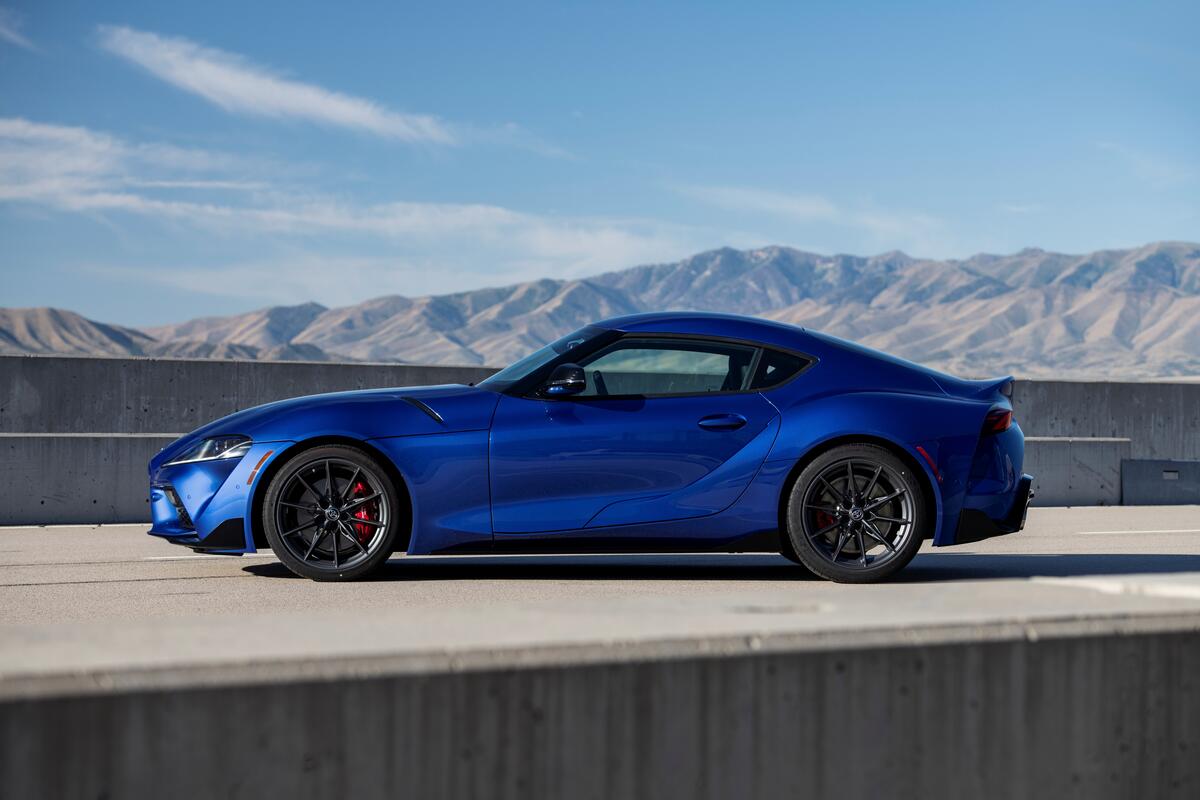
The Toyota Supra is a sports car made by Toyota. It’s often talked about because it’s known for being dependable and lasting a long time with normal maintenance. That’s why it may come up in a conversation about cars that can reach high mileage.
The Toyota Supra is a performance sports coupe known for strong engine options and a long-running reputation among enthusiasts. In a discussion like this, it’s mentioned in the context of Japanese cars being especially dependable and capable of lasting well beyond typical mileage. That “go for 100,000 miles” idea is why the Supra often comes up when people talk about reliability.
"Problem is that winter is coming [368.9s] and I have a little problem with carbon monoxide in my car. Because your heater boxes are rotted through. Yeah, you know what? And I had that checked out."
Carbon monoxide is an invisible exhaust gas that can build up inside a car. Breathing it can make you sick and can be deadly, so it’s a serious safety issue.
Carbon monoxide (CO) is a colorless, odorless gas produced by incomplete combustion. In cars, it’s dangerous because it can enter the passenger compartment and cause headaches, dizziness, and even unconsciousness.
"and I have a little problem with carbon monoxide in my car. Because your heater boxes are rotted [375.0s] through. Yeah, you know what? And I had that checked out. In fact, I had a new one placed in there."
Heater boxes are part of the air-cooled Volkswagen Beetle’s exhaust-to-heat system, routing heat from the engine area into the cabin. If they rust through, exhaust gases can leak into the heater ducting and potentially into the passenger compartment.
"And you know you [387.9s] have carbon monoxide in the passenger compartment because someone has tested it with an emissions tester? Oh, yes. No, that it had passed emissions and all that kind of stuff."
An emissions test looks at exhaust gases leaving the tailpipe. But you can still have carbon monoxide inside the car if it’s leaking in through the heater or ventilation system.
An emissions tester checks what comes out of the tailpipe to verify compliance with pollution limits. Passing an emissions test doesn’t guarantee there’s no carbon monoxide leaking into the cabin, because CO can enter from leaks in the heating/ventilation path rather than from the tailpipe.
"Well, there are only [445.3s] two ways that carbon monoxide can get into your car. Okay. Into this car. One is through the [451.6s] heat exchanger system. Okay. And you can disconnect that where the heater box is attached to the ducts underneath the car."
In this context, the heat exchanger system is the car’s method of transferring heat into the cabin using components connected to the engine/exhaust heat path. The host says one major route for carbon monoxide intrusion is through this system, especially where heater components connect to ducting.
"You can take those [463.9s] right off and you can plug up the duct work with something like duct tape. Okay. At the chassis end, which prevents the intrusion of anything into the engine, into the passenger compartment."
They’re talking about using duct tape as a quick, temporary plug to stop air (and any leaked exhaust gas) from moving through the heater ducts while figuring out where the problem is.
Duct tape is being used here as a temporary seal to block duct openings during troubleshooting. The idea is to prevent any exhaust/CO from entering the passenger compartment through the heater ducting while diagnosing the leak path.
"Actually, I owned a 1988 Suzuki Samurai, the five-speed hard top car.
You know the Samurai."
The Suzuki Samurai is a small off-road SUV that’s known for being tough and simple to work on. Here, they’re talking about a 1988 version with a manual transmission.
The Suzuki Samurai is a compact, body-on-frame off-road SUV known for its simple, rugged design and easy mechanical access. In this segment, the host specifically mentions an 1988 Suzuki Samurai with a five-speed manual, which is a common enthusiast setup for trail use.
"About a month and a half ago, I started having this little problem with the clutch.
Now, I bought it five years ago and put about 60,000 miles on it."
On a manual car, the clutch is what you press to let you shift gears. If something feels wrong with the clutch, it can make shifting harder or cause gears to feel sticky.
In a manual transmission, the clutch is the pedal-operated mechanism that disconnects the engine from the gearbox so you can change gears smoothly. When the speaker says the problem started “with the clutch,” they’re describing a drivability issue that can come from clutch hydraulics, linkage, or adjustment—not just the pedal feel.
"But I started having this problem where when I would shift gears,
the clutch would start to be a little hard.
Not the clutch, not the pedal, but shifting the gear shift."
Shifting gears is how a manual transmission changes the gear ratio. If it becomes hard to move the shifter into gear, something in the clutch/shift linkage or adjustment may be sticking or out of spec.
“Shifting gears” is the act of moving the manual gearbox into a different ratio, which depends on the clutch fully disengaging and the shifter/linkage moving freely. The speaker’s description—hard to get into gear and needing extreme force—points to a mechanical or adjustment problem affecting engagement rather than a simple “clutch pedal” issue.
"[1086.1s] Well, or it wasn't pumping, but in any event,
[1088.6s] I bet when your friend put the new clutch in,
[1091.0s] he had to bleed the thing too to get it to work correctly."
Bleeding means getting the air out of the clutch fluid lines. Air makes the system feel weak or inconsistent, so the clutch may not release fully.
Bleeding a hydraulic clutch system removes air from the hydraulic lines and cylinders. Air compresses, which reduces the effective pressure and can cause poor clutch disengagement until the system is properly bled.
"[1112.0s] Okay.
[1112.3s] So I would recommend you change the clutch master and the slave.
[1115.9s] And the slave.
[1116.5s] Yeah, they're cheap enough."
The slave cylinder is the part that actually pushes/pulls the clutch release using the fluid pressure from the master cylinder. If it’s weak or leaking, the clutch won’t release properly.
In a hydraulic clutch, the slave cylinder is the downstream component that uses the master cylinder’s pressure to move the clutch release mechanism. If it leaks or can’t build/hold pressure, the clutch may not fully disengage.
"...n a postcard or float it inside a fully assembled pulsar whirlpool bath with built-in armrests, a point to..."
The Nissan Pulsar is a compact car made by Nissan. In the podcast, it’s mentioned in a playful way, not as a detailed review. The main point is that it’s a real car model name people recognize.
The Nissan Pulsar is a compact car line from Nissan that appeared in many markets and model years. In the podcast context, it’s referenced as part of a humorous or wordplay segment rather than a deep technical discussion. That’s why it’s likely mentioned as a recognizable car name.
"Hello, you're on Car Talk.
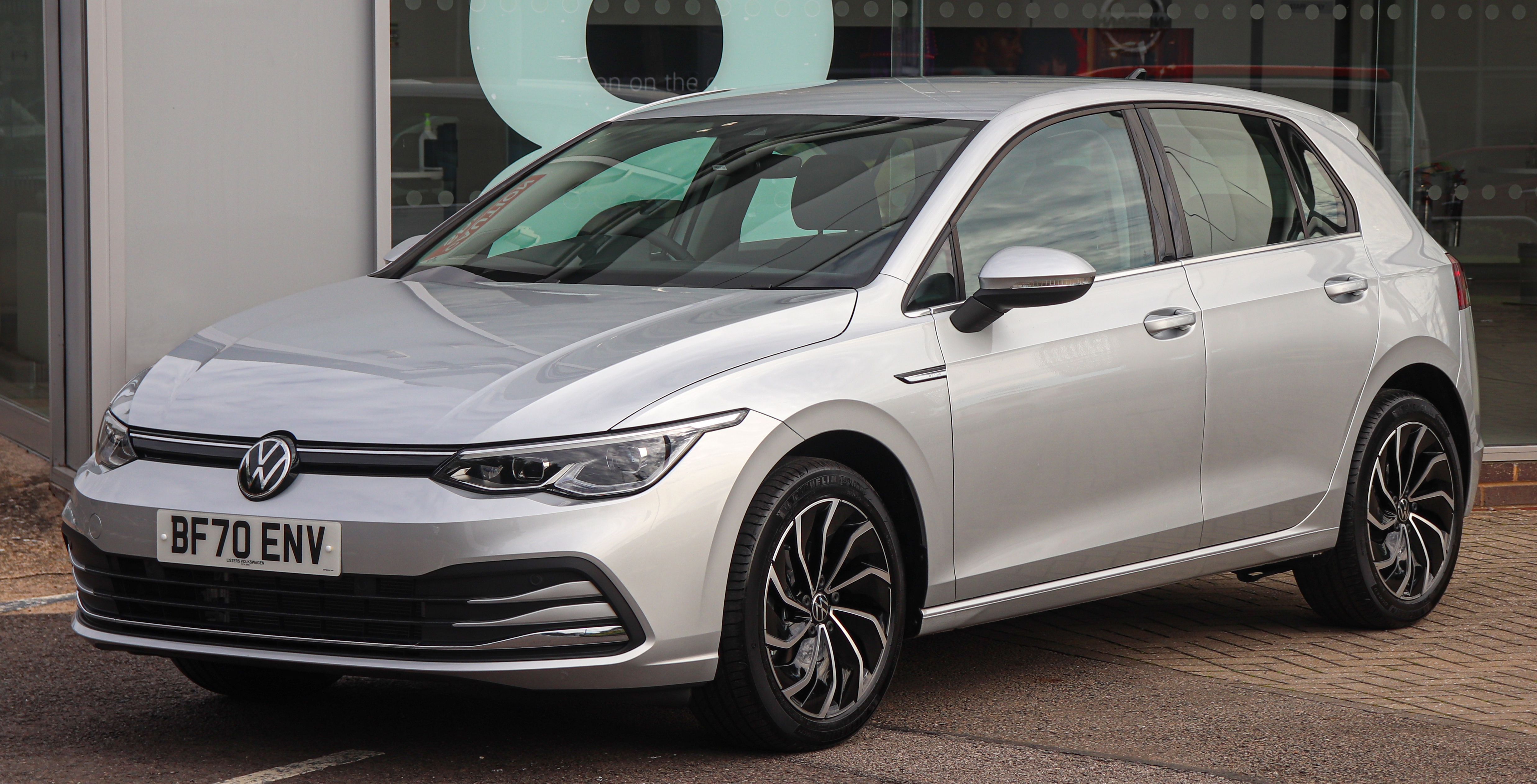
Hello, my name is Camille and I drive a 97 Volkswagen Golf.
Hi Camille.
A Golf."
A Volkswagen Golf is a small everyday car (usually a hatchback) that’s meant to be practical. Here, the caller says she drives a 1997 Golf, meaning it’s an older model from the late 1990s.
The Volkswagen Golf is a compact, practical hatchback that became a long-running benchmark for everyday drivability. In this call, the speaker specifies a 1997 Volkswagen Golf, which places it in the late-1990s generation known for being simple to live with and widely supported by the aftermarket.
"we discussed the fact that there are some cars we think which are known to be Chick cars and some cars that are Guy cars... What makes a Golf a Chick Car?"
“Chick Car” is a slang term people use to stereotype certain cars as being for women. The hosts are discussing it as a social label—like who buys what—rather than anything about how the car is built.
“Chick Car” is a slang stereotype used to label certain cars as being more associated with women drivers. In this segment, the hosts treat it like a category question—what cars qualify, which ones are “Guy cars,” and why—despite the fact that it’s not an objective engineering or performance classification.
"we discussed the fact that there are some cars we think which are known to be Chick cars and some cars that are Guy cars. And in fact, the very example we used was the Golf..."
“Guy cars” is a slang stereotype meaning some cars are seen as “for guys.” In this segment it’s part of a joke/discussion about stereotypes, not about the car’s real capabilities.
“Guy cars” is the complementary slang stereotype to “Chick Car,” implying certain vehicles are more associated with men. The hosts use both terms to frame a discussion about social perceptions of car ownership, not technical differences between vehicles.
"And what happened is your ignition key did not return all the way from the crank position
[1658.7s] to the run position.
...
[1676.3s] that will flip the key from the crank position, which is the all-the-way clockwise position,"
The crank position is the key position that makes the starter motor spin the engine to start it. If the key stays there, the car thinks it’s still trying to start.
The crank position is the ignition switch setting that commands the starter motor to engage and spin the engine for starting. In this episode, the key is stuck in crank, so the car behaves like it’s still in the “starting” state.
"And what happened is your ignition key did not return all the way from the crank position
[1658.7s] to the run position.
...
[1682.1s] to what's called the engine run position."
The run position is the key position after the engine is started, when the car powers things you use while driving. If the key doesn’t fully reach run, some of those features stay off.
The run position is the ignition switch setting used after the engine starts, when the car powers its normal electrical systems. The episode explains that when the key doesn’t reach run, many accessories won’t work because the car is still treated as if it’s in the starting state.
"And what happened is your ignition key did not return all the way from the crank position
[1658.7s] to the run position."
The ignition key is what you turn to start the car and to put it into normal driving mode. Here, it doesn’t fully return, so the car doesn’t switch into the usual state.
An ignition key is the mechanical control that tells the car’s ignition system what state it’s in. In this story, the key is stuck between positions, so the car is effectively not fully in the normal “run” mode.
"You know, when you start the car, you stick the key in the hole, you turn the key,
[1664.8s] the starter motor engages the flywheel and makes that, and the thing starts."
The starter motor is the part that spins the engine when you turn the key to start. It only runs in the crank/start position.
The starter motor is the electric motor that cranks the engine by engaging the flywheel when you turn the key to crank. The transcript ties the starter motor’s engagement to the crank position of the ignition switch.
"the starter motor engages the flywheel and makes that, and the thing starts.
[1669.4s] And you let go of the key."
The flywheel is a heavy rotating part inside the engine system. When you start the car, the starter motor uses it to spin the engine fast enough to catch.
A flywheel is a rotating component connected to the engine that helps smooth out crankshaft motion. In starting, the starter motor engages the flywheel so the engine can spin up and begin running.
"So what's happening in your car?
[1689.8s] What you may not know, though, is that most of the accessories will not work
[1695.7s] when the car is in the crank position."
Here, “accessories” means the car’s electrical features like lights and wipers. The story says they may not work if the key never fully returns to the normal run mode.
In this context, “accessories” means electrical systems that are powered only in certain ignition states (like headlights, wipers, and some dash lights). The episode’s key point is that many accessories won’t work while the ignition switch is stuck in crank.
"So he has an 87 Chevy Nova and I have an 89 Volvo 240."
This is a Volvo sedan called the 240, and “89” means it’s from 1989. The caller mentions it because they and their husband each brought older cars into their marriage and are now deciding what to sell.
The Volvo 240 is a long-running Swedish family sedan known for its durable, straightforward design—especially in the late 1980s. Here, “89 Volvo 240” identifies the 1989 model year, and it’s part of the caller’s lineup of older cars they’re weighing for selling.
"So he has an 87 Chevy Nova and I have an 89 Volvo 240."
This is a Chevrolet model called the Nova, and “87” means it’s from the 1987 model year. The caller is using it as an example of a car they already own while deciding what to sell.
The Chevrolet Nova is a classic American compact/midsize model from the late 1970s through the 1980s, and the “87” indicates the 1987 model year. In this episode, it’s mentioned as one of the couple’s well-used cars, giving context for what they’re considering selling.
"... I got what the car scope told me to get. A Dodge Colt Vista? No, that's not what the car says."
The Colt Vista is a car model name that comes up in the podcast during a discussion about what the car is actually called. The speaker seems to be correcting a misunderstanding about the name on the car. So it’s included mainly for identification rather than how it drives.
The Colt Vista is a car name that appears in the podcast as part of a correction or clarification about what the car is called. The exchange suggests the speaker is distinguishing between a “Dodge Colt Vista” and what the car’s own labeling indicates. It’s mentioned more for the naming/identification aspect than for performance or technical details.
The Volkswagen Beetle is a famous older-style VW. It’s known for being straightforward and popular with car fans. Here, they’re talking about it as one of the cars in a decision.
The Volkswagen Beetle is a classic, air-cooled rear-engine design that became an icon for its simple, durable layout and easy-to-work-on reputation. In this segment, it’s mentioned as a candidate car choice, setting up a comparison with other vehicles.
"Oh, yeah, it doesn't drive very well in the snow, right?
Because it's a rear wheel drive.
Right, and it's a Volvo."
Rear-wheel drive means the back wheels do the work of moving the car. In snow, that can make traction harder to manage, so the car may feel less stable unless you have good tires and careful driving.
Rear-wheel drive (RWD) means the engine’s power is sent to the rear axle. In snow, RWD can be trickier because the driven wheels may have less traction than the front wheels would in a front-wheel-drive layout, especially if the car is lightly loaded or the tires aren’t ideal.
Select text to request an explanation
New shows, new music, new movies, keeping up with pop culture sometimes feels like a full-time job.
Thankfully over at Pop Culture Happy Hour, it's literally our job.
We break down what's actually worth watching, listening to, and pretending you already knew
about. So the next time someone says, did you see that? You can say, yeah, obviously. Follow NPR's
Pop Culture Happy Hour wherever you get your podcasts.
Hello and welcome to Car Talk from National Public Radio. With us, click and clack the
Tappet Brothers, and we're broadcasting this week from the two zeros in 00 campaign
headquarters here at Car Talk Plaza. Some of you may know that Tommy and I are running
for co-president this year on the fondue party ticket. And if we win, we've already announced
that my brother's going to take Monday, Wednesday, and Friday, and I'll be president on Tuesday,
Thursday, and Saturday, so I can immediately overturn everything he does. Anyway, before you
make up your minds and head into the voting booth, we thought you might want to hear one of the things
that my brother will be promoting during his three days a week. Oh, you're not in, you're not
party to this? Oh, no, no, not really, no. Okay, here we go then. This is one of our initiatives.
It's called the Vehicle Reliability Reduction Program, also known as CARS Absolutely Stink.
Don't sugarcoat it, man. The people want the truth. They can't handle the truth, but they want it.
Has anything in the past century torn asunder the social fabric of this great nation more
than the automobile? Just look at the cost of the modern automobile. It's the source of more
pollution than anything else on the planet. It's the cause of 40,000 deaths a year, road rage,
and Ricardo Montalban TV ads. To be fair, the industry has given us a couple of interesting
things, you know, convenient transportation, cup holders, and of course, enrich the lives
of countless mechanics. You ain't kidding. Yes, they have.
All right, faced with this enemy to the American public, what have our leaders done? They've done
squat. Worse than squat, they've actually built more roads. I mean, they make it even worse.
Now, we are going to change all that. A Malyotsi Malyotsi administration is going to dramatically
reduce the role of the automobile in American public life as we know it today. What you mean,
we Kimosabe. And how are we going to do this? Here it is. This plan consists of five components.
Five. Oh, like in your MG. No, that's how many fingers I happen to have on this hand.
First, a gradual phase out of Japanese cars. We mean by gradual, we're going to give it
like a 90 days. These cars are way too reliable. Whoever heard of a car that will go for 100,000
miles without anything. I mean, that's ridiculous. So Japanese cars will gradually be phased out.
Step B, the immediate importation of more Italian, French, and Yugoslavian vehicles.
These cars are temperamental. They are prone to malfunction at inopportune times,
and best of all, parts are practically impossible to find. Step Roman numeral three.
There isn't any three. We missed three. Well, we wanted to use five because that's
so many fingers we had. So we had to like slip the one in the middle that we didn't have anything for.
Three is coming. Roman numeral four. As a nation, we'll get so frustrated with our cars that we will
once again use public transportation, which by comparison will seem reliable and comfortable.
Number five, themed public transportation. Ah, yes. You may be on and in on this because this
was your idea. Well, I may have to line item veto some of these. Themed public transportation.
Imagine stepping onto the bar, the metro, the T or anything else, and find yourself in front of
a butcher block counter with junior child caramelizing breast of quail, or stepping aboard
the Starbucks slash Arturo Fuente car and enjoying a cappuccino and a stogie on the way home after
work. You get the idea. Cars would return to their rightful place, rusting in people's backyards,
and when they did run, we'd all be pleasantly surprised. Skies would clear up. You could ride
your bike to work without having to worry about getting hit by a soccer mom in an excursion,
and you would enjoy a glimpse of the latest lingerie fashions from Victoria's Secret
or Chippendales on the way home from work. Sounds good, doesn't it? Well, we thought so,
and that's not all. There is one final benefit to this program. If we could eliminate cars,
we could eliminate car talk. And no one can doubt that the end of car talk would be a good thing
for NPR, public broadcasting, and our nation, if not the entire world. I rest my case. Here, here.
Woo-hoo! We are a shoe-in. Boy, you got my vote, man. Well, if you'd like to complain about cars
in general or your car in particular. Or car talk. Or car talk, by all means, and give us a call at
888-8888. Car talk. That's 888-227-8255. Hello, you're on car talk. Hi, this is Ashley from Kent,
Washington. Hi, Ashley. Ashley with an E toward the end there. Just L-E-Y. Yeah. Oh, really? I was
going to go for the E-E-I-G-H. Oh, that would have been good. So, what's happening, Ashley? Well,
I have a very cute Volkswagen 74 Super Beetle that I absolutely love. Problem is that winter is coming
and I have a little problem with carbon monoxide in my car. Because your heater boxes are rotted
through. Yeah, you know what? And I had that checked out. In fact, I had a new one placed in there.
And still, the carbon monoxide was very high. I actually had it tested out. And you know you
have carbon monoxide in the passenger compartment because someone has tested it with an emissions
tester? Oh, yes. No, that it had passed emissions and all that kind of stuff. But... Well, sure,
there's no emissions coming out the tailpipe. No, I actually, after spending two hours in my car
in a little trip, after I got out about 10 minutes later, I passed out. Really? Yeah. And driving
back, I got the same kind of symptoms as I did before with the headaches and all that kind of
stuff and realized that that's exactly what it was. And then I actually had, you know, those carbon
monoxide testers that you would put in an aircraft, a small aircraft. Yeah. Well, my wife bought one
of those because she was convinced that my brain cells were disappearing. And she found out they
were, but it wasn't due to carbon monoxide poisoning. Yes. Yeah, so you got it. Well, there are only
two ways that carbon monoxide can get into your car. Okay. Into this car. One is through the
heat exchanger system. Okay. And you can disconnect that where the heater box is attached to the
ducts underneath the car. There are two flexible pipes or hoses that connect. You can take those
right off and you can plug up the duct work with something like duct tape. Okay. At the chassis
end, which prevents the intrusion of anything into the engine, into the passenger compartment.
Okay. It doesn't mean that carbon monoxide can't be getting in some other way. Right. But holding
the floor, open windows, and all that stuff. Okay. Or cracks in the chassis or whatever in a car
this age could have any of those things wrong with it. Right. What you're going to do is divide
and conquer here. Okay. So what you're going to do is take the heating system out of the picture.
Okay. So you want to shut that thing up completely and then measure the carbon monoxide level.
If it in fact is down to zero, which it should be, close to it, then in fact you know that
that's the problem. If not, then you just junk the car. Okay. But it will probably knock it down
to zero though. Yeah. Yeah. But you're prepared to junk the car, aren't you? I'm not quite prepared
to do that. Another few weeks we'll be able to junk it for you and you won't even know.
This is one of those your money or your life situations. That's right. But I'm pretty sure
that most of it will be gone when you plug up everything. Okay. And good luck. And in the
meantime, I mean, either don't drive the car or if you do, and I would, you know, I'm hesitant to
say drive with the windows open because the carbon monoxide will get in and it will stay there.
Okay. And I don't think I would want to drive this much at all. Okay. And don't be afraid to junk it.
Okay. All right. Hey, thank you. See you Ashley. Okay. Bye bye. Okay, Tommy. Do you remember last
week's puzzler? No. Yeah, I do. I do. It had to do with domicile NPR. Discussed at an NPR? Oh,
we can. And we shall.
Hi, we're back. You're listening to Car Talk with us, Click and Clack the Tapper Brothers,
and we're here to talk about cars, car repair, and the answer to last week's puzzler. Which I don't
remember at all, to be honest with you. You said you remembered it. I was lying. Well, anyway,
this puzzler came from my fewest number of move series. Oh, that's that crazy little thing. No,
it is. I thought this was a puzzle. It was sent in by Bruce Robinson, who's a professor at the
University of Tennessee. Anyway, here it is. There are 25 jealous people who live on one floor of a
very strange apartment building. On this floor are 25 apartments laid out in a five by five grid.
Yeah. Got it. So if you draw this grid, the square in the upper left hand corner,
we could say is one. And the one next to it is 2345 And then the line below
that is 6789 10, 11, 12, right all the way to 25. I got it. Got
Now, each person who lives on the floor aspires to move into the apartment of one of his adjacent
neighbors. So number one can move to square number two, or number six, for example. Not
diagonally. Not diagonally. Number two can move to number one, number three, or number seven.
Yeah, you go. I can, I can visualize all that. So here's the question. Why would anyone live in
such a, no, the question is, what is the fewest number of total moves that will allow every person
to move to an adjacent square? All right. I know Doug mayor, but did you get the answer, mayor?
He says, no, I didn't get the answer. Well, I didn't come about the thought process. I concluded
right away when you gave this problem. You had to be one or zero, right? The answer was either going
to be 26. Ah, very good. Or millions. Well, millions is closer. Millions is closer. Well,
if you don't number them one through 25, but instead letter them. Yeah. And not A, B, C, D, E.
Let's letter the first one A, the next one B, A, B, et cetera, et cetera.
Then everyone who's on an A square must by definition move to what? A B square. Right.
And everyone who's on a B square must move to an A square. It's pretty obvious if you draw it out.
Yeah, that's true. Now, if you add them up by some stroke of bad luck, you got 13 A squares.
And only 12 B squares. Someone's got to move out of the building.
They've got to fix somebody. So there are no fewest number of moves. It is impossible for this
to happen. I know it's a little sneaky. No, no, impossible is a good answer.
Possible is a good number of moves. So who's our winner anyway?
That's very good, you know? I like that question. Well, you're going to love this week's a few.
Yeah.
Poor Mayor just threw a waste basket at me. He was up to 26,215 moves and he almost had it.
Oh, the winner is Martha Lozano from Richmond, Virginia, Richmond, Virginia.
Good work, Martha.
And for having her answer selected at random from the both of the correct answers that we've got,
Martha is going to get a $25 gift certificate to the store at the Cart Talk section of cars.com
and with that $25, she can buy the better part of a Cart Talk CD gift set.
What's the better part? The carrying case. Actually, that's the best part.
And by the way, if you'd like to learn more about any of the status lowering items that we
mentioned on this show, you can always visit the store at the Cart Talk section of cars.com
yourself. Or you can call 888-CAR-JUNK and this is known as Shameless Commerce, what we just did.
We gave the name, we told people they could go buy stuff and we told them how to buy it.
You ashamed that you did that?
No.
Not really, no. We have a new puzzler coming up in the third half of today's show.
It is not automotive, but it is locomotive, folkloric, historic and...
Locomotive.
Locomotive in nature.
It's like crazy cars.
Kind of. Anyway, if you'd like to call us, the number is 888-CAR-TALK, that's 888-227-8255.
Hello, you're on Cart Talk.
Hi, this is Christian Spencer in Oxford, Ohio.
Oxford, Ohio.
Home of Miami University.
Oh, yes.
I think I knew that.
No, after what our home is Miami University named and didn't they know there was going to be a problem?
Actually, Miami University was founded way before Florida was.
Oh, I don't think so.
Oh, yeah, yeah, it's true actually.
Come on, the oldest city in the country.
1807, I believe.
1707, Miami was the...
It was named after the Indian tribe that used to live here in southwest Ohio.
Oh, really?
Oh, and they went to Florida for the summer.
And they loved it so much, they changed the name of the tribe, the Miamians.
Yeah, I just graduated, so...
Oh, so that's your alma mater.
Yeah.
What did you major in?
Interdisciplinary studies.
Does that include like, do you want fries with that?
What is interdisciplinary studies?
Interdisciplinary studies is just the code word for pretty much creating your own major.
A little bit of this, a little bit of that, so which McDonald's you're working at?
Actually, I'm working at a pizza place.
I couldn't...
I'm way too qualified to handle fries, so they had to put me on dough.
Good man.
No, actually, that's the best way to get an education.
And you'll probably never have your hands on that much dough over again in your life.
With a certain uncertainty, you might say.
A certain uncertainty.
So anyway, so what's the...
So what kind of a 1976 Chevy do you own?
Actually, I owned a 1988 Suzuki Samurai, the five-speed hard top car.
You know the Samurai.
Oh, of course.
Doesn't everyone.
About a month and a half ago, I started having this little problem with the clutch.
Now, I bought it five years ago and put about 60,000 miles on it.
It had very little problems with it.
I've done almost every repair on it myself.
Good.
But I started having this problem where when I would shift gears,
the clutch would start to be a little hard.
Not the clutch, not the pedal, but shifting the gear shift.
Be a little sticky, a little hard to get into gear.
Eventually, this turned into a situation where I'd have to apply about 500 pounds of pressure
to move the gear shift.
Oh, really?
Only when the engine was running, however.
Only when the engine was running.
Right.
And only once it got good and warm.
And this happens in all gears or just first gear?
It happens in first and second and then eventually third and fourth and fifth.
Oh, until it just won't go into any gear?
Yeah, eventually.
When you say you have to put a lot of force to make it move,
while you're doing that, is it grinding away or not?
Only when I put it in reverse.
Every other time it didn't do it.
But I talked to all my mechanic and a couple other people
and they said my clutch was probably about to go out
because it hadn't been replaced in five years.
That was what they were just like,
your clutch is probably about to die.
And they were right.
A week later, the clutch went.
And after being stranded on a not-so-friendly street,
I got it towed and I got the standard three-part clutch assembly put into it
by a friend of mine who's a mechanic.
Sure enough, I get it back the next day and it's the same thing happens.
And it's the exact same problem.
But he goes to Florida.
To Miami.
Miami, maybe.
Now, when you say that the mechanics told you that your clutch was ready to go
and indeed the clutch went, what does that mean?
What do you mean it went?
Where did it went?
Well, it just stopped working.
In what way?
It already wasn't working.
Or it appeared to not be.
It just like the pedal went down and never came back.
Oh, oh.
So the pedal went down to the floor and stayed there?
Well, pretty much.
It popped up a little bit more and then it was all rubbery.
There was nothing to the clutch.
Like the car wouldn't start.
You couldn't push it down.
It was gone.
All right.
Uh, does this have a hydraulic clutch or a cable clutch?
It has a, I'm pretty sure it has a hydraulic clutch.
Good, because if it didn't, we wouldn't have any answer.
We wouldn't have been hanging up on you.
No, we would have had, I had a backup answer.
I have a backup answer.
I always have a backup answer.
I had a backup answer for the cable.
I think, I think what happened is your clutch master cylinder failed.
The day that the pedal went to the floor, what you didn't need was a clutch.
No.
What you really needed was a clutch master.
Either the thing has run, had run out of fluid.
Cause no, we checked that.
Well, or it wasn't pumping, but in any event,
I bet when your friend put the new clutch in,
he had to bleed the thing too to get it to work correctly.
And then as it heats up and the bore of the thing expands,
the clutch of the bore of the master cylinder expands,
the clutch master cylinder is less able to provide the requisite pressure
to disengage the clutch.
And that's why you have to lean on that handle, the shifter, that is, to shift it.
Okay.
So I would recommend you change the clutch master and the slave.
And the slave.
Yeah, they're cheap enough.
And you can do this yourself if you've done all the other work on the vehicle.
Okay, well, I'll give it a shot.
And this will fix it.
That's a guarantee.
Okay.
You'll never run again.
You'll never deliver another piece.
See ya, Christian.
I'll see you at McDonald's later.
Good luck, man.
We'll be right back with more calls and the new puzzler right after these messages.
Ha!
We're back.
You're listening to Car Talk with us.
Click and Clack the Tappet Brothers.
And we're here to discuss cars, car repair, and the new, what did I say?
Locomotive.
Locomotive.
Puzzler.
Man, there's nothing to do with trains.
That's what I thought.
I didn't.
Yeah, you didn't do it with crazy cars.
Locomotive.
Oh, no, jeez.
Does it?
No.
Yeah.
Okay.
As Chico Marx was formed was saying, I'd like to play one of my own numbers now by Victor Herbert.
So I'd like to give you this puzzler in the style of Sir Arthur Conan Doyle.
Oh.
So pay attention.
I'd like everyone to close his eyes or her eyes.
And imagine.
Relax.
Yeah.
Okay.
Imagine yourself in the English countryside.
I'm there.
You're feeling very sleepy.
And if you're lucky when you wake up, the puzzler will be all over you, you'll have missed it.
I'm there, man.
I'm on the English countryside.
I'm writing in the dog cart.
Yes.
It seems there had been a terrible accident
in a suburb north of London and Inspector Lestrade had been sent to investigate.
Sir Richard Ashcroft was dead.
And everyone agreed that it was an accident.
Although some suspected it was a suicide.
Oh, no.
There were all the problems that Sir Richard had had, you know, with the non-existent copper
mines in Chile and that thing with the viceroy's granddaughter.
But we won't get into that.
Anyway, he'd been found on a rocky slope, his head dashed against one of the boulders
and his mangled bicycle at his side.
The facts seem to speak for themselves.
He had lost control of his bike and it crashed.
There had been no eyewitnesses.
But finally, an eyewitness emerged.
Nigel Sir Richard's trusted gardener of many years.
Yeah.
All right.
You'll let your pan to check.
Now, there are lots of facts here that are going to obfuscate the thing.
So we knew that you did.
That's unnecessary.
Unnecessary to state that.
But and then there are some important pieces of information.
Nigel Nigel appears so shocked by Sir Richard's death.
He had been unable to speak for several days, but haltingly he told his story.
I was walking back from town up that long hill leading to Sir Richard's estate
when I saw him riding toward me, sitting straight up in his seat, the way he always rode.
And he was traveling at a high rate of speed.
The Brits always say that high rate of speed, even though we know.
When suddenly he jerked the handlebars to the left and off the road, he flew to his death.
Lestrade asks, why didn't you come forward earlier?
He said, I didn't come forward because Sir Richard told me he was taking his own life.
And he didn't want to shame the family.
And I decided to keep his secret, but I could not keep it any longer.
I had to tell the truth about it.
I saw Sir Richard take his own life by flying down this road, jerking the handlebars of his
bicycle to the left, going off the road to the left, crashing into a rock and ending his life.
Later that day, Lestrade is discussing the points of the case with his buddy,
Sherlock Holmes over, Cognac and Arturo Fuentes.
And Holmes says, bring the gardener in for questioning.
He's the perpetrator.
How did he know?
Just thinking of the answer, write it on a postcard or float it inside a fully assembled
pulsar whirlpool bath with built-in armrests, a point to a teak bench seat, magic touch controls,
and six turbo powered jets.
And send it to.
Buzzwood Tower, Car Talk Plaza, Box 3500, Harvard Square, Cambridge.
Our fair city.
Matt 02238 or of course you can email your answer from the Car Talk section of cars.com,
See something that's not quite right? Our annotations are AI-generated and can sometimes miss the mark.
Click the flag icon on any annotation to suggest a correction.