The Daewoo Statesman is a type of car (a sedan) made by Daewoo. In the podcast, it’s mentioned as part of the story, not as a detailed explanation of how it drives. If you’re curious about it, you’d mainly be looking at it as a specific model name from Daewoo.
A Jeep Grand Cherokee is a popular SUV. Here, the important part is that the engine makes a steady ticking sound when the Jeep is idling, and that’s something you’d want to figure out because it can signal a mechanical issue.
“Ticking” is a steady, repeated sound you can hear from the engine area. When it happens at idle, it can be a clue that something mechanical is making noise, and the pattern can help a mechanic figure out what system to check first.
Hydraulic lifters are parts that use engine oil to keep the valve mechanism working with the right spacing. If they don’t get enough oil pressure (or they wear out), the engine can make loud ticking noises.
Oil pressure is how well the engine is pumping oil to the moving parts. You can have oil in the engine but still not enough pressure to properly lubricate everything.
This is a Dodge pickup truck from 1987. The caller is using it to describe an engine ticking noise that showed up after buying it and never really went away.
This is a 1991 Dodge Caravan minivan. The host’s problem is that the battery died because the lights were left on, and they got it started by using a neighbor’s battery instead of traditional jump-starting.
A “dead” battery means the car doesn’t have enough power stored to start. If you leave things like headlights on, they can drain the battery overnight.
Jumper cables are the cables you use to start a car with a dead battery by connecting it to another car’s battery. The idea is to borrow power long enough to get the engine running.
Some car batteries are made to be sealed so they don’t vent much gas. But the speaker is saying they might not be perfectly sealed, so gas could still escape. That matters because escaping battery gas can be dangerous if sparks happen.
In jump-starting, a spark can occur when metal terminals are connected or disconnected. Sparks are especially risky around lead-acid batteries because they may produce hydrogen gas, which is flammable.
Batteries can release a flammable gas called hydrogen. If that gas is present and you create a spark while connecting cables, it can ignite. That’s why safe starting steps are important.
They’re talking about a portable battery pack you keep in your car. When someone’s car battery is dead, you connect it and it gives the car enough power to start.
A jump start is when you use another power source to get a car to start. After it starts, the car’s charging system usually keeps it running and recharges the battery.
The air cleaner is the part that filters the air coming into the engine. If you take it off, the engine can breathe in unfiltered material instead of normal clean air.
The intake is how air gets from the outside into the engine. In this story, they’re basically feeding burning material into that air path to help the engine start.
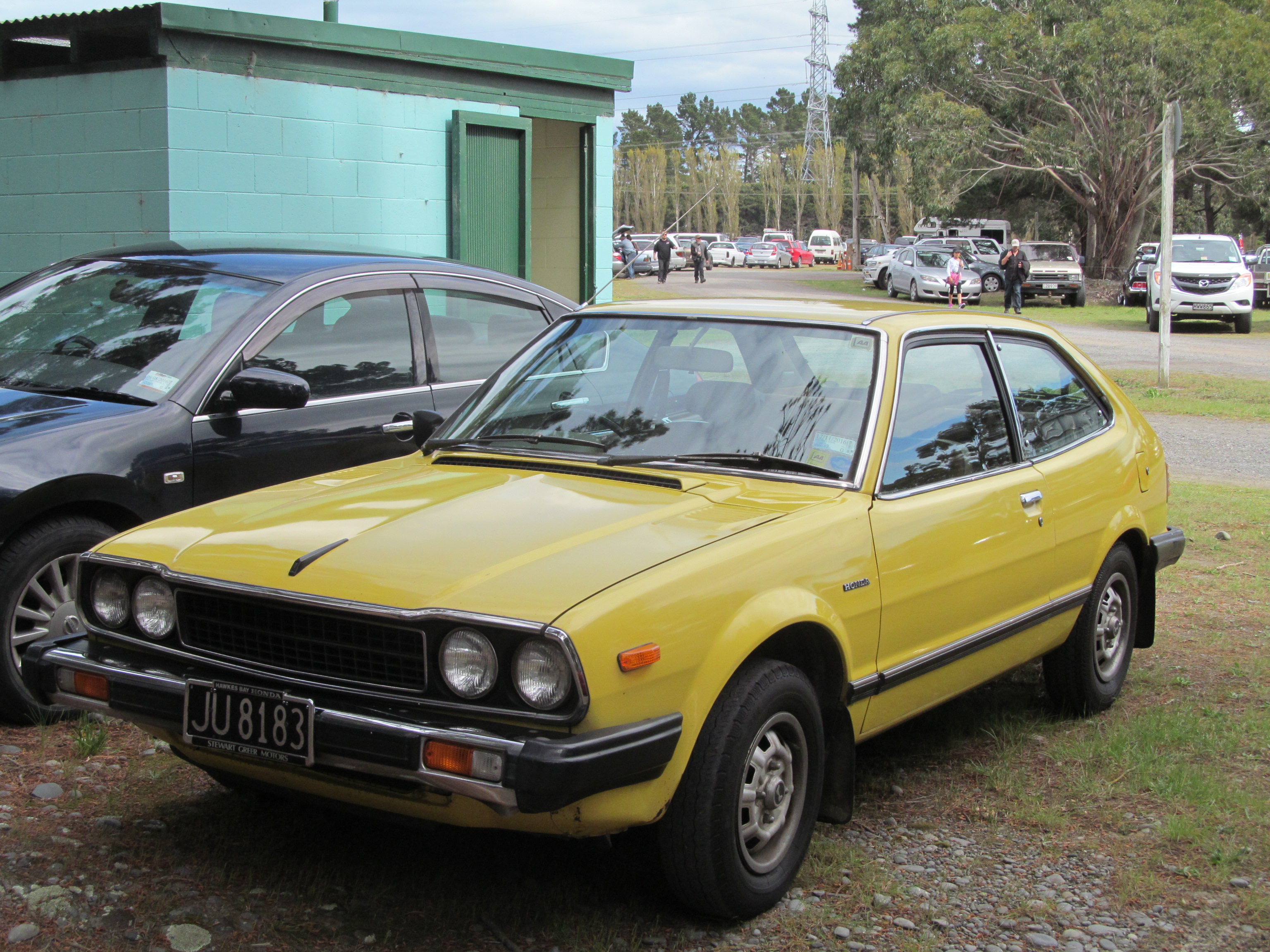
The Honda Accord is a regular family car that’s meant for comfortable daily driving. In the story, it sometimes jerks and makes unusual sounds when starting or driving, which usually means something isn’t letting the engine run smoothly. The podcast is using that problem to talk about what might cause it.
Brake fluid is what helps your brake pedal actually squeeze the brakes. If the level gets low, it can mean there’s a leak, and the car may warn you with a brake light.
The brake light is a warning light that something may be wrong with the brakes. One common cause is low brake fluid, which can happen if there’s a leak.
The reservoir is the tank where brake fluid is stored. If the fluid level drops, the car can warn you, and it may mean there’s a leak somewhere in the brake system.
The master cylinder is the part that creates pressure in the brake fluid when you step on the brake pedal. That pressure is what helps your brakes actually slow the car down.
The power brake booster helps you brake with less pedal effort. If brake fluid leaks into that system, it can end up in the engine area and cause the car to run badly or even stall.
In some cars, engine vacuum can pull substances into the intake. If brake fluid gets into that airflow, it can interfere with combustion and make the engine stumble or stall.
Term
door locks
They mean the system that locks and unlocks the car doors. The issue is that once the doors are locked from the outside, the inside controls don’t let you unlock them.
Octane is a number that tells you how resistant the gasoline is to “knocking” in the engine. If the manual says 91 octane or better, using lower-octane fuel can cause rough running or knocking.
“Premium gas” usually means a higher-octane fuel than regular. Some cars are designed to use it, and the engine may run better or avoid knocking when you do.
Gasoline detergents are additives that help prevent gunk from building up inside the engine. They’re part of why some fuels are marketed as “cleaner,” even if the octane rating isn’t the main point.
“Pinging” is a rattly knocking sound from the engine. It happens when the fuel burns at the wrong time, especially when you use fuel with too low an octane rating for that engine.
Pre-ignition means the fuel starts burning too early. When that happens during hard acceleration, the engine can knock and make loud, bad-sounding noises.
Compression ratio is how “squeezed” the air-fuel mixture is inside the engine. Higher compression can make the engine more likely to knock unless you use the right fuel octane.
Fuel injection is how the car delivers gas to the engine using controlled injectors. The idea mentioned here is that early fuel-injected systems relied on fuel additives to help keep the injectors clean.
Octane is a number that tells you how resistant the gasoline is to “knocking” inside the engine. If your engine is designed for a certain octane, using the wrong one can cause problems over time.
If you use gas with too low an octane for your engine, it can “knock” and run less smoothly. Repeated knocking can stress the engine and cause long-term problems.
Disc brakes are the common braking system where pads squeeze a metal disc to slow the car down. After you install new, thicker pads, the brake parts have to be set so everything fits correctly.
Inside the brake caliper, pistons move to squeeze the brake pads against the rotor. When you put in new pads, the pistons usually need to be pushed back so the pads can sit in the right position.
Brake pads are the replaceable parts that actually rub against the brake disc to slow the car down. If they’re installed incorrectly, the brakes may not feel right right away.
LIVE
This is our glass. On This American Life, one that we like is a good mystery.
Sometimes about really big things, but most times, the little mysteries are the best.
Our lost and found is currently filled with pants. I don't know, I've never seen this happen.
Wait, is this true?
This is true.
Mysteries of every size, each week, This American Life, wherever you get your podcasts.
Hello and welcome to Car Talk from National Public Radio with us, Click and Clack the Tappet Brothers.
And we're broadcasting this week from the soon-to-be-dismantled 2-0s-in-0-0 campaign headquarters here at Car Talk Plaza.
Well, I mean, we've held out as long as we could.
We even sent former Car Talk Plaza conciliatory Vinnie Gumbatz, our elder statesman,
down to Florida to represent us and plead our case in the courts. We did that.
Well, but it looks now that even when the disputed votes accounted, we still won't have more than two votes.
And those two were accidental, it turns out. They were apparently West Palm Beach residents trying to vote for Pat Ball.
So for the good of the country and in the interest of healing, we are officially conceding the race.
In fact, we tried to call both the guys who finished ahead of us and offer our congratulations,
but unfortunately they were both told calls and neither of those cheapskates would accept the charges. Can you believe that?
Anyway, we want to thank all the people who worked so tirelessly for our campaign, stuffing envelopes, stuffing ballot boxes,
hiding ballot boxes, bribing officials and predetaching all those chads.
We really do appreciate all of the effort that went into getting us our two votes.
And we want our supporters to know that you have not seen the last Click and Clack presidential campaign.
In fact, we have already begun work on our 2002 presidential campaign.
2002 is a midterm election.
Exactly. There's going to be so much less competition at the presidential level.
In the meantime, if you want to call us about the Electoral College, the future of our democracy, the two-party system, or better yet,
if you have a question about your car, then give us a call at 888-CAR-TALK that's 888-2278-255. Hello, you're on Car Talk.
Hey, how are you doing?
Great. Great. Who's this?
This is Robert Evans, calling from Philadelphia.
Hi, Robert.
Philly.
What's up?
I got a 93 Jeep Grand Cherokee. It's got 126,000 miles on it, and it has this constant tapping.
If I'm sitting idle for any time, not even for any time, if I'm idling at all, no music on, I can hear it.
That's the problem.
No music, man.
No, I have music. I just sometimes turn it down so I can see if it's still doing it.
That's the problem. Don't turn it down.
And how did you describe it? Ticking?
Yeah.
Tick-tick-tick-tick-tick-tick-tick.
Yeah, maybe not quite that fast, but it does.
Not at idle.
Not at idle. It's tick-tick-tick-tick-tick-tick-tick-tick.
No, it's more consistent, but about that speed.
Oh, so it is consistent.
Yeah.
And if you rev it up a little bit, does it go tick-tick-tick-tick-tick a little faster?
By then, the rev of the engine is loud enough that I can't hear it.
Right. It drowns it out.
Right, but yeah, it still does it.
Do you have the six-cylinder engine?
Yes, straight six.
Yeah.
Four liter.
Yeah, that's what it is.
Yeah, do you think so?
It's the four liter engine.
Yeah.
This engine that's in this thing has been around in one form or another.
1965.
Since 1965.
Yeah, I've heard that.
I've heard that.
Yeah, the basic engine.
And back then, they had trouble with the same engine.
And they keep saying, should we fix it?
No.
They did fix it.
I remember at one point, and I don't remember how long ago, but they did come out with a
new set of rockers and push rods and the whole bit.
And on many of these engines, we even changed the hydraulic lifters to solve this very problem.
Oh, wow.
And it may be that that's what you need, but you could also have low oil pressure.
I check the oil pretty regularly.
Yeah, but see, you might, you could have enough oil, but not enough oil pressure.
Oh, right.
You need to have the pressure tested.
How many miles on the vehicle?
126,000.
Yeah, it's possible at what that many miles that you could have low oil pressure.
So even though there's five quarts of oil in it, it doesn't mean that it's getting pushed
to the places it has to get pushed to.
Well, you may know, you maybe don't know, but I own a 1987 Dodge Dakota pickup truck,
which I bought was the first new vehicle I ever bought in my life.
It was quite a thrill.
And after I had the thing a few months, I noticed that when I started it up in the morning,
or sometimes even when the thing was warmed up, I would get the same kind of tick that you had,
that you have.
Tick, tick, tick, tick.
You're nervous, tick.
You're nervous, tick.
And so of course, being an owner of a new car and entitled to the privileges and rights
that accompany that, I go right back to the dealership and I tell them what's going on
and in no uncertain terms, you know, insist that they fix it.
Well, of course, they didn't fix it.
And here it is, the year 2000, 13 years later, and the thing is still ticking.
It's still ticking.
There was a TV ad, wasn't it?
Yeah, exactly.
John Cameron Swayze.
And it's still ticking and it hasn't altered its performance or anything.
And whatever is causing the ticking, which we know, it didn't break in all this time.
I mean, if you don't have low oil pressure, you could certainly go ahead and invest in
a set of lifters and push rods and all that and probably get the noise to go away.
But I don't think I'd do anything.
Okay.
Assuming the oil pressure's okay.
Well, you have to do one thing.
Don't turn the radio down.
Right.
You had the radio at the right level so that you don't hear it and this is a clear case
of what you don't know probably ain't going to hurt you.
Okay.
See you, Robert.
All right, thanks a lot.
Thanks for calling, Robert.
Bye.
Ignoring certain sounds is good.
Noises especially.
Is that why you never listen to me when I talk to you?
What?
1-888-CAR-TALK or 1-888-227-8255.
Hello, you're on CAR-TALK.
Hi, this is Marianne from Charlottesville.
Oh, now how would you spell that?
Just the way it seems?
The French way, M-A-R-I-A-N-N-A.
All the French way.
From where?
Charlottesville, Virginia.
Charlottesville, sure.
So what's going on?
Well, I have a 91 Dodge Caravan that my adorable five-year-old twins left the button on for
leave the lights on all night the other day.
Yeah.
So I came out in the morning and of course the battery was dead.
Sure.
So I walked over to my neighbor who was outside fixing his car and asked him if he could help
me and I tell you a little bit of a story here before I get to my question.
My neighbor is from Kosovo and does not speak English very well and he didn't really seem
to understand what my problem was because when I told him that my car was dead, he kind
of leaped up, opened up his car, took out the battery, goes over to my car, pops the hood,
takes his battery, turns it upside down, puts the terminals on the terminals and my car
started as if it weren't even being jumped.
I love it.
It started even better than with jumper cable.
Sure.
Well, of course.
So my question becomes, why do we need jumper cables?
Are they just a marketing ploy invented by people to prevent you from doing this the
much easier way?
Or is this really hideously dangerous?
Maybe he just went through a war and doesn't mind if his hands are blown off in his neighbor's
driveway.
Well, he didn't mind.
Yeah, I mean he comes from a part of the world where you can't depend on frivolous things
like jumper cables.
Yeah, I mean, come on.
All the jumper cables are doing is exactly what he did.
The jumper cables are jumping from one terminal to the other.
Right.
And if the, let's take the analogy of you take jumper cables and you hook them up and
then you just, a Goduncan experiment, you keep shortening jumper cables.
You put on a shorter and set of jumper cables.
You have what he did.
Right.
But was it dangerous?
Well, it's dangerous.
It could have been dangerous.
In that the battery could slip out of your hands.
Number one, you could spill battery acid all over the place.
Number two, because when you tip a battery and plus if you, and the batteries that are
sealed can also have the fluid slosh from one cell to the other.
So it's not the best thing to do.
Well, that wouldn't be so terrible if it's sloshed from one cell to the other.
But if in fact, and even though the batteries are sealed, some of them are not 100% sealed
and they could leak.
And if that happened, that would have been real bad.
The most dangerous part of it is that when you, when you do it that way, you don't get
the opportunity to make the last connection away from the battery like you do when you
use jumper cables.
And that's what's most dangerous about it.
When you make that last connection, there's always a danger that you're going to get a
spark.
But because he flipped his battery over and touched his terminals to yours, he did get
a spark and all likelihood and had there been enough hydrogen gas from one of the batteries
present, it could have blown the battery up in his face.
Well, we know there was no hydrogen gas from his battery because he just carried it from
his driveway.
And there was probably no hydrogen gas at your battery because the battery was dead
all night.
And so, although theoretically there was some danger to all of this, he probably has done
it so many times that he knew that it was going to work.
Well, he's one of the survivors.
The other guys that used to do it, they're all gone.
They're all gone, right?
Yeah.
They're all cold lefty.
They got one, they got one hand left.
So, do I need to buy jumper cables for my new car or should I just, next time this happen,
yank the battery out of the neighbors?
It's not easy to get the battery out of most cars.
How his battery came out so easily, I don't know, except that he probably has it tied
up with a rope because he's one of those, he's a cowboy.
By the way, better than jumper cables are these battery things that they sell.
Now, these booster things, which are basically batteries in a little plastic container with
little short little jumper cables, jumper cables hanging off of them, Preston makes them and
there are probably a hundred different companies that make them now.
And you charge this thing up with 110 volts in your house and you can carry this thing
around in your car so you can basically do the same thing he did, you know, if you need
to jump start somebody without actually taking the battery out of your car, you're going
to take it out of the back seat and hook the thing up and it's going to fire up the dead
car.
Right.
But his technique was born out of necessity.
This was a battlefield creation, so to speak.
We had a fellow who called us a few years ago that had a diesel that wouldn't start.
He had shipped the thing to Poland.
He was working for the government, I think.
And a couple of guys, it was a diesel truck.
Oh, the fire.
They get the thing started by taking off the air cleaner and lighting some papers on fire,
on fire, and telling him crank the engine over and they throw the burning papers into
the intake, into the throttle.
And the engine sucks these papers in that are burning and the thing starts right up.
We didn't try that.
Does it work?
It sure does.
Is it dangerous?
Sure is.
Do we recommend it?
We don't.
Yeah.
But don't forget, that's because we're all a bunch of wusses and if we lived in a world
where dangerous things happened every day, we would never even think twice about it.
This would be low down on the ladder.
Way down on the ladder.
He was a nice guy, good for him for helping you.
And if he helps you again, run in the house.
See you, Marianne.
All right.
Good question, Marianne.
There are certain people who, when they offer you help.
Yeah.
It's good that they're going to do it, but you don't want to be around.
You keep your distance.
My neighbor.
You yell out the window.
Thanks a lot.
My neighbor, Frank, was like that.
I'm going to go, Frank.
I hear my wife calling.
I remember we were setting stuff on fire with Frank one day.
Remember that?
We were paving the street.
We had holes in our streets and Frank insisted that we had to light the pavement on fire.
Boy, he was a nut, wasn't he?
Certainly was, but a lot of fun.
Now, look, I know you don't remember last month's puzzler, but I'm going to give you
one hint and I know you're going to get it.
OK, go for it.
Give me the hint.
It's the type of puzzler that I haven't done in a very long time.
Oh, I got it.
It was a good puzzler.
I knew you were going to say that.
No, it was automotive.
Every episode of It's Been a Minute, NPR's What's Happening in Culture podcast starts
by asking three questions.
Who? How?
Why now?
If the culture is asking it, we're talking about it.
At NPR, we stand for your right to be curious and indulge your cultural curiosity.
Follow It's Been a Minute wherever you get your podcasts.
And we'll break down the zeitgeisty topics that are filling your feed.
Hi, we're back.
You're listening to Car Talk with us.
Click and Clack the Tapper Brothers, and we're here to talk about cars, car repair
and the answer to last week's puzzler.
Is this the one about the guy on the bicycle and Sherlock Holmes?
That was great, wasn't it?
Phew, man.
No, this is this is an automotive puzzler.
It was the return of an endangered species, I think.
I don't remember.
Anyway, it was submitted by Jeff Matthews, who's in the army somewhere.
I don't know where he is.
And to probably cast an absentee ballot.
Yeah, yeah.
He might have been from Florida.
Maybe he may have cast the deciding vote.
He may have whoopee.
Anyway, he wrote some years ago, my wife complained that her Honda Accord would
occasionally start bucking, snorting and choking when she came to a stop.
It would keep that up for a couple of minutes.
Then the problem would go away, sometimes not return for weeks.
I looked at the usual things, but since I was never there when it happened
and it wasn't my car anyway, I didn't really care.
Oh, did he say that?
I wouldn't quote him directly if he did.
No, all you can do is get a guy into trouble with his wife.
I've taken some license here, Jeff.
So, I mean, we're in enough trouble with our wives as it is, including Jeff.
Then one fall, he says, I was getting the car ready for the state safety inspection.
So I jacked it up, jiggled the wheels and did all the things you usually do.
And when I let it down off the jack stands, a nearly empty can of brake fluid
rolled out from under the front seat.
I said, hmm, hmm, that's interesting.
I went into the house and asked my wife one question.
Yeah, it was not.
What's the neighbor's brake fluid doing in your car?
I asked her one question and when she gave me the answer, I knew what was wrong
with her car. Yeah, what was the question?
And the question was, how often do you replace brake fluid?
Yeah. And the reason he asked that question was this.
Somewhere along the line, he surmises.
She went to the gas station and her brake light was on because the fluid level was down.
She buys a can of fluid from the attendant and watches him fill up the reservoir.
Thinking this is part of the regular maintenance of the car.
Whenever the light goes on, she tops it up, never bothering to ask,
where's the brake fluid going?
It's like, well, you add oil from time to time.
Sure. It's not unusual to add brake fluid from time to time.
And as such, she had this can under the seat.
It may have been one of many cans that she used.
And she was constantly adding brake fluid to a leaking master cylinder.
And the master cylinder was leaking into the boost, the power brake booster.
And every once in a while, when she came to a stop, especially in a abrupt one,
or if the level of fluid in there where there's not supposed to be any was high enough,
that fluid would get sucked into the engine
and make the thing try to combust the brake fluid,
which would cause it to stumble and choke and maybe even stall.
And then once it worked its way through, accompanied by this belch of smoke out the tailpipe.
Very like a dream.
Everything would be right.
And the subsequent stops wouldn't be a problem
because she'd have to wait until enough fluid accumulated in the booster
to cause the problem again.
Oh, man.
So the question was, how often do you add brake fluid to the car?
Yeah.
So who's our winner?
Nathaniel Myers from Berkeley, California, probably some aging hippie
sitting there on the streets of Berkeley selling beads.
And now.
Yeah, don't you wish that were you?
You're just telling I don't.
And now he's going to win a $25 gift certificate
for the store at the cartalksectionofcars.com.
And with that $25 gift certificate, he can get a limited edition
two zeros and 00 campaign t-shirt with the slogan,
don't blame me.
I voted for click and clack.
That's a great t-shirt, isn't it?
Notice how we had these ready the morning after the election,
even though we didn't know who won yet.
Well, we knew that we were going to win.
We suspected we weren't going to.
Hey, by the way, if you're thinking, why does Nathaniel get one of those?
And not me.
You can always visit the store at the cartalksectionofcars.com.
And use your own $25 gift certificate.
Exactly.
It's known as a $25 bill.
Anyway, we'll have a new puzzler coming up in the third half of today's show.
So stick around.
Hey, do you know what time it is?
Time to move those campaign matching funds to our bank account in Aruba.
No, it's time to blaze the jumps.
This is the part of the show where we check in on a previous call
to see if the advice we gave was full of certitude, rectitude,
or just plain attitude.
And so who's our lucky contestant this week?
Funny you should ask, because our lucky contestant is you.
Now, a couple of weeks ago, you made a very bold claim.
Let's let's see if we can bring up the cut.
55 lawyer on car talk.
Hi, this is Kathy from Ann Arbor, Michigan.
Ann Arbor, Michigan.
So it must be Kathy with a K.
Hey, you are a one smart guy.
Well, you notice I've never been wrong on the Kathy thing.
Oh, come on.
I have never been wrong on the Kathy thing, because I know the rule.
Oh, rule this.
You made up the rule.
Someone has to make up the rules.
Anyway, we went back into the archive and we didn't have to go that far back.
Just to see how perfect your record was.
I'm not going to like this.
And we're going to give you three chances.
Kathy, number one, will you enter and sign in, please?
Hi, guys, this is Kathy from Washington Crossing, Pennsylvania.
Pennsylvania, so it's Kathy with a K.
No. Oh, darn.
Well, that that wasn't all that impressive, was it?
Well, let's go to Bachelorette number two, shall we?
She might have moved.
All right, Bachelorette number two.
Hi, I'm Kathy calling from Connecticut.
Hi, Kathy with a K.
Kathy with a C.
OK, one more and you've got tres huevos here.
So here she is, Kathy number three, your last and final Kathy.
Hello, this is Kathy from Old Lime, Connecticut.
Hi, Kathy from Old Lime.
Kathy with a C.
With a what?
C. No.
Old Lime.
Lime with a K.
With a Y.
Yes, Lime with a Y, Kathy with a K.
I swear, all those people had to have moved from somewhere to where they finally ended up.
Well, in all fairness, we had to go back five years to find all those wrong answers.
You were right most of the time.
Five years?
Oh, I didn't learn the rule until four and a half years ago.
But we thought it'd be fun to embarrass you anyway.
Anyway, if you hear someone, you'd like us to bring back the stump, the chumps
like a caller, you know, someone who actually called into the show.
Yeah, exactly.
Then email us your suggestion from the car talk section of cars dot com.
Or call and stump us right now.
The number is 888 car talk.
That's 888278255.
Hello, you're on car talk.
Hi, this is Bob in Jacksonville, Florida.
Bob Jacksonville.
How you doing?
Good, good.
I have a 1995 BMW station wagon.
Did you vote?
Ah, yes, I did.
Why?
Who to vote for?
I'm sorry.
Go ahead.
You have a Volkswagen.
No, it's a 1995 BMW station wagon.
All BMW.
Yep.
And I have a problem with the door locks.
If you lock the doors from the outside with the key and there's anybody inside the
car, they're locked inside the car and they can't get out of the car by
unlocking the doors.
There's no way to unlock the doors from the inside once you've locked them.
Why can't they open the handle?
It doesn't work.
Everything is shut off.
So the horn doesn't honk, the lights don't turn on, you can't open with a
handle, it doesn't pop it up.
You can't get out of it.
And unfortunately, my father-in-law found that out the hard way.
How many days was he in there?
It was only about a half an hour.
He started kicking out the windows.
Well, if you were in the car sitting in the driver's seat, there is no switch on
the dashboard or on the door that will unlock the doors.
There is no way to unlock the car from the inside.
So this is not something that's broken.
It's something that's missing.
It's really, it's a design defect.
I mean, most cars, I don't remember the 95 BMW, but most all cars have a way to
unlock the doors from inside and not necessarily by pulling up on the little
doohickey.
There's a switch.
The little stem.
What happens in this car is the stem goes down so far into the door.
That you can't reach it.
Well, I have a ready solution.
What's that?
A brick.
No, well, that I have two solutions that you add an extender piece to that little
stem.
Well, actually on this car, you can reach it and pull on it, but it doesn't do
anything to the mechanism.
You pull on it and it won't, it won't unlock the mechanism.
Also, that's just a vestigial little thing there.
Right.
Boy, if that's true, that's extraordinarily stupid.
Yeah, well, I agree.
Actually, I actually bought a new BMW recently and in the owner's manual, it
tells you don't lock the car from the outside with someone inside of it.
Cause they're locked in.
It did.
They didn't change the design.
They just put on the owner's manual.
Don't do this.
Really?
I know why they did it.
It's an anti-theft device.
Someone's in your car trying to steal it.
Someone's in your car trying to steal the car.
You jump out, you lock them in and you run away.
And you go for the police.
The police come and there he is waiting for you.
Already incarcerated.
Oh, there's the car with a broken window and the brick.
Cause he did this before.
By the way, why did you lock your father-in-law in the car in the first place?
Well, we just sort of forgot about him.
So you all get out of the car.
You said, let's go have an ice cream and you lock the car and the guy is sitting
in a half hour later, somebody says, where's Fred?
Where's Fred?
Exactly.
I mean, it's not as though it's such a big car that he was like down in the
basement to something.
Yeah, Bob, about half an hour later, we thought about him and went down to check
on him and about that point, he was coming up the stairs in, in a panic and
had first he tried to kick out the windshield.
He broke it, but couldn't get out because of the plastic parts in the
windshield that hold it together.
He just cracked it.
And he ended up breaking out of the driver's side window and crawled out.
So you, you didn't lock him in there purposely or you did?
I don't think Bob's at liberty to tell, really.
I deny all knowledge.
Deny all knowledge.
Were you having a senior moment?
No, no.
So he's the life of the party, I guess.
Well, you know, I mean, I don't know if there's any ready fix for this, but I do
know and I've seen some, some catalogs where they sell a hammer designed
exactly for smashing this problem.
Yeah, it does seem like a rather extreme remedy.
No, I mean, there are many people who think that this hammer thing is a,
is a really necessary safety device because of all the electric stuff that's
going on, you'd be, you'd be amazed how hard it is to break a window, as I'm
sure your father-in-law can attest.
We actually bought him one and gave it to him for Christmas.
Oh, a little late, huh?
Of course.
I mean, what are the chances that this is going to happen again?
Well, I hope BMW re-thinks this whole thing because I really can't think of the
advantage of this.
We're going to ask them, and we're going to find out if we find anything
interesting, we'll report on our future show on their reason for having such an
insane little feature.
That's great.
I'd love to hear that.
Thanks for your call.
If possible, we'll get you the money for that broken window.
Okay, great.
See ya, Bob.
Thanks for calling.
Bye.
Okay, Tommy, do you think we should take another call or take a break?
I always vote for the break.
That's funny.
So do I, listeners.
When we come back, are you going to have a great new puzzler?
How about just a new puzzler?
So we'll be back in a minute.
This week on Up First from NPR News, President Trump is at the G7 in France
and is supposed to sign a peace deal with Iran.
That deal, if it happens as planned, will have big effects on the global
economy and more, and we will track the changes as they unfold.
On a week of major geopolitical news, listen to Up First every morning on the
NPR app or wherever you get your podcasts.
We're back.
You're listening to Car Talk with us, Click and Clack the Tappet Brothers, and
we're here to discuss cars, car repair, and the new non-automotive puzzler.
I can't hardly wait.
I didn't have a better descriptor than that.
That's good enough.
Here it is.
Yeah.
I'll try to make it brief.
You notice the puzzles of late have been rather lengthy?
Yeah.
I'll try to make this one short.
Well, the more lengthy, the more opportunity for obfuscation.
See, that's the thing.
Of course.
If you give a one sentence puzzler, you're hard pressed to work in bicycles
in the north of England and all.
You're hard pressed to do that.
You would think so.
In one sentence.
Unless you have a sentence like, I was reading the first 20 chapters of
the Odyssey the other day and somewhere in there.
Well, here it is.
A woman and her husband frequently go walking together.
On this day, they walked side by side, one never getting ahead of the other.
You know, as they kept abreast of one another.
And as a matter of fact, they could have held hands the whole time.
Okay.
And they walked for an hour.
At the end of the hour, the woman says, boy, that felt good.
I think I walked four miles.
And the husband says, oh, I walked much farther than that.
I'm sure I walked five or six.
How could that be?
So she walked four miles and was pretty certain of that.
Yeah.
And he was pretty certain when he said, oh, no, I walked much more than that.
I'm pretty sure I walked five or six.
And of course they're both right.
I guess that's for puzzler, right?
My question was, how could this be?
Now, if you think you know the answer, write it on a postcard or on the back
of a thousand watt per channel Yamaha surround sound system with Dolby B.
And especially on the back, we don't want you to, you know, scratch up the front and send it
to Puzzler Tower, Car Talk Plaza.
If you've been to Berman's house lately, he's got all this stuff.
Or you can email your answer from the Car Talk section of cars.com.
If you'd like to call us, the number is 1-888-CAR-TALK.
That's 8882278255.
Hello, you're on Car Talk.
Hi, this is Tom from Amherst.
Hi, Tom from Amherst.
Yes, with a T.
With a T. Do you spell it the way I do?
T-A-U-G-H-M?
No, T-O-M, although I was getting junk mail from people that spelled it T-H-O-S.
Oh, yeah.
Well, that's an abbreviation.
That's what you see in the phone book.
But Thomas Shorter.
Thomas Shorter than the abbreviation.
Well, it's like, it's like W-W-W.
Yeah.
Isn't World Wide Web shorter than saying W-W-W?
Certainly is.
Anyway, that's nine syllables as opposed to three.
It's three times as long.
It's a craziness.
Waste of energy.
Anyway, Tom, what's going on?
I have a new 1997, a new 1997 Nyssa Maxima SE, which I just got last week.
And I was reading the manual and it recommends that I have a premium gas of
91 octane or better.
I said, aha, because I remember listening to Car Talk and you guys saying
vehemently that the only reason to get premium gas is for the detergents,
which is now in every grade.
No, no, no, we never, never said that.
You never said that.
Yeah, we did.
We did say that, but it was many years ago and we can't be held responsible for
anything we said more than six weeks ago in our contract.
Well, because it may have been true many years ago, but it isn't true now.
That's not the reason for using the higher octane.
Well, actually, the original reason for using higher octane way back was to
keep the car from pinging.
In other words, when you accelerate the car, if you have the wrong octane
gasoline in the tank, the car will make a horrendous noise, which is caused by
pre-ignition of the fuel under hard accelerations.
So you get this noise that sounds like bolts, nuts and bolts rattling around
inside the engine or in some cases, a knocking sound.
And that was prevalent for years and up until the seventies.
And then came along the, the, the EPA and whatever, and all the gasoline's
were changed to unleaded and all the, all the compression ratios were dropped
down so that it hardly made a difference.
Then when fuel injected cars started to come out in the eighties, it was
recommended that those cars use high octane because those were the only fuels
that had the additives to keep the injectors clean.
So this is kind of a brief history of, of high octane fuel.
But now that all cars are fuel injected, all the gasoline's have the additives
in, whether they're premium or all regular to keep your injectors clean.
So now we go back to the 1960s reason for using high octane, which is pinging,
which is pinging again.
And your car has a high compression engine, at least higher than most of the
other cars out there.
And as such requires a higher octane fuel.
And you should buy 91 octane.
Okay.
Well, here's my question.
Yeah.
In my area, we have 89 octane, which is plus and 93 93.
And I was wondering, is the formula linear?
Yes.
It's totally linear.
Yeah.
It makes 50% 89, 50% 93.
And you got 91 and a half.
Exactly.
Yeah, you're good.
That's pretty good.
You can mix them and you will get, you will get 91 octane.
Pretty good, huh?
Excellent.
But if the car calls for it, you should use it because you will, you could do
damage to the engine in the long run.
Okay.
That's it.
Well, great.
Hey, but thanks for remembering what we once said.
I because someone has to remember what you guys said.
We know.
Keep us honest.
See you, Tom.
Thanks a lot.
Bye bye.
1888 car talk.
That's 8882278255
Hello, you're on car talk.
Hi, I'm Jill from Buffalo.
Jill?
Jill.
Oh, I thought you said chill.
You're going to be chilled pretty soon.
No, Jack and, like Jack and Jill, we got it.
How are you, Jill?
I'm fine.
How are you?
Not too bad.
Um, my story begins when, um, I was driving to the hospital to pick up my husband.
He had broken his arm in this big basketball tournament we have here.
He was there all of 10 minutes and he was sprawled out with a broken arm.
And I got a ticket for, um, an overdue inspection sticker.
And while you were, while you were making this mercy trip, that's right.
So then we took the car to be inspected and they said we needed break.
So we had them fix the break and, um, we picked up the car and due to his broken
arm, they asked me to back the car out of the service bay, which I did.
And when I went to step on the break, there was none and my foot went all the way
to the floor and I smashed into a car in the parking lot and, um,
at that moment, at that particular moment, was your thought, oh my God, what
have I done?
Or was your thought, oh my God, what did these morons do?
That the second, the second, so you didn't have an attack of female guilt syndrome.
No, I was, uh, it was like, I was awful.
And, um, everyone came running.
Apparently someone forgot to do something.
Yeah.
Um, put the brakes in me.
They were very sorry.
And they told me to drive it and he like punched the brakes or something with
his foot and he showed me that the car did in fact stop, which it did.
But I'll tell you, I don't trust it right now.
What they, what they forgot to do, Joe, was they forgot to test drive it.
When you put new brakes on a, a modern car, a car that has disc brakes, you
must push the caliper pistons all the way in to accommodate the new pads, which
are thicker than the old ones.
At least you'll hope they're thicker because that's why you would replace
the pads, they were all worn out.
So you're replacing the thin worn out pads with nice, thick new ones.
But when you do that, you more often than not push the piston in much farther
than you need to.
So there's a big space between the piston, which pushes on the brake pads and the
brake pad.
So when you get into the car, after the new brakes have been installed, the
first time or two that you step on the brake pedal, it will sink to the floor
because it's making up that space.
And every application of the brake pedal is bringing that piston closer and
closer to the brake pad until finally it makes contact and the car will stop.
But until that point, the pedal can travel all the way to the floor and each
application of the brake pedal brings the piston closer and the piston stays in
that position.
You pump the pedal again, it goes closer still.
So each time it's making a step and doesn't retreat when you take your foot
off the pedal.
So you can trust it now because that's not something that they did that's
going to cause the brakes to not work.
See, my husband told me that, but I didn't believe you didn't.
Well, how can you believe anybody would have broken out?
That's right.
And I thought, well, and I know he broke, he broke his arm.
I can, I can see it now.
He was reaching into his thing of popcorn and a player on the court fell on
top of him.
And that's how he broke his arm.
Isn't that it?
That's right.
And it was like, and I told just the whole factor, you know what I mean?
You know, he's right.
And they're right.
I mean, they, they, first of all, they did two things wrong.
I mean, they, they, they didn't pump the pedal and they also didn't test drive
it because whenever you do a brake job on a car, before you let the customer
take it, you have to test drive it.
Yeah.
I mean, the brakes, why didn't they back it out of the service bay?
Why would they initially try to blame you?
No, they knew, no, they knew, right?
They did say, she just reported that they said, oh, he forgot to.
And she said something about, do something, something.
Punch the brakes.
Yeah.
Well, the brakes are okay.
And these guys are okay.
The fact that they didn't try to pin this on you is admirable.
Okay.
Most shops would have found an opportunity to blame the customer.
Oh, no, they, they didn't blame me at all.
Great.
I think you're all right.
Just drive it.
Thank you.
See you, Jill.
Thanks for calling Jill.
You're welcome.
Next time, make them back the thing out.
Absolutely.
Bye bye.
Bye bye.
Well, it's happened again.
You've wasted another perfectly good hour listening to car talk.
Our esteemed producer is Doug, the subway fugitive, not a slave to fashion.
We can drop those other ones slave to fashion.
Just go right to bongo boy.
I think so.
Doug bongo boy, Berman, our associate producers are Louie, Cronin, the
barbarian and David, they better be gentle giants green.
Our engineer is Tad Massamon Curry, our senior web black.
He is Doug, the old gray mayor, AKA sheep boy.
And our technical spiritual and menu advisor just back from a free range
turkey tasting on the coast is John Bugsy Lawler.
Our public opinion pollster is Paul murky of murky research assisted by
statistician margin of error.
Our customer care representative is Heywood Jabuzoff, our director of new
product repair is warranty.
My foot, our shop foreman is look busy.
Our new truck reviewer is a big new rig and our overseer of Florida voting
practices is Emmanuel Recount.
Our fourth attorney is Carmine Not yours.
Our bail bond provider is free to go.
Our director of genealogical research as in Van Gogh, Gogh.
Yes.
Okay.
Yes.
Our director of genealogical research is Manny Cousins.
Our Russian chauffeur is pickoff and drop off.
The banker at Car Talk Plaza poker games is Nikolai Putin.
And our seat cushion tester is Mike Easter, our chief counsel from the
law firm of Dewey Cheetahman Howe.
Of course, as you Lewis Dewey, known to the overeducated Harry
Christmas and Harvard Square as Huey Louie Dewey.
Thanks so much for listening.
We're clicking clack the tapping brothers and remember, don't drive like my
brother, don't drive like my brother.
We'll be back next week.
Bye bye.
Car Talk is a production of Dewey Cheetahman Howe and WBUR in Boston.
And even though Robert Siegel begs for an indefinite tour of duty on the
International Space Station, whatever he is, let's say it.
This is NPR National Public Radio.
You know, every day on up first NPR's Golden Globe nominated morning news podcast,
we bring you three essential stories at the heart of each story are questions.
What really happened?
What really mattered?
What happens next?
At NPR, we stand for your right to be curious and to follow the facts.
Follow up first wherever you get your podcasts and start your day knowing what
matters and why.
About this episode
Listeners call in with a few different problems, starting with a persistent engine “tapping” that’s worst at idle and may point to low oil pressure even when the oil level looks fine. The hosts recommend pressure-testing and, if oil pressure checks out, considering valvetrain parts like lifters and push rods. Later, a jump-start story turns into a safety discussion about battery acid, sparks, and hydrogen gas. The segment also includes a “Where’s Fred?” door-lock escape tale and a brake-fluid leak mystery.
Bob’s extended family drove home from a recent outing, climbed out of their BMW and shuffled back into the house. A half hour later, someone finally noticed that grandpa was nowhere to be found. He was stuck inside the BMW, unable to get the locked doors to open. Handy feature or dangerous design flaw? We discuss on this episode of the Best of Car Talk.
See pcm.adswizz.com for information about our collection and use of personal data for sponsorship and to manage your podcast sponsorship preferences.