
About this episode
Listeners call in with a few different problems, starting with a persistent engine “tapping” that’s worst at idle and may point to low oil pressure even when the oil level looks fine. The hosts recommend pressure-testing and, if oil pressure checks out, considering valvetrain parts like lifters and push rods. Later, a jump-start story turns into a safety discussion about battery acid, sparks, and hydrogen gas. The segment also includes a “Where’s Fred?” door-lock escape tale and a brake-fluid leak mystery.
See pcm.adswizz.com for information about our collection and use of personal data for sponsorship and to manage your podcast sponsorship preferences.
NPR Privacy Policy

Daewoo Statesman
"...Talk Plaza conciliatory Vinnie Gumbatz, our elder statesman, down to Florida to represent us and plead our ca..."
The Daewoo Statesman is a type of car (a sedan) made by Daewoo. In the podcast, it’s mentioned as part of the story, not as a detailed explanation of how it drives. If you’re curious about it, you’d mainly be looking at it as a specific model name from Daewoo.
The Daewoo Statesman is a passenger car model from Daewoo, typically discussed as a less common alternative in the broader sedan market. In the podcast context, it appears as part of a character or story setup rather than a detailed technical review. That makes it a “named car” reference that helps set the scene.

Jeep Grand Cherokee
"I got a 93 Jeep Grand Cherokee. It's got 126,000 miles on it, and it has this constant tapping."
A Jeep Grand Cherokee is a popular SUV. Here, the important part is that the engine makes a steady ticking sound when the Jeep is idling, and that’s something you’d want to figure out because it can signal a mechanical issue.
The Jeep Grand Cherokee is a midsize SUV known for its mix of everyday usability and available off-road capability. In this call, the key detail is that the owner reports a constant ticking/tapping sound when the vehicle is idling, which points to a specific kind of engine noise to diagnose.
ticking
"And how did you describe it? Ticking? Yeah."
“Ticking” is a steady, repeated sound you can hear from the engine area. When it happens at idle, it can be a clue that something mechanical is making noise, and the pattern can help a mechanic figure out what system to check first.
In car diagnostics, “ticking” usually refers to a repetitive, high-frequency mechanical sound coming from the engine bay. Because it’s heard at idle and changes with engine speed (or gets masked when revved), it helps narrow down whether the noise is related to valvetrain components, exhaust leaks, or other rotating parts.
straight six
"[199.3s] Do you have the six-cylinder engine? [200.7s] Yes, straight six. [202.0s] Yeah. [202.4s] Four liter."
A “straight six” is an engine with six cylinders lined up in a row. Because of how the cylinders fire, it tends to run very smoothly.
“Straight six” means an inline-six engine layout, where all six cylinders are in a single row. It’s known for smoothness because the firing order is naturally balanced compared with many other layouts.
rockers and push rods
"[228.5s] I remember at one point, and I don't remember how long ago, but they did come out with a [231.9s] new set of rockers and push rods and the whole bit. [235.9s] And on many of these engines, we even changed the hydraulic lifters to solve this very problem."
These parts help open and close the engine’s valves. If they wear out or don’t move correctly, the engine can run poorly or make noise.
Rockers and push rods are part of a valvetrain that transfers motion from the camshaft to the engine’s valves. If they wear or are out of spec, you can get valve-train noise and poor valve timing, which can feel like an “engine problem” even when the bottom end is fine.
hydraulic lifters
"[235.9s] And on many of these engines, we even changed the hydraulic lifters to solve this very problem. [241.4s] Oh, wow. [242.2s] And it may be that that's what you need, but you could also have low oil pressure."
Hydraulic lifters are parts that use engine oil to keep the valve mechanism working with the right spacing. If they don’t get enough oil pressure (or they wear out), the engine can make loud ticking noises.
Hydraulic lifters are valve-train components that use oil pressure to automatically take up clearance between the camshaft and the rest of the valvetrain. If they fail or don’t get proper oil, you can get ticking/knocking noise and reduced valve control.
oil pressure
"[242.2s] And it may be that that's what you need, but you could also have low oil pressure. [246.6s] I check the oil pretty regularly. [248.4s] Yeah, but see, you might, you could have enough oil, but not enough oil pressure."
Oil pressure is how well the engine is pumping oil to the moving parts. You can have oil in the engine but still not enough pressure to properly lubricate everything.
Oil pressure is how strongly the engine’s oil pump pushes oil through the lubrication system. You can have enough oil volume in the crankcase but still have low oil pressure due to pump wear, clogged passages, or worn bearings—leading to poor lubrication and lifter/valvetrain issues.
pressure tested
"Oh, right. You need to have the pressure tested. How many miles on the vehicle?"
They’re talking about measuring oil pressure with a tool. The goal is to see if the engine is pumping oil the way it should.
“Pressure tested” here refers to checking oil pressure with a gauge to confirm whether the engine’s lubrication system is delivering the required pressure. If oil pressure is low, parts that rely on oil flow can wear faster or make abnormal noises.

1987 Dodge Dakota
"Well, you may know, you maybe don't know, but I own a 1987 Dodge Dakota pickup truck, which I bought was the first new vehicle I ever bought in my life."
This is a Dodge pickup truck from 1987. The caller is using it to describe an engine ticking noise that showed up after buying it and never really went away.
The Dodge Dakota is a mid-size pickup truck, and the 1987 model is from the late-1980s era of Chrysler’s truck lineup. In this segment, it’s used as an example of an engine “tick” that persisted for years, tying the story to oil pressure and lubrication concerns.

91 Dodge Caravan
"Well, I have a 91 Dodge Caravan that my adorable five-year-old twins left the button on for leave the lights on all night the other day."
This is a 1991 Dodge Caravan minivan. The host’s problem is that the battery died because the lights were left on, and they got it started by using a neighbor’s battery instead of traditional jump-starting.
A 1991 Dodge Caravan is a front-wheel-drive minivan that’s commonly used as a family vehicle. In this story, the key issue is that the battery went dead after the lights were left on, and the neighbor’s battery swap approach got it running again.
battery was dead
"So I came out in the morning and of course the battery was dead. Sure."
A “dead” battery means the car doesn’t have enough power stored to start. If you leave things like headlights on, they can drain the battery overnight.
When a car battery is “dead,” it means it no longer has enough stored electrical energy to crank the engine or power the car’s electronics. In this case, leaving the lights on overnight drained the battery.
jumper cables
"So my question becomes, why do we need jumper cables? Are they just a marketing ploy invented by people to prevent you from doing this the"
Jumper cables are the cables you use to start a car with a dead battery by connecting it to another car’s battery. The idea is to borrow power long enough to get the engine running.
Jumper cables are thick, insulated wires used to connect the dead battery of one car to a live battery in another vehicle. They allow current to flow so the dead car can start, usually without removing either battery.
batteries are sealed
"But if in fact, and even though the batteries are sealed, some of them are not 100% sealed [523.2s] and they could leak."
Some car batteries are made to be sealed so they don’t vent much gas. But the speaker is saying they might not be perfectly sealed, so gas could still escape. That matters because escaping battery gas can be dangerous if sparks happen.
Some batteries are described as sealed, meaning they’re designed to limit venting of internal gases. However, the transcript notes that not all are 100% sealed, so they could still leak gas under certain conditions, creating risk during jump-starting.
spark
"When you make that last connection, there's always a danger that you're going to get a spark. [544.7s] But because he flipped his battery over and touched his terminals to yours, he did get a spark"
In jump-starting, a spark can occur when metal terminals are connected or disconnected. Sparks are especially risky around lead-acid batteries because they may produce hydrogen gas, which is flammable.
hydrogen gas
"had there been enough hydrogen gas from one of the batteries present, it could have blown the battery up in his face."
Batteries can release a flammable gas called hydrogen. If that gas is present and you create a spark while connecting cables, it can ignite. That’s why safe starting steps are important.
Hydrogen gas can be released by lead-acid batteries, especially when they’re being charged or stressed. If enough hydrogen accumulates and a spark occurs during a connection, it can ignite and cause a dangerous battery explosion.
booster things
"By the way, better than jumper cables are these battery things that they sell. Now, these booster things, which are basically batteries in a little plastic container with [617.8s] little short little jumper cables, jumper cables hanging off of them, Preston makes them and"
They’re talking about a portable battery pack you keep in your car. When someone’s car battery is dead, you connect it and it gives the car enough power to start.
The host is describing a portable jump starter: a self-contained battery pack in a small plastic case. It’s used to provide starting power without needing another car’s battery or jumper cables.
jump start
"And you charge this thing up with 110 volts in your house and you can carry this thing [630.9s] around in your car so you can basically do the same thing he did, you know, if you need [635.7s] to jump start somebody without actually taking the battery out of your car, you're going [639.6s] to take it out of the back seat and hook the thing up and it's going to fire up the dead"
A jump start is when you use another power source to get a car to start. After it starts, the car’s charging system usually keeps it running and recharges the battery.
A jump start is starting a vehicle using external electrical power when the battery is too weak or dead. Once the engine runs, the alternator typically takes over and recharges the battery.
diesel
"We had a fellow who called us a few years ago that had a diesel that wouldn't start. [655.2s] He had shipped the thing to Poland. [657.0s] He was working for the government, I think. [660.1s] And a couple of guys, it was a diesel truck."
A diesel engine works differently from a gas engine. It uses compression to ignite the fuel, so starting problems and fixes can be different.
Diesel engines start and run differently than gasoline engines: they rely on compression to ignite fuel rather than spark plugs. That’s why starting aids and “hack” methods can behave differently on a diesel truck.
air cleaner
"And a couple of guys, it was a diesel truck. [661.9s] Oh, the fire. [663.9s] They get the thing started by taking off the air cleaner and lighting some papers on fire,"
The air cleaner is the part that filters the air coming into the engine. If you take it off, the engine can breathe in unfiltered material instead of normal clean air.
The air cleaner (air filter housing) is the intake component that filters incoming air before it reaches the engine. Removing it changes what the engine ingests, which is why the improvised method described can affect starting.
intake
"They get the thing started by taking off the air cleaner and lighting some papers on fire, [669.4s] on fire, and telling him crank the engine over and they throw the burning papers into [676.0s] the intake, into the throttle."
The intake is how air gets from the outside into the engine. In this story, they’re basically feeding burning material into that air path to help the engine start.
The intake is the path and system that delivers air (and, in some cases, fuel) to the engine cylinders. In the story, burning papers are thrown into the intake so the engine can catch and start.
throttle
"and telling him crank the engine over and they throw the burning papers into [676.0s] the intake, into the throttle. [678.6s] And the engine sucks these papers in that are burning and the thing starts right up."
The throttle is a valve that controls how much air can get into the engine. More or less airflow can change how easily the engine starts.
The throttle is the valve that controls how much air enters the engine. In many engines it’s electronically or mechanically actuated, and it strongly affects airflow during starting and running.
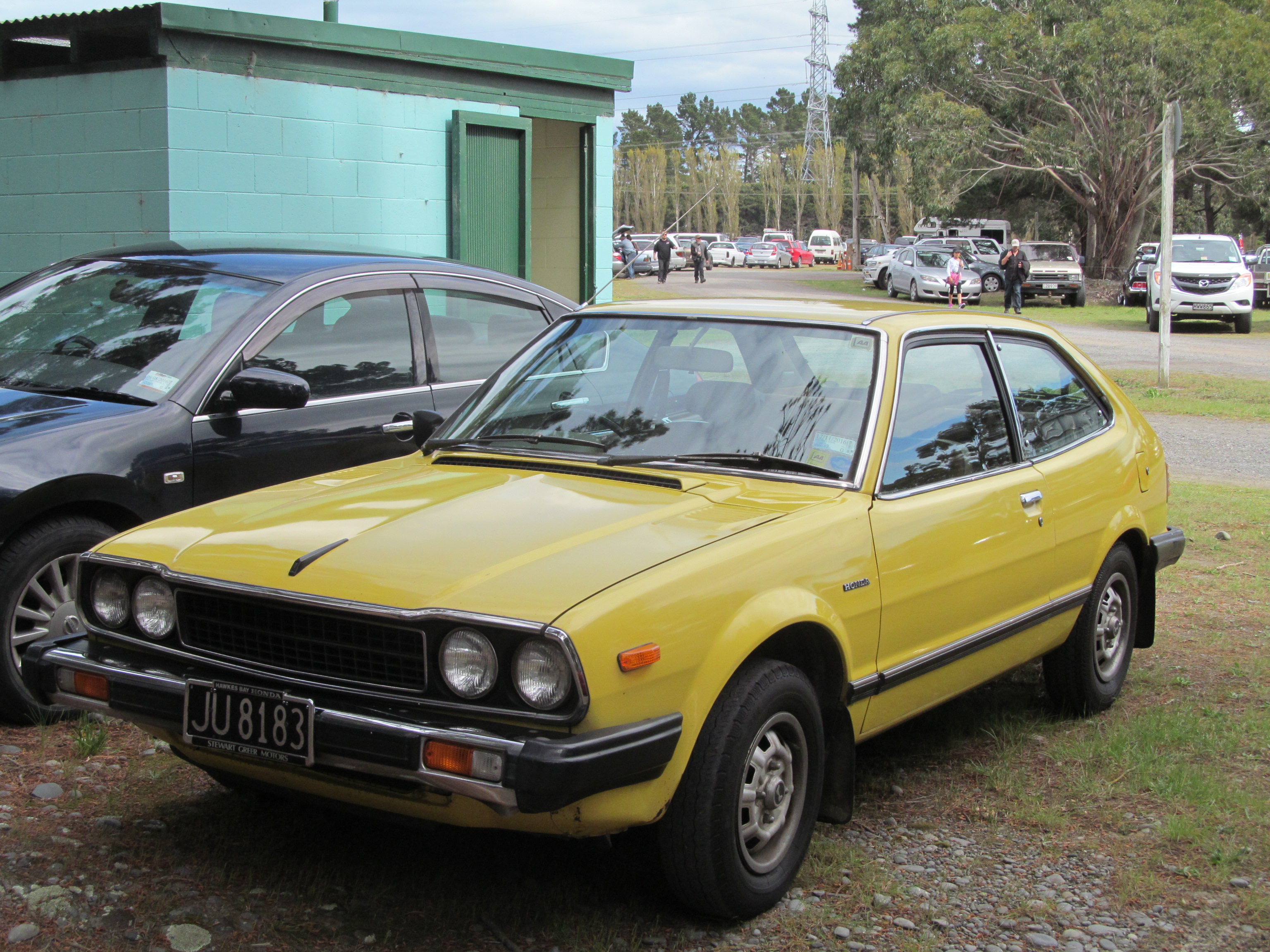
Honda Accord
"...some years ago, my wife complained that her Honda Accord would occasionally start bucking, snorting and ch..."
The Honda Accord is a regular family car that’s meant for comfortable daily driving. In the story, it sometimes jerks and makes unusual sounds when starting or driving, which usually means something isn’t letting the engine run smoothly. The podcast is using that problem to talk about what might cause it.
The Honda Accord is a mid-size sedan (and sometimes wagon in certain markets) known for everyday comfort and dependable transportation. In the podcast context, it’s being discussed because the owner experienced intermittent drivability issues—described as bucking and “snorting”—which often points to problems in the engine’s air/fuel delivery or ignition. That kind of symptom is a common reason the Accord comes up in troubleshooting stories.
state safety inspection
"Then one fall, he says, I was getting the car ready for the state safety inspection. So I jacked it up, jiggled the wheels and did all the things you usually do."
A state safety inspection is a required check to make sure a car is safe to drive. Inspectors look at key safety parts like the brakes and lights.
A state safety inspection is a government-mandated check that a vehicle meets minimum safety requirements before it can be registered or kept on the road. It typically focuses on items like brakes, lights, tires, and other safety-critical systems.
jack stands
"So I jacked it up, jiggled the wheels and did all the things you usually do. And when I let it down off the jack stands, a nearly empty can of brake fluid rolled out from under the front seat."
Jack stands are supports that keep a car safely lifted while you work. They’re used to make sure the car doesn’t drop if the jack shifts.
Jack stands are safety supports used to hold a car up while you work underneath it. They’re used instead of relying on a jack alone, because stands reduce the risk of the car falling.
brake fluid
"And when I let it down off the jack stands, a nearly empty can of brake fluid rolled out from under the front seat. I said, hmm, hmm, that's interesting."
Brake fluid is what helps your brake pedal actually squeeze the brakes. If the level gets low, it can mean there’s a leak, and the car may warn you with a brake light.
Brake fluid is the hydraulic fluid that transfers force from the brake pedal to the brake calipers or wheel cylinders. If the fluid level drops, it can indicate a leak or other brake system problem, and the brake warning light may come on.
brake light
"She went to the gas station and her brake light was on because the fluid level was down. She buys a can of fluid from the attendant and watches him fill up the reservoir."
The brake light is a warning light that something may be wrong with the brakes. One common cause is low brake fluid, which can happen if there’s a leak.
The brake light is a dashboard warning that indicates a potential brake system issue, commonly low brake fluid or a problem with hydraulic pressure. In this story, it’s triggered because the fluid level is down.
reservoir
"She buys a can of fluid from the attendant and watches him fill up the reservoir. Thinking this is part of the regular maintenance of the car."
The reservoir is the tank where brake fluid is stored. If the fluid level drops, the car can warn you, and it may mean there’s a leak somewhere in the brake system.
The brake fluid reservoir is the container that holds brake fluid for the hydraulic system. When the fluid level drops, it can trigger the brake warning light and may point to a leak or other brake system issue.
master cylinder
"And she was constantly adding brake fluid to a leaking master cylinder. And the master cylinder was leaking into the boost, the power brake booster."
The master cylinder is the part that creates pressure in the brake fluid when you step on the brake pedal. That pressure is what helps your brakes actually slow the car down.
The master cylinder is the hydraulic pump in a car’s brake system. It pressurizes brake fluid when you press the brake pedal, and that pressure is what moves the brakes at the wheels.
power brake booster
"And the master cylinder was leaking into the boost, the power brake booster. And every once in a while, when she came to a stop..."
The power brake booster helps you brake with less pedal effort. If brake fluid leaks into that system, it can end up in the engine area and cause the car to run badly or even stall.
The power brake booster amplifies the force you apply to the brake pedal, making braking easier. In this story, a leak lets brake fluid get into the booster area, where it can be pulled into the engine and cause rough running.
fluid would get sucked into the engine
"or if the level of fluid in there where there's not supposed to be any was high enough, that fluid would get sucked into the engine and make the thing try to combust the brake fluid, which would cause it to stumble and choke and maybe even stall."
In some cars, engine vacuum can pull substances into the intake. If brake fluid gets into that airflow, it can interfere with combustion and make the engine stumble or stall.
This describes a vacuum-assisted path where fluid ends up in the engine intake area. When brake fluid is drawn into the combustion process, it can cause misfires and rough running, especially at stops when conditions line up.
door locks
"And I have a problem with the door locks. If you lock the doors from the outside with the key and there's anybody inside the car, they're locked inside the car..."
They mean the system that locks and unlocks the car doors. The issue is that once the doors are locked from the outside, the inside controls don’t let you unlock them.
“Door locks” here refers to the vehicle’s power-lock system that controls whether the doors can be locked/unlocked from the outside key and from the inside controls. The described symptom—locking from outside trapping occupants—points to a failure or misbehavior in the lock actuator/control logic.

Nissan Maxima
"I have a new 1997, a new 1997 Nyssa Maxima SE, which I just got last week."
They’re talking about a 1997 Nissan Maxima SE. It’s a mid-size family sedan, and “SE” usually means a nicer, more optioned trim level.
This segment is about a 1997 Nissan Maxima SE. The Maxima is Nissan’s mid-size sedan, and the “SE” trim typically indicates a more equipped version than the base model.
91 octane
"And I was reading the manual and it recommends that I have a premium gas of 91 octane or better."
Octane is a number that tells you how resistant the gasoline is to “knocking” in the engine. If the manual says 91 octane or better, using lower-octane fuel can cause rough running or knocking.
“Octane” is a rating of a gasoline’s resistance to knocking (premature combustion) in an engine. When the manual specifies 91 octane or better, it’s telling you the engine is calibrated to run safely and smoothly with that fuel quality.
premium gas
"And I was reading the manual and it recommends that I have a premium gas of 91 octane or better."
“Premium gas” usually means a higher-octane fuel than regular. Some cars are designed to use it, and the engine may run better or avoid knocking when you do.
“Premium gas” generally means a higher-octane gasoline than regular. Higher octane doesn’t automatically make the car faster, but it can be required if the engine’s compression and ignition timing are designed to use it.
detergents
"I remember listening to Car Talk and you guys saying vehemently that the only reason to get premium gas is for the detergents, which is now in every grade."
Gasoline detergents are additives that help prevent gunk from building up inside the engine. They’re part of why some fuels are marketed as “cleaner,” even if the octane rating isn’t the main point.
In gasoline, detergents are additives that help keep fuel injectors and intake passages clean by reducing deposits. The hosts are debating whether premium fuel is necessary for detergents now that many grades include them.
pinging
"Well, actually, the original reason for using higher octane way back was to keep the car from pinging. In other words, when you accelerate the car, if you have the wrong octane gasoline in the tank, the car will make a horrendous noise..."
“Pinging” is a rattly knocking sound from the engine. It happens when the fuel burns at the wrong time, especially when you use fuel with too low an octane rating for that engine.
“Pinging” is engine knock caused by abnormal combustion timing—typically when the fuel-air mixture ignites too early under load. It’s often heard as a metallic rattling sound and can be more likely with lower-octane fuel than the engine was designed for.
pre-ignition
"In other words, when you accelerate the car, if you have the wrong octane gasoline in the tank, the car will make a horrendous noise, which is caused by pre-ignition of the fuel under hard accelerations."
Pre-ignition means the fuel starts burning too early. When that happens during hard acceleration, the engine can knock and make loud, bad-sounding noises.
Pre-ignition is when the fuel-air mixture starts burning before the spark event (or before the intended combustion timing). Under hard acceleration, this can cause severe knock-like noises and potentially damage the engine if it’s persistent.
compression ratios
"...all the gasoline's were changed to unleaded and all the, all the compression ratios were dropped down so that it hardly made a difference."
Compression ratio is how “squeezed” the air-fuel mixture is inside the engine. Higher compression can make the engine more likely to knock unless you use the right fuel octane.
Compression ratio is the relationship between the volume in the cylinder at the bottom of the piston stroke versus the top. Higher compression generally increases efficiency and power potential, but it also raises the tendency to knock—so it often requires higher-octane fuel.
fuel injected
"Then when fuel injected cars started to come out in the eighties, it was recommended that those cars use high octane because those were the only fuels that had the additives to keep the injectors clean."
Fuel injection is how the car delivers gas to the engine using controlled injectors. The idea mentioned here is that early fuel-injected systems relied on fuel additives to help keep the injectors clean.
Fuel injection is a method of delivering gasoline into the engine using electronically controlled injectors rather than a carburetor. In the transcript, the host links the rise of fuel-injected cars to recommendations for higher octane due to additive packages intended to keep injectors clean.
injectors clean
"...it was recommended that those cars use high octane because those were the only fuels that had the additives to keep the injectors clean."
Fuel injector cleaning additives are compounds blended into gasoline to reduce deposits inside injectors. Keeping injectors clean helps maintain proper spray patterns and fuel delivery, which supports smooth running and efficiency.
93 octane
"In my area, we have 89 octane, which is plus and 93 93."
93 octane means the fuel is less likely to cause knocking in the engine. Some cars are tuned to run best on that higher number.
A 93 octane fuel has a higher knock resistance than 89 octane, meaning it’s less likely to detonate prematurely under higher load or more advanced ignition. That’s why some engines specify higher octane for best operation.
89 octane
"In my area, we have 89 octane, which is plus and 93 93."
Octane is a number that tells you how resistant the gasoline is to “knocking” inside the engine. If your engine is designed for a certain octane, using the wrong one can cause problems over time.
Octane rating is a measure of a fuel’s resistance to knocking (uncontrolled combustion) in an engine. Higher-octane fuels generally tolerate more aggressive compression/ignition conditions without knock.
damage to the engine
"But if the car calls for it, you should use it because you will, you could do damage to the engine in the long run."
If you use gas with too low an octane for your engine, it can “knock” and run less smoothly. Repeated knocking can stress the engine and cause long-term problems.
The concern is knock-related stress: when fuel octane is too low for the engine’s calibration, combustion can become uncontrolled, increasing heat and pressure in the cylinders. Over time, that can contribute to engine wear or damage.
disc brakes
"When you put new brakes on a, a modern car, a car that has disc brakes, you must push the caliper pistons all the way in to accommodate the new pads, which are thicker than the old ones."
Disc brakes are the common braking system where pads squeeze a metal disc to slow the car down. After you install new, thicker pads, the brake parts have to be set so everything fits correctly.
Disc brakes use brake pads clamping onto a spinning brake rotor to slow the car. When pads are replaced, the brake caliper has to be adjusted so the pads can sit at the correct distance from the rotor.
caliper pistons
"you must push the caliper pistons all the way in to accommodate the new pads, which are thicker than the old ones."
Inside the brake caliper, pistons move to squeeze the brake pads against the rotor. When you put in new pads, the pistons usually need to be pushed back so the pads can sit in the right position.
The caliper pistons are the hydraulic pistons inside the brake caliper that push the brake pads toward the rotor. After pad replacement, they must be pushed back far enough to account for the new pad thickness, otherwise the pedal feel and braking can be wrong.
brake pads
"accommodate the new pads, which are thicker than the old ones. At least you'll hope they're thicker because that's why you would replace the pads, they were all worn out. So you're replacing the thin worn out pads with nice, thick new ones."
Brake pads are the replaceable parts that actually rub against the brake disc to slow the car down. If they’re installed incorrectly, the brakes may not feel right right away.
Brake pads are the friction material that clamps onto the rotor to create stopping power. If the pads are installed without properly setting the caliper piston position, you can end up with excessive clearance and delayed or weak braking until the system self-adjusts.
Request an Explanation
Heard something you'd like explained? We'll add it to this episode.
Sign in to request explanations for terms you heard.
Want to learn more?
Browse our glossary for plain-English explanations of automotive terms, jargon, and concepts.
Help improve this episode
See something that's not quite right? Our annotations are AI-generated and can sometimes miss the mark. Click the flag icon on any annotation to suggest a correction.