The Jeep Cherokee is an SUV, and a 1991 model is an older version of that same vehicle line. If someone says something happens in first gear, they’re usually describing a problem that shows up when the car is starting to move. Older SUVs like this can need maintenance to keep the transmission and drivetrain working smoothly.
Instead of cables or rods, the clutch uses fluid pressure to work. If the system leaks or gets air in it, the clutch can feel wrong or not fully disengage.
The slave cylinder is the part that actually moves the clutch mechanism using hydraulic pressure. If it leaks or breaks, the clutch may not work correctly.
The release bearing is what helps the clutch disengage when you push the pedal. Some cars combine it with the hydraulic parts, so if it leaks you may have to do a bigger job.
The transmission is the gearbox that transfers power from the engine to the wheels. Here, it matters because the clutch hydraulic parts are hard to reach without removing it.
The firewall is the wall that separates the engine area from the inside of the car. Some fluid bottles are mounted there, so it’s a common place to look.
The clutch pedal is what you press to disengage the clutch so you can change gears. It’s the driver’s control that triggers the hydraulic system. If the system leaks or fails, the pedal feel and shifting can be affected.
This is the part connected to the clutch pedal that uses fluid pressure to help move the clutch. When you press the pedal, it pushes fluid through a hose to another part that does the actual clutch movement. If it leaks, you can run low on fluid and the clutch won’t work right.
Concept
install a 55 gallon drum on the roof
They’re joking about avoiding the repair by constantly adding fluid instead. It can hide the problem for a little while, but it doesn’t fix the leak. If you keep driving like that, you risk running out of fluid and losing clutch function.
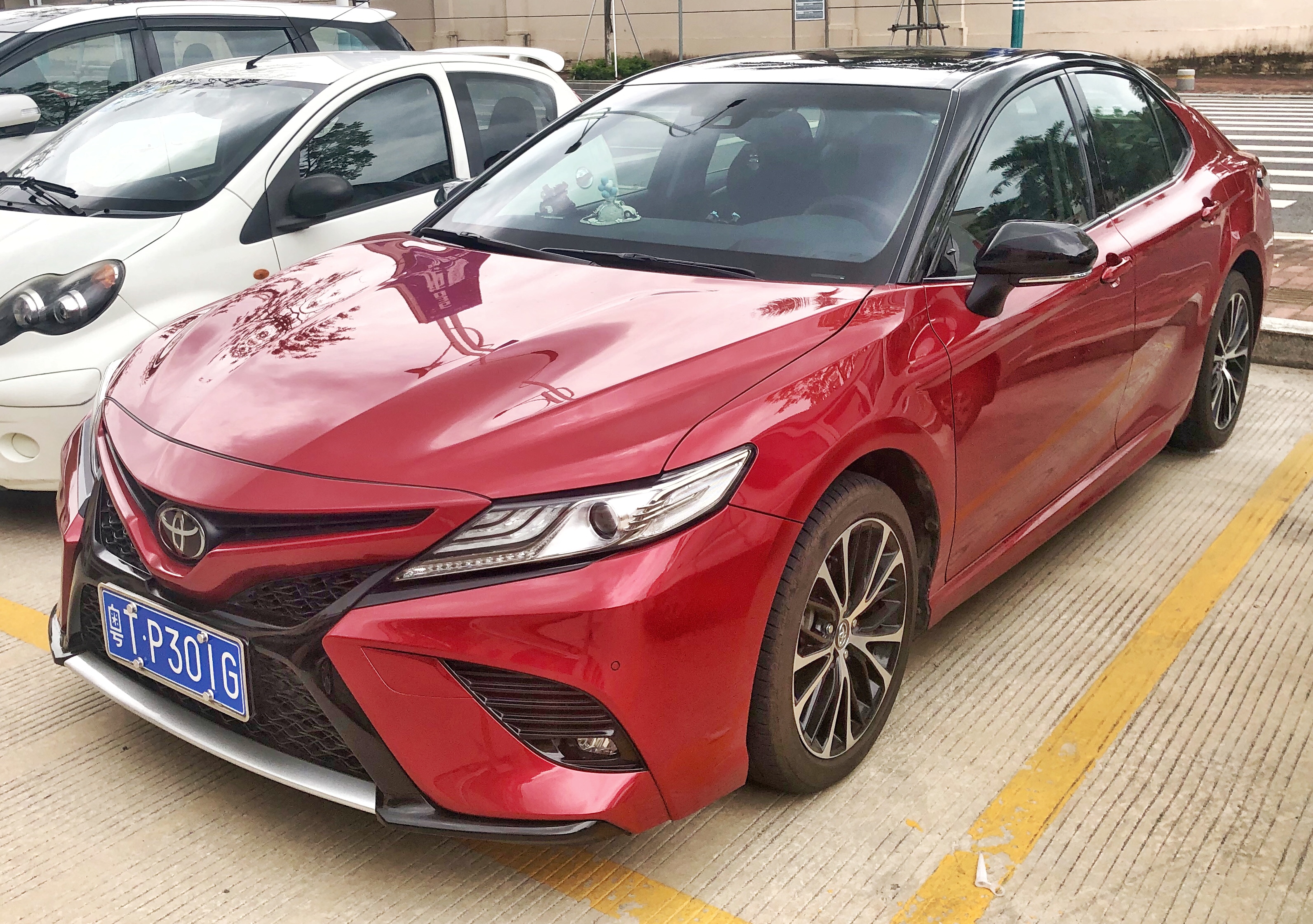
This is a 1992 Toyota Camry. The important part here is that the timing system on this car is what failed, and that affects whether the engine timing is kept correct.
A timing belt is a rubber belt that keeps the engine’s moving parts lined up. If it breaks, the engine timing can get thrown off and the engine may be damaged.
Brake squeal is that annoying squeaking sound when you slow down. It usually comes from the brake pads and rotors vibrating, and it can be fixed by checking the pads and how they’re wearing.
The Tesla Semi is a large electric truck used to move freight. Since it runs on electricity, it can make different sounds than gas or diesel trucks, including when braking. People may mention unusual brake noise because it’s noticeable compared with what they expect from traditional trucks.
Asbestos used to be mixed into some brake materials. It was removed for health reasons, and the newer brake materials can sometimes make different noises.
Machining is when the brake disc surface is trimmed or resurfaced to make it smooth again. If it’s not perfectly matched to the new pads, the brakes can make loud noises until the surfaces properly “seat” together.
Brake pads are the parts that squeeze against the spinning brake disc to slow the car. If the pad material or fit isn’t right, they can make squeaks or other noises, especially soon after you replace them.
Brass and bronze are metals that can be mixed into some brake pad materials. The type of mix can affect how the brakes sound, especially right after new pads are installed.
A brake job is when someone services your brakes—often replacing the pads and sometimes the brake discs too. The right replacement parts can help prevent squeaks or squeals after the work is done.
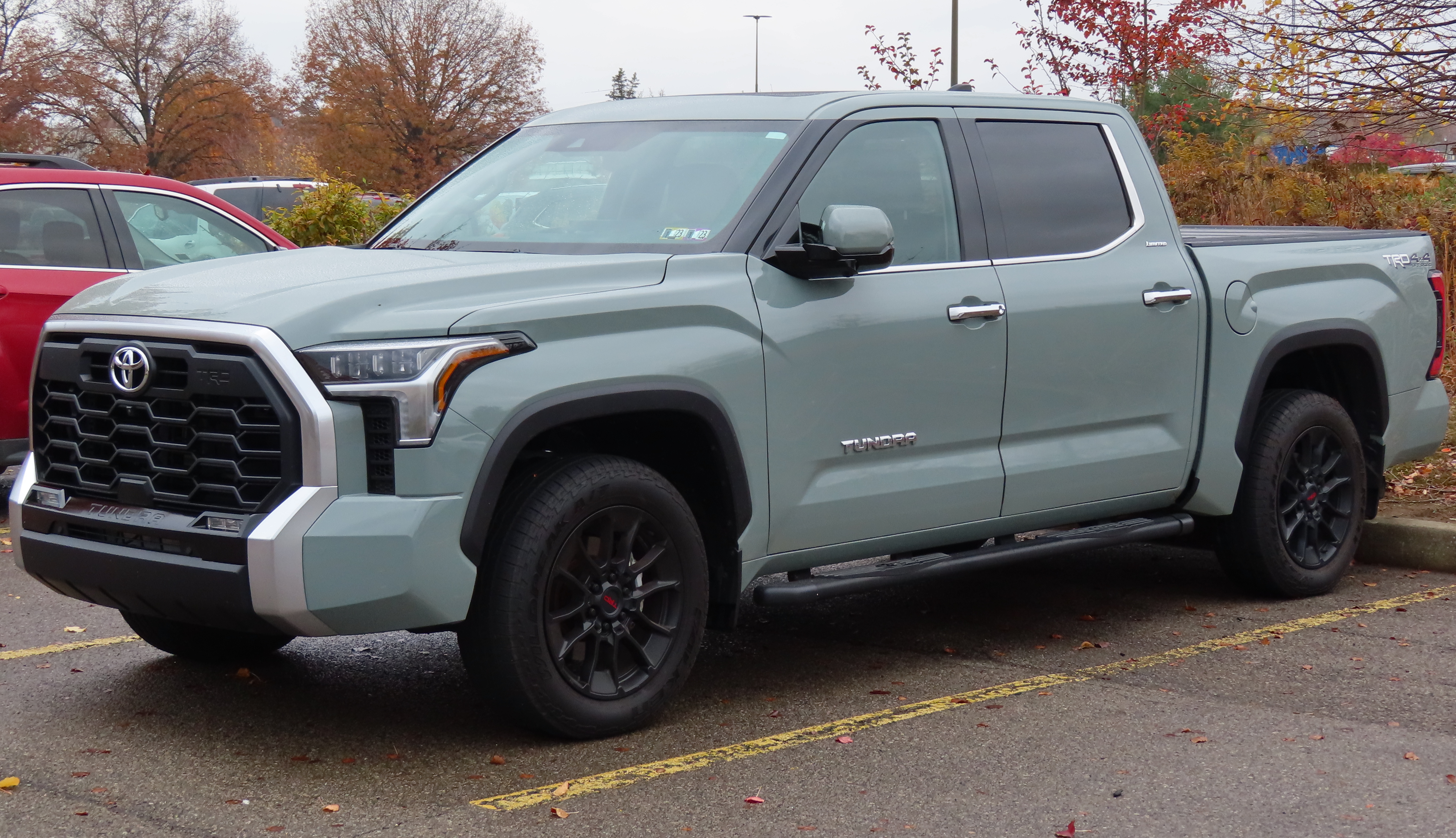
The Toyota Tundra is a large pickup truck made for work like towing and hauling. People talk about it in connection with tough weather because it’s built to keep going on rough roads and in cold conditions. It’s the kind of truck you’d choose if you need something dependable for everyday use and heavy tasks.
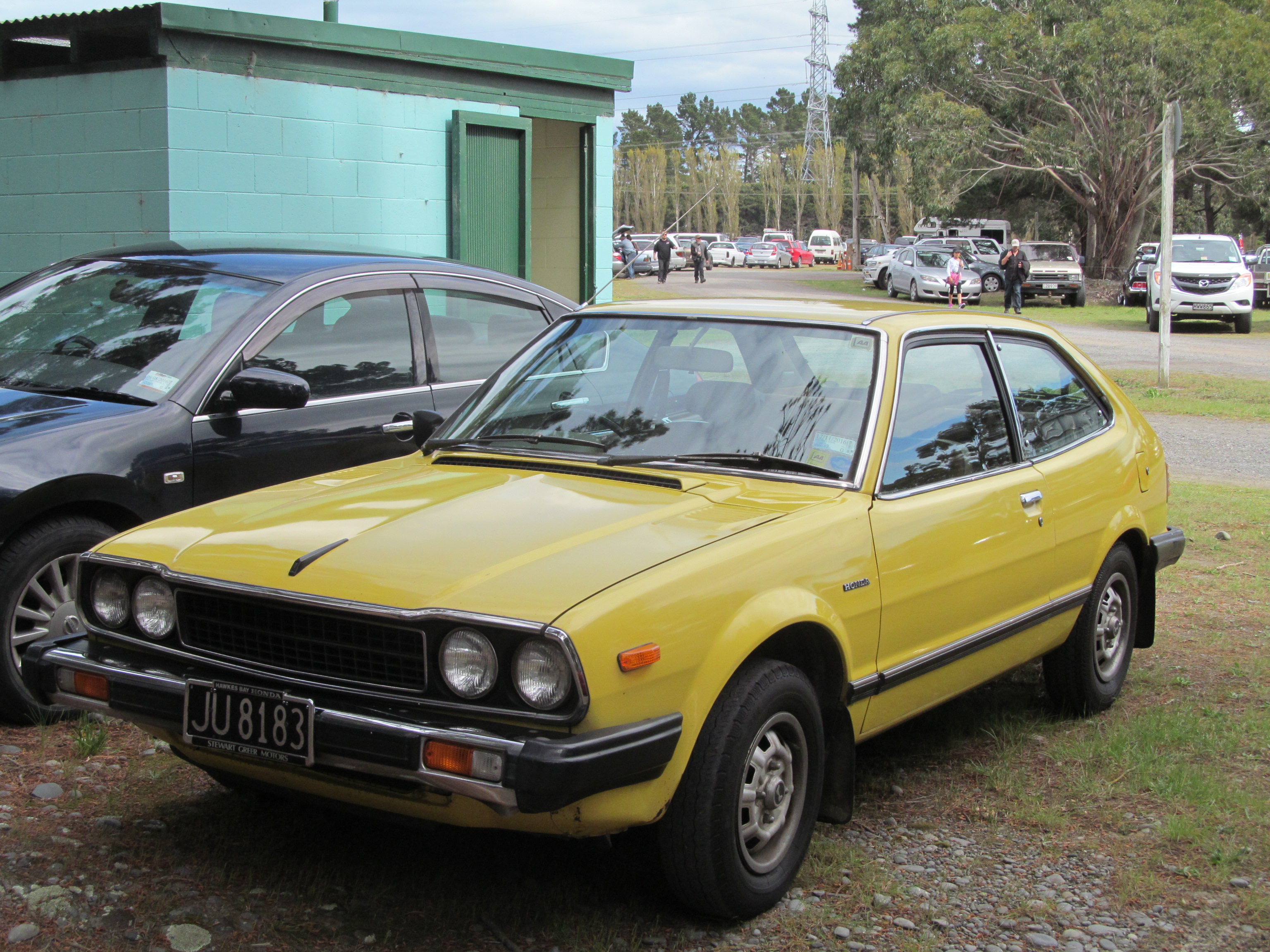
A 1990 Honda Accord is an older Honda sedan. In this story, it sometimes wouldn’t start, and the problem seemed to show up more after the car sat in hot weather.
The fuel pump relay is like a remote-controlled switch for the fuel pump. If it breaks, the pump may not get power, and the car may not start or may start very poorly.
The Jeep Commander is an SUV that can seat more people because it has extra rows. It’s meant for everyday driving and carrying passengers, not just for one person or short trips. If it comes up in a story, it’s usually because the owner is talking about how their SUV is working for them.
The fuel injector pump is what sends fuel into the engine at the right pressure. If it gets too hot, the engine may not start well, so cooling it can temporarily fix the problem.
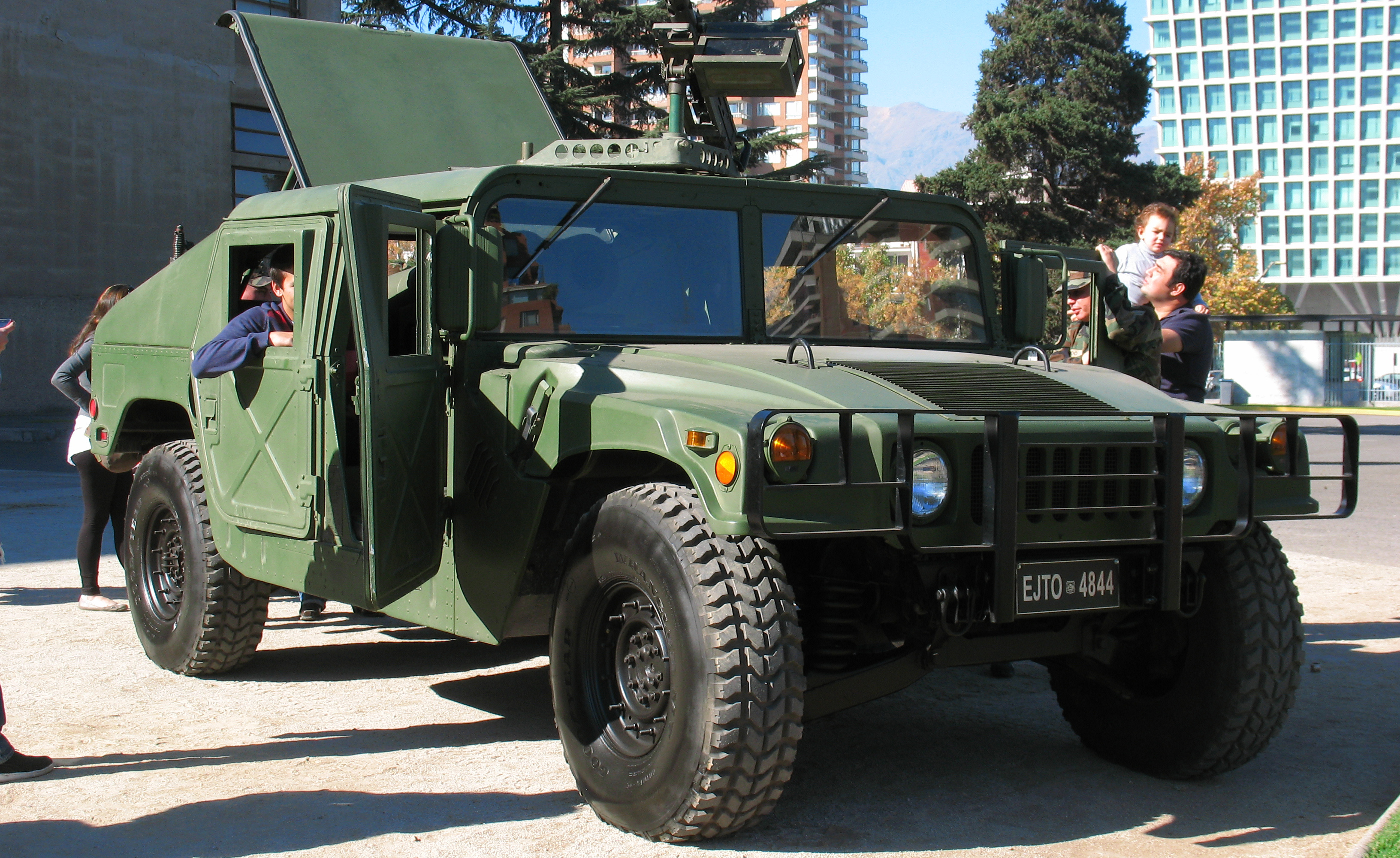
“Humvees” are military off-road trucks. Here, they’re discussing repairs on a bunch of them because the same kind of part kept failing.
Term
cold water
The mention of “cold water” describes a quick diagnostic/temporary workaround: the host says the new parts behaved differently when cooled. That kind of temperature sensitivity can point to heat-related failure modes, material issues, or internal tolerances in a fuel-system component.
Term
electric connection
This just means there’s wiring that powers or controls the pump. If the pump has an electrical part, it may need the right connections to work properly. That’s why the host is thinking about what’s inside the packaging and how it would function later.
The frame is the car’s main metal structure. If it’s cracked or bent, parts that are bolted to it don’t line up or move correctly, so the car can feel harsh or behave strangely over bumps.
The engine cradle is like a strong metal platform that the engine (and sometimes the transmission) sits on. It’s bolted to the car’s main structure, so if it’s loose or damaged, the engine can shift during bumps or crashes, making the ride feel worse.
Term
explosion
They’re using “explosion” to mean the engine is making abnormal combustion noises—like popping or backfiring. The idea is that a crack in the exhaust system can make those events sound worse or happen at the wrong time.
An engine mount is what keeps the engine attached to the car. If it fails, the engine can shift when you hit bumps, and that can crack or strain parts near the exhaust.
The exhaust manifold is the part that gathers the engine’s exhaust gases before they go down the exhaust system. If it cracks, it can leak hot gases and make loud popping or banging sounds.
LIVE
This is our glass. On This American Life, one that we like is a good mystery.
Sometimes about really big things, but most times, the little mysteries are the best.
Our lost and found is currently filled with pants. I don't know, I've never seen this happen.
Wait, is this true?
This is true.
Mysteries of every size, each week, This American Life, wherever you get your podcasts.
Music
Hello and welcome to Car Talk from National Public Radio.
With us, Click and Clack the Tablet Brothers, broadcasting this week from America's most wanted division here at Car Talk Plaza.
What is that all about?
Well, this came from...
Notice we reversed roles there.
We did?
Yes.
Wow.
You usually say that.
I do?
Yeah.
And then I have to come up with something interesting or funny. Now it's your turn to do the work.
The most wanted division here at Car Talk Plaza.
Here's an article in The Washington Post.
Oh.
Crackdown in DC train stations lands young snackers in handcuffs.
Oh.
The mother of a 12-year-old girl who was handcuffed, booked and fingerprinted for eating French fries in a subway station says,
Police went too far.
I can't believe there isn't a better way to teach kids a lesson, said Tracy Hedgepath, whose daughter Anshe was arrested.
The police treated her like a criminal.
But Metro Police Chief Barry McDivitt is unapologetic about Anshe's arrest last month and others like it.
We really do believe in zero tolerance, he said.
Yes.
Computer complaints about unlawful eating in metro cars and in stations led McDivitt to mount an undercover crackdown.
Oh.
No violators.
A dozen plainclothes officers cited are arrested 35 people, 13 of them juveniles.
Only one adult was arrested and he escaped.
Oh.
You all know the story.
Could that be?
If you don't, our esteemed producer, Douglas Bongo Boy Berman, was almost arrested some time ago in the metro in Washington, DC.
And he escaped.
For eating a bagel and drinking a coffee.
Is that a muffin?
Oh, it's just a coffee now.
He's toned it down before it was.
It was a club sandwich.
A turkey club with extra mayo.
And a Caesar salad on the side.
Dripping one of the platform.
And of course, a deft move allowed him to escape.
Well, I think the police chief is right there.
A zero tolerance policy is correct.
Well, here's what I propose.
I mean, evidently, they have this young gal, this 12-year-old Anche, in custody.
I propose we swap her for Berman.
If you want to spring her, we'll turn in Berman.
We'll meet them at the Brandenburg Gate.
Exactly.
At midnight tonight.
Midnight tonight.
And we'll have Berman blindfolded.
We'll hand them over to the authorities.
Yeah.
And those East Germans in Washington, DC can do whatever they want with them.
As long as we get this young lady out of their custody.
Let's do it.
Okay.
If you're interested, what's his name?
What's the guy's name?
The chief of police there?
Who are you?
Barry McDevitt.
All right, Barry.
We'll meet you there tonight.
What time?
Make it early.
I got to get to bed.
All right.
10 o'clock.
Well, if you think that Dougie should turn himself in, or we should turn him in so he
can get his rightful punishment, or if you think working for us is punishment enough,
or if you have an actual question about your car, give us a call at 888-CAR-TALK.
That's 888-227-8255.
Hello, you're on Car Talk.
Hi.
My name is Tom from Kansas City, Missouri.
Hi, Tom from Kansas City.
How are you?
Howdy.
I have a 91 Jeep Cherokee.
When I have my car in first gear, even with the clutch pedal depressed, my car still
wants to drag forward.
So I have to really jam down on the clutch pedal all the way to the floor and the brake,
otherwise it continues to pull me forward.
Really?
Yeah.
And the only way to get it out of gear and to get it back into neutral is to let the
clutch pedal out, let it jerk forward, push the clutch pedal back in, and then I can
get it back into neutral.
Oh, man.
Yeah.
Did you do your Christmas shopping already?
Well, I'm afraid you're going to tell me I need a new clutch.
I think you need a new clutch, yeah?
Yeah.
Well, if you're really lucky, it's the clutch master cylinder.
This thing has a hydraulic clutch.
I mean, why did you jump right to it?
He needs a new clutch.
Well, because what usually leaks on these is the slave cylinder, and if I'm not mistaken,
the slave cylinder on this vehicle is part of the release bearing.
So you have to take the transmission out.
Isn't that a clever design?
Yeah, brilliant.
Oh, man, that's really brilliant.
Well, Saab does the same thing, too.
Have you checked the fluid that's in the reservoir for the clutch?
No.
You didn't even know you had any?
No, I don't know.
Yeah.
Well, if you look under the hood, you will find a little bottle that looks like the brake
master cylinder reservoir.
It's a little plastic thing.
It's right on the firewall.
And that little...
I'll bet you the thing's going to be empty of fluid.
Right.
It might be empty, but you may not know why unless you look under the dashboard because
the mechanism for that clutch master cylinder comes through the firewall and attaches the
rod attaches to your clutch pedal.
And if that clutch master cylinder is leaking, then you may see evidence of fluid dripping
out of it.
Or on your shoes.
You should be so lucky.
That's the thing to pray for.
Well, it's a lot easier to replace the slave cylinder.
Oh, man!
Well, the master cylinder is very easy to replace.
The slave cylinder requires that you take out the entire transmission and transfer case
and move the Empire State Building over three inches.
On the other hand, if it's leaking very, very slowly and you're thinking of selling this
vehicle, you could just install a 55 gallon drum on the roof with a little hose down to
that reservoir and just keep filling the thing up.
Okay.
Yeah.
I mean, you couldn't sell it like this.
That would be dishonorable.
No, no, no.
He would tell people what's wrong.
Oh, and why you had the 55 gallon drum welded to the roof?
So what is that 55 gallon drum up there?
You say what 55 gallon drum?
No, but if you find that it's empty, try filling it up and see how long it takes for the symptom
to recur.
And that'll give you some clues to how much it's leaking.
And if you don't see anything inside the passenger compartment, it's the slave cylinder and you're
done for.
Okay, great.
Yeah.
And it's been nice knowing you.
You guys wouldn't want it cheap, would you?
No.
No.
Unless you put the drum on the roof.
See you, Tom.
Thanks a lot.
Good luck.
Bye.
1-888-CAR-TALK.
That's 888-227-8255.
Hello.
You're on Car Talk.
Hello.
This is Joan.
Hi, Joan.
Hi.
Where are you from?
I am calling from Nashville, Tennessee.
Nashville.
Why does it sound like you're in your bathtub?
Uh-oh.
Does it really sound that bad?
Yeah.
You want some kind of cheap telephone?
I'm on an office telephone.
Oh, you're calling from work.
Oh, you're in the closet.
No.
I think in the closet.
What's up, Joan?
Well, I'm calling because I have a 1992 Camry and I recently had a timing chain go out on
it.
It's got about 170-something miles on it.
I put a lot of miles on it in the last four years that I've owned it because I'm a salesperson.
But I had it towed to Manny Mo and Jack.
Manny Mo and Jack.
Manny Mo and Jack.
Actually, you don't have a timing chain.
You have a timing belt.
Oh, okay.
Timing belt.
And they fixed it.
They did a great job and it ran and it was wonderful.
And then all of a sudden, my brakes started squeaking a lot.
So I took off and went to...
Manny Mo and Jack.
Mollarian Curly.
Mollarian Curly this time.
Yeah.
So then after I had the brakes done, I left thinking everything's fine.
And the first rainy day, I went up from...
I was leaving the gym where I worked out and I was leaving the gym and all of a sudden,
I applied my brakes and it sounded like I was a truck about to hit another semi.
I mean, the sound from these brakes was so loud, it was incredible.
People's heads were turning.
Like a screeching sound?
Yeah, it was like a...
I mean, it was the hugest noise that you could possibly hear out of a car.
You got the banshee option on the pads.
Well, when I took it back, they said, well, the reason your brakes are squeaking is because
we cannot use asbestos in brakes anymore.
And that means that there is more metal and that means that they will squeak more.
And I said, you haven't heard this sound.
And he's trying to make you believe that in the last eight years,
all the other pads that you've had put on this car, which I've been probably many,
had asbestos in them.
Exactly.
Bull feathers.
Well, that's what I thought.
I mean, everybody isn't driving around and squealing as they come to a stop.
Well, I am when I'm driving with my brother because he scares the hell out of me.
We're going to die!
Let me out, let me out.
It's very good to you and your brother.
It's still so close.
Yeah, well, we actually broadcast the show from different states.
Oh, where were we?
Where were we?
Oh, who was John?
Oh, the brakes, the brakes, asbestos.
How much did they charge you?
This wasn't Manny Mo and Jack.
This was Chico Hapo and Zepo.
No, this was Manny Mo and Jack.
They did the brakes.
Yeah.
When they did the brakes on this car, how much did they charge you?
How many hundreds?
Two something.
500
Okay, so I'm going to guess that they may be replaced or machined the front discs.
But what does that have to do with the sound I'm hearing?
Well, sometimes if the discs are machined and these brake pads are installed,
which are in fact non-asbestos,
and they do have metal in them.
They have bits of brass and bronze and steel wool,
and God knows what else.
And gold?
Cannibal crackers.
Gold, silver, platinum.
And when those two surfaces are in the process of mating,
if the machine work on the discs was not perfectly done,
it takes a long time for those two surfaces to mate,
and you can get some horrendous noises.
We've also discovered...
Maybe if they were a little perfume or something, they'd mate a little faster.
And is this particularly when there are wet conditions on the road or rain?
It could be.
It could be.
They're more grabby when the things are wet.
And it could also be that they use the pad that's just noisy.
And some pads are, we found on Camry's and a lot of other cars for that matter,
that we have to use the factory pads to ensure that there's no noise after a brake job.
What did they do to appease you when you complained?
Did they just say, well, that's the way it is?
See you later, Joan. Don't come back.
You've got it. That's exactly what they said.
And you've been driving it since and has the noise returned?
The noise has been there and it is coming goes.
I mean, it's not always there.
Wear earplugs for a couple of weeks and it'll go away.
You think so?
Not a couple of weeks. More.
I wouldn't be too worried.
I'm sure the brakes are safe.
The noise will undoubtedly go away at some point.
But next time you ask them to use factory pads.
And it's not affecting the braking power.
I mean, the car will stop. It's just affecting your sanity.
Well, yeah, because I mean, everybody I know,
I'm leaving my customers and they hear me brake and it's like heads turn.
And I'm so embarrassed by this noise.
Okay. Good luck, Joan.
Thank you.
You can go out of the closet now and go back to work.
See you later.
Bye-bye.
All right. Look, it's time to dig deep into that strange contraption that you call a brain.
Do you remember anything about last week's puzzler?
Did it have to do with like a seemingly endless journey and inability to communicate
lots of time in the frozen tundra?
Well, no, that was your first marriage.
Actually, you're close.
The puzzler was about our old mechanic Krusty and his plane trip over the pole.
Tundra pole.
This week on the NPR Politics Podcast,
we're digging into the massive wave of tech money flooding the midterms
with a growing appetite in DC to regulate AI.
AI companies and AI interests really want to be involved in picking
who is going to write that kind of legislation.
We break down a proxy battle over the future of AI regulation.
This week on the NPR Politics Podcast.
We have your favorite authors, actors, filmmakers, comedians and musicians,
the people making the art that nourishes us and speaks to our times.
So listen to the Fresh Air Podcast from NPR and WKYY.
Follow it's been a minute wherever you get your podcasts
and we'll break down the zeitgeisty topics that are filling your feed.
Of course, everyone remembers our loyal old mechanic Krusty.
And some years ago, we decided that he deserved a vacation.
So he gave him four days off and booked a flight for him and the Mrs.
as for what we refer to as Senora Krusty to Coleslawvania.
The first leg of their journey lands them in Moose Jaw Saskatchewan
where they have to change planes for the flight over the pole to Coleslawvania.
Are you with me so far?
I'm beginning to remember it.
It has to do with speaking Coleslawanian.
So Coleslaw air wields out its latest plane at DC3
and Krusty recognizes it from that first Indiana Jones movie.
He says to his wife, oh my God, this is unbelievable.
This plane must be 25 years old.
His wife says, oh no, it's like 60.
Anyway, they enter the plane and he's very nervous as is his wife
and they both look into the cockpit to make sure there's really a pilot
and a co-pilot in there and there are and they look at each other
and exchange smiles and nods and they finally take their seats.
The plane takes off without incident
and they're on their way to their marvelous vacation in Coleslawvania.
While they're in flight, they realize that none of the passengers speaks English
and of course they speak no Coleslawanian.
They walk up and down the aisles using the bathroom as a pretense
and try to engage people in conversation.
They say, hi, how are you? I'm American. Nobody responds.
So they're resigned to just sitting there and waiting for the flight to end.
Very long flight.
You're still with me?
I am.
When the plane finally touches down in Coleslawvania,
they're relieved that they made it and they're waiting for their welcoming party
to take them on their little tour,
which we arranged with our contacts in Coleslawvania,
a guy named Or.
Anyway, they go through a lengthy custom search
and when they finally emerge into the parking lot,
they realize that it's late at night and neither Or nor anyone else has shown up.
The one cab driver actually doesn't understand them
and they resign themselves to sleeping at the airport.
Finally, Mrs. Crusty sees a woman walking toward them that she recognizes from the plane.
She says, thank God, we'll be able to get to our hotel tonight.
And of course, she's right.
How does she know that this woman speaks English?
Yeah.
Well, she knows she speaks English because the woman that she recognizes from the plane
was not one of the passengers.
Instead, she was the pilot.
And all pilots who fly international flights must speak English.
Very, very good.
So who's our winner this week?
The winner is Richard Barnett from Charlotte, North Carolina
and by having his answers selected at random,
from the piles of correct answers that we got,
Richard is going to get a $25 gift certificate
to the store at the cartalksectionofcars.com
and with that $25 gift certificate by book,
he can get the hardest item of the season by book,
according to the elves at the Shameless Commerce Division at least.
It is the Don't Blame Me T-shirt.
It's our campaign shirt, two zeros and 00
And on the back, it says, don't blame me.
I voted for click and clack.
I mean, those things have been flying out the door.
Out the window, still.
Now, people would only pay for them.
We'd be rich, man.
And by the way, if your name is not Richard Barnett
and you'd like a Don't Blame Me T-shirt,
don't call us in wine.
Stop by the store at the cartalksectionofcars.com
or call 888-CARG-JUNK,
if that wasn't a shameless, self-promoting plug.
I don't know what was.
Do you know what time it is?
Time to take the leftover turkey out of the trunk.
No.
It's time to play Stop the Chumps.
I mean, this is the part of the show
where we tracked down a previous call
to see if the advice we gave was sensible,
comprehensible.
Or legally indefensible.
So who's our lucky player this week?
It's Ellen from New Jersey.
No, I don't remember her.
Okay, well, Ellen called us last summer
about a 1990 Honda Accord.
She had bought for her teenage son.
It occasionally wouldn't start.
Of course, it always started for the mechanics
that she took it to.
Here's Ellen.
The next few days, it started like a champ
in all circumstances, which was really good.
But the next hot day that it was left out...
I was just going to ask you
if it was a hot day.
It was a hot day.
It's all fits together.
What does it fit together with?
With all the different theories that you're working on.
Oh, the deal.
Oh, it fits together.
Ellen, don't worry.
Don't worry.
I'm pulling all the strings together now.
And it's not happening as frequently as it did before.
No, because it's been raining every day
for the past month and a half.
You've been in the area.
It's been a great summer, isn't it?
Yeah, it has been a very interesting time.
Don't get me started.
His two weeks of vacation at the shore,
so to speak, had 12 out of 14 days of rain.
Only my brother could get seasonal effective disorder
in the summer.
So how did I pull all these strings together?
What did we give her for an answer?
Well, the summer heat was the clue.
You diagnosed it as a faulty fuel pump relay,
and I agreed completely.
I remember that.
Let's find out how we did.
Ellen, are you there?
Yes, I'm here.
Look, before we find out whether you had a defective relay
or not.
Or a defective idea calling us in the first place.
We need to verify that the answer here
about to give here and stump the chumps
has not been influenced by our staff.
The staff of National Public Radio or your son,
who would really rather be driving a Lexus.
Okay, what was it?
Tell us the...
Was it the fuel pump relay?
It does appear that way.
Geez, you know, it really does pay
to pay these contestants off.
You did get our check.
No, I haven't received it.
You haven't.
Oh, it's in the mail.
I mean, you can rest assured.
So you went ahead and had someone
put a new fuel pump relay in there.
I did, and they very skeptically
they went in there and they did so.
And actually, I had a hard time getting an appointment
because they were busy replacing firestone tires at the time.
But finally got an appointment
and then I had to wait quite a while
for the first hot day, but it started like a champ.
But you had to convince them to put in the relay
because they didn't believe you.
Yeah, I had to tell them all about you.
And they said, oh, I have a big memory
that my father-in-law once told me to listen to these guys.
Yeah.
Well, they'll be listening from now on, won't they, Ellen?
I think so.
So it was very helpful.
So thank you.
Well, thanks for playing Stump the Chumps.
You're welcome.
Bye-bye.
Bye-bye.
By the way, if anyone else here's of someone on the show
that you'd like us to bring back for Stump the Chumps.
Email us your suggestion from the Car Talk section
of cars.com.
You can call right now and stump us
without waiting even.
The number's 888-CAR-TALK.
That's 888-2782-555.
Hello, you're on Car Talk.
Yes, this is Nick from Fort Stewart, Georgia.
Hi, Nick.
How are you doing, Nick?
I'm doing good.
How about you guys?
We're doing good.
We're doing great.
Good, good.
Where is Fort Stewart, Georgia?
It's near Savannah.
Really?
Oh.
Is that Stewart STEW or STUA?
It's STEW as in the Revolutionary War General,
not the Civil War General.
Oh, right.
General Stewart.
I remember him never.
Yes.
Was he your CO when you heard Fort Stewart?
Ah, yeah, that's him.
Jim Stewart, yeah.
Anyway, Nick, what's going on?
Well, I'm a company commander in the Third Infantry Division
here at Fort Stewart.
Oh, no wonder you know about this guy.
Yes.
And I'm having a problem with some of the Humvees in my fleet
in my company.
Yes.
The problem is in the hot summer months,
which we have quite a few here in Georgia,
the engine will not start turn over on some of these Humvees
that I have unless you pour cold water on the fuel injector pump.
So this kind of causes for some interesting scenarios.
Yeah.
Because I'm a brigade headquarters company.
So you can imagine the brigade commander,
a full bird colonel standing on the side of a tank trail somewhere
while the driver's got his canteen out.
The fuel injector pump.
How old are these Humvees?
Probably about seven years, some up to seven years old.
And do they get a lot of use?
Do they have many, many, not miles, but hours on them?
Sure, yes.
So they're hard starting whether the engine's been running or not.
If this thing's been parked in the sun.
Right.
It's hard to start.
Right.
Did they use these in Desert Storm?
I hope not.
Probably not.
Probably not this fleet.
Yeah.
But they use Humvees?
Yes.
Yeah.
They didn't even get started actually.
They looked good all lined up.
Just looking at them you get scared.
The only maintenance system pretty much if you've got a bad part,
you replace the entire part.
And so we've done that with a lot of these Humvees.
And for a while we were getting the same problem.
So we thought it was a bad batch of fuel injector pumps somewhere along the line.
And while we approached it, well, if we keep ordering enough
and replacing enough fuel injector pumps,
we'll eventually get a good lot number from them.
So I'm hoping that we've worked through this bad lot number of fuel injector pumps
so that the problem won't exist.
But my big question was why was this happening?
And when you got the new ones, you said they did the same thing,
but also when you poured cold water on them, they worked?
Right.
Where is that?
I mean, I'm sure my brother has worked on a lot of these Humvees.
Huh?
And where is this fuel pump?
It's pretty much in the, you open up the hood and it's a center of the engine.
Oh, it's under the hood?
It's under the hood, right.
Well, the real question is, will we be able to buy any of these packed in Cosmoline in a few years?
20 years from now?
I really don't know what they do with those pumps.
I know when we were kids, there were all these stories about people buying, you know, army surplus jeeps.
Yeah, for 25 bucks.
I think 50 by the time I was a beige.
And they were packed in Cosmoline, except of course for the tires which were wrapped in papyrus.
No, I think it was wax paper.
Wax paper.
Craft paper.
Cold water, huh?
Yes.
Cold water.
Man.
Now the only thought that I could think of is that somewhere in there, there's some kind of electric connection that runs the fuel injector pump.
Sure.
By pouring the water on it, you're cooling it down and it shrinks.
Yeah, boy, that sounds good to me, Nick.
Okay.
Yeah, what?
That's, I like that.
So this pump must have some kind of an electric pre-pump in it that sucks the fuel from the tank and delivers it to the injector pump.
Or are there two pumps?
Do you know?
I couldn't even begin to tell you.
Isn't it great to talk to experts?
Wait, what color are these vehicles?
No plan.
Oh, I should have known that.
Man, I like history better than anything we could come up with.
We haven't come up with anything.
We don't have.
That's what I'm saying.
Okay.
Man.
Well, when you shut the thing off, how do these shut off?
There's a fuel cutoff and the fuel cutoff is going to be right in the injector pump and that's what's happening.
That fuel cutoff is not turning on.
It's not releasing until you pour cold water on them.
Oh.
That's my guess and it indeed is a guess.
But try a CO2 extinguisher next time.
It'll be faster.
Faster than cold water.
Yeah.
Okay.
Good luck, Nick.
I'm glad we could help you, Nick.
Right.
Take care.
Thanks.
Hey, stick around for more calls and the new puzzler coming right up.
There have been some fantastic movies released this year and we know you can't see them all.
So we're recommending some great films that might have flown under the radar to add to your watch list.
Listen to Pop Culture Happy Hour via the NPR app or wherever you get your podcasts.
Each story you hear on Planet Money starts with a question.
What happens if we refund tariffs?
Why are groceries so expensive?
At NPR, we stand for your right to be curious because the forces shaping our world can be hard to see.
Follow NPR's Planet Money wherever you get your podcasts and start seeing how the economy really works.
On Consider This, NPR's afternoon news podcast, we cover everything from politics to the economy to the world.
But every story starts with a question.
At NPR, we stand for your right to be curious to make sense of the biggest story of the day and what it means for you.
Follow Consider This wherever you get your podcasts.
That's a transportation.
Remember we were considering making this a show called Transportation Talk?
Because we had, I mean, we went from cars to trucks to Humvees.
Trains.
Trains.
And now?
And now?
DC3s.
Almost.
And we're going to work our way up to the other things.
Jets.
Back in the early days of aviation, aircraft mechanics were often confused by the fact that the engines seemed to backfire through the carburetors with some kind of regularity, causing in some cases damage to the carburetors, but at the very least requiring more maintenance and cleaning of said carburetors.
Not to mention scaring the pants off the pilot.
Indeed.
Well, they began investigating, figuring there was something wrong.
And after thorough investigations and recalibrating and resetting things, they discovered that the cause of the backfiring was the pilot.
And in fact, the pilot was doing it on purpose.
The question is, why would the pilot of the plane want the engine to backfire through the carburetor, thus scaring the pants off of him himself?
Himself, right?
Could make for a chilly flight when it seemed to have, in the estimation of the mechanics, no useful purpose whatsoever, but in fact, there was a purpose to it.
If you think you know the answer, write it on a postcard.
I decided in the interest of brevity.
You were going to make this into a two-hour dissertation.
Is that it?
Well, of course, I was going to discuss those movies with Jimmy Cagney.
You know, I could fly the craze they come in and all that.
You know, I was going to go into a little historical little thing about, you know, my days in the Crimea.
But you didn't think we could take it?
I mean, somebody would come in here and kill you.
I saw the gun.
So in the interest of brevity, I paired it down to a mere 17 or 18 sentences.
Anyway, if you think you know the answer, write it on a postcard or take a picture of it with a Nikon CoolPix 880 digital camera.
The zoom lens, 3.34 megapixel CCD and multi-area autofocus.
And ship the whole shebang.
Yeah.
We'll make it work.
Next day air.
It's a puzzler tower, car talk plaza, box 3500, Harvard Square Cambridge.
Matt 02238.
Or you can email your answer from the car talk section of cars.com.
If you'd like to talk to us, the number is 1-888-CAR-TALK.
That's 888-227-8255, a lawyer on car talk.
Hi, this is LaVenia from Scottsboro, Alabama.
LaVenia?
As in LaVenia?
Yes.
And where are you from?
Scottsboro, Alabama.
Scottsboro, Alabama.
Yes.
Okay, I've got it all squared away now.
What's up?
Okay, I have this 1991 Dodge Caravan with 197,000 miles on it that's making a terrible, terrible
sound when I go over a bump.
Just one sound?
Well, it sounds like an explosion.
Oh, really?
It makes this explosion sound every time I go over a road where there's new construction,
there's uneven pavement, and there's quite a lot around here, and also potholes.
So, when you hit something like a pothole, you hear one loud crashing sound like?
Yes.
Like a heavy, like a thudding sound like boom.
Oh, no, louder.
It sounds like an explosion almost, like a...
It sounds as if it's coming from the front passenger side wheel.
Well, tell me this, if you hit something with the left wheel, will the sound come from
the right wheel also, or you have to have the hit be on the right side?
Well, you know, that's a very good question.
Isn't it?
Mostly, if I hit something on the right side, and I've even slowed down to almost a crawl
when they were doing construction around here, and if there's any speed at all, if I'm going,
maybe 20 miles an hour or more, it's just a loud crashing sound.
And if you're going faster, is the loud crashing sound louder?
Louder.
It's horrible.
It sounds yes.
And yet you drive this every day.
Am I right?
Well...
You probably commute 75 miles each way to work.
No, I'm only about 10 miles one way to work, but still.
It's mostly if I'm going to another town, maybe 30 or 40 miles away.
Do you have any kids?
I have two.
Boys?
Yes.
Either one of them play football?
Well, they did when they were in high school, but now they're in college.
Can you borrow a helmet from none of them?
Just in case, in case.
I mean, it sounds as though there's got to be something loose that's crashing against something.
Could you believe it was a big piece of metal slapping against another big piece of metal?
Would that qualify as an explosion?
Yes.
That sure does.
That's a very good description.
I like it then.
I like it too.
Yeah.
Yeah.
But the question is which piece of metal I like.
I'm working on the manifold.
Manifold.
Yeah.
Okay.
I'm working on a theory.
Yeah, no one's mentioned that because what?
It's stupid.
I think what's wrong is you have either a broken frame.
Okay.
Or the engine cradle has come loose or is cracked.
Broken frame or engine cradle.
There's a cradle which bolts to the frame of this vehicle.
Yes.
Which holds the engine and transmission.
Okay.
And that could either be loose such that when you do have an impact, you get that slamming
effect.
Why?
Why would you get a slamming effect?
Because you're causing motion that's not ordinarily part of the dynamic of it.
The vehicle is supposed to be going straight ahead and when it is going straight ahead,
that slamming is not.
You go over little bumps, you got a blub blub blub blub.
When you go over big bumps, you got blub because there's more energy.
But she doesn't get blub blub blub blub.
She gets one big explosion.
Big bumps.
Because you're hitting one bump at a time.
I don't like it.
If you hit two bumps in a row, you'd get blub blub blub if they were space far enough
of fire.
Blub blub blub blub blub.
Well, I think you have a broken engine cradle or a loose engine cradle.
Okay.
I'm glad he thinks so.
Well, I have a quit.
Could just a regular shop check into there?
Yes.
Anyone would know what that was.
Okay.
If they didn't know what it was, then you wouldn't stay there.
And ask them to look for cracks.
Cracks.
Yeah.
We're looking for cracks now in my brother's head and we've found four so far.
Here's my theory on the manifold.
I'm going on the basis that what she is hearing is indeed an explosion.
Oh, really?
And when she hits a bump, you've got part of it right that there's an engine mount that's
bad.
And it's distorting the crack in the exhaust manifold and one of the explosions.
Okay.
1888 car talk.
That's 888
I want to talk to her in a month.
We may have to have you on Stump the Chumps.
Okay.
Well, I'll check into this and thank you so much.
All right.
Okay.
Bye.
Bye.
Okay.
Ducky.
1888 car talk.
I don't like any of those answers.
I didn't like, like mine and I didn't like yours.
My answer is right.
You want a little side bet?
Yeah.
Five bucks?
Yeah.
Well, it's happened again.
You've wasted yet another perfectly good hour listening to car talk.
Our esteemed producer is Doug, the Subway fugitive, but not for long.
No, he's not fugiting very long.
No, no.
Not after we turn him in.
The prisoner.
The Brandenburg gig tonight.
Bongo boy, Berman.
Our associate produces our Louie, Cronin the Barbarian and David in by nine, home by
five, 15 green.
Our engineer is Tad Massaman Curry.
Our senior web lackey is sheep boy.
Doug, the old gray mayor and our technical spiritual and menu advisor just back from
the Calgary cattleman's beef off.
It's John Bugsy Lawler.
Where is he?
He's right here.
No.
He's pointing at Louie.
Wow.
Saying I'll get you for this.
Our public opinion pollster is Paul murky of murky research assisted by statistician
margin of error.
Our director of satisfied customer relations is normally none.
Yeah, satisfied customers.
Our new truck review is a big new rig.
The car talk plaza short order cook is Arcburn.
Our divorce attorneys, Carmine, not yours.
Our director of genealogical research is Manny Cousins.
Our sexual harassment investigator is Hank Panky.
Our director of holiday visits to the in-laws is Don Wongo.
Our Russian chauffeur is Bekoff and Dropoff.
The banker at the car talk plaza poker games is Nikolai Putin.
And our seat cushion tester, of course, is Mike Easter.
Our chief counsel from the law firm is Dewey Chibihau as you Lewis Dewey.
Known to the bummed out shoppers, wondering what ever happened to all those funky stores
in Harvard Square as you and Louie Dewey.
Thanks so much for listening.
We're clicking clack for Tapper Brothers.
Don't drive like my brother.
Don't drive like my brother.
We'll be back next week.
Bye-bye.
Car Talk is a production of Dewey Chibihau and WBUR in Boston.
And even though NPR president Kevin Close hurls another poison dot on our publicity photo
whenever he hears us say it, this is NPR, National Public Radio.
You know, every day on Up First NPR's Golden Globe nominated Morning News podcast, we bring you three essential stories.
At the heart of each story are questions.
What really happened?
What really mattered?
What happens next?
At NPR, we stand for your right to be curious and to follow the facts.
Follow Up First wherever you get your podcasts and start your day knowing what matters and why.
About this episode
A newsy opener turns into a practical call-in-heavy episode: a clutch won’t fully disengage, and the hosts walk through hydraulic-clutch leak diagnosis—checking the cabin for fluid, tracing common leaks to the slave cylinder/release bearing, and noting that repairs can require transmission removal. Brake squeal follows, with discussion of rotor/pad mating, wet conditions, and using factory pads. Later, starting problems get traced to a faulty fuel pump relay, and a fleet Humvee hot-start workaround is explained with cold-water cooling.
Livinia hears explosions every time her Dodge minivan hits a pothole. In an effort to zero in on the source, Click and Clack have to suss out the possibilities: one of which, it seems, has to do with an Italian-American neighborhood somewhere. Join us for this episode of the Best of Car Talk.
See pcm.adswizz.com for information about our collection and use of personal data for sponsorship and to manage your podcast sponsorship preferences.