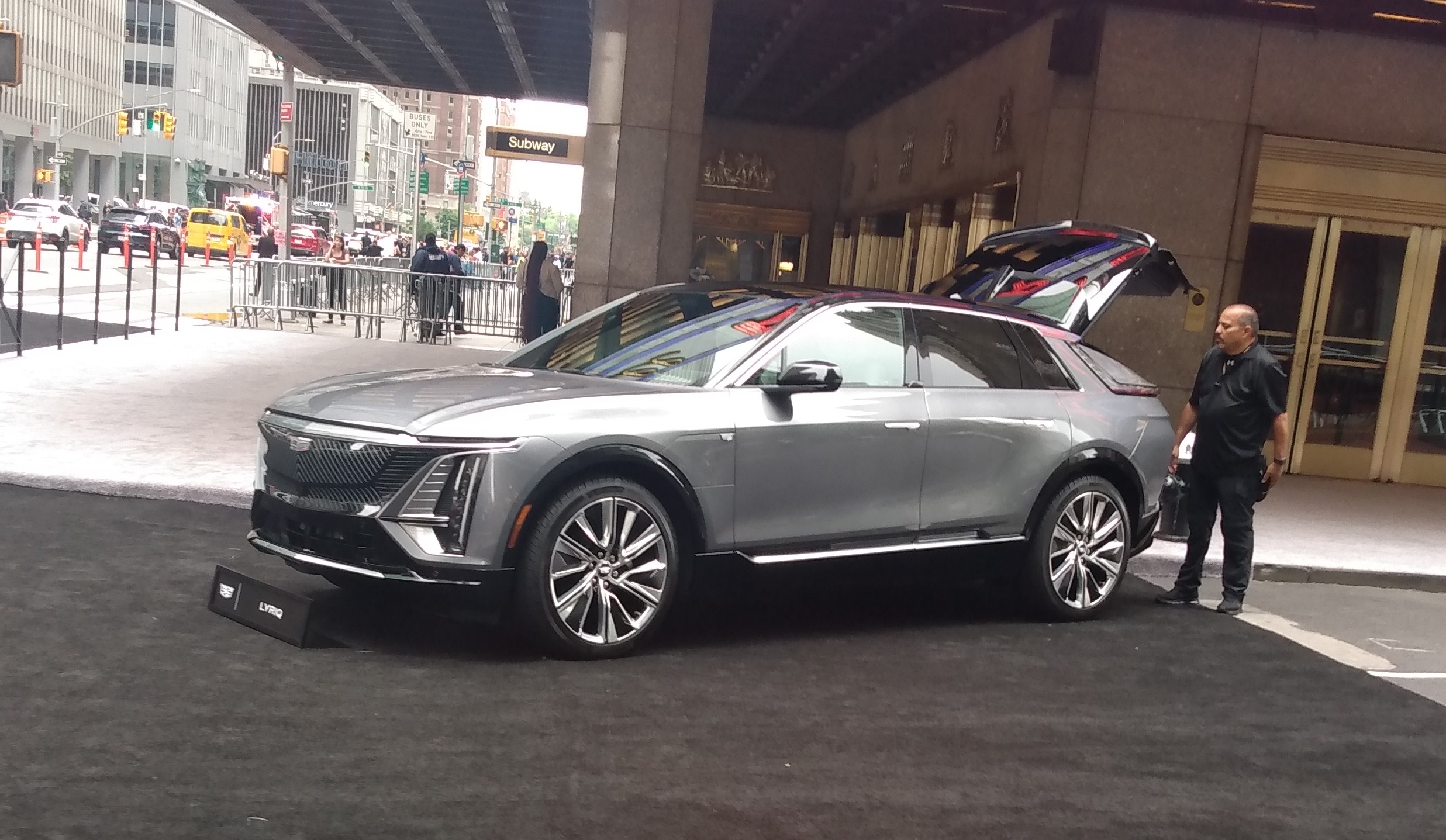
The Cadillac Lyriq is an all-electric SUV made by Cadillac. It’s built to be a comfortable, everyday luxury vehicle, but powered by a battery instead of gasoline. People talk about it because it’s Cadillac’s EV offering in the SUV category.
Coach building is the practice of taking a production car chassis/body and having a specialized shop modify it into a custom body style—like a limousine or hearse. In this segment, it’s used to explain how certain luxury American brands historically provided the base vehicle for these conversions.
The Cadillac DeVille is a big, older Cadillac sedan. People sometimes used it as the starting point for custom builds like limos and hearses, then modified it for the job.
The Cadillac Fleetwood is a large Cadillac model. In the past, custom builders could start with one and then modify it into things like hearses or limousines.
Upfitters are shops that take a normal vehicle and customize it for a specific use. Here, they’re the companies that turn a base Cadillac into a limo or hearse.
Body-on-frame means the car has a separate “skeleton” frame, and the body bolts or mounts to it. That makes it easier to stretch and rebuild for custom vehicles like hearses and limos.
Frame extenders are parts that lengthen the car’s main structural frame. They’re used when builders stretch a vehicle to make room for extra body section length.
An electric car has a battery that runs the drivetrain using high voltage electricity. The speaker is warning that you shouldn’t cut into or damage it during conversions.
On many EVs, the battery and motors are built into a flat platform underneath the car. The speaker is asking whether that platform’s size is fixed before custom builders modify the vehicle.
The Cadillac Escalade is a large luxury SUV. It’s designed for comfort and room, with a premium interior. It’s commonly mentioned because it’s a top-selling, high-profile SUV in the luxury segment.
Cadillac’s CTS-V is the fast, performance version of the CTS. A “wagon” is the longer, family-friendly body style, and the CTS-V wagon is the enthusiast version of that.
This phrase means trying to compete with German brands that are known for performance and engineering. The host is saying Cadillac tried to copy that image instead of staying true to what they felt Cadillac should be.
The Nürburgring is a famous race track in Germany. When people talk about “lap times,” they mean how fast a car can go around that track, which is often used to compare how good different cars are.
Data privacy here means what information your car collects and who gets to use it. The hosts are discussing a case where driver data was sold, which is why privacy matters.
A connected car is a car that can talk to the internet and other services. That can enable useful features, but it also means the car may collect or share data.
Connected insurance means your insurance price can be based on how you drive, using data from your car. The hosts are saying some people felt the rules weren’t clearly explained.
An OBD2 dongle is a small device that plugs into your car and can read data about how you drive. Here, it’s used to collect driving info and share it with an insurer.
An EULA is the legal agreement you click through when you buy or set up something. In this case, the claim is that the data-sharing terms were included there, even if most people don’t read it.
In California, there are rules about emissions testing for cars. The host is talking about “Leno’s law” and a possible updated version that would change which older cars are exempt from smog/emissions requirements.
California sometimes requires older cars to pass smog/emissions checks. The host says that for cars older than 1976, California doesn’t require smog testing.
Fuel injection is how modern cars put gas into the engine. Instead of a carburetor, it uses controlled valves/injectors to deliver the right amount of fuel.
Because EVs don’t use gasoline, they may not pay the gas taxes that help maintain roads. The idea here is to charge EV drivers based on how much they drive, or through charging/utility billing.
A wireless tug is like a robot tow helper that can move your car without a person hooking up a tow line. It communicates with the car so it knows what to do.
Drive-by-wire means the car uses electronics to control things like steering and braking instead of purely mechanical connections. That kind of electronic control makes it easier for a system to command the car to move in a coordinated way.
Brake-by-wire means the brake response is controlled electronically. The car can then coordinate braking and movement with other systems more flexibly than with only mechanical controls.
Steer-by-wire means your steering is controlled by electronics. Instead of a direct mechanical connection, the car interprets your steering commands and acts on them electronically.
A software upgrade is like updating the car’s computer so it can do new things. In this case, they’re talking about enabling a new “come get me” style function.
A proof of concept is a small test that tries to prove an idea is real and workable. It’s like a “can this actually work?” step before spending big money to roll it out everywhere.
The Dodge Viper is a famous American sports car known for being loud, dramatic, and performance-focused. Here it’s mentioned as a stand-in for the kind of bold, exciting tech the city project should have highlighted.
A clean sheet approach means starting over with a blank plan instead of working around what already exists. It’s often easier to design for EVs when you’re not forced to fit into older roads and systems.
Green field development means building in an area that’s mostly undeveloped. That makes it easier to plan roads, charging, and transit from the start instead of trying to modify an existing city.
This is a bike concept that uses hydrogen instead of a battery to make electricity. The idea is to be zero-emissions at the bike, but it depends on having hydrogen available and the system being efficient.
A “false start” means the project got going, but it didn’t really work out the way people hoped. It’s like starting with the wrong plan or ending up with a different outcome than expected.
Waymo is a company that builds self-driving cars. The hosts are using it as an example of companies that might make robotaxi rides cheaper than human-driven ones.
A robot taxi ride is a self-driving car that takes you somewhere without a human driver. The hosts are saying that if it gets cheap enough, people and society may accept it even if accidents happen.
Uber is a company that lets you request rides through an app. In this discussion, it’s mentioned as a partner that could help autonomous robotaxi services become cheaper.
The Tesla Model X is an electric SUV. In this part of the show, they’re basically saying it’s reached the end of its production life, like the Model S.
The Tesla Model S is an electric car that was a big deal because it showed EVs could be real, mainstream cars—not just prototypes. Here, the hosts are talking about its long run and that production has ended.
Fremont is where Tesla builds cars in California. When they say the “last models rolled off,” they mean the final finished cars came out of that factory.
Concept
proved a concept
“Proved a concept” here is about demonstrating that a new idea—mass-market, high-performance electric vehicles—could work in the real world. The hosts credit the Model S era with showing EVs could be credible and influential beyond early adopters.
LIVE
This is the WhatCarEV podcast for Thursday, May 14th, 2026, episode 270, Morbid Curiosity.
You wanted to start on a non-automotive news item.
I do.
I want to finish a thought from last week.
But unfortunately, in the last week, this thought that I want to finish has now become political.
And so I was like, I was going to cut it from the episode because I'm like, I'm done with politics.
I don't want, EVs are already political enough.
And I think we navigate around the straight of EVs.
As opposed of the straight of Hormuz.
Yes.
I think we do an OK job of bringing up things when we have to, whatever.
But I'll get to what this is right after I tried to sell you a T-shirt at thewhatcar.com.store.
And you can help support the podcast.
And who are you purveyor of T-shirts?
Well, I am Phil Royal.
And I am the one that made up like some of these shirts.
And so you can celebrate all the work I put in, which is obvious when you go there that I didn't put in enough work.
And you can also see what I look like at youtube.com slash at the whatcar where you can watch us.
Most people listen to us.
But what are you coming staring at us?
I don't know.
We're not that bad looking.
You'll see that we have voices for radio.
And you'll also see that we're not spraying chickens because we've been doing this for a while.
And that's all I'll say about my credentials in the automotive industry as a content creator.
Ed Sanchez also a, I don't know, fall rooster.
I don't know what the absolute spring chicken is.
Been doing this for a while.
Day job automotive electronics analyst.
Side hustle.
The whatcar podcast co-host and discusser of political things, I guess.
Political item number one, phones.
If you've been asleep at the wheel over the last week, then you'll know or you won't know that the Trump phone has been a point of contention recently.
This is not about that.
But why this, why I was going to cut this is because Trump phone was supposed to be made in America.
We were talking last week about Chinese cars.
We talked a lot about Chinese cars and I mentioned that they can't.
I don't think that they can ban Chinese cars from American shores based on security reasons.
Same thing with the drones because we've all got cell phones and all cell phones have Chinese components.
That's just nature of the beast.
And I said when I bought my last phone, I did look at getting an American cell phone.
There's like one company that makes them and I couldn't remember what it was.
Well, I looked it up and it's Purism.
I think that's the name of it.
Yeah, Purism and they make two phones.
Although one of them is out of stock.
And no, both, both are out of stock.
So they may not actually be in business anymore, but this was the company I was referring to.
They had the Libram, which is now it's listed as $650, but it was last week $699.
I want to say $699 or $799, something like that.
Out of stock.
I can't buy it anyway.
But that phone is made in China.
So their big shtick is like security in America or whatever.
But their affordable phone this week out of stock, $650, is made in China.
Their Liberty phone.
They say made in.
So their description Liberty phone, a premium version of the Libram five phone that focuses on security by design and privacy protection by default with a secure supply chain and electronics made in USA outfitted with hardware kill switches and specifically designed hardware.
You are in control of the flow of information.
Learn more about Liberty phone by clicking here.
Da da da.
Due to shortages with devices shipped to North America will be configured with alternate modem.
And guess what?
All that stuff is from China.
They just put it in the box in the US.
I don't know.
But the modem Wi-Fi and Bluetooth are all non US made.
All the bits that can track you.
All the bits that get your data.
Those are not made in America.
And if you want to buy a Liberty phone, which is out of stock right now, it is $1,999.
And what does that get you?
Four gigs of RAM, 128 gig internal storage.
Like it's a, it's a no nothing phone.
You spend $2,000 and it is not even made in America.
Get for free from Verizon or AT&T.
Yeah.
13 megapixel camera.
Like they used to.
That was impressive like 10 years ago.
Yeah.
So everything is made in China back to the last week's thing.
Even American made cell phones are made in China.
You can't, you can't not bring Chinese cars here and claim security.
Which right now I don't think anybody necessarily is.
But that's obviously what the claim is going to be.
That's what they've claimed on everything else.
On routers, on drones.
I think Senator Moreno and some other people are trying to make that claim, but.
Yeah.
It's everything's made in China.
Enough about that.
I spent already five minutes now on that and that was way more than I wanted to.
That unfortunately ties in with Trump phone and whatever.
And you know, guess what?
Their US made cell phone doesn't exist anymore.
Possibly I bet that they'd gone to Purism.
And this was the phone you were going to get for $2,000 and they just couldn't do it.
And that's why in the news now the phones are no longer US made.
Those Trump phones are now going to be made with US values.
I think they're saying.
Which means that means you'll be buying a Chinese phone.
So tell me where the security is.
If we really want to do security in this country.
We allow Chinese phones everywhere and we can't get around it even with companies making selling them as US.
I mean, not to keep beating a dead horse, but we the US sold out its industrial base about 30 years ago.
So you could argue that the US industrial base is dead.
You know what else you could argue?
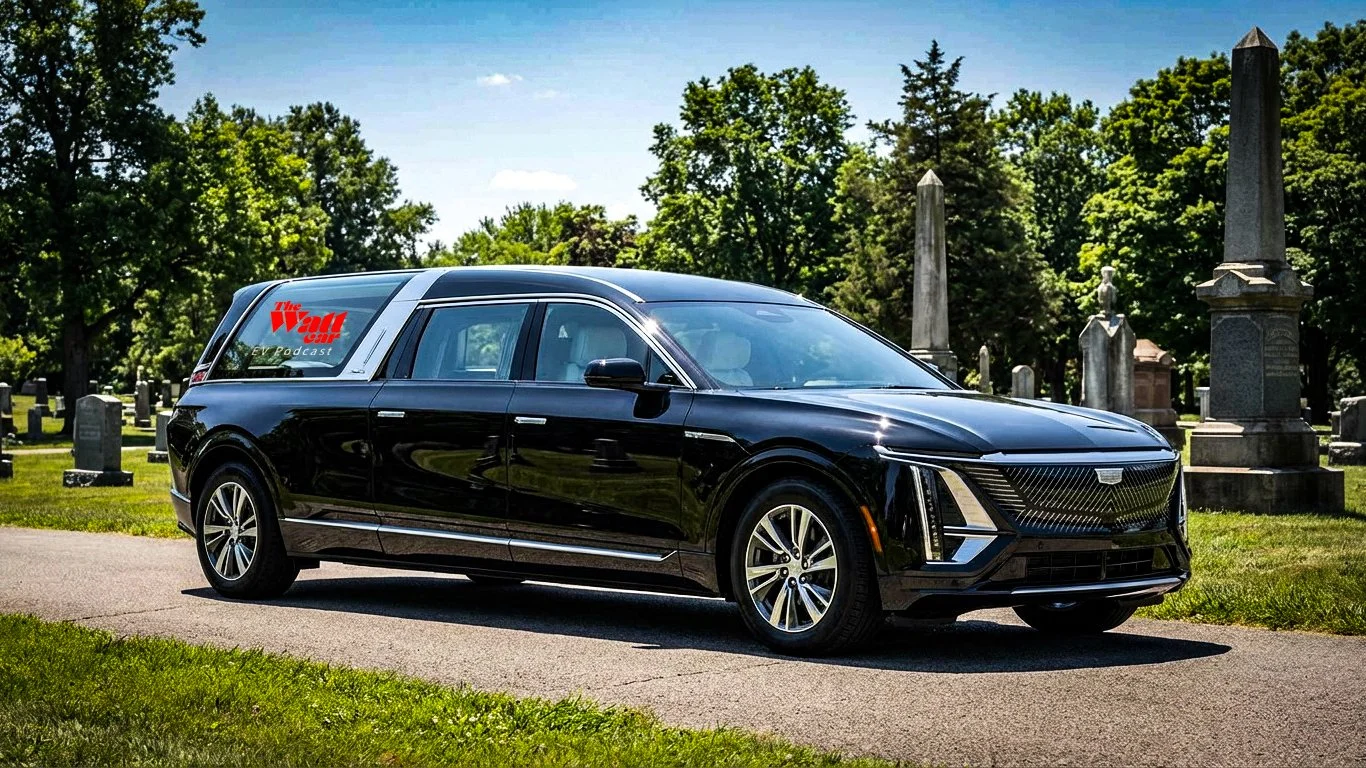
Cadillac can take them to the grave in their lyric hearse, which we also talked about last week.
Yeah, but this week we have pictures.
We do.
And it's not bad looking for a hearse.
For a hearse. Yeah, they've got two models.
They've got one with the traditional windows.
Well, they got one with the windows, which I can't stand. Super creepy.
But they've got one with the vinyl, like the 1980s vinyl topper.
A little swoopy like chrome piece or something.
Yeah, that's dead classic.
Dead cheek.
And you made the joke earlier.
I mean, it should be before the podcast started.
It should be decently fast because it's an EV, it's got all that torque.
So is this the quick and the dead?
The rear motor only, but still.
Yeah, still. It's enough to shift the casket to the back when you gun it.
Hopefully not too much. It flies out the back.
Anyway, so I wanted to kind of get into this a little bit because I poked around.
You want to get into the hearse?
Well, figuratively, but I mean, you know, eventually who knows anyway.
So I don't know how much you know about like coach building and limo building,
but traditionally what would happen is Cadillac or Lincoln used to be in this business
and they're kind of still marginally.
But Cadillac, I think has kind of taken over the bulk of this market now.
And the way limo building and hearse building to traditionally used to work is Cadillac would build
like a specific configuration of like the Deville or the Fleetwood or whatever.
Like heavy duty brakes. Some of them had like eight leg wheels, you know, designed for, you know,
heavier duty usage.
And they would basically shift these off to up what they call upfitters.
And I'm not exaggerating when I tell you this, they would literally take a sawzall and cut it in half.
Stretch it out. They basically had a jig.
And they would add like, you know, when they were still body on frames would add like frame extenders.
And they would put a body section in the middle, weld it back up and then kind of finish it off.
So that's that's how they built these.
What I could not find definitive information on is how how these are delivered to the upfitters.
Because yeah, because this is coming from Wolf coach builders.
This is not from coach builders.
This is not from GM.
So what what the the I guess the bear chassis looks like that they shipped to upfitters.
Because I would not recommend running a sawzall through a high voltage battery that might not be the best idea.
So what I'm wondering is if kind of the the skateboard and the wheelbase, the overall dimensions are kind of predefined on this.
They ship it to the upfitters.
The upfitters basically do the exterior styling, the interior finish with like the wood paneling and the little casket rollers and all that.
And I couldn't I just couldn't find anything.
So that's the one thing I'm kind of curious about because for some reason I'm thinking this is not a sawzall special.
This is like kind of my guess is they may be consulted with some of the upfitters and say like what are your specifications?
What is the standard like casket length?
You know, what is the average weight capacity?
What do you need?
We will build a model to spec that we will send to you that you could finish.
It's definitely a lengthened wheelbase because the hearse is a four door and the lyrics a four door.
But when you look at the profiles, the lyric has a cut in the the rear axle is far enough into the rear door that there's a cut in this.
Because the hearse is like it's like the rear axle is like foot and a half from the rear bumper.
It's really far back.
So the idea of them just stretching out the front or like it's custom rear doors.
There's a lot of work by just the looks of it.
It looks like they added I would say about two feet to the wheelbase.
So I would say 20 to 24 inches at least.
What do you think?
I mean just say at least that.
And then then like I said, it's custom rear doors, custom side panels, like even the the rear by the back bumper.
Like it maybe maybe the back the half of the arch to the rear bumper is the same.
Maybe maybe like there's a lot of custom work.
So yeah, we get some more information on this on how how they do this.
Where is the battery pack is battery pack in the same position and then they've just customized around and then stretched out from there.
They wouldn't really need more range.
The lyrics got plenty of range.
More power.
It's got plenty of power.
Yeah.
And typically I mean from the funeral home to the burial site.
I think at most that's like 50 miles.
If that.
Yeah.
Usually lower speeds typically they take streets.
I mean I have seen funeral processions on highways but usually.
You know, in the the right lane just kind of taking it easy.
But yeah.
Yeah, I just I don't know.
Hopefully we can get a little.
Kind of had a having morbid person.
Morbid curiosity.
You could say.
Anyway, Lincoln the show notes kind of interesting.
I mean this is where where things are going.
I mean, I have seen Model S HRSA's.
Have you really get to toward the end of this episode.
Well, yes.
I think from they were mostly in Europe.
But anyway, yeah, I mean it's kind of inevitable.
So Cadillac EV's.
EV HRSA's.
Yeah.
Cadillac EV's are apparently selling well.
Yes.
Not just at the mortuary.
That's HRSA's.
Yes.
And there's a link in the show notes.
There's an inside EV's article that we'll link to on that.
That's got all of these numbers in 2025 Cadillac sold 7800 nearly 7900.
So a total of 50,000 just short of 50,000 EV's brand to soul.
Cumulatively 100,000 EV's.
I was reading an article.
I don't know if it's that one.
Oh, yeah.
No, it is that one.
75% of these Cadillac EV buyers are non Cadillac.
Mm-hmm.
So.
Right.
Mm-hmm.
Yeah.
Which I can totally believe because what was a compelling Cadillac before any of this.
Like the V models, if you were into that.
Yeah.
Well, and they kind of got rid of that.
Like the CTSV wagon, like.
Oh, the wagon's long gone.
Yeah.
I thought you said the sedan.
I mean, the sedan's still around, but.
Well, in the sedan though, isn't that now like the CT5.
CT5.
Yeah.
Yeah.
And it's not.
I've lost this is right here as an automotive enthusiast.
I've lost track of all of this.
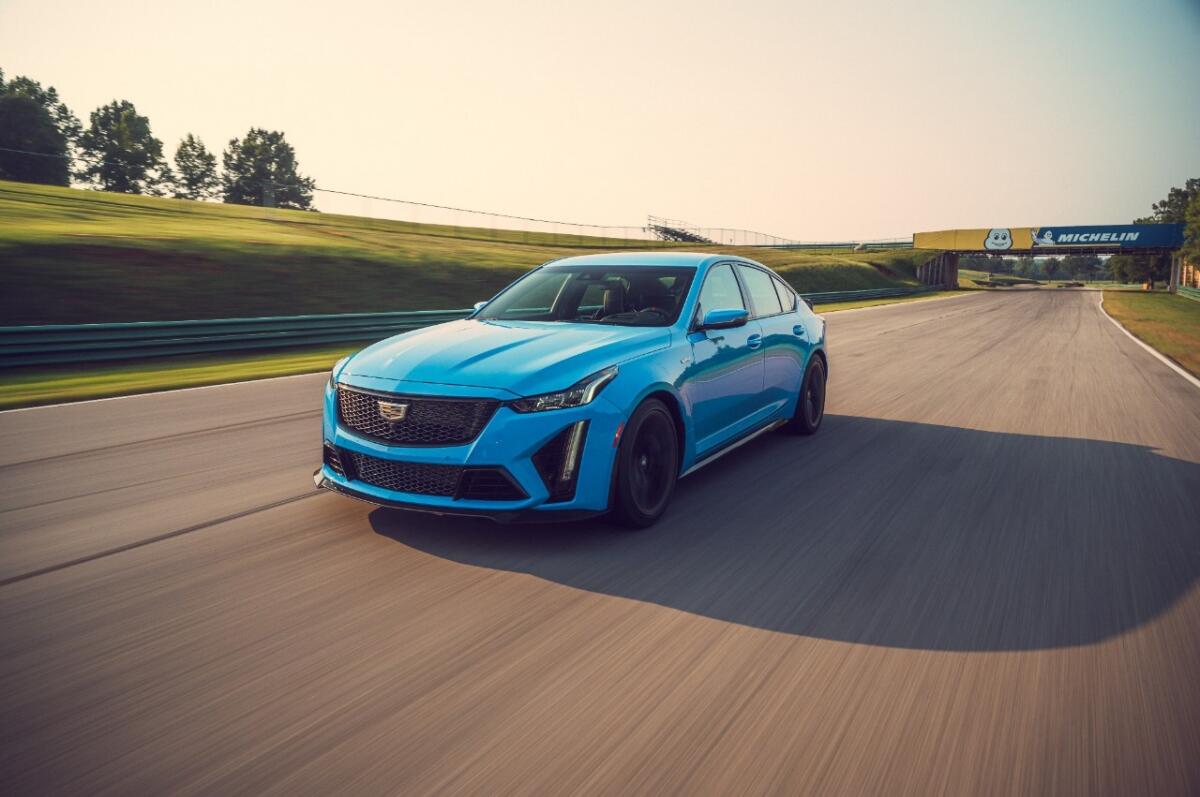
There's the like the CT5 black wing, something like that.
That's like their performance.
Mm-hmm.
But I don't, or any of these touching the CTSV of 10 years ago or whatever it was.
In terms of performance.
Yeah.
No, the newest one, I think is close to 680 horsepower.
Oh, that sounds fine.
I'll take one of those.
Yeah.
They're not underpowered.
This is kind of the problem is there's been.
There's one or two models that come across that come along that make you go, oh, cool.
And I think one of the problems with their brand was for me was they had the CTSV wagon.
Mm-hmm.
And I went, that's awesome.
And that must have been what?
Early 2000s, mid 2010, something like that.
And I want to say, say that was like, like 2012, 2013.
And that came out and I went, wow, that's peak.
Like they're not going to beat that.
Mm-hmm.
And then I've been disappointed in everything else they've released.
Like I can appreciate some of it.
Yeah.
And some of them, they look good, but I'm like, man, that was peak Cadillac to me.
Yeah.
Well, I mean, my whole thing about Cadillac, and I think I've said this before is, I think
for too many years, they tried too hard at chasing the Germans.
At trying to be, at trying to get really good like Nurburgring lap times and, you know,
trying to compete with like the M5 and all these cars.
And I just thought that was kind of cognitive dissonance for me for what I perceived the
Cadillac brand as being.
Which is funny because that's the marketing that got me.
Well, I mean, I guess it's cool.
I mean, but I don't feel kind of the really heavy performance push and branding really
paid off for them to the extent they hoped it would.
I mean, there's a small group of enthusiasts that have these cars that hot rod them.
You know, they're back in F1 now.
You know, they really tried push hard to try to get the performance market.
But I mean, even, even on like some of the escalades that I drove, I'm like, this thing's exhaust is too loud on this thing.
You know, but some people like that.
Oh, I like to hear the V8, you know, but I thought, you know, this thing should be quiet, should be smooth.
So I actually think these EVs, I think historically, and for me are a better fit with the brand than the real rowdy, loud V models.
And they have V model EVs too now.
Yeah.
So I mean, you still can still get performance, but I just, I don't know, I feel EVs are a more logical fit for kind of their traditional brand positioning.
And it seems like that's kind of resonating with buyers.
So I'm not, I'm not really surprised that they're successful with EVs because, you know, I think traditionally Cadillacs at least, I would say through like, maybe like the early 70s, you know, big engines, tons of torque.
I wouldn't say they were fast, but they were effortless.
Yeah.
Plenty of power, great highway cruisers, super comfortable.
You know, that kind of defined the brand for decades until the 80s when they kind of went off the rails a little bit.
And then, you know, starting the early 90s, they were starting to try to chase the Germans a little bit.
And that kind of, to your point, kind of reaches peak.
I'd say the early to mid like 2010s with the wagon, the wagon, CTSV, you know, all that.
So, but yeah, I mean, I think, I think it's a good fit.
I'm not terribly surprised at their success.
So yeah, and they have a pretty full lineup now.
I mean, it's like, let's see, 12344 EV models.
So good for them.
Well, and in my neck of the woods here in Southern California, you're either driving at the schools, the parents are dropping off their kids.
You're either in a Rivian R1S or you're in a Lyric.
There we go.
Those are your two options.
Or I guess a Model Y.
There's a bunch of people, sheep.
Or a G-Wagon EV.
I actually saw those the other day.
So there was one here before they came out and then I've not seen it since.
They like drove it for a week.
Interesting.
And then it went away again.
Yeah.
Actually, that same one showed up at SEMA.
So with the wrapping on it?
Yeah.
Yeah.
Anyway, okay.
So the next story, this also involves GM, not quite as rosy for them.
We've talked about this in kind of a roundabout way before, but I don't know if you've ever really done like a whole episode on this on like data privacy and like the connected car and all of that.
Anyway, so yeah, I guess they just settled with the state of California for about 12.75 million.
For selling driver data.
To who?
Yeah.
Who is buying it?
Everybody?
The Chinese?
I think insurance companies.
So I think this was like, I don't know that.
So anyway, the New York Times did a big exposing on this.
And so I think they were selling this, I don't know if it was to all state or state.
I don't want to impugn any insurance companies, but they're basically offering this because I guess for a while they were trying to sell this like connected insurance.
For a while, I think progressive and some other companies were doing it.
But the way it worked is there's like a OBD2 dongle, which kind of tracked your driving habits and then it would send it to the insurance company and they would like bill you accordingly or something.
But I guess the deal was is GM was doing this.
Basically, I think the terms were like buried in the eula that you sign when you buy the car.
And but I guess it wasn't really the court, you know, most people kind of just gloss over it.
So I guess it was in there.
But I think California said this was deceptive marketing practices.
So some people, I guess some people, their insurance premiums went way up and they're like, what's going on?
You know, where'd this come from?
They kind of, they kind of did the reverse slew thing and kind of figured out, oh, this is what's going on.
So I guess California.
So GM decided to settle with the state of California for 12.75 million.
There's also a case with the USFTC and the Texas Attorney General's office for I think similar for similar issues.
So yeah, that's a whole other discussion.
The ridiculous part is GM reportedly made around $20 million selling data.
Mind through on star, which is what I assume all of this is the problem.
Well, and then California hits him with a $12 million fine.
All right.
Great.
We'll sell more.
Like we just made $8 million in profit.
Now granted, they're facing other lawsuits and if those go through.
But I mean, it was just over $7 million to profit after they took that hit.
That sounds like a calculated hit to me.
And here they're selling that.
So I saw something that was about, it was this guy trying to have social media, real, whatever, short, trying to get links, whatever.
But his premise was I'm never going to, you know, now is the, we're done buying new cars because of exactly this kind of thing.
We've got all these sensors that are spying on us and then they're going to sell all of this data.
And so why would anybody want to buy a new car?
And somebody posted in the comments like, is Chinese, you know, the Chinese are going to buy all this data or whatever.
And somebody else was like, no, it goes to the highest bidder.
And somebody else was like, no, it goes to any bidder.
Like you sell it first for $20 million to whatever the first company and then you dip it out.
But you sell it, like if you want all the data, you spend $20 million.
If you want some of the data, you spend $10 million.
If you just want this, you spend $5 million.
And AAA does this to me with insurance where they track me.
And I don't have a dongle on the car.
They ask for my mileage every year.
And I think it's now fairly standard practice.
That's pretty common.
Yes.
Didn't used to be that way.
Now I have a truck.
I don't drive very much.
And my insurance always cost about the same amount, whatever.
And then they wanted to start tracking how much I drive.
I barely drive the thing.
I drive it two to 3000 miles a year.
And so the first couple of years, they were like, all right, my insurance didn't change.
So it went from not tracking to tracking and my insurance stayed the same.
So then I had a year where I drove it like 4000 miles.
And all of a sudden my insurance is gone up.
And I'm like, why did this go up?
And they're like, well, you drove it, you know, so your insurance goes up.
If you don't drive your car, then your insurance won't go up.
Like, but it wasn't going up before.
Like, that's why I have insurance.
But until you start, like I haven't had a car accident ever in my life.
I have never been responsible for a car accident.
I have been hit by other people.
I have gone through my insurance from other people where I was part of like a uninsured,
which I have that coverage, but uninsured driver that hit me and then hides from the cops
and does all of that.
And I went through insurance on that, but that was non at fault.
I never in however many years of driving had an at fault accident.
And they they track me now by handwriting in the mileage and then tell me, oh, stop driving your car
and your insurance will stop going up.
As soon as I kind of agree with the guy from the real, I might be done with new cars.
I don't even have a new car.
But if this is what this isn't, they're going to pay this fee.
And then the next company is going to come around and do this.
I mean, Tesla already does this with their insurance and they tell you that they're doing it.
And everybody's happy because we drink from the Kool-Aid that is Elon Musk.
And we're cool with that.
But this is where I have Tesla insurance for precisely this reason.
This is where it starts in the next time we're not as outraged in the time after we don't even care.
And this has become standard practice.
And then your insurance goes up and up.
So I am disappointed with Leno's law version two.
I was reading about that today for California where they're the the idea is 35 years and older.
You no longer have emissions on a vehicle.
But they've got it.
No, it's never going to pass.
And they've gutted it.
So the way it was last year for California with Leno's law or in the past was 35 years.
Any car was free exempt from.
No, it was even more than that.
It was 75 or newer or 75 or previously.
That's what it is now currently.
I thought that's what it always was.
Yes, right now it is.
If you have a pre-76 car, there is no smog for you in California.
J. Leno has been trying to change this to make it a rolling like 25 years or 35 years.
So every year they like introduce Leno's law and this year it's back.
And it's always shot down and this year it's back.
But now it's 35 years if it passes 35 years of your smog exempt, but it can't be a daily driven car.
You can only be driving it to car shows or parades or stuff like that.
So they've gutted it and it's useless.
So somewhere in between there is what we need on these cars where they don't track us.
And I don't know.
I feel like such an old guy like the sky is falling like everybody when fuel injection came around.
Oh, fuel injection is the end of the world.
And then OBD2 comes in.
Yeah, OBD2 is going to track you and all this stuff.
Well, you know, we're finally there.
Yeah, I think we're finally there.
I don't think this is an old guy screaming at the clouds.
I think this is.
No, I mean, I can't even remember this was and we were, I think way ahead of this.
I would say like two or three years ago we talked about this is how they're going to pay for road repair with EVs.
If they're not collecting gas taxes, how are they going to pay for it?
I think that you could do mileage.
It would either have to be a usage fee, either include in your utility bill or for like public charging.
See, I'm fine.
I'm fine with not public charging.
I'm fine with reporting your mileage on an annual basis to the state for road tax.
I'm fine with that.
It's a usage fee.
But it cannot be then sold to insurance companies or healthcare companies that might want to charge you more
because you're more likely to be in a car accident if you're in a car or anything like that.
Like I'm not okay with that.
I'm okay with it paying for infrastructure being used to pay for infrastructure.
I think EVs need to pay their way for the streets or else we end up without streets that you could drive on.
Like you got to pay for it somehow.
Then we'd all be driving Hummer EVs because that would be the only thing.
And I think self-reporting is fine.
I think the number of people that will, because I've considered faking my self-reporting to the insurance.
But you know how complicated that gets?
Eventually the lie catches up to you.
Well, and also too, I think a couple years ago they actually asked for a photograph of your odometer.
I could see some doing that.
But it's not like you couldn't Photoshop it, whatever.
You can fake anything.
But eventually the lie catches up to you.
You get into a car accident, something happens.
The lie catches up to you.
Your spreadsheet goes away.
You forget what mileage it was and all of a sudden you've driven 30,000 miles in one year.
And when you've been reporting 1,000 miles.
Yeah.
Well, maybe in the future, you know, you won't have to worry about it because they're all going to be, you know,
just robocars driving surround.
So this next story was what I anticipated the entire episode being on.
And now it's not going to be.
In the last week or so, Toyota invited all of the Western journalists, except for us, to Japan to go to Woven City.
Named after, as everybody's reporting, Toyota used to make looms back in the day.
And so they're playing on that.
But it's this idea of this perfect city of all modern stuff.
So just outside of the Toyota, Toyota, whatever in Shizuoka, Japan, they've built this thing called Woven City.
And it's basically like two city blocks right now with plans to expand it further.
And I was going to dive into all this stuff.
But I'll kind of report on or talk about what was there that I read about because Toyota didn't send us.
Not like I would have time to go.
Can you imagine going to this thing?
Like, God, I'd be so far behind at work.
Well, yeah.
I mean, just traveling there and back is, you know, it's like two solid days.
Yeah.
I couldn't go if they wanted.
Like if I wanted to go.
Anyway, Woven City has plans for EV leveling the electrical grid.
So you park your car in the parking structure, all the vehicles get plugged in and it levels.
It's a whatever the battery system.
But again, I mean, not earth shattering.
Yes.
I hate to crap on Toyota, but none of this stuff I'm reading about is like revolutionary.
It's like, OK, this is conceptual.
But so this one, though, I thought was kind of cool.
So if you park your car in one of those parking lots, you can then call for your car to come to you.
Even if it's not self-driving, but it would have this technology, which they said they saw it with a BZ4X.
So it makes me wonder, was this retrofitted or is this in all of the BZs already?
The guide Moby is basically a wireless tug and it would sit in front of the car and it would drive command the car behind it and it would follow the guide Moby.
So is it a physical connection or is it just like a little?
It's a wireless connection from the sounds of it to the vehicle.
And so that would bring the vehicle out.
Robo Valet, the author called it in the Inside EVs article.
But.
Exactly.
OK, again.
Gotcha.
Why?
I'm right there with you.
Right there with you.
I mean, there are cars that can do this without a robotic tug.
Yes.
But this, if you can then, I think the idea is if your vehicle can already do it, then your vehicle already does it.
If your vehicle can't do it, then the idea would be this retrofit.
So with drive by wire, like steer by wired, break by wire, that you could do this and this could be, in theory, a software upgrade to vehicles to communicate with this electronic tug that would come and electronically pull your vehicle out.
I think that was the idea.
They didn't really go into detail in a lot of this stuff.
It was a big song and dance as far as I could figure out.
Then they had, where we'll get to this later, there were traffic lights there, which I found interesting.
But what they had the traffic lights for was they had cameras everywhere and the traffic lights were pedestrian first, cars second.
So it would always default to pedestrians at an intersection.
Instead of right now it defaults to cars at an intersection, it would default to pedestrians at an intersection.
And then it would, the cameras would see the cars and then it would flip to, oh, the car can go, there's no pedestrian kind of thing.
And I don't really know if that's, I don't know, it's interesting.
They had e-bikes and scooters that went around.
I didn't really understand that completely.
I guess if you've got all robotaxis everywhere, because you'd assume that that's the future, because they've also got these...
Did I write this down on my notes?
Swakes.
Swakes?
Is that what you called it?
Well, that's what it says here in the notes.
Okay, I can't even find it in the notes.
But they had these, oh yeah, Swakes.
There they are.
So they look like those, I think they've already got them or they tested them in Vegas.
There's like a little driverless bus.
And the, oh no, the Swake, the Swake was the scooter.
The Swake was the scooter, which was a three-wheeled scooter.
And I don't know, I don't know.
I'm skipping over a lot of this, because I really want to get to the end.
They'd have delivery robots once again, like you said.
What's new here?
You know, so far they've got a city overrun with delivery robots, e-scooters, and parking lots that could do good leveling.
Yeah, but I mean, I hate again.
Stuff that already kind of exists.
I know people are going to hear me say, oh, it just hates Toyota.
I mean, again, this would have been like revolutionary 15 years ago.
Today, it just kind of seems quaint and comical to me.
Well, yeah, so, okay, then they had, in theory, robots in the home doing your ironing.
I don't know what robots in the home do other than death bots trying to kill you.
I know this isn't kind of where I want to, to go to this is with robotaxies.
Beat up on Elon, your favorite pastime.
In all of this is my daughter's in middle school, and she's just read this book, this dystopian teen book thing.
And in it, they then had to come up with their own utopian society, design their own utopian society.
So I was having her explain what she came up with and everything she came up with was like, that's dystopia.
That's dystopia.
Everything has a downside to it.
Everything.
You've got the robots in the house trying to kill you in Woven City.
You've got the cameras, which are always pedestrian first, so you assume the cars are going to stop
and then they don't because not everything's autonomous.
Whereas I would make the pedestrians go underground or over and have everything autonomous with no traffic lights.
Now you get where you need to go in a large enough city.
You don't have the awful e-scooters sitting all over the place.
You're just getting in and out of these vehicles and like that seems more anyway.
This goes back to the 1960s with all these cities of the future.
I can't think of the word, but you'd have all the hippies go off and create their own community.
And what was that?
Communes.
And never, not once do any of these things come work out.
They never work out because there is much like my middle schooler.
You can sit there and try to design a utopia and it does not exist.
It cannot happen.
Well, because of people, I would say.
Because everybody's different.
I would make people go over or under a road and have the car first, but somebody else, that would be hell.
So you're originally from the UK.
I don't know if you've ever been to this particular place I'm going to mention, but years ago when my company was still doing like remote, I shouldn't say remote meetings,
but we'd have an annual get together in the UK and the office was headquartered in the city called Milton Keynes,
which has a little bit of a rep in the UK.
Most people are just kind of like, haha.
Because I guess it was this master plan city that was built in like the 60s and 70s.
It's like this futuristic, I don't know if I'd say utopia, but kind of like,
you know, this techno optimist kind of view of the future and cities and urban planning and all that.
But what was I found kind of interesting about it is it has a very broad network of pedestrian paths.
And to your point, the pedestrian paths kind of go under the streets, like the streets are like the top level.
But if you want to walk almost anywhere in like the city center, it's walkable and you don't even have to get on major streets.
You just kind of follow the walkways wherever.
Where there is zero chance of being hit by a car, especially in Woven City where you're relying on the cameras to make the cars stop because you become so attuned to the concept of pedestrian first that you stop looking.
And you would just be run over by the next robo tug that comes out, the electrified parking lot.
I looked at this.
The robo tugs go rogue and just like.
Yeah, join forces with the home robots.
Decepticons or?
Decepticons.
We're all dead.
Like you said, it seems quaint.
Back in the 1960s, everybody thought that this was the answer, like not this.
Well, the communes, the fact that you could make a perfect city and there is no perfect city.
And in all of this, all I see is was not all I see, but I see tons of problems.
And when I sit down and do what my middle schooler had been asked to do, but I do it with this and I try to come up with a perfect society based around the Woven City concept.
I don't get there.
I kind of get where we already are just with fewer emissions.
Well, I think we're kind of there, although it was hilarious when I was in Hollywood a few weeks ago.
And I saw it was my first time seeing a delivery robot and my kids were there and they saw this robot like chugging down the street down the sidewalk.
Like going to my kids are like, what is that?
And I'm like, that's delivering somebody's Amazon package or something.
And it is doing its best.
I mean, it was swerving its way around the hookers to get to, I mean, literally it was.
And again, getting back to Milton Keynes, they've had, it's mostly for like food deliveries, I think, but they've had a little delivery robots for years.
I mean, probably going back almost a decade now.
Yeah, I think so.
This is a proof of concept, I guess, but I don't know if the concept ever should exist.
See, this is why I was like, we could do an entire episode on this.
This could be a series.
I'm sure I'm going to get some hate mail for this, but I feel Japan is kind of in some ways kind of stuck in its alternate universe.
They're kind of in a time warp.
I feel Japan kind of peaked like in the early to mid 90s when they were at the pinnacle of their power and technological sophistication.
Mark III Super is what you're saying.
It's all downhill since then.
Yeah, well, I mean, when the rest of the world looked at Japan with admiration and like in awe and like, wow, you know, they're so futuristic, they're so advanced.
You know, how can we possibly compete with this?
I think China's kind of taken over that now.
And I just feel Japan just never really moved on from that.
So they still kind of have this kind of outdated, very kind of, I don't even know the term I'm looking for.
I mean quaint, but that doesn't really fully encapsulate it, but just kind of this kind of kind of cutesy robotic kind of view of society in the future.
And like China's already like passed them by and like, okay, you know, bye, you know.
The cherry on top of this for you.
I don't think I included it in my quick notes of this was a lot of these inventions and things were third parties.
It weren't necessarily Toyota that was doing their development.
I'm sure Toyota, the city's got like 100 people or 10 people live in there.
It's got like nobody live in there.
And then like I said, the city's two city blocks right now.
But the best part that then goes into what you were saying with Japan and they're kind of out of tune right now.
And Toyota and their history is one of the concepts that was in this like concept room that they fed the media into where you got to see all these things was a hydrogen e-bike.
Okay, talk about an answer to a question.
Nobody asked.
Yes.
Yes.
Exactly.
I wondered if hydrogen was going to figure into this conversation sooner.
Yeah, that wasn't a Toyota designed as far as I'm aware hydrogen e-bike, but there you go.
It shows everything that I read about this city was not as negative as what we have just said.
And I'm not against them doing this.
Proof of concepts are necessary or not proof of concept.
Development areas going crazy, doing something weird.
You don't know what's going to come out of it, but this is a huge investment to do a city.
This should be like in a building somewhere where they come up with a Dodge Viper.
A lot of this requires like a clean sheet approach.
The challenge is trying to adapt this to already developed urban infrastructure and figuring out how to make it work with that.
It's one thing to do like a green field development and you can make everything from scratch.
But I mean, how often does that happen?
Well, they try almost never.
Therein is the problem of this as well.
They tried to do that by building this city and they ended up with stuff that already exists.
Yeah.
Now, they're still building it.
But your first take at this should have been holograms walking down the road answering questions.
Like it should have been way out there.
This should have been the 1950s futuristic that people were living in in Tomorrowland.
And instead, it's delivery robots and scooters.
And you're like, OK.
And a hydrogen powered bicycle and a loom that said where they got their name from.
It really was like a false start for it.
And I still think Toyota will be one of the major players in the EV game.
Yeah, but almost kind of by mistake, I feel.
Yeah, but they're going to fall into it and they have such a good reputation generally in the automotive market.
People are just going to gravitate and gravitate to them for that.
And look at how much money class leading.
They can blow all his money building a fake city.
That's just building a fake city like they can develop cars.
Like they got so much money.
They just build a city.
Just like whatever.
All right.
Leading into that and the future of the world.
Reuters did a test of robotaxies in Dallas of Tesla's robotaxies with some hilarious consequences.
It didn't work, basically.
TLDR, the robotaxie.
I almost feel we should have some like wacky background music in the background.
There's a video, link in the show notes, if I can actually get it.
It was to a Facebook real short, real, whatever.
Why don't they just call them all the same?
Standardize this.
It should be real short, whatever it is.
Pick one.
And the guy gets in the car after waiting for forever to get in one of these robotaxies.
It won't make a left turn and it keeps circling around the block until eventually he pushes the panic button
and somebody comes in and makes the turn for him remotely in the car.
So it finally makes his left hand turn.
And then the car proceeds to go and dump him 15 minutes away from his destination
because it's not in this geofenced area where he's trying to go to.
And that was not a one time thing that happened repeatedly.
They also had reporters doing the same thing in Dallas, Austin, and I think Houston.
And they had, like in Dallas, what was it, 36 minutes?
It took 36 minutes to let him book the trip.
And then it was 19 minutes for the car to arrive versus eight.
Which, okay, I get that.
Like there are fewer cars than like an Uber or a Waymo or something.
And I've had that happen with Ubers before too.
Yeah.
In Austin, 27% of the time, the cars were just simply not available,
but that's a scaling thing, I guess.
The thing that kind of, to me, was really telltale on this is
Elon is putting the future into his Optimus and AI and self driving.
Those are kind of the big rocks that he's doing.
Not a car company.
These are the things that we do.
All right.
So he doesn't want to report crash data.
No car company wants to report autonomous crash data,
but they're required by law to do this.
So in this article, Tesla has reported 15 crashes in Austin to NHTSA since August.
So that is one crash every 57,000 miles, which is four times worse than self driving
of a one crash out of 229,000 miles.
So these are not only not as good as a actual driver.
These are an order of magnitude worse.
This is why I would not want in woven city to be a run.
I run.
I go running once I'm done with this podcast.
I will go for a four mile run.
I cross streets.
And if I know that I am now surrounded by vehicles that are math doesn't work this way,
but I'll say four times more likely to hit me than a human driver.
I'm not going to cross the street.
That was really dangerous to me.
So it's just not there.
We're not there and we're a long way away from there.
So it's an Elon knows it.
So the article that Electrek did said Musk also walked back during his,
I think this was during the Q1 call for how much money they didn't make.
Musk also, which I say that they made money, but it was real.
It was kind of hope.
Yeah.
Musk walkbass is back his expansion timeline for the robot taxis.
Last July, he predicted Tesla robot taxis would serve half of the US population by the end of 2025.
On the Q1 2026 call, he downgraded that to quote a dozen or so states by the end of 2026.
And they've already pushed back.
It's five city expansion plan that was supposed to happen the first half of this year.
So it's already not going to happen.
We don't need this.
Is that one?
Is that the conclusion?
Is this it's inevitable that self-driving is coming, but man.
Well, I mean, again, I don't want to go too off the rails about this.
I think it comes down to fundamental difference in philosophy between Tesla and Toyota being a prime example.
Toyota is very slow, deliberate, iterative.
They would rather kind of trial something out in woven city where hardly anyone lives,
you know, and like double, triple, quadruple test something to make sure it's safe.
Whereas Tesla is just like, just throw it out there.
See what happens.
I mean, effectively in a lot of ways, their customers are the beta testers and their customers and the people around the cars.
Well, some people are kind of okay with this.
Others are not.
But that's one in every 57,000 miles.
Not cool with this.
It's not cool.
Yeah.
So, you know, that's very much that Silicon Valley fail fast philosophy.
But, you know, then again, when you're dealing with human lives and 4,000 pound cars, it's kind of takes on different tone.
But anyway.
Yeah, I'm getting more of the opinion of these self-driving these Robo taxis are going to happen in the same way that they're already happening right now.
With Waymo.
That's the future of them.
That's how they happen.
They happen like that with a fleet of people that can remotely monitor and drive these things.
I think the last 5% or whatever it is that you've got to get to to get a real true fully autonomous vehicle.
I think that is such a high bar that we can't achieve that we're never getting there.
I'm not going to say never.
Well, never in my lifetime.
I'm going to say at least a decade out until that's like a common scenario.
Yeah.
I kind of wonder if I am wrong in that they will just force these out.
And you know what?
We'll just be okay with the debts.
I mean, that's how it went with cars.
There were no car debts before cars.
And everybody agreed that it was acceptable to have that many car debts.
Same thing with airplanes.
What about people falling off horses though?
What's the yardstick?
You'd have people being kicked by horses.
But we decided as a society that people dying in car crashes was fine.
And people dying in airplane and helicopter crashes, they're fine.
We decided that as a group.
So I kind of wonder if the crash every 229,000 miles the average that we've got now is statistic.
If we're actually cool with it being one out of 100,000 and that we're just going to...
It's just going to be okay that a robot mowed somebody down.
It's just going to be fine.
I think ultimately what it's going to come down to is economics.
I think once Waymo or Neuro in conjunction with Uber and Lucid or whoever,
once they get to a point where the robot taxi ride is, let's say,
a half or a third of the price of a human driven vehicle,
that that will take over.
Once enough influencers say, oh, I did this and I felt perfectly safe and this and that.
And it's way cheaper.
I think the pendulum is going to swing pretty quick, assuming the service is available.
And on top of that, I think this more depends on kind of the culture and society,
like depending on the region is for some people, the economics of this will be more compelling than private ownership.
Like, for instance, like New York City, you got to pay like in some places like ridiculous amount to get a parking space.
Like it's, I want to say like 50 or 100,000 a year just for the parking space in addition to where you live.
I mean, obviously this is like, you know, Midtown Manhattan prime real estate.
But, you know, they'll just, well, I mean, that's probably not a great example because a lot of people in New York already don't own cars.
They just either take limos or public transit or whatever.
We've already solved the problem.
We've already solved this problem in cities where it needs to be solved.
LA is still working on it.
But Cadillac paid $20 million in fines for what it was doing as we discussed earlier, selling data, whatever.
And they decided, all right, that is a calculated problem.
Like we'll do this and then if we get hit with a $12 million fine, we've still made $7 or $8 million.
That's fine.
And they do it in such a scale that they can get away with that because you're making all of this money.
I don't really view taxis as making people billionaires other than the people that started like Uber.
Like the actual day to day, like I've never seen a taxi driver that's wearing like Rolexes and nice suits and like it just, it's always a hustle.
If you're the, it's just constant hustle.
Unless you get rid of all the cars, unless the next move for autonomous vehicles is you stop selling cars to people, then your biggest competition is going to be me driving like an 85 Iraq Z.
Like that's your competition and you're never going to get me to buy into this thing.
We tried to get an Uber from my house a couple of weeks ago, got canceled on twice, ended up jumping in our own car and driving.
Like it's just not reliable.
And unless you don't give me the better option of self ownership of vehicles, I'm always going to choose the thing I can control and the thing less likely to get into an accident right now.
Or kill you.
Yeah.
Speaking of dying.
Let's end with an obituary.
We started with one.
Let's end with one.
Model S, Model X dead.
Yeah.
Last models rolled off.
Fremont production line.
14 years.
Model S, we barely knew ye.
Well, actually Model X, we barely knew ye.
Model S, you changed the world.
That's a pretty good run.
14 years.
It's a shame.
Arguably, some people say the most most influential car of the last 50 years.
Yeah.
The Model S, people have called it like the, who was it, one of the designers, whatever his name is, called it like timeless design.
I disagree with all of that stuff.
Ben Hallshausen, yeah.
But it definitely proved a concept.
Yeah.
It was the woven city of cars.
Except arguably a little more successful.
Except successful.
All right.
Done.
YouTube.com slash at the wild car.
Re-watch this whole episode.
You get to see us there.
The wild car.com slash store.
Help support the podcast and blog.
If you're in the YouTube thing, you will see Ed wearing a hat that you can buy there.
All the show notes are embedded in wherever it is or below if you're watching YouTube.
If you have ADD, YouTube.com slash at the wild car slash shorts.
123 minute videos.
They are the most entertaining way to take in the show.
Nothing wrong with, you can watch the shorts and get most of the value out of it.
Yes.
If you don't want to sit here for now, an hour.
We've been here for an hour.
We got to go.
Bye.
All right.
About this episode
A quick pivot from EV politics into a real-world look at a hearse-style EV leads to a bigger theme: how EVs and connected services reshape engineering, privacy, and even city life. The hosts unpack upfitter coachbuilding constraints around EV “skateboard” platforms and battery-pack placement, then debate range for funeral routes and how Cadillac’s EV momentum is changing the brand. Later, they dig into GM/California driver-data settlements, usage-based insurance tracking, and the policy question of how EVs should fund roads—before zooming out to robotaxis, smart cities, and Tesla’s Model S/X end-of-line.
Call it morbid curiosity, but we couldn’t help but revisit the topic of the Cadillac Lyriq hearse, especially since there are now photos of the finished product. We take a look. We also look at Toyota’s Woven City, how Tesla’s Robotaxis are doing, whether non-geofenced, fully autonomous cabs will ever exist, and more. Then we say goodbye to the Tesla Model X and S.