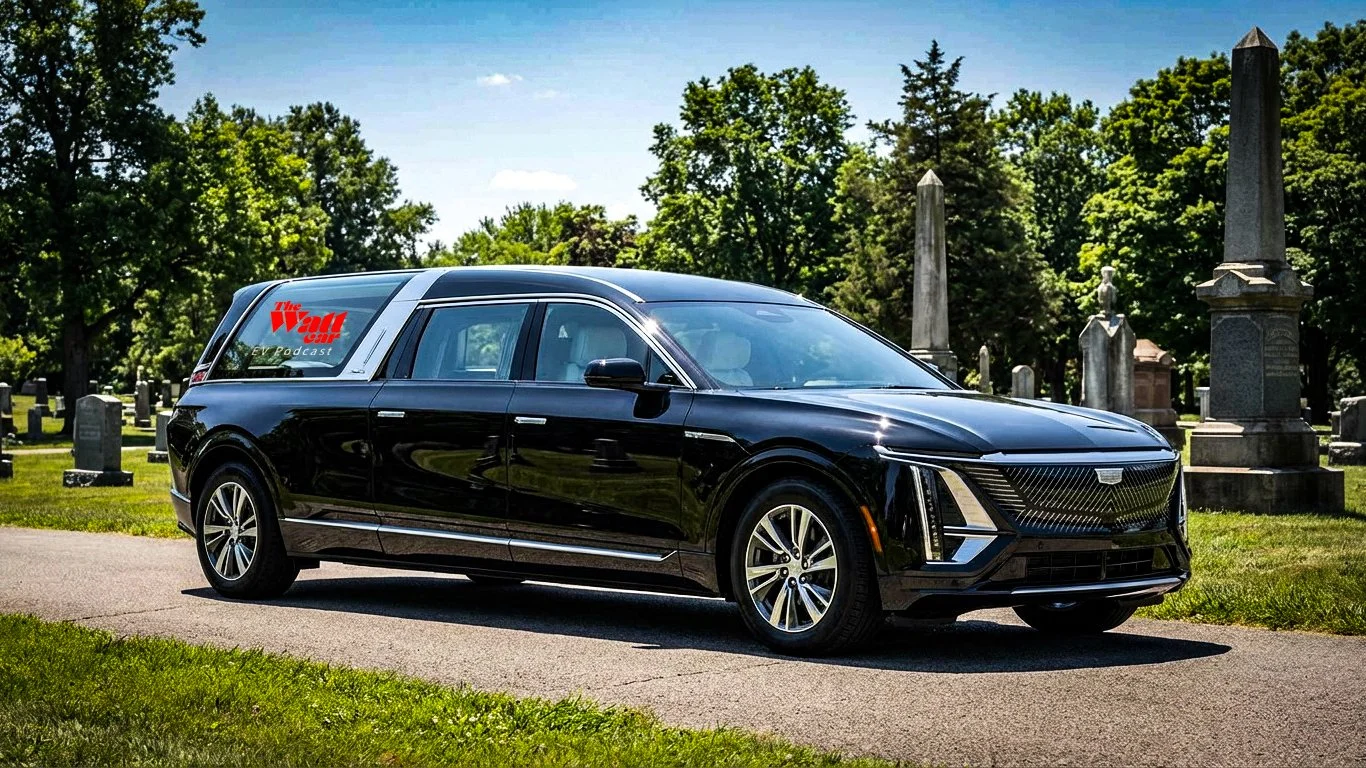
270: Morbid Curiosity
About this episode
A quick pivot from EV politics into a real-world look at a hearse-style EV leads to a bigger theme: how EVs and connected services reshape engineering, privacy, and even city life. The hosts unpack upfitter coachbuilding constraints around EV “skateboard” platforms and battery-pack placement, then debate range for funeral routes and how Cadillac’s EV momentum is changing the brand. Later, they dig into GM/California driver-data settlements, usage-based insurance tracking, and the policy question of how EVs should fund roads—before zooming out to robotaxis, smart cities, and Tesla’s Model S/X end-of-line.
Call it morbid curiosity, but we couldn’t help but revisit the topic of the Cadillac Lyriq hearse, especially since there are now photos of the finished product. We take a look. We also look at Toyota’s Woven City, how Tesla’s Robotaxis are doing, whether non-geofenced, fully autonomous cabs will ever exist, and more. Then we say goodbye to the Tesla Model X and S.
Subscribe to the podcast on Apple Podcasts, Amazon Music, Audible, Spotify, PocketCasts, iHeartRadio, Podbean, and more! Or heck, use your favorite podcast application.
Perhaps you prefer to watch as well as listen. If so, we’ve got you covered.
SHOW NOTES
We finally have pics of the Lyriq hearse: https://www.caranddriver.com/news/a71258861/cadillac-lyriq-hearse-details/
Cadillac EVs also popular with the living: https://insideevs.com/news/795368/cadillac-75-percent-buyers-new/
GM settles driver data selling lawsuit in California for $12.75 million: https://www.thedrive.com/news/shady-selling-of-driver-data-just-cost-gm-another-12-75-million
Toyota’s Woven City: https://insideevs.com/features/795380/toyota-woven-city-tour-2026/
Reuters tests Robotaxi in Dallas with hilarious consequences: https://www.reuters.com/business/autos-transportation/teslas-robotaxi-rollout-features-texas-sized-wait-times-2026-05-12/
Electrek goes past the paywall on the Reuter’s article: https://electrek.co/2026/05/12/tesla-robotaxi-convenience-issues-hide-safety-bottleneck/
The last Tesla Model S and Model X rolled off the Fremont assembly line: https://insideevs.com/news/795519/tesla-model-s-x-production/
This week’s hosts: Phil Royle and Edward A. Sanchez
Episode art courtesy Wolf Coach Builders
Music courtesy Twisterium at Pixabay
Website: https://www.thewattcar.com
Buy merch: https://www.thewattcar.com/store
YouTube: https://www.youtube.com/@thewattcar
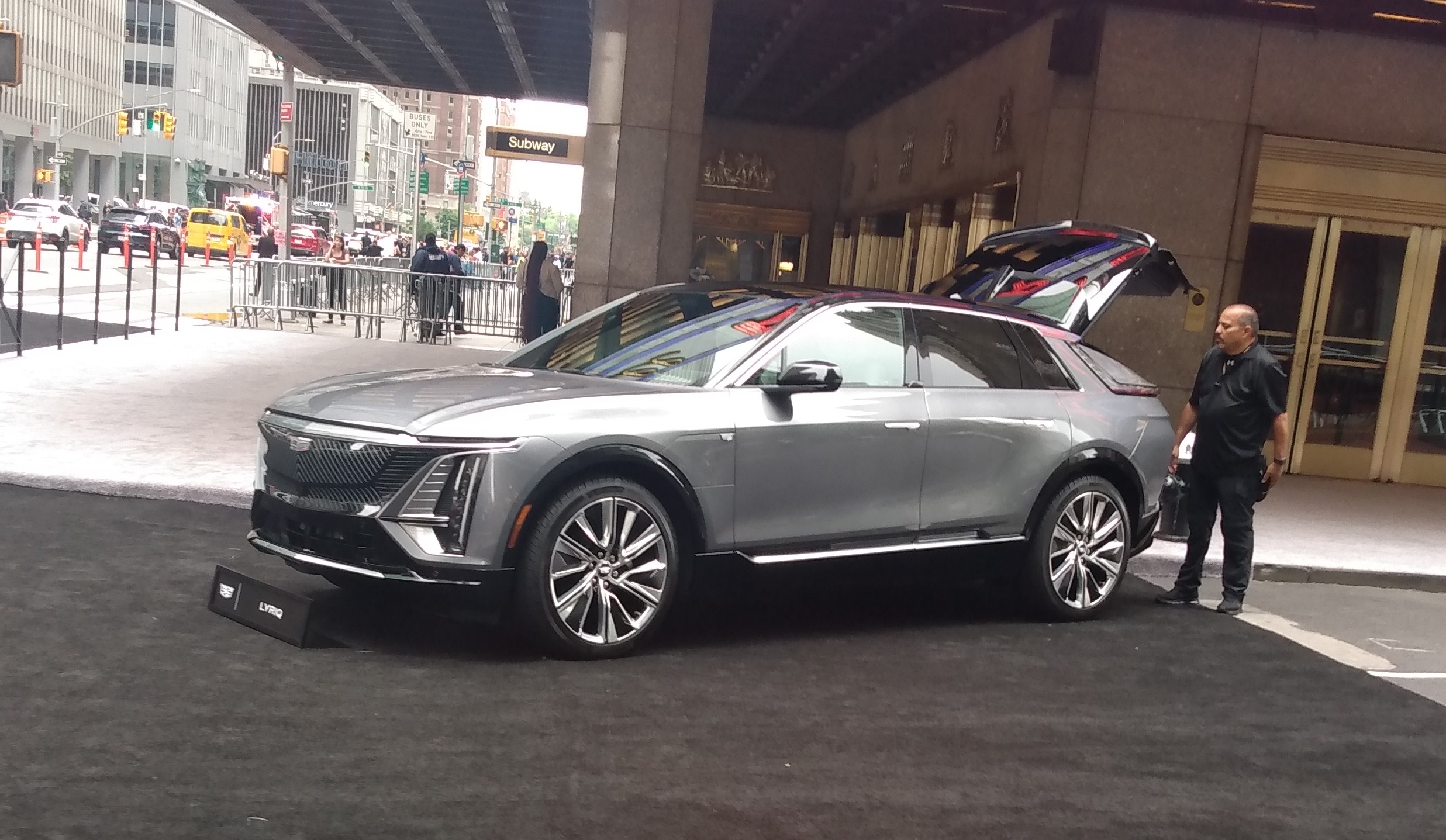
Cadillac Lyric
"...gue? Cadillac can take them to the grave in their lyric hearse, which we also talked about last week. Yea..."
The Cadillac Lyriq is an all-electric SUV made by Cadillac. It’s built to be a comfortable, everyday luxury vehicle, but powered by a battery instead of gasoline. People talk about it because it’s Cadillac’s EV offering in the SUV category.
The Cadillac Lyriq is Cadillac’s electric SUV, designed to bring EV technology into a mainstream luxury crossover format. It’s often referenced in EV conversations because it represents Cadillac’s push into battery-electric vehicles. In the podcast context, it’s also being used as a wordplay reference, but the Lyriq itself is the EV model being discussed.
torque
"I mean, it should be decently fast because it's an EV, it's got all that torque. So is this the quick and the dead?"
Torque is the “twisting power” that helps the car move. Electric cars usually have a lot of it right away, so they can feel quick without much effort.
Torque is the twisting force an engine or motor produces. EVs often make strong torque from low speeds, which helps them accelerate quickly even without needing to rev high.
EV
"I mean, it should be decently fast because it's an EV, it's got all that torque. So is this the quick and the dead?"
EV means electric vehicle. It runs on an electric motor powered by a battery, not a gas engine.
EV stands for electric vehicle, meaning the car is powered primarily by one or more electric motors. EVs store energy in a battery pack and use electric drive instead of an internal-combustion engine.
rear motor only
"So is this the quick and the dead? The rear motor only, but still. Yeah, still. It's enough to shift the casket to the back when you gun it."
“Rear motor only” means the electric motor is only powering the back wheels. That can change how the car launches and how it grips the road.
“Rear motor only” means the vehicle’s electric drive is powered only by a motor mounted at the rear, rather than using front and rear motors. That layout typically drives the rear wheels and can affect traction and how the car feels when accelerating.
coach building
"You want to get into the hearse? ... I don't know how much you know about like coach building and limo building,"
Coach building is the practice of taking a production car chassis/body and having a specialized shop modify it into a custom body style—like a limousine or hearse. In this segment, it’s used to explain how certain luxury American brands historically provided the base vehicle for these conversions.

Cadillac Deville
"Cadillac would build like a specific configuration of like the Deville or the Fleetwood or whatever."
The Cadillac DeVille is a big, older Cadillac sedan. People sometimes used it as the starting point for custom builds like limos and hearses, then modified it for the job.
The Cadillac DeVille was a full-size Cadillac sedan that was commonly used as a base for coachbuilt conversions like limousines and hearses. In this segment, it’s mentioned as the kind of specific factory configuration upfitters would start with before stretching and modifying the body.

Cadillac Fleetwood
"Cadillac would build like a specific configuration of like the Deville or the Fleetwood or whatever."
The Cadillac Fleetwood is a large Cadillac model. In the past, custom builders could start with one and then modify it into things like hearses or limousines.
The Cadillac Fleetwood was another full-size Cadillac model that served as a common base for coachbuilt vehicles. Here it’s referenced alongside the DeVille as the kind of starting platform upfitters would modify for limo/hearse builds.
upfitters
"And they would basically shift these off to up what they call upfitters."
Upfitters are shops that take a normal vehicle and customize it for a specific use. Here, they’re the companies that turn a base Cadillac into a limo or hearse.
Upfitters are specialized companies that take a base vehicle and modify it for a specific purpose, such as converting a sedan into a limousine or hearse. In the segment, Cadillac sends configurations to upfitters so they can cut, stretch, and rebuild the vehicle.
body-on-frame
"And they would basically shift these off to up what they call upfitters... when they were still body on frames add like frame extenders."
Body-on-frame means the car has a separate “skeleton” frame, and the body bolts or mounts to it. That makes it easier to stretch and rebuild for custom vehicles like hearses and limos.
Body-on-frame is a vehicle construction method where the body is mounted on a separate ladder frame. This matters for limo/hearse conversions because the frame can be extended with parts like frame extenders and then the body section is welded back in.
frame extenders
"And they would basically shift these off to up what they call upfitters... add like frame extenders."
Frame extenders are parts that lengthen the car’s main structural frame. They’re used when builders stretch a vehicle to make room for extra body section length.
Frame extenders are structural pieces added to a vehicle’s frame to increase its length. For stretched limos and hearses, they’re used to extend the chassis so the body can be inserted in the middle and the whole structure can be welded back together.
high voltage battery
"Because I would not recommend running a sawzall through a high voltage battery that might not be the best idea."
An electric car has a battery that runs the drivetrain using high voltage electricity. The speaker is warning that you shouldn’t cut into or damage it during conversions.
A high voltage battery is the traction battery in an electric vehicle that powers the electric drive system. The speaker’s point is that cutting or modifying around it (e.g., with a saw) is risky, especially if the battery pack isn’t designed for that kind of work.
skateboard
"So what I'm wondering is if kind of the the skateboard and the wheelbase, the overall dimensions are kind of predefined on this."
On many EVs, the battery and motors are built into a flat platform underneath the car. The speaker is asking whether that platform’s size is fixed before custom builders modify the vehicle.
In EV design, a “skateboard” refers to the battery pack and drive components packaged into a flat platform that sits under the vehicle. The speaker is wondering whether the skateboard platform and wheelbase/dimensions are standardized before upfitters do custom stretching.

Cadillac Escalade
"... 2025 Cadillac sold 7800 nearly 7900. Vistix 8100 Escalades 12 nearly 12200 optics and 20 nearly 21000 lyrics..."
The Cadillac Escalade is a large luxury SUV. It’s designed for comfort and room, with a premium interior. It’s commonly mentioned because it’s a top-selling, high-profile SUV in the luxury segment.
The Cadillac Escalade is a large luxury SUV that’s known for comfort, space, and a high-end interior. It’s often discussed in sales and market talk because it’s one of the most prominent full-size luxury SUVs. When a podcast mentions recent sales numbers, the Escalade is typically part of that broader picture of demand for big, premium vehicles.

Cadillac Ctsv
"Like the CTSV wagon, like. [899.5s] Oh, the wagon's long gone."
Cadillac’s CTS-V is the fast, performance version of the CTS. A “wagon” is the longer, family-friendly body style, and the CTS-V wagon is the enthusiast version of that.
The Cadillac CTS-V is the high-performance variant of the CTS, and the “wagon” refers to the estate-body version. In enthusiast circles, the CTS-V wagon is notable because it paired a practical wagon shape with a V-series performance package.
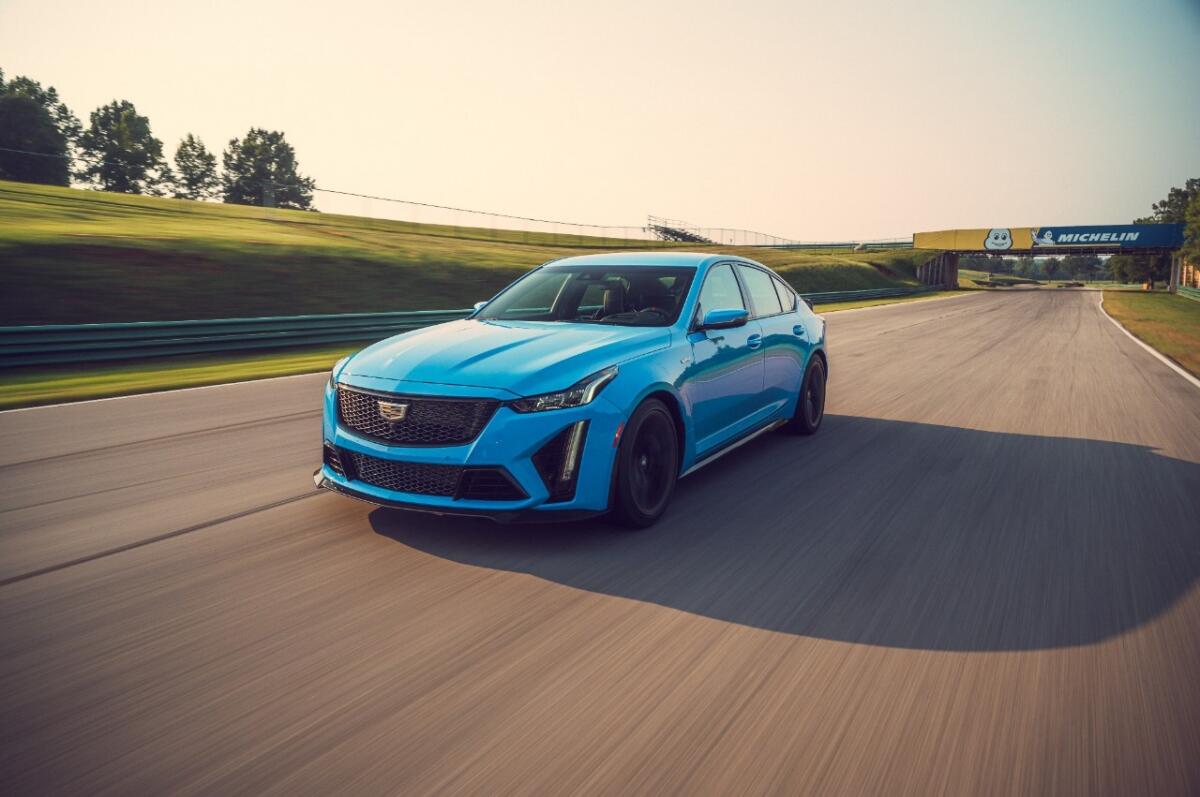
Cadillac CT5
"Well, in the sedan though, isn't that now like the CT5. [907.3s] CT5."
The Cadillac CT5 is a newer mid-size sedan from Cadillac. The speaker is basically saying the CT5 is what you look at now instead of the older CTS.
The Cadillac CT5 is a mid-size sedan that replaced the CTS nameplate in Cadillac’s lineup. In this conversation, the host is connecting today’s CT5 to the performance/positioning people used to associate with the older CTS-V.
horsepower
"No, the newest one, I think is close to 680 horsepower. [936.2s] Oh, that sounds fine."
Horsepower is a number that tells you how much power the engine can make. Higher horsepower often means the car can accelerate harder.
Horsepower is a measure of an engine’s power output—how much work it can do over time. When someone says a car is “close to 680 horsepower,” they’re describing how strong the power is, which usually correlates with acceleration potential.
Cadillac CTSV wagon
"And I think one of the problems with their brand was for me was they had the CTSV wagon. Mm-hmm. And I went, that's awesome."
This is a supercharged-performance Cadillac wagon. It’s the kind of car that tries to be both useful (wagon) and fast (the “V” performance version).
The Cadillac CTS-V wagon is a high-performance version of the CTS, built for enthusiasts who wanted a practical wagon with serious power. The “V” badge typically indicates Cadillac’s performance tuning and hardware, and the wagon body style makes it a rare, enthusiast-focused variant.
chasing the Germans
"Well, I mean, my whole thing about Cadillac, and I think I've said this before is, I think for too many years, they tried too hard at chasing the Germans."
This phrase means trying to compete with German brands that are known for performance and engineering. The host is saying Cadillac tried to copy that image instead of staying true to what they felt Cadillac should be.
“Chasing the Germans” is enthusiast shorthand for a brand trying to match the performance, engineering reputation, and track credibility associated with German automakers. In this segment, it’s framed as Cadillac shifting its focus toward European-style benchmarks rather than its own traditional identity.
Nurburgring lap times
"At trying to be, at trying to get really good like Nurburgring lap times and, you know, trying to compete with like the M5 and all these cars."
The Nürburgring is a famous race track in Germany. When people talk about “lap times,” they mean how fast a car can go around that track, which is often used to compare how good different cars are.
“Nürburgring lap times” refers to how quickly a car can complete a lap at Germany’s Nürburgring, one of the world’s most famous motorsport circuits. Because the track is long and varied, lap time is often used as a shorthand for overall performance and chassis/tires balance.

BMW M5
"At trying to be, at trying to get really good like Nurburgring lap times and, you know, trying to compete with like the M5 and all these cars."
The BMW M5 is a very fast BMW sedan. The host mentions it as an example of the kind of performance Cadillac was trying to match.
The BMW M5 is BMW’s flagship high-performance sedan, known for combining everyday drivability with track-capable performance. In the transcript, it’s used as a benchmark for the kind of “German” performance Cadillac was trying to compete with.

Rivian R1S
"You're either in a Rivian R1S or you're in a Lyric."
The Rivian R1S is an all-electric SUV. People talk about it because it’s built for road trips and outdoor use, not just commuting.
The Rivian R1S is an electric SUV from Rivian, known for its adventure-focused design and large battery pack. In EV conversations, it often comes up as a direct alternative to other premium electric SUVs for families and road trips.

Tesla Model Y
"Or I guess a Model Y."
The Tesla Model Y is a popular electric SUV/crossover. The point is that it’s one of the most common EVs people see in daily life.
The Tesla Model Y is a mainstream electric crossover that’s widely seen in everyday driving. It’s brought up here as another common option in the same “what people drive around schools” context.

G-Class Gwagon
"Or a G-Wagon EV. I actually saw those the other day."
A “G-Wagon EV” means an electric Mercedes G-Class. It’s a big, boxy luxury SUV, and the host is saying they don’t see it often.
“G-Wagon EV” refers to an electric version of the Mercedes-Benz G-Class (often called the G-Wagen). The hosts mention it as a rare sight that they noticed briefly, highlighting how uncommon some EV variants can be.
GM
"So the next story, this also involves GM, not quite as rosy for them."
GM is General Motors, the car company. In this story, they’re connected to a legal settlement about selling driver data.
GM refers to General Motors, the automaker involved in the story. The hosts say GM settled with the state of California over selling driver data, making it a concrete example of how automakers handle connected-car information.
data privacy
"We've talked about this in kind of a roundabout way before, but I don't know if you've ever really done like a whole episode on this on like data privacy and like the connected car and all of that."
Data privacy here means what information your car collects and who gets to use it. The hosts are discussing a case where driver data was sold, which is why privacy matters.
Data privacy in the EV context usually means who can access the information your car generates—like location, driving behavior, and usage patterns—and how that data is stored or sold. The segment later references a settlement over selling driver data, tying the privacy issue to real-world consequences.
connected car
"We've talked about this in kind of a roundabout way before, but I don't know if you've ever really done like a whole episode on this on like data privacy and like the connected car and all of that."
A connected car is a car that can talk to the internet and other services. That can enable useful features, but it also means the car may collect or share data.
A connected car is a vehicle that uses internet connectivity to send and receive data—often for navigation, apps, remote features, and diagnostics. Because it’s constantly communicating, it creates new privacy and data-handling questions compared with older cars.
connected insurance
"they're basically offering this because I guess for a while they were trying to sell this like connected insurance."
Connected insurance means your insurance price can be based on how you drive, using data from your car. The hosts are saying some people felt the rules weren’t clearly explained.
Connected insurance is a usage-based insurance approach where an insurer uses telematics data (like driving behavior) to set premiums. The segment describes it as being marketed for a period, then later challenged as deceptive when the data terms were allegedly not clear to buyers.
OBD2 dongle
"But the way it worked is there's like a OBD2 dongle, which kind of tracked your driving habits and then it would send it to the insurance company..."
An OBD2 dongle is a small device that plugs into your car and can read data about how you drive. Here, it’s used to collect driving info and share it with an insurer.
An OBD-II (often shortened to OBD2) dongle plugs into a car’s onboard diagnostics port to read vehicle data. In this story, it’s described as tracking driving habits and sending that information to an insurance company, which can affect pricing.
EULA
"Basically, I think the terms were like buried in the eula that you sign when you buy the car."
An EULA is the legal agreement you click through when you buy or set up something. In this case, the claim is that the data-sharing terms were included there, even if most people don’t read it.
EULA stands for End User License Agreement, the legal terms you accept when using a product or service. The hosts say the terms for data sharing were “buried” in the EULA when buying the car, meaning customers may not realize how their driving data could be used.
OnStar
"GM reportedly made around $20 million selling data... Mind through on star, which is what I assume all of this is the problem."
OnStar is GM’s in-car connectivity service. In this segment, the hosts imply that the data being sold or shared may have come through OnStar.
OnStar is GM’s connected-services system that uses cellular and vehicle sensors to provide features like emergency assistance and remote connectivity. The hosts suggest the data monetization problem is tied to OnStar, implying it was a channel for collecting and selling driving-related information.
Leno's law version two
"So I am disappointed with Leno's law version two. I was reading about that today for California where they're the the idea is 35 years and older. You no longer have emissions on a vehicle. But they've got it. And they've gutted it."
In California, there are rules about emissions testing for cars. The host is talking about “Leno’s law” and a possible updated version that would change which older cars are exempt from smog/emissions requirements.
“Leno’s law” refers to California’s vehicle exemption rules for older cars from emissions testing. The host discusses a proposed “version two” change and how it would alter which vehicles are exempt, including the idea that older cars could avoid emissions requirements.
smog exemption for pre-76 cars in California
"Yes, right now it is. If you have a pre-76 car, there is no smog for you in California."
California sometimes requires older cars to pass smog/emissions checks. The host says that for cars older than 1976, California doesn’t require smog testing.
California’s smog/emissions rules can exempt older vehicles from emissions testing. In this segment, the host states that if you have a pre-76 car, there is no smog requirement for you in California.
fuel injection
"I feel like such an old guy like the sky is falling like everybody when fuel injection came around. Oh, fuel injection is the end of the world."
Fuel injection is how modern cars put gas into the engine. Instead of a carburetor, it uses controlled valves/injectors to deliver the right amount of fuel.
Fuel injection is a method of delivering gasoline to the engine using electronically controlled injectors instead of a carburetor. It became common because it can meter fuel more precisely, improving drivability and emissions control.
EV road-repair funding via usage fees
"I would say like two or three years ago we talked about this is how they're going to pay for road repair with EVs. If they're not collecting gas taxes, how are they going to pay for it? I think that you could do mileage."
Because EVs don’t use gasoline, they may not pay the gas taxes that help maintain roads. The idea here is to charge EV drivers based on how much they drive, or through charging/utility billing.
As EVs don’t burn gasoline, they may not pay the same gas-tax funding that supports road maintenance. The segment discusses replacing that with a usage-based approach—like a fee included in utility bills or a mileage reporting system for road tax.

Toyota bZ4X
"Even if it's not self-driving, but it would have this technology, which they said they saw it with a BZ4X. So it makes me wonder, was this retrofitted or is this in all of the BZs already?"
The Toyota BZ4X is an electric Toyota SUV. Here, the hosts mention it because they’re talking about a parking/assist feature they saw working on one.
The Toyota BZ4X is an electric SUV that’s often used as an example of how EVs can be integrated with newer driver-assist and parking technologies. In this segment, it’s mentioned as the vehicle they “saw it with,” raising the question of whether the capability is already built in or added later.
retrofit
"So it makes me wonder, was this retrofitted or is this in all of the BZs already? The guide Moby is basically a wireless tug and it would sit in front of the car..."
A retrofit means upgrading something after it’s already been made—like adding a new feature to a car that didn’t originally have it.
A retrofit is adding or updating hardware/software after a vehicle is already built and sold. Here, the hosts are wondering whether the “come to you” parking capability is built into the EVs or added later via an update and/or extra equipment.
wireless tug
"The guide Moby is basically a wireless tug and it would sit in front of the car and it would drive command the car behind it and it would follow the guide Moby. So is it a physical connection or is it just like a little?"
A wireless tug is like a robot tow helper that can move your car without a person hooking up a tow line. It communicates with the car so it knows what to do.
A “wireless tug” is a robotic device that can pull or move a vehicle without a traditional physical tow setup. In this segment, the guide Moby is described as sitting in front of the car and using wireless communication to command the car to be pulled out.
drive-by-wire
"So with drive by wire, like steer by wired, break by wire, that you could do this and this could be, in theory, a software upgrade to vehicles to communicate with this electronic tug that would come and electronically pull your vehicle out."
Drive-by-wire means the car uses electronics to control things like steering and braking instead of purely mechanical connections. That kind of electronic control makes it easier for a system to command the car to move in a coordinated way.
Drive-by-wire replaces mechanical linkages with electronic controls for steering and other driving functions. The hosts mention steer-by-wire and brake-by-wire as the foundation that could let a software update coordinate with an electronic tug to pull the car out.
brake-by-wire
"So with drive by wire, like steer by wired, break by wire, that you could do this and this could be, in theory, a software upgrade to vehicles to communicate with this electronic tug..."
Brake-by-wire means the brake response is controlled electronically. The car can then coordinate braking and movement with other systems more flexibly than with only mechanical controls.
Brake-by-wire uses electronic signals to control braking rather than relying on a purely mechanical/hydraulic linkage from the pedal. The hosts cite it as part of the drive-by-wire architecture that could enable software to coordinate with an electronic tug to move the vehicle.
steer-by-wire
"So with drive by wire, like steer by wired, break by wire, that you could do this and this could be, in theory, a software upgrade to vehicles to communicate with this electronic tug..."
Steer-by-wire means your steering is controlled by electronics. Instead of a direct mechanical connection, the car interprets your steering commands and acts on them electronically.
Steer-by-wire is a system where steering input is transmitted electronically rather than through a direct mechanical linkage. In this segment, it’s grouped with brake-by-wire to explain how software could coordinate the car’s movement with an external robotic tug.
software upgrade
"...that you could do this and this could be, in theory, a software upgrade to vehicles to communicate with this electronic tug that would come and electronically pull your vehicle out."
A software upgrade is like updating the car’s computer so it can do new things. In this case, they’re talking about enabling a new “come get me” style function.
A software upgrade is updating the vehicle’s control software so it can enable new behaviors or integrations. Here, the idea is that a software update could let the car communicate with an external robotic tug to pull it out.
pedestrian-first traffic lights
"But what they had the traffic lights for was they had cameras everywhere and the traffic lights were pedestrian first, cars second."
Pedestrian-first traffic lights give walkers priority at intersections. The light timing can change depending on whether people are detected crossing.
Pedestrian-first traffic lights prioritize crosswalks and walking signals before vehicle movement. In an autonomous-vehicle context, the system can dynamically switch phases based on what the cameras detect—e.g., pedestrians present vs. no pedestrians.
scooters
"They had e-bikes and scooters that went around."
Scooters are small two-wheeled vehicles you can ride for short trips. In cities, many are electric and used like a quick alternative to driving.
Scooters here refers to electric micromobility devices used for short-distance travel. They’re typically integrated into city traffic management and curb/parking systems, especially in areas with autonomous vehicles and delivery robots.
e-bikes
"They had e-bikes and scooters that went around."
E-bikes are regular bikes with a small electric motor to help you pedal. They’re common for short trips in cities.
E-bikes are bicycles with an electric motor that assists pedaling. In dense urban areas, they’re often part of the “micro-mobility” ecosystem alongside scooters and delivery robots.
robotaxis
"I guess if you've got all robotaxis everywhere, because you'd assume that that's the future, because they've also got these..."
Robotaxis are self-driving cars that can pick up passengers like a rideshare. Instead of a human driver, the car uses sensors and computers to drive.
Robotaxis are autonomous vehicles that operate like ride-hailing cars without a human driver. They rely on sensors and software to navigate traffic, interpret signals, and handle edge cases like pedestrians and crosswalks.
driverless bus
"There's like a little driverless bus."
A driverless bus is a bus that drives itself. It still has to safely share the road with people and other traffic.
A driverless bus is a public-transport vehicle that operates autonomously without a human driver. It typically runs on mapped routes or geofenced areas and must coordinate with pedestrians, cyclists, and other vehicles.
three-wheeled scooter
"The Swake was the scooter, which was a three-wheeled scooter."
A three-wheeled scooter has an extra wheel for stability. That can make it easier to balance, especially for new riders.
A three-wheeled scooter is a micromobility vehicle with three wheels, usually to improve stability at low speeds. It’s often used in pilot programs because it can feel more predictable than a two-wheeled scooter.
delivery robots
"They'd have delivery robots once again, like you said."
Delivery robots are small self-driving machines that bring packages. They have to avoid people and obstacles while they move around the city.
Delivery robots are autonomous ground vehicles designed to transport packages over sidewalks or dedicated paths. They require navigation that can handle pedestrians, obstacles, and changing routes—often in parallel with autonomous vehicles.
proof of concept
"Proof of concepts are necessary or not proof of concept. Development areas going crazy, doing something weird."
A proof of concept is a small test that tries to prove an idea is real and workable. It’s like a “can this actually work?” step before spending big money to roll it out everywhere.
A proof of concept is an early demonstration meant to show that an idea can work in principle. In EV and urban-mobility projects, it’s often used to validate technology before scaling it into real infrastructure and daily operations.

Dodge Viper
"This should be like in a building somewhere where they come up with a Dodge Viper. A lot of this requires like a clean sheet approach."
The Dodge Viper is a famous American sports car known for being loud, dramatic, and performance-focused. Here it’s mentioned as a stand-in for the kind of bold, exciting tech the city project should have highlighted.
The Dodge Viper is an American sports car known for its raw, high-performance character and V10-era muscle-car attitude. In this segment it’s used as a reference point for something “big and futuristic” that the speaker thinks should have been showcased instead of more mundane city tech.
clean sheet approach
"A lot of this requires like a clean sheet approach. The challenge is trying to adapt this to already developed urban infrastructure and figuring out how to make it work with that."
A clean sheet approach means starting over with a blank plan instead of working around what already exists. It’s often easier to design for EVs when you’re not forced to fit into older roads and systems.
A clean sheet approach means designing a system from scratch without being constrained by existing layouts, standards, or legacy infrastructure. For EV cities, it’s the difference between building new transit/charging/roads versus retrofitting what’s already there.
green field development
"It's one thing to do like a green field development and you can make everything from scratch. But I mean, how often does that happen?"
Green field development means building in an area that’s mostly undeveloped. That makes it easier to plan roads, charging, and transit from the start instead of trying to modify an existing city.
Green field development is building on land that hasn’t been heavily developed yet, so planners can create infrastructure from the ground up. The speaker contrasts this with retrofitting EV charging and mobility systems into existing cities.
hydrogen powered bicycle
"And a hydrogen powered bicycle and a loom that said where they got their name from. It really was like a false start for it."
This is a bike concept that uses hydrogen instead of a battery to make electricity. The idea is to be zero-emissions at the bike, but it depends on having hydrogen available and the system being efficient.
A hydrogen powered bicycle refers to a bike concept that uses hydrogen as its energy source, typically via a fuel cell that converts hydrogen into electricity. It’s a niche alternative to battery-electric bikes, and it highlights the broader “which energy carrier wins?” debate in zero-emissions mobility.
false start
"And a hydrogen powered bicycle and a loom that said where they got their name from. It really was like a false start for it."
A “false start” means the project got going, but it didn’t really work out the way people hoped. It’s like starting with the wrong plan or ending up with a different outcome than expected.
A “false start” describes a project that initially looks promising but fails to deliver the intended results or direction. In the context of EV-city planning, it suggests the early vision didn’t match what ultimately got built and deployed.
autonomous crash data
"So he doesn't want to report crash data. No car company wants to report autonomous crash data, but they're required by law to do this."
This means crash reports that are linked to when the car is driving itself. It helps people judge whether self-driving is safer than a person driving.
Autonomous crash data refers to crash reports specifically tied to a vehicle’s automated driving mode (as opposed to a human driving). It’s important because it helps regulators and researchers compare safety outcomes between human driving and automated systems.
NHTSA
"but they're required by law to do this. So in this article, Tesla has reported 15 crashes in Austin to NHTSA since August."
NHTSA is the U.S. government agency that looks into vehicle safety. Companies have to report certain crash information to them.
NHTSA (National Highway Traffic Safety Administration) is the U.S. agency that regulates vehicle safety and collects crash-related reporting. When the transcript says Tesla reported crashes to NHTSA, it means the data is being submitted to the federal safety regulator for oversight and analysis.
self driving
"So that is one crash every 57,000 miles, which is four times worse than self driving of a one crash out of 229,000 miles. So these are not only not as good as a actual driver."
“Self driving” means the car is doing the driving tasks on its own. The discussion is about whether it’s safer than a person in real-world conditions.
“Self driving” refers to automated driving systems that take over steering, acceleration, and braking with varying levels of human supervision. In the transcript, the hosts compare crash rates between human driving and autonomous operation to judge real-world safety.
one crash out of 229,000 miles
"So that is one crash every 57,000 miles, which is four times worse than self driving of a one crash out of 229,000 miles."
They’re comparing how often crashes happen per miles driven. That makes it easier to compare different driving systems fairly.
The phrase is describing a crash rate normalized by exposure—how many miles were driven per crash. Normalizing by miles helps compare safety outcomes across systems or time periods, even if the total number of trips differs.
Waymo
"I think ultimately what it's going to come down to is economics. I think once Waymo or Neuro in conjunction with Uber and Lucid or whoever, once they get to a point where the robot taxi ride is, let's say,"
Waymo is a company that builds self-driving cars. The hosts are using it as an example of companies that might make robotaxi rides cheaper than human-driven ones.
Waymo is a company focused on self-driving (autonomous) vehicles. In this segment, it’s mentioned as one of the players that could drive down the cost of robotaxi rides through scale and deployment.
robot taxi ride
"I think once Waymo or Neuro in conjunction with Uber and Lucid or whoever, once they get to a point where the robot taxi ride is, let's say, a half or a third of the price of a human driven vehicle,"
A robot taxi ride is a self-driving car that takes you somewhere without a human driver. The hosts are saying that if it gets cheap enough, people and society may accept it even if accidents happen.
A robot taxi ride is a passenger trip provided by an autonomous vehicle without a human driver. The segment frames it as an economic tipping point: if robotaxis become far cheaper than human-driven vehicles, adoption (and tolerance of risk) may follow.
Uber
"I think once Waymo or Neuro in conjunction with Uber and Lucid or whoever, once they get to a point where the robot taxi ride is, let's say, a half or a third of the price of a human driven vehicle,"
Uber is a company that lets you request rides through an app. In this discussion, it’s mentioned as a partner that could help autonomous robotaxi services become cheaper.
Uber is a ride-hailing company that can partner with autonomous-driving providers to offer robotaxi services. Here, it’s grouped with other companies as part of the ecosystem that could reduce robotaxi pricing versus human-driven cars.
Lucid
"I think once Waymo or Neuro in conjunction with Uber and Lucid or whoever, once they get to a point where the robot taxi ride is, let's say, a half or a third of the price of a human driven vehicle,"
Lucid is an electric-car company. The hosts mention it because they think EV/robotaxi players together could make self-driving rides cheaper.
Lucid is an EV manufacturer, and in this segment it’s mentioned as part of the group that could support autonomous-vehicle deployment. The point being made is that once robotaxi rides are much cheaper, society may accept the tradeoffs.

Tesla Model X
"Model S, Model X dead. Yeah. Last models rolled off."
The Tesla Model X is an electric SUV. In this part of the show, they’re basically saying it’s reached the end of its production life, like the Model S.
The Tesla Model X is an electric SUV known for its performance and distinctive gullwing-style rear doors. The hosts mention it alongside the Model S as having reached the end of its production run.

Model S
"Model S, Model X dead. Yeah. Last models rolled off. Fremont production line."
The Tesla Model S is an electric car that was a big deal because it showed EVs could be real, mainstream cars—not just prototypes. Here, the hosts are talking about its long run and that production has ended.
The Tesla Model S is a long-range electric sedan that helped prove that EVs could be practical, fast, and desirable for everyday drivers. In this segment, it’s being discussed as a historically influential car with a long production run ending recently.
Fremont production line
"Last models rolled off. Fremont production line. 14 years."
Fremont is where Tesla builds cars in California. When they say the “last models rolled off,” they mean the final finished cars came out of that factory.
“Fremont” refers to Tesla’s manufacturing campus in Fremont, California, where vehicles have been assembled for years. Saying “last models rolled off the Fremont production line” means the final cars were completed at that specific factory.
proved a concept
"Ben Hallshausen, yeah. But it definitely proved a concept."
“Proved a concept” here is about demonstrating that a new idea—mass-market, high-performance electric vehicles—could work in the real world. The hosts credit the Model S era with showing EVs could be credible and influential beyond early adopters.
Request an Explanation
Heard something you'd like explained? We'll add it to this episode.
Sign in to request explanations for terms you heard.
Want to learn more?
Browse our glossary for plain-English explanations of automotive terms, jargon, and concepts.
Help improve this episode
See something that's not quite right? Our annotations are AI-generated and can sometimes miss the mark. Click the flag icon on any annotation to suggest a correction.