The Tesla Model S is an all-electric car (no gas engine) that’s built like a large sedan. It became famous for going far on a charge and feeling very fast. The podcast mentions it because it was a big deal when it launched.
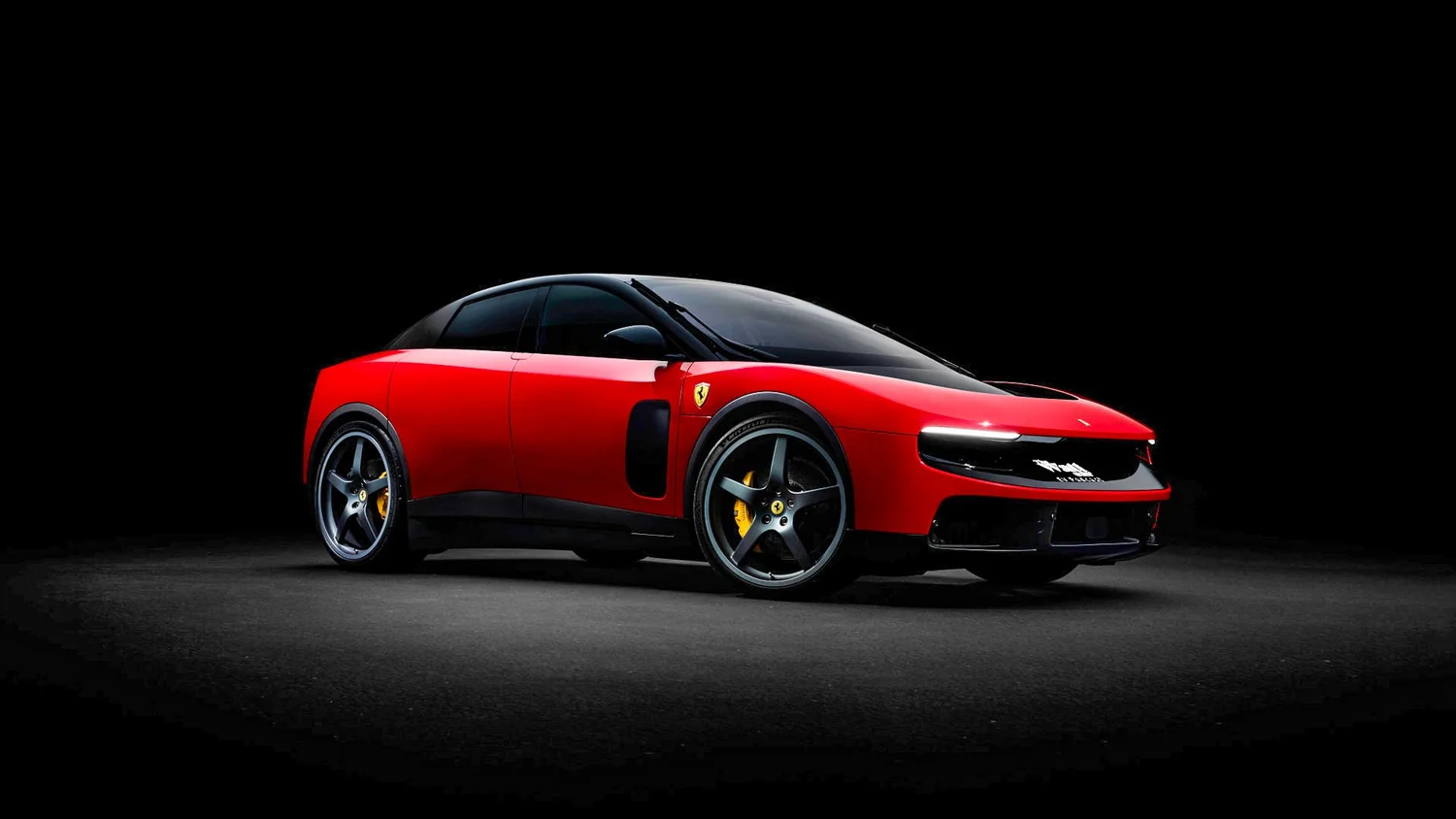
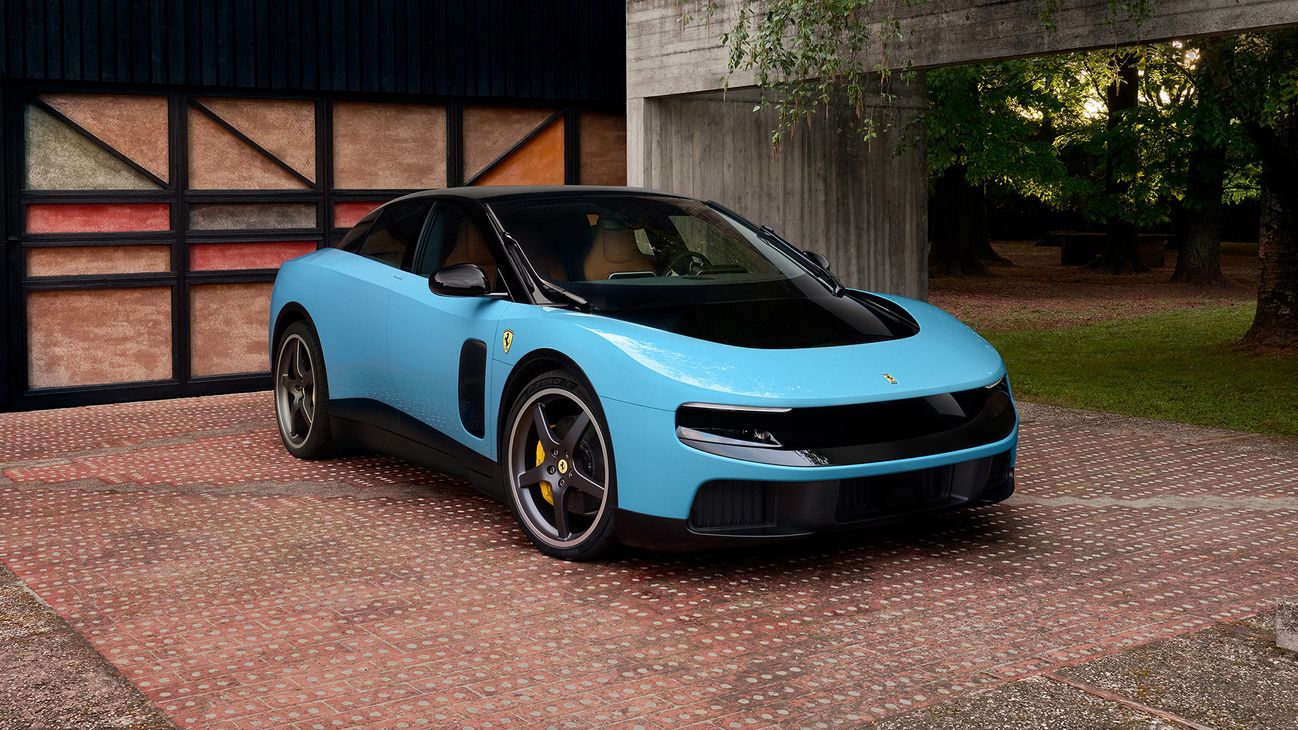
The Ferrari Luce is a Ferrari model name mentioned in the podcast. The episode is likely discussing a specific car Ferrari is known for. The podcast doesn’t provide enough detail here to describe its exact type or features.
Term
VIP list
“VIP list” here means an invite-only group of journalists or influencers who get special access to events and early look opportunities. Automakers often use these lists to control messaging and generate favorable coverage around new launches.
Term
long rumored
“Long rumored” just means people had been talking about the car for a long time before it was officially shown. With new EVs, that usually happens because information leaks out while the company is still developing the vehicle.
A driveline is the mechanical system that sends power from the car’s power source to the wheels. If it runs through the middle, it can force a raised hump in the floor that makes seating across the back less flexible.
“Quad motor” means the car uses four electric motors. More motors can help the car accelerate harder and control traction better, especially when you’re driving aggressively.
WLTP is a standardized test used to estimate how far a car can go on a charge. It’s one of the ways manufacturers report range, and it can produce different numbers than other standards like the EPA.
EPA refers to the U.S. Environmental Protection Agency’s testing and labeling standards for vehicle range and efficiency. The host contrasts EPA with WLTP to clarify which testing method the quoted EV range number likely comes from.
The Mazda MX-30 is an electric car made by Mazda. The podcast mentions it because it can drive a certain distance on a charge. They’re comparing how far it goes to another Mazda EV.
A touch-screen interface means you control things in the car using the screen (like climate or media) instead of separate buttons. The host is saying they’ve gotten used to that setup.
An S-duct is a special shaped opening/air channel on the front of a car. It helps control airflow around the car (and sometimes helps with cooling), which can improve how the car behaves and performs.
The Dodge Charger Daytona is a sporty Charger model with styling meant to help it cut through the air. They’re comparing its aerodynamic theme to the EV’s front-end design.
Term
zero to 16, two seconds
That phrase is about how fast the car accelerates from a stop. It’s basically a quick “how quickly does it get going” measurement.
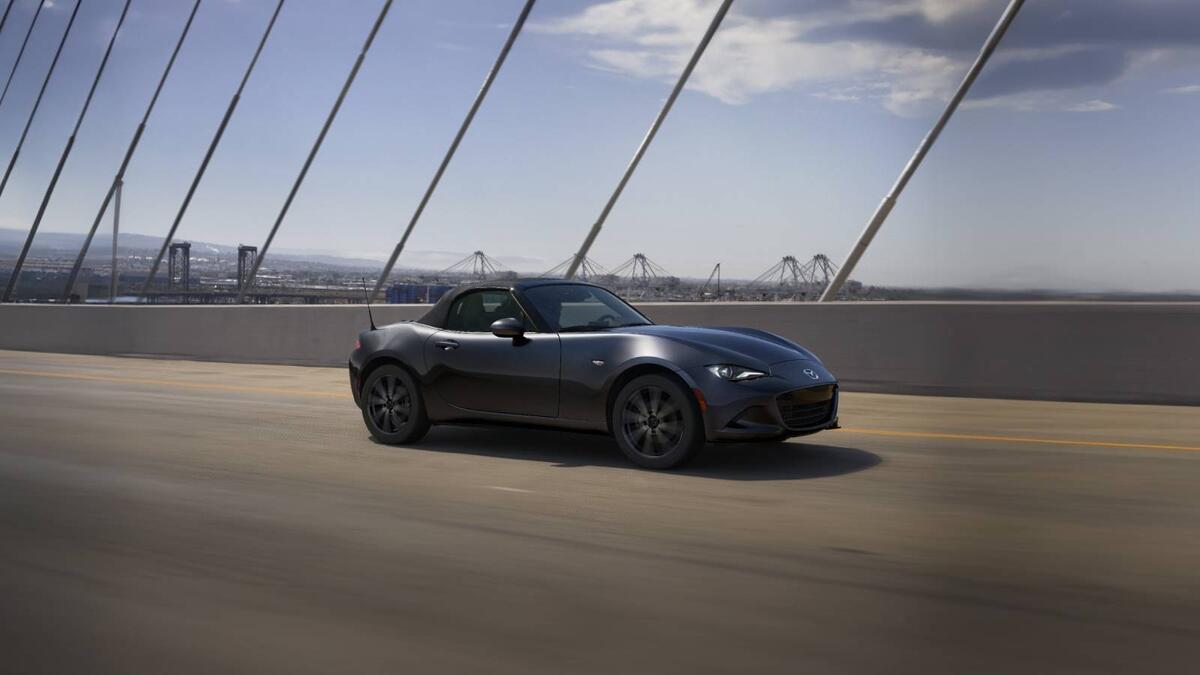
The Mazda Miata is a small two-seat convertible designed for fun driving. It’s not a huge, expensive sports car, but it’s known for being light and easy to drive. The podcast mentions it because someone has raced one.
“Visceral experience” means the car feels exciting in a physical, emotional way. It’s about how it feels and sounds while you drive, not just how fast it goes.
Active suspension is a suspension system that can change how it absorbs bumps while you’re driving. That helps the car stay steady and comfortable without sacrificing handling.
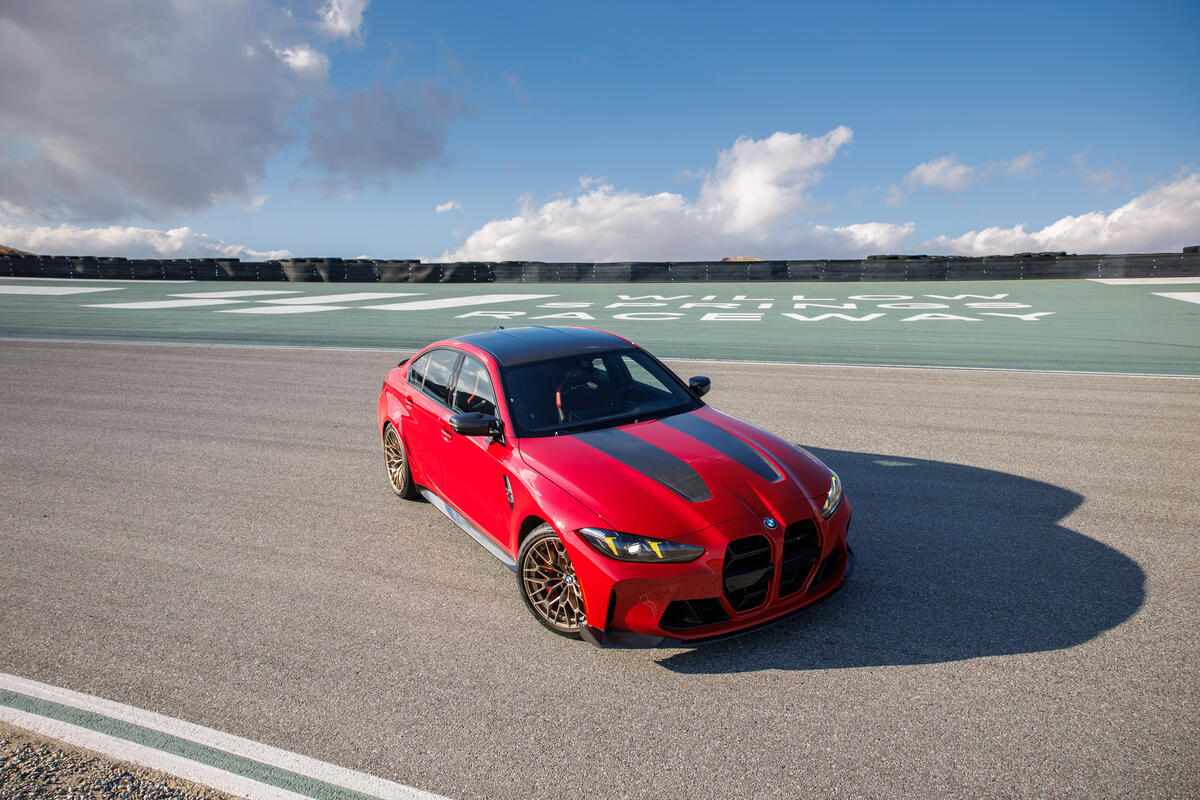
The BMW M3 is a performance BMW with a stronger engine and sport-tuned systems. It’s designed to handle well and feel responsive when driving hard. The podcast mentions its suspension because that’s part of how it stays stable and controlled.
Torque vectoring means the car can send different amounts of power to different wheels. That can help it turn better and keep grip when the road is slippery or the corner is tight.
“Naturally aspirated” means the engine doesn’t use a turbo or blower to force air in. A “V12” is a big gas engine with 12 cylinders arranged in a V shape—this is the kind of engine Ferrari is known for historically.
An “electric powertrain” is the car’s main setup for moving—electric motor(s) plus the battery—rather than a gas engine. The host is saying Ferrari decided that going electric is required, not just an add-on.
They’re saying the company treated going electric as something you must do for the car to make sense—not a compromise. That usually means the car is designed for electric from the start.
They bring up Lotus to make a point about EV direction and what they think is better. Lotus is a car brand known for handling and for working on electric cars.
Internal combustion is the traditional engine type that burns fuel to make power. The speaker’s point is that even if it sticks around for a while, cars are eventually going electric.
The speaker is saying the future of cars is electric instead of gas-powered. They’re using that idea to explain why Ferrari is preparing for the transition.
“1000 plus horsepower” means the car is rated to make a huge amount of power. With electric cars, that power can show up very quickly, which is why people talk about super-fast acceleration.
This refers to a very high-performance Taycan variant from Porsche. The discussion is about how fast it can accelerate and how extreme the spec is compared with other EVs.
“0-60” is how fast a car can go from standing still to 60 mph. It’s a simple way to compare acceleration between cars, and electric cars often do well here.
E-ink is an electronic display technology that uses a bistable, low-power method to show text or graphics. In a car key fob, it can display information like status or notifications while consuming less power than a typical screen.
A “lemon” is a car that keeps having major problems that the company can’t fix. The host is saying the owner basically used the legal process to get rid of the bad car.
A long-term loan means the company gives you another car to drive for a while. Here, it’s so the owner isn’t stuck without transportation while his Lucid situation gets handled.
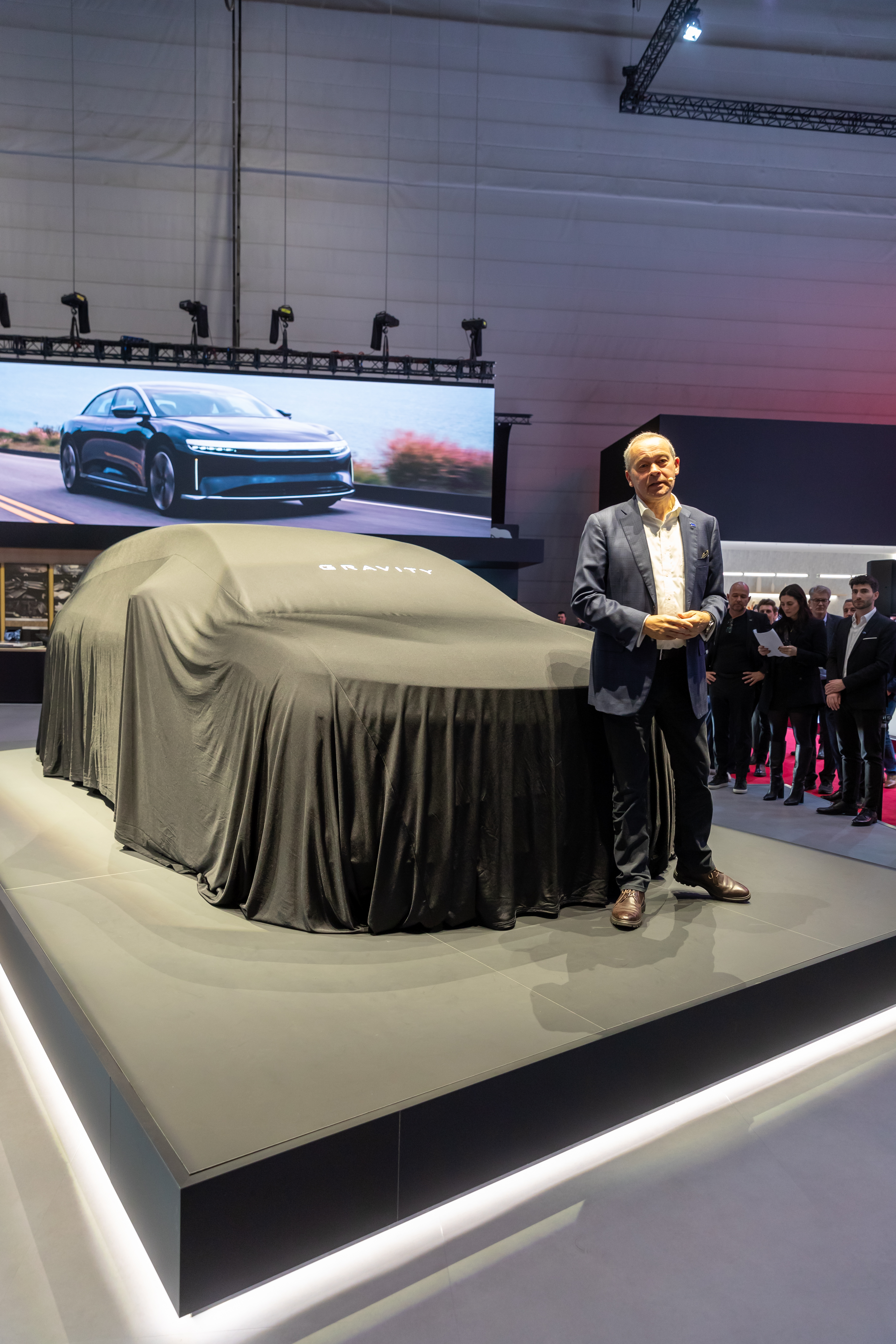
The Lucid Gravity is an electric SUV that Lucid is preparing to release. It’s meant to be a bigger EV for everyday families and road trips. The podcast mentions it because they’re talking about getting long-term access to one for coverage.
A 2010 Corolla is a regular, everyday Toyota. The point here is that it’s a sensible, low-stress third car compared with relying on only EVs for backup.
The Citroën 2CV is an older, simple car that’s known for being able to handle bumpy roads. The podcast mentions it as an idea for a third car. They also hint that it may not match a certain expectation about size or capability.
M1E is a legal category the EU uses to group certain types of cars for rules and approvals. The host is saying the category’s size limits don’t really match what people think of as a tiny “K car.”
“K cars” is a nickname for very small, compact cars. The host is saying that the EU’s M1E category doesn’t seem small enough to really match the usual idea of a K car.
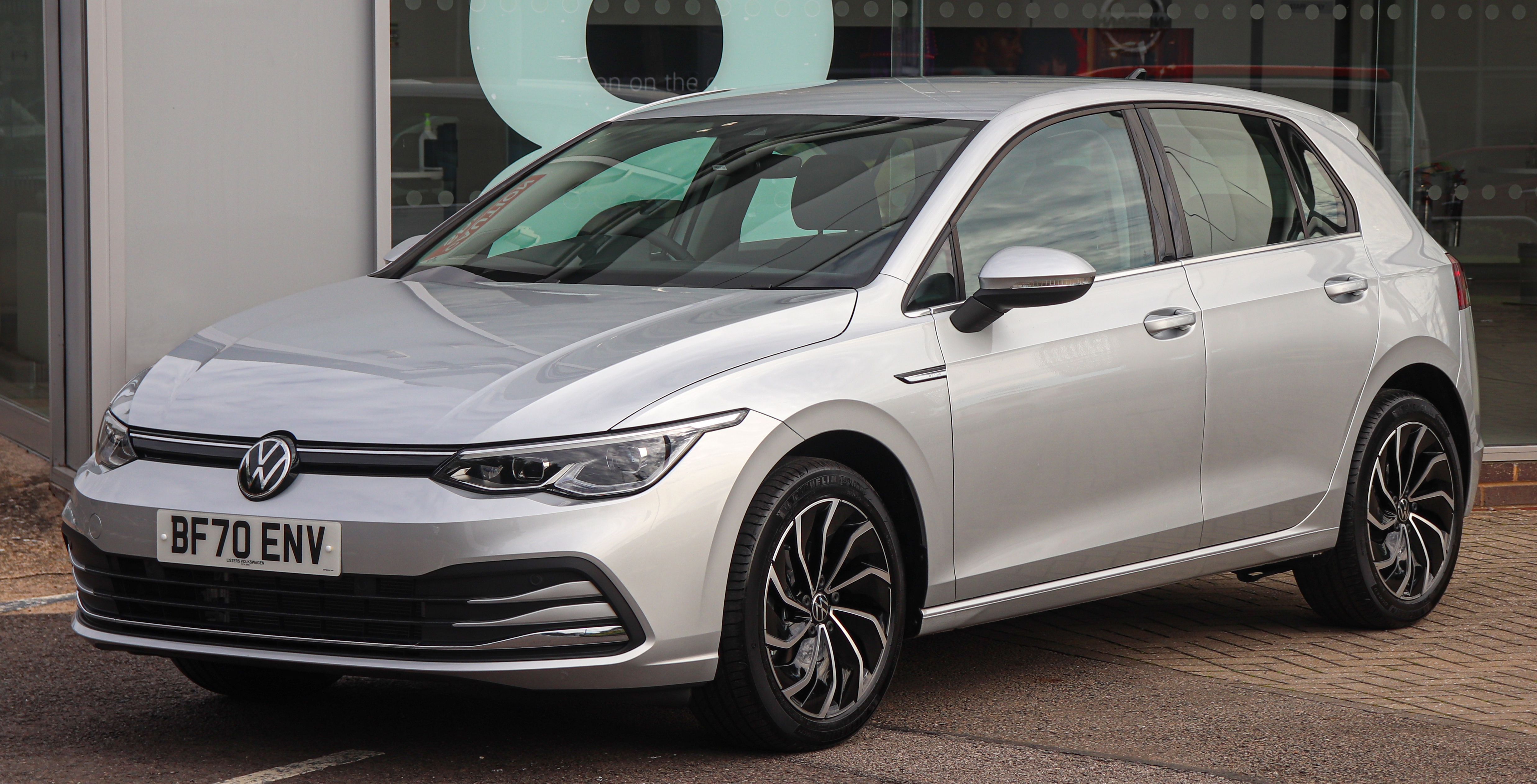
The Volkswagen Golf is a compact car, and the GTI is a sportier version of it. The podcast talks about how long the car is and whether it fits certain limits. That’s important for things like parking and garage fit.
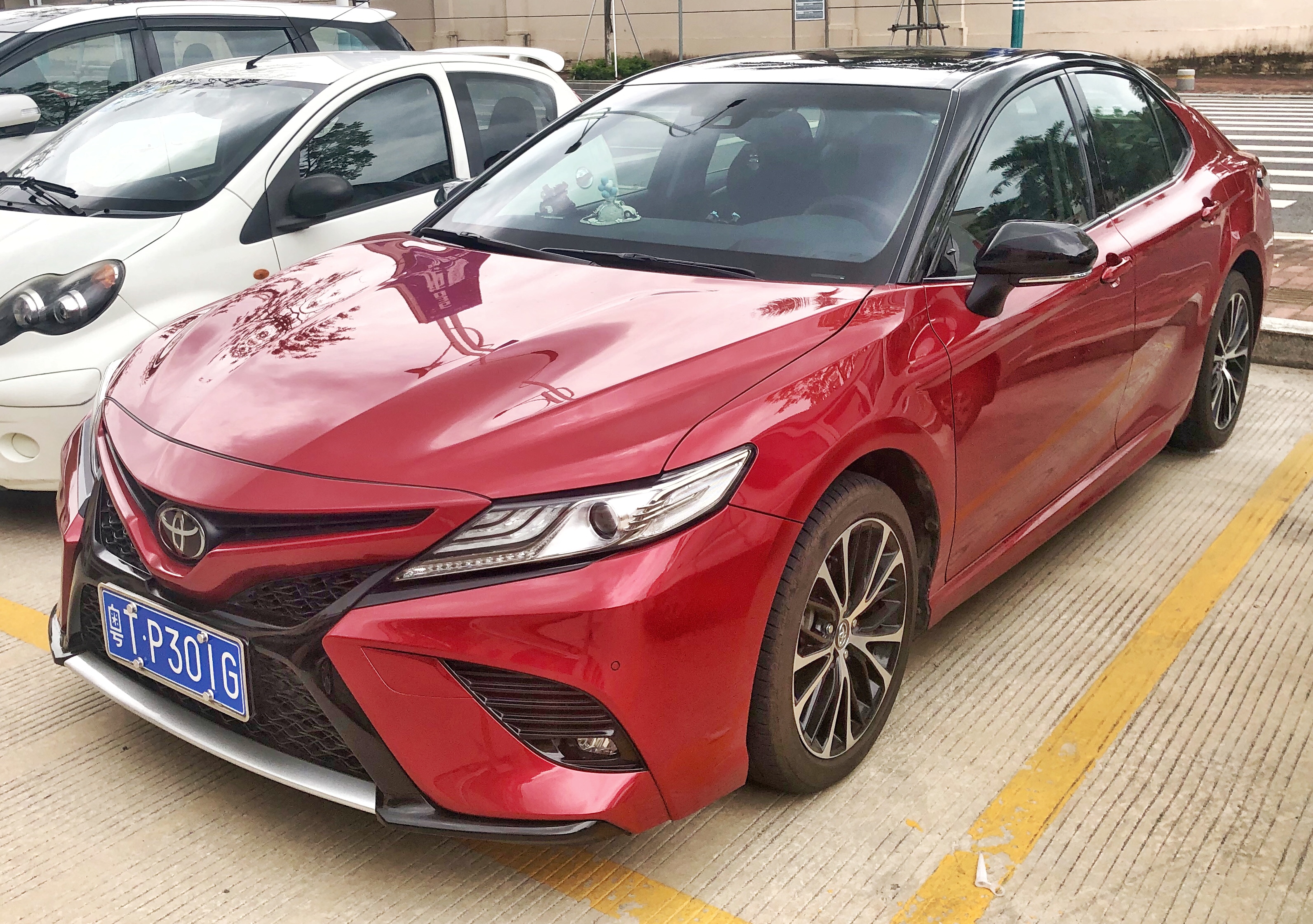
The Toyota Camry is a larger everyday sedan than the Corolla. It’s meant for comfortable commuting and family use. The podcast brings it up while talking about how car sizes have changed over the years.
The Volkswagen Beetle is a small car with a very recognizable rounded shape. People often remember it as a classic design. The podcast mentions it as a simple way to describe what something looks like.
The Volkswagen Bus is a type of van made by Volkswagen. It’s known for carrying people and having a lot of space. The podcast brings it up as a familiar example of Volkswagen vans from the past.
The Volkswagen ID. Buzz is an electric van. It’s designed for people who want a spacious vehicle but powered by electricity. The podcast mentions it while discussing how Volkswagen is handling the model’s name and branding.
The Tesla Model 3 is a popular electric car. They’re using it as a comparison point to argue that $20,000 doesn’t buy as much EV as it used to, because you can sometimes get a Model 3 for less.
Car
new Beetle
The New Beetle was Volkswagen’s attempt to bring back the classic Beetle look in a more modern car. They’re using it as an example of how people get excited about retro-style cars.
The Ford Mustang is a sports car from Ford that’s been around for many years. Different versions have different “platform” codes, which affect how they drive. The podcast mentions it while trying to remember the specific Mustang generation they’re talking about.
The Chrysler PT Cruiser is a compact car with a retro-looking design. It was made to be a normal, usable car, not just a showpiece. The podcast mentions it while talking about the era when these retro-style cars were popular.
The Chevrolet HHR is a small car that looks like it’s inspired by older designs. It’s meant to be practical for everyday driving. The podcast mentions it because it’s one of the retro-style cars people talk about from that time.
The Chevrolet SSR is a pickup truck with a retro-inspired design. It’s built to carry things like a truck, but it looks like a throwback. The podcast brings it up because it was part of Chevrolet’s retro-style lineup.
The VinFast VF-8 is VinFast’s main electric SUV. The hosts are saying it was hard to convince US shoppers because it was expensive (around $60k) and people didn’t know the brand well yet.
“Bread and butter model” just means the main car a company relies on to sell the most. It’s the one they expect to do the heavy lifting for sales and reputation.
Pininfarina is a famous Italian company that designs car bodies. In this segment, the hosts are saying VinFast used that kind of well-known design talent to make the cars look more credible—similar to how Ferrari is strongly associated with great design.
Wheelbase is the distance between the front and rear wheels. If it’s shorter, the car can feel nimbler, but it can also change how stable and smooth it feels.
Front-wheel drive means the front wheels do the work of moving the car. If it’s “front wheel drive only,” there’s no all-wheel-drive version at first, which can keep things simpler and cheaper, but may be less capable on slippery roads.
A “value play” is a pricing and positioning strategy where a brand targets buyers by offering a lower price or better value rather than aiming for the most premium segment first. Here, the hosts argue VinFast is pivoting back toward value because there’s limited room at the high end and fewer buyers willing to pay top money for an unknown brand.
Brand
Lucimal
“Lucimal” sounds like it’s referring to Lucid, another electric-car brand. The hosts are basically saying some EV companies try to start with expensive cars first, then move to cheaper ones later.
The VF 6 is an electric SUV mentioned in the podcast. The episode talks about it as part of a set of related EV models with different numbers. The point is that the lineup has shifted over time.
Tariffs are extra taxes on things that are brought in from another country. If an EV (or its parts) is imported, tariffs can make it more expensive to sell, which affects pricing for buyers.
The Chevrolet Tahoe is a large SUV model. In the episode, it’s mentioned as the shorter/smaller version compared to longer variants like the Suburban or Yukon.
Car
Yukon
The Chevrolet Yukon is a large SUV. The host uses it as an example of how some brands sell multiple similar SUVs (different sizes/names) that can feel redundant to shoppers.
The Chevrolet Suburban is a very large SUV. The host brings it up to compare how brands offer the same SUV in different sizes, like the Tahoe vs a longer version.
The Cadillac Escalade is a big luxury SUV. The ESV version is longer than the standard one, which usually means more space inside. The podcast brings it up while talking about the difference between the standard and longer versions.
The VinFast VF9 is a big electric SUV from VinFast. The hosts are basically saying: if you want the largest version, this is the one to look at.
Company
Vinfest
They’re talking about VinFast, the company making these electric vehicles. The point is that the company needs to improve how customers experience the car and the software.
PHAVs are plug-in hybrids—cars that can run on electricity for a while and also have a gas engine. Critics argue people don’t plug them in, so they end up acting more like regular gas cars.
Telematics data is information the car sends back (like location and usage) using built-in connectivity. Here, it’s being used to estimate how often owners actually plug in.
They’re counting how many days in a 10-day period people actually plugged the car in. The hosts use that to compare charging habits between Toyota and Lexus drivers.
Off-street parking means you park somewhere like a driveway or garage instead of on the street. That usually makes it easier to plug in regularly, which helps plug-in hybrids work as intended.
Level 1 is the slowest way to charge, usually from a normal household outlet. If you have a place to park off the street with easier access to a plug, charging is more convenient and more frequent.
“Plug-ins” here refers to plug-in hybrid electric vehicles (PHEVs) that can run on electricity from an external charger for part of their driving. The hosts are debating whether buying a plug-in makes sense versus just getting a regular hybrid. The key idea is that you only get the full benefit if you actually charge it and use it for the trips it’s designed for.
Term
pheas
“Pheas” sounds like what people say when they mean plug-in hybrid cars. These cars can run on electricity part of the time, but only if you plug them in. The point here is: if you don’t charge them, you don’t really get the main benefit.
A carpool sticker is a permit that lets some cleaner cars use special high-occupancy lanes even if only one person is in the car. Here, the hosts are saying some people buy plug-in cars mainly for that perk. They’re questioning whether that’s worth paying extra for the battery.
The Tesla Cybertruck is an electric pickup truck. It looks very different from most trucks and is designed to be used like a truck. The podcast mentions it with a joke about whether it could handle water.
Grapevine Lake is a real lake/reservoir in Texas. In this story, someone drove a Cybertruck into it to test the car’s water feature. The truck ended up getting stuck, so the location matters to the outcome.
Wade mode is a setting that’s meant to help a car safely drive through shallow water. It tries to protect the car’s systems while you’re in wet conditions. But if the water is too deep or the tires lose traction, the car can still get stuck.
The Coast Guard is a government agency that helps keep boats and people safe on the water. The host is saying that boat safety inspections require certain equipment, and that’s part of why the incident was treated like a boat situation.
Term
life best passenger
The host is talking about life jackets—safety gear you’re supposed to have for the people on board. The story claims the vehicle didn’t have that required safety equipment.
LIVE
This is the What Car EV Podcast for Thursday, May 28th, 2026, episode 272, Ferrari's Apple
Car.
We're about to talk about something expensive on this episode.
Remember, you go back like 15 years and people were like, because basically then you just
had the Model S. It was like $100,000 and it blew everybody's minds and it was like
electric cars.
They were either considered just like a golf cart, a glorified golf cart, or if you wanted
a good one, it was so expensive nobody could afford it.
So obviously it's never going to take off.
It's obviously not going anywhere.
Well, this car that we're going to talk about is the, it's not the glorified golf car.
It is the crazy expensive car that nobody can afford.
Yeah, it's, yeah, a lot of people are saying, oh, this will never sell.
It's like, well, I don't know how many people are planning to sell this price anyway.
Yeah.
Yeah.
Oh, I mean, they don't sell many vehicles anyway.
So anyway, we will get into that.
We will.
And I'm one of those people that will get into that.
I'm Phil Royal.
I am one of the podcast hosts.
I send people to the walkcar.com slash store.
I was trying to decide where I wanted to send people first, where it slash what card?
The walkcar.com slash store, you can buy merchandise that helps support the podcast.
And I would say the blog, you can go and you can look at the website where we have the
blog.
We don't do too many blog posts anymore.
And then you can also go to youtube.com slash at the walk car and you can see our smiling
faces.
And perhaps this week, I'm going to try something new.
I'm going to try popping up the URLs that we talk about in the video feed.
And it may or may not work because as I was saying, expensive cars, yada, yada, yada.
I'm going to do this on basically the you go of computers that I'm using.
So we'll see if this works.
Hang on tight.
You know, for all I know, this episode is going to end as soon as I do the website video at Sanchez.
Podcast or in crime of five years with Philip.
And yeah, I have opinions about today's leading topic, which we'll get into.
Yes, by Merch, the walk.
The walk.
Com slash car, the walk car dot com slash store and visit our YouTube page, youtube.com slash
at the walk car.
Click on the short tab, the shorts tab if you have ADD anyway.
Let's get into it.
Yes.
Now that we promoted the same thing twice and we're about three minutes in.
Yeah.
All right.
First up is the Ferrari.
Is it Luce?
Luce.
Luce.
They had teased this a little while back.
I don't remember.
They showed the steering wheel and the interior.
Yeah.
And now they're showing the entire car, I guess.
And they flew people out to Italy, as far as I can tell, to take a look at this.
Now, I have honestly, I've only read this article by Electric and then watched a video.
They had Fred Lambert was one of the people that flew out and he talked about the car
a little bit.
We're not on that elite VIP list yet, but well, someday maybe I've got some thoughts
about the downsides to going to something like this because you have to say nice things.
I like Fred.
I think Fred is an honest reporter, an honest writer for this whole thing.
I think he fell victim a little bit to the whine and dine that they do based on some
of the things he said in this article.
Not hard to do.
Which in a Ferrari long lead is, yes, I get it, I get it.
It's easy to get sucked into some of this stuff.
Tell me a little bit about this car.
OK, so this is a long rumored, formerly known as the Electrica, which is electric in Italian,
which I guess they figured was too generic.
So they renamed it the Luce, showed off the interior.
Now we see the whole thing.
So interestingly, they're saying it's their first five passenger vehicle ever.
I guess even the Pura Sangue is four seater.
That kind of makes sense.
And there'd be a drive line going down the middle of that.
So they said because it's electric, it enabled three across rear seat, even though by the
looks of it, it's got the center hump like most cars.
So I mean, effectively four seater, five in a pinch.
Plenty powerful.
Over 1100 horsepower quad motor, 122 kilowatt hour battery pack, which Ferrari builds, but
they use SK on cells, which is a Korean supplier.
Zero to 100 kilometers per hour, 2.5 seconds.
Zero to 200, which is 124 mile per hour in freedom units, 6.8.
So that's pretty quick.
Claim top speed of just under 193 miles per hour.
And I was not sure if this is WLTP or EPA range.
They're claiming a 530 kilometer range, which works out to 329 miles.
That'd be WLTP, I'm sure.
So maybe a tad below 300 when it makes the journey across the pond, which I don't think
that like if you're buying a Ferrari, you're not buying it for range.
No.
So I don't think that matters.
Anyway, it can go further than the Mazda EV, whatever that was called.
MX 30.
MX 30.
But you better have quite a bit more money than the Mazda commanded.
They're saying starting price 550,000 euros, which translates to about $640,000.
Which is more than the Paris Anglais, I believe.
I think so.
I think that was like 400 something.
So I don't know if this is quite the most expensive Ferrari, but it's up there.
Oh, undoubtedly it's not.
They'll do a one off, a one of one.
I just saw.
2000000 dollars.
Yeah.
I just saw a Ferrari go up for sale that was a one of one that was commissioned by somebody
or other that went up for sale that, you know, there'll be $5,000,000, $8,000,000
for Aris.
Maybe that, maybe not quite, they're in that range, like multiple millions of dollars for
some of these custom, custom vehicles.
So the big news about this to me is that this is a Johnny Ive car.
Yes.
Well, that was brought up quite a bit.
Yeah.
And what do you think of the design?
So Johnny Ive made, if you believe all the hype, Sir Johnny Ive designed all the kind
of define the modern Apple aesthetic.
Yes, that as soon as Steve Jobs passed away, Johnny Ive stuck around a little bit for consistency
and then eventually retired to go and do other things, which apparently was created a design
firm.
Apple then went and backtracked on almost everything that Johnny Ive had said to create
usable products.
So what do you think of this car?
I don't know.
I it was probably a good thing.
I was not invited to roam and wind and die into the tune of I can only imagine how much
that trip costs, but you know, it's Ferrari.
So I don't know.
I'm still I'm still in stunned silence, I think.
I've seen some reviews that say like this is we always wonder what the Apple car would
look like.
Well, this is it.
Things like that.
I don't know how far off that is from if Apple were to have designed a car back when what
was it Project Titan or whatever it was called.
Yeah.
Maybe exterior wise, I don't exterior wise what I'm for exterior and interior.
Yeah.
I actually so actually I'm a bigger fan of the interior than the exterior of this car.
When I saw the interior and that, you know, they're still retaining a lot of physical
switches and stuff.
Personally, I don't care.
I drive model three.
I've gotten used to the whole touch screen interface.
So, you know, all the the lights that are like, I want my switches and knobs and I'm
like, I've got this is getting personal now, Ed.
So I have to attack me on the show.
But anyway, I mean, it's kind of, you know, it tastes subjective with that.
But you know, I think the interior of it is tasteful.
It's I think a nice balance between more traditional kind of tangible elements and more high tech.
I think it was nice.
Well done.
I think the exterior, it's it's a choice.
To me, it kind of looks like a Jag I-Pace a little bit, the side profile.
The most interesting thing to me from just a technical standpoint was the front end,
which is has what they call the S-duct.
Yeah, we're looking at the interior.
See, I think that looks nice.
It's pretty sure thing works that I'm doing.
Then it takes me a little while.
I don't know if our audience can.
But yeah.
So the interior is kind of very basic, looks like a fiat, but you like it.
And the front.
So go ahead, talk about the nose of this thing.
OK, so this is not an entirely new concept.
The Charger Daytona has kind of a similar idea to this, but this is a more extreme
implementation of it.
I guess they called this an S-duct.
So what looks kind of from a distance like a grill
is actually kind of an air intake.
And the front, the leading edge of the hood is effectively a spoiler.
Or a wing or a frontal wing.
I looked at some red at threads where, you know, car nerds were going back and forth
between, you know, wing versus spoiler and how they're not the same thing.
But anyway, so effectively, I think there's another, if you want to pull up
the that article again, there's another where it shows like the effective
nose angle is actually very steep and low.
And just the frontal wing or spoiler is.
You know, above that.
So I guess I'm assuming they did that to optimize aerodynamics.
But so I'm guessing, yeah, you see it there.
Yeah, it's a big jelly bean, essentially, when you take the nose out of it.
So anyway, I thought that was kind of interesting.
So I'm assuming from that, no frunk, I'm guessing on this.
Even though it does have a pretty big trunk, I guess I heard like 21 cubic feet.
You can help your friends move into their mega mansions.
Yeah.
There we go.
Yeah, I mean, performance, it's like.
It's over a thousand horsepower and it's 0 to 16 and a half seconds.
I mean, again, it's like, I mean, after the plaid, I mean.
This is what I was saying last week, there's a bar now that the plaid set.
Yeah, not to just keep, you know, effusively heaping praise on Tesla.
But yeah, to your point, the plaid kind of set the bar.
A thousand horsepower, zero to 16, two seconds and like.
If unless it's less than that, it's kind of like, but, you know, I think.
I know this might be a little bit of a flawed analogy, but.
You know, a lot of people and you've you've owned, you've owned one.
So I mean, you can attest this, you've raced one.
The Miata, even though it's, you know, fairly modestly priced,
you know, not particularly powerful.
A lot of people say that's probably one of the most fun to drive cars you can buy.
And not because it's like ultra powerful or exotic or anything.
It's just it's just a very pure kind of.
Visceral experience.
So I think that's probably what they're going for.
Of course, nobody outside of Ferrari has driven this yet, but that they're saying.
I think they I think I even saw something where they quoted the CEO Ferrari that says,
just wait till you drive it.
You know, the people that were kind of about the styling or anything else.
He's like, you know, the true essence and experiences behind the wheel.
So I'm trusting that's true.
I mean, it's definitely it's objectively not slow.
It's not faster than a plaid or, you know, lucid or sapphire or.
Remats, Navarra, but it's plenty fast.
And but I kind of I mean, I think it's definitely a laudable technical achievement,
but I kind of wonder who's going to buy this.
But, you know, I mean, when you're talking about Ferraris,
these are people that already have one or two or three.
And they'll just out of fourth, you know, they'll get it because it's like.
Yeah, oh, this is the latest thing.
I thought I'd get one.
So one of the things that Fred wrote in his article was during the launch event
for I put an almost emphasis on the idea that the lute isn't the company
getting on board with the V's.
It's Ferrari seeing an opportunity to create a new kind of vehicle
that happened to require an electric powertrain.
John Elkin for his executive chairman framed it as proactive choice rather
than an industry concession, saying this is not another electric car.
It's a Ferrari.
Then he goes on to say there is a lot of this kind of messaging.
I don't think Ferrari is inventing anything entirely new in electric
vehicle technology here, which I completely agree with, but they are
applying their legendary automotive engineering to push every top tier EV
component to its absolute limit and packaging it together with the latest
and best established technologies, such as their active, their active
suspension derived from the F80.
OK, so not what he just said, it's from something else.
Torque vectoring derived from years of Formula One development.
OK, so not from this, from something else.
800 volt architecture.
Not on purpose.
Shocked, you know, the Ferrari invented that, I guess, with motors
spinning to 30,000 RPM, which I believe also exists.
The project includes more than 60 new patents, but any company that comes
up with anything that's fairly new is just throwing patents at the wall.
That means absolutely nothing.
Then he goes on his electrics take.
This is an important moment for electric vehicles, and it goes beyond what's
happened, what will happen in Ferrari's order books after today.
Lucci is going to be extremely expensive vehicle.
The point is that Ferrari, a brand that has built its legacy on
visceral screams and naturally aspirated V12s on the mechanical poetry of combustion,
has looked at electric powertrains and concluded that to build the car
it wanted to build electrification wasn't a compromise, it was a prerequisite.
And that's where I think he drank the Kool-Aid a little bit.
The Parasongue, I believe, is a superior vehicle to this in almost every way.
I don't like the way this looks.
I don't see what it brings to the table.
I think this is a giant swing and a miss.
The interior is boring.
The exterior is blah.
This is thank goodness, Johnny, I didn't get to design the Apple Car.
Wow.
And there goes your invitation in the future for our events.
Yeah.
Now, the reason that my opinion is so is so harsh on this is
because Lotus has the Avaya.
Yeah.
Lotus beat Ferrari.
Yeah.
We know this can be done well.
Yeah.
And Ferrari chose to, I guess, call Johnny Ive because they knew that
they didn't have anything.
And so get a get a name.
Yeah.
I yeah, I'm not a huge fan of this, the exterior styling.
I do, I will part ways with you.
I do like the interior.
Like I said, I think it's a good balance of minimalist and more traditional elements.
Is it amazing?
No, but it's tasteful.
So the outers.
But yeah, delightfully undefined, whatever the motto is.
Yeah, the exterior, I.
I don't know.
It's like I said, it's a choice.
I honestly think aren't very impressive, like nothing, nothing of this screams,
like imagine the Paris song way as an Evie.
And you'd be like, wow, that's cool.
If you kept the same form factor, yeah, I mean, I think kind of kind of dissecting
Fred's word salad a little bit.
I think you could make the case that in order to make this not seem like
as much of a fat pig, they had to make a sedan or crossover, whatever you want
to call it out of it, because that size of a battery and a sports car would
make it a fat pig, basically.
Yeah, whereas it's somewhat defensible and a four door.
You know, because this thing, I think I read somewhere, it's just under
5,000 pounds, it's like 4,900 something, which anymore is not that shocking.
Yeah, no, that's exactly.
This is that doesn't sound bad for that.
That's actually admirably lightweight.
Yeah, something with this level of performance.
That's the first thing I've heard that makes me like this.
Yeah.
But if they were to roll out a two seat sports car that was at 5,000 pounds,
people would be just lamp basing even worse than they are with this.
And that's where it goes to the, this is not another electric car.
It's Ferrari.
It's the, what Fred said, electrification wasn't to compromise.
It was a prerequisite.
Where in this is the prerequisite that this is electric?
What is this brought to the table?
I think this is my feeling with this.
I think this will be killed before it hits production, which is supposed to be
later this year, I don't think it's ever going to get produced.
They'll make, they'll make a few, I think maybe.
One that Johnny Ive gets.
No, I think they'll maybe like, maybe make like 500 or 1,000 of them.
I think this is the first.
I mean, I do feel even though it's kind of like hard for some people to conceive
of or like, you know, they think internal combustion is going to be around forever.
And I think we've got at least several decades that it's going to be around.
But ultimately, effectively, everything's going to be electric.
So I think Ferrari's kind of approach with this is like, you know what,
let's at least try to get some expertise about doing this when that day comes.
So we're not, we're not behind the curve and we're not playing catch up with everyone.
Let's at least have some of that institutional knowledge and expertise on how to do this.
So in the future, we can make something even more compelling, even,
you know, technically more, more impressive or even more competitive.
Cool, I guess. But I mean, objectively,
you know, lucid air sapphire quicker and faster, plaid
despite all the other flaws and shortcomings it may have.
Multiple Chinese models quicker and faster and cheaper.
So I guess for someone that has to have a Ferrari has to have the latest and greatest school.
I mean, I don't I really don't know what more there's to say.
I mean, like I said, personally, I'm not a huge fan of the exterior styling.
I do like the interior. I think it's fine. But
it's what that's the problem with it is it's fine.
Yeah, you're talking about a half a million dollar Ferrari.
And the best you can say is the interior is fine.
That's where it all is like I've driven a few Ferraris.
There's something special about them.
Yeah, I feel the same way about Porsches for the most part.
Yeah. And so when you put something out like this where I think they just didn't know we've
killed this. Okay, so let me kind of
set the stage a little bit differently here. So speaking of Porsches, so
we're both fans of the Taycan Sport Turismo.
You know, not at the same price level and rarity levels this, but I think performance wise.
I don't even know what the top spec of that is that the Taycan in general,
they do have a 1000 plus horsepower model. Yeah, it's a GT turbo super plus plus whatever it is.
I've not driven a Taycan, but everything I've read about them says they drive awesome for what
they are. Yeah. I don't know. To me, this is just kind of a brand thing. It's like
between I mean even cost no object. I still think I'd probably get a Taycan over this.
According to random internet site, Taycan turbo GT 0-60 in about two seconds.
There you go.
To me, the Taycan is the more compelling,
kind of more desirable car. For half the price.
For half the price. And the same thing with the Sapphire really. I mean, if you think about it.
Yeah.
The Sapphire is a quarter million. That's less than half as much as this.
Yeah. And it's not a Ferrari. It's
It's not a Ferrari, but I don't get it. This has got like,
I don't know. The weird part about the interior is I don't know if there's like a cell phone holder
in the interior. That's the top priority, right? What about cupholders? Does at least they have
what I do really like is the key. The key is like this key fob with a little e-ink.
The e-ink.
And then you put it in a square and then you push it down and it like sinks down into the center
console. And then it lights up with a little prancing horse or something.
Yeah. It's, that's cool. There are some cool things, but man, I just really want to stop talking
about this and go and talk about a douche-e-voe. Oh, no, wait, what is it? The douche-e-voe is
later. Oh, we have something in between. Something in between. What is it? Oh, you snuck a lucid in
there. Oh, man. Yeah, that's the little reference. After you were just saying, singing praises a lucid.
Yes. Well, yeah, someone is not. Now you're about to bag on them.
So, a few... Are we a pro EV podcast? Yeah, I thought we were.
A few months ago, I guess Jason Fenske got a lucid error.
So, he used to have a Model 3, which he sold because, I guess, his wife worked for some government
department and got fired because of douche. Anyway, long story, but he made a principle stand about
it and decided to get a lucid. I shouldn't say immediately regretted, but I think ended up
regretting it. He's not the only one. A lot of people said their software is a little glitchy
and buggy. Yeah. So, first round, they did an update that fixed some problems, but that wasn't
the end of it. Even after that initial update, still having problems. So, they're... And he got
this car after he drove test vehicles from Lucid and reviewed them and liked everything
about them. Then he got his and it had all these problems. Yeah. So, yeah, not a great experience.
So, he basically lemon-lot it. And he was, Lucid initially was going to offer him,
well, we'll just give you a new equivalent model. But I guess the prices had increased so much
that his payment would have gone up by like 300 bucks a month or something for basically the
identical equivalent model to what he had. And he said, I'm not going to pay more for the same,
effectively the same car. Yeah. Not my fault that the car you sold me was a lemon.
Fine. Yeah. So, I guess the compromise they worked out, they're going to give him a long-term loan
on a gravity. So, like a long-term press car. Which is nice. My problem with that is that's
because he's got like a million plus followers. Oh, no, it's totally because he's an influencer.
Now, there's a bunch of people in my neighborhood that have Lucid heirs.
And if one of them have a problem, what do they do?
I don't know. I mean, one of my neighbors has a Lucid and a Rivian. And I'm like, man,
you're living on cash. Like I like both of those brands. I would own both of those. But to have
your backup car be either a Lucid or a Rivian. Like they don't have a third car. They don't like,
wow, that is tiptoeing on the edge of destruction. I think their third car should be like a 2010
Corolla. Anyway, so yeah, so yeah, I'm also a big fan of Lucid in terms of their engineering
and efficiency and all that. But honestly, hearing all these stories and his experience,
I don't know, I think I'd hold off a little longer. Well, maybe a good third car as you
mentioned, Citroen 2CV. Except this time, it's not going to be a little pokey 30 horsepower
rolling roadblock, evidently. What is it going to be? It's going to be an EV.
It could still be a rolling roadblock. It could still be.
I mean, the outline looks cool. I don't think we've seen anything more than
just teasing. There will be a link in the show notes to the inside EVs.
I had no idea about this classification. I guess the EU has this class called M1E,
which this article describes as the EU equivalent of K cars. But when I looked at these specs,
I'm like, that's not a K car. That's limits overall vehicle length to 165 inches.
My GTI was shorter than that. And I wouldn't have considered that a K car.
So I don't consider that it's especially small. I mean, what do you think?
I mean, the Polo looks as big as a Golf now with the Polo.
From a couple of generations ago, yeah. Yeah. I think things just get bigger.
There's a reason that there's now a Yaris is because the Corolla got as big as a Camry,
and the Camry got as big as the Avalon, and the Avalon got as big as whatever the next.
Now they have the crown, which is like. Yeah. Yeah. I don't know. I was explaining or trying
to explain to my family the other day what a douchevaux was. Did you say it was like the
French Beetle effectively? That's kind of the best way to describe it. I think we were talking
about Volkswagen buses. And I was like, yeah, there was a time where there were just some really
weird cars, really oddball cars. So I could see this kind of attracting that same customer that
you'd have from the ID buzz, which I thought, are they dropping the ID? And then they just
announced that the ID buzz is just going to be starting. I thought they said that, but then
they announced that the ID buzz was starting production again, and then they were like ID.
So I don't even know buzz ID buzz, whatever it is. So I think that there's a market for this
kind of thing, city cars, K cars, size, whatever. I don't know how popular this was
in Europe. Whether or not you can. Yeah, whether or not they'll do well in Europe.
It's not coming to the US. I'm almost certain of that. I kind of wonder with the buzz,
has the nostalgia gone for a lot of these cars? Is it kind of the quaintness of the
nostalgia, but you're not going to actually slap down, in this case, the Insider Visors
reporting like $20,000, something like that? Are you actually going to throw down 20 grand for
something like this? 20 grand doesn't sound like a lot, but for 20 grand for an EV,
I'm imagining a car that can go 100 miles and it can't fit anything. You don't get a lot for
20 grand anymore. Well, new. I mean, you get to use Model 3 for less than that.
But I don't know. I mean, I think it'll do okay. What's kind of interesting is,
you remember about 20 years ago, there's this big retro kind of craze in the automotive world.
You had the new Beetle. You had the revival of the T-Bird. You had the,
I'm trying to remember the chassis code. I want to say S197 Mustang or 917. I can't remember.
You know, the 2005. Yes. 197, I want to say. 197. That came out. PT Cruiser.
I'm sure I'm missing something, but there were like a whole bunch of these retro style cars.
HHR. HHR. There you go. SSR for the bigger truck. So that was a thing for,
I know, I'd say probably like five or seven years where like,
there were a whole bunch of these like retro looking cars that came out.
HHR. Look at them all still. SSR. Yeah. So maybe there's a little bit of a revival of that. I don't know.
I mean, I think it's cool. I mean, we'll never see in the US because,
I mean, Citroen hasn't been here since, I want to say like the mid-70s or something.
So. SSR. Yeah. It's exciting. We can watch for it. But, you know, I fear that it will
fall into that same category of like the buzz, which is we'll get really excited about it.
And then either it won't exist or nobody will buy it. Yeah. Then it's just like a big want.
HHR. Yeah. No, I don't see this as being a permanent addition to the lineup. I see this,
them having this maybe three or three to five years. Once the sales drop off, they'll kind of
so. SSR. So six months in, they'll do a special addition and then they'll kill it.
HHR. Yeah. SSR. Man, we're just super negative. This is the negative episode. This is the super
negative episode. HHR. So speaking of another vehicle we may or may not see in the US,
I didn't even know this was the thing. I was kind of surprised by this.
SSR. So you've mentioned, I think we've both seen kind of a surprising number of
Ventfast in California. HHR. Yes. SSR. More than you'd think. The VF-8 was kind of their
bread and butter model. But it was kind of a, I think kind of a tough sell to Americans because
it was this kind of new name, like new brand. And they were, I think a loaded VF-8 was,
I want to say was pushing 60 grand or something. HHR. Yeah, they didn't have price in their favor.
Like they were on par. SSR. Yeah. So kind of expensive. I mean, they looked nice. Styling
was nice, but it was kind of like, I don't know. I don't know if I trust this brand. I don't know
much about it. HHR. They were kind of like, it was, they were pin and farina design, weren't they?
Wasn't that? SSR. Yeah, the initial ones, yeah. HHR. Yeah. Which is very much the same tying back
to Ferrari, where I think they didn't have necessarily the best product and they knew that,
so they needed a good design. I think Ferrari went for Johnny I, Ventfast went for pin and farina,
which had designed Ferraris and Coke machines and Wendy's. SSR. Yeah. So second generation,
they've, it's smaller. VF8. VF8. Still looks okay. A little less distinctive, I think.
I don't know if they, if pin and farina did the second generation or if they just did it in the
house. You know, nice, decently, nice looking, I think. Shorter wheelbase, shorter overall length,
smaller battery. And at least this initial version is front wheel drive only.
And presumably cheaper price, even though they're only discussing this in the context of the
Vietnamese market. So in terms of export plans, I don't know. I don't know if they're going to keep.
HHR. Go ahead. SSR. In this article, they do say it is not pin and farina designed.
Yeah. So, but you know, still looks good. HHR. Still good looking. Yeah.
SSR. Yeah. So if they, I think they're, Ventfast is kind of getting the memo.
The bigger appeal right now is kind of a value play. You know, a lot of these EV startups are
trying to copy the kind of Tesla and Lucimal, like, oh, start on the high end and come down.
Yeah. But there's only so much room at that high end and people willing to pay that,
especially for an unknown brand. So I think they're kind of pivoting back to more of a value play
with this, which I think is probably logical. I don't know. Looking at this, I would say
35, 40 grand would be a fair price for this. I don't know what their pricing strategy is for this.
HHR. Remember when Ventfast came, they did a big splash. We were at the LA Auto Show and
Ventfast had this huge display and they were hanging like, they weren't hanging cars from
the scene. They had like squares and they had like the cars down below, but they had all these
like crazy TVs all mounted everywhere or whatever. And they had all these cars and they had like
the VF8 and the VF9, which I've, somebody in, yeah, it goes to my kid's school. The parents
have a VF9. But there was also, remember they had like the VF8, they had the VF6, 5, 4, 3, 2,
they had like all of these. And now what they come out with is they've got the VF8,
they come out with the VF9, now they do like a smaller VF8. Was this supposed to be the VF7
or the VF6? Have they streamlined? Because before it was so confusing, my problem back then was,
I've never heard of the brand. And now you expect me to remember like VF2, 3, 4, 5,
6, 7, 8, 9. And there's going to be so many divisions. They're all SUVs from what I recall.
And here they've made this smaller. Is this what the VF, have they, have they basically
dumped their lineup down? And they're actually making this make sense and make people so they
don't get confused? I don't think that's the worst idea. I honestly think at least for the US
market, they should have three, I think possibly three models. And I don't mean to, I mean, I guess
you could say good, better, best, but like, I'd say the VF8 be kind of the middle kind of anchor
model, one a little smaller and cheaper than that. And one little larger fancier, maybe make
that the VF9. But I think, I don't know, I'd trim instead of like having, you know, 10 different
models and, you know, 20 different variations of those, I'd say narrow down, keep it simple,
keep it value focused. So I think this potentially, and of course, you know, the constant moving target
with the US market, at least under this administration's tariffs. So that's the other big
unknown. The other unknown is their plant in North Carolina, they were in the process building,
I guess they paused that. I don't know if that's back on yet. I think that was briefly referenced
in the article. But so I don't know if the VF this this version of the VF8 is just going to be
like Vietnam and Southeast Asia only. And they're still going to do the bigger one for export markets
or if this eventually will be the global VF8. I don't know. So cool. I guess if we see it,
I mean, I hope it's priced right. And again, there you have finding a uphill battle of tariffs.
I have a personal tariff story I could tell later, but having to do with some imported products that
my wife bought. But anyway, yeah, it's still a thing. But I am hopeful with Vinfest. More brands,
more better. They just need to I was totally confused by their lineup before. This makes sense
to me. Whether or not it should be like like in America, you'll have like the XL version of the
Yukon or the suburban versus the Tahoe. And they just they take the same thing and they stretch
it out. I just said they don't have multiple vehicles, but they do with the suburban and
the Tahoe. But I mean, everybody knows they're the same. Like they look the same. They're literally
the same. Just one's a long wheelbase with the Escalade. There's the ESV. Yeah, that's a longer
one. It simplifies things because you're like, oh, you like this vehicle? You want the big one or
the little one? You want to supersize it? Then here we got we got combo meal. Yeah. And then if you
want the the Gigantor version, here's the VF9 that you can go to. Like it's simple. And it's
something that they need. I guess I hope this comes to America. I think Vinfest just needs to
really focus on customer satisfaction, quality, consistency, really getting their software
nailed down. Improving their this article did note they improved the suspension dampers to
improve the ride quality. And that was the biggest thing that people complained about.
So yeah, so I hope they succeed. But you know, that's still kind of an open question. Okay,
this next one. So the predominant narrative, a lot of the critics of PHAVs have been like,
people never plug them in. They're just lugging around this huge battery, their gas hogs.
They're stupid. They're wasteful. In California used to get the PHAV just to get the carpool
sticker. That's kind of gone away because they pretty much invalidated all the carpool stickers.
So I guess Toyota commissioned a study, the actual link, it's to an SAE study. But I think
it was only for Toyota models. So I don't know how that worked. But
Toyota found out most of their PHAV customers actually plug them in. So take that.
Or claimed they did. No, I'm assuming this is based on like telematics data.
I don't know if this was self reported, but I assumed it was self reported.
So according to research, Toyota PHAV owners plugged in their vehicles roughly seven out of
every 10 driving day. Lexus owners, what did they do? They plugged them in even more,
charged even more frequently averaging between eight and nine charging days out of every 10.
Only a small minority rarely used the charging port at all around 9% of Toyota owners and
4% of Lexus drivers. And what I got out of that was Lexus owners are more wealthy and probably have
off street parking. Probably can also get the plug to charge the thing. So you're actually
charging it better than level one. And I mean, if you've got off street parking, you're more likely
to charge it, I would guess. I would guess that this actually ties in with off street parking
availability, not. I think this says more about the owners of Lexuses and a little bit of Toyotas
and them being able to afford a house or something like a garage charger. Yeah,
I think that's what it says more about. Yeah, possibly. I think the people that were buying
the plug-ins to do the long commute so they could get the carpool sticker that those people were
probably they were having to drive further that they probably lived in an apartment that.
Yeah, I mean, but I guess this to me gets back to the whole thing about the people that are just
like categorically against pheas like their horrible idea, blah, blah, blah. I'm like,
they're a good idea if you use them as intended. I totally get the concept and I'm not against it.
But I am other than the carpool sticker, which I kind of understood, which is kind of a nonissue
now. But why my question would be why would you buy one as opposed to just a regular hybrid?
Because if you're paying extra for a battery or not fully utilized or getting the full benefit
from, why would you get one? Yeah. So anyway, good for them, I guess. Yeah. I know you're
chomping at the bit to talk about this last week. So would you take your Cybertruck for a swim?
It's not a boat, but and I don't own a Cybertruck, but.
They aside from all that, I am struggling to get this man. All right, I don't know if I can pull
this up. Anyway, Guy in Grapevine Lake in Grapevine, Texas, decided to test out the Cybertruck wade mode.
I didn't know that was a thing. Yeah, you know, I do actually remember this that
I remember back when they came up with Volkswagen Beetles and those things they said were float.
I mean, Elon Musk just did the same thing with this and he said, OK, these things can float.
And so you could go into water that was like 32 inch deep or something. I don't know. And
it floats, I guess. Yeah, so 32 inches. It floats and then it kind of like the,
I would guess the tread on the tires helps it get to the next, get wherever it's going.
This guy drove his Cybertruck into the lake and then got stuck. And
he said, though, when they pulled him out, that this isn't the first time he's done this.
I think they arrested him. Yes, and then they arrested him.
I'm trying to find, he remains in jail as of Tuesday. So this is like, he's probably out by now,
charged with operating a vehicle in a closed section of the lake, not having a valid boat
registration because it's a car and other water safety equipment violations. So they
basically counted it as a boat. And so not only did he go into the water in the car and then
Wade mode didn't work, but then they booked him as he was in a boat and he hadn't registered it.
It was not a proper safety equipment. Because you've got to have like for every,
I've never had a boat, but they do inspections. I know that the Coast Guard or the Lake Guard,
whatever they're called, they'll come over and they'll inspect and that you've got to have like
the same number of safety jackets as you have. Life best passenger.
Yeah, there are these certain requirements that you need to have. Fire extinguisher, blah, blah,
and so he wouldn't have any of that because he's driving a Cybertruck. He's not sailing a boat.
So don't take your Cybertruck PSA, you guys. Don't take your Cybertruck into a lake. It's not
a boat. Turns out it's not a boat. It's not bulletproof. You can't throw giant ball bearings
at the windows. And it's not a boat. Anyway, you want to call it? So that's our negative episode,
I guess. I can't believe. I can't believe how negative this was. I mean, let's go back and
Ferrari Luce, yeah, it wasn't really great. The Lucid, you know what? Yeah, I like Lucid. It's just
it was unfortunate to do Chavaux. I guess it'd be more exciting if we thought that it was actually
going to come to America. Yeah. And VinFast. No, that was positive. Yeah. And today's lineup.
So VinFast, contact us, advertise. Yes, send us a car to test out.
That doesn't make us motion sick.
Anyway, everything we talked about links in the show notes. The show notes can be found below
if you're watching YouTube and in the podcast player, if you're listening with your ear holes
via another podcast application, there's youtube.com slash at the walk car. That's how you watch us.
We're on social media. You can clip. Can you still clip things on YouTube? I don't even remember
anymore. They have that feature where you could make clips and then you could share them. That's
what shorts are. Yeah, that's what that's. They're clean and laundered. You can share our shorts.
That's it. I'm out of energy. I'm going home. All right.
About this episode
Ferrari’s upcoming electric car, the Luce, gets the spotlight—starting with its rumored name change from “Electrica” and a reveal that shows the steering wheel and interior before the full car. Hosts dig into specs like “Over 1100 horsepower quad motor” and a claimed “530 kilometer range,” plus the likely WLTP basis. They connect the design to “a Johnny Ive car,” debate physical switches vs touchscreen habits, and call out the “S-duct” aerodynamics. Price, weight, and even whether it reaches production all come under fire.
Ferrari unveils its first fully electric vehicle, and the reviews are mixed. From its Jony Ive (of Apple fame) exterior and interior design to its stated performance, the reviews are…well…mixed. And on this week’s podcast, we also have opinions. Also this week, Lucid takes back a lemon, Citroën trots out a new 2CV, VinFast hits gen two, and more!