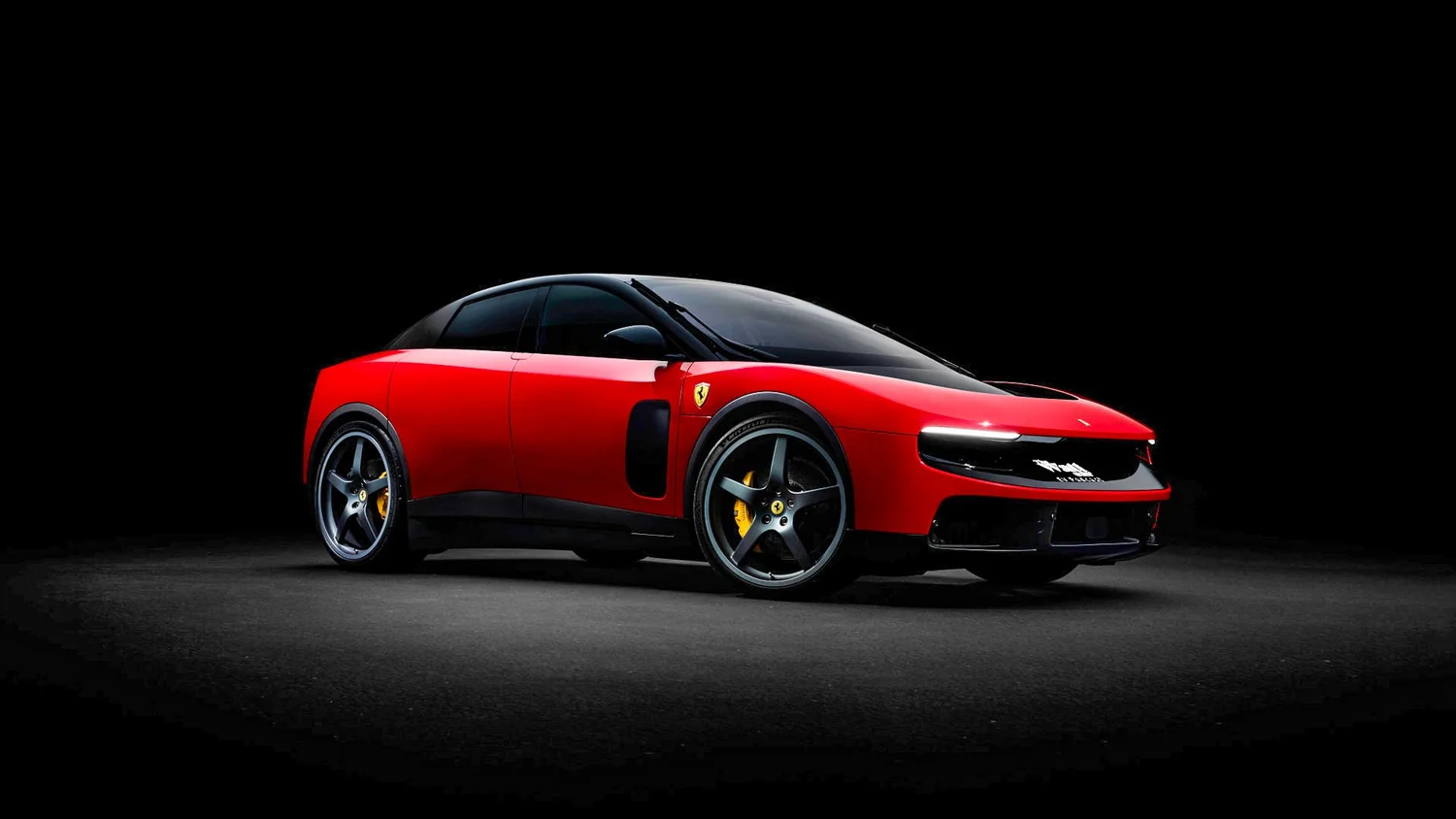
272: Ferrari's Apple Car
About this episode
Ferrari’s upcoming electric car, the Luce, gets the spotlight—starting with its rumored name change from “Electrica” and a reveal that shows the steering wheel and interior before the full car. Hosts dig into specs like “Over 1100 horsepower quad motor” and a claimed “530 kilometer range,” plus the likely WLTP basis. They connect the design to “a Johnny Ive car,” debate physical switches vs touchscreen habits, and call out the “S-duct” aerodynamics. Price, weight, and even whether it reaches production all come under fire.
Ferrari unveils its first fully electric vehicle, and the reviews are mixed. From its Jony Ive (of Apple fame) exterior and interior design to its stated performance, the reviews are…well…mixed. And on this week’s podcast, we also have opinions. Also this week, Lucid takes back a lemon, Citroën trots out a new 2CV, VinFast hits gen two, and more!
Subscribe to the podcast on Apple Podcasts, Amazon Music, Audible, Spotify, PocketCasts, iHeartRadio, Podbean, and more! Or heck, use your favorite podcast application.
Perhaps you prefer to watch as well as listen. If so, we’ve got you covered.
SHOW NOTES
Ferrari Luce unveiled: https://electrek.co/2026/05/25/ferrari-luce-first-electric-ferrari-hands-on-rome-launch/
Lucid takes back Jason Fenske’s (Engineering Explained) Lucid Air under Lemon Law: https://www.youtube.com/watch?v=wrz1LXNm9cI
The Citroën 2CV is coming back, as an EV: https://insideevs.com/news/796705/citroen-2cv-back-as-ev/
VinFast Unveils second-gen VF8 in Vietnam. Smaller, lower-cost: https://insideevs.com/news/796859/vinfast-vf8-new-generation-2025-specs/
Toyota study says (its) PHEV drivers plug in regularly: https://electriccarsreport.com/2026/05/do-plug-in-hybrids-really-work-toyota-study-says-yes/
Man in Grapevine, TX, drives his Cybertruck into a lake to use “Wade Mode” … gets stuck … and arrested.
https://abc7news.com/post/driver-intentionally-drove-cybertruck-lake-use-vehicles-wade-mode-police-say/19138612/
This week’s hosts: Phil Royle and Edward A. Sanchez
Episode art courtesy Ferrari
Music courtesy Twisterium at Pixabay
Website: https://www.thewattcar.com
Buy merch: https://www.thewattcar.com/store
YouTube: https://www.youtube.com/@thewattcar

Tesla Model S
"...ere like, because basically then you just had the Model S. It was like $100,000 and it blew everybody's min..."
The Tesla Model S is an all-electric car (no gas engine) that’s built like a large sedan. It became famous for going far on a charge and feeling very fast. The podcast mentions it because it was a big deal when it launched.
The Tesla Model S is a full-size electric sedan known for strong performance and long driving range. It’s often discussed because it helped prove that high-end EVs could be practical and exciting, especially when it first arrived at a high price point. In the podcast, it’s referenced as a standout that “blew everybody’s mind.”
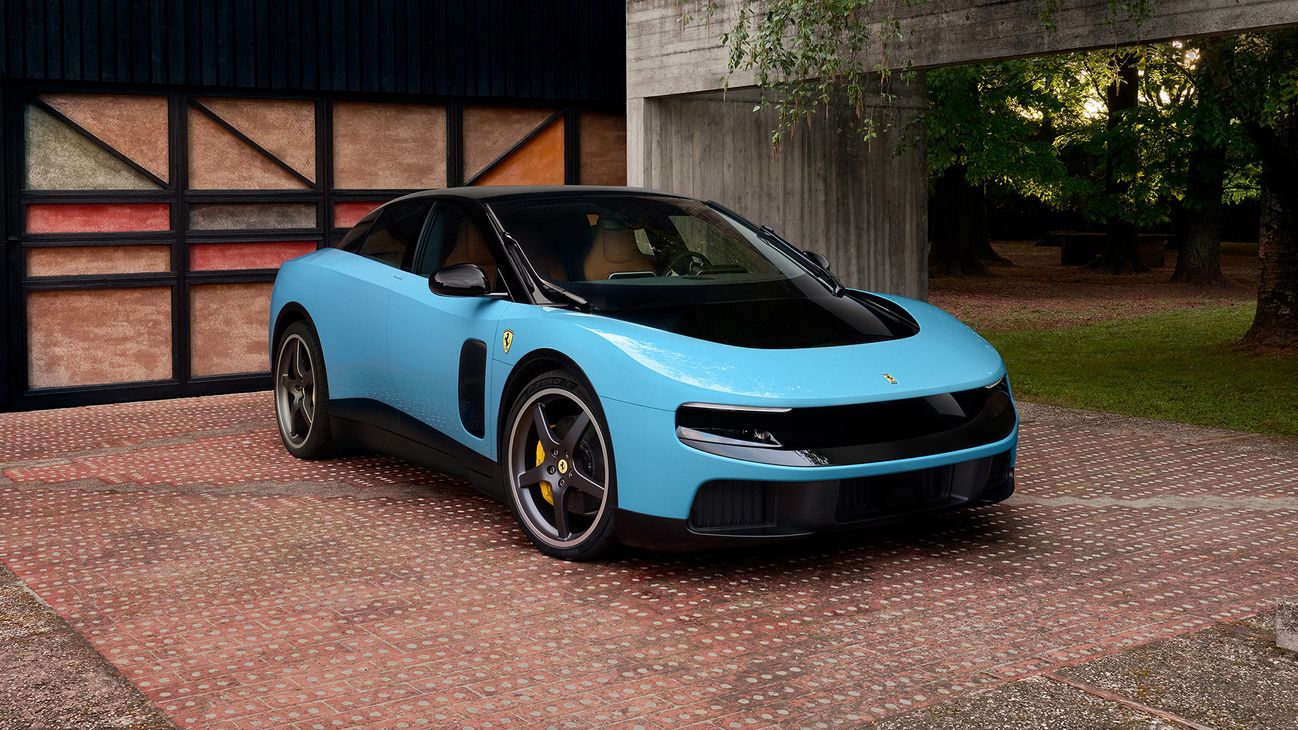
Ferrari Luce
"First up is the Ferrari. Is it Luce? Luce."
The Ferrari Luce is a Ferrari model name mentioned in the podcast. The episode is likely discussing a specific car Ferrari is known for. The podcast doesn’t provide enough detail here to describe its exact type or features.
The Ferrari Luce is a name referenced in the podcast as “Luce” (or “Luce?”), indicating a specific Ferrari model being discussed. It’s significant in a podcast context because Ferrari model names often come up when talking about new releases, design direction, or performance focus. The mention is brief, but it signals that the episode is touching on Ferrari’s latest or notable product.
VIP list
"We're not on that elite VIP list yet, but well, someday maybe I've got some thoughts about the downsides to going to something like this because you have to say nice things."
“VIP list” here means an invite-only group of journalists or influencers who get special access to events and early look opportunities. Automakers often use these lists to control messaging and generate favorable coverage around new launches.
long rumored
"OK, so this is a long rumored, formerly known as the Electrica, which is electric in Italian, which I guess they figured was too generic."
“Long rumored” just means people had been talking about the car for a long time before it was officially shown. With new EVs, that usually happens because information leaks out while the company is still developing the vehicle.
“Long rumored” refers to a model that has been discussed in leaks, reports, and speculation for a long time before any official reveal. In EV news, this often means the company has been developing the car for years, while details trickle out through industry sources and media.

Ferrari Purosangue
"So interestingly, they're saying it's their first five passenger vehicle ever. [300.5s] I guess even the Pura Sangue is four seater. [304.5s] That kind of makes sense."
drive line
"[304.5s] That kind of makes sense. [305.7s] And there'd be a drive line going down the middle of that. [308.7s] So they said because it's electric, it enabled three across rear seat, even though by the"
A driveline is the mechanical system that sends power from the car’s power source to the wheels. If it runs through the middle, it can force a raised hump in the floor that makes seating across the back less flexible.
A “driveline” is the set of components that transmit power from the power source to the wheels—things like shafts, differentials, and related hardware. The host mentions it “going down the middle” to explain why the rear seat has a center hump, which affects how many people can sit across.
quad motor
"[321.4s] Plenty powerful. [324.4s] Over 1100 horsepower quad motor, 122 kilowatt hour battery pack, which Ferrari builds, but [331.8s] they use SK on cells, which is a Korean supplier."
“Quad motor” means the car uses four electric motors. More motors can help the car accelerate harder and control traction better, especially when you’re driving aggressively.
A quad-motor setup uses four electric motors to drive the vehicle, typically enabling very strong acceleration and more precise control of torque at each axle or wheel. In this segment, it’s tied to the claimed “Over 1100 horsepower quad motor” performance.
122 kilowatt hour battery pack
"[321.4s] Plenty powerful. [324.4s] Over 1100 horsepower quad motor, 122 kilowatt hour battery pack, which Ferrari builds, but [331.8s] they use SK on cells, which is a Korean supplier."
The “122 kilowatt hour” number is how big the car’s battery is. A bigger battery usually means you can drive farther before needing to recharge.
A 122 kWh battery pack is the size of the car’s high-voltage battery, measured in kilowatt-hours (kWh). Larger packs generally provide more potential energy for longer driving range, though real-world range still depends on efficiency and driving conditions.
Zero to 100 kilometers per hour, 2.5 seconds
"[336.6s] Zero to 100 kilometers per hour, 2.5 seconds. [340.7s] Zero to 200, which is 124 mile per hour in freedom units, 6.8. [348.1s] So that's pretty quick."
This is a stopwatch test: how long it takes to go from 0 to 100 km/h. “2.5 seconds” means the car is extremely quick off the line.
“Zero to 100 kilometers per hour” (0–100 km/h) is a common acceleration test that measures how quickly a car reaches 100 km/h from a standstill. The host cites “2.5 seconds,” which is a benchmark for how fast the car can accelerate under ideal conditions.
WLTP
"[355.7s] And I was not sure if this is WLTP or EPA range. [362.3s] They're claiming a 530 kilometer range, which works out to 329 miles. [370.7s] That'd be WLTP, I'm sure."
WLTP is a standardized test used to estimate how far a car can go on a charge. It’s one of the ways manufacturers report range, and it can produce different numbers than other standards like the EPA.
WLTP (Worldwide Harmonized Light Vehicles Test Procedure) is a standardized method for estimating fuel/energy consumption and driving range for vehicles. The host questions whether the range figure is WLTP or EPA, then concludes “That'd be WLTP,” meaning the stated range likely comes from that specific testing standard.
EPA
"[355.7s] And I was not sure if this is WLTP or EPA range. [362.3s] They're claiming a 530 kilometer range, which works out to 329 miles. [370.7s] That'd be WLTP, I'm sure."
EPA refers to the U.S. Environmental Protection Agency’s testing and labeling standards for vehicle range and efficiency. The host contrasts EPA with WLTP to clarify which testing method the quoted EV range number likely comes from.

Mazda Mx30
"Anyway, it can go further than the Mazda EV, whatever that was called. MX 30. MX 30."
The Mazda MX-30 is an electric car made by Mazda. The podcast mentions it because it can drive a certain distance on a charge. They’re comparing how far it goes to another Mazda EV.
The Mazda MX-30 is a Mazda electric vehicle designed as a compact, city-friendly EV. In the podcast, it’s mentioned in a comparison about how far it can go versus another Mazda EV, focusing on real-world range expectations. That makes it relevant because range is one of the biggest factors people consider for EVs.
touch screen interface
"I drive model three. I've gotten used to the whole touch screen interface."
A touch-screen interface means you control things in the car using the screen (like climate or media) instead of separate buttons. The host is saying they’ve gotten used to that setup.
A “touch screen interface” refers to vehicle controls and menus operated primarily through a central display rather than dedicated buttons and knobs. Many modern EVs and tech-focused cars use this approach to simplify the dashboard and consolidate settings into software menus.

Jaguar Ipace
"To me, it kind of looks like a Jag I-Pace a little bit, the side profile."
The Jaguar I-Pace is an all-electric SUV from Jaguar. Here, the host is just saying the car’s side shape reminds them of the I-Pace.
The Jaguar I-Pace is an all-electric SUV known for its distinctive, aerodynamic side profile and early mainstream EV styling. In this segment, it’s used as a visual comparison point for the EV’s proportions.
S-duct
"The most interesting thing to me from just a technical standpoint was the front end, which is has what they call the S-duct... I guess they called this an S-duct."
An S-duct is a special shaped opening/air channel on the front of a car. It helps control airflow around the car (and sometimes helps with cooling), which can improve how the car behaves and performs.
An S-duct is an aerodynamic ducting feature that channels airflow through a shaped opening, often near the front of the car. The goal is typically to manage airflow and reduce drag or improve cooling/pressure distribution, and it’s being highlighted here as the EV’s most interesting technical detail.

Dodge Charger
"OK, so this is not an entirely new concept. The Charger Daytona has kind of a similar idea to this, but this is a more extreme implementation of it."
The Dodge Charger Daytona is a sporty Charger model with styling meant to help it cut through the air. They’re comparing its aerodynamic theme to the EV’s front-end design.
The Dodge Charger Daytona is a performance-focused muscle car variant best known for aerodynamic styling intended to reduce drag at speed. The hosts mention it because it shares a similar idea to the EV’s front-end ducting concept, but with a more extreme implementation here.
zero to 16, two seconds
"A thousand horsepower, zero to 16, two seconds and like."
That phrase is about how fast the car accelerates from a stop. It’s basically a quick “how quickly does it get going” measurement.
“Zero to 16” is shorthand for acceleration from a standstill to 16 (typically 16 seconds or 16 units like miles per hour, depending on the context). When paired with “two seconds,” it’s a way to communicate how quickly the car reaches a target speed or time benchmark.
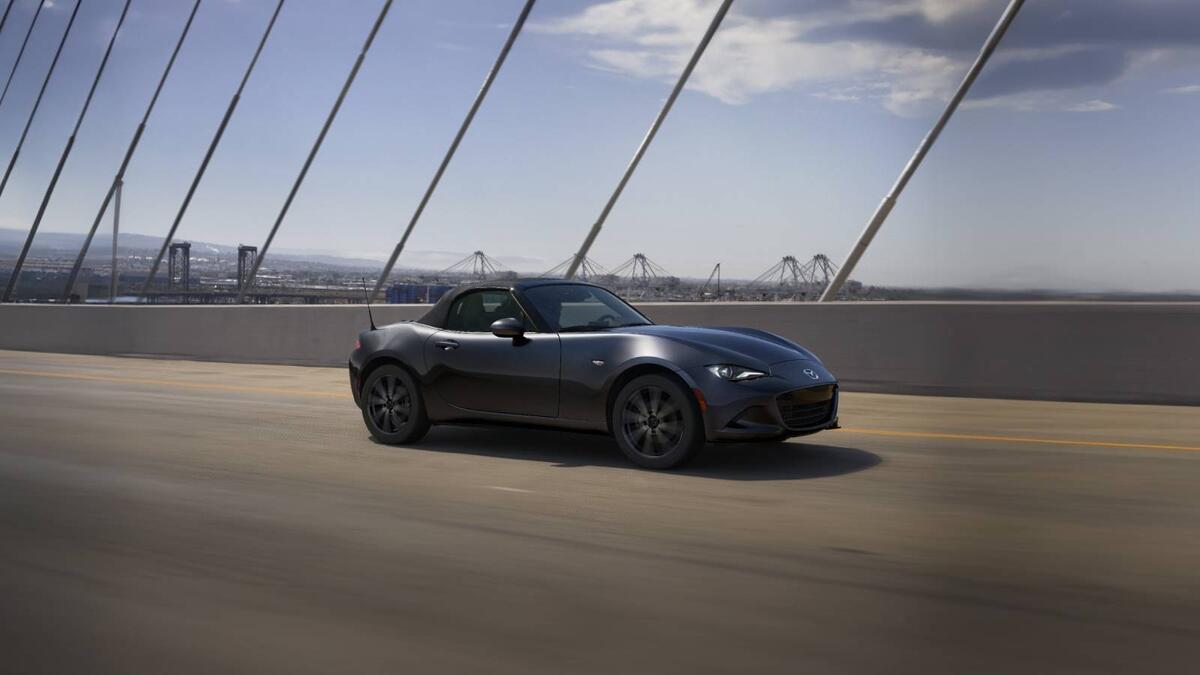
Mazda MX-5 / Miata
"... mean, you can attest this, you've raced one. The Miata, even though it's, you know, fairly modestly pric..."
The Mazda Miata is a small two-seat convertible designed for fun driving. It’s not a huge, expensive sports car, but it’s known for being light and easy to drive. The podcast mentions it because someone has raced one.
The Mazda MX-5, commonly called the Miata, is a small, lightweight two-seat roadster focused on handling and driver feel. It’s significant because it’s relatively affordable for a fun sports car and has a long history of being easy to enjoy. The podcast brings it up in the context of racing and performance despite its modest price.
visceral experience
"It's just it's just a very pure kind of. [813.1s] Visceral experience."
“Visceral experience” means the car feels exciting in a physical, emotional way. It’s about how it feels and sounds while you drive, not just how fast it goes.
A “visceral experience” in car talk means the driving feel is emotionally engaging—things like steering feedback, body motion, sound, and throttle response. It’s often used to describe cars that feel exciting even without being the fastest.
active suspension
"such as their active, their active suspension derived from the F80. [939.0s] OK, so not what he just said, it's from something else."
Active suspension is a suspension system that can change how it absorbs bumps while you’re driving. That helps the car stay steady and comfortable without sacrificing handling.
Active suspension uses sensors and a control system to adjust damping and/or suspension behavior in real time. The goal is to keep the car composed over bumps while also improving grip and stability during acceleration, braking, and cornering.
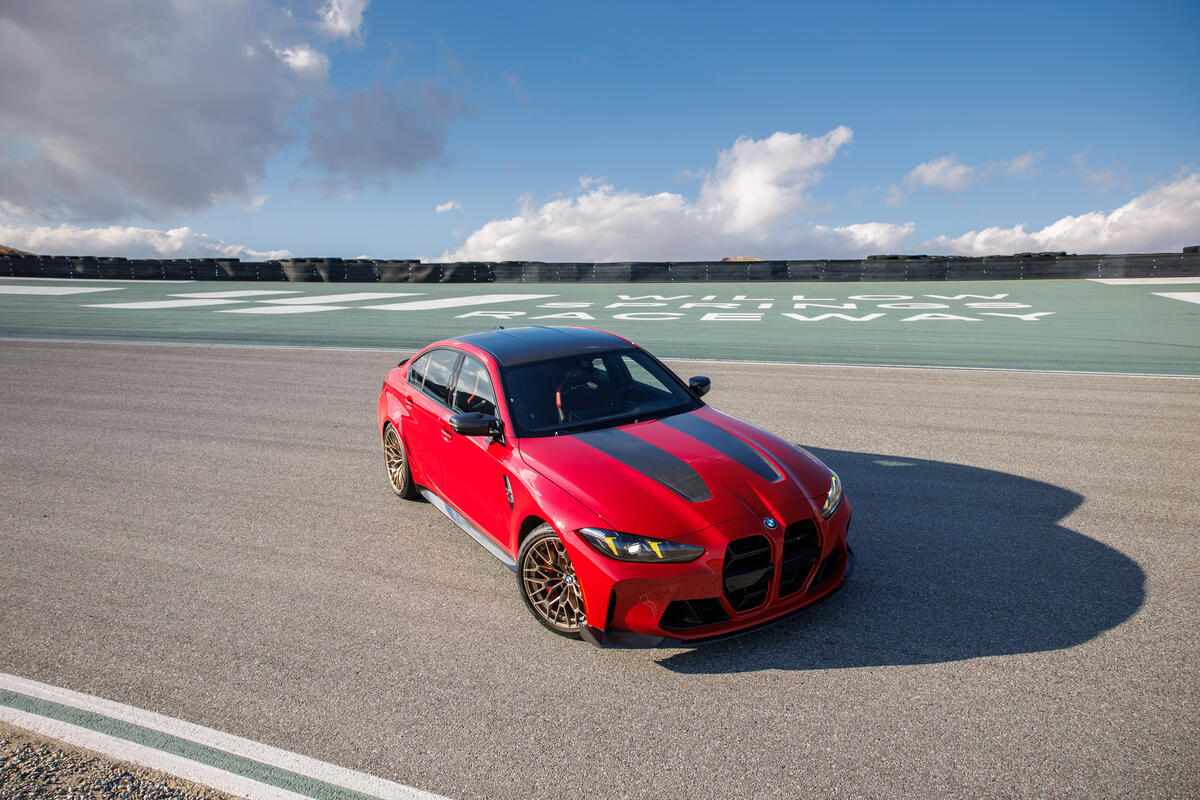
BMW M3
"... active, their active suspension derived from the F80. OK, so not what he just said, it's from somethin..."
The BMW M3 is a performance BMW with a stronger engine and sport-tuned systems. It’s designed to handle well and feel responsive when driving hard. The podcast mentions its suspension because that’s part of how it stays stable and controlled.
The BMW M3 is a high-performance version of the 3 Series, built for track-capable driving while still being usable day to day. The podcast specifically references active suspension technology derived from an earlier M3 generation, highlighting how the car’s chassis systems can be tuned for performance. It’s discussed because suspension and chassis control are a big part of what makes an M3 feel “right.”
Torque vectoring
"Torque vectoring derived from years of Formula One development. [946.2s] OK, so not from this, from something else."
Torque vectoring means the car can send different amounts of power to different wheels. That can help it turn better and keep grip when the road is slippery or the corner is tight.
Torque vectoring is a drivetrain control strategy that varies how much driving force each axle—or even each wheel—receives. By shifting torque side-to-side, it can help the car rotate into corners more predictably and improve traction.
800 volt architecture
"800 volt architecture. [954.9s] Not on purpose."
“800 volt architecture” describes how an EV is wired electrically. Higher voltage can help the car charge faster and deliver power more efficiently.
An 800 volt architecture is an EV electrical design that uses a higher-voltage battery and power electronics than the more common ~400 volt systems. Higher voltage can reduce current for the same power, enabling faster charging and allowing components to be more efficient.
naturally aspirated V12s
"Ferrari, a brand that has built its legacy on visceral screams and naturally aspirated V12s on the mechanical poetry of combustion, has looked at electric powertrains..."
“Naturally aspirated” means the engine doesn’t use a turbo or blower to force air in. A “V12” is a big gas engine with 12 cylinders arranged in a V shape—this is the kind of engine Ferrari is known for historically.
“Naturally aspirated” means the engine draws air in without a turbocharger or supercharger. A “V12” is a 12-cylinder engine with cylinders arranged in a V shape, and Ferrari is referencing its traditional sound/character from this combustion setup.
electric powertrains
"has looked at electric powertrains and concluded that to build the car it wanted to build electrification wasn't a compromise, it was a prerequisite."
An “electric powertrain” is the car’s main setup for moving—electric motor(s) plus the battery—rather than a gas engine. The host is saying Ferrari decided that going electric is required, not just an add-on.
An “electric powertrain” is the vehicle’s propulsion system built around electric motors and the high-voltage battery (rather than a gasoline engine). In this segment, the host argues Ferrari evaluated electric powertrains and decided electrification wasn’t optional.
electrification wasn't a compromise, it was a prerequisite
"has looked at electric powertrains and concluded that to build the car it wanted to build electrification wasn't a compromise, it was a prerequisite."
They’re saying the company treated going electric as something you must do for the car to make sense—not a compromise. That usually means the car is designed for electric from the start.
The host is framing “electrification” as a core requirement for the product, not a cost/technology compromise. In EV terms, that implies the car is designed from the ground up around electric propulsion rather than being a late-stage conversion of an existing gas platform.
Lotus
"Now, the reason that my opinion is so is so harsh on this is because Lotus has the Avaya."
They bring up Lotus to make a point about EV direction and what they think is better. Lotus is a car brand known for handling and for working on electric cars.
Lotus is referenced as having “the Avaya,” implying a specific product or partnership tied to Lotus’s EV direction. Lotus is known in enthusiast circles for lightweight engineering and for pushing EV platforms in recent years.
internal combustion
"No, I think they'll maybe like, maybe make like 500 or 1,000 of them. [1223.5s] I think this is the first. [1226.1s] I mean, I do feel even though it's kind of like hard for some people to conceive of or like, you know, they think internal combustion is going to be around forever."
Internal combustion is the traditional engine type that burns fuel to make power. The speaker’s point is that even if it sticks around for a while, cars are eventually going electric.
Internal combustion refers to engines that burn fuel (like gasoline or diesel) inside the engine to create power. The speaker is arguing that, while it may last for decades, the long-term direction of the industry is toward electric drivetrains.
everything's going to be electric
"[1235.7s] And I think we've got at least several decades that it's going to be around. [1241.4s] But ultimately, effectively, everything's going to be electric. [1245.5s] So I think Ferrari's kind of approach with this is like, you know what,"
The speaker is saying the future of cars is electric instead of gas-powered. They’re using that idea to explain why Ferrari is preparing for the transition.
This is a prediction about the industry shift from gasoline/diesel power to electric drivetrains (battery-electric and related architectures). In the context of the episode, it frames why Ferrari would build expertise now for an eventual fully electric future.

Lucid Air Sapphire
"Cool, I guess. But I mean, objectively, you know, lucid air sapphire quicker and faster, plaid despite all the other flaws and shortcomings it may have."
Lucid Air Sapphire is a fast electric car from Lucid. In this discussion, it’s used as an example of an EV that can beat a Ferrari in speed.
Lucid Air Sapphire is a high-performance variant of the Lucid Air electric sedan, positioned as a speed-focused flagship. It’s mentioned here as an EV that can be “quicker and faster,” highlighting how some EVs compete on straight-line performance even against supercar brands.
1000 plus horsepower
"I don't even know what the top spec of that is that the Taycan in general, they do have a 1000 plus horsepower model."
“1000 plus horsepower” means the car is rated to make a huge amount of power. With electric cars, that power can show up very quickly, which is why people talk about super-fast acceleration.
“1000 plus horsepower” refers to extremely high peak power output, typically used to describe the most extreme performance variants of an EV. In EVs like the Taycan, that power is delivered instantly via electric motors, which is why acceleration claims often follow.

Taycan turbo GT
"According to random internet site, Taycan turbo GT 0-60 in about two seconds. There you go."
This refers to a very high-performance Taycan variant from Porsche. The discussion is about how fast it can accelerate and how extreme the spec is compared with other EVs.
“Taycan turbo GT” is a reference to a top-tier, track-focused Taycan variant that’s positioned as one of Porsche’s most extreme EV performance models. The hosts use it to discuss headline performance claims like 0-60 times and very high power output.
0-60
"According to random internet site, Taycan turbo GT 0-60 in about two seconds. There you go."
“0-60” is how fast a car can go from standing still to 60 mph. It’s a simple way to compare acceleration between cars, and electric cars often do well here.
“0-60” is shorthand for how many seconds it takes a car to accelerate from 0 mph to 60 mph. It’s a common performance metric because it captures how quickly the car can get moving, especially noticeable in EVs with instant torque.
e-ink
"What I do really like is the key. The key is like this key fob with a little e-ink. The e-ink."
E-ink is an electronic display technology that uses a bistable, low-power method to show text or graphics. In a car key fob, it can display information like status or notifications while consuming less power than a typical screen.
software is a little glitchy and buggy
"A lot of people said their software is a little glitchy and buggy. Yeah. So, first round, they did an update that fixed some problems..."
EVs run on computers too. “Glitchy and buggy” means the car’s software sometimes acts weird or doesn’t work right, even if the hardware is fine.
In modern EVs, the vehicle’s behavior is heavily controlled by software, including infotainment, charging logic, and driver-assist features. “Glitchy and buggy” describes software that misbehaves—like errors, freezes, or incorrect responses—rather than a purely mechanical fault.
lemon-lot it
"So, he basically lemon-lot it. And he was, Lucid initially was going to offer him..."
A “lemon” is a car that keeps having major problems that the company can’t fix. The host is saying the owner basically used the legal process to get rid of the bad car.
“Lemon” refers to a vehicle that repeatedly has serious problems that the manufacturer can’t fix after a reasonable number of attempts. “Lemon-lot it” here means the owner pursued a legal/consumer remedy to get out of the purchase because the car kept failing to work properly.
long-term loan
"So, they're going to give him a long-term loan on a gravity. So, like a long-term press car."
A long-term loan means the company gives you another car to drive for a while. Here, it’s so the owner isn’t stuck without transportation while his Lucid situation gets handled.
A long-term loan is when the manufacturer provides a replacement vehicle for an extended period while they resolve an issue with the customer’s car. In this context, it’s being used as a practical workaround during the dispute/repair process.
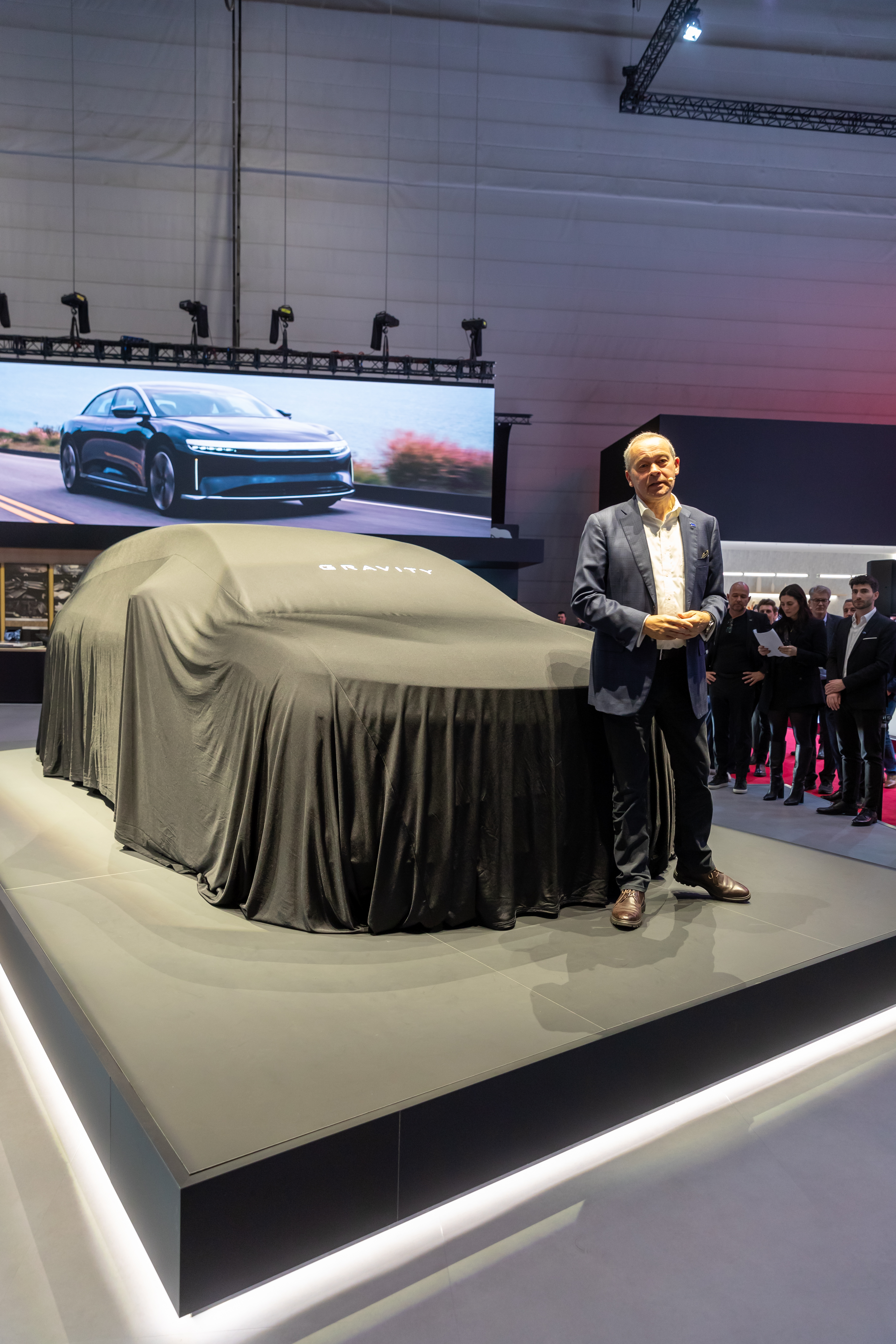
Lucid Gravity
"..., they're going to give him a long-term loan on a gravity. So, like a long-term press car. Which is nice. M..."
The Lucid Gravity is an electric SUV that Lucid is preparing to release. It’s meant to be a bigger EV for everyday families and road trips. The podcast mentions it because they’re talking about getting long-term access to one for coverage.
The Lucid Gravity is an upcoming electric SUV from Lucid, positioned as a larger, family-oriented EV. The podcast mentions a long-term loan/press-car arrangement, which is a common way media gets access to new vehicles before widespread availability. It’s discussed because it represents Lucid expanding beyond its earlier sedan-focused lineup.

2010 Corolla
"They don't have a third car... I think their third car should be like a 2010 Corolla."
A 2010 Corolla is a regular, everyday Toyota. The point here is that it’s a sensible, low-stress third car compared with relying on only EVs for backup.
The 2010 Toyota Corolla is a mainstream compact car often used as a “no-drama” third vehicle. The host brings it up as a practical contrast to having only EVs like Lucid or Rivian as the household backup car.

Citroen 2CV
"... maybe a good third car as you mentioned, Citroen 2CV. Except this time, it's not going to be a little ..."
The Citroën 2CV is an older, simple car that’s known for being able to handle bumpy roads. The podcast mentions it as an idea for a third car. They also hint that it may not match a certain expectation about size or capability.
The Citroën 2CV is a classic, small car known for its simple design and ability to handle rough roads. The podcast references it as a possible “third car,” but notes that it’s not going to be “a little…”—implying there’s a limitation or expectation being set. It’s discussed because the 2CV is often remembered as a quirky, practical classic.
rolling roadblock
"Except this time, it's not going to be a little pokey 30 horsepower rolling roadblock, evidently."
A “rolling roadblock” just means a slow car that makes other cars behind it go slower. Here it’s a joke about how the old 2CV was slow.
“Rolling roadblock” is a slang term for a slow vehicle that forces faster traffic to slow down behind it. In this segment it’s used to describe the old Citroën 2CV’s pace, contrasted with the idea of an EV version being less sluggish.
M1E
"I had no idea about this classification. I guess the EU has this class called M1E, which this article describes as the EU equivalent of K cars."
M1E is a legal category the EU uses to group certain types of cars for rules and approvals. The host is saying the category’s size limits don’t really match what people think of as a tiny “K car.”
M1E is an EU vehicle classification for certain small passenger vehicles, used for regulatory purposes like type approval. The host compares it to “K cars” and discusses how the length limit (165 inches) affects whether the vehicle should be considered “small.”
K cars
"which this article describes as the EU equivalent of K cars. But when I looked at these specs, I'm like, that's not a K car."
“K cars” is a nickname for very small, compact cars. The host is saying that the EU’s M1E category doesn’t seem small enough to really match the usual idea of a K car.
“K cars” is a shorthand for small, compact cars that were popular in Europe and regulated/positioned around tight size constraints. The host challenges the comparison by pointing out that the stated M1E length limit (165 inches) doesn’t feel as small as the cars people typically associate with “K car” status.
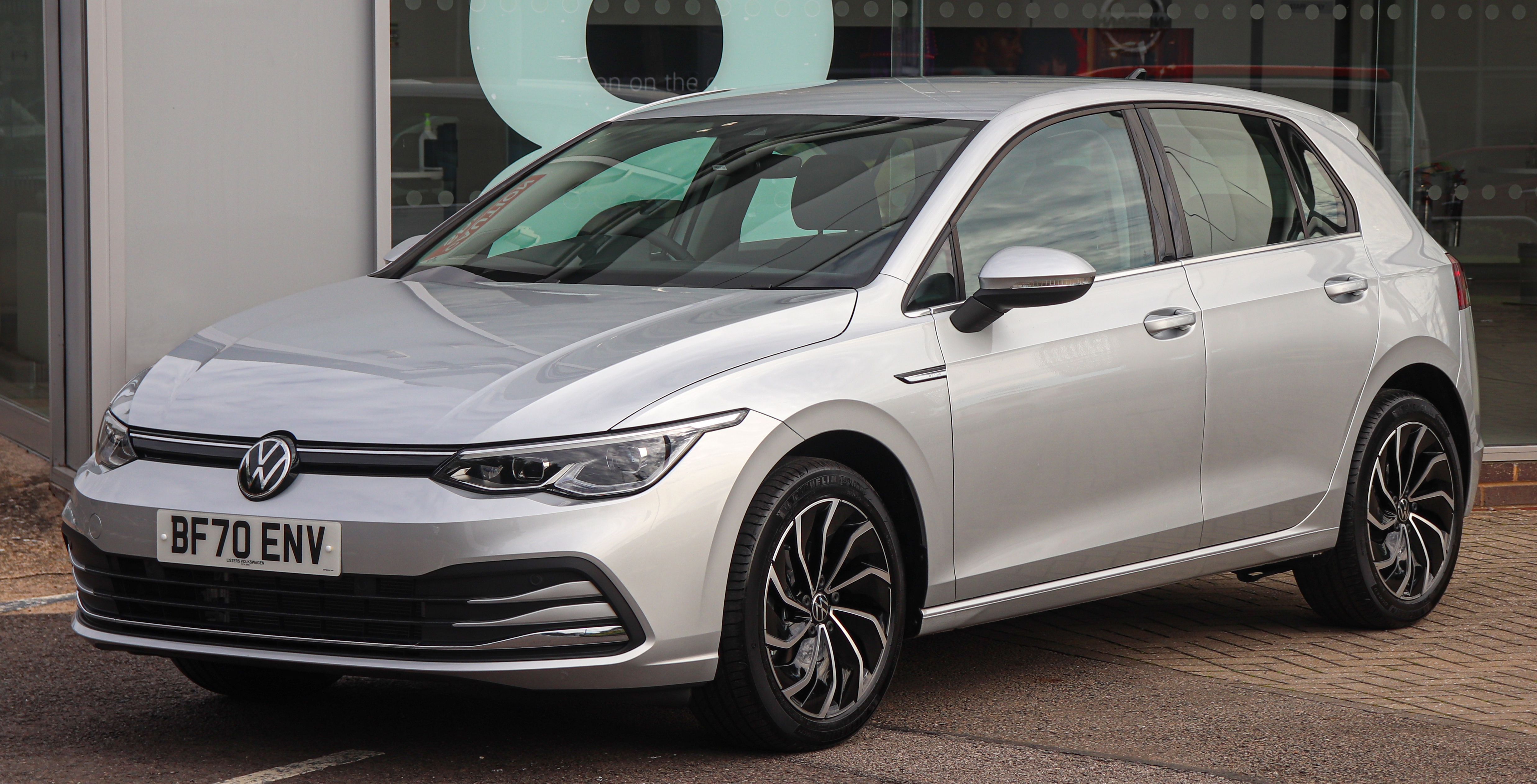
Volkswagen Gti
"...s limits overall vehicle length to 165 inches. My GTI was shorter than that. And I wouldn't have consid..."
The Volkswagen Golf is a compact car, and the GTI is a sportier version of it. The podcast talks about how long the car is and whether it fits certain limits. That’s important for things like parking and garage fit.
The Volkswagen Golf is a compact car platform that’s commonly associated with sporty trims like the GTI. The podcast mentions overall vehicle length limits (like 165 inches) and compares a GTI’s length to those limits, which is relevant for fitment and parking/usage constraints. It’s discussed because dimensions and packaging matter when choosing a car.

Polo
"I mean, the Polo looks as big as a Golf now with the Polo. From a couple of generations ago, yeah."
The Volkswagen Polo is a compact car. The host is saying today’s Polo feels bigger than older Polos—almost like a bigger Golf used to be.
The Volkswagen Polo is a small hatchback whose size has grown over successive generations. The host uses it to illustrate how modern “small” cars have gotten bigger, comparing the Polo’s current footprint to older Golf dimensions.
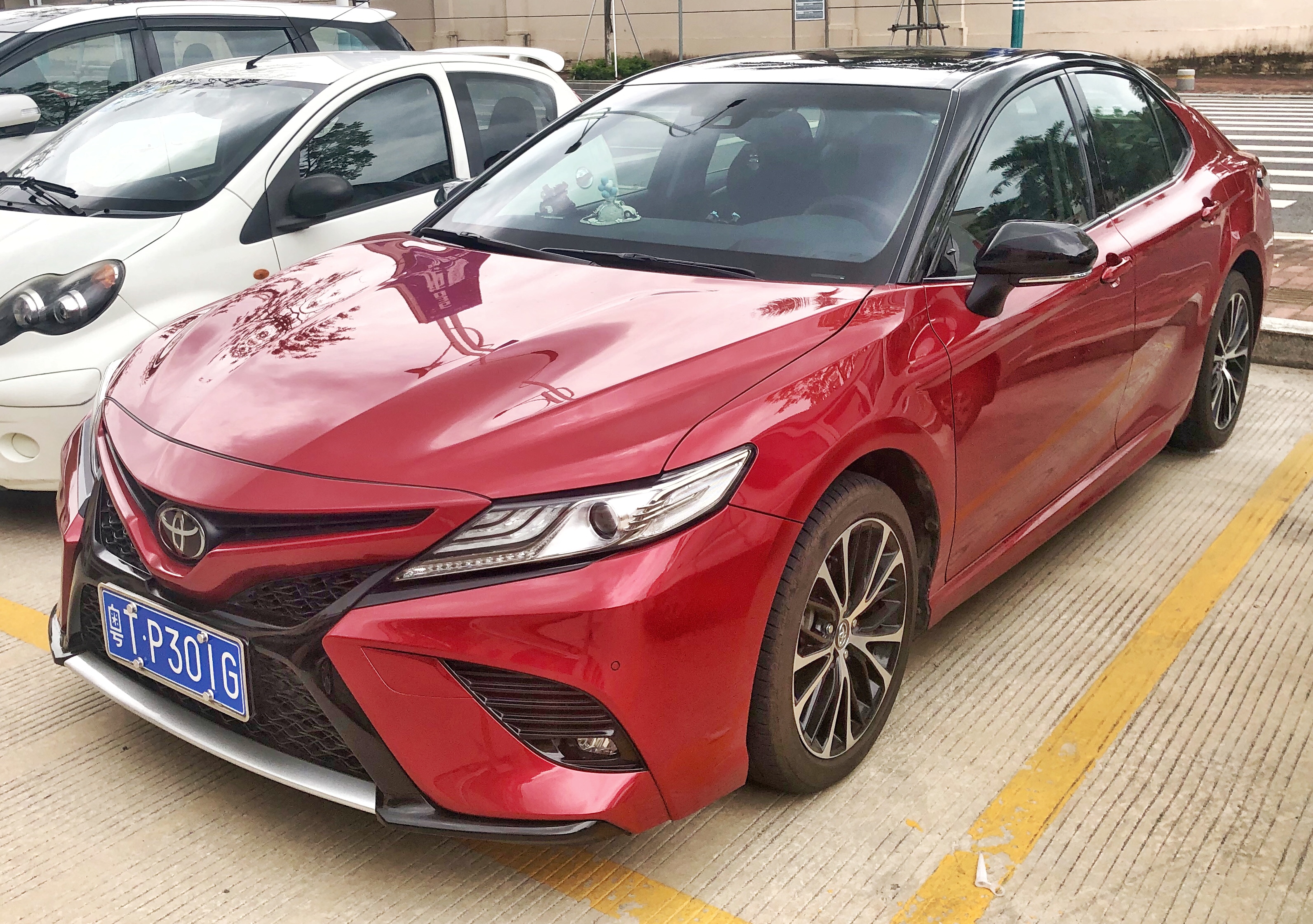
Toyota Camry
"...ow a Yaris is because the Corolla got as big as a Camry, and the Camry got as big as the Avalon, and the ..."
The Toyota Camry is a larger everyday sedan than the Corolla. It’s meant for comfortable commuting and family use. The podcast brings it up while talking about how car sizes have changed over the years.
The Toyota Camry is a mid-size sedan that sits above the Corolla in size and typically in comfort and interior space. In the podcast, it’s referenced in a chain of comparisons about how the Corolla grew over time and how the Camry grew as well. That makes it relevant to discussions about changing vehicle sizes and what “class” means in real life.

Yaris
"There's a reason that there's now a Yaris is because the Corolla got as big as a Camry, and the Camry got as big as the Avalon."
The Toyota Yaris is a smaller Toyota. The host is saying it exists because the Corolla got bigger, so Toyota needed a smaller option again.
The Toyota Yaris is a subcompact car that exists partly because the Corolla has grown in size over time. The host’s point is that as mainstream models ballooned (Corolla up to Camry size), Toyota kept a smaller “Yaris” slot in the lineup.

Volkswagen Beetle
"...ouchevaux was. Did you say it was like the French Beetle effectively? That's kind of the best way to descr..."
The Volkswagen Beetle is a small car with a very recognizable rounded shape. People often remember it as a classic design. The podcast mentions it as a simple way to describe what something looks like.
The Volkswagen Beetle is a classic, compact car with a distinctive rounded shape that became an icon over multiple generations. In the podcast, it’s referenced as a “French Beetle” style comparison, pointing to how recognizable the Beetle design is. It’s discussed because the Beetle’s identity is often tied to its design and cultural familiarity.

Volkswagen Buses
"...way to describe it. I think we were talking about Volkswagen buses. And I was like, yeah, there was a time where the..."
The Volkswagen Bus is a type of van made by Volkswagen. It’s known for carrying people and having a lot of space. The podcast brings it up as a familiar example of Volkswagen vans from the past.
The Volkswagen Bus refers to the classic Volkswagen van, known for its spacious interior and distinctive identity. The podcast mentions “Volkswagen buses” as a category, likely recalling how these vans were used and remembered. It’s discussed because the Bus is a recognizable template for modern people-transport and van-style vehicles.

Volkswagen Id Buzz
"...cting that same customer that you'd have from the ID buzz, which I thought, are they dropping the ID? And t..."
The Volkswagen ID. Buzz is an electric van. It’s designed for people who want a spacious vehicle but powered by electricity. The podcast mentions it while discussing how Volkswagen is handling the model’s name and branding.
The Volkswagen ID. Buzz is an electric van based on Volkswagen’s ID electric vehicle platform. In the podcast, it’s mentioned in the context of naming—whether “ID” is being dropped or changed—which shows how the model’s branding is part of the conversation. It’s discussed because it targets customers who want a modern EV version of a van-like lifestyle.

Model 3
"20 grand doesn't sound like a lot, but for 20 grand for an EV, I'm imagining a car that can go 100 miles and it can't fit anything. You don't get a lot for 20 grand anymore. Well, new. I mean, you get to use Model 3 for less than that."
The Tesla Model 3 is a popular electric car. They’re using it as a comparison point to argue that $20,000 doesn’t buy as much EV as it used to, because you can sometimes get a Model 3 for less.
The Tesla Model 3 is a mainstream electric sedan that’s often used as a price/performance benchmark for other EVs. Here, the host compares the “$20,000 EV” idea to what you can get with a Model 3 for less money.

new Beetle
"Well, new. I mean, you get to use Model 3 for less than that. But I don't know. I mean, I think it'll do okay. What's kind of interesting is, you remember about 20 years ago, there's this big retro kind of craze in the automotive world. You had the new Beetle."
The New Beetle was Volkswagen’s attempt to bring back the classic Beetle look in a more modern car. They’re using it as an example of how people get excited about retro-style cars.
The Volkswagen New Beetle was a modern revival of the original VW Beetle’s shape and styling cues. The hosts bring it up as an example of how retro-inspired cars can create a “retro craze,” which they’re comparing to current EVs with old-school styling.

Ford Mustang
"... to remember the chassis code. I want to say S197 Mustang or 917. I can't remember. You know, the 2005. Yes..."
The Ford Mustang is a sports car from Ford that’s been around for many years. Different versions have different “platform” codes, which affect how they drive. The podcast mentions it while trying to remember the specific Mustang generation they’re talking about.
The Ford Mustang is a long-running American sports car known for its performance heritage and strong enthusiast following. The podcast references chassis codes and a specific era (like the S197-era mention), which is typical when discussing how different Mustang generations drive and handle. It’s brought up as part of a technical conversation about the car’s platform and evolution.

Chrysler PT Cruiser
"...005. Yes. 197, I want to say. 197. That came out. PT Cruiser. I'm sure I'm missing something, but there were l..."
The Chrysler PT Cruiser is a compact car with a retro-looking design. It was made to be a normal, usable car, not just a showpiece. The podcast mentions it while talking about the era when these retro-style cars were popular.
The Chrysler PT Cruiser is a compact car known for its retro-inspired styling and practical everyday use. The podcast references a specific model year and the PT Cruiser name as part of a broader discussion of cars with nostalgic designs. It’s brought up because the PT Cruiser is one of the more recognizable “retro” modern-era vehicles.

Chevrolet HHR
"...ere like a whole bunch of these retro style cars. HHR. HHR. There you go. SSR for the bigger truck. So ..."
The Chevrolet HHR is a small car that looks like it’s inspired by older designs. It’s meant to be practical for everyday driving. The podcast mentions it because it’s one of the retro-style cars people talk about from that time.
The Chevrolet HHR is a compact car with retro styling cues, designed to look like a throwback while remaining practical for daily driving. The podcast groups it with other retro-style vehicles, which is why it comes up in that conversation. It’s discussed as part of the broader trend of modern cars borrowing classic design language.

Chevrolet SSR
"...f these retro style cars. HHR. HHR. There you go. SSR for the bigger truck. So that was a thing for, I ..."
The Chevrolet SSR is a pickup truck with a retro-inspired design. It’s built to carry things like a truck, but it looks like a throwback. The podcast brings it up because it was part of Chevrolet’s retro-style lineup.
The Chevrolet SSR is a retro-styled pickup that blends the look of classic vehicles with the utility of a truck bed. The podcast mentions it alongside the HHR as part of a set of “retro” cars from Chevrolet. It’s discussed because it’s a distinctive niche vehicle that stands out for its styling and concept.

Vinfast VF-8
"More than you'd think. The VF-8 was kind of their [2041.8s] bread and butter model. But it was kind of a, I think kind of a tough sell to Americans because [2047.8s] it was this kind of new name, like new brand. And they were, I think a loaded VF-8 was, [2054.1s] I want to say was pushing 60 grand or something."
The VinFast VF-8 is VinFast’s main electric SUV. The hosts are saying it was hard to convince US shoppers because it was expensive (around $60k) and people didn’t know the brand well yet.
The VinFast VF-8 is VinFast’s main electric SUV model, positioned as the brand’s “bread and butter” in the US market. The hosts discuss why it was a tough sell—especially pricing around the $60k range and the challenge of introducing a new brand name to American buyers.
bread and butter model
"More than you'd think. The VF-8 was kind of their [2041.8s] bread and butter model."
“Bread and butter model” just means the main car a company relies on to sell the most. It’s the one they expect to do the heavy lifting for sales and reputation.
“Bread and butter model” means the product that generates most of a company’s sales and brand momentum. In EV terms, it often refers to the main volume vehicle a new automaker uses to establish dealer presence, marketing awareness, and early customer demand.
Pininfarina
"They were kind of like, it was, they were pin and farina design, weren't they? [2076.4s] Wasn't that? SSR. Yeah, the initial ones, yeah."
Pininfarina is a famous Italian company that designs car bodies. In this segment, the hosts are saying VinFast used that kind of well-known design talent to make the cars look more credible—similar to how Ferrari is strongly associated with great design.
Pininfarina is an Italian design house known for styling many high-profile cars, including Ferraris. The hosts connect VinFast’s early design approach to Pininfarina, arguing it was a deliberate move to borrow credibility from a brand with a strong design reputation.
wheelbase
"Shorter wheelbase, shorter overall length, smaller battery."
Wheelbase is the distance between the front and rear wheels. If it’s shorter, the car can feel nimbler, but it can also change how stable and smooth it feels.
Wheelbase is the distance between a car’s front and rear axles. A shorter wheelbase usually changes how the vehicle feels—often making it more maneuverable but potentially affecting stability and ride comfort compared with a longer wheelbase.
front wheel drive only
"smaller battery. And at least this initial version is front wheel drive only."
Front-wheel drive means the front wheels do the work of moving the car. If it’s “front wheel drive only,” there’s no all-wheel-drive version at first, which can keep things simpler and cheaper, but may be less capable on slippery roads.
Front-wheel drive (FWD) means the engine’s power goes to the front wheels. Saying it’s “front wheel drive only” implies there’s no all-wheel-drive option in the initial version, which can reduce complexity and cost but may limit traction advantages versus AWD in some conditions.
value play
"The bigger appeal right now is kind of a value play. ... people willing to pay that, especially for an unknown brand. So I think they're kind of pivoting back to more of a value play"
A “value play” is a pricing and positioning strategy where a brand targets buyers by offering a lower price or better value rather than aiming for the most premium segment first. Here, the hosts argue VinFast is pivoting back toward value because there’s limited room at the high end and fewer buyers willing to pay top money for an unknown brand.
Lucimal
"trying to copy the kind of Tesla and Lucimal, like, oh, start on the high end and come down."
“Lucimal” sounds like it’s referring to Lucid, another electric-car brand. The hosts are basically saying some EV companies try to start with expensive cars first, then move to cheaper ones later.
“Lucimal” appears to be a mis-transcription or nickname for Lucid, the electric-car brand. The hosts group it with Tesla as an example of a premium EV approach—starting at the high end and later expanding downward in price.

Vf6
"...lso, remember they had like the VF8, they had the VF6, 5, 4, 3, 2, they had like all of these. And now ..."
The VF 6 is an electric SUV mentioned in the podcast. The episode talks about it as part of a set of related EV models with different numbers. The point is that the lineup has shifted over time.
The VF 6 is an electric SUV model referenced in the podcast as part of a lineup that included multiple VF numbers (VF8, VF6, VF5, etc.). The discussion suggests that the lineup has changed over time, which is why the VF6 is mentioned in a “they had all of these, and now…” context. It’s relevant because EV model availability and naming can affect what buyers can actually get.
tariffs
"...the constant moving target with the US market, at least under this administration's tariffs. So that's the other big unknown... having to do with some imported products..."
Tariffs are extra taxes on things that are brought in from another country. If an EV (or its parts) is imported, tariffs can make it more expensive to sell, which affects pricing for buyers.
Tariffs are taxes governments add to imported goods. In EV pricing, tariffs can raise the cost of vehicles and parts that cross borders, making it harder for automakers to hit target prices in markets like the US.

Tahoe
"Whether or not it should be like like in America, you'll have like the XL version of the Yukon or the suburban versus the Tahoe. And they just they take the same thing and they stretch it out."
The Chevrolet Tahoe is a large SUV model. In the episode, it’s mentioned as the shorter/smaller version compared to longer variants like the Suburban or Yukon.
The Chevrolet Tahoe is used as the smaller reference point in the Yukon/Suburban vs Tahoe comparison. The speaker’s underlying idea is that automakers can reduce confusion by limiting the number of distinct models, even if they still offer size variants.

Yukon
"Whether or not it should be like like in America, you'll have like the XL version of the Yukon or the suburban versus the Tahoe. And they just they take the same thing and they stretch it out."
The Chevrolet Yukon is a large SUV. The host uses it as an example of how some brands sell multiple similar SUVs (different sizes/names) that can feel redundant to shoppers.
The Chevrolet Yukon is mentioned as an example of how US brands often offer multiple versions of the same vehicle concept. The speaker compares it to the Tahoe idea—smaller vs larger—suggesting that naming and sizing can be confusing even when the underlying platform is similar.

Suburban
"Whether or not it should be like like in America, you'll have like the XL version of the Yukon or the suburban versus the Tahoe. And they just they take the same thing and they stretch it out."
The Chevrolet Suburban is a very large SUV. The host brings it up to compare how brands offer the same SUV in different sizes, like the Tahoe vs a longer version.
The Chevrolet Suburban is referenced as the “XL” counterpart to the Tahoe, illustrating how some brands sell the same basic SUV formula in different lengths. The speaker’s point is that customers often already know these variants are closely related.

Cadillac Escalade
"...ly the same. Just one's a long wheelbase with the Escalade. There's the ESV. Yeah, that's a longer one. It s..."
The Cadillac Escalade is a big luxury SUV. The ESV version is longer than the standard one, which usually means more space inside. The podcast brings it up while talking about the difference between the standard and longer versions.
The Cadillac Escalade is a large luxury SUV known for comfort, space, and a high-end feature set. The podcast mentions the long-wheelbase ESV version, which is simply a longer variant of the same model line. It’s discussed because wheelbase length affects interior room and how the vehicle feels as a big family or luxury hauler.

VF9
"if you want the the Gigantor version, here's the VF9 that you can go to. Like it's simple."
The VinFast VF9 is a big electric SUV from VinFast. The hosts are basically saying: if you want the largest version, this is the one to look at.
VinFast VF9 is VinFast’s larger, third-row electric SUV option in its lineup. In this segment, the hosts use it as the “Gigantor” choice, contrasting it with smaller VinFast EVs.
Vinfest
"I think Vinfest just needs to really focus on customer satisfaction, quality, consistency, really getting their software nailed down."
They’re talking about VinFast, the company making these electric vehicles. The point is that the company needs to improve how customers experience the car and the software.
VinFast is the EV brand being discussed, and the hosts are focusing on how the company should improve customer satisfaction and software quality. The transcript appears to say “Vinfest,” but the context is clearly about VinFast.
suspension dampers
"Improving their this article did note they improved the suspension dampers to improve the ride quality. And that was the biggest thing that people complained about."
Suspension dampers are the parts that help smooth out bumps. If they improve the dampers, the ride usually feels less bouncy and more comfortable.
Suspension dampers (shock absorbers) control how quickly the suspension compresses and rebounds after hitting bumps. The segment says VinFast improved its suspension dampers to raise ride quality, which is a common way to reduce harshness.
PHAVs
"So the predominant narrative, a lot of the critics of PHAVs have been like, people never plug them in. They're just lugging around this huge battery, their gas hogs."
PHAVs are plug-in hybrids—cars that can run on electricity for a while and also have a gas engine. Critics argue people don’t plug them in, so they end up acting more like regular gas cars.
PHAVs here means plug-in hybrid electric vehicles (PHEVs), which have both a gasoline engine and a battery you can charge from an outlet. The hosts discuss a common criticism: that owners don’t plug them in and therefore don’t get the full benefit of the electric range.
telematics data
"No, I'm assuming this is based on like telematics data. I don't know if this was self reported, but I assumed it was self reported."
Telematics data is information the car sends back (like location and usage) using built-in connectivity. Here, it’s being used to estimate how often owners actually plug in.
Telematics data refers to information collected from a vehicle using cellular/GPS systems, often including charging behavior and driving patterns. The hosts suggest the study’s “plug-in” rates may be based on this kind of vehicle-reported data rather than only owner surveys.
charging days
"Toyota PHAV owners plugged in their vehicles roughly seven out of every 10 driving day. Lexus owners... averaging between eight and nine charging days out of every 10."
They’re counting how many days in a 10-day period people actually plugged the car in. The hosts use that to compare charging habits between Toyota and Lexus drivers.
“Charging days out of every 10” is a way to measure how frequently owners plug in their plug-in hybrid. The segment uses these rates to compare Toyota vs Lexus owners and infer differences in access to charging.
off street parking
"Lexus owners are more wealthy and probably have off street parking. Probably can also get the plug to charge the thing."
Off-street parking means you park somewhere like a driveway or garage instead of on the street. That usually makes it easier to plug in regularly, which helps plug-in hybrids work as intended.
Off-street parking matters for plug-in vehicles because it makes charging access more reliable (for example, having a driveway or garage outlet). The hosts connect it to higher plug-in frequency, especially for Lexus owners in their interpretation of the study.
level one
"So you're actually charging it better than level one. And I mean, if you've got off street parking, you're more likely to charge it, I would guess."
Level 1 is the slowest way to charge, usually from a normal household outlet. If you have a place to park off the street with easier access to a plug, charging is more convenient and more frequent.
Level 1 charging is the slowest common method for EVs/PHEVs, typically using a standard household outlet. The hosts suggest that with off-street parking and easier access to a plug, owners can charge more effectively—potentially beyond the limitations of Level 1.
plug-ins
"I think that's what it says more about. ... the people that were buying the plug-ins to do the long commute so they could get the carpool sticker ..."
“Plug-ins” here refers to plug-in hybrid electric vehicles (PHEVs) that can run on electricity from an external charger for part of their driving. The hosts are debating whether buying a plug-in makes sense versus just getting a regular hybrid. The key idea is that you only get the full benefit if you actually charge it and use it for the trips it’s designed for.
pheas
"I'm like, they're a good idea if you use them as intended. I totally get the concept and I'm not against it."
“Pheas” sounds like what people say when they mean plug-in hybrid cars. These cars can run on electricity part of the time, but only if you plug them in. The point here is: if you don’t charge them, you don’t really get the main benefit.
“Pheas” is almost certainly a shorthand for PHEVs (plug-in hybrid electric vehicles). The hosts are discussing the common argument that PHEVs are a “bad idea,” and countering that they can work well when used as intended—meaning the driver regularly charges them to capture the electric-driving benefit. Without charging, the advantage over a standard hybrid shrinks.
carpool sticker
"But I am other than the carpool sticker, which I kind of understood, which is kind of a nonissue now."
A carpool sticker is a permit that lets some cleaner cars use special high-occupancy lanes even if only one person is in the car. Here, the hosts are saying some people buy plug-in cars mainly for that perk. They’re questioning whether that’s worth paying extra for the battery.
A carpool sticker is a permit that can allow certain vehicles—often hybrids or plug-ins—to use carpool/HOV lanes even when there’s only one occupant. In this segment, it’s brought up as a reason some people buy plug-ins, and the hosts question whether that incentive is the real value versus simply choosing a regular hybrid. The underlying point is that incentives can drive purchasing decisions beyond pure technology benefits.

Tesla Cybertruck
"...talk about this last week. So would you take your Cybertruck for a swim? It's not a boat, but and I don't own ..."
The Tesla Cybertruck is an electric pickup truck. It looks very different from most trucks and is designed to be used like a truck. The podcast mentions it with a joke about whether it could handle water.
The Tesla Cybertruck is an electric pickup truck with a distinctive angular design and a focus on utility. The podcast references it in a humorous “take it for a swim” way, which points to how the Cybertruck’s design and materials are often discussed. It’s relevant because it’s a polarizing EV that’s still being talked about as a new kind of truck.
Grapevine Lake
"Anyway, Guy in Grapevine Lake in Grapevine, Texas, decided to test out the Cybertruck wade mode."
Grapevine Lake is a real lake/reservoir in Texas. In this story, someone drove a Cybertruck into it to test the car’s water feature. The truck ended up getting stuck, so the location matters to the outcome.
Grapevine Lake is a reservoir in the Dallas–Fort Worth area of Texas, referenced here as the location where a Tesla Cybertruck was driven into the water. The story uses this real-world setting to illustrate what happens when a vehicle’s water-driving feature is tested in practice. It’s a reminder that local conditions and depth/traction matter.
wade mode
"Guy in Grapevine Lake in Grapevine, Texas, decided to test out the Cybertruck wade mode. ... This guy drove his Cybertruck into the lake and then got stuck."
Wade mode is a setting that’s meant to help a car safely drive through shallow water. It tries to protect the car’s systems while you’re in wet conditions. But if the water is too deep or the tires lose traction, the car can still get stuck.
Wade mode is a vehicle setting that helps an EV manage systems while driving through water, typically by adjusting things like traction control behavior and monitoring temperatures/sensors. The goal is to reduce the chance of damage when water is present. Even with wade mode, depth, traction, and getting stuck can still happen.
Coast Guard
"Because you've got to have like for every, I've never had a boat, but they do inspections. I know that the Coast Guard or the Lake Guard, whatever they're called, they'll come over and they'll inspect and that you've got to have like the same number of safety jackets as you have."
The Coast Guard is a government agency that helps keep boats and people safe on the water. The host is saying that boat safety inspections require certain equipment, and that’s part of why the incident was treated like a boat situation.
The Coast Guard is a U.S. federal agency responsible for maritime safety and enforcement, including inspecting required safety equipment on boats. The host uses it as an example of how watercraft inspections can require specific gear counts (like life jackets), which authorities allegedly applied to the Cybertruck incident.
life best passenger
"I know that the Coast Guard or the Lake Guard, whatever they're called, they'll come over and they'll inspect and that you've got to have like the same number of safety jackets as you have. Life best passenger. Yeah, there are these certain requirements that you need to have."
The host is talking about life jackets—safety gear you’re supposed to have for the people on board. The story claims the vehicle didn’t have that required safety equipment.
This appears to refer to the requirement to carry life jackets (personal flotation devices) for each passenger on board. The host’s point is that water-safety rules are gear-count based, and the vehicle in question allegedly didn’t have the required safety equipment.
Request an Explanation
Heard something you'd like explained? We'll add it to this episode.
Sign in to request explanations for terms you heard.
Want to learn more?
Browse our glossary for plain-English explanations of automotive terms, jargon, and concepts.
Help improve this episode
See something that's not quite right? Our annotations are AI-generated and can sometimes miss the mark. Click the flag icon on any annotation to suggest a correction.
1 community members have helped improve this episode.