Brakes are what help your car slow down and stop safely. If someone says the brakes need attention, it usually means checking parts that wear out over time and making sure the system is working properly.
A “mystery leak” means your car is leaking fluid, but it’s not clear where it’s coming from. A mechanic usually checks what fluid it is and follows the trail to find the exact part causing the leak.
A Jeep Wrangler is a rugged SUV that’s built for off-road driving. People often keep older Wranglers running for years, so it’s a common example when talking about maintenance and repairs.
Concept
automotive service technician
An automotive service technician is a mechanic who diagnoses problems and fixes cars. The host is saying he has a lot of real-world experience from working in a shop.
The Toyota FJ Cruiser is a specific Toyota SUV model. The hosts are using their 2007 one as an example of how to inspect a car and spot problems before they get worse.
This is the “myth” that older cars are inherently too expensive to maintain. The episode frames it as a breakdown of real maintenance costs and what actually drives expenses—like condition, wear items, and how the car was maintained.
They’re talking about how long your brakes should last before you need new brake parts. How long they last depends on how you drive and how much you stop.
Volkswagen is the car brand the speaker mentions from their dealership work experience. It’s included here because it’s a specific consumer-facing automotive identity tied to the host’s story.
The Volkswagen ID. Buzz is a van that runs on electricity instead of gasoline. It’s meant to carry people comfortably, like a family van. People talk about it because it’s an electric version of that kind of vehicle.
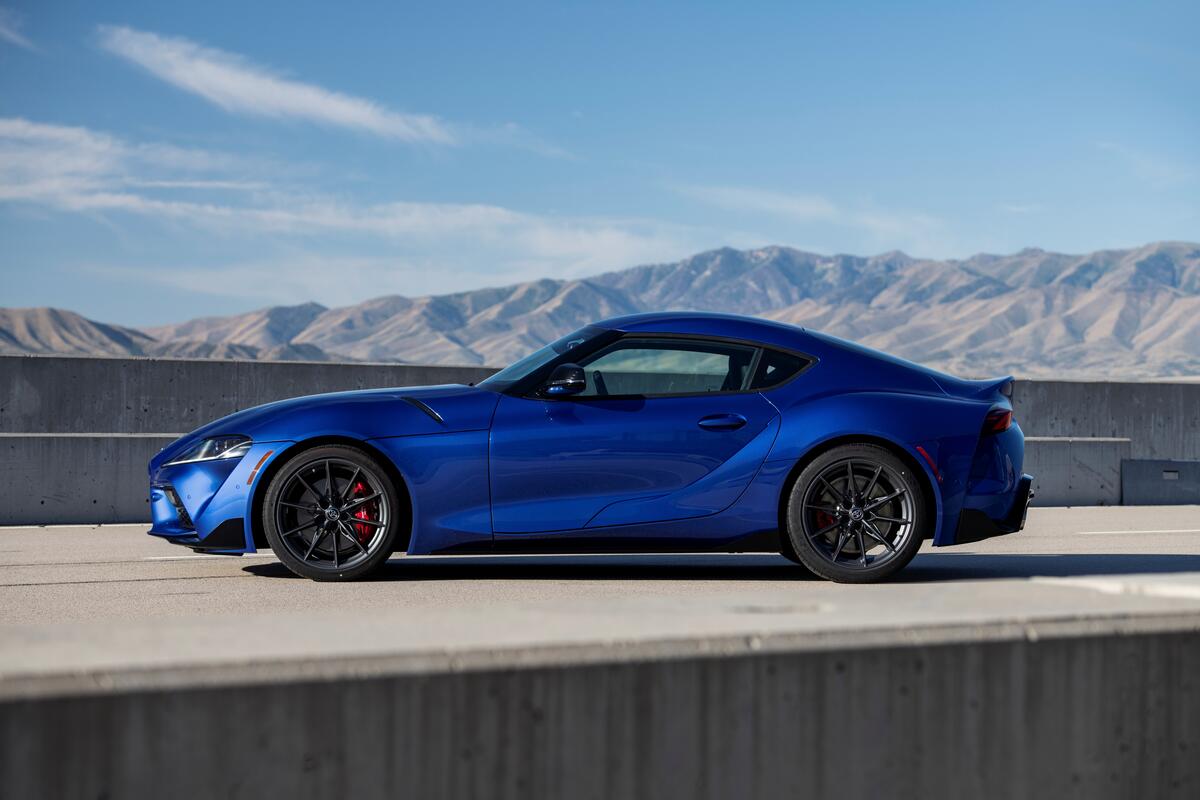
The Toyota Supra is a sports car made by Toyota. It’s built to feel quick and fun to drive, not like a regular family car. People talk about it a lot because it’s an important and well-known performance model.
A Jetta is a Volkswagen car model. Here, the host is saying the “rust” isn’t real rust in the metal sense—it’s coming from brake dust getting on the car.
A plastic bumper is the car’s outer front/rear cover made from plastic. The host is pointing out that plastic can’t rust like metal, so the spots are coming from something else.
“Wax on, wax off” refers to applying wax/polish to a surface and then buffing it off to improve appearance and protect paint. The host uses it as a practical method to test whether the “rust” can be removed like surface contamination.
Brake dust is the tiny powder that comes off your brakes when you stop. The host is saying that this dust can stick to your car and, when it gets wet, it can look like rust even if the car isn’t actually corroding.
Brake pads can be made from different materials. Here, the host is saying that pads with metal in them can create dust/particles that end up on your car and later look like rust.
When you own a car, you’re the one responsible for keeping it maintained. That means things like regular upkeep and repairs are on you, not the previous owner or a shop.
Fuel injection is the system that feeds gasoline into the engine. If it breaks, the car may not start or may run badly because the engine isn’t getting fuel correctly.
“Low mileage” just means the car hasn’t been driven very much. That can mean less wear, but you still want to check service records and inspect the car.
They’re talking about a local dealership called City Auto Sales and Leasing. The hosts say it’s a good place to find cleaner used cars and leasing/financing options.
They’re saying the dealership can arrange the lease and loan paperwork itself. That can be easier, but you should still look at the total price and the terms.
“Rusty and crusty” describes heavy corrosion, often from road salt and moisture exposure. This is commonly worse in regions with aggressive winter salting, and it can indicate structural deterioration.
The lower control arm is part of the suspension that helps hold the wheel in the right position. If the bracket or mounting is bent or broken, the car can handle poorly and may be unsafe until it’s fixed.
Plasma cutting is a metal-cutting method that uses a hot, focused gas stream. It’s used to cut out damaged metal so a new piece can be welded in accurately.
Reman parts are used parts that get taken apart, repaired, and rebuilt to work like new. They’re often cheaper than brand-new parts, but some people have had mixed experiences depending on the part.
The clutch assembly is what lets the engine power get transferred to the transmission. When it wears out, the car can have trouble shifting or driving, and fixing it usually takes a lot of labor.
Wheel alignment means adjusting the angles of the wheels so they point the right way. After certain repairs, it helps the tires wear evenly and keeps the car from pulling to one side.
Aftermarket parts are replacement parts made by other companies, not the car’s original manufacturer. For older vehicles, they’re often easier to find and can cost less than dealer parts.
The Wrangler is a type of SUV made for off-road driving. Many owners add extra parts to improve how it handles trails and rough roads. The podcast mention suggests someone was buying aftermarket parts for their Wrangler.
The clutch disk is the part that helps your engine and transmission connect and disconnect. When it wears out, shifting can get harder or start slipping.
The Nissan 200 SX is an older Nissan sports car. It’s a smaller coupe that was made to be more fun to drive than a basic commuter car. The mention suggests it was involved in a problem that required quick help.
This means the shop takes the old part out and installs a new one instead of fixing the original part. Newer cars often make this the only practical option.
Concept
flatbed or a tow truck
A flatbed tow truck is what you call when a car can’t be driven normally. They’re emphasizing maintenance so you don’t end up needing a tow.
Here, maintenance means regular checkups and replacing worn parts before they cause problems. Doing it on time helps prevent bigger, more expensive repairs later.
Screeching is a common brake noise that often indicates brake pads are worn down to the point where wear indicators contact the rotor. It’s a warning sign that the brakes need attention soon.
Grinding brake noise usually suggests severe pad wear or damage—such as metal-on-metal contact between the pad backing and rotor. At that point, continuing to drive can accelerate rotor damage and reduce braking effectiveness.
Term
particles flying
“Particles flying” implies brake dust or debris being thrown off, which can happen when pads are heavily worn or when components are failing. It’s presented as a sign to stop driving and get the brakes inspected immediately.
Winter tires are specialized tires designed for cold temperatures and snow/ice traction. The speaker mentions removing winter tires and swapping in summer tires as part of seasonal maintenance, which can be a good time to do brake work.
Summer tires are designed for warmer temperatures and typically provide better dry/wet grip than winter tires in heat. The speaker references the seasonal swap to set up when brake service is performed.
A “brake job” means getting the brakes serviced—usually replacing the parts that wear down. The hosts use it as an example of how brake wear can happen at different rates.
The speaker recalls owning a 1998 Honda CR-V as their first Honda and says they loved it. The mention supports the episode’s theme that older cars can be worthwhile when properly maintained.
This is the episode’s core maintenance topic: how often to change engine oil. The host argues for changing oil sooner than some online advice, emphasizing that oil degrades and contamination builds up over time and use.
Short trips can prevent the engine from fully warming up, which increases moisture buildup in the oil. That moisture can combine with combustion byproducts to form acids, accelerating oil degradation and increasing wear risk.
Bearing surfaces are the metal contact areas inside the engine where rotating parts ride on a thin film of oil. If oil becomes acidic or contaminated, it can increase friction and wear on these surfaces, leading to expensive internal damage.
Connecting rod bearings are the bearing shells that support the crankshaft at each connecting rod. They depend on oil pressure and oil cleanliness; contaminated or acidic oil can accelerate wear and potentially lead to major engine damage.
“3500K” here means changing your oil and filter about every 3,500 kilometers. The goal is to keep the engine oil clean so the engine is better protected.
Short trips can be tougher on your engine oil because the engine doesn’t fully warm up. The host suggests changing oil and filters more often when you mostly do short driving.
Wix is an oil-filter brand the speaker trusts for filtration quality. They specifically mention buying Wix oil filters and believing the filters are well made.
Full synthetic oil is a “premium” type of engine oil made to perform well in a wide range of conditions. The host thinks you don’t always need it, depending on the car.
Conventional oil is the more standard type of engine oil. The host is saying they use it (instead of pricier synthetic) for some vehicles and still change it often.
Term
parallel park
Parallel parking is when you park your car alongside the curb next to another car. The host is talking about practicing the maneuver during a driving test.
When you change your oil, you should also replace the oil filter. The filter traps dirt in the oil, so replacing it helps keep the new oil cleaner.
LIVE
Good morning folks! You're tuned to Car Connection where the coffee is strong, the stories are real, the wrenches never stop turning.
I'm your host, Niall Motormouth Jenkins, coming to you from the Car Connection Workshop where the smell of fresh oil and a little elbow grease is all part of a balanced breakfast.
Around here we don't just talk cars, we live them. Whether it's a 25 year old Jeep Wrangler getting a second chance at life or a Nissan Rogue getting its brakes back in order, or maybe even a mystery leak that's got everyone scratching their heads.
This is where we roll up our sleeves, we get it done with a little wit, a little wisdom, and a whole lot of fun.
The Car Connection isn't just about nuts bolts and diagnostics, it's about connection. Connection to our vehicles, to the people who drive them into the community that keeps Niagara rolling.
Because when you fix a car, you're not just turning a wrench, you're restoring someone's confidence, freedom, and maybe even their sanity.
We're here every week helping you keep your ride safe, reliable, and ready for whatever road lies ahead.
So whether you're a weekend wrencher, a daily commuter, or someone who just wants to understand what that strange rattle really means, welcome aboard, stick around for shop talk, expert advice, few good laughs, and maybe even a story flashback.
It happens over four decades as an automotive service technician, shop owner, you get flashbacks. You really do.
And I'm thinking of one right now because it was just, it was too funny, but I was trying to be patient, and I didn't want to disrespect the guys.
So maybe we'll start off with a quick story this morning. Saturday morning, welcome to Saturday. You survived the week. If you have the weekends off, congratulations to you.
What's, what's a weekend? Really? I don't know.
We're in our 32nd year with car connection and totally digital, and we have many ways for you to be able to connect and engage with us at all times.
That's right. So I'm your personal technician. So anytime you need to connect with me, you can simply do that by heading to our homepage of our website at carconnectionbusinessnetwork.com and kick me out an email.
You can sign up for a YouTube channel where you've always learned five things on every video, what it is, where it is, how it works, how it breaks.
And if you just knew some stuff, some basic fundamentals about your car, you'd end up saving yourself not hundreds of dollars.
A lot of stress, a lot of heartache, a lot of headaches, a lot of malox and gavis gone. I don't know if you can get that anymore.
In indigestion, you'll be able to save thousands of dollars in needless repairs because once you understand an automobile, it's not that difficult to take care of it and view it more as a piece of equipment.
So that's just a minor introduction this morning. But anyways, the story I was going to share.
I have three questions to share today. It is Saturday. I'm your host MotorMouth, Niall Jenkins in the driver's seat Monday through Saturday for the MotorMouth Morning Drive 8am.
And as I mentioned, more ways than ever to engage with us.
And everything we talk about lives at our website, carconnectionbusinessnetwork.com.
All our program partners that have come along with us since we ditched the radio back in November.
We should have done that a long time ago. Let me tell you. You never have ever have regrets. Just me.
Where you go, you know, I should have done that sooner than later. You know, I think I need a vacation or, you know, that wasn't so bad.
Should have done that sooner. Yeah, I told you, you should have. How many get that one?
You know, there's something about I told you told you so people that I really just want to I want to pinch them.
Hard. Like till they scream like a little girl. And that's the guys. Yeah, it's like no one wants to listen to a list of things they should not do.
So though, if you're one of those people, you annoy us. I'm just telling you that the I told you so. Well, you know, I did mention that, you know, 21 and a half years ago that you weren't listening.
I didn't have my hearing aids and sorry, I missed that memo. Anyhow, before I spin into too big orbit, it is weekend.
And yesterday was fun Friday. You missed that. Thank you to all those who pitched in and spit out some questions through email.
And you can find my email address in a description box on YouTube, any one of our videos, three new videos every single week to for Tuesday.
One every Friday, Skippy and I work really, really hard to bring you some variety. We have a bit of a mini series going now on the 2007 Toyota FJ cruiser updates, upgrades.
What do you look for when you evaluate a particular vehicle, any particular vehicle for spring spring evaluation? What are we looking for?
Well, I use our very own 2007 FJ cruiser just just slightly behind 400,000 kilometers. What am I looking for?
What, you know, I play always like to play I spy when I'm underneath a vehicle or under the hood. I'm looking at everything.
And if I see anything kind of out of place or suspicious, very suspicious looking that I want to take another look because I much rather know, I'd much rather be a driver that's in the know than in the unknown.
Because in the unknown creates chaos and emotional damage. Exactly. When you're in the know and you know what's going on with your vehicle, you have less stress and a whole lot of freedom.
So anyways, I have three questions to share with you this morning. We'll have the morning weather and just a moment and we'll have our morning coffee as well, whatever your morning beverages will get that done.
But while I have this story in my head, I thought I'd share it with you. Yeah, I got a million of them and they just pop in and it's kind of like if I don't share it, I probably won't remember it a second or third time.
So questions for today. John writes in question one older vehicles cost too much to maintain, don't they? We're going to unwrap that we're going to pull over park we're going to drill down sideways and see what we can come up with on that one.
And I'm sure I have something to say. Sandra writes question number two motor mouth how long should breaks last like coffee breaks lunch breaks breakfast breaks Dems the brakes. Yeah, we're going to cover that one off as well.
Question number three. How often I mean we've covered this one a gajillion bazillion gajillion times car connection in 32 years but it's a good one. It is what I call the standard question issue.
How often should I change my oil. And there is so much controversy on this we're going to slice right through it, cut it open drill down unpack, pull the handbrake and talk about that one last but not least today but anyways, I'm working for this first time ever in my life I'm working for a dealership.
And I think I can say it on the air Volkswagen I had good experience there they almost killed me working 80 hours a week. What do you mean you got to have lunch. That's the second time you've had lunch this year.
You better cut back. Motor mouth it's time for you to cut back like you're over the top. That was the biggest problem. I was on the high volume wholesale program. So I'll tell you what that is.
Lots of responsibility. But you can't make any decisions you're not able to make any decisions whatsoever. And you're working for like $6 and 32 cents an hour. Yeah, the high volume wholesale program.
Yeah, that's called being on what is it. I can't remember. salary. Is that what that is, or is it salary. It's salary. Don't ever sign up for salary.
Or, you know, it gives you lots of responsibility, lots of broken, fix it, lots of responsibility, but the inability to make a decision on your own. That's right. And lots of hours for little pay.
And at that time I was working my my lot boy that I had to look after. Yeah, Sparky. He was making like $20 an hour. And one night I had a revelation while I was running my print offs to get on to the the great giant heads desk by nine o'clock.
Otherwise, you know, somebody pulls a handbrake on the earth and I fall off. And they go next. So, yeah, I'm thinking, you know, I'm working 80 hours a week. I live 90 minutes away from the dealership.
I'm the first one here and last one to leave and this is around quarter to 12 midnight. I finally got all my other work done. They really needed four people to do my job. And how do I know that? Because after I left, the guys called me and said they hired four people to replace you.
I said, well, I guess I was a really good bargain or an idiot. Kind of said, well, I'm an idiot. So anyways, as I decided to get a notepad and scratch it out, I'm going Sparky's making like 1785. This is back in 2004.
That's a long time ago in Bethlehem right now. And I'm going, I even said out loud, I had fresh coffee brewing. I had the TV on in the lounge at the dealership. All the guys had booked it. I'm there on my own. Nobody helps you to bring everything in. They just go, yeah, see you tomorrow.
Thanks a lot. Thanks for coming out, buddy. So they take off, leave me in a mess, which is usual and I'm hunting for keys and every car's got to be in the compound. Of course, it's raining or snowing. So anyways, I'm sitting there. It's snowing like the blazes outside. I got a 90 minute drive. I'm sipping on my coffee and doodling on the notepad when I suddenly found myself screaming, you've got to be an idiot.
And I looked around and going, I guess that's me. I was working for $6 and 35 cents an hour. There you go. But that wasn't the story I was going to tell. And I thought I'd share that with you kind of popped in there.
So anyways, this guy comes in, he's got a white Jetta, white, all white. And he's mattered in a wet hornet. And he throws his keys at me. My car is rusting out. And I'm like, Well, didn't you just get it like six months ago? Yeah, it's rusting out. I didn't pay all that money to have my car rusted out.
So I go, Well, let's go outside. Let's go have a look at this and see what's going on. I'm sure we configured something out. You know, that's what we're here for. Let's go take a look. You take it easy. Don't pop a vein. Blow head gasket or pee your pants.
I thought that I didn't say that. Okay, before you go there. So we go out there. It's nice sunny day. I'm looking at it.
And I see the problem. I do. I honestly, as soon as I walked up to it, I'm going, Mm hmm. This ought to be good. I wanted to hear his story. So I just said, Well, what are you thinking? It's rusting out. Look at it. There's rust all over it.
And I go, Well, can you kind of point things out to me? And he's like, You are treating me like a juric. And I'm like, He was a foreigner. No disrespect. Okay, don't send me those love letters.
And I go a juror in my head. I'm going a juric treating me like a juric. So I'm going, I should probably not treat him like a juric.
So I go, Okay, yeah, I really apologize that no disrespect. But what do you think's going on here? Well, look at it. There's rust all over it.
So I'm looking at the plastic bumper on the front and on the back. And so I go, Okay, these little tiny rust thingies on here.
What would you say this bumper is made of? I said, Is this bumper metal? No, it's plastic. Don't be stupid. That's what he said to me. Oh, okay.
I said, So if it's rubber riddle me this, how is it rusting if it's made of rubber? You are treating me like a juric. And I'm like, There's the juric thing again. I'm going, Okay, I'm sorry. I'm sorry. I didn't mean to do that.
But how is the rubber rusting? Let's go to the front one. It twos rubber. I go, What do you think's happening here? I said, It's rubber, right? Like the back one? Yes, of course it is. So I go, How is it rusting out?
Like how's that rust get there? And the rubber is rusting. And now I think he's it's finally the penny is dropping. And I'm waiting because I didn't want to cheat be treating him like a juric. Again, whatever that is.
I can't make this stuff up, folks. This this happened for real. So I said, Well, wait here, Mr Smith and I will. I'll be right back. Don't go away. So I go back to the cleanup department. I find some
very light polishing compound and a couple of clean rags and I come back and I did the front bumper forum. And and then I did the back bumper forum. And I said, Do you see any more rust?
No. I said, What do you think happened to it? Well, you're tricking me. You're fooling me. It's a trick. And I go, No, here, take some, put it on a cloth on the roof here, do a little you do a little bit right here. And I'll just watch you. You do the same thing I did. You know, wax on, wax off and then use the clean cloth and just buff it. Just do a spot.
He does that. And I can see his facial expression changing like he's like, So I think it was a holy crap moment. I really do. So he turns to me and he goes, It's disappeared. It's what you gave me. It's hiding it. That's what he said to me.
It's hiding it. I go, We'll try another spot. See what happens. It's gone. I said, Well, here's the problem. I said, I'm going to be upfront and honestly, then I'm going to help you. Okay. Your car is not rusting out.
Because it's white and you live in a city and there's buses traveling up and down the road that have metal brake pads, it's brake dust landing on your car. And then overnight, there's a dude that lands on your car. Those little metal particles get moist.
And then in the morning, you have the little rust thingies. So you're going to have to learn to keep it washed or covered up or get a really good, you know, wash and wax. I said, So what I'm going to do for you is.
I said, We'll do the first one. And it'll be complimentary. I said, I'll lend you a car for the day. You leave me your car. You come back at the end of the day. It will be beautiful. But from this day forward, you get to do the rest of that.
The whole time you own this white car, because the reason you're seeing it is because the car is a light color. It's white. So you have, you're going to have an ongoing issue with that. But if you keep it washed and waxed, you'll be just fine.
Well, I think you should have to do this all the time. And I go, That's where that's where you're treating me like a jurick.
That's how we ended. I go, We'll do it once. And then you got to take it from here. I said it's called vehicle ownership. And that's where we all are folks. That's why I shared that story. So that's my segue.
When you own and operate an automobile at what point does that what does the vehicle ownership get transferred to you at what. So in other words, what at what point is it yours and not the responsibility of someone else to do all the upkeep.
Guess what?
So anyways, let's jump into it this morning. That's why I told that story on purpose was there's a thing called vehicle ownership. That's where it's all you.
You're the guy or you're the gal that's got to take care of it. So let's dive into our morning swiggy brought to us by our good friends at Niagara Block 5000 Montrose Road Niagara Falls with Dave and Kathy and Dan Grimo the family, Kathy and David being the husband and wife team.
If you need a contractor, she's the lady you need to connect with at the front office. So let's let's jump into that they've been building Canada at Niagara Block since 1931.
I'd say they deserve a coffee break or a lunch break at least at the very least a lunch break. They're building supplies, every block known to mankind they created there, including you know the deck blocks, they have that stuff too.
Steel like Anglier rebar they do all that they don't have wood or any nails and screws and stuff like that. This is the big stuff. This is where the foundation and the block work takes place. That's what they're there for to help the building go up next to make it look amazing.
So if you've been ladies, if you've been saying, hey nice fella, I'd really like to have some beautiful outdoor living space. Big fella, wink wink, nudge nudge, little shoulder on that's good. Guess what I made for dinner.
Favorite meal would be excellent. You say I heard that at Niagara Block 5000 Montrose Road Niagara Falls, they have all the hardscape landscape materials to make a very beautiful space. And that would make mama really happy.
Wink wink nudge nudge. So if that's you, you need to get down and get in touch with Niagara Block 5000 Montrose Road Niagara Falls and take a look at all the materials that you can make that backyard space outstanding.
And your guests, they won't want to leave so you're going to probably have to ask them politely like it's 1130 it's lights out you kind of you got to go now.
So if you need a contractor to line that stuff up for you're looking to build a workshop or a garage or a building of some kind. But that hardscape landscape, they have contractors Kathy has a list of contractors she can line you up with someone to estimate.
Put the deal together, get it started, get it finished and let you enjoy the rewards of the project.
Well, let's jump into our morning swiggy. Here's how we do it. I'm having a little water this morning. I'm dried out.
I think I had too much salt or something yesterday, or maybe it was the salt lick that I spent half an hour just testing it.
That could be it in the half a bag of salted peanuts. Yeah, I can't go. If you know what I'm saying. Anyhow, here it is 321 we have a swiggy ready 321.
One. That helped. Absolutely. You know, I had this friend lived out by a marine land and game farm. Yeah, does have to kick that in there.
And he ate like a whole bag of sunflower seeds with the shell.
And his wife Lynn was saying, Tom, he ate that whole bag of sunflower seeds with a shell on. I go, well, why would he do that? She goes, that's what I said to him.
You're going to have problems. He ate the whole bag. And then he couldn't go. Yeah, it stopped. He couldn't go.
Like he was, and he's telling me he's going, it was really bad. Like I thought I was dying and then I had to go to the hospital, Niagara Falls, and then they're getting the garden hose out.
And the sprinkler guys coming in and going, what are you doing? She goes, well, we got to get it out of there. That's the reason you can't go. What did you do? Well, I ate some sunflower seeds.
She's the nurse says, well, how much? Like a whole bag full? Like a two pound bag? She goes, two pound bag? Yeah.
Oh, we're going to need more water than this. Get the fire hose. She goes, well, you're not going to like this. But from this day forward, you're probably not going to eat those sunflower seeds with the shells on anymore.
Because you're not going to like us because we got to go in. And he says, she's suiting up in like rubber equipment and gloves and helmet and the whole nine yards.
They said, well, what else are you going to do? I mean, if your fuel injection system's not working, you got to get that baby busted open and get going on that.
So hey, let's jump into it is Saturday stuff happens around. We can solve any problem in the car connection workshop on Saturdays. Just send your question in. We'll nail it to the wall for you and pull over and park and drill down and hit the handbrake.
Thank you to our certified financial planning professionals, Tony Miele and Larry Tietro. 50 years experience as fiduciaries. They're with IG well management. They manage a good Jillian, bazillion, good Dillion dollars there.
So whether you have a dollar or a hundred million dollars doesn't matter. You can book yourself an hour at a coffee the discovery meeting. So here's the deal.
On a more serious note, if you've got questions with an investment portfolio, you have no idea what whether it's working properly for you get a second opinion because you want to have your money working hard for you, not you hard for the money, right?
If you're swimming in debt, you don't have an estate plan whatsoever. You don't have any beneficiaries, powers of attorneys or health proxy over your 18 year olds or older living with you. That's super duper important. If you need a mortgage arranging, they have very competitive rates.
And let me tell you, the ladies out in Winnipeg in the mortgage department are phenomenal. I love them there. You got a question, they get back to you right away. If you need life insurance and or critical illness insurance and I would highly recommend that.
I have that all set up. Everything is with the fellows. If something should happen to me, I'm not leaving anyone upside down and sideways because that's just wrong. One of my good friends is going through that right now and let me tell you, it ain't pretty folks.
It ain't pretty. If someone has you written in as a beneficiary or a power of attorney, you need to make sure they have their ducks in a row. Otherwise, your life ain't going to be your own for a couple of years, folks, because it's all on you.
So get that hour in a coffee, get your questions answered. The guys are very patient and you're not going to tell them anything they haven't heard in the last 50 years and they're definitely not going to laugh or poke in the chest or any condemnation.
But get your questions answered and leave your wallet, your checkbook and your purse. Ladies, or if you have a man purse, you could leave that at home too. There'll be no cost, no obligation, nothing. They're going to listen and see how they can help you.
So take advantage of that. So thank you to Tony and Larry, great fellas. You can work with either or just click on their logo and you can open the profile page and meet them there and let them know I sent you, okay? I'm sure they'll figure it out.
Well, here's what we got for Saturday. It's not too shabby, not too shabby based on what we've been experiencing throughout the week. Let's click over into the next screen and have a really good look at this.
Saturday's low will be 34 degrees, little on the frosty side between 5am and 6am this morning. I get up at 4. We're afraid of the dark. And the high today is going to be 45 between 2pm and 3pm. So hang on for that. The temperature range will feel like 30 degrees to 41.
Wind will make it feel a whole lot cooler than the actual temperature. As far as precept today, we got a big zero, which is good. Let's see what we got for tomorrow. This is the weekend weather by all means. We might as well cover the whole thing.
Why not? That's what I'm saying. All right. Get ready. Here it is. Here it is. Chance of precipitation. Let's go there. Zero. So that's for tomorrow. Sunday's low will be 35 between 5am and 6am. The high, we're going to hit the big 50.
Between 3pm and 4pm, that's when we hit the, that's it. We're topped out at 50. The temperature range will feel like 30 degrees to 38 degrees. Wind will make it feel colder than the actual temperature. So there you go. All in a nutshell.
That's it. Got nothing else. Yeah. You know, trying to run this 30 day fuel savings challenge that will put a minimum of $100 savings in your back pocket is becoming a challenge all in its own. I thought we would have been even down at 60, 65 degrees by now, but that isn't happening. It's just not happening right now at the moment.
Okay. Well, I have a morning smile for you today. Motormouth morning smile. Are you ready for it? It is car related. It really is. So listen up. If you're just getting your drive through goodie, whatever that may be, watch the guy in the other seat if you have a co-pilot. Yeah. They tend to sniff your snack. Be careful with that.
A man was driving down the road and he ran out of gas. And just at that moment, a bee flew into his window and the bee said, What seems to be the problem?
I'm out of gas. The man replied. The bee told the man to wait right there and flew away. Minutes later, the man watched as an entire swarm of bees flew to his car and into his gas tank. And after a few minutes, the bees flew out.
Imagine that. So the bees go into the tank and out they come. The man turned the ignition key and the car started right up. Wow. The man exclaimed, What did you put in my tank?
And the bee answered. I see you smiling, folks. What happened? Come on. Put it in the comments section. What do you think the bees did to get that car started? What do you think happened there? Put that in the comments. Send me an email.
What did the bees do, do you think? They flew into the tank, flew out. The guy cranks the ignition, car fires right up. And the bees all left. Let me know what you think. I got my answer ready.
All right. Let's where are we here? Before we jump into question number one, just let you know all the platforms that we can be found on our YouTube channel. We have almost 400 items up there for you to tap into.
And whether you know a little bit about cars or absolutely nothing, that's the zone where we're doing a lot of teaching. A lot of people are getting a lot of nuggets out of it. I even put extra information in the description boxes of the podcast and the YouTube videos.
So you have more information there as well. So I give you some great bullet points that I don't generally cover on the shop floor or on the podcast.
You also have opportunity to connect with us on Facebook, Instagram, our skippy, our videographer. She's very creative. She snags some footage that nobody else has seen, makes reels and bloopers and outtakes on Facebook, Instagram and Stevensville on the web where we are put down as the professional there. Thank you.
Uh huh. And my teacher said I'd never pass grade five. There you go. Smoked out one. Anyhow, Stevensville on the web.ca is a really cool website created by our very own Skippy. She lives in Stevensville. My parents live in Stevensville. My mom passed in
2022. My pops is still there and a lot of his cronies are still around and Skippy's parents are there, relatives. It's a whole fam family thing. But she's created a website to tie the family owned and operated businesses together with the community. It's a communal website.
There's some fantastic eateries and stores in the town of Stevensville. So check in and you'll find our articles there and our profile page by clicking on the businesses tab. You'll find our I heart radio icon on the top. All of this is in the top right hand corner.
Just so you don't get too, too lost on the homepage. You won't. But we are on all platforms for our podcast. So wherever you're pulling podcasts from type car connection workshop in the search bar, you'll find us. We're on Spotify, Amazon, Apple and pod bean. Yeah.
If you haven't heard, I'm still doing a survey on the term pod bean. What kind of car could you own that calling it pod bean would be perfect? I'm looking to see how many people would pick the same vehicle that I have in my mind in my mind. Yes.
So come and join us on our YouTube channel. Don't forget, like, subscribe, ring the bell so you don't miss the next rescue project maintenance tips and real world car ownership.
Because 95% of you are enjoying the videos and I'm glad that you are skipping and are very happy about that. But 95% of you haven't subscribed. Could you help us out?
And bump us along so that we can reach more and more people in bigger and bigger platforms because that's what the algorithms do. They like us, but they need you to like us and subscribe to tell the algorithms. Hey, we like that. And then they spread our arms and put us out there.
So would you help us out and do that? Just check, make sure you're subscribed. If you're enjoying the videos, take a moment to do that. It helps us a great deal.
So thank you to Earl and Louise Grant, husband and wife team at City Auto Sales and Leasing for providing us with a safe haven to go and purchase a low mileage quality vehicle at fair prices.
No junk there, folks. No junk there whatsoever. These vehicles are, when we say premier, they're cleaner than clean. They almost look like they were hermetically sealed. And Earl's a car guy and he is extremely fussy and it shows in the quality of vehicles that they picked.
They have the resources to find any vehicle that you're looking for. If it's out there and it's decent, it better be really good because Earl won't push, pull or drag something home just to sell it to you. They don't sell any junk there.
They're the greater Toronto areas, premier, pre-owned auto store, in-house leasing and financing available. So if you don't see the particular vehicle you're looking for, just let them know. They have the resources to find it, save you a thousand steps.
So make sure when you head over to City Auto Sales and Leasing and if you've got to drive two and a half days, both ways, uphill on broken glass to get there, it's going to be worth it because, you know what, there's a lot of junk out there.
If you're looking for a vehicle that's under, that has to be under like 13 grand, I got a connection for you. Just connect with me.
He buys vehicles from out west and they're older but they're rust free. So if your budget is super duper tight and you need something under like 13 grand, get in touch with me and I'll connect you with my friend Dennis.
He doesn't have a lot of inventory but what he does have and what he has access to is all from out west and they're older vehicles but he said they're, and I've seen them. They're absolutely rust free underneath. It just, it makes me sick.
Because when I look at the same age of vehicle here in Ontario and go, what ocean was this on the bottom for and how long? It's rusty and crusty. They aren't from out there. Yeah, you're going to get yourself a super good deal.
So again, if your budget's 13,000 or under, we have a connection for that and Dennis is a safe guy to deal with. He won't stiff you but that's his specialty. That's what he brings in. He has cars, he has vans, he has trucks and he's always shopping online out west and he pulls some really good stuff in.
So I'm just telling you. So if that's your budget, I can connect you and he's right here in the hometown of Fort Erie.
Question one, older vehicles cost too much to maintain, don't they? Not true. That is actually not true.
And I know with that, let me back that up for a minute.
Reveal what it cost to bring that vehicle back to life. Engine included. Engine included. Because that's what held us up on the project. It was like six months. You can watch all the videos for the series because now it's out of the shop.
It's waiting to go up to my friend Jesse's custom shop. He's going to do some custom exhaust on it and we need a bracket changing on the front housing. We need that plasma cut off so it's nice and clean and then weld the new bracket on for us for the lower control arm.
Because somehow the bracket that holds the lower control arm on the front axle looks like somebody tore it off with their hands. I bent it back as best as I could but I didn't realize you could buy those brackets and I got the whole kit for 60 bucks.
So if I knew that ahead of time it would not have spent hours trying to straighten it out because let me tell you, it was a pretzel. So I'm going to show you what it cost to put that Jeep together.
Most of it is labor but parts wise it will blow you away. It's got all new brakes all the way around. I'll let you watch the videos and you can catch up with that project.
I'm going to do the work that needs to be done on the driver side floor and the water box underneath. I don't like welding in the shop for that reason. You don't want to set the place on a blaze.
You don't want to wiener roast or schmores going on. I'd rather do it myself outside. We just got to gather some buck holes to finish that project but that's pretty much all we have left to do and then it has to be safety.
So older vehicles equal more access to remand parts. I can find pretty much a left handed nose inhaler out there for any automobile. If it's out there my resources haven't let me down yet and at decent prices.
I'll give you an example. We had to put a clutch assembly in the 97. That's pretty old wouldn't you say? In the 97 Jeep TJ and it's out front. You can hop in it, turn the key, fire it up and drive it.
But just not safe at the moment until that bracket is replaced. That has to be replaced and a wheel alignment has to be done but it's completely back together and everything works.
There you go. 1997. Everything was bought aftermarket. I didn't buy one piece for that little TJ Wrangler from the dealer. Not one piece. In fact I had to go to the dealer, ask them about some bolts for the control arms and buddy looks at me and goes oh they don't make those anymore.
I go well they use you know you do know the 97 Jeep Wrangler that was the first model year. I didn't know anything about Jeeps until this came along. This project I have learned a lot about Jeeps.
The Wrangler was the last year was 2006. So I did wrangle a pile of parts of 2006 from Houston, Texas all rust free. That was a bonus.
So yeah everything. So then I found the bolts. 20 minutes after I got home I decided to jump on the jungle website and bam I found a whole kit for like 36 bucks. Done. All the bolts.
But they're not available. He said good luck. That's what it was last words. Good luck. And that kind of cheesed me off a little bit. I thought I'm going home. I'm going on darn right. I'm going on the jungle website.
And I'll bet you I found them and I did and I ordered them. I had them next day. So older vehicles equal more access to reman parts. Number one bonus check mark.
Reman parts are lower. Create lower repair cost versus the new OEM. So you've got something that's two to five years old. The parts are freaking astronomical. So anyways we bought a clutch for the TJ and the companies L UK and I'm very familiar with the product line. Here you go.
I had the parts quoted at a local parts store. That many of you would know it was $412 plus tax. That was garage price because I've gotten garage price for 44 years. I'm almost a poster child for the store.
I thought my goodness that's kind of high. So that's a full clutch and you can watch the video on this too. I actually unpacked it. The clutch and walk through the clutch. What it looks like what it does how it works. All the bits and pieces from my talk table in the studio here.
Yeah we called it our that's called our show and tell table but you can't even say show and tell on on YouTube did you know that. Yeah you get flagged can't say show and tell bad can't say trans for short for transmission can't do that anymore.
Anyway. So I went on one of the websites that I out of Mississauga that I buy parts from $212 taxes in brand spanking new clutch not reman I won't buy a reman clutch never had any luck with them.
Just happens to be the name the manufacturer L UK and I knew the product line. It shows up two days later $212 all in brand new clutch disk pressure plate throw bearing pilot bearing and even the arbor to line the clutch up into the transmission.
Into the back of the engine and for the transmission input shaft $212. There you go. So lower repair costs versus new OEM parts crazy the new stuff out of this world friends and if you got to go to the dealer for the parts because they're not available after market yet.
Yeah you're going to need to take out a mortgage to get the parts get your car fixed and it's getting more and more difficult to get new parts through the dealer I've been waiting eight weeks for for a clip.
Sir clip and a plastic button to hold the shifter in position in the right clock position on the 2000 Nissan Rogue and they put it on emergency run. I called them after four weeks.
And I don't know where the parts are coming from slow boat from Japan. I don't know.
They're still not here said hey now we'll give you a call soon as they're in perfect. That was two and a half weeks ago.
Yeah another bullet point simpler vehicles the older ones they're simpler more rebuildable components absolutely true. Here's what we're dealing with today today's product.
The newer vehicles more sealed unservice serviceable components so you got to buy the entire component and if it's a dealer item get ready.
Pucker because it's going to hurt it is really going to hurt its replacement not repair systems it's remove and replace remove and replace.
And and I believe this is just me speaking they're they're really trying to take you off in fixing your newer type technology that you get to the point where you just go nuts I'm just going to go get a I'm going to get a new one that's what they want you to do.
That's that's what I'm seeing and that's how I'm interpreting they're turning you off of servicing your vehicle yourself and or buying parts over the counter and taking them home doing it yourself.
They want you over in the sales department to sell you another one so back to your question John older vehicles they're going to save you a ton of money.
A ton of money so that that is a myth.
I'm fixing the 2007 FJ Cruiser were just under 400,000 K and it hasn't cost me a bundle money.
In fact all the parts to do everything that I've needed to do under 200 bucks.
You'll have to watch the video because it's a mini series to see how in depth I got into this so you can see what happens when you evaluate a vehicle properly and I don't want it leaving the shop and coming back on a flatbed or a tow truck or hearing that it interrupted a vacation to the local cottage that you have in the family.
I don't want that to happen to you. I don't want it to happen myself.
I want you to get from A to B and we'll see at the next service and we'll check your vehicle over again and make sure everything is still a go.
That's what it's all about staying on top of it being in the know.
So John great question keep your older vehicle if it's solid and it's not all rusted out you got yourself a very good automobile.
You'll save money to stay on top of the maintenance that's all and it doesn't matter what you own what name brand model or color you're going to throw parts at it at some point it's a piece of equipment.
It's called normal wear and tear. I mean if you're rough on it it's going to cost you more than it would cost me.
I'm very easy on it because you know what you play hard you pay hard it's that simple.
So next question I hope that helps you John very much so question number two comes from Sandra.
Sandra asked motor mouth how long should brakes last. That is a really really good question and I have a really good answer for you.
It's kind of a long short answer so I'll give you the short answer.
First of all to stay ahead of the curve when it comes to brakes here's what you don't do.
So I'm going to talk about the don'ts first and then the do's.
Yeah kind of like the honey do list. You ever notice it never ends getting stuff done list.
It never ends. You can take 23 items off and there's 34 items added.
I don't get it. How does that happen.
Anyhow OK the don'ts. The thing you don't do is have a break job and then we'll see a Mac.
When I hear screeching and grunching and grinding and particles flying I'll come and see you.
That's what you don't do. Getting a break job doesn't mean see you when I see you or see you later maybe not.
They need servicing and if you're wanting to get your dollars worth out of your brakes that doesn't mean driving it until you're doing your own
nasty machining job on everything that's in the brake system because that's going to cost you.
Doing that is going to cost you a lot more money than it would cost me on a break job.
Because now the FJ's in the shop the last thing I'm going to do to it is take the winter tires off bring the summies in but before those wheels go on
I will do a brake service. Calipers off pads out clean and lube the pins. That's a perfect time to do it.
Then you know what my brakes are going to last a whole lot longer than yours.
Exactly. And I stuck my tongue out at the same time. Just so you know.
If your expectations are I did a break job I'm good for two years. Good luck with that one. It doesn't work out.
And if you want to see how that works we have all that on our YouTube channel.
Because last summer Skippy goes another break job. I go they're coming in they're dropping like flies man and they're coming in.
They got nothing left to work with. Well you got your money's worth but now the list of parts change.
We need everything. You can watch those videos. We called it we nicknamed last summer 2025 break nationals.
Go watch some of those videos. You'll see what I'm talking about was break job after break job after break job after break job
helping some people out some widows and orphans and single moms single gals trying to make it on their own without a fellow being around.
It's tough and it's tough to not get ripped off. So we helped them out so we could get some videos to show you this isn't how you do it.
So Sondra I would certainly it's Sandra Sondra why I don't know. We'll do both. Yeah. Potato potato you know the deal.
So here's the thing. If that's what you're going to do then be prepared to pay at the end of the day.
At the end of the day when you know there's something seriously wrong with your breaks because there's so much dust on the wheels.
You've already done the damage and now you're going to get out the pocketbook.
It's also your driving habits. If you're one of these persons that are on the break off the break you got to beat the guy to the next stop sign stop light.
You know if you're that person you are so going to eat up breaks like you wouldn't believe.
If you don't heat them up and warp them out you're burning them off. Take it easy out there.
You know there ain't no purse if you take the checkered flag out there. You're wasting a ton of money burning your breaks out like that.
It's extremely hard to stop and go stop and go. Do you really have to get to the next traffic light before me because I really don't care.
I'm that guy. I'm that guy that's pissing you off out there and you got to fly past me at 110k in a 60 zone all to stand on the breaks and I watch the back end of the car go up the nose of the car bow.
And I go well that just cost you some. And here I come doo doo doo doo doo doo doo. Wave how you doing.
Did you get the checkered flag. Yeah bottle of champagne. Big water cash. No. Well that sucks.
That's killing you. So your break work you're going to do breaks three times to my one.
And I would. I'm not a betting man but I was certainly bet on that because I know.
I just did a break job on a truck little pickup truck I've owned since I was 22. And I did the rear brakes for the very first time.
I did fronts which I've done. That was the third set. I had the truck in storage for about 30 years and I brought it out and now it's all road worthy again.
And I did the rear brakes hundred sixty nine thousand original kilometers for the very first time. I got lucky right. No I drive easy.
It saves you money. Siri what do you want. Can I help you. Well I left my iPad on. Are you. She says she's here to help.
What do you guys want to eat. We're thinking around a bacon double cheeseburgers or Siri and a nice cold Cola. You got it. She shot me down.
I just got this by Siri. Can you believe that. That's unreal. What are you. Come over here and say that. Where's the hamburgers.
No not channel hamburgers. Siri. Find me a bacon double cheeseburger.
That's not going to happen. Oh she found me a cheeseburger topped with cheese. A cheeseburger is a hamburger with melted cheese on top of the meat patty added near the end of the cooking time.
Who knew. Anyhow brakes. She needs a break. Maybe we can maybe we can do a donation channel and get her there somewhere. So beating up on your brakes stop and go traffic very hard on brakes.
You got to beat the next person in the next traffic light or exit. I love the ones that come out from behind you on the highway and scream past you on the left side and then cut right across in front of you only to get off at that ramp.
If that's you you're killing your car you're killing the brakes. So anytime anywhere I would bet on you're going to do three full sets of brakes to my one.
And it's not because I'm lucky. It's because every six months. So spring when the winters come off and the summaries go on full break service and inspection do what's necessary right at that point in the fall.
Wheels are back off again to put the winters on another full inspection and a service and your brakes. If you change your driving habits. It will put money back in your pocket. So how long do brakes last. It's based on your driving habits.
It's based on whether you see the value in having a break service. So just keep in mind it wasn't by luck my 1983 short box Toyota four by four one of 500 ever made.
I bought that at age 22. It had 11,000 kilometers on it. And I paid $22,000 for that at 17.93% interest. By the time I paid the loan it was $22,000. So that's why I still have it. I took care of it.
I sold a car to my brother that I built may post. I think I found a picture of it. I may post it and show you that vehicle I never drove in the winter. I gave it to my brother and it went to the wrecking yard in six months on the back of a flat bed.
If that's you, I can help you because the first thing you got to do is change your mindset and change your driving habits. You're going to go through breaks.
Like I change my socks every day, sometimes twice, just so you know, you've got to do the services every six months. The whole reason, the whole reason I've redone the car connection fleet maintenance system is to help you with all of this.
All of what we're talking about. Stay ahead of the curve. Keep that older vehicle and don't worry about the odometer. Mileage doesn't matter. Just keep crushing it. You'll be just fine. Don't listen to any outside white noise. You can put 800,000 kilometers on a car. Absolutely.
I've done a half a million. One time. And it's that vehicle still alive. I haven't seen it recently, but I think it's on like a third or fourth owner. It's still going.
I didn't really want to give it up, but I gave it up to be able to buy the 2007 Toyota FJ Cruiser. So it was a really nice. It was a nice little ride. 1998 Honda CRV. I loved it. First Honda I ever owned and it was great to me. It was great.
Okay, questions. So Sondra, I hope that's answered your question. So spring and fall, full brake service. You'll save money. But if you drive like a maniac, I can't help you. That's where you gotta, you gotta take hold of that and fix it. I can't fix your schedule. I can't fix your driving habits.
But I can tell you, if you have driving habits like that, you're costing yourself a lot of money and you will be buying cars all the time for the rest of your life because of that. So it's worth taking a look at your driving habits and make some, make some serious adjustments.
Because you could be putting that money towards other things and not working your tail off to pay, make car payments for the rest of your life. That's just, you don't have to do that folks. You really, really don't. It's not necessary. That's, that's the planet talking.
That's not me. I have almost 45 years. I think it's actually more than that. I started in the trade when I was like 16. And I won't tell you how old I am now, but no, I'm not doing it. You can't make me.
But I've been around a while, a while, four decades. Last question, and then we gotta wrap this thing up before they come and put me in a straight jacket and haul me off and then I won't have my Sunday off. That won't happen.
Frank asks, and this is a quite often asked question, and we really need to hammer this one home.
How often should I change my oil? There is so much stinking controversy out there that you know what, I'm just going to cut through all the radar, all the smoke, all the opinions and go with what works and what has worked for me for well over four decades.
And even the motor oil geek is saying the same thing on YouTube. So check out, you can fact check me with the motor oil geek. You need to change your oil sooner than what they're suggesting.
And you gotta keep that in mind. Here's the thing. When you buy that car and they give you the keys, at some point that vehicle will be under your provision and you will be the sole owner and not in partnership with the bank.
Okay? So it's going to be all you. You're the guy, you're the gal. It's your engine. It's your transmission. If she blows, it's your dime.
I throw away better motor oil than I've taken out of other people's cars and just the other week, I gave Skippy the stink eye. She'll still tell you. We posted the video. She was shooting and I'm underneath her van.
And it only had half the motor oil in it and it was thick enough to pour it out on your driveway. It was like driveway sealer. In fact, I had to talk it out of the hole. Come on. Yeah, you can come out now. Yes, it's safe.
It's safe. You can come out bad. Here's the general rule of thumb. Here's the motor mouth rule of thumb and even the oil geek will tell you the same thing. Change it sooner than later.
Engine oil breaks down, thermal breakdown. If you do short trips, the motor oil gets completely contaminated with moisture and acids from carbon and other particles that are in that waste motor oil.
It becomes poison to the bottom end of your engine. The important, very important components are down there and you do not want your motor oil to be acidic in eating bearing surfaces, connecting rod bearings, crankshaft bearings, camshaft bearings, and the like. That's all expensive.
Listen to me. Every 3500K, I don't care if it's a freaking flavor of the month. If the high coccolorum delivered the oil on a camel from the Middle East, I don't care what flavor it is. I'm yanking it out at 3500 kilometers.
I don't do the long trips like I used to. I do a number of toodling, what I call toodle trips. I try and limit that as well. 3500K is enough for me and I want to protect my engine. It's that simple.
I buy Wix oil filters, nothing less. I like the gold brand Wix. I've been using Wix since I was like 15. And I count on them. I know the filter is well made. It absolutely is. And I use only the top brand motor oils.
I don't need a purple motor oil. I don't need blue motor oil. I don't need a full synthetic motor oil and pay through the wazoo for it. If it's one of the European cars we run to the car shows in the summer, that's different.
The engineering is high end. But for the Japanese stuff that we have around or the Jeep, just a very high end conventional oil and it's out of there at 3500K all the time.
Done. Want to get to 400,000K? Want to get to 800,000K? That's how you do it.
So I could care less or give a rip what anyone else says or what the book says or what the talking heads say. It's my engine. I own it. And engines are around $16,000 US. How many would you like to buy? How many oil changes could you get for 16 grand US?
Answer? A lot. So you can adapt to my thoughts and ideals that work very, very well for well over. I've been driving since I was 16. Yeah, I did one driving test.
Can you think you can park that in there, young man? Yeah, parallel park in downtown Dunville. That's where I took my driving test. So there you go.
He says, you think you can you can you stuff that in there between those two cars, young man? Well, I guess we're going to find out. I popped her right in there, turned my wheels the right direction, shut it off.
I looked at him and I said, What do you think, boss? He goes, Oh, you've been practicing.
We're done. Good enough for me. Well done you. He said to me, Well done you. I go, I didn't find it a challenge. But anyways, done. Change your driving habits. Change your oil and filter at 3500 kilometers.
And you know what? We'll see you at the 600,000 kilometer club. So Frank, there's your answer. There's your dinner.
As Terrell says, I think his name is Terrell, small engine guy. He's got really goofy teeth. Yeah, there's your dinner. 3500 K ding out of there. Whether you're doing long driving or short driving, use that as a rule of thumb quality filter quality,
top quality motor oil and out the door you go and your engine's going to be smiling all day long. Well, till Monday morning, thanks for sticking around. I hope it didn't chew your ear off too much.
But if you need more information, we have a lot of that on our YouTube channel and all the podcasts that you've missed, we're heading into pretty soon into season three.
And it'll be episode 300 at that point. Will it? No, 200. It'll be episode. No, it will be. We'll be heading into the 300s. So you've almost got full two seasons to catch up on.
So all the podcasts are on our YouTube channel. Leave a comment. Email me motormouth.jankins at gmail.com or nyle at ccbusnet.com.
And thank you for giving our program partners your business because we couldn't do what we're doing without them. They're holding the fort where we've got just enough money to cover the expenses.
And that's it. So we need to get monetized. So all of you that are 95% that are enjoying the videos, I'm thankful and grateful for that. But we need you to step up to the plate and subscribe.
Leave a comment, ring the bell, follow, share, like, all those little things mean the world to Skippy and I because we're working hard for you.
So until Monday morning, enjoy the rest of your weekend with family and friends. Enjoy happy, healthy motoring. Keep an eye on the other guy. Peace, patience and kindness always.
And we'll see you in the next one. Monday morning. Join us for Motor Mouse Morning Drive at 8am. Bye for now.
About this episode
The host tackles three common maintenance questions by pushing back on the idea that older cars are automatically expensive, explaining that brake dust can mimic rust on a white car, and laying out a very conservative oil-change routine. He leans on personal examples, parts pricing, and long-term ownership habits to argue that preventive care and sensible driving keep costs down and vehicles alive longer.
Saturday Q&A is loaded this week with three questions every driver needs to understand.
John asks: Do Older Vehicles cost more to maintain?
🚗We break down why that's a myth-and how proper maintenance actually makes older vehicles a smart financial move.
Sandra asks: How long should brakes last? The real answer depends on your driving habits-but one routine makes all the difference: twice-a-year brake inspections.
Frank asks: How often should I change my oil?
If you want your engine to last, the answer is simple: more often than you think.We explain why shorter intervals beat stretched ones every time.
It all comes back to one thing-
maintenance, maintenance, maintenance. Take care of your vehicle, and it will take care of you.
👉Got a question for next week? Drop it in the comments!
#CarMaintenance. #OilChange. #BrakeTips
Like,Follow,Share, Subscribe, comment, and ring the bell so you don't miss the next rescue project, maintenance tips, and real-world car ownership advice. Thank You Friends❤️
More Episodes and...project Details & Links are available at Car Connection Business Network .com (ccbusnet.com) you'll find everything on our home page if you'd like to follow the build & Repair work & Connect with our program partners, click their logo to meet them. Thank You for your support. Nile Motormouth Jenkins.
Motormouth Merch available in our online store at ccbusne.com grab some gear all proceeds go to Total Freedom Addiction Campuses Canada & USA where aNew Life Awaits those ready to say good bye to their addiction for good! Your support is HUGE❤️ Skippy & Motormouth.
Happy Healthy Motoring Friends, Peace Patience Kindness Always, We'll 👀 you in the next one!