#344 The Great Car Market Reset: Are Dealers Finally Negotiating Again?
About this episode
Dealers, incentives, and inventory are getting a close look as Wrench Nation asks whether negotiation is coming back. Ray Shepska and CarEdge frame the new-car buying experience through consumer advocacy, while the hosts break down how “days supply” and how long cars sit on lots can shift leverage. They also connect the broader “reset” to rising prices, stubborn financing costs, and even potential engine-oil supply pressure—plus why hybrids may be the bridge to EVs.
With Special Monthly Guest Ray Shefska of CarEdge
After several years of inflated prices, limited inventory, and “take it or leave it” dealership attitudes, the automotive market may finally be returning to reality. Is the era of paying thousands over sticker becoming a thing of the past?
On this month’s edition of WrenchNation Radio, host Frank Leutz welcomes back special monthly guest Ray Shefska of CarEdge to examine what many are calling The Great Car Market Reset.
For consumers who delayed buying a vehicle during the pandemic and post-pandemic price surge, the conversation has become increasingly interesting. Rising inventory levels, higher interest rates, and changing consumer demand are putting pressure on dealers nationwide. In many cases, dealerships are once again finding themselves competing for customers rather than customers competing for vehicles.
Additionally , as a last minute in studio surprise -we have young independent film talents Kenny Li and Nothing But Laughz as they discuss their latest film project at Singing Panda Asian Restaurant !

BMW M5
"...ar vehicle like i'm just saying i drove my 91 bmw m5 it's beautiful i drive that a lot but that's a ra..."
The BMW M5 is a fast, performance-focused version of a regular BMW sedan. It’s made to drive smoothly day to day, but also feel strong and exciting when you accelerate. The podcast mentions a 1991 M5 to show how much people enjoy driving and owning it.
The BMW M5 is a high-performance version of the 5 Series, built for quick acceleration and confident handling while still being a practical sedan. In the podcast context, it’s mentioned as a “91” M5 that the speaker drives often, which highlights its enthusiast appeal and classic status. It’s a common topic in car discussions because it represents the blend of everyday usability with serious performance.

Dodge Ram
"...on we can speculate but ray why would why would a dodge ram sit for 120 i mean right now gas prices through r..."
The Dodge Ram is a large pickup truck made for work like towing and hauling. The podcast mentions a Ram that may have been sitting for a long time, which can cause problems if a vehicle isn’t started and maintained. Long storage can lead to issues like battery and fuel-related problems.
The Dodge Ram is a full-size pickup truck, typically used for hauling, towing, and everyday driving. In the podcast, it’s brought up in a question about why a Ram might sit unused for a long time, which points to how storage and neglect can affect trucks. It’s discussed often because pickup ownership can vary widely—from daily use to long periods parked.
60 to 90 days
"they have a tendency to sit 60 to 90 days yes which shows yeah so what brands what what brands have had"
This is how long cars sit on dealer lots before they sell. If they sit for 2–3 months, it often means the market isn’t buying as fast, so dealers may start negotiating more.
In dealer inventory terms, “60 to 90 days” refers to how long vehicles sit unsold on lots before they’re moved. Longer days-to-sell usually signals weaker demand or pricing pressure, and it can push dealers to become more willing to negotiate.
inventory
"begged their dealers to take more inventory than they need and that would be most of your stalantis brands dodge christler jeep and ram"
In this context, “inventory” just means how many cars the dealer has on the lot. If there are too many cars sitting around, the dealer may be more open to discounts.
Here, “inventory” means the number of vehicles a manufacturer has pushed onto dealers’ lots to sell. When manufacturers force dealers to take more inventory than they want, it can lead to longer sitting times and eventually more dealer pushback and pricing flexibility.
Stellantis
"begged their dealers to take more inventory than they need and that would be most of your stalantis brands dodge christler jeep and ram and that's been going on for years now"
Stellantis is a big car company that owns several brands. The point here is that the host thinks Stellantis has been pressuring dealers to stock more cars than they can sell quickly.
Stellantis is the automaker group that owns multiple mainstream brands like Dodge, Chrysler, Jeep, and Ram. In the segment, the host uses Stellantis as an example of a manufacturer that has pushed inventory onto dealers for years.
Chrysler
"dodge christler jeep and ram and that's been going on for years now where they have just kind of force fed inventory to their dealers"
Chrysler is a car brand. Here it’s used as part of a list of brands the host says have been stocking dealers with more cars than they can sell fast.
Chrysler is listed alongside other Stellantis brands as an example of a manufacturer that has pushed dealers to take more cars than they needed. The implication is that this kind of pressure can lead to longer time on lots and more negotiation later.
Jeep
"christler jeep and ram and that's been going on for years now where they have just kind of force fed inventory to their dealers"
Jeep is a car brand known for SUVs. In this part of the episode, it’s mentioned because the host thinks Jeep (as part of Stellantis) has been pushing too many cars onto dealer lots.
Jeep is one of the Stellantis brands named in the segment’s inventory-pressure example. The host’s point is that these brands have been “force feeding” inventory to dealers until dealers started refusing more stock.
Chevrolet
"because they're looking to sell high volumes quickly chevrolet typically a lot of inventory but they turn it relatively quickly because they're they're more of a mass market brand"
Chevrolet is mentioned as an example of a brand that usually has lots of cars available, but sells them faster. The faster cars move, the less dealers may need to discount.
Chevrolet is cited as a mass-market brand that typically carries a lot of inventory but turns it over quickly. The host contrasts this with brands that have vehicles sitting longer, implying different dealer negotiation dynamics.
lower price points
"relatively quickly because they're they're more of a mass market brand in many cases lower price points but today it's hard to find lower price points anywhere"
This means the cheaper versions or cheaper deals. The host is saying it’s currently hard to find the low-end bargains.
“Lower price points” refers to the lower end of the pricing spectrum for vehicles (often the trims and models that are cheapest to buy). The host says it’s hard to find those deals right now, which supports the idea that the market reset is still in progress.
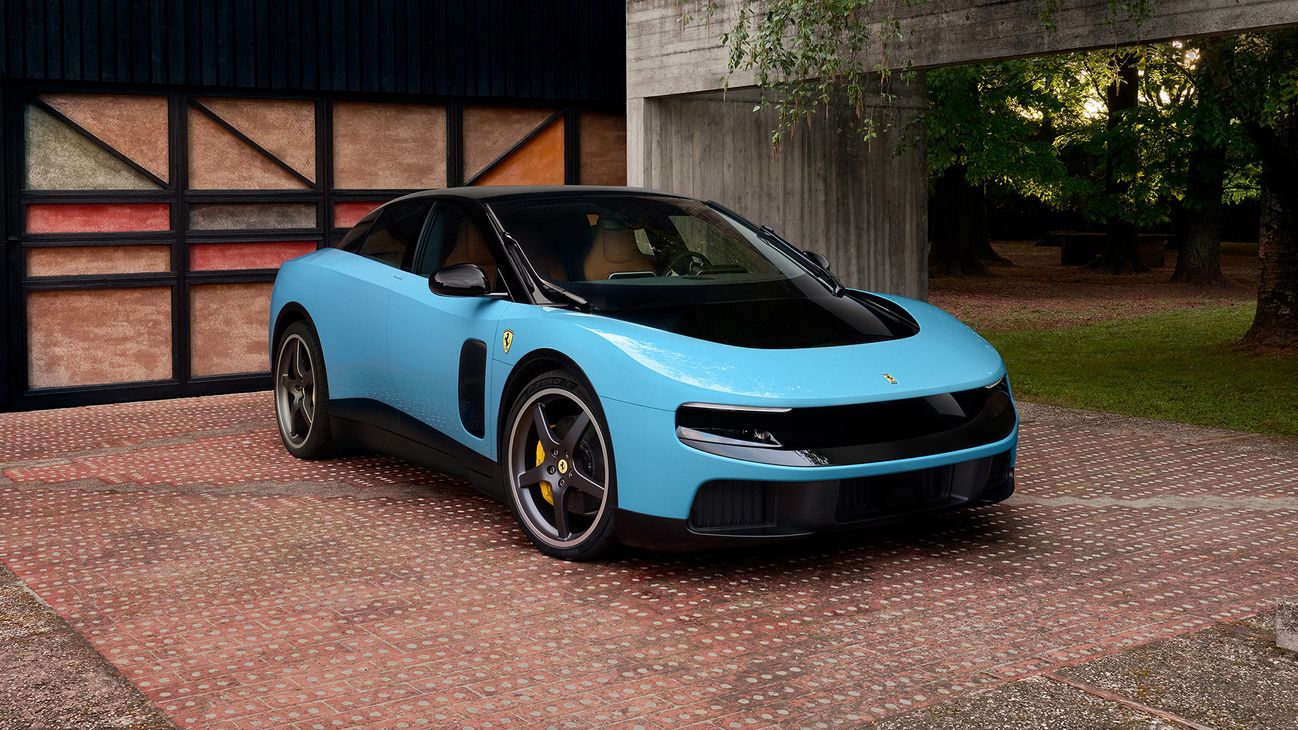
Ferrari Luce
"...hat i thought it was loose but no it's called the luce is that right greg i think yes all right that's l..."
The Ferrari Luce is a specific model name from Ferrari. In the podcast, people are confirming that “Luce” is the correct name for the car being discussed. It’s mentioned to make sure they’re talking about the right Ferrari.
The Ferrari Luce is referenced in the podcast as “the luce,” with listeners confirming the name. It’s being discussed as a specific Ferrari model, which suggests the conversation is about identifying a particular car they saw or talked about. Model-name accuracy matters in these discussions because Ferrari model names can be easy to mix up.

Chevrolet C6
"...'s a gearhead and she's like hey dad i found this c6 she actually influenced the bio that m5 we were a..."
The Chevrolet Corvette is a sports car designed for fast, fun driving. A “C6” is one specific generation of Corvette, meaning it was built in a particular time period. In the podcast, it’s mentioned as a car someone found that connects to the performance-car conversation.
The Chevrolet Corvette is a sports car known for its performance and for being a long-running American enthusiast favorite. The podcast specifically references a “C6,” which is the sixth-generation Corvette, often discussed because it’s a modern-feeling Corvette with strong driving dynamics. It comes up in conversations about gearheads because it’s a popular platform for spirited driving and ownership.
hybrid
"we're all for like you said a balance to evie i think hybrids the way to go uh has there been [1997.3s] an uptick uh in sales with hybrids i.e. uh toyota maybe some of the hondas or people gravitating [2003.5s] to hybrids yes you know um hybrid is the fastest growing segment of new car sales"
A hybrid car uses two kinds of power: a gas engine and an electric motor. It can use one or both to help it get better mileage than a normal gas car.
A hybrid vehicle uses both an internal-combustion engine and an electric motor/battery. The car can blend power sources to improve efficiency and reduce fuel use compared with a traditional gas-only setup.

Toyota Highlander
"i'm a fan mechanically of all things toyota hybrid uh when someone asks [2068.9s] me you know assuming that that that's the lifestyle they they're after uh the toyota hylander the all [2075.2s] things toyota hybrid lexus a little bit more luxury"
The Toyota Highlander is a family-size SUV. In hybrid form, it uses both a gas engine and an electric motor to help improve fuel economy.
The Toyota Highlander is a midsize SUV that’s commonly offered with Toyota’s hybrid powertrain. It’s a popular “bridge” choice for shoppers who want better efficiency than a gas-only SUV but aren’t ready to go fully electric.
timing when to buy a vehicle
"how do we time when to buy a vehicle you know historically the best time to buy a car [2105.5s] is the last week of the year between christmas and new year's eve that historically is the best [2112.8s] time that's that's when uh the best deals are at least the the largest percentage off of the"
This is about buying when dealers are most eager to hit sales goals. The host says the last week of the year is usually when discounts tend to be strongest.
“Timing” a car purchase refers to choosing a sales period when dealers are more motivated to discount—often tied to month-end, quarter-end, or year-end targets. The host claims the last week of the year (between Christmas and New Year’s Eve) historically brings the biggest discounts.
MSRP
"that's that's when uh the best deals are at least the the largest percentage off of the [2120.6s] msrp of a vehicle you can usually get now having said that i will tell you this in my opinion"
MSRP is the price on the car’s sticker that the manufacturer lists as the starting point. When someone says “X% off MSRP,” they mean the dealer is discounting from that sticker price.
MSRP (Manufacturer’s Suggested Retail Price) is the sticker price automakers publish as the starting point for negotiations. Deal discounts are often described as a percentage off MSRP.
autonomous
"[2502.5s] elon it's kind of monday pt barnum but he's also comes with the game i mean he's brilliant [2507.3s] but he's saying you want a model three it's sleeping at night uh go and make that thing [2514.2s] autonomous and make some money uh we're on to something i don't know maybe this is the last"
“Autonomous” here means the car can drive itself. Instead of you steering and braking all the time, the car uses sensors and software to handle driving tasks.
In this context, “autonomous” refers to self-driving capability—software and sensors that let a car operate with little or no human input. The speaker is framing it as the next big business opportunity tied to a specific EV model.

model three
"[2494.0s] could we be right there where now we see wemo we see tesla's saying there i don't know i mean [2502.5s] elon it's kind of monday pt barnum but he's also comes with the game i mean he's brilliant [2507.3s] but he's saying you want a model three it's sleeping at night uh go and make that thing"
“Model 3” is the Tesla electric car. The point here is that Tesla wants it to be able to drive itself more, and that could make the car more valuable.
“Model 3” refers to the Tesla Model 3, an electric sedan that’s become a benchmark for mainstream EVs. The host mentions it in the context of autonomy software, implying the car’s value proposition is tied to self-driving progress.

Chevrolet Impala
"[2610.3s] we don't resign aid and you drive a monster someday you want to drive i mean say it is [2615.3s] maybe or what's your vision card come on i i you like you know i'm an old i'm old school old school [2621.6s] 67 chevy impala chevy chevelle all right how do you get there you're gonna resign"
A 1967 Chevrolet Impala is a classic American car. People like it because it’s from the V8 “cruiser” era and it’s a popular platform to keep stock or customize.
The Chevrolet Impala (here, a 1967) is a classic full-size American car known for its big V8-era styling and role in the muscle-car and cruising culture. In enthusiast circles, a 1967 Impala is often discussed as a baseline for old-school comfort plus mod-friendly parts availability.

Chevrolet Chevelle
"[2615.3s] maybe or what's your vision card come on i i you like you know i'm an old i'm old school old school [2621.6s] 67 chevy impala chevy chevelle all right how do you get there you're gonna resign"
The Chevrolet Chevelle is a classic American car from the 1960s. It’s popular with car fans because it’s a great muscle-car style platform and parts are widely available.
The Chevrolet Chevelle is another iconic 1960s American muscle-era model, and the host pairs it with the Chevrolet Impala as an “old school” dream car. Chevelles are especially known in the hobby for their V8 potential and strong aftermarket support for restoration and upgrades.
29 night oil change
"genuinely speaking you got a really good service behind a 29 night oil change and we did we did"
They’re talking about how often you should change your engine oil. The idea is that after a certain amount of driving, the oil gets less effective and you should replace it.
This sounds like a transcription of “29,000-mile oil change,” which is a schedule for changing engine oil based on mileage. Oil-change intervals matter because oil degrades over time and with engine use, affecting lubrication and wear.
refinement for those blends
"in katar shells pearl gtl facility uh was severely damaged during this recent uh during this action in the streets or moose and and that's created some issues with refinement for those blends"
They’re talking about the process that turns raw oil into products like engine oil. If a refinery is damaged, it can reduce the supply of the oil types people need.
“Refinement” here refers to how crude oil is processed into usable petroleum products like base oils and finished lubricants. Damage to refining capacity can reduce supply of specific oil types, contributing to shortages and price increases.
mineral oil zero weight eight and zero weight sixteen
"the newer vehicles gosh can you believe it ray almost like mineral oil zero weight eight and zero weight sixteen that's some thin"
They’re talking about the type of engine oil based on how thick it is. “0W” means it flows well when it’s cold, and the second number is about how thick it is when the engine is hot.
“0W-8” and “0W-16” refer to oil viscosity grades, where the “0W” indicates cold-weather flow behavior and the second number indicates thickness at operating temperature. Thinner oils can reduce friction and improve fuel economy, but they must match the engine’s lubrication requirements.
five way thirty
"however uh five way thirty and some of the more common blends of course i'm speaking arizona if you're in alaska you guys are going to mix it up a little bit because of temperatures"
This is a very common type of engine oil. The numbers describe how the oil behaves when it’s cold and when the engine is running hot.
“5W-30” is a common engine-oil viscosity grade: “5W” describes cold-weather flow, and “30” describes oil thickness at normal operating temperature. Many vehicles specify 5W-30, so shortages of that grade can directly impact maintenance.
Request an Explanation
Heard something you'd like explained? We'll add it to this episode.
Sign in to request explanations for terms you heard.
Want to learn more?
Browse our glossary for plain-English explanations of automotive terms, jargon, and concepts.
Help improve this episode
See something that's not quite right? Our annotations are AI-generated and can sometimes miss the mark. Click the flag icon on any annotation to suggest a correction.