
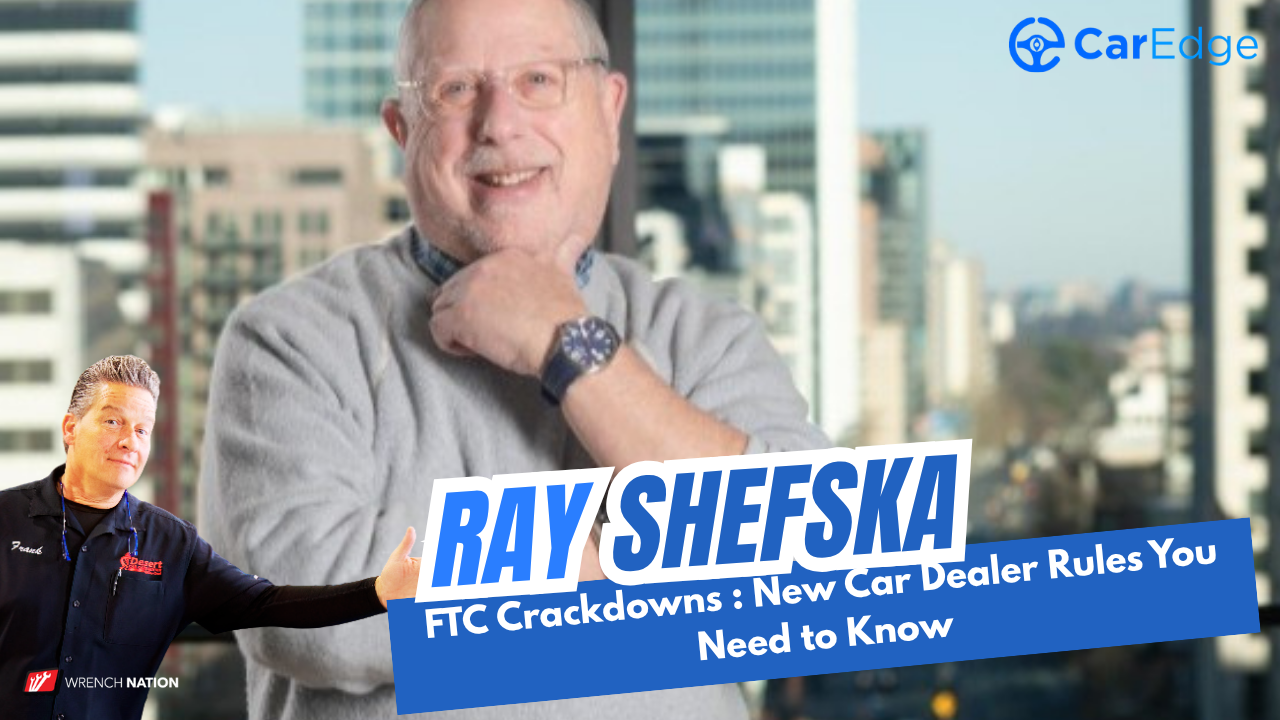
#343 FTC Crackdowns : New Car Dealer Rules You Need to Know
About this episode
FTC pressure on dealer pricing takes center stage as Ray Shefski of CarEdge breaks down junk fees, dock fees, bait-and-switch advertising, and why transparency matters more than ever. The conversation digs into how dealerships manipulate monthly payments, stretch loans to 72 and 84 months, and leave buyers upside down on trade-ins. Ray also shares CarEdge’s dealer transparency index and practical buying advice, including watching the out-the-door price, insurance costs, and total monthly ownership burden.
The car-buying landscape is changing—and consumers need to pay attention.
On our latest episode of WrenchNation, we sat down with Ray Shefska of CarEdge to break down the latest FTC dealership transparency mandates and what they could mean for everyday car buyers across America.
For years, many consumers have faced confusing pricing, surprise add-ons, hidden fees, and high-pressure tactics inside dealership finance offices. Now, the Federal Trade Commission is pushing for stronger transparency standards designed to create a clearer and fairer buying process.
What We Covered on the Show- How hidden fees can inflate the final vehicle price
- Why “monthly payment shopping” can cost buyers thousands
- Add-ons, warranties, and products consumers should question
- What younger buyers expect from the vehicle purchase process
- How dealership practices may evolve moving forward
- Why informed buyers hold the power in today’s market
Whether you’re buying new, used, leasing, or just researching your next move, understanding the fine print has never been more important. The old model of confusion and pressure is being challenged, and smart consumers who prepare before stepping onto the lot can save serious money.
Ray Shefska Brings Real InsightRay and the team at CarEdge have built a trusted voice in automotive consumer education—helping buyers understand pricing, negotiations, financing, trade-ins, and dealership tactics in plain English. Check out their Youtube channel with a plethora of great information : CareEdge YouTube

Delorean DMC-12
"...n of people, employee number, I think seven from DeLorean, calling in from Ireland. That was a great inter..."
The DeLorean DMC-12 is a sports car made in small numbers, with a stainless-steel look and doors that open upward like wings. It’s often talked about because it’s unusual and easy to recognize. The podcast mention is about the people and history around the car and the company.
The DeLorean DMC-12 is a low-production sports car best known for its distinctive stainless-steel body and gull-wing doors. It comes up in conversation because it’s a recognizable, iconic car with a strong history and a dedicated fan base. The podcast reference ties it to the brand’s real-world story and people connected to it.
FTC crackdowns
"[51.0s] For more details, dive into that. [53.2s] We just talked about the FTC as an enforcement wave."
The FTC is a U.S. government agency that watches for unfair or misleading business practices. When they “crack down,” car dealers may face more checks and fines if their ads or sales tactics don’t follow the rules.
The FTC (Federal Trade Commission) can investigate and enforce rules around how car dealers advertise and sell vehicles. “Crackdowns” usually means tougher enforcement, more scrutiny of marketing claims, and potential penalties for misleading practices.
junk fees
"How'd you like to get rid of those junk fees, bait and switch tactics, all kinds of stuff that's happening."
Junk fees are extra costs a dealer adds to your car purchase that you didn’t really plan for. They can make the final bill much bigger than the price you thought you were getting.
“Junk fees” are extra charges added to a car deal that aren’t clearly explained or don’t meaningfully relate to the transaction. They often show up late in the process, making the final price higher than what you expected.
bait and switch tactics
"How'd you like to get rid of those junk fees, bait and switch tactics, all kinds of stuff that's happening."
“Bait and switch” is when a seller advertises one price or offer (“bait”), then changes the terms to something worse once you’re already committed (“switch”). In car sales, this can mean the advertised deal disappears or the final price jumps due to added charges or different vehicle availability.
out-the-door price
"You thought you were going to pay with this thing and it ended up being more. It's like going to grocery store bananas was $9. And you're like, wait a minute. It was $4. What's happening?"
The out-the-door price is the full total you’ll pay for the car, not just the sticker price. It includes the extra stuff like taxes and fees, so you can compare deals fairly.
“Out-the-door price” is the total amount you pay to drive the car home, including the vehicle price plus taxes, registration, and dealer-added fees. When dealers don’t clearly present the out-the-door number up front, buyers can get surprised by the final total.
level the playing field
"And he came up with the idea that we should try and help level the playing field for people out there."
It means trying to make car buying fairer for everyone. The goal is to reduce situations where dealerships can pressure people who don’t know what to look for.
“Level the playing field” here refers to making it harder for dealerships to take advantage of less-informed buyers. It’s about consumer protection and transparency so shoppers can negotiate from an informed position rather than being pressured or misled.
dealership
"New car prices are insane. You cover that. Don't make this mistake at the dealership. It could cost you thousands."
A dealership is where you go to buy a car from a seller. It’s also where you can run into confusing pricing or pressure to add things you didn’t plan on.
“Dealership” is the retail sales channel where pricing, financing, and add-ons are often negotiated. It’s also where buyers can be most exposed to confusing fee structures or high-pressure tactics, which is why the hosts warn listeners about common mistakes.
emotional buyers
"Warm up before you just go in cold and emotional. We're gonna get to that. And emotional buyers, probably a salesman's best friend."
Emotional buyers are people who decide based on feelings instead of facts. Car salespeople often try to get you excited or rushed so you don’t think as clearly.
“Emotional buyers” describes shoppers who make decisions based on pressure, excitement, or fear of missing out rather than careful comparison and budgeting. Sales tactics often target emotion because it reduces the buyer’s willingness to negotiate or walk away.
window stickers
"Well, you know, dealerships, when cars first came out, before there were window stickers, before there were Manroni labels on cars..."
A window sticker is the official label on a new car that shows the manufacturer’s suggested price and important details. It makes it harder for dealers to hide what the car is “supposed” to cost.
Window stickers (Monroney labels) are the official MSRP and key information label placed on new cars. They help standardize pricing transparency, so buyers can compare the advertised price to the manufacturer’s stated price.
MSRP
"...before there were window stickers, before there were Manroni labels on cars..."
MSRP is the price the carmaker says the car should cost. Even if a dealer sells it for more or less, MSRP is the starting number people compare deals to.
MSRP (Manufacturer’s Suggested Retail Price) is the baseline price set by the automaker, often shown on the window sticker. Dealer pricing and discounts can vary, but MSRP is the reference point regulators and consumers use to judge whether a deal is being represented accurately.
dealer pricing based on customer enthusiasm
"...my son said to me... how did you price them? ...it was based on the enthusiasm of the customer... the price went up... the price was lower..."
The speaker is describing a time when the price could depend on how eager the customer seemed. Today, consumer rules try to make sure the price you see and the price you pay are explained clearly.
The idea described is “price discrimination” in practice: pricing changes based on how much the buyer wants the car. Modern rules and consumer-protection enforcement aim to reduce misleading pricing and ensure advertised numbers and fees are clear and consistent.
Nissan
"I remember back in the late, I guess mid 1980s, [235.7s] I was working managing an Nissan dealer ship, [239.6s] and we had an old facility"
They’re talking about working at a Nissan dealership. The episode is about new rules that affect how car dealers sell cars, so the brand matters because it’s part of the dealer network being regulated.
The host mentions managing a Nissan dealership, which is relevant because dealership sales practices are a big part of the episode’s FTC crackdown topic. Nissan is the automaker whose dealer network would be affected by rules governing how cars are marketed and sold.
women's empowerment shows
"We've had a ton of women's empowerment shows [383.4s] with a bunch of authorities. [385.0s] And it's so true."
This is about how women are treated when they shop for cars or get service. The hosts are saying the industry has a bad reputation because some people act like women need a man to be involved or make decisions.
“Women’s empowerment” programming in automotive contexts often addresses how women are treated as customers and how dealerships and service shops communicate with them. In this segment, it’s used to frame the industry’s reputation problem—specifically, how customers can be talked down to or questioned about who should be involved in decisions.
clutch
"And she's doing, she wants to do the clutch. [398.3s] It's an older Aston, my DB nine. [400.6s] And, you know, it's a big repair."
The clutch helps the engine and the gearbox work together on a manual car. If it’s worn out, the car may feel like it won’t accelerate smoothly or shifting gets harder, and fixing it can take a lot of work.
A clutch is the mechanical connection between the engine and the transmission on manual-gear cars. When it wears out, it can cause slipping or difficulty shifting, and replacement can be a labor-heavy repair depending on the vehicle.
required fees
"And they, and they listed several of them. And it was advertising the price that does not reflect all required fees. So the FTC says whatever price you're advertising, it has to have whatever the fees are that you require to complete that transaction."
Required fees are the mandatory charges you have to pay to finish buying the car. The FTC is saying dealers shouldn’t advertise a cheap price if they’re leaving out fees that you’ll still have to pay.
“Required fees” are mandatory charges that must be paid to complete the purchase, such as certain state- or dealer-imposed fees. The FTC’s point here is that dealers can’t advertise a low price while omitting mandatory fees that buyers will inevitably pay.
advertising the price
"And it was advertising the price that does not reflect all required fees. So the FTC says whatever price you're advertising, it has to have whatever the fees are that you require to complete that transaction."
This is about what dealers put in their ads when they advertise a car price. The key issue is that the ad price shouldn’t be missing mandatory charges that you’ll have to pay anyway.
This refers to how dealers present pricing in ads and marketing. The episode emphasizes that advertised prices must be consistent with the total cost to complete the transaction, including mandatory fees, to avoid being misleading.
dock fee
"What the heck is a dock fee? ... Here's what a dock fee is. A dock fee is 100% pure profit."
A dock fee is an extra line-item charge added by some car dealers. It’s usually not a real “thing” you can point to like parts or labor—it’s more like a pricing add-on that boosts the dealer’s profit.
A dock fee is an extra charge some car dealerships add to the sale, often described as a “profit” fee rather than a real cost. It’s typically tied to how the dealer structures pricing and can vary wildly by state and dealership.
rebates
"... the advertised price has to reflect rebates or discounts that are available to everybody."
A rebate is money back (or a discount) that lowers what you pay for the car. The FTC point being made is that if a rebate is available to most/all buyers, the ad shouldn’t hide it.
A rebate is a manufacturer or program incentive that reduces the purchase price, often requiring eligibility or paperwork. This segment notes that if rebates/discounts are available to everyone, they should be reflected in the advertised price under FTC rules.
discounts
"... the advertised price has to reflect rebates or discounts that are available to everybody."
A discount is any deal that lowers the car’s price. The FTC-related point here is that if the discount is available to everyone, the dealer shouldn’t advertise a lower price and then add the discount later.
Discounts are price reductions offered by a manufacturer, dealer, or incentive program. The segment’s takeaway is that when discounts are broadly available, they should be incorporated into the advertised price rather than added later as a surprise.
recent college graduate rebate
"say a recent college graduate rebate in that price, because not everybody's going to be a recent college graduate and qualify for that."
A “college graduate rebate” is an incentive that only applies if the buyer meets specific eligibility criteria (like graduation timing or proof). In advertising, bundling this kind of rebate into a single advertised price can be considered misleading if not everyone qualifies.
advertise straight
"why don't we just advertise straight? People would, why are we so afraid that our competition will be cheaper..."
“Advertise straight” here means advertising pricing in a straightforward, non-misleading way—without burying eligibility requirements or incentives inside a headline number. It’s essentially the opposite of “bait” pricing tactics that make a deal look available to everyone.
lowest price to get clicks
"In order to get somebody to click on the car that they might be interested in, you have to have the lowest price or somebody's not going to click on it."
They’re talking about how dealers try to win online shoppers by showing the cheapest price in listings. The FTC is cracking down when that “price” is misleading or used in a way that tricks people into clicking.
The hosts describe a common digital advertising strategy: listing the lowest price to drive clicks on inventory/listing websites. The FTC crackdown angle is that regulators are targeting misleading pricing or advertising practices that manipulate consumer attention.
AutoNation
"He was iconic here in the Phoenix Valley before they were bought out by AutoNation and that was Lou Grubbs Chevrolet."
AutoNation is a big company that owns lots of car dealerships. The hosts mention it to explain that a local dealer was bought by a larger group.
AutoNation is a large U.S. dealership group that owns and operates many car dealerships. In the segment, it’s mentioned as the buyer of a local Chevrolet dealer, illustrating how dealership ownership can change over time.
dealer rules
"But so here we go. And I think about that. We can't just pick on our sector..."
“Dealer rules” are laws and enforcement that tell car dealers what they can and can’t do when selling cars. They usually focus on making sure customers aren’t misled about the real cost.
“Dealer rules” refers to regulations and enforcement actions that govern how car dealerships can sell and advertise vehicles and services. These rules often target transparency around pricing, fees, and what customers are actually being sold.
alternator
"So we would compare notes and honey, how'd you do? She's like, yeah, I sold three dresses... And I'm like, yeah, the guy beat me up."
An alternator is the engine-driven generator that powers a vehicle’s electrical system and recharges the battery. When dealers discuss marking up an alternator, they’re talking about the parts-and-labor economics of electrical repairs.
evasive pricing
"Do younger folks just not want to deal with this kind of flip-flop of a price, evasive pricing?"
It means the price doesn’t feel straightforward. The dealer may change the numbers, add extra charges, or make it hard to tell what you’re really paying until late in the deal.
“Evasive pricing” refers to unclear or shifting dealer pricing tactics that make it hard to know the real cost up front. It often shows up as add-ons, vague discounts, or changing numbers during the negotiation process.
CarMax
"a perfect example of it is CarMax or Caravana. Yeah. People will pay more to buy a car at either one of those locations..."
CarMax is a used-car store that usually doesn’t haggle on price. The idea is that you can see the price and buy with less hassle, so people may accept paying a bit more.
CarMax is a used-car retailer known for fixed, posted pricing and a “no-haggle” buying experience. The hosts use it as an example of why many shoppers are willing to pay more when the process is less stressful.
Caravana
"a perfect example of it is CarMax or Caravana. Yeah. People will pay more to buy a car at either one of those locations..."
Carvana sells used cars with a more straightforward process and usually less bargaining. The hosts mention it because people may pay more if buying feels easier and less stressful.
Carvana is an online-first used-car retailer that’s also associated with simplified, no-haggle pricing. In the segment, it’s cited alongside CarMax to illustrate how buyers respond to less negotiation and fewer “games.”
no-haggle situation
"People will pay more to buy a car at either one of those locations because it's stress-free. Yep, it's a no-haggle situation. There's no BS."
No-haggle means the price is basically the price. You don’t have to argue or negotiate to try to get a better deal, which can make the whole process feel calmer.
A “no-haggle” pricing model means the price is set and the buyer isn’t expected to negotiate it down. The hosts connect this to reduced stress and fewer surprise charges compared with traditional dealer negotiations.
service department
"And I think any service department or even if we're selling the widgets, there's an experience about that and I agree."
A service department is where the shop does car work—like fixing problems and doing scheduled maintenance. When people talk about dealer rules, they often mean how that service is advertised and priced.
A “service department” is the dealership’s (or shop’s) area that handles maintenance and repairs—like oil changes, diagnostics, and warranty work. In dealer rule discussions, it matters because how service is priced and marketed can affect consumer trust and compliance.
Lugra
"I brought up Lugra because Lugra was one of the first, if you remember Ray, service you can hang your hat on and the price is the price is the price"
They mention “Lugra” as an example of a business that was known for good service and clear pricing. The point is that customers value trust and consistency.
“Lugra” appears to be a specific dealership or service brand the hosts reference as an example of a service-focused business model. They connect it to a reputation for reliable service and straightforward pricing, which is relevant to how dealers market service under consumer-protection rules.
price is the price is the price
"and the price is the price is the price and we've done the research and this is what you pay no more, no less."
They’re basically saying the price you’re quoted is the price you pay. It’s about avoiding surprise charges or bait-and-switch pricing.
The phrase emphasizes “no surprises” pricing—customers are told a fixed price up front rather than facing add-ons or changing numbers later. In the context of FTC crackdowns and dealer rules, this aligns with transparency expectations around advertised pricing and fees.
advertised price
"And that is that the price that it's advertised for online, whether it be on their own website or on cars.com or cars guru, whoever it is, whatever that advertised price is, that anybody can walk in and buy it for that price."
This is the price the dealer posts for the car. The point is that customers should be able to buy at that posted price without needing to do a specific financing plan or trade-in.
“Advertised price” refers to the number a dealer publishes online as the deal. Under these FTC-style expectations, that advertised figure must be honored for walk-in buyers and can’t be dependent on special financing, trade-ins, or other conditions.
cars.com
"...whether it be on their own website or on cars.com or cars guru, whoever it is, whatever that advertised price is, that anybody can walk in and buy it for that price."
Cars.com is a major U.S. online automotive marketplace where dealers list vehicle prices and details. The hosts mention it to emphasize that the FTC pricing expectations apply across third-party listing sites, not just a dealer’s own website.
finance through us
"It can't be contingent upon, oh well, you have to finance through us or you have to have a trade in or there's these additional fees."
This means the dealer says you only get the advertised deal if you take their financing. The discussion is that the posted price shouldn’t depend on using their financing.
“Finance through us” refers to requiring the buyer to use the dealer’s preferred financing to qualify for the advertised price. The hosts’ point is that the advertised price should be available regardless of whether you finance with the dealer or elsewhere.
additional fees
"It can't be contingent upon, oh well, you have to finance through us or you have to have a trade in or there's these additional fees."
These are extra charges on top of the price you first see. The point is that dealers shouldn’t advertise one price online and then only offer it if you accept extra charges.
“Additional fees” are extra charges dealers may try to add beyond the advertised price, such as add-ons or required costs. The key issue here is that the advertised price can’t be made conditional on paying these extras or meeting other requirements.
trade in
"It can't be contingent upon, oh well, you have to finance through us or you have to have a trade in or there's these additional fees."
A trade-in is when you bring your old car and use it to lower the price of the new one. The rule being discussed is that the online price shouldn’t only be available if you trade in your car.
A trade-in is when you turn in your current vehicle as part of the purchase deal, reducing the amount you pay. The hosts are saying the advertised price can’t be conditional on having a trade-in to get the deal.
tax and tags
"...the only thing that the advertised price in the future should be is it's plus tax and tags. That's it."
This means the government costs to register the car. The hosts are saying the ad price should only be adjusted for these required charges, not for lots of extra add-ons.
“Tax and tags” refers to the government charges and registration-related costs needed to legally register the vehicle. The segment argues that these are the only items that should be added to the advertised price under the proposed/expected rule framework.
window tint
"It's not plus, oh all of a sudden there's a window tint or there's the desert protection package..."
“Window tint” is an aftermarket add-on that some dealers may try to include or upsell as part of the final price. The segment uses it as an example of optional extras that shouldn’t be quietly tacked onto the advertised price.
desert protection package
"...or there's the desert protection package or oh well there was a rebate that you don't qualify for."
A “desert protection package” is a dealer add-on bundle marketed for certain climates—often involving protective coatings, film, or other appearance/paint protection. The segment treats it as an example of optional add-ons that can be used to inflate the final price beyond what buyers expect from the ad.
artificial intelligence negotiating agents
"But we created these artificial intelligence negotiating agents that will negotiate on behalf of a customer under an alias."
“Artificial intelligence negotiating agents” are software bots that can interact with dealerships and attempt to negotiate on a customer’s behalf. In this segment, they’re described as operating under an alias to gather pricing/fee information and generate comparable out-the-door quotes.
dealer transparency index
"And we created from all that information a dealer transparency index. So you can look up a dealer and believe it or not, most dealers are transparent."
A “dealer transparency index” is a scoring or ranking system built from data (like fee breakdowns and out-the-door pricing) to show how clearly dealers disclose costs. Here, it’s presented as a tool for consumers to look up dealers and judge pricing honesty.
add-ons
"And we break down what the average add-ons are at particular dealerships, how transparent they are with their pricing, what the doxy is."
Add-ons are extra stuff the dealer tries to add to the deal—often for extra money—on top of the car’s base price. The key is whether they tell you clearly what they are and what they cost.
“Add-ons” are extra products or services dealers bundle into the deal price beyond the vehicle itself, such as protection packages or fees. The episode discusses breaking down the average add-ons at dealerships and how clearly they’re disclosed.
doxy
"And we break down what the average add-ons are at particular dealerships, how transparent they are with their pricing, what the doxy is."
“Doxy” here sounds like the dealer’s paperwork fee—money they charge to handle the paperwork. It’s important because it can change the final price, so you want it clearly listed.
In dealer pricing discussions, “doxy” is commonly shorthand for “doc fee” (documentation fee), which is charged for processing paperwork. The episode frames it as part of what should be transparent in the quote.
A to F grading
"because we grade from A to F. And I think that's a good, I mean, if you think about the ways that you can sort of set a standard for a business, hello, transparency."
It’s like a school report card for dealerships. If they’re more transparent with pricing, they get a better grade (A), and if not, they get a worse one (F).
A-to-F grading is a consumer-style rating scale used to communicate dealership performance in a simple way. Here, it’s based on the transparency of quotes and how clearly add-ons and pricing are presented.
monthly payment mentality
"Yeah, they know how much it maybe-ish costs, but they get stuck in this monthly payment mentality. That is a problem, could it be? That is a huge problem. And the reason it's a problem,"
It means people shop by the monthly payment instead of the full price. A deal can look okay month-to-month, but cost more overall because of financing terms.
The “monthly payment mentality” is when shoppers focus on what they pay per month instead of the total price of the car and the full cost of financing. That can make it easier for dealers to steer deals toward longer terms or higher total interest, even if the monthly number looks manageable.
loan
"or how many years you're being asked to pay on that loan. So if you concentrate on the payment, you've taken your eyes off the real goal"
A loan is how you pay for the car over time instead of all at once. The longer the loan term, the easier it can be to get a lower monthly payment—even if you pay more overall.
A loan is the financing arrangement that spreads the car’s cost over time, typically with interest. The loan term (how many years) strongly affects the monthly payment and the total amount paid.
out-of-the-door price
"which is to work on an out-of-the-door price first. And an out-of-the-door price is a discounted and agreed-upon selling price, with any deal-reinstalled accessories that you wanted, ... and then plus tax tags and whatever other fees there might be, as if you were actually going to write a check"
The out-of-the-door price is the total cost of the car after everything is added in—price, taxes, and fees. It’s the number you should compare between dealers so you don’t get tricked by a low monthly payment.
Out-of-the-door (OTD) price is the total amount you pay to drive the car home, including the agreed selling price plus taxes, registration, and other dealer fees. It’s the best single number to compare offers because it reflects the real cost rather than just monthly payments.
accessories
"with any deal-reinstalled accessories that you wanted, not that they necessarily told you you had to have, that you've agreed to, and then plus tax tags"
Accessories are extras added to the car, like add-on features or packages. You want to know if they’re included in the deal price or if they’re being added on afterward.
Accessories are add-ons installed on the vehicle, such as protection packages, electronics, or appearance items. In pricing discussions, it matters whether accessories are included in the agreed selling price or added later, since that affects the out-of-the-door total.
tax tags
"and then plus tax tags and whatever other fees there might be, as if you were actually going to write a check"
“Tax tags” means the government-required costs to register the car and get license plates. They’re usually added on top of the car’s price, so they matter when you’re calculating the true total cost.
“Tax tags” is shorthand for the taxes and vehicle registration fees required to legally own and drive the car. These costs are part of the out-of-the-door price and can vary by location.
60 months
"if you want a payment of $500 a month, and you don't want that payment to be $500 a month for more than 60 months, you have to know that perhaps you can't buy something"
“60 months” means the loan is paid off over five years. A longer term can make the monthly payment look smaller, but it can cost you more in the end.
“60 months” refers to a five-year financing term. Longer terms can reduce the monthly payment, but they often increase total interest paid, so it’s important to translate the payment into the full out-of-the-door cost.
monthly payment actually buys dollars and cents
"So a lot of it has to do with understanding what your monthly payment actually buys dollars and cents wise, and then not allowing yourself to look at things that are more than that."
A monthly payment can sound affordable, but it doesn’t tell the whole story. This is about making sure you understand the real cost behind that payment, not just the number you see each month.
The hosts are talking about budgeting for a car purchase by translating a monthly payment into the real total cost you’re committing to. It’s a reminder to look beyond the sticker price and understand what the payment covers over the loan term, including interest and fees.
cost of keeping that car per year
"I think as consumers, we often forget about what's the cost of keeping that car per year. Are we factoring insurance premiums?"
This refers to “total cost of ownership,” meaning the ongoing expenses beyond the purchase price—like insurance, maintenance, fuel, and sometimes repairs. Dealers and buyers often focus on the payment, but yearly costs can be the bigger budget driver.
insurance premiums
"Are we factoring insurance premiums? I think we forget that."
Insurance premiums are what you pay each month (or year) to keep the car insured. They can change a lot depending on where you live and what car you buy.
Insurance premiums are the recurring payments you make to insure the vehicle, and they can vary widely based on driver history, coverage level, and the vehicle itself. For car shoppers, premiums are a key part of budgeting because they directly affect affordability month to month.

Chevrolet Corvette
"I mentioned Corvette, probably not a Corvette, but there's a premium based upon a zip code and where you live and what kind of car."
They’re using the Corvette as an example of a car that can cost more to insure. Insurance price depends on the car and your location, not just the monthly payment.
The speaker mentions “Corvette” as an example of a vehicle whose insurance cost can vary. Even without specifying a model year or trim, sports cars like the Corvette often carry higher insurance premiums due to repair costs and risk factors.
premium based upon a zip code
"there's a premium based upon a zip code and where you live and what kind of car."
Insurance companies charge different prices depending on where you live. Your zip code can change the risk they assume, so the same car can cost more or less to insure.
Auto insurance pricing often uses geographic risk models, so your zip code can affect the premium due to factors like accident rates, theft rates, and local repair costs. That means two people buying the same car can pay very different insurance amounts.

Kia Rio
"Next thing you know, wow, this is 30% more [1554.7s] than it was for my Kia Rio that I had."
A Kia Rio is a budget-friendly small car. The point here is that when you buy a different car, your insurance price can jump, sometimes a lot, so you should check the cost before you sign paperwork.
The Kia Rio is a small economy car, and in this segment it’s used as an example of how insurance costs can change after switching vehicles. The host is pointing out that a new car can raise your premium significantly compared to your previous policy.
insurance agent
"When people look at, before you start looking at a car, [1569.9s] you need to call an insurance agent and say, gee, if I look at X, can you give me some idea as to what my premium is going to be?"
An insurance agent is the person who helps you get your car insurance. You should talk to them before buying so you know what the monthly cost will be for the exact car you’re considering.
An insurance agent helps you estimate and set your auto insurance premium based on the specific vehicle you plan to buy. This segment emphasizes contacting the agent before purchasing so you don’t get surprised after the sale.
budgeting rule of thumb (10% of gross monthly income)
"we encourage people when you're looking [1609.8s] to buy a car that no more than 10% [1613.1s] of your gross monthly income could go towards the car. [1618.5s] And that's not just the car payment..."
They’re suggesting a simple money rule: don’t let car costs take up more than about 10% of what you earn each month. And they mean all the costs, not just the monthly payment—like gas, upkeep, and insurance.
The host recommends a budgeting guideline: keep total car-related costs to no more than about 10% of your gross monthly income. They clarify that this includes more than the car payment—also fuel, maintenance, and insurance—so the true monthly burden is accounted for.
upside down in their cars
"There's quite a few folks upside down in their cars. In fact, I thought I read, Ray, that trade-ins where folks still owe money is almost like at record high on how much they owe."
“Upside down” means you owe more money on the car than it’s worth. So if you try to sell or trade it, you can’t cover the loan with the sale price.
Being “upside down” is the everyday way to describe negative equity—your loan balance exceeds the vehicle’s market value. This situation is common when prices fall after purchase or when financing terms stretch the payoff period.
negative equity
"And the average amount today, Edmunds just came out with a report, the average amount of that negative equity is nearly $7,200."
Negative equity means your car is worth less than what you still owe on it. If you trade it in, the leftover amount can get added to your next car loan, so you may end up paying more each month.
Negative equity is when you owe more on your current car loan than the car is worth at the time you trade it in. Dealers often roll that difference into the new loan, which can make monthly payments harder to manage and extend the time you’re paying off the old debt.
Edmunds
"And the average amount today, Edmunds just came out with a report, the average amount of that negative equity is nearly $7,200."
Edmunds is a car research website that tracks pricing and market trends. Here, they’re being used as a source for how big the “negative equity” problem is on average.
Edmunds is an automotive research and pricing company that publishes market reports and data used by shoppers and journalists. In this segment, the hosts cite Edmunds’ report for the average size of negative equity.
7K
"if you're gonna finance closer to a nickel than add the difference to 7K. Yeah, oh gosh."
“7K” means $7,000. They’re talking about how borrowing an extra $7,000 can raise your monthly car payment.
“7K” is shorthand for $7,000 in the context of financing math. The hosts are discussing how adding a difference to the loan amount changes the monthly payment.
used car today
"Well, it's hard for people to afford the average car payment on a used car today is $550 a month for a 70-month loan."
They’re talking about what it costs to finance a used car right now. The point is that even used cars can be expensive monthly payments.
The phrase “used car today” frames the discussion around current affordability for pre-owned vehicles. It highlights how financing rates and loan lengths affect what buyers can realistically pay each month.
$550 a month
"the average car payment on a used car today is $550 a month for a 70-month loan. The average car payment for a new car"
They’re quoting a typical monthly payment number. The point is that many people can’t comfortably afford that kind of payment.
The hosts cite a “$550 a month” payment as a benchmark for used-car financing. This is meant to illustrate affordability pressure and why consumers may choose repairs over purchases.
$803 a month
"The average car payment for a new car is $803 a month. Who can afford that?"
They’re giving an example of what a typical new-car payment can be. The takeaway is that new cars cost a lot more per month to finance.
The “$803 a month” figure is presented as the average new-car payment. It’s used to show how much more expensive new financing is compared with used, which affects buying decisions.
extended warranty
"Is this why we extended? Because some folks were shocked they were in the finance department"
An extended warranty is extra protection after the original warranty ends. It can help cover repairs later, but it’s something you should understand and price carefully.
An “extended warranty” is coverage that lasts beyond the factory warranty period, typically sold by dealers or third parties. The hosts imply that longer coverage options may be part of how dealers respond to sticker shock and financing surprises.
finance department
"Because some folks were shocked they were in the finance department and they, for the first time, heard seven-year, eight-year."
The finance department is the part of the dealership where they set up your loan and finalize the deal. That’s also where you may hear about longer terms and extra products.
The “finance department” at a dealership is where paperwork and financing terms are finalized, including loan approval and add-on products. The hosts suggest some buyers were surprised by long loan terms after entering finance.
seven-year, eight-year
"and they, for the first time, heard seven-year, eight-year. I think there's some 10-year options. I mean, I get it, we gotta keep an economy moving."
They’re talking about car loans that last 7 or 8 years. That can make the monthly cost smaller, but you usually pay more interest over time.
“Seven-year, eight-year” refers to very long auto-loan terms. Longer terms can lower monthly payments, but they increase total interest and can leave the borrower owing more than the car is worth for longer.
10-year options
"I think there's some 10-year options. I mean, I get it, we gotta keep an economy moving. The new car market's a huge,"
They’re saying some loans can be stretched to about 10 years. That can reduce the monthly payment, but it may cost more overall and can be risky if the car loses value.
“10-year options” means auto financing offered over roughly a decade. Ten-year loans can be tempting for affordability, but they often come with higher total cost and greater risk if the vehicle depreciates quickly.
extending terms and concentrating on payments
"So it's, we just, the industry figured out that if they just keep extending terms and just keep concentrating on payments, that people won't really care."
Sometimes dealers make the monthly payment look smaller by stretching the loan out longer. The car can still end up costing you more overall, even if it feels easier each month.
The hosts are describing a common financing tactic: stretching the loan length (“extending terms”) and focusing marketing on the monthly payment. That can make a car feel affordable short-term while increasing total cost over time.
manufacturer's warranty
"Well, it ends up turning, let's just say after the manufacturer's warranty, we see this often, they get to a point where, okay, now I gotta start to out of pocket pay for some maintenance, some repairs."
A warranty is the manufacturer’s promise to cover certain repairs for a set time or mileage. Once it’s over, you usually have to pay for more repairs yourself.
A manufacturer’s warranty is the coverage period where the automaker pays for certain repairs due to defects. After it expires, owners often face higher out-of-pocket costs for maintenance and repairs.
out of pocket pay
"they get to a point where, okay, now I gotta start to out of pocket pay for some maintenance, some repairs."
Out of pocket means you’re paying yourself, not using warranty or insurance. The hosts are saying that after coverage ends, repairs can become your responsibility.
“Out of pocket” refers to money the consumer pays directly, not covered by warranty, insurance, or financing. In this context, it’s the shift from warranty-covered repairs to owner-paid maintenance and repairs.
AAA says
"And gosh, I think AAA says, I wanna say that number's a lot higher, but let's just call it 1,500 a year national average for anything that's over 45,000, 50,000 miles of tires maintenance, that's not including a major engine."
AAA is a well-known organization that publishes car-related cost estimates. Their numbers are averages, so your actual costs could be higher or lower depending on what you drive and how you drive it.
AAA is being cited as a source for average annual vehicle ownership costs. Listeners should treat these figures as estimates that can vary by vehicle type, driving habits, and region.
costs after 45,000-50,000 miles (tires/maintenance)
"let's just call it 1,500 a year national average for anything that's over 45,000, 50,000 miles of tires maintenance, that's not including a major engine."
As a car gets past a certain mileage, you usually start spending more on things like tires and regular maintenance. The point here is that those costs add up even before you consider big repairs.
The segment highlights a typical ownership-cost inflection point: once a car is past roughly 45,000–50,000 miles, routine items like tires and maintenance can become a larger recurring expense. They’re also emphasizing that this estimate excludes major engine repairs.
European vehicle maintenance costs
"If you own a European vehicle, double that number. And you add that burden of what could be another 150, 300 a month."
They’re saying European cars tend to cost more to maintain. That can happen because parts and labor are often pricier, so repairs and service can add up faster.
The hosts claim European vehicles have higher ongoing costs, doubling the cited average. This is often due to higher parts/labor pricing, more specialized components, and sometimes more expensive scheduled maintenance.
trade it in
"And consumers like, well, I'm just gonna trade it in and they find out,"
Trading in means you give your current car to the dealer and use it toward the next purchase. The hosts are warning that it doesn’t always fix the affordability problem the way people expect.
“Trade it in” is when a buyer swaps their current vehicle at a dealership as part of the purchase of another car. The hosts suggest that consumers expect this to solve affordability, but the trade-in outcome may not cover the gap created by higher ownership costs.
subscribe to our vehicles
"We gotta subscribe to our vehicles, that's a concept. I think there's a few services."
They’re discussing paying monthly to use a car, instead of buying one outright. The idea is you could switch cars more easily, like a service instead of owning one vehicle long-term.
The hosts are talking about a vehicle subscription model—paying a recurring fee to access a car and possibly swap it out over time. It’s similar in spirit to leasing, but with more flexibility and less commitment to one specific vehicle.
wasting our money on one of the things that we hardly ever use
"Do we just get rid of the whole phenomenon of wasting our money on one of the things that we hardly ever use."
They’re saying people sometimes spend money on car-related stuff they don’t really use. The point is to question whether that spending is worth it.
This is a consumer-behavior concept applied to vehicle ownership—questioning whether people pay for features or services they rarely use. In automotive terms, it often maps to debates about whether to pay for add-ons, extended coverage, or ownership costs that don’t get used.
subscription
"because you put a lot of dealers out of business, would it be better to come up with a subscription? In other words, I pay 700 a month"
They’re wondering if the industry might shift from buying cars through dealers to paying for cars like a monthly service. The goal would be to make the system work better for both customers and businesses.
They frame subscription access as a potential alternative to traditional dealer-driven sales and ownership. The discussion connects this to how regulations and dealer economics could push the market toward recurring-fee models.
lease
"It is, sort of, yeah, that sort of is, yeah. And then call the lease?"
A lease is like renting a car for a few years with monthly payments. At the end, you usually give the car back instead of keeping it.
A lease is a contract where you pay to use a vehicle for a set period, typically returning it at the end. The hosts compare subscription pricing to leasing, implying similar monthly cost structures but different flexibility.
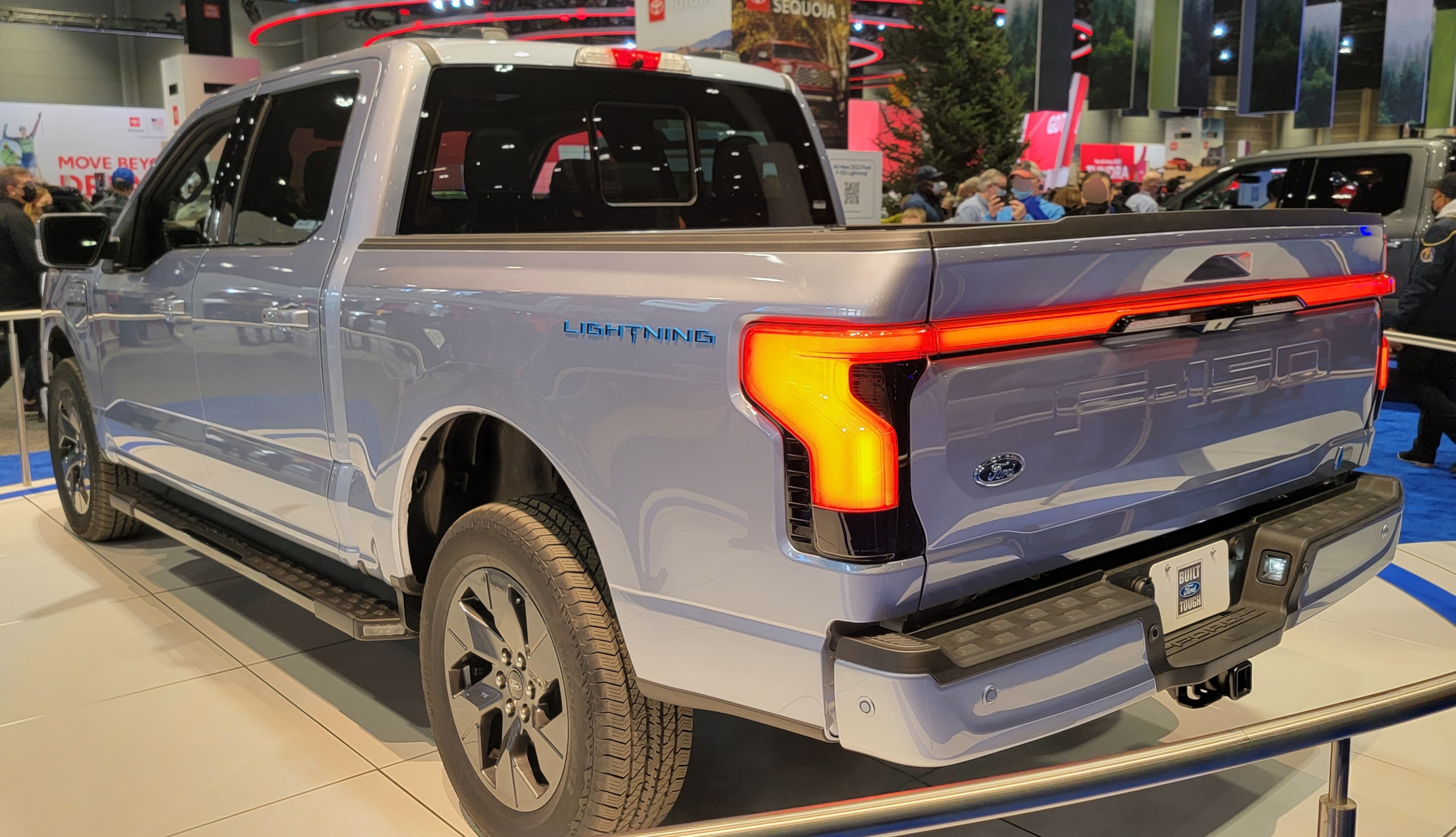
Ford F150
"My point is, Ray, I just don't see, I'll be honest, I have an 08 F-150. I have several vehicles, but I won't get rid of my truck"
The Ford F-150 is a large pickup truck made for carrying things and towing trailers. The podcast mentions an ’08 model that the owner has kept instead of replacing, which suggests it’s been useful and dependable for them. It’s the kind of truck people talk about because it’s built for real work and regular use.
The Ford F-150 is a full-size pickup truck built for everyday driving and heavy-duty work like towing and hauling. In the podcast, it’s mentioned as a long-term personal truck—specifically an ’08—highlighting how owners often keep these trucks for years. It’s a common topic because the F-150’s mix of practicality, capability, and availability makes it a frequent choice for discussion.
oil leak
"It's got a little oil leak, you know, and it's okay and it gets me where I need to go. It smells like me and I think there's a big sentiment"
An oil leak is when engine oil is leaking out of the truck. It might be small, but if it gets worse it can damage the engine or leave you without enough oil.
An oil leak means engine oil is escaping from somewhere in the engine or related components. Even if the truck still runs fine, leaks can lead to low oil levels, increased wear, and potentially expensive repairs if the source isn’t found.
20 year mortgage eventually on a car
"What my point is, is there any way to get more creative other than a 20 year mortgage eventually on a car? I don't know."
They’re saying car loans can be so long that it feels like a mortgage. Paying for a car for many years can cost more overall and make it harder to move on.
The speaker is comparing car financing to a long-term “mortgage,” implying extended loan terms that can stretch out payments for many years. Longer auto loans can increase total interest paid and keep buyers financially tied to the vehicle.
robo taxis
"And the rest of us will have to look at robo taxis, subscription services, short term rentals, public transportation."
Robo taxis are self-driving cars you can summon like an Uber. Instead of buying and owning your own car, you’d pay to ride in one.
“Robo taxis” are autonomous ride-hailing vehicles that operate with little or no human driving. The idea is that people can access transportation without owning a personal car, which could shift demand away from traditional dealerships and new-car sales.
public transportation
"subscription services, short term rentals, public transportation. I mean, I think the chasm between those who can afford transportation and those who can't..."
Public transportation is shared transportation like buses and trains. The point here is that some people may rely on it more if owning a car gets harder.
Public transportation refers to shared transit systems like buses, trains, and subways. In the context of vehicle affordability, it’s part of the broader set of alternatives to private car ownership.
short term rentals
"robo taxis, subscription services, short term rentals, public transportation. I mean, I think the chasm between those who can afford transportation and those who can't..."
Short-term rentals are when you rent a car for a few days or weeks instead of buying one. It’s another way to get around if buying a car is too expensive.
Short-term rentals (often via app-based services) provide temporary vehicle access without long-term ownership. In affordability discussions, they’re positioned as an alternative to purchasing a new car.
affordability
"And I hear CEOs of all the major manufacturers say we need to address affordability. I know they keep saying it at Ford..."
Affordability here means whether regular people can realistically afford to buy and keep a car. The hosts are saying automakers are worried about that gap.
“Affordability” in this context means whether consumers can afford the total cost of transportation, including vehicle payments and related expenses. The segment ties affordability to manufacturer strategy and to how demand may split between higher-income buyers and everyone else.
sub $40,000 vehicles
"Ford's idea is, well, we hope to be able to introduce a number of sub $40,000 vehicles by 2030. Well, what are we doing for the next four years?"
“Sub $40,000” means cars priced under $40,000. The important question is whether the final price you pay is really close to that after all the extra costs.
“Sub $40,000 vehicles” refers to targeting a lower purchase price point to broaden access to new cars. In affordability debates, the key issue is whether the out-the-door cost (including fees, taxes, and add-ons) actually lands near that target for most buyers.
average age of vehicles gone up
"Yeah, the average age of vehicles gone up."
If the average car is getting older, people are keeping their cars longer. That usually means more repairs and maintenance work instead of buying a new car.
When the average age of vehicles increases, more people keep older cars longer instead of buying newer ones. That typically boosts demand for maintenance and repairs, and it can also affect dealer and OEM sales volumes.
post-COVID-ish free money
"and it seemed like post, well, post COVID-ish, you know, we had some free money given out and everybody went wild and bought everything."
After COVID, many people had more money to spend (through stimulus or easier finances). That can make car shopping more competitive and raise prices.
The hosts are referring to the period after COVID when stimulus and easier access to money increased consumer spending. In car markets, that can amplify demand and push prices up faster than supply can respond.
boomer wealth carrying the economy
"but boomer wealth is carrying the economy. And I worry like, okay, then what?"
The idea is that older, wealthier people are spending enough to keep the economy going. That matters for cars because it influences who can buy new vehicles and what dealers focus on.
This is a macroeconomic idea that older, wealthier households are propping up consumer spending. In the auto world, that can affect which buyers can afford new cars and how dealers/manufacturers market inventory.
average asking prices
"I know that the average asking prices keep going up month over month. So that their actions don't match their words."
“Asking price” is the price a seller lists a vehicle for before negotiation. When average asking prices rise month over month, it signals that market pricing power is shifting toward sellers, which can affect affordability and dealer inventory strategies.
Request an Explanation
Heard something you'd like explained? We'll add it to this episode.
Sign in to request explanations for terms you heard.
Want to learn more?
Browse our glossary for plain-English explanations of automotive terms, jargon, and concepts.
Help improve this episode
See something that's not quite right? Our annotations are AI-generated and can sometimes miss the mark. Click the flag icon on any annotation to suggest a correction.