
354 - Austrian GP Prerace 2026
About this episode
Austrian GP chatter kicks off with a look back at Monaco’s pit-lane penalty chaos—faulty pit lane sensors handing out speed penalties, including Pierre Gasly’s five-second penalty being wiped by the FIA. The hosts then zoom out to the bigger theme: reliability, electronics, and how officiating needs “black and white” outcomes. Austria gets a track-and-conditions preview: hot qualifying, tire overheating risk, and 71 laps that test power-unit survival—plus a quick rundown of driver and team standings.

Suzuki Samurai
"...nd find out that it was based on, you know, seven samurai or something. I mean, because Battle Royale in a ..."
The Suzuki Samurai is a small SUV designed to handle rough roads and off-road trails. It’s known for being tough and relatively simple compared to many larger SUVs. It may be mentioned because it’s a recognizable example of a capable off-road vehicle.
The Suzuki Samurai is a compact off-road-oriented SUV that became well known for its rugged, go-anywhere character. It’s often discussed because it’s a simple, lightweight platform that’s popular for off-road use and modifications. In a podcast, it may be referenced when drawing connections to the broader idea of “small, capable” vehicles and their cultural impact.
Mercedes appeal withdrawn after penalty rescinded
"Mercedes has decided to abandon their appeal. Mercedes has decided to abandon their appeal. And here I have a quote from Mercedes. ... we have concluded that further pursuit of our right of review application will not serve our team or the sport and thus we have withdrawn our submission."
This part is about Mercedes and other teams arguing over penalties. Mercedes says it won’t continue its appeal after a decision was changed, and they explain why.
The segment discusses Mercedes deciding to abandon an appeal after a penalty was rescinded for Pierre Gasly. It also covers how the team evaluated review options related to George Russell’s pit lane speeding penalty.
pit lane speeding penalty
"explore all available options to address the impact of George Russell's pit lane speeding penalty on his race result."
F1 cars have to drive slowly in the pit lane. If they go too fast, officials can add a penalty that can cost the driver positions or time.
In Formula 1, there are strict speed limits in the pit lane. If a driver exceeds that limit, race officials (the stewards) can apply a penalty that affects track position or race time, which can change the final result.
rider review
"We had a limited time window in which to apply for the rider review during the race weekend in Barcelona and did so in order to reserve our position on this regard."
This is an official request to re-check a decision made during the race weekend. The goal is to see if the penalty or ruling was correct.
A “rider review” is a formal process used to request an official review of a decision during a race weekend. It’s typically tied to whether the rules were applied correctly or whether new information changes the outcome.
FIA sport and Formula One regulations
"Our subsequent collaborative discussion with the FIA and Formula One has shown their determination to review the unique circumstances arising from the Monaco Grand Prix and to proactively address the factors that caused them."
The FIA is the organization that writes and enforces the rules for F1. When officials decide penalties, they’re applying the official F1 rulebook.
The FIA is the governing body that sets and enforces the rules for motorsport, including how F1 events are run. “Sport and Formula One regulations” refers to the rulebook that stewards use to decide penalties and race outcomes.
FIA sport and Formula One has shown their determination to review
"Our subsequent collaborative discussion with the FIA and Formula One has shown their determination to review the unique circumstances arising from the Monaco Grand Prix and to proactively address the factors that caused them."
Sometimes race officials re-check what happened if something unusual occurred. That can lead to penalties being changed or clarified based on the rules.
This refers to the governing bodies’ ability to re-examine decisions when unusual circumstances occur. In F1, that can mean revisiting penalties or clarifying how rules should be interpreted for specific incidents.
McLaren pursuing a similar appeal/process argument
"Danny, that is not what McLaren has done. No, which is odd because they seem to be pursuing this for the same reason, which is that like, I'm not sure, they're not going to change the result of the race over this, but McLaren are pursuing it for similar reasons..."
They compare Mercedes to McLaren. McLaren seems to be pushing the issue not just to change a result, but to make sure the process and rules are handled consistently going forward.
The hosts contrast Mercedes’ withdrawn appeal with McLaren’s continued pursuit. The discussion frames McLaren’s motivation as establishing a clearer process and preventing future uncertainty about how rules are applied.
sporting inequity
"Such an outcome risks creating sporting inequity and undermining confidence in the consistent application of the FIA sport and regulations."
It means the outcome feels unfair to some teams or drivers. If penalties are changed in a way that helps one side after others already acted correctly, it can create an imbalance.
“Sporting inequity” means an unfair competitive imbalance created by inconsistent or retroactive rule application. In F1 disputes, teams argue that changing penalties after some drivers already followed the rules can disadvantage others.
drivers meeting
"as we talked about last week, in the drivers meeting, this had been brought up that they're the pit lane with the way in which you can sort of go as the crow flies as it were, that the drivers were made aware of this."
Before the race, drivers get a briefing from officials. It’s where they’re told about important rules and any special notes for that weekend.
A drivers’ meeting is a formal pre-race (or weekend) briefing where officials explain relevant rules, procedures, and any clarifications. If a topic is raised there, teams and drivers are considered to have been informed.
penalty never should have been assessed
"If you fight it all the way through, can you be like the first penalty never should have been assessed? And Eric Go, we didn't serve the other ones because the first one is clearly given an error."
A penalty “assessed” means officials decided you should be punished. They’re saying the first punishment was wrong, so the rest of the situation may have been handled unfairly.
“Assessed” here means the stewards formally applied a penalty to a driver/team based on their interpretation of the incident. The hosts are arguing that the first penalty was incorrect, which would cascade into later decisions about whether other penalties should be served.
black flagged
"During the race, I think you, I think there are several cases in which you get black flagged for that. Yeah, but this is not following."
A black flag is an official warning from race control. It usually means the driver has to come into the pits right away because something is wrong—either with the car or with the rules.
In Formula 1, a black flag is an instruction for a driver to return to the pits immediately (or otherwise comply) because of a serious rules or safety issue. It’s a race-control penalty that can effectively end a driver’s race if they can’t resolve the problem quickly.
rules based nature of sport
"hypothetical, do you not follow the adjudication? It is a very uncomfortable kind of worms to open. Like, you know, the rules based nature of sport is sort of important."
They’re talking about how racing has to follow the rules in a consistent way. If teams can’t trust that penalties are handled correctly, it makes the sport feel less fair.
The hosts are discussing how motorsport credibility depends on consistent rule enforcement—i.e., that decisions follow the rules rather than being negotiated away. They frame “following the adjudication” as important to maintaining confidence that penalties are applied fairly.
speed limit system
"there's zero chance this is not, especially we hear often on the broadcasts, oh, these are black and white penalties. And that is like this, the speed limit system in particular relies on it being black and white in that way."
F1 has automated rules that force cars to slow down in certain areas. The hosts are saying the system needs to be clear and consistent, otherwise penalties become confusing or unfair.
F1 uses automated speed-limit enforcement in specific zones (for example, around pit entry/exit or safety-car-related procedures). The hosts emphasize that it depends on clear, binary (black-and-white) outcomes—because if the system produces inconsistent results, it undermines trust in the penalty process.
black and white penalties
"especially we hear often on the broadcasts, oh, these are black and white penalties. And that is like this, the speed limit system in particular relies on it being black and white in that way."
They mean penalties that are clear-cut: either you broke the rule or you didn’t. If the outcome isn’t clear, it becomes harder to trust the decision.
“Black and white penalties” is a metaphor for penalties that are unambiguous and deterministic—either you clearly complied or you clearly didn’t. The hosts argue that when the system produces mixed or unexpected results, it creates doubt about how penalties should be interpreted.
pit lane speed limit
"1978, they'd have laughed at a pit lane speed limit. Oh, so whatever you want. Yeah, it's not your time in the future. Like, wow, that guy violated the pit lane speed limit."
The pit lane speed limit is the maximum speed F1 cars are allowed to drive in the pit area. It’s there to keep everyone safe because mechanics and equipment are close to the track.
In Formula 1, the pit lane speed limit is a regulated maximum speed for cars while they’re in the pit area. It exists to protect pit crew and other personnel, since cars are moving slowly and stopping frequently for refueling and tire changes.
refueling the car
"John F. Kennedy? They say as they're as they're refueling the car with a cigarette hanging out of their mouth."
Refueling means putting fuel into the race car during a pit stop. In older F1 eras, teams could refuel during the race, but today pit stops are mostly about tires and quick service.
Refueling is the act of adding fuel to an F1 car during a pit stop. Historically, F1 races included in-race refueling, but modern F1 rules generally prohibit it during races, making pit stops focus mainly on tires and car adjustments.
Ferrari
"a lot of the cars are carrying nicotine product badging on them. I think Ferrari has in on the on its sponsors and in like a pouchless tobacco got heavily."
Ferrari is a famous F1 team. The hosts are talking about how Ferrari has been showing nicotine-related sponsor branding on its cars.
Ferrari is one of Formula 1’s most prominent teams, and it’s known for high-profile sponsorship and branding on cars and team materials. In this segment, the host mentions Ferrari carrying nicotine-related sponsor/product branding.
pouchless tobacco
"it's a funny history there. Basically, it's a pouchless tobacco product that I read this history."
Pouchless tobacco is a smokeless nicotine/tobacco product that doesn’t come in a small pouch. The discussion is about how these products are marketed and how that advertising shows up in racing.
Pouchless tobacco refers to nicotine/tobacco products that are used without the typical pre-portioned pouch. The host frames it as a smokeless alternative marketed as less harmful than smoking, and ties it to how nicotine advertising appears in motorsport sponsorship.
smokeless product
"Here's a pouchless product. Here's a smokeless product. And this is great for your teeth."
A smokeless product is nicotine/tobacco that you use without lighting it on fire. The hosts are discussing the marketing claim that it’s less harmful than smoking.
A smokeless product is a nicotine/tobacco item used without burning tobacco, so it doesn’t produce smoke like cigarettes do. The host contrasts it with smoking and discusses the marketing argument that it’s “better” for certain health concerns.
Muhammad bin Salim
"F one just got a Stefan Odominicali and Muhammad bin Salim. So CEO of F one and head"
Muhammad bin Salim is another senior figure connected to Formula 1. The hosts bring him up while discussing how nicotine-related advertising is appearing in the sport.
Muhammad bin Salim is mentioned as an F1 executive (described as “head” in the transcript). The segment uses these names to frame the governance/leadership side of sponsorship and advertising decisions in F1.
Stefan Odominicali
"F one just got a Stefan Odominicali and Muhammad bin Salim. So CEO of F one and head"
Stefano Domenicali is a top executive in Formula 1. The hosts mention him when talking about sponsorship rules and how nicotine-related branding is showing up again.
Stefano Domenicali is the CEO of Formula 1 (F1). In this segment, he’s mentioned alongside other executives in the context of how nicotine/tobacco-style sponsorship has returned to the sport.
internal combustion engine versus hybrid electric hybrid power split
"was kind of a formality because F1 had already and all the teams had already signed off on the now [1999.8s] 6040 internal combustion engine versus hybrid electric hybrid power split."
F1 cars use a mix of a gasoline engine and an electric system. The “power split” is how the car shares work between the engine and the electric part.
This refers to how Formula 1’s power unit is divided between a traditional internal combustion engine and the hybrid electric portion. In modern F1, the hybrid system recovers energy and adds electric power, so the “split” describes how much each part contributes during operation.
power unit
"Ferrari is going to introduce a new [2018.7s] fuel and some engine updates. This will be the third version of its power unit [2025.6s] and it is by the way as we have mentioned before they are allowed to upgrade this"
In F1, the “power unit” means the whole drivetrain power system. It includes the engine and the electric/hybrid parts working together.
In F1, the “power unit” is the complete engine package, including the internal combustion engine plus the hybrid energy-recovery and electric components. It’s the core regulated system teams develop, not just the engine block.
ADUO additional development and upgrade opportunities
"that will allow teams below the the benchmark [2031.2s] ADUO additional development and upgrade opportunities that will allow teams below the the benchmark [2040.9s] threshold benchmark being Red Bull's internal combustion engine"
This refers to extra allowance for upgrades. The rules let some teams add more development work if they’re behind a certain benchmark.
“ADUO” here is describing extra development and upgrade allowances teams can use under F1’s rules. It’s essentially a mechanism that lets certain teams spend more on upgrades when they’re below a specified benchmark.
benchmark threshold
"that will allow teams below the the benchmark [2031.2s] ADUO additional development and upgrade opportunities that will allow teams below the the benchmark [2040.9s] threshold benchmark being Red Bull's internal combustion engine"
A benchmark threshold is a reference level the rules use. If you’re below it, you may get more freedom to upgrade.
A “benchmark threshold” is a rules-based reference point used to determine which teams are allowed certain upgrade freedoms. In this context, it’s tied to Red Bull’s internal combustion engine performance level.
Laurent Meckies
"They are also Red Bull bringing a bit of an upgrade this weekend. We don't exactly [2053.7s] know what is in it but it is described by team principal Laurent Meckies as a big one so it's [2061.0s] going to be oiled"
Laurent Meckies is a senior leader at Red Bull. In this segment, he’s the person explaining that the team’s upcoming upgrade is a big deal.
Laurent Meckies is Red Bull’s team principal (as referenced in the segment) and he’s quoted describing the size of the upgrade coming to the car. In F1, team principals often set expectations about development focus and priorities.
oil slicks
"so it's [2061.0s] going to be oiled because they own the circus so it's just going to be like oil slicks that appear [2066.0s] on Laurent Meckies presses a button."
They say “oil slicks” in a joking, dramatic way. It’s not really a normal technical term being explained—more like a punchline about what might happen.
“Oil slicks” is used here as a metaphor for visible effects from the upgrade—specifically, the host jokes that pressing a button will create dramatic visuals. In real F1 terms, oil-related issues are typically something teams avoid, so the phrase is more about show than a technical description.
Dietrich Monteschist
"this was discussed often at Red Bull. The thing to remember about Red Bull is for years and years [2117.6s] that is Dietrich Monteschist's company and effectively it was a monarchy"
Dietrich Mateschitz is one of the founders behind Red Bull. The host is saying his personal taste influenced how the company presented itself for a long time.
Dietrich Mateschitz (spoken here as “Dietrich Monteschist”) is the co-founder of Red Bull and a key figure in shaping the brand’s identity. The host uses him to explain why Red Bull’s image and marketing choices were slow to change over the years.
Red Bull cartoons advertising
"it was 60 style cartoons we were like yeah this feels it's straight up tootsie roll pop ... Dietrich loved the cartoons and now what surprises me is they're sticking with them"
They’re discussing Red Bull’s cartoon ads and whether people find them funny or annoying. The point is how those ads help (or hurt) the brand image over time.
The hosts debate the effectiveness of Red Bull’s cartoon-style advertising, including how it can feel outdated or corny to some viewers. They also connect the cartoons to brand identity and long-term ad strategy.
brand identity
"once you start like tearing it's building a brand is hard building identity is hard tearing it down is very easy and happening very fast"
Brand identity is what makes a brand feel like itself—its look, tone, and style. The host is saying it’s difficult to build that, but easy to tear it down.
Brand identity is the set of visual and messaging cues that make a brand recognizable and consistent. In the segment, the host argues that building identity is hard, while removing or changing it is easier and can happen quickly.
Red Bull Air Race
"from Red Bull's perspective the high energy stuff they do is their live events Red Bull air race things like that"
Red Bull Air Race is a racing event in the sky where pilots fly fast and do aerobatics. The host is saying Red Bull’s marketing matches that high-energy style.
The Red Bull Air Race is a high-speed air racing series sponsored by Red Bull, featuring aerobatic pilots competing on short, tightly controlled courses. The host uses it to explain why Red Bull’s marketing emphasizes high-energy spectacle.
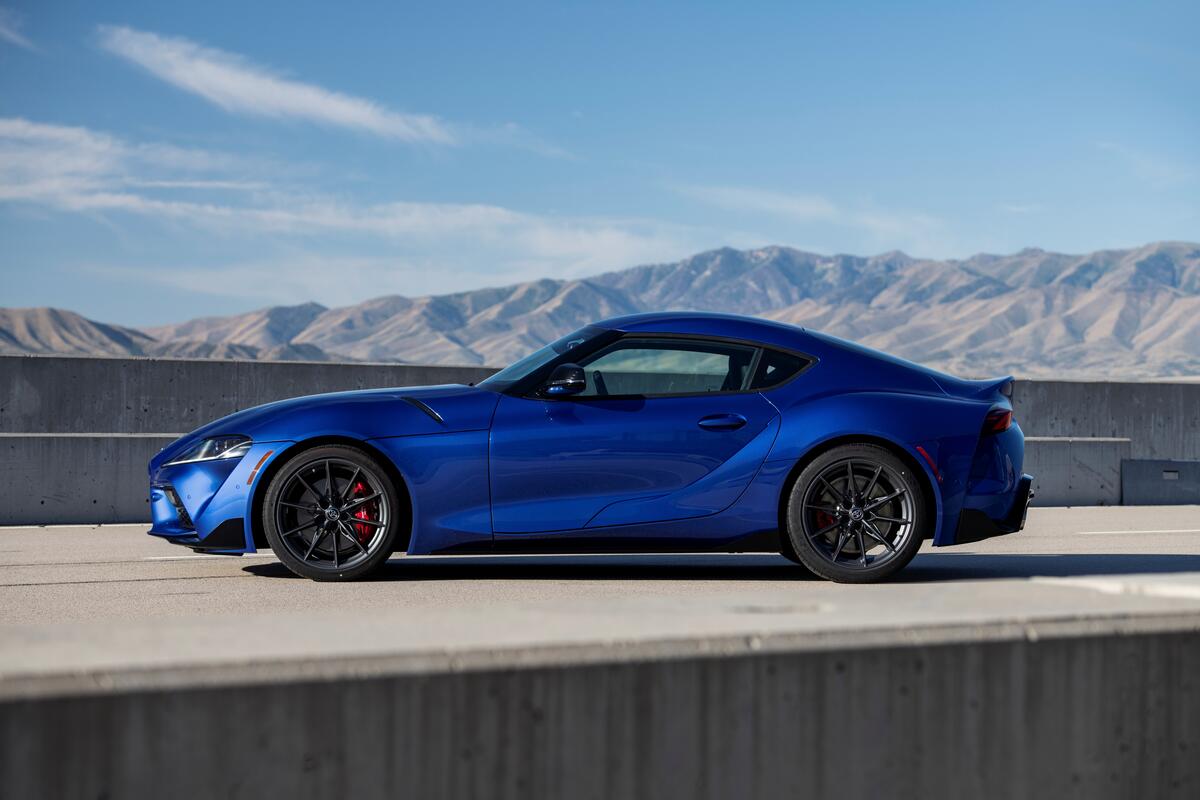
Toyota A90
"ad they came up with and it's one of the talking cookie and stuff it might be I'm watching something right now that seems AI you can just tell it's because everything's at a 90 or 45 degree angle as well yeah it's pretty it's pretty narrowly all right well speaking of red bull and all its"
The Toyota Supra is a sporty two-door car built for fast driving. People talk about it a lot because it’s known for performance and it’s a popular car to modify or enjoy. It may be mentioned as an example of a well-known sports car.
The Toyota Supra is a sports coupe known for its performance-focused design and strong enthusiast following. It often comes up in discussions about iconic Japanese sports cars and how their engineering and driving feel made them popular. In a podcast, it may be mentioned as a recognizable performance reference point when talking about speed, tuning, or car culture.
Red Bull Ring
"well speaking of red bull and all its disparate properties and promotions the red bull ring Danny yes the australite ring the austria [2467.9s] ring or whatever circuit for jason a striker ring yes exactly exactly it was built in 1970"
The Red Bull Ring is a famous race track in Austria where Formula 1 cars race. It’s been around since 1970, and it’s known for being a track that rewards good braking and grip.
The Red Bull Ring is a Formula 1–hosting circuit in Austria, known for its relatively short lap and heavy emphasis on traction and braking zones. It was built in 1970, and it has become a modern F1 venue strongly associated with Red Bull’s branding and promotion.
a1 ring
"and then it became the a1 ring in 1996 which is when it's sort of f1 lifespan started"
The A1 Ring is a famous race track in Austria that Formula 1 used to race on. It later became the Red Bull Ring. It’s a track where you spend a lot of time turning and braking, not just going in a straight line.
The A1 Ring is the former name of Austria’s Red Bull Ring, a Formula 1 circuit in Austria. The speaker notes its return to the F1 calendar and ties it to the track’s modern era. It’s known for short-lap, corner-heavy racing with big emphasis on traction and braking zones.
red bull banner
"it's been since taken under the red bull banner uh I want to say what like 10 years ago"
They’re talking about the track being run under Red Bull’s name. It’s basically the same Austrian circuit, just branded differently. That’s why you’ll hear it called the Red Bull Ring today.
This refers to the circuit being branded under Red Bull, which is strongly associated with the modern Red Bull Ring era. The speaker is explaining how the track’s identity and F1 presence changed over time. For listeners, it’s a cue that the discussion is about the same Austrian venue under a new name.
top line speed
"it obviously top line speed matters a lot here"
Top line speed is basically the car’s maximum speed on the straight parts. If the track has important fast sections, being able to reach and hold high speed helps your lap time. Teams often have to trade speed versus corner grip.
“Top line speed” refers to the car’s highest speed capability on the fastest stretches of the circuit, typically influenced by aerodynamic drag and engine power. The speaker says it matters a lot here because the lap includes key fast sections. In F1, teams balance low-drag setups for speed against downforce for cornering grip.
downforce
"you've a lot of downforce on some of the fastest parts of this track because they're either uphill or relatively flat"
Downforce is what helps a race car stick to the road at speed. More downforce usually means better grip in corners, so the car can go faster without sliding. It’s especially important on tracks with lots of fast sections.
Downforce is the aerodynamic force that pushes the car’s tires into the track, improving grip. At circuits with fast corners and uphill/flat sections, higher downforce helps the car stay stable and corner faster. The speaker links it to “fastest parts” of the lap where grip matters most.
high speed corners
"...they seemed to be pretty good in the high speed corners as well the uh straight line power is going to be a big factor here..."
These are turns you take fast. The car has to stay stable and keep good grip so it doesn’t lose speed before the next straight.
“High speed corners” are bends taken at relatively high vehicle speeds, where aerodynamic balance and tire grip dominate. Cars need stability and traction through these sections to maintain momentum and set up overtaking on the following straights.
straight zone modes
"...the straight line power is going to be a big factor here obviously because we have all of these straight zone modes and these decent um straight um overtaking opportunities..."
F1 cars can run different “settings” depending on where they are on the track. “Straight zone modes” are the settings meant for the straight sections, where you’re usually trying to get the most speed and make passing easier.
In Formula 1, “modes” are pre-set operating strategies the car can switch between. “Straight zone modes” are typically tuned for maximum efficiency or power delivery in the sections of track where cars are accelerating hard and overtaking is most likely.
overtaking opportunities
"...because we have all of these straight zone modes and these decent um overtaking opportunities into these especially these three turns that i've mentioned..."
“Overtaking opportunities” refers to specific places on a circuit where cars can pass—usually where braking zones, traction, and slipstreaming make it feasible. On tracks with multiple overtaking spots, drivers can attempt passes more than once per lap.
Austria
"...in previous years we did enjoy some weirdly close racing here at Austria..."
This is the Austrian F1 race track (the Red Bull Ring). It has long fast sections and can be good for passing, but the tires can get very hot.
Austria here refers to the Austrian Grand Prix venue, the Red Bull Ring, known for long high-speed sections and heavy emphasis on traction and tire management. It’s also famous for producing close racing when cars can follow and attack multiple times per lap.
tires
"...it's high it's a track where you don't get to ease on you know warm up it breaks all that much when your tires are almost too warm..."
Tires are what actually grip the road. If they get too hot, they can lose grip and wear out faster, which hurts lap times and race strategy.
Tires are the car’s only contact patch with the track, so their temperature and grip strongly affect braking, cornering, and tire wear. The segment highlights that at Austria, tires can get “almost too warm,” which can reduce performance and increase degradation.
71 laps
"...how these power units are able to survive 71 laps of uh of beautiful Austrian Alps..."
That’s how many laps the race is. More laps means the tires and the engine system have to keep working well for longer, not just for a few minutes.
“71 laps” is the race distance for this Austrian GP preview. Longer stints increase the importance of tire durability and power-unit reliability, not just outright speed.

Mercedes
"that's uh 31 or 32 with the altitude Celsius them Mercedes gotta be sweating right they've already had two engines blow uh historically they don't do well with heat"
Mercedes is the racing team/constructor in Formula 1. In this segment they’re being singled out because the cars have had engine problems in hot conditions before.
Mercedes is the Formula 1 constructor mentioned here, and the team’s cars are being discussed in the context of engine reliability in extreme heat. The host is implying Mercedes power units have historically struggled when conditions are very hot.
density altitude
"uh historically they don't do well with heat as Drew the pilot knows density altitude oh there you go Danny even more dangerous watch a lot of crash videos"
Density altitude is a way to describe how the weather makes the air act like it’s “higher up.” When it’s hot, the air gets less dense, which can reduce engine power and make it harder for the car to cool down.
Density altitude is how “thick” the air feels to the engine and aerodynamics, combining real altitude with temperature and humidity. Hotter air and higher density altitude reduce air density, which can hurt engine power and make cooling harder—so teams often worry about reliability and performance in heat.
driver standings
"uh all right well let's run down the driver standings as we head into the austrian round kimmy antinelli on top of 156 points louis hamilton in second with 115"
Driver standings are the season leaderboard for individual drivers. Drivers earn points based on where they finish, and the table shows who’s ahead in the championship.
Driver standings are the championship points table that ranks each driver based on race results. It’s a running tally across the season, and the order can change quickly after each Grand Prix.
team standings
"in the team standings mercedes is on top with 262 points to ferrari's 190 um mclaren is in third with 141 followed by red bull in fourth"
Team standings are the season leaderboard for the racing teams. Teams earn points based on how their two cars finish in each race.
Team standings are the championship points table for constructors (the teams) rather than individual drivers. In Formula 1, the team’s points come from the combined results of its two cars, so a strong weekend from both drivers matters.
time penalties
"thank you liz thank you a question i had while watching monaco today was about how time penalties are allowed to be served uh for some god that's a terrible race to if you're a new ish to f1 we were all confused uh for some reason i thought the time penalties were not allowed to be served under a safety car or virtual safety car"
A time penalty is when the race officials add extra time to a driver for a rules violation. In F1, it can be served in different ways, and the timing matters—serving it during certain race conditions can make it hurt less.
In Formula 1, a time penalty adds a set amount of time to a driver’s race result (commonly served as a stop-and-wait or a drive-through/stop-and-go, depending on the penalty). The key detail in this segment is when that penalty can be served—e.g., during a safety car or virtual safety car—because the field’s pace and pit-lane timing can affect the real impact.
virtual safety car
"for some reason i thought the time penalties were not allowed to be served under a safety car or virtual safety car because the other cars are moving more slowly ... is there in is there only a restriction for vsc because the field doesn't bunch up the way it does with a normal safety car"
A virtual safety car is like a “slow down” order that’s enforced electronically. Drivers have to keep their cars within a speed limit, but there isn’t a pace car on track, so the race doesn’t look exactly like a normal safety car period.
The virtual safety car (VSC) is an F1 race control procedure where cars must reduce speed by following timed speed limits, but they do not physically follow a pace car. Since the field may not bunch up the same way as under a full safety car, the advantage (or lack of it) for serving penalties or pitting can differ.
pit stop
"the same reason that the pit stop um under a safety car or vsc is an advantage even though the time spent in the pit lane is the same exactly"
A pit stop is when a race car comes into the pit lane during the race to change tires or get service. If it happens during a safety-car or virtual safety-car period, it can cost less time than it would during normal racing.
A pit stop is when a car enters the pit lane to change tires and/or make adjustments during the race. This segment highlights that pitting under a safety car or VSC can be advantageous because the time lost relative to competitors is reduced when the whole field is slowed down.
red flag
"obviously you can't within a red flag situation or something like that but which may be what you're thinking of perhaps but then a red you know you can't do anything under red you know you can't pitting under a red flag you just come in"
A red flag means the race is stopped because the track is unsafe. When that happens, the usual rules about what you can do (like pitting) change compared with safety car or virtual safety car periods.
A red flag is used to stop the race when conditions are too dangerous, such as debris or a serious incident. Under a red flag, the race is neutralized/suspended, and actions like pitting are restricted or handled differently than during safety-car or VSC periods—matching the host’s point that you can’t do “anything” under red.
safety cars
"uh and have to be have their cars lifted out often has safety cars and virtual safety cars um were uh were anticipating or hoping that they they might get one"
A safety car is a real car that comes out to slow the whole race down when something dangerous is on the track. It gives marshals time to deal with the problem safely.
A safety car is a pace car deployed when there’s an on-track hazard, such as debris or a stopped car. It neutralizes racing so teams can manage incidents safely, and it also affects how penalties and pit stops play out.
drive through
"the only situation in which that can be the case is if you finish the race uh they can't force you to take one unless you've gotten a drive through or something like that"
A drive-through penalty means you have to go through the pit lane and not stop there—just drive through to serve the punishment. It’s a way to penalize a driver without changing tires or doing a full stop.
A drive-through penalty requires a driver to enter the pit lane and pass through it without stopping, serving the penalty immediately. It’s one of several F1 penalty types that can be affected by safety car timing and pit stop strategy.
track sounds
"um apple will let you just watch it with only track sounds you can just turn off all commentary and just be one with the sound sick of modes yeah we've done it"
It’s the race audio without the commentators talking over it. You mainly hear the cars and the track sounds, like engine noise and tire squeal.
“Track sounds” refers to an audio feed that focuses on what’s happening on the circuit—engine/gearbox noise, tire squeal, and on-track ambience—while muting or removing the broadcast commentary. In F1 viewing apps, it’s often presented as a separate audio mode so you can experience the race more “raw.”
car shitting the bed at the start
"like max's car shitting the bed at the start it happened once per year per person or maybe a few times for a certain team"
It means the car has a big problem right when the race begins—like it doesn’t launch properly or something fails immediately. Starts are complicated, so even small issues can cause a bad launch.
This describes a dramatic failure right at the race start—typically a launch problem, drivetrain/engine issue, or other malfunction that prevents the car from getting away cleanly. In F1, starts are high-stress moments because cars must manage clutch/launch behavior, traction, and power delivery immediately after the lights go out.
powertrain
"the power units and the powertrain is a lot of different components that are all working together"
A "powertrain" is everything that delivers power from the engine to the wheels. Think of it as the car’s power delivery system, not just the engine itself.
The "powertrain" is the full set of components that take power from the engine/power unit to the wheels. In F1, it spans multiple systems (engine/hybrid output, transmission/gear selection, driveline connections) that must all work together reliably.
electronics
"these things are now entirely governed by electronics and this has been the case for years and the precision that they operate at the way transmissions work all of it is governed by like electronic systems"
In today’s F1 cars, electronics run and coordinate lots of systems. That can help performance, but it also means problems can come from sensors or software, not just broken mechanical parts.
In modern F1 cars, electronics control and coordinate many functions that used to be purely mechanical. That includes engine management, hybrid control, and transmission behavior, and it also means failures can be software- or sensor-related rather than only mechanical wear.
transmissions
"the precision that they operate at the way transmissions work all of it is governed by like electronic systems"
A transmission is the gearbox that helps the car use the engine’s power effectively. In F1, gear changes are controlled electronically, so electronics play a big role in how it behaves.
Here, "transmissions" refers to the gearbox and shift-control system that converts engine/power-unit output into the right gear ratio for acceleration and efficiency. In F1, shifting and gear selection are tightly controlled by electronic systems, so transmission behavior is closely linked to software and sensors.
faults
"electronic systems that can also throw their own faults and you get the the various gremlins and issues that come up with any sort of software driven device"
A "fault" is basically the car’s system saying something isn’t right. It might be a sensor reading or a software/control problem, not just a mechanical failure.
In this context, "faults" are diagnostic-detected problems reported by the car’s electronic control systems. Because F1 cars are software-driven, faults can be triggered by sensor readings, control logic, or communication issues—not only by broken hardware.
software driven device
"gremlins and issues that come up with any sort of software driven device"
A "software driven device" is a system that runs based on computer code. In F1, that can mean problems sometimes come from the software controlling the car, not just from mechanical wear.
A "software driven device" is a system whose behavior is determined by software and control logic. In F1, that means issues can appear as software/logic faults, calibration problems, or unexpected interactions between subsystems, even when the hardware itself is intact.
startup process
"the whole like startup process is one of the more intensive things that machinery can can do and that is where you tend to encounter the the fatal issues once a machine is going as we saw"
The "startup process" is what happens when the car first powers on and begins running. The idea here is that failures are more likely during that transition because the systems are working hardest to get everything ready.
The "startup process" is the phase when the car powers up and brings systems online (engine/power-unit start, initialization of controls, and readiness checks). The speaker argues this is the highest-risk moment for failures because many stresses and checks occur right as the system transitions from idle to running.
new regulations
"i would say obviously the new regulations sort of are a multiplier on top of all of what you've just said as well"
"New regulations" are rule changes that teams have to follow. When the rules change, teams often have to redesign parts of the car, which can make reliability harder at first.
"New regulations" refers to rule changes that can force teams to redesign parts of the power unit, powertrain, and control systems. The speaker treats regulations as a "multiplier" because they add new variables and integration challenges on top of already-tight reliability margins.
temperature
"what is important in relation to like the start in particular just outside of that uh logical conclusion is that these machines are designed to operate at temperature and like the window at which these machines are cold during a race weekend while they're racing is like less than one percent of the time"
Race cars are built to work best when their parts are at the right temperature. During a weekend they’re only cold for a short time, so the hard part is warming everything up and then keeping it in the right range while racing.
In F1, the car is engineered to work within a specific operating temperature range. The key idea is that during a race weekend the car spends very little time cold, so teams focus on getting systems up to heat quickly and keeping them there during running.
performance window
"everything has to be built for a performance window um yeah well that's true as well like which planes are obviously is not the case but you're right yeah especially in this stuff you're optimizing for the performance"
A performance window is the “sweet spot” where a machine works best. Outside that range—too cold, too hot, or under the wrong kind of stress—performance and reliability can drop.
A performance window is the range of conditions (like temperature, load, and operating state) where a machine performs as designed. The speaker is comparing how aircraft and F1 cars are engineered to tolerate different phases of operation, with F1 cars optimized for racing conditions rather than constant takeoff/landing stress.
margins
"the difference here is is margins like right you could build a backup for all these systems but that adds weight right so and in an f and in a plane for instance you would you know what i mean"
Margins are the “buffer” engineers build in so things don’t break when conditions aren’t perfect. More backup systems can make failures less likely, but they also add weight, which is a big deal in racing.
In engineering, margins are the extra capability designed into a system so it can handle unexpected conditions without failing. The speaker contrasts adding backups (more margin) versus the weight penalty, explaining why F1 and aircraft systems are built with different trade-offs for reliability and performance.
hydraulic systems
"like you would have backups to hydraulic systems in case one of the engine goes and your electronics [4076.7s] don't work"
Hydraulic systems use fluid under pressure to make parts move fast and with a lot of force. In racing cars, that can help control things precisely when every millisecond matters.
In an F1 car, hydraulic systems use pressurized fluid to move and control components quickly and precisely. They’re often used for high-force actions where electric systems would struggle to match the response and packaging.
fly by wire
"and your fly by wire doesn't but like in an f1 car it's like nope don't eat dinner and this"
Fly-by-wire means the driver’s controls send electronic signals to the car instead of moving cables or rods directly. It helps the car react quickly and can also add safety features if something goes wrong.
Fly-by-wire is an electronic control system where the driver’s inputs are converted into electrical signals rather than directly moving mechanical linkages. In F1, it enables faster, more precise control and allows the car to apply safety/strategy logic when systems fail or conditions change.
durability means weight
"but one of the things they do bring across very well is um durability means weight like one of the ways [4096.1s] you get performance out of things is you make the parts more delicate"
They’re talking about a trade-off teams manage in racing: lighter parts are faster, but they must be strong enough not to break. So engineers try to use just enough material to survive the race.
The speaker is describing an F1 design trade-off: to make parts durable enough to survive race loads, teams manage material strength and thickness, which directly affects mass. In practice, teams aim for the lightest components that still meet the required reliability window for the race distance.
durable enough to survive the races
"and so again the idea is the thing is just durable enough to survive the races uh that you're asking [4109.3s] of it and if you're just a little bit wrong it's gonna break"
Racing parts have to last through the whole event without breaking. Engineers design them to handle the real stresses of the race, not just to look strong on paper.
This refers to F1’s reliability engineering goal: components must withstand the specific stresses of race weekend (loads, heat cycles, vibration) without failing. Teams tune part strength and tolerances so the car stays within a “survive the race” reliability margin rather than being overbuilt.
Bruno Senna
"and our bonus guest bruno senna was [4200.8s] gained for a few quick questions after his very brief appearance"
Bruno Senna is a racing driver from Brazil and part of the famous Senna motorsport family. In this segment, he shows up briefly for a few questions after the race trip.
Bruno Senna is a Brazilian racing driver and the nephew of Ayrton Senna. He’s often involved in motorsport events and media, and his appearance here is tied to the episode’s Monaco trip debrief.
Monaco
"I'm oddly buoyed by what happened at Monaco and yeah, we haven't talked about form much"
Monaco is a famous F1 race on narrow city streets. It’s hard to pass other cars, so small mistakes or mechanical issues can decide the outcome.
Monaco is the Monaco Grand Prix, a Formula 1 race known for its tight streets and high barriers. Because it’s so difficult to overtake, small changes in strategy, reliability, and driver execution can have an outsized impact on the result.
reliable
"But you look a lot a lot's gonna depend on how reliable the Mercedes are and if a Ferrari can repeat it"
In F1, “reliable” means the car is less likely to break down during the race. If it’s not reliable, you can lose the race even if you start out fast.
In Formula 1, “reliable” refers to how likely a car is to finish the race without mechanical failure. Reliability is especially important because retirements from engine, gearbox, or other components can erase even strong qualifying performance.
Request an Explanation
Heard something you'd like explained? We'll add it to this episode.
Sign in to request explanations for terms you heard.
Want to learn more?
Browse our glossary for plain-English explanations of automotive terms, jargon, and concepts.
Help improve this episode
See something that's not quite right? Our annotations are AI-generated and can sometimes miss the mark. Click the flag icon on any annotation to suggest a correction.