The Suzuki Samurai is a small SUV designed to handle rough roads and off-road trails. It’s known for being tough and relatively simple compared to many larger SUVs. It may be mentioned because it’s a recognizable example of a capable off-road vehicle.
This part is about Mercedes and other teams arguing over penalties. Mercedes says it won’t continue its appeal after a decision was changed, and they explain why.
The FIA is the organization that writes and enforces the rules for F1. When officials decide penalties, they’re applying the official F1 rulebook.
Term
FIA sport and Formula One has shown their determination to review
Sometimes race officials re-check what happened if something unusual occurred. That can lead to penalties being changed or clarified based on the rules.
They compare Mercedes to McLaren. McLaren seems to be pushing the issue not just to change a result, but to make sure the process and rules are handled consistently going forward.
It means the outcome feels unfair to some teams or drivers. If penalties are changed in a way that helps one side after others already acted correctly, it can create an imbalance.
A penalty “assessed” means officials decided you should be punished. They’re saying the first punishment was wrong, so the rest of the situation may have been handled unfairly.
A black flag is an official warning from race control. It usually means the driver has to come into the pits right away because something is wrong—either with the car or with the rules.
Concept
rules based nature of sport
They’re talking about how racing has to follow the rules in a consistent way. If teams can’t trust that penalties are handled correctly, it makes the sport feel less fair.
F1 has automated rules that force cars to slow down in certain areas. The hosts are saying the system needs to be clear and consistent, otherwise penalties become confusing or unfair.
The pit lane speed limit is the maximum speed F1 cars are allowed to drive in the pit area. It’s there to keep everyone safe because mechanics and equipment are close to the track.
Refueling means putting fuel into the race car during a pit stop. In older F1 eras, teams could refuel during the race, but today pit stops are mostly about tires and quick service.
Pouchless tobacco is a smokeless nicotine/tobacco product that doesn’t come in a small pouch. The discussion is about how these products are marketed and how that advertising shows up in racing.
A smokeless product is nicotine/tobacco that you use without lighting it on fire. The hosts are discussing the marketing claim that it’s less harmful than smoking.
Person
Muhammad bin Salim
Muhammad bin Salim is another senior figure connected to Formula 1. The hosts bring him up while discussing how nicotine-related advertising is appearing in the sport.
Stefano Domenicali is a top executive in Formula 1. The hosts mention him when talking about sponsorship rules and how nicotine-related branding is showing up again.
They say “oil slicks” in a joking, dramatic way. It’s not really a normal technical term being explained—more like a punchline about what might happen.
Person
Dietrich Monteschist
Dietrich Mateschitz is one of the founders behind Red Bull. The host is saying his personal taste influenced how the company presented itself for a long time.
They’re discussing Red Bull’s cartoon ads and whether people find them funny or annoying. The point is how those ads help (or hurt) the brand image over time.
Brand identity is what makes a brand feel like itself—its look, tone, and style. The host is saying it’s difficult to build that, but easy to tear it down.
Red Bull Air Race is a racing event in the sky where pilots fly fast and do aerobatics. The host is saying Red Bull’s marketing matches that high-energy style.
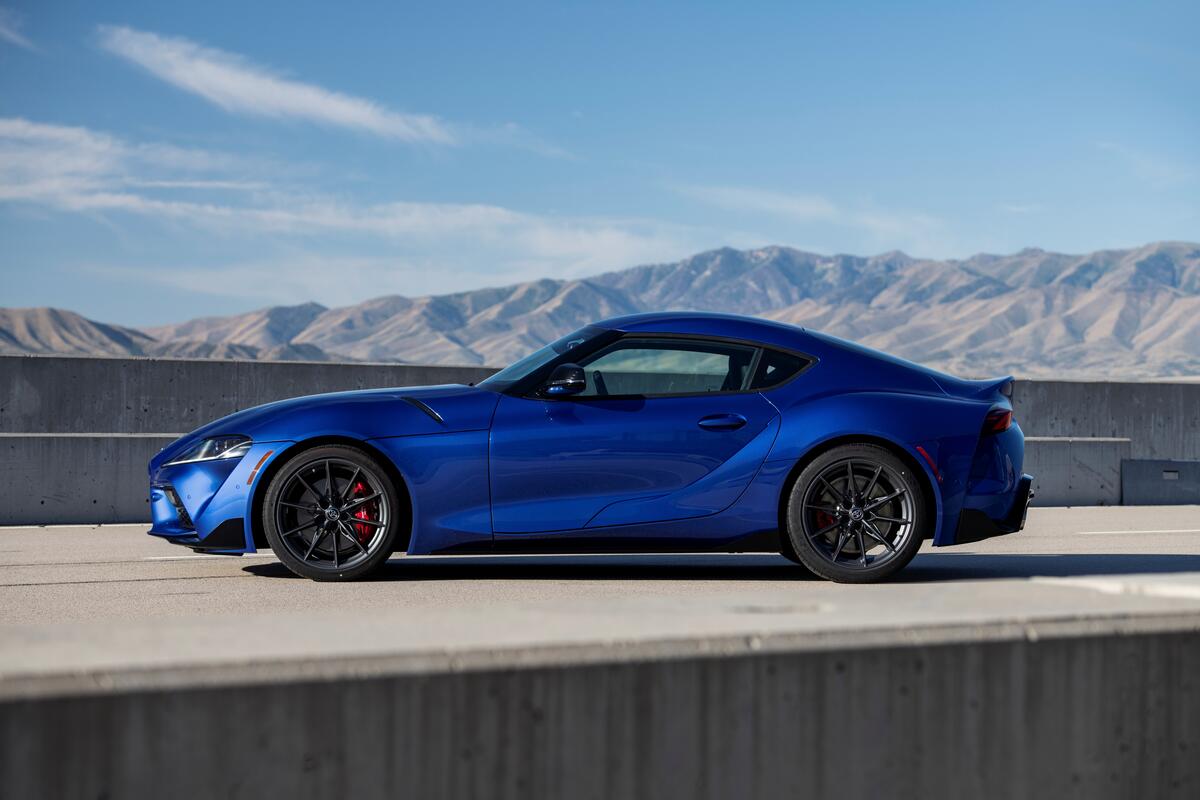
The Toyota Supra is a sporty two-door car built for fast driving. People talk about it a lot because it’s known for performance and it’s a popular car to modify or enjoy. It may be mentioned as an example of a well-known sports car.
The Red Bull Ring is a famous race track in Austria where Formula 1 cars race. It’s been around since 1970, and it’s known for being a track that rewards good braking and grip.
The A1 Ring is a famous race track in Austria that Formula 1 used to race on. It later became the Red Bull Ring. It’s a track where you spend a lot of time turning and braking, not just going in a straight line.
They’re talking about the track being run under Red Bull’s name. It’s basically the same Austrian circuit, just branded differently. That’s why you’ll hear it called the Red Bull Ring today.
Top line speed is basically the car’s maximum speed on the straight parts. If the track has important fast sections, being able to reach and hold high speed helps your lap time. Teams often have to trade speed versus corner grip.
Downforce is what helps a race car stick to the road at speed. More downforce usually means better grip in corners, so the car can go faster without sliding. It’s especially important on tracks with lots of fast sections.
These are turns you take fast. The car has to stay stable and keep good grip so it doesn’t lose speed before the next straight.
Term
straight zone modes
F1 cars can run different “settings” depending on where they are on the track. “Straight zone modes” are the settings meant for the straight sections, where you’re usually trying to get the most speed and make passing easier.
“Overtaking opportunities” refers to specific places on a circuit where cars can pass—usually where braking zones, traction, and slipstreaming make it feasible. On tracks with multiple overtaking spots, drivers can attempt passes more than once per lap.
That’s how many laps the race is. More laps means the tires and the engine system have to keep working well for longer, not just for a few minutes.
Car
Mercedes
Mercedes is the racing team/constructor in Formula 1. In this segment they’re being singled out because the cars have had engine problems in hot conditions before.
Density altitude is a way to describe how the weather makes the air act like it’s “higher up.” When it’s hot, the air gets less dense, which can reduce engine power and make it harder for the car to cool down.
Driver standings are the season leaderboard for individual drivers. Drivers earn points based on where they finish, and the table shows who’s ahead in the championship.
A time penalty is when the race officials add extra time to a driver for a rules violation. In F1, it can be served in different ways, and the timing matters—serving it during certain race conditions can make it hurt less.
A virtual safety car is like a “slow down” order that’s enforced electronically. Drivers have to keep their cars within a speed limit, but there isn’t a pace car on track, so the race doesn’t look exactly like a normal safety car period.
A pit stop is when a race car comes into the pit lane during the race to change tires or get service. If it happens during a safety-car or virtual safety-car period, it can cost less time than it would during normal racing.
A red flag means the race is stopped because the track is unsafe. When that happens, the usual rules about what you can do (like pitting) change compared with safety car or virtual safety car periods.
A safety car is a real car that comes out to slow the whole race down when something dangerous is on the track. It gives marshals time to deal with the problem safely.
A drive-through penalty means you have to go through the pit lane and not stop there—just drive through to serve the punishment. It’s a way to penalize a driver without changing tires or doing a full stop.
It means the car has a big problem right when the race begins—like it doesn’t launch properly or something fails immediately. Starts are complicated, so even small issues can cause a bad launch.
A "powertrain" is everything that delivers power from the engine to the wheels. Think of it as the car’s power delivery system, not just the engine itself.
In today’s F1 cars, electronics run and coordinate lots of systems. That can help performance, but it also means problems can come from sensors or software, not just broken mechanical parts.
A transmission is the gearbox that helps the car use the engine’s power effectively. In F1, gear changes are controlled electronically, so electronics play a big role in how it behaves.
A "fault" is basically the car’s system saying something isn’t right. It might be a sensor reading or a software/control problem, not just a mechanical failure.
A "software driven device" is a system that runs based on computer code. In F1, that can mean problems sometimes come from the software controlling the car, not just from mechanical wear.
The "startup process" is what happens when the car first powers on and begins running. The idea here is that failures are more likely during that transition because the systems are working hardest to get everything ready.
"New regulations" are rule changes that teams have to follow. When the rules change, teams often have to redesign parts of the car, which can make reliability harder at first.
Race cars are built to work best when their parts are at the right temperature. During a weekend they’re only cold for a short time, so the hard part is warming everything up and then keeping it in the right range while racing.
A performance window is the “sweet spot” where a machine works best. Outside that range—too cold, too hot, or under the wrong kind of stress—performance and reliability can drop.
Margins are the “buffer” engineers build in so things don’t break when conditions aren’t perfect. More backup systems can make failures less likely, but they also add weight, which is a big deal in racing.
Hydraulic systems use fluid under pressure to make parts move fast and with a lot of force. In racing cars, that can help control things precisely when every millisecond matters.
Fly-by-wire means the driver’s controls send electronic signals to the car instead of moving cables or rods directly. It helps the car react quickly and can also add safety features if something goes wrong.
They’re talking about a trade-off teams manage in racing: lighter parts are faster, but they must be strong enough not to break. So engineers try to use just enough material to survive the race.
Racing parts have to last through the whole event without breaking. Engineers design them to handle the real stresses of the race, not just to look strong on paper.
Bruno Senna is a racing driver from Brazil and part of the famous Senna motorsport family. In this segment, he shows up briefly for a few questions after the race trip.
In F1, “reliable” means the car is less likely to break down during the race. If it’s not reliable, you can lose the race even if you start out fast.
LIVE
D.C. Smear-Blonson and welcome to Shift-F1, a podcast about speedy racecars. That by the
way is an Austrian-German phrase meaning, that's blood sausage to me.
Mmm. Okay, is that good?
Well, it's an idiomatic expression, Rob, meaning, I don't care.
Oh. It's blood sausage to me.
So wait, they don't like it either?
Apparently not.
How dare they? That is a quintessential part of an Irish breakfast. I tell you what.
Okay, Danny, how often you fry up some blood sausage in the morning for the family?
Over again, my vegetarian wife loves it.
One team has decided that the Monaco pit lane speeding penalties are blood sausage and another
team definitely has not. I'm Drew Scanlon joining me. Danny O'Dwyer, how are you Danny?
I'm great. It's fun to take a break from the World Cup and remember the other sport that I love
because it's just been, it's been, it's been soccer fever over here, guys. Have you been
watching at all? I have been lapping it up like a, a raged animal. I can't get enough
of this beautiful, beautiful, delicious. Yeah, I've been watching a lot of it. It's great to have on
while caring for babies, just like the mummy movies. I've watched the mummy, the mummy returns,
the scorpion king. And did you know there is a film called the mummy tomb of the dragon emperor
with jet lee? I didn't know that. I was all out until you said jet lee. And then I got like one
foot in. But jet lee made bad career decisions. Like the, the, the tragedy of jet lee is his
entire career happens before they make the raid. And so like we just don't like Hollywood didn't
do good fight scenes, didn't know what to do with like real martial artists. And so you get weird
shit. Like Romeo must die, but like we are denied what we, what we truly deserved, which was like,
do you want to see jet lee and other stunt performers just like beat the ever living
shit out of each other for like 90 minutes straight? That's the problem with being first
through the wall. And in his part, often literally, he's so good. They made the one because like who
the fuck is jet lee going to fight? Right? Just another jet lee. The one, they should have done
that. You know, we should have gotten the one versus triple X, you know, they should have done
some crossovers like Freddy versus Jason style. What's your favorite money mummy movie drew?
It's got to be the first one. I don't think you need to see any of those other ones.
You're just a massive fan of Patricia Velasquez. That's right. Yes. She of both the mummy and
arrested development. Absolutely. Oh, man. Also joining us. That's Rob Zachary. How are you Rob?
A little heartbroken. I missed the discussion of Hamilton's first win with Ferrari.
Like kind of a bummer, but it was really wonderful watching it with my parents
while they were visiting and hanging out. So that was that was a really good time.
You know, we all sort of looked at each other as like, that was old school F one. That's like
the F one we grew up. Like I watched growing up, which was like not a lot of on track action,
but the strategy nuances. It was riveting. Yeah. Yeah. If you are new to this podcast,
a very warm welcome to you. And if you are new to forming the one itself, we recommend listening
to our preseason primer episode, which assumes no prior F one knowledge and explains how the
sport works and who everybody is. So if you would like to go back and listen to that episode
of 338, also this show would not be possible without our audience over at patreon.com
slash shift F one where every month we release ad free versions of the podcast early for patrons,
along with bonus podcasts and videos exclusively for our patrons that cover racing documentaries
and films, F one video games, experiments with other racing series and a lot of weird things.
So if you would like to support the show and get access to all that fun stuff,
head over to patreon.com slash shift F one or click the link in the show notes. What do we
have going on this month, Danny? We're taking a leaf out of F one's history for most of its first
40 years and we're doing some reviews of death races. I've got the book right here. I can't
lie in front of the book. Okay. It'll, it'll, it'll come alive and follow me to my home.
The, yes, we are, we're doing two, we have two movies to catch up on. And, you know,
it's been reliability issues here on the podcast with, with power units are failing pair. Yes,
exactly. We now know Drew won't go for that corner. He has a family. You're right. Yes,
exactly. Listen, you lose one 10th per kid. So I'm down to immediately. Damn. He's no,
10 times is no longer possible for a, for a jury. Yeah. We're watching death race
starting off with the first one, the Roger Corman produced a film co-starring Sylvester
Stallone. Oh my God. Like it's, it's bonkers that he didn't realize that until I brought
up the Amazon page and he was first billing and I'm like, he is not the main actor in this movie.
Why is he? Okay. But the other thing, this is a question maybe our audience can,
can contribute to because when I watched it, it is both a hunger games type movie and also a purge
type movie. Oh, but it dawned on me. When is this the first work where like there's dystopian fiction
that posits like a society would turn to blood sport as a national, a national way to like
sublimate societal tensions. When does it, because like it becomes like now one of these
movies comes out every two years. Yeah. And like it forked, right? You have the hunger games,
you have stuff like that. And then you have like the purge movies, which are surprisingly awesome,
by the way. Oh, first one's really good. Yeah. First one's really good. First purge is an
awesome action movie. First purge is superb. I think they're all pretty worth watching,
maybe not the second one. But the point is, if people know I'm curious, what is the first
work where you have this notion that a broken society would attempt to like heal itself
and preserve itself through vicious blood sport? Because like you have a wave of them in the 70s,
you got rollerball, but running man. Yeah. But and does it crop up in like sci-fi books,
short stories before, because you know, like 40s, 50s, 60s is golden age of like the sci-fi
short story. Yeah. My feeling was either it's a sci-fi, I don't want to say trope, but it's a
sci-fi, you know, sort of idea concept that was brought over. Or there is a completely unknown
in the West Asian movie that did this. And so, you know, because I feel like half the things that I
am like classic American cinema, I eventually go back and find out that it was based on, you know,
seven samurai or something. I mean, because Battle Royale in a way is, you know, doing that too,
just in a much more literal kind of way. Yeah, way later. I mean, maybe it was based on something,
you know what I mean? Maybe it was like from some type of. Stephen King wrote The Running Man
seven years after Death Race 2000. So I didn't toss out one possible like foundational work.
Formula one. The Lady or the Tiger, which is an older story than you think it is.
Well, I didn't know about it until five seconds ago, so tell me about it.
Well, you guys got another Lady of Tiger? No. You're the educated one on this podcast, Rob.
Like Drew sounds really smart and he's smarter than I am, but you're the like, you know, you're
Drew doesn't even have anything in his room. It's a featureless white void.
Okay, well, so the Lady of Tiger is a famous short story where basically there's a cruel king
and his daughter, the princess has fallen in love with a man that he finds unworthy of the princess.
But crucially, the cruel king at regular intervals has a public spectacle that's basically feeding
the Christians the lions. But here he has one where it's like behind door number one,
for this for the suitor to the princess behind door number one,
will be a beautiful woman, not the princess, but a beautiful woman that this man will be happy
to marry and she's going to have money and power and privilege and all his his life will be secured.
Door number two is a fucking tiger and will kill him. Okay. And the why isn't the lady and the tiger
then? Well, the or the tiger, you only get one. You So the short story is the princess
knows which door is which and indicates to her lover, which door he should open. Oh, no, it's
a traffic problem. The question is, does she have some of her father in her? Would she rather
see him ripped apart by a tiger than see him be happy with someone else and survive.
And so the story ends in this ambiguous note. Like if he the the young suitors,
then they're contemplating before the crowd, which door ought he open? And it's, you know,
it's unanswerable. But it is a story, it is an early story that has this notion of like an evil
despot who is arranging some sort of like violent Romanesque public spectacle. But I still think
that's different than like the we're doing the NFL or car racing, but for murder and propping up a
Nazi regime. Because you could because then you could just like follow that thread all the way
back to Rome, right, if you want to, you know, but you're right, it is a different,
it is like the it is something to do the I don't know the I guess the the public spectacle is
part of it, but also sort of like dressing up of the whole thing into like into saying this
isn't just violence for violent sake. It's actually like some sort of endeavor that is moral.
I can't wait to talk about it because within seconds, one, it feels like, oh,
shit, this movie got unfortunately very timely. Like death race death race was cooking and identified
some things like this is a little heavy hand, don't you think? And green pool at the start?
It's dude, it's like it is within a stone's throw of just being like, yeah, it's about America in
2026. But it's also like, hey, you ever think about how weird the NFL is? America, are you okay?
And the answer turned out to be no. Anyway, sorry for that. That's that's one of two death races
we are going to be covering. We're also going to be doing the 2008 soft reboot remake reimagining.
Oh, I'm sure it's got all the satirical subtlety. Oh, yeah.
This one. I forgot it's a state of movie.
Death race. Oh, it's a Paul W. S. Anderson movie too. Oh, really?
You're kidding me. No way. No way this blows up in our face. Hey, but Ian McShane is in there
collecting a paycheck. Beautiful. Fantastic. All right. That's going to be great. Speaking of
Patrons, Danny. Absolutely. Shout out to all of our incredible title sponsors, some of which
are really taking the pits with their names this week, including last week's new friend,
Zylinder Al-Ghashwari de Plots du Produce, the military industrial complex, War Rizzle,
or I.P. Egberto and Igor Furman, that video game podcast. Let's Margot Racing,
Eaching Wells, Dr. V, Dinge, It's a Me Ferrario, Cryptocurrency, Mojo Nixon,
Get Rich or Die Ryan, Agave ATX, Syphus Training, Turf SES, Michael Maves, Cigarettes,
Telemachudac.com, FTC, Badass Calendar 2026, Drew Stewart. My God, I hate you for this one.
Oh, wow.
Yeah, it's some sort of chicken piccata, I think, in Austria.
Damn, I can't get it either.
Wow. Why not?
Bailey Foote. Thanks, Bailey. Bailey's been with us for a long time.
It doesn't pull that shit.
The good grace to just keep it, keep it that way, exactly.
Yeah, it's a Bailey.
And Abram Ketchel, they've been hanging out together for a long time.
E3 Mysteries.
Oh, miss you.
Absolutely.
Hashtag buddies still for work.
Snigs, Alex Couchet, Maxwell Tarkey Boards, Jeff Foster, Troy Stammer, William Rumpf,
Lachlan the Maddened Man, Samurai Love Story, and Jason Kelly.
Love you all.
Thank you for supporting us over at patreon.com slash shiftf1.
Yes, indeed. Well, if you couldn't tell already, it's a bit of a slow news week.
But we have a lot of follow-ups on stories we've brought up before, such as the aforementioned
Monaco Grand Prix penalties. Just to reset here, there was something wrong with the
pit lane sensors at Monaco, and it was just handing out pit lane speed penalties.
Left and right, many drivers had to serve those penalties during the race, but one,
Pierre Gasly, just had his lap time, his five-second penalty appended to his lap time at the end.
That penalty was wiped clean after the FIA was like, you know what, Arbad, here you go,
you can have third place back.
That didn't sit very well with other teams like Mercedes, McLaren, and Red Bull. Mercedes
has decided to abandon their appeal. And here I have a quote from Mercedes.
This is from racefans.net.
Following the decision to rescind Pierre Gasly's time penalty, it was important for us to
explore all available options to address the impact of George Russell's pit lane speeding
penalty on his race result. We had a limited time window in which to apply for the rider
review during the race weekend in Barcelona and did so in order to reserve our position on this
regard. Our subsequent collaborative discussion with the FIA and Formula One has shown their
determination to review the unique circumstances arising from the Monaco Grand Prix and to proactively
address the factors that caused them. In the face of this clear determination, we have concluded
that further pursuit of our right of review application will not serve our team or the
sport and thus we have withdrawn our submission. Danny, that is not what McLaren has done.
No, which is odd because they seem to be pursuing this for the same reason, which is that like,
I'm not sure, they're not going to change the result of the race over this, but McLaren are
pursuing it for similar reasons of we just want to establish some sort of, you know,
not even rules going forward, but like process or like we want to sanctify the fact that somebody
messed up. So they're appealing against this in a similar way to Mercedes were originally.
Some wording here from their particular press release. In our view, the subsequent removal
of penalty creates a situation in which some competitors are disadvantaged by having acted
in accordance with the rules and the stewards decision. Such an outcome risks creating sporting
inequity and undermining confidence in the consistent application of the FIA sport and
regulations. And this, of course, has got to do with the fact that as we talked about last week,
in the drivers meeting, this had been brought up that they're the pit lane with the way in which
you can sort of go as the crow flies as it were, that the drivers were made aware of this.
And what McLaren are basically positing is that like, look, we were the people are being treated
differently for having listened to that stuff in the meeting and or having not done so during the
meeting. And the final quote I want to put here sort of puts a puts a little bow on it. Our decision
to appeal is not directed by any competitor, namely obviously, Casley, they're talking about
there, rather reflects our belief that the championship benefits from regulations that are
applied consistently, transparently and fairly to all participants, which is kind of what Mercedes
are also saying. And they're kind of like saying, Oh, we had our day in court, we talked about it,
you know, not their literal day in court, but they had, you know, they got to talk to the FA
about it and got to, you know, put forth their feelings on it. But obviously,
they weren't going to get much of a change. But McLaren, you know, for the moment anyway,
still pursuing it. Yeah. And it's my understanding that the next phase may be the courts. So who
cares? Stay tuned. Stay tuned. Who cares? You're not even fighting for the championship this year,
guys. Chill out. I mean, Russell was the one that got screwed the most, I think, off of multiple
penalties and multiple penalties on penalties. Oh, yeah. I mean, some of it was not, you know,
his engineers fault or Mercedes' fault, but still, there is an element of, and I don't know fully
what their menu of options was there, where if they just been like, you know, let's screw it,
we're going to stick to our guns. Like that penalty is bogus. We're going to fight it all the way
through. Like, is there a world where you're like, I don't think that first penalty is legit.
We ain't going to serve the time penalty in the pits. And then, like, if you just fight it all
the way through, can you get anywhere? During the race. Because there's the issue of, like,
in the criminal justice system, whether or not you are innocent of the crime,
if you resist arrest, that is still, like, that is still a crime. You can't be like,
Yeah, a different crime. Yeah, you can't be like, no, I did, like,
I watched enough body count videos to know that not enough Americans understand that.
Or that the cops are OTT. Dr. Richard Kimball can't, like,
murk a bunch of cops and be like, but I didn't kill my wife. And everyone's like,
well, I didn't kill his wife, Eric Go, him, like the fact that he like completely, like,
no scoped Tommy Lee Jones entire team. That's still a crime. That's still murder.
In the words of Tommy Lee Jones, I don't care. Right. But I don't know. It's all blood sausage to
me. I don't know. That's actually in the German, in the German edition. That's what.
But was that what I said in the, is that what that title is in the sponsors name was? That's
right. Yeah. If you fight it all the way through, can you be like the first penalty never should
been assessed? And Eric Go, we didn't serve the other ones because the first one is clearly given
an error. That's an interesting one. But during the race, I think you, I think there are several
cases in which you get black flagged for that. Yeah, but this is not following. I know, but this
was a case where like the FIA screwed up that race. Look, I'll tell, you know, I wasn't on the
pod that week, but like I, I was like a couple of laps into these penalties coming in thinking
so, will somebody just not serve it? Because this is clearly like some sort of technical
problem. Like I was, I was starting to think like does if the play here don't serve it. Yeah.
If they hadn't, there's a chance that they, that it would have been revealed, right? Like, like
yeah, which I, which I think to McLaren's point and Rob's point as well, the sort of
hypothetical, do you not follow the adjudication? It is a very uncomfortable kind of worms to
open. Like, you know, the rules based nature of sport is sort of important. And but, but yeah,
I think like in a way what happened at Monaco kind of undermines the, you know, the, the, the,
the rules based trust maybe in, in the sport in a weird way. Yeah, it is, you know, I mean,
it's always been a sport where you can push the limits and then try and
adjudicate it afterwards. No, but this one was embarrassing because it was like a,
there's zero chance this is not, especially we hear often on the broadcasts, oh, these are black
and white penalties. And that is like this, the speed limit system in particular relies on it
being black and white in that way. But the second you have suddenly half the field return positives
on a speeding violation and they don't immediately like have a fallback from that.
Like there should have been a do with a radar gun out there or something at that point. Like,
we need to start like spot checking this, but they knew it was a problem as well because they
brought it up in the, in the driver's meeting. So it wasn't as if it that was, yeah, but they brought
up that it was correctly calibrated, but even correctly calibrated, it could still return
an error. Right. Yeah. But then even with those instructions, people were still getting the
positive. So it wasn't correctly calibrated, right? Like the clearly it's something like
the problem was worse than they advised the drivers at the very least. And they just kind of
let the field be thrown into chaos and endlessly reshuffled the penalties rather than verify
what was going on. And they had time to figure this out because you had like two red, like two
full course cautions. You had a minute to think about this. It's it's a very frustrating penalty to
I'd like that Gasly gets gets his position back basically, right? I'd like that he was like, no,
like check the tape. I didn't do it. I like that. Yeah, I don't like that everyone else
kind of got screwed. And I don't like that the entire race results were
rendered opaque in the middle of the race because you're watching it and every single driver
has that little exclamation point next to their name. And herein lies the inner conflict.
It was awesome. It was so it made the race so entertaining, like the most
boring race of the year. It made it so unbelievably watchable because it was just like we just want
something to happen. Like I want to feel something. Yeah. And it's that it's that age all problem of
like, when do you throw your hands up and admit to admit there's a problem because like once one
person has suffered, you know what I mean? Like, and then once two and once three and then at a
certain point you're like, well, if most of the field get this, then I guess it all shakes out,
it's like, it's fine. Yeah, I don't know. It's it's it's a bad it was a yeah, we've never seen
this before, but then also I wouldn't be surprised if like, you know, in 1978, somebody had a bad
stopwatch and someone else got poor position. We just don't have like the levels of data that we
can, you know, I'm sure this stuff happens and we just don't realize it. 1978, they'd have laughed
at a pit lane speed limit. Oh, so whatever you want. Yeah, it's not your time in the future. Like,
wow, that guy violated the pit lane speed limit. The what is auto racing? The hell you say? Who's
John F. Kennedy? They say as they're as they're refueling the car with a cigarette hanging out
of their mouth. For sure. For sure. So yeah, no, I'm with you there too, Danny.
All right, we're going to come back with a little more news here. But first we're going to take a
quick ad break. All right, speaking of the courts and Rob cigarettes. What's going on?
Oh, well, as you all have noticed, a lot of the cars are carrying nicotine product
badging on them. I think Ferrari has in on the on its sponsors and in like a pouchless tobacco
got heavily. Oh, that thing. Oh, yeah. Yeah, it's
it's a funny history there. Basically, it's a pouchless tobacco product that I read this history.
I think it was invented in like the Netherlands or Denmark and was targeted
to women because like smoking not great for your overall skin health, your teeth, all this.
But here's a pouchless product. Here's a smokeless product. And this is great for your teeth.
Yeah, but the argument at least was, you know, forget Virginia Slims. That's that's old pack.
This is the new thing. This is this is how to get like this is nicotine for women.
But then it got adopted by like, like, man, your adjacent bro culture. Okay. And suddenly
Zinn took off as like, well, you're conscious of your health. You've lived and you're like
taking all that creatine, but you still all your kid nicotine. Okay, for the biohacking potential
of like, you know, laser targeting your your lungs to be operating in optimal, but you don't
really care about like mass cancer all that much or whatever. Right. So it got heavily promoted.
But as with like vaping, it's there's sort of this argument that like, well, it was the smoking
that was a real issue. So these products are fair game. These are good to advertise. And this is how
effectively tobacco advertising, except now it's nicotine product advertising has made its way back
into the sport. F one just got a Stefan Odominicali and Muhammad bin Salim. So CEO of F one and head
of the FIA respectively just got a letter of concern from a lot of attorneys general in the
United States. Also copied on it were McLaren and Ferrari basically flagging that the attorneys general
have noted the tobacco the nicotine product advertising at F one. They have also noted
how heavily F one has various other things targeted to children like Lego sponsorships and
Disney sponsorships, Lego races, etc. F one kids broadcast. They also note that clearly other
advertisers are aware that this may run a foul of regulations around nicotine advertising because
when Lego makes its model cars, they do not have the tobacco products on the
ads. And so that is where this is sort of a shot across the boughs from from the ages. And
not clear like what next steps would be. Right now it is just a strong suggestion
that F one terminate the nicotine sponsor sponsor partnerships. But these things do have a way of
turning into large legal actions in multiple space across multiple jurisdictions. So when you have a
lot of AGs writing in about that stuff is and it's not just blue states to be clear a thing to
remember is a lot of medical costs end up on the budgets of United States like the individual
states. And so this is why even in like the reddest parts of the United States where the consumer
protection worker protection all these things are not like really cared about. They took tobacco
very seriously because knock on effects from tobacco use were a serious drain on state resources.
So this is not one of those things where you can easily just wave your hands and like well in
America in 2025 who's going to give a shot. A lot of the states will. I suspect the tobacco
lobbying industry is also like not nearly as powerful as it was and certainly employs fewer
people and has less power than many of the other evils that advertise on the side of F1 cars.
Like can we just not do cigarettes? You know what I mean? Like we've already got like military
industrial crypto. You know what I mean? Like can we just like shake off one of the old evils
maybe a little bit here? You know I don't think they have. Have we ever had like a Lockheed or
Raytheon sponsorship? I don't think I don't you know what I don't think they tried it.
IndyCar last weekend was sponsored by Andarill. Oh yeah yeah well they're one of the new school
ones. Yeah yeah uh yeah. So you would say Rob then at the AGs are on a mission to winnow
the tobacco sponsorship. Yep I think they are. That's what he said actually.
No okay. So can I ask a question about this is it sorry I don't want to advertise this
what's the difference between that and just like that like like baseball chew?
Ouch right. Okay so you don't like okay. You don't actually you're not like touching the
stick it up okay. Danny if you looked up pictures of Zinn they have tried to give it
the aesthetic of a medical product. So I think I've seen these in like the back of gas stations
right. I see all these circles. They have caught on enormously uh so this is the. Oh and they do
the flavors like vape uh. Yeah uh now I think it does still have the problems of um oral use
of nicotine delivery vehicles no matter what is still pretty bad for your mouth um so that's not
the most. Yeah but uh you know. Do you really need your mouth? I'm terrified at that stuff I had a
teacher she was my English and French teacher and she came in with a toothache one day to school
yeah. Do we want to hear this? She was I'll tell you the a quick version just in case
anyone's thinking about getting it to Zinn I feel like I should you know show the other side of it
um yeah and she she told us to be like just chill that day and then yeah she was out of school a
week later and then about four months later I was at her funeral. Oh my god. Yeah they'd found
a tumor under her jaw. I'm like if you find one there like that's aggressive enough or big enough
um you have to like remove the whole jaw basically. Oh boy. And she had a reconstructed
with parts from her ankle but then it appeared on the top part of her jaw. This is Roger Ebert right?
Although I think they did get the cancer from him. Oh really is that what happened to him too? His jaw
was removed because he used to be a smoker um and I think he stopped but yeah I know if you look at
late life Roger Ebert uh he his attempts to rebuild his jaw had failed and so he was just kind
of on smoothies and he he talked through a voice assistant basically yeah. Oh really gosh. So yeah
like it is no that shit is incredibly scary. Yeah it's awful. All right a few more quick hits here.
Quick hits. Yeah speaking of all right the FIA has confirmed the 2027 F1 power unit changes this
was kind of a formality because F1 had already and all the teams had already signed off on the now
6040 internal combustion engine versus hybrid electric hybrid power split. And we got a couple
of updates to cars to look out for this weekend in Austria. Ferrari is going to introduce a new
fuel and some engine updates. This will be the third version of its power unit
and it is by the way as we have mentioned before they are allowed to upgrade this because of the
ADUO additional development and upgrade opportunities that will allow teams below the the benchmark
threshold benchmark being Red Bull's internal combustion engine which was a surprise to Red
Bull and everyone. They are also Red Bull bringing a bit of an upgrade this weekend. We don't exactly
know what is in it but it is described by team principal Laurent Meckies as a big one so it's
going to be oiled because they own the circus so it's just going to be like oil slicks that appear
on Laurent Meckies presses a button. That's right yes I speaking of Red Bull I have a question about
their advertising because they're so they're so like I don't know they're all their motorsport
stuff and all their extreme sports stuff seems like very much of a kind and is very like cool or
trying to be very cool. Disruptive. And then watching the World Cup they have those like
60s cartoon looking things the Red Bull gives you wings. Have you never seen these before?
I've seen them before but I'm just now struck again by how disparate they are from the rest
of Red Bull's image. So I don't see the OG for me anymore so I can tell you about this because
this was discussed often at Red Bull. The thing to remember about Red Bull is for years and years
that is Dietrich Monteschist's company and effectively it was a monarchy and there were a
lot of things that Red Bull was historically slow to adapt to because effectively the king of the
company had strong personal aesthetic feelings about like what Red Bull ought to be and how it
for example like why did monster have a giant fucking can of energy drink while Red Bull
stayed on the tiny narrow cans for years and that was fundamentally because
at the highest level of Red Bull it was like no the second we start like just having big gulp-sized
Red Bulls like it no longer it just feels like a soft drink and we're not right energy drink.
The cartoons thing was very divisive I remember at the at the company because there were people
who felt they were very some people didn't find them cute or funny some people felt they were
outdated you said it was 60 style cartoons we were like yeah this feels it's straight up tootsie
roll pop yeah and the the trump card there the reason like why we were gonna have those ads
forever even if you were allowed to do other types of advertising was Dietrich loved the cartoons
and now what surprises me is they're sticking with them yeah that I'd always sort of assumed
that like once he passed there was gonna be a okay now we can just start doing stuff but I think
the company's also sentimental about it um and a little sentimental about stuff that that that
Matyshets like did and liked and things he chose to make a priority and also and I do
think this is not entirely wrong once you start like tearing it's building a brand is hard building
identity is hard tearing it down is very easy and happening very fast so I would not be surprised if
like yeah they're a little corny clunky but this is Red Bull and you instantly know
Red Bull ad before you see a logo before you hear word and they're so distra they're
still disruptive they're still like I remember when they're first on tv in the uk and like the
in ireland in the 90s and thinking like what is this and like one of them comes on now and you
still go what is that like nobody does these they're so bizarre they are distinct but they are bizarre
like the the I guess you could call it writing but like the things that happen in them are like
you know on the uh like a marmaduke uh strip or something it's just like not it's not
particularly creative it's just it's just kind of strange very european yeah I so I think that's
part of it I think I think there's something like um it's almost like the like a like a
intentionally bad joke where they are you know like you're sort of normal mcdonald
anti humor or something where like the humor is in the absurdity of of the of the joke as much as
it is what's happening in the joke you know I think that might be part of it I think the other
angle is from Red Bull's perspective the high energy stuff they do is their live events
Red Bull air race uh things like that so like you don't want the as necessarily to
uh try and ape that right right because the thing is like the the real special thing about Red Bull
is all the earned advertising it gets when people are pulling videos from extreme sports events
air races uh winter sports things like that and so it it does there is a logic to it um
it's kind of their like christmas coke commercial too it's like one of the only things you couldn't
point back to and go because like a lot of red bull advertising I feel like gets dated pretty
hard like you know it was cool that it was in wipeout 2097 but like that's not you know right
current anymore whereas these ads just have time yeah kind of right like like like Drew said they
they're actually so old they're 30 years older when they first appeared you know also the coke the
Coca-Cola Christmas bears like add that to things AI took from us oh my god I hate those you had
those beautiful awesome little Christmas bears the seeds of Christmas bears and like little baby
bears getting the Coca-Cola from mom and it's like sweet and good and like cute as hell I don't
watch the movie about those little bears doing bear things and now you get these like horrible AI
slopfest ads they're so bad with slop polar bears that briefly appear to remind you of when the world
was good and then you just move on nothing is dystopian is did you see the mcdonald's christmas
ad that just came out that was AI generated no oh I don't think so it I'll try to dig it up for you
it is one of the most appalling things I've ever seen there is it's surprising to a degree like
you know uh generative AI can like do a surprising job of like oh it looks like convincing video
but they all have weird properties to them and the other thing is anytime AI tries to make
something funny happen it's like kind of weirdly violent and disturbing and like ugly and it's
it's deeply fucked up but I'll I'll pull this ad mcdonald's was sort of showing off a a Christmas
ad they came up with and it's one of the talking cookie and stuff it might be I'm watching something
right now that seems AI you can just tell it's because everything's at a 90 or 45 degree angle
as well yeah it's pretty it's pretty narrowly all right well speaking of red bull and all its
disparate properties and promotions the red bull ring Danny yes the australite ring the austria
ring or whatever circuit for jason a striker ring yes exactly exactly it was built in 1970
replacing what they had previously some sort of air force space they started to drive around
and then it became the a1 ring in 1996 which is when it's sort of f1 lifespan started sorry that
was my discord notification you can blame rob for sending it and me for having my volume open on my
second machine here um the uh it's a it's a fascinating track it's been since taken under
the red bull banner uh I want to say what like 10 years ago something like that no maybe a bit more
15 years ago it already rejoined the calendar in the past uh half decorated it wasn't a1 sauce
was it I don't I know I don't okay I didn't go from sauce to energy drinks no okay I think the
people that um uh they just wanted to be first in the yellow pages exactly yeah exactly yeah
exactly a1 exactly I'm sure it means something like that um maybe something to do at austrian
road names or something um but yeah it's been uh it's it's came back on the calendar like I said
I don't know half dozen years ago and it's been it's been a great uh maybe a bit more actually
but it's been a great addition to the calendar uh since it's it's a funny track it's like a like a
go-kart style track but at formula one uh size not quite poor to male levels but
um it has a surprisingly few number of corners on it even for a short lap it's 71 laps long
4.32 kilometers about 2.68 miles and it's it's 10 turns but like most of those 10 happened in the
last sector known the last third or half of the track for sure um you're right it's like someone
took a square and then punched it on one side yeah three sides of it are pretty much like
right angles like you you you drive down the star finish straight you take a right you drive up a
big hill you take a right you drive down there for a while and then it gets a bit squiggly until it
gets to the end and what this means is is that we have three sorry four straight mode zones
uh for this one um you know the one on the the the in sector three uh and then the three back to
back that i previously mentioned on turn 12 and three so the thing about this is it obviously
top line speed matters a lot here um you've a lot of downforce on some of the fastest parts of this
track because they're either uphill or relatively flat um and uh high speed corners is also something
that is uh very beneficial so this is a real like our Ferrari gonna do well here type thing because
when they were driving a Barcelona in the heat and i'm sure we'll get to the heat in the second
drew um they obviously were enjoying the benefits of that the height it seemed they seemed to be
pretty good in the high speed corners as well the uh straight line power is going to be a big
factor here obviously because we have all of these straight zone modes and these decent um
overtaking opportunities into these especially these three turns that i've mentioned but in
previous years we did enjoy some weirdly close racing here at Austria like we've had a lot of
back and forth stuff that we enjoyed in the first couple of races of this new
era as well so i'm sort of like knocking on wood optimistic that this might be a particularly
good showcase for the new regulations um if the car is able to you know sort of like um
in canada for instance like follow each other lap after this is the type of track
that allows you to have multiple overtake re overtake points on it um ultimately this is a
track i think where it's you know it sounds silly to say if you're new to f1 but speed is the most
important thing but it really is here like they're they're they're in high gear is for almost the
entire uh lap but i think the uh other side of that particular coin and this is going to be the
worry maybe for Mercedes given recent form is how do cars perform under that duress it gets hot
it's high it's a track where you don't get to ease on you know warm up it breaks all that much
when your tires are almost too warm um so it's going to be very interesting to see how uh how
that was factor and also how these power units are able to survive 71 laps of uh of beautiful
Austrian Alps yes um i i have rated as you said Danny i i think highly of this track i've rated it
in my own personal ratings a three out of four for the past four years nice so very and one of
the few tracks i think that has been that consistently high it's also gorgeous it's also like i just
want to go there i just want to go there and frolic in the fields although maybe don't go there i've
heard a lot of pretty bad stories about the fans there remember oh really there was some really
yeah um anyway the last five will be watching the world cup yeah that's what they care about
now last five winners uh descending from 2025 Landon Norris George Russell Max Verstappen
Charlotte Claire and Max Verstappen Verstappen's won four times the most of anyone uh at this track
it's basically his home race now especially at Zandvoort it's gone again true but as you
mentioned Danny the heat is going to be hot we are looking at high 80s like 87 on qualifying day
that's uh 31 or 32 with the altitude Celsius them Mercedes gotta be sweating right they've already
had two engines blow uh historically they don't do well with heat as Drew the pilot knows density
altitude oh there you go Danny even more dangerous watch a lot of crash videos
hey i fly into uh Utah every now and again i gotta keep my eyes open on this stuff um yeah exactly
i think that's uh yeah yeah part of it and yeah not not any cooler on race day so like 88 degrees
there is a like heat wave going through um parts of europe at the moment in ireland it's about
it's in the 80s it's like 32 today i think so it's just pretty crazy for a country and also
not much air conditioning happening in ireland either so rough times rough times uh all right well
let's run down the driver standings as we head into the austrian round kimmy antinelli on top of
156 points louis hamilton in second with 115 and then George Russell the other Mercedes in third
place with 106 charlotte claire is in fourth with 75 land on oris has 73 oscar piastre in
six with 68 then max forstappen in seventh with 55 points pierre ghastly with his reinstated third
place is in eighth place with 41 isaac hadjar who had inherited that third spot is in ninth with 34
uh leon lawson's in tenth with 28 and then we've got oliver barerman with 18 franca colapinta with
16 arvid lindblad with 13 carlos signs with six and alex albon in 15th with five then we've got
estobano con with three gabriel bordelotto with two franando alonso with one and then behind him
the zero point scorers of nico holkenberg voucher botas surgio pares and lance stroll
in the team standings mercedes is on top with 262 points to ferrari's 190
um mclaren is in third with 141 followed by red bull in fourth with 89 alpine is in fifth with 57
then racing bulls in sixth with 41 gene hasen team have 21 points in seventh place then we've
got williams in eighth with 11 outie in ninth with two astin martin in tenth with one and
catalak in eleventh with zero all right should we take it to some emails shift of phone podcast
gmail.com or f1.cool slash emails uh rob what are we kicking off here uh we got one for dany
here from liz about a bit of confusion about when and how you serve penalties oh yeah that'll happen
liz writes i'm a new ish f1 fan and i've learned so much from your podcast thanks for all your work
thank you liz thank you a question i had while watching monaco today was about how time penalties
are allowed to be served uh for some god that's a terrible race to if you're a new ish
to f1 we were all confused uh for some reason i thought the time penalties were not allowed to
be served under a safety car or virtual safety car because the other cars are moving more slowly
and therefore the allocated time standing still would have a smaller impact than if the other
cars were moving at speed the same reason that the pit stop um under a safety car or vsc is an
advantage even though the time spent in the pit lane is the same exactly uh this was not the case
today as some of the drivers slash teams did serve their five second penalty when they pitted under
safety car some did not because they didn't fit and notably rossler mercedes only sort of did
the commentators i was listening to f1 tv didn't mention this at all is there in is there only a
restriction for vsc because the field doesn't bunch up the way it does with a normal safety car
is this something that has changed fairly recently or did i make this up completely
i'm feeling like it's probably the last one but i wanted to check thanks again for your podcast
and congratulations to drew on the new edition thanks liz thanks liz yeah this was yeah there was
a lot going on in monaco and for sure it does seem like a it is an advantage obviously to serve a
time penalty during one of these windows there is no restrictions and i cannot remember a time
because when safety cars in virtual safety cars especially their fairly new edition came in
and i cannot remember a time where there has been any restrictions on serving the penalties
obviously you can't within a red flag situation or something like that but which may be what you're
thinking of perhaps but then a red you know you can't do anything under red you know you can't
there's no pitting under a red flag you just come in you know what i mean the race is neutralized
didn't or the race is is essentially suspended under a red flag so um yeah no it's it's it's
it's the luck of the draw and it's the same reason i suspect some of them were hanging out there a
little while was to see if in monaco a track where people crash uh and have to be have their cars
lifted out often has safety cars and virtual safety cars um were uh were anticipating or
hoping that they they might get one um for the penalties as well so no there is none it's it's
it does seem unfair in some way but then you know the i guess the alternative is the issue is that
those penalties have to be served within a certain uh time frame or at a point at which
you know you come in like you're not allowed to delay your penalty either you know the only
situation in which that can be the case is if you finish the race uh they can't force you to take
one unless you've gotten a drive through or something like that um and then then that time
is added on to your race at the end but if you come in for a pit you have to serve the penalty
so if you come in for a pit during a safety car you have to serve the penalty so that's sort of the
um why why that might override any sort of other uh alternative reason why you wouldn't be allowed
to do so um and as rob was saying before we came live as well there is no situation like in other
racing series here in north america where you know the pit lane is closed under certain situations
they don't do that in f1 uh for unless there's like a clear safety reason like a car is stopped
in the pit lane correct and sometimes they should close the pit lane and don't like at the end of
the baku race a number of years back when there were people setting up the podium do you remember
that right at the end and ghazly came in oh wow yeah um i think a couple of people came in actually
i just remember ghazly ghazly always getting in trouble with pit stops pit lanes it turns out
um yeah so hopefully that answers your questions there is no restrictions that i can think of
for for serving those penalties it's certainly not in relation to safety cars or vsc's
yeah they may have changed these off and on over the years like it it doesn't take long before you
realize doing penalties in motorsport someone's getting screwed you're gonna hit the edge case
immediately where you realize like that doesn't seem like that was assessed fairly uh entity car
this past weekend um felix rozenquist was like poised to just walk to a win and a disabled car on
triggered pit lane closure right before he was going to cycle in for the pits and like just took
him out of contention and so like it is it is surprisingly tricky to handle the pit interaction
penalty interactions uh in a way that like doesn't distort the race uh drew you want to read this next
one yes matthew writes hey guys sorry if you've covered this already but does anyone know how
i can get crafty when i rewatch the race on apple tv google hasn't been much help i got into f1 during
covet and alex jakes and julian palmer are killing me crafty and brundle are the f1 soundtrack to me
it's so funny how people are like i can listen to both but i do like crafty and brundle a lot
because it feels like old f1 to me and it's you know there's two things f1 mixes the commentary
so freaking loud relative to the engines it's like we don't want you to miss a word of alex jakes
oh funny uh and so like if you if you go back to the sky one it's much more like oh i hear racing
and then crafty is sort of like yelling over it it feels very organic like you are there uh f1 tv
is airless and if you give interesting try to hear the the the engines you're just gonna get alex
louder and he and crafty's understudy for sky uh to me both have a certain
like practiced uk the comparison is like the total biscuit delivery if you if you follow like video
games the like right kind of a vicious and over enunciated uh like approach to to doing commentary
and it is incredibly grating uh i i find um so yeah i understand the the sympathy yeah so
we this is a little weird now that we've switched to apple tv as the uh soul f1
provide broadcaster uh in the us um what you have so if you watch formula one using the apple tv
app you are going to get what i think is a subpar experience you're you're forced to listen to
and people like alex jakes and julian palmer uh i haven't really enjoyed palmer's insights a lot
of the time yeah me too um uh but you are forced to listen to them you also get like i think if
you watch on the apple tv app all of their like the official f1 tv pre-show it doesn't just start
at the broadcast right so that is also a bit of like all right i gotta fast forward like 30 minutes
this is annoying um so the way that we recommend that you do this is if you're in the us you can
create an f1 tv account is which is free and then you know like i think it's f1 tv dot formula one
dot com then in there you can tie your apple tv account to your f1 tv account okay that will allow
you to install the f1 tv app on your apple tv or whatever you know device you use to watch uh
the streaming um services and then using you should watch f1 using the f1 tv app interestingly
the f1 tv app allows you to change commentary from the official f1 tv commentators to the sky
commentators of crofty and brendl they call it there's a if you hit play on whatever session
you're uh wanting to watch there's a little icon of like a speaker and if you highlight that it will
default to i think it's just called formula one commentary but if you go to or english commentary
if you go to english international that is the sky fee so that is what you want so you have to first
tie your account to an f1 tv account install the f1 tv app and then within the f1 tv app every time
you want to watch something you have to hit play and then change it to english international
that it does that work for the live stuff as well yes it does okay so what i think
that's i did not know about that solution actually that's very cool i didn't know you
couldn't i guess i don't have enough one tv account either a paid one now that it's on apple tv as
well i hadn't considered that um i wonder if matthew is also referring to i have found you can find
the sky broadcast live on apple tv but they bury it like the first race i had a friend who
was able to tell me exactly what to look up on the search terms but i have struggled to find it
since um and what's really interesting about that i guess this is part of some sort of broadcast
deal where they're like look you can't just write us out of the f1 tv stuff right like you need we
need to be there as well but like it's it's it is genuinely hard to find and it has like a sort
of a default logo and if you type f1 you get the movie because like apple tv doesn't have just like
numbered channels so you have to like do all this awful googling to find it but i've i've
struggled to to do so but what's interesting about that is if you tune into that that just straight
up shows the sky feed oh so that's interesting and that is something i should note here because
with with our live solution that i just described here if you turn your commentary to the sky team
you're still getting the official f1 tv video broadcast and so in especially in things like
qualifying um you will not see when they say like oh let's go to the sky pad and here's current
channel i miss the sky pad so bad yeah so you you will hear him describing things that are not on
screen because sky has overlaid stuff yeah but but so this was the first time in years i've caught
maybe two of the race maybe more of the races this way and uh the and i feel like can you you can't
you're not able to switch commentary on the but anyway but even like bundles trackwalk now which
presumed which for years was no like all the pre-show that's i've seen that now on on apple
streaming which for years was only available in the uk and ireland or wherever you are watching
it so so mathy's talking specifically about watching rewatching rewatching uh so i'm not
sure dany do you know if those are available i have never i have i have not been able to find
them on demand so i don't i don't know yeah maybe somebody somewhere has figured out some like
hook web hook or something you could get it to work but i don't know yeah great great system we
got here yeah oh somebody else just did right in uh i'm also sick of the commentary in general
um well apple will let you just watch it with only track sounds you can just turn off all
commentary and just be one with the sound sick of modes yeah we've done it also f1 kids f1 kids
yeah or you can just like follow lan stroll around you're gonna be on his camera the entire time
true it's like brazilian commentary if you want they love him down there king of the southern
hemisphere they call him because well oil i don't know what does dad do again fix his company i don't
sort of ostensibly uh all right uh shan writes like question uh these engineers and tax most
the engine manufacturers have been perfecting their craft for years how the hell does something
happen like max's car shitting the bed at the start it happened once per year per person or
maybe a few times for a certain team there was less experience that understand uh if that were the
case but this seems to happen different people every race either not getting the start happening at
the start or a car dying shortly into the race during the race it makes a little more sense because
there's only so much you can control when a machine is going 200 miles per hour but how
do these cars not even start or make to the start help me understand is it as simple as
we're dealing with machines that can make or break based on how how tight they screw one
of thousands of nuts and bolts love the pod thanks shan uh there are a few things happening here
one is that overall the answer is complexity that the power units and the powertrain
is a lot of different components that are all working together and each one is enormously
complicated in itself and so put them all together in the odds of there being like small but
ultimately fatal issues are much much higher especially because they are trying to hit certain
mileage distances with all these components and so they are pushing things to the point where they
wear out like by the time of you know a power unit is on its third race some some parts might be
basically ready to be replaced and they're they're already very shaky the other thing to bear in mind
is these things are now entirely governed by electronics and this has been the case for
years and the precision that they operate at the way transmissions work all of it is
governed by like electronic systems that can also throw their own faults and you get the the various
gremlins and issues that come up with any sort of software driven device the other thing i i point
out is um how often have you had a car just die on the road versus not start like because that is
like any sort of piece of machinery the failure state is generally like when it's about to fire up
or start it's very rare that they just drop dead in the middle of work and that's because the whole
like startup process is one of the more intensive things that machinery can can do and that is where
you tend to encounter the the fatal issues once a machine is going as we saw that it's now it's
probably going to be heat in in in some way shape or form but yeah ultimately um all the teams every
every single component is like bespoke it's like hand built custom built uh they are being pushed
to the end of their life cycle and there's so many different pieces of it that they can all go
wrong at any moment and then the startup process is your highest probability moment for when an
issue is going to manifest i would say obviously the new regulations sort of are a multiplier on
top of all of what you've just said as well and and the last thing i would say is that like yeah
you make the great point that like obviously most things especially mechanical things
tends to have issues or present their issues rather um when they start uh because that can
you know it's sort of like i don't know it's like temporal or something it's like if something is
wrong you're going to get some sort of a i think but i think what is important in relation to like
the start in particular just outside of that uh logical conclusion is that these machines are
designed to operate at temperature and like the window at which these machines are cold
during a race weekend while they're racing is like less than one percent of the time that
they're being used so like when they are starting and they do all these things to try and ensure
they're up to speed and up to heat and all that sort of stuff but like that is the hardest part
for these you know it's like an aeroplane an aeroplane is designed you know i was going to say
it's just like the sr 71 the famous for leaking fuel on the runway because they really yeah because
at the extreme heats that it's supposed to be operating at the metal actually expands that's
wild closes those gaps yeah god i thought you were being facetious no you're actually pulling it up
yeah you know like like like aeroplanes are happiest when they're at 35 000 feet
like at full power probably then they are you know take off a landing it's like a different
set of rules you have to follow not to freak anyone out everything has to be built for a
performance window um yeah well that's true as well like which planes are obviously is not the
case but you're right yeah especially in this stuff you're optimizing for the performance
you know it's like planes are not like a like a jetliner isn't isn't like built for operating it
like take off and landing stresses all the time that is a thing it goes through and then it's
assumed it's going to be cruising uh for long distances a certain at a certain altitude where
certain temperatures are expected uh that is like every piece of machinery they're making choices
about like okay things are going to get a little gnarly yeah i bet you can make an f1 car that starts
like every single time no matter what yes and it's and it is this was my second off because
yeah the the difference here is is margins like right you could build a backup for all these systems
but that adds weight right so and in an f and in a plane for instance you would you know what i mean
like you would have backups to hydraulic systems in case one of the engine goes and your electronics
don't work and your fly by wire doesn't but like in an f1 car it's like nope don't eat dinner and this
is one of those things where it i don't really care for the f1 manager games that very much but
one of the things they do bring across very well is um durability means weight like one of the ways
you get performance out of things is you make the parts more delicate uh and you you shave them down
and so again the idea is the thing is just durable enough to survive the races uh that you're asking
of it and if you're just a little bit wrong it's gonna break um running a little long here but
i did want to read this email from sky who went to monaco courtesy oh my god of one drew scanlin
oh that's what that that those were your tickets oh scott so sky was posting pictures in the discord
all that weekend he's class they were like especially yeah it was
also very strange because their name is sky and so it was very confusing exactly everyone in the
chat was very confused but oh that's awesome yeah go for it i'm writing into debrief after a monaco
ground pre experience i cannot thank drew enough for selling us his tickets and letting us enjoy
his 40th birthday plans uh my wife like a 15 month old daughter and i had incredible time first
f1 experiences is a pretty solid group to use for ticket package they make the logistics simple
and everything is pretty well guided the ticket pickup in monaco was straightforward and the extra
experience of the yacht on thursday was incredible oh my god oh i'm so glad to hear that can i just
say i am both really happy for sky and i'm like second hand gutted for drew i'm amazed that i'm
not watching like tears rolled out you know what though i'm sure he's very happy for his twins but
like oh yeah this sounds you know no this is this is fun okay okay you better
believe that daniel rickardo's brewery the venerable brew post brewing was on offer oh my god in
addition to any beverage or hors d'oeuvres you could want and our bonus guest bruno senna was
gained for a few quick questions after his very brief appearance it also helped us connect with
great folks from hawaii scotland and australia with whom we enjoyed the race on sunday quick
interjection if you're a patron you can go watch myself rob andrew drinking blue coast beers in
in a in a very strange hotel was that what we did blue coaster awesome air bnb
that was an incredible air bnb with a real good like downstairs basement den yeah i also drink
rich energy we did what was the one we did in our backyard in my backyard that was
daniel rickardo's wine that was the wine okay okay okay cool okay so there's plenty of beer
drinking or alcohol drinking reviews over on the patreon yeah idiot reviews luxuriating a yacht
for eight hours did wonders for us and also made me load the people who get the experience on the
regular a bit more i also learned there are many other similar monaco f1 experience providers
including ones that facilitate apartment rentals with trackside views that aren't that much more
expensive than f1 experiences food for thought for any interested second monaco is the best f1
attendee experience i've had i've been to three f1 races and a slew of other motorsports events
across north america but access to the track concessions in the city uh and by the track any
viewing experience were all better than any other race i've attended among kota sezuka and monaco
food and drinks were cheaper in monaco there were free sunscreen water stations abundant across
the city and by trackside and the grandstand scenes had ample bathroom access as a contrast
to rob's miami experience everything from the round trip train rides from niece to the ability
to buy a cheapest sandwich eight euros uh based bested any other f1 event i have attended that's
to say nothing about the incredible scenery everywhere you look shops restaurants and cafes
throughout monaco are open all race weekend so you never feel the financial exploitation
quite the way you do at american and some european sporting events wow the race experience was great
until the straw crash and thereafter when it became deliriously fun bright sun had everyone a little
dehydrated in a good way and everyone was buzzing from the moment straw went into the wall through
the blare of the ship horns and porter cool in the cooldown lap the atmosphere was positive the whole
way through and almost everyone saved some for stappin fans who left with the minutes of his
early retirement seem to be having a great time come on amazing what a bunch uh fourth staying in
niece and commuting for the race is the way to go pro tip stay near and get on the trains from the
closer to track niece uh rick rick quay uh station instead of the main station
line to board the train was reportedly 1.5 hours long but our longest wait to board all weekend
is 20 minutes once on board it's a short 25 minute ride to the monaco station the short
distances worked wonders to ensure our daughter was not too bothered by the transit times fifth
should drew and its family make the wise choice to take a trip in the next year or two it is very
doable with the young child many of the bathrooms around monaco had changing tables or enough space
to maneuver most of the people were delighted to see young children running around and most importantly
the track is stroller friendly with elevators to take you down towards track sides and around the
city while twins are definitely a tougher task than one very stair happy 15 month old we encountered
many parents of young children our daughter had a great time on saturday when she joined us
we also highly recommend in-law or parental support to enjoy at least one to two days without the
kids if possible but don't be deterred from making the trip if you have young children
more than any other road course i've been to the logistics worked well and there was ample space in
the city to enjoy some downtime between race events i cannot thank drew enough for letting
us enjoy this experience i love southern france and relished getting to enjoy an almost three week
vacation with monaco as the capstone wow i hope drew and his family get to enjoy a version of
our trip for themselves and would give any holdouts the unequivocal recommendation
monaco is worth it feel free to share as much or as little of this as you want and enjoy the photos
sincerely sky fantastic that's great i'm so so happy that you had such a great time
and thank you again for for bailing me out um that's great yeah i mean i'm i i'm kind of surprised
honestly uh that you know but also not surprised because i feel like because monaco is just such a
i don't know if there's there's a lot of money there they probably know uh that their clientele
expects to have a a plush time so that's um that's great to hear yeah that was i'm same
same with you i'm like i'm surprised that like i assume on a normal weekday like monaco's just
like any Mediterranean town where there are fancy places to eat and there's cheap places to grab a
quick sandwich but for some reason i suspected that over a f one weekend they all they all gouge
people but like for whatever reason cultural or maybe there's some business agreement or maybe
everyone's just getting paid anyway it's really cool to to to see that i wonder if it also has
something to do with the fact that like this is incredibly disruptive to these people's lives
who live there and so for them for the weekend to be something where they can still bring their
stroller down the street and that all the shops are still open and you know what i mean yeah that
they don't have to pay more on a week where f one happens like i wonder if there's some um
some laws around that or regulations or whatever but god yeah monaco's one that i like never thought
i wanted to go to for the two reasons of one i assume it's one of the most expensive ones to go
to and uh two i thought it's probably like super cramped and awkward and hard to do with a family
and there you go both of those just evaporated all right well it is still really expensive at
least yeah the tickets that uh you know from f one experiences all right shift up one podcast
gmail.com or f1.cool slash email so you know hit us up on the socials that's us around the
internet should we take it around the world Danny? let's rest around the world all right the world
rally championship is in greece for the echo acropolis rally acropolis rally which is cool
uh MotoGP is in aasens in edelunds oh i love aasen found a formula two and three are
supporting formula one and the redbull ring this weekend
we have the nascar o'reilly auto park series oh oh oh o' dweyer yeah so dwyer could go they're
racing at the sanoma raceway for the pit boss slash food max which was this uh this is o'reilly
auto which nascar nascar nascar o'reilly it's later than usual yeah it's on this i thought it was on
When I was in... Oh, it wasn't. I watched that race. God, it's usually on start of June
Which is when summer games fest slash E3 is on and I've had to sacrifice that a few times to go
I did not know it was on this weekend. Yeah, it's crazy. I might go. You should. I should. There's two
We got we got the Saturday and Sunday, and I'm going to an F. I'm going to a World Cup game on Thursday night
Paraguay versus Australia. I got a ticket
Fantastic might just you know keep keep going by the way you better believe that food max is not only camel case
It's got two X's. Oh my god. That's beautiful. Yeah, that's great
I bet that's a rough first week for new hires. The IMSA weather tech sports car championship is at Watkins Glen
International and Watkins Glen New York Forest
Sollens six hours of the Glen. Oh my god six hours of Glen. It's been a while since I've had that
It's a while your parent
NHRA is that in Norwalk, Ohio for the Summit Racing Equipment Nationals
MXGP the motocross Grand Prix is in Portugal
Al Gueda, yeah, I thought it'd be important now because that's the place I'd go if I had a motorbike in
Portugal, but I'm sure there's other great places to go
Like Nascar y'all they also are in Sonoma Raceway for the Toyota save mart 350
See same same as it was when we went the Toyota save mart. It's the shirt I have
Yeah, it's a weird one. I don't there's no save mart's around me. Yeah, I don't know what save mart is
It's I'm guessing it's a grocery store. We've luckies
We have the yucky lucky we call it is a particularly not nice for aging close to us
Yeah, but I give them like
money
Items so, you know, that's the deal. Yeah, exactly formula one is also on this weekend things kickoff Friday, June 26th at
7 30 a.m. Eastern time that's free practice one followed by free practice to at 11 a.m. Then Saturday June 27th free practice three is at
6 30 a.m. Eastern followed by qualifying at 10 a.m.
But they're a everyone Sunday June 28th at 9 a.m. Eastern
That's what's going on this weekend any what happened this day in history in days of yore June 23rd another attempt to portray the world of racing hit the
screens today in
1971 when Steve McQueen's film lemon was released in America the film was had very little dialogue
But did have realistic racing scenes as the film crew
As the film crew took footage from the 1970 race a keen racer himself McQueen was almost ruined when the film was not a commercial success
But his character Michael Delaney did come out with a memorable line a lot of people go through life doing things badly
Racing's important to men who do it. Well when you're racing it
It's life anything that happens before or after is just waiting
Is that a memorable? Yeah, it was that actually that those bars
Delivery is good delivery is something but setting up to sleep with
The wife of the widow of a guy. Yeah, that's that's when he's in like the little carousel thing or whatever
He's in the little fun fair or something or whatever anyway today in 1991 F1 drivers Johnny Herbert
Bernard gushoe and
Volcker-Wiedler were celebrating after winning lemon 24-hour race. They did it in a Japanese Mazda
It was the first time the prestigious race was won by a car made outside of Western Europe
All right, Japan. Good job, Japan doing all right in the World Cup as well folks
Great cup other sports are available. They're Eurocentric sports
Hey, those Americans aren't gonna like that next podcast. Yeah
All right final thoughts Danny before we get to Austria excited
F1 rings usually a good time
I'm oddly buoyed by what happened at Monaco and yeah, we haven't talked about form much
But you look a lot a lot's gonna depend on how reliable the Mercedes are and if a Ferrari can repeat it, you know
We'll learn a lot about
You know how much of a downstream title challenge we're genuinely gonna have
Cross teams or or inter team or we know inter team we likely might we'll see and but yeah, it's all to play for
Indeed final thoughts Rob
Yeah, also they're
Like excited for Austria is steadily climb the charts as one of the best races of the year and
Invites misjudgements heading into corners once again like so critical
Leaving just enough room on the outside for people to think I can get this done and they can't but it's important
They try
Indeed
If you would like sports show and get access to all of our bonus episodes the early ad-free version of this podcast and the official
Shift F1 discord you can do so over at patreon.com slash shift F1 have a good race weekend everyone
We will see you all next week
You
About this episode
Austrian GP chatter kicks off with a look back at Monaco’s pit-lane penalty chaos—faulty pit lane sensors handing out speed penalties, including Pierre Gasly’s five-second penalty being wiped by the FIA. The hosts then zoom out to the bigger theme: reliability, electronics, and how officiating needs “black and white” outcomes. Austria gets a track-and-conditions preview: hot qualifying, tire overheating risk, and 71 laps that test power-unit survival—plus a quick rundown of driver and team standings.
F1 climbs to the speedy hills of the Red Bull Ring, but first we need to clear up some Monaco business. Or at least try to.
SHOW NOTES
The horrific AI McDonald's Christmas ad
Support the show on Patreon and get all our bonus episodes!
Follow us on the socials
Email us at [email protected]
Join our fantasy league with invite code C8YVREIUT10
New to F1? Check out our primer episode
Learn more about your ad choices. Visit megaphone.fm/adchoices