#357 John Clay Wolfe Show 05.30.26
About this episode
The John Clay Wolfe Show (#357) blends car talk with radio-show logistics and event hype. Pricing and value come up through Firehawk comparisons and classic-car condition debates, while callers get into specific builds like a 1954 Chevy pickup and a 1970 Super Bee. The hosts also push VIN-based buying and a big Mopar/auction calendar, including a June 27 Gas Monkey finale and an F6 reveal. Along the way, there’s plenty of banter, plus stories ranging from road-rage near-misses to video-editing rules on YouTube.

2000 model Firehawk
"I see a 13,000 mile six speed firehawk 2000 model, but you want 40 grand for it..."
The Firehawk is a special, more performance-focused version of the Pontiac Firebird. The conversation here is basically about a low-mileage one and whether it’s worth the high asking price.
The 2000 Firehawk is a performance package built around the Pontiac Firebird, typically associated with higher-output tuning and track-focused upgrades compared with a standard Firebird. In this segment, the host is discussing a low-mileage example and whether the asking price matches its real-world value.
six speed
"I see a 13,000 mile six speed firehawk 2000 model, but you want 40 grand for it..."
“Six-speed” means the car has a manual gearbox with six forward gears. It can help the engine stay in the right rev range for better driving and smoother cruising.
“Six-speed” refers to a manual transmission with six forward gears. More gears can help keep the engine in its power band more often, which can improve acceleration feel and cruising efficiency depending on gearing.
price is too high
"I'd love to have it, but the price is too high. Nope. Understood."
They’re basically saying the asking price doesn’t match what the car is worth. They’re comparing it to other sales and what they think it should cost.
This is a value judgment based on mileage and expected performance/market pricing. The speaker is weighing whether the asking price aligns with what the car can realistically deliver (and what similar cars have sold for).

Ferrari 328
"Okay. Yeah, so what's the best car in the group? [807.6s] The best are my favorite. [810.7s] Both. [811.7s] We have a 57 Turner... [821.2s] The Ferrari 328 I really like."
The Ferrari 328 is an older Ferrari sports car with a V8 engine. People like it because it feels exciting to drive and it’s become a classic that collectors still want.
The Ferrari 328 is a classic Italian V8 sports car from the late 1980s/early 1990s, known for its naturally aspirated V8 and sharp, driver-focused feel. It’s a popular “modern classic” because it blends everyday usability with real supercar-era styling and sound.

Ferrari GTO replica
"[821.2s] The Ferrari 328 I really like. [823.8s] We've got a Ferrari GTO replica based off of a Dotson that is pristine. [829.8s] I mean, it's a nice."
A Ferrari GTO replica is a car made to resemble the famous Ferrari GTO. It’s usually built using another car as a starting point, then modified so it looks like the original.
A Ferrari GTO replica is a car built to look like the Ferrari 250 GTO (the famous 1960s race-bred grand tourer). In this segment, the host also mentions it’s based on a Datsun, which is a common approach for replicas: using a donor car’s chassis/drivetrain and reshaping the body to match the GTO look.
auctions
"When you see those cars come through the auctions, they can't have Ferrari logos on them. Well this one's got the Ferrari, it's got a horse on it everywhere. Can you see one of those running through one of those TV auctions? Everyone's small. You'll see the horse not on there because they will sue the auction house."
In the collector-car world, auctions are a common way to buy and sell cars, including high-value brands. This segment specifically connects auctions to trademark/logo enforcement, where cars may be restricted from being shown with certain brand marks.
sue the auction house
"You'll see the horse not on there because they will sue the auction house. Oh, anyway, no big deal. Well, we don't have to worry about that."
That phrase means the brand could take the auction company to court. The idea is that protected logos and trademarks can’t always be used freely in auction advertising or TV coverage.
The host is describing trademark enforcement in the collector-car media/auction ecosystem. If a car is shown with protected brand elements (like Ferrari logos), the brand may pursue legal action against the auction house or TV auction operator.

Toyota Corolla
"I know you're shocked. While honoring Corolla during the dedication ceremony, this is cut numbe..."
The Toyota Corolla is a regular, everyday car made for commuting and errands. It’s popular because it’s practical and easy to live with. The podcast mentions it because it’s being celebrated at an event.
The Toyota Corolla is a compact, everyday car known for being practical and widely used. It often comes up in conversations about long-running reliability and the way it fits into normal daily driving. In the podcast context, it’s being specifically honored during a dedication ceremony, which suggests it has special significance to the speaker or event.

55 Chevy truck
"OK. Mike in Illinois, you got a 55 Chevy truck broken at 47,000 mile driver quality. Two-wheel drive cameo bed."
That’s a 1955 Chevrolet pickup truck. People like these because they’re classic, and a “driver-quality” one is meant to be driven and enjoyed, not just stored.
The “55 Chevy truck” refers to a 1955 Chevrolet pickup. It’s a classic American truck platform that enthusiasts often keep as a driver-quality build—something you can enjoy regularly and still show off.
driver quality
"OK. Mike in Illinois, you got a 55 Chevy truck broken at 47,000 mile driver quality. Two-wheel drive cameo bed."
“Driver quality” is an enthusiast grading term meaning the vehicle looks and runs well enough to be driven regularly, but it may not be flawless at concours-level standards. It’s often a middle ground between a daily driver and a top-tier show car.
Two-wheel drive
"Two-wheel drive cameo bed. Is it long bed or short bed?"
Two-wheel drive means only one set of wheels gets power. It’s usually fine for normal driving, but it won’t handle deep snow or rough off-road as well as four-wheel drive.
Two-wheel drive (2WD) means power is sent to only one axle—typically the rear axle on classic pickups. That usually makes the truck simpler and lighter than four-wheel drive, but it’s less capable in snow or off-road.
long bed
"Is it long bed or short bed? Short bed."
A “long bed” is the longer cargo area on a pickup. It changes the truck’s overall size and how practical it is for hauling and parking.
“Long bed” refers to the longer cargo-box length on a pickup truck. Bed length affects how the truck fits in tight spaces and how it looks, and it’s a common detail when shopping for classic pickups.
short bed
"Is it long bed or short bed? Short bed. What about her?"
A “short bed” is the smaller cargo area on a pickup. It’s usually easier to park and can look more compact.
“Short bed” means the pickup has the shorter cargo-box length compared with a long-bed configuration. On classic trucks, this is often chosen for easier maneuvering and a more compact look.
35350 combo
"What about her? 35350 combo. How nice on a scale of one to ten?"
“35350 combo” sounds like a quick shorthand for what engine and drivetrain parts are in the truck. It’s basically the build’s main mechanical recipe, not just a random number.
“35350 combo” appears to be shorthand for an engine-and-performance package, likely involving a 350 cubic-inch V8 paired with a 350 transmission/drive setup (or similar drivetrain combo). In classic-truck circles, these “combo” codes are used to quickly describe the build’s core mechanical specs.

57 Chevy
"Propical turquoise, 57 Chevy. So, just take it, you know, everybody wants to get on it, take their picture."
That’s a 1957 Chevrolet. The host is talking about it as a nice-looking, show-type truck/car with a distinctive turquoise paint color.
The “57 Chevy” is a 1957 Chevrolet, another iconic classic American car/truck era. In this segment it’s described with a specific paint color and a “Propical turquoise” look, suggesting a show-friendly, well-kept build.

Ford Ranger
"He was. Was he a was he a road ranger? Oh, yeah. Yeah. Yeah."
The Ford Ranger is a pickup truck, meaning it has a cargo bed for carrying things. People use it for work, tools, or weekend projects. The podcast just mentions it as part of the discussion.
The Ford Ranger is a pickup truck built for hauling and everyday utility. It’s commonly discussed because it’s a versatile truck platform that many people use for work or personal projects. The podcast’s “Ranger” reference appears to be a quick, casual mention in the conversation.
fresh resto
"So it's a fresh resto body off, the whole works. [3035.6s] It's got a small block. [3037.6s] It's a four speed."
“Fresh resto” means the car was restored not too long ago. It usually means the body and mechanical parts were gone through and put back in good shape.
“Fresh resto” means a recently completed restoration—typically the car was taken apart, repaired, and rebuilt so it looks and drives like a well-finished project. In this segment, they also mention it was done about 10 years ago, which helps listeners gauge how “recent” the work still feels.
small block
"So it's a fresh resto body off, the whole works. [3035.6s] It's got a small block. [3037.6s] It's a four speed."
“Small block” is a nickname for a Chevrolet V8 engine that’s smaller than the “big block” versions. It’s commonly used in classic cars because it’s compact and popular for upgrades.
“Small block” refers to a family of compact V8 engines used by Chevrolet, known for being lighter and easier to fit than the larger “big block” V8s. In classic car circles, it’s a quick shorthand for the engine’s general size and character.
four speed
"It's got a small block. [3037.6s] It's a four speed. [3039.6s] Right, what about the wheel?"
“Four speed” means the transmission has four forward gears. That changes how the engine sounds and how the car shifts when you drive it.
“Four speed” means the car uses a four-gear transmission, which affects how the engine revs in each gear and how the car feels during acceleration and cruising. In older muscle/classic cars, it’s often shorthand for a manual gearbox setup.
lowered two inches in the front
"What about the wheels and the stance? [3047.6s] It's been lowered two inches in the front. [3050.6s] It's got pocketed leaf springs in the back."
Lowering the car means the front sits closer to the ground. That can make it look better and change how it drives, but it can also require careful alignment so tires don’t rub.
Lowering the car “two inches in the front” changes the suspension ride height, which typically improves stance and can sharpen handling feel by reducing body pitch. It also affects tire clearance and alignment, so it’s a meaningful setup detail rather than just cosmetics.
pocketed leaf springs
"It's been lowered two inches in the front. [3050.6s] It's got pocketed leaf springs in the back. [3053.6s] I guess you know what that means."
“Pocketed leaf springs” means the suspension mounting area has been modified to make room for bigger wheels and tires. It helps fit a wider tire without rubbing on the car.
“Pocketed leaf springs” is a modification where the leaf-spring mounting area is “pocketed” (cut/relieved) so the spring pack can sit farther inboard or higher relative to the frame. The goal is usually clearance for a wider wheel/tire package without the tire hitting the body or frame.
pocket into the frame
"I guess you know what that means. [3055.6s] The leaf spring's been moved in so you could put a pocket into the frame so you could get [3059.6s] a little bigger wheel and tire back there."
They’re describing a clearance cut in the frame so the suspension and tires can fit properly. In this case, it’s done to fit a bigger rear wheel and tire.
Cutting a “pocket into the frame” is a structural clearance modification done to allow suspension components and wheel/tire fitment to work together. Here, they connect it directly to fitting a larger rear wheel and tire by moving the leaf spring inward.
tubbed
"It is not many tubbed. [3064.6s] Good, good, that's fine. [3066.6s] You can't get crazy."
“Tubbed” usually means the rear wheel area has been reshaped/widened to fit wider tires. They’re saying this car isn’t taken to an extreme version of that.
“Tubbed” (as in “not many tubbed”) refers to a common hot-rod/body modification where the rear wheel wells are widened by “tubbing” the body. It’s usually done to fit very wide tires, so mentioning it implies this car is more moderate in its wheel/tire fitment.
cam and heads
"It's a 400 small block with cam and heads. Does it idle rough or is it okay?"
The camshaft and the cylinder heads are key engine parts that control airflow and timing. Changing them can make the engine stronger, but some setups can also make the idle feel rough.
A “cam” (camshaft) controls valve timing and lift, which strongly affects idle quality and throttle response. “Heads” are the cylinder head castings/valves/ports; swapping or modifying them changes how well the engine breathes, often improving power but sometimes making idle rough if the cam is aggressive.
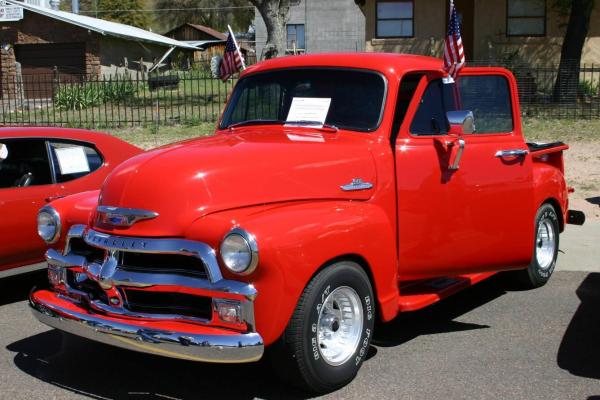
1954 Chevy Pickup five window
"Alright, 1954 Chevy Pickup five window. I've had it 40 years. It's an Air Force 20 years."
It’s a 1954 Chevrolet pickup truck with a classic cab window layout people often call a “five window.” The speaker says it still has the original-style engine and a simple 3-speed manual, but the electrical system has been converted to 12 volts.
This is a 1954 Chevrolet pickup, and the “five window” description refers to the cab’s glass layout (a classic styling detail on these trucks). The host also mentions it’s a period-correct-style build with a Stovebolt engine and a 3-speed manual on the column, plus a 12-volt electrical conversion.
235 stove bolt
"It's a 235 stove bolt 63 speed on the column, foot starter, 12 volt conversion, pretty stock truck."
The “235 Stovebolt” is a classic Chevrolet inline-six engine (235 cubic inches). People like it because it’s a straightforward, old-school engine that’s common in vintage Chevy trucks.
“235 Stovebolt” refers to Chevrolet’s 235 cubic-inch inline-six engine, nicknamed “Stovebolt” because of its early design and bolt-style construction. It’s a popular classic engine swap/upgrade baseline for vintage Chevy trucks and cars due to its simplicity and parts availability.
12 volt conversion
"It's a 235 stove bolt 63 speed on the column, foot starter, 12 volt conversion, pretty stock truck."
A “12 volt conversion” means the truck’s electrical system has been changed to use 12 volts instead of an older lower-voltage setup. It usually makes things like lights and starting work better and makes modern upgrades easier.
A “12 volt conversion” updates a vehicle’s electrical system to 12 volts, which is more compatible with modern accessories and easier starting/reliability than older 6-volt setups. In vintage trucks, this is often done to improve lighting, ignition performance, and overall electrical robustness.
63 speed on the column
"It's a 235 stove bolt 63 speed on the column, foot starter, 12 volt conversion, pretty stock truck."
This truck uses a manual transmission with three gears, and the shifter is on the steering column. It’s the older style of shifting compared with a modern floor shifter.
“3-speed on the column” means a manual transmission with three forward gears, where the gear shifter is mounted on the steering column rather than on the floor. This is a common layout on many mid-century American cars and trucks and changes how you interact with shifting.

Chevrolet Volt
"...ove bolt 63 speed on the column, foot starter, 12 volt conversion, pretty stock truck. How long ago was ..."
The Chevrolet Volt is a car that uses both electricity and gasoline. You can charge it, and it can drive on electric power for a while. When the battery isn’t enough, it can switch to a gasoline engine.
The Chevrolet Volt is a plug-in hybrid electric vehicle that can run on electricity and also use a gasoline engine when needed. It’s often discussed because it bridges everyday driving with electric-only operation, depending on battery charge. In the podcast, it’s referenced alongside other vehicle details, suggesting a focus on specific features or modifications.
10 footer
"Yeah, it would and some car guys told me it's too nice by a rougher one. I mean, it's a 10 footer for sure."
A “10 footer” means the car looks really good from far away, but if you get close you might see imperfections. It’s a common way car people talk about cosmetic condition.
“10 footer” is a car-enthusiast way of saying a vehicle looks good from about 10 feet away, but may have flaws up close. It’s a quick, informal grading shorthand for paint/body condition rather than a precise measurement.
Scotch Bright
"And it's got to make a paint job. It's not patina, it's not patina, but if you know, you took a little cleanser and a Scotch Bright to it, it'd be a nice good looking."
Scotch Bright is an abrasive cleaning pad. Here it’s being suggested as a way to clean or scuff the surface to improve how the paint looks.
“Scotch Bright” is a brand of abrasive cleaning pads used to scuff or remove surface contaminants. In this context, it’s being mentioned as a way to clean up a truck’s existing finish without fully stripping it.
patina
"It's not patina, it's not patina, but if you know, you took a little cleanser and a Scotch Bright to it, it'd be a nice good looking."
Patina is the natural worn look a vehicle gets over time. They’re saying this isn’t that kind of intentional “old and cool” wear—it’s something you’d clean up or fix.
“Patina” is the worn, aged look on a vehicle’s surfaces—often from time, weathering, and use. The speaker is saying the truck’s condition isn’t “patina,” implying it’s more like dirt/finish issues that could be corrected rather than intentionally aged.
buffing wheel
"Or you could take a buffing wheel and compound and just rip all the paint off of it when you try to clean it up because that happens too."
A buffing wheel is a spinning tool used to polish the paint. Depending on how it’s used, it can make the surface look better—or remove paint if you get too aggressive.
A “buffing wheel” is a rotating polishing tool used with compound to refine or remove oxidation and minor surface defects. The speaker contrasts buffing/compounding with stripping paint off entirely, which highlights how aggressive cleaning can change the finish.

70 Super B
"John, in Florida, your 70 Super B, you emailed us a minute ago, I believe, and I forwarded that to my guy already. Is that right? Yep, I got it. 45 grand. What motors in it?"
They’re talking about a 1970 Plymouth Super Bee. It’s a classic muscle car, and what engine it has is a big deal for how desirable (and valuable) it is.
“Super B” here refers to a 1970 Plymouth Super Bee, a muscle car known for its big-block V8 options and drag-strip-friendly reputation. In this segment, the host is discussing a specific 1970 example and what engine it has, which is central to how these cars are valued and judged.

Dodge Super B
"...g forward to seeing it. John, in Florida, your 70 Super B, you emailed us a minute ago, I believe, and I fo..."
The Dodge Super Bee is a classic muscle car designed for strong performance. “70 Super B” refers to the 1970 model. The podcast brings it up because someone is interested in that specific car.
The Dodge Super B (often referred to as the Super Bee) is a classic muscle car from the late 1960s, built for performance and enthusiast appeal. The podcast references a “70 Super B” and mentions it in the context of an email and interest in viewing or acquiring it. That suggests it’s being discussed as a specific collectible car with personal significance to the listener.
440
"45 grand. What motors in it? It's got a 440 in it with a mild cam. Sticker, Matic and pistol grip?"
“440” is the engine size—about 440 cubic inches. Bigger engines like this usually make strong low-end power, and collectors care a lot which engine is in the car.
A “440” refers to the engine displacement—typically the 440 cubic-inch V8 used in some Mopar muscle cars. It’s known as a big, torquey engine, and in collector conversations the exact engine matters a lot for originality and value.
mild cam
"Yep, I got it. 45 grand. What motors in it? It's got a 440 in it with a mild cam."
The camshaft helps control when the engine’s valves open. A “mild cam” is a gentler upgrade that adds some power without making the car too rough or hard to drive every day.
A “cam” is the camshaft profile that controls valve timing—when the engine’s intake and exhaust valves open and close. A “mild cam” usually means a less aggressive profile than a race cam, aiming for better drivability and street manners while still adding some performance.
Automatic
"Sticker, Matic and pistol grip? Automatic. If you don't do 45 as a clone with an automatic, it won't do it."
“Automatic” means the car shifts by itself instead of requiring you to use a clutch and shift gears. On classic muscle cars, whether it’s automatic or manual can change how people judge it and what it’s worth.
“Automatic” means the car uses an automatic transmission rather than a manual gearbox. For muscle cars, transmission choice can strongly affect how the car drives and how buyers value it—especially when people are looking for a specific “clone” or configuration.
clone
"Automatic. If you don't do 45 as a clone with an automatic, it won't do it. But it might do 30 or 35."
A “clone” is a car that’s been modified or restored to look like a more desirable version. Collectors often pay more only if it matches the important details closely.
In collector-car talk, a “clone” is a car built or presented to closely resemble a more valuable factory configuration (often matching engine/transmission and appearance). The speaker is implying that the car’s price depends on whether it’s a convincing clone of a specific target setup.
Mopar's 5150 event
"Will you see that car at the 5150 Mopar event that's going on? ... Mopar's 5150. They're having their car show."
They’re talking about a Mopar-themed car show called “5150.” It’s an event where people bring cars and hang out with other Mopar fans.
The hosts are promoting “Mopar’s 5150” as a local car show/event. It’s positioned as a gathering where Mopar fans can see notable classic and modern Mopar cars in the Dallas/Celeste, Texas area.
Celeste, Texas
"Celeste, Texas. There is a Mopar car show going on. These friends of mine at Mopar's 5150 did their own little Walnut Springs thing in Celeste, Texas out by Greenville."
They say the car show is in Celeste, Texas. It’s near Greenville, so it’s a regional event for people in the Dallas area.
Celeste, Texas is named as the location for the Mopar car show. The hosts also reference it being near Greenville, framing it as a regional meetup for Dallas-area enthusiasts.
Plymouth Super Birds
"...they have beautiful, like if you want to see real super birds and real hemicutas and all that stuff. And you do..."
The Plymouth Superbird is a very rare classic muscle car from the late 1960s. It’s known for its unusual, aerodynamic shape. The podcast mentions it because people want to see the real, authentic versions.
The Plymouth Superbird is a rare, high-performance muscle car from the late 1960s, known for its distinctive aerodynamic styling. It’s often discussed among enthusiasts because it’s a genuine collectible with a strong performance heritage. The podcast mentions “real super birds” and “real hemicutas,” pointing to the car’s desirability and authenticity.
car show
"He's got a gig. He's doing a car show in middle of that day. Okay."
A car show is an event where people bring cars to display and talk about them. Sometimes there are awards or special activities.
A car show is an organized event where vehicles are displayed and owners often compete for awards or show off specific builds. The hosts discuss how the person gets paid to attend and participate in these events.
Cars and coffee
"There was something else. Cars and coffee in the morning. The Mopar event on the six."
Cars and coffee is a meet where car people show up, hang out, and talk about their cars—usually in the morning. It’s more casual than a formal car show.
Cars and coffee is a casual car meet-up format where enthusiasts gather to talk about cars, often in the morning. It’s typically informal compared with a formal car show, with lots of owner interaction.
pre register to be able to bid
"GMTV auctions and you pre register to be able to bid. Yep."
Pre-registering means you sign up before the auction so you’re allowed to bid. It helps the auction match your bids to you.
Pre-registration is the process of signing up with an auction site before bidding is enabled. It’s commonly required so the auction can verify you and link your bid activity to your account.
classic Chevy
"Turley, what Mike wants to ask is he wants to buy a classic Chevy for his son that's fixing to graduate."
A “classic Chevy” is an older Chevrolet that people collect or enjoy driving. The host is basically saying that if you buy one, you should expect to spend money keeping it running.
“Classic Chevy” refers to an older Chevrolet model that’s typically valued for its vintage design and enthusiast appeal. The key point in this segment is that buying a classic car often means you’re also budgeting for maintenance and repairs, not just the purchase price.

Toyota 4Runner
"not going to want him to drive it. So it's, if you want it for yourself, sure. He's already got a Toyota 4-Runner. I bought him to go through college. So this is for a president for both of us. Yeah, it's for you. It's like a first president."
The Toyota 4Runner is a larger SUV that’s built to handle rough roads and outdoor trips. It’s also used like a normal family vehicle for daily life. The podcast mentions it because someone already has one and it’s part of their plans.
The Toyota 4Runner is a midsize SUV designed for off-road capability and rugged use. It’s often chosen by people who want a body-on-frame style SUV that can handle rough roads and outdoor trips. In the podcast, it’s mentioned as a vehicle already owned for going through college, highlighting its everyday practicality.
wrench turning
"So you own the vehicle, but you're going to put also, I'm not a wrench turning guy. Yeah, I wasn't either company and I is he. So go ahead."
“Wrench turning” means working on the car yourself with tools. The host is saying that if you’re not the one doing the work, you’ll likely pay more for repairs.
“Wrench turning” means working on a car yourself—using tools to do repairs, maintenance, or basic troubleshooting. In this segment, the speaker contrasts being a “wrench turning guy” with not being one, to explain why a classic car can require significant spending if you rely on others to fix it.
mechanical stuff
"So you own the vehicle, but you're going to put also, I'm not a wrench turning guy. Yeah, I wasn't either company and I is he. So go ahead."
“Mechanical stuff” just means car repairs and maintenance. The point here is that if you can’t do it yourself, you may have to pay a mechanic a lot of money.
“Mechanical stuff” is a casual way to refer to car repairs and maintenance work—things like diagnosing problems, replacing worn parts, and fixing mechanical failures. The host’s advice is that if you’re not doing the work yourself, these jobs can become expensive out-of-pocket.
change the oil
"Well, and actually, it is a cool thing to do is, you know, at least change the oil with them and kind of tinker with it because I did that with my son."
Changing the oil means replacing the engine’s old oil with new oil. It’s one of the simplest car maintenance tasks, and the host says doing it together was a good bonding experience.
Changing the oil is routine engine maintenance where old, contaminated oil is drained and replaced with fresh oil. The host mentions it as a hands-on, beginner-friendly activity they did with their son, framing it as a way to bond while also keeping the car healthy.
Alabama, Aniston, Alabama
"there's I think 40 cars in Alabama, Aniston, Alabama that I bought from a from a state and we're auctioning them off to the public right now."
They’re saying the cars are in Alabama (they mention Anniston). That’s useful because where the cars are located affects what you can find and how you’d buy it.
The host says there are about 40 cars located in Alabama (specifically mentioning “Aniston,” likely Anniston). This matters because auction inventory is often regional, and availability can vary by location.
LS three engines
"They got LS three engines in them. But you can go through all these cars and you can find one you get a hell of a deal."
“LS3” is the name of a Chevrolet V8 engine. It’s a popular, widely supported engine, and people often choose cars with it because it’s easier to maintain and upgrade than many rarer engines.
“LS3” refers to Chevrolet’s LS-family V8 engine, specifically the LS3 variant used in certain Corvettes. It’s a naturally aspirated pushrod V8 known for making strong power without forced induction and for having a huge aftermarket and parts support.

Chevrolet Chevelle
"there's some Chevelles and some other things on there too at GMTV auctions.com."
They’re mentioning Chevelles, which are classic Chevrolet muscle cars. With older cars, what you get depends a lot on how well it was maintained and restored.
“Chevelles” refers to the Chevrolet Chevelle, a classic American muscle car line. Like other older muscle cars, the buying experience depends heavily on prior restoration quality and how much deferred maintenance the car has.

71 Stingray
"Left hand Louis in Chicago, you have a 71 Stingray frame off Resto trying to trade in at a dealership. Can y'all buy it? Yes, I can buy it. Can I buy it for 40 grand? ... it's not worth 40."
A “Stingray” is a Corvette. The host is saying that a normal restored 1971 Corvette usually isn’t worth as much as people hope—unless it’s been built into a very expensive, special project.
“Stingray” here refers to a Chevrolet Corvette, and the speaker is specifically talking about a 1971 model. The key point is market reality: a typical restored 1971 Corvette isn’t worth the same as a highly built, expensive restoration, so asking price expectations matter.
frame off Resto
"Left hand Louis in Chicago, you have a 71 Stingray frame off Resto trying to trade in at a dealership. Can y'all buy it? Yes, I can buy it."
A frame-off restoration is when you take the car apart completely and restore it from the frame up. It costs a lot, so the car’s value only goes up if the restoration was done well and with the right upgrades.
A “frame-off restoration” means the car is fully disassembled and restored down to the bare chassis/frame, then rebuilt. It’s typically far more expensive than a partial restoration, so the final value depends heavily on how well the work was done and what level of parts/upgrades were used.
Roush
"All these calls are all screwed up because we, a 20 Roush nightmare with 29,000 mile four-wheel drive. Is it supercharged?"
Roush is a performance brand that modifies cars after they’re built. The host is saying the car in question is a Roush-style performance build, not a stock one.
Roush (typically spelled Roush) is an aftermarket performance brand known for upgrading production cars—often with supercharging/tuning packages and other drivetrain changes. In this segment, the host is using it as shorthand for a modified vehicle build.
four-wheel drive
"All these calls are all screwed up because we, a 20 Roush nightmare with 29,000 mile four-wheel drive. Is it supercharged?"
Four-wheel drive means the car can send power to all four wheels. That usually helps it grip better on wet or slippery roads.
Four-wheel drive (4WD) is a drivetrain setup where power can be sent to all four wheels, improving traction on slippery surfaces. It’s often a selling point for buyers in regions with snow, rain, or rough roads.
supercharged
"All these calls are all screwed up because we, a 20 Roush nightmare with 29,000 mile four-wheel drive. Is it supercharged?"
A supercharger is a device that forces extra air into the engine. More air usually means more power.
A supercharger is a forced-induction device that compresses incoming air before it enters the engine. More compressed air allows more fuel to be burned, which typically increases power compared with a naturally aspirated setup.

Shelby Super Snake
"a 20 with 29, I just bought a Shelby Super Snake, a 21 supercharged for 60. Now it was previously stolen and it's got 600 miles on it. How much is this one?"
A Shelby Super Snake is a very powerful Mustang that’s been upgraded by Shelby. It typically has a supercharger, and here they’re talking about a particular one for sale and what it’s worth.
The Shelby Super Snake is a high-output, aftermarket-boosted version of the Ford Mustang, known for its supercharged V8 and big power claims. In this segment, the host is discussing a specific Super Snake listing and its mileage/history (including that it was previously stolen).
previously stolen
"Now it was previously stolen and it's got 600 miles on it. How much is this one?"
If a car was previously stolen, it means it was taken illegally before. That can cause problems like damage or missing parts, and it may affect the paperwork you’ll need to own it.
“Previously stolen” indicates the car had been taken unlawfully at some point in its past. For buyers, this raises red flags because theft can lead to damage, missing parts, altered components, and potential title or documentation complications.
VIN
"Anybody that missed out, just go to give me the VIN. That is our website and you can put in the license plate number, I'll decode it and we'll give you an offer immediately. Give me the VIN, give me the VIN.com."
A VIN is like a car’s fingerprint—an ID number that’s unique to that exact vehicle. People use it to look up the car’s details and history.
VIN stands for Vehicle Identification Number, a unique 17-character code assigned to a car. It’s used to look up a car’s specific history and details, and in this segment the host says you can enter it (or a license plate) to decode and get an offer.

Ford Fairlane
"...aving an auction, he told me. And you've got a 63 Fairlane there from Cars Park. Can I buy that? Yeah, just ..."
The Ford Fairlane is a classic car model made by Ford. A “63 Fairlane” means the 1963 version, which is a specific year people collect. The podcast mentions it because someone is asking about buying one.
The Ford Fairlane is a classic American car line that spans multiple generations, including popular 1960s models. The podcast specifically mentions a “63 Fairlane,” which points to the 1963 version and its collectible appeal. It’s discussed as part of an auction or buying conversation, implying the car is being considered for purchase or viewing.
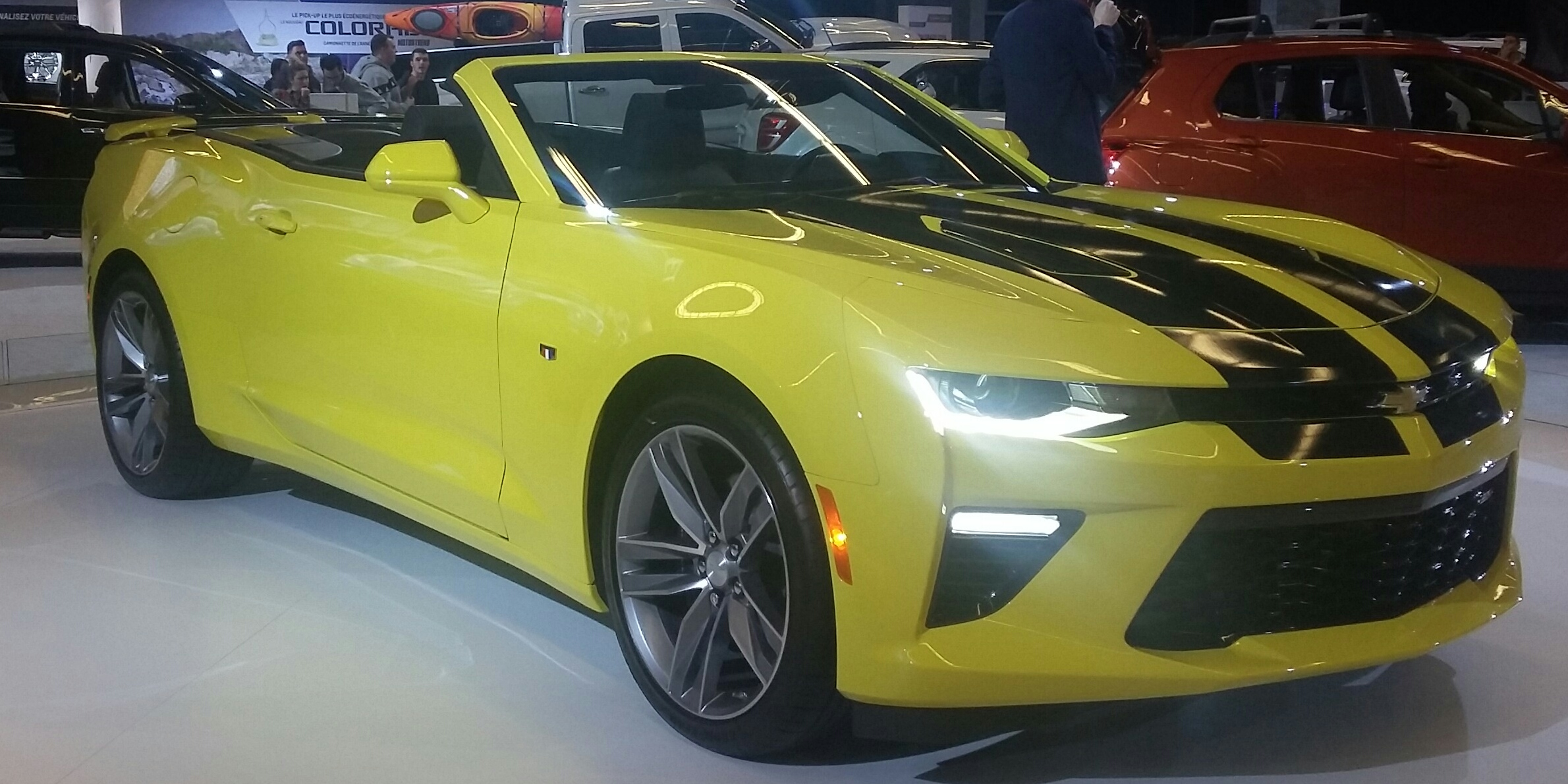
69 Z 28 Camaro
"I come back home and my mom sold our 69 Z 28 Camaro vinyl top. Was it yours or was it hers?"
This is a Chevrolet Camaro Z/28 from 1969. It’s the more performance-oriented version of the Camaro, and people collect these because they’re classic and desirable.
The Chevrolet Camaro Z/28 is a performance-focused trim known for its racing heritage and V8 muscle-car character. A “69” indicates the 1969 model year, which is one of the most collectible generations of the first-gen Camaro.
restored
"I mean, that car is like the baseball coach for my little brothers. If that car is not restored, it's 50 grand. If it is restored, it's 80."
“Restored” means the car was repaired and brought back to look and run much better, not just left as-is. In classic cars, that can dramatically change what it’s worth.
In classic-car talk, “restored” means the car has been brought back to a high standard—often with bodywork, mechanical repairs, and cosmetic refinishing—rather than being left in original but worn condition. The speaker ties restoration status to a big jump in market value.

LS1
"A street legal LS1 shopping cart that's been out on the web. It's been on the street."
LS1 is a Chevy V8 engine. People like it because it’s powerful and there are lots of parts and upgrades available for it.
The LS1 is a V8 engine family from General Motors (Chevrolet’s late-1990s/early-2000s era). It’s popular in hot-rodding because it’s relatively compact, makes strong power for the time, and has lots of aftermarket support.
ABS
"And it's got a steering wheel. It's got gas pedals. Is it street legal? ABS, forward, just brakes. Is it street legal? Yes, sir."
ABS is a safety system that helps you brake without the wheels locking up. It can help you keep steering control when you stop hard.
ABS (anti-lock braking system) prevents the wheels from locking up during hard braking. That helps the driver maintain steering control while still slowing effectively.
4L60 training
"Sounds like a Denali chassis with the 5.3 and a 4L60 training."
The 4L60 is an automatic transmission used in a lot of GM vehicles. It’s popular for engine swaps because it’s common and there are many replacement/upgrade parts.
The 4L60 is a GM automatic transmission (often paired with LS V8s). The “4” refers to four forward gears, and it’s commonly used in swaps because it’s widely available and supported by aftermarket parts.
5.3
"Sounds like a Denali chassis with the 5.3 and a 4L60 training."
“5.3” usually means a 5.3-liter V8 engine. Bigger displacement generally means more potential power, and this engine is popular for swaps.
“5.3” most likely refers to a 5.3-liter GM V8 displacement (commonly the LS-based 5.3L). Displacement is a basic way to describe engine size, and it’s a common swap choice because it balances power and fitment.
Request an Explanation
Heard something you'd like explained? We'll add it to this episode.
Sign in to request explanations for terms you heard.
Want to learn more?
Browse our glossary for plain-English explanations of automotive terms, jargon, and concepts.
Help improve this episode
See something that's not quite right? Our annotations are AI-generated and can sometimes miss the mark. Click the flag icon on any annotation to suggest a correction.
1 community members have helped improve this episode.