
About this episode
Adrian Macneil, founder/CEO of Foxglove, traces his path from Cruise—where he helped build autonomy infrastructure—to launching a platform for the “data flywheel” that makes robots improve over time. He explains how Foxglove helps teams capture, mine, and debug long-tail events from real-world fleets, including incident-flagging and search workflows. The conversation covers why MCAP became “the PDF of robots” (standardizing logging formats), why robotics is easier now (compute, AI, and talent), and why edge-case problems like Waymo’s school-bus issue persist operationally.
Foxglove
"And today, we've got someone I'm thrilled to have on for a variety of reasons. And not only his company, we have CEO and founder of FoxGlove, Adrian McNeil. Welcome, Adrian."
Foxglove is the company the guest started and runs. The hosts are introducing it before getting into what it does.
Foxglove is the company founded and led by Adrian Macneil. In this episode, it appears to be the main guest company and likely the focus of the conversation.
Audi
"And there was about two vehicles in the garage. And they could make right turns, but they couldn't make left turns. These are the Audi's back then? Yeah, they had just moved on. So it was post-Audi. And they were working on the Nissan Leaf."
Audi is the car brand being mentioned as part of Cruise’s early self-driving car testing. The hosts are talking about which cars Cruise used at the beginning.
Audi is the automaker the host references when asking whether the early Cruise vehicles were Audi-based. In this context, it refers to Cruise's earlier autonomous test vehicles before the company moved on to other platforms.
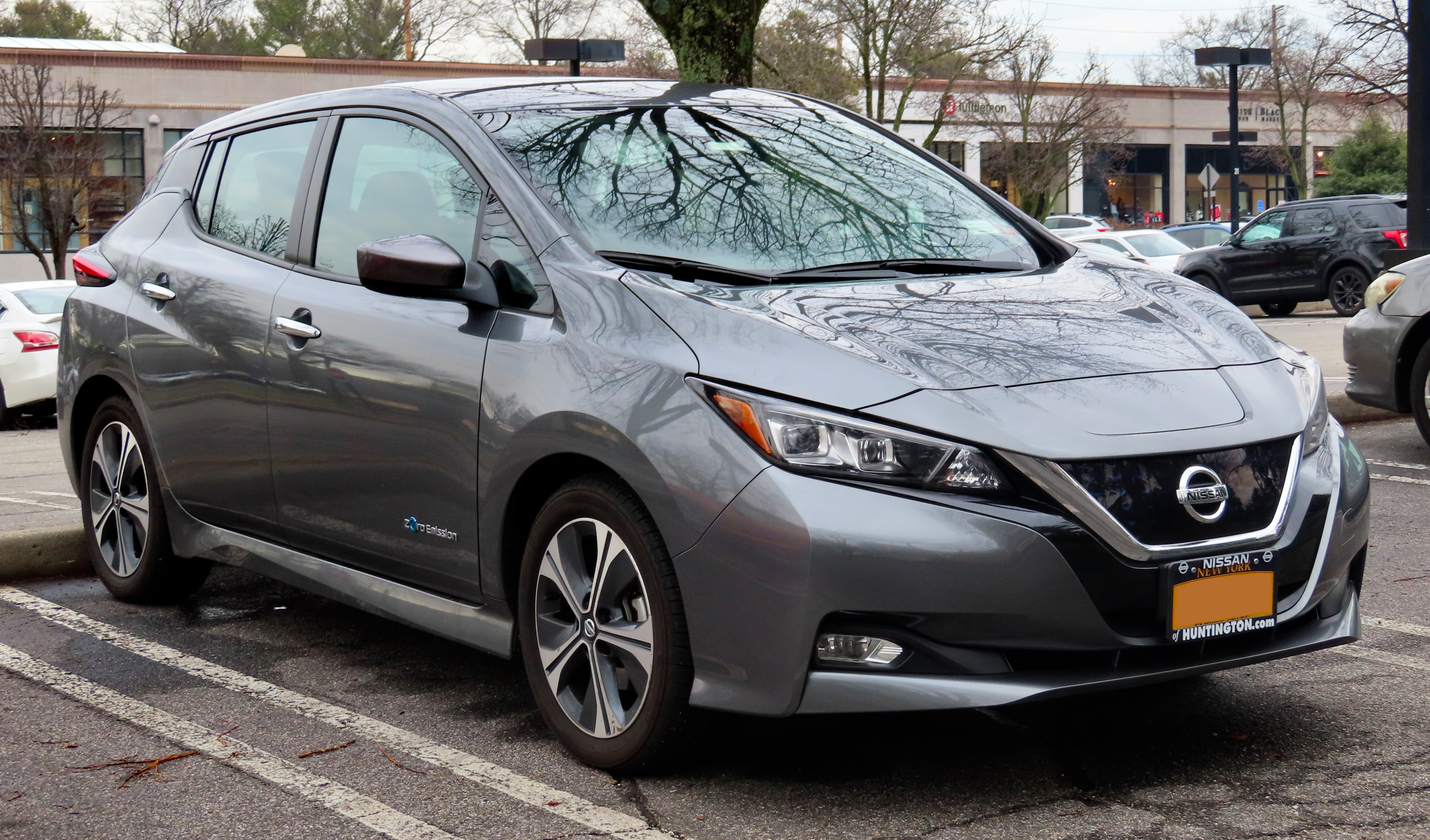
Nissan Leaf
"These are the Audi's back then? Yeah, they had just moved on. So it was post-Audi. And they were working on the Nissan Leaf."
The Nissan Leaf is a small electric car. They’re talking about it because Cruise was using it while developing self-driving tech.
The Nissan Leaf is an all-electric hatchback that Cruise was working on in this early autonomous-vehicle context. It’s mentioned here as one of the platforms in the garage during Cruise’s development phase.
GM
"So this must have been really early 2016, pre-GM opposition. Yeah, so it was right around that time. I joined a couple weeks after that was announced or so. GM pretty soon after that, GM shipped us like one of the pre-release Chevy Bolts."
GM is General Motors, one of the biggest car companies in the U.S. Here, they’re talking about when GM got involved and sent over an early test car.
GM stands for General Motors, the company mentioned as a key partner in Cruise's early development. The reference shows the timeline around GM's involvement and the arrival of a pre-release vehicle.

Chevy Bolt
"GM pretty soon after that, GM shipped us like one of the pre-release Chevy Bolts. And we started trying to transition from the Leaf platform to the Bolt platform. But yeah, it was very early."
The Chevy Bolt is an electric car made by Chevrolet. In this story, they got an early version of it to work on before it was widely sold.
The Chevy Bolt is Chevrolet's early long-range EV, and here it was a pre-release car sent to Cruise. The speaker is describing a transition from using the Leaf platform to the Bolt platform, which signals a shift in hardware and development approach.
pre-release
"GM pretty soon after that, GM shipped us like one of the pre-release Chevy Bolts. And we started trying to transition from the Leaf platform to the Bolt platform. But yeah, it was very early."
A pre-release car is one that exists before the public can buy it. Companies use it to test and fix things before the car officially goes on sale.
A pre-release vehicle is an early production or prototype-level car provided before public launch. Companies use these cars for testing, development, and validation before the model reaches customers.
platform
"And we started trying to transition from the Leaf platform to the Bolt platform. But yeah, it was very early. It was maybe 30, 40 people there total."
A platform is the basic foundation a car is built on. It includes the main structure and shared parts that different versions of a car can use.
In automotive terms, a platform is the underlying hardware architecture a vehicle is built on. Here, the speaker is talking about moving development from one car's underlying structure and systems to another's.
3D printed parts
"And yeah, a couple of cars kind of in pieces. And a lot of three printed parts. And yeah, so we took it from that."
These are car parts made by a 3D printer instead of a factory mold. It usually means the team was still experimenting and building things quickly.
3D printed parts are components made by additive manufacturing rather than traditional machining or molding. In this context, it suggests an early, experimental build environment with custom fabricated pieces.
driver out
"So took it from that over the five years to end of 2020. We were almost driver out. I think they did driver out early 2021. So it was pretty wild."
This means the car can drive itself without a person sitting there ready to take over. It’s a big step for self-driving technology.
'Driver out' refers to a self-driving system operating without a human safety driver behind the wheel. It's a milestone in autonomous vehicle development because it means the car can run its route on its own.
developer infrastructure
"And the whole reason that I left cruise and started FoxGov was having seen how important the developer infrastructure and the tooling to build that data flyway on to build to deploy autonomy at scale."
This is the behind-the-scenes software that helps engineers build and ship products. It’s the toolkit that makes development easier and more organized.
Developer infrastructure is the underlying software and systems engineers use to build, test, and deploy products. In autonomy, it includes the tools needed to manage data, workflows, and deployment at scale.
autonomy at scale
"...the tooling to build that data flyway on to build to deploy autonomy at scale. I felt that that was going to be critical beyond just self driving and that we were going to need that for every other type of robot in the world."
This means making self-driving systems work for lots of vehicles or robots, not just one test car. It’s about building the tools needed to roll it out widely.
This refers to deploying autonomous systems broadly and reliably across many vehicles or robots, not just in a one-off demo. The speaker is emphasizing the need for infrastructure that can support large-scale autonomous deployment.
self driving
"I felt that that was going to be critical beyond just self driving and that we were going to need that for every other type of robot in the world. And I loved the work that I was doing at cruise."
Self-driving means a vehicle can drive itself without a person controlling every move. The speaker says the same tools could help with other robots too.
Self-driving is the broader category of vehicles or robots that can operate with little or no human input. Here it’s used as the baseline example for why the tooling could matter beyond cars.
AI
"And there's so much has changed technologically speaking since 2016, within capabilities of compute and AI and things like that."
AI is computer software that can make decisions or recognize patterns. The speaker is saying it has gotten much better in recent years.
AI, or artificial intelligence, is used here as part of the technology stack that has improved since 2016. In autonomy and robotics, AI helps systems perceive, decide, and act.
compute
"And there's so much has changed technologically speaking since 2016, within capabilities of compute and AI and things like that."
Compute means computer power. More compute lets software and AI do more complicated things.
Compute refers to the processing power available for AI and software workloads. The speaker is noting that advances in compute since 2016 have changed what’s possible technically.
Cruise
"But you said you were still pretty bullish on cruise. And I'm wondering like now, are you surprised that it ended the way it did? ... Like when I left cruise, we had sort of the number one on number two autonomy stack in the industry."
Cruise is a company that tried to build self-driving cars you could ride in without a human driver. The speaker is talking about how big it got and how things later changed.
Cruise is the autonomous vehicle company that was developing self-driving ride-hailing and robotaxi technology. In this segment, the speaker is reflecting on Cruise's rise, deployment scale, and eventual setbacks.
autonomy stack
"Like when I left cruise, we had sort of the number one on number two autonomy stack in the industry. We had more vehicles deployed in San Francisco than anyone else."
This is the set of technology that helps a car drive itself. It includes the cameras, radar, software, and decision-making systems working together.
An autonomy stack is the full software-and-hardware system that lets a vehicle perceive its surroundings, plan actions, and drive itself. It usually includes sensors, mapping, prediction, and control software.
robotaxi
"And vial accounts, we were winning the race in Robotaxi in San Francisco. So it was a good time. Things were growing."
A robotaxi is a taxi that drives itself. You order it like a rideshare, but there is no driver in the front seat.
A robotaxi is a self-driving taxi service with no human driver behind the wheel. It is one of the main commercial use cases for autonomous vehicle technology.
AV era
"I mean, so one of the fascinating things about this whole AV era that we sort of gone through and has now sort of given rise to a lot of new companies"
AV means autonomous vehicle, or a car that can drive itself. The speaker is talking about the whole wave of companies trying to make self-driving cars work.
AV stands for autonomous vehicle. The AV era refers to the period when the industry was heavily focused on developing and commercializing self-driving cars.
autonomous vehicles
"Like the way that I think about it is that autonomous vehicles was really the first big application in physical AI, right? We didn't call it that at the time, but it was really the first time that we were figuring out how to deploy AI in the real world out there where it's interacting with humans and it needs to be safety critical and it's solving all these really complicated problems."
These are self-driving vehicles. They use cameras, radar, and software to figure out where to go and how to avoid crashes without a person doing all the driving.
Autonomous vehicles are cars or trucks that can drive themselves using sensors, software, and machine learning instead of a human driver controlling everything. In this segment, the speaker frames them as an early major use case for physical AI, especially because they have to operate safely around people in the real world.
safety critical
"We didn't call it that at the time, but it was really the first time that we were figuring out how to deploy AI in the real world out there where it's interacting with humans and it needs to be safety critical and it's solving all these really complicated problems."
This means something has to work correctly because if it fails, people could get hurt. In a self-driving car, the computer has to make very careful decisions all the time.
Safety-critical systems are systems where a failure could cause injury, death, or major damage. For autonomous vehicles, this means the software has to be extremely reliable because mistakes happen on public roads around people.
autonomous driving
"And so autonomous driving was the first sort of true big successful application of that in the real world. What we're seeing now is both, I would say, a generation of autonomous vehicle companies that have learned those lessons and are just taking a very AI-native approach to it."
This means a car can drive itself instead of needing a person to do everything. The speaker is saying this was one of the first big places where AI really worked in the real world.
Autonomous driving is the use of sensors, software, and control systems to let a vehicle drive itself with little or no human input. In this segment, it’s described as the first major real-world success for applying AI to physical systems.
autonomous vehicle companies
"What we're seeing now is both, I would say, a generation of autonomous vehicle companies that have learned those lessons and are just taking a very AI-native approach to it. So ones like Wabi, I know you had Raquel on the show just recently, and then Wave, for example, Alex Kandola."
These are companies trying to make vehicles drive themselves. The discussion is about a newer group of companies that are using AI from the beginning instead of adding it later.
Autonomous vehicle companies are businesses building self-driving systems for cars, trucks, and other vehicles. The speaker is referring to a newer wave of AV startups that are applying lessons learned from earlier efforts.
AI-native
"...taking a very AI-native approach to it. So ones like Wabi, I know you had Raquel on the show just recently, and then Wave, for example, Alex Kandola. A lot of these newer generation AV companies that are just going all in on AI from the start and being able to do it a lot more lean and efficiently because they've got platforms like Boxsoft to work with."
It means the company was built with AI at the center from day one. The speaker is saying these newer self-driving companies are designed that way instead of trying to retrofit AI later.
AI-native means a product or company is built around artificial intelligence from the start, rather than bolting AI on later. Here it describes autonomous vehicle startups designed around AI-first workflows and architecture.
Wabi
"So ones like Wabi, I know you had Raquel on the show just recently, and then Wave, for example, Alex Kandola. A lot of these newer generation AV companies that are just going all in on AI from the start and being able to do it a lot more lean and efficiently because they've got platforms like Boxsoft to work with."
This is a company working on self-driving technology. The speaker is using it as an example of a newer startup that’s building around AI.
Wabi is an autonomous vehicle company mentioned as an example of the newer AI-first generation of AV startups. It’s part of the broader discussion about companies learning from earlier self-driving efforts.
Wave
"...and then Wave, for example, Alex Kandola. A lot of these newer generation AV companies that are just going all in on AI from the start and being able to do it a lot more lean and efficiently because they've got platforms like Boxsoft to work with."
This is another company working on self-driving tech. The speaker is pointing to it as one of the newer companies using AI from the beginning.
Wave is another autonomous vehicle company referenced as part of the newer AI-native AV ecosystem. It’s mentioned alongside Wabi as an example of a startup taking a modern approach to autonomy.
Boxsoft
"A lot of these newer generation AV companies that are just going all in on AI from the start and being able to do it a lot more lean and efficiently because they've got platforms like Boxsoft to work with. And then we're also seeing this huge push into every other application of autonomy in the physical world."
This sounds like a software platform that helps self-driving companies do their work. The speaker says it helps them build more efficiently.
Boxsoft appears to be a platform or tool used by autonomous vehicle companies to build more efficiently. In context, it’s presented as infrastructure that helps AV teams move faster and leaner.
autonomy in the physical world
"And then we're also seeing this huge push into every other application of autonomy in the physical world. So things like, I mean, Bedrock, again, I know you had Boris on the show recently taking what was a bunch of folks that were working on the Waymo Trucking team and then going and building autonomous construction machinery."
This means machines that can do tasks on their own in the real world, not just in software. The speaker is talking about self-driving tech spreading to other kinds of machines too.
This refers to applying autonomous systems beyond cars, into real-world machines that operate in physical environments. The speaker is broadening the discussion from self-driving vehicles to robots and industrial equipment.
Bedrock
"So things like, I mean, Bedrock, again, I know you had Boris on the show recently taking what was a bunch of folks that were working on the Waymo Trucking team and then going and building autonomous construction machinery. You've got a lot of the push into humanides, a lot of push into consumer robots,"
This is a company making machines that can work by themselves on construction sites. The speaker is using it as an example of self-driving technology outside cars.
Bedrock is mentioned as a company building autonomous construction machinery. It’s used as an example of autonomy moving beyond passenger cars into industrial equipment.
Waymo Trucking
"...taking what was a bunch of folks that were working on the Waymo Trucking team and then going and building autonomous construction machinery. You've got a lot of the push into humanides, a lot of push into consumer robots,"
This is Waymo’s work on self-driving trucks. The speaker is saying some people from that team went on to start another company.
Waymo Trucking refers to Waymo’s trucking-focused autonomous vehicle effort. It’s mentioned as the source of people who later moved on to build autonomous construction machinery.
autonomous construction machinery
"...taking what was a bunch of folks that were working on the Waymo Trucking team and then going and building autonomous construction machinery. You've got a lot of the push into humanides, a lot of push into consumer robots,"
These are construction machines that can do work on their own or with very little help from a person. The speaker is saying self-driving technology is spreading into construction equipment too.
Autonomous construction machinery is heavy equipment that can operate with minimal human control, using sensors and software to perform tasks on job sites. It’s an example of autonomy being applied outside road vehicles.
consumer robots
"You've got a lot of the push into humanides, a lot of push into consumer robots,"
These are robots regular people might buy or use at home. The speaker is saying self-driving-style technology is also showing up in robots for consumers.
Consumer robots are robots designed for everyday personal or household use rather than industrial settings. Here they’re mentioned as another area where autonomy and AI are expanding.
autonomous defense capabilities
"a lot of push into warehouse and logistics, manufacturing, a huge amount of investment to defense happening in autonomous, you know, autonomous defense capabilities. You've got drones, civilian uses for those."
This means military or security systems that can do some tasks by themselves instead of needing a person to control every move. It can include drones and other unmanned machines.
Autonomous defense capabilities are defense systems that can operate with varying degrees of automation, potentially including drones or other unmanned systems. The speaker is referencing growing investment in this area as part of the broader autonomy market.
drones
"You've got drones, civilian uses for those. There's just all of these applications now of everything that moves in the physical world is getting automated."
Drones are flying machines without a person on board. Some are controlled by a person, and some can fly on their own.
Drones are unmanned aerial vehicles that can be remotely piloted or operate autonomously. They’re mentioned here as one of the real-world machine categories benefiting from autonomy software.
infrastructure layer
"And so, you know, that thesis that we had when we started Foxgov was that the developer platform and the infrastructure layer that we needed to build self-driving cars as the first application of physical AI was gonna be what you needed to build all of these other applications as well."
This is the behind-the-scenes foundation that other software runs on. It’s like the roads and utilities that let the rest of the system work.
An infrastructure layer is the underlying software and systems that other applications are built on top of. In autonomy, this can include data handling, telemetry, simulation support, and tooling for development and testing.
data flywheel
"It's the fact that they have a very strong, they have a data flywheel where they can reliably go out, drive miles, collect long tail, weird events that they see, use those to find other similar events, add those to a data set, run it through their tests and simulation, and then evaluate the performance, and they can confidently say this release is better than this other release."
This means the system keeps getting better because it learns from more and more real-world examples. The more it drives, the more it can improve itself.
A data flywheel is a feedback loop where more usage creates more data, and that data improves the product, which then attracts more usage. In autonomous driving, it means more miles driven can lead to better detection of rare events and better system performance.
long tail
"where they can reliably go out, drive miles, collect long tail, weird events that they see, use those to find other similar events, add those to a data set, run it through their tests and simulation, and then evaluate the performance, and they can confidently say this release is better than this other release."
This means the unusual stuff that doesn’t happen every day, like odd road situations or rare mistakes. Self-driving systems need to learn from those rare cases too.
In data science, the long tail refers to rare, unusual, or edge-case events that don’t happen often but matter a lot for system performance. For self-driving cars, these are the weird situations that are hard to predict but important to handle safely.
simulation
"add those to a data set, run it through their tests and simulation, and then evaluate the performance, and they can confidently say this release is better than this other release."
This is like a computer-made practice world where the car’s software can be tested safely. It helps engineers see how the system would react before trying it in real life.
Simulation is the use of a virtual environment to test how a system behaves before or alongside real-world deployment. In autonomous driving, it lets engineers evaluate software against many scenarios without needing to drive them all on public roads.
AV industry
"now Waymo is doing better than anyone else in the AV industry is they have, they've completed this data flywheel and they're able to learn from it."
AV means autonomous vehicle, or self-driving car. The AV industry is the group of companies working on that technology.
AV stands for autonomous vehicle. The AV industry refers to companies and researchers building self-driving cars, robotaxis, and related software and hardware.
debug
"find those interesting long tail events, investigate them, debug them, see what went wrong, add interesting events to a data set and feed that back into their training."
Debugging is just figuring out what went wrong and fixing it. Engineers do this when software or a machine behaves the wrong way.
To debug means to investigate a problem in software or systems and figure out why it happened. Here it refers to engineers analyzing robot or AV data to understand failures and fix them.
data set
"see what went wrong, add interesting events to a data set and feed that back into their training. So it's really sort of just supporting that whole data flywheel is how I think about it."
A data set is a big collection of examples or information. Computers learn from it the way a student learns from practice problems.
A data set is a structured collection of information used to train or evaluate a system. In this discussion, the data set is being expanded with interesting driving or robot events so the model can learn from them.
training
"see what went wrong, add interesting events to a data set and feed that back into their training. So it's really sort of just supporting that whole data flywheel is how I think about it."
Training is how a computer system learns from examples. The more useful examples it gets, the better it can do its job.
Training is the process of teaching a machine-learning model using data so it can make better predictions or decisions. In AV systems, training improves how the software handles driving situations.
robotics startup
"at, you know, their robotics startup, how are those instance flagged? Do they show up like as,"
It’s a new company that makes robots or robot technology. The conversation is about how that kind of company spots problems in machines.
A robotics startup is a young company building robots or robot-related software and hardware. Here it’s the broader business context for the discussion about detecting problems in autonomous systems.
low confidence
"So either the, a lot of the times the robot knows that either something went wrong or it knows that it had like low confidence in some decision it made."
It means the robot isn’t very sure about its answer. If a machine is unsure, that can be a clue that something might be wrong.
In machine learning and robotics, low confidence means the system is not very sure about the decision it just made. That uncertainty can be used as a signal that something may need human review or a fallback action.
safety systems
"You know, a lot of the times there are safety systems already that have been designed to detect potential incidents. So sometimes you have that kind of flag level."
Safety systems are the features that help catch problems early. The speaker means the robot already has tools that notice when something might be wrong.
Safety systems are built-in mechanisms designed to detect problems and reduce risk before something gets worse. In this segment, they’re described as systems that can flag potential incidents automatically.
data mining
"And then there are things that you don't know and that becomes more of a data mining problem, right? You're like, hey, we think that there's a gap here or we did notice this weird thing, but can we find other potential incidents that look very similar to that?"
Data mining means digging through a lot of information to find useful patterns. The speaker is saying they want to search past events to find similar ones.
Data mining is the process of searching large datasets to find patterns, anomalies, or similar events. Here it refers to looking through incident data to find other cases that resemble a known problem.
search problem
"that we can then use to feed into the training pipeline? So those are examples where it's more of a search problem, more of a mining problem. So prior to Foxclove, was everyone building their own platforms internally?"
This means looking through a lot of data to find the exact examples you need. Instead of inventing something new, you’re trying to find the right past cases.
A search problem here means finding specific examples inside a large dataset. The speaker contrasts it with building a model, emphasizing that sometimes the challenge is just locating the right incidents to learn from.
mining problem
"that we can then use to feed into the training pipeline? So those are examples where it's more of a search problem, more of a mining problem. So prior to Foxclove, was everyone building their own platforms internally?"
This means digging through lots of information to find the useful bits. Here, it’s about finding unusual driving moments that can help teach the software.
A mining problem means extracting useful patterns or rare examples from a large body of data. In this context, it’s about surfacing unusual driving events that can improve autonomy systems.
autonomy company
"I think about this as like the infrastructure problem is the bottom of the iceberg in any autonomy company. Any Cruz or Waymo or Tesla, you have a small number of highly skilled,"
This means a company working on cars that can drive themselves. The discussion is about all the hidden tech and data work needed to make that happen.
An autonomy company is a business focused on self-driving or driverless vehicle technology. The speaker is describing how these companies need major infrastructure, data, and research teams behind the scenes.
Tesla
"Any Cruz or Waymo or Tesla, you have a small number of highly skilled, highly paid researchers that are coming up"
Tesla makes electric cars and is also known for self-driving tech. Here it’s being mentioned as one of the big companies working on autonomy.
Tesla is an electric vehicle manufacturer that also develops advanced driver-assistance and autonomous driving systems. In this context, it’s being grouped with other autonomy companies that need heavy infrastructure and research investment.
novel models
"you have a small number of highly skilled, highly paid researchers that are coming up with like novel models and things, and then novel architectures."
These are brand-new computer models or ideas. In self-driving work, people are always trying to build better ones.
Novel models are new machine-learning models or approaches that haven’t been used before. The speaker is describing how top autonomy teams focus on inventing new methods rather than just operating existing systems.
novel architectures
"highly paid researchers that are coming up with like novel models and things, and then novel architectures."
This means new ways of organizing the software or AI system. It’s the blueprint for how the self-driving tech is put together.
Novel architectures are new structural designs for machine-learning systems. In autonomy, architecture choices can strongly affect how well a system processes sensor data and makes driving decisions.
fleet infrastructure
"And then you have this enormous corpus of people that are dealing with data infrastructure and fleet infrastructure and assigning rides to people and simulation infrastructure and ML training infrastructure."
This means the behind-the-scenes setup for running lots of vehicles at once. It includes things like keeping track of cars, sending them where they need to go, and managing them efficiently.
Fleet infrastructure refers to the systems needed to manage a large group of vehicles, including dispatch, maintenance, tracking, and operations. In AV companies, this is a core operational layer rather than just the cars themselves.
first principles
"And so, that was what we had to build sort of from scratch at Cruz, figuring out from first principles because it wasn't really a playbook. And towards what really fed my thesis at Foxclove was going out and talking to people at Waymo, at Tesla, at Zoo, et cetera, or talk to all the other AV companies"
This means starting with the basics and figuring things out from scratch. Instead of following a recipe, you build the solution by understanding the core problem first.
First principles means solving a problem by breaking it down to its most basic truths instead of copying an existing playbook. The speaker is saying they had to build their AV systems from the ground up because there wasn’t an established template.
Zoo
"And towards what really fed my thesis at Foxclove was going out and talking to people at Waymo, at Tesla, at Zoo, et cetera, or talk to all the other AV companies and you compare notes and you're like, oh, wow, you guys built a multimodal data visualization tool."
This is probably Zoox, a self-driving car company, though the transcript sounds a little off. The speaker is naming companies that work on autonomous vehicles.
This appears to be a transcription of Zoox, the autonomous vehicle company, though the transcript says 'Zoo.' The speaker is listing AV companies they spoke with, so this likely refers to Zoox in context.
multimodal data visualization tool
"And you compare notes and you're like, oh, wow, you guys built a multimodal data visualization tool. That's really interesting. And without any compare notes like two, three years into it, you're like, hey, we built the exact same thing."
This is a software tool that shows different kinds of information together in one place. For self-driving cars, it helps people look at camera views, sensor data, and driving decisions at the same time.
A multimodal data visualization tool combines different kinds of data—such as video, sensor inputs, maps, and logs—into one interface for analysis. In AV development, this helps engineers understand what the vehicle saw and how the system behaved.
bar to entry
"but the industry as a whole is not gonna be successful if the bar to entry is raising billions of dollars."
This means how hard it is for a new company to get started in a business. The speaker is saying self-driving cars are too expensive if only giant companies can afford to do it.
Barrier to entry is the level of cost, expertise, or resources required to compete in an industry. Here the speaker is arguing that AV development becomes impractical if only companies with billions of dollars can participate.
logging file format
""MCAP, yeah. Can you just tell folks a little bit about that? Because it feels like that's sort of the rubber hits the road on the throttle. Yeah, MCAP's a fun one. So MCAP is actually a logging file format that we created in the early days of Fox Club.""
It’s basically a special kind of file that saves a record of what a system did. People use it later to figure out problems or study how something worked.
A logging file format is a structured way to store recorded data so it can be searched, replayed, and analyzed later. In robotics and software systems, logs are crucial for debugging what happened and why.
bespoke file format
"Oh, we had, every single company had created their own sort of bespoke file format. This would be like, you know, if you're trying to sell a software to lawyers or something and you went out and like every single lawyer had like some custom binary files instead of like a Word document or something."
This means a company made its own special way to save data instead of using a common standard. That can make it harder for other people or software to read and use it.
A bespoke file format is a custom data format built by one company instead of using a standard one. In this context, the speaker is criticizing how different companies each created their own way to store robot/log data, which makes sharing and tooling harder.
PDF of robots
"You guys should be like launching robots. You need a PDF. Like why are you, right? The PDF of robots. Exactly, right. So MCAP is the PDF of robots."
They mean a single file type that lots of different robot tools can open, like how PDFs work for documents. It's a way to make robot data easier to share and read.
This is a metaphor for a standard file format for robot data, similar to how PDF became a universal document format. The speaker is saying MCAP is meant to be the common, portable way to package robot logs and data.
MCAP
"The PDF of robots. Exactly, right. So MCAP is the PDF of robots. I'm like, look, like this industry is not gonna work, you guys."
MCAP is a file format for robot data. It helps different robot systems save and share information in the same way, instead of everyone using a different format.
MCAP is a data container format used in robotics to store and exchange logged sensor and system data. Here it's being described as the standardized, portable format the industry should use instead of each company inventing its own file format.
SaaS industry
"down here building your own file formats, like the reason, you know, I draw parallels to the SaaS industry, right?"
SaaS is the kind of software you use online and usually pay for regularly. They're comparing the robot business to that software business to make a point about standardization.
SaaS stands for software as a service, where software is delivered over the internet as a subscription. The speaker is drawing a comparison between robotics data standards and how the software industry standardized around common tools and formats.
Fox self
"So that, you know, our vision with Fox self obviously is working on the infrastructure layer. We also expect that, you know, hardware is gonna get commoditized over time."
This is the name of the company or project the speaker is talking about. They’re saying it helps build the tools underneath robotics products.
This appears to be the company or product name the speaker is referring to, likely a transcription variant of Foxglove. It is mentioned as the organization working on the robotics infrastructure layer.
hardware is gonna get commoditized
"We also expect that, you know, hardware is gonna get commoditized over time."
This means the physical parts may become more common and less special, so they cost less and are easier to buy. The speaker is saying the important part may end up being the software and system around the hardware, not the hardware alone.
This is the idea that physical components become cheaper, more standardized, and less differentiated over time. In automotive and robotics contexts, it often means the real competitive advantage shifts from the hardware itself to software, integration, or services.
log file format
"You can go talk to some customers and solve a problem for them instead of like writing a log file format. So that was our kind of thing with MCAP"
This is just the way computer data gets saved so it can be read later. The speaker is saying that building that kind of plumbing is less exciting than solving the actual customer problem.
A log file format is the structure used to store recorded data from software or hardware systems. The speaker is contrasting useful product work with low-level data formatting work, which can be necessary but not the main business value.
trough of disillusionment
"It's interesting because what I'm seeing from FoxGlove is in a way the like positive results that have came out of the sort of trough of disillusionment and like the implosion of a lot of companies."
This is the part of a tech trend where people stop being overly excited and a lot of companies give up or fail. After that, the useful ideas and stronger businesses are the ones left standing.
The trough of disillusionment is a stage in the technology hype cycle when excitement fades and weaker companies fail. The speaker is using it to describe the market cleanup that left stronger products and companies in a better position.
October 2023 incident
"I think it was like GM and a couple of other things going on specifically the incident that happened in October 2023. But what's happened is that all of you scattered compute and AI improved."
This is a safety problem that happened to Cruise in 2023. It caused a lot of attention and changed how the company operated.
This refers to the widely reported October 2023 Cruise safety incident that led to major scrutiny and operational changes. The speaker uses it as a key reason Cruise became a separate case in the autonomous vehicle industry.
robotics company
"it almost is this moment where if you're just starting a robotics company today, it's like dare I say easier than back in 2016. Absolutely, yeah."
This means a company that makes smart machines or self-driving systems. The speaker is saying it may be easier to start one now than it used to be.
A robotics company builds machines that can sense, decide, and act in the physical world, often using AI and automation. Here, the speaker is comparing the difficulty of starting such a company in 2016 versus today.
AI inference chips
"So there's a few of the factors are we've seen huge advances in hardware, not just obviously improvements in batteries and AI inference chips, things like a bit of jets and stuff are just getting more powerful every year and now they're powerful enough to run local models..."
These are computer chips that help machines think quickly using AI. Better chips let robots make decisions faster by themselves.
AI inference chips are processors optimized to run trained AI models efficiently, especially in real time. They matter here because more capable chips let robots run local AI models onboard instead of relying on the cloud.
batteries
"So there's a few of the factors are we've seen huge advances in hardware, not just obviously improvements in batteries and AI inference chips, things like a bit of jets and stuff are just getting more powerful every year..."
Batteries store electricity so machines can run without being plugged in. Better batteries help robots work longer and do more.
Batteries are the energy storage units that power electric systems, including robots and EVs. The speaker is pointing to battery improvements as one reason robotics is improving.
local models
"...things like a bit of jets and stuff are just getting more powerful every year and now they're powerful enough to run local models and also just things like actuators and like dexterous hands and sensors."
This means the AI runs inside the machine instead of on the internet. That helps robots react faster and work even without a connection.
Local models are AI models that run on the device itself rather than in the cloud. In robotics, that can reduce latency and make the system more independent.
actuators
"...now they're powerful enough to run local models and also just things like actuators and like dexterous hands and sensors. You're seeing huge advances in AI."
Actuators are the parts that make a machine move. They’re like the muscles in a robot.
Actuators are the components that convert electrical or hydraulic energy into motion. In robots, they’re what move arms, hands, joints, and other mechanisms.
dexterous hands
"...now they're powerful enough to run local models and also just things like actuators and like dexterous hands and sensors. You're seeing huge advances in AI."
These are robot hands that can do careful, precise work like a person’s hands. They help robots pick up and handle tricky objects.
Dexterous hands are robotic hands designed for fine, human-like manipulation. They’re important in automation because they let robots handle more complex real-world tasks.
sensors
"...now they're powerful enough to run local models and also just things like actuators and like dexterous hands and sensors. You're seeing huge advances in AI."
Sensors are the robot’s eyes and ears. They help it notice what’s around it and what it’s touching.
Sensors are the inputs that let a robot perceive its environment, such as cameras, lidar, force sensors, or encoders. They’re a core reason modern robots can operate more intelligently.
open source vision language models
"So a lot of the stuff that's happened, like for example, now we have open source vision language models that people are fine tuning to work with robot action data. So there have been big advances in AI."
These are AI programs that can look at pictures and understand words, and the public can use and modify them. People are teaching them to help robots decide what to do.
Open source vision language models are AI systems that can interpret images and text together, and whose code or weights are publicly available. The speaker is saying people are adapting these models for robot control tasks.
fine tuning
"...now we have open source vision language models that people are fine tuning to work with robot action data. So there have been big advances in AI."
Fine tuning means taking an AI that already knows a lot and teaching it a specific job. It’s like giving it extra training for one task.
Fine tuning is the process of adapting a pre-trained AI model to perform better on a specific task or dataset. Here, it means customizing vision-language models to understand robot action data.
robot action data
"...now we have open source vision language models that people are fine tuning to work with robot action data. So there have been big advances in AI."
This is information from robots doing real tasks, like how they moved and what happened. Engineers use it to teach robots better behavior.
Robot action data is data collected from robots performing tasks, including movements, sensor readings, and outcomes. It’s used to train models so robots can learn better behaviors.
reshoring manufacturing
"There's this huge push for like reshoring manufacturing and made in America is having a real comeback. So like there's a real push to build and to automate."
This means moving factory work back home instead of making things in another country. Companies do this to make supply chains simpler or more secure.
Reshoring manufacturing means bringing production back to a country where it was previously moved overseas. In this discussion, it’s part of the broader push to automate factories and build domestically.
automation
"...made in America is having a real comeback. So like there's a real push to build and to automate. But then yeah, the fourth factor is this whole one around talent, right?"
Automation means using machines to do jobs people used to do by hand. In factories, that often means robots doing the repetitive work.
Automation is the use of machines and software to do work with less human involvement. In manufacturing, it often means robots and control systems replacing repetitive manual tasks.
made in America
"...made in America is having a real comeback. So like there's a real push to build and to automate. But then yeah, the fourth factor is this whole one around talent, right?"
This means making products in the United States instead of overseas. The speaker says that idea is becoming popular again.
This is a discussion about domestic manufacturing and the political/economic push to produce goods in the United States. Here it’s being used as part of the case for more automation.
Aurora
"So many of our customers that we work with have X cruise people or X, you know, X suks or all of these applied into vision and Waymo and Aurora and Tesla. And a lot of that talent has now shifted into building construction equipment, agriculture equipment, manufacturing, drones, boats, you name it, they're all out there building autonomy in all of these different areas."
Aurora is another self-driving company. The speaker is saying people from companies like Aurora are now working on all kinds of machines, not just cars.
Aurora is an autonomous vehicle technology company focused on self-driving systems, especially for trucking and other mobility applications. It is mentioned here as part of the broader group of AV companies whose talent and ideas are spreading into other industries.
operational problem
"Yeah, I mean, I think Waymo at this point is more of an operational problem than an autonomy problem, right? Like there are always going to be these edge cases that they have to work through. But you know, the way I like to think about it is that even if you could wave a magic wand and say Waymo has perfectly infallible autonomy today and then you're like, great, go roll that out to like a hundred cities in the US."
This is about the business side of running a fleet, not just the driving part. It means making, moving, charging, and cleaning the cars so the service actually works in real life.
This means the main challenge is no longer the self-driving technology itself, but everything required to run the service at scale. That includes manufacturing, logistics, charging, cleaning, and city-by-city deployment.
Waymo scaling and operations
"Yeah, I mean, I think Waymo at this point is more of an operational problem than an autonomy problem, right? Like there are always going to be these edge cases that they have to work through. But you know, the way I like to think about it is that even if you could wave a magic wand and say Waymo has perfectly infallible autonomy today and then you're like, great, go roll that out to like a hundred cities in the US."
They’re talking about how hard it is to grow a self-driving taxi service. It’s not just about the cars driving themselves, but also making, charging, cleaning, and moving them around.
This segment is about the challenge of expanding Waymo beyond a few cities. The discussion focuses on the difference between solving autonomy and actually operating a large robotaxi network.
autonomy problem
"Yeah, I mean, I think Waymo at this point is more of an operational problem than an autonomy problem, right? Like there are always going to be these edge cases that they have to work through. But you know, the way I like to think about it is that even if you could wave a magic wand and say Waymo has perfectly infallible autonomy today"
This means the hard part is making the car drive on its own without mistakes. They’re saying that part may be less of the problem than actually running the service day to day.
This refers to the technical challenge of making a vehicle drive itself safely and reliably in all situations. The speaker contrasts it with the operational challenge, implying the driving tech may be less of the bottleneck than the business and logistics around deployment.
edge cases
"Like there are always going to be these edge cases that they have to work through. But you know, the way I like to think about it is that even if you could wave a magic wand and say Waymo has perfectly infallible autonomy today"
These are the oddball situations that don’t happen very often. Self-driving systems can be great most of the time and still struggle with these rare cases.
Edge cases are unusual or rare situations that automated systems may not handle well. In autonomous driving, these are the weird scenarios that can still trip up even very advanced software.
manufacture the vehicles
"You've still got this enormous challenge of, got to manufacture the vehicles, you got to get them to the cities, you've got to run operation, you've got to charge them, you've got to clean them, there is just like a massive operate"
It’s not enough to have the idea or the software. They still have to physically build lots of cars before they can send them to different cities.
This refers to the production side of scaling a fleet of autonomous vehicles. Even if the software works perfectly, the company still has to build enough cars to support a large rollout.
charge them
"You've still got this enormous challenge of, got to manufacture the vehicles, you got to get them to the cities, you've got to run operation, you've got to charge them, you've got to clean them, there is just like a massive operate"
These cars run on electricity, so they need to be plugged in and recharged. That becomes a big part of running a fleet.
For an electric autonomous fleet, charging is a major operational task. Vehicles need to be kept powered and rotated through charging infrastructure so they can stay on the road.
clean them
"You've still got this enormous challenge of, got to manufacture the vehicles, you got to get them to the cities, you've got to run operation, you've got to charge them, you've got to clean them, there is just like a massive operate"
The cars have to be washed and kept tidy so people will want to ride in them. That’s part of running the service, just like charging them.
Cleaning is part of keeping a robotaxi fleet ready for passengers. Autonomous ride-hailing services need vehicles to be presentable and sanitary between trips.
validation
"there's still safety and validation cases and you need to be like, what if a child is lying down in front of the tractor in the field or something? Like, yeah, you do need to worry about these cases and make sure you're going through the validation"
Validation is the process of making sure a self-driving system really works and is safe. It means testing lots of situations before letting it operate on its own.
Validation here means testing and proving that an autonomous system behaves safely across many scenarios before it is deployed. The speaker is emphasizing that even in simpler environments, edge cases still need to be checked carefully.
series B
"So you've raised a series A and a series B, is that correct? Correct, yeah, we've raised about 60 million in total now."
This is another startup funding round, usually after the first big round. Companies use it to grow faster once they’ve proven the idea works.
A Series B is a later venture-capital funding round than Series A, typically used to scale a company after initial product-market fit. Here it’s part of the discussion about the startup’s fundraising history.
series A
"So you've raised a series A and a series B, is that correct? Correct, yeah, we've raised about 60 million in total now."
This is a startup funding stage. It’s one of the first big rounds of money a young company raises from investors.
A Series A is an early venture-capital funding round, usually one of the first major institutional investments in a startup. The speaker is discussing how much capital the company has raised across funding rounds.
Gatic
"but none of them, I see only one is a self driving company or wait, sorry, there's Wave, Wabi and Gatic, so three."
This is a company name brought up in the conversation. It’s one of the businesses connected to self-driving technology.
Gatic is a company named in the client list, likely in the autonomous-vehicle or trucking space. It’s mentioned as one of the self-driving-related customers.
AV
"But yeah, the biggest one, the biggest growth area is I would say AV is a big one. Defense and aerospace broadly is just like a huge amount of investment happening there"
AV means autonomous vehicle, or a vehicle that can drive itself. The hosts are talking about how big that market is becoming.
AV stands for autonomous vehicle, a vehicle that can drive itself using sensors and software. The speaker identifies autonomous vehicles as a major growth area for the platform.
Defense and aerospace
"Defense and aerospace broadly is just like a huge amount of investment happening there and so you see a lot of, you know,"
This is the part of the conversation where they shift to other industries besides cars and trucks. They’re talking about defense and aircraft-related businesses.
This is a discussion segment about defense and aerospace as major investment areas for the company’s platform. It’s a topic marker rather than a specific automotive term.
ground vehicles
"everything from drones to boats to ground vehicles offered a lot of work happening in that space."
These are vehicles that move on roads or other land surfaces. It’s the category that includes cars and trucks, not airplanes or boats.
This refers to vehicles that operate on land, as opposed to drones in the air or boats on water. In robotics and autonomy discussions, it usually means cars, trucks, and other wheeled or tracked machines.
robot foundation models
"I'd say broadly in sort of humanized and robot foundation models and dexterous manipulation, there's a lot of people making this push into"
This is a big AI system that can be reused for lots of robot jobs. Instead of building a separate brain for every task, engineers try to make one flexible model that can handle many of them.
These are large AI models designed to serve as a general base for many robotics tasks, similar to how foundation models are used in language or vision. The idea is to train one model that can adapt to different robots, environments, and tasks.
dexterous manipulation
"and robot foundation models and dexterous manipulation, there's a lot of people making this push into how can we really use AI models to be able to like pick up and grasp and manipulate complex objects"
This is about robots being able to grab and move things carefully, almost like a human hand. It’s hard because objects are all different and the robot has to be precise.
This means a robot’s ability to precisely control its hands, grippers, or tools to pick up and handle objects. It’s a major challenge because real-world objects vary in shape, weight, and fragility.
long horizon tasks
"pick up and grasp and manipulate complex objects and work through these kind of long horizon tasks, that's probably the other like biggest area for growth."
This means a job that takes lots of steps and time to finish. A robot has to keep track of what it’s doing and not just do one simple action.
These are tasks that require many steps over a long period of time, rather than a quick one-shot action. In robotics, it means the system has to plan, adapt, and keep working toward a goal across multiple actions.
warehouse robots
"there are ones that you think about, like obviously in the warehouse, you think about a lot of robots that are just moving packages around warehouses and things like that."
They’re talking about robots that help in warehouses by moving boxes and packages around. These machines make shipping and storage faster and more organized.
This segment is about robots used in warehouses to move packages and handle logistics. It’s a practical application of robotics focused on storage, sorting, and fulfillment.
grocery store inventory robots
"where they're driving up and down aisles in a grocery store and looking at stock and making sure that like everything's in the right place and does it have the right price attached"
They’re talking about robots that go through grocery stores and check what’s on the shelves. These robots help stores see what’s missing, what’s priced wrong, and what needs restocking.
This topic covers robots that inspect store shelves, check stock levels, and verify pricing in retail environments. It’s a retail automation use case rather than a vehicle-specific subject.
Symbi Robotics
"You know, you've got ones like Symbi Robotics where they're driving up and down aisles in a grocery store and looking at stock"
This is a company that makes robots for stores and warehouses. In the clip, they’re used as an example of robots checking shelves and inventory.
Symbi Robotics is a robotics company mentioned as an example of autonomous systems working in retail environments. They’re described here as using robots to drive through grocery store aisles and inspect inventory.
Request an Explanation
Heard something you'd like explained? We'll add it to this episode.
Sign in to request explanations for terms you heard.
Want to learn more?
Browse our glossary for plain-English explanations of automotive terms, jargon, and concepts.
Help improve this episode
See something that's not quite right? Our annotations are AI-generated and can sometimes miss the mark. Click the flag icon on any annotation to suggest a correction.