#361 John Clay Wolfe Show 06.27.26
About this episode
Live from Gas Monkey Ice House, the John Clay Wolfe Show celebrates its 20th year with guest banter, radio-industry talk, and a steady stream of car-world stories. Hosts tease big announcements, debate whether an “F6” is real or AI, and check on repairs after a chipped front spoiler. The conversation also ranges from a fast ticket story to classic Ford lore (including an underground cave system) and a long-running radio negotiation saga—plus event invites to bring cars and unfinished projects.
front spoiler
"The front spoiler had a chip on it. So they decided yesterday was a good day to take the front spoiler off and get it painted."
A front spoiler is a piece on the front of the car that helps the car’s shape work better in the air. If it gets chipped, people may take it off and repaint it so it looks right again and doesn’t affect how the car sits.
A front spoiler is an aerodynamic body piece mounted at the front of the car. When it gets chipped or damaged, owners often remove it and repaint it to restore both appearance and airflow.

Ford F-150 Lightning
"Calling right now. Lightning round's coming up this year. Make model miles ave..."
The Ford F-150 Lightning is a pickup truck that runs on electricity instead of gasoline. It’s meant to keep the usefulness of a truck while using an electric motor. The podcast mention sounds like they’re talking about it as a current or upcoming model.
The Ford F-150 Lightning is an electric version of the F-150 pickup, combining the familiar F-150 body style with an all-electric powertrain. It’s brought up in the “Lightning round” context, which suggests the episode is discussing current or upcoming model information and interest in electric trucks. That makes it a notable topic because it represents a shift from gas-powered trucks to electric capability.

Ford Bronco
"Yeah, I brought my 85 Bronco down there. We had a good time. A lot of cars and bikes. … Yes, I got an 85 Bronco. I've got an old woody wagon."
An '85 Bronco is an older Ford SUV that’s famous for being tough and capable off-road. People like it because it’s a classic design and it’s popular for customizing.
The Ford Bronco (here, an '85 Bronco) is a classic American SUV known for its body-on-frame construction and off-road heritage. The early Bronco generation is especially popular with enthusiasts because it’s simple, rugged, and easy to modify for trail use.
old woody wagon
"Yes, I got an 85 Bronco. I've got an old woody wagon."
A "woody wagon" is a station wagon with wood-style trim on the outside. It’s a classic look people associate with older American cars.
A "woody wagon" refers to a station wagon styled with wood trim (and sometimes real wood) on the exterior. It’s a nostalgic design cue associated with mid-century American cars, and it’s now mostly seen as a classic-car aesthetic.

T-birds
"I've got some T-birds. I've got a Mustang. Those aren't T-birds, Ford."
“T-birds” refers to the Ford Thunderbird. In this conversation, they’re clarifying which Ford models the person actually has.
“T-birds” is a common shorthand for the Ford Thunderbird, a personal-luxury car that became a long-running Ford nameplate. The speaker is using it as a model in a collection and correcting the listener’s assumptions about what’s actually being referenced.

Ford Mustang
"I've got a T-birds. I've got a Mustang. Those aren't T-birds, Ford."
The Ford Mustang is a famous American sports car. Here, they’re talking about it as part of a collection and correcting someone who mixed up different Ford models.
The Ford Mustang is one of America’s best-known pony cars, originally designed for sporty styling and affordable performance. In this segment, the host is distinguishing Mustangs from other Ford-branded models (like “T-birds”).

Country Squire Station wagon
"A woody is not a Ford. Country Squire Station wagon. Because I was thinking that you're a Ford man."
The Country Squire is a type of Ford station wagon, known for being roomy and family-friendly. The host is pointing out that a “woody” station wagon isn’t the same thing as the Ford models being discussed.
The Country Squire is a Ford station wagon trim/variant known for family-oriented practicality with a more upscale, wood-trim styling in some eras. Here it’s used to emphasize that not everything in the collection is a “Ford” in the way the other person assumed.
cave system
"So Ford uses this cave system. It's crazy. You can look it up online. It's like a city underground in Hunt,"
They’re talking about an underground storage area—basically caves used to keep cars. The point is that Ford had a whole underground place for storing vehicles.
A “cave system” here refers to an underground storage network Ford used to keep cars out of the elements. The hosts describe it as a city-like underground space, emphasizing the unusual logistics of storing vehicles in a subterranean facility.
Kansas City
"Where is it? Kansas City. Kansas City. Yeah, it's across from the Ford plant in Kansas City."
Kansas City is where the hosts say Ford had an underground cave area for storing cars. They mention it’s near a Ford plant in that city.
Kansas City is the location the hosts reference for Ford’s underground cave storage system. They connect it to Ford’s plant area and describe it as being across from the Ford plant in Kansas City.

Mavericks
"And they used it to store Mavericks a long time ago. "
The Ford Maverick is a compact Ford model from the 1970s. They’re saying Ford stored Mavericks in an underground cave system for a long time.
The Ford Maverick is a compact car nameplate from the 1970s that became known for being an affordable alternative in the muscle-era lineup. The host claims Ford used the underground cave storage system to store Mavericks for a long time.
rest-o
"Actually, it took about three years to do a rest-o. Okay."
“Rest-o” means they restored the car. It’s usually a long project where you fix it up and make it look and/or drive the way you want.
“Rest-o” is shorthand for a restoration project—typically bringing an older car back to a desired condition, often with upgrades. In this context, the host says it took about three years to do a rest-o, emphasizing the long, hands-on nature of the build.

Ford Falcon
"... announcement of a deal we're doing. You know the Falcon Jet, Car Force One. Yes."
The Ford Falcon is a model name used by Ford for cars in the past. Depending on the year and country, it could be a regular family car or a more performance-oriented one. In the podcast, it sounds like the name is being used for a themed reference.
The Ford Falcon is a car name that has been used for different generations and markets, including models that were popular as everyday vehicles and sometimes as performance variants. In the podcast context, it appears to be referenced as part of a “Falcon Jet / Car Force One” style joke or theme rather than a detailed vehicle review. That kind of mention usually signals the name recognition of the Falcon rather than specific specs.

Ford F100
"So, this will be right in your wheelhouse. The difference is that F-100 doesn't have the headroom that a golf stream has. No pun intended."
The Ford F-100 is an older style pickup truck. It’s built to carry loads and handle everyday truck tasks. In the podcast, it’s being used as an example when talking about space or comfort inside.
The Ford F-100 is a classic full-size pickup truck from Ford’s lineup, known for its traditional truck styling and work-oriented design. In the podcast, it’s referenced in a comparison about “headroom,” using the F-100 as a vehicle example in a broader analogy. That kind of mention typically points to the truck’s physical dimensions and how it fits people or equipment.
Sturgis
"So when I went to Sturgis and I saw it looked like a ski Mountain to me right right get up in the morning. They get dressed they go ski they come back to town"
Sturgis is a famous motorcycle-rally town in South Dakota. Thousands of riders show up and spend days cruising around together.
Sturgis typically refers to Sturgis, South Dakota, home of one of the biggest motorcycle rallies in the U.S. Riders often treat it like a multi-day event with lots of cruising and group riding.
Galveston
"I was like these guys are riding in Galveston Right now that I'm and Daytona doesn't ride"
Galveston is a Texas beach city. The host is using it as a mental picture for what the riding scene feels like.
Galveston is a coastal city in Texas that the speaker uses as a comparison point for where riders are “riding” right now. In this context it’s about the vibe and cruising routes rather than a specific track or event.
Daytona
"Right now that I'm and Daytona doesn't ride I mean they just cruise back and forth Austin the rock"
Daytona is a well-known Florida motorsports area. The speaker is comparing it to the kind of riding they’re talking about.
Daytona most likely refers to Daytona Beach, Florida, which is strongly associated with motorsports culture. Here it’s used as a contrast to the riding style the speaker is describing.
Austin
"I mean they just cruise back and forth Austin the rock I mean the route rally didn't ride they're just driving around in circles absolutely"
Austin is a major city in Texas. The host is talking about riders cruising around the Austin area on roads.
Austin, Texas is referenced as part of the riding loop the speaker describes—cruising between towns and scenic roads. It’s used to illustrate how riders spend time on public roads rather than racing.
Fort Worth
"So if you think about you know wallet Springs being the epicenter you can go up to Fort Worth You can go to Dallas Austin Austin absolutely"
Fort Worth is a Texas city near the Dallas–Fort Worth metro area. The host is saying riders can reach great roads quickly from there.
Fort Worth is mentioned as a destination within about an hour of the “Metroplex,” forming part of the riding network. The point is that there are lots of nearby routes for group rides.
Dallas
"You can go to Dallas Austin Austin absolutely you know Hill Country there is non-stop riding and so the partnership between Harley"
Dallas is a big Texas city. The host is talking about how riders can get to good riding roads without traveling far.
Dallas is referenced as part of the “Metroplex” riding radius. The speaker’s emphasis is on how close major cities are to great touring roads for motorcycles.
Harley
"Hill Country there is non-stop riding and so the partnership between Harley Corporate as well just really discussing bringing back riding opportunities."
Harley refers to Harley-Davidson, a famous motorcycle company. The host is saying Harley is helping support events and riding culture.
“Harley” refers to Harley-Davidson, the iconic American motorcycle brand. In the segment, it’s tied to corporate efforts to bring back riding opportunities and an old-school riding culture.
Hill Country
"You can go to Dallas Austin Austin absolutely you know Hill Country there is non-stop riding and so the partnership between Harley Corporate as well just really discussing bringing back riding opportunities."
Texas Hill Country is the scenic, hilly part of central Texas. Riders like it because the roads are fun and picturesque.
Texas Hill Country is a region known for rolling terrain and scenic roads, making it popular for motorcycle touring. The speaker uses it to describe where “non-stop riding” happens.
Round top
"There's a place Round top outside of San Antonio has this antique thing about the size of Walnut and it's antique rally and I was like"
Round Top is a Texas area known for events. The host is describing a small antique-style gathering and saying they could do something similar with cars and motorcycles.
Round Top (near San Antonio, Texas) is mentioned as a specific area where an “antique rally” happens. The speaker uses it as an example of a small-town event that could work for both cars and bikes.
San Antonio
"Round top outside of San Antonio has this antique thing about the size of Walnut and it's antique rally and I was like"
San Antonio is a major city in Texas. The host is using it to help you picture where Round Top is.
San Antonio is referenced as the nearby major city used to locate Round Top. In this context it’s geographic framing for where the rally-style event takes place.

Chevrolet C10
"Yeah, I'm here 71 Chevy C 10 short bed 383 stroker Holly sniper EFI restored Paint has a few chips and a scratch on the tailgate is the interior restored"
The Chevrolet C10 is an older pickup truck from the 1970s era. The one mentioned sounds like it was restored and upgraded with a stronger engine and modern fuel injection. People talk about trucks like this because they combine classic looks with improved performance.
The Chevrolet C10 is a classic 1960s–1970s-era pickup, often associated with hot-rodding and restoration culture. In the podcast, the specific example is a “71 Chevy C10 short bed” with a 383 stroker and EFI conversion, which is the kind of build that gets discussed because it blends vintage styling with modern drivability. It’s also mentioned as a restored truck with cosmetic details, which matters to collectors and buyers.

Ford Wind Star
"...leg Did not want some no he decided he got in the Ford wind star and rode away under the sunset And then he threat..."
The Ford Windstar is a minivan, which is a type of vehicle made to carry several passengers comfortably. It’s built for trips, school runs, and family errands. In the podcast, it’s mentioned as part of a story about someone driving away.
The Ford Windstar is a minivan designed for family transportation, emphasizing passenger space and easy access. In the podcast, it’s used in a story-like moment (“rode away under the sunset”), which suggests it’s being referenced as a character in the anecdote rather than for technical details. That kind of mention usually highlights the vehicle’s role as a people-mover in everyday life.
Toyota
"We got a lexus guy speaking of toyotas On eight strip club dj."
Toyota is a well-known car company that also owns the Lexus luxury brand. In this clip, it’s mentioned as the type of cars the caller is talking about.
Toyota is a major global automaker and the parent company of Lexus. The transcript frames “Lexus” and “Toyotas” together, implying the caller is associated with Toyota products.
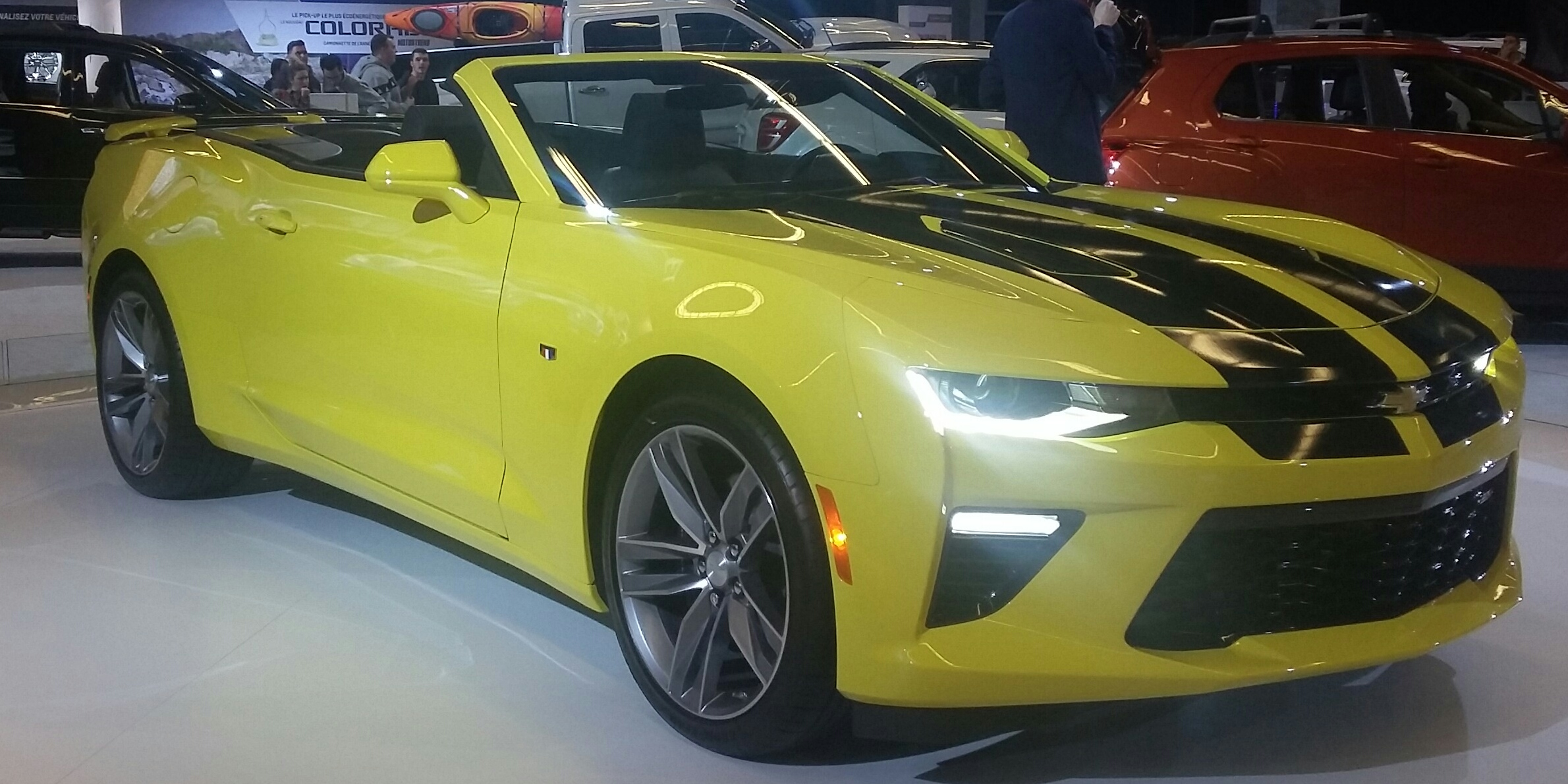
Chevrolet Camaro
"..., I think that's probably our demo and they had a Camaro or Corvette or mild out Kia"
The Camaro is a sporty car made by Chevrolet. It’s designed for faster, more exciting driving than a typical daily car. People bring it up often because it’s a well-known model and is commonly used as a demo or show vehicle.
The Chevrolet Camaro is a classic American-style sports coupe/convertible known for its performance-focused look and engine options. It often comes up in discussions because it’s a popular “demo” car and a common reference point when people talk about muscle-car style driving. In a podcast, it may be mentioned alongside other performance models to set the tone for what kind of vehicles are being shown or compared.

Chevrolet Corvette
"...that's probably our demo and they had a Camaro or Corvette or mild out Kia In their repertoire of previous o..."
The Corvette is a high-performance sports car from Chevrolet. It’s meant for quick acceleration and sharp handling. It often gets mentioned because it’s one of the most recognizable performance cars in the lineup.
The Chevrolet Corvette is Chevrolet’s flagship sports car, built for high performance and a driver-focused experience. It’s frequently discussed because it represents the brand’s top end of performance and technology, and it’s a common choice for demo fleets and car events. Mentioning it alongside other models helps listeners understand the performance level being referenced.

Ford Focus
"Oh, yeah, a lot of tangerine cars [8754.4s] Sure [8755.2s] Yeah, maybe like a Ford Focus s team. I think that the economy in the gas prices have beat the strippers down"
The Ford Focus is a regular compact car from Ford. Here it’s just mentioned as an example of a car someone might spot, not discussed in depth.
The Ford Focus is a compact car line from Ford, typically associated with everyday commuting rather than high-end performance. In this segment it’s name-dropped as a possible “tangerine” car someone might see, without any technical details.
gas prices
"Yeah, maybe like a Ford Focus s team. I think that the economy in the gas prices have beat the strippers down [8762.6s] What else you got pre-k?"
“Gas prices” means how much it costs to buy gasoline. When gas is expensive, people often drive less or change their habits.
“Gas prices” refers to the cost of gasoline at the pump, which can strongly influence how often people drive and what kinds of cars they choose. In this segment it’s used as a casual explanation for why fewer people might be going out.
no buy list
"Okay, Roy just made a corporate decision Hummer X3's are on the no buy list"
A “no buy list” is basically a list of cars they refuse to buy. It’s used when a certain car type has caused problems or losses before.
A “no buy list” is an internal purchasing blacklist used by dealers or auction buyers. Vehicles on it are avoided because past buys for that model/condition tended to lose money or create operational headaches.
auction
"our drivers would uh move the cars at the auction"
Here, “auction” means a place where cars are sold to the highest bidder, usually for dealers. People working there move the cars around as part of the buying process.
In this context, an “auction” refers to a marketplace where dealer staff bid on vehicles and then move them around the yard. The speaker mentions drivers moving cars at the auction, implying a dealer/wholesale workflow.

Hummer H3
"There was an h3 Hummer that he got in one of my camera... and he drove the car and it blew up through the wall. You remember?"
They’re describing a Hummer H3 incident where the car failed catastrophically while being moved, and it even went through a wall. The story is used to justify why they avoided buying that model.
The speaker mentions a “H3 Hummer” that was driven and “blew up through the wall,” with surveillance video showing the incident. That’s an extreme failure scenario, and it’s being used to explain why that Hummer model was treated as a risky purchase.

Ford Ranger
"...ut there were some cars that oversold to some new ranger over something these cars would be Oh bad"
The Ford Ranger is a pickup truck that’s smaller than full-size trucks. It’s used for carrying things and general work around town. People talk about it when it’s popular or when supply doesn’t match demand.
The Ford Ranger is a midsize pickup truck used for everyday hauling and light-duty work. It can come up in podcast conversations when people discuss which trucks are popular in certain markets or when comparing what’s being offered versus what customers want. The mention of “oversold” suggests it may have been in demand and hard to get, affecting availability or expectations.

Mitsubishi Outlander
"...e up there pretty soon like we have in california Outlander hunt we get right now in philadelphia. You could ..."
The Mitsubishi Outlander is an SUV meant for everyday driving and carrying people and cargo. It’s the kind of vehicle people choose for practical use rather than pure sports-car performance. In the podcast, it sounds like they’re talking about where to find them or how they’re being offered in different places.
The Mitsubishi Outlander is a compact-to-midsize crossover SUV designed for family use, commuting, and everyday practicality. It’s mentioned in the context of availability or regional presence (“Outlander hunt” in different cities), which suggests the conversation is about finding or sourcing vehicles. That makes it relevant for listeners who care about what’s available where they live.
Request an Explanation
Heard something you'd like explained? We'll add it to this episode.
Sign in to request explanations for terms you heard.
Want to learn more?
Browse our glossary for plain-English explanations of automotive terms, jargon, and concepts.
Help improve this episode
See something that's not quite right? Our annotations are AI-generated and can sometimes miss the mark. Click the flag icon on any annotation to suggest a correction.