#551 John Clay Wolfe Show 04.18.26
About this episode
A wide-ranging Saturday morning mix: live calls debate whether Aaron Rodgers should retire and who the Steelers’ next QB should be, then the show pivots to classic-car and auction talk from Barrett-Jackson (plus a few wild buyer stories). A Lightning Round “dial-a-deal” prices everything from a 2014 diesel box truck to a black-on-black manual WRX and a VW transporter “Natty wagon.” News sparks arguments about Strait of Hormuz restrictions and oil-market swings, plus a darker segment on a rapper arrest and a cruise-line tequila lawsuit. The host also pushes GiveMeTheVen.com car-buying and YouTube video drops.
Terry Bradshaw
"I want Terry Bradshaw. I'm old school. He's the last good quarterback."
They’re talking about Terry Bradshaw, a famous NFL quarterback. It’s part of the football discussion, not car stuff.
Terry Bradshaw is referenced as a quarterback the speaker admires. This is sports commentary, not an automotive term, but it’s a notable named figure in the segment.
Pittsburgh Steelers fan
"But that's the last quarterback Pittsburgh has. That was even good."
They’re talking about the Pittsburgh Steelers, which is an NFL football team. It’s not really about cars—more about sports and personal preferences.
The hosts mention the Pittsburgh Steelers, a professional NFL team. In car podcasts, team fandom often comes up as part of the host’s background rather than automotive content.
Lifetime Dolphins fan
"So you're an oaky, but you are a Steelers fan? No, no. I'm a Lifetime Dolphins fan."
They’re saying they’ve been a fan of the Miami Dolphins for a long time. It’s just football conversation, not car-related.
The speaker says they’re a Lifetime Dolphins fan, referring to the Miami Dolphins NFL team. This is sports talk and not directly tied to automotive knowledge.

Daewoo Statesman
"Yeah. The name of the, uh, statesman Palm Beach is the Gator 98.7, the Gator. And is ..."
The Daewoo Statesman is a car model made by Daewoo. In the podcast snippet, it’s mentioned mainly because the name is being used in a radio or local reference. The exact details of the car aren’t explained in the excerpt.
The Daewoo Statesman is a model of car associated with Daewoo, and in the podcast it appears alongside a radio-station reference (“Statesman Palm Beach”). That suggests the name is being used as a clue or identifier rather than a full review of the vehicle. Without more context, it’s best understood as a specific Daewoo model name being referenced.
Lightning Round Dial
"[862.9s] Next segment is called the Lightning Round Dial of Deal 800-800-7234. [869.2s] 800-800-7234."
This sounds like a quick phone-in segment where people call in with car questions. The goal is to answer them fast, so you get useful info right away.
The hosts mention a “Lightning Round Dial,” which is a fast call-in segment where listeners likely ask quick car-buying or ownership questions. It’s a common radio format for getting immediate, practical advice.

Dodge Journey
"... this song that the local stations play by either Journey, Steve Miller Van, Stevie Ray Vaughan, or maybe ..."
The Dodge Journey is a crossover SUV made by Dodge. It’s meant for everyday driving and carrying people. In the podcast, it’s mentioned because the name “Journey” is also used by a music group.
The Dodge Journey is a crossover SUV built by Dodge, designed for family-oriented use with seating for multiple passengers. It may come up in the podcast because the word “Journey” is also the name of a band, creating a mix-up or a playful reference. In other words, the car is likely mentioned due to the shared name rather than a deep dive into the vehicle itself.
box truck
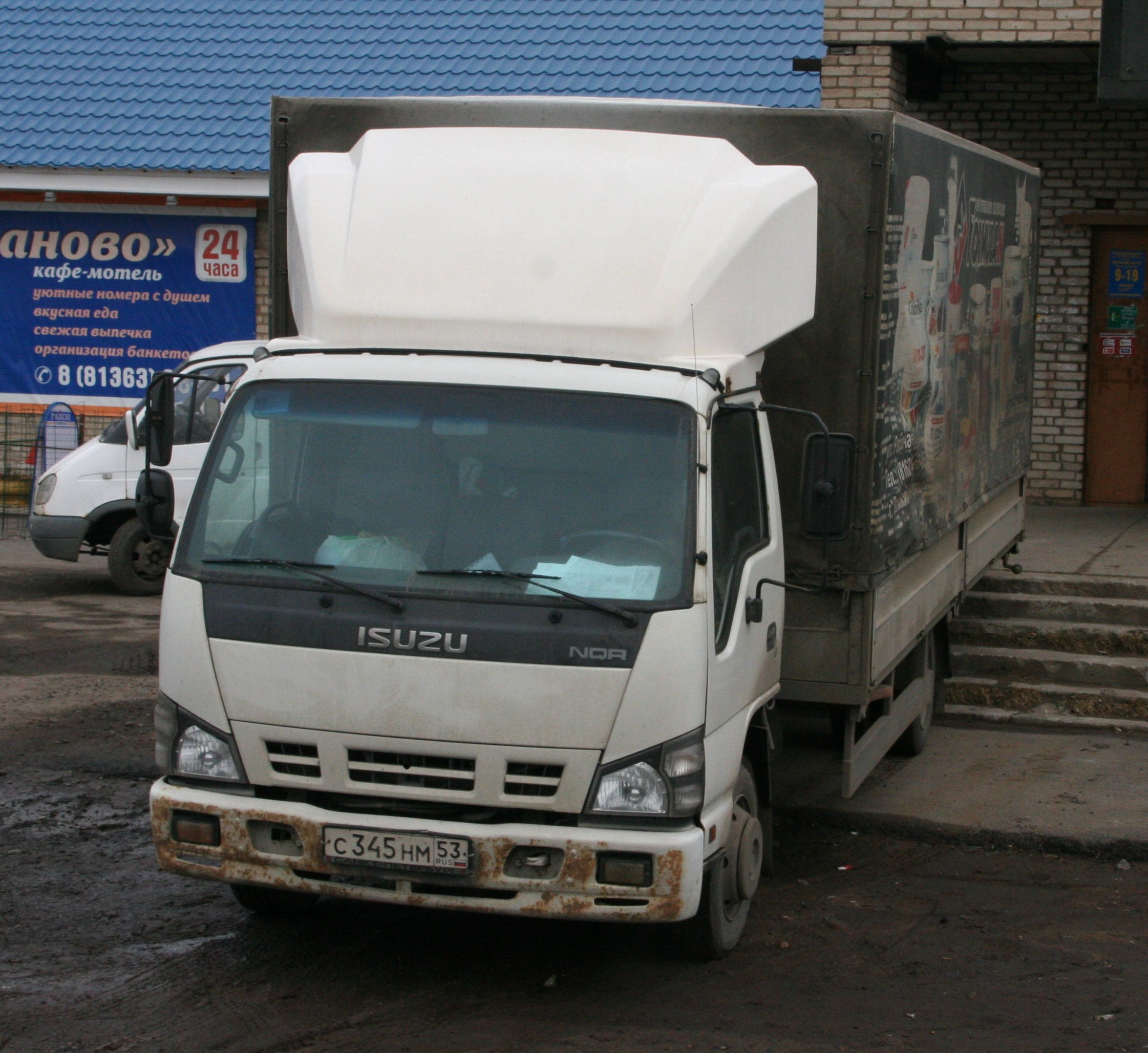
"“You got three cars for sale and a Zuzu box truck, diesel… …So the box truck I purchased… it's a 2014 NQR… diesel… 18 foot box truck, 7 foot wide, 7 foot tall.”"
A box truck is a truck with a closed cargo area, like a big enclosed trailer built into the vehicle. It’s used to transport items while keeping them protected.
A box truck is a commercial vehicle with a cargo compartment enclosed like a large rectangular box, typically used for moving goods without exposure to weather. The dimensions mentioned (18-foot length, 7-foot width and height) describe the usable cargo volume and fit for different jobs.
2014 NQR
"“So the box truck I purchased from my remodeling company, it's a 2014 NQR, 76,000 miles, diesel, dolly, 18 foot box truck, 7 foot wide, 7 foot tall.”"
A Nissan NQR is a work truck that’s built for hauling and daily business use. Here, they’re talking about a 2014 diesel version with relatively low mileage for a truck, but they don’t drive it enough to justify the cost.
The Nissan NQR is a medium-duty commercial truck line used for deliveries and light fleet work. In this segment, the host describes a 2014 Nissan NQR diesel box truck with about 76,000 miles, emphasizing that it’s a practical work vehicle even if it isn’t used often enough.
diesel
"“So the box truck I purchased from my remodeling company, it's a 2014 NQR, 76,000 miles, diesel, dolly, 18 foot box truck…”"
Diesel is the fuel used in many trucks. It often helps trucks pull heavy loads efficiently, but it can require specific maintenance compared with regular gas engines.
Diesel is a fuel type used in many commercial trucks because it can be efficient and provide strong low-end torque for hauling. Diesel engines also tend to have different maintenance needs than gasoline engines, especially around fuel systems and emissions equipment.
dolly
"“So the box truck I purchased… it's a 2014 NQR, 76,000 miles, diesel, dolly, 18 foot box truck…”"
A dolly is a small trailer-like part that helps a truck tow another trailer safely. It’s used to connect the towing setup so the trailer can roll properly.
A dolly is a towing component used to connect a trailer to a vehicle, often supporting the front axle of the trailer while the truck handles the rear connection. In the context of commercial fleets, it’s part of how certain trailer setups are moved and stored.

Subaru WRX
"Let's skip to the next one, an 04 WRX with 140. Is it geeked out or is it stock? It's all original, actually. All stock, all original."
WRX is a performance Subaru model. It’s usually a turbo car, and people often care whether it’s still mostly stock or has been modified for racing.
“WRX” refers to the Subaru WRX, a turbocharged performance sedan/wagon known for rally-inspired handling. In this segment, the host is discussing a specific “04 WRX” and whether it’s modified or still factory-original.
virgin in the business
"We like to call her a virgin in the business. The only thing I've done to it is I took it to a tuning company about two years ago"
“Virgin” here is slang for a car that hasn’t really been modified or abused. It’s basically being described as close to factory condition.
In car-seller slang, calling a car a “virgin” means it’s essentially unmodified and has not been heavily worked on. It’s a way to signal low wear from performance use and a mostly factory configuration.
tuning company
"The only thing I've done to it is I took it to a tuning company about two years ago when I was going to rebuild it"
A “tuning company” typically specializes in engine calibration and performance upgrades, often including ECU tuning and related hardware changes. Even when the car stays mostly stock, a tune can change how the turbo and fueling/ignition behave.
seals
"...when I was going to rebuild it and I put new gaskets, new seals, bumped up the brakes a little bit."
Seals help keep oil and other fluids from leaking. Replacing them is a common step when you’re refreshing or rebuilding an engine.
Seals are used throughout an engine and drivetrain to keep oil, coolant, and other fluids contained. “New seals” suggests the car received a refresh to address wear and reduce the chance of future leaks.
gaskets
"...when I was going to rebuild it and I put new gaskets, new seals, bumped up the brakes a little bit."
Gaskets are like high-heat seals that keep fluids from leaking where engine parts meet. If they wear out, you can get leaks, so replacing them is part of keeping the engine healthy.
Gaskets are sealing components that prevent fluids and combustion gases from leaking between engine parts. Replacing gaskets and seals during a rebuild or refresh helps restore proper sealing and can prevent overheating or oil/coolant leaks.
bumped up the brakes
"...new gaskets, new seals, bumped up the brakes a little bit. Just got it crept to do a, to make it into a little bit more of a race vehicle"
That phrase means the car’s brakes were upgraded a bit to stop better. It’s often done for more spirited driving or track-style use.
“Bumped up the brakes” means the owner upgraded the braking system for stronger stopping power or better fade resistance. Common upgrades include larger rotors, better pads, and sometimes brake lines or fluid.
make it into a little bit more of a race vehicle
"Just got it crept to do a, to make it into a little bit more of a race vehicle, but I just lost the motivation"
Making it more of a race vehicle means setting it up for harder driving, like track days. Usually that involves upgrades that help the car handle repeated hard stops and stress.
Turning a street car into a “race vehicle” usually involves changes aimed at durability and performance under repeated hard use—often including brakes, cooling, suspension, and sometimes engine calibration. The key idea is preparing the car for track-like conditions rather than just daily driving.

Volkswagen bus
"...but I just lost the motivation because I got into a little bit more of a slower vehicle, hence the Volkswagen bus."
A Volkswagen bus is the classic VW van people associate with road trips and vintage style. Here it’s mentioned as the owner’s shift away from a faster performance car.
The “Volkswagen bus” refers to VW’s iconic Transporter/Bus platform (often called a Microbus or Type 2). In this context, it’s used as a contrast to the WRX—suggesting the owner moved from a performance-focused car to a slower, more lifestyle-oriented vehicle.
all three rows
"So basically it was, when it came off the production line, it did have the bed in the back, but it also had the all three rows feeding. It's a, so it's, it just has a little bit of a different option."
“All three rows” means the van has three levels of seats so it can carry more people. That usually makes it more useful for trips where you want everyone inside together.
“All three rows” refers to a multi-row seating layout that allows more passengers than a standard two-row configuration. In vans like the Volkswagen Transporter, different seating options can dramatically change how the vehicle feels and how practical it is for camping or road trips.
sunroof
"It also has a sunroof on it. So it's a, it's a nice vehicle."
A sunroof is a panel in the roof that lets in extra light and can open for fresh air. If it’s not maintained, it can sometimes cause water leaks, so it’s worth checking.
A sunroof is a glass or fabric panel in the roof that can be opened for ventilation and light. On older vans, sunroofs can be a nice comfort feature, but they can also add complexity (seals, drainage, and potential leaks) that owners should keep an eye on.

Volkswagen T2
"It's like your typical, it's your typical, like a little Volkswagen, your atypical Volkswagen hippie bus. So it's a T2, which is the 68 to 72 model."
A Volkswagen T2 is a classic “bus” from the late 60s/early 70s. People often modify these vans to sleep in them or use them like small campers.
The Volkswagen T2 is the second generation of the iconic Transporter/“hippie bus” line, produced in the late 1960s through the early 1970s. In this segment, the host is describing a specific T2-era van (68–72) that’s been modified for camping-style use.
three rows of seats
"It has, so the transporter notes the fact it has three rows of seats. However, the middle seat was taken out and in the back there, the third row seat is a Z seat,"
Three rows of seats means the van can carry more people. Here, they removed one row so there’s room to turn the back into a sleeping area.
Having three rows of seats is a layout choice that turns a van into a multi-passenger vehicle, often used for families or group transport. In this case, the middle row was removed to create space for a fold-down bed.
Z seat
"However, the middle seat was taken out and in the back there, the third row seat is a Z seat, which means it actually folds down to make a bed in the back of it."
A “Z seat” is a seat setup that folds in a way that turns the van’s back area into a bed. So instead of just sitting there, it can sleep.
A “Z seat” is a specific seating/bench configuration used in some Volkswagen camper conversions where the seat folds down to create a flat sleeping surface. The key point here is that the third-row seat becomes a bed in the back.
Z deluxe
"Being there was a Z deluxe, it has windows that open up on the sides of it. And yeah, that's about it."
“Z Deluxe” is a nicer version of that camper setup. In this case, it includes extra comfort features like windows that open on the sides.
“Z Deluxe” refers to a higher-trim camper-style configuration associated with the Z-seat setup. In this segment, the host ties it to added features like side windows that open.
Anheuser-Busch
"So it was owned by Anheuser-Busch. Yeah, so it was used as a promotional vehicle by Anheuser-Busch out of Missouri."
Anheuser-Busch is a big beer company. They owned the van and used it to promote their beer with branding and giveaways.
Anheuser-Busch is the major beer company that owned the vehicle in this story. The host explains it was used as a promotional vehicle, including a wrap and branded giveaways.
promotional vehicle
"Yeah, so it was used as a promotional vehicle by Anheuser-Busch out of Missouri. So it actually had a vehicle wrap on it prior to me purchasing it."
A promotional vehicle is a vehicle used for advertising. Instead of just being transportation, it’s used to spread the brand and hand out freebies.
A promotional vehicle is a branded car or van used to market a product by driving it around and distributing items. This segment describes how the van was used by Anheuser-Busch as a traveling “Natty wagon” with giveaways.
vehicle wrap
"So it actually had a vehicle wrap on it prior to me purchasing it. It, and they used, they drove it around the country and called it the Natty wagon."
A vehicle wrap is like a big sticker/graphic covering the outside of the vehicle for advertising. In this story, it was branded for beer promotions and later taken off.
A vehicle wrap is a large printed graphic film applied to the exterior of a car or van, commonly used for advertising or branding. Here, the wrap was removed after the seller got tired of people asking for free beer.
bang bus
"[1227.8s] Are you the developer of the bang bus? [1238.7s] Okay. On a scale of 1 to 10, where does the bang bus land?"
A “bang bus” is basically a party vehicle—usually a van or bus that’s been modified for groups. They’re talking about how much these builds cost and whether the one being discussed is finished or still needs work.
A “bang bus” is a party bus concept—typically a modified passenger van or bus used for group entertainment. In the transcript, they’re discussing its market value and condition, including how much it costs to build or buy “fully done” versus needing more work.
commercial fleet
"[1305.5s] Because a lot of those come off of commercial fleet all the time on lease and I see them at auctions. [1309.6s] I have them. Now they're always 140,000 miles."
“Commercial fleet” refers to vehicles operated by businesses (often for deliveries or service work) rather than private owners. The speaker notes that many similar vehicles come from fleet use on lease and then show up at auctions, which can affect mileage and condition.
auctions
"[1305.5s] Because a lot of those come off of commercial fleet all the time on lease and I see them at auctions. [1309.6s] I have them. Now they're always 140,000 miles."
They’re talking about auctions—places where vehicles get sold to the highest bidder. Buying from auctions can be cheaper, but you may not know everything about how the vehicle was maintained.
The transcript mentions vehicles being sold at auctions after lease or fleet use. Auction sourcing is often used by buyers looking for deals, but it can also mean you’re buying higher-mileage vehicles with unknown maintenance history.
140,000 miles
"[1309.6s] I have them. Now they're always 140,000 miles."
They’re saying the vehicles they get are usually around 140,000 miles. That’s high mileage, so it usually means more wear and more things may need maintenance.
“140,000 miles” is used as a shorthand for high mileage on the vehicles coming from fleet/lease and auctions. Mileage like this can strongly influence expected remaining life, maintenance needs, and resale value.

Cadillac El Dorado
"I went, yeah, take a ride. He buys a 1963 Cadillac El Dorado Baritz in mint condition."
The Cadillac Eldorado is a luxury car made by Cadillac. The podcast mentions a 1963 version that’s in very good condition, which makes it special to collectors. It’s the kind of classic car people talk about because it’s rare and well kept.
The Cadillac Eldorado is a luxury personal car produced by Cadillac, especially known in the early 1960s for its big styling and comfort-focused design. In the podcast, it’s specifically referenced as a 1963 Eldorado Baritz in mint condition, which highlights its collectible value and desirability. That kind of detail is typical when discussing classic cars and their condition.
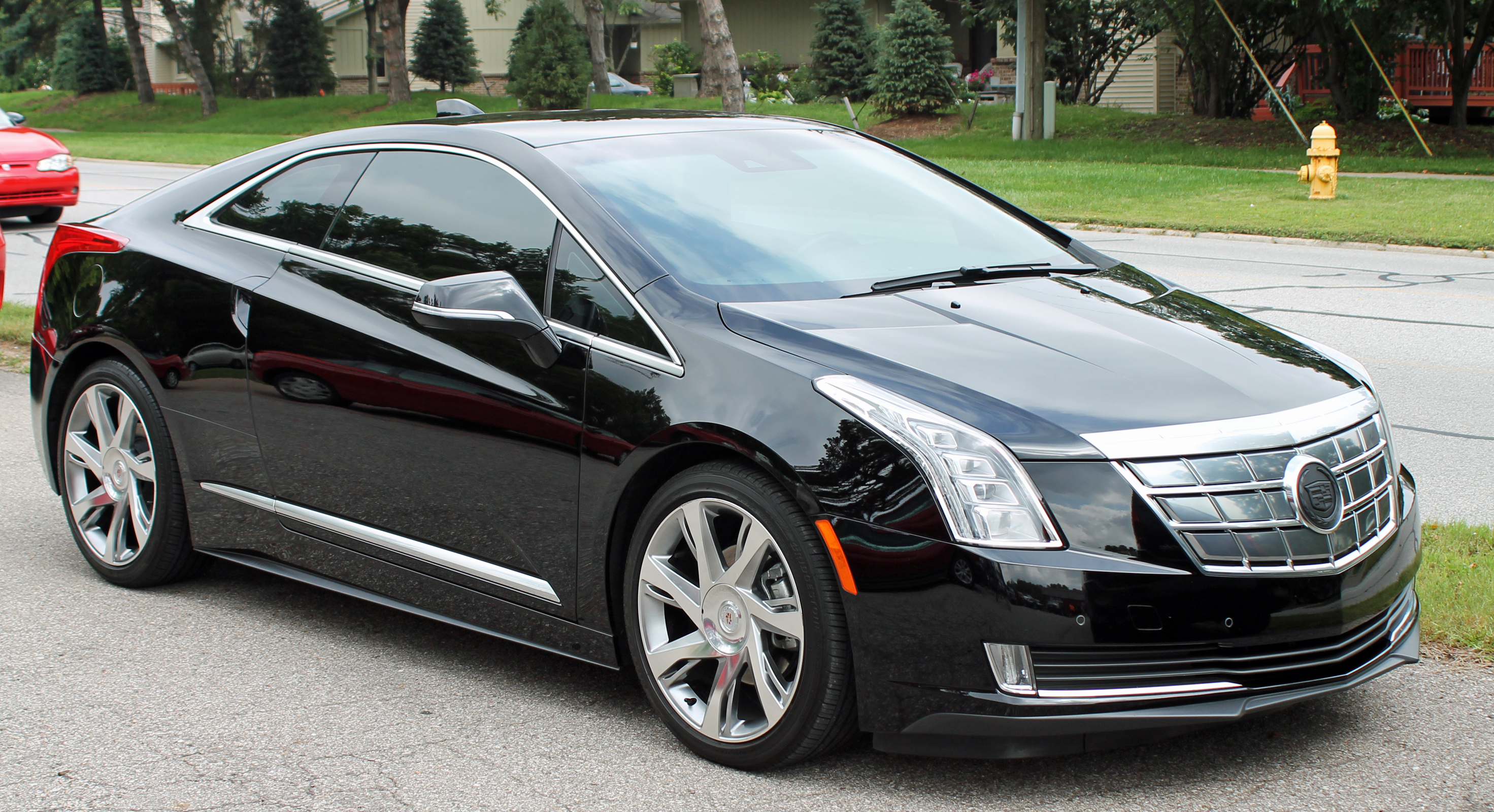
Cadillac El
"I went, yeah, take a ride. He buys a 1963 Cadillac El Dorado Baritz in mint condition."
The Cadillac ELR is a luxury car that uses both electricity and gasoline. It’s designed to look like a sporty coupe while still being practical for daily driving. In the podcast, it’s mentioned as part of the car discussion, though the snippet doesn’t explain details.
The Cadillac ELR is a luxury plug-in hybrid coupe produced by Cadillac. It’s significant because it combines a premium design with an electric-drive approach for part of its operation. In the podcast snippet, it’s mentioned in the same classic-car ride context as the Eldorado, but the ELR itself is a different, more modern Cadillac model.
wonder bar
"the only thing that didn't work was the wonder bar... And they describe it in mint condition, the only thing not working was the wonder bar."
A “wonder bar” is an antenna/radio accessory on some older cars. If it doesn’t work, it’s a noticeable defect that can change how people judge the car’s condition at auction.
“Wonder Bar” is a brand name (often used generically) for an automotive radio antenna system that extends/retracts or moves for better reception. In the transcript, it’s treated like a specific non-working accessory, which affects how the car is described and valued at auction.
auction condition descriptions
"unfortunately, you know, bad numbers... And they describe it in mint condition, the only thing not working was the wonder bar."
At auctions, the way a car is described matters. Even if it’s called “mint,” the listing may still mention a specific problem, and that can change how much buyers are willing to pay.
The segment highlights how auction listings and condition grading work: a car can be marketed as “mint condition” while still disclosing a specific non-working component. That kind of detail can affect buyer confidence, bidding behavior, and the final price.
Barrett Jackson
"A few years later, I'm watching Barrett Jackson... your Cadillac is a Barrett Jackson."
Barrett-Jackson is a famous auction where collectors buy and sell classic cars. How they describe a car’s condition there—like what works and what doesn’t—can affect what it sells for.
Barrett-Jackson is a major U.S. collector-car auction company known for high-profile classic and luxury vehicle sales. Mentioning it here matters because auction descriptions (“mint condition” with a specific non-working item) can strongly influence bidding and final sale price.
Cadillac
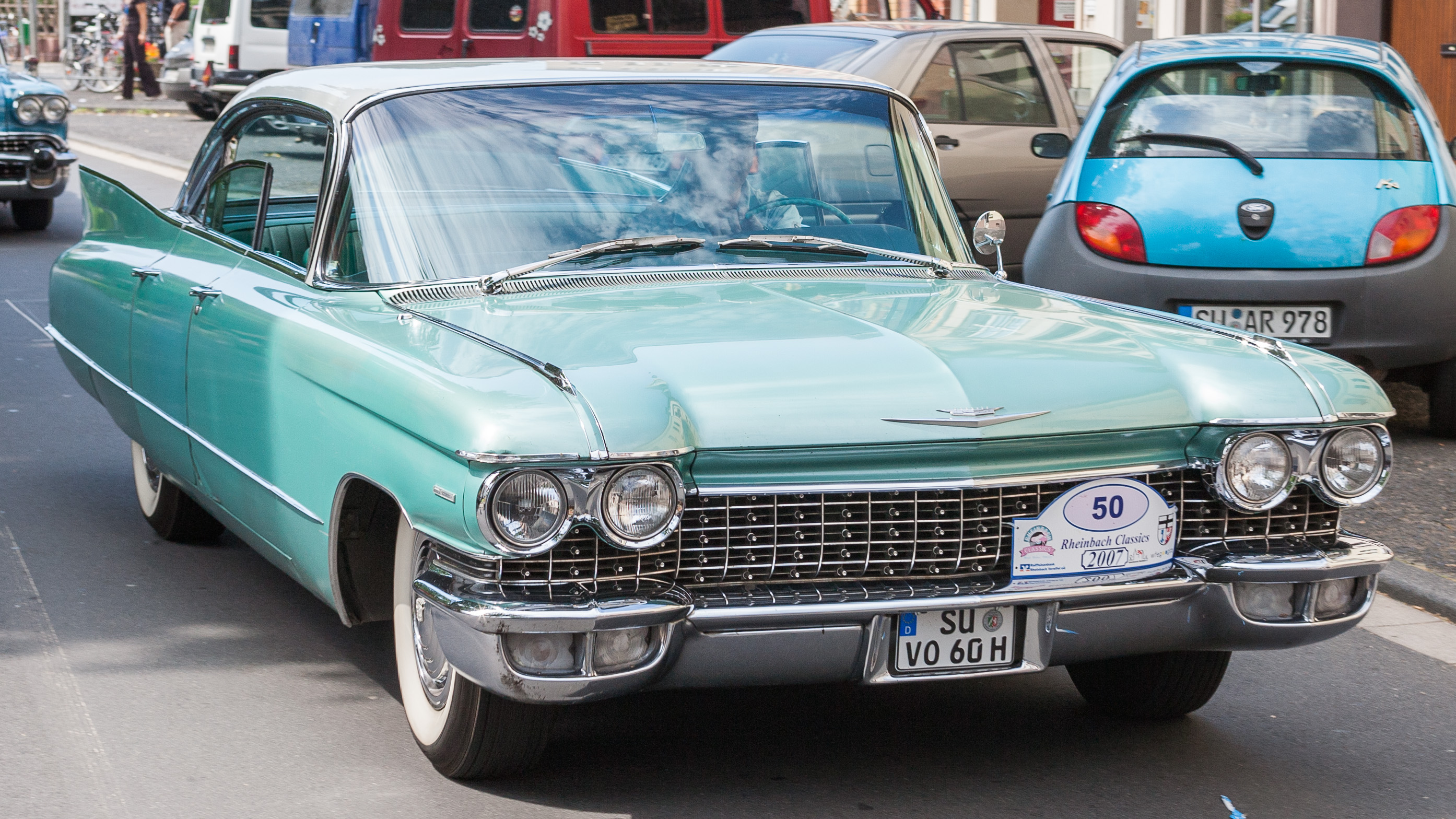
"And here comes the Cadillac... they describe it in mint condition, the only thing not working was the wonder bar."
They’re discussing a Cadillac that was sold at auction. The key point is that even if the car looks great, one small thing not working (the wonder bar) was still mentioned in the listing.
The host is talking about a Cadillac being auctioned and described as “mint condition” except for the wonder bar. Even without the exact model/trim, this is a specific make being discussed in an auction context, where small defects can be called out precisely.
deal
"And you can go to Barrett, you can find the deal. And you can send me the link."
They mean a specific car listing that’s priced well. In car shopping, a “deal” usually means you’re getting it for less than you’d expect.
Here, “deal” refers to a specific listing/offer for a car at a stated price. In collector-car buying, a “deal” usually means the price is favorable relative to similar cars’ market values.
modified and customized
"Because I've never seen a car like that sell for that that's not crazy high modified and customized."
They’re talking about a car that’s been changed from how it left the factory. That can make it more expensive or more desirable, but it also depends a lot on how good the upgrades were.
“Modified and customized” describes cars whose factory configuration has been changed—often with aftermarket parts, bespoke styling, or performance upgrades. These cars can be harder to value because the quality of the work and the parts used vary widely.
401K
"Welcome to another episode of What's a 401K? [2272.5s] 401K is like a really, really long foot race."
A “401K” is a retirement savings account in the U.S. where you can put money aside for later, often with tax benefits. In this clip they’re joking around with the word, not talking about a car or car tech.
“401K” refers to a U.S. retirement savings plan (a tax-advantaged account) that employers often offer. In this segment, the host uses it as a joke and compares it to unrelated things, but the underlying term is about retirement investing rather than anything automotive.
autopilot
"He could have put her in the car seat if it was autopilot. And that'd be a hell of an escape. Oh, yeah. Like send the body off in a Tesla in autopilot mode"
Autopilot is a set of features that can help a Tesla steer and keep speed in some situations. You still have to pay attention and be ready to take over—it's not fully hands-off driving.
Autopilot is Tesla’s driver-assistance suite that can handle certain driving tasks like lane keeping and adaptive cruise under specific conditions. It still requires driver supervision, and it’s not designed for fully unattended driving.
four cylinder
"Is it a four cylinder or six? It's a four cylinder."
A “four cylinder” engine is an engine with four combustion chambers. It’s usually simpler and can be cheaper to run than a bigger engine, and it often gets better gas mileage.
A “four cylinder” engine uses four cylinders to make power. Compared with a six-cylinder, it’s typically cheaper to maintain and often gets better fuel economy, which can influence used pricing and what buyers expect at higher mileages.
dummy lights
"Are there any check engine lights or dummy lights or problems on? No."
“Dummy lights” usually means dashboard warning lights. If any warning lights are on, it can mean the car has a problem, so it’s something a buyer wants to know about.
“Dummy lights” is a casual way to refer to warning lights on the dashboard (not necessarily the check engine light specifically). In used-car discussions, the key point is whether any warning indicators are illuminated, since that can signal electrical issues, sensor faults, or other problems.
check engine lights
"Are there any check engine lights or dummy lights or problems on? No."
The check engine light is a warning that something may be wrong with the engine or emissions system. If it’s on, the car may need a diagnostic scan to find the cause before you buy or sell it.
A “check engine light” is the dashboard warning that the car’s engine or emissions system has detected a fault. Buyers often treat it as a red flag because it can range from minor issues to expensive repairs, so confirming whether it’s on helps estimate risk and cost.
move it and clean it and sell it
"What's it going to cost me to move it and clean it and sell it? Yeah, you're right."
They’re talking about the extra work after buying the car—getting it where it needs to be, cleaning it up, and then selling it. Even if you buy it cheap, you still have costs to get it ready to sell.
This phrase describes the practical costs and steps involved in flipping or reselling a used car: transporting it (“move it”), reconditioning it (“clean it”), and then selling it. It highlights that the purchase price alone isn’t the full cost—seller overhead and prep work affect the final profit.
auction June 6th
"We're going to have an auction June 6th. And tell the guys when you sell this car to us."
They’re telling you the date of their next car auction. It’s basically a heads-up for when to show up or register.
The hosts announce an upcoming auction date (June 6th). This is a structural segment about how and when the auction will happen rather than a specific car or technical topic.
GMTV Garage YouTube channel
"We got the GMTV Garage YouTube channel complete with live video stream at JCWShow.com"
They mention a YouTube channel where you can watch their car videos. It’s where the live streams and related content show up.
The GMTV Garage YouTube channel is referenced as the source of the show’s live video content. For listeners, it’s a way to watch auctions or car-related segments in real time.
JCWShow.com
"We got the GMTV Garage YouTube channel complete with live video stream at JCWShow.com"
JCWShow.com is mentioned as the place where the live video stream is available. It’s tied to the show’s online presence and likely links to the GMTV Garage content.
seven speed manual
"2019 Chevrolet Corvette Grand Sport. With a seven speed manual, black black 1LT with stock carbon, the carbon flash, ground effects package"
That means the Corvette has a manual transmission with seven gears. You shift it yourself with a clutch, and the extra gears can help the car feel smoother or quicker depending on how you drive.
A seven-speed manual means the car uses a traditional clutch and gear shifter with seven forward gears. More gears can help keep the engine in its best power/efficiency range depending on speed and driving style.
stock carbon
"1LT with stock carbon, the carbon flash, ground effects package"
They’re saying the car has carbon-fiber parts from the factory. That usually means the look (and sometimes the weight) is built in, not added later by a shop.
“Stock carbon” here refers to factory-installed carbon-fiber appearance or components (as opposed to aftermarket add-ons). On Corvettes, carbon packages often include exterior trim and aero pieces that reduce weight and/or improve visual styling.
carbon flash
"1LT with stock carbon, the carbon flash, ground effects package"
“Carbon flash” is basically a carbon-fiber look option. It’s meant to make certain parts look like real carbon fiber, even if it’s not the same as having full carbon everywhere.
“Carbon flash” is an appearance/trim option name used on some Corvette packages to give a carbon-fiber look (often on specific exterior pieces). It’s typically more about styling than full structural carbon-fiber everywhere.
ground effects package
"1LT with stock carbon, the carbon flash, ground effects package"
A ground effects package adds body aero parts near the ground, like splitters and side skirts. The goal is usually to help the car sit better and feel more stable, especially when driving faster.
A ground effects package is an aero kit that adds front splitter, side skirts, and/or rear diffuser-style components to improve the car’s stance and airflow. On performance cars, these pieces can help reduce lift and make the car feel more planted at speed.
damage history
"Any damage history? No, sir. 42."
“Damage history” refers to whether a vehicle has been in accidents, had body repairs, or has records of insurance claims. Buyers often ask this because past damage can affect safety, resale value, and even long-term reliability if repairs weren’t done correctly.
second owner
"I bought it from, I'm second owner. Woman owned it."
“Second owner” means the car has had one previous registered owner before the current seller. Ownership history can be a useful clue for how the car was cared for, but it’s not a guarantee—service records and condition matter more.
daily driver
"She did. She daily did. What? Where you located? Florida."
A “daily driver” is a car you use every day. That usually means it racks up miles faster, so mileage can be higher than you’d expect for a car that only gets occasional use.
A “daily driver” is a vehicle used regularly for everyday commuting and errands. When a car is treated as a daily driver, higher mileage is more typical, but it can also mean more wear depending on driving conditions and maintenance.
paint
"It needs paint. And I'm going to sell it on June 6th at GMTVOctions.com."
“It needs paint” indicates the car likely has bodywork and cosmetic issues that require repainting. For buyers, paint condition can affect perceived quality, resale value, and whether there may be underlying damage or prior repairs.
GMTVOptions.com
"And I'm going to sell it on June 6th at GMTVOctions.com. Are you there?"
GMTVOptions.com appears to be the auction or listing platform where the vehicle will be sold. Listing on a specific site matters because each marketplace has its own audience, fees, and bidding rules that can affect the sale outcome.
60,000 miles
"Yeah, I'm here. Mine's got 60,000 miles on it. Yours has 265, and you want 3,500 for yours."
They’re comparing how many miles each car has driven. Higher mileage usually means more wear, and it often affects what the car is worth.
Mileage is a key factor in vehicle valuation and buyer expectations. In this conversation, the seller uses mileage to justify pricing differences between two cars.
265
"Mine's got 60,000 miles on it. Yours has 265, and you want 3,500 for yours."
They’re saying the other car has only about 265 miles, which is extremely low. Low mileage often makes a car worth more because it’s been used less.
“Yours has 265” is almost certainly shorthand for very low mileage (e.g., 265 miles) and is being used to explain why the price is higher. Extremely low mileage can increase value because there’s less wear and tear.
auction it off
"I told him that. Let me ask you this. You say you got one. How much you want for it? No, I said I gave 500 for it and I'm going to auction it off"
Instead of selling the car to one person for a fixed price, you put it in an auction. People bid against each other, and the final sale price is usually whatever the highest bidder offers.
The hosts are talking about selling a vehicle through an auction process rather than a one-off private sale. Auctions can change the final price because multiple buyers bid, and the seller may accept the highest bid rather than a negotiated number.

Honda Del Sol
"[3570.9s] A Del Sol? [3572.7s] Tom, you have a little fruit leaf car."
A Honda Del Sol is a small sporty Honda from the late 1990s. It’s known for having a removable roof section, and different years could come with different engines and gearboxes.
The Honda Del Sol is a late-1990s/early-2000s compact sports coupe known for its removable roof panel (targa-style). In this segment, the hosts are discussing what engine and transmission it came with, which matters because Del Sol specs varied by model year and trim.
T-top
"[3576.1s] 87 I Rock T Top. [3578.3s] So 87. [3579.5s] I'm going to test your brain. What motors in it?"
T-top means the car has roof panels you can remove, kind of like a partial open roof. It’s usually an option on certain trims, so it helps identify the car’s exact setup.
T-top refers to a roof design with two removable roof panels, typically allowing an open-air driving feel while keeping the structure more rigid than a full convertible. In older performance cars, T-tops were often tied to specific trims and options, so confirming “T-top” helps narrow down the exact configuration.
305
"[3579.5s] I'm going to test your brain. What motors in it? [3583.7s] 305. [3584.3s] What transmissions in it?"
“305” is shorthand for the engine size—about a 5.0-liter V8. They’re trying to confirm which engine is actually in the car, because different engines came in different years.
“305” refers to a 305 cubic-inch V8 displacement (about 5.0 liters) used in some GM vehicles. In the segment, the hosts are debating whether the car has the 305 V8 versus other possible engine options for that year, which affects performance, parts compatibility, and value.
automatic
"[3584.3s] What transmissions in it? [3589.1s] Automatically. [3589.7s] I don't think that's right."
“Automatic” refers to an automatic transmission rather than a manual gearbox. The hosts are debating whether the car’s transmission matches the engine/year combination, and that matters because manual vs automatic can change driving feel, parts, and collector interest.
350s
"[3589.1s] Automatically. [3589.7s] I don't think that's right. [3591.1s] In 87, there were 350s [3592.8s] and the sticks were 305s."
“350s” means a bigger V8 engine—about 5.7 liters. They’re comparing engine options to figure out what the car really has.
“350s” likely refers to a 350 cubic-inch V8 (about 5.7 liters) as an alternative engine option. The speaker contrasts “305” versus “350s” to determine the correct engine for the 1987 setup, which is important for identifying the car’s original configuration.
sticks
"[3591.1s] In 87, there were 350s [3592.8s] and the sticks were 305s. [3596.4s] I know it's a 305."
“Sticks” means the car has a manual transmission—you shift it yourself. They’re saying the manual version was paired with a certain engine in that year.
“Sticks” is slang for a manual transmission. The speaker is saying that for the 1987 model year, the manual (“sticks”) were paired with a 305, which is a configuration detail that helps verify the car’s original spec.
cherry
"It's a cherry. Paint job. It's got T tops. Here's the kicker."
“Cherry” is slang for a really clean, well-kept car. People use it when the car looks great and isn’t beat up.
In car-seller slang, “cherry” means a vehicle is in excellent, near-original condition with minimal flaws. It’s often used to describe cars that look and present well, even if there are hidden issues.
back glass removed / glass replacement
"The back glass had been removed and like a truck bed glass put in like Corvette style ruined an otherwise immaculate car. And I'm the 305's"
Taking the rear window out and putting something else in can cause problems like leaks or a bad fit. Even if the car looks nice otherwise, the wrong glass setup can hurt the car’s value and quality.
Removing and replacing a car’s rear glass is a major body/trim alteration that can affect weather sealing, structural integrity, and originality. If the glass is reinstalled incorrectly—or replaced with a mismatched piece—it can turn an otherwise clean car into a “ruined” example.
truck bed glass
"The back glass had been removed and like a truck bed glass put in like Corvette style"
They’re implying someone used a rear glass piece that wasn’t meant for the car—like something you’d find on a truck. That usually means it won’t fit or look right, and it can cause sealing issues.
“Truck bed glass” here likely means a generic or mismatched glass panel used as a substitute for the correct rear glass. This kind of workaround is often a sign of prior damage or a non-original repair, and it can look out of place compared to the intended bodywork.
Z
"Hang on. I know it's a Z. Go ahead. So it's"
They mention it’s a “Z,” meaning a particular version/trim of the car. The exact car model isn’t stated here, so we can’t be sure which “Z” it refers to.
“Z” is referenced as the car being a “Z,” which typically points to a specific trim/variant designation in classic American car naming. Without the make/model in this excerpt, it’s unclear which exact “Z” the speaker means.
louvers
"Are you talking about the are you talking about louvers? No no no no no no glass at all"
Louvers are like angled slats that let air pass through. They were guessing the replacement might be louvers, but the speaker says it’s actually not glass or louvers.
Louvers are slatted openings that allow airflow while blocking direct view. The speaker brings up louvers as a possibility for what replaced the rear glass, but then clarifies it’s not louvers—there’s no glass at all.
truck bed coating
"there's truck bed coating sprayed in there where the well is and they like built it doesn't look bad bad"
Truck bed coating is a tough spray-on material that protects a truck’s bed. They’re using it here as a cover to replace the missing rear glass area.
Truck bed coating is a protective spray-on layer used to shield a pickup’s cargo bed from rust, dents, and abrasion. In this context, it’s being used to fill in/cover the area where the rear glass used to be.

El Camino
"They made an El Camino out of it? Pretty much an El Camaro"
The El Camino is a Chevrolet that looks like a car up front but has a small truck bed in the back. They’re saying the vehicle was modified to resemble that kind of layout.
The Chevrolet El Camino is a “car-based” pickup-style vehicle—essentially a coupe with a rear cargo bed. The speaker is comparing the modified truck/vehicle to an El Camino because the rear area has been reshaped and filled in.

Chevrolet Camaro
"Pretty much an El Camaro Okay but it's cherry An El Camaro It is beautiful paint, victory red brand new"
“El Camaro” isn’t an official factory car name—it’s a nickname for a Camaro that’s been turned into something like a car-with-a-bed. They’re describing a custom conversion.
“El Camaro” is an informal nickname used to describe a Camaro that’s been modified to have a truck-bed-like rear, similar in concept to the El Camino. In this segment, it’s describing a custom body transformation rather than a factory model.
victory red
"It is beautiful paint, victory red brand new"
Victory Red is a popular red paint color associated with Chevrolet, often used on performance and collector cars. The speaker is emphasizing the vehicle’s paint quality and that it’s a fresh, new-looking finish.
torque thrust brand new wheels
"[3708.4s] but good real good [3710.5s] torque thrust brand new wheels [3712.4s] tires the whole bit 18 inch"
“Torque Thrust” is a type/brand of aftermarket wheel. It usually means the car has nicer-looking wheels than stock, and it can also affect how the tires fit.
“Torque Thrust” refers to a wheel style/brand associated with performance-looking aftermarket wheels (often linked to American Racing’s Torque Thrust designs). The host is saying the car has fresh wheels, which can change both the look and the tire/wheel fitment.
staggered 17 inch fronts
"[3712.4s] tires the whole bit 18 inch [3714.5s] staggered 17 inch fronts [3716.7s] but we're parked"
“Staggered” means the front and rear tires/wheels aren’t the same size. That can help the car handle better and also changes the look.
“Staggered” means the front and rear wheels/tires are different sizes. In this case, the speaker mentions 17-inch fronts, which typically helps with steering grip up front while allowing a different tire setup at the rear for traction and stance.
sprayed bed liner in the ass end of the thing
"[3749.1s] took such good care of it when the back [3751.3s] glass broke out they didn't buy new glass [3753.2s] they just sprayed bed liner in the ass [3755.1s] end of the thing and then pulled a trash bag"
They’re describing a repair where someone covered the damaged area with truck-bed coating (“bed liner”). It can make it look tougher and protect it, but it might also mean the proper body/glass repair wasn’t done.
Using “bed liner” (a thick protective coating typically used in truck beds) on a car’s damaged area is a DIY-style repair or cover-up. It can hide broken glass damage and protect the surface, but it may also indicate deferred bodywork or a non-original, cosmetically driven fix.
Rhino liner
"...the one half of the car in the back that's shot with bed liner / Rhino liner"
Rhino Liner is a thick spray-on coating used to protect surfaces from scratches and damage. If it’s applied to parts of a car that need seals or trim, it can make everything harder to fit back correctly.
Rhino Liner is a brand of spray-on truck bed liner that creates a tough, textured protective coating. On a car, it’s often used to cover areas that would otherwise get scratched or rusted, but it can change the look and complicate trim or glass mounting.
drip rail
"Yeah and then the drip rail / where the gasket would go is like flattened out that's my hang up"
The drip rail is the little ledge/channel that helps keep rainwater from running into the car. If it’s been bent or flattened, the seals and glass trim may not fit or seal as well.
A drip rail is the channel along the edge of a vehicle’s body that helps direct water away from the cabin. If the drip rail area is damaged or flattened during modifications, it can affect how weatherstripping/gaskets seal and how glass trim mounts back in place.
AI thing
"“I'm pretty sure they put the whole like show recording into this AI thing and it cuts it”"
They’re talking about using AI to automatically cut a video into shorter clips for social media. Sometimes it chooses the wrong parts, so good moments don’t get posted.
They’re describing an AI-based editing or clipping workflow that automatically selects and cuts parts of a recorded show for social media. The key idea is that automated selection can change what viewers see, sometimes removing the best moments.

GMC Sierra Grande
"[4031.5s] Steve in Texas a 71 GMC [4034.9s] Sierra Grande [4037.5s] what motor [4038.3s] is in this car"
This is a GMC pickup truck, and “Sierra Grande” is the version/trim. The question is basically: what engine does this specific 1971 truck have, and whether it’s 4-wheel drive or 2-wheel drive.
The GMC Sierra Grande is a trim level/variant of the Sierra pickup line, and in this case the host is asking about a 1971 GMC Sierra Grande. Listeners might want to know what engine options were available and how to identify them, since “what motor is in this car” is a key ownership question for older trucks.
four wheel drive
"[4041.1s] that's a four or two [4043.1s] okay [4043.6s] is it a four wheel drive by any chance [4045.4s] I'm sure it's a two wheel drive long bed like the rest of them"
Four-wheel drive means the truck can send power to all four wheels, which helps on snow, mud, or rough roads. Two-wheel drive only powers the rear wheels, so it’s usually simpler and can be a bit more efficient.
“Four wheel drive” (4WD) means power is sent to both the front and rear axles, typically with a transfer case that can route torque for better traction. On older trucks, whether it’s 2WD or 4WD affects capability, fuel economy, and even parts/maintenance complexity.
two wheel drive
"[4043.6s] is it a four wheel drive by any chance [4045.4s] I'm sure it's a two wheel drive long bed like the rest of them [4048.4s] yeah two wheel drive long bed"
Two-wheel drive means only two wheels get power. On many trucks like this, that’s usually the rear wheels, which is fine for normal driving but not as good for slippery or off-road conditions.
“Two wheel drive” (2WD) means only one axle receives drive power—on many pickups, that’s the rear axle. The transcript suggests this GMC Sierra Grande is a 2WD long bed, which is a common configuration and typically easier/cheaper to maintain than 4WD.
long bed
"[4045.4s] I'm sure it's a two wheel drive long bed like the rest of them [4048.4s] yeah two wheel drive long bed [4050.5s] like the rest yesterday"
A long bed is the longer cargo area behind the cab on a pickup. It gives you more room for hauling, but the truck is also longer overall.
A “long bed” refers to a longer cargo box on a pickup truck, which increases hauling space but can make the truck longer and harder to park. In the transcript, the host uses “long bed” to describe the specific configuration of the 1971 GMC Sierra Grande.
deferred maintenance
"[4062.9s] like I said two three years it's been sitting [4065.1s] and I got it from [4067.0s] him he got old [4069.1s] and sick and he sold it to me [4071.0s] he had it sitting for a while but he was [4073.0s] actually a mechanic [4074.9s] in the town staying [4076.5s] and it just [4078.8s] hadn't been in a follow up with a high battery"
If a car sits for a long time and nobody keeps up with basic checks, small problems can turn into big ones. Things like the battery and fluids can get worse even if the car looks okay.
The car being “sitting” for years and not being followed up on points to deferred maintenance—systems and fluids that should be checked regularly get neglected. That can lead to issues like battery drain, corrosion, and rubber parts aging faster than expected.
battery
"[4076.5s] and it just [4078.8s] hadn't been in a follow up with a high battery [4081.3s] the paint sounds bad the way you're talking"
When a car sits, the battery can go dead or get weak. Even if the car starts later, a battery that sat for a long time may still need replacement.
The mention of “a high battery” in context of a car that’s been sitting suggests battery-related problems—either it was weak, not maintained, or needed attention after long storage. Batteries can lose charge quickly when a car isn’t driven, and long-term sitting can cause permanent capacity loss.
negotiating price
"[4092.5s] you can see there's no dents [4094.2s] so you gave him three grand [4096.7s] and I'm gonna give you five [4098.4s] you're hitting me at 85 I see that there [4100.5s] but you didn't give him no more than three grand [4102.3s] before I bought it right [4104.7s] well no I actually paid [4106.5s] I actually paid five [4107.7s] okay I think that's the money"
They’re arguing about the price they paid and what they agreed on. When buying used, the seller’s claims about condition can affect how much you should pay.
The back-and-forth about “three grand” versus “five” shows a typical used-car negotiation. For buyers, the key is understanding the final purchase price and what condition issues (like long storage or battery concerns) justify the discount.
pre-purchase inspection
"I'm looking at little things... I'm looking at carpet... brake pedals... steering wheel wear... gauges... seat wear... any blemishes on the paint... our best thing is to walk around with a video... then hell it's like I'm standing right there with you... pop the hood on it... let's see what it looks like under the deal these old trucks it's just all about condition"
They’re talking about checking a used truck carefully before you buy it. Instead of trusting the listing, you gather photos/video and inspect things like wear and damage so there are no surprises later.
The host is describing a hands-on way to evaluate a used vehicle’s condition before buying, using photos and video to check details. This is essentially a pre-purchase inspection workflow—looking for wear, damage, and maintenance clues so you know what you’re really getting.
pop the hood
"and you can talk about the car and pop the hood on it let's see what it looks like under the deal these old trucks it's just all about condition"
“Pop the hood” means opening the engine bay to visually inspect components. In a used-truck context, it’s a quick way to look for obvious issues like leaks, missing parts, corrosion, or signs of neglect.
AC
"[4170.0s] to get them ready [4172.3s] it's the first year with that air condition [4174.2s] it has that AC in it"
“AC” is the air conditioning in the car. If it’s the first year with AC, that means earlier versions didn’t have it, and that can make the car more desirable.
“AC” means the car’s air conditioning system. When a seller says it’s the first year with AC, they’re usually pointing to a specific equipment change that can affect buyer demand and resale value.
first year with that air condition (AC)
"[4170.0s] to get them ready [4172.3s] it's the first year with that air condition [4174.2s] it has that AC in it"
Sometimes a car gets a new feature in a certain model year, like air conditioning. That can make that year’s version easier to sell because more people want the feature.
Equipment changes by model year—like adding air conditioning—can create a “first year with X” buying hook. Even if the mechanicals are similar, having AC can broaden the buyer pool and raise the price.
give me the VIN.com
"this show is brought to you by America's Best Car Buyer give me the VIN.com go to give me the VIN.com"
They’re talking about a company that buys cars. They use the VIN number (a unique code for your car) to identify the vehicle and make an offer.
“VIN.com” is mentioned as a service for buying cars using the VIN (Vehicle Identification Number). In practice, VIN-based services can help verify a vehicle’s identity and history and streamline offers for trade-ins or purchases.
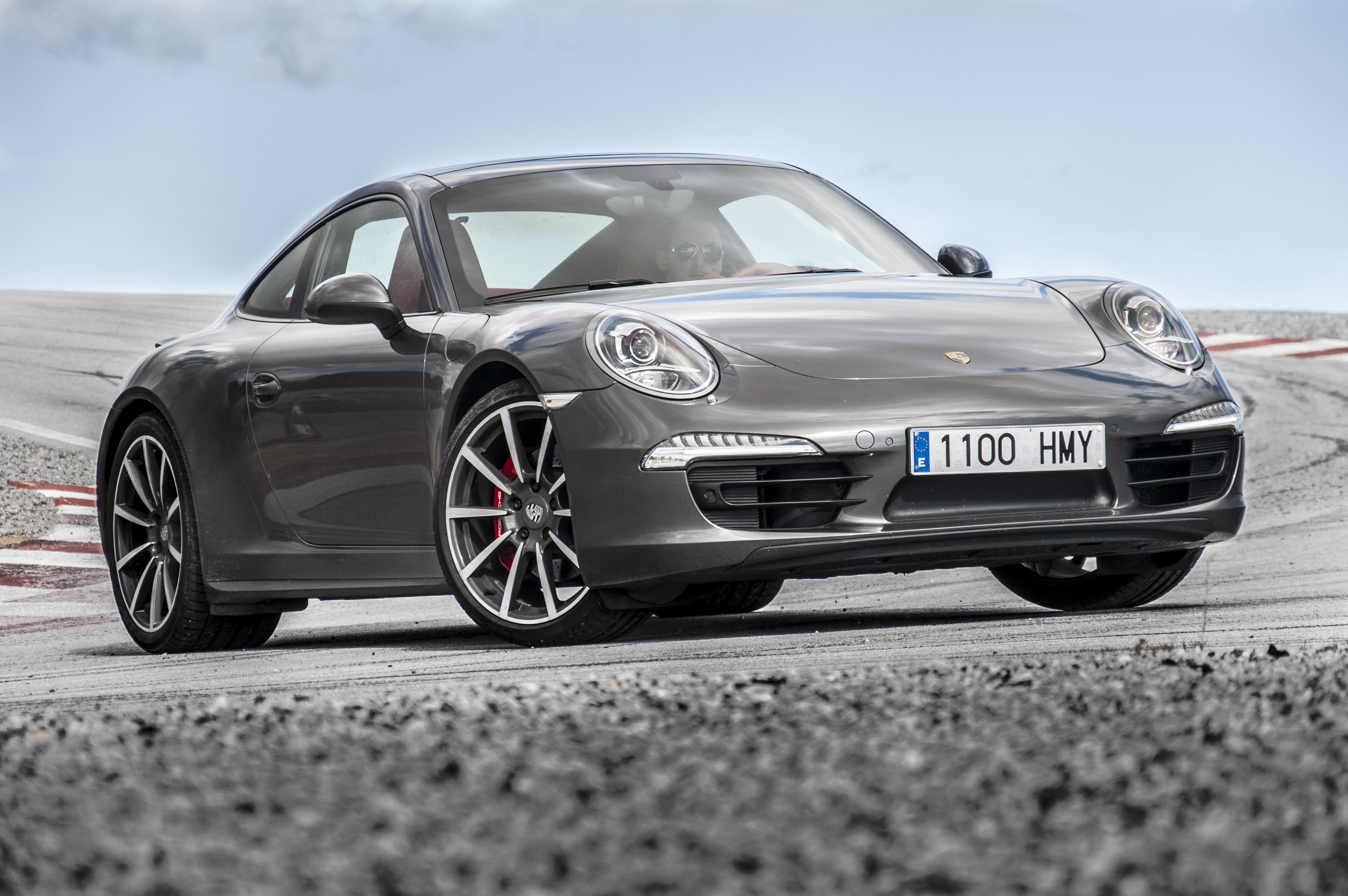
Porsche
"give me the VIN.com also buys exotics porches y'all heard me buy $250,000"
They mention Porsche as one of the expensive sports-car brands they buy. It’s an example of the kind of “exotic” cars they’re willing to purchase.
Porsche is referenced as an example of the “exotics” the service buys. The host cites a purchase price in the hundreds of thousands, highlighting that the buying operation handles high-value sports cars.

Mercedes
"actually I paid $240,000 Mercedes going on this show last week we buy classic and collector cars"
They mention Mercedes, which is a luxury car brand. It’s brought up to show they deal with different types of cars.
“Mercedes” refers to Mercedes-Benz vehicles. The host mentions a Mercedes guest, implying the show covers buying and selling across mainstream luxury brands, not just classics or exotics.
classic and collector cars
"we buy classic and collector cars you just heard me buy a $5,000 old ass truck"
The host distinguishes “classic and collector cars” from everyday vehicles. Classics/collector cars often have different pricing drivers—rarity, condition, originality, and documentation—compared with mass-market cars.

Toyota Camry
"you just heard me buy a $5,000 old ass truck and we buy a lot of Camry's"
They’re talking about the Toyota Camry. It’s a common everyday car, and they’re saying they buy lots of them.
The host says they buy “a lot of Camrys,” referring to Toyota’s mid-size sedan. This contrasts with the earlier talk about exotics, showing the business also focuses on high-volume, mainstream vehicles.
Cummins
"and we buy a lot of Camry's and Ford diesels and Cummins and Suburbans"
Cummins is a company that makes diesel engines. When a truck has a Cummins engine, people often see it as a plus for durability and towing.
Cummins is mentioned alongside Ford diesels, pointing to Cummins diesel engines. Cummins is a well-known engine manufacturer, especially associated with heavy-duty trucks, and engine brand can strongly affect desirability and resale value.

Ford diesels
"and we buy a lot of Camry's and Ford diesels and Cummins and Suburbans"
They mention Ford diesel vehicles. Diesel trucks are usually used for work and towing, and they can be priced and valued differently than regular gas cars.
“Ford diesels” indicates Ford diesel-powered vehicles are part of what they buy. Diesel trucks and work vehicles are often valued differently than gas cars due to fuel economy, torque, and typical use patterns.

Suburbans
"and Ford diesels and Cummins and Suburbans and all that"
“Suburbans” refers to the Chevrolet Suburban, a full-size SUV known for hauling space and towing capability. The mention suggests the buying operation targets popular family/work vehicles as well as exotics.
Request an Explanation
Heard something you'd like explained? We'll add it to this episode.
Sign in to request explanations for terms you heard.
Want to learn more?
Browse our glossary for plain-English explanations of automotive terms, jargon, and concepts.
Help improve this episode
See something that's not quite right? Our annotations are AI-generated and can sometimes miss the mark. Click the flag icon on any annotation to suggest a correction.
1 community members have helped improve this episode.