705: Rovers After Dark (Takeover)
About this episode
A Rover-focused takeover turns into a wide-ranging comparison of Land Rovers, Toyotas, and Jeep builds, with plenty of trail talk mixed in. The hosts dig into why solid axles, simple drivetrains, and parts availability matter for crawling, while also explaining how Range Rovers evolved into luxury SUVs and why older Rovers can be tempting used buys. Along the way, they swap stories about Rubicon runs, Moab, King of the Hammers, and the realities of keeping air suspension, lockers, and aging trail rigs alive.
Welcome to the Rovers After Dark Podcast. Erick, Rover Don, and Country Club Tyler talk about their experiences with Toyota, then quickly move on to some fantastic Rover History. They also try and corilate what rover equals what Toyota to help the Toyota audience understand a little more about rovers. Did it work?
We have a massive discount this month with Rusoh Fire Extinguishers. You can get 25% off this month only with the discount code Rusohcrawlers. Go grab yours today!
SnailTrail4x4 Discord: https://discord.gg/yFyFFkQbuy
Come hang out with us on the SnailTrail4x4 Discord — it’s the easiest way to connect with Tyler and Jimmy directly, chat with fellow offroad enthusiasts, and get first access to Group Buys and Treasure Hunt token drops.
MORRFlate Giveaway at 900 Reviews on Apple Podcast. But our next giveaway is when we reach 800 reviews; we are giving away an OnX Elite Membership. We will also give away an OnX Elite membership when we get to 850. However, when we reach 900 Reviews, we are teaming up with MORRFlate for a $1000 MF Product Giveaway. Go over to Apple Podcasts to leave your review now and become eligible to win. Congratulations to A13XMONT, who won a set of tires from Yokohama Tire!
Call us and leave us a VOICEMAIL!!!We want to hear from you even more!!! You can call and say whatever you like! Ask a question, leave feedback, correct some information about welding, say how much you hate your Jeep, and wish you had a Toyota! We will air them all, live, on the podcast! +01-916-345-4744. If you have any negative feedback, you can call our negative feedback hotline, 408-800-5169.
4Wheel Underground has all the suspension parts you need to take your off-road rig from leaf springs to a performance suspension system. We just ordered our kits for Kermit and Samantha and are looking forward to getting them. The ordering process was quite simple, and after answering the questionnaire, we ensured we got the correct and best-fitting kits for our vehicles. If you want to level up your suspension game, check out 4Wheel Underground.
SnailTrail4x4 Podcast is brought to you by all of our peeps over at irate4x4! Make sure to stop by and see all of the great perks you get for supporting SnailTrail4x4! Discount Codes, Monthly Give-Always, Gift Boxes, the SnailTrail4x4 Community, and the ST4x4 Treasure Hunt! Thank you to all of those who support us! We couldn’t do it without you guys (and gals!)!
SnailSquad Monthly GiveawayMassive thanks to this month’s giveaway with Rusoh Fire Extinguishers. We have one of their 2.5-pound extinguishers to give away to a lucky winner. This extinguisher has an 18-year shelf life and is the best fire extinguisher for any off-road vehicle. To learn more, check out Rusoh.com. If you want a chance to win, sign up for the Giveaway Tier on Irate4x4
For the Month of April, we are giving away Gift Boxes. Its Gift Box month and two luck indiviuals will win a one of our gift boxs. These are jam packed with goodies from tools to whiskey smokers. They are always different and always random. If you want a chance to win, sign up for the Giveaway Tier on Irate4x4
Listener Discount Codes:SnailTrail4x4 –SnailTrail15 for 15% off SnailTrail4x4 Merch
MORRFlate – snailtraill4x4 to get 10% off MORRFlate Multi Tire Inflation Deflation™ Kits
4WheelUnderground – snailtrail 10% off
Ironman 4×4 – snailtrail20 to get 20% off all Ironman 4×4 branded equipment!
Sidetracked Offroad – snailtrail4x4 (lowercase) to get 15% off lights and recovery gear
Spartan Rope – snailtrail4x4 to get 10% off sitewide
Shock Surplus – SNAILTRAIL4x4 to get $25 off any order!
Mob Armor – SNAILTRAIL4X4 for 15% off
SummerShine Supply – ST4x4 for 10% off
Backpacker’s Pantry – Affiliate Link
Laminx Protective Films – Use the Link to get 20% off all products (Affiliate Link)
Show Music:
- Outroll Music – Meizong Kumbang
- Midroll Music – ComaStudio
Four Wheel Underground
"Four wheel underground is making some big changes... you get to now buy things all a cart. ... if you want the upper frame bracket, you can just buy that."
Four Wheel Underground sells off-road upgrade parts. The hosts say they’re making it easier to buy specific pieces (like brackets and joints) instead of being forced to buy a whole kit.
Four Wheel Underground is an off-road parts business focused on suspension and related components. In this segment, they’re described as changing how customers buy parts—so you can purchase individual brackets and joints instead of only full kits.
all a cart
"what's really cool about what they're doing right now is they're kind of changing the way the business is set in the sense that you get to now buy things all a cart."
They’re saying you can buy parts one-by-one instead of having to buy a complete kit. That’s helpful when you only need to replace or upgrade a specific piece.
“All a cart” here means buying suspension components individually, like ordering items separately rather than only purchasing a bundled kit. For off-roaders, this can make repairs and upgrades cheaper and faster because you replace only the worn or desired parts.
upper frame bracket
"So if you want the upper frame bracket, you can just buy that. Yeah. If you want the lower link bracket..."
A frame bracket is a metal mounting piece that helps hold suspension parts to the truck. Here, they’re saying you can buy that bracket by itself.
An upper frame bracket is a mounting piece that attaches suspension components to the vehicle’s frame. Buying it separately (instead of only as part of a full kit) suggests it’s a serviceable, modular part of the suspension system.
lower link bracket
"Yeah. If you want the lower link bracket, because it has the integrated bump stop and it's super stout and it looks really good too."
A lower link bracket is a mounting point for the lower suspension arms. The mention of an integrated bump stop means it also helps cushion the suspension when it reaches the end of its travel.
A lower link bracket is a suspension mounting point for the lower control/link assembly. The host notes it includes an integrated bump stop, which helps limit suspension travel and protect components during hard impacts.
integrated bump stop
"If you want the lower link bracket, because it has the integrated bump stop and it's super stout..."
A bump stop is like a safety cushion for the suspension. When the suspension compresses too far, it hits the bump stop to help prevent damage and harsh impacts.
An integrated bump stop is a built-in rubber or elastomer (or similar) contact surface that the suspension hits near the end of its travel. It reduces harsh bottoming-out and helps prevent damage when the axle moves through large bumps.
cartridge joints
"you can buy those all a cart from cartridge joints, rebuildable Johnny joints, hymes, offsets, all sorts of different ones."
Cartridge joints are the connection parts at the ends of suspension links. They’re designed to be durable and, in many setups, serviceable if they wear out.
Cartridge joints are suspension link end joints that use replaceable internal bearings or bushings inside a sealed cartridge. They’re popular in off-road builds because they can be rebuilt and tuned for durability and articulation.
rebuildable Johnny joints
"cartridge joints, rebuildable Johnny joints, hymes, offsets, all sorts of different ones."
Johnny joints are heavy-duty suspension connection parts that allow the suspension to move through big angles. “Rebuildable” means you can replace the worn internal parts instead of buying brand-new joints.
Rebuildable Johnny joints are spherical-style suspension joints designed for high articulation and off-road durability. The key feature here is “rebuildable,” meaning worn internal parts can be serviced rather than replacing the entire joint.
hymes
"cartridge joints, rebuildable Johnny joints, hymes, offsets, all sorts of different ones."
Heim joints are small, strong ball-and-socket style joints used in suspension. They help the suspension move freely when the truck flexes over rough terrain.
“Hymes” refers to Heim joints (often spelled “Heim” or “Himes” in casual speech), which are spherical rod-end joints used in performance and off-road suspension. They allow smooth movement through suspension travel with minimal binding.
offsets
"cartridge joints, rebuildable Johnny joints, hymes, offsets, all sorts of different ones."
Offsets are adjustments that move suspension mounting points slightly. They help get the suspension geometry right so the truck handles and rides the way you want.
Offsets in a suspension context are spacers or joint/link geometry changes that shift mounting points to correct alignment, caster/camber, or driveline angles. They’re commonly used to dial in how the suspension sits and moves.
Aluminum links
"Do you know what else he brought in house? Aluminum links, that's pretty rad... They now all come standard with aluminum links."
Aluminum links are the suspension arms/links that connect the axle to the frame. Aluminum is lighter than steel, and here the hosts say these kits include them without charging extra.
Aluminum links are suspension control arms/links made from aluminum instead of steel. The host frames them as a cost-neutral upgrade (“no extra charge”) and notes they’re now standard on the suspension kits.
Lee Springs
"So if you want to move your Toyota from Lee Springs to a link suspension kit, check out four wheel underground."
“Lee Springs” is mentioned as the suspension setup you’d switch away from. The host is basically saying you can upgrade from a spring-based setup to a link-based suspension kit.
“Lee Springs” appears to refer to a spring-based suspension setup (or a specific spring brand/model) that the host contrasts with a link suspension kit. In this context, it’s the baseline suspension arrangement being replaced or upgraded.
link suspension kit
"So if you want to move your Toyota from Lee Springs to a link suspension kit, check out four wheel underground."
A link suspension kit is a set of parts that changes how the axle is held in place. It’s meant to help the truck move better over rough terrain and be tuned for off-road use.
A link suspension kit is an off-road suspension conversion that uses control links (and often joints/bushings) to locate the axle. Compared with simpler setups, link systems are commonly used to improve articulation and tune ride height and geometry for trails.
on X off road
"We want to check with you guys today about on X off road. Definitely one of our favorite apps for off roading."
onX Offroad is an app that helps you navigate trails. The hosts like it for off-roading and community programs tied to it.
onX Offroad is a navigation and mapping app aimed at off-road driving. The hosts mention it as a favorite because it supports trail use and community engagement.
trail revival program
"they also are doing a lot to be a part of the off roading community here in the country from the trail revival program, which I actually got to be a part of and use to do some maintenance on the Rubicon Trail too."
The “Trail Revival Program” is an off-roading community effort. The host says they joined in and helped do trail maintenance on the Rubicon Trail.
The “Trail Revival Program” is referenced as an off-road community initiative connected to onX Offroad. The host says they participated and used it to do maintenance on the Rubicon Trail.
Wrangler Rubicon
"...e a part of and use to do some maintenance on the Rubicon Trail too. They have an elite partnership."
The Jeep Wrangler is an off-road SUV made for driving on trails and rough terrain. The podcast mentions it in connection with the Rubicon Trail, which is a well-known off-road route. They also talk about doing maintenance for that kind of driving.
The Jeep Wrangler is a trail-focused SUV built for off-road use, with a strong reputation among people who drive challenging routes. The podcast mentions maintenance on the Rubicon Trail and references an “elite partnership,” which ties the Wrangler to real-world trail activity and support. It’s discussed as a vehicle that’s actively used and maintained for serious off-roading.
salt corrosion
"Yeah, let's salt corrosion. But anyway, so basically our podcast is kind of like"
Salt corrosion is what happens when road salt gets on the car and speeds up rust. It can be especially rough on the underbody and metal parts.
Salt corrosion refers to how road salt (and salty spray) accelerates rust and metal deterioration by promoting electrochemical corrosion. In off-road and winter climates, it can be a major factor in underbody and frame wear.
rock crawling
"But I will say that I think we're similar because we focus a little more on rock crawling than we would do like overlaying."
Rock crawling is off-roading where you go slowly over rocks and obstacles. The goal is to keep your tires gripping and pick the safest path, not to go fast.
Rock crawling is a slow, technical off-road driving style focused on maintaining traction while navigating steep rocks and uneven terrain. Drivers typically prioritize precise throttle control and careful line choice over speed.
Land Rover
"And yeah, we don't have numbers or dark sheep of the Land Rover world. That is true. I'm not saying I drink Coors Light, but I might look like I drink Coors Light. Yeah, but the thing is like most Land Rover people aren't into rock crawling."
Land Rover is a car brand that makes off-road 4x4 vehicles. Here, they’re talking about the kind of people who usually drive Land Rovers and how that differs from rock crawling.
Land Rover is a British brand best known for rugged 4x4s built for off-road use. In this segment, the hosts use it as shorthand for a specific off-road community and culture.
full roll
"And then I did roll mine one time and that kind of like a full roll first time. Yeah, that's the first time only time. Oh, you made a full like a full to where the cab kind of crushed down."
A “full roll” means the vehicle flips all the way over. In this story, it was serious enough that the cab got crushed.
A “full roll” in off-roading means the vehicle rolls completely over, typically exposing the roof/cab area to impact. The host describes a severe rollover where the cab crushed down, which is a major safety and recovery event in rock crawling.
windshield
"Oh, you made a full like a full to where the cab kind of crushed down. So I ended up peeling out the windshield, putting like a high lift between the door sill and the top of the cab and just kind of spreading it"
The windshield is the front glass you look through. In a rollover, it can pop out or break, and the host says theirs got peeled out.
The windshield is the front glass panel that helps protect occupants and provides structural support in many vehicles. In rollovers, it can be peeled out or shattered, which the host specifically mentions after the cab crushed down.
body swap
"But after that, I ended up selling that and somebody did a body swap. And I needed a vehicle for I did that at a Rubathon."
A body swap means replacing the car’s outer body with another one. It’s often done when the original body is too damaged, like after a bad rollover.
A body swap is when someone replaces a vehicle’s body shell with another one, usually to restore a damaged chassis or to combine parts from two cars. The host says they sold the rolled vehicle and later had someone do a body swap, implying a rebuild after the rollover damage.
LR three
"Because at that time I was still driving the LR three. [541.3s] Yes, you were a full on overlander. [544.5s] Oh, I wouldn't go that far."
“LR three” means the Land Rover LR3. They’re saying they were driving that before switching, and that it had more complex suspension (including air suspension) compared with the simpler solid-axle setup.
“LR three” refers to the Land Rover LR3, a body-on-frame-ish, full-size-ish Land Rover built for overlanding and trail driving. The segment contrasts it with the Discovery 2 by calling out its independent suspension and air suspension, which can be more complex to keep working off-road.
independent suspension
"Full independent suspension. Airbags. [547.0s] Full independent suspension. Airbags. [550.1s] Yeah. Oh, yeah. Air suspension."
Independent suspension lets each wheel move on its own. That can make the ride smoother, but some off-road setups can be more complicated to maintain than simpler designs.
Independent suspension means each wheel can move up and down without being rigidly tied to the other side. That usually improves ride comfort on-road, but off-road durability and repair complexity can vary by design—especially when paired with air suspension.
Air suspension
"Yeah. Oh, yeah. Air suspension. [552.7s] I figured out how to cure that. [554.0s] You could try to take it through the Rubicon."
Air suspension uses air bags instead of metal springs. It can raise and lower the vehicle for different conditions, but it’s also more complicated than a basic suspension system.
Air suspension uses air springs (instead of steel coils) to adjust ride height and ride stiffness. For off-roaders, it can be great for comfort and leveling, but it also adds components (like air springs and compressors) that can be more expensive or more failure-prone than conventional suspension.
33s
"Like 33s were monster tires for him. [596.7s] And still are in the 80s. [598.3s] I was sitting at 80s 90."
“33s” are tires that are about 33 inches tall. Bigger tires help clear obstacles, but they also change how the vehicle drives.
“33s” means 33-inch tires, a common shorthand in off-road communities. Tire size like this affects ground clearance and how the vehicle’s gearing and steering behave, which is why someone might call them “monster tires” in a given context.
44 inch swampers
"and always wanted a truck on 44 inch swampers [611.7s] and basically had rovers from there and got more into the rock crawling scene."
“Swampers” refers to Swampers tires, a brand/model line known for aggressive off-road tread. Running “44 inch” tires dramatically increases ground clearance and changes gearing and steering feel, which is why it’s a big deal in rock-crawling and trail builds.
lockers
"like I put the lockers in only maybe six years ago and all the wiring for the lockers is really nice."
Lockers are a way to make both wheels on an axle turn together. That helps when one wheel loses grip, like on mud or rocks.
“Lockers” are off-road differentials that can lock the left and right wheels together. That prevents one wheel from spinning freely when traction is low, improving crawl and control on trails.
22 RE
"Whenever the 22 re was in a forerunner... And that thing was like, I mean, sure, you got no power."
“22 RE” is the name of an older Toyota engine. In this story, they’re saying it doesn’t have much power, especially when going up hills.
“22 RE” refers to Toyota’s 2.2-liter RE-series inline-four engine (often discussed in the context of older 4Runners). It’s known for being durable but not very strong, so climbing steep grades can feel slow without the right gearing.
dual cases
"But, you know, if you get dual cases, it's pretty just got enough power for the trail."
“Dual cases” is about having extra low gearing for off-road driving. It helps you crawl up tough terrain without needing lots of throttle.
“Dual cases” refers to a dual-range transfer case setup, giving multiple low-range gearing options for crawling. More gearing helps you keep the engine in its usable torque band on steep or slow trails.
spring over 37
"And then the only rock crawling Toyota I really had was a 85 FJ 60 Land Cruiser and it had spring over 37."
“Spring over” is a lift/suspension change that helps the truck sit higher and flex more on rough terrain. The “37” means they were running very big 37-inch tires for better clearance and grip on rocks.
“Spring over” is an off-road suspension modification where the leaf springs are relocated to sit on top of the axle, changing ride height and axle articulation. “37” refers to 37-inch tires, which are large enough to significantly improve ground clearance and traction for rock crawling.
Toyota FJ 62
"I think 85 was the last year of the FJ 60. And then they went to the FJ 62, which is the one with the square headlights."
The Toyota FJ 62 is a later Land Cruiser that looks a bit different than the FJ 60, especially around the headlights. The host is comparing which Land Cruiser they had and how they looked.
The Toyota FJ 62 is the Land Cruiser model that followed the FJ 60 era, and it’s recognizable by its more square headlight design. The speaker brings it up as the next-generation step in their Land Cruiser rock-crawling experience.
Ford Bronco
"...ence. And then every year we'd go to Moab for the Bronco deal. And the Toyota was at Cruz Moab was always ..."
The Ford Bronco is a type of SUV built for driving on dirt roads and rough trails. People bring them to off-road places like Moab to see how well they can handle tough terrain. The podcast mentions it because it was part of their regular trip routine.
The Ford Bronco is a rugged off-road SUV known for its ability to handle trails and rough terrain. It comes up in off-road discussions because it’s a popular platform for trips and events like Moab, where people test how capable their 4x4 really is. In the podcast, it’s mentioned as a recurring “deal” destination vehicle for annual off-road trips.
Moab for the Bronco deal
"And then every year we'd go to Moab for the Bronco deal. And the Toyota was at Cruz Moab was always there. So I always ran around with a bunch of land cruisers there."
Moab is a well-known off-road area where people go wheeling. Here they’re saying they’d go every year for an event connected to Broncos, and they’d see lots of Land Cruisers there.
Moab is a famous off-road destination in Utah, and it’s commonly associated with events and trail runs. In this segment, the hosts mention going there “for the Bronco deal,” tying the discussion to the off-road community and the kinds of rigs people bring.
rated to tow
"Obviously, I had no idea what he was talking about, because that truck's probably rated to tow what six? I don't know. Yeah, 10,000 pounds is quite a bit."
“Rated to tow” means the maximum weight the vehicle is officially allowed to pull. If you tow more than that, it can stress the vehicle and become unsafe.
“Rated to tow” refers to a vehicle’s manufacturer-specified towing capacity, usually expressed as a maximum weight the vehicle can safely pull under defined conditions. It matters because exceeding that rating can overload the drivetrain and brakes and create unsafe handling.
Is300
"Yeah, that's like an equipment trailer. Yeah, the suffice to say, I was not impressed and did not didn't take that seriously when the IS 300 Lexus came out. I remember thinking, well, let's go."
The Lexus IS 300 is a Lexus luxury sedan that’s meant to drive more like a sporty car than a typical family commuter. Here, it comes up because the speaker was considering it when they were evaluating vehicles.
The Lexus IS 300 is a compact sport sedan from Lexus, known for offering a more performance-oriented driving feel than typical luxury sedans. In this segment, the host mentions it as a “good sports sedan,” showing how the IS 300 was part of their shopping mindset before the towing/trailer discussion.
wagon version
"Maybe I don't remember, but I actually was specifically interested in the wagon version with a manual transmission, and that didn't exist."
A wagon is like a sedan but with more space for cargo behind the back seats. The speaker wanted that kind of practicality in the car they were shopping for.
A wagon version is a body style with an extended roofline and cargo area behind the rear seats, combining passenger space with more practicality than a sedan. The speaker’s interest in a wagon version suggests they were looking for a blend of everyday utility and driving character.
Rx300
"So they're like, well, how about this minivan? I got the RX 300 or whatever it was, 350 at the time. I'm like, cool."
The Lexus RX 300 is a luxury SUV. In this story, the dealer tried to steer the buyer toward an SUV instead of the specific wagon with a manual transmission the buyer wanted.
The Lexus RX 300 is a mid-size luxury SUV (the RX line) that was positioned as a comfortable, everyday-friendly alternative to sportier sedans. The speaker says the dealer offered an RX 300 instead of the wagon/manual they wanted, highlighting how the shopping experience didn’t match their preferences.
Toyota FJ Cruiser
"Well, can you imagine what would happen if my wife did own a Toyota? [1054.0s] The FJ Cruiser. [1055.1s] My wife did own a Toyota."
The Toyota FJ Cruiser is a Toyota SUV that’s designed to handle rough roads. It’s also popular with people who like to modify their vehicles for off-roading.
The Toyota FJ Cruiser is a retro-styled off-road SUV built on a body-on-frame platform, designed to look like the classic FJ models while being usable as a daily driver. It’s known in the off-road world for its rugged stance and popularity as a mod-friendly 4x4.
body-on-frame
"Well, can you imagine what would happen if my wife did own a Toyota? [1054.0s] The FJ Cruiser. [1055.1s] My wife did own a Toyota."
Body-on-frame means the car has a sturdy “skeleton” frame underneath, and the body is mounted on top. This helps the vehicle survive bumps and rough trails better than designs where the body and structure are one unit.
Body-on-frame is a vehicle construction method where the body sits on a separate ladder-like frame. It’s common on trucks and many off-road SUVs because the frame can better handle impacts and twisting forces from rough terrain.
Toyota Paseo
"My wife did own a Toyota. [1056.8s] She had a Paseo, which was basically I remember that. [1060.2s] It's basically a quote unquote sporty Corolla, I think."
The Toyota Paseo is a small Toyota from the late 1990s/early 2000s. It was meant to feel more “sporty” than a regular Corolla, mostly through style and basic driving character rather than off-road capability.
The Toyota Paseo is a compact, late-1990s/early-2000s two-door hatchback/coupe marketed as a sporty alternative to the Corolla. In the transcript, it’s described as a “sporty Corolla,” which matches how many people think of it: a smaller, simpler Toyota with a more youthful styling focus than a true off-road vehicle.
Toyota Corolla
"...ember that. It's basically a quote unquote sporty Corolla, I think. So in college, she had that."
The Toyota Corolla is a small, everyday car that’s usually chosen for reliability and easy ownership. In the podcast, it’s described as a “sporty” version, meaning it can be set up to feel more exciting to drive. It’s brought up because it was a car someone had in college.
The Toyota Corolla is a compact car best known for being practical and dependable, and it’s often used as a baseline for “normal” transportation. The podcast calls out a “sporty Corolla,” which highlights how the model can be tuned or configured to feel more performance-oriented while still being a Corolla. It’s mentioned because someone in college had one and it stood out to them.
BMW 335
"And this was at that time, our daily driver was a 335 BMW."
The BMW 335 is a BMW sedan that many people recognize as a “driver’s car” style. Here it’s just the car they were used to driving every day.
The BMW 335 is part of BMW’s 3 Series lineup (the “335” typically refers to a 3.0-liter inline-six in many years). In this segment it’s mentioned as the hosts’ daily driver, setting the baseline for what they were used to before switching to a rental.
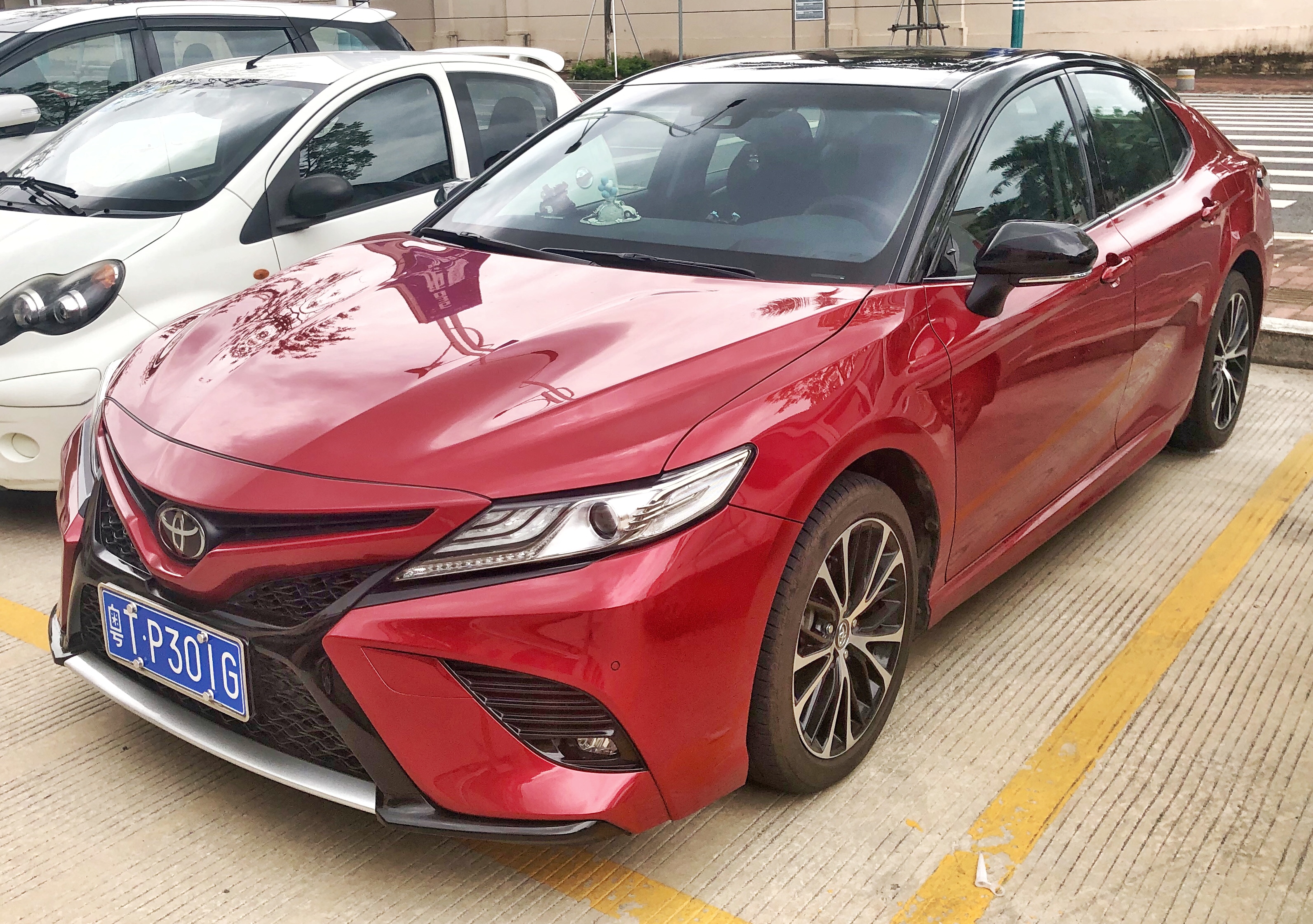
Toyota Camry
"And it was a Camry. [1216.8s] I remember describing it as a Fisher Price baby's first car."
The Toyota Camry is a very common, everyday family car. They’re describing it as a rental that felt basic compared to their usual BMW.
The Toyota Camry is a mainstream midsize sedan known for being practical and easy to live with. In this episode, it’s the rental car they got from the dealer, and the host jokes about its simple, “toy-like” controls and styling.
Toyota RAV4
"Like I pulled up next to on the highway, a what's a little the RAV four. I'm like, this thing's gigantic now. And plus, it was an off road addition, whatever."
The Toyota RAV4 is a compact SUV. The host is saying it has gotten much bigger, and they’re also talking about an off-road version/trim idea.
The Toyota RAV4 is a compact SUV that has grown in size over the years, which is why the host calls it “gigantic now.” The segment also references an off-road-oriented trim concept (TRD-style), which is relevant to how Toyota markets capability on a mainstream platform.
part-time rear
"That means like a TRD RAV four. Is that even four wheel drive? It's like front wheel drive with like part time rear or something."
“Part-time rear” means the car doesn’t always drive the back wheels. It usually drives the front wheels, and the back wheels kick in only when you need extra grip.
“Part-time rear” refers to a drivetrain setup where the rear axle is only driven in certain conditions rather than continuously. In other words, the vehicle may run primarily as front-wheel drive and engage the rear wheels when more traction is needed.
couldn't stall
"It got no power, but you couldn't stall. It was a little five speed in both the vehicles I had."
To “stall” means the engine dies and stops running. They’re saying this older Toyota was easy to keep running at very low speeds, which helps when you’re creeping over obstacles.
“Stalling” is when an engine loses enough combustion to stop running, usually from low RPM, poor throttle input, or load. Saying the engine “couldn't stall” is shorthand for predictable low-speed drivability—useful for crawling where you’re often near idle.
Overland
"I think especially after the Overland thing took over and yeah, you see those a lot. They're like, not I guess you can't use mall crawler anymore because they're not built as crawlers."
“Overland” means traveling long distances with a 4x4, usually with camping gear and the ability to handle dirt roads and rough terrain. It’s like road-trip mode, but for the outdoors.
In the 4x4 world, “overland” refers to long-distance, self-sufficient travel—often with camping gear—using vehicles that can handle rough roads and trails. It’s more about endurance and comfort than pure rock-crawling performance.
mall crawler
"They're like, not I guess you can't use mall crawler anymore because they're not built as crawlers. They're like, yeah, they're not mall crawlers, mall glampers or something like that."
A “mall crawler” is a 4x4 that’s mostly used for everyday driving and looks off-road, not for real rock-crawling trails. It’s more style than serious trail capability.
“Mall crawler” is an off-road slang term for a vehicle that looks rugged and is used mostly for casual driving rather than real trail crawling. The implication is that it’s not built or set up for serious low-speed traction work.
Jeep
"I was thinking more Jeep or more Toyota shit. And I think most Toyota people are familiar with the Jeep brands."
Jeep is another off-road car brand they’re comparing against. The speaker says Toyota people often know Jeep models even if they haven’t owned one.
Jeep is mentioned as the brand many Toyota owners are more familiar with, especially in the context of model shorthand like “XJ” and “TJ.” The point is that Jeep has a more mainstream presence in the off-road conversation than Land Rover/Rover.
XJ
"Like if you saw like, you can't not be familiar. Yeah, like everybody know, even if you haven't had a Jeep and you're in the Toyota world, you know what an XJ is, you know what a, you know, a TJ, blah, blah, blah."
“XJ” is a nickname people use for a specific Jeep Cherokee generation. It’s like saying “that particular Cherokee” without saying the full name.
“XJ” is Jeep shorthand for the Cherokee (the XJ generation). In off-road circles, it’s a widely recognized model code used to quickly reference that specific Cherokee platform.
TJ
"you know what an XJ is, you know what a, you know, a TJ, blah, blah, blah. But most people are not familiar with what Rovers have to offer."
“TJ” is a common shorthand for a specific Jeep Wrangler generation. People use it to quickly talk about “that Wrangler” without getting into details.
“TJ” is Jeep shorthand for the Wrangler (the TJ generation). Enthusiasts use these letter-number codes to refer to the exact Wrangler generation without listing years and trims.
rebrand
"Well, that was their whole rebrand thing, too, because they had the series trucks. ... They rebranded as we're going to be Range Rover and we're going to be luxury SUVs."
A rebrand is when a company changes how it sells a product—like who it’s for and what image it wants. They’re saying Land Rover shifted the Range Rover’s image toward luxury, which helped justify higher prices.
In automotive business terms, a rebrand is a deliberate shift in how a company positions a vehicle line—often changing the target customer, styling/message, and pricing tier. Here, the hosts describe Land Rover’s move toward marketing the Range Rover as a luxury SUV in the U.S., which they argue helped drive its premium pricing.
F-150 Raptor
"...nk of it. That's more like they basically built a Raptor fighter with the Defender Akta. That's go fast st..."
The Ford F-150 is a large pickup truck used for everyday driving and work. The podcast brings it up while talking about making things faster or more performance-focused. It’s mentioned because it’s a popular truck that can be set up for more than just hauling.
The Ford F-150 is a full-size pickup truck known for being widely used and highly configurable for different purposes. In the podcast, it’s mentioned in a context of “go fast” performance comparisons, suggesting they’re talking about a more aggressive, performance-oriented setup or mindset. It’s included because it’s a common platform that can be built for high capability.
unreliable cars
"That's like the one good benefit of unreliable cars is nobody trusts them after like 10 years and 100,000 miles. So they're dirt cheap."
They’re saying that if a car is known for breaking down, fewer people want to buy it. That can make it cheaper later when you’re shopping for a used off-road rig.
The hosts use “unreliable cars” to describe vehicles that develop problems over time, which reduces buyer confidence. They claim that this lack of trust can lead to lower used prices, making those cars easier to afford for off-road use.
depreciation
"Rover's still up there and like the top whatever top two or something of depreciation. Yeah. So like depreciation, it's it sucks for certain people like if you buy it and you but hey, if you're buying them used, that could be a good thing."
Depreciation means the car gets cheaper as it gets older. They’re saying that some Rover/Land Rover models drop in price a lot, so buying used can be a good deal for off-roading.
Depreciation is how much a vehicle’s value drops over time. The hosts argue that Land Rover/Rover models can have strong depreciation, which makes used examples cheaper and more attractive for off-road use.
corrosion risk
"Famously, the bodies are aluminum and that wasn't a corrosion risk because they couldn't get steel."
Corrosion risk means how likely the metal is to get damaged over time. Rust is one common kind of corrosion, and aluminum is less prone to it than steel.
Corrosion risk is the likelihood of metal degrading due to chemical reactions like rust. The hosts argue that aluminum bodywork reduced corrosion risk compared with steel when steel availability was constrained.
fully boxed
"Yeah, although they're not lightweight vehicles because the frames are fully boxed and quite heavy."
“Fully boxed” describes a stronger, enclosed frame shape. It can make the vehicle tougher, but it also adds weight.
A fully boxed frame means the chassis rails are enclosed on multiple sides, making a rigid structure. The hosts use it to explain why these vehicles are heavy even with aluminum body panels.
series one
"So now that by default makes the first one the series one. So then we go from the series one to the series two three"
“Series One” is the first version of Land Rover’s classic lineup. Later versions were called Series Two and Series Three.
“Series One” refers to the earliest generation of Land Rover’s classic model line. The speaker frames it as the baseline once later “Series Two” and “Series Three” versions exist.
series two three
"So then we go from the series one to the series two three and they come in different wheel bases and they're kind of Lego."
Series Two and Series Three are later versions of the same classic Land Rover family. They could be configured in different sizes and setups for different jobs.
“Series Two” and “Series Three” are subsequent generations of the classic Land Rover model line. The hosts mention they came with different wheel bases and were built with a modular, “Lego-like” approach.
wheel bases
"So then we go from the series one to the series two three and they come in different wheel bases and they're kind of Lego."
Wheelbase is the distance between the front and rear axles. The segment notes different wheel bases because that changes interior/cargo space and how the vehicle handles.
manual transmissions
"They're only manual transmissions. These are pure utility vehicles."
A manual transmission is the kind where you shift gears yourself using a clutch. It can be useful off-road because you can keep the engine at the right speed.
A manual transmission is a gearbox controlled by the driver using a clutch pedal and gear lever. In off-road utility vehicles, manuals are often preferred because they let the driver precisely control engine speed for traction and crawling.
Range Rover
"And eventually in what year did we start in the 70s with the Range Rover? ... Range Rover was designed, developed ... in 70 was the first year of Range Rover."
The Range Rover is a British SUV known for being able to handle rough terrain while still feeling upscale. Here, they’re talking about when it was developed and what engines it started with.
The Range Rover is a British off-road-leaning SUV that helped define the modern luxury 4x4 formula. In this segment, the hosts trace its origins to late-1960s development and discuss early powertrain choices, including the Rover V8 derived from a Buick V8.
Rover V8
"Yeah. Well, that was the only choice at first in Range Rover, because that's where they introduced the Rover V8, which is a Buick V8."
The Rover V8 refers to Land Rover’s V8 engine family used in early Range Rover applications. In this segment, the hosts specifically connect it to the Buick V8 lineage, highlighting how the early Range Rover got its V8 option.
Buick V8
"because that's where they introduced the Rover V8, which is a Buick V8. Yes, started as the 215 Buick."
A Buick V8 is a V8 engine design from Buick. The hosts are saying early Range Rover V8s were based on that Buick engine, at least at first.
A Buick V8 is an American V8 engine design used as a basis for other manufacturers’ V8s. Here, the hosts say the Rover V8 option in early Range Rover models was essentially derived from a Buick V8, including an initial 215-cubic-inch version.
dual overhead cam motors
"I really hate these super complex, like, you know, dual overhead cam motors and shit like that."
Dual overhead cam (DOHC) means the engine uses two camshafts up in the head to control the valves. The speaker is basically saying they’d rather deal with simpler engine designs because DOHC can be more complicated to repair.
A dual overhead cam (DOHC) engine uses two camshafts located in the cylinder head to operate the intake and exhaust valves. The host is expressing a preference for simpler engine designs, implying DOHC setups can be more complex to work on than simpler valvetrain layouts.
Jeep Grand Cherokee
"...his, a lot of people will argue between the first Grand Cherokee versus the first Range Rover as what was the star..."
The Jeep Grand Cherokee is an SUV that can be used for daily driving but is also designed to handle rough roads. The podcast mentions it when talking about early versions of this kind of SUV. It’s included because it was considered a key model in that category.
The Jeep Grand Cherokee is a midsize SUV that’s known for combining everyday usability with off-road capability. It’s brought up in the context of “first” generations and comparisons to other luxury off-road SUVs, suggesting it played a major role in defining what people expected from that segment. In the podcast, it’s referenced as a standout early model in the lineup’s history.
Jeep Wagoneer
"Are you talking about like a Wagoneer or something? Yeah, the Wagoneer."
The Jeep Wagoneer is an early SUV that helped set the template for the more comfort-and-luxury side of SUVs. Here it’s mentioned because people debate whether it came before the Range Rover as the start of the luxury SUV idea.
The Jeep Wagoneer is often cited as an early luxury-oriented SUV, bridging the gap between traditional off-road utility and more comfort-focused family driving. In this discussion, it’s specifically mentioned as an early contender for “where the luxury SUV started,” and the hosts note it was still using leaf springs.
leaf springs
"The Wagoneer's arguable because it was still on leaf springs. Yeah. And we're all coil springs."
Leaf springs are an older type of suspension that uses layered metal strips to help the wheels move over bumps. They’re being used here as a “then vs now” comparison against coil springs.
Leaf springs are a traditional suspension design that uses stacked metal strips to support the vehicle and absorb bumps. The hosts mention the early Wagoneer as still being on leaf springs, contrasting it with later coil-spring setups like the Range Rover.
coil springs
"Yeah. And we're all coil springs. Yeah, but it did have wood paneling."
Coil springs are a suspension system that uses a metal spring coil to absorb bumps. The hosts are comparing older leaf-spring SUVs to coil-spring setups that generally feel more controlled.
Coil springs are a suspension method that uses a helical spring to support the vehicle and control ride height and wheel movement. The segment contrasts leaf-spring SUVs with the Range Rover’s coil springs on all four corners, which is part of why it felt more “modern” and refined.
disc brakes
"But yeah, I know the Range Rover was one of the first, if not the first, with coil springs on all four corners and disc brakes on all four corners."
Disc brakes are a braking system where pads squeeze a spinning metal disc to slow the car down. They’re pointing out that the Range Rover had disc brakes on all four wheels, which is considered a more advanced setup.
Disc brakes use brake pads clamping onto a rotating disc to slow the vehicle. The hosts emphasize “disc brakes on all four corners,” which is a notable upgrade versus older drum-brake setups and helps explain the Range Rover’s appeal.
solid axle
"It's solid axle. It has radius arms and then coils, you know, and wall."
A solid axle is a heavy-duty axle that connects both wheels together. When one wheel goes over a bump, the axle helps the other wheel stay in contact, which is great for rough trails.
A solid axle is a suspension setup where the left and right wheels are connected by a single rigid axle beam. In off-roading, it can provide strong wheel articulation and durability because the axle stays intact while the suspension moves over obstacles.
radius arms
"It has radius arms and then coils, you know, and wall. Yeah, disc brakes and nice things."
Radius arms are suspension parts that help guide the axle as the wheels move up and down. They’re used to keep the truck stable when you’re driving over bumps and ruts.
Radius arms are a type of suspension link that controls the axle’s movement and alignment. They help manage how the axle travels as the wheels move, which can improve stability and ride quality on uneven terrain.
long arm conversion
"Compared to say a Jeep of the era or something, you'd think that's the equivalent of doing a long arm conversion that the suspension links are long. It actually has really good suspension travel."
A long arm conversion is changing the suspension links to be longer. That can help the suspension move better over bumps and keep the tires planted.
A long arm conversion is a suspension modification that replaces shorter suspension links with longer ones. Longer arms can improve ride quality and suspension geometry, often increasing effective wheel travel and traction for off-road use.
suspension travel
"It actually has really good suspension travel. That's the thing is you can get, you know, some of these like 20 to 30 year old"
Suspension travel is how much the suspension can move up and down. More travel usually means the tires can stay on the ground better over rocks and ruts.
Suspension travel is the distance the suspension can move through its full range of compression and rebound. More travel generally helps off-road vehicles keep tires in contact with uneven ground and reduces the chance of bottoming out.
hub centric
"Like the hub centric on their axles is way better than most cars. They're full float axles, too, and stuff like that."
Hub-centric means the wheel is centered by a snug fit on the hub. That helps the wheel sit straight and can reduce wobble or vibration.
Hub-centric mounting means the wheel is centered by the hub’s pilot (the hub bore) rather than relying on the wheel studs alone. This improves alignment and can reduce vibration and uneven loading, especially important when wheels and tires are stressed off-road.
full float axles
"Like the hub centric on their axles is way better than most cars. They're full float axles, too, and stuff like that. And even a D2, the semi float is a nice design."
Full-float axles are built so the axle shaft isn’t taking the vehicle’s full weight. That can make the setup tougher and easier to service if something wears out.
Full-float axles support the vehicle’s weight on the axle housing and bearings, while the axle shafts mainly transmit torque. This design can be more durable because the wheel bearings aren’t loaded by bending forces from the vehicle weight.
semi float
"And even a D2, the semi float is a nice design. Yeah. Well, it's a different semi float than like there's not C-clip and all that."
Semi-float axles share the job of carrying weight between the axle shaft and bearings. It’s not as robust as full-float in some cases, but it can still be well-designed.
Semi-float axles support the vehicle’s weight partly through the axle shaft and bearings, unlike full-float designs where the axle shaft is mostly for torque. The speaker notes that even the semi-float setup can be a good design, but it differs in how loads are handled.
C-clip
"Yeah. Well, it's a different semi float than like there's not C-clip and all that. And it's it's all these really good stuff."
A C-clip is a small metal retainer that helps keep the axle shaft from sliding out. If a design doesn’t use C-clips, it can change how the axle is held and serviced.
A C-clip is a small retaining clip used in some axle designs to hold the axle shaft in place inside the differential. Designs that avoid C-clips can be easier to service and may reduce failure modes related to axle retention.
relays
"So they put power, everything heated this heated windshields in them. [2111.1s] So there's a thousand relays. Oh, yeah. [2113.3s] A million feet of wire in the whole thing."
Relays are like remote-controlled switches inside the car. They help the car run big electrical loads safely, and if they wear out or the wiring around them gets old, you can get electrical problems.
Relays are electrically operated switches that let a low-power signal control higher-power circuits (like fans, heated elements, or lights). The hosts mention “a thousand relays,” implying a very complex network that can be a source of faults if relays or wiring degrade.
electrical issues
"So yeah, we have a different perspective in America. [2093.5s] Well, to be honest, most people say this stuff really have no idea. ... [2115.4s] So yeah, no wonder you're going to have electrical issues when you have that much."
“Electrical issues” means the car has problems with its electronics—like wiring, switches, or sensors. Older vehicles with lots of add-on features can be more prone to these problems over time.
“Electrical issues” refers to problems caused by the vehicle’s wiring, sensors, switches, relays, and control modules. In older luxury 4x4s, more accessories and more complex wiring can increase the chances of faults as components age.
security systems
"And also the security systems they put in there, a little overzealous, you know, [2124.8s] really like there's a lot of theft of cars over in the UK."
Security systems are the car’s anti-theft electronics. They can include alarms or systems that stop the car from starting, and the hosts are saying the early setup may have been more complicated than necessary.
Vehicle security systems are anti-theft electronics (alarms, immobilizers, and related sensors) designed to prevent unauthorized starting or entry. The hosts suggest the early Range Rover security setup was “overzealous,” and they connect it to theft activity in the UK.
series three
"Anyway, when we get the Range Rover, now we have two models. [2135.2s] So you've got the series truck, which by now we're up to the series three. [2138.7s] And then which came in multiple wheel bases and everything."
Series Three is a version of the classic Land Rover truck line. It’s known for being a basic, work-oriented off-road vehicle rather than a luxury SUV.
“Series Three” refers to the Land Rover Series III, a classic, simple, off-road-focused truck platform. The hosts contrast it with later luxury Range Rover models, noting that by the time of Series III it was still fundamentally a utilitarian truck.
F 150
"And again, this is a rare truck here, but you go to England, it's just like an F [2145.9s] 150. It's just a just a farmer truck, nothing special, you know, comes in,"
The Ford F-150 is a very common pickup truck used for work in the U.S. The hosts are saying that in England, the Series truck is viewed the same way—like an ordinary tool for daily jobs.
The Ford F-150 is a mainstream pickup truck in the U.S., often used as an everyday work vehicle. The hosts use it as a comparison to explain that in England, the Land Rover Series truck is treated like a common utilitarian “farm truck,” not a special collector item.
transfer case
"Like the the transfer case has a PTO option. So you you could order a factory, you know, snow plow or, you know, what, you know, agricultural implements..."
A transfer case is the part that sends power to both the front and rear wheels in a 4x4. It’s also commonly involved in options like PTO, which lets you run equipment off the vehicle’s drivetrain.
A transfer case is the gearbox that splits power from the transmission to the front and rear axles in a 4x4. It’s also where low-range gearing and PTO (power take-off) options typically live, which is why the hosts call out a PTO-capable transfer case as a key feature for specialty builds.
PTO option
"Like the the transfer case has a PTO option. So you you could order a factory, you know, snow plow or, you know, what, you know, agricultural implements and, you know, yeah, pumps..."
PTO (power take-off) is how a vehicle can power tools or equipment using its own drivetrain. The point they’re making is that some Land Rovers could be ordered with PTO so you could run things like plows or pumps.
PTO (power take-off) is a driveline connection that lets the vehicle’s engine/transmission power external equipment—like pumps, plows, or forestry tools. Here, the hosts emphasize that Land Rover’s transfer case could be ordered with a PTO option, enabling factory-style specialty setups.
LT2 30
"When did the LT2 30 first come out? Was it with the Range Rover, I guess? No, it would have been later after it would have been in in a series three... I know they had the LT2 30 in 1985 to 88."
LT2 30 is a specific code name for a drivetrain setup Land Rover used. The hosts are trying to pin down when it showed up and how it relates to other transmission/transfer-case versions.
LT2 30 appears to be a specific Land Rover drivetrain/transfer-case-related designation discussed in the context of when it was used on Series III and later on Range Rover Classics. The hosts treat it as important enough to explain its timing and how it relates to earlier transmission/transfer-case setups (they mention LT77 and possibly LT85).
LT77 transmission
"But anyways, no, it was just transmission. Yeah. And then, yeah, I think it came on a Range Rover classics... because before it was an LT77 transmission, which has the transfer case integrator..."
LT77 is a specific Land Rover transmission they’re comparing against later versions. They’re using it to explain how the drivetrain setup evolved over the years.
LT77 is a Land Rover manual transmission family mentioned here as the earlier setup before the LT2 30 era. The hosts also reference an “integrator” in the transfer-case context, suggesting the drivetrain architecture changed across these transmission/transfer-case combinations.
permanent four wheel drive
"So permanent four wheel drive. Yeah."
Permanent four-wheel drive means the car is always sending power to all four wheels. That helps it grip better on dirt, snow, or rocks because it doesn’t wait to “turn on” the extra traction.
Permanent four-wheel drive (4WD) sends power to all four wheels all the time, rather than only engaging the front axle when needed. That typically helps traction in loose or slippery conditions because the system is already distributing torque before wheel slip starts.
passenger bias
"So they're going to be a passenger bias on most of these. It's just like a Land Cruiser for the Toyota people."
“Passenger bias” suggests the power isn’t shared perfectly evenly. That can change how the truck feels when one side has more grip than the other.
“Passenger bias” here likely means the torque split is not perfectly centered between left and right sides, or that the rear output is offset toward one side. In off-road drivetrains, an offset torque bias can affect how the vehicle behaves in uneven traction situations.
three and a half to one low range
"It has a good, it has like a three and a half to one low range."
“Three and a half to one” describes how much extra pulling power the low-range gearing gives you. More multiplication helps you crawl slowly and smoothly over obstacles.
A “three and a half to one” low-range ratio means the transfer case multiplies torque by about 3.5 times compared to high range. Higher multiplication (bigger ratio) generally improves slow-speed control and obstacle crawling ability.
four gear transmission
"And it's a four gear transmission. It's a four gear case, no chains."
They’re talking about having more selectable gearing for off-roading. Extra gear positions help you pick the right speed and pulling power for rocks, mud, or steep climbs.
In this context, “four gear transmission” refers to the transfer case having four selectable gear positions (often a combination of high/low range and front/rear drive modes). More gear positions can make it easier to keep the engine in its best torque band during off-road driving.
four gear case, no chains
"It's a four gear case, no chains. Although I think chains are a little underrated."
Some off-road transfer cases use chains to transfer power, and some use gears. Using gears instead of chains can help keep things quieter and more consistent.
A transfer case can be driven by chains or by gears. A “no chains” setup uses gear-driven internals, which can reduce slack and noise compared with chain-driven designs (though both can work well depending on build quality and maintenance).
gear driven
"But so the LT2 30s are gear driven, which, you know, people like and they're not loud or anything."
“Gear driven” means the transfer case uses gears to move power around. People often prefer it because it can be smoother and quieter than chain-driven designs.
“Gear driven” describes a transfer case that uses gears to transmit torque rather than chains. Gear-driven systems are often described as quieter and less prone to the rattle/whip associated with some chain setups, depending on design and wear.
center differential lock
"And then we would have a center differential lock, just like an 80."
A center differential lock forces the front and rear wheels to turn together. It’s useful when the ground is slippery so power doesn’t just spin one end of the truck.
A center differential lock is a drivetrain feature that locks the front and rear axles together so they rotate at the same speed. That helps prevent wheel slip and improves traction when driving off-road or on low-grip surfaces.
Land Rover Discovery
"And then in the 90s, we introduced the Discovery, which is the mid ground."
The Land Rover Discovery is a family of Land Rover SUVs meant to sit in the middle of the lineup. Here they’re saying it was introduced in the 1990s as the “mid ground” option.
The Land Rover Discovery is a mid-size SUV positioned between a brand’s more utility-focused models and its more luxury-oriented offerings. In this segment, the hosts describe it as the “mid ground” introduced in the 1990s.
Land Rover Series 88
"In fact, I mean, you can compare an FJ 40 with a series 88. [2383.8s] I mean, they're almost identical in the offset transfer cases. [2386.9s] Leaf sprung."
The Land Rover Series 88 is an older Land Rover 4x4 made for basic, tough off-road work. The hosts compare it to the Toyota FJ 40 to show how similar these old-school trucks can be.
The Land Rover Series 88 is a short-wheelbase, classic Land Rover built for utilitarian off-road use, with a simple mechanical layout. Here it’s compared directly to the Toyota FJ 40, including drivetrain layout details like transfer case placement and suspension style.
Toyota FJ 40
"In fact, I mean, you can compare an FJ 40 with a series 88. [2383.8s] I mean, they're almost identical in the offset transfer cases. [2386.9s] Leaf sprung."
The Toyota FJ 40 is an old-school Toyota 4x4 with a simple, tough design. The hosts mention it because it’s a good reference point for how similar some older off-road trucks feel and are built.
The Toyota FJ 40 is a classic 4x4 from Toyota’s Land Cruiser line, known for its boxy body and simple, rugged off-road design. In this segment, it’s used as a baseline to compare build style and drivetrain layout with older Land Rover models.
Leaf sprung
"I mean, they're almost identical in the offset transfer cases. [2386.9s] Leaf sprung. [2388.0s] The FJ 40 is arguably better built, but arguably."
Leaf springs are a type of suspension made from stacked metal strips. They’re common on older off-road trucks because they’re tough and can handle bumps and heavy use.
“Leaf sprung” describes a suspension setup that uses stacked metal leaf springs to support the vehicle and control ride movement. On older 4x4s like the FJ 40 and Land Rover Series trucks, leaf springs are common because they’re durable and handle rough terrain and heavy loads well.
fuel injection
"a Defender counterpart where it's all it's modernish with fuel injection,"
Fuel injection is how the engine gets fuel. Instead of using a carburetor, it uses valves/injectors to spray fuel in a more controlled way.
Fuel injection is a method of delivering gasoline/diesel to the engine using electronically controlled injectors instead of a carburetor. The hosts mention it to describe how the Defender/series-style trucks can feel “modernish” compared with older carbureted versions.
Land Rover Defender
"a Defender counterpart where it's all it's modernish with fuel injection, ... Defender is basically just a modernized series truck on coil springs and newer running gear and things."
The Land Rover Defender is a famous off-road vehicle line. The hosts are saying it’s basically an older-style Land Rover concept that got updated with more modern suspension and components, but it can cost a lot.
The Land Rover Defender is a classic off-road SUV/truck line that’s known for being a modernized take on earlier “series” Land Rover designs. In this segment, they describe it as a series-truck concept updated with coil springs and newer running gear, while also noting it can be overpriced due to limited availability in the U.S.
running gear
"Defender is basically just a modernized series truck on coil springs and newer running gear and things."
Running gear is the vehicle’s moving parts underneath—basically the mechanical stuff that helps it drive and handle. The hosts are saying the Defender has newer versions of those parts.
“Running gear” is a catch-all term for the drivetrain and undercarriage components that make the vehicle move—things like axles, suspension linkages, and related mechanical parts. The hosts use it to say the Defender has updated mechanicals compared with the older series-truck base.
Toyota A90
"Um, yeah, and then for what it's worth, we should also mention the model. If it's a 90 and 88, that's the wheelbase. That's that's how they designated the models."
The Toyota Supra is a sports car built for performance and driving feel. The podcast mentions that some model numbers correspond to the wheelbase, which is a measurement of how long the car is between the front and rear wheels. It’s brought up to explain how different versions are labeled.
The Toyota Supra is a performance sports car known for its strong driving dynamics and enthusiast following. The podcast specifically mentions how model numbers relate to wheelbase (for example, “90” and “88”), which points to how the car was categorized and built in different configurations. It’s discussed as part of a deeper look at the model’s history and how variants are identified.
aerodynamic
"It's very handsome. It's my personal favorite Rover. It's not as aerodynamic as a shoebox, but I would equate the body style"
Aerodynamic means how smoothly a car moves through air. The host is basically saying the Range Rover Classic isn’t shaped to cut through air as easily as a more streamlined vehicle.
Aerodynamic refers to how easily air flows around a vehicle, which affects drag and efficiency. The host contrasts the Range Rover Classic’s shape with a “shoebox,” implying it’s less streamlined and therefore likely creates more air resistance.
split tailgate
"It's very handsome. It's my personal favorite Rover. It's not as aerodynamic as a shoebox, but I would equate the body style to similar to like a 60, 62 cruiser. But I would say that's what would you compare like a Range Rover Classic to another like another Land Cruiser? Yeah, probably like a 60, 60. Well, the hard part is I think as far as Toyota goes,"
A split tailgate is a back door that opens in two pieces. That can make it easier to load things or access the cargo area without fully opening the whole rear.
A split tailgate is a rear door that opens in two sections (typically upper and lower halves) instead of one full swing-out panel. It’s a practical off-road and utility feature because it can provide partial access—like loading gear while keeping part of the opening covered.
Land Cruiser
"But I would say that's what would you compare like a Range Rover Classic to another like another Land Cruiser? Yeah, probably like a 60, 60."
The Land Cruiser is Toyota’s famous off-road SUV line. In this discussion it’s the comparison point for how the Range Rover Classic looks and fits in the same “classic 4x4” category.
The Toyota Land Cruiser is a long-running, body-on-frame off-road SUV known for durability and serious trail hardware. Here it’s used as the main reference point for comparing the Range Rover Classic’s size and boxy styling to Toyota’s classic off-road lineup.
torsion bar
"So it starts off a little more capable than, you know, your old four runners or something that might have the torsion bar, independent front suspension, things like that."
A torsion bar is a spring made from a bar of metal that flexes by twisting. It helps the suspension soak up bumps.
A torsion bar suspension uses a metal bar that twists to provide spring action instead of using coil springs. It’s common on some older trucks and can package well, but it changes how the suspension feels and how it’s tuned compared with coil-over or coil-spring setups.
independent front suspension
"So it starts off a little more capable than, you know, your old four runners or something that might have the torsion bar, independent front suspension, things like that."
Independent front suspension means the left and right front wheels can move separately. That can make the ride smoother, but it behaves differently than a solid axle when you’re off-road.
Independent front suspension (IFS) lets each front wheel move up and down somewhat separately rather than being tied together by a solid axle. That usually improves on-road ride and steering feel, but it can change how the vehicle articulates off-road compared with solid-axle setups.
sunroof
"it's hard to find the simpler things like, you know, one that doesn't have a sunroof, one that doesn't have all the bells and whistles is rare,"
A sunroof is a panel in the roof that can open to let in air and light. The hosts are saying that cars without options like this are rarer.
A sunroof is a glass or metal panel in the roof that can open for ventilation or light. In this context, the hosts are using it as an example of “extra options” that make certain Discovery examples less common and less desirable to the off-road-focused buyers they’re describing.
fully airbagged
"but these are vehicles that are fully independent suspension, [2823.5s] fully airbagged series Land Cruiser, the really modern, [2827.5s] yeah, bubbly looking one."
“Airbagged” in this context usually means the suspension uses air springs. It can help keep the ride height more consistent and feel more comfortable, especially when you’re loaded up.
“Fully airbagged” here is describing a vehicle equipped with air suspension (air springs) rather than traditional steel coil springs. Air suspension can help maintain ride height and improve comfort when carrying loads—common needs for overlanding.
V eight
"But yeah, you're dealing with at that point in the States, [2837.0s] you basically are dealing with a V eight, either a four point four or five liter V eight,"
A V8 is an engine with eight cylinders. It’s often chosen in bigger SUVs because it can provide strong pulling power for things like towing and highway cruising.
A “V eight” (V8) is an engine with eight cylinders arranged in a V shape. The hosts mention that in the U.S. market, these newer Land Rover models are typically paired with a V8, which affects how the vehicle delivers power and torque for towing and long-distance driving.
full-time four-wheel drive
"These are going to be six feet, [2847.1s] automatics, full time audit, full time four wheel drives."
It means the truck/SUV is driving all four wheels all the time. That helps with grip on slippery surfaces, and it can still turn normally without binding.
Full-time four-wheel drive (4WD) means the vehicle can send power to all four wheels all the time, not just when traction is lost. It typically uses a center differential (or equivalent system) so front and rear axles can rotate at different speeds during turns.
terrain response
"Yeah, the the terrain response thing is copied a lot by [2874.1s] hill descent control, all that crap started with Rover."
Terrain Response is a mode system that helps the vehicle adapt to different ground types. Instead of you guessing how to drive, the car changes how it manages traction and power for that surface.
Terrain Response is a Land Rover system that changes drivetrain and traction behavior based on the selected surface (like mud, sand, rocks, or grass). It typically adjusts throttle mapping, shift strategy, traction control, and sometimes low-range gearing to match the conditions.
hill descent control
"Yeah, the the terrain response thing is copied a lot by [2874.1s] hill descent control, all that crap started with Rover."
Hill Descent Control helps you go down steep hills slowly and steadily. It uses the brakes to keep the speed from running away when the surface is slippery.
Hill Descent Control (HDC) is a traction-control feature designed to help the vehicle maintain a steady, slow speed while descending steep grades. It uses braking at individual wheels (and engine/drivetrain control) to prevent the car from accelerating downhill.
supercharged
"That's my wife's daily. It's a supercharged version, 2010. So you've got 510 or 15 horsepower or something like that."
A supercharger is a device that squeezes more air into the engine. More air usually means more power, which is why the host calls it a “supercharged version.”
A supercharger is a forced-induction device that compresses incoming air before it reaches the engine. By pushing more air into the cylinders, it can increase power without changing the engine’s basic displacement.
32 or 33 inch tire
"It's running on a 30 what am I on 32 or 33 inch tire right now. Just a small lift and, you know, it's just it's her commuter and slash."
Bigger tires (like 32–33 inches) can help the vehicle clear obstacles and handle snow better. They can also change how the truck feels and may require other adjustments so everything fits.
Tire size (like 32–33 inches) affects ground clearance, ride comfort, and how easily the vehicle can roll over rocks/snow. Larger tires also change gearing and can require suspension and drivetrain setup to fit correctly.
small lift
"It's running on a 30 what am I on 32 or 33 inch tire right now. Just a small lift and, you know, it's just it's her commuter and slash."
A lift means raising the suspension a bit. That gives the vehicle more clearance so it can handle rough ground and bigger tires more easily.
A lift kit raises the vehicle’s ride height, typically to improve clearance for off-road obstacles and to fit larger tires. Even a “small lift” can noticeably change approach/departure angles and snow/rock traction.
mild wheeling
"We take it and do, you know, mild wheeling with it. It's not as practical space wise because it's, you know, it doesn't."
“Wheeling” is off-road driving over rough terrain. “Mild wheeling” means it’s not the most extreme stuff—more like easier trails than hardcore rock crawling.
“Wheeling” is off-road driving focused on traction and obstacle navigation, often on trails or uneven terrain. “Mild wheeling” usually means easier routes where you’re not doing extreme rock crawling.
limp mode
"So say it is giving you trouble. Haven't really been there. It puts it in limp mode. It does all sorts of stuff."
Limp mode is when the car reduces power or limits features to protect itself after it detects a problem. It’s basically the car saying, “Something’s wrong—let’s keep it safe until it’s fixed.”
Limp mode is a protective strategy where the car limits certain functions to prevent damage when it detects a fault. With systems like air suspension, it may restrict operation or adjust behavior until the issue is corrected.
deflate the suspension
"Just the safety, just put it on, just deflate the suspension, put it on a [3079.4s] bump stops and you're like, please don't. [3082.7s] I just don't need to do that."
Some off-road Land Rovers use air in the suspension. “Deflating” means that air pressure drops, and the truck lowers—often as a safety move when the system thinks something isn’t right.
“Deflate the suspension” refers to an air-suspension system losing pressure so the vehicle lowers and changes its ride height. On some Land Rover setups, the vehicle may do this as a protective “safe mode” when it detects a fault, limiting how the suspension can operate.
bump stops
"Just the safety, just put it on, just deflate the suspension, put it on a [3079.4s] bump stops and you're like, please don't. [3082.7s] I just don't need to do that."
Bump stops are like the suspension’s “end-of-the-road” cushions. If the suspension has to move too far, they help prevent metal parts from smashing into each other.
Bump stops are suspension limiters that compress when the suspension reaches the end of its travel. When a vehicle’s system detects a fault, it may force the suspension to behave as if it’s on bump stops to prevent damage and reduce risk.
coil conversion kits
"They also have coil conversion kits. [3099.2s] So if you want to just get out of that kind of world completely, you can. [3103.4s] I did that to our LR three."
A coil conversion kit swaps the air suspension parts for spring-based suspension. People do it to make the ride system simpler and often cheaper to maintain.
Coil conversion kits replace an air-suspension setup with conventional coil springs (and related hardware). The goal is usually to reduce complexity and cost, especially on older vehicles where air components can become expensive or failure-prone.
stadium seating
"You sit up higher in a Land Rover. It's got the stadium seating. Yeah, you know, stuff to rear."
Stadium seating is a seating layout where the driver and passengers sit higher than the row in front, improving visibility. It’s often used in SUVs to make it easier to see around the vehicle and to give a more commanding driving position.
half doors
"So I used to have half doors in my Toyota. You do not need half doors in like a Discovery or something because the you sit up so high and the windows are so that's a weird Toyota thing."
Half doors are doors where only part of the door stays, usually leaving the top open. The host is saying they’re useful in some Toyota setups, but not as necessary in a higher-riding SUV like the Discovery.
Half doors are a style of door where the upper portion can be removed or folded away, leaving a lower “half” for protection. They’re sometimes associated with certain Toyota configurations and are a trade-off between open-air access and everyday practicality.
rev limiter
"[3269.7s] Would he be a rev limiter? Oh, God. [3271.8s] Without Don would be rev limiter."
A rev limiter is a safety setting that stops an engine from revving too high. If you try to push past the limit, the car will cut power to protect the engine.
A rev limiter is an engine control feature that prevents the engine from spinning faster than a safe maximum RPM. When the limiter is reached, it cuts fuel and/or spark to keep the engine from over-revving.
supercharger
"[3274.1s] He'd be DJ Don. [3275.7s] 3.4 supercharger. [3277.7s] Oh, God."
A supercharger is a device that squeezes more air into the engine. More air helps the engine make more power.
A supercharger is a forced-induction device that uses engine power to compress incoming air. More compressed air lets the engine burn more fuel and make more power, especially at lower RPMs.
pure four by four events
"[3278.4s] When you go into the pure four by four events and. [3282.2s] Oh, yeah. [3282.7s] Those guys are totally my my my cup of tea right there."
They’re talking about off-road events where 4x4 vehicles are the focus. It sounds like the kind of event where people really care about serious trail driving.
“Four by four” (4x4) events are off-road gatherings where vehicles are expected to handle rough terrain using four-wheel drive. “Pure” here implies a more hardcore, trail-focused crowd rather than mixed or street-oriented events.
Jeep JK
"[3317.7s] But in between that, I was so frustrated that I was like, you know what, [3321.3s] fuck it, I'm going to see if I can get like a new JK that just works. [3326.6s] It's new. [3327.2s] Doesn't have all these problems."
Jeep JK is a nickname for a specific generation of the Jeep Wrangler. It’s a popular off-road Jeep that many owners modify for trails.
The Jeep JK refers to the Wrangler generation (JK platform), which became popular for off-road builds and aftermarket support. People often choose it because it’s a common base for upgrades like lift kits, tires, and forced-induction setups.
bolt on
"Something that's brand new and that nothing is all the other guys have a lot of bolt on and a lot of accessory market."
“Bolt-on” describes aftermarket parts designed to install with minimal fabrication—typically using existing mounting points and hardware. In off-roading, bolt-on upgrades are popular because they reduce time, cost, and the need for custom machining.
accessory market
"Something that's brand new and that nothing is all the other guys have a lot of bolt on and a lot of accessory market."
The “accessory market” is the big store of extra parts made for a specific vehicle. If there are lots of accessories available, it’s easier to customize your truck for off-road use.
The “accessory market” is the aftermarket ecosystem of add-on products—like bumpers, suspension components, tires, and recovery gear—sold specifically for a vehicle platform. A strong accessory market usually means more choices, better availability, and easier customization.
axle swap
"because by Toyota, you can buy rock crawling specific Toyota branded things. You can sell an axle swap at Toyota easily."
An “axle swap” means changing the truck’s axles to a different set. Off-road people do it to get stronger parts and better gearing for crawling and rough terrain.
An “axle swap” is replacing a vehicle’s factory axles with different axles—often from another model or a stronger aftermarket version. Off-road builders do this to improve strength, gearing options, and compatibility with rock-crawling setups.
Cromoly axles
"You can sell an axle swap at Toyota easily. You can buy Cromoly axles for Toyotas easily."
“Cromoly” axles are made from a stronger steel. Off-road builders use them because they can handle rough use and heavy stress better than some cheaper options.
“Cromoly” (chromoly) axles are made from chromium-molybdenum steel, which is known for high strength and toughness. In rock crawling, chromoly components are often chosen to better resist bending and failure under heavy loads.
Rover housing
"the big hot dog thing back in the day was to put Toyota axles and diffs in the Rover housing, so no more, not anymore."
The “housing” is the main metal casing of the axle. It’s what holds the gears and shafts, so swapping parts “into the housing” usually means keeping that casing but changing what’s inside.
The “Rover housing” refers to the axle housing used on Rover vehicles—essentially the structural casing that holds the differential and axle shafts. When people talk about swapping parts “into the Rover housing,” they mean fitting different internal components while keeping the outer axle structure.
diffs
"the big hot dog thing back in the day was to put Toyota axles and diffs in the Rover housing, so no more, not anymore."
“Diffs” are the gears that let the wheels turn at different speeds, especially when you’re turning. For off-roading, changing the diff can change how well the truck grips.
“Diffs” is short for differentials, the gear assemblies inside the axle that allow the left and right wheels to rotate at different speeds while turning. In rock crawling, differential choice (and swapping them) can strongly affect traction and drivability.
nine inches
"But that was the big for a while in Australia, they were doing nine inches."
“Nine inches” is a nickname for a specific axle setup that off-road builders like. It’s popular because it’s strong and there are lots of parts available for it.
“Nine inches” likely refers to the Ford 9-inch axle, a well-known off-road and drag racing axle assembly. It’s popular because it’s strong and has a huge parts and gearing support ecosystem, which makes it attractive for custom axle builds.
Marlin Crawler
"we don't have Marlin Crawler or Trail Gear or anything like that"
Marlin Crawler is a company that sells specialized off-road parts. In this conversation, it’s used as an example of the kind of niche support that some brands (like Jeep) have more of than others.
Marlin Crawler is an aftermarket off-road parts brand best known for Jeep-focused crawl gearing and transfer-case related upgrades. The host mentions it to illustrate how Jeep and Toyota have more established specialty vendors for rock-crawling builds than Land Rover does.
Trail Gear
"we don't have Marlin Crawler or Trail Gear or anything like that"
Trail Gear is a company that makes parts for off-road driving. The point here is that some brands have more specialized aftermarket options than Land Rover does.
Trail Gear is an aftermarket off-road parts brand associated with trail and rock-crawling upgrades. The host groups it with Marlin Crawler to emphasize that some off-road communities have more dedicated specialty vendors than Land Rover does.
Rovicon
"So me and Don run the Rovicon, which is basically it's the only Land Rover event at the Rubicon."
Rovicon is a Land Rover event where people go off-roading together, specifically for rock crawling. It’s mentioned as the main example of a Land Rover-only gathering at the Rubicon.
Rovicon is described here as a Land Rover-focused event held at the Rubicon, centered on rock crawling. The host uses it to compare what you see at Land Rover events versus Jeep or Toyota events.
J.K.M. 40s
"When you go to one of those, this is J.K.M. 40s... It's on 40s that they're built with the exact same kit."
“J.K.M. 40s” sounds like a common build style used at certain Jeep events, where many rigs are set up the same way. The “40s” part likely refers to big tires, and the point is that you see lots of similar-looking builds.
“J.K.M. 40s” appears to refer to a specific off-road build standard or tire-size/class used at Jeep events—likely tied to “40s” meaning 40-inch tires. The host uses it to explain that many vehicles at those events are built with the same kit, unlike the more varied Land Rover crowd.
drivetrain
"Well, that's so my 88s, there's no Rover drivetrain left in it."
The drivetrain is the system that sends power from the engine to the wheels. If there’s “no Rover drivetrain left,” the truck’s been changed so it’s not using the original Land Rover power system anymore.
A drivetrain is the set of components that deliver power from the engine to the wheels, typically including the transmission, transfer case, driveshafts, and axles. Saying there’s “no Rover drivetrain left” means the vehicle has been swapped or heavily modified away from the original Land Rover powertrain layout.
wheel stud
"And it is nice when I need a bearing or just something simple as a wheel stud. You go to summit racing, it's on the shelf and it's 299"
A wheel stud is the threaded part that your wheel bolts onto. If it’s bent or missing, you can’t properly secure the wheel.
A wheel stud is the threaded bolt that sticks out of the hub and the wheel mounts onto. Lug nuts clamp the wheel to the hub, so a damaged or missing wheel stud can prevent safe wheel installation.
double low
"At, you know, put it in double low, put both gearboxes in low and just hold it on the floor three miles an hour."
“Double low” means selecting the slowest, most controllable gear range for off-road crawling. It helps the vehicle move slowly with more pulling power.
“Double low” refers to using a transfer case setup that provides an extra-low gear range for crawling. Putting both gearboxes in low effectively reduces vehicle speed while increasing torque at the wheels for slow, controlled climbs and descents.
aluminum V8
"It's aluminum V8, yes, but it's for America, mostly V8 trucks."
An aluminum V8 is a V8 engine (eight cylinders) made with aluminum parts. Aluminum is often used to save weight, but the segment is pointing out that other parts of the vehicle can still make it heavy.
An aluminum V8 refers to a V8 engine whose block and/or major components are made from aluminum to reduce weight compared with cast iron. Here, it’s mentioned in the context of vehicle design choices for the U.S. market and how that relates to overall vehicle build and mass.
Toyota 4Runner
"but when you shut a four runner door, it sounds hollow."
The Toyota 4Runner is a rugged SUV. Here they’re comparing how the doors sound when you close them—one feels more “hollow” than the other, which usually comes down to how heavy and built-up the door is.
The Toyota 4Runner is a body-on-frame SUV known for durability and off-road capability. In this segment, it’s used as a comparison point for door feel and sound—when you shut the door, it “sounds hollow,” which hints at different door construction and mass compared with the Land Rover.
sound deadening
"because it is heavy. It's it's got sound deadening."
Sound deadening is extra material in the car that helps block noise. It can also make doors feel and sound more solid because it adds weight and dampens vibrations.
Sound deadening is material added to a vehicle to reduce noise and vibration—so the cabin feels quieter and doors sound less “tinny.” In this segment, it’s specifically tied to why the Range Rover Discovery door sounds heavy: the extra material adds mass and changes the resonance.
curb weights
"So yeah, a D two, which is a little heavier than D one, [3744.0s] but you're probably talking curb weights like, you know, five and a half."
Curb weight is how heavy the vehicle is when it’s basically ready to drive, but not loaded with people or gear. The heavier the vehicle, the harder it can be on the parts when you drive over rough stuff.
Curb weight is the weight of a vehicle as it sits from the factory, with standard equipment and no cargo or passengers. In off-roading, higher curb weight usually means more stress on suspension, drivetrain, and tires, which can translate into more broken parts when you’re pushing obstacles.
weight distribution
"Yeah. So you end up breaking a lot more parts when your vehicle is really heavy. [3755.3s] And the problem with some of those two is a lot of the weight is going to be in the rear. [3760.4s] Yeah. So it makes climbing sometimes a little trickier."
Weight distribution means where the vehicle’s weight is located. If more weight is in the back, it can change how the tires grip and how the truck handles when climbing hills or obstacles.
Weight distribution describes how a vehicle’s mass is spread front-to-rear (and side-to-side). When a lot of the weight sits toward the rear—like the discussion suggests for these Rovers—it can affect traction and how easily the vehicle climbs, especially on steep or uneven terrain.
rear bumper
"Yeah. And then you've got to hang like a spare tire and like tin gallons, [3777.1s] cherry cans and all that stuff off your rear bumper too, because that's the only place."
The rear bumper is the part at the back of the vehicle that protects it in bumps. Off-roaders often mount gear there, like spares or cans, which can make the back of the vehicle heavier.
A rear bumper is the structural and protective element at the back of the vehicle, often designed to take impacts and provide mounting points. In off-road setups, people commonly hang recovery gear and spare tires on or near the rear bumper, which can change the vehicle’s balance and increase rear weight.
center of gravity
"And it looks like 6000 pounds on the roof rack. [3794.1s] Yeah. And like a Toyota, like my forerunner,"
Center of gravity is basically where the vehicle’s weight “balances.” Putting heavy items on the roof raises that balance point and can make the vehicle feel less steady on rough or tilted ground.
Center of gravity (CG) is the point where a vehicle’s weight effectively balances. When you load heavy gear on the roof rack, you raise the CG, which can reduce stability and increase body roll risk during off-camber driving or sudden maneuvers.
frame rails
"Another plus to the Rover, though, if you look at a Rover chassis from below, [3809.7s] almost everything's above the frame rails. Yeah, that is true. [3813.1s] There's nothing hanging down."
Frame rails are the big main beams that make up the vehicle’s chassis. If parts sit above them instead of hanging low, it can help the truck avoid hitting rocks or getting stuck on trails.
Frame rails are the main longitudinal beams of a body-on-frame vehicle’s chassis. The host claims the Rover has most components above the frame rails, meaning less hangs down underneath—typically improving ground clearance and reducing the chance of snagging obstacles.
narrow frame
"But then the other flip side to that, especially compared to Jeep is [3821.0s] it's a very narrow frame."
A narrow frame means the vehicle’s main chassis beams are closer together. That can change how the underbody is laid out and what fits where when you’re off-roading.
A narrow frame means the chassis rails are closer together, which can affect how wide the vehicle is at the underbody and how components fit between the rails. The host contrasts this with a Jeep, implying the narrow Rover frame has trade-offs for off-road packaging and clearance.
rock siders
"Yeah. So what you're doing like rock siders and stuff like that, the leverage is tricky."
Rock siders are off-road side steps/undercarriage protection designed to take impacts when a vehicle is angled over rocks. They’re typically mounted to the chassis and can interfere with suspension link mounting, so packaging becomes tricky on a V8 swap or multi-link suspension setup.
link mounts
"And you can't fit link mounts anywhere because it's a V8. [3834.0s] So you got two exhaust pipes coming down."
Link mounts are the brackets where the suspension arms attach to the vehicle frame. If they’re hard to place, the suspension can’t be set up to move properly over obstacles without rubbing or interference.
Link mounts are the chassis or frame attachment points where suspension links bolt on. Their placement matters because suspension geometry and clearance determine how well the axle can articulate without hitting the body, exhaust, or other components—especially when space is tight.
three link
"So you can't if you're going to three link a Rover. Very tough. [3838.3s] You're in a huge battle for space."
“Three link” describes a suspension setup that uses three control arms to hold the axle in place. Off-road builders use it to help the wheels move over rocks, but it takes a lot of space and planning to fit everything.
A “three link” is a suspension layout where the axle is located by three links (usually two upper links and one lower link) to control axle position and movement. Rock crawling builds often use it because it can be tuned for articulation and traction, but it requires careful packaging of link mounts and clearance.
green laning
"But, you know, they're more green laning and overlanding and stuff like that. [3866.8s] And go around the rocks, not over."
Green laning is driving off-road on rural tracks or lanes that are usually allowed. It’s generally less extreme than rock crawling, so vehicles may not be built for heavy rock impacts.
Green laning is off-road driving on rural lanes that are often legal but unpaved or lightly maintained. It typically emphasizes staying on designated routes and managing traction on mild terrain, which differs from the equipment demands of dedicated rock crawling.
adrenaline four by four
"You look at, say, a adrenaline four by four. They make some pretty hardcore stuff. You could say terraform and most of their stuff is less hardcore."
Adrenaline Four by Four is an aftermarket brand that makes off-road parts. The host is saying they’re known for tougher, more rock-crawling-focused products.
Adrenaline Four by Four is referenced as an aftermarket off-road parts company. The host describes it as making “hardcore” gear, then compares it to other brands’ suitability for rock crawling.
terraform
"You could say terraform and most of their stuff is less hardcore. You know, you know, their sliders, their arms, their diff guards or whatever"
Terraform is an aftermarket company that makes off-road upgrades. The host is basically saying their parts are less “hardcore” than what some rock-crawling setups demand.
Terraform is mentioned as an aftermarket brand making off-road parts. In this segment, the host contrasts Terraform’s “hardcore” level with other brands, implying different build priorities for rock crawling.
sliders
"You know, you know, their sliders, their arms, their diff guards or whatever are usually not up to, let's say, they're not up to West Coast rock crawling standards."
Sliders are metal bars along the sides of the truck/SUV. They help protect the body and underside when you’re driving over rocks and the vehicle leans or scrapes.
Sliders are off-road rock-crawling side protection bars (often called rock sliders) that protect the rocker panels and underbody when the vehicle tips onto its side. The host ties sliders to rock-crawling standards and notes that many Land Rover owners end up fabricating their own.
diff guards
"their sliders, their arms, their diff guards or whatever are usually not up to, let's say, they're not up to West Coast rock crawling standards."
Diff guards are protective metal covers for the differential area under the vehicle. They’re there to reduce damage when you hit rocks or ruts while crawling.
Diff guards are protective skid-style plates or housings for the differential(s). They’re meant to shield the drivetrain from impacts during rock crawling, where the axle area is vulnerable to strikes.
cut boxes out of the sills
"everybody who really rock crawls in them has had to just make their own. And and they do it in with different strategies. Like I cut, you know, boxes out of the the sills, you know, Robert went under and he doesn't like to do that."
This means cutting openings in the side rocker/“sill” metal. Off-road builders do it so parts like sliders can fit and mount the way they want for crawling.
“Cut boxes out of the sills” describes a fabrication approach where the rocker/sill area is trimmed to allow slider/arm clearance or improved mounting geometry. The host contrasts different builders’ strategies, emphasizing that rock-crawling builds often become highly customized.
welded back to the frame
"Mine's still below the sill and then welded back to the frame at three different points and they attached to the sills. That's a standard thing on a rover."
Here, the host is describing welding the slider mounts to the vehicle’s main frame. That’s stronger than attaching only to the body, which helps when you’re taking hard side hits off-road.
Welding sliders back to the frame means the slider structure is tied into the vehicle’s main chassis rails rather than relying only on the body. This matters in rock crawling because side impacts and leverage loads can be high, so stronger mounting improves durability.
cut holes in the sill
"But I think the next generation cut holes in the sill is often basically roadside at the boat side of the thing. That's the next one."
Cutting holes in the sill is a way to modify the side metal so parts can mount or fit better. The host is saying newer builds are getting more extreme or more refined.
Cutting holes in the sill is another fabrication method for routing mounting hardware or achieving clearance for slider/arm attachment. The host frames it as an “next generation” approach, suggesting evolving best practices among builders.
Dana
"And I don't know if it's because it has all these rover components so you don't want to put Dana or whatever else in it."
Dana is a company that makes heavy-duty axle and drivetrain parts. The discussion is about how some Rover fans don’t like changing out the original-style components for other brands.
Dana is a major drivetrain and axle manufacturer, and in off-roading it often shows up as “Dana axles” or Dana-branded axle components. The hosts are implying that swapping in certain axle brands/components is frowned on in some Rover circles, even though it’s common in other brands.
LS swap
"But like if any time L.S. swap the rover, people go, why, why? Oh, no, that's for the 200 TDI."
An “LS swap” is when someone puts a GM LS V8 engine into a different vehicle. People do it because the LS engines are common and have lots of parts and tuning options.
An “LS swap” means replacing a vehicle’s original engine with a GM LS-series V8 (commonly from cars like the Camaro/Corvette family). It’s popular because the LS engines are compact, plentiful, and make strong power with relatively straightforward aftermarket support.
200 TDI
"Oh, no, that's for the 200 TDI. So that is a big difference between the two brands."
“200 TDI” is a specific Land Rover diesel engine. Off-road people like it because it’s a proven, swap-friendly engine that’s easier to work on than many newer options.
“200 TDI” refers to Land Rover’s 2.5-liter turbo-diesel engine used in certain Defender/Discovery-era applications. In the off-road world, it’s often treated as a desirable, durable swap target because it’s mechanically straightforward and well supported by the aftermarket.
one ton axles
"It's not. You don't think twice about a Toyota or a Jeep on one ton axles. But if a rover has one ton axles, it's sort of, well, that's not a rover anymore then."
“One ton axles” are heavy-duty axle parts from bigger trucks. Swapping them into a Rover can make the truck stronger for tough trails, but some fans think it stops the Rover from feeling like a Rover.
“One ton axles” means using axle assemblies typically found under heavy-duty trucks (often rated around a “one-ton” class). In a Rover context, it’s a big modification because it changes the vehicle’s stance, strength, and how “period-correct” it feels to purists.
heritage
"Yeah, people in the rover community can really get caught up on, you know, that kind of they like to call it heritage, you know, and making it still remain a rover."
“Heritage” here means “keeping it true to the original.” The hosts are saying some Rover fans care a lot about preserving the Rover’s original character when modifying it.
In enthusiast talk, “heritage” means keeping a vehicle’s look and configuration consistent with its original identity and history. Here, it’s used to describe the Rover community’s culture of preserving what they consider “still a Rover,” even when doing off-road upgrades.
one tons
"So on forties, I'm on rover housings. And the thing is a smarter man than me would have just thrown one tons under it."
“One tons” is a shorthand for heavy-duty truck axles. The point being made is that some people think swapping in that kind of hardware changes the Rover too much.
“One tons” is shorthand for one-ton-class heavy-duty axles and related driveline components. In this segment, it’s part of the debate about whether upgrading a Rover with truck-style hardware makes it lose its “Rover” identity.
kingpin
"Like my classic has a kingpin GM. Yeah. So they're expensive and more rare than their driver side boards,"
A kingpin is a pivot point that lets the front wheel steer. It’s part of older steering setups and helps the wheel move smoothly.
A kingpin is a steering pivot used on some older front suspensions. It helps the wheel turn while supporting the vehicle’s weight and controlling steering geometry.
CV joint
"Our housings are much like the classic eight inch Toyota. It's a swivel ball with a CV joint inside it. And it's a drop out center section like a Toyota or a nine inch Ford."
A CV joint is what keeps power going to the wheels smoothly as the suspension moves. It helps prevent shaking when the axle angles change.
A CV (constant-velocity) joint is a drivetrain joint that transfers power smoothly even when the suspension moves and the axle angle changes. It’s designed to reduce vibration compared with older universal-joint setups.
drop out center section
"And it's a swivel ball with a CV joint inside it. And it's a drop out center section like a Toyota or a nine inch Ford. So there's similarities there."
A drop-out center section means the middle part of the axle can be taken out for repairs. That usually makes changing gears or the differential simpler.
A drop-out center section is an axle design where the differential carrier can be removed from the middle of the housing. This makes service and gear/differential work easier than fully removing the entire axle assembly.
traction control
"The whole all their various modes of traction control, [4192.8s] whatever they call a track and all that, that's all copied from Rover."
Traction control helps prevent the wheels from spinning when the road is slippery. It does this by cutting power and/or braking individual wheels so the car can keep moving.
Traction control is a stability system that reduces wheel spin by applying braking and/or reducing engine power when the tires lose grip. In this segment, the host claims Lexus/Toyota traction-control “modes” were copied from Rover’s approach.
Jaguar Land Rover
"Right now it's a Jaguar Land Rover. It's like the same thing."
Jaguar Land Rover is the company that makes Land Rover vehicles. They bring it up here to explain who’s behind the Defender line.
Jaguar Land Rover (JLR) is the automaker group that produces Land Rover vehicles, including the Defender. The hosts mention it to frame the Defender’s ownership and corporate context within the broader Rover/JLR lineup.
doors interchange for like 50 years almost
"As Tyler was saying, doors interchange for like 50 years almost, you know, stuff that. What were you saying about innovation?"
They’re talking about how some body parts—like doors—could be swapped across many years. That usually makes fixing the truck easier because replacement parts are more likely to fit.
Panel interchangeability means parts like doors can fit across many model years/generations, which is a hallmark of long-running platforms. For owners, that can make repairs and sourcing replacement parts easier than on platforms that change bodywork frequently.
400 horse V8
"Oh, we found three more of them. Oh, let's put in a 400 horse V8 and call it, you know, but."
A “V8” is an engine with eight cylinders. They’re saying some special Defender versions were marketed with around 400 horsepower, as a selling point.
“400 horse V8” refers to a V8 engine tuned to produce about 400 horsepower. In the context of the modern Defender, the hosts are criticizing how special editions can chase power numbers while still using the Defender name.
Jeep Rubicon
"And I'm like, take a Jeep, Rubicon, benchmark that, make it a little nicer, give it a little more power, accoutrement"
The Jeep Rubicon is a popular off-road version of a Jeep. The speaker is saying: use the Rubicon as the “baseline” for how capable an off-road rig should be, then improve it.
The Jeep Rubicon is a well-known off-road trim built around serious trail capability, including hardware intended for rough terrain. In this segment, the hosts use it as a benchmark for what an off-road vehicle should be like before adding power and towing improvements.
towing capacity
"give it a little more power, accoutrement and let it give it some more towing capacity, charge 10, 15,000 more."
Towing capacity is how much weight your vehicle is rated to tow. If you tow trailers or recovery gear, you want that number to be high enough to do it safely.
Towing capacity is the maximum weight a vehicle is rated to pull safely, typically including limits for the trailer and sometimes the trailer’s braking requirements. Off-road builds often target higher towing capacity because they’re used for hauling gear, trailers, and recovery equipment.
Luddites
"It's not what we wanted, but it's not what I want. I mean, we're Luddites."
“Luddites” is a way of saying someone doesn’t really trust or want lots of new technology. In this context, they’re saying they prefer simple, mechanical off-road tools over fancy tech.
“Luddites” refers to people who are skeptical of new technology, especially when it adds complexity. Here, the speaker uses it to describe a preference for mechanical simplicity—like fewer electronics and less app-based control—over modern “connected” features.
remote
"And I don't need every luxury under the sun. And I don't need remote. I don't need an app to lower my seats."
Here, “remote” means controlling parts of the vehicle from a distance, like with a key fob or phone. The speaker prefers not to rely on that kind of tech.
In this context, “remote” refers to remote-controlled vehicle features—likely key fob or app-based functions. The speaker contrasts that with their preference for simple, non-electronic controls.
portals
"You can do portals. You can do 37s."
Portals are a modification that lifts the wheels higher off the ground. That extra clearance helps the truck clear rocks and obstacles on slow, technical trails.
Portals are off-road axle modifications that raise the wheel centerline relative to the axle housing, increasing ground clearance. They’re often used on rock-crawling builds to help clear obstacles while maintaining useful suspension geometry.
37s
"You can do portals. You can do 37s."
“37s” means tires about 37 inches tall. Bigger tires can roll over obstacles more easily, but they can also make the truck harder to steer and may require other upgrades to fit properly.
“37s” refers to 37-inch off-road tires, a common size in rock-crawling and serious trail builds. Bigger tires can improve obstacle clearance and traction, but they also increase vehicle height, steering effort, and the need for suspension/fitment work.
ultra modified
"He was there a few years ago, but that was brand new. [4492.3s] And then it was ultra modified to fit 37s. [4495.1s] It's like as it came off the lot was probably like 130."
“Ultra modified” means the vehicle has been changed a lot, not just with a couple of parts. Here, it’s about making the truck capable of running huge tires and handling tough off-road use.
“Ultra modified” describes a vehicle that has been transformed far beyond typical bolt-on upgrades, often involving multiple systems (suspension, drivetrain fitment, body clearance, and protection). In this segment, it’s specifically tied to fitting 37-inch tires and adding extensive custom work.
frame drops
"I was going to say $75,000, but yeah, it might be because you had some frame drops. [4512.7s] He's a dealer skid plates. [4514.2s] And he had all the custom all the work."
“Frame drops” usually means lowering the body relative to the frame to gain clearance—often to fit larger tires or improve suspension geometry. It’s a common modification on lifted off-road builds, but it can affect driveline angles and ride/handling if not done carefully.
dealer skid plates
"I was going to say $75,000, but yeah, it might be because you had some frame drops. [4512.7s] He's a dealer skid plates. [4514.2s] And he had all the custom all the work."
Skid plates are armor for the bottom of the vehicle. They help protect things like the oil pan and other underbody parts when you hit rocks or ruts.
Skid plates are protective metal or composite panels that shield vulnerable underbody components from rocks and trail impacts. “Dealer skid plates” suggests the build used skid plates that were available through the manufacturer/dealer channel, not just generic aftermarket pieces.
Rubicon
"But that does show that it's possible. [4534.4s] And when we were it was a hot year on that RovaCon and Rubicon and I was in my [4539.8s] ADA, which is no luxuries at all."
The Jeep Wrangler Rubicon is an off-road version of the Wrangler. In this story, it’s brought up as the kind of Jeep that can be used on tough trails and events.
The Jeep Wrangler Rubicon is a factory off-road-focused trim known for hardware aimed at rock crawling and trail use. Here, it’s mentioned alongside “RovaCon” as part of a popular off-road setup that can handle extreme conditions.
PPF
"We did fairly scrape the was that PPF... So we didn't scratch the paint, but we've barely scraped the protective coating on it, but otherwise he got through."
PPF is a clear film you put on a car’s paint. It acts like a shield so small scrapes don’t ruin the actual paint underneath.
PPF (paint protection film) is a clear protective layer applied to a vehicle’s paint to help prevent chips, scratches, and light abrasions. In this segment, they’re talking about barely scraping the protective coating instead of damaging the underlying paint.
off road modes
"in off road modes, the air suspension tries to mimic a solid axle... where in off road modes, the air suspension tries to mimic a solid axle."
Off-road modes are special settings you pick for rough terrain. They adjust things like suspension behavior so the vehicle can handle bumps and uneven ground better.
Off-road modes are selectable driving settings that change how a vehicle’s systems behave for traction and articulation. In this case, the discussion is specifically about how the air suspension is tuned in those modes to better replicate solid-axle behavior.
rockcrawlers
"I will say they're better than you think they are, you know, but they're not rockcrawlers... it's just too big, too heavy to, you know, you're limited on the size of how much tire you're going to get under it without doing heavy mods"
Rockcrawlers are off-road vehicles built for crawling slowly over rocks. The idea is that they can flex a lot and fit big tires, which heavy luxury SUVs usually can’t do without major changes.
Rockcrawlers are purpose-built off-road vehicles optimized for extreme low-speed crawling over rocks, where maximum articulation and traction matter more than comfort or speed. The hosts argue that large, heavy luxury 4x4s (like Range Rover/Defender) can be excellent trail rigs, but they’re not true rockcrawlers because size and weight limit tire size and the amount of suspension travel without major modifications.
Jeep Grand Wagoneer
"And now the ultra bougie current Grand Wagoneer would be in that market. You know, these are these are luxury cars that can go off road."
The Grand Wagoneer is a large, luxury SUV. The host is saying it competes in the same space as other premium off-road-capable vehicles.
The Grand Wagoneer is a full-size, luxury-oriented SUV that the speaker positions as the “ultra bougie” option in the same market as the Land Cruiser. The point is that it’s marketed as upscale while still being able to go off-road. That sets up the later discussion about which off-road hardware features remain.
low range gearboxes
"But they do still retain, you know, you still have low range gearboxes. You still have optional rear lock or at least the front is all computer control."
Low range is a special low gear for off-roading. It helps the vehicle crawl slowly and control traction when you’re going over tough terrain.
A low-range gearbox is part of a 4x4’s transfer case that provides much lower gearing for crawling. It multiplies torque at the wheels so the vehicle can move slowly over obstacles like rocks, ruts, and steep grades. This is a key off-road capability that the speaker says these luxury SUVs still retain.
rear lock
"You still have optional rear lock or at least the front is all computer control. And you spend that much money on a vehicle."
“Rear lock” means the rear wheels can be forced to work together when traction is poor. That helps prevent one wheel from spinning uselessly in mud or on slippery ground.
“Rear lock” refers to a locking differential (or locking axle behavior) that prevents one wheel from spinning freely when traction is uneven. By forcing both wheels on the axle to rotate together, it improves traction in mud, sand, or on uneven rocks. The speaker contrasts this with computer-controlled front behavior.
computer control
"You still have optional rear lock or at least the front is all computer control. And you spend that much money on a vehicle."
“Computer control” means the car uses sensors and software to help traction. If a wheel starts slipping, the system can intervene to keep the vehicle moving.
“Computer control” here likely refers to electronically managed traction systems that can brake a spinning wheel and/or adjust torque distribution. On many modern 4x4s, this replaces or supplements mechanical locking diffs, especially on the front axle. The speaker is using it to explain how off-road capability is implemented even in luxury models.
tariff thing
"Well, we had a tariff thing where they for one point, I don't know if it ever actually took place, they were going to limit. You could only bring in like the first 100,000 vehicles for importation."
They’re talking about trade rules like tariffs that can limit how many cars can be imported. If fewer cars come in, prices and availability can change.
The speaker mentions a “tariff thing” and suggests it could have limited imports to a fixed number of vehicles. In practice, tariffs and import quotas can affect which models arrive in a country and how many units are available. That can influence pricing and availability for luxury off-road SUVs.
roached out
"If you can find one, you're going to find a roached out one, which I guess if you're going to be building a Rubicon beater. Well, after we go through the models, maybe you guys own between you guys,"
“Roached out” means the vehicle is basically wrecked or neglected. The hosts are saying the cheap ones you find may have problems that make them harder to use or fix up.
“Roached out” is off-road slang for a vehicle that’s been heavily neglected and is in very poor condition—often with missing or broken interior/exterior items. In this segment, it’s used to describe cheap Land Rovers that may have major issues like non-working windows, which then drives how much work you’ll need to do for a build.
gutting a truck
"So now you've got to figure out which wires do what and you're you're gutting a truck because you started from a more luxury. Yeah, it was originally when it was new, it was a more luxury vehicle."
“Gutting a truck” means taking out a lot of the inside stuff. The hosts are saying that if you buy a cheap, broken “luxury” Land Rover, you might have to remove systems you don’t want or can’t fix easily.
“Gutting a truck” means removing interior components and sometimes wiring/trim to strip weight, simplify repairs, or convert the vehicle for off-road use. Here, the hosts connect it to starting with a more “luxury” Land Rover that has lots of features—so if parts like windows don’t work, you may end up tearing things out to make the build workable.
Range Rover Classic
"But a nice thing if you do, you know, go to the Range Rover Classic or D one, [4945.0s] you will be very familiar with the axles and stuff."
The Range Rover Classic is an older Land Rover model. It’s the kind of vehicle people associate with simple, tough off-road hardware—like the axle setup—so it’s easier to understand and work on than newer, more complex vehicles.
The Range Rover Classic is Land Rover’s older, boxier Range Rover generation, known for its simple, rugged off-road layout. In this segment, the hosts connect it to familiar undercarriage components like axles, implying it’s a straightforward platform compared with newer luxury SUVs.
Toyota FJ 60
"Now, if you are if you're an FJ guy, if you're into FJ 40, FJ 60 or something [4955.9s] like that, now you're a serious Rover person."
The Toyota FJ 60 is another classic Toyota off-road model, bigger than the FJ 40. The hosts mention it as part of the same “vintage FJ” enthusiast crowd.
The Toyota FJ 60 is the later, larger sibling to the FJ 40 in the Land Cruiser family, still known for a classic, boxy off-road look. In this segment it’s grouped with the FJ 40 as a sign the listener is into vintage Toyota 4x4s.
Land Rover Series One
"you look at Jesse and Tim and what they're doing on their Series One trucks. [4970.0s] They're out there just absolutely killing it."
The Land Rover Series One is an old-school Land Rover. People like it because it’s simple and tough, so it can be modified into a capable off-road truck.
The Land Rover Series One is an early post-war Land Rover platform famous for its basic, mechanical design and off-road capability. The hosts mention “Series One trucks” being built to be “truck capable,” highlighting how the simple architecture makes it popular for vintage 4x4 builds.
premium restoration crowd
"So you've got that's the other thing that we we're not really. [4989.5s] It's a premium. [4990.6s] The ones we want to say the premium restoration crowd and the rivet counter,"
This phrase means people who restore old vehicles carefully and to a high standard. They often want the truck to look and feel “correct,” not just be usable off-road.
A “premium restoration crowd” refers to enthusiasts who restore vehicles to a high standard—often aiming for near-original appearance and details. The hosts contrast this group with others, suggesting different priorities when buying or building vintage 4x4s.
rivet counter
"The ones we want to say the premium restoration crowd and the rivet counter,"
A “rivet counter” is someone who cares a lot about whether a vehicle is exactly right. They notice tiny details and want restorations to be true to the original.
A “rivet counter” is an enthusiast who focuses on exact correctness—down to details and authenticity—when evaluating or restoring vehicles. The hosts mention it alongside the premium restoration crowd, implying a spectrum of how strict people are about originality.
self-tapper type
"But we're the self-tapper type. [5006.3s] Yeah, the yeah, but yeah, if you're an FJ, FJ 40 is also come with that premium now."
A self-tapping fastener makes its own thread as you drive it in. That means you usually don’t have to drill and tap threads first, which is handy for repairs.
A “self-tapping” fastener is designed to cut its own threads as it’s driven into material, so you don’t need a pre-tapped hole. In off-road fabrication, that can speed up repairs and make field work easier when you’re using the right rivet/fastener for the job.
fully independent
"Well, they're fully independent. [5049.6s] It's just not the right answer. [5051.7s] Can you do it?"
With fully independent suspension, each wheel can move on its own. The hosts are saying that for serious crawling, solid-axle setups often work better and are easier to build for maximum traction.
“Fully independent” suspension means each wheel moves separately, usually with separate control arms and linkages rather than a shared axle. The hosts are implying that independent suspension can be harder to set up for the kind of extreme, low-speed traction and articulation you want in a purpose-built crawler.
IFS
"That's IFS. There was the 105, I think there's 105 series, which is 100 series with a solid front axle."
IFS means the front suspension is set up so each front wheel can move more independently. That helps the truck stay more stable when the road or trail is bumpy.
IFS stands for independent front suspension. Instead of the front wheels being rigidly linked, each wheel can move somewhat independently, which usually improves ride comfort and steering on uneven terrain.
solid front axle
"There was the 105, I think there's 105 series, which is 100 series with a solid front axle. But I think you only got that in Australia."
A solid front axle connects both front wheels together with one rigid piece. It can help the wheels keep contact on rough trails, though it may ride less smoothly on pavement.
A solid front axle is a front axle design where both front wheels are connected by a single rigid beam. Off-road, it can provide strong traction and wheel articulation, but it can feel harsher on-road than independent suspension.
unibody on a frame
"And it weighs a million tons. It weighs a. Oh, God, they're heavy, because it's really a unibody on a frame. Yeah."
“Unibody on a frame” means the car uses a mostly integrated body structure, but it still has frame elements underneath. It’s a mixed design that tries to get the best of both worlds.
“Unibody on a frame” describes a hybrid construction where the vehicle uses unibody-style body structure but still incorporates a frame or frame-like rails. It’s meant to blend the strength and rigidity of a unibody with some of the durability/modularity benefits of a frame.
converting Toyota people to Rover
"Have we thoroughly confused all of our Toyota people? They're probably most of them probably going to go out and buy a Rover now, though."
They’re talking about how some Toyota fans might decide to buy a Rover after seeing what Rovers can do off-road. It’s more about the audience and buying mindset than a specific vehicle tech detail.
The hosts discuss brand switching—how off-road enthusiasts who associate Toyota with reliability or value might end up buying a Rover instead. It’s framed as a “conversion” driven by seeing Rovers used hard in real conditions.
parts cars
"Don has a hundred parts cars. [5404.1s] Yeah, I'm partying down, though."
A “parts car” is basically a car you keep mainly for its parts. Instead of fixing it to drive, you take useful pieces off it to repair another car.
A “parts car” is a vehicle kept primarily to harvest usable components for another car. In enthusiast circles, it’s a practical way to source hard-to-find trim, body panels, or drivetrain parts—especially for older models.
taking all the parts out of the vehicle
"So what he thinks is like really is taking all the parts out of the vehicle. Yeah, selling them on a train to somebody."
They’re basically breaking the vehicle apart to sell or reuse the parts. Instead of keeping it whole, you keep the good pieces and leave the rest behind.
This describes a common off-road salvage approach: stripping a vehicle down into individual components rather than keeping it as a complete rig. The result is often a mix of usable parts and a remaining shell that can be rebuilt later.
steering box
"Whatever you know, it's I'm looking for a steering box. It's attached to the frame and the hard part is then you go."
A steering box is the main steering mechanism. It connects your steering wheel to the parts that actually turn the wheels, usually with a sturdy mounting to the frame.
A steering box is the steering gear that converts the steering wheel’s rotation into the movement needed to steer the front wheels. In many older trucks and off-road rigs, it’s mounted to the frame and uses internal gears to provide steering assist (or direct steering feel).
complete redo
"You're like, that's the curse of complete redo buying the turnkey crawler because Julia's buggy was the same way."
Here, “complete redo” means the buyer ends up rebuilding the vehicle from the ground up or doing very major repairs. It usually happens when the original build has problems that aren’t obvious at first.
“Complete redo” in this context means a full rebuild or major refurbishment of the vehicle after purchase—often because the previous build wasn’t as solid as it looked. For off-road buggies, that can involve redoing fabrication work, sorting drivetrain/suspension issues, and correcting prior shortcuts.
turnkey crawler
"You're like, that's the curse of complete redo buying the turnkey crawler because Julia's buggy was the same way."
A “turnkey crawler” is supposed to be an off-road rock-crawling truck you can use right away. The speaker is saying that sometimes it still needs a lot of fixing or rebuilding after you buy it.
A “turnkey crawler” is an off-road rig sold as ready-to-run for rock crawling, with the expectation that you won’t need major work before using it. The “curse” comment highlights that even “ready” builds can hide expensive problems, so buyers often end up doing substantial rebuilds anyway.
rebuild said buggy or remake it
"Well, it's usually good price for a reason. And the amount of headache and work you do to rebuild said buggy or remake it."
This means taking the buggy you bought and doing big work to fix it or rebuild it. Off-road builds often need this because the previous setup may not be right for how you want to use it.
“Rebuild” or “remake” refers to taking an existing off-road buggy and substantially reworking it—often replacing worn components and redoing fabrication. In the crawler world, this is common because previous owners may have built for a different use case, budget, or skill level, leaving you to correct the fundamentals.
built Rover
"where are you going to find like a built up so that you can go play with right away? You know, those the built up that requires more specialist... Buying a built Rover, if you will, is usually actually pretty decent because it's"
A “built Rover” means a Land Rover that’s already been upgraded for off-roading. The idea is you can buy it and go play sooner, instead of doing all the upgrades yourself.
A “built Rover” refers to a Land Rover that’s already been set up for off-road driving, so the buyer can start using it right away. The host contrasts this with buying a cheaper used one that may require more specialist work to become trail-ready.
buy something that's already done
"Yeah. I mean, it's always usually going to save you money [5654.7s] if you buy something that's already done."
This is about buying a truck that’s already been modified for off-roading. Instead of paying to build it yourself, you’re paying to get it ready to use sooner, and it can be cheaper.
Buying an off-road vehicle that’s already built means you’re purchasing a truck that has been modified for trail use (lift, tires, armor, etc.) rather than starting from stock. The hosts argue it often costs less overall because you avoid paying for parts and labor twice.
Toyotas
"between Land Rovers and Toyotas are like Land Rovers tend to stay [5664.0s] within the community and not just hit a random."
Toyota is just being used as the comparison brand. The point is about how the used-off-road market differs between Toyota owners and Land Rover owners.
Toyota is used here as a comparison point for how different off-road communities behave in the used market. The hosts contrast Toyota ownership with Land Rover ownership, claiming Land Rover builds circulate more within their specific community.
forums
"then acquire [5686.5s] the vehicle, like join our club, which would be [5690.4s] in Northern Cal Rovers, Northern California."
Forums are online places where car fans talk and share tips. The hosts are saying that if you want a well-built off-road Land Rover, the good deals often show up through the community first.
In enthusiast off-road communities, forums are where members share build info, parts sources, and leads on vehicles for sale. The hosts suggest that for Land Rover-style “built” rigs, the best opportunities often circulate within the community rather than appearing on general marketplaces.
Northern Cal Rovers
"then acquire [5686.5s] the vehicle, like join our club, which would be [5690.4s] in Northern Cal Rovers, Northern California."
Northern Cal Rovers is referenced as a regional Land Rover enthusiast club in Northern California. The hosts use it as an example of how joining the right community can help you find built vehicles and the people who trade them.
norcalrovers.org
"You want to go to norcalrovers.org. [5707.7s] But you can go to the other one, too."
This is the website the hosts recommend for the local Land Rover club. If you want to connect with that group, that’s where to start.
norcalrovers.org is the website the hosts point to for the Northern California Land Rover club they’re part of. It’s a concrete resource for listeners who want to join the same community network.
bad maintenance
"because it is usually rovers, Achilles heel is bad maintenance. And it's usually those trucks tend to have better maintenance"
They’re saying these trucks don’t tolerate neglect very well. If you skip routine care, problems tend to snowball faster than you’d expect.
The host is pointing out that Land Rover vehicles are especially sensitive to “bad maintenance,” meaning deferred or skipped service can quickly turn small issues into bigger failures. For older off-road platforms, things like cooling, lubrication, and drivetrain wear matter a lot because they’re often worked hard.
used market
"And one thing I will say that's nice about the used market when you talk about like Range Rover."
The used market just means buying cars that someone else already owned. The host is saying that with some models, buying used can still get you a car that was cared for—especially if the previous owner bought it new and maintained it well.
The used market refers to buying vehicles that have already been owned, typically at a lower price than new. The host’s point is that used luxury SUVs like the Range Rover can come with better maintenance habits when the previous owner bought new and kept up with dealer service.
Toyota T100
"So the P 38 came after the Range Rover. T 100 or I don't know. A Prado Land Cruiser."
The Toyota T100 is a pickup truck from Toyota’s earlier lineup. The podcast mentions it while talking about the order of different vehicles over time. It’s brought up as part of a history-focused comparison of classic trucks and SUVs.
The Toyota T100 is a pickup truck that’s part of Toyota’s older truck lineup, often discussed alongside other classic Toyota off-road-oriented models. In the podcast, it’s mentioned in a historical sequence of trucks and SUVs, placing it in the broader conversation about how these vehicles evolved after earlier Range Rover-era references. It’s included because the speaker is mapping out model timelines and relationships between generations.
side drop
"But it's not a side drop, which is double and on both driver side drop front and rear."
“Side drop” refers to a drivetrain transfer-case output arrangement where the drive outputs are offset to one side, affecting how the propshafts and underbody packaging are laid out. The speaker contrasts it with a configuration that “isn’t a side drop,” implying a different axle/suspension layout.
electrical nightmare
"Yes. And lots of technology. So it's got it's like it's an electrical nightmare."
“Electrical nightmare” is a shorthand for a vehicle that’s hard to diagnose and repair because of complex wiring, sensors, modules, or recurring electrical faults. The speaker attributes this to the early-90s, technology-heavy Land Rover they’re discussing.
redheaded step shop
"Yeah, I'm not it's the it's definitely the redheaded step shop."
“Redheaded step shop” is an idiom meaning something is treated as the unwanted or problematic one in a group. Here it’s used to emphasize the speaker’s negative view of the Land Rover P38’s ownership experience.
search radius
"Well, the one place to also move your search button. If you will, search radius is up into the Tahoe area, because it."
A search radius is how far you’re willing to look from your location when shopping online. If you widen it, you’ll find more cars for sale.
Search radius is the geographic range you set when looking for a vehicle online. Expanding it (for example, toward the Tahoe area) increases the number of listings you’ll see, which can be especially helpful for niche cars like older Land Rovers.
built crawlers
"Obviously, when we're talking about like built crawlers, it's like the such a large spectrum of things going on."
A “built crawler” is a truck/SUV that’s been modified for crawling over rocks and obstacles slowly. It’s set up to get traction and handle rough terrain, not to go fast.
A “built crawler” is an off-road vehicle that’s been specifically modified for slow-speed traction and obstacle climbing. The build usually focuses on drivetrain strength, gearing, and traction upgrades rather than straight-line speed.
air locker
"Did you put an air locker in that? Did you put an ash locker in it?"
An air locker is a device that can “lock” the two wheels on an axle together. That way, if one wheel starts slipping, the other wheel can still pull you through.
An air locker is a type of locking differential that uses compressed air to lock the axle so both wheels rotate together. Locking helps prevent wheelspin when one tire loses traction, which is common in crawling and uneven terrain.
ash locker
"Did you put an air locker in that? Did you put an ash locker in it?"
This sounds like a locker type name, but the transcript may be off. The main point is that a locker helps both wheels work together for better traction off-road.
“Ash locker” appears to be a mis-heard or mis-transcribed reference to another locker type (often people discuss different locker brands/styles). The key idea is still a locking differential that improves traction by forcing both wheels to turn together.
gearing
"You didn't mention what gearing you did. Did you upgrade the axles?"
Gearing is the ratio that affects how the power gets to the wheels. Off-road crawling usually needs gearing that makes it easier to go slow and pull strongly over obstacles.
Gearing refers to the gear ratios in the drivetrain (including differentials and transfer case) that determine how much torque multiplication you get at the wheels. For crawling, lower (numerically higher) gearing helps the vehicle move slowly with more control and less strain.
35 inch tire
"you're telling me is it's got, you know, bumpers and a roof rack and a lift and, you know, a 35 inch tire."
A “35 inch tire” is a big off-road tire size. Bigger tires can help you clear rocks and ruts, but they can also make the drivetrain work harder and affect how the truck drives.
A “35 inch tire” means the tire’s diameter is about 35 inches, which is a common size for serious off-road builds. Larger tires increase ground clearance and can improve obstacle clearance, but they also change gearing and stress drivetrain components.
head gasket issues
"I do think, you know, head gasket issues are a little more prevalent"
The head gasket is a seal inside the engine that keeps fluids and combustion gases from mixing. If it fails, the engine can overheat or leak coolant/oil, and the fix can be expensive.
A head gasket is the seal between the engine’s cylinder head and the engine block that helps contain combustion pressure and coolant/oil passages. “Head gasket issues” means that seal fails, which can cause overheating, coolant loss, or oil/coolant mixing—often a costly repair.
hot rod
"Yeah. They hot rod the hell out. They put him in everything."
“Hot rodding” means taking an engine and modifying it to make it stronger or faster than it came from the factory. Here, they’re saying people pushed these V8s hard and used them in lots of builds.
“Hot rod” means modifying an engine for more output—typically by changing internal parts and tuning to make it rev or produce more power than stock. In this context, the speaker says the Rover V8/related V8s were “hot rodded” heavily and installed broadly.
stroked it and bored it
"And the tooling was pretty worn out by day two era. And they stroked it and bored it."
“Stroking” and “boring” are two ways builders increase engine size. Stroking changes how far the piston travels, and boring makes the cylinders wider—both can help the engine make more power.
“Stroking” increases the crankshaft stroke, which raises engine displacement and typically changes torque characteristics. “Boring” enlarges the cylinder diameter, also increasing displacement; together they’re common ways to build a larger-displacement V8 from an existing block.
TVR
"And it went from three and a half liters to 4.6 liters in the end. Yeah. And then TVR stuff."
TVR is a British car brand that made sports cars. The speaker is bringing up TVR because some TVR models used this kind of V8 engine and had their own quirks.
TVR is a British sports-car brand known for using V8 engines in various models. In the transcript, “TVR stuff” is mentioned while discussing engine variants and issues, tying the Rover V8 lineage to TVR applications.
push rod V8
"It's still though, just a push rod V8. So it's just a some, it's basically an American V8."
A pushrod V8 is an engine where the camshaft uses rods and rocker arms to open the valves. It’s a traditional design, and the speaker is basically saying it behaves like a classic American V8.
A “push rod V8” uses a valvetrain where camshaft motion is transferred to the valves via pushrods and rocker arms. The speaker is using it to characterize the Rover V8 as a traditional American-style engine layout rather than a more modern overhead-cam design.
head gaskets
"Yeah. And but what's nice, they kept that around forever. ... Yeah. And then TVR stuff. ... Yeah, you can put head gaskets in them fairly easy."
The head gasket is the seal between the engine block and the cylinder head. If it fails, you can get leaks or overheating; here they’re saying this engine’s head gasket job is fairly manageable.
Head gaskets seal the connection between the engine block and cylinder head, preventing coolant and combustion gases from mixing. The speaker notes that head gasket work on this engine family is relatively straightforward, implying it’s a common service item and not an extreme teardown.
V8
"If you can work on a Chevy or a Ford V8, you can work on this."
A V8 is an engine with eight cylinders. The cylinders are arranged in a V shape, and it’s a common engine type in many trucks.
A V8 is an engine with eight cylinders arranged in a “V” shape. It’s a common layout in American trucks and muscle cars, and it’s often used as a baseline for how straightforward an engine swap or basic wrenching job can be.
Ford V8
"...n the engine bay. If you can work on a Chevy or a Ford V8, you can work on this. Yeah, they're pretty, pret..."
A Ford V8 sedan is a regular car body style (a sedan) that uses a V8 engine. The podcast mentions it to say that working on it may be similar to working on other V8 engines. It’s included because it’s a practical example of an engine you can service.
A Ford V8 sedan refers to a sedan model equipped with a V8 engine, emphasizing that it’s built around a larger, higher-output powerplant. The podcast highlights the idea that if you can work on a V8 from a familiar platform, you can likely work on this one too—suggesting it’s approachable for DIY maintenance. It’s mentioned as a practical, hands-on example of what’s under the hood.
hardened outputs
"Like it's not like a Toyota where does it have dual cases or does it have four sevens in it or hardened outputs and things like that?"
Hardened outputs are stronger, heat-treated parts that are less likely to wear out or bend when you put a lot of force through the drivetrain. Off-road driving can be rough on these components.
Hardened outputs are drivetrain output components that have been heat-treated to be tougher and resist wear or deformation under high torque and shock loads. In off-road builds, people look for hardened parts because they fail less when you’re stressing the drivetrain.
armor
"They already spent it on, which, yeah, axles and armor."
Armor is protective material added to a vehicle to help it survive trail obstacles. It’s meant to protect important parts from impacts.
In off-road builds, “armor” typically means protective steel or composite panels that shield vulnerable areas like the undercarriage, differential housings, and engine bay. It’s a common way to reduce damage from rocks, logs, and trail debris.
roof rack
"What? Roof racks. Oh, yeah. All the stuff on the roof rack did you buy? That's another thing of roof racks from these cars are really expensive."
A roof rack is a frame that bolts or clamps to the top of your vehicle. It’s used to carry extra gear when there’s not enough space inside, like camping stuff or recovery equipment.
A roof rack is an aftermarket mounting system that lets you carry gear on top of the vehicle. On off-road 4x4s, it’s often used for bulky items like recovery gear, spare fuel, or camping equipment, but it can add cost and complexity because the mounting points and fitment vary by vehicle.
check suspension lights
"I do think it's important to have that like a don't don't buy one that has any check suspension lights or any kind of bullshit like that. Because that's if you're going to buy it,"
“Check suspension” lights indicate the vehicle’s suspension control system has detected a fault. With air suspension setups, these warnings often point to issues like leaks in air springs, compressor problems, or sensor/valve faults—things that can turn into a costly headache if you buy the car without a proper diagnosis.
local club
"But if you can handle your own maintenance and repairs, you can connect with the local club because this is very much a good personality. Yeah. I mean, join the NCOR club."
A local off-road club is a group of people who drive similar vehicles. They can help you learn what to fix, where to get parts, and who to ask when something breaks.
A local off-road club is a community of owners who share knowledge, tools, and support for repairs and trail use. In practice, it can matter because members often help troubleshoot common issues, recommend parts, and provide hands-on assistance—especially useful for vehicles with complex systems like air suspension.
depreciated 90 percent of its value
"It's depreciated 90 percent of its value. And then an issue comes up that needs to be fixed."
Depreciation just means the car loses value as it gets older. If it drops by 90%, that means you can often buy it much cheaper than when it was new.
Depreciation is how much a vehicle’s value drops over time. A “90 percent” depreciation figure means the used market price can be dramatically lower than what the car cost new, which changes the risk/reward of buying older luxury SUVs.
new airbags
"Sometimes that has a suspension problem, needs new airbags. Right. Because, yeah, the rates for, you know, labor at a professional shop."
Here, “airbags” likely means parts of the air suspension system—using air pressure to support the vehicle. If those parts fail, the repair can be expensive.
In this context, “airbags” refers to air-suspension components that use compressed air instead of traditional steel springs. Replacing them can be a major repair on some luxury off-road vehicles, and it’s often why dealer quotes can be so high.
suspension problem
"Sometimes that has a suspension problem, needs new airbags. Right. Because, yeah, the rates for, you know, labor at a professional shop."
A suspension problem means something in the car’s ride-and-handling system isn’t working correctly—often affecting how the tires contact the ground. On off-road SUVs, suspension issues can be costly because parts and labor can add up quickly.
rotate your tires
"$300 an hour to have someone do, you know, rotate your tires for, you know, it's ridiculous."
Tire rotation means swapping tires to help them wear more evenly. The point here is that labor costs can make routine jobs add up.
Tire rotation is the practice of moving tires from one position to another to even out wear. It’s a routine maintenance item, but the hosts mention it to illustrate how labor rates can make even simple work feel overpriced.
King of the Hammers
"Yeah, I will say as a closing quote, we were at King of the Hammers [6611.1s] and there was another Land Rover Discovery that ran us down and said, I know you're [6616.1s] Don, right?"
King of the Hammers is a well-known off-road race where drivers tackle very difficult terrain. It’s the kind of event where you’ll see serious off-road trucks and SUVs.
King of the Hammers is a famous off-road race held in the desert, known for extreme rock crawling, high-speed desert sections, and very tough vehicle setups. Mentioning it signals the hosts were in a hardcore motorsport environment rather than casual trail riding.
Request an Explanation
Heard something you'd like explained? We'll add it to this episode.
Sign in to request explanations for terms you heard.
Want to learn more?
Browse our glossary for plain-English explanations of automotive terms, jargon, and concepts.
Help improve this episode
See something that's not quite right? Our annotations are AI-generated and can sometimes miss the mark. Click the flag icon on any annotation to suggest a correction.
1 community members have helped improve this episode.