
719: Camping Weekend, Coloma and Lassen
About this episode
Hosts kick off with OnX Offroad trail planning, then bounce into camping weekend logistics and off-pavement realities—Lava Beds heat, cave visits, and Lassen campground stops. Between trip stories, they cover practical gear: Isco portable fridges, including angle behavior, compressor reset, and the VPL 45 Plus three-way door design. The conversation also touches on suspension and vehicle prep for upcoming Rubicon plans, plus community/trail maintenance and giveaway details.
Tyler and Jimmy both go camping with their families, but to two totally different locations. Jimmy and the Assistant attend their annual Summer Solstice camping trip to Camp Lotus in Coloma. Tyler and family take a long Father’s Day weekend trip to CA State Lava Tubes and Lassen National Park. Both families have an absolute blast and enjoy the weather and some water.
SnailTrail4x4 Discord: https://discord.gg/yFyFFkQbuy
Come hang out with us on the SnailTrail4x4 Discord — it’s the easiest way to connect with Tyler and Jimmy directly, chat with fellow offroad enthusiasts, and get first access to Group Buys and Treasure Hunt token drops.
MORRFlate Giveaway at 900 Reviews on Apple Podcast. But our next giveaway is when we reach 800 reviews; we are giving away an OnX Elite Membership. We will also give away an OnX Elite membership when we get to 850. However, when we reach 900 Reviews, we are teaming up with MORRFlate for a $1000 MF Product Giveaway. Go over to Apple Podcasts to leave your review now and become eligible to win. Congratulations to A13XMONT, who won a set of tires from Yokohama Tire!
Call us and leave us a VOICEMAIL!!!We want to hear from you even more!!! You can call and say whatever you like! Ask a question, leave feedback, correct some information about welding, say how much you hate your Jeep, and wish you had a Toyota! We will air them all, live, on the podcast! +01-916-345-4744. If you have any negative feedback, you can call our negative feedback hotline, 408-800-5169.
4Wheel Underground has all the suspension parts you need to take your off-road rig from leaf springs to a performance suspension system. We just ordered our kits for Kermit and Samantha and are looking forward to getting them. The ordering process was quite simple, and after answering the questionnaire, we ensured we got the correct and best-fitting kits for our vehicles. If you want to level up your suspension game, check out 4Wheel Underground.
SnailTrail4x4 Podcast is brought to you by all of our peeps over at irate4x4! Make sure to stop by and see all of the great perks you get for supporting SnailTrail4x4! Discount Codes, Monthly Give-Always, Gift Boxes, the SnailTrail4x4 Community, and the ST4x4 Treasure Hunt! Thank you to all of those who support us! We couldn’t do it without you guys (and gals!)!
SnailSquad Monthly GiveawayThis month’s giveaway is with Iceco Freezers. We are excited to work with and share their exciting new releases. One lucky winner has a chance to an ALP20 Fridge. Big thanks to Iceco for sponsoring this month’s giveaway. If you want a chance to win, sign up for the Giveaway Tier on Irate4x4
Congrats to Johnny Freskie, you won the Rusoh Fire Extinguishers. We have one of their 2.5-pound extinguishers to give away to a lucky winner. This extinguisher has an 18-year shelf life and is the best fire extinguisher for any off-road vehicle. To learn more, check out Rusoh.com. If you want a chance to win, sign up for the Giveaway Tier on Irate4x4
Listener Discount Codes:SnailTrail4x4 –SnailTrail15 for 15% off SnailTrail4x4 Merch
MORRFlate – snailtraill4x4 to get 10% off MORRFlate Multi Tire Inflation Deflation™ Kits
4WheelUnderground – snailtrail 10% off
Ironman 4×4 – snailtrail20 to get 20% off all Ironman 4×4 branded equipment!
Sidetracked Offroad – snailtrail4x4 (lowercase) to get 15% off lights and recovery gear
Spartan Rope – snailtrail4x4 to get 10% off sitewide
Shock Surplus – SNAILTRAIL4x4 to get $25 off any order!
Mob Armor – SNAILTRAIL4X4 for 15% off
SummerShine Supply – ST4x4 for 10% off
Backpacker’s Pantry – Affiliate Link
Laminx Protective Films – Use the Link to get 20% off all products (Affiliate Link)
Show Music:
- Midroll Music – ComaStudio
- Outroll Music – Meizong Kumbang
upper frame bracket
"So if you want the upper frame bracket, you can just buy that."
A frame bracket is a strong metal piece that bolts to the truck’s frame. It’s where suspension parts attach so the suspension can move correctly when you hit bumps.
An upper frame bracket is a mounting piece that bolts to the vehicle’s frame and provides the attachment point for suspension components. In off-road link suspensions, these brackets locate the links so the suspension geometry stays consistent over rough terrain.
lower link bracket
"Yeah. If you want the lower link bracket, because it has the integrated bump stop and it's super stout and it looks really good too."
The lower link bracket is where the lower suspension arm/links attach. If it has an integrated bump stop, that means it also helps prevent the suspension from traveling too far and getting damaged.
A lower link bracket is the mounting point for the lower control/link in a link-style suspension system. The mention of an integrated bump stop matters because the bump stop is what limits suspension travel before metal-to-metal contact can happen.
integrated bump stop
"If you want the lower link bracket, because it has the integrated bump stop and it's super stout..."
A bump stop is like a safety cushion for your suspension. It helps slow things down when the suspension is fully compressed so parts don’t slam together.
A bump stop is a progressive “hard limit” that cushions the suspension as it approaches the end of its travel. When it’s integrated into the lower link bracket, the system can control how the suspension behaves at full compression without needing a separate mount.
Johnny joints
"So now you can buy those all a cart from cartridge joints, rebuildable Johnny joints, hymes, offsets, all sorts of different ones."
Johnny joints are special suspension joints that let the suspension move through big angles. They help the suspension stay smooth and strong when the vehicle flexes off-road.
“Johnny joints” are a type of spherical/rod-end style suspension joint designed to allow controlled articulation while reducing binding. They’re commonly used in off-road link suspensions because they can handle misalignment from flex while still supporting loads.
hymes
"So now you can buy those all a cart from cartridge joints, rebuildable Johnny joints, hymes, offsets, all sorts of different ones."
Heim joints are strong pivot joints used in suspension. They let suspension links move and rotate as the truck flexes over rough ground.
“Hymes” is shorthand for Heim joints (spherical rod ends) used in suspension linkages. They provide a compact, high-strength pivot that can articulate under load, which is useful for off-road suspension geometry.
aluminum links
"Do you know what else he brought in house? Aluminum links, that's pretty rad... They now all come standard with aluminum links."
Aluminum links are the suspension arms/links made from aluminum. They can help reduce weight and are used to keep the suspension working well off-road.
Aluminum links are suspension control arms/links made from aluminum instead of steel. They’re often chosen to reduce unsprung weight and can be easier to package in certain suspension designs, while still being strong enough for off-road use.
link suspension kit
"So if you want to move your Toyota from Lee Springs to a link suspension kit, check out four wheel underground."
A link suspension kit is an upgrade that changes how the suspension is controlled using link arms. It’s meant to help the wheels move better over bumps and uneven ground.
A link suspension kit is an aftermarket suspension conversion that uses link arms (often with joints and brackets) to control wheel movement. Compared with simpler suspension setups, these kits are designed to improve articulation and maintain geometry on trails.
Lee Springs
"So if you want to move your Toyota from Lee Springs to a link suspension kit, check out four wheel underground."
Lee Springs is a type/brand of suspension spring setup. The point here is that the truck is being changed from a spring-based setup to a link-based suspension system.
“Lee Springs” refers to a spring-based suspension setup/brand used on some off-road trucks. The host is contrasting it with a link suspension kit, implying a move away from leaf/coil spring behavior toward link-controlled suspension geometry.
trail revival program
"Yeah, what's better is not only their software, but they also are doing a lot to be a part of the off roading community here in the country from the trail revival program,"
The trail revival program is an off-roading community effort to help keep trails open and in good shape. The host says they helped do maintenance on the Rubicon Trail through it.
The “trail revival program” is an off-road community initiative tied to onX Offroad, focused on maintaining and improving trails. It’s mentioned as something the host participated in, including doing maintenance on the Rubicon Trail.
Rubicon Trail
"which I actually got to be a part of and use to do some maintenance on the Rubicon Trail too."
The Rubicon Trail is a very famous off-road trail in California. People go there to test their trucks on tough rocks and rough terrain.
The Rubicon Trail is a famous off-road route in California known for difficult rock crawling and challenging terrain. Because it’s so well-known, it’s often used as a benchmark for off-road capability and community trail stewardship.

Wrangler Rubicon
"...e a part of and use to do some maintenance on the Rubicon Trail too. They have an elite partnership."
The Jeep Wrangler is a 4-wheel-drive vehicle made for off-road trails. People often use them on challenging routes and do their own maintenance for reliability. In the episode, it’s mentioned because it’s connected to trail work on the Rubicon.
The Jeep Wrangler is a rugged 4x4 built for off-road use, with a strong aftermarket and a large community of trail owners. It’s specifically mentioned in the context of doing maintenance and using it on the Rubicon Trail, which is a well-known off-road route. The podcast also references an “elite partnership,” tying the Wrangler community and support to serious trail use.

Pontiac Solstice
"Yeah. Well, I had my summer solstice camping trip this weekend and the Tacoma got as f..."
The Pontiac Solstice is a small sports car designed for enjoyable everyday driving. It’s the kind of car someone might use for a weekend trip, like camping. The episode mentions it alongside other vehicles the host uses.
The Pontiac Solstice is a compact two-door sports car that was built to deliver a fun, lightweight driving feel. It’s mentioned in the context of a summer camping trip, suggesting it’s part of the owner’s garage or weekend plans. In a podcast about off-road and road trips, it can come up as a contrast to more trail-focused vehicles.
rear swing out
"The big issue that I was having was the rear swing out that Stella built bought. All right. Built. Thank you. That it was just built way too tight tolerances."
A rear swing-out is a back door that opens outward so you can reach stuff mounted on the back of the vehicle. Here, it sounds like the parts were made so tight that when everything was loaded, it started scraping the hatch and causing damage.
A rear swing-out is a hinged door or carrier at the back of a 4x4 that swings outward to access gear (often a spare tire or recovery equipment). In this segment, the host says the swing-out was built with too-tight tolerances, so it rubbed the rear hatch and even damaged the surrounding surfaces when loaded.
tight tolerances
"That it was just built way too tight tolerances. They didn't plan it all for the roto packs to expand for the metal to settle"
“Tight tolerances” means the parts were built with very little gap between them. If the vehicle flexes or the hardware shifts when loaded, that tiny gap can disappear and the parts start rubbing.
“Tolerances” are the allowable gaps and fitment differences between manufactured parts. When a swing-out has “tight tolerances,” it can bind or rub as components flex, settle, or expand slightly under load and temperature changes.
roto packs
"They didn't plan it all for the roto packs to expand for the metal to settle once it was fully loaded. And that was causing everything to rub into the rear hatch and rub really bad."
“Roto packs” are usually those plastic jugs/containers you mount on the outside of a 4x4 to carry fuel or water. The point here is that when they’re full and the vehicle settles, the setup needs extra clearance so things don’t scrape.
“Roto packs” refers to Rotopax-style fuel/water storage containers used on off-road vehicles. The host says the swing-out wasn’t planned to account for these containers expanding slightly and for the metal structure to settle once fully loaded, which contributed to rubbing against the rear hatch.
rear hatch
"once it was fully loaded. And that was causing everything to rub into the rear hatch and rub really bad. Like it's through the wrap, through the paint."
The rear hatch is the vehicle’s rear door panel that opens to access the cargo area. When the swing-out rubs into the rear hatch, it can damage paint and even cut into nearby mounted gear or bodywork.
wrap
"Like it's through the wrap, through the paint. It's rubbing into the metal body of the hatch."
A “wrap” here is a protective film stuck onto the car’s exterior. The host is saying the rubbing was so bad it wore through that film and even damaged the paint underneath.
In this context, “wrap” means a protective vinyl film applied to the vehicle’s exterior. The host notes the rubbing was “through the wrap, through the paint,” implying the abrasion penetrated the protective layer and reached the underlying paint and metal.
Molly panel
"And he was always going to finish up and do the Molly panel on the outer exterior rear of the swing out and the amorphate logo."
A “Molly panel” is a grid of attachment points that lets you hook or strap gear down securely. It’s like having built-in tie-down spots on the vehicle so equipment doesn’t move around.
A “Molly panel” is a mounting panel using MOLLE-style webbing/attachment points (commonly seen on tactical gear) adapted for vehicle use. It provides standardized anchor points so you can strap down or attach accessories securely to the swing-out.
switch pro
"So I took it to him and I was selling the switch pro that I pulled out of Fiona. Oh, yeah."
A “Switch Pro” is a control box with switches for off-road add-ons like lights or a compressor. It helps you wire accessories neatly and turn them on/off easily.
A “Switch Pro” is an aftermarket auxiliary switch panel used to control accessories like lights, compressors, and other off-road electronics. The host mentions selling one they pulled from another vehicle, implying it’s a reusable electrical control component rather than a one-off install.
shock tuning
"So the next step for Fiona is shock tuning with Phil shock Jesus. He owes me a shock tuning."
Shock tuning means adjusting your suspension shocks so they work correctly with the springs. The goal is to make the ride and handling behave the way you want when you hit bumps.
Shock tuning is the process of setting up a vehicle’s suspension shocks so the damping matches the spring setup and the way the truck is used. It’s about controlling how the suspension compresses and rebounds over bumps, not just making it “stiffer” or “softer.”
coil overs
"It's mainly tuning the springs on the coil overs and getting the correct length springs, spring rates and setting up the height, not the height, where the slider stops,"
Coilovers are suspension parts that combine a spring and a shock together. They let you adjust how the truck rides and handles, which is useful for off-roading.
Coilovers are adjustable suspension assemblies that combine a coil spring with a shock absorber in one package. They’re commonly used on off-road builds because you can tune ride height and spring/damping behavior for different terrain.
spring rates
"It's mainly tuning the springs on the coil overs and getting the correct length springs, spring rates and setting up the height, not the height, where the slider stops,"
Spring rate is how stiff the spring is. A higher spring rate resists compression more, which changes how the suspension reacts when you hit bumps.
Spring rate is how much force it takes to compress a spring a given amount—essentially the spring’s stiffness. In off-road suspension tuning, matching spring rates to the shock’s damping and the vehicle’s ride height helps control how the suspension behaves across different bump types.
jam nuts
"and setting up the height, not the height, where the slider stops, the jam nuts on the coil over for where the both springs no longer act."
Jam nuts are lock nuts that keep an adjustment from drifting. On coilovers, they help hold your settings in place so the suspension doesn’t slowly change over time.
Jam nuts are locking nuts used on threaded suspension adjusters (like coilover collars) to prevent the adjustment from moving. They’re important because even small changes can alter ride height and the effective preload/positioning of the spring system.
slider
"and setting up the height, not the height, where the slider stops, the jam nuts on the coil over for where the both springs no longer act."
The slider is the part that controls how the suspension moves through its travel. It helps determine when different springs are active as the suspension goes up and down.
In this context, the slider refers to the moving part/adjuster that determines how the suspension’s spring system engages through travel. It’s used to control when the springs start and stop working together as the suspension moves up and down.
preload
"So as you start hitting different ride zones in your shock, you can have your springs now all of a sudden drastically change your spring rate."
Preload is how much the spring is already compressed when the suspension is at rest. It changes how the suspension feels right away when you hit the first bumps.
Preload is the initial compression applied to a spring before the vehicle is loaded. It affects how quickly the spring starts working and can change ride height and the suspension’s initial response over small bumps.
top hat
"It's not preload. That's the top hat that you're turning down. It's the slider that allows the two springs to slide up and down and act together"
The top hat is the piece at the top of the spring that you can adjust. Turning it changes where the spring sits, which affects how the suspension behaves.
A top hat is the upper spring seat/adjustment component on some coilover setups. Turning it down changes the spring’s starting position and can be part of how preload/ride height is adjusted.
compression
"You can tighten that down so that as the shock is coming up and entering its compression zone or zones, depending on what type of shock you have,"
Compression is when the suspension gets pushed in—like when a tire hits a bump. The shock’s behavior during that push affects ride comfort and control.
Compression is the phase of suspension travel where the shock and springs move toward each other as the wheel hits a bump. The “compression zone” matters because damping and spring engagement can change as the suspension moves through its travel.
rebound
"So as you start hitting different ride zones in your shock, you can have your springs now all of a sudden drastically change your spring rate. So it helps the rebound aspect of your shocks during those different ride zones."
Rebound is when the suspension springs back out after being compressed. Good rebound control helps the tires stay planted instead of bouncing.
Rebound is the phase after compression, when the suspension extends back out as the wheel drops away from a bump. Proper rebound control helps keep tires in contact with the ground and prevents the vehicle from “bouncing” after impacts.
class 11
"And he raced or was the co-pilot in a class 11, I think, too? Oh, really? I didn't know that, which is the VW bugs."
“Class 11” is a category used in off-road racing so cars compete against similar types. Here, they’re saying it’s the class for VW Bugs.
“Class 11” is a named off-road racing class used in desert racing rulesets. In the transcript, the host clarifies it refers to “VW bugs,” meaning the class is associated with that vehicle category.

Beetle Vw Bugs
"...too? Oh, really? I didn't know that, which is the VW bugs. Gotcha. Okay."
The Beetle is a small car made by Volkswagen, and it’s commonly called the “VW Bug.” It’s easy to recognize because of its distinctive shape. The episode mentions it as a car people might not know by name until it’s explained.
The Volkswagen Beetle (often called the VW Bug) is a compact car with a long-running, recognizable design. In the podcast snippet, it’s mentioned as “VW bugs,” indicating the conversation is about identifying a car by name and model. It’s a common reference point because the Beetle is widely known and has a strong enthusiast presence.
power steering issues
"But Lauren said that he was having some really bad power steering issues on his car. And as soon as he switched over to the radio dynamics pressure relief return,"
Power steering helps you turn the wheel with less effort. If it’s having issues, something in that assist system isn’t working right, so steering can feel heavy, noisy, or inconsistent.
“Power steering” is the system that uses hydraulic or electric assist to make steering easier. When someone reports “power steering issues,” it usually points to a problem with assist pressure, fluid flow, or a component in the steering-assist circuit.
pressure relief return
"And as soon as he switched over to the radio dynamics pressure relief return, [1534.6s] special valve that Eric has at radio dynamics, he said it fixed all the problems."
This is a modification that helps manage the pressure in the power-steering system. Instead of letting pressure build up and cause problems, it routes the extra pressure back where it belongs.
A “pressure relief return” is a plumbing/valving setup that routes excess hydraulic pressure back to the reservoir to prevent overpressure and stabilize steering-assist behavior. In this context, the host says switching to Radio Dynamics’ pressure relief return eliminated the reported power-steering problems.
radio dynamics
"And as soon as he switched over to the radio dynamics pressure relief return, special valve that Eric has at radio dynamics, he said it fixed all the problems."
Radio Dynamics is a company that makes parts for vehicles. In this episode, they’re mentioned as providing a power-steering fix that helped stop the problems the guest was having.
Radio Dynamics is referenced here as the maker of a specific power-steering-related solution: a “pressure relief return” with a special valve. The episode credits their setup with resolving the guest’s steering-assist problems.
Baja design single rock light
"But I need to get those lights put on. [1627.1s] I did just get a Baja design single rock light to go in that rear hatch."
Baja Designs makes off-road lights. A “rock light” is a small light that shines down near the vehicle so you can see the ground—useful on trails and also around camp.
Baja Designs is an off-road lighting brand known for rugged auxiliary lights. A “single rock light” is a small LED light intended to illuminate the ground near the vehicle, often for trail visibility and campsite lighting.
Lumberjack Engineering
"The rear hatch light mount from Lumberjack Engineering. [1636.7s] So now that I have that, I can get that plugged in and wired up and set up in the rear hatch."
Lumberjack Engineering is an aftermarket parts brand that makes vehicle-specific mounting hardware. Here, they’re providing the rear hatch light mount so the Baja Designs light can be installed securely and wired cleanly.

Bugatti Divo
"If not, not a big deal. I got the Divos, which always does a fantastic job at camp lighti..."
The Bugatti Divo is an extremely expensive, very fast sports car made for high-performance driving. It’s the kind of car people notice immediately because it’s rare and has a special design. In the podcast, it’s mentioned as part of the owner’s setup for an event or outing.
The Bugatti Divo is a high-performance hypercar built for track-focused driving, with a design aimed at stability and cornering. It’s discussed in the podcast as something the owner has and uses for special events or outings, including “camp lighti...” (likely lighting or event setup). Because it’s so distinctive, it often becomes a conversation piece beyond just performance numbers.
Divos
" [1642.5s] I'll see if I can do that before Rubathon because it would be nice to have that light for Rubathon. [1649.2s] I got the Divos, which always does a fantastic job at camp lighting."
Divos sounds like a brand of lights. The host is saying it does a great job lighting up camp.
Divos appears to be a brand associated with camp lighting in this segment. The host is crediting it for providing good illumination when setting up camp.
siren
"So after kind of all that's done, oh, I have a siren to put on too. [1658.3s] I still haven't put on."
A siren is a loud sound device. People add them to vehicles so others can hear them from far away.
A siren is an audible warning device added to a vehicle for signaling. In off-road and expedition setups, people often add them for visibility to other drivers and for campsite/convoy signaling.
radios
"[1662.4s] Get any radios yet? [1664.0s] Radio geek? [1664.9s] I haven't got radios yet. [1666.8s] I'm depending too much on the Starlink."
Here, “radios” means two-way walkie-talkie-style communication for the group. The host is saying they haven’t set that up yet and are using internet instead.
In off-road contexts, “radios” usually means two-way communication radios used for convoy coordination and trail communication. The host is saying they don’t have them yet and are relying on Starlink instead.
Starlink
" [1662.4s] Get any radios yet? [1664.0s] Radio geek? [1666.8s] I'm depending too much on the Starlink. [1671.9s] It would be nice to have a mount for the Starlink rather than just flopping around on the dashboard."
Starlink is satellite-based internet. The host wants a proper mount so the device isn’t just sitting loosely on the dashboard.
Starlink is a satellite internet service that provides connectivity using a network of low-Earth-orbit satellites. The host is discussing mounting it more securely, since relying on it “flopping around” on the dashboard is inconvenient and less stable.
valve body
"The next step is to look at the valve body in the transmission. Lee reached out to Cruiser and Company."
On an automatic transmission, the valve body is like the control panel that directs fluid to make the transmission shift. It helps decide when gears change and how smoothly it does it.
In an automatic transmission, the valve body is the hydraulic control center that routes transmission fluid to the right clutches and bands. It uses valves and passages to decide when and how the transmission shifts.
Cruiser and Company
"Lee reached out to Cruiser and Company. I think it's the company that's called that imports them into Colorado."
Cruiser and Company is the business Lee reached out to for these transmission parts. They’re described as importing and selling the valve bodies.
Cruiser and Company is referenced as the company Lee contacted regarding importing transmission valve bodies. In this context, it’s acting as a distributor/retailer for parts used in Land Cruiser automatic transmission setups.

Toyota Land Cruiser
"...d to the owner because Lee knows everybody in the Land Cruiser world. And so he reached out to, I think the owne..."
The Toyota Land Cruiser is a tough 4-wheel-drive SUV built for rough roads and off-road trails. People talk about it a lot because it’s designed to last and handle difficult conditions. In the episode, it’s brought up because the host knows the right people in that community.
The Toyota Land Cruiser is a full-size, body-on-frame 4x4 known for rugged off-road capability and long service life. It’s often discussed in off-road communities because owners tend to keep them for many years and share knowledge about trails, parts, and maintenance. In the podcast context, it’s mentioned through the idea of a connected “Land Cruiser world” where people know the right owners and resources.
torque converter lockups
"And also talk to him about these valve bodies and the torque converter lockups. So let's get them on the podcast."
A torque converter usually lets the engine and transmission spin somewhat independently. A lockup is when it connects them more directly, which can make the car more efficient and change how it drives.
A torque converter lockup is when the transmission engages a clutch inside the torque converter to reduce slip between the engine and transmission. Lockup typically improves efficiency and can change how the vehicle feels during steady driving.

4Runner Forerunners
"...dn't know these things existed for the fourth gen forerunners. And yeah, so we'll get some really cool informat..."
The Toyota 4Runner is a midsize SUV designed to handle rough roads and off-road trails. The podcast mentions it while talking about different generations and what people may not know about them. It’s included because it’s a common choice for trail driving.
The Toyota 4Runner is a midsize SUV built for off-road capability, with a reputation for durability and trail readiness. In the podcast context, it’s brought up alongside discussion of other Toyota models and “fourth gen” information, suggesting they’re comparing generations or features. That makes it a natural topic for an off-road podcast focused on what different model years can do.
automatic transmission
"And yeah, so we'll get some really cool information I think about automatic transmission valve bodies and torque converter lockups."
An automatic transmission changes gears on its own. It uses internal controls and fluid pressure to manage shifting and how power flows from the engine.
An automatic transmission is a gearbox that changes ratios without the driver manually selecting gears. It relies on hydraulic control (like the valve body) and torque converter behavior (including lockup) to manage shifts and power transfer.
rear diff
"Once the valve body is done on Fiona, I think Fiona is going to be, oh, I need to get the rear diff done. The rear diff needs to be redone."
The “rear diff” is a gearbox in the back of the truck that helps the two rear wheels spin at different speeds, especially when turning. Off-road use can wear it out, so people rebuild it to keep it working correctly.
“Rear diff” is shorthand for the rear differential, the gear unit that lets the left and right rear wheels rotate at different speeds when you turn. In off-road builds it’s often rebuilt or upgraded because wear, backlash, or incorrect setup can cause noise, poor traction behavior, or failure.
crush sleeve
"Jason was like, yeah, there's three different patterns run on this ring gear right now because of the crush sleeve being crushed."
A crush sleeve is a small part used during differential assembly to set the correct tightness of the bearings. If it gets crushed the wrong amount, the gears can wear out faster—sometimes with warning signs like noise.
A crush sleeve is a torque-setting component used in many differentials to set bearing preload. It’s designed to deform (“crush”) during assembly; if it’s crushed too much or unevenly, the ring-and-pinion setup can end up with wrong contact patterns and accelerated wear.
ring gear
"Jason was like, yeah, there's three different patterns run on this ring gear right now because of the crush sleeve being crushed."
The ring gear is one of the gears inside the differential that works with the pinion gear. If the gears don’t mesh correctly, they can wear out quickly and make noise.
The ring gear is the large gear in a differential’s ring-and-pinion set. Its tooth contact pattern (how the teeth mesh under load) is critical for quiet operation and long life; incorrect setup can lead to abnormal wear and overheating.
e-brakes
"And then optional stuff in the future will be as the the e-brakes, the electric parking"
E-brakes are parking brakes that use an electric motor rather than a cable. If something goes wrong, they usually need the right diagnostic procedure to fix.
“E-brakes” refers to an electronic parking brake system, which uses an electric motor to apply the rear brakes instead of a traditional cable. Many modern systems also integrate with stability/traction functions and can require specific diagnostics when they malfunction.
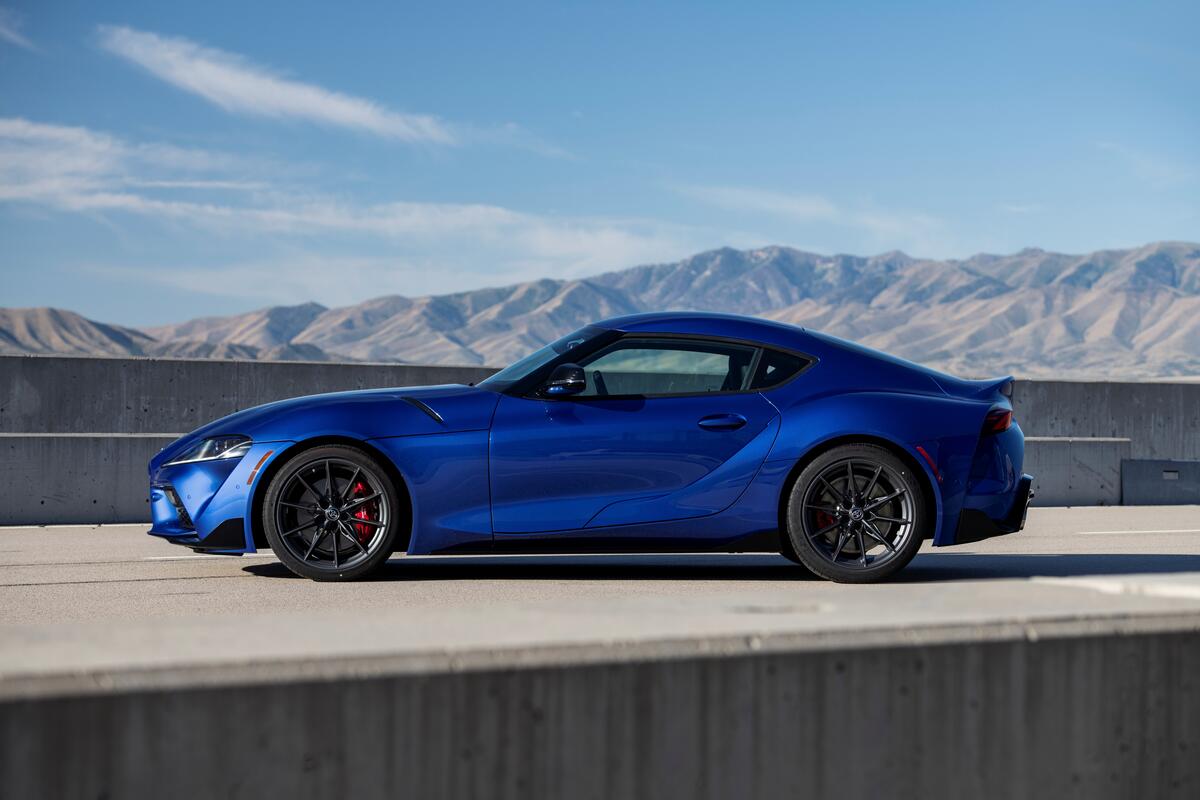
Toyota A90
"I think you would be very recognizable because of just how it comes down. And all of a sudden the falls makes a 90 return, falls off the mix 90 degree turn back and empties the pool."
The Toyota Supra is a sports car made for fast driving and quick handling. It’s usually easy to recognize because of its look and how it performs. The podcast mentions it as a car you’d notice right away.
The Toyota Supra is a performance sports car known for its distinctive styling and strong acceleration. It comes up in conversations where people are describing recognizable driving behavior, sound, or how the car moves through turns. In the podcast snippet, it’s referenced as something that would be easy to identify by appearance and driving presence.
solar
"The power system in the Lance, the solar and the batteries is doing amazing. I think we tested it enough where I can move on to stage two of the power system…"
Solar panels make electricity from sunlight. In an RV, that power is usually saved in batteries so you can use it later.
In an RV context, “solar” means using photovoltaic panels to convert sunlight into electricity. That electricity is typically stored in batteries so you can run appliances when the sun isn’t shining.
4,000 watt inverter
"…move on to stage two of the power system, which is putting in a 4,000 watt inverter to run 110 volt stuff…"
An inverter is the device that turns battery power into the type of electricity your normal AC appliances need. “4,000 watts” is basically the maximum power it can handle.
A “4,000 watt inverter” converts DC power from batteries into AC power that standard household devices use. The watt rating indicates how much continuous electrical load the inverter can support.
110 volt
"…a 4,000 watt inverter to run 110 volt stuff and tying that into the internal 110 volt circuit…"
“110 volt” is the normal electricity level used for many home appliances. If your RV wants to run those devices, it needs an AC system set up for that voltage.
“110 volt” refers to standard AC household voltage (commonly used in the U.S.). In RVs, it matters because many appliances are designed for AC 110V, so you need an inverter and an AC distribution circuit.
shore power
"…cutting off that circuit from shore power. So that when I hook up to shore power, all that shore power is doing is going to be recharging the batteries."
Shore power is when you plug the RV into power at the campground. In this plan, shore power is mostly for charging the RV’s batteries.
“Shore power” is when an RV plugs into an external campground/utility power source instead of running on its own batteries/inverter. The host’s plan is to use shore power mainly to recharge batteries rather than powering everything directly.
12 volt air conditioning system
"…and put in a 12 volt air conditioning system. So it just runs directly off the batteries and then doesn't have to run off the inverter."
This is an A/C designed to run from the RV’s 12V battery system. The big benefit is it doesn’t need the inverter to convert power first.
A “12 volt air conditioning system” in an RV typically means a DC-powered A/C that runs directly from the battery bank. The host’s point is that it avoids using the inverter, reducing conversion losses and making off-grid operation easier.
heat pump
"He has a 12 volt system in his RV and he says he has two of them. And one of them is a heat pump…"
A heat pump is an air-conditioning/heating system that can both cool and warm. They’re saying it uses energy more efficiently and works better in real conditions.
A “heat pump” is an HVAC system that can move heat in either direction—heating in cold weather and cooling in hot weather. The host says the heat-pump-based 12V setup is more efficient and easier to keep up with than a conventional compressor-style A/C.
compressor style AC system
"…And the other one is your normal compressor style AC system. He said the heat pump one is way better, way more efficient…"
This is the more traditional type of air conditioner that uses a compressor to cool the air. The host is comparing it to a heat pump and saying the heat pump keeps up better.
A “compressor style AC system” uses a refrigeration compressor to circulate refrigerant and produce cooling (and often heating via separate components). Compared with a heat pump approach, the efficiency and how well it maintains temperature can differ depending on conditions.
battery system
"At the, let's see, just before going to bed, I checked the battery system and the first battery in the line, because I have all mine hooked up in parallel, but from battery to battery rather than all to a bus bar, the way it should be in parallel."
They’re referring to the RV’s battery setup—how the batteries are connected and how power gets used. The way the batteries are wired can change how much usable power you actually get.
In an RV setup, a “battery system” is the arrangement of one or more batteries plus the wiring/monitoring that lets the vehicle power lights, electronics, and other loads. How it’s wired (series/parallel and distribution method) strongly affects voltage stability and usable capacity.
hooked up in parallel
"and the first battery in the line, because I have all mine hooked up in parallel, but from battery to battery rather than all to a bus bar, the way it should be in parallel. And which means the internal resistances of the batteries means that as you go down the line,"
Parallel wiring means the batteries are connected so they keep the same voltage. That lets you use more total battery power for the RV’s electrical needs.
“Parallel” wiring connects batteries so they share the same voltage while increasing total available current capacity. It’s commonly used in RVs to run higher loads, but the wiring layout matters for balancing and how evenly the batteries discharge.
bus bar
"because I have all mine hooked up in parallel, but from battery to battery rather than all to a bus bar, the way it should be in parallel. And which means the internal resistances of the batteries means that as you go down the line,"
A bus bar is like a central “power junction” where multiple battery cables connect. It helps make sure power is shared more evenly between batteries instead of one battery being more affected by wiring resistance.
A bus bar is a thick metal distribution bar used to connect multiple battery cables at a common point. In battery systems, using a bus bar helps ensure each battery sees the same electrical path length and reduces uneven voltage drop between batteries.
internal resistances of the batteries
"And which means the internal resistances of the batteries means that as you go down the line, there's less and less usable capacity out of the batteries. So the first battery was at 94% right before going to bed."
Even inside a battery, there’s some resistance to electricity flowing. If the wiring isn’t set up evenly, some batteries can end up doing more work and getting drained more than others.
Batteries have internal resistance, meaning there’s resistance to current flow inside the battery itself. When batteries are wired with uneven cable paths, the internal resistance plus wiring resistance can cause different batteries to discharge differently, reducing usable capacity in the ones farther from the load.
usable capacity
"there's less and less usable capacity out of the batteries. So the first battery was at 94% right before going to bed. So that's having lights on some music playing in the background, that kind of stuff."
Usable capacity is how much of the battery’s stored energy you can actually use. If batteries aren’t wired evenly, some may run down sooner, so the whole system can’t use as much energy as it should.
Usable capacity is the portion of a battery’s total stored energy that you can actually draw without causing excessive voltage drop or pushing the battery into an inefficient or damaging operating range. In multi-battery systems, uneven wiring can make some batteries contribute less, effectively reducing usable capacity across the pack.

Cadillac Fleetwood
"... of made sense, right? Like old school music like Fleetwood Mac up to some newer music. And then there was th..."
The Cadillac Fleetwood is a luxury car known for a classic, comfortable feel. It’s often talked about as an “old-school” style vehicle. In the episode, it’s mentioned while describing the kind of music or mood that fits that vibe.
The Cadillac Fleetwood is a classic American luxury car line known for a traditional, comfortable ride and a more old-school style. In the podcast snippet, it’s referenced in connection with music choices—suggesting the car is associated with a certain “classic” vibe. That kind of association is common when people talk about older luxury cars and their character.
Request an Explanation
Heard something you'd like explained? We'll add it to this episode.
Sign in to request explanations for terms you heard.
Want to learn more?
Browse our glossary for plain-English explanations of automotive terms, jargon, and concepts.
Help improve this episode
See something that's not quite right? Our annotations are AI-generated and can sometimes miss the mark. Click the flag icon on any annotation to suggest a correction.