
722: 10 Tips for Off-Road Newbies (Vehicle Edition)
About this episode
New off-roaders get a quick reality check and a practical mindset: expect every wheeling trip to potentially turn into camping, and plan accordingly. The hosts then shift into July housekeeping, including a Wolfbox giveaway for the G900TP three-camera system (4K rear plus two 1080 cameras). They share why the dash-mounted screen can be less distracting than a mirror and explain how continuous recording can overwrite footage unless you save/lock clips. Details cover a limited July group buy and how to sign up before August 1.
Whether you’ve never been off-road before or you’re just getting started, Jimmy and Tyler break down the 10 most important things they wish someone had told them early on — all vehicle-focused, all hard-earned from real experience on real trails. This one came from a simple question: what do we actually say when we’re out on the trail with a first-timer? Not camping tips, not gear tips — how do you drive differently when the ground stops being flat?
The list covers the two biggest safety non-negotiables (seatbelt and vehicle control before you start the engine), then works through hydration and sun exposure on multi-day trips, gears on descent (and why your automatic can go full runaway in seconds), knowing all four of your vehicle’s tools — lockers, crawl box, winch, cutting brakes, rock lights — and how to actually use them in the right scenario. From there: tires on rocks, tire placement, why your rear tires matter more than your front tires in an obstacle, differentials and ground clearance, and how to get comfortable with being deeply uncomfortable.
Related episodes worth pairing with this one:
306: Planning A Rubicon Trip – https://www.snailtrail4x4.com/306-planning-a-rubicon-trip/
646: Planning An Off-Road Trip (Part 1) – https://www.snailtrail4x4.com/646-trip-planning/
654: Trip Planning (Part 2) | Food, Water, Camp Logistics – https://www.snailtrail4x4.com/654-trip-planning/
656: Trip Planning (pt 3) | Trip Execution & Adaptation – https://www.snailtrail4x4.com/656-trip-planning/
614: 15 Off-road Safety Tips – https://www.snailtrail4x4.com/614-safety-tips/
BLOG: 15 Must Know Off-Road Safety Tips for Every Trail Adventure – https://www.snailtrail4x4.com/15-off-road-safety-tips/
GROUP BUY: There is a new group buy happening, and this time it is with Wolfbox for their G900TriPro. If we get ten people signed up then we will get $20 off. If we can get 20 people signed up, we will get $30 off, and if we can get 30 people signed up, then it will be $40 off. If you’re interested in joining the group buy, then please email Jimmy or Tyler, or jump on to the Discord.
SnailTrail4x4 Discord: https://discord.gg/yFyFFkQbuy
Come hang out with us on the SnailTrail4x4 Discord — it’s the easiest way to connect with Tyler and Jimmy directly, chat with fellow offroad enthusiasts, and get first access to Group Buys and Treasure Hunt token drops.
MORRFlate Giveaway at 900 Reviews on Apple Podcast. But our next giveaway is when we reach 800 reviews; we are giving away an OnX Elite Membership. We will also give away an OnX Elite membership when we get to 850. However, when we reach 900 Reviews, we are teaming up with MORRFlate for a $1000 MF Product Giveaway. Go over to Apple Podcasts to leave your review now and become eligible to win. Congratulations to A13XMONT, who won a set of tires from Yokohama Tire!
Call us and leave us a VOICEMAIL!!!We want to hear from you even more!!! You can call and say whatever you like! Ask a question, leave feedback, correct some information about welding, say how much you hate your Jeep, and wish you had a Toyota! We will air them all, live, on the podcast! +01-916-345-4744. If you have any negative feedback, you can call our negative feedback hotline, 408-800-5169.
4Wheel Underground has all the suspension parts you need to take your off-road rig from leaf springs to a performance suspension system. We just ordered our kits for Kermit and Samantha and are looking forward to getting them. The ordering process was quite simple, and after answering the questionnaire, we ensured we got the correct and best-fitting kits for our vehicles. If you want to level up your suspension game, check out 4Wheel Underground.
SnailTrail4x4 Podcast is brought to you by all of our peeps over at irate4x4! Make sure to stop by and see all of the great perks you get for supporting SnailTrail4x4! Discount Codes, Monthly Give-Always, Gift Boxes, the SnailTrail4x4 Community, and the ST4x4 Treasure Hunt! Thank you to all of those who support us! We couldn’t do it without you guys (and gals!)!
SnailSquad Monthly GiveawayJuly’s Giveaway is with a company that Jimmy and Tyler have very good experience with, especially after TrailHeroX. This month’s giveaway is with Wolfbox. They are giving away one G900TriPro to a lucky winner. This is the same three-camera rearview mirror setup that they received during TrailHeroX. If you want a chance to win this system from Wolfbox make sure you sign up for the giveaway tier on either Irate4x4 or the SnailTrail4x4 Discord.
This month’s giveaway is with Iceco Freezers. We are excited to work with and share their exciting new releases. One lucky winner has a chance to an ALP20 Fridge. Big thanks to Iceco for sponsoring this month’s giveaway. If you want a chance to win, sign up for the Giveaway Tier on Irate4x4
Congrats to Johnny Freskie, you won the Rusoh Fire Extinguishers. We have one of their 2.5-pound extinguishers to give away to a lucky winner. This extinguisher has an 18-year shelf life and is the best fire extinguisher for any off-road vehicle. To learn more, check out Rusoh.com. If you want a chance to win, sign up for the Giveaway Tier on Irate4x4
Listener Discount Codes:SnailTrail4x4 –SnailTrail15 for 15% off SnailTrail4x4 Merch
MORRFlate – snailtraill4x4 to get 10% off MORRFlate Multi Tire Inflation Deflation™ Kits
4WheelUnderground – snailtrail 10% off
Iceco – SnailTrail 12%off
Ironman 4×4 – snailtrail20 to get 20% off all Ironman 4×4 branded equipment!
Sidetracked Offroad – snailtrail4x4 (lowercase) to get 15% off lights and recovery gear
Spartan Rope – snailtrail4x4 to get 10% off sitewide
Shock Surplus – SNAILTRAIL4x4 to get $25 off any order!
Mob Armor – SNAILTRAIL4X4 for 15% off
SummerShine Supply – ST4x4 for 10% off
Backpacker’s Pantry – Affiliate Link
Laminx Protective Films – Use the Link to get 20% off all products (Affiliate Link)
Show Music:
- Midroll Music – ComaStudio
- Outroll Music – Meizong Kumbang
off-roading trip planning
"Every off-road trip has the potential to turn into a camping trip. So you should just plan on it being a camping trip."
They’re saying that off-road trips can easily turn into overnight trips. So if you’re new, plan like you might need camping gear and be prepared to stay out longer than expected.
The hosts frame off-road trips as having the potential to turn into camping, so planning should assume you may need to stay out longer. This is presented as a practical “tip” for beginners: be ready for overnight conditions even if you didn’t intend to camp.
OHV recreation
"They're doing some cool stuff with cameras and video screens for OHV recreation. And they've been doing it for a few years now."
OHV recreation means off-road riding and driving—like ATVs, UTVs, and dirt bikes—on trails or approved areas. It’s basically “off-road fun” outside regular streets.
OHV stands for Off-Highway Vehicle, and OHV recreation refers to using vehicles like ATVs, UTVs, and dirt bikes on trails and designated off-road areas. It’s a common umbrella term for off-road riding and driving outside paved roads.
rear view video screen
"they found a way to essentially add this technology of a rear view video screen instead of a mirror and be able to be like an aftermarket add-on to vehicles that didn't come with that option."
Instead of looking at a mirror, you look at a screen that shows what’s behind you. It uses a camera mounted on the vehicle, which can be helpful when you have stuff in the back.
A rear view video screen replaces the traditional rear-view mirror with a camera feed. It can improve visibility when mirrors are blocked by cargo or off-road gear, and it’s often easier to mount than a full factory system.
aftermarket add-on
"be able to be like an aftermarket add-on to vehicles that didn't come with that option."
An aftermarket add-on is something you install after buying the vehicle. Here, it means adding a camera and screen system to a truck/SUV that didn’t come with one.
An aftermarket add-on is a product installed after the vehicle is sold, rather than being included from the factory. In this context, it means adding a camera/screen setup to vehicles that didn’t originally have it.
three-camera system
"G900TPs, which is the TriPro, which means there's three cameras. It's a three-camera system, [321.1s] one 4K camera, which is your reverse rear view camera, and then two 1080 cameras."
Instead of just one backup camera, this setup uses three cameras. That lets you see more than one direction while you’re driving or maneuvering.
A three-camera system uses multiple cameras mounted around the vehicle to give different views. In this case, it’s described as one 4K camera plus two 1080 cameras for rear and additional angles.
reverse rear view camera
"It's a three-camera system, [321.1s] one 4K camera, which is your reverse rear view camera, and then two 1080 cameras."
This is the camera that shows what’s behind the vehicle when you’re reversing. It helps you see obstacles and people back there.
A reverse rear view camera is the camera used when backing up, typically mounted at the rear of the vehicle. The host ties it to the system’s 4K camera, implying higher detail for recording and viewing behind you.
4K camera
"It's a three-camera system, [321.1s] one 4K camera, which is your reverse rear view camera, and then two 1080 cameras."
4K is a high-resolution camera mode. It generally means the video looks clearer, so details in the footage are easier to see.
A 4K camera records video at roughly 3840×2160 resolution, which is much sharper than lower-resolution dashcam-style footage. In off-road use, that can make trail footage of people and obstacles easier to review later.
1080 cameras
"It's a three-camera system, [321.1s] one 4K camera... and then two 1080 cameras."
1080p is a common video resolution. It’s usually less detailed than 4K, but it can still be plenty for monitoring trail activity.
1080 cameras refer to cameras recording at 1080p resolution (typically 1920×1080). The host contrasts them with the 4K camera, implying a mix of camera resolutions within the same multi-camera setup.
wide viewing angle
"And it has a really wide viewing angle, which did you notice that today when you were [407.6s] driving it?"
A wide viewing angle lets the camera see more at once. That helps you keep track of what’s going on around you on the trail.
A wide viewing angle means the camera captures a larger field of view, so more of the trail and nearby vehicles/people fit into the frame. That’s especially useful off-road when you’re trying to track buddies behind you.
review mirror
"I don't know what that is. Why? Because I still, I cannot drive the Lexus with the [434.5s] review camera going on the review mirror. The way you have it in Fiona is it's on top of the dash."
They’re talking about where the camera image is shown—either like it’s in the mirror area or mounted on the dash. Placement matters because it can pull your eyes away from the road.
A review mirror here refers to using a screen/display that’s positioned like a mirror for camera viewing. The discussion contrasts it with having the camera screen mounted higher on the dash to reduce distraction.
reverse camera
"Because I still, I cannot drive the Lexus with the [434.5s] review camera going on the review mirror. The way you have it in Fiona is it's on top of the dash."
A reverse camera shows what’s behind you when you’re backing up. They’re discussing how the screen location can either distract you or not.
A reverse camera is an in-vehicle camera feed used for backing up or low-speed maneuvering. The host specifically discusses how the camera image placement affects driver distraction.
wolf box
"Okay. And that's my only guess. That's your guess? Yeah. I wonder if you put the wolf box up high [462.0s] if it would distract you."
Wolfbox is a brand of dashcam/screen setup. They’re wondering if adding another screen would pull their eyes away while driving.
A Wolfbox is a brand of dashcam and/or camera display system used in vehicles. In the segment, it’s mentioned as a hypothetical additional screen that could affect driver distraction.
review camera
"that's the first time I'd ever seen a review camera like on a dash instead of up high, right? Cause it's always a review mirror you need."
A review camera is a camera that shows what’s behind or around the vehicle on a screen. Off-roaders use them to see better when normal mirrors don’t give the view they need.
A review camera is an auxiliary camera feed used for visibility while driving or maneuvering, often mounted to show the area behind or around the vehicle. In off-roading, it can be used to replace or supplement a review mirror, especially when the view is blocked by gear or terrain.
memory card slot
"Wolfbox does is it has an integrated, it has a built in, well, it has a memory card slot. Yeah. And I believe the memory card, it was 250 gigs, 256 gigs is what ours came with."
A memory card slot is where you plug in an SD card (or similar card) so the camera can save video. The size of the card affects how much recording you can keep before it starts replacing older clips.
A memory card slot is the physical port that accepts removable storage media (like SD cards) for recording video. For dash/off-road cameras, it determines how much footage can be stored and how long the system can record before older files are overwritten.
SD card
"I don't know if the giveaway, I think the giveaway is coming with SD cards or an SD card. So I don't know what size they're sending."
An SD card is a small removable storage card used in many cameras. Bigger SD cards let you save more video before the camera starts deleting or overwriting old footage.
An SD card (Secure Digital card) is a common removable flash-memory format used to store video from cameras. In dash camera systems, SD card capacity directly impacts recording duration and whether the camera can keep clips or must overwrite them.
rewriting over the top
"if you don't store the footage, pull the footage or lock the footage, it just starts rewriting over the top."
This means the camera keeps recording by replacing older video once the memory card is full. If you want to keep a clip, you usually have to save or lock it so it doesn’t get overwritten.
“Rewriting over the top” describes loop recording: once the storage fills, the camera overwrites the oldest footage to keep recording. This is why off-road dash cameras often include options to save or lock clips you want to keep.
lock the footage
"if you don't store the footage, pull the footage or lock the footage, it just starts rewriting over the top."
Locking footage means telling the camera, “don’t delete this clip.” It helps you keep the important parts even when the camera is otherwise set to overwrite old video.
Locking footage is a feature that prevents specific recorded clips from being overwritten during loop recording. It’s commonly used on dash cameras so you can “save” the best moments from an off-road session.
Silent Hollow
"And so when we did the dunes out at Silent Hollow and we're playing around in the dunes the next day, we were like, oh, we should keep that footage, but it was already past the point at which we were starting to rewrite over that stuff."
Silent Hollow is a place they went dune driving. They’re talking about it because they wanted to save the best video from that trip.
Silent Hollow is an off-road dune area where the hosts went driving and “played around in the dunes.” It’s mentioned as the context for why they wanted to preserve dash-camera footage.
loop and repeat
"memory cards throughout the days. And so we just had it set to loop and repeat right over itself. And it did."
“Loop and repeat” describes a dash-cam recording mode where the device continuously overwrites older footage once the storage is full. The host is discussing how the footage was set to repeat, and clarifying that the issue was related to not pulling the footage they wanted to keep.
group buy
"But so we are doing a group buy. If you are interested in the group buy, you can either email us or we'll make a thread on the discord"
A group buy is when a bunch of people buy the same thing together to get a discount. In this case, it’s for Wolfbox cameras.
A group buy is a coordinated purchase where multiple people commit to buying the same product, often to unlock a better price. Here, the hosts use it to discount Wolfbox units based on how many units they can sell.

Bugatti Divo
"...med with Wolfbox. Exactly. Yep. Like we have with Divos and IceCo and all our other friends. Yep. I think..."
The Bugatti Divo is an extremely fast, very expensive sports car made for performance driving. People talk about it in the context of tracking how it performs while driving. It’s not a typical off-road vehicle—more of a track and speed machine.
The Bugatti Divo is a high-performance hypercar designed for track-focused driving, with an emphasis on handling and aerodynamics rather than just straight-line speed. It’s mentioned alongside devices like Wolfbox, which suggests the conversation is about data capture or performance monitoring during driving. Because it’s a rare, specialized car, it often comes up in discussions where owners track laps, speeds, or driving events.

FJ80
"Whether you've got a Chevy Dana 60, 05 and up super duty fabricated, FJ80 or many truck axles, we got you covered."
FJ80 is a Toyota Land Cruiser 80 Series. It’s a well-known off-road truck that many people modify for trails because there are lots of parts available.
FJ80 refers to the Toyota Land Cruiser 80 Series, a popular classic 4x4 platform known for its strong off-road capability and huge aftermarket support. It’s frequently built with suspension and axle upgrades for trail use.
Dana 60
"At four wheel underground, we have something for everyone's 79 through 04 Toyota vehicle. Whether you've got a Chevy Dana 60, 05 and up super duty fabricated, FJ80 or many truck axles, we got you covered."
Dana 60 is the name of a tough axle used on many trucks. Off-road builders like it because it’s strong and there are lots of upgrade parts for it.
Dana 60 is a heavy-duty front or rear axle model made by Dana. It’s widely used in off-road builds because it’s designed to handle high loads and is common enough that aftermarket gears, lockers, and suspension components are readily available.
super duty
"Whether you've got a Chevy Dana 60, 05 and up super duty fabricated, FJ80 or many truck axles, we got you covered."
Super Duty is Ford’s heavy-duty truck line. People build them for off-road because they’re designed to handle big loads, and there are many aftermarket parts for them.
Super Duty is Ford’s line of heavy-duty trucks (often used for towing and work) that also see a lot of off-road builds. When someone says “05 and up super duty,” they’re usually referring to the generation range that fits common aftermarket suspension and axle parts.
parallel and triangulated suspension
"Three link, four link, parallel and triangulated suspension kits. We've got you covered under bed coilover mounts, through trailing arms, cantilevers, custom tuned coilovers"
Parallel and triangulated refer to how the links are arranged in a multi-link suspension. Triangulated layouts use angled links to better control axle movement (like preventing unwanted rotation) as the suspension cycles over obstacles.
three link
"Three link, four link, parallel and triangulated suspension kits. We've got you covered under bed coilover mounts, through trailing arms, cantilevers, custom tuned coilovers"
A three-link is another suspension setup that uses three arms to hold the axle in place. It helps the truck handle uneven ground by keeping the wheels controlled as the suspension moves.
A three-link suspension locates the axle with three control arms, typically two lower links and one upper link (or a similar arrangement). Compared with four-link setups, it can be simpler and is often chosen for specific off-road handling and articulation goals.
four link
"Three link, four link, parallel and triangulated suspension kits. We've got you covered under bed coilover mounts, through trailing arms, cantilevers, custom tuned coilovers"
A four-link is a way to attach the axle to the truck using four metal arms. It helps the truck keep the wheels pointed the right way while the suspension moves over bumps and ruts.
A four-link suspension uses two control arms on each side (four total) to locate the axle while allowing it to move up and down. It’s popular in off-road trucks because it can be tuned for ride quality and axle control under articulation.
coilover mounts
"We've got you covered under bed coilover mounts, through trailing arms, cantilevers, custom tuned coilovers and air pumps."
Coilover mounts are the strong attachment points for the coilover shocks. In off-road builds, they’re important because the shocks need to be mounted in the right place to work properly over rough terrain.
Coilover mounts are the brackets or structural points where a coilover shock is attached to the vehicle. Off-road builds often add or relocate these mounts to fit the suspension geometry and to handle higher loads from bigger tires and more suspension travel.
trailing arms
"We've got you covered under bed coilover mounts, through trailing arms, cantilevers, custom tuned coilovers and air pumps."
Trailing arms are parts that connect the axle to the truck and help control how it moves. They’re designed to keep the wheels behaving predictably as the suspension moves over bumps.
Trailing arms are suspension links that primarily control the axle’s movement as it moves forward and backward relative to the chassis. In off-road setups, they’re used to manage axle location and ride behavior while allowing wheel travel.
cantilevers
"We've got you covered under bed coilover mounts, through trailing arms, cantilevers, custom tuned coilovers and air pumps."
Cantilevers are lever-like suspension parts that help position the shock and control how the suspension loads the vehicle. They’re used to make the suspension fit and work well off-road.
Cantilevers are suspension components that use a lever-style geometry to mount and position a shock or link. Off-road kits use them to package suspension travel and adjust how forces are applied to the chassis.
air pumps
"custom tuned coilovers and air pumps. We've got you covered frame stiffeners, subframes, skid plates, shock towers,"
An air pump is basically a compressor that makes pressurized air for an air-based system. Some off-road setups use it to adjust ride height or help the suspension work better.
In off-road suspension and vehicle setups, air pumps typically refer to compressors used to run air-based systems (most commonly air suspension or air-assisted components). They provide pressurized air so the system can adjust ride height or support suspension behavior.
frame stiffeners
"We've got you covered frame stiffeners, subframes, skid plates, shock towers, and more to come."
Frame stiffeners are added reinforcements that make the truck’s frame less bendy. That matters off-road because rough terrain puts extra stress on the chassis.
Frame stiffeners are reinforcement pieces added to the vehicle’s frame to reduce flex. Off-road builds often add them because larger tires, lift kits, and suspension changes increase stress on the chassis during hard driving and heavy articulation.
skid plates
"We've got you covered frame stiffeners, subframes, skid plates, shock towers, and more to come."
Skid plates are protective covers under the truck. They help prevent damage to important parts when you drive over rocks or ruts.
Skid plates are protective metal plates mounted under the vehicle to shield vulnerable components from rocks, logs, and impacts. They’re a common off-road upgrade because underbody damage can be expensive and can strand you on the trail.
shock towers
"We've got you covered frame stiffeners, subframes, skid plates, shock towers, and more to come."
Shock towers are strong mounting points for the shocks. Off-road versions are reinforced so the shocks stay properly attached when you hit rough terrain.
Shock towers are reinforced mounting structures that provide attachment points for shocks, often in the front or rear of a vehicle. Off-road shock towers are designed to handle higher loads and to maintain suspension geometry when the suspension cycles through large travel.

Wrangler Rubicon
"...y. Okay. And when we did the Glutride trip on the Rubicon. And I let Andy drive Kermit. And I was like, wha..."
The Wrangler is a 4-wheel-drive SUV made for off-road trails. In the podcast, it’s mentioned in connection with driving the Rubicon, which is a well-known off-road route. It’s the kind of vehicle people choose when they want to go off-road and still have lots of upgrade options.
The Wrangler is a 4x4 SUV known for its off-road capability and its strong aftermarket support for trails and rock crawling. In the podcast, it’s specifically tied to the Rubicon trail and a driving moment where someone lets another person drive, which underscores how capable and accessible it is for off-road experiences. That’s why it frequently appears in off-road podcasts: it’s built for trail use and is easy to personalize for different setups.

Suzuki Samurai
"...etty awesome. The other one I was thinking of was Samurai James. Oh, that's another good one. Okay. Who is ..."
The Suzuki Samurai is a small 4-wheel-drive SUV. It’s known for being good on off-road trails and for being a popular car to modify. In the podcast, it’s mentioned as part of the off-road community and specific people/projects.
The Suzuki Samurai is a compact 4x4 SUV that became popular for its lightweight size and trail-friendly proportions. In the podcast, it’s brought up alongside other off-road personalities and builds, which fits how the Samurai is often discussed as a classic platform for off-road projects. Its reputation for being simple and mod-friendly is a big reason it shows up in off-road communities.
five point harness
"They don't hinder you unless you have like a five point harness or something that definitely hinder your movement and looking around everything."
A five-point harness is a more restrictive safety belt with extra straps. It’s common in racing or off-road setups where you want stronger restraint than a normal seatbelt.
A five-point harness uses five straps (typically two over the shoulders, two at the hips, and one between the legs) to restrain the body more tightly than a standard seatbelt. It can limit movement more, which is why the hosts contrast it with a regular three-point seatbelt.
three point seatbelt
"But like a regular shoulder strap three point seatbelt is not going to hinder too much of whatever you need to do in a vehicle compared to keeping you in your seat in the, in the case of a bad accident."
A three-point seatbelt is the regular seatbelt most cars have. It holds you in place during a crash so you don’t get thrown around inside the vehicle.
A three-point seatbelt uses a diagonal shoulder belt plus a lap belt to restrain your torso and pelvis. In off-road situations, it’s designed to keep you in the seat during sudden stops or crashes without severely limiting normal movement.
starting a vehicle in gear
"because there was an instance out a little sluice where somebody did jump in the vehicle to have control of the vehicle when they started it and, but they didn't have the seatbelt on. And when they started it, it was in gear and it rolled off of the top of little sluice and down into the sluice box."
This is when you turn the vehicle on but it’s not actually in a safe neutral position. The car can start moving right away, which is especially risky off-road.
Starting a vehicle while it’s in gear is a dangerous mistake because the drivetrain can immediately apply torque to the wheels. In off-road terrain, that can lead to sudden rolling—especially if the vehicle is on a slope or near obstacles.
four low
"it was thought that the vehicle was in neutral, but it was in gear in four low."
“Four low” is a low-speed 4-wheel-drive mode meant for crawling over tough terrain. If the truck is started while it’s in that gear, it can roll forward or backward unexpectedly.
“Four low” refers to a low-range setting in a 4-wheel-drive transfer case. Low range multiplies torque for slow, controlled crawling, but if the vehicle is started in gear, it can move unexpectedly even at idle.
manual transmission
"if you're in control of the vehicle, if you're in the vehicle and you have your hand on the, you know, the manual transmission, your foot on the, you know, the manual transmission, your foot on the brake, the clutch or whatever"
A manual transmission is a car where you choose the gears yourself. You use a clutch pedal to help switch gears smoothly.
A manual transmission is a gearbox that requires the driver to select gears using a gear lever, while controlling engine power with a clutch pedal. The driver typically uses the clutch to disengage the engine from the drivetrain when changing gears.
clutch
"your foot on the brake, the clutch or whatever, you know, or it's in park, just make sure all those things have your foot on the brake before you start the vehicle."
The clutch is a pedal that helps the car change gears. It lets you smoothly start moving and shift without grinding.
The clutch is a pedal-operated mechanism that connects and disconnects the engine from the transmission. In a manual car, it’s essential for starting, shifting gears, and preventing drivetrain shock.
park
"or it's in park, just make sure all those things have your foot on the brake before you start the vehicle."
“Park” is the gear position that keeps the car from rolling. It’s the one you use when you’re stopped and getting ready to start or exit the car.
“Park” is a transmission position (on automatic and some automated systems) that locks the drivetrain so the vehicle can’t roll. It’s commonly paired with safety checks like keeping your foot on the brake before starting.
push button vehicles
"I always have my foot on the brake when I'm starting it. And that's one of the safety features of push button vehicles from the factory is you have to have the brake depressed in order to push start the push button on vehicles nowadays."
Some cars start with a button instead of turning a key. Usually you have to press the brake first, which helps keep the car from starting unexpectedly.
Push button vehicles use an electronic start system instead of a traditional key turn. Many require the brake to be pressed before the engine can start, which helps prevent accidental starts while the car is in gear.
brake depressed
"you have to have the brake depressed in order to push start the push button on vehicles nowadays."
“Brake depressed” just means your foot is firmly on the brake pedal. In many modern cars, the car won’t start unless the brake is pressed.
“Brake depressed” means pressing the brake pedal down far enough to activate the vehicle’s brake switch. In many push-button cars, this is a required condition for starting, acting as a safety interlock.

Toyota Prius
"I know that my parents just bought a brand new Prius Prime. They call it grandma"
The Toyota Prius Prime is a hybrid car you can plug in. It can drive on electricity for some trips, then uses gas when the battery runs low.
The Toyota Prius Prime is a plug-in hybrid version of the Prius, designed to run on electricity for short trips and then switch to a gasoline engine when needed. It’s a common “easy to live with” choice, which is why it often shows up in family and commuter use.
gears on descent
"So, the first one we wrote down, which is now number four, is gears on descent. Yeah. That's a really good one. I think that's probably one of the biggest things that newbies that I've been wheeling with don't understand..."
When you go downhill, you can use a lower gear so the engine helps slow the truck down. That means you don’t have to ride the brakes as much. It can make the vehicle feel more stable and easier to control.
“Gears on descent” is the off-road technique of using lower transmission gears to slow the vehicle while going downhill. Instead of relying only on the brakes, you let the engine and drivetrain help control speed for steadier handling. This also reduces how much braking you have to do if you need to make corrections.
engine control
"And what that does, there's a couple of things that that does for you. One is by letting your engine control your descent and using the gears in your transmission to go down to as low of a gear as possible..."
On a downhill, the engine can act like a brake when you’re in a lower gear. That helps slow the vehicle without you constantly pressing the brake pedal. It usually makes speed control steadier.
“Engine control” on a descent means using the engine’s braking effect through the drivetrain. When you downshift to a lower gear, the engine resists the wheels turning, helping slow the vehicle. This provides smoother, more consistent speed control than braking alone.
automatic transmission
"...right? So, if you're like in drive, fifth gear, whatever in your transmission, automatic or manual, going down a descent... being able to take and drop your automatic transmission out of drive and down into the lowest gears..."
An automatic transmission changes gears by itself. On a steep downhill, it might not stay in the gear you’d want, so the engine may not slow the vehicle as much. The fix is to shift it into lower gears so it can help control your speed.
An “automatic transmission” is a gearbox that selects gears on its own using sensors and control logic. On descents, it may upshift or disengage in a way that reduces engine braking, which can make speed control harder. The speaker’s advice is to drop it out of drive into lower gears to regain control.
runaway mode
"So, if you're like in drive, fifth gear, whatever in your transmission, automatic or manual, going down a descent, your vehicle can kind of get into a runaway mode pretty quickly."
“Runaway mode” here means the vehicle starts speeding up downhill instead of slowing down. That can happen if you’re in the wrong gear and the engine isn’t helping brake. Downshifting to a lower gear helps prevent that.
“Runaway mode” refers to a downhill situation where the vehicle accelerates faster than the driver expects because the drivetrain isn’t providing enough engine braking. The speaker warns that in the wrong gear (especially with an automatic), the vehicle can quickly lose controlled descent behavior. The fix is to downshift to lower gears so the engine can slow the vehicle.
drivetrain cuts out
"I never realized how quickly automatics can get into runaway mode until I have Fiona now. And it's been amazing to me how quickly the drivetrain cuts out and you're no longer connected to your drivetrain."
The speaker is describing a situation where the car doesn’t seem to be “working with you” to slow down. With some automatic setups, it can feel like the engine braking isn’t happening. Manually selecting a lower gear can restore better control.
“Drivetrain cuts out” describes the feeling that the vehicle stops being effectively connected to the drivetrain’s control during a descent. The speaker says automatics can disengage or behave in a way that reduces engine braking, so the transmission no longer controls the descent. Their takeaway is to manually select lower gears to keep control.
descent control
"two, that's going to do so much to control your descent so that you're not having to depend on your brakes or risk getting into that runaway mode and have to use your brakes to correct it."
Descent control just means you keep your speed under control when going downhill. Instead of using the brakes the whole time, you use the vehicle’s gears/engine to help slow you down.
Descent control is the technique of managing speed while going downhill so the vehicle doesn’t accelerate uncontrollably. Off-road drivers use engine braking (via the transmission/gear selection) to slow the vehicle instead of relying only on the brakes.
blip the throttle
"You're using the gears to help control you, slow you down. [2694.1s] If you need to blip the throttle, you definitely can and you're not going to overdo anything."
“Blip the throttle” means a quick, small tap of the gas. It’s used to fine-tune how the engine responds without giving it a big push.
“Blip the throttle” means briefly pressing the accelerator to add a small amount of engine power. In off-roading, it can help maintain traction or manage engine speed during low-speed control without committing to a larger throttle input.
brake fade
"if you're on a very long downhill and you're always on your brakes, there could be a point [2716.8s] to time when you get a bunch of brake fade, which is your brakes aren't working as well as they could be or should be."
Brake fade means your brakes start working worse because they get too hot. On a long downhill, that can make it harder to slow down safely.
Brake fade is when brakes lose effectiveness due to overheating, often from repeated hard use. On long descents, fade can force the driver to use more pedal pressure or can lead to a loss of braking power.
brakes fail
"there could be a point to time when you get a bunch of brake fade, which is your brakes aren't working as well as they could be or should be. And or worst case scenario, brakes fail."
“Brakes fail” means the brakes stop working well enough to control the vehicle. It can happen if the brakes overheat on a long descent.
“Brakes fail” refers to a worst-case scenario where the braking system can no longer slow the vehicle effectively. In downhill off-roading, this is often the end result of extreme brake overheating and loss of braking performance.
using the gears to control your descent
"And now you're just flying down the hill. So, using the gears to control your descent is a tip and trick that I think is super important and newbies don't think about it."
This is the idea of using low gears to help slow down going downhill. It reduces how much you have to depend on the brakes, which helps them stay effective.
This concept is the off-road practice of selecting an appropriate low gear to slow the vehicle using engine braking while descending. The goal is to keep speed controlled and reduce reliance on the brakes, which helps prevent overheating and loss of stopping power.
torque
"Gearing increases the amount of torque out of your drivetrain. Yep. And another way to think about that torque moves the vehicle, right?"
Torque is the “twisting power” that helps the wheels turn. More torque usually makes it easier for a vehicle to start moving and crawl slowly over rough ground.
Torque is the twisting force an engine or motor produces that turns the drivetrain. In off-roading, more torque (often multiplied by gearing) helps the vehicle move from low speeds and crawl over obstacles with less effort.
crawl ratio
"if you have a vehicle that weighs 5,000 pounds and your crawl ratio is a stock 60 to one crawl ratio, then you could think of 5,000 divided by 60."
Crawl ratio is how much your drivetrain “gears down” so the truck can move very slowly and controllably. More crawl ratio means you get more pulling power at low speed, which helps on rocks and steep terrain.
Crawl ratio is the overall gear reduction (from transmission and transfer case) that creates very low wheel speed for slow, controlled off-road driving. A higher crawl ratio gives more torque multiplication at the wheels, which is why it’s often discussed alongside “gearing” for rock crawling and descents.
gear ratio
"crawl gears and you have a deeper first gear and your gear ratio that you're running at is 200 to 1."
Gear ratio is how your transmission and transfer case change engine speed versus wheel speed. Lower (deeper) ratios help the vehicle move slowly with more “pull,” which is useful when crawling over obstacles.
Gear ratio is the numerical relationship between gears that determines how much the drivetrain multiplies torque and reduces output speed. In off-roading, deeper gear ratios (lower output speed, higher torque multiplication) make it easier to control the vehicle at low speeds and manage traction on climbs and descents.
front dig
"if you're in a really fancy vehicle, you've got front dig versus rear dig, right?"
Front dig is a 4x4 transfer-case mode that increases traction control by applying more torque to the front axle during low-speed maneuvers. It’s commonly used to help the vehicle pivot or steer more effectively on obstacles by “digging” the front wheels.
rear dig
"you've got front dig versus rear dig, right?"
Rear dig is a setting that sends more pulling force to the rear wheels. It helps the vehicle pivot and stay controlled when you’re crawling over obstacles.
Rear dig is a 4x4 transfer-case mode that shifts more low-speed torque to the rear axle for obstacle negotiation. By changing which axle is doing the “digging,” it can improve turning and control when crawling over uneven terrain.
winches
"You have winches or a tool, which is I think another thing that a lot of people don't think of them as a tool."
A winch is a motorized cable that can pull your vehicle out. It’s a recovery tool you use when you’re stuck and can’t drive out under your own power.
A winch is a powered cable-retrieval device used to pull a vehicle out of difficult situations. In off-roading, winches are a core recovery tool because they let you apply controlled pulling force when traction alone isn’t enough.
cutting brakes
"you've got front dig versus rear dig, right? You've got cutting brakes, maybe it could be a tool."
Cutting brakes means using the brakes in a controlled way to manage wheel slip. If one wheel spins, braking it can help the truck get traction again.
Cutting brakes refers to using brake application (often selectively) to help control traction and vehicle rotation during low-speed off-road maneuvers. By braking a spinning or slipping wheel, the drivetrain can transfer torque to the tire with grip.
lockers
"And then lockers. I love, I love getting newbies into scenarios where I know they're going to get kind of crossed over and they're going to stop proceeding unlocked."
Lockers are what you use to keep the wheels on an axle from spinning at different speeds. They help the truck keep moving when one wheel loses grip on rocks or mud.
Lockers are differential locking devices that force the left and right wheels on an axle to rotate together. This helps maintain traction when one wheel would otherwise spin, because torque is shared more directly to both wheels.
differentials unlocked
"they're going to stop proceeding unlocked. Yes. With their differentials unlocked and then put them into that scenario."
With an unlocked differential, the wheels on an axle can spin at different speeds. Off-road, that can let a spinning wheel take the power, so the vehicle struggles to move until you lock things up.
When differentials are unlocked, each axle side can rotate at different speeds. That can be a problem off-road because if one wheel loses traction, the differential may send more torque to the slipping wheel instead of the wheel with grip.
front locker
"And then I like to have people try out and put them in scenarios where their front locker is going to make or break an obstacle or a rear locker is going to make them make or break an obstacle."
A front locker is a traction device on the front axle that helps both front wheels grip. It can be the difference between getting up an obstacle or getting stuck.
A front locker is a differential locker on the front axle. Locking the front can help pull the vehicle through an obstacle when the front wheels need traction, but it can also change how the truck steers and how weight transfer affects grip.
rear locker
"or a rear locker is going to make them make or break an obstacle. So they can be going up and the front is locked, but the rear is open and you get the rear crossed over"
A rear locker helps the back wheels keep traction by locking them together. If the rear is what’s slipping, turning on the rear locker can help the truck get through.
A rear locker is a differential locker on the rear axle. Locking the rear can improve traction during climbs or when the rear wheels are the limiting factor, and it can strongly affect how the vehicle moves over uneven surfaces.
rear crossed over
"So they can be going up and the front is locked, but the rear is open and you get the rear crossed over and all of a sudden you're no"
“Crossed over” is when the axle is twisted so one rear wheel has less grip than the other. If the differential isn’t locked, the wheel with less grip can spin and the truck may not move well.
“Crossed over” describes a traction situation where the rear axle is twisted relative to the ground—one wheel is unloaded while the other may be loaded. In that condition, an open differential can allow the unloaded wheel to spin, reducing effective traction.
gearing
"Right? If you have cutting breaks or if you have rear dig or if you have a winch or if you have lockers or if you have gearing, just learn how and when to use them."
In off-roading, “gearing” usually refers to using low-range gearing (and sometimes selectable ratios) to trade speed for torque. Lower gearing helps you crawl over obstacles with better control and less wheel spin.
throttle inputs
"And there's ways that you can play with the break to help with open, open scenarios. Right? So there's different things you can do with different throttle inputs."
Throttle inputs are how you press the gas pedal—how much and how smoothly. On rocks, that matters a lot because it changes how much power the tires get.
“Throttle inputs” are how you modulate the accelerator to control engine torque at the wheels. In rock crawling, small throttle changes can determine whether the vehicle climbs smoothly or loses traction and spins.
RPM
"You know, what RPM do you need to be to go over this type of obstacle versus an RPM to get over this type of obstacle?"
RPM is how fast the engine is spinning. Off-road, you often want to keep it in the right RPM range so the vehicle has the right amount of power to climb.
RPM (revolutions per minute) is the engine speed. Off-roaders often target specific RPM ranges because torque and traction behavior change with engine speed, especially when crawling over obstacles.
drivetrain cutoffs
"So it's all everything in a vehicle that you can control from throttle, brake, clutch, lockers, digs, drivetrain cutoffs, lights."
Drivetrain cutoffs are settings that can turn off part of the drivetrain so the vehicle behaves differently. Off-road, that can help you control wheel slip and keep the truck moving the way you want.
Drivetrain cutoffs are systems that temporarily disengage part of the drivetrain (such as certain axles or transfer-case functions) to change how power is delivered. Off-road, they can help reduce drag or improve traction/control depending on the obstacle and surface.
rock lights
"Lights are a tool. If you have rock lights, man, you can't see shit where you're going and what you're doing, get some lights on and be able to see what you're doing."
Rock lights are extra lights that shine on the ground near your tires. They help you see rocks and ruts better, especially at night, so you can drive more safely.
Rock lights are auxiliary off-road LEDs mounted under the vehicle to illuminate the ground near the tires. They improve visibility of rocks, ruts, and obstacles, helping drivers place tires more accurately while crawling at night or in low light.
turtled
"try and put your vehicle in a situation where you get turtled. Turtled is when you like run over a rock on your belly and your four tires can't touch the ground and you don't have enough grip to get you on or off of that rock anymore and you're stuck."
“Turtled” is when your truck gets stuck on a rock so its tires can’t touch the ground anymore. Since the tires lose grip, the vehicle can’t climb or back off, and it can also damage or stress parts underneath.
In off-roading, “turtled” means the vehicle gets stuck on an obstacle so that its belly and/or body is resting on the rock while the tires lose contact with the ground. With no tire traction, the vehicle can’t move forward or backward and may also load drivetrain components harshly.
transfer cases
"Or that rock gets up into really important components like transfer cases, transmissions, oil pans, differentials, drive shafts."
A transfer case is a box in many 4x4 vehicles that sends power to both the front and rear wheels. If you get hung up on a rock, that area underneath can get scraped or stressed.
A transfer case splits power to the front and rear axles in a 4x4. In a “turtled” or belly-on-rock situation, the transfer case can be hit or loaded by the obstacle, which is why clearance matters.
drive shafts
"Or that rock gets up into really important components like transfer cases, transmissions, oil pans, differentials, drive shafts."
Drive shafts are the rotating shafts that send power from the drivetrain to the wheels. If you get hung up on rocks, they can get hit or put under strain.
Drive shafts transmit torque from the drivetrain to the axles. When an obstacle lifts the vehicle or forces it to ride on the belly, drive shafts can be struck, bent, or experience abnormal angles that increase stress.
tires on rocks
"So it's always better to have your tire on the rocks. It's a weird concept. Most people want to straddle things, but if you think you want to stay on the road, you want to stay on the dirt..."
The idea is to put your tires on top of the rock instead of letting the truck’s bottom rest on it. That way the tires keep gripping and you’re less likely to get stuck.
This is the off-road technique of placing the tires on top of obstacles rather than trying to straddle them or ride on the belly. The goal is to keep the tires in contact with the ground so they can maintain traction and avoid lifting the drivetrain onto rocks.
ground clearance
"And as long as you have the ground clearance to make sure that you're clearing under your rock slider or the side of your vehicle, yeah, you're going to be fine the whole entire way."
Ground clearance is how much space your vehicle has between the bottom and the ground. More clearance helps you avoid scraping or getting stuck on rocks.
Ground clearance is the distance between the lowest part of the vehicle and the ground. On rocks, higher ground clearance helps prevent the undercarriage from contacting obstacles like the “big rock,” reducing the chance of getting turtled and protecting components underneath.
rock slider
"And as long as you have the ground clearance to make sure that you're clearing under your rock slider or the side of your vehicle, yeah, you're going to be fine the whole entire way."
Rock sliders are heavy-duty bars along the sides of a 4x4. They’re meant to take the hit if your truck tips or scrapes on rocks instead of damaging the body.
Rock sliders are reinforced side rails (often steel) designed to protect the vehicle’s rocker panels and underbody when the tires drop into ruts or the body leans on rocks. They’re specifically referenced here as a clearance boundary when traversing obstacles.
tire placement
"Yeah. I think the next thing we have is tire placement. Okay. This is more of just understanding where your tires are in relation to where you are in the vehicle."
Tire placement just means lining up where your tires are going to land on the trail. Since you can’t always see your tires, practicing it helps you avoid hitting rocks and getting surprised by how close you are.
Tire placement is where you position your tires relative to obstacles and to your own seating position while driving off-road. Because many vehicles don’t let you easily see the tires, learning tire placement helps you judge clearance and line choice so you don’t scrape rocks or hit them unexpectedly.
OEM vehicles
"because we can't typically see our tires, right? From inside of most OEM vehicles, right?"
OEM vehicles are factory-built vehicles from the original manufacturer, not modified for off-road visibility or custom setups. In this context, the point is that most OEM cabins make it hard to see the tires directly, which is why tire placement skills matter.
buggy
"If you have a buggy and you set up your vision and sights properly, you can see all four your tires, but even a lot of buggies, you can't see all four your tires."
A buggy is an off-road vehicle style (often open-cabin) designed for trail use, where visibility can be better than in a closed, stock SUV or truck. The speaker notes that even many buggies still can’t show all four tires clearly, so tire placement remains important.
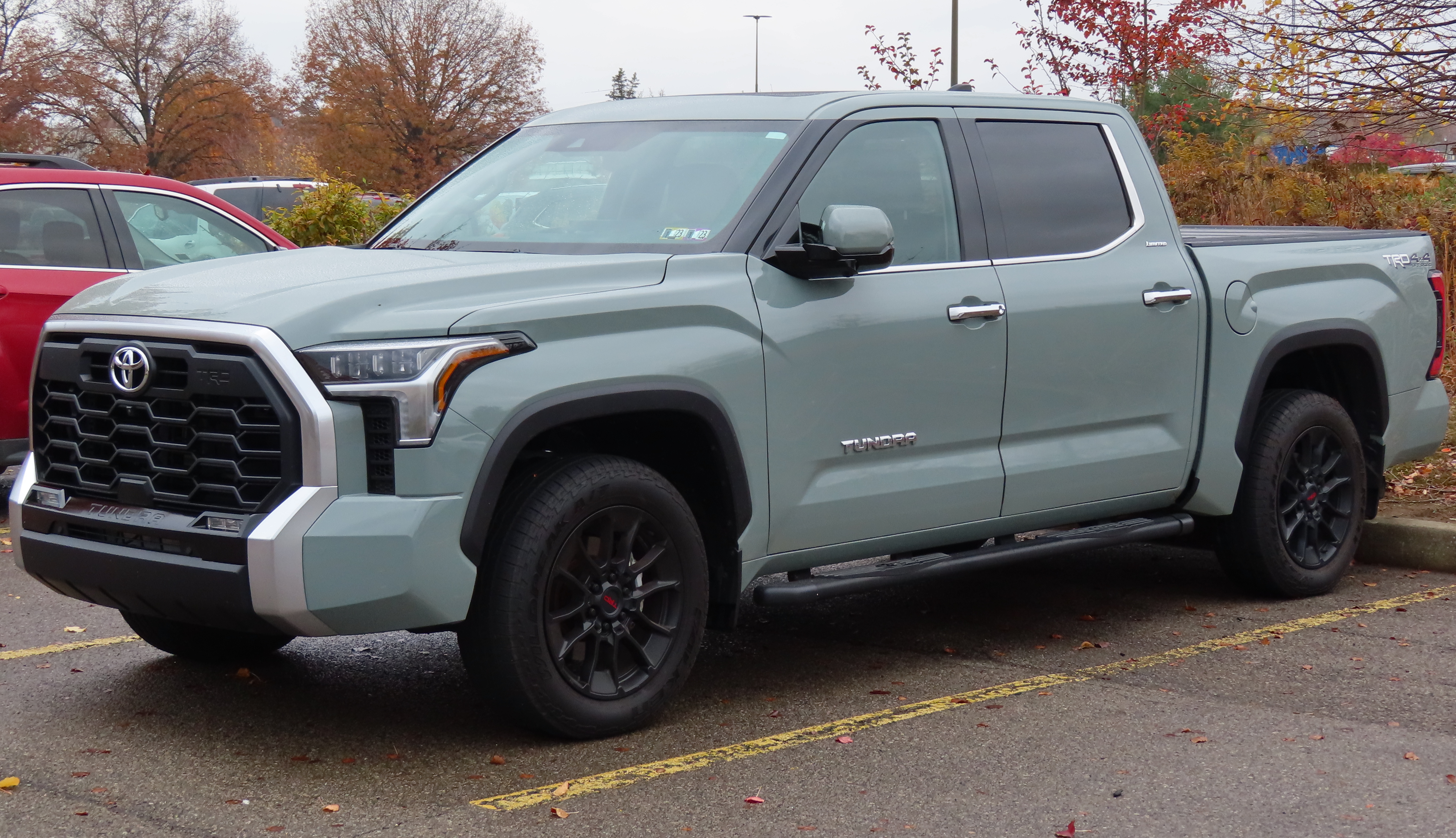
Toyota Tundra
"...rs on Toyota Axles. And then when I built my Ford Tundra Super Duty Axles, they were 14 inches wider than ..."
The Toyota Tundra is a large pickup truck. People use it for towing and off-road driving, and it’s also a popular truck to modify. In the podcast, it’s mentioned in relation to axle and build measurements.
The Toyota Tundra is a full-size pickup truck built for towing, hauling, and off-road use, which is why it often comes up in 4x4 axle and suspension discussions. In the podcast context, it’s referenced around axle width and custom builds, highlighting how owners modify the truck’s underpinnings for clearance and fitment. It’s a common platform for off-road upgrades because its drivetrain and chassis are widely supported in the aftermarket.
turn radius
"And then where's my rear driver tire? How does my rear driver react when I'm turning? What's the turn radius difference compared to the front end kind of thing?"
Turn radius is how tight (or wide) your turn is. Off-road, the back of the vehicle can follow a different path than the front, so you need to plan for where the rear tires will go.
Turn radius is the size of the circle a vehicle follows while turning. In off-roading, the effective path of the rear tires can differ from the front due to wheelbase and steering geometry, so the rear may swing wider or behave differently than you expect.
off camber situation
"I purposefully put my rear passenger tire on rocks. I do it all the time and that's because a lot of the, I'll be off, I try it whenever I'm on an off camber situation. I'll put the rear tire up on a rock to level me out."
Off-camber means the ground slopes sideways. Your tires don’t sit flat, so the truck can feel like it’s leaning or sliding more than usual, and it’s easier to get stuck or tip.
An off-camber situation is when the trail surface tilts sideways, so the vehicle’s tires aren’t loaded evenly. It increases the chance of losing traction and can make the vehicle feel like it’s “falling” to one side, which is why tire placement and body control matter so much.
rear tires making it around obstacles
"But then you don't, a lot of off-roading is understanding where your rear tires are and what your rear tires are going to do in the obstacle... you could take that corner really sharp, but then you're going to hit your body on that pillar."
It’s not enough to just steer the front of the truck between obstacles. The back of the vehicle swings wider, so you have to think about where the rear tires and body will go too.
This is the idea that off-roading isn’t just about getting the front tires through an obstacle; the rear tires and the vehicle’s body still have to clear. Because the rear follows a different path, a turn that looks fine from the front can cause the body or rear tires to hit obstacles.
wheelbase
"that section where you have to turn, right? That's a, and it's the longer your wheelbase is, [3660.3s] the more that turn radius gets fucked up."
Wheelbase is how long the vehicle is between the front and rear wheels. A longer wheelbase can make it harder to turn tightly around obstacles, especially off-road.
Wheelbase is the distance between the front and rear axles. Longer wheelbases generally reduce how easily a vehicle can “pivot” around obstacles, which can worsen effective turn radius and make rear tire placement harder to manage.
undercarriage clearance
"And, and I would even throw in [3729.9s] undercarriage, right? Yeah. A lot of tire placement, tire maneuverability, tire, like [3736.9s] turning and everything, all a lot of that comes down to understanding how much clearance you [3741.8s] have underneath your vehicle so that you can continue to move forward."
Undercarriage clearance means how much room there is between the ground and the bottom of your vehicle. More clearance helps you avoid scraping or getting stuck on rocks.
Undercarriage clearance is how much space you have between the ground and the lowest parts of the vehicle (like skid plates, axles, and drivetrain components). More clearance helps you keep moving forward without hanging up or striking rocks when your tires climb and your suspension articulates.
UHMW
"Metal [3748.6s] does not typically move on, on rocks very well. It likes to, it likes to gouge. [3756.9s] UHMW moves recently on rocks. It's not bad yet."
UHMW is a very tough plastic material. People use it on off-road parts because it tends to slide over rocks instead of digging in like metal can.
UHMW (ultra-high-molecular-weight polyethylene) is a tough, low-friction plastic often used as a wear surface or skid material. The host contrasts it with metal on rocks, noting that UHMW tends to slide rather than gouge as aggressively.
break over angles
"And that comes to understanding [3775.3s] break over angles, approach angles, departure angles, where your low hanging fruit is for [3781.5s] your differentials, your low hanging fruit for your skid plates and your low hanging"
This is the steepest bump your vehicle can drive over without the bottom getting stuck or scraping. It’s important because the rocks and ruts can hit your skid plates or frame.
Break-over angle is the maximum “crest” angle a vehicle can go over without the underside scraping. In off-roading, it helps you predict whether a hump or dip will cause the chassis to hit the ground.
approach angles
"And that comes to understanding [3775.3s] break over angles, approach angles, departure angles, where your low hanging fruit is for [3781.5s] your differentials, your low hanging fruit for your skid plates and your low hanging"
This is how steep a hill or obstacle you can drive up before the front of your vehicle hits it. Higher approach angle generally means more clearance at the front.
Approach angle is the steepest angle you can climb into a obstacle (like a rock face) without the front bumper or underbody contacting it. It’s a key measurement for avoiding front-end damage on trails.
departure angles
"And that comes to understanding [3775.3s] break over angles, approach angles, departure angles, where your low hanging fruit is for [3781.5s] your differentials, your low hanging fruit for your skid plates and your low hanging"
This is how steeply you can go down (or back off) without the rear of your vehicle dragging. It matters when you’re leaving rocks, ledges, or ruts.
Departure angle is the steepest angle you can descend or back away from an obstacle without the rear bumper or underbody scraping. It helps off-roaders judge whether a drop-off will snag the back of the vehicle.
frame and bumpers
"your differentials, your low hanging fruit for your skid plates and your low hanging [3785.2s] fruit on your frame and bumpers, right? So, knowing about roughly how much clearance you have"
The frame and bumpers are part of the vehicle’s structure and protection. On rough trails, they can scrape or get hit if your angles and clearance aren’t enough.
In off-roading, the frame rails and bumpers are common “contact points” when approach/departure angles are exceeded. Damage risk is higher when obstacles force the vehicle to pitch or bottom out.
mental snapshot
"So like, I like to play a game [3830.3s] sometimes where I will look down the trail and kind of just take a mental snapshot of everything [3836.0s] on the trail and then close my eyes and see if I can visualize driving down this trail and know,"
This refers to trail navigation by visualizing the next obstacles and your vehicle’s path before you drive over them. It’s a practical off-road technique for timing steering and positioning to avoid scraping or getting hung up.
potholes
"you're still looking for potholes, ruts, what's the moving log sticking out on the side that can hit your tires, puncture."
Potholes are holes or dips in the ground. On a trail, they can make your tires hit hard and lose grip, so you need to spot them early.
Potholes are depressions in the trail surface that can upset your tires and suspension. On off-road trails, they can also hide rocks or create sudden impacts that affect traction and steering.
ruts
"you're still looking for potholes, ruts, what's the moving log sticking out on the side that can hit your tires, puncture."
Ruts are grooves worn into the trail by other vehicles. They can steer your tires for you, but they can also make it easier to get stuck or hit something underneath.
Ruts are grooves in the trail made by repeated tire tracks. They can guide your tires, but they also reduce steering freedom and can cause you to get hung up on obstacles.
offset rear differential
"Some vehicles have an offset rear differential, you know, and so all the differentials could be more to the driver's side or more to the passenger side."
An offset differential means the rear axle’s center gear box isn’t in the middle. That can give you more clearance on one side, so you may need to steer slightly to keep the differential from hitting obstacles.
An offset rear differential means the differential housing is not centered between the left and right wheels. That can improve clearance on one side of the axle while reducing it on the other, which changes how you should place your tires on rocks.

Toyota FJ Cruiser
"And there was a guy that had a front facing camera in an FJ cruiser. Oh, okay. I think you were, I don't know if you're on that trip."
The Toyota FJ Cruiser is a rugged off-road SUV. Here it’s mentioned as an example of someone using a camera to help line up their tires on the trail.
The Toyota FJ Cruiser is a body-on-frame off-road SUV known for its rugged styling and trail-focused capability. In this segment, it’s used as an example of how a driver might rely on a front-facing camera to line up tires on a climb.
trail scanning
"So that was the big eye-opener to me of how important it is to constantly be scanning and looking and memorizing the trail ahead of you."
Trail scanning means you keep your eyes up and look at what’s coming next, not just what’s right in front of your bumper. It helps you plan your line so you don’t get caught off guard by obstacles.
Trail scanning is the habit of continuously looking ahead and mentally mapping what’s coming—rocks, ruts, and lines—so you can choose the right steering and throttle inputs. In off-roading, it helps you avoid getting surprised by obstacles and reduces the chance of getting stuck or damaging the vehicle.
mental energy
"You don't realize how much energy you use when off-roading as a driver. You'd think you're sitting in a vehicle. You're not expending that much energy. You're expending a ton of energy. A lot of it is mental energy, but some of it is physical too."
Mental energy is how much brain effort off-roading takes. You’re constantly paying attention and making decisions, and that can wear you out even if you feel like you’re just sitting in the driver’s seat.
Mental energy refers to the cognitive load of off-roading: staying focused, reading terrain, and making quick decisions while the vehicle is bouncing and moving unpredictably. The episode emphasizes that off-roading fatigue isn’t just physical—it’s also about concentration and situational awareness.
Request an Explanation
Heard something you'd like explained? We'll add it to this episode.
Sign in to request explanations for terms you heard.
Want to learn more?
Browse our glossary for plain-English explanations of automotive terms, jargon, and concepts.
Help improve this episode
See something that's not quite right? Our annotations are AI-generated and can sometimes miss the mark. Click the flag icon on any annotation to suggest a correction.