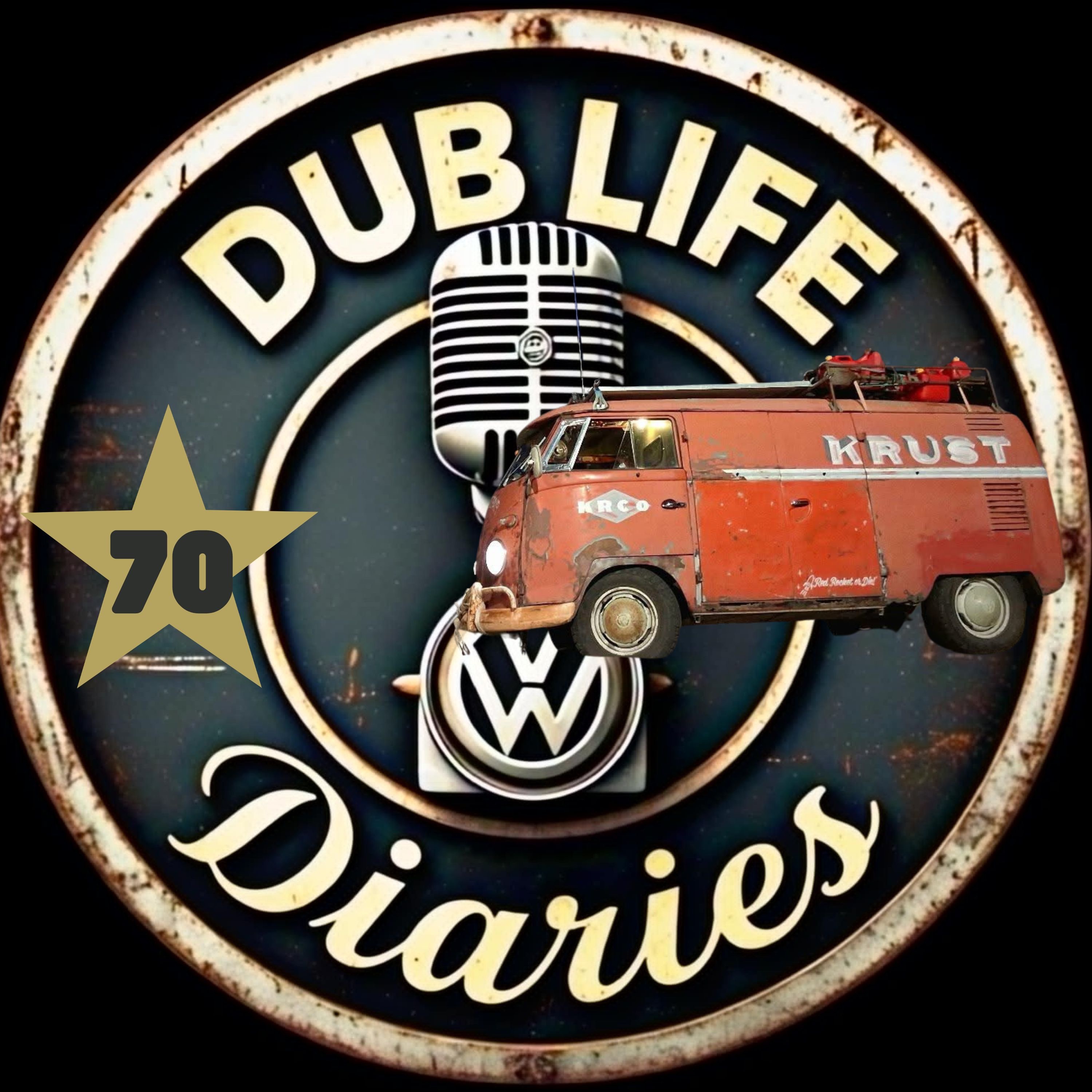
A Volkswagen Bus is an older type of van made to carry people and gear. Some are old and can look rough, but they’re popular because they’re roomy and can be turned into a trip or camping vehicle. That’s why people talk about them even when they’re not in perfect condition yet.
In an automotive context, troubleshooting means diagnosing what’s wrong by checking symptoms, checking likely causes, and narrowing down the problem. The host frames it as something you learn over time when you’re willing to work on your own vehicle.
The Volkswagen Beetle is a classic small car that’s known for its simple, old-school design. Here, the host is talking about how it was an air-cooled Volkswagen and how it became the family’s go-to car.
“Air cooled” means the engine is cooled by air moving over it, not by coolant flowing through a radiator. Older Volkswagens like the Beetle used this design, which is part of why people talk about them differently than newer, water-cooled cars.
The Volkswagen Karmann Ghia is a classic VW that looks a lot more “sporty” and stylish than a Beetle. Here it’s just being used as an example of the different Beetle-based VWs the family had.
“Rusty” means the car’s metal had been corroding. In places where they use salt on roads, that salt can speed up rust, especially on older cars and in hard-to-see spots.
Road salt is what cities spread in winter to melt snow and ice. It helps driving, but it can also cause cars to rust faster because it gets on the metal and keeps it wet.
St. Paul, Minnesota is a cold place where they use salt on the roads in winter. That salt can make older cars rust faster, especially underneath and in small gaps.
Fenders are the panels above the wheels. If they’re rusted, they can get loose, and the host describes a case where the fenders were held on with makeshift fasteners.
Valve adjustment means setting the small gap in the engine’s valve system. If the gap is wrong, the engine can run rough or lose power, so it’s something owners check periodically.
Dwell is a setting related to how long the ignition system charges before it fires the spark. Getting it right helps the engine burn fuel consistently and run smoothly.
Timing is when the spark plug fires during the engine cycle. If it’s off, the engine may feel sluggish or run hotter, so setting it helps it run right.
Situational awareness is just paying close attention to what’s happening around you while you drive. It means watching mirrors and traffic so you can react early to changes.
An altimeter tells you how high you are above sea level. It can help you understand whether you’re actually going uphill or downhill when the road doesn’t make it obvious.
The “Mount Shasta snow trip” is a yearly winter off-road drive near Mount Shasta. The host says it’s not just any car—there are rules about what kind of Volkswagen bus you’re allowed to bring.
“Water crossings” means driving through water on the trail. It’s something you have to do carefully because water can reduce traction and can cause problems for older vehicles if they’re not set up for it.
“Bay window” is a later style of Volkswagen bus where the front side windows stick out in a rounded way. The host is saying the snow trip doesn’t accept that style—only the earlier split-window buses.
Concept
bucket list thing
A “bucket list thing” means something you really want to do at least once. In this story, the host wants to do that snow trip, so he’s looking for the right bus.
A transaxle is a combined gearbox-and-differential unit. It’s what helps send power from the engine to the wheels. In the context here, it means the yard bus was basically full of drivetrain parts.
Reduction boxes are gear units that help the wheels turn with more torque. They make it easier for a heavy bus to move, especially at lower speeds. Here, they’re part of the drivetrain that made the bus roadable.
This describes a specific type of Volkswagen 1.6-liter engine. “Single port” means the intake setup is one-port-per-cylinder, which changes how the engine takes in air. It’s the engine he used for his trip.
Shiplap style paneling is a type of wood wall covering made from boards that overlap. Dave is describing the interior look of the camper conversion inside the bus. It’s more about the build style than the car’s performance.
A pop top is a camper roof that lifts up like a hinge to give you more space inside. It’s often used to create a bigger sleeping area. Here, he’s describing the bus’s camper-style roof setup.
A “turret top” is a nickname for a pop-top roof that’s more square and compact. Dave is using it to explain what the raised roof looked like. The shape matters because it changes the camper layout and how it fits the bus.
Term
single point, single port 1600
This is describing how the engine feeds air and fuel on a Volkswagen 1600. Different versions can run a little differently, so it affects how the bus drives.
A transaxle is the drivetrain unit that combines the gearbox and the rear differential. Using a later one can change the gearing, so the bus can cruise at different RPMs for the same speed.
The Datsun Bluebird Sedan is an older family-style car made by Datsun. It’s the kind of sedan people bought for everyday driving, and it’s remembered because it was common and dependable for its time. In the podcast, it’s mentioned as part of the host’s past car experience.
The Datsun 510 is an older small sedan made in Japan. People like it because it’s relatively light and straightforward, so it can be a fun car to drive and work on. The podcast brings it up as a car the host owned long ago.
RPMs tell you how fast the engine is spinning. Higher RPMs usually mean the engine is working harder, like when you’re climbing a hill or accelerating.
Main bearings are small metal parts inside the engine that help the crankshaft spin smoothly. If they wear out or get damaged, the engine can start running poorly and can even suffer serious damage.
Cylinders are the engine’s individual chambers where fuel burns. If specific cylinders (like three and four) are much hotter than the others, it usually means something isn’t right in how they’re firing or being cooled.
Engines rely on oil to keep moving parts from grinding each other up. If the oil pressure is too low, the engine may not be lubricated well enough, and parts like bearings can wear out fast.
“1600” means the engine is about 1.6 liters. “Dual port” means the intake air has two pathways into each cylinder head, which can help the engine breathe better.
Term
angle 90 cam
The camshaft is what tells the engine when to open and close the valves. A different cam profile can change where the engine feels strong—like more power at higher RPM versus lower RPM.
“Glitter bomb” is the nickname for the engine. The story behind it is that someone suspected metal particles in the oil—basically a sign the engine was wearing internally.
The “top end” is the part of the engine with the cylinder heads and valves. A “top end build” means rebuilding those upper components to fix wear and get the engine running right again.
Term
cylinder three
A multi-cylinder engine has separate cylinders. “Cylinder three” means the third one, and the comment suggests that cylinder had to be repaired or rebuilt because it wasn’t working correctly.
Carburetors are devices that mix fuel and air for the engine. “Dual carbs” means there are two of them, which can make the engine breathe better and respond more sharply when you press the gas.
The engine has valves that open and close to let air/fuel in and exhaust out. If a valve breaks, the engine can’t run correctly and the build may need major repairs or a new engine.
Engines have multiple cylinders. “Cylinder two” just means the second one, and it tells you where the failure happened so you can figure out what might have caused it.
Term
optimum power
“Optimum power” means the engine is tuned so it makes the best strength for how you actually drive it. It’s not just about peak numbers—it’s about getting the right power where you need it without breaking parts.
An exhaust valve is a small engine part that opens to let spent exhaust gases out of a cylinder. If it breaks or gets stuck, it can cause major damage inside the engine very quickly.
Engines have multiple cylinders, and each one is like its own combustion chamber. “Cylinder four” just means the specific one that failed in this case.
A stroker is an engine modification that makes the engine’s “piston travel” longer. That usually increases engine size and can make the car pull harder, especially at lower and mid speeds.
The crankshaft is the main rotating part that turns the engine’s motion into movement. A “78 crank” usually means the crank has a certain stroke length, which changes engine size and how it pulls.
Term
Panchito hedge
“Panchito” refers to a specific cylinder head/valve setup associated with performance VW air-cooled builds, commonly known for improved flow. In this context, the host is describing how the head choice (with bigger valves) supports the engine’s breathing for more power.
Weber clones are carburetors made to work like classic Weber carbs. They’re often used because they can be more affordable but still let you tune the engine for performance.
A Freeway Flyer is a special VW gearbox setup meant for highway driving. It changes the gear ratios so the engine can spin less RPM at cruising speeds.
Those numbers describe the gear tooth counts that set the ratio for 4th gear and the final drive. Changing the ratio affects how fast you go at a given engine speed.
A transaxle is the gearbox plus the rear differential in one unit. “Five speed” means it has five forward gears, which affects how the car accelerates and how it cruises.
IRS means the rear wheels move independently instead of being tied together. That can improve ride and traction, and it often changes the rear-end hardware compared to older setups.
Compression is how tightly the engine squeezes the fuel-air mix before it ignites. Higher compression usually needs higher-octane fuel, while lower compression can run on cheaper gas.
A “torque monster” means the engine pulls strongly, especially at lower speeds. That usually makes the car feel quick to accelerate without needing high RPMs.
A “long haul” is a long road trip where the car runs for hours and hours. Over time, small problems can show up and turn into breakdowns. The host is talking about what usually fails on trips like that.
Mechanical points are the older-style ignition parts that physically open and close to make the spark happen. Since they’re metal contacts, they can wear out. The host prefers them for long trips and keeps spares on hand.
The condenser is an electrical part in the older points ignition system that helps the spark happen cleanly. It works with the points to prevent problems like arcing and weak spark. The host keeps one with him in case it fails during travel.
This is a way to control when the spark happens in the ignition system using electronics instead of a physical contact set. The idea is that it should be more consistent. The host is saying that in his experience, electronic points have led to expensive problems.
Gasket cinch is a product people use to help a gasket stay put when they install it. The host says it can cause problems for valve covers because it may not seal reliably over time.
Aviation sealant is a strong, leak-resistant sealant used in aircraft. The host uses it to help the valve cover gasket seal better than the product he used before.
A tachometer shows engine speed (RPM). If it starts bouncing or swinging wildly, it can be a sign the engine isn’t firing consistently, usually due to an ignition problem.
A fan belt is a belt that helps run important parts of the engine, like the alternator that charges the battery. If it fails, the car can quickly lose power to electrical systems.
Gear oil is the special lubricant for the transmission and gears. If you run low on it, the gears can wear out faster and the car may start making bad noises.
Lug nuts are the bolts that hold your wheel onto the car. If you lose them, the wheel can become loose, so having extras can prevent a roadside problem.
A jumper pack is a small portable battery you can use to start a car if the battery is dead. The host carries extra ones so they’re not stuck if one fails.
Capacitors are parts inside some electronics that can store electricity and release it quickly. Here, the point is that the pack can provide power fast without you having to wait to pre-charge it.
An external oil filter is an oil filter that’s mounted outside the engine. The host carries a spare and a way to reroute oil so they can keep driving if that filter system has trouble.
To bypass something means you route around it instead of sending fluid through it. In this case, he reroutes oil so the engine still gets lubrication even if the external cooler/filter setup fails.
An external oil cooler is an add-on heat exchanger that lowers engine oil temperature by moving heat into airflow. The host describes redundancy: if the external cooler or filter fails, they can reroute oil flow to keep the engine supplied.
A full-flow oil system means the engine oil goes through the oil system components (like cooling/filtering) as part of its normal path. The host is saying he can reroute that path if the external parts fail.
This is a classic Volkswagen bus from 1969 with the “bay window” style that fans recognize right away. The host also says he upgraded it with disc brakes, which generally helps the bus stop better than older brake designs.
Disc brakes are a brake system where pads squeeze a metal disc to slow the vehicle down. People upgrade to them because they usually work more consistently, especially when you’re driving hard or downhill for a long time.
Interstate 5 is a big highway that runs along the West Coast. Saying the route is on I-5 helps you picture where the drive is happening and what kind of road trip it was.
The Siskiyou Mountains are a tough mountain area between Oregon and California. Long climbs there can be hard on a vehicle, which is why it’s a big deal in a road-trip account.
The Volkswagen Vanagon is an older van that many people use for camping and road trips. It’s part of the Volkswagen van family, and people often compare it to earlier versions. The podcast mentions it while talking about which VW van style is being discussed.
Pulling a 38-foot camper is like hauling a big load. It makes the drive harder—especially in wind and on mountain roads—so the vehicle has to work a lot more.
Term
cratered
“Cratered” suggests the piston got badly damaged, often from severe knocking. When this happens, the engine usually needs inspection and often major repairs.
Detonation is engine knock—burning happens too aggressively and not smoothly. It can damage the engine, so it’s important to fix the cause (like timing or fuel).
A tow bar is the bar/connector that links two vehicles when one is being towed. It helps keep the towed vehicle aligned and controlled while you drive.
The pressure plate is the part of the clutch that squeezes the clutch disc so power can transfer. If it’s worn out, the clutch can slip and start failing quickly.
It means something breaks or needs attention when you didn’t plan for it. Instead of doing routine service, you have to deal with the problem right then—often by getting help or making a quick repair so you can keep going.
A wheel chock is a small block you put in front of (or behind) a tire so the car can’t roll. The rubber kind grips better and is gentler on the tire or wheel.
Valve adjustments are a routine tune-up where you set the small gap in the engine’s valve system. It helps the engine run correctly and avoid extra wear.
Grants Pass is a town in Oregon that the host is using as a road-trip destination. The point is that the drive includes hills/grades, so you need to be ready for upkeep.
Drum brakes are brakes where the friction material presses inside a round drum. They often need regular adjustment, especially if you have drums on every wheel.
A dipstick is a tool you pull out to check how much oil is in the engine. If it’s so hot you can’t touch it, that usually means the engine is running too hot.
Early warning systems are things that help you catch problems before they turn into a breakdown. In a car, it’s usually about watching key numbers like heat and oil pressure.
Oil temperature tells you how hot the engine oil is getting. If it runs too hot for too long, the oil can’t protect the engine as well, so it’s a key warning sign.
A wideband gauge helps you measure how much fuel is being burned compared to air. It’s useful for tuning so the engine isn’t running too lean or too rich.
The air-fuel mixture is the balance between how much air and how much fuel the engine burns. Getting it right matters because too lean or too rich can cause poor performance and can increase the risk of engine damage.
Jetting is tuning how much fuel a carburetor delivers. Changing the jet sizes helps the engine run right, especially when conditions like temperature or altitude change.
Term
38 foot bumper pole camper
This is a long camper trailer that’s pulled using a pole connected near the bumper. Because it’s so long, it’s a big towing load and can make the tow vehicle work harder.
Term
double axle trailer
A double-axle trailer has two sets of wheels. That usually makes towing steadier and helps carry heavier loads more safely.
Term
milestone
They’re using “milestone” to mean a big target they want to reach, like a certain mileage number. It’s basically a progress marker for their trip.
Term
100000 mile threshold
They’re talking about a mileage goal—getting to 100,000 miles. For car people, that number is often seen as a sign the vehicle has been used and held up over time.
LIVE
Welcome to DubLife Diaries, the podcast where passion meets the open road.
I'm Joe Person, your host and also a lifelong diver.
Buckle up because this ride is just beginning.
This podcast is sponsored by Volksmania Magazine.
Good times, great cars, awesome Volksmaniacs.
Visit volksmania.com to learn more about this class-leading VW magazine.
Alright, welcome back to DubLife Diaries.
Now, most people see an old, broken Volkswagen bus and they might think,
dang, this is going to be a big project, not Dave Bronin.
Dave saw a possibility.
After retiring from a decades-long IT career, Dave took a weathered 1960-panel bus,
you see it right behind me here, known as the Crust Bus,
and he began chasing adventure all across America.
This guy's covered 77,000 miles inside of 23 months,
visiting 30 states and discovering something far bigger than classic cars along the way.
You guys all know what he found. He found this community,
a community that's built on kindness, generosity, resilience, and a shared love for this journey.
This episode's going to be packed with some unbelievable stories, some hard-earned wisdom,
some hilarious breakdowns and proof that sometimes the people that you meet along the way
actually become the reason for the trip.
Dave Bronin, welcome to DubLife Diaries.
Thank you, Joe. Appreciate the invitation to this show.
You are so welcome, man. Thank you so much for taking the time.
You're so dialed in, man. I appreciate your IT background.
You took the questions I sent you and you reshuffled them and you put them in order.
Thank you for your energy and your attention, man. I really appreciate it.
Before we dive in, I do want to give a couple of shout-outs to my sponsors.
First up on the list, Volx Mania Magazine.
Issue 26 is on the shelves right now. It's out for summer. It's awesome.
Check it out. Check those guys out, volxmania.com.
You can use DubLife 10. That's D-U-B-L-I-F-E, the number 1-0.
At checkout, you'll get 10% off your subscription.
And here's what's cool. Only US subscribers can use that discount code.
What is cool is I have to say that because people outside of the US have attempted to use that code.
That's impact and that's actually kind of cool.
Next up, Salty Dub.
From the beach to the bay, Salty Dub is tearing up the coastal, West Coast, Central Florida, VWC.
Me and my buddy Alan are actually Salty Dub.
We put on some events. We've got four or five events that we do per year and a bunch of swag.
It's all on the website. Check it out. SaltyDub.com.
You can use the same discount code because I set it up.
DubLife 10, get 10% off your purchase if you're looking for merch.
It doesn't work on anything else and no tickets or anything like that.
Last shout out and then it's back to you, my friend, is Vera Opulstery of St. Pete.
Just want to say congratulations to Alan and the team there.
Those guys just won the best upholstery shop in St. Pete.
They were honored. They got an award for it and there is no doubt why.
This shop is absolutely insane.
Some of the work that they do is just absolutely insane.
Cars, boats, everything in between, custom upholstery.
Check those guys out, Veraopulstery.com, V-A-R-A.
All right, my friend, back to you.
Let's get started, man.
For people who are new possibly to your journey,
even though it's going to be kind of hard because you're pretty ingrained in the scene already,
let's talk about you, man. Who is Dave Bronen for those who are new to the journey?
I'm a guy that likes to drive an old bus around the country.
That's the most kind of relevant answer.
You touched on a little bit.
I come from an IT background.
I used to work at a company called Cisco Systems.
A lot of people might know about it.
That's not the one that is spelled S-Y-S.
Those are the food trucks.
I'm talking about an IT internet company,
and I used to basically teach tech support engineers around the globe
how to solve hard problems.
I really had a great career going to all the tech support centers around the globe
and really, really satisfying to help people solve really hard, complex problems
using a method that actually cooked up
and became the worldwide standard at Cisco.
I was packed out into the top.
People had to crack the code on really hard problems.
It was really, really fun.
Sounds like it, man.
I'm pretty awesome.
You got to do some troubleshooting along the way.
You absolutely do.
Let's go back through your past real quick.
Your dad and your brothers, they all drove Volkswagen.
What was it like for you growing up in that environment?
Well, you know, it was just having kind of the car passion in my family
was really satisfying.
That plus the willingness to kind of work on your own rigs.
Now, my dad had a Volkswagen before he was even born.
And then later on, there was a point where my parents got divorced
and my dad was living on very little money
because his money was being channeled in different directions
as you might imagine after the divorce.
So he just living on a shoestring.
He got another Volkswagen.
He got a Beetle.
So that brought, you know, air cooled Volkswagen's back, you know,
into our family.
And then my, my brothers, I have an older brother, younger brother,
older brother had a Carmen Gia, younger brother had a Beetle.
And, and of course I got a Beetle as my first car in 1867 Beetle.
So yeah, they're just sort of, you know, the economical car.
And they allow you to park pretty much anywhere because they're so compact
and you can take them off road.
I used to take mine on trails that are more meant for foot trails,
but I was able to kind of go where no other cars have gone before,
you might say.
Yeah, super cool.
Something I wanted to touch on was that first Beetle.
You just mentioned it, the 67.
Looking at your, your storyline or your past, you said it was a rusty 67.
Tell me what was it about this car that maybe got you hooked?
Yeah.
So, well, really it was more, you know, touching back on that concept of
being economical.
I had a couple hundred bucks to spend for my first car and I'd shopped
for different vehicles, but really kept coming back to Volkswagen's
and there's a guy who was a handyman and he had a 67 Beetle.
He kind of used as his handyman vehicle or truck.
He took out the passenger seat.
He used to put his toolbox and spare materials there.
I remember getting the Beetle when I was cleaning it up when I first got
it home, there were all kinds of nuts and bolts and screws and nails
just embedded everywhere in the small little nooks and crannies.
And thankfully he did have the extra seats so I was able to put that in,
but the car was so rusted.
Now I grew up in St. Paul, Minnesota and in Minnesota,
salt is used on the roads to get rid of the snow and the ice to melt it.
Right.
And it's great for that, but it really doesn't number on metal.
It causes rust very badly.
And this car, you know, at the time I got it, it was really only about
10 years old, maybe 11 years old.
And but it was already so rusted that the fenders were held on with
cabinet door hinges along the fenders.
So where the body and the fender meet, there'd be a hinge there.
And the guy just, you know, unceremoniously just screwed in sheet
metal screws to keep the fenders from flapping in the wind or falling off.
But the car, otherwise, you know, the Beetle ran well.
And yeah, I really enjoyed it.
It really left an impression on me.
And I really had a fondness for Beetles from that point on.
Did you really anticipate or even really know that Volkswagen's
would become such a part of your identity?
Joe, really not because, you know, that car, you know, being a teenager
didn't last very long.
Most first cars for most young men tend to be sort of sacrificial.
And so, you know, I really only had it for a short time, just one summer.
And then after that, I went to air cool cars about 64 Chevy Van.
I used that to move out to California from Minnesota where I studied computer
science and several years past before I got another Beetle.
But that, that Beetle really left an impression on me.
And then gosh, I don't know how long it was.
Maybe 20 years ago, I found a 69 metal sunroof Beetle to kind of, you know,
kind of rekindle that experience of having a Beetle again.
And that, you know, kind of got me off and running again.
Now I got more Volkswagen so I can keep count of it these days.
Yeah, fun, fun.
It kind of did the same thing for me in my life.
I took some time away.
You know, I had my first one right outside of high school.
I think I was 17 years old.
I got a 72 standard Beetle.
And then I had several back in those times in my late teens, early 20s.
You know, I got married.
I started having kids as my life started to evolve.
I didn't really have room or time for hobbies.
I was working.
I was raising my kids, et cetera.
Well, my kids are all teens now.
My daughter's 20, you know, my other son's 18.
They're in college.
They're doing their thing.
They're working in their careers or they're in school.
So just a few years ago, I got back into it myself.
I bought a 58 Beetle and it just started a fire for me again as well.
And since I've had several and, you know, similar thing.
Now I'm like, okay, you know, what's next and where do we go from here?
But let's talk about the crust bus.
All right.
Let's bring it up to the recent times.
All right. Where did the nickname crust bus pilot come from?
Well, that's really there's kind of, I'm going to break it into two sections.
Let's break it into crust bus and then bus pilot.
So it's really kind of a merging of two terms.
So let's separate them.
Okay.
The crust bus, it has some foe that's FAUX foe branding,
fake branding on it from the previous owner.
And so it says crust repair,
crust repair company on the sides and crust repair on the front.
So from the day I bought it, I always call it the crust bus.
And then so there's really this that it's as simple as that.
And then the concept of a bus pilot,
there's actually a club called the bus pilot association.
And I guess I'm a kind of a member of that of sorts.
And but I think that that term bus pilot is really relevant because when you
drive an old Volkswagen air cooled bus, they don't have a lot of power.
The visibility can be limited on some of them,
especially like a panel bus like mine.
And when you're driving down the road and really the way you manage the
vehicle really from even before you get in it and drive it.
And then while you're driving,
that process is not dissimilar to what an aircraft pilot might do.
Was an aircraft pilot do before they take off?
They walk around their vehicle to make sure everything's intact.
They do some maintenance.
Like today I'd adjusted my valves.
I set my dwell and timing filled my tires because I'm going to go on a
trip tomorrow and yet another trip.
Up to Grant's.
Oregon.
Nice.
And then when you're driving,
your head is always on a swivel.
You're have situational awareness.
You're checking your mirrors for other vehicles that are passing on the
right and on the left.
People tailing you when you have a grade coming up,
you prepare for the grade.
Do I need you a little bit of momentum for that?
What about headwinds?
What about, and I have an altimeter.
I've got a bunch of gauges in my boss in the cross bus.
And I have an altimeter because when you're driving a bus,
you don't know if you're getting a headwind or you're climbing a grade
or both sometimes because you can't always tell if you're climbing a grade.
Sometimes you think you're going down to your,
you're actually going uphill just by looking at your surroundings.
It looks like you're going downhill.
So much like an aircraft pilot, you know, they need to be looking at winds.
They need to be looking at visibility.
They need to be looking for other aircraft in the area.
Very much the same thing when you're driving a bus.
So a bus pilot, I think is a really relevant term.
And that's a term I'm always thinking of when I'm driving,
because safety, situational awareness,
being aware of your surroundings, other vehicles,
how's the vehicle running?
You know, do you need to abort the road?
Looks like an aircraft.
If you have a, you know, a loss of propulsion,
you need to prepare for emergency landing.
I've had to prepare for emergency, you know,
get off the road moment on several occasions.
Wow.
So, you know, it's a really relevant term.
And I can cite many examples,
but I think that's enough to kind of, kind of illustrate the idea.
Yeah, no, perfect, man.
Very well said. Thank you.
I want to talk about how you found this, this, this cross bus though.
How did you find it?
What condition was it really in when you in a sense found it and or saved it?
Sure. Well, let's start with why I went for it.
And perhaps you're going to ask that question,
but the why preceded the, how I found it.
There's a, an annual event here called the Mount Shasta snow trip.
Now I live in Shasta County, California.
And every year there is this, this trip,
probably the last 27 years, I think now, 27, 20 years now,
coming up on the 28th, probably is this Mount Mount Shasta snow trip.
And it's an off road adventure that happens every February,
Super Bowl weekend, which might be late January in some cases, I guess.
And a bunch of guys go off and go romping through the woods off,
you know, drive through snow, dirt roads, some technical terrain,
water crossings.
And it's an event that it's required that you have an old split window bus.
It has to be 1967 or older, no bay window buses, no vanigans,
no Beatles, no square backs and all that stuff.
It has to be a split window bus. So that's, and I wanted to do that trip.
So it was kind of a bucket list thing for me.
So I'm looking for a bus that's suitable for this event.
I'm not going to bring a pretty boss.
And it's going to be something that's going to be, you know,
driven kind of hard and might take some dings and knocks along the way.
So that's the why, how I found it.
I found it on Facebook marketplace. I've been looking at the Samba and,
and Craig's list and even like various like, you know,
internet listings of sorts.
And I found on Facebook marketplace, I found the crust bus.
And I was watching the listing there. I looked at some other buses,
but I was kind of watching this one listing for this bus.
I thought, you know, it's probably a viable candidate,
but the pricing was just not what I wanted to spend for a bus in that condition.
It was more about, I didn't want to over overpay as, you know, nobody would.
And the price step, you know, inching down a bit,
1,000 here, 2,000 there, and eventually got into a range where it made sense
where if I wasn't going to buy it, somebody else was going to.
So, so that's how I found it. And it was in Lapine, Oregon.
So maybe that answers your question. If there's more, go ahead and ask.
No, I think it does. It even answers the next question as well,
which was what was the original, I guess, plan.
But you kind of cleared it up with the Mount Shasta snow trip.
So yes. So thank you. So maybe explain this then.
What mechanically is unique about crust bus compared to maybe other,
you know, specific standard split windows of that era?
Sure. Well, we'll start with just basically the platform as a double door panel bus,
which is fairly rare. You know, those were used as delivery vehicles.
And, you know, they may have gotten road hard and put up wet, so to speak.
And then, you know, driven hard. This bus was an old junkyard bus.
So, you know, it'd been sitting as a, there's a bone yard called
Blake's small car salvage in Erie, Colorado.
And it was actually used to create a security perimeter around the junkyard.
So they used vans and buses to make that perimeter.
So this is bus that had no running gear, no engine.
It has vehicles sitting on top of it at different times.
It was filled with transaxles and transmissions.
So it was in really rough shape when it was rescued by this by this guy Billy.
I think his last name was Billy to me.
And, and he and another guy rescued.
If I memory serves right 42 buses, that bone yard.
So, so it was, you know, it had been resurrected.
It could have gone to the crusher. So this bus is living another life.
Now by the time I got it, it was a running and driving bus.
So an engine had been put in front beam, you know, transaxle,
reduction boxes. So it was a running, driving bus.
And it actually that setup is what I use for the Shasta snow trip.
I just got things dialed in as well as I could. It was a single port 1600 engine.
Now that before I bought it, it actually had an interior in it.
There was sort of a camper interior. It was a custom thing done.
That kind of looked like a wooden cabin inside that would paneling kind of like
shiplap style paneling and a wood burning stove.
It had actually had a pop top on it, like I called a turret top.
So it's a pretty much a square or small rectangle pop top that had been put on it.
It wasn't regional to the bus by any stretch.
And by the time the price got to the point I wanted it, I wanted to buy it at
the seller had stripped all that stuff out, which is fine for me.
I just want a blank canvas for the Shasta snow trip.
So the pop toppers removed the metal top was well the back in the chimney hole
for the wooden wood burning fireplace was welded up.
They did a good job on that.
So it was just a blank canvas inside.
So I put a bed in it.
Put a diesel heater in it.
I equipped it with solar.
I had a rack on already.
I put a light bar on it, CB radio, some gauges and things, you know,
oil temperature, oil pressure, tachometer, that kind of stuff.
And it was pretty serviceable bus when I got it.
But then as time went on with every trip, I think about what else do I need?
What else do I want to do to it?
And I've gone through several engines.
Maybe we'll get into that at some point, but I'll pause there.
I think that might answer your question, but if it didn't, let me know.
It did.
It did.
It was great. Thank you.
My next question is just about the engine.
You said you went through several.
What is your ultimate setup now after logging all these miles?
I'll call you a serious road tripper.
So what would be this, you know, in your opinion, the ultimate engine
setup for somebody that's going to log these kinds of miles?
Yeah, that's highly relevant.
You know, the engine first came with, as I mentioned, the single point,
single port 1600.
It was kind of a tired engine.
And I remember asking the seller, because I had no tachometer and speedometer
didn't work when I got it.
So it really hadn't very little in the way of working gauges.
So I asked him, what speed do you drive this at?
And this is my first split window bus.
I'd had bay window buses, but my first split bus.
So I'm really a newbie to him.
And he said, oh, I drive like, you know, 60, 65.
And I thought, man, that's a little bit fast because that has reduction
boxes and so on.
He says, oh, I had a later transaxle on it.
So it's geared higher.
So I thought, all right.
So I drove that sucker 65, 67.
Everyone's allowed to be up to 70.
And I had a tack in there that never, I didn't realize it,
but the old tack I had in there,
used to have an old Datsun 510 back in the 80s.
It was a little, you know, plastic cheap tack.
I got thinking I probably got on the JC Whitney catalog.
And accurately.
So I actually thought my engine wasn't spinning that fast.
You know, 3,800, 3,850 RPMs, maybe 3,900.
So it's not perfect, but still manageable, right?
I drove cross country like that.
Now the engine for the, that I had in the snow trip,
it actually, that 1600,
it got the main bearings out really beat because we were climbing a
1700 foot grade one night on the snow trip.
And I didn't know it.
I knew I'd lost at least one, maybe two cylinders.
And we're just chugging up this grade.
And I'm in first gear, pedal the metal, just hammering it,
just trying to keep it going, keep it from stopping.
And I'm with three other people, three other buses.
And we're on the radio.
And they said, okay, Dave Brennan, we'll wait for you.
And you get ahead of us.
And we'll just, you just keep that thing going.
Then we get up to a plateau and it's going better.
We went downhill and I got the other side.
I realized with the electronic points that I had in there.
Sonder number one and two, they were cold.
You know, I got started looking, tearing into the engine,
trying to figure out what's going on.
But cylinders three and four, they were blazing hot.
So one side of the engine was doing all the work.
And the other side was just, you know, relaxing.
So the bearings took a beating from one side.
So I had my oil pressure was low at internal bleeding.
So that was the end of that engine.
I built another engine, which was a 1600 dual part with an angle 90 cam.
Single carb, so it was a 34 pick three.
And that's what I drove cross country with the same transaxle,
the same reduction boxes.
And again, I was driving that thing, you know, with that,
that tack that was registering wrong.
And I was just hauling ass across the country.
So that engine was called glitter bomb.
There's a whole story of how it got that name.
I don't know if we're going to have time for it,
but it was nicknamed that by some guys I was talking to.
And I was having, when I was first building that engine,
I was kind of having trouble with the break end process.
And I thought there might be a problem.
And they asked, Hey, is there glitter in the oil?
And so that kind of where it got the name,
but I did three or two additional top end builds on that engine.
So the original heads went bad.
And then I had a cylinder three created with my timing shifted.
Do the electronic points, the magnet carrier shifted by nine
degrees and advanced by nine degrees when it's coming back from
buses by the bridge a couple of years ago.
And then, and I did another top end build after that.
So I switched to an engine called the ripper.
And that engine was an 1835 with dual carbs.
It was the first time I went to dual carbs.
That was a great build.
But again, now I, you know, now I went to a proper tack.
I have a nine 40 tack in there.
And I realized, Holy crap.
I've been spinning this engine like 4500 RPM cross country.
And I didn't know it until I got this other proper tack in there.
So I'm kind of cool in it.
And I'm driving more about 4,000 RPM.
And I lost a sucked a valve or a broke a valve on cylinder two.
Coming back from Texas last January on New Year's Day.
And then a couple of months ago, a cylinder for a valve broke.
So that was the end of that engine.
And that now gets to truly the answer that you're looking for.
What's the ideal build.
But through this process, I am iteratively learning, you know,
what's the most durable build?
What's the most going to give me, you know, optimum power and optimum
gearing.
So after my, you know, the last, the last engine,
the ripper as I call it, the 1835, it literally grenade it on me.
The valve, the exhaust valve from cylinder four,
it actually hammered around inside the cylinder.
It busted through the cylinder and it blew off the top of the case
while I was driving it.
Thankfully, I was just seven miles from home.
And I didn't even hear that, you know, any racket going on.
The first time I lost a valve on New Year's Day,
I was coming back from Texas with Gary Alexander and those guys,
I'd been out there visiting with them.
And as I was coming out of Blythe, California on interstate 10,
it's five in the morning.
I heard all this racket and like right away, you know,
I put the clutch in, turned off the key,
close to the side of the road.
So I heard that, but this other one, I never heard it.
It just beat the hell inside cylinder four for God knows how long.
And then it finally blew off the top of the case.
And so then now it's like, well, I'm going to be going to Texas again.
I've only got like three weeks.
So I'm talking to the local shop here.
I have the good fortune of being three miles away from a shop,
really a world renowned shop called Wolfgang International,
run by Steve Phillips.
We're really blessed and grateful to have him nearby because I can be
working on an engine, building an engine, doing whatever.
And I know I've got a shop just three miles away to get parts.
And so I'm talking to Steve and I said, Steve,
I really liked the glitter bomb.
It really moved the crust bus down the road really nicely.
And we're talking, he said, well, you know, Dave,
for a little bit more money, you know, you could build a 2007.
And for me, money wasn't the issue.
There's really, I just want to build the right engine.
Right.
And he said, Steve, that's your signature engine.
Now Wolfgang International has literally sold,
built and sold thousands of the 2007.
So it's a 90.5 by bore by 78 crank.
So it's a, it's a mild stroker, kind of a medium grade stroker.
And with a Panchito hedge, you know, bigger valves,
dual carbs, some Weber clones of their MPH PMX's.
And I said, Steve, if you can have that engine done in time for me
to go to Texas, meet up with Gary Alexander again,
I'll hire you to build that engine.
And good on him. He got that engine built.
And then I got a freeway flyer transaxle.
So for the people that want the technical details,
it's a 388 ring with an 82 fourth.
So it's a pretty tall fourth gear.
I call it a five speed transaxle with no fourth gear.
So the third to fourth is a little bit tall.
And then I went from small nut reduction boxes,
which are lower gearing to big nut reduction boxes.
So I got a set from him that he had a customer go on to IRS setup.
So they were going to delete their reduction boxes.
So I bought that old set and I rebuilt it,
put all new bearings in and everything.
Then I made it those with the freeway flyer.
And I made it that with the Wolfgang 2007.
And I'll tell you, Joe, that is the build.
It runs really cool.
The compression is not real high at 7.7 to one.
So you can run regular fuel in it.
Just regular cheap 87 octane pump gas.
And the thing is just as Steve calls it,
he calls it a torque monster.
It's got a lot of torque.
It's got a balanced crank.
So a counterweighted crank.
So it runs real spins real smooth.
I can be now at 65 miles an hour with the transaxle setup,
the reduction boxes, and then 205 tires.
I got grabbers.
So I got 205s on 15 inch rims.
That setup, that combination,
I can be running 65 miles an hour at only 3,400 RPM.
I do that all day long.
And if I wanted to cruise at 70, I could,
but it's really no need to.
I can keep with the semis.
I can pass if I need to.
I can climb grades and for most grades,
I can climb mild grades and fourth gear.
I stepped down to third once in a while,
but man, it's a great setup.
And my boss loaded with all my gear,
because I have 350 pounds of parts, tools, consumables,
plus other stuff that I load in there,
plus my 12 volt refrigerator,
plus all the stuff on my rack, extra fuel, and everything.
The thing weighs two tons.
And this engine has no trouble pushing that box down the road.
So that's my ideal build.
And I strongly recommend people consider it.
So 77,000 miles in 23 months.
Actually 78.
I did another trip since we talked last.
I'm just at the end of 23 months.
I logged in another thousand miles.
So 78,000 miles in 23 months.
What parts tend to fail the most on long hauls like this?
Well, you know, now that I got my setup dialed in,
the failures are going to be more just your normal parts
are going to fail.
Now, I'm no longer running electronic points.
I've been running mechanical points and condenser
for a long time now.
I've had engine failures that are directly related
to running electronic points,
and very expensive failures, very inconvenient failures.
So I still like the idea of electronic points
because the dwell doesn't change.
You don't have a mechanical aspect to them.
So once you get them installed and get your timing set,
usually your timing is just set.
You don't have to mess around with it.
So I'm always checking my dwell and my timing.
But it's a real safe process to have points.
So I always carry points.
I always carry condenser.
And, you know, I love having gauges.
I'm going to talk about that for a little bit here while I'm
talking about failures because it kind of ties in.
You know, there's some people have the philosophy that,
like the late Bob Farmer, who I know from the Treffen,
the West Coast Treffen, which is the 10-day,
1700 mile cruise from California to Mexico down the western coast.
He'd say, Dave, if folks haven't thought you should have gauges,
they want to put them in there.
Well, I would argue with Bob on that because these were meant
to be economical vehicles.
And everything you add in the production,
each feature you add adds cost.
And, you know, Volkswagen, if they added gauges,
that adds to the cost.
And they're pretty simple engines.
But the way I'm using it, and I think the way most of us use them
today in the modern roads and modern freeways,
we need gauges because I call gauges my early warning system.
I'll give you an example.
Oil pressure gauge.
I have oil pressure and oil temperature.
Those are really good gauges to have.
I was driving down the road.
I was coming back from one of my many Texas trips.
I think I've probably been there nine or 10 times in the last
couple of years, two and a half years.
And I'm driving back and I'm getting near this town called
Ira Ann.
It looks like it's Iran with two A's.
So Ira Ann, Texas.
And I'm on a remote road.
There's no cell coverage.
It's dark.
It's nighttime.
And I see my oil pressure gauge went down by about six pounds.
Now, the pressure was still acceptable,
but it caught my attention.
Like, huh, the pressure went down.
It wasn't going down any further.
It was just stable at that point.
So it got my attention.
I was only a few miles away from getting to the town where it's
going to get gas.
So I get to town.
And the first thing I do is when I got to the pumps,
I look under the vehicle and I see a small crime scene.
I see some oil sitting under the bus.
But what I'd learned when I dug into it is the valve cover
gasket, the bottom edge of it had slipped up.
So I lost crankcase pressure and I was losing oil at the same time.
Now, if I didn't have an oil pressure gauge,
I would have been just driving and I may or may not have
noticed an oil light come on, the green oil light.
Well, by that point, you have no oil pressure or a very,
very low oil pressure.
So damage and where could have been done at that point.
But I was able to intervene long before I lost any significant
amount of oil.
I probably lost about a half or three quarter quart of oil.
Pretty trivial.
I didn't, my oil pressure was still good.
And that's happened to me actually twice.
I used to use something called gasket cinch to kind of
mate the valve cover gasket to the valve cover.
I now use aviation sealant.
So if anybody's using gasket cinch, don't use that for that
purpose.
It gets slippery and allows the valve cover gas at the slide.
Similar point, tachometer.
When you're having an ignition problem and usually I find
it's when the condenser is failing, you start seeing the
tach start to bounce.
It starts doing this stuff.
And sometimes it starts bouncing even more.
It starts like swinging wildly.
So that's an indication there's an ignition problem of some
kind.
It could be the points are mechanically failing.
I've actually had them start self-destructing on me,
but usually it's the condenser that's failing.
So points, condenser, going back to the parts that fail,
fan belt, those are a lot of the biggies that you know,
essential things to carry.
I always carry a bunch of oil with me, gear oil as well.
You lose those things.
You consume those things over time.
And then, you know, I carry parts, you might, you know,
lug nuts and things of that nature that either I've never
lost lug nuts, but I've run into people that lose them all
of the times.
Well, they, I got extra lug nuts.
So I think that's it.
And of course, cables, throttle cable, clutch cable,
things of that nature.
I'm probably forgetting some stuff, but those are some of
the biggies, but.
Jumper cable.
Say it again.
Jumper cables.
Jumper cables.
Yeah.
Yeah.
Definitely anything, a jumper pack, a jumper cable.
I carry two jumper packs.
One that I charge up another one that you can actually charge
off a low battery.
It has some, some capacitors in it.
They're like fast release capacitors.
So that's one you don't have to pre-charge it.
Yeah.
I carry all kinds of redundancy.
So, you know, I could go on and I carry extra oil filter
because I have external oil filter.
I also carry an extra oil line where if I want to basically
bypass my external oil cooler and my extra oil filter,
if I have a catastrophic failure there,
I could just, you know, kind of shunt it back,
my full flow system back to the engine.
And that way, at least I can just get by with the inbuilt
standard oil cooler that's in the fan shroud.
So we could go on and on, but those are some of the biggies.
But if you looked at my bus, you would see all kinds of tools,
all kinds of consumables, spares.
Because, you know, when you're driving cross country,
dark mountain roads and you have no cell coverage,
you got to be self-sufficient.
That brings me to a very good question.
What's the craziest or most inconvenient place
that you've actually ever broken down?
Yeah, there's a list, but the,
it was actually not in the cross bus.
It was in this, I have a 69 Bay window bus called Old Red.
It was folly up top camper.
Right here.
Yeah, it's a great bus.
And I gave it a disc brake.
So it's kind of like a 71, if you know what I mean,
because the 71's have that benefit.
But yeah, I really like the bus.
And I used to take it on my early days of my road tripping
when I first time I did the Treffen.
I also took the ones to Texas, but I got a 2007 in it.
I was coming up, I was climbing the Ashland grade,
which is a grade where you're climbing out of Oregon
and you're approaching the California borders.
You're heading south on Interstate five
and you're climbing up into the Siskiyou mountain range,
which is a fairly treacherous.
It's not terribly tall mountain, but the grade is long.
You're going from a low altitude to a pretty high summit
about 40, 4,300 feet.
And it's just this long, long punishing grade.
And I was climbing it at night.
And I started having a fuel starvation problem.
I think it might have been a fuel pump
that was not working at full capacity.
That's kind of inconclusive still to this day what was going on.
But I was climbing up this grade and there's semi trucks
just hauling ass, at least compared to how fast I was going
as I'm losing momentum up this grade.
And so I'm like, I'm on the shoulder chugging along.
And then as I'm climbing up that shoulder,
there was like a barrier, a fence where I couldn't pull out
into the slow truck lane.
I was literally on the shoulder.
And so I just had to stop.
And it was at night and I was worried about trucks hitting me.
My visibility wasn't great.
Now I got all kinds of marker lights on the back
of the cross bus.
There's no way you're going to miss me.
But with that bus, I was literally outside
like with a flashlight kind of shining down the bus,
the trucks coming up the grade just to make sure I was going
to get hit.
That was pretty scary.
I've had another time climb on up the northbound part
of Interstate 5 coming out of LA Basin.
And it was a similar deal.
I think there's five lanes of traffic on the one.
I think it's considered part of the grapevine.
Although I think the real grapevine is the southbound
direction.
I'm going northbound climbing up that grade.
Same damn thing happened in the summertime.
And again, everybody's hauling ass trying to get up that grade.
And I'm like three lanes in and I'm losing momentum.
And I had to pull across multiple lanes of trucks off
onto the shoulder.
So just scary stuff.
Not fun.
Thankfully, I haven't had to do anything as bad as that.
But yeah, that's kind of white knuckling in those situations.
Let's flip it on you on flip side.
What's maybe the most beautiful spot or most beautiful drive
that you've experienced?
Maybe even what state has surprised you the most?
Yeah.
Wow.
In my recent trip, I did a 35, 9,000 miles, 35 days, 22 states,
four time zones, and one best of show award.
Hey, that was no way to show.
On that trip.
But so I saw a lot of states on that trip.
And of course, there's a lot of states I've done on the west coast
where like I did 10.
I'd conquered 10 states, mostly on the west coast.
It's really hard to pick.
I live in California and California is such a big state.
It's so diverse, geologically.
So it's kind of hard not to pick places like that.
But perhaps Oregon, because it's so green in many places.
And you have these beautiful mountain roads, coastal roads.
So it's really hard to beat that.
You know, we have a redwoods here in California.
You know, those are pretty amazing to be able to drive through those.
So it's really hard to name.
I kind of give you a short list, but it's hard to pick the best.
You know, driving across the plains is cool too.
And I recently, when I was coming back from this Florida trip,
I came through South Dakota.
And I went to see Mount Rushmore and the drive to see Mount Rushmore.
I saw those pictures.
Yeah.
As you're going to Mount Rushmore is really spectacular.
And yeah.
And then when you're leaving, there's a spot where,
and a lot of people who have been to Mount Rushmore will know it as you're
leaving and you're going like considering kind of westerly.
There's a spot where you can see a profile of Washington and they have
a little spot where you can pull off there.
And, you know, it's really prominent.
So it's the scale of it is, it's still pretty big,
even though it's kind of high and far away.
And that really, I remember seeing that when I was a kid,
our family did a trip and we're in a station wagon, you know, back.
It was like 53 years ago and a little kid.
And I remember seeing that same site and just it was seared on my memory.
So when I was leaving there on my way to get back to California,
I saw it again and it's like, Oh my God, just it just blew me away.
So, you know, it's going to be these little snapshots that come to mind
when you ask me that question.
Oh, cool, man.
Thanks for sharing that for sure.
I ask people that have that drive vintage buses that, you know,
you utilize them the way that you do.
Does driving a vintage bus actually force you to slow down
and maybe experience life a little bit differently?
Yeah, it absolutely does.
And that's true of, you know, buses and Beatles and probably any vintage car.
The challenge with a split bus or compared to a Baywind or a Vanagon
is the split buses and if, you know, I'm not super tall, but I'm tall-ish.
I'm six foot tall.
And so when I'm sitting in the bus, I'm literally only really looking
out the top two inches of the windshield.
And so my field of view is kind of capped along the top.
So I have to really be really intentional about, you know, looking down below
that, you know, that visor that the bus has built into it for that fresh air intake
and then the side windows.
So I have to be really intentional, but, you know, you're stopping more often.
I have a tank that's, I can almost get 11 gallons of gas in it.
If I fill it all the way up to the neck, if it was empty.
So the fuel economy isn't that efficient.
So I'm stopping every probably two and a half, three hours.
So you're going to be able to stop and kind of get out and see things.
And I'm bus camping along the way.
So I'll be stopping at places.
I never stay at hotels, by the way.
I never want to leave my bus alone because I have a lot of valuable things in it
and personal possessions and things.
So, and I love going to bus or to rest stops and I'll bus camp there.
And there's a lot of great rest stops around and some of them are really
pretty stress areas like in the screen that you have behind you.
That's in the, the Dragoon rest stop on interstate 10.
And I think it's in Arizona.
I think it's like East, I think it's East of Arizona before you drop down into that
a Phoenix, Arizona before you drop down in the lower altitudes.
And, you know, that's a beautiful spot.
You know, beautiful rock formations all around you.
So, yeah, you have to stop periodically and you get to see things.
But in a split window bus, you definitely have to stop to look out the window.
I'll tell you, man, you know, the scenery, seeing our country,
we are so blessed to live in this great country that's so diverse and got
so many great people and so many great places to go.
I really love it.
Fantastic. Well said.
I have traveled the country as well.
A lot of driving.
I've got a 38 foot bumper pole camper and I've got a Nissan Envy.
We've had a Nissan Envy in my family since 2012.
It's my second one.
So I've got another one in 2021 when they stopped making them.
But it's been, you know, I haven't done it in a vintage bus,
but I've done it in a Nissan Envy.
And, you know, the headwinds in the plains, you know,
time of the grades.
You know, I lived in Colorado Springs for nine years, you know,
towing a 38 foot camper through the mountains, you know,
through the divide, through Kansas, through the headwinds,
depending on which direction you're going.
I got a lot of experience, man, on the road.
And I certainly understand where you're coming from.
We are absolutely blessed to be, you know, free and living in such
a diverse and cool place that really, man, you know,
just in a few hours, the terrain and everything can change so much.
So, you know, I have some similar experiences,
although not driving in a classic Volkswagen.
But back to you.
But let me just add one thing.
Yeah, go ahead.
You know, I used to travel the globe when I was working in my career.
I go to tech support centers all around the globe, you know,
India, Sydney, Australia, Mexico City, Belgium.
I've been to the UK, I've been to Moscow, Brussels,
Belgium, I mentioned that already, all around the U.S.,
Krakow, Poland, Colombia, Mexico.
I've seen many, many places, so it gives me perspective and it's,
you know, really hard to beat this country.
A lot of great places in the world don't get me wrong.
But yeah, so I speak from experience and just feel real grateful
to see all the places I see.
So anyway, back to the questions.
Thanks for sharing that.
Makes me feel even better about, you know, what we see and what we're
able to experience here in the U.S., so very cool.
The Crest Bus has become, you know, kind of a,
almost a public figure, I would say, across the Volkswagen community.
At what moment did you start to realize that maybe this was happening
for the Crest Bus?
So, you know, it'd be when I'd be in my travels and somebody would say,
oh, hey, Crest Bus, I've seen that before.
We did that. We did that in Skyway this year.
We were like, oh my God, that dude's here.
You know, so yeah, it was pretty cool.
Yeah, it's not a trivial thing to see the Crest Bus in Florida,
because I'm all the way on the West Coast here.
Right, right, right.
Yeah, it's, you know, as I was, the miles started accumulating
and I made my trips to Texas and I did the West Coast Treffen
and, you know, so I've been to Washington State, Oregon, California,
Nevada, Idaho, Utah, and then, you know, along the South of Arizona,
New Mexico, Texas, and once did Arkansas.
So those are the states I'd done before I did this big, you know,
Florida trip recently.
And, but yeah, I'd just be, you know, I'd done so many trips to Texas
and I'd go to different events in Texas.
I'd be, you know, Gary Alexander,
and you might be familiar with the YouTube channel called VW Life.
I first met him doing one of these events, a spring event,
where he would invite his viewers and subscribers to go on a cruise with him.
So that's where I first met him and we became, you know, quick friends after that
and then I'd just go out and go to other events that he's attending
and he usually does an October event, a November event, a December event,
which are generally more private, and then there's the March one that he does,
it's more public.
So I'm going to these various events in Texas and so these different, you know,
venues in that area, yeah, people would recognize the boss that recognized me
and I, you know, I don't post everything I do on Facebook.
I'm too busy, you know, doing stuff and so I may be post a quarter or a third of what I'm doing.
I think I'll do though.
Yeah, and that helps a lot.
You know, I'm grateful for that because I just, it's a time commitment,
as you know, you know, editing things and just taking that time to put some photos together
and write something.
It's a time commitment and I really just want to enjoy the time with my friends
and my road trip and devote my time more to, you know, creating more experiences
and devote less time to trying to publish stuff.
So I am grateful for what people publish and I'm grateful for you for, you know,
having the interest and want to interview me about my adventures in the cross bus.
So yeah, that's really how the cross bus in my mind started.
It's like, wow, it's taken out of life of their own, it's own because people are,
hey, the cross bus and here's, I was coming back from one of my Texas trips
and actually I think I was coming back from buses by the bridge last January
and I'm coming up Interstate 5 and I'm getting close to Gilroy, California
where I'm going to cut off on a highway called 152 and I'm going to go visit family in Gilroy, California.
So I'm getting kind of in Central California, you know, mid-state
and I get a text message from a Facebook guy
saying, hey, Dave, I just saw you cruising north on Interstate 10
and Interstate 5 on the cross bus.
And it's like, and I kind of wrote back kind of tongue in cheek.
I wasn't sure who it was. I didn't know if we were Facebook friends or not
because there's a lot of people that have friended me, you know, through my travels
and I go, oh gee, how did you know it was me?
I mean, you know, it says crossed and on the big letters on the side of the bus
as you see in the picture behind you.
And yeah, you can't miss it.
And he said, oh, well, I asked, I asked AI, I asked, I think he said chat GPT
and he sent me what it sent him.
So apparently he just went on and said, you know, who is the cross?
What is the cross bus?
And it created this big output that had my name, had some history of me,
had some history of the bus.
It was a little bit creepy.
So yeah, so yeah, that's happened a couple of times.
Yeah, that's kind of crazy, actually.
They used to tell you like 567 years ago in technology,
they'd say, you know, you should Google your own name and see what goes up, right?
They used to tell you that like when you go work, start a new corporate position,
you know, they'd be like, Google your name and see what kind of reputation you have.
Times have changed.
Now you go to chat GPT and you put your name or some info in there about yourself
and it'll, it'll spit out a whole encyclopedia of your life.
That's pretty crazy.
Yeah, it's kind of freaky.
Yeah, yeah, for sure.
In your travels, I'm sure you've met a lot of people.
You speak often about the kindness of strangers.
Give me some examples of some, maybe some VW community stories that you have
of maybe some special moments where people may have opened up their houses
or their shops or maybe just some experiences that have impacted you.
Yeah, I'm going to try to give you a condensed version of three because it's
so the first one is coming back from buses by the bridge a couple of years ago
and so under three cratered on me, the magnet, the magnet carrier for my electronic points.
It's a bottom reading style as opposed to a side reading style of electronic points.
The magnet had shifted 90 degrees advanced and I didn't know it and it happened
while I was leaving buses by the bridge.
It was up until then.
I put 5,000 miles on that build.
The engine was running great.
It was awesome.
And so anyway, and I didn't know it, but so under three cratered on me because
my timing in advance and it was, it was a detonating and I didn't know that.
I didn't hear it.
So anyway, now I'm stranded by Needles, California, several miles outside of Needles, California.
And I put a Facebook post out just let people know, you know, here's the latest installment
in the Crest Bus Chronicles.
Yeah.
And a couple of things that happened.
Some guys that were leaving buses by the bridge, they stopped to help me out.
And we took some photos.
We're kind of having fun, kind of laughing about it.
And I pulled out the push rods for cylinder three so I could just kind of take the hobbled
bus and, you know, limp to Needles, California.
And those guys kind of came with me to make sure I got to Needles, got to a safe place
where I bus camped for the night.
So that was nice.
But the point I'm getting at on this particular instance was a guy who I just met.
We're really just acquaintances at buses by the bridge.
His name is Ryan White.
So, you know, shout out to Ryan White and his wife, Tawny, great people.
He messages me and he says, Hey, Dave, if you need a tow bar, I have one.
All you need to do is, you know, find a way to get it.
But I live in Lake Havasu where I just come from and I wasn't that far.
I wasn't that terribly far away as maybe, maybe 20 miles away.
And then another guy, Rod Fadden.
So shout out to Rod and Leanne Fadden.
Thank you guys.
Rod said, Hey, Dave, we're still here with our truck because they take a fifth wheel to attend buses by the bridge just as like visitors.
They don't take their van again there.
So he said, I can help you out if you want.
So I said, Hey, if you can go over by Ryan's house and pick up a tow bar, that'd be great.
Now, so those were two really cool things that happened.
And sure enough, Rod did pick up the tow bar and bring it to me and I was able to get a rental truck with Rod's help.
I went to a U-Haul place and got a rental truck and I towed my bus home.
But I was talking to Ryan before I actually got the tow bar and I said, Hey man, I'll just buy the tow bar from you.
Because, you know, I don't know when I can get it back to you and, you know, you can just go buy yourself another one.
He said, No, I'd actually kind of like that tow bar back because I made it and I kind of like it.
And he says, Don't worry about it. I know you'll be back.
Wait a second. I just, we're just acquaintances. You know, I'll be back.
Who knows when I'll be back and maybe buses by the bridge, but I could have your tow bar for a freaking year at that rate.
But he just trusted me that much.
And then, so there's that piece.
And then fast forward to last December.
I'm going to Texas to see Gary Alexander and kind of some of the so-called usual suspects kind of close circle of friends to do a camping trip in Texas.
That's a place called the Colorado Bend State Park in Texas.
And I'm 800 miles into my 2000 mile trip and my clutch starts self-destructing.
It started a functional. I could tell it started to just self-destruct.
So I'm just kind of nursing my, my, my bus and my clutch and trying to get there.
And now it's Christmas day.
I'm in Menard, Texas. I'm 98 miles away from the camping venue.
And I thought, Hey, if I can just get to the camping venue, I can pull the engine.
I have, I think I have the parts I need to fix this. I had a pressure plate and I had a new throw up airing.
I didn't have a, had the, the, the disc, I didn't have the pressure plate.
I should be correct there. I had the disc, the friction disc and not the pressure plate.
So I had two of the three parts I might need.
And anyway, I'm at getting a filling, I'm at the filling station in Menard, Texas.
Now the filling station, the pumps are open, but because it's Christmas day, the, the Lowe's grocery store was closed that's associated with it.
And so it's just me. And then there's this other guy with this truck on the other side of the pumps.
We're both filling up. And I said, Hey, Merry Christmas.
Said, Hey, Merry Christmas to you. And he starts asking me about my boss.
I said, Hey, I'm just 98 miles away from my camping venue.
My clutch is dying on me, but I'm, I'm so close.
I have to do his nurse at 98 more miles and I can work on the, the clutch and pull the engine.
And it occurred to me while I was talking to him, it's like, I'm going to be working on gravel, which I kind of knew.
But I wonder how the camp or the park police or the, you know, whatever the Rangers are going to feel about me taking all these greasy bits out of my bus.
Pulling the engine and putting a new clutch in.
And he said, Well, hey man, I got a ranch just a few miles up the road.
And I got a shop there with a big carport awning.
And if you need to stay there a while, I got an apartment next to my, my, my horse stables.
You can stay there.
You can sleep there.
There's showers and everything.
And it's like, Holy crap.
So sure enough.
So I, I, I follow him over there.
I met his wife.
We, we chatted and I go to the place where I'm going to step and work on the bus.
And then I called Gary and also, you know, the brood up guys, you know, Craig and Angie, right?
Yeah, I do.
They're down here close, close to me, not real close, but close to me.
Right.
But they're, they're in Florida.
Yeah.
Yeah.
So kind of near Tampa.
And so, and I let Gary know.
So Gary brought a pressure plate, which turned out I needed that.
And, and Craig and Angie were coming to join us for the trip.
And I'd met them on other trips prior.
So we spent, I call it the Christmas miracle.
We spent Christmas day night, if that makes sense.
That's true.
Not Christmas Eve, but Christmas day night, pulling my engine.
So I had the engine pulled out by the time they got there.
Angie and Craig showed up and then a little while later, Gary showed up and we, you know,
swap out.
So it turned out I needed the, I needed a pressure plate, the friction disc that I had was okay
by putting one in and I needed to do throw up airing.
So we put all that in and buttoned it up and actually I told those guys, you go on your
way.
Now I got all the parts I need.
I can get the engine put back in.
I'll meet you guys tomorrow.
You guys go to the campsite.
Well, it turned out, Craig and Angie and Gary and I had a hell of a time getting that engine
back in.
So I'm glad, you know, Gary said, Hey man, we're all here.
Let's just get this thing stuffed in.
We all wrestled with it.
I've done this lots of times on my own.
So we got that in.
So anyway, so that's the second of three stories.
And the final one is at the end of that trip, I'm driving back and leaving Arizona at five
in the morning.
It's New Year's Day.
I mentioned it earlier.
That's why I lost the exhaust valve for cylinder two made all that racket.
Yeah.
Well, again, like I always do, I put a post out there saying, Hey, here's the latest installment,
the cusp most chronicles.
You see a picture of my bus at the dark morning hours with a, you know, a semi blurred in
the background is whizzing by and my taillights on my intubate light on.
And I get a message from guess who Ryan White in Lake Havasu area.
And he said, Hey Dave, I got a service bay in my shop that's available.
You can bus camp there.
I have tools.
If you have parts, I might have the parts you need.
If you need a hand, I'd give you a hand.
The shop has water, heat, power, a bathroom.
You can stay there as long as you want.
Yeah.
So instead of me driving back home and then emptying my bus and getting it set up for
buses by the bridge, repacking it and coming back down, which would be about a 1500 mile
round trip, 1600 mile round trip.
I just went 118 miles.
I got my triple eight, hauled my, my bus over there.
And I spent several days at Ryan's place.
So I pulled my engine on New Year's Day.
And I got another head on it that Ryan had.
And I got a serviceable and I stayed for buses by the bridge and I stayed at a few several
days later and helped him with some painting projects and things to kind of reciprocate
all the help they were.
But I was just bus camping in his shop for like the span of, you know, and not including
the time for buses by the bridge and the preline.
But I spent probably a week and a half of the overall time at his property, hanging out
with his family, having dinner with the family.
You know, his wife would say, Hey, tell Dave, we're having dinner.
And so I'd run up the street to where his house is and hang out with him and his wife and
their three kids and have dinner.
It's really amazing.
So, you know, the Volkswagen community is really your Volkswagen family.
Yeah.
Yeah.
So within every crisis is a seed or one or more equal or greater opportunities is my
my favorite saying.
It is, it is before I before I touch on that saying, which I actually I have and I want
to touch on.
I wanted to say this.
You talk about how unscheduled maintenance events are really for you.
Like you say you believe breakdowns are where the adventures begin.
And those stories you just told clearly, right?
But that quote, that quote, where does that mindset come from?
You know, yeah.
You know, it comes from, you know, back in the day, I used to listen to audio tapes in
my car, not MP3s or streaming, but listen to audio tapes, a little cassette player and
this old dots and five to my 10 I had as I drive to work and back at about a half hour
commute.
And there was this guy called Jack Canfield.
And he had a audio cassette series.
It was a seminar that he had, you know, recorded on audio cassettes.
There's like a six cassette series called self esteem and peak performance.
It was basically about a, you know, an achievement and, you know, you know, manifesting the life
that you want success principles, kind of kind of audio series.
And he talked about within the within every crisis is a seed to one or more opportunities.
And I just sort of expanded that.
And then within within every problem or crisis, the seed to one or more equal or greater
opportunities.
So I just sort of enhanced it a little bit more.
But I'll tell you, Joe, having that philosophy, as you encounter any problem in your life,
any challenge, any crisis in your life, it totally shifts things.
So rather than just thinking, oh man, this sucks, you know, I want to be here by the
certain time, or just didn't turn out the way I want, you know, we get so attached to
an outcome.
And we get all, you know, it's easy to get upset and stressed out.
But if you instead just like embrace the idea, it's like, wow, okay, I wasn't expecting this
development, you know, this unscheduled maintenance event or whatever this problem.
But now you start looking at, well, there must be something really great in store for
me.
And it really just shifts everything.
And I, I like to think it really truly does change the outcome.
And when I look at all the blessings and all the great fortune that I've had as a result
of the challenges and problems that I've had in my life in general, as well as the unscheduled
maintenance events in my Volkswagen's, it, I cannot think of any example where it hasn't
proven to be true.
You know, I think a big part of that is you and attitude, you know, attitude, I say all
the time to a lot of the companies that I do coaching for attitude determines outcome.
Yeah.
You know, when you, when you look at life, if you look at it from a negative perspective,
you can usually expect negative outcomes.
Right.
When you take, you know, lemons and turn them into lemonade, or you take negative situations
and turn them into things positive, you've got a positive attitude.
Your attitude determines that positive outcome.
So, you know, it, it's interesting across, you know, different educational backgrounds
and, you know, different experiences through life.
It doesn't matter.
It's still your attitude is your attitude, regardless, right?
Yeah.
That's the saying your, your attitude determines your altitude.
Yeah.
That is a saying.
Why do you think people though nowadays are so quick to panic when, when life might just,
you know, kind of become a little bit inconvenient or, you know, maybe a little rough or tough.
Yeah.
That depends on who they associate with.
Yeah.
What input that they digest.
So, you know, manage your input, folks.
No, it makes a big difference.
It does.
It does.
Why do you think VWs, old, imperfect VWs connect emotionally so well or yeah, why do you think
they connect with people the way they do even more than, than modern cars ever could or
ever will?
Yeah.
It's hard not to love the humble Volkswagen, you know, they're, you know, even back in
the day when they were a really common car, they, they didn't have a lot of power.
They really didn't have a lot of sex appeal.
They didn't have a lot of, you know, whizzy features.
They weren't fast.
And frankly, even though the engineering is pretty cool compared to other cars, really
they weren't that reliable, right?
Unless you maintain them really, really well, according to, you know, the manual.
And, but, you know, so there's that aspect of it, just kind of this, this kind of hard
not to love this humble little car, you know, kind of root the underdog, but also I think
just the Volkswagen community, we're going to look out for each other and it's probably
true.
And like the, you know, the nautical world, you know, I mean, like you have a camper
that you tow with the camping world, and of course, the Volkswagen world, you know, people
just sort of look out for each other.
And we have empathy for those that are, have a breakdown and unscheduled maintenance event
as I like to call it.
And I even see that with people that are not necessarily Volkswagen people.
You know, I've, I've had this occasion as I was coming through, I think I might have
been in Texas and I was going from one major road to another road, but to make the transition,
I had to take kind of like a surface road.
And as daytime and I'm cruising down this little surface road, surface road, something
caught my eye.
It's like, oh, that's one of those rubber wheel chucks that harbor fright cells, like
the molded rubber one that has like the little handle on the back triangle.
Yeah, it's a little triangle on.
Yeah, I've seen them on the road.
Sorry.
I've seen them on the road before.
Yeah, I already have a few of them, but it's like, I could always use another one, right?
So, you know, I wasn't going that fast.
So I stopped, I turned around and I pulled back and I just pulled up, you know, let's
say it's right here and I pulled up to it.
And as I'm getting out the door, I look at my rear view mirror, I was only there for
a moment, right?
I just stopped and I just get ready to get out, look at my mirror.
There's already a white pickup truck behind me and the guy's like, hey, man, you okay?
So it wasn't even the Volkswagen community, but it was people in general have that, you
know, that they're willing to, you know, look out for the lesser vehicle on the road, which
is that humble Volkswagen.
But the Volkswagen community itself, you just take that and, you know, kick it up several
notches.
So the phrase drive your bus, that's a phrase that resonates pretty deeply with folks, even
people like you just said that might not even own a Volkswagen.
Why do you think that is?
Yeah, you're referring to my hashtag, drive your bus, yeah, and drive your VW for those
who don't have buses.
It kind of goes back to some of the other things we're talking about, you know, the opportunities
that come from that, you know, you could have a vehicle that's a show car and you keep
it in your garage and you polish it, you take it out once in a while for a Sunday drive or
take it to shows, and that's fine.
But I love the idea of having something that you can drive and not be afraid for it to
get a little ding or a little scratch or a little, you know, rock chip or something of
that nature.
And the Crest Bus is certainly that vehicle.
Now, it really hasn't taken any meaningful damage since I got it, I've taken on some
pretty ambitious drives, but driving your bus, it's the gateway to adventure.
It's the doorway to friendships and an adventure and just, you know, all these great, priceless
memories that you're going to build and these relationships that you're going to foster.
It's like I was telling you about Ryan White, you know, he lent me a tow bar and then a
year later, he's opening up his shop to me and I'm hanging out with him as a family.
In each contact you have with somebody, because I was driving my bus, right, allows me to
cement that friendship and deepen that friendship even more.
And you know, it's every event I go to, I'll see people again and I might not remember
everybody's name all the time, but I'll see him again and we'll, you know, solidify that
relationship even more and maybe I'll even remember their name the next time for those
of you that have had to remind me of their name more than once.
So, yeah, so that's where Drive Your Bus comes from.
That's where the adventure comes from, that's where the fun comes from.
Okay.
What do you think the biggest misconception is about owning a vintage VW?
More importantly, what advice would you give somebody that's actually looking to buy their
first bus?
Yeah.
I think the misconception I think would be the folks that have, you know, kind of a rosy
illusion about how, I mean, it is great, how great it's going to be, I know how great
it is, but they don't have that realistic element.
They think, oh, I'll get a bus and I'll go on all these adventures, but you have to be
prepared for the unscheduled maintenance events, you have to be prepared to do some work.
You know, from time to time, I'll ask myself, you know, kind of in my mind, I'll tally
up the amount of hours I spent driving my bus versus the amount of hours I spent working
on it.
And I really don't know what the ratio is.
It's not exactly a one to 11 hour of work for one hour of driving enjoying it.
But you know, it is a fair amount of work that put into driving it.
So there's that kind of, you have to be realistic, I think is the kind of the ideal, the idea
behind it.
But, you know, I still, I still recommend it because, you know, you're going to meet
some great people, be part of a great community.
And you could have other cars, you could have a, I think, I think very often people have
these really swanky, you know, Maserati's, Lamborghini's, Bugatti's, Porsches and so
on.
They're great vehicles, but I'll tell you, the amount of smiles you get, hand waving,
thumbs up, horn toots, you know, people that talk to you at gas stations, you know, I've
had people invite me to their house at gas stations.
Yeah, I was like, nice as an, I'll go with you or think this is weird.
Yeah, well, this one particular couple I met, I think it was in, I think it was in Alabama
on my Florida trip, my recent Florida trip.
And this guy drove, they were like a minivan or an SUV.
And there was an older guy talking to me and his wife's in the car.
And they were actually like, I think there were Mennonites, you know, the lady was wearing
like a black little head, you know, thing, a little beanie bonnet and, but really, really
nice people.
And they said, hey, come on over to our house, you know, you can bus camp there and come
over and visit.
And I said, you know, I'm on a road trip.
I have a schedule, but thank you.
And the lady said, I'll make a catfish.
Oh, man, now you're throwing down the hammer.
So we exchange numbers and I would, I would not be shy about messaging.
I'm saying, hey, you know, stop by and say hi.
So you have a Volkswagen opens the doors to those things because people talk to you.
Right.
And yeah, you make those connections.
Yeah.
So somebody out there listening, maybe they're terrified to take their first big road trip
you've got all this experience with big road trips.
What advice do you have for them?
Yeah, well, start with smaller trips and then, you know, get used to doing the maintenance
things when you start driving long enough where you have to do valve adjustments and
oil changes, you know, those are longer trips.
For some people, just doing a 400 mile round trip is a big trip.
And that's I'm going to do one coming up for me.
It's a short trip.
It's just like a little excursion up to Grants Pass, Oregon and back.
But I'll be climbing a big, you know, Cisco mountain grade up and then the
Ashland grade coming back, but be prepared to do the maintenance work.
You know, kind of cut your teeth on that, get used to adjusting your valve,
changing your oil, setting your dwell on timing, you know, adjusting your brakes.
It's another thing you need to be prepared to do.
And if you have just drum brakes all the way around, you got to do it all for wheels.
Just get used to doing those things.
And as you start with the shorter trips, you can start extending them,
get used to, you know, how hot your engine gets, you know, in the summertime.
Is your engine getting real hot?
If you can't touch your dipstick when you're checking your oil, you know,
your engine's getting kind of hot.
I encourage people to get gauges.
Some people call them word gauges.
I call them data, early warning systems.
So if you have your gauges, then you can know how your vehicle is performing on
those longer trips around town, not so much of a big deal.
The longer trips are going to be challenging your vehicle and your engine.
And so if you have oil temperature, oil pressure, ideally attack, maybe a head
temp gauge, I have a wide band gauge on mine so I know what my air fuel mixture is.
So I can get my jetting dialed in.
That's probably more than what most people need.
But I really like having oil temp, oil pressure and attack.
Those would be like my minimums.
And then you have some feedback.
So you can have you can you can know if it's safe to go on a longer trip or not
before it's too late, before you blow up an engine.
So I'm in.
Gosh, I'm where it was.
I panhandle the Texas is pretty far north as you can go before you are right out
of the state and I pull over to get gas with my 38 foot bumper pole camper.
And I look back at the driver or the passenger side back wheel to double axle
trailer and the center of it's just glowing red hot.
I'm like, oh, surely that can't be good, right?
I don't know how long it's been going like that for.
So I pull over into the KOA and I call, you know, a camper person to come in,
you know, mechanic, come look at it.
He's got to replace the whole freaking axle.
He said I was about to, you know, spin the wheel off and, you know, cause a huge,
you know, big to do it took several days.
It was 3000 dollars.
It was crazy. But here's my point.
He told me about this temperature gauge that would communicate with me that not
only would monitor my air pressure, but would also tell me the temperature of my
my wheels and my so I knew if my wheels started getting hot, like, dude,
there's an issue pull over.
So you say that about gauges.
It's like, like you said, man, it's data.
Anybody that wouldn't want data when you're on a road trip and I got five kids.
I got all my kids in the car like, dude, I'm not looking for problems.
I'm looking for solutions.
So I like that.
I stand with you on that.
Good stuff, advice to tell me this.
What's left on your bucket list?
You've done so much.
You've been all over the place.
Is there anything left that you haven't tackled?
Is there any type of a dream road trip that you have that you haven't
haven't planned or haven't done yet?
Sure.
Well, bucket list wise, kind of the first thing that comes
to mind is it'd be kind of cool to touch on all the 40 lower 48 states and maybe
even hit Alaska.
So far, I've done 38 states with the Crest bus.
Some of them just a little excursions where I just take a detour and click the
corner of Colorado to say, you know, I've checked that off the list.
I haven't like really done Colorado on my bus.
So, you know, there's that.
As far as other trips, you know, I've done Moab in the Crest bus,
which is an off-road event, the Lynn Odinger Moab trip.
I've done the 100 miles at 10 K, which is not a very well known event,
but you know, high altitude cruise.
You know, I've done the Treffen multiple times.
I really like going these longer road trips.
So I'd like to go to Florida again.
I think I'd like to do the no-dough show.
Oh, great one.
The dubs over the Skyway Bridge.
Hey, buddy, that's my show.
Thank you. I bring it on again.
We'd love to have healthy dubs.
That's April every year.
So yeah.
So and then, you know, I get to see friends and family along the way on that trip.
So really,
and there's sort of a milestone I want to get.
You know, I didn't I didn't start out with this goal to, you know, cruise
across the country in the Crest bus.
I really just wanted this bus for this Mt.
She asks us no trip and then one thing led to another.
And I really, you know, I got the bus dialed in for as my road trip bus.
It's not the most comfortable bus.
My Bay window, my 69 Bay window is way more comfortable.
But I just love the Crest bus.
And of course, everybody recognizes it.
But I kind of want to get now that I'm at 78000 miles in twenty
three months, I'm kind of aiming for a 100000 miles by the end of this
calendar year. Wow.
You know, at this rate, I'm basically logging about 40000 miles a year.
So that'd be kind of cool just to kind of hit that hundred mile,
100000 mile threshold, you know, a fairly short time span.
Yeah.
Yeah. So that's that's kind of what's on my mind.
But I'll tell you, as far as the build itself, I love that build.
So I I'm happy to just kind of go anywhere at this point.
I don't really stress about it.
You know, I wouldn't mind going to New England and seeing it in the fall.
Maybe that'd be kind of fun.
Yeah, beautiful.
Awesome, man.
Years from now, when when you look back at the at the legacy of Dave
Brown and Frostbuss, the whole the whole vibe,
what do you hope people remember most about you?
It's pretty simple, I think it gets down to humanity.
And through this process of going on these road trips,
this thing that really stands out for me is just this the the friendship.
And the love and the camaraderie
that you get with meeting and seeing and visiting and troubleshooting,
solving problems, unscheduled maintenance events with folks along the way.
And just, you know, especially in this trip that I did to Florida,
where I first met you and many other people,
I had so much fun and built such great contacts,
great friendships.
I got to spend a lot more time with Craig and Angie.
They were kind enough to let me bus camp at their house.
And, you know, we had some really nice visits together, separate from shows.
And Dan Kilbride, who is my bus brother,
because his bus was pulled out of the same
boneyard as mine, and we were actually in the same batch of four.
Yeah, I noticed that.
It's, you know, I don't want to make it about me, but I guess, you know,
you do ask the question.
I want people to feel like I treated them with dignity and respect and kindness
and generosity, and I try to spread that.
I want people to feel welcome in my company.
So, you know, if you if anybody sees me on the road, you run into me,
you see me drive by or you see me at a gas station, you see me at an event.
Don't be shy about coming up and saying hi.
I'll be happy to meet you, exchange a few words and,
you know, and enjoy some friendship and some camaraderie.
And we may or may not ever see each other again, but you never know.
And I didn't know if I'd see Craig and Angie again and now we're great friends.
You just you just your family, your community just grows from that.
So, yeah, I just want people to know that the feel that I felt that they felt
you know, treated with dignity, respect and kindness and generosity and and friendliness.
You're an awesome guy, man, you're an awesome guy.
I can tell from your energy from the first time that I met you in person.
A great guy, you know, I'm very I'm pleased that you came on to the show.
Thank you so much.
Last question I've got for you and then I'm going to let you get on your way this
evening, describe the Volkswagen community for me in just one word.
I mean, community is is is I think really captures the essence of it because it is
a community and one of the elements of a community is that people
look for each other, they support
love each other, they give each other a lending hand, a helping hand.
Yeah, so it's community.
OK, man.
It is a community, it's a family.
I can dig it.
I can dig it.
Like I said, man, thank you so much.
Just tell us real quick where can if somebody doesn't know you or doesn't know
how to get in touch, where can they follow the cross bus adventures?
How can they get in touch or follow along with you, maybe online or on social media?
Yeah, the best place to find me is on Facebook.
It's if you and if you just look up the hashtag
crossed bus, crossed with a K hashtag, cross bus, that's going to lead you to
various things, mostly to Facebook.
There have been I've been interviewed
some other times and that hashtag will probably take you to some like a YouTube
video or two. So that's the best way.
But you can find me on Facebook under my name, Dave Bronin.
But just look up cross bus and they'll they'll take you there.
It'll take you to some Instagram stuff.
There's the guy that bought the bus from his name is Jacob, Jake Callahan.
And he also has posted something.
You'll see some stuff that he posted as well under the same hashtag.
So just be discerning and know, OK, was it Dave Bronin that posted that?
Was it Jacob Callahan?
But most of the stuff you'll see is the stuff that I posted.
OK, do you have a final message for the Volkswagen community?
Drive your bus.
Bus, go on adventures and make new friends.
Yeah, what I learned from from you and from your adventures is that exactly.
Go drive your bus, stop, stop waiting for perfect.
Yeah, yeah.
And that's a wrap for this episode of DubLife Diaries.
Thanks for riding along with us and diving into these incredible stories
of the people in the dubs that drive their dreams.
If you love today's episode, don't forget to subscribe or hit that follow button
so you never miss an adventure.
Do you have a story to tell or know somebody else who's living the dub life?
Awesome. Reach out to us.
You can find us on all socials at DubLife Diaries or shoot me an email.
I'm not hard to find DubLife Diaries at gmail.com.
Until next time, keep the engines humming and the wheels turning and always follow
the road that inspires you.
This is Joe Person.
I'm signing off.
I'll catch you on the next ride.
About this episode
Dave Broenen’s “Crust Bus” takes center stage: a weathered 1960-panel VW that’s logged “77,000 miles inside of 23 months” across “38 states” and countless roadside lessons. Between the trip stories, the hosts dig into what makes long-haul bus life work—pre-trip checks, gauges as “early warning system,” and carrying spares for failures like “the condenser” or low oil pressure. The episode also highlights the VW community’s kindness, from help during breakdowns to the shared “Drive your bus.”
What happens when you take a 1960 Volkswagen panel bus, point it toward the horizon, and refuse to stop?
In Episode 70 of Dub Life Diaries, Joe sits down with Dave Broenen, better known as the pilot of the legendary KRUST BUS, to talk about an incredible journey that has taken him more than 78,000 miles across 38 states in just 23 months.
Dave shares how a lifelong love of Volkswagens, inspired by his family and his first rusty Beetle, eventually led him to purchase and transform a weathered split-window bus into one of the most recognizable adventure vehicles in the VW community. Along the way, he has crossed mountain passes, explored remote backroads, camped across America, and built friendships that prove the Volkswagen community is unlike any other.
In this episode, you'll hear:
✅ The story behind the KRUST BUS and the “Bus Pilot” nickname
✅ How Dave prepared a vintage VW for cross-country travel
✅ The engine combinations and upgrades that survived nearly 80,000 miles
✅ Breakdowns that became unforgettable adventures
✅ Incredible stories of kindness from VW enthusiasts across the country
✅ Essential advice for first-time vintage Volkswagen owners
✅ Why “Drive Your Bus” has become more than just a hashtag
From snow trips on Mount Shasta to award-winning cross-country adventures, Dave's story is a reminder that the best memories often happen when things don't go according to plan.
If you've ever dreamed of hitting the open road in an air-cooled Volkswagen, this episode is for you.
🎙️ Guest: Dave Broenen
🚌 Vehicle: The KRUST BUS (1960 VW Panel Bus)
📍 Journey: 78,000+ Miles | 38 States | 23 Months
🏁 Goal: 100,000 Miles by the end of the year
Listen now and discover why sometimes the breakdowns create the best stories.