996 Turbo: The Porsche Worth the Risk | with Andy from While You're In There
About this episode
Andy from While You’re In There joins Eleven After Nine to talk Boxster ownership, restoration, and why “ratty” cars can become great drivers once you put in the work. The conversation zooms out to Boxster culture, the 987.2 “Goldilocks” sweet spot, and 996 Turbo buying decisions—especially coolant-pipe risk, engine-out preventative fixes, and the 996’s old-school turbo feel. They also cover how documentation and community can add real value when selling.
The 996 Turbo is the most supercar you can buy for sports-car money — and the one a lot of people are still too scared to own. So Derek sat down with Andy from the "While You're In There" Youtube Channel to settle it: is the bargain-Turbo reputation real, or are those coolant pipes a clock you'll regret ignoring?
They get into the Mezger engine and why it sidesteps the IMS and bore-scoring drama, what these cars are actually like to drive once they're dialed in, and exactly what to look for before you buy one. Plus a detour into Andy's 987.2 base Boxster — the port-injected 2.9 nobody talks about — and the auction that sold it for nearly double.
PLEASE go check out and Subscribe to Andy's youtube Channel
━━━━━━━━━━━━━━━━━━━━
► Andy — While You're In There: www.youtube.com/@whileyoureinthere
━━━━━━━━━━━━━━━━━━━━
CHAPTERS
00:00 Meet Andy (While You're In There)
02:03 Why a base Boxster — twice
06:54 The 987.2 secret: the port-injected 2.9
12:48 Selling it: the auction that went 2x
18:32 Enter the 996 Turbo (2001, Forest Green)
21:06 Buying off the internet: cracked wheels & hidden costs
23:28 The coolant pipe problem, explained
26:57 Pin vs. weld
29:11 What it's actually like to drive
35:56 Buying a 996 Turbo: what to look for
41:20 Why the 996 is the underrated one
46:01 What's next for the Turbo + send-off
━━━━━━━━━━━━━━━━━━━━
ElevenAfterNine
━━━━━━━━━━━━━━━━━━━━
Website: https://www.ElevenAfterNine.com
Instagram: https://instagram.com/TheElevenAfterNine
Facebook: ElevenAfterNine
Podcast channel: https://youtube.com/@ElevenAfterNinePodcast
#Porsche #996Turbo #911Turbo #Mezger #PorscheBoxster #ElevenAfterNine #WhileYoureInThere
Hosted on Acast. See acast.com/privacy for more information.

Porsche Boxster
"I have a Boxster and there's going to be other stuff on this channel too. It just so happens that Andy, I came to him when it comes to his Boxster. And we're going to talk about his 911s in a minute."
The Porsche Boxster is a Porsche roadster with the engine placed toward the middle of the car. The hosts are talking about why some people didn’t like it at first, and why they think it’s still a great buy.
The Porsche Boxster is a mid-engine roadster built around balance and handling rather than outright muscle. In this episode, the hosts frame it as a “base” choice and discuss why some 9-11 owners historically disliked it.
base Boxster
"I'm a fan of the base in general. I'm a big advocate for base. I think for most people, it's the right choice."
A “base Boxster” means the entry-level version of the Porsche Boxster. The host is arguing that most people don’t need the expensive options to get a great Porsche experience.
A “base Boxster” refers to the entry-level trim level of the Porsche Boxster lineup. The host’s point is that, for many buyers, the standard car delivers the core Boxster experience without paying for higher trims.
hairdresser's car
"And it's a long history of being called the hairdresser's car or the lesser Porsche and all that kind of stuff."
“Hairdresser’s car” is a teasing insult people used for the Boxster (and Cayman). It’s basically saying, “this Porsche looks too stylish,” not “this is a real driver’s car.”
“Hairdresser’s car” is an enthusiast nickname used to mock the Porsche Boxster/Cayman’s styling and perceived image. It reflects the historical bias where some 9-11 owners dismissed the mid-engine roadster as less “serious” than the 911.
Goldilocks generations
"But this one in particular, I think the 987.2, it's one of those sort of Goldilocks generations."
“Goldilocks” means “just right.” In this context, the host is saying the 987.2 Boxster generation hits the best balance—good enough to avoid the worst issues, but not so new that it’s unproven.
“Goldilocks” is a metaphor for a “just right” generation—neither the earliest, most flawed version nor the latest, most complicated one. Here, the host uses it to describe the 987.2-era Boxster as the sweet spot.
new engine architecture
"It was, you know, 2009 to 2011, it was a new engine architecture."
“Engine architecture” means the basic design of the engine—how it’s built at a fundamental level. The host is saying the 2009–2011 Boxster got a more substantial engine redesign than a simple refresh.
“Engine architecture” refers to the fundamental design of an engine—its core layout and how major components are configured. When the host says the 2009–2011 987.2 cars had a “new engine architecture,” they’re pointing to a meaningful mechanical redesign rather than just minor updates.
IMS bearing
"It did away with the IMS and the IMS bearing, bore scoring concerns and so on and so forth."
An IMS bearing is a small part inside certain Porsche flat-six engines. Some versions are known to fail, so when the host says it was “done away with,” they mean that risk was reduced or eliminated.
The IMS bearing (Intermediate Shaft bearing) is a small bearing in Porsche’s air-cooled flat-six engines that support the intermediate shaft. On some 911/Boxster/Cayman engines, it’s been a known failure point, so removing or redesigning it is a big deal for long-term reliability.
987.2
"But in particular, the base of the 987.2 is a 2.9 liter engine with the new architecture, but it's not direct injection."
“987.2” is Porsche’s internal generation code for the Boxster/Cayman platform. Here, the key point is that the base engine and the higher-trim engine use different fuel-injection setups.
The Porsche 987.2 refers to the second facelift generation of the Boxster/Cayman platform, and it’s known for changes to the engine architecture compared with earlier versions. In this segment, the host highlights that the base 2.9-liter engine uses a different fuel system than the “S” version.
direct injection
"but it's not direct injection. Yes, exactly. The S of that year is direct injection, but the 2.9 isn't."
Direct injection means the fuel is sprayed right into the engine’s combustion area. The host is saying some versions of this Porsche use it, while the base version doesn’t.
Direct injection is a fuel system where gasoline is sprayed directly into the combustion chamber rather than into the intake tract. In this segment, the host contrasts direct injection on the “S” version with the base 2.9-liter engine that is not direct injected, implying different behavior and characteristics.
flat sixes
"It's, I mean, like so many flat sixes, it loves to be revved out and it really howls in the higher RPMs and it's just a wonderful, wonderful engine"
“Flat sixes” are engines with six cylinders arranged in two banks that sit flat like a boxer. The host is saying these engines tend to sound great and feel happiest when you rev them higher.
“Flat sixes” refers to Porsche’s horizontally opposed six-cylinder engines, where the cylinders lie flat on opposite sides of the crankshaft. This layout helps balance the engine and often gives a distinctive sound and rev feel—especially when the engine is pushed to higher RPMs.
RPMs
"it really howls in the higher RPMs and it's just a wonderful, wonderful engine"
RPMs tell you how fast the engine is spinning. When the RPMs go up, the engine usually sounds louder and can feel more energetic.
RPMs (revolutions per minute) measure how fast the engine’s crankshaft is spinning. Higher RPMs typically mean the engine is producing more power and sound, and this is where the host says the engine “howls” most noticeably.
port injected
"And because it's not, it's port injected instead of direct injected, you don't get [597.7s] carbon buildup on the valves"
Port injection sprays fuel into the engine’s intake passages. It’s different from direct injection, where fuel goes straight into the cylinder, and that difference can affect how much gunk builds up inside.
“Port injected” means fuel is sprayed into the intake port before the air enters the combustion chamber. It’s contrasted with direct injection, where fuel is injected directly into the cylinder, which can change emissions behavior and how carbon deposits form over time.
direct injected
"And because it's not, it's port injected instead of direct injected, you don't get [597.7s] carbon buildup on the valves"
Direct injection shoots fuel right into the cylinder. That can be efficient, but in some engines it can lead to more carbon buildup on the valves over time.
“Direct injected” refers to direct fuel injection, where fuel is sprayed straight into the combustion chamber rather than the intake port. This can improve efficiency and power, but it can also contribute to carbon buildup on intake valves depending on the engine design and operating conditions.
carbon buildup on the valves
"And because it's not, it's port injected instead of direct injected, you don't get [597.7s] carbon buildup on the valves"
Over time, soot can collect on the intake valves. That buildup can make the engine breathe less freely, which is why people talk about it when comparing injection types.
Carbon buildup on the valves is the accumulation of soot-like deposits on intake valve surfaces. It can affect airflow and engine efficiency, and it’s one reason some owners prefer port injection over direct injection on certain engines.
Great Recession
"I mean, just 08, 019, the Great Recession, they weren't making them and people weren't [618.3s] buying the bases"
The Great Recession was a big economic downturn. The host is using it to explain why fewer cars were being made and bought during that period.
The Great Recession was a major global economic downturn that affected consumer spending and auto sales. In the transcript, it’s used to explain why certain Porsche models were produced less and why fewer buyers were shopping for them at the time.
PDK
"It's also important to remember too, that was the first year of the PDK and so many [629.0s] of the ones that you will find were sold with PDK"
PDK is Porsche’s dual-clutch transmission. It shifts quickly because it’s ready with the next gear before you need it.
PDK is Porsche Doppelkupplung, Porsche’s dual-clutch automatic transmission. It uses two clutches to pre-select the next gear, enabling fast shifts and a more responsive feel than a traditional torque-converter automatic.
rising tide lifts all boats
"We talk about this a lot on 11 after 9 that the rising tide lifts all boats, [713.3s] but this is not in a good way. [715.2s] It's just the prices of things are all going up and dragging everything with it and especially"
It’s a saying that means when the overall market gets better, lots of things go up together. Here, they’re saying that while prices rising can help owners, it makes it harder for other people to find and buy the cars they want.
This is a proverb used here to describe how general market price increases can lift the value of many cars at once. In the episode’s context, it’s framed as a downside: even “secret” or hard-to-find cars become more expensive and harder to buy.
secret cars
"It's just the prices of things are all going up and dragging everything with it and especially [719.4s] these secret cars that it used to be, the if you know you knows type of cars are getting swallowed [725.7s] up and they're appreciating too and it's great if you own them."
“Secret cars” are the less-famous models that used to be easier to find and cheaper. The point they’re making is that once more people notice them, they become harder to buy and cost more.
“Secret cars” here means enthusiast models that used to fly under the radar—cars that weren’t widely priced or heavily hunted. The host argues that as more people discover them, they get “swallowed up” by the market and their prices rise.
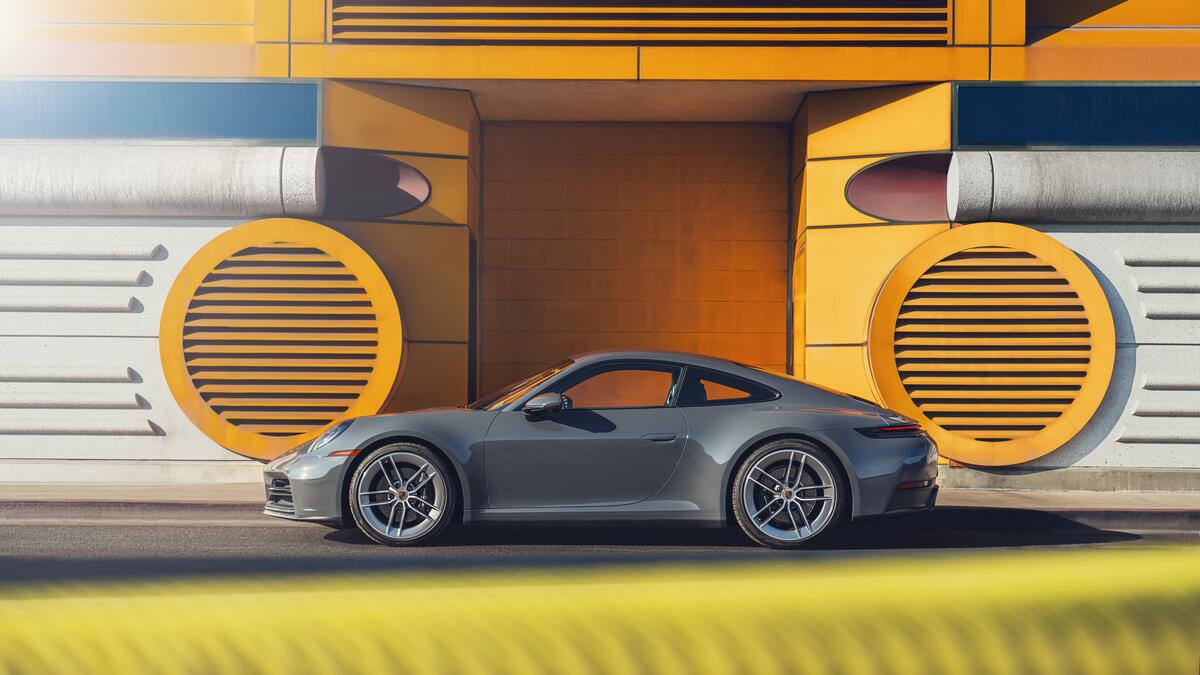
2001 9-11 turbo
"Yeah so this you're right this is a car I've now owned twice this is a 2001 9-11 turbo in forest green metallic with savannah beige interior in killer color very few of them in that in that era in that color six-speed manual of course it has about 73,000 miles on it now"
This is a Porsche 911 Turbo from the 996 generation, and it’s powered by a turbocharged engine. The host also mentions it’s a six-speed manual, which is the more driver-focused way to shift.
The Porsche 911 Turbo (996 generation) is a water-cooled, turbocharged version of the 911 that became a major turning point for the model’s modern era. In this segment, Andy describes a 2001 911 Turbo with a six-speed manual, which is a key enthusiast-spec for how the car drives.
six-speed manual
"very few of them in that in that era in that color six-speed manual of course it has about 73,000 miles on it now"
A six-speed manual means you shift gears yourself using a clutch and a gear lever. It’s usually more engaging for drivers than an automatic transmission.
A six-speed manual is a gearbox where the driver selects gears using a clutch pedal and a shift lever. On a Porsche 911 Turbo, it’s especially notable because many buyers choose automatics, so the manual can change the feel and engagement of the car.
rear wiper
"it's pretty lightly specced it's got sports seats and a rear wiper as most of the turbos did at the time but and that's about it"
A rear wiper is the windshield wiper that clears the back window. It helps visibility when it’s raining or dirty out back.
A rear wiper is an exterior wiper mounted to clear the rear glass. On some Porsche 911 Turbo variants of that era, it was a common factory feature, and it’s mentioned here as part of the car’s typical turbo-spec equipment.
sports seats
"it's pretty lightly specced it's got sports seats and a rear wiper as most of the turbos did at the time but and that's about it"
Sports seats are seats designed to keep you more firmly in place while driving. They usually feel more supportive than basic seats, especially in turns.
Sports seats are performance-oriented front seats designed to hold the driver and passenger more securely during spirited driving. On a Porsche 911 Turbo, they’re often part of the “spec” that enthusiasts look for because they affect comfort and support under cornering.
hollow spoke turbo twists
"one of the wheels was cracked um and these are you know hollow spoke turbo twists and they're they're hard to find and can be quite expensive"
These are a specific style of Porsche wheel with hollow spokes. If one cracks, it can be dangerous and may not be something you can just patch—so you often end up replacing the wheel.
“Hollow spoke Turbo Twists” are a specific Porsche wheel design used on some 911 Turbo models. Because the spokes are hollow, a crack can be harder to detect and may be considered unsafe or non-repairable depending on the wheel and the shop’s process.
psi a day
"so it was losing a couple of psi a day and I kept taking it back to the tire shop"
“psi” is tire pressure. If it’s dropping by “psi a day,” that means the tire is slowly leaking air and needs attention.
“psi” is pounds per square inch, a unit for tire pressure. A loss of “psi a day” indicates a slow but steady leak, consistent with a cracked wheel or tire bead/valve issue.
dunked it in the tank of water
"eventually they dunked it in the tank of water and found a crack in the wheel"
They put the wheel in water to help find the crack. Air escaping from a leak makes bubbles, which makes the problem easier to spot.
Dunking a wheel in a tank of water is a diagnostic method to reveal leaks or cracks by observing escaping air bubbles. In this case, it helped locate the crack in the hollow-spoke wheel after the tire shop couldn’t find the hole.
suspension refresh
"it was going to need a suspension refresh it had about 65,000 miles on it when I bought it and it was on the original suspension and all the original control arms and bushings"
A suspension refresh is when you replace worn parts that help the car ride and handle correctly. If the car still has original parts, it can feel like a big, expensive project.
A suspension refresh means replacing worn suspension components—often including control arms, bushings, and related hardware—to restore ride quality and handling. The speaker says their 996 Turbo had ~65,000 miles on the original suspension, so the refresh was both expected and financially intimidating.
control arms and bushings
"it was on the original suspension and all the original control arms and bushings and all that stuff needed to be done"
Control arms are suspension links that locate the wheel and allow controlled movement. Bushings are the rubber/urethane bearings inside those links; when they wear out, they can cause looseness, vibration, and uneven tire wear—often prompting a suspension refresh.
engine out
"coolant pipes and all those types of engine out jobs was was scary as well"
“Engine out” means the mechanic has to take the engine out of the car to reach the part. That usually makes the repair much more time-consuming and expensive.
“Engine out” describes repairs where the engine must be removed from the car to access certain components. The speaker uses it to explain why coolant pipe-related jobs can be scary and expensive—because labor time and complexity jump dramatically.
coolant pipes
"could you explain real quick about the coolant pipes and why they're kind of an issue in a worry? Sure yeah so on these mesgar engines"
Coolant pipes move the liquid that keeps the engine from overheating. On some 996/997 engines, the parts that connect those pipes can loosen over time, and you can lose coolant very quickly.
On the Porsche 996/997 Mezger engines, coolant pipe fittings are held into the engine case using epoxy/glue. Over time, that adhesive can fail, allowing the fitting to release and causing a rapid loss of coolant.
epoxy
"they all used a sort of glue or epoxy to hold the coolant pipe fittings into the case of the engine and that epoxy over time has shown to fail"
Epoxy (a glue-like adhesive) is used to hold coolant pipe fittings into the engine case on these Mezger engines. The segment explains that the epoxy can degrade over time, leading to fitting release and rapid coolant loss.
pinning
"have the coolant pipes either welded in place or do what people call pinning which is essentially you know screwing in a sort of a tapping screw into the fitting to prevent it from removing"
Pinning here means adding a mechanical fastener so the connection can’t come loose. It’s a way to stop the coolant pipe fitting from separating and losing coolant.
In this context, pinning is a repair method where a screw/tapping fastener is used to mechanically secure the coolant pipe fitting so it can’t release. The host describes it as preventing the fitting from falling out by adding a physical retention method rather than relying on the original epoxy.
bore score
"the bore score thing the IMS thing what those numbers are and maybe that is overblown um I [1537.3s] my sense is and please tell me I'm wrong Andy"
“Bore score” means scratches or wear inside the engine’s cylinder walls. If it gets bad, it can hurt compression and engine health. The hosts are debating whether this is a big problem or exaggerated for these cars.
“Bore score” refers to scoring/wear marks in an engine’s cylinder bores, often caused by lubrication or wear issues. In Porsche 996 discussions, it’s brought up as another potential age-related engine problem that owners try to correlate with usage and conditions. The host suggests earlier talk about it may be “overblown.”
thermo cycles
"a little bit more when not if just because of the thermo cycles on the engine the epoxy is [1548.0s] going to get stressed over time"
“Thermo cycles” just means the engine constantly goes from hot to cold. Over time, that repeated heating and cooling can weaken materials. In this case, they’re saying it can stress the epoxy that’s involved with the coolant pipes.
“Thermo cycles” means repeated temperature swings as an engine heats up and cools down. Those cycles can fatigue materials and adhesives, especially in areas exposed to heat, vibration, and pressure changes. Here, the host connects thermo cycles to stress on an epoxy used in the coolant-pipe area.
correlations between climates where these cars are driven
"there's been a lot of people that have tried to you know [1553.3s] build sort of correlations between uh climates where these cars are driven or how they're driven"
They’re talking about whether things like hot vs cold climates or track driving can predict when these problems happen. The host’s take is that those patterns don’t really show up clearly. So it’s more about time/age than specific driving conditions.
The host discusses attempts to correlate IMS/coolant-pipe failure risk with environmental and usage factors like climate and whether cars are tracked. They argue that the correlation largely isn’t there, meaning the risk appears more age-related than condition-specific. This is a decision-making concept for owners trying to predict failure likelihood.
not stuck in that situation
"it will happen at some point and if you really want to be sure that [1599.4s] you're not stuck in that situation you just have to bite the bullet and fix it"
They’re basically saying: don’t wait until something fails. If you want to avoid getting stuck with a big problem, either do the preventative repair or buy one that’s already been fixed. It’s about reducing the odds of an expensive surprise.
This phrase frames the ownership decision around avoiding a known failure scenario by either doing the preventative fix or buying a car that already has it completed. It’s essentially a risk-management concept: reduce the chance of being stranded by addressing the problem proactively. The episode treats it as the practical takeaway from the “if vs when” discussion.
weld
"or buy a car that's already had it done yeah coke and Pepsi pin it or weld it these are [1610.4s] the two camps this is like west side story and they're fighting each other"
Here, “weld” means using welding as part of a preventative fix for the IMS area. The idea is to reduce the chance of the IMS bearing failing. They’re saying there are two main methods people choose between, and the workmanship matters.
In this IMS context, “weld” refers to a preventative modification where welding is used as part of the IMS-bearing/shaft-area fix. The host contrasts it with “pinning” as two different camps for addressing the same underlying risk. The implication is that both approaches are intended to prevent catastrophic failure, but execution quality is crucial.
zero to 60
"it's fast it's really quick and it you know it was it was super car fast at the time and even by today's standards it's really quick i mean zero to 60 in in the low fours uh or high threes depending on who's measuring"
Zero to 60 is how fast a car accelerates from a standstill to 60 miles per hour. Lower time usually means quicker acceleration.
Zero to 60 is a common acceleration test measuring how long it takes a car to go from 0 mph to 60 mph. It’s used as a quick, comparable metric for straight-line acceleration performance.
turbo lag
"it's sort of a kind of old school turbo feel in the sense that there is turbo lag and and you know you're sort of you're waiting for it to spool up and then it just hits you like a roller coaster"
Turbo lag is the short pause you can feel before a turbo engine really starts making boost. You press the gas, then there’s a moment of waiting before the power kicks in.
Turbo lag is the delay between pressing the accelerator and the turbocharger building enough boost to deliver strong power. It happens because the turbo needs time to spool up, so the car can feel like it’s waiting before the “hit.”
spool up
"and and you know you're sort of you're waiting for it to spool up and then it just hits you like a roller coaster but not not quite so extreme"
“Spool up” means the turbo is spinning faster until it starts forcing more air into the engine. When it spools up quickly, the car feels more responsive.
“Spool up” describes how quickly a turbocharger accelerates its turbine to higher RPM so it can start producing boost. The faster the spool-up, the less noticeable the delay before power arrives.
boxers
"i think that the answer kind of is it depends and i think this is this is a thing that i'm finding a lot with certainly with boxers a lot with 996 is is there are perceptions of how these cars are to drive"
Here “boxers” refers to Porsche’s flat-style engine. The host’s point is that if a car has been neglected, it can feel worse than it should, and people may assume that’s how all of them drive.
In Porsche context, “boxers” usually means boxer engines—flat engines where the cylinders sit opposite each other and move in and out horizontally. The host is saying that perceptions about how these cars drive often come from people’s experiences with poorly maintained examples.
rear engine
"it's still a 911 it still drives like a 911 it's still you know still has the rear engine feel and and all that kind of stuff"
This means the engine is mounted in the back of the car. That layout affects how the car feels to drive, especially how it balances and turns.
“Rear engine” describes the 911’s layout where the engine sits behind the driver and passengers. This placement strongly influences balance and steering feel, which is why the host says the car still has “rear engine feel” even in the Turbo.
update the suspension
"but even then even uh you know taking that into consideration it's still a 911... but i think if you take one of them and you really get it dialed in you update the suspension you you you know bring it up to today's standards"
Suspension is what controls ride and handling. If it’s worn out, the car feels sloppy; refreshing it can make the car feel tight and fun again.
“Update the suspension” here means refreshing worn suspension components (and/or upgrading them) so the car handles as designed. The host argues that many 996 Turbos are “ratty” and that dialing in the suspension is a big part of making the driving experience compelling.
refresh everything
"you update the suspension you you you know bring it up to today's standards and and you refresh everything it's it's a really really compelling driving experience"
This means replacing old, worn-out parts and fixing systems that have gotten tired. The host is saying a well-sorted car can feel totally different from a neglected one.
“Refresh everything” is shorthand for bringing an older car up to date by replacing aging wear items and restoring systems that have degraded over time. In this segment, it’s tied to the idea that a neglected 996 Turbo can feel disappointing until it’s properly sorted.
Porsche 930
"having owned a 930 in the past that power delivery with the turbo was very light switch what i loved about the 996 was that when the turbo came on"
Porsche 930 is the older 911 Turbo generation. They’re comparing how the turbo power hits—this one comes on more suddenly than the newer car they’re describing.
The Porsche 930 refers to the classic 911 Turbo of the 1970s–1980s era, known for its turbocharged flat-six and distinctive, often more abrupt power delivery. The host contrasts its “light switch” turbo behavior with the later 996’s feel.
turbo was very light switch
"having owned a 930 in the past that power delivery with the turbo was very light switch what i loved about the 996 was that when the turbo came on"
“Light switch” means the turbo power feels like it turns on suddenly. Instead of gradually building, it hits and you feel the surge right away.
“Light switch” describes a turbo’s power delivery that feels abrupt—boost arrives suddenly and the car surges forward quickly. It’s a subjective way enthusiasts compare how quickly and progressively a turbocharger builds pressure.
turbo starts spooling up
"you've just got it ready and waiting and if you put your foot down it's going to really wow you it's it's a pretty incredible experience"
“Spooling up” means the turbo is winding itself faster as the engine revs and exhaust flow increases. Once it’s spinning enough, it starts making boost and the car feels stronger.
“Spooling up” is the turbocharger’s process of accelerating until it reaches the engine speed and exhaust flow needed to generate boost. The host ties this to when the car starts producing strong pull—once the turbo is “on,” the torque arrives quickly.
boost gauge
"and if you put your foot down it's going to really wow you it's it's a pretty incredible experience when you're starting to it's got the boost gauge in in the you know in the dash cluster"
A boost gauge tells you how much pressure the turbo is adding. As you press the gas, the number climbs, and that’s when the car is making its strongest turbo pull.
A boost gauge shows the turbo’s intake pressure relative to atmospheric pressure, typically in bar. Watching it rise is a direct way to “see” when the turbo is building pressure and how hard you’re driving the system.
bars
"the most enticing german word uh actually i shouldn't say it's a german word it's a it's a unit of measurement bars and does your gauge have bars as bars yeah bars in terms of what the what the pressure is"
“Bars” is just a way of measuring pressure. On a turbo gauge, it tells you how much boost pressure the turbo is making.
“Bars” refers to pressure units used on many turbo boost gauges. In this context, it’s measuring how much boost pressure the turbo is producing.
swiss army knife
"it's maybe much more than a boxer more of a swiss army knife of yeah what do you want to do today"
This is a metaphor meaning the car can handle lots of different kinds of driving. The guest is saying the Porsche 996 feels versatile, not just one-trick.
“Swiss army knife” is a metaphor for a car that can do many different jobs well—commuting, cruising, and spirited driving—without feeling specialized. Here it’s used to describe how the Porsche 996 can be more versatile than the “boxer” identity alone suggests.
bore scoring
"there's really no sort of catastrophic issues to be concerned about bore scoring isn't a thing the ims bearing isn't a thing"
Bore scoring means the inside of the engine cylinders gets scratched or worn. If it happens, it can lead to oil consumption and engine wear, so the host is saying this is not something you typically have to fear on these engines.
Bore scoring is damage inside the engine cylinder walls (the “bores”) where metal gets scratched or worn. The host claims bore scoring isn’t a common issue on these Porsche turbo engines, which is a major part of why they’re considered low-drama if maintained.
aos water pump
"um you know aos water pump you know all of those types of things are all very standard"
The AOS (air-oil separator) helps keep oil mist out of the engine’s breathing system. The host is saying the related water-pump/maintenance items are normal and not usually a big surprise problem.
“AOS” refers to the engine’s Air Oil Separator, which separates oil mist from crankcase gases. The host groups the AOS water pump with other items they consider standard/expected rather than major red flags on these engines.
second gear pop out
"there are some nuances with certain years and potential transmission issues there's a thing called second gear pop out which can happen happen I think largely in the in the earlier ones 2001 2002 where when coasting in second gear your your your car will just pop out of second gear into neutral"
Second gear pop out is when the car unexpectedly kicks out of second gear and goes into neutral. The host says it’s mostly seen on earlier years and is usually tied to the transmission internals, not the engine.
Second gear pop out is a transmission fault where the car unexpectedly disengages from second gear and drops into neutral, often during coasting. The host says it’s associated with earlier 996 Turbo years (around 2001–2002) and can often be fixed with a transmission rebuild and/or a detent-related adjustment.
detent
"this as far as I understand largely just requires a transmission rebuild to fix there's a little piece of detent that you can put in that can help prevent it"
A detent is a little mechanical “catch” that helps keep the shifter/gear engaged where it should be. The host is saying a detent-related fix can help stop the gear from popping out.
A detent is a mechanical feature that helps hold a gear selector in the intended position. The host suggests there’s a small detent piece that can help prevent second gear pop out, implying the issue can be partly addressed by correcting the gear-holding mechanism.
tiptronic
"you will find a lot of them with tiptronic transmissions and I haven't ever driven one tip turbos a lot of tip turbos and I think that speaks you know sort of to the intention of the 996 turbo too"
Tiptronic is an automatic transmission that lets you choose gears yourself if you want. The host is saying the 996 Turbo often comes that way, and it matches the car’s relaxed, long-distance vibe.
Tiptronic is Porsche’s name for an automatic transmission that can also be manually controlled (typically via shift paddles or a gated shifter). The host notes many 996 Turbos are equipped with tiptronic and argues it fits the car’s “cruiser/GT” intent.
service records
"take a look at service records take a look at interior condition"
Service records are the paperwork showing what work a car has had—like oil changes and repairs. When you’re buying a used Porsche, they help you judge whether the car was cared for.
Service records are the documented history of maintenance and repairs for a car. For a used Porsche 996, checking service records helps you verify that wear items and scheduled maintenance were actually done, which matters when you’re evaluating overall condition.
tufted leather
"but the 993s were soft or tufted leather and I felt like wore a little bit better"
Tufted leather is a type of seat or panel upholstery where the leather is stitched in a way that creates a slightly padded, patterned look. They’re saying that this kind of leather can hold up differently over time.
Tufted leather is a upholstery style where leather is stitched into sections with a “puffed” or patterned surface. The hosts use it to describe the 993’s interior leather, arguing that this style can wear differently (and potentially better) than other leather/trim setups.
air-cooled
"the shifting is from a 993 like it feels to me old-school air-cooled shifting but the motor has more pep and it has not as not more character certainly but it has enough character that it harkens back to you know what was an air-cooled motor"
An air-cooled engine uses airflow to keep the engine from overheating, rather than circulating coolant. The host is comparing the classic feel of air-cooled 911s to the 996’s more modern, refined experience.
“Air-cooled” describes an engine design that relies on airflow over the engine to shed heat instead of using a liquid coolant system. The host uses it as a benchmark for the Porsche 993’s character and compares that feel to the 996, which is more refined but still “raw” in driving.
IMS fails
"listen just buy one that you think is the best you can find at the time and just drive it and look if it if it has bore scoring three years from now or the IMS fails and the engine blows up whatever"
IMS is a part inside the engine that helps drive the timing system. If the IMS bearing fails, it can damage the engine badly, so it’s one of the big things people worry about on some 996s.
IMS refers to the intermediate shaft in the Porsche 996’s engine, and “IMS fails” means the IMS bearing can wear or fail. This can cause catastrophic engine damage, which is why it’s discussed as a major known risk for certain 996-era cars.
KW V1 coilovers
"the previous owner had done um some suspension work on it he had kw v1 coilovers on it that I wasn't a huge fan of"
Coilovers are aftermarket suspension parts that let you change how the car rides and handles. The “KW V1” is a specific brand/model of coilovers, and the speaker didn’t like them as much as another option.
KW V1 coilovers are an aftermarket suspension setup that combines a coil spring and shock absorber into one adjustable unit. They’re often chosen to improve ride/handling balance, but the speaker says they weren’t a big fan of how they felt on this Porsche.
holand's road track coilovers
"and I had put holand's road track coilovers on my c4 s and and really loved them so I I did that on this car"
These are aftermarket suspension parts that help the car handle better. The speaker liked them a lot on their other Porsche, so they used the same coilovers on this car.
“Road Track” coilovers are an aftermarket suspension kit aimed at a balance of street comfort and track-capable handling. The speaker specifically says they loved this setup on their C4S and then installed it on the 996 Turbo while refreshing the suspension.
shifter cables
"I need to replace the shifter cables and and a few other little things"
Shifter cables are the cables that connect your gear lever to the gearbox. If they’re worn, shifting can feel sloppy or hard to get into the right gear.
Shifter cables are the mechanical linkages that transmit movement from the gear shifter to the transmission’s shift mechanism. If they wear or stretch, shifting can feel vague, notchy, or out of adjustment.
Request an Explanation
Heard something you'd like explained? We'll add it to this episode.
Sign in to request explanations for terms you heard.
Want to learn more?
Browse our glossary for plain-English explanations of automotive terms, jargon, and concepts.
Help improve this episode
See something that's not quite right? Our annotations are AI-generated and can sometimes miss the mark. Click the flag icon on any annotation to suggest a correction.