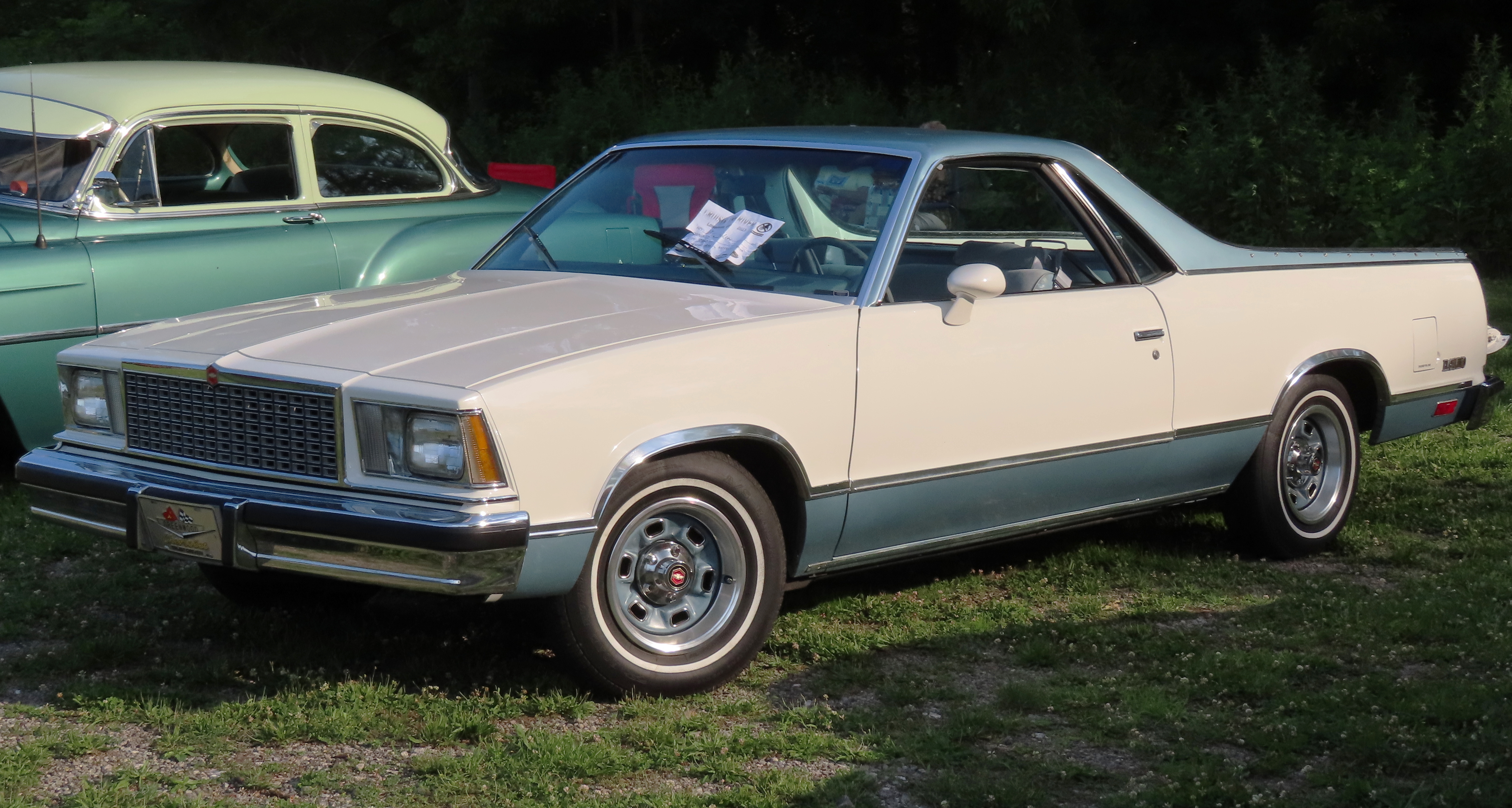
The Chevrolet El Camino is a classic that looks like a car but has a truck bed. Here it’s mentioned as a specific vehicle the host has stored/relocated.
A “12 bolt rear end” is the back axle assembly from a car, and the “12 bolts” describes how it’s built. People mention it in car projects because it’s often a sturdy rear-end upgrade or spare part.
Term
garage lift
A garage lift is a shop device that raises a vehicle off the ground so you can work underneath. The host describes a compact lift that “drops down” and raises the car only a few feet, which is a common style of low-profile or platform lift for home garages.
Concept
tilt lift
A “tilt lift” is a lift that can change the angle of the platform to raise the car. The host is basically trying to describe the lift’s movement so listeners understand how it works.
Concept
car up on the lift
A lift is a garage tool that raises a car off the ground. It lets you work on the bottom of the car more easily.
The Ford GT40 is a special sports car made by Ford that became famous for racing. It’s the kind of car people collect because it’s rare and has a big history in motorsports. The podcast mentions it as part of someone’s car collection.
A Range Rover is a luxury SUV from Land Rover. People often talk about them because they’re nice to drive but can be more complicated to maintain than simpler cars.
Fiberglass is a man-made material made from glass fibers mixed with resin. In car talk, it often means the body parts are made from fiberglass instead of the original metal, which collectors care about.
“Hand form” means the car’s body parts are shaped by hand instead of being stamped out by machines. People mention it to signal more careful craftsmanship.
The brake caliper is the part that clamps the brake pads onto the spinning brake disc. If it’s leaking, the brakes can lose pressure, so the car may not stop as well.
Bleeding the brakes means getting trapped air out of the brake fluid lines. Air can make the brakes feel weak or spongy, so bleeding restores proper brake pressure.
“OBS” is a nickname for an older body style. The Chevrolet Tahoe is an SUV, and the speaker is using this older-style Tahoe while their other truck is sorted out.
When the brake pedal suddenly feels like it drops to the floor, it usually means the brakes aren’t working right. That can make it much harder to slow down in time.
“Pumping the brakes” means pressing the brake pedal repeatedly. People do this when the brakes don’t feel right, hoping to get some stopping power back.
The brake caliper is the part that squeezes the brake pads against the spinning brake disc. If it fails, the brakes can act weird fast—like making noise, pulling, or not stopping normally.
Brake pads are the replaceable pads that clamp onto the brake disc to create stopping power. If they break apart, braking can become uneven or suddenly ineffective.
Brake lock-up is when the wheel stops turning because the brakes are gripping too hard or something is stuck. The speaker says it happened for a moment when they pressed the brakes.
Aftermarket brakes are brake parts you buy from a company other than the one that made your car. People swap them in to change how the brakes feel or how they perform versus the factory parts.
Wilwood is a company that makes aftermarket brake parts for cars and trucks. The host is mentioning it as a possible brake brand they’re not using (or not using in the way he described).
A brake caliper is the clamp that squeezes brake pads against the rotor to slow the vehicle. “Stock calipers” means the original factory calipers, which the speaker is choosing to replace their aftermarket setup.
Rotors are the metal discs that the brake pads press against to slow the car down. “Stock rotors” are the factory discs that originally came with the truck.
“Billet” usually means the part is cut and machined from a solid metal block. When someone says “billet brakes,” they mean aftermarket brake parts made that way, often for a nicer finish and precise fit.
“Monoblock” means the brake caliper is made as one solid piece instead of being built from multiple sections. The goal is usually a stronger, more rigid caliper.
ARP makes aftermarket bolts that are designed to be stronger than typical hardware. Here, they’re being suggested as a more secure replacement for the bolts that might be loosening.
The Ford Lightning is Ford’s electric pickup. The host is talking about their own Lightning and how a similar brake hardware problem might have happened.
Brake-by-wire means the brake pedal isn’t directly controlling the brakes the old-fashioned way. Instead, computers read what you’re doing (and what the car is detecting) and then command the braking system.
ABS is the system that helps keep your wheels from locking up when you brake hard. If the car thinks something’s wrong with braking, it can show ABS-related brake codes.
Brake pressure is how hard the brake system is pushing hydraulic fluid to slow the car. Some newer safety systems watch that pressure to know what the brakes are doing.
Brake fluid is the fluid that helps your brake pedal push the brakes to stop the car. If the car thinks the fluid level is low, it can show errors even if the brakes feel okay.
A six-piston caliper is a brake clamp with multiple pistons that squeeze the pads. Because it’s a different design than stock, it can change how the brake system behaves and sometimes trigger warnings.
Regenerative braking is how an EV slows down using the motor instead of only using the brake pads. That usually means the regular brakes don’t get used as much day-to-day.
The Mustang is a sports car from Ford. In the podcast, they’re talking about a particular Mustang that may have had problems with its brakes. That kind of issue is important to know before buying any older car.
Bring a Trailer is a website where car enthusiasts buy and sell cars through auctions. It’s known for showing detailed listings and attracting collectors.
An air bypass kit helps control how air flows to the supercharger. That can make boost feel smoother and protect the system when you change throttle.
Term
ram clutch
A ram clutch is a stronger clutch meant for higher power. It can make the car handle the extra torque, but it may feel different than the original clutch.
The drive shaft is the part that transfers power to the wheels. Using aluminum can make it lighter, which can help the car feel more responsive.
Concept
engine mods
Engine mods are changes made to the engine to make it perform differently—usually to make more power or change how it runs. Here, they’re talking about the supercharger and related upgrades.
Ground effects are parts on the car that help it interact with the air near the ground. They can make the car feel more planted, but they usually cost a lot.
Suspension is what connects the wheels to the car and helps control how the car rides. Better suspension can improve handling, especially when you add other performance parts.
Maximum Motorsports is a company that makes aftermarket suspension parts for Mustangs. Using their parts usually means the car’s handling setup is more performance-oriented than stock.
A torque arm is a suspension piece that helps keep the rear axle from moving around too much when you accelerate or slow down. That can make the car feel more planted and easier to control.
A Panhard bar is a rear suspension link that helps keep the back axle from shifting left or right. That can make the car track straighter and feel more controlled.
The K-member is a structural part at the front of the car that holds up the suspension. If it’s “stock,” it means the front suspension structure is still the factory setup.
Aftermarket parts are upgrades made by companies other than the car’s manufacturer. People use them to improve the car or customize it, and sometimes they make the car more valuable to buyers.
The De Tomaso Pantera is a classic Italian supercar. Here it’s mentioned as an example of a rare, desirable car that sold for a lot because of who owned it and the attention it got.
The AC Cobra is a famous classic sports car known for its small, lightweight body and powerful engine. The hosts are using it as a benchmark for how much certain Cobra versions can be worth.
Concept
auction premium
An auction premium means the car sells for more than you’d expect. Here, the host is implying that attention and hype around the car can make people bid it up.
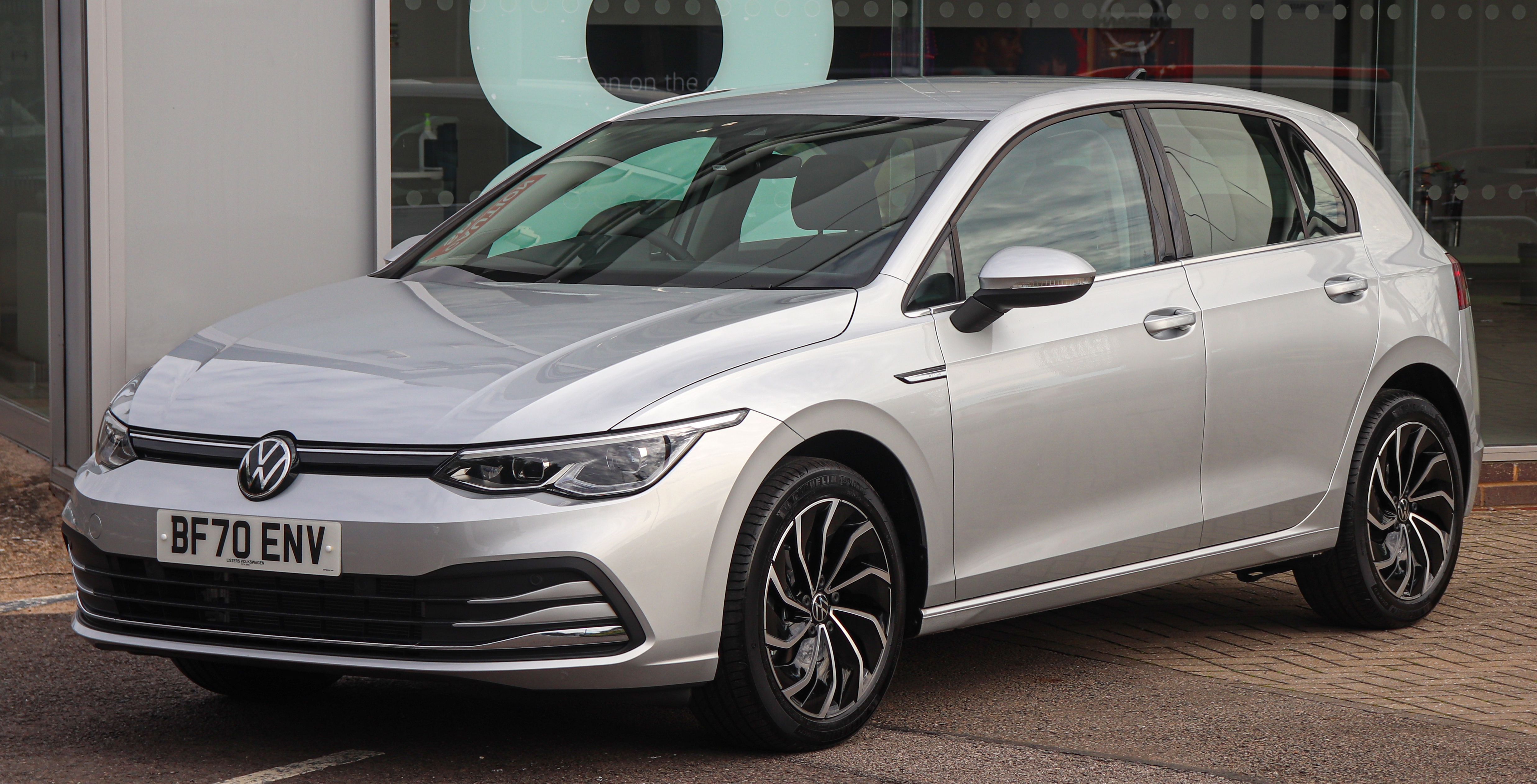
The Golf is a compact car that’s made in many versions. In the podcast, they’re talking about a “GTD,” which is a more performance-oriented version. The main point is the price they’re willing to pay for that specific car.
An Audi V8 is an Audi car that has a V8 engine, which is a type of engine with eight cylinders. In the podcast, they mention it because it makes the car more powerful and interesting. The key idea is that it’s a V8-powered Audi.
Stampings are metal pieces made by pressing sheet metal into a specific shape with a machine. If you don’t already have the molds/dies, it can be expensive and slow to start making them.
Carbon fiber bodies are car body panels made from a strong, lightweight material. They can make the car lighter, but building them usually takes special equipment.
A crate engine is an engine you buy already assembled, like a kit in a box. People use them to swap engines or replace one without hunting for parts one-by-one.
“LS” is a GM engine family that a lot of car builders like for engine swaps. It’s popular because there are lots of them around and lots of parts and tuning options.
Term
LTE engine
“LTE” sounds like a specific engine name the hosts are using, like how they said “LS.” The exact meaning isn’t fully spelled out in this clip, but it’s clearly another engine option for swaps.
Fram is a well-known car-parts brand, especially for filters. The hosts mention it because it’s one of the brands owned by the company they’re discussing.
Trico is a brand that makes car parts. In this segment, it’s brought up because the hosts are listing brands owned by a bigger company.
Brand
Ray Bestis
“Ray Bestis” sounds like a parts brand name the hosts are listing. It’s likely related to brake or friction parts, since that’s what this brand is known for.
Chapter 11 is a type of bankruptcy where a company tries to reorganize instead of shutting down immediately. If it can’t fix the finances, parts of the business may get sold off.
Reproduction parts are replacement pieces made to look like the original ones. Sometimes they don’t fit or match perfectly because they’re made differently than the old factory parts.
The speaker is talking about a rule that required car makers to keep replacement parts available for a long time. That made it easier to repair older cars instead of parts disappearing.
Tooling is the special equipment factories use to make parts. If a company goes bankrupt, that equipment may be sold or lost, which changes how fast parts can be made again.
Liquidation is when a bankrupt company sells its stuff to pay debts. The concern here is that the equipment used to make parts may not stay available for making those parts.
Ramp up time is how long it takes a new company to get production going at normal levels. If it takes too long, stores may run short on parts even if the tooling was bought.
Inventory just means parts that are already made and sitting in storage or stores. If a bankruptcy sells all the inventory quickly, there may be a gap before new production ramps up.
White label means a store sells a product under its own brand name, even if it’s made or sourced elsewhere. Here, it’s used to explain how parts might still be sold after a supplier collapses.
Spark plugs create the spark that starts the engine in a gas car. The episode uses them as an example of a common part that could change where you buy it or how much it costs.
An oil filter is a service part that removes contaminants from engine oil to help protect engine wear. The segment mentions oil filters as an example of items that could become harder to source or shift to a retailer’s own branding after supplier liquidation.
Auto-Lite is a brand that makes spark plugs. The point is that parts brands can get tied up with retailer supply and branding when companies go through bankruptcy.
The worry is that if suppliers collapse, it may be harder to find the parts needed to keep cars running. That can make repairs more expensive or inconvenient.
Car
GMC 3500
GMC 3500 is a big truck that’s built for hauling and towing. The point here is that towing a large trailer can make gas costs really painful.
LIVE
Stay cool this summer with Air Controls Boseman, your Lennox Premier dealer.
We'll tune up your existing system or install a new one. Call Air Controls today at 406-587-6292.
Don't forget Mother's Day is Sunday, May 10th.
Visit Walgreens today to find the perfect Hallmark Mother's Day card and make her feel truly special.
Mother's Day means Hallmark cards at Walgreens.
Every team, every topic, everywhere. This is Belize.
I'm working on videos. my house.
Well, I'm not working on my house. Other people are, but I got to step over crap every time I come home and, you know, don't touch that.
Oh, that's wet. Oh, you know, but it's coming along.
I almost got one of the bathrooms done, half the house is replumbed, and, you know, we, yeah, it's like any construction thing.
Even when it goes well, there's certain things that like the guys, you know, we were having all this seamos glass put around the one shower and, and the guy showed up yesterday and I get a phone call.
I'm at the office and I get a phone call and Charlotte and she's like, oh, oh man.
You know, I go, what's wrong? What's wrong? Well, they showed up and in the towel bar, you know, they drill holes in the glass and mount a towel bar.
It's too high. It doesn't line up with the, doesn't line up with the, and she's freaking out.
Come on. It's going to be all right.
And I go, and I go, I go, think of it this way. Once there's a towel hanging over it, you're not going to see that as much.
Okay. Then I get home last night and I walk in to see it.
Yeah, it was an inch too short. They cut the glass too short.
But that's a good thing. And I go, why? Because the handle was too low.
And, you know, it's just stuff like that.
Yeah.
But, but it's looking really nice looking the way we wanted.
And that bathroom will be done. Then we'll start on the other one and, and, you know, then, then as I told you, I don't know if I said it on the air, but
I've got my big shop at home. Yeah.
Used to use to build Cima cars and all kinds of stuff. And over the years, it's become just a big storage facility and which has bummed me out tremendously.
But I'm giving up my shop to build a guest house.
And I talked about this when my mom, before my mom passed.
Yeah. Your mom was staying with you those last few years and years, but she was always like, I don't like, I kind of want to feel like I'm in my own place.
And you're like, well, I wanted her to, you know, she needed to be with people, but, you know, I wanted her to have a little independence.
And so I had my architect do drawings because when I built that garage, it wasn't built like a garage.
It was built because I figured if I was ever going to sell the house, I wanted it to be, you know, it all had drywall, it had a ceiling, it had ceiling fans, has a bathroom in it.
I already stubbed in all the electrical and everything for a kitchen.
And so now it's just a matter of going in, you know, it was, I just got to go down and get a couple permits because I'm going to change the garage door to a, you know, to a wall with windows in it.
And the one thing that I found out that was really weird, I didn't know this, I've got to cut the wall in one place and make the door, which will be the front door bigger.
Yeah.
Because it was built with a garage spec man door, which I found out is different than a, than a residence man door, meaning that a wheelchair can't really get through that door.
So we've got to change that door.
Yeah, I just, it's a few little things, but it'll be real nice.
It just bummed me out a little bit not to have that shop, but I haven't had it for a couple of years because I loaded all my stuff in there and it's easy.
I can't even walk through it.
So it'll, it'll be nice.
So Matt, you'll be able to come down, you know, hang out in Orange County and stay at my place and I can't move it in.
Yeah, exactly.
But it's gonna, you know, I'm gonna, I got a little place where I'm gonna, I'm doing alongside it that, you know, where they put the grass, but there's cement in there.
There's grass between the cement squares.
So you can park on it, but it still looks nice.
We're doing that and stuff like that.
So it'll be nice.
It'll, you know, I'll still have my shop here, here, and that's probably better anyway.
You know, I work on cars and work on them here and then go home.
Yeah.
So doing that.
Is it, is it separate from the house or attached to the house?
No, it's completely separate.
It doesn't share a wall and it has a separate entrance with a steel gate that you're putting the code and you walk into it and then.
So the house still has the garage.
Yes.
I still have a two car garage in the house itself.
And then the shop out back was, will be sort of a separate, almost like a separate residence.
More, a little more than an ADU at this point.
No, it's more of a guest house and it's, and the way it's positioned will have, will have some nice collapsing doors that look out at the pool from it.
So I'll have separate furniture out there and, and like if somebody's a guest, they can stay there and go out to the, to the pool.
And then I'm putting a nice little black rail fence at the deep end of the pool, which is the end that my house sits.
And that way if the dogs are out and I've got somebody there, they're not running into the guest house.
People are like, they ate my, you know, my clothes or whatever.
Yeah, right.
Yeah.
It'll be nice.
All right.
Sounds good.
But, but you got, you got stuff in there and cars in there.
Oh yeah.
I've got my Mercedes in there.
I got my 69 Camaro in there.
I got my motorcycles.
One of my.
Was your Chevelle in there?
No, the Chevelle's here.
I'm sorry about the Chevelle.
The El Camino.
The El Camino is at the museum with the bag.
Oh, that's right.
Yeah, you moved that.
And then, and then in the other garage, I've got the lift and I keep the OBS Tahoe in there and the Mitsubishi Diamante that we built at Hot Rods by Boyd.
Yeah.
And underneath on the lower part of that is more junk, you know, like, you know, like a 12 bolt rear end.
And, oh, you know, it's in there that I actually need to sell is, um, have you ever seen those lifts?
I can't remember the name of it, but that you, they drop down like this, put them in your garage and they're about three foot tall.
You drive up on them and they lift up and then you put a thing and you got your car up about three foot.
It's kind of like having a, you know, it's like a Cesar left, but it's a tilt.
It's a tilt.
Yeah.
Yeah.
And I bought that thing and thought I was going to use it as a more like when I was building a car to get it up off the ground where I'm working on it and everything like that.
And I just don't have room for it.
I've got two lifts I've got.
And so it's sitting there.
I think I parked a car on it maybe 20 times and took it apart and it sits underneath the one lift.
So.
And so, and the Chevelle is at the office with you there.
Yeah.
Yeah.
The Chevelle's here along with the dragster.
Yeah.
But the dragster is like up in the air.
It's on a lift.
I've got a lift.
So I got a lift here with a car up on the lift and more junk.
A bunch of junk underneath.
Yeah.
A bunch of wheels and two mo to two Kawasaki motorcycles and a big compressor that I got to get rid of.
Anybody need a compressor?
I got a big ass compressor.
I got to get rid of.
And do you still like share some storage space with Mikey like out in the.
We've got a building up in Pomona.
Yeah.
And I got some stuff.
But Mikey has like hot rods in a motor home and all kinds of stuff.
He's got his motor coach.
He's got his GT 40.
Yeah.
He's got his Nomad.
He's got two hot rods that we built at Boyd's for him.
He's has his.
I think he got rid of his Range Rover.
The Nomad.
Did he buy the Nomad at Barrett Jackson a few years ago?
Yeah.
I was there for that.
Yeah.
He sent it back to Troy Japanier to go through it front to back.
And then another time he sent it over to.
No, that was his other car.
Yeah.
I went to Troy and he's driven it maybe, you know, a handful of times and now there's
a bunch of stuff that he wanted to do to it that he said needed maintenance.
So he sent it over to Chip's and Chip is doing maintenance on it.
And I got to build a new set of wheels for it.
So.
And then he's got the hot rod that.
Oh, that I bought for him at Barrett Jackson.
No, he's got the flamed hot rod, right?
That's the fire roadster that we built for him at Boyd's.
Yeah.
That was the one he's had for the longest time.
That was the one like where you guys like really kind of met on.
Yeah.
Yeah.
Then we did the Hellfire 40 for him.
Yeah.
Yeah.
Now he's had, he had a B400 that we, we didn't build it for him.
It was a car that we had traded in at Boyd's.
Beautiful car, all black.
And he just decided that he had too many hot rods.
And I don't know, you can have too many hot rods.
And he got rid of it, regretted it the minute he handed the keys away.
And before he got rid of it, he offered it to me at a really great price.
And I should have bought it.
I thought about buying it, but I was in the middle of watch company and spending money
like it, you know, like it was dust.
And I thought, I'm going to need every dollar I got.
And so I didn't buy it.
And now we can't find the car.
We hear rumors that it's here.
We hear rumors that it's there.
But I like to know where it is, but it was black and it was beautiful.
And then he had a 46 that we built for a guy named Buzz DeVosta.
And Buzz traded it back in on another build that we were doing for him.
And Mike brought that for a while and then sold it.
And so he's had a number of hot rods by Boyd cars.
But he's got the original.
He's got the flamed one that you guys built.
He's still got that.
Yeah.
Yeah.
Because that's the one like we've seen photographed everywhere.
Right.
And then he's got the Hellfire 40.
He's got the 40 convertible that we did for him at Boyd's.
Yeah.
And so.
And now the Metrenger collection has a bunch of Boyd cars.
Yeah.
They got the Boydster one and two I saw there and which is cool.
And it's funny.
The one strange thing about those cars is that there was a company in
Australia that did a deal with Boyd and this was after I was gone.
I wasn't at the company anymore.
Yeah.
I was there when we did Boydster one and we had just started Boydster
two and then I left.
And but after I was gone, Boyd did some kind of a deal with a
company in Australia where they pulled molds off of the car.
Yeah.
I remember.
I remember the bodies they were selling.
And I've been at the show next to that.
I've been at a car show next to it and it's sitting there.
And and what's funny is a lot of people painted them yellow, just
like the Boydster one.
And and you can just see them cringe when people come up and go,
is that is that a fiberglass one?
And they're like, no, you know, no, it's all hand form.
But they're nice.
Metrenger collection has the real ones.
Yes.
They have the real ones.
Yeah.
That makes sense.
If you look at their collection.
Yeah.
They have the real ones.
They've got great cars.
And those two 66 Chevelles that they have there were really nice.
They've got there.
They're such a unique collection.
Most collections, I can think of people that have collections that I know
that are on par with the Metrenger collection.
But the difference is like, I can even think of people that have a separate
shop to maintain their cars, but they don't actually build and fabricate.
And and that's what's interesting.
They got Chris there, you know, and his crew doing that, which is pretty cool.
Everyone over there is really nice.
Everyone over there is super talented.
So it's they've got a good thing going on over there, you know, and you're
right, brute force.
That car is is it just continues to win awards and win awards.
You guys haven't seen this.
There's this car called brute force that they built.
And it deserves everything that it's getting because it is just done so well,
so nice.
And I actually love the color combination, the blue and the red.
Oh, yeah.
It's really good.
And that was that was one of the ones they did in house that wasn't
bought or anything.
That was one they built.
So kudos to those guys.
No, every time you look at it, you see more detail or stuff that you
didn't notice the first time, you know, it's pretty cool.
Hey, you know what we forgot, Matt?
We forgot to talk about FanDuel.
This episode is brought to you by FanDuel.
And if you love sports and want to make the games even more exciting,
you've got to go check out FanDuel.com.
It's easy to use.
There's tons of ways to play and you can jump in whether you're a season fan
or just getting started.
Give it a try today at FanDuel.com and see what all the excitement is about.
All right.
Man, how could we forget FanDuel?
I mean, FanDuel, I mean, I would have bet money.
I would have bet money that we wouldn't forget them.
We didn't forget them.
We just had a lot to talk about at the front of the show.
We didn't forget them.
We forgot Aaron.
We forgot Aaron.
We would have bet money that we wouldn't forget Aaron.
We're not doing good today on the betting side.
But Aaron's doing his rally.
The Napa 5000, right?
Something rally?
Yeah, Napa is something.
Napa 200 or Napa 300, I think is what it is.
If you guys follow him on social media, you follow him on social media,
you'll see what's going on with the rally.
And yeah, he's out there.
The Mini Cooper, the Mini Cooper went down for a minute,
had a leaky brake caliper and they were on the side of the road
and had to take the caliper off and tighten it up and get it fixed
and top off the fluid and bleed the brakes and get back out there.
Well, I know how he feels.
That's what happens.
How he feels.
Did I tell you what happened to my orange truck, my 08 Sierra?
No, the one that you were driving,
well, you were driving a lot then Charlotte was driving it, right?
Well, I mean, it was Charlotte's truck and I started driving it
when my gray truck started where I couldn't get it re-registered,
which I'm trying to get fixed, it all.
Yeah, what's going on with the orange truck?
So I was driving home the other night and this is one of the reasons
I'm driving the OBS Chevy Tahoe this week is because I was driving home on Friday night
and I getting off the freeway at my exit.
And it's one of those where you wrap around.
So you got to get on the binders pretty hard to do it.
And I hit a dog.
Did you really?
I could have sworn I hit a dog.
That's what it sounded like.
And I know kidding.
I honestly thought I hit a dog, a rabbit, something.
And so like on the 190 degree turnaround or whatever those are,
200 degree exit, I pulled over to the inside shoulder and jumped out.
And I thought for sure I was going to see some poor dog or animal or something there.
And I'm like, oh, crap.
So then I'm walking around the truck.
What the hell?
And because when I put on the brakes, I,
all of a sudden it made a noise and yanked to the passenger side.
And I was like, what the hell?
So I don't see anything.
So I get back in the truck and I go, that was weird.
And I start thinking maybe a bird hit the top or something like that.
You know, and I, I start getting and I,
and I go to merge onto the street that my exit is and I do that successfully.
Then there's a red light.
I go to put on the brakes for the red light and pedal goes to the floor.
And there's traffic.
And I'm like, oh crap.
I start pumping the brakes really as hard as and fast as I could.
And I got a little bit of pedal and I was able to slow it down because I
wasn't going that fast.
Thanks. Thank goodness.
So I pull over in this parking lot and now I walk around and I'm looking a little
closer and I go to that wheel over there because that's where it pulled.
And the front caliper had exploded.
And that's the only way I can describe it because it,
it was still bolted together, but the,
the brake pads had literally exploded inside and they were sticking out the sides.
And, and I'm like, I've never seen this happen before on any of my cars.
I've never heard of it happening.
And, and it, I think what happened was it exploded and it,
and it kind of just wedged it and like totally locked it up for just a split
second when I put on the brakes.
So, you know, I had aftermarket brakes on it.
They were not bears.
They were not will woods.
Yeah.
Now we've talked about it before.
I'm not going to bring it up, but I blame it on them.
So I ordered a bunch of parts.
I'm not putting those brakes back on.
I'm actually just going to go back to stock calipers and stock rotors and stuff
like that because I don't, you know, I don't race the truck.
I don't do anything.
Yeah.
And so there's, here's the thing about the brakes.
Like there was a handful of companies that were popping up and making their own
kind of like billet brakes and stuff like that.
And that particular company, which I don't think is around anymore.
They're back again.
They went bankrupt and now they're back.
I don't know if it's the same ownership.
I don't know if it's the same ownership.
Yeah.
Anyway, the guy was nice.
He did a bunch of SEMA cars and all that stuff, but it was never good quality.
It was too modular.
There was too many bolts holding it together.
It wasn't as they say monoblock, right?
Right.
It wasn't any of that.
So, and then, you know, Aaron just now, he has like little aftermarket brakes on the
Mini Cooper and that looks good, but on the back, it's got a couple of like Allen head
screws kind of like holding it together.
And when he took the caliper off, they were all loose and the caliper split down the middle
just kind of came apart and obviously like.
And I haven't had mine apart yet.
I wonder if that's what happened to mine, allowing the, the floating, you know,
brake pads to just come out.
So his leak fluid.
So he actually just tightened it down, filled it, and it seems to be holding.
But now there's the bigger issue is like, which he didn't bring up in his video.
It's like, is, was there a thread lock on it?
Should he drill out those Allen heads or something or put some sort of like, get rid of the Allen
heads, use ARP bolts, wire them down so they don't back out.
Like, you know, like do something like that.
My 22 Ford Lightning.
So when I had it at SEMA, I think two years ago, I reached out to Brembo and I was like,
can we do brakes on them?
You know, can we do front brakes?
It's going to SEMA.
It's got a big brake kit.
You don't need it.
It's an EV, but it's going to look cool.
And I don't want it to look like everyone that, that's out there.
And one other builder did a lightning with, with bare brakes on it.
So I was like, all right, it's probably fine.
And everything pointed toward it should work fine.
So what, but it turns out these trucks, like a lot of new cars have, they're still hydraulic
brakes, but there's a brake by wire feature.
Like if you're doing your blue cruise or the, any sort of like cruise control and it has
the sensor and it'll apply the brakes when you get up on a car.
Right.
Right.
So what's happening now is every third or fourth time I get into my truck, I start it,
I push the brake, start the truck, turn it on.
It's no, it's motor.
It's not, there's no engine, right?
Turn it on.
It throws a bunch of brake codes, ABS brakes or, you know, braking issue and all this stuff.
And what we figured out was that auto braking system has sensors in it to monitor brake
pressure and probably fluid volume or maybe they're doing it with brake pressure.
So sometimes when I get in my truck, because that Brembo caliper is so large, it takes
more fluid than the stock caliper.
So the truck is throwing errors thinking it's low on fluid.
Right.
So, and it stops fine, everything works fine.
You pump the brakes and it's, I've never had a braking issue with it and it only happens
every once in a while, but I have to go back to stock caliper on it to turn off all of those
errors.
Everything fit up fine.
Everything works fine.
Yeah.
It's just, it's, I don't think it was anything that anybody anticipated.
I don't know if anybody else is doing aftermarket brakes on light things, like there's been
two SEMA trucks, mine and somebody else we did the brakes on and I don't know if they've
had that issue with the bare brakes.
Maybe the bare brakes that they put on weren't as large a caliper.
Maybe it was very much closer, not the same exact fluid, but maybe much closer that there's
the truck has some sort of like plus or minus, like, you know, for fluid, like discrepancy,
you know, like, oh, you know, this is close enough, some margin of error, but I got a
giant Brembo six piston caliper on there and so yeah, doesn't, doesn't work.
I mean, the brakes are all great.
They're fine.
They're basically going to be brand new because EVs don't really use a lot of the braking,
you know, unless you're really in traffic and you like you got to get on the brakes
hard or if you're towing, but for the most part, like the EVs just kind of use their
own right.
They just use their motors to slow them down.
But yeah, breaking.
So we're crazy.
Breaking things.
I mean, we need to, you know, cut us a break, somebody, we're all having break issues.
But yeah, did you see that Celine Fox body that was up for sale on bring a trailer right
now?
I did.
Well, I'm going to pop it up.
I sent it to a friend of mine.
He's a big collector as well.
And this is it's an 89 that the guy from Canada.
Yeah.
Yeah.
It's a 89 Celine Mustang and Jim Farley, the CEO Ford owned this car.
He doesn't own it now.
He's not the one selling it, but they're marketing it as an ex Jim Farley car.
And now for Farley, he now did Chris Farley ever ride in this car?
I don't think so.
I don't know that he's owned it that long.
But by the way, when I talked to Jim Farley, he's always had wonderful stories to tell
him about Chris Farley.
And those for you don't know if I we ever mentioned this here.
We mentioned it on CarCast, but the CEO for Jim Farley is cousins with the comedian who
passed away, Chris Farley, the SNL comedian did so many funny movies.
So and Chris Farley lived with Jim Farley for a while.
Oh, really?
I didn't know that.
Yeah.
I think when he was like out in California.
Anyway, this looks like a cool car.
So some some at some point, Jim Farley had purchased this car and then in 2023, he took
it in and had a Vortech V3 supercharger installed onto it.
They did a chip.
They did the, you know, all the new modern stuff, you know, the power pipe, the air bypass
kit and it did a little bit of exhaust work on it.
It's got a ram clutch, aluminum drive shaft, but everything else is pretty nice.
It's only 22,000 miles.
Somehow the car made its way to Newport Beach, California, so it's near you.
Yeah.
You can go and see it, drive it, pay money for it.
What do you mean?
Yeah, it's got a car.
As we record this, it's got five days left to sit in that 25 grand.
I think it's going to go a little higher than that.
I mean, I don't think this is too far off off the mark of what these cars are.
These early salines didn't really have, unless it was some sort of specialism,
they didn't really have like engine mods.
It's kind of a stock motor.
So the engine mods with the supercharger and stuff are things that that Jim Farley did to it.
Well, and what I don't understand, there was a shot of him with the car, of Jim Farley,
with the car, and he's in the Ford design studio with the car.
How would that ever happen?
How could somebody get their their Mustang into the Ford design studio?
I think you got to know somebody.
Yeah, you got to know the CEO.
Yeah, you got to know the boss.
Yeah, that looks like kind of an older photo, too.
Yeah, yeah, it's an older photo.
It's probably, you know, just got got his supercharger and all the stuff done,
took it over to show the guys and they pulled it in.
But, you know, it's well documented.
It's a nice, you know, it's funny.
The sticker price on it knew was 25031
So right now you can buy it for sticker.
Yeah, there you go.
Hey, those salines always have been expensive cars
because, as you know, I bought a five liter LX convertible for my wife.
Black with a gray interior in 89 I believe it was 88 or 89
And I remember I paid like 15000 for it, you know.
So, you know, when you think ground effects, some suspension
and wheels and tires and some stickers, that's that's that's a lot of money for that car.
Yeah, I'm looking at the receipts.
Wait, I have to go back and look at the description
because the description said he put the supercharger on and stuff.
But when you look through the actual receipts,
it the receipts show.
Oh, yeah, here it is.
He's got a maximum motorsports suspension on it.
So he's he's done he's done quite a few mods on it.
It's pretty nice, pretty nice setup.
Like if you're looking for an all factory.
Selene, this isn't it.
But if you're looking for one with some pretty tasteful mods and stuff done to it
and I've also done well, you can see, like, everything's well taken care of.
And he's done a good job with the installation and everything on it when you think of it.
Documented.
If you're if you're wanting a nice
Fox Body Mustang that you could drive around that is not, you know, that's a Selene,
but it's not, you know, all nuts and bolts, Selene, you know, perfect.
What a great car to have, because it was the CEO of Ford's car.
It's got that heritage.
It's it's kind of like saying, hey, this is what Ford would do if they could hot rod one
in a way, you know, and it's it's a cool little car.
It's got a lot to talk.
Yeah, it doesn't have like maximum motorsports control arms on the suspension,
but it does have the torque arm in the rear and the Panard bar.
But in the front, it's a stock K member.
So it's mostly rear suspension, maximum motorsports.
So it hooks up.
Yeah, you know what?
Now, 22000 miles for the right price.
This is a car that I would I would drive.
I wouldn't have to, you know, like, oh, it's 3000 miles.
You can't drive it.
It's got some aftermarket parts.
Like for me, it's actually kind of the perfect Fox Body that I would buy.
Now, does this thing pop like his Pantera did?
Because the Pantera went about a 100000 over over the current values
because, you know, it was his car that he was selling.
And it was a cool car.
So we'll see what happens to the next five.
Does it get the value of his AC Cobra?
You know, I mean, probably not.
Probably not his Mickey Thompson Cobra.
Yeah. No, but but it's a cool car.
And it might be something that, you know, who knows what
Jim's legacy will be, maybe in the future, it'll be worth even more.
So well, look, it Jim Farley put his Pantera up on bring a trailer.
And it was a home run as far as the sale of that.
So obviously somebody who had this car would looked at that and said,
oh, my God, there's some heat going on with with Farley's name on bring a trailer.
So let me go ahead and submit this in the queue and see if I can't get this thing listed.
So I think they're probably looking for 50 or 60 thousand for this car.
But we'll see.
I mean, you'd be paying a pretty high premium
for the Farley name, but you know, I'm not sure it's worth.
I like it's not worth that much.
Yeah. And it's a cool car that I would drive,
but I don't think I'd pay double for it just to just to have, you know,
because you can find another Celine and do these mods your own.
I did hear something.
I did hear that if you buy this car,
Jim will also sell you a GTD.
Yeah, for the same price, you get on the list for the same price.
So if you pay 31500 for this car,
he will sell it to you for 31500
If he'd sell if he'd sell me a GTD for
31500 dollars, I'd pay him fifty grand.
I'd pay him 75 grand for that car.
If I could buy another one for.
Well, I would bet that's not going to happen.
And would you expand to a I would.
Why don't we take a quick break and tell us about it?
Brad, I will.
I'll tell you all about it because we're going to take a break.
And you know what happens when we take a break?
This Brad from shift and stare.
And right now, I want to tell you that new fan dual customers
can bet five dollars and get 100 and fifty in bonus bets.
If your first bet wins, that's right.
Turn five bucks into 150 in bonus bets just for getting started.
And when every possession matters in the playoffs,
fan dual makes it easier to get closer to the action from player props
on your favorite stars to all the tools you need to back them up.
Fan dual puts player research right at your fingertips
so you can check stats, trends and matchups all in one place
and make your picks with confidence.
It's everything you need all in one app.
So don't miss your shot.
Head to fan dual dot com slash B L E A V to get started.
Fan dual, play your game.
21 plus in select states for Kansas in affiliation
with Kansas Stars Casino 18 plus in DC, Kentucky and Wyoming.
First online real money wager only five dollar first deposit required.
Bonus issued as non-withdrawable bonus bets which expire seven days after receipt.
Gambling problem, call 1-800-GAMBLER or 1-800-MY-RESET.
Call 1-88-789-7777 or visit ccpg.org forward slash chat in Connecticut.
Visit mdgamblinghelp.org in Maryland.
Visit gamblinghelplinema.org or call 1-800-327-5050 in Massachusetts.
Call 1-877-8HOPE-New York-NY text H O P E N Y in New York.
Call 1-877-770-7867 Louisiana.
Hallmark Cards presents Mother's Day at Walgreens.
Celebrate every mother figure in your life with a Hallmark card at Walgreens.
Show how much she means to you and how deeply she's loved.
A Hallmark card is the perfect way to say thank you for all she does.
Don't forget Mother's Day is Sunday, May 10th.
Visit Walgreens today to find the perfect Hallmark Mother's Day card
and make her feel truly special.
Mother's Day means Hallmark cards at Walgreens.
All right, well, man, I can't believe the golden voice of that guy who does that.
Good job. Amazing.
Do you hear spikers making a comeback?
Do you remember Spiker? I do. I remember Spiker.
They were cool because they they used a lot of cast aluminum parts, you know,
and stuff like that.
You see them up at Monterey every year and at Barrett Jackson, like like a little
like Pagani-ish with like those linkages and things like that.
And an old an old company from the late 1800 to 1880 or something.
And so the their logo with the airplane prop on it is right.
Is part of their old branding.
And it had a minute there in, I don't know, two thousands.
And they're making some cool cars.
And I think it had like an Audi V8 engine in it.
And it was cool.
We had, I think, one or two of them on car cast over the years.
And they never really took off, but they were kind of special.
And this is another one of those where, like, the failure of the company
because it went out of business a couple of times.
The failure of the business kept the production numbers really low and exclusive.
So now they're actually really starting to catch on at auctions.
You know, it's like it's kind of like Tucker, you know, like Tucker's worth.
You know, it was a cool car and innovative at its time.
But then its failure is what made it successful right in the aftermarket.
Right. Years later.
So Spikers are starting to pull some good money at auctions.
And maybe that was enough to fuel interest from some sort of investor
or private equity or something.
But the the founder that or the CEO that ran it years ago is back.
And this all kind of happened quickly.
I don't know if they've been in stealth mode for a couple of years,
but they're saying we're back and we're going to have a car to debut
at the quail and moderate this year.
So they're less than 100 days out.
They're going to have a car there.
So I don't know. We'll see what they're going to do.
I don't think you can ramp up the whole production line
and design from scratch and do stampings.
I'm like, maybe carbon fiber bodies, unless they've got all this tooling
and leftover parts and they're just going to sort of modernize.
Yeah, they're going to modernize and bring back the car.
You know, that's what can they use them changing it.
Yeah, if they can use that chassis and suspension and some things like that.
They said V8, they said no EV, no hybrid.
It's going to just be, you know, good old fashioned gas engine.
Big block Chevy, man. That's what they're I mean,
they had a partnership with Audi back in the day.
I mean, but these days, I mean, there's so many good mod motors
and crate engines and and I mean, it doesn't really matter to me.
They give us kind of an LS motor, LS engines and an LTE engine.
There's like there's so many good engines that you can do in that thing
and dress them up, supercharged, not supercharged.
It's like so many cool things you can do with it.
So I don't know.
There's little cars. They were bulgy.
They had a lot of really interesting design elements.
It'll be interesting to see what happens there.
It really will.
Um, other things that will be interesting to see what happens is
have you heard about first brands?
So I I wasn't super familiar with it when you mentioned it earlier,
but we've seen a lot of like private equity companies
come in and roll up a bunch of brands that automotive brand specifically.
Like and I wasn't aware of what this company was,
but I know the brands they own.
Yeah, who wouldn't, you know, I mean, if you're in the cars,
you're going to know what brands they own.
I mean, that's for sure, because let me give you a little idea of what some of them are.
They they own brands like Trico, Fram, Ray, Ray Bestis, Auto Light.
And I mean, it keeps going from there.
I mean, there's so many brands they own.
They own like what's I'm trying to remember the name of it.
And I'm trying to find it as I'm talking.
But there was another one like trailers.
If you've got a car trailer or any kind of trailer,
the one big one that you get all your connectors from and stuff like that.
And, you know, they they own so many companies that it's
it's scary because they're going bankrupt.
They a year ago, well, not a year ago, September of 25,
they they filed for chapter 11.
But unfortunately, because of a lot of things that have come to light
of corruption and misdoings and things like that that appear to be relevant,
they are it looks like the creditors are liquidating a lot of their companies.
And that's not good because, you know, companies like Auto Light and things like that.
There's a lot of parts that we buy for our muscle cars or even our 80s and 90s cars
that if you can't get them anymore, what the heck are you going to do?
Because, you know, there's a lot of tooling with these legacy companies
that don't exist with newer companies.
Or it's a real good example is, you know, we've all bought reproduction parts
for our muscle cars or mustangs or whatever.
And they just don't quite fit quite right, you know, they're just not the same.
And what used to happen, a lot of people may not understand how it used to be.
It used to be a federal law that if you built a new car,
you had to keep parts in your parts department, meaning Chevrolet, Ford, Chrysler, those guys.
You had to have a supply of all your replacement parts for like 10 years.
And I think at one time it was 20 early on, but it was 10 years.
And then after that, what the companies would do is there were companies like Fram
and, you know, Ray Bestis and people like that that would go, OK, now we'll buy your tooling
and then we'll become the supplier of those parts.
And well, what happens to all that tooling in a bankruptcy?
We know what happens there.
A liquidation, they just get lost.
They just get lost in the ether, you know.
So there was there was all kinds of debauchery with this company, right?
Like the owners were were leveraging the same assets multiple times, borrowing
money, cashing out kind of a Ponzi scheme thing.
So you can read into that.
But you're right.
The concern here is so many of the maintenance parts, like the windshield
wipers and spark plugs and things like that, that you were mentioning.
Filters and, you know, air filter, oil filter, starter motors, water pumps,
carter, fuel pumps, water pumps, like they're all owned by this company.
What happens to all of those companies?
I mean, what happens to the parts availability?
Like you're right.
Do those get sold off to other brands, the tooling and stuff?
And then how quickly are they going to be able to ramp up?
You have to kind of look at how much product has already been produced, either
on the shelves or retail stores or in warehouses ready to go out to retail stores.
And then if you have two months of inventory and this bankruptcy sells off
everything, how much ramp up time does a new company need to use that tooling
and suppliers and make parts and if they decide to do it at all?
Well, exactly.
And not to mention the fact that the parts that are there now, they're liquidating.
So what happens is some liquidator comes in and buys it.
And then your Napa, your advanced auto, your pet boys, whatever, they can't
get those parts because they've been sold in bulk to some liquidator.
And now the liquidator goes, yeah, we're doubling the price on everything.
You know, and now when you go to buy it at the Napa, you know,
or wherever, you're paying double.
And it's it's it's a bad deal. Yeah, bad deal unless something
something interesting happens in like an auto zone or a Napa.
Those are the companies that buy up some of the tooling and then just becomes
their white label brand, you know, like, like, for instance, like if you wanted.
Fram oil filters or auto light spark plugs, then you would just get them
at Napa because Napa owns it all now.
Right. You know, maybe it's only available at Napa or something like that.
Right. Right.
I mean, you can still get other plugs and things like that at other stores,
but maybe that becomes their their in-house brand.
You know, like Napa owns Carlisle tools.
That's the brand that they make.
You know, something along the lines of that.
Yeah. But yeah, kind of crazy.
It's scary because, yeah, if this all goes south, even more than it already has,
then, you know, we're all going to be left without much maintenance parts
that are auto parts stores.
Yeah. And I heard one conspiracy theory, Matt.
The conspiracies, the conspiracy.
OK, I'm just going to say I heard a third theory
because I can't get it out of my list. Conspirators. Conspirators, thank you.
They know conspirators are the people who actually did it.
Conspiracy theorists, that's what I was trying to say.
OK, it's a tongue. It's a tongue twister.
I think my Amazon just arrived.
Now he's back.
Hello.
Is there someone at the door?
You're looking about a camera's.
No, I'm hearing the alarm at the chime at the front door.
Go and I ordered some things on Amazon.
You know, really, really trick stuff, man.
I ordered I ordered a 12 pack of packing tape.
You know, clear slide sheets, you know, for wheel orders.
Woo. Yeah.
Got to have it.
Not sexy, but you got to have it.
So we're almost done here anyway.
You can go meet your guy.
No, no, no, he's he's gone.
They just take a picture of it and leave.
Either that or he's just stripping my front showroom.
But the the thing was is
the theory is that that the big car companies conspired
and got this guy to buy up all these companies, all these legacy companies
because too many people are keeping their cars or they're buying older
80s and 90s cars and, you know, ones that are what we call pre-screen cars,
right, that they can actually still work on and put and keep them on the road for a while.
But if there's no parts to keep them on the road,
that's right, you got to buy a new car.
And I'm like, yeah, that's a great theory until
how do you get all those bodies in one room to come up with that
and then get a guy to buy all these companies?
Because we're talking about it doesn't go well for you.
All of your stuff is old.
What's that? All of your stuff is old.
Oh, my stuff doesn't bode well for you.
But they filed Chapter 11 with losses of 10 billion to 50 billion
and assets of 1000000000 to 10 billion.
That's pretty upside down.
Yeah.
And did you see how it zoomed in on me when I gave those facts?
That's crazy.
That is so out of whack.
How did the banks ever let it get there?
But then when you start reading farther and farther down the rabbit hole there,
like you said, there's little allegations that they were showing their balance sheet
and selling it to different banks going, here's what we have.
And then those banks a loan of money, then they go to another one go,
hey, here's what we have reminds me of the 80s when guys were
again and again selling Lamborghinis two and three times.
There was one in Scottsdale.
Some dealership went out of business.
They sold like five or six cars 12 times each to deposits from 12 different people
on all these different Lamborghinis.
It's so insane.
Like what do they think was going to happen when somebody wants to come and collect their car?
Yeah, I don't understand.
Anyways, but hey, before we go,
do you know that gas prices are really going to up your,
they're really going to up your summer, your spring and summer.
Yeah, it's going to make travel difficult.
It's going to make doing anything.
I mean, not only is the price of gas diesels through the roof.
If you got a diesel truck or some kind of diesel vehicle, man, I feel for you.
I've got a buddy who's got a diesel GMC 3500 that he bought to tow his 40 foot fifth wheeler.
He's like, nothing's just going to have to sit, man.
He goes, I get good mileage with it.
He goes, but not that good a mileage.
Yeah, you don't want to spend 300 bucks to fill it up.
Yeah, and well, I mean, I filled up my Tahoe the other day.
It was a buck and a quarter.
I mean, I was like, what the hell?
You know, but I drove past the gas station this morning and by my house,
premium was 6.99 a gallon.
Yeah.
And I'm like, wow, that's that's less than what I've seen.
I've seen it for over seven.
So I guess my new YouTube series of driving America is unless I get a sponsor from like
Shell, who gives me gas cards, I guess I'm not doing that.
You're not doing that.
You're going to stay home.
So no, but it really is kind of a bummer because like I had some things I wanted to do this year
and even flying, I wanted to go to an auction in the Midwest.
And I looked at the flights and they're like through the roof.
They're through the roof.
You know, it's somebody said, well, use your American Express points.
And I'm like, yeah, even the American Express points,
you've got to use so many more American Express points to get that.
And that's always for those of you that don't know American Express points for every dollar
you spend, you get a point.
And I always look at that like we use them when we go back to Nebraska every year at
Christmas.
And I always look at that and I go, okay, I'm spending 35,000 for Charlotte and 35,000 for
me.
And I think so I spent $70,000 to get two free tickets.
Does that make sense?
But I, you know, I'm getting them for, you know, I guess I could spend that much money
on some other credit card and not have them to use.
But this year, what will it be?
200,000 points?
You know, it's gonna be a lot.
Yeah.
It's crazy.
So I guess I'll just stay home and work on my Chevelle.
Sounds good.
So I can get it done and feed that big block a bunch of fuel.
Hey, man, when you get to take your Chevelle out, oh, I can't, I can't afford to anymore.
Can't afford to.
I start it once in a while.
It's cheaper to build it than it is to drive it.
And that was never the case.
That was never the case.
That was never the case.
But, you know, you walk in, talk to your banker, you go, hey, I'm looking to go to
Good Guys.
Can I get a small term loan?
I just need to trailer the car over to
Arizona.
And then I'm going to drive it around the fairgrounds a little bit.
He goes, how much do you need?
30 grand?
Anyways, sorry to bum you all out with that.
But it's the damn truth.
So up where Matt lives, regulars like, you know, 750 a gallon, you know, up in LA.
It's crazy.
It's nuts.
All right, everybody.
Well, you got anything else, Matt, before we go?
No.
No.
It's all good.
Well, I'm going to say it one more time.
Go to my YouTube channel, the Brad Fanshawe channel, check out the first four episodes
of Saving the Chevelle.
And by the end of this week, I should have another episode up.
And if you're into Chevelle's, you'll dig it.
It's how to decode your body tag.
And there's going to be some really cool, interesting information at the end that most
people, not even Chevelle enthusiasts, really have on the tip of their tongue.
So go there, check it out, be entertaining with more to come.
So thanks for listening to the show today.
And Shift and Sterile, be back next week.
We'll hear tales of the Napa Valley 200 with Aaron and probably tales of his mini
breaking out and all that stuff, right?
Sounds good.
Okay, everybody.
Thanks.
Back next week.
That's a promise, not a threat.
About this episode
Garage-to-guest-house plans and wheelchair door sizing kick things off, then the conversation drifts through a packed world of stored classics, lifts, and collector provenance. A big thread centers on brake trouble—everything from a caliper/pad explosion and brake-by-wire code headaches to why EVs can keep friction brakes fresher thanks to regen. The hosts also unpack how a Chapter 11 parts supplier can ripple into availability and pricing, tying it to real-world travel and fuel costs.