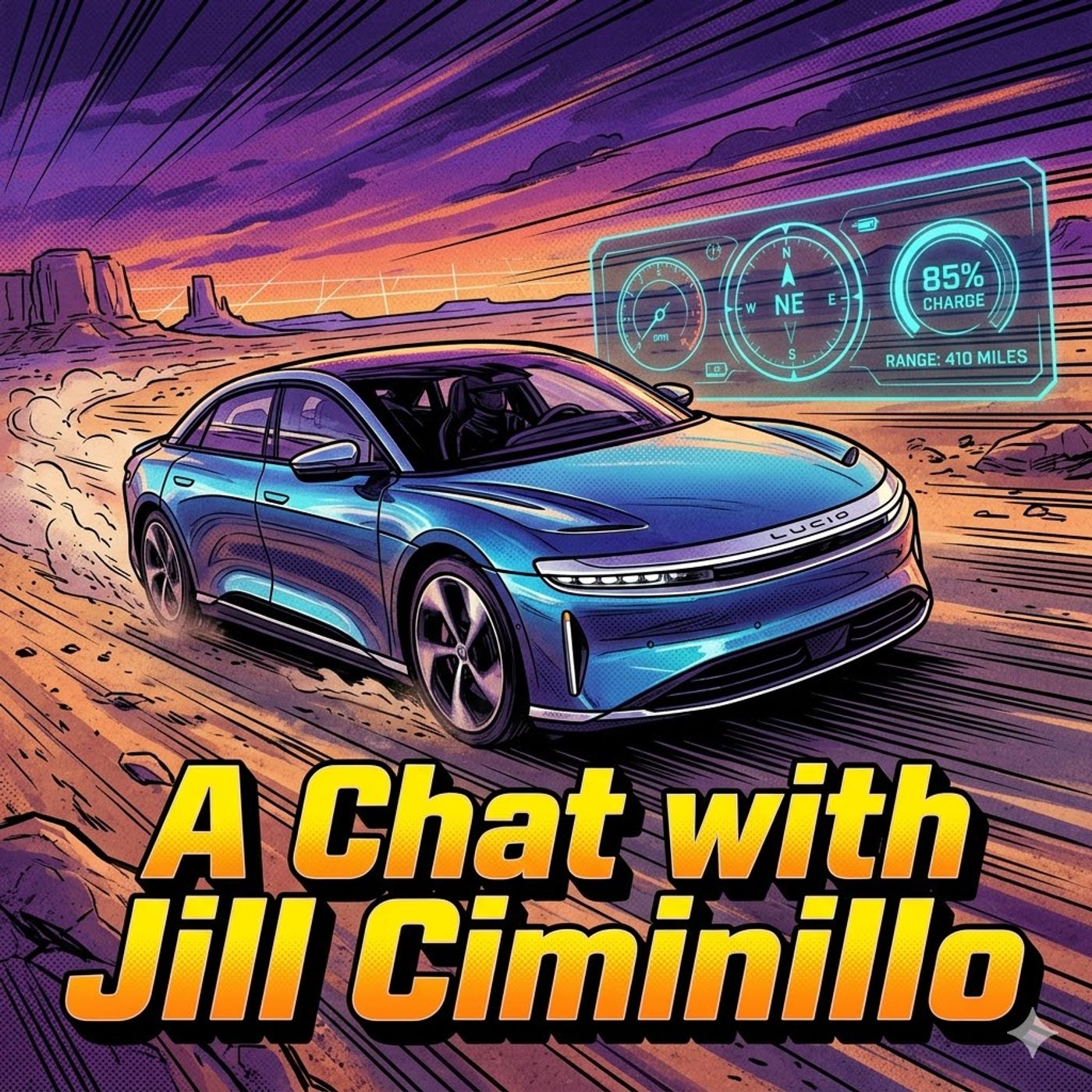
The Rebel Rally is an event Jill has done before. It’s an eight-day off-road race where navigation through the desert is a major part of the challenge.
The Kia EV3 is a small electric car Kia is bringing to the U.S. They’re talking about how far it can drive on a charge (up to around 320 miles) and that different battery versions will change that number. The big hope is that it’s priced low enough to be a good deal.
An EV’s battery pack is the battery inside the car. Bigger or different battery versions can let the car drive farther on a single charge.
Term
next charging port
“Next charging port” implies a newer charging connector or charging standard intended to improve compatibility and/or charging convenience versus older ports. The segment ties it to the EV3’s ability to deliver a strong real-world experience alongside its range.
An “affordable EV” is an electric car that costs less, so more people can buy it. The host is basically saying the EV3 will be a big deal if it’s priced competitively.
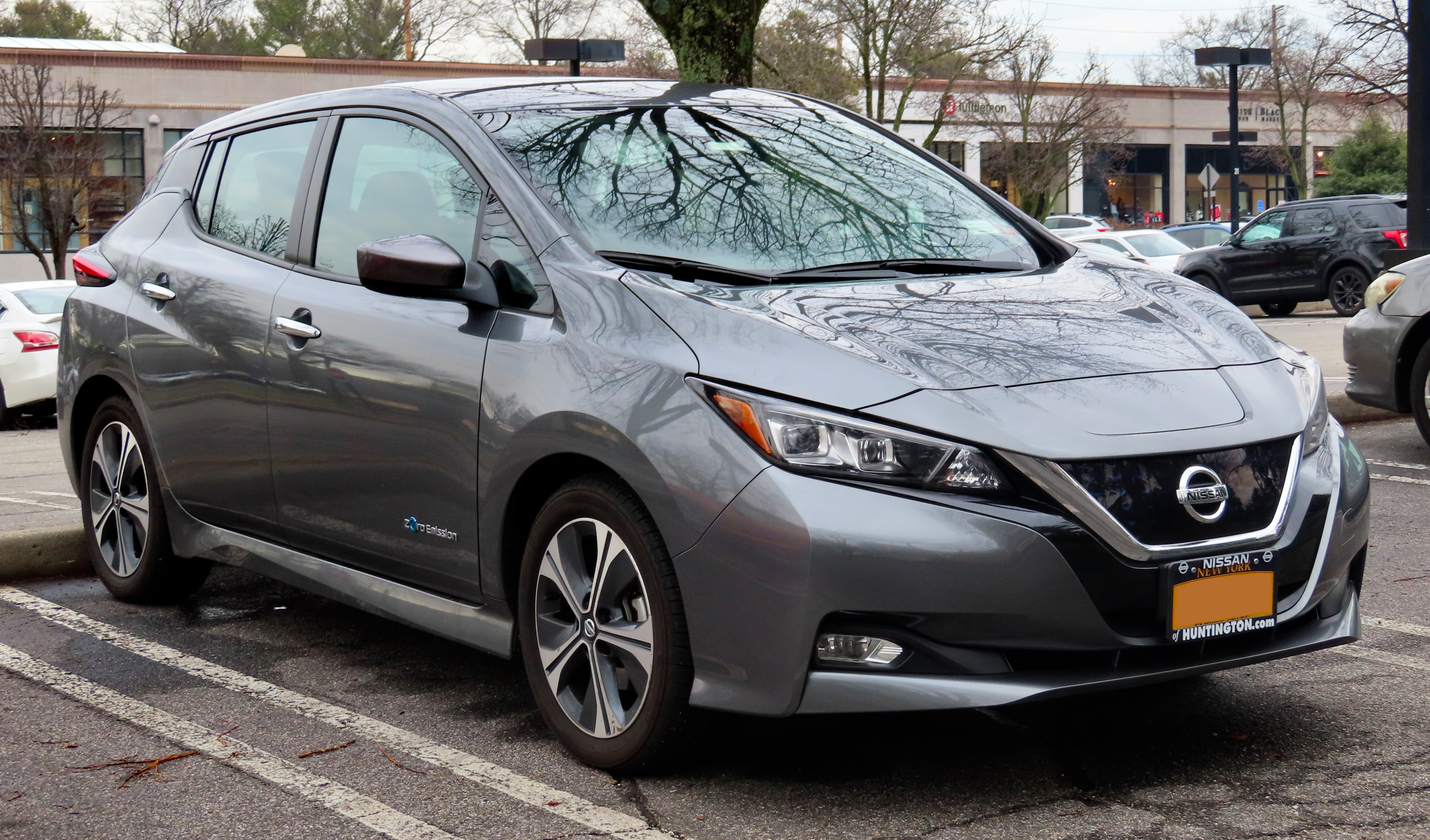
The Nissan Leaf is a well-known electric car that the host uses as a price comparison point. They mention it because it’s one of the cheaper EV options people can buy today.
The Chevrolet Equinox is a small SUV meant for everyday driving and carrying people or cargo. In a podcast about electric cars, it may be mentioned because it’s a common non-electric option that costs around the same as some EVs. That helps people compare what they get for their money.
The Kia EV9 is an electric SUV with room for more than just two people. It’s designed for families that want an EV but still need extra seating. In the podcast, it’s used as a visual and category reference for other EVs.
Turbo lag is a short delay before a turbocharged gas engine really “kicks in.” EVs don’t have that same delay because their power comes from the electric motor.
The Dodge Charger EV is an electric Charger. In this episode, they’re talking about how Dodge added fun sound/vibration features to make the EV feel more like a traditional car.
The Dodge Challenger is a sporty two-door car that’s built for strong acceleration and performance. It’s mentioned in EV discussions because Dodge has talked about making an electric version of the Challenger. That’s a big shift from the traditional gas-powered muscle-car formula.
Because EVs are so quiet, some cars add made-up engine noise through a speaker. It can be turned up, turned down, or even turned off depending on the car.
The speaker mentions driving a “Charger Daytona,” referring to the Dodge Charger Daytona EV variant. The Daytona name is used as a performance/heritage trim, and here it’s tied to the EV’s sound/vibration settings and road-trip experience.
Level 2 charging is a faster way to charge an electric car than plugging into a normal wall outlet. If you don’t have it at home, you often have to rely on public chargers to get enough energy.
A charging station is where you plug your EV in to add battery power. How long it takes can vary depending on the charger and the car.
Concept
six pack alternative powertrain
They’re talking about the EV’s battery setup—how the battery is packaged to power the car. It’s basically the EV’s “power system” instead of a gas engine.
Jim Farley is a senior leader in the auto business. In this segment, he’s sharing an opinion about how competition could change if more Chinese car brands enter the U.S. market.
They’re talking about car companies from China selling into the U.S. market, and the idea that their cars could be so competitive that it would hurt other automakers.
The “global economy” idea here is that cars and parts are produced and sold across borders, so competition isn’t limited to U.S.-made vehicles. It frames why Chinese automakers can affect the American market even if production is happening elsewhere.
Hyundai is a car company that sells vehicles worldwide. Here, they’re used as an example of a foreign brand making cars in the U.S., not just in its home country.
BYD is a Chinese company that makes electric cars. They’re mentioned here because they’re selling in multiple countries and competing with other automakers.
Zeekr is a company that makes electric cars. The point here is that it’s already selling in places like Europe and is likely to show up in more markets soon.
Company
Gile
The transcript lists a Chinese EV brand name that sounds like “Gile,” but it’s not clear which company it is. It’s being grouped with other Chinese EV makers competing in international markets.
Tennessee is where the speaker says a manufacturing operation is located. The point is that a foreign EV maker can build cars in the U.S. using its existing production approach.
The Volvo EX30 is a small electric SUV from Volvo. The host is saying that tariffs on certain imported cars can make models like this harder to offer or more expensive in the United States.
A tariff is a tax on imported products. If the tariff is “100%,” it means the imported item gets taxed at a rate that can make it roughly twice as expensive, which then pushes up car prices.
CES is a big technology show where companies demo new gadgets and tech. EV makers go there to show off things like the car’s screens, software, and other electronics.
Brand
Julie
“Julie” appears to be a person’s name in the transcript (“I was a host by Julie”). It’s not clearly tied to a specific automotive brand here, so it’s best treated as a host/guest name rather than a car company.
The speaker mentions “Lincoln Co” as one of the groups they visited at CES. It likely refers to Lincoln, a luxury car brand, but the transcript wording is a bit unclear.
A closed course is a private testing track where cars can be driven safely. The speaker is saying they drove the vehicles there to test things like controls and the screen.
The infotainment system is the car’s main screen and controls for things like music, navigation, and settings. In many modern EVs, it’s also how you interact with the car’s features.
That’s the big touchscreen in the car where you control things like music, maps, and phone features. Some cars also make you use it for important driving-related settings, which can be annoying if it’s confusing.
The Ford F-150 is a popular full-size pickup truck. Here it’s brought up just to set context for a story about how car touchscreens can be hard to use.
The Ford Mustang is Ford’s famous car model. In this story, it’s used as an example of how the touchscreen and settings can be confusing during a test drive.
Polestar is an electric car brand. The speaker’s point is that even if the tech is impressive, it can be frustrating if you have to use the touchscreen for everyday controls.
Side mirrors are the mirrors on the outside of the car that help you see what’s next to you. The host thinks adjusting them shouldn’t require using the touchscreen.
The steering wheel is what you use to steer the car. The host is saying you shouldn’t have to use the touchscreen to adjust it—those controls should be quick and easy.
Rivian makes electric vehicles. The host is saying Rivian also relies heavily on the touchscreen for controls, and they don’t think some of those controls should be buried in menus.
Tesla is an electric car brand. The host’s complaint is that Tesla (like Rivian) often puts lots of car controls on the screen, and they think some should be easier to adjust without navigating menus.
Polestar 3 is an electric SUV. The host is talking about how, in that car, you have to use the screen to adjust things like the mirrors and steering, which can be annoying while you’re trying to drive safely.
Term
lane lines
Lane lines are the painted markings on the road that define where each lane is. The speaker mentions needing to see them to line up the vehicle’s position and mirror settings, which is part of why the touchscreen-based adjustments feel unsafe or inconvenient.
Many cars can save your preferred mirror/steering settings as a “memory” profile. The speaker’s point is that two presets don’t cover all the differences between different shoes.
The Ford Expedition is a large SUV made to carry more people and handle road trips. Even though it’s not an electric vehicle, it can come up when people talk about how the driver controls and layout are designed in newer cars. That helps compare the “feel” of driving different kinds of vehicles.
A “thumb wheel” is a small dial you turn with your thumb. The host is saying some car controls are put on that dial near the steering wheel instead of being on buttons on the door.
“EV-only” means the vehicle is electric and not offered with gas or hybrid options. The host is saying people expected a mix, but the announcement was for electric-only.
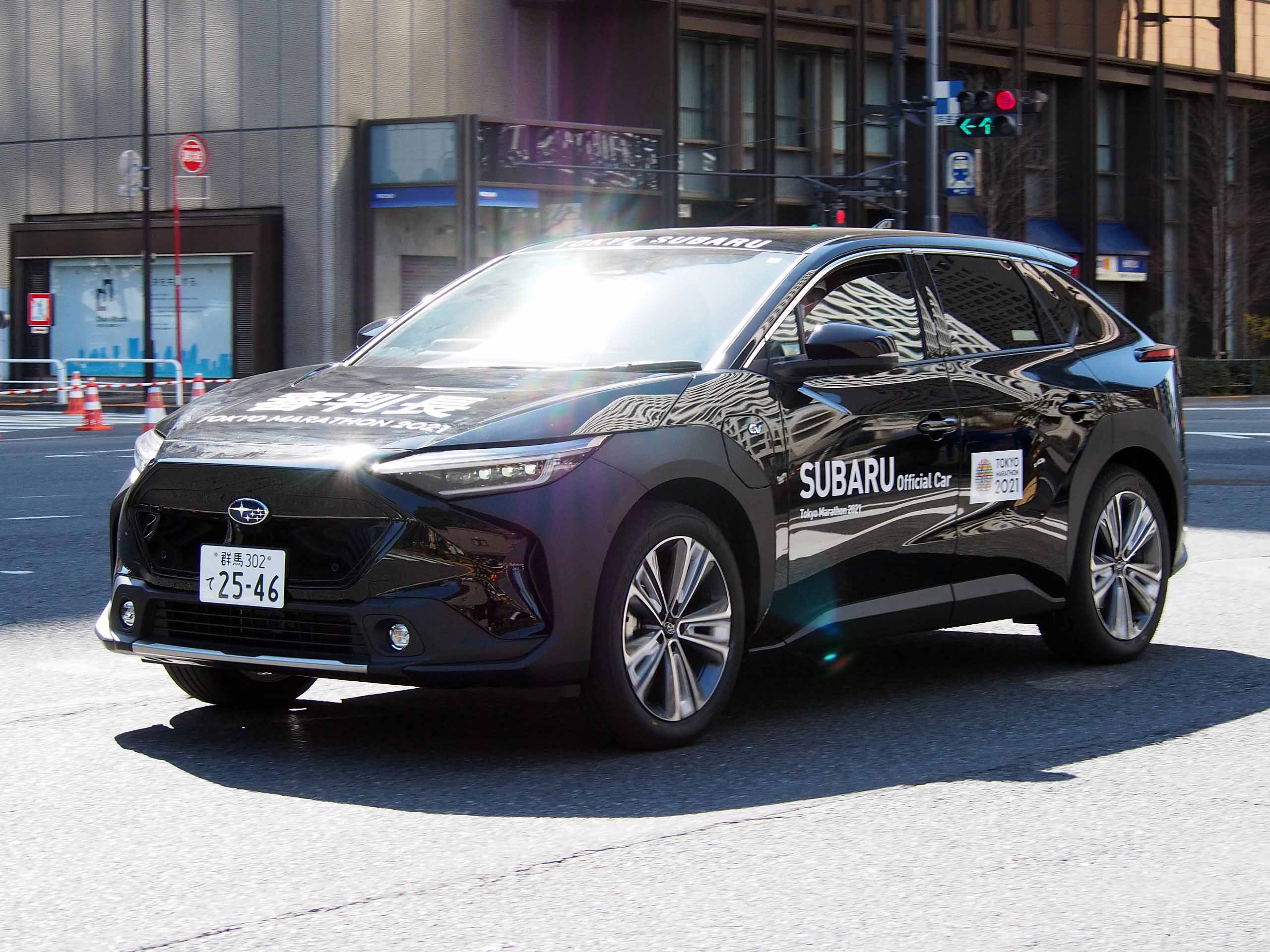
The Subaru Solterra is Subaru’s electric SUV. The hosts mention it to show that Subaru and Toyota are working together and sharing the basic “bones” of their EVs.
The hosts talk about a “Trailseeker” EV and suggest it could be closely related to a Toyota bZ model. The takeaway is that it’s meant to be a practical family vehicle with road-trip capability.
Platform sharing means two different car models are built on the same basic “skeleton.” That can make the cars cheaper to develop and can also make them feel similar in how they’re put together.
The Toyota C-HR is a small crossover SUV meant for everyday driving. The podcast mentions it because it uses the same basic vehicle design as another model. That can affect how similar the cars feel and how they’re built.
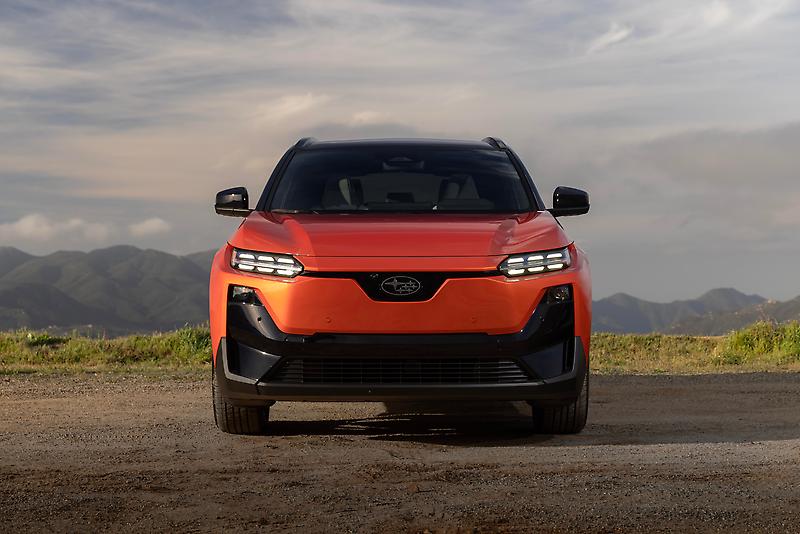
The Subaru Uncharted is a crossover vehicle. The podcast brings it up because it shares the same basic design platform as another car, the Toyota C-HR. That means the cars can be built in similar ways and may feel somewhat related in how they’re engineered.
“North American charging standard” refers to the common EV charging connector and communication ecosystem used in the U.S. and Canada. In practice, it usually points to the CCS (Combined Charging System) fast-charging approach, which affects compatibility with public charging networks.
“Available range” is how far the EV can go on a full charge, based on testing. Real-world driving can change that number a lot depending on weather and how you drive.
All-wheel drive means the car can send power to all wheels, which helps it grip better on wet or snowy roads. It’s often chosen for confidence in bad weather.
The Toyota Highlander is referenced as another newly announced model in the same week as the EV news. The segment uses it as a timing comparison, not as a deep dive, but it’s still a specific Toyota vehicle name-drop.
Solid-state batteries are a newer type of EV battery that uses a solid material inside instead of a liquid. The hope is that they can make EVs safer and potentially give more range, but they’re still a developing technology.
The Toyota Camry is a regular everyday car (a sedan) that many people use for commuting and errands. The podcast mentions it to talk about how familiar gas cars are compared with electric ones. It’s basically a reference point for what people already drive.
Concept
Apple where they sat back
This is just a comparison to Apple’s reputation for waiting and then doing something well. It’s meant to describe strategy, not a car technology.
A hybrid powertrain is a setup where the car uses both a gas engine and an electric motor. The goal is usually better efficiency than a gas-only car, and it can also be a stepping stone toward full EVs.
The Toyota Prius is Toyota’s well-known hybrid model. In this discussion, it’s used as an example of how Toyota offers electrified versions—some that can run on electricity and some that combine gas and electric.
A plug-in hybrid is a car that uses both gas and electricity, and you can charge it by plugging it in. It can often drive on electric power for a while before it relies more on gas.
The Tacoma is Toyota’s midsize pickup truck. The hosts mention it to make the point that Toyota is offering hybrid versions in trucks, not just in regular cars.
Stellantis is the automaker being talked about. They’re changing their EV plans in the U.S., and the hosts connect that decision to how many EVs they sold.
The Jeep Wagoneer S is an upcoming/modern electric SUV model discussed here as a potential misstep in timing and brand readiness. The point is that launching a fully electric vehicle requires the brand, supply chain, and customer base to be ready for the change.
The Chrysler Pacifica is a minivan. The speaker says it was a nice car overall, but they had transmission problems that kept getting expensive, so they eventually sold it.
The New York Auto Show is a big event where car companies show off new cars. In this segment, it’s where they said the redesigned Pacifica was revealed.
Part
headlight and grille treatment
A headlight and grille treatment refers to the design changes to the front lighting and the grille (the front opening/mesh). Automakers use these updates to refresh a model’s look without changing the whole vehicle.
Company
Chris Fuel
They’re mentioning a former leader (CEO) connected to Chrysler. It’s about company leadership, not car mechanics.
An extended-range vehicle is an electric car that can go farther than usual. It has a backup way to make electricity or recharge the battery when the main battery gets low.
The Revell rally is a rugged off-road event where the main challenge is navigation and endurance. They even take away your phone and GPS so you have to use basic navigation tools.
The Trinity rally is an on-road driving challenge for different kinds of cars, including electric cars. Instead of just going fast, it focuses on doing things precisely—like following the route instructions and maintaining the right speeds.
This phrase describes how the event is judged: you have to keep the right pace for a long enough time and finish the route. It’s more about consistency than just short bursts of speed.
“Force majeure” is basically the event saying, “Stuff happens, but we’re not changing the rules for it.” If there’s an accident or delay, you still have to follow the timing expectations.
A navigator is the person who helps the driver by reading directions and timing instructions. Their job is to keep the team on the right plan so you don’t fall behind.
Lucid Gravity refers to Lucid’s upcoming/announced electric SUV model line. The episode mentions a “Lucid gravity team,” indicating Lucid’s involvement in a structured event or program tied to that vehicle.
Tech inspection is a mandatory check before the event. Officials look over the car to make sure it’s safe and allowed to be driven on the road for the rally.
“Street legal” means the vehicle complies with laws and regulations for public roads in the relevant jurisdiction. For a rally car, that typically includes required lighting, safety equipment, and emissions/inspection compliance as applicable.
“Competitive days” are the days when the rally actually counts and teams are judged. Earlier days are more about setup and checks, and later they go back home.
Concept
timespeed and duro
“Time-speed” and “duro” are rally-style timing/segment terms used to define how you should complete specific sections. They indicate targets for timing and/or distance-based requirements between a start line and the next checkpoint/segment.
They bring up the Rebell Rally as a past event to compare with this one. The idea is that the format might be similar, including how people can track the teams.
They’re talking about a road trip that starts at the Golden Gate Bridge and ends at Sonoma Raceway. The point is to show what it’s like to drive a car that far in real life, not just in a test.
They say it’s about 500 miles total, spread across three days. For electric cars, that kind of trip matters because you have to plan charging stops.
LIVE
Hello, everyone, and welcome to Kilowatt, a podcast about electric vehicles or renewable
energy, autonomous driving, and much, much more. My name is Bode, and I am your host.
And on today's episode, I had an opportunity to sit down with Jill Siminello. And if you're not
familiar with who Jill is, she is an automotive journalist and content creator. She is also
the juror of the North American Car Utility Truck of the Year award, as well as the Women's
Worldwide Car of the Year award. Oh, that's a lot, but there's more. She's one of the hosts of the
Consumer Guide Car Stuff podcast, but she co-hosts that show with Tom Appel. And if you haven't seen
it, I highly recommend it. It's one of my favorite shows. Watch it every Monday, so highly recommend.
She's a runner and a volunteer, but she's also a veteran of the Rebel Rally, which is an eight-day
off-road navigation race through the desert. So, not this specific reason, but I'm releasing this
episode a little bit early because Jill and her driver, Jill's a navigator, and her driver, Kristen
Shaw, they will be participating in the Trinity Road Race, and they will be driving a Lucid Air
Sapphire through the race. And this is a road race. It's a different than a rally race.
Jill's going to go into this, which is really good because I'm not going to be able to do a very
good job explaining this. But the race starts on May 5th, but the check-in and other pre-race stuff
starts on May 4th. So, I'm releasing this in enough time. If you wanted to follow their progress,
you could definitely do that. Again, in this interview, Jill's going to explain more of what
that race is because I know a little bit about it based on what she told me, but I don't know
a lot, so she's going to be able to fill us in better on that. But what I would like you to do
is go to Instagram and follow Team Brute Squad, and I'll put the link in the show notes as well,
but Team Brute BRUTE Squad, like Princess Brite, on Instagram to stay up to date with
Kristen and Jill's progress. And honestly, get in the comments and share them on.
Let's go ahead and welcome Jill to the show. Hi, thanks for having me. Thanks for coming on.
Jill, I think this is going to be a lot of fun. One of the things I wanted to talk to you about
was the New York Auto Show and the cars that you saw there. So, why don't we start off with the
really funny, because usually the LA Auto Show is the big, like, we're launching all of the EVs
at the LA Auto Show, but surprisingly, we got two big EV launches at the New York Auto Show,
and the EV3 was one of them. And this is going to be the new smallest EV from Kia that will be
available in the American market. This has been on sale globally for, I want to say, at least
a year now. I want to say it won the World Car of the Year award last year. And it was
questionable whether or not they were going to be bringing it to the United States, but here they
are. So, that's exciting. And it should have about 320 miles max range. As you know, there's
different battery packs that are going to be available. So, you know, you're probably for,
you know, some of the higher range or the higher trimmed vehicles, you're probably looking at
probably around 280 miles of range. But there will be at least one version available with 320
miles of range. And it's going to have a next charging port. It is going to have a lot of
up-level features. But my hope, and this is the big fingers crossed moment, is that this is going to
be an affordable EV. You know, we're talking offline a little bit about, you know, affordable cars.
And the, you know, when you're looking at the EV market right now, you've got the Nissan Leaf
and the Chevy Equinox. And those are like just under $30,000. And so, you know, I think this
will probably be priced under $30,000. And I'm just hoping, you know, you're going to be able to get
a lot of bang for your buck with this car. It has a more upright design. It looks like in many ways
a mini EV9. But definitely looks like a Kia. It has the cool lighting signatures. And I think
you're going to have a lot of interesting available features on this. And I mean, maybe I'm going to
be like severely disappointed. I have a lot of high hopes for this car. But I think it looks good.
And if it can deliver on the range and, you know, then with the next charging, I think that you have
the potential to have a really nice, compact electric car. Do you know Brian Meeks? I know the
name, but I don't know. He does the podcast of Brian Drives on the Believe Network.
But he drove the EV3 and he had a lot of really good things to say about it. He's a race car
driver. And so like on top of that, you know, he knows like performance and he's going to tear apart
if it's laggy. And he just had nothing but good things to say about it. Well, I mean, that's the
great thing about an electric car, instantaneous torque. And you know, you have a lot of the
enthusiasts out there who are like, man, I need the rumble of the engine and the visceral feel of the
engine, you know, vibration through the pedal. Okay, I get it. Like I've driven on racetracks too.
But there's just something that's really nice about the instantaneous acceleration that you get
from an electric car that you do not get from a gasoline vehicle. There is no turbo lag. It is
all just fast go. And it is, you know, especially if you have a vehicle that's on the compact side
of things, you've got, you know, the really planted feel of the battery, you know, down low,
and then you can really drive on curves and sporty, you know, maneuvers. And I don't know. I just,
I think that I understand the whole engine thing, but I just, I think a lot of people need to get
over it. Yeah. No, no, when Dodge introduced the, was it the Challenger EV? Charger, yeah.
Charger EV, yeah. So they were like, they were like, oh, and it's got noises. And I was like,
what kind of infants do you think we are? You know, like, do we really need a fake vroom vroom?
I will say the fake vroom vroom is very fun. They call it the attitude adjustment. And it's
you know, it vibrates and you can turn it all the way up. You can make it silent. You can turn
it off. And it's really funny because my husband and I actually posted a video review of this.
We took a road trip to Indianapolis when I was driving the Charger Daytona. And he was like,
can you turn that off? And I was like, I can, but I'm not gonna. And I'm driving. So bye.
And he was just like, what? And I was like, nope, my car this week, I'm driving. I like it.
Maybe I'm a party of one. I don't know. No. Did you watch that event or were you at that event?
I wasn't at the reveal, but I've been at the launch of the vehicle. Yeah.
Yeah. When he put it, he was just making so many excuses for him. He's like, this is such a great
car. I'm sorry. It's an EV. This is an amazing car. It's so fast. I'm sorry. It's an EV.
That was just like the whole feel of the event. And I was like, you know what, lean into it.
You built this amazing car. And by all accounts, you know, there's some quibbles that people had
with it, price being one. But by all accounts, it's a decent EV, first time EV. And only,
it's a nice car. I would 100% agree with you. And it's funny because I was, so I live in Chicago.
I'm in the city. And in order for me to, like I don't have a level two charger, I live in an
apartment. And I can plug into a wall jack, but that doesn't get you very far. So I have to go out
into the world to charge if I need to do some, some big charging. And I was at one of the stations
in my neighborhood and this guy, you know, you're, you're, you're essentially like sitting there for
like a half an hour to an hour to bring it up to charge. And I'm sitting there in the sky, like
is circling me. And he like goes down the aisle and I'm just like, do I need to be worried?
Because he's like circling, circling. And then finally, he stops in the alley and there is a
fence. So it's not like he would, you know, come, come at me. But he like stops. And he, he's like,
does the roll down the window symbol. And so I like, I'm like, okay, so I roll down my window.
He's like, that is a cool car. And it was like, okay. And he's like, I have a gas version of this.
He's like, I can't wait to buy this car. And it was like, Oh, okay. Like, you're, you're the person,
you're the person that they're trying to win over. And he's like, I've been, and it was the four door
because it came out originally as a two door. And I had the four door model. He's like, I've been
waiting for the four door version of this car. And I'm so excited to see it. And I was like,
thank you. And so then as I was leaving the station, I was driving down the street, like I saw his car
parked on the street. And I was like, that has to be this car. And but yeah, so I mean, I do,
I do think there is some enthusiasm for it. I like the fact that they have offered, you know,
the six pack alternative powertrain in it. But it is, it is a great EV and you're right,
they should not be apologizing for it at all. Yeah. The other thing I wanted to get your opinion on
is Jim Farley recently, and I'm, you know, we're kind of zigging and zagging into affordability and
out of affordability. But Jim Farley recently said that if the Chinese automakers kind of came to
the US auto market, it would basically decimate US automakers. What are your thoughts on that?
You know, I thought that was an interesting statement. And I heard, I heard the interview.
And, and I, like, I was just like, dude, I'm like, if you think this is the thing that's
going to decimate the American auto industry, you've got bigger problems. Because we aren't just
making cars for Americans in America. We are a global economy, whether we want to admit it or
not. And we are making cars for the world. And the world is making cars for us. You know,
not every vehicle that we buy is made in America. And even if it is made in America,
doesn't necessarily mean that it's an automotive automaker. You know, Hyundai has that great
meta plant in Georgia, and, you know, not an American company, but doing great things by
building cars in America. And so we operate on a global scale. And if you can't compete globally,
and you're worried about a Chinese automaker decimating the industry, you're not, you're not
doing it right. And I just, I was actually very taken aback at that comment. Because if you can't
compete with, you know, the Chinese automakers, like, why are we not competing? Like, that's what
I would be asking myself. How can we do this better? How can we better compete with them? Because
BYD, you know, Zeekr, Gile, they're on sale in Europe. You know, they're on sale in Mexico.
They're on sale in Canada. Or, and if they're not, they're going to be soon. And so, you know,
if we can't compete with those vehicles, you know, that are already on sale in our neighboring
countries, like, there are other problems that we need to be addressing. And so I just, I thought
that was a very big statement that is worrying. I should put it lightly. I have other words that I
would like to use, but I'm going to keep my words polite today. No, I completely agree. On one side,
he says that, you know, they're going to decimate us. And I think, I don't think that's correct,
because Neo might be able to compete at the higher end, where Ford typically sells its cars, or
maybe, maybe a Zeekr or something like that. But they're going to be priced competitively to
what Ford is pricing their cars at, maybe a little bit less, but for the most part, competitively.
But he's also like, he has said some good, a lot of actually positive things about Chinese
automakers. But in their whole plant, I think it's in Tennessee, their whole manufacturing
process for their $30,000 vehicle is based on how the Chinese manufacture their cars.
Yeah. So, I mean, we are hopefully going to be able to compete. But so here's the thing,
in terms of price, like what we, I think we still have 100% tariffs on anything from Chinese cars
coming into the United States. That's why the Volvo EX30 disappeared. We can't have nice things.
But so they're going to be certainly priced more than what they would be outside of this market.
But to me, the bigger worry for American automakers is the build quality and the technology.
So I recently went to CES, and it was my first time ever going to CES. I was a host
by Julie, and they gave us the opportunity to check out Julie, Lincoln Co, and Zeekr vehicles.
And they took us to a closed course because they're not street legal in the United States.
So we went to a closed course to be able to drive them around and like hit the buttons and play
with the infotainment system and climb around inside the vehicle. And from the minute I sat down
in my first vehicle, I was like, oh crap, this is really nice. And to me, I'm like,
that is the problem. It's not pricing or affordability. It is how well put together
these vehicles are and how technologically advanced these are. And if we don't try to advance our
Chinese vehicles and not emulate them, but beat them, match them,
I mean, again, we have other problems. I was so impressed. You have this being American and being
patriotic and very like, I love my American stuff. You have this sense in your head that,
oh, anything that's made outside of the United States is not going to be good.
And so it was just a very eye-opening moment for me because not only are these vehicles
already competitive in terms of build quality and accents and trim pieces and just the little
details that are inserted into the vehicle, but the infotainment system and the technology,
the processing speed was like so fast. And you would touch something on the screen and it would
just be like, you know, and move so fast. And everything on it was very intuitive. And to me,
maybe that's what Jim Farley meant about being decimated. That's the problem. But if we can't
keep up with that and if we can't compete in that arena, again, we have other problems.
I feel like I've gone on about this for a while. I have opinions.
No, no, it's fine. I love this. Let's keep going. The thing with, like, I don't eat beef or pork,
right? But I would sit down and have a sausage with Jim Farley and a beer because I just think
he's that kind of guy that would just sit down with you and chat. Jim, I won't do beef.
Provide the apple sausages and I'll be there. But so, like, I think Jim Farley is a really
smart guy. I do think that all these companies that have decided that they want to customize
their infotainment screen to the point of being unusable is, I think that's a problem. It's gotten
better. But when the F-150, or not when the F-150, when the Mustang first came out, the Maki,
I went to a dealer, took a test drive, I told him exactly why I was taking the test drive,
and he's trying to explain to me while I'm driving the infotainment screen. And even,
this is a guy that had to be specially trained on the car to be able to sell the car. This was
during the pandemic and they had to get me a, it was like a whole process to get this thing,
a test drive. And he's going through the settings, he's like, oh, no, that's not it. Oh, no, that's
not, and this is the guy that does that. That's his whole job is to sell these cars and nobody
else sells them except for him and one other person in the dealership. And I mean, again,
it's gotten better. But that's a bad start for sure.
You know, it is. And I feel like technology should be intuitive and it shouldn't be tech
for tech's sake. And I, so Volvo and Polestar are also owned by Gile, if you didn't know,
those listening. So they are owned by a Chinese company. And they have some really interesting
technology inside their infotainment systems. But the one thing that they've done that I don't
agree with in more of their EV focused vehicles is they have put all of the controls inside the
screen. And I think that there are certainly some controls that can go inside the screen,
but I do not want to adjust my side mirrors with a control in the screen. I do not want to adjust
my steering wheel with a control that is in the screen. And I know Rivian does the same thing
and Tesla does the same thing. And so I don't know if they're trying to testify their operating
system or what, but there are certain things that I don't think should go into that screen. And
maybe this is a unique problem to women who wear a lot of different shoes. But every time I get
into one of these vehicles where you have to do steering wheel and side mirror controls through
the screen, I'm like, oh, dude did this. Because every time I get into a car, I have a different
kind of shoes on. You know, I've got Converse shoes. I've got five inch heels. I've got platform
shoes. I've got running shoes. I've got Wellingtons. I've got like, and I literally, I did a video of
the, I think it was the Polestar 3. And my cover photo of, you know, for the video is me standing
in front of the vehicle with all the shoes that I wore during the test week. And every time I got
into the vehicle, I had to readjust the steering wheel and the side mirrors. And I'm like, oh,
this is the distracting and annoying. And you have to do it while you're driving, because in
order to like line everything up appropriately on the side of the vehicle, you can get it close
when you're sitting in your garage, but you got to see the lane lines. And I'm just like this,
this is not good. This is not good. Just give me a control. Give me a physical button.
No, I think that's good. What, what would you call that? Would it, it wouldn't be,
couldn't be the shoe index? Because men's shoes are, are maybe too, there's got to be something
there that is, I think that's a, that is something that I have never thought of. And
I wear basically the same shoes every day, even when I'm wearing nice pants. So it doesn't,
like I'm not the, I'm not, I'm not going to adjust anything to be honest.
See? Yeah, it could be the shoe scale or the, yeah. And everybody's like, well, you know,
just memory set it for one for heels and then one for tennis shoes. I'm like,
even my tennis shoes have different soles. Like I have like squishy pumas that have like a two inch,
you know, squish sole. I have converse tennis shoes. I have five inch, you know, heels. I have,
you know, it's just, it's not the same. You can't, there are two settings is not enough.
No, it's not like my daughter, absolutely. Like if, like right behind me is the garage and
on the little shelf where we keep our shoes, she's got soles that are, you know, an inch and a
half. And then she's got soles that are just teeny tiny, like the converse, like you said.
Yeah. That's funny. But, but so at any rate, the point I was trying to make is putting everything
in the screen isn't the best idea either. And so circling back to forward, they actually did
something I think was really interesting in the new expedition. So not an EV, but where they
put the controls in like the thumb wheel. And Lincoln did it too, in the thumb wheel of the
steering wheel. So it's not necessarily a physical control on the door, but the steering wheel
especially is on the thumb wheel in your foot pedals. So Ford has adjustable pedals. That's
also in the thumb wheel on the steering wheel. And then to differentiate between Ford and Lincoln
owners in the Ford, they put the side mirror controls on the side where they normally are,
because they said that Ford owners tow more than like a Lincoln owner would. So in the Lincoln,
the side mirrors are also through the thumb wheel, but a physical control not through the screen.
So I don't know. But I've completely taken us off the New York Auto Show electric cars,
affordability and everything we intended to talk about. Sorry. No, no, please. Like I like to have,
I like to do interviews in a way that's more conversational. And some people are super
comfortable with that. Obviously you are. But other people are not. They have their talking
points. And if you try to have a conversation with them and you draw them away, they have to
draw themselves back to the talking points to feel comfortable. So this is a totally
organic conversation. And I love it. Awesome. Don't apologize. But getting back on topic,
what about the Subaru getaway? Yeah. So the getaway is an all new vehicle for Subaru. It's
three row EV. And it's based on the same platform as the Toyota Highlander. So we recently saw the
new 2027 Toyota Highlander be revealed. And it is only EV. And that was a bit of a shock,
because I think many of us thought that it would be hybrid and electric or have a multitude of
powertrains. But when they said no EV only, we were like, well, so it's not the 2027 hybrid
Highlander EV. It's just the Toyota Highlander. There is no EV associated with it. The new
Highlander is electric. And so this getaway is based on that platform. So if you look at the
interior of the Toyota and you look at the interior of the Subaru, you're going to see a lot of
similarities. And Toyota and Subaru have had some platform sharing with like the BZ and the
Solterra and then the CHR and I may mess this up. I think it's the CHR and the
Trailseeker. But at any rate, the Trailseeker may be a BZ Woodland. But at any rate,
so they've got this platform sharing uncharted. That's it. The uncharted and the CHR are on
the same platform. And so this getaway is the latest iteration of their platform sharing and
partnership. And it is meant to be a family vehicle that can take a road trip. I think they're
also saying that this vehicle will get around 300 miles of available range. Also North American
charging standard, 420 horsepower. And it will, again, you'll see a lot of the same technology.
Like I feel like Subaru has done this and then Toyota has done this. But a lot of the technology,
like the Toyota infotainment system, will make its way into the Subaru getaway. So you won't have
necessarily the Subaru infotainment system. And it will seat up to seven passengers. It has
some decent cargo space in the back. It has the under floor storage in the cargo area.
And I mean, I think it looks really good. I don't know that I would say it looks like a Subaru,
but standard all wheel drive and a lot of interesting nice features. And so, I mean,
I'll be I'll be curious to get behind the wheel of it. I think it looks good. And again, I haven't,
I've seen the Highlander, but I haven't, you know, they haven't opened that up for driving yet either.
So I haven't gotten behind the wheel of that either. So I think both these will be interesting to check
out. Absolutely. It's interesting. Like in the same week that they announced the Highlander,
they also announced that their solid state batteries coming in 2028. And I have, for the entire time
that I've been doing this podcast, been a Toyota hater, not because. And I'm trying to get Toyota
on the show. So this is my mea culpas in this is it's not that I hate Toyota. I just hate all
my friends that drive Toyotas because they're so insufferable about it. They're so insufferable.
The Toyota car is fine, you know? Right. But whenever I would see a Toyota story, I would just
like, when it comes to EVs, I'm just like, okay, we've heard this before. But now I have to change
my whole attitude about it because I think Toyota did pulled like an Apple where they sat back,
they let a lot of these companies make mistakes, they've worked on their technology.
And I mean, hands down, Toyota has some of the best engineers in the business. And they,
I think they're building something that's going to really appeal to people. And they have this
huge audience of Toyota fans, like my friends that I can't stand when they talk about Toyotas
and Lexuses that will buy this car who wouldn't have considered buying an EV in the past.
Yeah. Well, you know, and I think Toyota was really smart with their strategy because, like
you said, you know, they're like, let's just kind of dip our toe in the water. We know there are
people who buy our vehicles, who like our hybrids, who would like to have an EV. So let's just kind
of dip our toe in the water, let's see how it goes. But let's like kind of hang back and see
how the market works, you know, what mistakes other people are making, what successes other
people are having. And then we can continue forward. And I think they've done a really good job
strategizing in terms of, you know, not being subject to the whims of politics or EV credits.
And they are just creating a plan that works for their company. And I think that they've,
you know, also done a really interesting job of making the
hybrid powertrain standard on a lot of their vehicles, and or at least an option. So, you
know, if the Toyota Prius, you have standard EV and then the plug-in hybrid. And the Tundra and
the Tacoma, you have, you know, gasoline only, and then you have hybrid options, not that their
hybrid trucks are supposed to be fuel efficient. But I just, I think that they have been very
forward thinking and smart about their strategy. And I don't know, so I find it, what I find very
fascinating is in the year of 2026, where a lot of automakers are pulling back and, oh, we're cutting
our strategy, we're ditching this car, we're doing away with this, we're killing this brand.
And Toyota has four new EVs. So, I find that fascinating.
Yeah. And, you know, Stellantis just announced that they're not doing the Wagoneer EV in the U.S.
for 2026, because they sold 10,000 in 2025. Fantastic number for an EV. But they only sold
176 or something in the first three months of 2026. Right. I mean, that should warn,
that should just be echoing through the auto industry. And Toyota's like,
no, no, we think we have a better plan, so we're going to implement it. And it's,
you're right, it's like the slow and steady race or like the little engine that could,
they're just taking small bites at this and not making huge swings. It seems like me anyway.
Yeah. Now, I would agree. And, you know, I look at Stellantis and their EV strategy,
and they've kind of been like, you know, like forward, backward, forward, backward, you know,
they were going to have an electric track, then they were going to do this, and now they're not
doing that. And then, you know, the Wagoneer S, I would contend that the misstep with that vehicle,
because it's a great vehicle. I liked it a lot. But I don't know that Jeep was ready for a fully
electric vehicle like that. If I were doing strategy and nobody asked my opinion, so I'm
not doing strategy, but if I were, I probably would have made that a Chrysler.
Oh, yeah. I mean, we had a Chrysler Pacifica before we bought our Kia Carnival. And the Pacifica
was such a beautiful, it was a beautiful car. For the most part, there were some transmission
issues, but for the most part, it ran really well. We had over 100,000 miles on it when we got rid of
it. And the only reason we got rid of it is because they were so, they just, the problems kept
costing us more and more money. But I don't want to see Chrysler die.
I think they only have one car. And in the couple of months, I'm sure they'll only have one trim
of that one car, because they have just narrowed it down so much, where there's like some warehouse
in the middle of, you know, Ohio, that they have one line running this one car. It's kind of getting
to that point with Stellantis and their American companies. Well, and I'm going to be very curious
to see what they do with Chrysler. I mean, at the New York Auto Show, they did show the new
Pacifica redesigned with the new headlight and grille treatment. And before, so Chris Fuel was
the former CEO for Chrysler. And last year, during the 100 years of Chrysler, we actually,
Tom Appell and I, on the car stuff podcast, we have a really great interview with her,
where she talked about the future, you know, the future of Chrysler. And, you know, she seemed to
imply that there was more in the works. But, you know, it's just like, plans change, you know,
things, things pivot, things change on a dime, especially in the, in the current
economy and situation. But, you know, in the current climate and economy, like, I feel like,
you know, you have things are changing so quickly. And so I have high hopes that Chrysler isn't
going to go away. But I don't know. I mean, at this point, I don't know.
Okay. So that leads me down to like extended range vehicles and all that stuff. But I'm
going to, I'm going to pause there because I do want to be respectful of your time.
Can you tell me a little bit about the rally race that you're going to be doing soon with Lucid?
Yeah. So I am, I have, for the past four years, competed in something called the Revell rally.
And this is an off-road dirt focused in the middle of nowhere rally, where you are take,
they take your phone away, they take your GPS away. And you are usually actually literally
using a mapping compass to get over 2000 miles of terrain in the Pacific Northwest area. Well,
I guess I should say California and Nevada. And so the woman who created the Revell rally has now
created something she's calling the Trinity rally. And this is going to be an on-road rally for
cars, sedans, electric cars, some SUVs. And the idea is that it is going to be time,
speed, endurance, and route book focused. You can keep your phone, but you're probably not
going to be using your phone to navigate. Hopefully we'll be taking lots of photos.
And, but the idea is more about, it's not a race. It's more about precision and observation and
following directions than it is speeding from one place to the next. And so during the Revell
rally, they have some portions of on-road scoring where they give you a route book and it's like,
you know, travel 1.4 kilometers, then turn right at the tree. You're like, okay, I hope that's the
element of that. But the Trinity is going to be all road book or time, speed, endurance.
And so I've been looking at my Revell stuff and I was like, oh, I got to pull out my math
because they'll give you directions. Go 35 miles per hour and do 1.4 miles. And then at that point,
you're going to drop your speed to 25 miles per hour and you're going to go four miles. And so
you have to do math so that you can see, okay, at 2.4 miles, we should be, you know, three minutes
into this. And then we four minutes. And so they, there are time controls. I'm probably not
explaining this very well, but there's time controls. And as you go through for the time,
speed, endurance, you will be like, you get penalized depending on how far away from your
time control you are. So if you're supposed to be there at four seconds and you're there at three
seconds or you're there at five seconds, you lose points. Oh, interesting. Yeah. Is this just on open
roads? Like with everybody? Yep. Yep. And so the rule book says you have to follow the law,
you have to follow the speed limits over anything that the rule book says, or that the route book
says. And then if, if for some reason, like there's an accident, does it account for delays? Nope.
Nope. They call it force majeure. And if you, if there's an accident, if there's a cow crossing
the road, if there is, um, you know, anything that's going to hold you up, um, too bad. Oh,
wow. Even if you're going, if you're supposed to be going 65 and you go 35 for two minutes,
that could be a huge point deduction. It really can. Especially since you can't catch up.
That is true because you're supposed to follow the laws. Like maybe, maybe this speed limit
is 70 and they have you going 65. I don't know, but they wouldn't do that. But, um, yeah. So if,
if you are in a place and you can't catch up, I mean, you just, you lose the points.
Wow. And then you're, you're going to be the navigator. Yes. Who's your driver?
My driver is Kristin Shaw. So, um, she was my partner for the first three years of the Rebell.
Our team is the Brute Squad. Uh, from the Princess Bride, I don't know if you've ever seen that
movie because I love that movie. We are the Brute Squad because, you know, me and my,
we're foot 11 frame, I'm very intimidating. Um, and so, uh, but we, uh, so we competed the first
three years as the Brute Squad. And, uh, yeah, so she'll be the driver. I'll be the navigator and,
you know, looking forward to teaming up with her again.
Oh, that's fun. Um, how did you get put on the Lucid gravity team?
Uh, well, so Lucid had reached out to the founder Emily Miller and said that they wanted to put a
car in and, um, they had targeted Kristin specifically to be the driver. And, um, and
Kristin's like, well, I'm not doing it if you can't do it. And she's like, you're my navigator.
I'm not doing it without you. And I was like, okay, thank you.
Nice. Yeah. How long does this take to complete about?
Um, so tech inspection is Monday, May 4th. So we will come in on the 3rd of May
and, um, you know, kind of get acclimated to the vehicle. So we're going to be driving a Lucid Air
Sapphire. And, uh, then tech inspection is May 4th, Monday, and they will just kind of make
sure that the vehicle is street legal, that there's nothing weird going on with it.
And then, um, Tuesday, Wednesday, Thursday are competitive days. So we'll get like,
and they said that the rally will take place from 8 a.m. until 5 a.m. every day. And so I guess
they'll, and again, like this is the first one, so nobody knows anything. Um, but they'll give
you probably a route book every day and within the route book, um, in addition to, you know,
go 3 miles, turn here, go 3 miles, turn there, um, there'll be the probably bits of, um,
the timespeed and duro where it's like, okay, here's your starting line and here's what you
have to do now to get, you know, to the next segment and then back on route book. Um, but
again, we don't really know because we haven't done it before and, um, but so Monday or Tuesday,
Wednesday, Thursday are competitive days and then Friday back home.
That's fun. Is there a place that people can go to like, track your progress or is this just a
all kind of done at the end? Um, no, so I'm assuming there, so if it's anything like the
Rebell rally, which I'm sure there will be some similarities, um, if you go to, it's like,
trinityrally, t-r-i-n-i-t-e rally.com, um, there, I'm sure there will be a way to, um, I'm like,
let me see if I can bring up the website really quick right now. I'm sure there will be a way to
do, um, live tracking for the events. Um, the other thing is we will be, um, if you are on
Instagram, we are going to, um, I think our page is still set up for the rebel rally, but we're
going to switch it over to the trinity. So we're going to be team number 40 and, um, but if you
go to Instagram and follow or Facebook and follow the brute squad, um, team brute squad, um, you
will, um, we'll probably have daily updates, um, on there as well. And, uh, it looks like we, we
start at the Golden Gate Bridge and we end at Sonoma Raceway. So I think they said it's 500
miles of driving over three days. Nice. That'll be fun. I'm gonna definitely have to make sure
that this goes out before then to, so that everybody can follow you. And I just followed
you on Instagram as well. Um, this is awesome. Jill, I really hope that you come back on again,
because this was a fun conversation. I know I will be doing the car stuff podcast,
but why don't you tell people where to find you, where to hear you, where to read about what you're
doing? Uh, yeah. So I'm kind of all over the place. Um, I, I have, uh, TikTok, Instagram,
YouTube, and, um, Twitter threads. I have, I have all of the things and you can find me at
Jill Siminello and that's J-I-L-L-C-I-M-I-N-I-L-L-O, lots of eyes. Um, and if that's too difficult,
I use the hashtag card as your, uh, so kind of like soup to your and, um, so you can usually
find me on all the social media doing that. And, um, I put videos up daily on TikTok and
YouTube, like little shorts, and I have two long form video reviews that I typically post, uh,
to YouTube every week. Um, but yeah, I've been, I've been, I've been busy a lot. I've been traveling
a lot. I've been around, um, but I love, I love to, um, converse with people. I love people to
ask me questions about the cars that I'm driving and, um, people tend to give me really great
story ideas when, when they ask me questions. So I, I like the engagement and the interaction. So
please come follow me and, um, ask me questions or just background presentation.
Yeah. And you, you are a hundred percent a good follow. Like I, I, I enjoy your content. I also
enjoy the car stuff podcast that you do with Tom Appell. Yes. That is every Monday, right?
Yes. Yes. So, um, we are live on, um, Talkstone Radio Mondays and then the podcast gets, goes out on,
um, like usually Tuesdays, but, uh, the consumer guide.com website has back episodes. You can
also find us on the believe network and then, um, any place that you are, um, streaming your
podcasts, you can find this. It's a consumer guide, uh, part car stuff podcast. Um, I feel like there
is another podcast out there called car stuff, but I don't think they're active. So it's like an
old podcast. So just consumer guide, Tom and Jill car stuff podcast. Um, but I've, Tom and I have a
I should tell you, like Tom and I have known each other for 20 years and people are like, you guys
don't even like each other. I'm like, no, he was at my wedding. Like I really do like him. Um, but
we give each other a hard time. He's much more like an older brother to me. So he like picks on me
like an older brother and, you know, and I give it right back. Um, so we just like to have good
conversations about cars and, uh, you know, we do like each other. You know, if, if, if people
think we don't, we do. Yeah. No. And that, that a hundred percent I think comes through. That's
one of the reasons why I like listening to it. Sometimes listening to car podcasts and as a guy
who's doing a park car podcast, I might be sometimes guilty of this. It gets a little dry with the
stats and you guys pepper in enough personalities so that it doesn't, it's, it's a fun, it's a fun
listen and it's, you know, 45 minutes to an hour or something like that again. Uh, but the ads, it's
probably an hour, but it's, it's, it's a really good show. So I highly recommend it. I will put
all of your links in the show notes. Jill, thank you so much for coming on and chatting with me.
Absolutely. Thank you for having me. I hope you'll, I hope you'll let me come back that I
didn't go on too many tangents. Oh no. Like, uh, tangent away. Let's go. You can come on
every single week if you wanted to. Awesome. Thank you so much.
Deeply, she's loved. A Hallmark card is the perfect way to say thank you for all she does.
Don't forget Mother's Day is Sunday, May 10th. Visit Walgreens today to find the perfect Hallmark
Mother's Day card and make her feel truly special. Mother's Day means Hallmark cards at Walgreens.
All right, everybody. I want to thank Jill Siminello for coming on and being such a great
guest. Now, a little kind of behind the scenes, uh, chat here, right? I prefer when I can have a
conversation with a guest. And when I say conversation is, you know, it's a little bit of an interview,
but it's really more of, we're just kind of talking to each other and we're basing, uh, how, how the
interview goes or how the segment goes based on what we're talking about. And it's really easy
to go off the rails. But if you have somebody like Jill, you know, it's really great because not
only did we explore the topics that we wanted to talk about when we, when we had our little chat
pre-show, but we also got to kind of have an organic conversation and hit other topics that were,
you know, relevant to the conversation, but maybe not necessarily something that we thought about
talking about earlier. Again, that is really hard to do with someone. Uh, so kudos to Jill for doing
that. Now, I would like everybody, if you haven't done it already, please go to Instagram and subscribe
to team brute squad to keep up with their journey over the next few days. And when you're doing that,
leave comments, let them know, give them support. Um, you know, just kind of bring the love and,
uh, I, I don't know, I think this is super cool. I will be following their progress. So please,
please, please, uh, be supportive. All right. Uh, let's see. Oh, Jill also does a podcast with Tom
Appel called the consumer guide car stuff podcast. Uh, again, I think I said in my intro that I
watched it, but I listened to it. Um, I would highly encourage you to go subscribe to that podcast.
I'm actually going to be on, on July 13th. We don't have a topic yet because it's still a little bit
away, but it'll be on that show. And if you want to catch that, uh, conversation, subscribe so you
don't miss it. Uh, let's see. Card to shore is where you can find Jill. I'll put all of her links
in the show notes. And, um, yeah, I really hope you enjoyed this, this episode. I really had a lot
of fun recording it and listening back through to the, uh, to the conversation when I was editing
it. I, I, I genuinely hope you enjoyed it as much as I did. So again, big thanks to Jill. And
that is it for me. If you want to send me an email, it's bodee, b-o-d-i-e at 918digital.com.
You can also find me on LinkedIn and it's just bodee, b-o-d-i-e, g-r-i-m-m. And, uh,
yeah, I think that's it. I don't think I have anything else to plug. Support killawatt.com
if you want to support the show. And, uh, having said all that, I hope you all have a wonderful
week and I will talk to you on Friday, no Tuesday show this week because I'm putting this show out
on Sunday. It's a miracle that I'm actually putting a show out early instead of late. I know, I get it.
It feels weird to me too, but no Tuesday show. So it'll be today's show Sunday and then I'll
talk to you again on Friday. Thanks everybody so much. And I will talk to you soon.
Bye.
About this episode
Jill Ciminillo and the host cover a wide sweep of EV news, from Kia’s upcoming EV3 and its expected affordability to the growing pressure Chinese automakers are putting on global competitors. They also dig into how EVs should feel to drive and use, with a sharp critique of screen-heavy controls and praise for more tactile designs. The back half turns to upcoming EV launches from Subaru and Toyota, then into Jill’s own rally plans with a Lucid-backed on-road event.
In this episode of Kilowatt, automotive journalist Jill Ciminillo joins the show to share her extensive expertise on the rapidly changing vehicle market. Jill provides an insider's look at the New York Auto Show, highlighting the impressive Kia EV3 and its potential to make electric vehicles truly affordable for more families. The conversation dives deep into the strategic challenges Western automakers face from Chinese competitors and how legacy brands are adapting through platform-sharing. Jill also recounts her experiences in the Rebelle Rally and previews her upcoming journey in the Trinity Road Rally behind the wheel of a high-performance Lucid Air Sapphire.