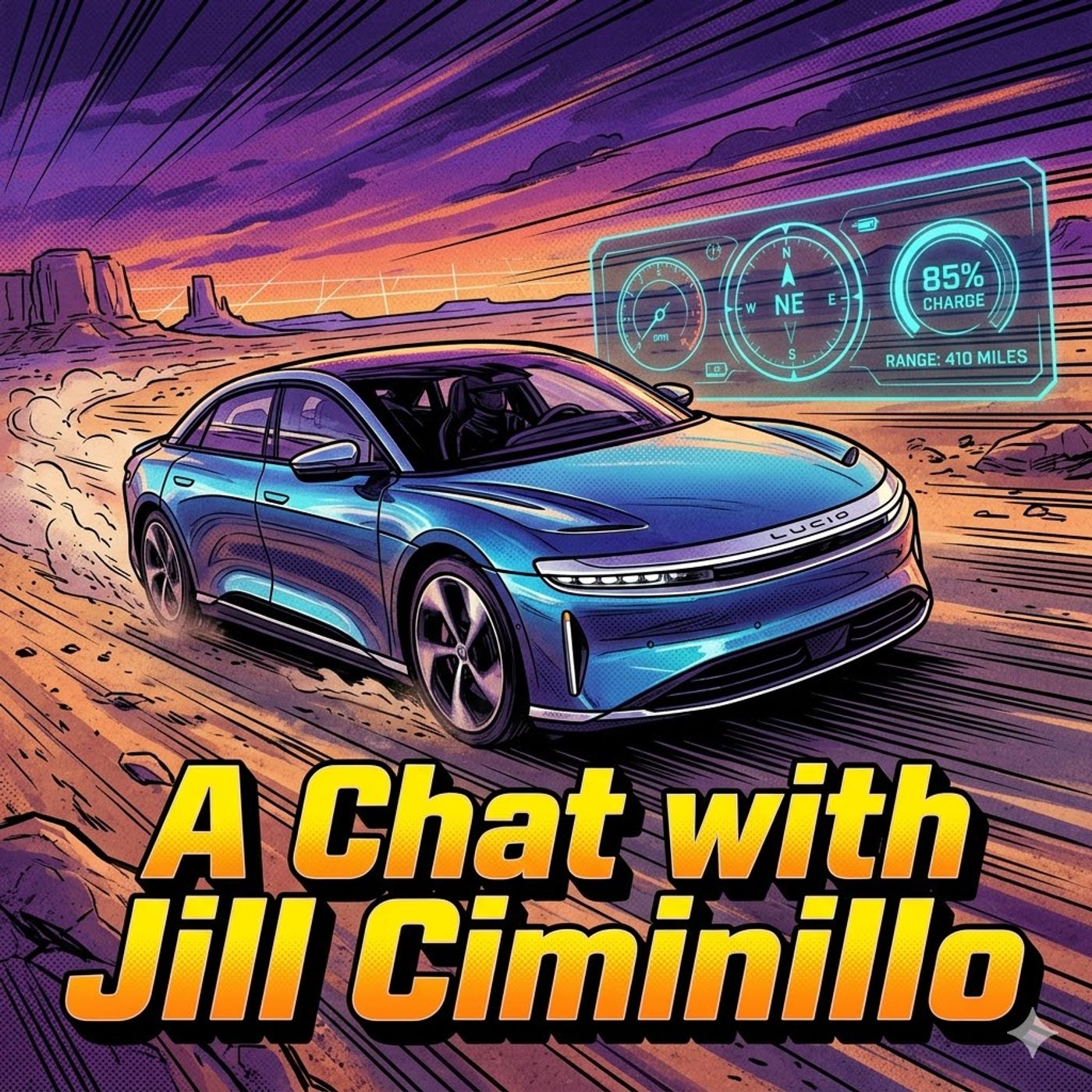
A Chat with Jill Ciminillo
About this episode
Jill Ciminillo and the host cover a wide sweep of EV news, from Kia’s upcoming EV3 and its expected affordability to the growing pressure Chinese automakers are putting on global competitors. They also dig into how EVs should feel to drive and use, with a sharp critique of screen-heavy controls and praise for more tactile designs. The back half turns to upcoming EV launches from Subaru and Toyota, then into Jill’s own rally plans with a Lucid-backed on-road event.
In this episode of Kilowatt, automotive journalist Jill Ciminillo joins the show to share her extensive expertise on the rapidly changing vehicle market. Jill provides an insider's look at the New York Auto Show, highlighting the impressive Kia EV3 and its potential to make electric vehicles truly affordable for more families. The conversation dives deep into the strategic challenges Western automakers face from Chinese competitors and how legacy brands are adapting through platform-sharing. Jill also recounts her experiences in the Rebelle Rally and previews her upcoming journey in the Trinity Road Rally behind the wheel of a high-performance Lucid Air Sapphire.
Support the Show https://www.supportkilowatt.com/
Other Podcasts:
News Links:
- Team Brute Squad
- Jill Ciminillo on YouTube
- Jill Ciminillo on X (Twitter)
- Jill Ciminillo on Instagram
- Jill Ciminillo on Threads
- Jill Ciminillo on TikTok
- Consumer Guide Car Stuff Podcast
- Rebelle Rally Official Website
- Trinitē Road Rally
*Show Art Created By Gemini
Hosted by Simplecast, an AdsWizz company. See pcm.adswizz.com for information about our collection and use of personal data for advertising.
North American Car Utility Truck of the Year award
"...she is an automotive journalist and content creator. She is also the juror of the North American Car Utility Truck of the Year award..."
This is a vehicle awards program for North America. Jill is mentioned as one of the judges who helps decide which vehicles win.
This is an automotive awards program recognizing standout vehicles in the North American market across car and utility/truck categories. Jill is noted as a juror, indicating she evaluates vehicles for the award.
Women's Worldwide Car of the Year award
"...as well as the Women's Worldwide Car of the Year award. Oh, that's a lot, but there's more."
This is an awards program that picks top cars based on judging by women. Jill is mentioned as one of the people who helps choose the winners.
This award recognizes vehicles judged by women, with a focus on overall excellence and impact in the global market. The host mentions Jill as a juror, highlighting her role in evaluating vehicles.
navigation race
"...she’s a runner and a volunteer, but she’s also a veteran of the Rebel Rally, which is an eight-day off-road navigation race through the desert. So, not this specific reason..."
A navigation race is where you have to follow the right route, not just drive fast. Getting the directions right can be a big part of winning.
In a navigation race, teams focus not only on driving speed but also on finding the correct route through the course. Navigation can be as important as vehicle performance, especially in off-road or desert events.
Rebel Rally
"...she’s a runner and a volunteer, but she’s also a veteran of the Rebel Rally, which is an eight-day off-road navigation race through the desert. So, not this specific reason..."
The Rebel Rally is an event Jill has done before. It’s an eight-day off-road race where navigation through the desert is a major part of the challenge.
The Rebel Rally is described as an eight-day off-road navigation race through the desert. It’s mentioned to establish Jill’s experience with endurance and navigation-heavy motorsport.
Trinity Road Race
"...they will be participating in the Trinity Road Race, and they will be driving a Lucid Air Sapphire through the race. And this is a road race..."
The Trinity Road Race is the event Jill’s team is entering. It’s a road-racing competition with organized check-in and prep before the race begins.
The Trinity Road Race is the specific event Jill and her navigator/driver team plan to compete in. The hosts frame it as a road-racing event with check-in and pre-race activities the day before the start.

Lucid Air
"...they will be participating in the Trinity Road Race, and they will be driving a Lucid Air Sapphire through the race. And this is a road race. It's a different than a rally race."
Lucid Air is an all-electric luxury car. “Sapphire” is a sportier, higher-performance version of the Air that’s meant to be quicker and more capable.
Lucid Air is Lucid’s electric luxury sedan, and “Sapphire” is a higher-performance variant. In the Sapphire trim, the car is tuned for stronger acceleration and more track-capable behavior than the standard Air models.
rally race
"...And this is a road race. It's a different than a rally race. Jill's going to go into this..."
A rally race is a competition broken into sections (“stages”). Drivers often deal with rougher or changing surfaces and rely heavily on navigation.
A rally race is a motorsport format run in stages, often on changing surfaces like gravel, dirt, or snow, with navigation playing a big role. Cars are timed across multiple segments, and the route can be more variable than in a typical road race.

Kia EV3
"[202.0s] and the EV3 was one of them. And this is going to be the new smallest EV from Kia that will be [208.9s] available in the American market. ... [224.1s] here they are. ... [231.1s] should have about 320 miles max range. ... [245.7s] And it's going to have a next charging port."
The Kia EV3 is a small electric car Kia is bringing to the U.S. They’re talking about how far it can drive on a charge (up to around 320 miles) and that different battery versions will change that number. The big hope is that it’s priced low enough to be a good deal.
Kia’s EV3 is being positioned as the new smallest EV from Kia for the American market. The hosts discuss expected range figures (up to about 320 miles) and multiple battery-pack options that affect range. They also mention it will debut with a “next charging port” and more upscale features, with an emphasis on affordability.
max range
"[224.1s] are. So, that's exciting. And it should have about 320 miles max range. As you know, there's [231.1s] different battery packs that are going to be available."
“Max range” is the farthest an electric car is expected to go on one full battery charge. It can change depending on which battery version you buy.
“Max range” refers to the maximum driving distance an EV is expected to achieve on a full charge under standardized testing conditions. In this segment, the host contrasts the top figure (about 320 miles) with lower-range versions depending on which battery pack is installed.
battery packs
"[231.1s] different battery packs that are going to be available. So, you know, you're probably for, [235.5s] you know, some of the higher range or the higher trimmed vehicles, you're probably looking at"
An EV’s battery pack is the battery inside the car. Bigger or different battery versions can let the car drive farther on a single charge.
Battery packs are the EV’s rechargeable battery modules, and different pack sizes or configurations can change both range and performance characteristics. The host notes that multiple battery-pack options will be available for the EV3, with higher-range trims expected to be around 280 miles and at least one version targeting about 320 miles.
next charging port
"[241.0s] probably around 280 miles of range. But there will be at least one version available with 320 [245.7s] miles of range. And it's going to have a next charging port. It is going to have a lot of [251.2s] up-level features."
“Next charging port” implies a newer charging connector or charging standard intended to improve compatibility and/or charging convenience versus older ports. The segment ties it to the EV3’s ability to deliver a strong real-world experience alongside its range.
affordable EV
"[251.2s] up-level features. But my hope, and this is the big fingers crossed moment, is that this is going to [256.6s] be an affordable EV. You know, we're talking offline a little bit about, you know, affordable cars. [263.3s] And the, you know, when you're looking at the EV market right now..."
An “affordable EV” is an electric car that costs less, so more people can buy it. The host is basically saying the EV3 will be a big deal if it’s priced competitively.
“Affordable EV” here is the concept of an electric vehicle priced low enough to compete with mainstream non-luxury cars, not just a niche premium EV. The host frames affordability as the key factor that would make the EV3 a “bang for your buck” option, especially relative to current entry-level EV pricing.
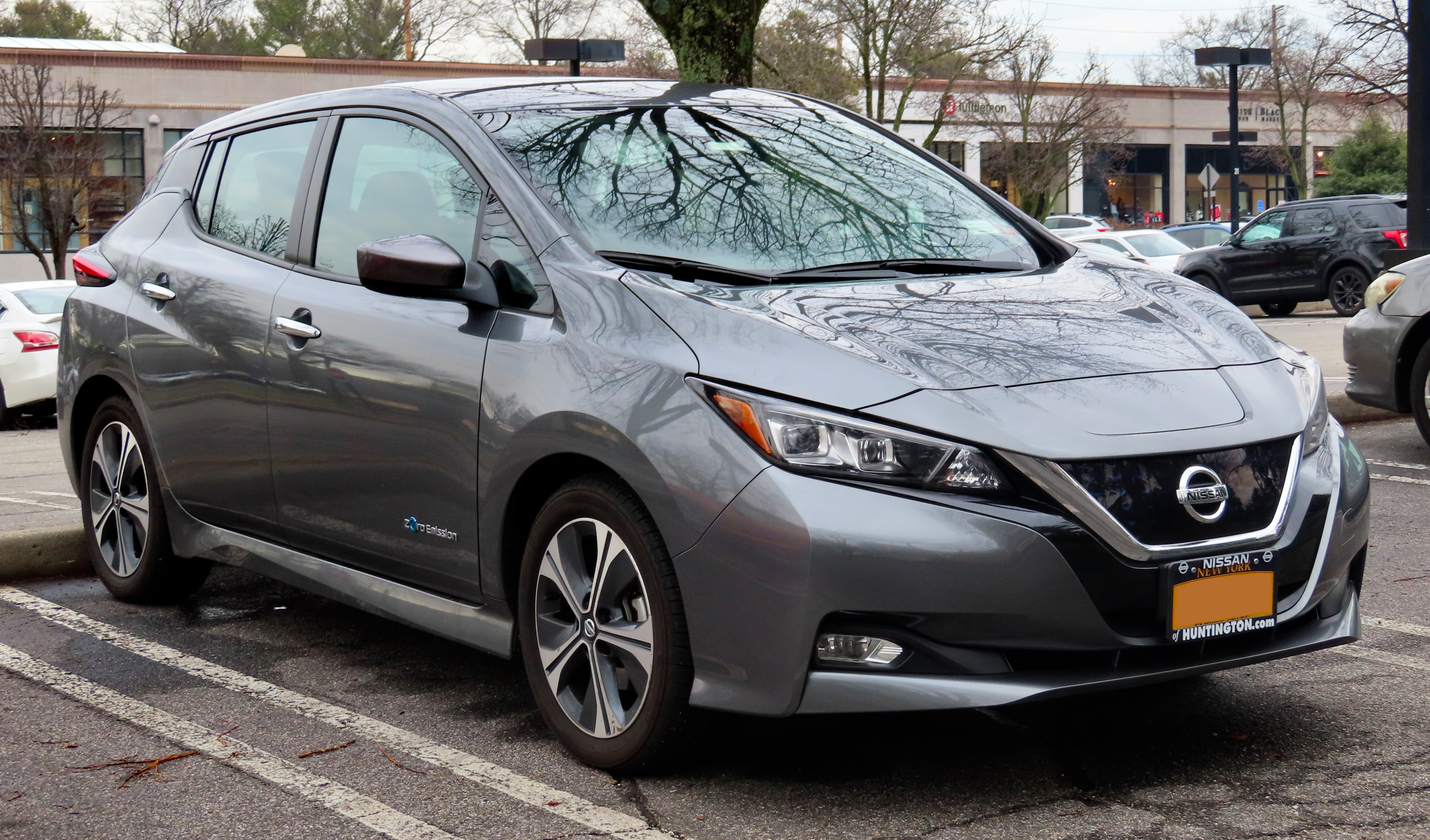
Nissan Leaf
"[256.6s] be an affordable EV. You know, we're talking offline a little bit about, you know, affordable cars. [263.3s] And the, you know, when you're looking at the EV market right now, you've got the Nissan Leaf [271.9s] and the Chevy Equinox."
The Nissan Leaf is a well-known electric car that the host uses as a price comparison point. They mention it because it’s one of the cheaper EV options people can buy today.
The Nissan Leaf is referenced as a current benchmark for affordable electric cars in the U.S. market, with the host citing it as “just under $30,000” to frame the EV3’s expected pricing and value proposition.

Chevrolet Equinox
"...ht now, you've got the Nissan Leaf and the Chevy Equinox. And those are like just under $30,000. And so, y..."
The Chevrolet Equinox is a small SUV meant for everyday driving and carrying people or cargo. In a podcast about electric cars, it may be mentioned because it’s a common non-electric option that costs around the same as some EVs. That helps people compare what they get for their money.
The Chevrolet Equinox is a compact SUV that’s commonly discussed because it’s a mainstream, practical family vehicle. In an EV-focused conversation, it may come up as a benchmark for pricing and everyday usability alongside electric options like the Nissan Leaf. That makes it relevant when comparing what buyers get for around the same budget.

Kia EV9
"...pright design. It looks like in many ways a mini EV9. But definitely looks like a Kia. It has the cool..."
The Kia EV9 is an electric SUV with room for more than just two people. It’s designed for families that want an EV but still need extra seating. In the podcast, it’s used as a visual and category reference for other EVs.
The Kia EV9 is a fully electric, three-row SUV aimed at buyers who want EV practicality with more passenger space. It’s brought up because the podcast describes another vehicle as looking like a smaller version of the EV9 while still being clearly a Kia. That makes the EV9 a reference point for design language and the “family EV” concept.
instantaneous torque
"[350.2s] great thing about an electric car, instantaneous torque. And you know, you have a lot of the [355.9s] enthusiasts out there who are like, man, I need the rumble of the engine"
In an EV, the motor can push with force almost immediately when you hit the gas. That’s why it feels like you get quick acceleration right away.
Instantaneous torque means the electric motor can deliver twisting force immediately when you press the accelerator. That’s why EVs often feel like they accelerate “right now,” without waiting for the engine to spool up.
turbo lag
"[367.1s] But there's just something that's really nice about the instantaneous acceleration that you get [373.9s] from an electric car that you do not get from a gasoline vehicle. There is no turbo lag. It is [379.4s] all just fast go."
Turbo lag is a short delay before a turbocharged gas engine really “kicks in.” EVs don’t have that same delay because their power comes from the electric motor.
Turbo lag is the delay you can feel in some gasoline turbocharged cars before the turbocharger builds enough boost. The speaker contrasts this with EVs, which don’t rely on a turbo to create boost.

Dodge Charger
"[404.3s] over it. Yeah. No, no, when Dodge introduced the, was it the Challenger EV? Charger, yeah. [412.3s] Charger EV, yeah. So they were like, they were like, oh, and it's got noises."
The Dodge Charger EV is an electric Charger. In this episode, they’re talking about how Dodge added fun sound/vibration features to make the EV feel more like a traditional car.
The Dodge Charger EV is an upcoming/introduced electric version of the Charger nameplate from Dodge. This segment discusses it in the context of EV sound effects and how the car’s character is being marketed to traditional muscle-car fans.

Dodge Challenger
"...ah. No, no, when Dodge introduced the, was it the Challenger EV? Charger, yeah. Charger EV, yeah. So they wer..."
The Dodge Challenger is a sporty two-door car that’s built for strong acceleration and performance. It’s mentioned in EV discussions because Dodge has talked about making an electric version of the Challenger. That’s a big shift from the traditional gas-powered muscle-car formula.
The Dodge Challenger is a performance-focused muscle car known for its powerful engines and classic two-door styling. It’s discussed in EV contexts because Dodge has explored electrified versions of its lineup, including the idea of a Challenger EV. That’s why it may appear when talking about how traditional performance brands are adapting to electric powertrains.
fake vroom vroom
"[412.3s] Charger EV, yeah. So they were like, they were like, oh, and it's got noises. And I was like, [417.5s] what kind of infants do you think we are? You know, like, do we really need a fake vroom vroom? [424.7s] I will say the fake vroom vroom is very fun."
Because EVs are so quiet, some cars add made-up engine noise through a speaker. It can be turned up, turned down, or even turned off depending on the car.
“Fake vroom vroom” refers to artificial engine sounds added to EVs so pedestrians and drivers can hear a vehicle moving. Many automakers use speaker-based sound design and allow different sound modes.
attitude adjustment
"[424.7s] I will say the fake vroom vroom is very fun. They call it the attitude adjustment. And it's [430.3s] you know, it vibrates and you can turn it all the way up. You can make it silent. You can turn [435.0s] it off."
The “attitude adjustment” is a setting that changes the sound the EV makes. You can crank it up for fun or make it quiet.
“Attitude adjustment” is the name used for a configurable EV sound feature/mode that lets the driver choose how the car sounds. In this segment, the host describes it as something you can turn up or silence.
Charger Daytona
"[435.0s] it off. And it's really funny because my husband and I actually posted a video review of this. [440.5s] We took a road trip to Indianapolis when I was driving the Charger Daytona. And he was like, [446.3s] can you turn that off?"
The speaker mentions driving a “Charger Daytona,” referring to the Dodge Charger Daytona EV variant. The Daytona name is used as a performance/heritage trim, and here it’s tied to the EV’s sound/vibration settings and road-trip experience.
level two charger
"I'm in the city. And in order for me to, like I don't have a level two charger, I live in an apartment. And I can plug into a wall jack, but that doesn't get you very far."
Level 2 charging is a faster way to charge an electric car than plugging into a normal wall outlet. If you don’t have it at home, you often have to rely on public chargers to get enough energy.
A Level 2 charger is an EV charging setup that uses higher-voltage power than a standard household outlet, typically installed at homes or provided by workplaces. It can recharge an EV much faster, which matters a lot if you park at home and need daily charging.
charging station
"So I have to go out into the world to charge if I need to do some, some big charging. And I was at one of the stations in my neighborhood..."
A charging station is where you plug your EV in to add battery power. How long it takes can vary depending on the charger and the car.
A charging station is a public (or semi-public) place where EVs can be charged using dedicated charging equipment. Charging time depends on the charger type and the car’s ability to accept power.
six pack alternative powertrain
"I like the fact that they have offered, you know, the six pack alternative powertrain in it. But it is, it is a great EV..."
They’re talking about the EV’s battery setup—how the battery is packaged to power the car. It’s basically the EV’s “power system” instead of a gas engine.
“Six pack” here is a reference to a battery-pack configuration—essentially how many battery modules/cells are packaged to store energy for the EV. The phrase “alternative powertrain” suggests the car uses a different propulsion setup than a conventional gasoline drivetrain.
Jim Farley
"The other thing I wanted to get your opinion on is Jim Farley recently..."
Jim Farley is a senior leader in the auto business. In this segment, he’s sharing an opinion about how competition could change if more Chinese car brands enter the U.S. market.
Jim Farley is a top executive in the auto industry, most associated with Ford. When he comments on market dynamics—like competition from Chinese automakers—he’s speaking from a major manufacturer’s perspective.
Chinese automakers
"...Jim Farley recently said that if the Chinese automakers kind of came to the US auto market, it would basically decimate US automakers."
They’re talking about car companies from China selling into the U.S. market, and the idea that their cars could be so competitive that it would hurt other automakers.
This refers to EV and auto brands based in China competing in the U.S. market. The claim being discussed is about how pricing, scale, and product offerings could pressure or “decimate” existing U.S. automakers.
global economy
"...Because we aren't just making cars for Americans in America. We are a global economy, whether we want to admit it or not..."
The “global economy” idea here is that cars and parts are produced and sold across borders, so competition isn’t limited to U.S.-made vehicles. It frames why Chinese automakers can affect the American market even if production is happening elsewhere.
Hyundai
"...And even if it is made in America, doesn't necessarily mean that it's an automotive automaker. You know, Hyundai has that great meta plant in Georgia..."
Hyundai is a car company that sells vehicles worldwide. Here, they’re used as an example of a foreign brand making cars in the U.S., not just in its home country.
Hyundai is a major global automaker. In this segment, it’s mentioned as an example of a non-U.S. brand building cars in the U.S. (Georgia), showing how auto production is international.
BYD
"...Because if you can't compete with, you know, the Chinese automakers, like, why are we not competing? Like, that's what I would be asking myself. How can we do this better? How can we better compete with them? Because BYD, you know, Zeekr..."
BYD is a Chinese company that makes electric cars. They’re mentioned here because they’re selling in multiple countries and competing with other automakers.
BYD is a Chinese automaker known for electric vehicles and batteries. The hosts reference BYD as part of the competitive pressure from Chinese brands selling in Europe and North America.
Zeekr
"...Because BYD, you know, Zeekr, Gile, they're on sale in Europe. You know, they're on sale in Mexico..."
Zeekr is a company that makes electric cars. The point here is that it’s already selling in places like Europe and is likely to show up in more markets soon.
Zeekr is a Chinese EV brand. In this discussion, it’s used as an example of Chinese manufacturers already selling in Europe and expanding into other markets.
Gile
"...Because BYD, you know, Zeekr, Gile, they're on sale in Europe..."
The transcript lists a Chinese EV brand name that sounds like “Gile,” but it’s not clear which company it is. It’s being grouped with other Chinese EV makers competing in international markets.
“Gile” appears to be a mis-transcription of a Chinese automaker/EV brand mentioned alongside BYD and Zeekr. Because the exact brand name isn’t clear from the transcript, the annotation is kept low-confidence.
Tennessee
"...But in their whole plant, I think it's in Tennessee, their whole manufacturing process for their $30,000 vehicle is based on how the Chinese manufacture their cars."
Tennessee is where the speaker says a manufacturing operation is located. The point is that a foreign EV maker can build cars in the U.S. using its existing production approach.
Tennessee is mentioned as the location of a manufacturing plant and production process tied to a Chinese automaker’s $30,000 vehicle. This highlights how international brands can localize manufacturing in the U.S. while using their home-country production methods.

Volvo EX30
"in terms of price, like what we, I think we still have 100% tariffs on anything from Chinese cars coming into the United States. That's why the Volvo EX30 disappeared."
The Volvo EX30 is a small electric SUV from Volvo. The host is saying that tariffs on certain imported cars can make models like this harder to offer or more expensive in the United States.
The Volvo EX30 is a compact electric SUV from Volvo. In this segment, it’s mentioned as an example of a Chinese-car import tariff situation that affected availability in the U.S. market.
100% tariffs
"in terms of price, like what we, I think we still have 100% tariffs on anything from Chinese cars coming into the United States."
A tariff is a tax on imported products. If the tariff is “100%,” it means the imported item gets taxed at a rate that can make it roughly twice as expensive, which then pushes up car prices.
“Tariffs” are taxes the government places on imported goods. Saying “100% tariffs” implies the import tax is set at a level that can double the effective cost of the imported cars, which strongly affects pricing and availability.
CES
"So I recently went to CES, and it was my first time ever going to CES. I was a host by Julie, and they gave us the opportunity to check out Julie, Lincoln Co, and Zeekr vehicles."
CES is a big technology show where companies demo new gadgets and tech. EV makers go there to show off things like the car’s screens, software, and other electronics.
CES (Consumer Electronics Show) is a major annual tech trade show in the U.S. Automakers and EV companies attend to showcase new electronics, software, and in-car technology—like infotainment and driver interfaces.
Julie
"I recently went to CES, and it was my first time ever going to CES. I was a host by Julie, and they gave us the opportunity to check out Julie, Lincoln Co, and Zeekr vehicles."
“Julie” appears to be a person’s name in the transcript (“I was a host by Julie”). It’s not clearly tied to a specific automotive brand here, so it’s best treated as a host/guest name rather than a car company.
Lincoln Co
"I was a host by Julie, and they gave us the opportunity to check out Julie, Lincoln Co, and Zeekr vehicles."
The speaker mentions “Lincoln Co” as one of the groups they visited at CES. It likely refers to Lincoln, a luxury car brand, but the transcript wording is a bit unclear.
“Lincoln Co” is referenced as one of the companies whose vehicles the speaker got to see at CES. Lincoln is a luxury brand associated with Ford, but the transcript wording (“Lincoln Co”) is ambiguous about whether it’s the brand Lincoln or a specific company name.
closed course
"And they took us to a closed course because they're not street legal in the United States. So we went to a closed course to be able to drive them around and like hit the buttons and play with the infotainment system"
A closed course is a private testing track where cars can be driven safely. The speaker is saying they drove the vehicles there to test things like controls and the screen.
A “closed course” is a controlled track or test area where vehicles can be driven safely without normal traffic rules. Automakers use these settings at events like CES to let journalists evaluate vehicle controls, software, and ergonomics.
infotainment system
"So we went to a closed course to be able to drive them around and like hit the buttons and play with the infotainment system and climb around inside the vehicle... but the infotainment system and the technology, the processing speed was like so fast."
The infotainment system is the car’s main screen and controls for things like music, navigation, and settings. In many modern EVs, it’s also how you interact with the car’s features.
An infotainment system is the car’s combined entertainment and information interface—typically the touchscreen, navigation, media controls, and sometimes voice/gesture features. In EVs, it’s often a major part of the user experience because it controls many vehicle functions through software.
infotainment screen
"...when the F-150, or not when the F-150, when the Mustang first came out, the Maki, I went to a dealer, took a test drive, I told him exactly why I was taking the test drive, and he's trying to explain to me while I'm driving the infotainment screen."
That’s the big touchscreen in the car where you control things like music, maps, and phone features. Some cars also make you use it for important driving-related settings, which can be annoying if it’s confusing.
An infotainment screen is the main touchscreen interface in many modern cars that combines media (music, radio), navigation, phone connectivity, and vehicle settings. In some vehicles, it also controls core functions, which can make the car feel harder to use if the interface isn’t intuitive.

Ford F150
"...when the F-150, or not when the F-150, when the Mustang first came out, the Maki, I went to a dealer, took a test drive..."
The Ford F-150 is a popular full-size pickup truck. Here it’s brought up just to set context for a story about how car touchscreens can be hard to use.
The Ford F-150 is Ford’s best-selling full-size pickup truck line. In this segment, it’s mentioned as part of a comparison about how early infotainment experiences and screen-based controls can affect usability.

Ford Mustang
"...when the F-150, or not when the F-150, when the Mustang first came out, the Maki, I went to a dealer, took a test drive..."
The Ford Mustang is Ford’s famous car model. In this story, it’s used as an example of how the touchscreen and settings can be confusing during a test drive.
The Ford Mustang is Ford’s iconic sports-coupe/convertible model line. The speaker references the Mustang’s early release and a dealer test drive experience to illustrate how complicated infotainment setup can be, even when the salesperson is trained.
Polestar
"...And I, so Volvo and Polestar are also owned by Gile, if you didn't know, those listening. So they are owned by a Chinese company."
Polestar is an electric car brand. The speaker’s point is that even if the tech is impressive, it can be frustrating if you have to use the touchscreen for everyday controls.
Polestar is a performance-oriented electric vehicle brand. Here, it’s referenced as using advanced infotainment technology, but the speaker disagrees with the approach of moving most vehicle controls into the touchscreen.
side mirrors
"...but I do not want to adjust my side mirrors with a control in the screen. I do not want to adjust my steering wheel with a control that is in the screen."
Side mirrors are the mirrors on the outside of the car that help you see what’s next to you. The host thinks adjusting them shouldn’t require using the touchscreen.
Side mirrors are the exterior mirrors on the driver and passenger sides used to check adjacent lanes and traffic. The speaker’s point is that mirror adjustment should be fast and ideally not require touchscreen navigation while driving.
steering wheel
"...I do not want to adjust my side mirrors with a control in the screen. I do not want to adjust my steering wheel with a control that is in the screen."
The steering wheel is what you use to steer the car. The host is saying you shouldn’t have to use the touchscreen to adjust it—those controls should be quick and easy.
The steering wheel is the primary control used to direct the vehicle. The speaker argues that adjusting the steering wheel (position/angle) should not be handled through touchscreen menus, because it’s a frequent, safety-relevant adjustment that should be intuitive.
Rivian
"...I know Rivian does the same thing and Tesla does the same thing. And so I don't know if they're trying to testify their operating system or what..."
Rivian makes electric vehicles. The host is saying Rivian also relies heavily on the touchscreen for controls, and they don’t think some of those controls should be buried in menus.
Rivian is an electric vehicle brand known for SUVs and trucks with large screens and software-driven controls. The speaker says Rivian uses a similar approach to Tesla by placing many controls inside the touchscreen, which they personally dislike for tasks like mirror and steering-wheel adjustments.
Tesla
"...I know Rivian does the same thing and Tesla does the same thing. And so I don't know if they're trying to testify their operating system or what..."
Tesla is an electric car brand. The host’s complaint is that Tesla (like Rivian) often puts lots of car controls on the screen, and they think some should be easier to adjust without navigating menus.
Tesla is an electric vehicle brand that emphasizes software and a touchscreen-centric control layout. In this segment, the speaker criticizes the idea of using the screen for controls that should be quick and tactile, like adjusting side mirrors or the steering wheel.

Polestar 3
"I literally, I did a video of the, I think it was the Polestar 3. And my cover photo of, you know, for the video is me standing in front of the vehicle with all the shoes that I wore during the test week."
Polestar 3 is an electric SUV. The host is talking about how, in that car, you have to use the screen to adjust things like the mirrors and steering, which can be annoying while you’re trying to drive safely.
The Polestar 3 is an electric SUV from Polestar. In this segment, it’s used as an example of a vehicle where steering wheel and side-mirror adjustments are controlled through the screen, which the speaker finds distracting.
lane lines
"But you got to see the lane lines. And I'm just like this, this is not good. This is not good."
Lane lines are the painted markings on the road that define where each lane is. The speaker mentions needing to see them to line up the vehicle’s position and mirror settings, which is part of why the touchscreen-based adjustments feel unsafe or inconvenient.
memory set it for one for heels and then one for tennis shoes
"Everybody's like, well, you know, just memory set it for one for heels and then one for tennis shoes. I'm like, even my tennis shoes have different soles."
Many cars can save your preferred mirror/steering settings as a “memory” profile. The speaker’s point is that two presets don’t cover all the differences between different shoes.
“Memory” settings in cars typically refer to saved driver profiles that store positions for adjustable components like the seat, steering wheel, and mirrors. The speaker argues that having only two saved presets (e.g., heels vs. tennis shoes) isn’t enough when shoe thickness and sole shape vary widely.

Ford Expedition
"...mething I think was really interesting in the new expedition. So not an EV, but where they put the controls i..."
The Ford Expedition is a large SUV made to carry more people and handle road trips. Even though it’s not an electric vehicle, it can come up when people talk about how the driver controls and layout are designed in newer cars. That helps compare the “feel” of driving different kinds of vehicles.
The Ford Expedition is a full-size SUV designed for families and larger groups, with seating and space meant for longer trips. It may be discussed in an EV-focused podcast because the conversation can include how vehicle controls and driver interfaces are laid out in newer models—even when the Expedition itself isn’t an EV. That makes it relevant for comparing user experience across vehicle types.
thumb wheel
"...put the controls in like the thumb wheel. And Lincoln did it too, in the thumb wheel of the steering wheel..."
A “thumb wheel” is a small dial you turn with your thumb. The host is saying some car controls are put on that dial near the steering wheel instead of being on buttons on the door.
A “thumb wheel” refers to a rotary control you operate with your thumb, typically mounted on or near the steering wheel. In this segment, it’s used to describe how vehicle functions (like mirror and pedal-related controls) are moved into a steering-wheel control interface rather than being placed on the door.
adjustable pedals
"...So Ford has adjustable pedals. That's also in the thumb wheel on the steering wheel..."
Adjustable pedals let you move the gas and brake closer or farther away. That helps drivers of different heights get a comfortable driving position.
Adjustable pedals let the driver move the accelerator and brake pedal positions to better fit different body sizes. The segment notes Ford’s adjustable-pedal controls are integrated into the steering-wheel thumb-control area.
three-row EV
"...what about the Subaru getaway? Yeah. So the getaway is an all new vehicle for Subaru. It's three row EV..."
A “three-row EV” is an electric SUV or van with seating for three rows of passengers. It’s meant for families or groups that need more seats.
A “three-row EV” is an electric vehicle designed with three rows of seats, typically to carry more passengers than a two-row crossover. The host uses it to describe the intended size/capacity of the Subaru getaway.
EV-only powertrain strategy
"...because I think many of us thought that it would be hybrid and electric or have a multitude of powertrains. But when they said no EV only..."
“EV-only” means the vehicle is electric and not offered with gas or hybrid options. The host is saying people expected a mix, but the announcement was for electric-only.
“EV-only” means the model is offered with an electric powertrain and not as a hybrid or with multiple engine types. The host says many expected the Highlander to be hybrid-electric or multi-powertrain, but the reveal was described as EV-only.
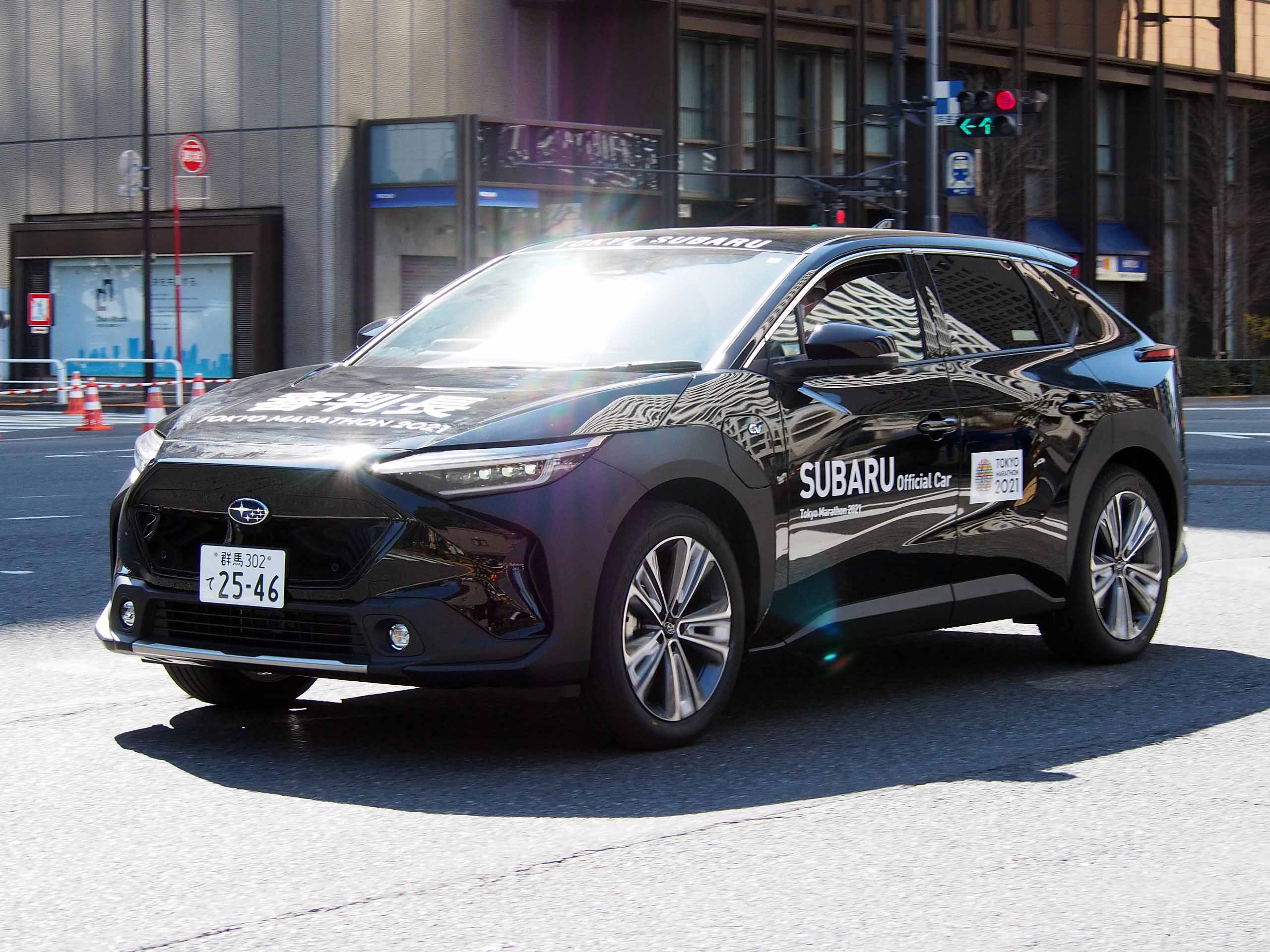
Subaru Solterra
"[1371.8s] similarities. And Toyota and Subaru have had some platform sharing with like the BZ and the [1379.3s] Solterra and then the CHR and I may mess this up."
The Subaru Solterra is Subaru’s electric SUV. The hosts mention it to show that Subaru and Toyota are working together and sharing the basic “bones” of their EVs.
The Subaru Solterra is Subaru’s EV that’s closely tied to Toyota’s EV platform efforts. In this segment, it’s used to illustrate Toyota/Subaru platform sharing—meaning the vehicles share core architecture and engineering.

Subaru Trailseeker
"[1387.6s] Trailseeker. But at any rate, the Trailseeker may be a BZ Woodland. But at any rate, [1395.6s] so they've got this platform sharing uncharted. That's it."
The hosts talk about a “Trailseeker” EV and suggest it could be closely related to a Toyota bZ model. The takeaway is that it’s meant to be a practical family vehicle with road-trip capability.
“Trailseeker” is mentioned as a Subaru model that may be related to Toyota’s bZ Woodland, reinforcing the idea of shared platforms and technology between the two brands. The segment frames it as a family-oriented EV intended for road trips.
platform sharing
"[1395.6s] so they've got this platform sharing uncharted. That's it. The uncharted and the CHR are on [1403.1s] the same platform. And so this getaway is the latest iteration of their platform sharing and"
Platform sharing means two different car models are built on the same basic “skeleton.” That can make the cars cheaper to develop and can also make them feel similar in how they’re put together.
Platform sharing is when automakers use the same underlying vehicle architecture—like the chassis layout, mounting points, and major systems—across multiple models. It helps reduce development cost and can speed up bringing new vehicles to market, especially in EVs where battery and drivetrain packaging are major engineering challenges.

Toyota Chr
"...aring uncharted. That's it. The uncharted and the CHR are on the same platform. And so this getaway is..."
The Toyota C-HR is a small crossover SUV meant for everyday driving. The podcast mentions it because it uses the same basic vehicle design as another model. That can affect how similar the cars feel and how they’re built.
The Toyota C-HR is a compact crossover that’s discussed here because it shares a platform with another model mentioned in the podcast. Platform sharing matters because it can influence how vehicles are engineered, including space, driving feel, and potential powertrain options. In an EV conversation, that kind of shared architecture can be relevant to what gets electrified or redesigned next.
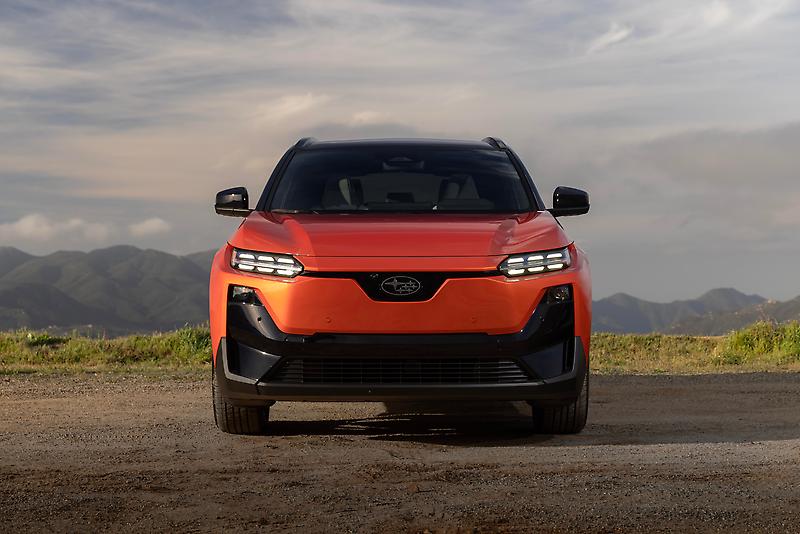
Subaru Uncharted
"...t any rate, so they've got this platform sharing uncharted. That's it. The uncharted and the CHR are on the..."
The Subaru Uncharted is a crossover vehicle. The podcast brings it up because it shares the same basic design platform as another car, the Toyota C-HR. That means the cars can be built in similar ways and may feel somewhat related in how they’re engineered.
The Subaru Uncharted is a model discussed in the context of platform sharing with the Toyota C-HR, meaning it can use similar underlying engineering. That’s important because platform sharing can reduce development costs and standardize parts, which may affect future updates and powertrain choices. In an EV-focused podcast, it’s relevant as a clue to how manufacturers plan new vehicles and potential electrification paths.
North American charging standard
"[1417.8s] also saying that this vehicle will get around 300 miles of available range. Also North American [1427.9s] charging standard, 420 horsepower."
“North American charging standard” refers to the common EV charging connector and communication ecosystem used in the U.S. and Canada. In practice, it usually points to the CCS (Combined Charging System) fast-charging approach, which affects compatibility with public charging networks.
available range
"[1417.8s] also saying that this vehicle will get around 300 miles of available range. Also North American [1427.9s] charging standard, 420 horsepower."
“Available range” is how far the EV can go on a full charge, based on testing. Real-world driving can change that number a lot depending on weather and how you drive.
Available range is the distance an EV is expected to travel under specified conditions before the battery is depleted. It’s typically based on an industry testing method and can vary with speed, temperature, driving style, and how much power is used for heating/cooling.
all wheel drive
"[1463.1s] And I mean, I think it looks really good. I don't know that I would say it looks like a Subaru, [1469.3s] but standard all wheel drive and a lot of interesting nice features."
All-wheel drive means the car can send power to all wheels, which helps it grip better on wet or snowy roads. It’s often chosen for confidence in bad weather.
All-wheel drive (AWD) sends power to more than one axle, improving traction compared with two-wheel drive—especially on slippery roads or uneven surfaces. In EV crossovers, AWD also affects how the vehicle distributes torque for stability and handling.

Highlander
"[1481.1s] I've seen the Highlander, but I haven't, you know, they haven't opened that up for driving yet either. [1486.0s] So I haven't gotten behind the wheel of that either. So I think both these will be interesting to check [1490.4s] out. Absolutely. It's interesting. Like in the same week that they announced the Highlander,"
The Toyota Highlander is referenced as another newly announced model in the same week as the EV news. The segment uses it as a timing comparison, not as a deep dive, but it’s still a specific Toyota vehicle name-drop.
solid state batteries
"[1496.6s] they also announced that their solid state batteries coming in 2028. And I have, for the entire time [1503.9s] that I've been doing this podcast, been a Toyota hater, not because."
Solid-state batteries are a newer type of EV battery that uses a solid material inside instead of a liquid. The hope is that they can make EVs safer and potentially give more range, but they’re still a developing technology.
Solid-state batteries are an EV battery technology that replaces the liquid or gel electrolyte found in conventional lithium-ion packs with a solid material. The goal is often higher energy density (more range for the same size), improved safety, and potentially faster charging—though widespread production has been challenging.
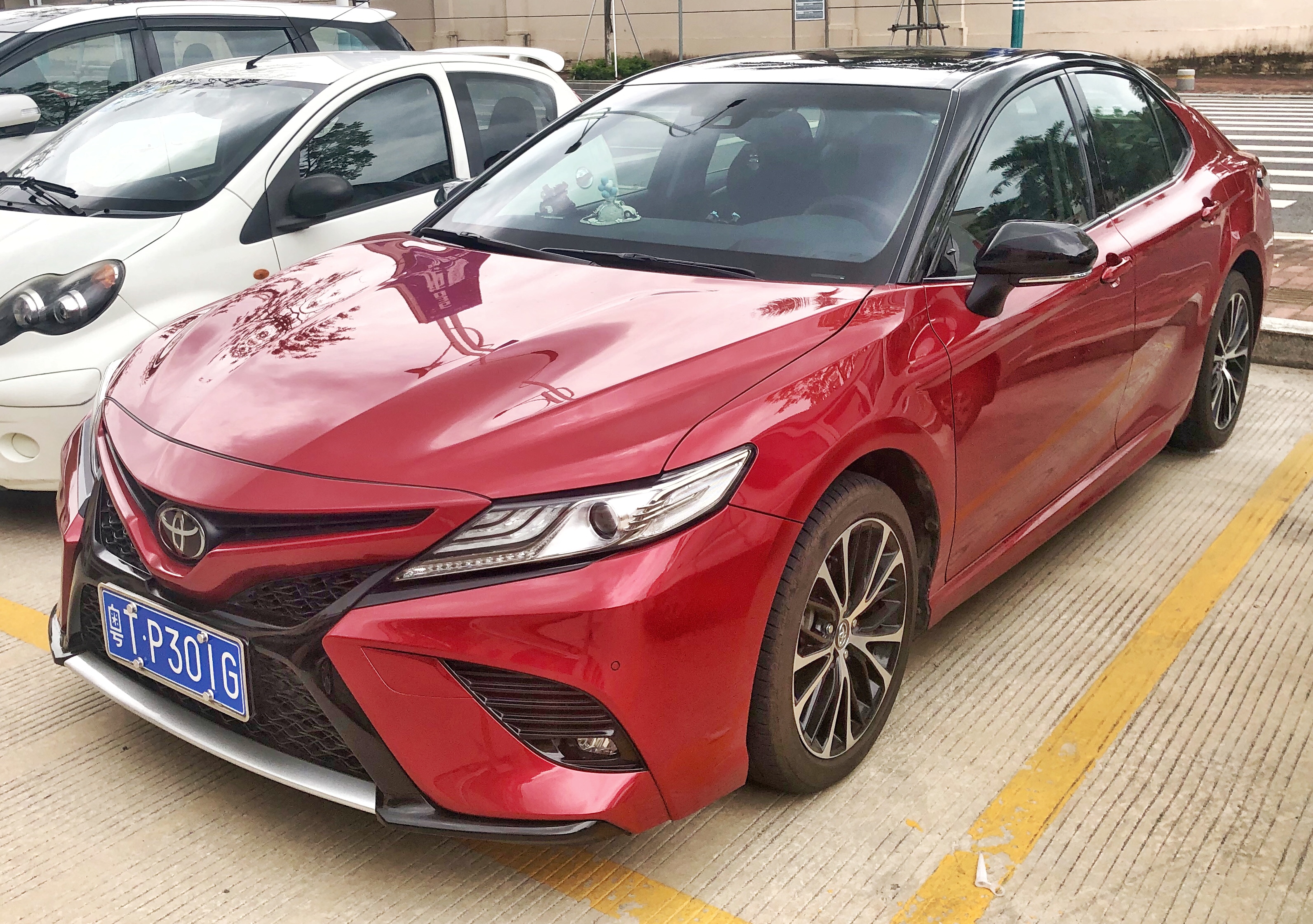
Toyota Car
"...ufferable about it. They're so insufferable. The Toyota car is fine, you know? Right. But whenever I would se..."
The Toyota Camry is a regular everyday car (a sedan) that many people use for commuting and errands. The podcast mentions it to talk about how familiar gas cars are compared with electric ones. It’s basically a reference point for what people already drive.
The Toyota Camry is a mainstream mid-size sedan known for being practical and widely used as a daily driver. In an EV podcast, it may be mentioned as part of a broader discussion about what people consider “normal” or familiar in non-electric vehicles. That context can help frame how consumers compare EVs to conventional cars they already understand.
Apple where they sat back
"[1529.9s] like, when it comes to EVs, I'm just like, okay, we've heard this before. But now I have to change [1536.7s] my whole attitude about it because I think Toyota did pulled like an Apple where they sat back,"
This is just a comparison to Apple’s reputation for waiting and then doing something well. It’s meant to describe strategy, not a car technology.
This is a metaphor comparing Toyota’s EV strategy to Apple’s approach of waiting and then executing with a polished product. It’s not a technical automotive concept, but it’s a framing device for how the speaker views Toyota’s timing and strategy.
Lexuses
"...Toyota fans, like my friends that I can't stand when they talk about Toyotas and Lexuses that will buy this car..."
Lexus is Toyota’s luxury car brand. The idea here is that people who already like Lexus might be more open to trying an electric vehicle.
Lexus is Toyota’s luxury brand, and the discussion frames it as part of Toyota’s broader ecosystem of buyers. The hosts suggest that Lexus fans who might not have considered an EV could be persuaded by Toyota’s new EV strategy.
dip our toe in the water
"...Toyota was really smart with their strategy because... they're like, let's just kind of dip our toe in the water..."
It means starting slowly instead of going all-in. In EV terms, it’s like testing the waters first, then expanding once they know what customers want.
This phrase describes a cautious market-entry strategy: start with limited exposure, learn from results, and expand only after the approach proves out. In the EV context, it implies Toyota used hybrids and early steps to reduce risk while building momentum.
hybrid powertrain
"...making the hybrid powertrain standard on a lot of their vehicles, and or at least an option..."
A hybrid powertrain is a setup where the car uses both a gas engine and an electric motor. The goal is usually better efficiency than a gas-only car, and it can also be a stepping stone toward full EVs.
A hybrid powertrain combines an internal-combustion engine with an electric motor and battery system to move the vehicle. The hosts use it to explain Toyota’s strategy of making hybrids widely available while also offering EV options.

Toyota Prius
"...if the Toyota Prius, you have standard EV and then the plug-in hybrid..."
The Toyota Prius is Toyota’s well-known hybrid model. In this discussion, it’s used as an example of how Toyota offers electrified versions—some that can run on electricity and some that combine gas and electric.
The Toyota Prius is referenced as an example of Toyota offering both EV capability and plug-in hybrid capability depending on the configuration. The hosts use it to illustrate how Toyota’s lineup can include electrified options without requiring buyers to switch to a pure EV immediately.
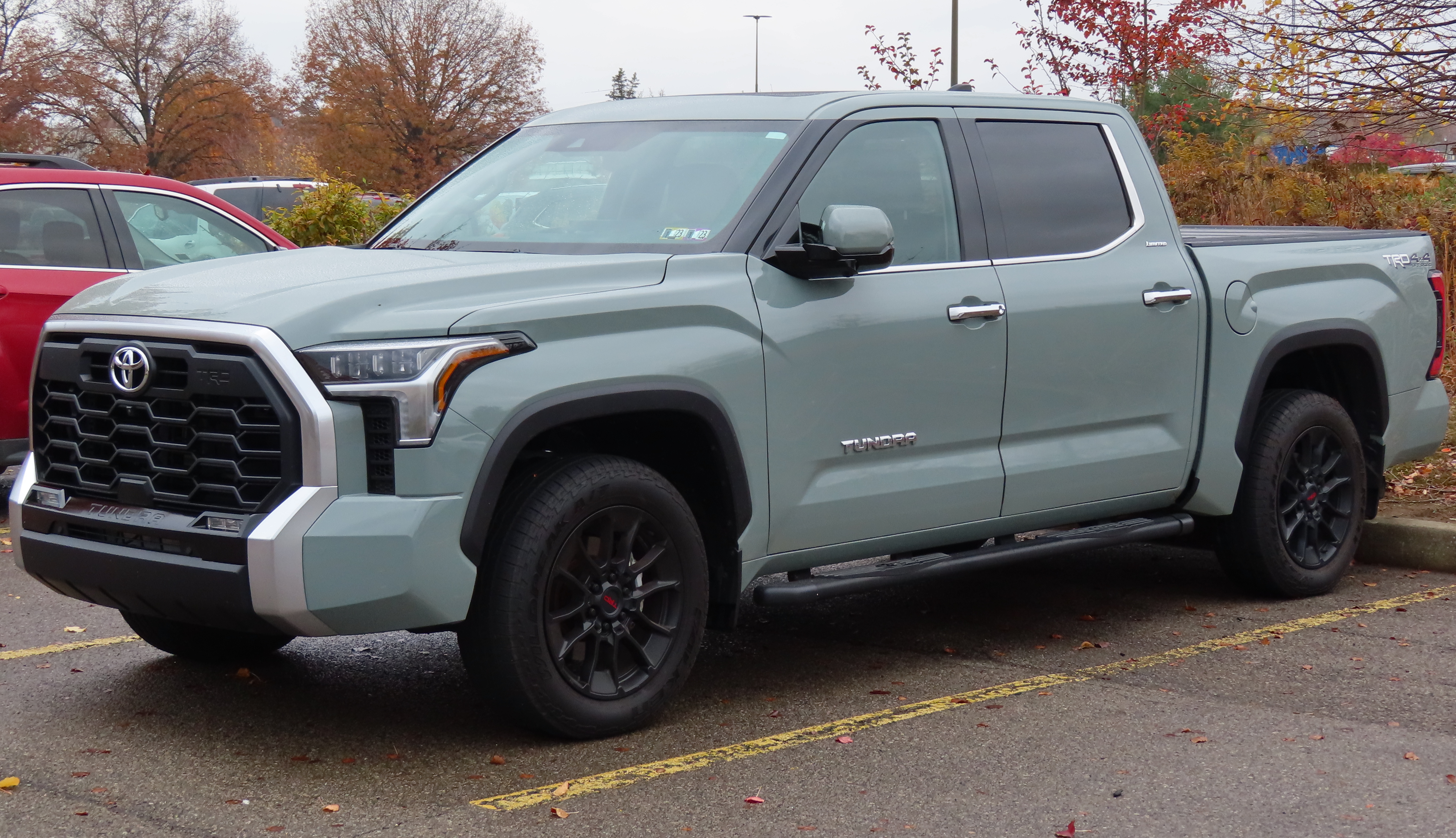
Toyota Tundra
"...And the Tundra and the Tacoma, you have, you know, gasoline only, and then you have hybrid options..."
The Tundra is Toyota’s pickup truck. In the conversation, it’s brought up to show that Toyota offers hybrid choices in trucks too, not only in cars.
The Toyota Tundra is mentioned as part of Toyota’s electrified truck strategy, where buyers can choose gasoline-only or hybrid options. The hosts use it to show Toyota offering electrification across mainstream vehicle types, not just passenger cars.
plug-in hybrid
"...you have standard EV and then the plug-in hybrid. And the Tundra and the Tacoma..."
A plug-in hybrid is a car that uses both gas and electricity, and you can charge it by plugging it in. It can often drive on electric power for a while before it relies more on gas.
A plug-in hybrid (PHEV) is a hybrid vehicle with a battery large enough to be charged from an external power source. It can typically drive some distance on electricity alone, then switches to hybrid operation when the battery is depleted.
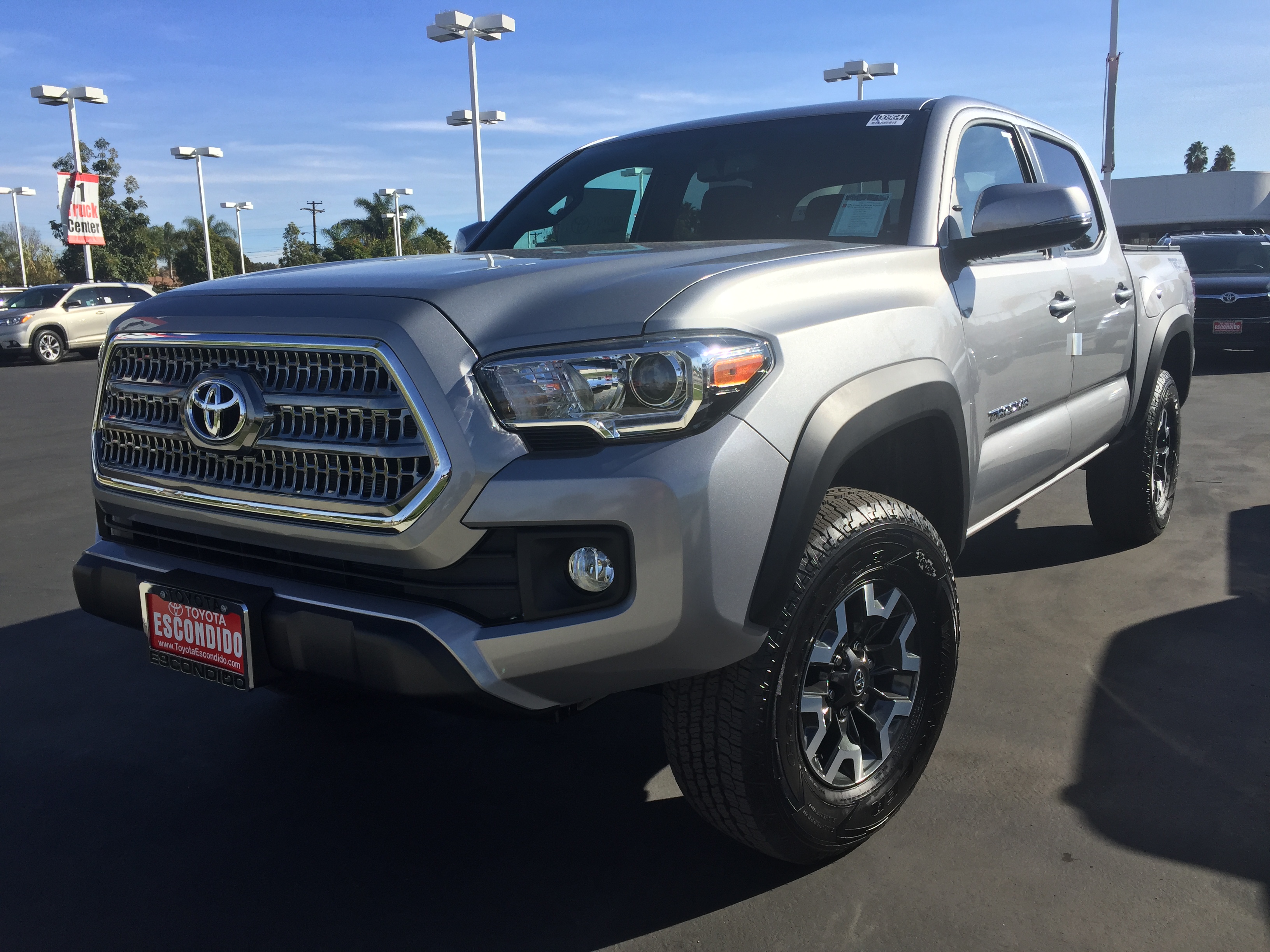
Toyota Tacoma
"...And the Tundra and the Tacoma, you have, you know, gasoline only, and then you have hybrid options..."
The Tacoma is Toyota’s midsize pickup truck. The hosts mention it to make the point that Toyota is offering hybrid versions in trucks, not just in regular cars.
The Toyota Tacoma is referenced alongside the Tundra to illustrate that Toyota offers hybrid options in its truck lineup. The point is that electrification is being offered as a choice for buyers who already like Toyota trucks.
Stellantis
"Yeah. And, you know, Stellantis just announced that they're not doing the Wagoneer EV in the U.S. for 2026..."
Stellantis is the automaker being talked about. They’re changing their EV plans in the U.S., and the hosts connect that decision to how many EVs they sold.
Stellantis is discussed as a company that adjusted its EV plans for the U.S. The hosts cite sales figures to argue that the Wagoneer EV decision reflects real-world demand and market performance.

Jeep Wagoneer
"And then, you know, the Wagoneer S, I would contend that the misstep with that vehicle, because it's a great vehicle. I liked it a lot. But I don't know that Jeep was ready for a fully electric vehicle like that."
The Jeep Wagoneer S is an upcoming/modern electric SUV model discussed here as a potential misstep in timing and brand readiness. The point is that launching a fully electric vehicle requires the brand, supply chain, and customer base to be ready for the change.

Chrysler Pacifica
"Oh, yeah. I mean, we had a Chrysler Pacifica before we bought our Kia Carnival. And the Pacifica was such a beautiful, it was a beautiful car. For the most part, there were some transmission issues, but for the most part, it ran really well."
The Chrysler Pacifica is a minivan. The speaker says it was a nice car overall, but they had transmission problems that kept getting expensive, so they eventually sold it.
The Chrysler Pacifica is a minivan, and the host describes owning one before switching to a Kia Carnival. They mention transmission issues but also that it otherwise ran well, and they discuss the cost of ongoing problems as a reason for selling.

Kia Carnival
"Oh, yeah. I mean, we had a Chrysler Pacifica before we bought our Kia Carnival. And the Pacifica was such a beautiful, it was a beautiful car."
The Kia Carnival is a minivan. The host mentions it because they replaced their Chrysler Pacifica with this one.
The Kia Carnival is a family minivan the host bought after selling their Chrysler Pacifica. It’s mentioned mainly as the comparison point for what they switched to, not as a deep technical discussion.
transmission
"For the most part, there were some transmission issues, but for the most part, it ran really well."
The transmission is what helps the car shift gears. The speaker is saying their minivan had problems with that part, and the repairs kept adding up.
A transmission is the drivetrain component that changes gear ratios so the engine can deliver power efficiently across different speeds. In this segment, the host says their Chrysler Pacifica had transmission issues that became increasingly costly.
New York Auto Show
"Well, and I'm going to be very curious to see what they do with Chrysler. I mean, at the New York Auto Show, they did show the new Pacifica redesigned with the new headlight and grille treatment."
The New York Auto Show is a big event where car companies show off new cars. In this segment, it’s where they said the redesigned Pacifica was revealed.
The New York Auto Show is a major auto industry event where manufacturers reveal new vehicles and updates. Here, it’s referenced as the place where a redesigned Chrysler Pacifica was shown.
headlight and grille treatment
"I mean, at the New York Auto Show, they did show the new Pacifica redesigned with the new headlight and grille treatment."
A headlight and grille treatment refers to the design changes to the front lighting and the grille (the front opening/mesh). Automakers use these updates to refresh a model’s look without changing the whole vehicle.
Chris Fuel
"And before, so Chris Fuel was the former CEO for Chrysler. And last year, during the 100 years of Chrysler, we actually, Tom Appell and I, on the car stuff podcast, we have a really great interview with her, where she talked about the future, you know, the future of Chrysler."
They’re mentioning a former leader (CEO) connected to Chrysler. It’s about company leadership, not car mechanics.
The transcript mentions a former CEO for Chrysler named Chris Fuel. This is a leadership/brand-management reference rather than a technical automotive topic, but it helps explain who is associated with Chrysler’s direction.
extended range vehicles
"Okay. So that leads me down to like extended range vehicles and all that stuff. But I'm going to, I'm going to pause there because I do want to be respectful of your time."
An extended-range vehicle is an electric car that can go farther than usual. It has a backup way to make electricity or recharge the battery when the main battery gets low.
Extended-range vehicles are electric vehicles that can travel farther than a typical battery-only EV by using an additional energy source. In many cases this is a small onboard generator that charges the battery when needed, helping reduce “range anxiety.”
Revell rally
"Yeah. So I am, I have, for the past four years, competed in something called the Revell rally."
The Revell rally is a rugged off-road event where the main challenge is navigation and endurance. They even take away your phone and GPS so you have to use basic navigation tools.
The Revell rally is described as an off-road, dirt-focused rally that emphasizes navigation and endurance over speed. The rules remove common navigation aids (phone and GPS), forcing participants to rely on traditional navigation tools like a compass.
Trinity rally
"The woman who created the Revell rally has now created something she's calling the Trinity rally. And this is going to be an on-road rally for cars, sedans, electric cars, some SUVs."
The Trinity rally is an on-road driving challenge for different kinds of cars, including electric cars. Instead of just going fast, it focuses on doing things precisely—like following the route instructions and maintaining the right speeds.
The Trinity rally is presented as an on-road rally for cars including sedans, electric cars, and some SUVs. It’s framed as a time/speed/endurance and route-book event that prioritizes precision, observation, and following directions rather than outright racing.
time, speed, endurance
"And the idea is that it is going to be time, speed, endurance, and route book focused."
This phrase describes how the event is judged: you have to keep the right pace for a long enough time and finish the route. It’s more about consistency than just short bursts of speed.
“Time, speed, endurance” describes an event scoring/format that combines maintaining target speeds over time with the ability to keep going reliably through a longer route. It’s a different emphasis than pure sprint racing.
route book
"And so during the Revell rally, they have some portions of on-road scoring where they give you a route book and it's like, you know, travel 1.4 kilometers, then turn right at the tree."
A route book is the guide that tells you where to go during the event. It gives step-by-step directions like how far to drive and when to turn.
A route book is the written set of instructions used in rally-style events. It tells drivers things like distances and turns, often requiring careful adherence to timing and speed targets.
time controls
"And then we four minutes. And so they, there are time controls. I'm probably not explaining this very well, but there's time controls. And as you go through for the time, speed, endurance..."
In some driving events, you have to hit certain checkpoints at specific times. If you arrive too early or too late, you lose points.
Time controls are checkpoints in a timed driving event where you must arrive at a specific time. Your score is affected by how early or late you are relative to the target time.
force majeure
"And then if, if for some reason, like there's an accident, does it account for delays? Nope. Nope. They call it force majeure."
“Force majeure” is basically the event saying, “Stuff happens, but we’re not changing the rules for it.” If there’s an accident or delay, you still have to follow the timing expectations.
Force majeure is a rule that treats certain major disruptions (like accidents) as not eligible for schedule adjustments. The transcript implies that delays from incidents won’t be accounted for in scoring.
navigator
"Wow. And then you're, you're going to be the navigator. Yes. Who's your driver?"
A navigator is the person who helps the driver by reading directions and timing instructions. Their job is to keep the team on the right plan so you don’t fall behind.
In rally-style or timed events, the navigator reads the route and timing instructions while the driver focuses on controlling the car. The navigator’s job is to help the team stay on schedule and follow the route book.
Lucid gravity
"Oh, that's fun. Um, how did you get put on the Lucid gravity team?"
Lucid Gravity refers to Lucid’s upcoming/announced electric SUV model line. The episode mentions a “Lucid gravity team,” indicating Lucid’s involvement in a structured event or program tied to that vehicle.
tech inspection
"Um, so tech inspection is Monday, May 4th. So we will come in on the 3rd of May and, um, you know, kind of get acclimated to the vehicle."
Tech inspection is a mandatory check before the event. Officials look over the car to make sure it’s safe and allowed to be driven on the road for the rally.
Tech inspection is the pre-event check where officials verify the vehicle meets the event’s rules and is safe to operate. In this segment, they specifically mention confirming the car is street legal and has no unusual issues.
street legal
"they will just kind of make sure that the vehicle is street legal, that there's nothing weird going on with it."
“Street legal” means the vehicle complies with laws and regulations for public roads in the relevant jurisdiction. For a rally car, that typically includes required lighting, safety equipment, and emissions/inspection compliance as applicable.
competitive days
"Tuesday, Wednesday, Thursday are competitive days. So we'll get like, and they said that the rally will take place from 8 a.m. until 5 a.m. every day."
“Competitive days” are the days when the rally actually counts and teams are judged. Earlier days are more about setup and checks, and later they go back home.
In rally-style events, “competitive days” are the days where teams are scored based on performance rather than just participating or practicing. The segment contrasts these with the earlier tech inspection day and the final return home.
timespeed and duro
"there'll be the probably bits of, um, the timespeed and duro where it's like, okay, here's your starting line and here's what you have to do now to get, you know, to the next segment and then back on route book."
“Time-speed” and “duro” are rally-style timing/segment terms used to define how you should complete specific sections. They indicate targets for timing and/or distance-based requirements between a start line and the next checkpoint/segment.
Rebell rally
"I'm assuming there, so if it's anything like the Rebell rally, which I'm sure there will be some similarities, um, if you go to, it's like, trinityrally..."
They bring up the Rebell Rally as a past event to compare with this one. The idea is that the format might be similar, including how people can track the teams.
The Rebell Rally is cited as a prior event that the Trinity Rally may resemble. The speaker uses it to explain expectations like route-book structure and the possibility of live tracking.
Golden Gate Bridge to Sonoma Raceway route
"it looks like we, we start at the Golden Gate Bridge and we end at Sonoma Raceway. So I think they said it's 500 miles of driving over three days. Nice."
They’re talking about a road trip that starts at the Golden Gate Bridge and ends at Sonoma Raceway. The point is to show what it’s like to drive a car that far in real life, not just in a test.
The hosts mention a specific driving route starting at the Golden Gate Bridge and ending at Sonoma Raceway. It’s a common way to frame an EV road trip because it highlights real-world distance and charging needs over multiple days.
500 miles of driving over three days
"So I think they said it's 500 miles of driving over three days. Nice. That'll be fun."
They say it’s about 500 miles total, spread across three days. For electric cars, that kind of trip matters because you have to plan charging stops.
They quantify the trip as about 500 miles over three days, which is the kind of real-world scenario EV owners care about. For EVs, distance planning usually ties into charging stops and time management.
Request an Explanation
Heard something you'd like explained? We'll add it to this episode.
Sign in to request explanations for terms you heard.
Want to learn more?
Browse our glossary for plain-English explanations of automotive terms, jargon, and concepts.
Help improve this episode
See something that's not quite right? Our annotations are AI-generated and can sometimes miss the mark. Click the flag icon on any annotation to suggest a correction.