The Rolls-Royce Corniche is a classic luxury car from Rolls-Royce. It’s the kind of car people buy for comfort and style, but older versions can be expensive to run—so the episode is basically asking if it’s a smart choice.
The Rolls-Royce Corniche V is a luxury older car, usually a two-door, designed for comfortable driving. It’s the sort of classic that can cost more to run and maintain than smaller cars. In the episode, it’s being considered as a fit for a specific purpose.
A classic car inspection is a careful look at a used classic before you buy it. The hosts are debating whether it’s worth paying someone to do that, or if you can spot the important stuff yourself.
“Petrol pain” just means gas prices are hurting your wallet. Older classic cars can use more fuel, so the episode is talking about ways to deal with that.
The Rolls-Royce Silver Shadow is a classic, high-end Rolls-Royce sedan. People like it because it feels very smooth and comfortable, and it’s a recognizable “classic Rolls” model.
A car’s history is the record of how it’s been owned, serviced, and maintained over time. For classic cars, “history” often matters because it can reveal whether the car was regularly used and properly repaired, or whether problems were deferred.
Warped brake discs are when the brake rotor isn’t straight anymore. It can make the brakes feel shaky or less smooth, especially after the car hasn’t been driven.
In a carburetor, the float helps control how much fuel is inside. If the float gets stuck, the engine can struggle to run correctly because it won’t get the right fuel amount.
The Hagerty price guide is a reference that estimates what classic cars are worth. It groups cars into condition levels so you can compare prices more consistently.
The MG MGB is an older British sports car. People talk about it a lot because many cars from this era still run, but they often need small repairs and regular upkeep. It’s a common example when discussing what classic car ownership is like.
A main dealer service is when you take the car to the official brand dealership for maintenance. Older cars may not work with the dealership’s modern diagnostic tools, so it can be a mismatch.
Dealers often connect a computer to the car to look for problems. With many classics, that computer connection may not work the same way, so you can’t rely on it to catch everything.
Term
main faults
“Faults” means problems the inspector found. Even if each one seems small, having lots of them can still make the car cost more to fix and be worth less.
The Hagerty price guide is a tool people use to estimate what classic cars are worth. In this story, they use it as a starting price and then adjust downward for needed repairs.
Term
123,000 miles
Mileage is how far the car has been driven. Higher mileage usually means more wear, so the car may need more work later.
“Miles to the gallon” (MPG) is a fuel-economy measure that tells you how many miles the car can travel per unit of fuel. The host uses a low MPG figure to argue the car is expensive to run, which can hurt buyer demand and value.
Right-hand drive means the steering wheel is on the right side of the car. They’re using it to explain how many were made for different markets, which changes how easy (or hard) it is to find one.
Left-hand drive means the steering wheel is on the left side of the car. They’re comparing LHD versus RHD production to show how few of these cars exist.
A “full history” means there are records showing how the car was looked after. The hosts are saying that cars with good paperwork tend to cost more.
Car
Porsche 912
A Porsche 912 is an older classic Porsche with an engine mounted at the back. When people call one a “project,” it usually means it needs repairs, and fixing one problem can lead to more.
A project car is a car you buy because it needs fixing. The tricky part is you might not know how much work it really needs until later.
Company
Rolls Royce specialist
A Rolls-Royce specialist is a person or shop that mainly works on Rolls-Royce cars. The hosts are basically asking whether that kind of expert inspection is worth the money.
Concept
negotiate harder
Negotiating harder means trying to get a better price. In classic cars, inspection results can give you leverage because they show what work the car likely needs.
A pre-purchase inspection is when a mechanic checks a car before you buy it. It helps you find problems you might not notice and avoid surprise repair bills.
Turning the wheel all the way over puts extra strain on the car’s steering system. If the engine struggles when you do that, it can be a clue that something isn’t healthy.
Brake tests are ways to check that the brakes work properly while you’re driving. They can show if something is wearing out or not working evenly.
Term
walk discs
“Walk discs” sounds like a nickname for a brake problem you can notice when braking. The transcript doesn’t make the exact meaning crystal clear, but it’s likely about something moving or not running true.
Cross struts are structural members that help brace and stiffen the chassis/body, often tying components together across the car. Rust on cross struts matters because it can compromise rigidity and, in severe cases, structural integrity.
MOT is the UK safety/roadworthiness test. A car can pass, but it doesn’t mean everything is perfect—some issues (like hidden rust) can still be missed.
The temperature gauge tells you how hot the engine coolant is getting. If it suddenly shoots to the far right, that’s a warning the engine may be overheating.
The “heater trick” means turning the cabin heater up to full power when the engine is running hot. The heater helps pull some heat away from the cooling system while you drive to safety.
The expansion bottle is a small tank that stores extra coolant when the engine gets hot. When things cool off, it pulls the coolant back in so the system stays topped up.
Topping up the cooling system means adding liquid back so the engine stays properly cooled. If it was a little low, adding the right fluid can help the engine run normally again.
Deionized water is water with minerals removed. Using it can help prevent buildup and corrosion, but you still want the cooling system to have the right coolant mixture.
Drive It Day is an enthusiast event that encourages people to take their cars out and drive them rather than keeping them parked. In this segment, it’s treated as a community activity with stickers/plaque participation and a noticeable turnout difference versus a normal Sunday.
If you change tire size, the car can sit and roll differently. That can make the steering feel off and can affect how the tires track on the road.
Term
crabs out a bit at the back
“Crabbing” is when the car’s back end seems to slide sideways instead of following straight. If it happens when you’re just driving normally, it can be a sign the wheels or suspension need checking.
The Porsche 944 is a classic Porsche sports car from the late 1980s/early 1990s era. The host mentions it because something dramatic happened with it on the road.
The Porsche 924 is another classic Porsche sports car from the same general era as the 944. The host brings it up because it was involved in a scary roadside incident.
The Jaguar XJS is a classic Jaguar grand tourer—basically a car made for comfortable long drives. The host lists it among the cars they remember from growing up.
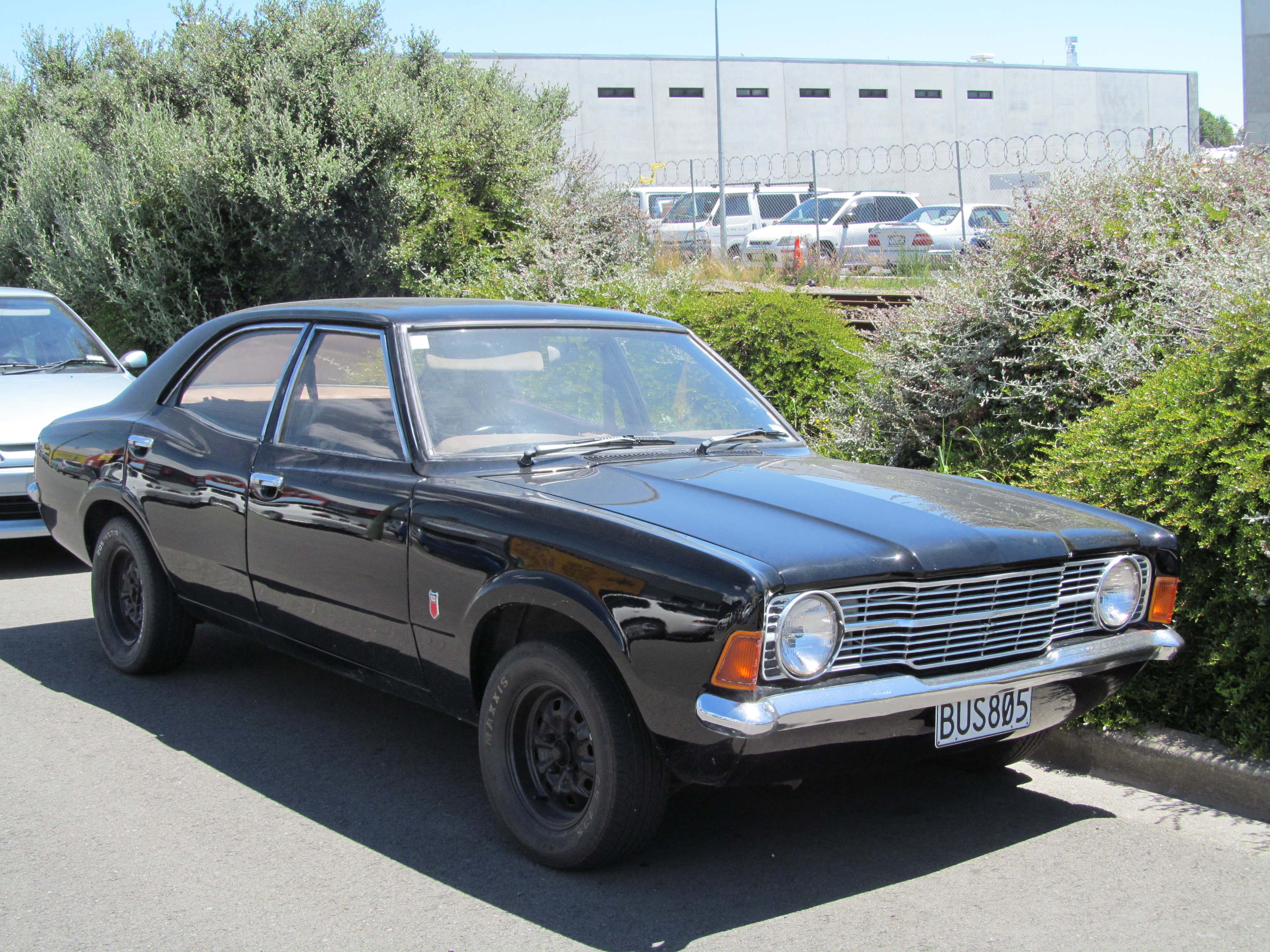
The Ford Cortina is a well-known classic British car. People still talk about it today because it’s common in the UK and relatively easy to get parts for compared with rarer classics.
Dragging brakes is when your brakes don’t fully let go. The wheels keep getting slowed by the brake rubbing, which makes the car use more fuel and can wear the brakes out faster.
The air filter helps keep dirt out of the air going into the engine. If it’s dirty, the engine can’t breathe as well, which can make fuel burn less efficiently.
A fuel filter cleans the fuel before it goes to the engine. If it gets clogged, the engine may not get the right amount of clean fuel, so it can run poorly and waste fuel.
Cold air is packed with more oxygen than hot air. More oxygen can help the engine burn fuel more effectively, so it can feel like it runs better when it’s cool.
“Carbs” are carburetors, which mix fuel and air for the engine. Since they’re more old-school than modern fuel injection, the engine can respond differently when the air is colder and denser.
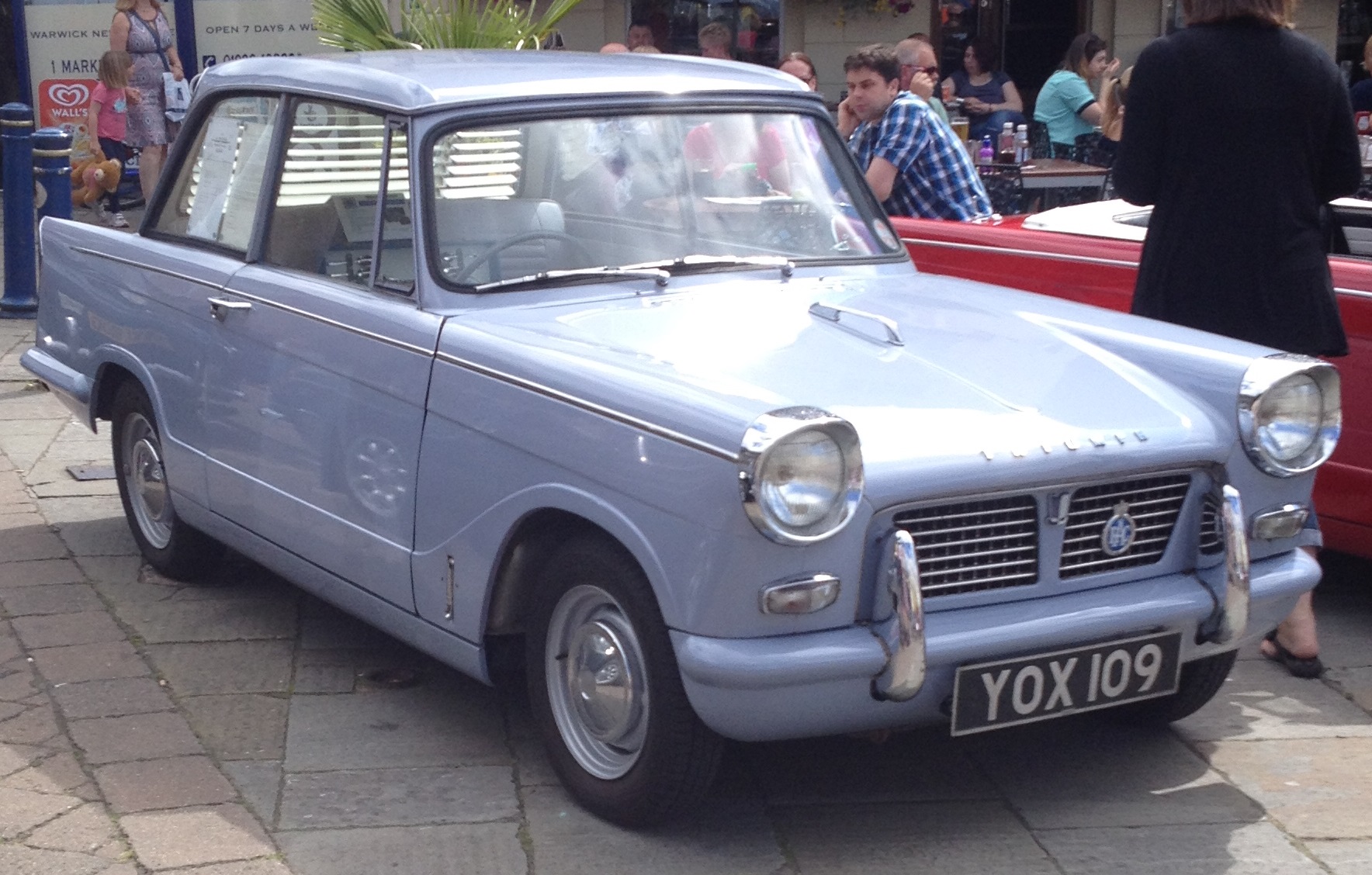
A Triumph Herald is an older British classic car. The hosts are talking about restoring one by taking it apart so it can’t be driven while work is happening.
Engine off-coasting is the practice of turning the engine off while the car rolls, then restarting when needed. The hosts frame it as something that only makes sense on older classics that don’t depend on engine-driven systems like power steering and brake boost.
Power steering is a system that makes the steering wheel easier to turn. The hosts are saying this tip is only for older cars that don’t rely on power steering.
Servo brakes are brake-assist systems that help you stop with less effort. If the engine is off, that help may go away, so braking can feel much heavier.
They’re saying you shouldn’t just let the car idle for a long time to “warm up.” Instead, it’s usually better to drive gently so the engine warms up while you’re moving.
Term
gentleman driver technique
The “gentleman driver technique” basically means driving smoothly and calmly. The goal is to avoid sudden acceleration and braking so you waste less fuel.
“Hyper mile” is slang for hypermiling—driving in a way that tries to get the most miles out of a tank of gas. It usually means driving smoothly and avoiding hard acceleration.
“Freewheel” means the car is rolling without the engine actively pushing it. Depending on the car, it can reduce how much fuel the engine uses while you’re slowing down or cruising.
Term
thinner shoes
The idea is that thinner shoes help you feel the gas pedal more precisely. That can make it easier to drive smoothly, which can save fuel.
Concept
Flintstones
This is a reference to the cartoon “The Flintstones.” It’s being used as a joke, not as a real car method.
Synthetic fuels are man-made fuels that aren’t pulled straight from crude oil. People talk about them because they could help the environment while still letting cars run on liquid fuel.
“Swapping to electric” means switching from petrol or diesel cars to cars that run on electricity stored in a battery. It’s a bigger change than just buying a different car—it also affects charging and energy costs.
The Rover SD1 is an older British family-style car, made to be comfortable for everyday driving. People bring it up because it’s recognizable and has shown up in popular references. In the podcast, it’s used as an example of classic cars that people talk about beyond car circles.
LIVE
Right. Okay. With all that said, I think I am ready to go. Are you ready to go?
I think so, yeah. I'm just looking around to see if there's anything going to disturb
the genius of this podcast. And no.
Have you had a look left and right?
Yeah, all clear.
Let's go.
This is The Tire Kickers, classic car chat with Max and Matt.
Welcome back to The Tire Kickers, the show where we talk about classics more often than
British Leyland went on strike.
This time around, Max is fresh from inspecting a Rolls-Royce Corniche.
But is an old, tired, outdated and thirsty relic a good fit for that car?
The Tire Kickers.
Plus, we talk about classic car inspections.
Are they worth it or should you trust your own judgment?
Also coming up, petrol pain. Prices are still really high.
So what can we do to steer around the crisis?
We have some top fuel saving tips to make your classic go further.
All that plus news of what we did in a pub beer garden and your comments,
corrections and calling us out when we talk classic car chat with Max and Matt.
Episode 55 and in the last episode, there was a plot cliffhanger worthy of Crossroads Motel.
Or perhaps that time, Bouncer the Dog got stuck down a hole in Neighbours.
Anyway, Max went on his never-ending quest to buy a Rolls-Royce
and wasted the time of yet another dealer by looking at yet another Royce.
This time though, it was a classy looking Blue Rolls Corniche from 1974.
Now Corniche thinks Silver Shadow, but the two-door coupé version instead.
Yes, it was a looker, it got a good review, and he sounded keen, but he left us guessing.
No, that's because you're a nerd.
You've gone on a Rolls-Royce rabbit hole.
But you did leave us on a cliffhanger.
I mean, it did sound good, the guy inspected it and said it looked good,
and he wanted it if you didn't want it.
It all seemed to add up, so did you pull the trigger?
No, I mean, well, maybe not yet possibly, could be, yeah, no.
Okay, right, here we go again.
Drum up some enthusiasm, please.
Well, it's been about two years that we've been on this.
It has been two years, actually.
We've been on this, let's tell I buy a Rolls-Royce thing.
This journey of fun that you've enjoyed.
Well, any listener who's got a bingo card will have ticked off Silver Shadow,
Rolls-Royce, and Corniche about 30 times.
Yeah, about the same amount of time as stag and overheating.
Well, that's true, yeah, but at least I bought it.
You've looked at loads of Silver Shadows, you continue to keep looking at Silver Shadows.
This one, I thought, was different because it's a bit more unique.
There's not many around, so your choice is limited, but it looks really, really good.
The price is about right, the guy said it was okay, so what's holding you up?
Well, to be honest, we're still negotiating three weeks on,
and the owner's quite difficult to get hold of.
I mean, if you listened to the episode before this one, we did a test drive,
and we did an inspection, and the inspector liked it.
But the problem with this car is I went through the history,
and it's done basically 800 miles in the last eight years.
So it's got loads and of little, minor problems.
So for example, the tyres are more than 25 years old,
the brake discs are warped, some of the seat motors are stuck,
the carb floats were stuck as well, we did get that going.
It's really suffering from not being used.
So a roll is not being used is inexpensive business.
Plus, it's got 123,000 miles on it.
I'm just going to skip over this, it's not the original color,
but nobody cares about that.
Far from you, far from me.
It's got a good history, but it's still an old Rolls Royce.
So I've been using the Haggerty price guide,
which is basically a fair car is 18,000,
the good car is 32,000, and excellent is 47.
Now, I think it fell well below a good car,
because it needs using, it needs fixing.
So I'm using the Haggerty price guide.
I think the owner is using the Chronicles of Narnia to value his car,
which is kind of quite common, but we are somewhere apart three weeks in.
Okay, so it's like a Mexican standoff over price, then, is it?
So the car, the car's all right, it's got a few bits,
and I mean, that's a classic car.
But it is a Rolls Royce classic car,
so the little bits that need doing, it's not an MGB, is it?
Or it's not an MG Midget, it's not a few bit of money here and there.
It's open your wallet time.
So you've got to go in with open eyes, I suppose.
Let's talk about the values though, because we've talked on this show
a lot about values going up, going down, mainly going down.
Is there still a gap, do you think,
between what people think their car is worth, slash was worth,
and what really it is worth?
Yeah, definitely, because the owner of this car had it serviced at a main dealer,
which is a very odd decision, putting a classic car through a main dealer,
because main dealers plug cars into a computer these days,
and obviously you couldn't do that with this one.
So he recently put the car through a main dealer service,
so he thinks it's absolutely perfect.
My inspector said, well, hang on, and we've got four pages of,
you know, admittedly minor faults,
but they still add up to four pages of faults.
So for me, it's that Hagerty price guide good at 32,000,
minus the cost of doing all those faults.
And also it's 123,000 miles, it's leggy,
plus there's an oil crisis going on,
and it's a car that does 12 miles to the gallon.
So who would be stupid enough to buy it at the time?
So it needs a lot of work.
The flip side of that for me is,
two-door Saloon Series 1 Cornishes are quite rare,
and I've got my Malcolm Bobbitt book here,
Rolls Royce Silver Shadow Bentley T-Series,
Kamar and Cornish, which I've been reading.
So between, and I'm just going to flick through to the numbers,
the production numbers at the end.
Oh, do you have to?
Between 71 and 76, right, Series 1 Cornish Saloons,
they only made 365 right hand drive,
and 274 left hand drive.
So that is quite a small total,
compared to 16,000 Series 1 Silver Shadows,
8,000 Series 2 Silver Shadows.
So it's quite a rare car,
and that's what makes it quite interesting to me.
But hold on, does this mean if you fudged the negotiations,
you're not going to find another one of these cars?
Well, there's a few around.
You know, we were talking about values,
and there's a few dealers,
which have got them from 35,000 to 45,000 to 50,000,
but those are really nice cars with full histories,
you know, 30, 40,000 miles on it.
So those are very different cars to the ones I'm looking at.
I'm looking for a kind of a mild project Cornish.
Now remember, I've got my fingers well and truly burnt,
taking on a project Porsche 912,
which I thought would be quite a small number of fixes,
and turned out to be quite a lot of small number of fixes,
plus a few big ones as well.
So a project car is a bit risky.
That's kind of why I had this one inspected,
just to make sure that I knew what I was kind of getting into.
Yeah, that's a good point.
You actually had an inspection done on this,
didn't you, by a Rolls Royce specialist.
So, I mean, it does ask the question, it begs the question,
was it worth having that done?
Is generally having an inspection done?
I mean, I've had one done,
and then I sort of skipped it last time.
Or what do you think, having laid out for this inspection,
does it put your mind at peace that you can negotiate harder on it,
or not, or does it make you more doubtful?
Where does it leave you, what does it leave you feeling?
You know, it's a really good question, isn't it?
Because inspections can value from getting your mate down the pub
called Dave, who knows a bit about cars, to spending thousands.
Now, that's the first inspection I've ever had on a car.
You know, I've never always bought a car myself, just knowing it.
And that's probably why it goes wrong so much.
But I've had an inspection,
because I don't know much about Rolls Royce.
I don't know, you know, I've never had one before.
So, I thought, I'll get an inspection,
and they are expensive to fix.
You know, that is the thing about a Roller,
is it costs a lot of money to keep going.
So, I thought, I'll get this inspection.
So, it was interesting,
because he just methodically went through the cars.
Because one of my things with cars is I fall in love with them,
and then just, I'm an idiot, and there's stars in my eyes,
and I just pay the asking price.
He came along with a kind of logical approach,
went through it from talk to tale,
and said, these are the issues, and lined them out.
So, it opened my eyes to what the car needed.
And also, if I do buy it,
it's a kind of format, if you like,
of what I need to do, and what I need to fix.
Yeah, I mean, the other useful, I've had one,
on the Sunbeam Alpine I bought before this one.
I had an inspection done,
because I hadn't had a classic car for a while,
and it was one of those things that I just thought,
you know what, for the sake of,
I paid about 350 quid to get it done.
And I got the inspection done.
And they're always caveated a little bit, aren't they?
We don't look at this or we don't look at that.
But I've got it up in front of me now, actually.
And there is information in there that is useful.
I mean, they've spotted where the paint wasn't so great,
and they've spotted where it's been welded.
But ultimately, you're looking at,
I mean, this was, at the time, was about a £12,000 car.
So, everything with that is a bit,
well, it's an old car, it's only worth £12,000,
and you can't be too precious about it.
It's not a concourse, or it's not a factory,
or it's not a nut and bolt restoration.
But I suppose it makes you aware,
and I suppose the one benefit of it,
it's a bit like having a house buyer's report,
I mean, if you've ever had one of those done,
or a structural service,
that it's actually the first question you ask.
It's not necessarily the report,
it's the initial thing you say to the inspector, isn't it?
Is it a good one?
And that initial reaction, if they go,
well, whereas if they say, actually,
you know, do you know what, all things considered, it's all right.
That's enough sometimes to kind of put your mind at rest.
It didn't mean that when I got the car,
there wasn't things wrong with it,
and there was quite a lot wrong with it,
and it had been laid up for a while,
so it's a similar sort of thing, you know.
But if it's a small amount of money,
I mean, when you get into a role,
it's actually a lot more to get inspected.
But I think if you're doubtful, or it's your first car,
or you're not familiar with that model,
or you just want that piece of mind,
I think it probably is worth somebody
who's used to spotting stuff,
having a good look at it, and a poke about.
Yeah, I think it was, overall, it was useful.
I learned a lot about Rollsys,
and things like going on the test drive,
you know, the inspector pulled up,
he turned the lights on, put the aircon on,
turned the steering to lock,
to see if the engine would stall,
to see if the engine's relatively healthy,
and I thought, well, that's quite a good tip,
because I normally go on a test drive,
see if it's blowing smoke out of the rearview mirror,
and then think, oh, that's okay.
So there were techniques he was using,
and brake tests were quite interesting,
because he picked up the walk discs
just from driving the car.
So there were some interesting things about it.
I think, overall, it was expensive,
but I think it was worth doing,
because I learned a lot on that day,
that if I went to buy another Shadow,
I probably wouldn't have another inspection.
I think I'd probably wing it enough.
But it was an interesting thing to do,
and it did give me confidence in that car.
You know, I do think it's a good car,
but it just needs lots of small jobs doing to it,
which, like with the Rolls, add up to quite a lot.
That poor bloke, though, you hanging around with an anorak on,
saying, well, is it the blah, blah, blah?
Is it this one?
Has it got the blah, blah, blah part?
He said, oh, do go away.
I'm trying to work here.
We did have a heated debate
about what the automatic gearbox is called,
because I think it's a GM 300 hydromatic,
and he said it wasn't a hydromatic.
But anyway, you know, that was dumb.
We were bickering in the corner.
Did he wheel spin away at the end?
I've been trying to ring him,
but it's just no answer.
I don't know why.
It's just going to voicemail.
Is it like that scene in Alan Partridge's Shouts
out the windows?
Yeah, yeah, yeah, yeah.
Fine, yeah, yeah.
You idiot.
And then drives off.
I seem to get a lot of that.
Alan Partridge and me have a lot in common.
No, I think it's one of those things.
I mean, I didn't buy,
I didn't have an inspection done when I bought the Stag.
I bought it.
Yeah, maybe I should have done,
because it turned out there was a little bit of rust
underneath that I'd missed.
I did get under the car,
but there was a little bit of rust on one of the cross struts.
I don't know.
They called something on the Stag.
And it's a little bit surface rust,
but I kind of didn't see it when I got under it.
Everything else with the car was all right,
and it did have an MOT on,
but MOT doesn't really cover everything, does it?
You should do.
You should do.
And also with classics.
Lots of them aren't MOT'd for years and years and years.
So you just think, well, what could be going on there?
Well, yeah.
And I'm entirely sure how this passed an MOT,
but that's another story.
So yeah, I think it's one of those things.
If you're in the zone of looking at cars a lot,
and you know what to look to,
and you almost have a checklist of stuff that you look for,
I think you can do it yourself.
You've got that experience.
But if it's not something you do every single day,
and I think it's a bit of a gamble,
and you are spending a bit of money,
it's probably worth doing.
Let's know if you've had inspections done,
whether you think they're worth the money,
whether you think that they are worth the peace of mind,
or whether you think actually they tend to be overrated,
or they tend to be so caveated,
and while we didn't look at that,
or we don't look at this, they're not worth it.
Do let us know.
And how do they do that, Max?
They get in touch with us on our social media.
The address is, I've just forgotten right now,
but I think there's a voiceover woman coming.
It can do that for us.
Don't forget, you can find us at the Tire Kickers UK
on Instagram, and the Tire Kickers on Facebook.
So we met up a couple of weeks ago in a beer garden
for a face-to-face episode of The Tire Kickers.
How exciting wasn't that?
It's the next episode after this one,
and we've called it Pub Chat.
It does exactly what it says on the tin.
Is that the best name we could think for it?
Pub Chat.
Well, to my suggestion, Drive and Discuss.
And while we weren't driving, were we?
We were sitting in a pub chatting.
That's true. We drove to get there.
Yeah, we went back to the pub
where we actually thought this show up, didn't we?
Like two and a half years ago.
The scene of the crime.
The scene of the crime, yeah.
A nice country pub near Hungerford in Berkshire.
And we went back to kind of put some ideas down,
try and come up with some cool ideas running out.
Yes, briefly.
But it was actually an excuse to meet up with the cars.
It's sort of, you know, equidistant between where we both live.
It was a really nice sunny day, wasn't it?
And we took the cars out.
Nice lunch and made some plans.
Lovely lunch, yeah.
Cars look great.
We parked the cars in the car park lined up.
They just look fantastic, didn't they?
Yours is looking particularly shiny at the moment.
Yeah, that's because I actually gave it a wash.
You got to see my handiwork, though,
the winter handiwork inside, didn't you?
What do you think of that?
When you've been talking about the dash a lot,
I've been listening to some of it,
probably about 10% of what you've been saying.
And I thought the dash looked really good, actually.
I was a bit dubious at the beginning,
because I think some of those dash kind of modifications
can just look a bit crap.
But I think yours looked really good.
I think you did, I'm surprised you did a good job on it,
actually, because I know how ham-fisted you are.
So I was actually quite taken aback that you'd done a decent job.
Thank you very much.
I mean, it wasn't, it was a nice drive out there.
It was a little bit stressful getting there, I would admit.
I got stuck in a couple of temporary traffic lights
and my temperature gauge started to rise quite erratically.
And I thought, oh, here we go.
It's the Triumph Stag curse.
I've managed to get away with it for about 89 months.
But the temperature gauge normally sits sort of still,
but it was just going bonkers.
And I had to, you know, you did the old heater trick,
where you just put it on full blast.
And it was a hot day anyway, so you must have been cooking.
It was burning my leg.
It comes out right on my leg, it was in shorts.
Gas mark five.
So yeah, that wasn't good.
In fact, I woke up a couple of days later,
you know, having had a dream about my Triumph Stag overheating.
And me being sat in the lights and I looked down
and suddenly the gauge was like absolutely jammed to the right.
And there was steam coming off the engine and stuff.
And I actually woke up in a, ironically, in a cold sweat.
That is a proper anxiety dream.
The overheating thing is the thing with the Stag, isn't it?
And I'd been really careful to buy one
that I didn't think was overheated.
You know, it's not had that many mods to not make it do it,
but it's been absolutely fine all the time
that I've had it since last summer.
But recently it's been misbehaving.
And I thought, oh, girl, here we go.
Now, I've had the new, I put some pictures up on Instagram.
I bought the bonnet pad, the new bonnet pad that goes underneath.
And I thought, oh, it must be that.
Then perhaps I put a duvet on top of the engine
that's not working out.
Until I thought, do you know what?
I'll just check the coolant level.
And I looked in the expansion bottle, it was a little bit low.
And then I, I just...
A little bit, define a little bit how low.
It's supposed to be up to about halfway.
So it was a little bit low.
So I thought, well, I'll top that up.
And I thought...
Was there any water in there at all?
Yeah, there was a little bit.
Yeah, there was a little bit.
And then I thought, oh, I'll just look in the actual radiator.
So I unscrewed that and I got some deionized water.
And I thought, I'll just give it a little bit of a drink.
Two liters later, it was up to the top.
So it was just a bit thirsty.
And since then it's run like a dream.
It's been great.
Hang on, where's that water gone, though?
Well, it's just, I've done two and a half thousand miles.
Oh, right. Okay.
So it's just, what happens is when it goes into expansion tape,
it expands too much, it just spits it out, doesn't it?
So it's on the road somewhere, isn't it?
So two and a half thousand miles.
Whether that had gone through into kind of your cylinders or something.
No, no, no, it's fine.
I'm not trying to make you have another anxiety dream,
but you've got 500 miles left on the engine and then...
One thing that's reassuring is that gets the heat comes into the car.
You know, the heater works really, really well,
which is always a good sign that things are working.
So since I've given it a drink, because it was gasping for water, basically,
it's been fine. It's back down.
It sits at a third again, and it's happy with Larry.
In fact, so much so, I drove it down to Sussex to meet a mate for lunch
at a beautiful drive down into the countryside.
I mean, Sussex is a great county to drive.
You get your classic car out, take it into Sussex this summer.
It's just some beautiful back roads down there.
And I have one of those moments, Max,
that you only get with a classic car.
And just having that moment, that sort of zen moment in a classic car.
Do you know what I mean?
Oh, yeah, absolutely.
I mean, after we met for lunch, I drove back,
and I did a bit of time along the M4,
but then I came off and did a kind of country route.
And it really was, it was a gorgeous sunny day.
And it really is a fantastic moment when you just click with that car
and you think, oh, yeah, this is good.
And actually, for the first time in ages,
I stopped thinking about what the next car would be
and actually thought, you know, I'm just going to enjoy this car.
We put up with a lot to keep them on the road, but those moments, I think,
those moments when it's just you, the car,
and you're just driving a road that you wouldn't have driven,
because if you didn't have that car, you wouldn't be on that road.
You know, you wouldn't be driving that.
And you've had that sort of moment where it's just you and the car,
the weather is perfect.
Everything is just perfect.
You're not in a rush because, again,
doing anything with a rush with classic cars and like that.
You're not in a rush.
You're just having that, you know, time sort of slows down.
What a fantastic moment.
And I really, really enjoyed, I was really enjoying the car at that point.
So yeah, it was a nice thing to do.
But as I say, Sussex is a great place.
I went to a place called The Stag, which was near Petworth,
which I'd recommend if you're anywhere near.
It's a great run out to go and have some lunch.
I met my mate Chris there with his sunbeam tiger.
Again, we talked cars and life and everything else.
And that's another reason cars bring people together, don't they?
So there's so much going on in the world at the moment.
Just having that little bit of me time with the classic car is perfect.
And Drive It Day, did you do anything for Drive It Day?
I think you went to the classic motor hub, didn't you?
Yes, I got my Drive It Day sticker.
I attached it to the radiator of the car.
And I drove to the classic motor hub in Bybrine, had a great time.
But I think I only saw three or four other people
with that Drive It Day plaque on, including a nice triumph herald.
Yeah, not that many people were doing it.
Lots of people were out.
But it, you know, it bizarrely felt, Drive It Day felt quieter
than a normal Sunday.
Yeah, I saw some stuff.
I went to Brooklyn and it was really quiet.
You know, I mean, it wasn't very busy at all.
It was quite expensive to get in.
And that's one thing.
Just to quickly mention that, in Brooklyn now, it's almost 30 quid to get in.
30 quid a car?
Per car, for every event.
That's a lot in it.
It is a lot.
You know, it makes your arm an R, you know, about where to go.
But I think Drive It Day was really poorly promoted.
You know, I didn't see any social media for it at all.
I didn't see anybody else with a Drive It Day Platon at all.
You know, it's a great thing idea.
And it's a great fundraiser on a great awareness thing.
I think they need to push it a bit harder.
You know, I know it's a charitable thing.
And I think the volunteers run it and that sort of stuff.
But try and find an Instagram profile for it.
It's really difficult.
Other things, I think I need to get the tracking done on the stag.
I'll talk about it.
Well, it's not perfect.
I knew there was a but.
I knew there was a but.
You cannot have a drive in a car without noticing something.
I was worried about it at the time.
It's just on my list to do.
This is tonight's anxiety dream now.
Tracking.
It's not.
No, honestly, the heating thing I thought was good.
Oh, my God, you know, overheating.
And the thing is, do you not be really annoying
if my car overheated?
Is you go laughing?
Yeah, you said I told you so.
It's not.
So I need to get my tracking done.
That's on the list.
Can I just, what's the problem with the tracking?
Because you've just had new tyres.
So do you think it might be the fact
that the tyres are quite new
and maybe following the camber of the road a bit more?
I think it just needs doing.
The tyre, the tyre size has changed.
My steering wheel isn't straight.
And it's doing my cars doing that stag thing
where it sort of crabs out a bit at the back.
So I want to get that looked at.
Well, that's not going to be expensive, is it?
No, I'll get that looked at.
Yeah.
What else have we got coming up?
Actually, we should talk about your turn
on another podcast.
Yes.
Hearing elsewhere.
I've been on Facebook to you.
I went to another podcast
and it was much, much nicer than spending time with you,
I can tell you.
You've started your solo career.
Max is on the Old Car Lady podcast
as a Dealers Kid episode.
I was telling you what, it's really,
I really enjoyed watching that.
Some great stories on there and photos.
This is you talking to Sandrange Bailey.
You're both kids of car dealers.
And on that podcast, you sort of swapped stories
about what it was like growing up with cars.
And there's some stuff I didn't know about you
and some photos I hadn't seen before.
So it's a really good thing to watch.
Did you enjoy doing it?
I did actually because you don't naturally think
all the time about those childhood days.
And I had a great childhood just surrounded by cars.
You know, there was a different car coming in every evening.
And I'd kind of forgotten about it
until I managed to go through some old photographs.
And you know what it's like?
Photographs of the 70s.
You only had about 10 or 12 per year as a family
because it was so expensive to get them developed.
But I found some great photographs
and it triggered loads of memories
about the kind of cars I had when I was a kid.
So there was a Ford Zodiac which I had.
We went camping in with all my mates.
Golf GTR Mark II, Porsche 944, Porsche 924
which burst into flames on the M42.
There's a Jaguar XJS.
There's another Porsche that I got nicked in
by the police with all my mates who were drunk inside.
So yeah, it was really good memories.
If you want to listen to people
droning on about their childhood and classic cars,
I thoroughly recommend you check out
the Old Car Lady podcast on YouTube.
Do you know what I thought was quite interesting?
Because obviously to you, your childhood
as a son of a car dealer would have been normal.
That was your normality.
But listening into it, it's like a really different world
where you've got a big, long drive
with lots of cars going in and out.
You're in a different car every day.
Your dad's always kind of working.
He's always inviting, who's that guy?
He's always talking to somebody else about a car.
He was saying he went to play cricket
and he was whacking the ball one minute
and trying to sell a car the next minute.
It was just a natural thing.
Yeah, he's constantly always on duty.
That's the thing about him.
He wasn't really a traditional car salesman.
He just was quite friendly.
So he'd make friends with people
and then half an hour later,
there'd be some money in some car keys exchanging hands.
So he wasn't that kind of traditional car salesman,
which they are now, which is all in glass palaces
and talking about finance and tile protection.
He just became somebody's mate
and then mysteriously, they'd buy a Cortina off him.
So it's a very different kind of car sales experience
to the one we're used to now.
And you were saying as well that, you know,
compared to your friends whose dad's had a car,
you know, a company car, which would change every three years,
you were seeing this kind of roller coaster of cars coming through.
Was it nice to have someone else in Sam to talk to who got it?
Because I imagine a lot of people
wouldn't get that lifestyle, would they?
I think it was like, yeah, kind of car dealers,
children's therapy.
But we didn't really have anything to complain about.
It's just the fact that you could understand
how you could just jump from one car to another.
You know, sometimes I could go and swap cars
two or three times a day just to see what they're like.
And you naturally just suck up a lot of information
about the cars.
So, I mean, you could end up being a bit of a nerd,
but it's lucky I didn't turn out that way.
Isn't it lucky?
Yeah, I mean, it's a really interesting thing,
joking aside, go and watch it.
It's on YouTube, old car lady.
There's some clips on Instagram as well.
Some really interesting stories from Max.
It gives you a sort of an understanding
of why he's like, you know, what he's like, basically.
Which is what?
Well, not so much.
But he was valuing the part exchanges,
or what, eight years old or something?
Yeah, I was, yeah.
And sometimes I'd skip school.
If I knew there was something interesting to value,
I'd skip school and go along with dad
and value it instead of going to school,
which it does explain a lot about my academic career as well.
Also, we've got some good bonus episodes planned
for May, lots of stuff planned.
I don't want to jinx it by saying what,
but keep an eye on our feeds
because there'll be some, hopefully,
some really interesting stuff coming out in May.
And if you've not heard some of the bonus episodes so far,
scroll back and find them.
That's higher kickers.
Let me just add a little bit of this.
Here we go.
Oh no, this always goes badly.
Hang on, buckle up.
Here we go.
Classic car chat.
Well, it's episode, the words were all there.
It's a common problem.
That's quite a mouthful.
With Max and Matt.
Well, it's episode 55 of The Tie Kickers,
and often we idly chat about classic cars,
but it's time to get serious
because there is an expensive elephant in the room,
and that is the cost of fuel.
Now, as a classic car season gets underway,
the price at the pumps is not getting any cheaper.
Yeah, in the UK since Christmas,
unleaded is gone up by 21p a litre, or about 15%.
So an average unleaded gallon now costs about £7.18,
although obviously they put the price in litres,
so we don't notice that.
And it's not just here in the UK that's happening as well.
Our listeners over in Oswell have seen their fill-ups
jump by 30% or so,
and listeners over in the States by a huge 40%.
So what can we do after waiting all winter to drive these cars?
I don't want to check the straight-off or moves
before driving off in the morning.
So okay, let's make a plan.
Let's make a list of stuff that will make your fuel go further.
Now, we've got a few tips and tricks ourselves,
and we've also asked you and you've come up with some good ideas.
So let's put our heads together and let's make that fuel go further.
So what do we got next?
Well, let's start with some simple quick-fire stuff.
Tires, check them.
If they're under-inflated,
you've got more rolling resistance and more fuel burn.
So inflate them and that's a quick win.
Okay, yeah, another obvious one.
Junk in the car, and I've got stuff in the boot
that probably shouldn't be there.
Remove that weight, tools, spares, battery chargers,
all that stuff is taking not only space,
but it's also weight and burning fuel.
Well, here's another really simple trick,
is don't fill your car up to the brim.
Have a half-tank strategy,
because obviously, if you're filling up 80 litres,
I mean, a litre of petrol isn't exactly a kilogram,
but it's roughly, you are saving 40, 50 kilograms
if you just put in a third of a tank.
Yeah, another boring one is just to slow down.
I mean, if you've got a less heavy right foot,
you're going to burn less fuel.
If you accelerate gently, you burn less fuel.
I've got to say, I can't, I preach it.
Do that in your car, because you do like giving it a boot,
because it sounds so good.
I preach it, I don't practice it, yeah,
because as you say, I like the sound of it.
Now, some of our listeners have been in touch.
Rob creates things on Instagram, picks up on this.
He says, check how well the car is running.
Dragging brakes, for example, waste fuel.
Fuel filter, that's important, plugs,
and also clean your air filter.
That's going to help get the air through,
and your air fuel mixture will be better.
Some more ideas from you guys as well.
Drive early in the morning or late at night when it's cool.
The cold air is more dense, so it gets more bangs for your butt.
I didn't realise that.
That's why I always think cars run better
in the evening or in the morning,
because you get a lot more dense cold air through the carbs.
Alex Chandler has a tip.
He sent us a picture of his Triumph Herald in pieces
being restored, and just says,
pull your car to bits so it can't drive anyway.
Yes, thanks.
Next one is an old magazine tip.
Pretend there's an egg under the pedal,
so that you drive more smoothly.
I mean, yeah, I do put my foot down,
and maybe if I thought there was a bit more resistance,
I would give my wallet a break.
So, yeah, it's worth a try.
Gentle Gomes to Costa says,
if you're driving for pleasure,
just do it at a quiet time,
then you're less likely to bump into traffic.
I mean, yeah, that's kind of simple, isn't it?
But it is really effective.
What about engine off-coasting?
I mean, this is only for older classics
without power steering or servo brakes,
because you don't really want to deactivate those.
But how about rolling down hills?
Pupu used to do that in the old days.
I think you did that in a motor trade, didn't you?
You just save on fuel.
Yeah, basically, if you come to a hill,
turn the engine off.
But it only works on cars that don't have servo brakes
or power steering,
because otherwise you were left
with a very heavy car careering down a hill.
And I do think I've got a feeling
it might be illegal to turn your engine off.
I didn't used to be, but I think it might be now.
Other tips, the old car lady says,
give the kids beans on toast and keep driving.
Well, that's one of the things.
I mean, she's joking, but I mean, maybe there's a serious point.
Maybe you need to find some money from other places,
you know, save some money on the coffees in the days out
and put it in your petrol tank.
That's a good point.
Which is more expensive, a coffee,
or a gallon of fuel.
Probably actually coffee now, isn't it?
It's about the same.
I think it's about the same.
Some more listener interaction.
Some of this is useful.
Some of it's slightly sarcastic.
D for Donk says, drive a rusty classic,
because with rust, you've got weight reduction,
and that equals fuel efficiency.
Not sure that quite adds up, but I'll go with it.
Grumpy Simian says, just put 30 quid in,
then you won't notice it,
but then you would notice
you're at the petrol station a bit more often.
Although it's not a bad shout, actually,
because you're incredulous
when you notice how much it's gone up by.
But if you just put 30 quid in all the time,
as you say, you're getting less fuel,
but you're not feeling that it's getting any more expensive.
As you say, just keep an eye on that fuel gauge.
What about short shifting?
Driving economically, you know,
changing up before you have to?
Also, another big thing,
and this is my thing,
is don't warm up the car.
Don't leave it sitting on the drive,
ticking over for 10 minutes, warming up.
Because one, it doesn't do the car any good
until you're just wasting fuel.
Hyper mile, or the gentleman driver technique
is another thing that you can do.
Smooth throttle, anticipate, you coast,
you freewheel, wear thinner shoes
so you can feel the throttle.
Is that actually a thing?
The Rust Collector says,
get a project car with rusty floor pans
and some running shoes,
just like the Flintstones,
and run your car through the rusty floor.
Some more, just to wrap it up.
Go a different route,
suggest one of you.
Let's stop, start, more flowing roads.
That's a good idea.
Drive without music.
You tend to drive quicker with tunes.
Is that true?
Yeah, I suppose you do.
You get some pumping dance music on.
You're going to put the pedal to the floor, aren't you?
So maybe.
This is Alan 74, has got a different technique.
He says, don't think about it, just drive.
Yeah, quite a few of our listeners
have just said this, isn't it?
Just stop thinking about it,
because otherwise, once you start thinking about it,
it takes the fun out.
I've just thought of the one,
a practical thing that I've actually used
that has saved me money.
The Petrol Prices app,
you can certainly get it on iPhone,
I think get it on Android as well.
That made the other day,
I got super unloaded for £1.60,
which is still a lot,
instead of £1.80 at the end of our road,
which it was.
So, yeah, find that app,
and it tells you the cheapest petrol near your house.
Here's a problem with that, though.
How far do you have to drive to get cheaper petrol?
Because if you have to drive an extra 10 miles.
I knew you were going to say that.
Plan it again.
You know, look at where the cheapest petrol is,
and plan a route around it.
These are all very sensible suggestions,
and we're just not very sensible people,
that's the problem.
Thank you to our listeners' suggestions.
Lots more ideas, some helpful.
To be honest, mostly we're sarcastic.
They're over on our Instagram profile,
and Facebook page.
Basically, Colin Malley,
Type 187,
and Keith De Souza,
all stated the very painful truth.
We've just got to drive less.
Yeah, sadly, that might be true,
but I think it's just to have a different mindset,
as I say.
The enjoyment of driving is worth the pain.
It's what we've been waiting for.
Summer is here.
The classic car season is here.
I think we've got to enjoy it.
I think my top takeaway from those max,
I think get the junk out of the boot,
inflate the tyres,
drive a little bit lighter,
don't do unnecessary journeys
just for the hell of it.
I mean, all of those things together
are just going to make it a little bit more
of a sugary pill to swallow.
What about other things?
I mean, can we think beyond this,
because there's been crisis after crisis after crisis,
should we be thinking a bit more long-term?
I mean, what about synthetic fuels?
Now, I know at the moment,
they're really expensive.
I did look up the synthetic fuel cost,
and I think a gallon of unleaded is about seven quid.
A gallon of synthetic fuel is 21 quid a gallon.
Yeah, synthetic.
I haven't got any problem with synthetic,
but she said it's just so expensive.
If somebody could find a way of making it cheaper,
that would be good.
I mean, the other one is,
you know, we shouldn't really bring this up,
because it almost caused a punch up last time we mentioned it,
but swapping to electric.
You know, how much is that going to cost
to take my engine, junk my engine,
and then put a battery in?
It's probably a conversion of 30 to 40,000 pounds.
You'd have to run more.
So how much fuel could you buy for that?
A lot.
You'd have to orbit the moon and back
to make a cost saving on that, wouldn't you?
I mean, it'd just be so, so expensive.
And I think, you know, the reason we love classic cars
is the engine.
It's the sound, it's the experience.
So I think we've just got to try and adapt and survive.
Bake beans for breakfast, lunch, and dinner,
and no more expensive coffees.
So that's it for this episode, bit depressing, soz.
Coming up in the next episode,
we're talking classic cars in pop,
like the Human Leagues Rover SD1,
and did the Beatles use a Beetle.
Also, classic car faces.
Which cars look happy, which looks sad,
and what car looks best in the rearview mirror?
It's all coming up next time,
so keep hypermining and see you then.
Bye.
Bye.
Don't forget, you can find us at the TireKickers UK
on Instagram and the TireKickers on Facebook.
About this episode
The hosts dig into a 1974 Rolls-Royce Corniche inspection, weighing Hagerty values against a long list of faults, low mileage, and expensive repairs. From there, the conversation widens into pre-purchase inspections, rarity and production numbers, and the realities of classic-car ownership. A big second thread is fuel: rising petrol prices, practical economy tips, and even longer-term ideas like synthetic fuels or electric conversions.
It's the resolution to the world's least exciting cliffhanger ever from the last Tyre Kickers episode - will Max finally buy a Rolls Royce? Plus with petrol prices still painfully high, Max and Matt offer up some fuel saving tips to help keep your costs down. Oh, and Matt's had a sweaty dream involving a Stag and a hot radiator. These boys need to get out more!