They’re talking about a specific place called the American Center for Mobility where the event activities happen. It’s where people can see and try vehicles and related technology.
The BYD Shark 6 is a BYD vehicle that’s being talked about as part of a lineup or display. The episode mentions the “Shark” branding, suggesting it’s a named model in their range. The conversation here is mainly about what’s being shown.
It means testing cars that can drive themselves or help the driver without constant human input. The goal is to see if the car can notice what’s happening around it and respond safely.
Electromagnetic interference is like electronic “static” that can mess with a car’s electronics. Researchers test it to make sure the car’s sensors and computers still work reliably.
Instead of trying every risky situation in real life, teams recreate traffic and crosswalk scenarios in a controlled way. That lets them see if the car would notice people and react appropriately.
Term
urban driving
Urban driving is a dense, complex environment with frequent interactions—crosswalks, pedestrians, cyclists, stop-and-go traffic, and unpredictable behavior. Autonomous testing in urban driving focuses on how well the system handles those constant changes and edge cases.
A live demo means the car is actively running the technology while people watch. Here, it’s meant to show the car can detect a hazard and warn the driver and slow down in time.
In advanced driver assistance and autonomous systems, “warnings” are alerts generated when the vehicle detects a potential hazard. They’re designed to give the driver (or system) early notice so the car can react—often by preparing braking or reducing speed.
Concept
trade policy
Trade policy refers to government rules that affect cross-border commerce, like tariffs and import/export restrictions. For automakers and suppliers, it can change costs, supply chains, and which technologies or components are economically viable.
The EV transition is the industry shift from internal-combustion vehicles to electric vehicles. It drives changes in product planning, manufacturing, charging infrastructure needs, and compliance with emissions-related regulations.
Term
greenhouse gas
Greenhouse gases are emissions that trap heat in the atmosphere, and governments regulate them to reduce climate impact. In automotive, greenhouse-gas regulations influence how automakers design powertrains, improve efficiency, and accelerate electrification.
Concept
China surge
“China surge” means China is moving faster in car technology and new products. The hosts use it to describe how that speed is changing the rest of the industry.
The Jeep Wrangler is a popular Jeep model built for off-road use. Here it’s just mentioned while they talk about how long it takes to develop new vehicles.
“Top hat” is an industry shorthand for doing a mostly-updated vehicle using an existing foundation. The idea is you’re not starting from zero—so the timeline can be shorter than a brand-new design.
A propulsion system is the set of parts that actually makes the car move. For EVs, that includes the electric motor and the electronics that control it.
Electrical architecture is basically how the car’s electrical “wiring and systems plan” is designed. If you have to create that plan from scratch, it takes longer than reusing an existing one.
“Ground up” means building the vehicle from scratch instead of modifying an existing design. If you’re creating the main systems new, it usually takes more time.
The concept phase is the early stage of product development where requirements, feasibility, and major decisions are formed before engineering and production ramp up. The speaker suggests some advantages in the Chinese approach happen during this phase, affecting overall program speed.
KPIs are the specific goals a project team sets—like what they want to achieve and how they’ll measure it. They’re talking about locking those goals in before development really starts.
It means speeding up the timeline to get a car program done sooner. That can be tough because you still have to test and make sure the vehicle meets quality targets.
Term
operating patterns
In product development, “operating patterns” refers to how a program is run—like how teams schedule work, sequence tasks, and manage parallel activities. When timelines get threatened, leadership may change these patterns to compress the schedule while still meeting quality targets.
Term
quality deliverables
These are the concrete results the team has to prove to meet standards. Think of them as checkpoints that show the car is good enough to launch.
Trade barriers are rules that can make it harder to bring products from other countries. For cars, that can mean higher costs or fewer options for buyers.
These are rules that require certain vehicles to produce no exhaust pollution. The episode is saying that these rules influenced what car makers were forced to sell.
This is when a car company sells different kinds of powertrains, like gas, hybrid, and electric. The goal is to keep up with what buyers want and what rules require.
A hybrid car uses two power sources, usually gas and electricity. The idea is to get better fuel economy than a regular gas car, without needing to rely entirely on charging.
Term
BEVZ
A BEV is a fully electric car that runs on a battery. The episode is talking about whether people’s negative opinions about EVs will eventually go away.
“Plug it in” means charging the car using a charger, like at home or at a public station. How much you can drive on electricity depends on how much charge you put in.
Total cost of ownership is the full cost of having a car, not just what you pay to buy it. It includes things like what it costs to power the car and other ongoing costs.
JD Power is a company that studies cars and how people experience them. Here, the speaker mentions they were trying to help customers understand the real cost of owning a vehicle.
An electric vehicle is a car that runs on electricity stored in a battery. Instead of buying gas, you recharge it, so your cost depends on electricity prices.
“Hype cycle” here means people get excited about EVs, then interest can cool down, and later it can rise again. It’s basically describing how enthusiasm and buying behavior change over time.
EV means electric vehicle. It’s a car that runs mainly on electricity from a battery, not gas. They’re discussing what would make more people want to buy one.
Charging stations are places where you plug in an electric car to recharge it. If there aren’t enough convenient stations, people worry they won’t be able to charge when they need to.
Residual value is what a car is expected to be worth later. Saying EVs “took a bath” on residual value means they’ve been dropping in resale/lease value more than people expected.
Tesla is a company that makes electric cars. The hosts are saying that Tesla customers tend to stick with the brand, so Tesla sets the standard for how well an EV brand can keep customers over time.
Economies of scale means making a lot of cars (or parts) so the cost per car goes down. The idea here is that lower costs can lead to lower prices for EVs.
In an electric car, the battery is the big power source that stores electricity. The hosts are saying the battery may last longer than the rest of the car, which makes EVs feel less risky to buy.
“Semi-autonomous” means the car can help with driving, but it’s not fully driving by itself. The driver is still supposed to watch and be ready to take over.
The Tesla Model Y is an all-electric SUV. It can include features that help with driving tasks, like staying in lanes or adjusting speed. The podcast mentions it because there was a crash involving a semi truck while using a semi-autonomous driving system.
The Tesla Semi is a large electric truck used for hauling goods. It’s designed for long-distance driving. In this episode, it’s mentioned as part of a discussion about driver-assistance technology and safety.
Term
AV
AV stands for autonomous vehicle—cars that use sensors and software to drive with little or no human input. In the episode, AVs are contrasted with human-driven crashes to explain why AV incidents get more attention.
BlueCruise is a system that helps the car drive on some highways. It can take over steering and speed control, but only in specific situations and with the driver still being monitored.
Super Cruise is GM’s feature that can help the car drive itself on certain highways. It’s not meant for every road situation, and the driver still has to stay alert.
They’re talking about whether society should allow a technology that isn’t perfect yet, because it could still save more lives than today’s human driving.
The Subaru Outback is Subaru’s rugged, all-wheel-drive family vehicle. Here they’re talking about the newer generation and the Wilderness version, which is meant to look and feel more off-road capable.
The Honda Prelude is a Honda model name that’s known for being more sporty than a typical family car. In this segment, it’s just another car they’ve driven recently.
Term
steering settings
Some cars let you change how the steering feels. In one mode it may feel more responsive, and in another it may feel calmer or heavier.
Some cars can change how loud the engine sounds inside the cabin. Even if the engine doesn’t change much, the car may add or adjust sound to match the driving mode.
The Toyota Prius is a car that uses both a gas engine and an electric motor. It’s known for getting good gas mileage compared with many regular cars. In the episode, it’s mentioned because its front design is distinctive.
Throttle response is how fast the car reacts when you press the gas. If the engine and electric system aren’t working together in the way you expect—especially at low speeds—it can feel delayed or “off.”
That “S+” button is a driving mode that makes the car act more aggressively. It usually makes the car respond quicker to the gas and feel more eager when you accelerate.
The Honda S2000 is a small sporty roadster known for revving high and feeling very responsive. They’re using it as a benchmark for how “alive” the throttle and driving feel should be.
That “pounds per” number is a simple way to compare how heavy a car is versus how much power it has. A lower number usually means the car should feel quicker because it’s not as heavy for its power.
“Guidance” is the company’s prediction for the future, like how well it expects to do. If they yank it, they’re admitting the earlier forecast was wrong and updating it.
Daimler Truck is mentioned as another company dealing with tough financial news. It’s used to support the idea that the industry is struggling broadly.
Lucid Air is an all-electric sedan from the brand Lucid. The hosts are talking about how its front lighting design can look similar to other cars, even from far away.
The Hyundai Sonata is a common, everyday sedan model. They’re using it as a comparison to show that some design details—like front lighting—can look similar across different brands.
“Net profitable” means the business is actually making money overall, after paying all its costs. The hosts are using it to explain when EV companies stop losing money and start earning it.
Rivian is an electric-vehicle company. They’re known for vehicles that feel built for outdoor and off-road use, and the hosts are comparing that image to other EV brands.
Fisker is another electric-car company. The hosts are comparing Lucid’s situation to Fisker’s—basically, the challenge of growing enough to make money.
The Saudi Investment Fund is a major investor. The hosts are saying Lucid depends on that money to keep operating, so if the funding changes, Lucid could struggle fast.
Live Golf is a sports league that got Saudi money. The hosts use it to illustrate how investors might decide to stop funding something if it keeps losing money.
ROI means “how much you get back” compared to what you spent. The hosts are wondering how investors would judge whether funding a car company is worth it compared to funding a sports league.
The Volkswagen Jetta is a regular four-door sedan meant for daily driving. People talk about it when discussing cost—like whether it’s worth paying more or less for one. In this episode, it’s mentioned as part of a pricing comparison.
This refers to a proposed change in Formula 1 engine configuration from the current V6 to a V8. In F1, engine “configuration” matters because it affects packaging, sound/character, and how the hybrid system integrates with the combustion engine.
“Hybrid” in F1 means the car uses both fuel and electricity. The “six cylinder” part means the fuel engine is a V6, and the electric system helps add power and recover energy.
Topic
Formula one engine regulation direction (V8 vs V6 hybrids)
They’re debating what Formula 1’s next engine rules might be—V8s instead of the current hybrid V6s—and how that could affect who stays in the sport.
It sounds like they’re saying the car would still have some electricity, but not as much as the current hybrid setup. That could mean less electric boost and less energy being recovered.
Term
carbon free fuel
They’re talking about fuel that’s intended to produce little or no carbon emissions. The goal is to make racing cleaner without changing the basic idea of using fuel to make power.
Naturally aspirated engines don’t use a turbo or blower to force air in. The engine relies on its own design and RPM to pull in air and make power.
LIVE
Speaker 1: Out on Line after Hours is brought to you by bridge Stone Tires Solutions for your journey.
Speaker 2: Hey everybody, thanks for joining us on Auto Line after Hours and thank you Bridgestone for your great support of this program.
Speaker 3: Gary good afternoon. How are you doing well?
Speaker 4: Doing great?
Speaker 3: Yeah, good to hear.
Speaker 5: So.
Speaker 4: Last week we gave a shout out to the Pistons.
Speaker 2: They won.
Speaker 4: They're playing tonight. We should give another shout out to
win again.
Speaker 2: Yeah yeah, I mean the little hometown pride here. Our
basketball team finally is coming out of the wilderness and starting to play some really good.
Speaker 4: Ball and you know, having an automotive theme to their name, your distons.
Speaker 2: That's right.
Speaker 3: So we've got to let everybody know.
Speaker 2: We've got Elizabeth Kreer, the president and CEO for the Center for Automotive Research in ann Arbor. I say in
ann Arber because there's some other cars out there, not just in the United States.
Speaker 5: Great to have you back, Thank you, good to be back because you.
Speaker 2: Last time you were here you were with JD Power Correct And I don't know if we ever had you on when you were at Stilanti's former chief engineer of Wrangler and Gladiator. What am.
Speaker 3: Yeah, so that's cool somebody who really knows product.
Speaker 2: We'll get into product, but we're also going to get into issues in the industry. And of course we've got
our colleague Greg Migliori here and great to have you back on the show.
Speaker 6: Glad to be here. A great way to spend the
Thursday afternoons.
Speaker 2: So Elizabeth, you run CAR. Every year CAR puts on
a big conference, the Management Briefing Seminar. You've got the
new MBS coming up, and fill us in. What are
you guys doing, what are the big themes, what are what's the news?
Speaker 5: We're doing so much.
Speaker 7: First reminder that we moved our Management Briefing Seminars from Traverse City to Detroit Metro area last year. Our sixth
anniversary was last year. This year sixty one years, and
we're going to keep it in the Detroit metro area.
Things have changed a lot since COVID and just for folks to travel up up north, it was just really difficult and expensive. So this way we're more accessible to
the industry, and we will be hosting a really there's going to be a little something for everyone because we're going to have a combination of demonstrations and experiences at I'm forgetting the name up there the ACM.
Speaker 2: A American Center for Mobility.
Speaker 5: American Center for Mobility.
Speaker 7: And then we'll have our actually seminars, the traditional on stage dialogue at the Marriott and Eagle Crest, which has a really nice traversity feel. It's got the golf course
and so we're bringing some of that nostalgia back.
Speaker 5: And then we'll also have a policy.
Speaker 7: Some and an economic exchange, so we're going to be covering at the policy summer.
Speaker 5: I think the topic.
Speaker 7: That really I'm most excited about on Monday is we'll have Flavio Volpe and Peter McCarthy, so two president CEOs that represent the supplier organization right and talking about us mc A and the importance of really finding finding an alignment.
Speaker 2: Flavio is the head of the Canadian parts of that's the question, right, correct, And who's.
Speaker 7: The other person, Peter McCarthy head of MIMA MIMA, right of MEMA. So we'll have you know, a bunch of
other topics too, but that one in particular is going to be incredibly timely in June because in July, as you know, those negotiations are going to be firmed up a bit and then we'll have an economic exchange in the afternoon because one of the things that Carr does is brings together policy with automotive.
Speaker 5: And economic impact.
Speaker 7: And so with all the investments coming back into the United States, these states are really competing for that business, so bringing in bringing in a lot of the state and government policy with automotive with suppliers to talk about what's best for economic exchange. Over at ACP will have
an opportunity to drive in some China vehicles, the Jammisu seven, the byd sgull will also have the Shark on display GM supercrews, So really looking at these technologies. I mean,
I've been in the business over thirty years and I've never been in a Chinese vehicle on the road, so this will be I think a very unique experience to have some hands on driving.
Speaker 5: So that's Monday.
Speaker 7: Tuesday is getting into the topics the management Briefing seminarsdtionally getting into the topics that are most important right now in the industry. We'll be talking about competitiveness in China.
We'll be talking about vehicle affordability far beyond the price of the vehicle.
Speaker 5: We'll be talking about safety policy.
Speaker 7: We'll be talking about the EV transition and investments and where they're going along with smart manufacturing. So all of
those topics, and we're going to set each topic with research from CAR, So we are researching all of those topics.
Speaker 5: In the first ten minutes on the hour will.
Speaker 7: Be this is real data, real research, relevant and timely, and so we'll set the stage and then we bring on those leadership voices from the industry.
Speaker 4: So so for those people who are not familiar, I mean CAR has a bunch of very smart people who look into economics, they look into technology, they look into manufacturing, and these are the folks that you're talking about having to set up.
Speaker 7: The researchers will set the stage with their research exactly, and then after they set the stage with.
Speaker 5: The data, we will bring up other voices.
Speaker 7: Right, so we've got for example, I think you're going to be sitting down with Swami.
Speaker 2: Swami Kotagiri, the c of Magna. I'll be doing a
half hour interview with him on stage.
Speaker 7: Exactly because I think he's under the section that we're calling kind of investments.
Speaker 5: I mean it's a.
Speaker 7: Large organization operations in Canada, Operations globally, and so how are those investments working, how does that impact affordability? That's
that's one example. We'll have policy folks. Peter sims Hauser,
he's general counsel for NITSA, and so safety very important topic about how do we policy with autonomous vehicles US.
Although fatalities have decreased in the recent years, it still lag other countries.
Speaker 2: So it is moreover, I would add, they're still far higher than they were six seven years right.
Speaker 7: Right, And so what's being done having those conversations around behavioral safety and enforcement and things like that.
Speaker 4: So I think it's also important to emphasize that for people who are not familiar with the American Center for Mobility, it is giant. I mean it is massive. When you're
talking about driving, I mean you're driving on roads. I
mean you're not just driving on a little you know, church parking lot in.
Speaker 5: Space, right, that's right.
Speaker 7: You can get up to speed, you can get up to highway speed on those wall.
Speaker 2: It's important to point out that American Center for Mobility was really developed for autonomous technology development. And you know,
whether you want to bombard the car with electro magnetic interference or you know, simulate traffic or pedestrian crossings or urban driving, and it's all there at that facility.
Speaker 7: Yes, and we'll have some of that. M dot's going
to bring some technology. They're working with a company to
give warnings and this will be live demonstration there where you can see you know, the vehicles driving. It's far
behind and up ahead as a worker on the side of a road with some cones, and you can see how the vehicle technology identifies that and puts a warning far in advance so the car could begin to slow down.
Speaker 6: Curious, Elizabeth, how is the role of organizations like yours changed in the last few years? Just so much is
going on car business geopolitically only.
Speaker 7: Different Well, I think one of the things that's important to differentiate is like the role that we would play as a research organization. We really do specialize at that
intersection of the policy, economic impact and automotive.
Speaker 5: So how has it changed? Think about all of the.
Speaker 7: Trade policy over the past year, Think about just the ev transition and the regulations around greenhouse gas. These are
enormous policies that impact the entire industry, that impact the portfolio over the indudustry, that impact the technologies to be more efficient. So I would say the changing policy is
what has impacted our research in recent years.
Speaker 2: You've talked about doing research on Chinese, the Chinese automotive industry.
Speaker 3: I'd love to hear some of your thoughts about that.
Speaker 2: Because, I mean, China is just seemingly going so much faster than anywhere else in the world in terms of technology, new product development, and the like. I'll just leave it
at that. What are you guys looking for in the
research that you're doing on them?
Speaker 7: So what we've noticed in the past year is that we can't leave a conversation without.
Speaker 2: Talking about China.
Speaker 7: Right They're everywhere, and there's so many different elements of it that I'm calling the China surge and everything that you think of the letters because most of the most of the variables that I'm going to talk about, I'll start with the letter S there's a China surge. Okay, why, well,
there's a setup. So we start with a setup. What
happened in China? How has it changed over the years
with the joint ventures? It used to be automakers went
to China set up a joint venture. Chinese learned from
US automakers now we're seeing almost.
Speaker 2: A flip flop of that.
Speaker 7: So we're looking at really pulling together that research of what were those key milestones, what were those goals that China set. Their goal is to be a major player
in the global.
Speaker 2: Automotive industry, goal is to dominate the I can sell that.
Speaker 5: Right, you could say that.
Speaker 7: So we're putting the actual facts together and what was the setup, and then we get into things like supply chain, very different vertical integration and how do they manage the supply chain and the critical materials that.
Speaker 2: Make up the supply chain.
Speaker 7: We get into things like subsidies, and those subsidies allows them to have a lot of competition within China, so they're competing against themselves. That gives them speed, right, and
speed has a lot of variables as well. You know,
we talk about where do you when you go to compare China speed with US speed?
Speaker 5: What are the differences in their product element cycle?
Speaker 7: When you go to compare speed, what are the differences in their labor patterns? Nine to nine six days a
week is very different than our workers. And not that
all of their operations are set to that schedule of nine ninety six, but several.
Speaker 5: Are especially during the startup phases.
Speaker 7: And then there was another s in there, saturation. That
was it saturation meaning meaning their capacity. They're saturated in China.
The last stat that I looked at, they had over capacity over capacity of eighteen million units a year. That's
the size of our US automotive industry.
Speaker 5: At peak autumn, right, It's more than how many vehicles we sell here. So that's saturation.
Speaker 7: Not that they build that many over capacity, but they have the capability to build that many more vehicles a year.
Speaker 2: What's your thought on this China speed in terms of we keep hearing China being able to develop new products in eighteen months. So you were former chief engineer of
the jeep, Wrangler and Gladiator. How would you, guys measure
the length that it took to do a program and how do you think the Chinese are doing it?
Speaker 7: So, yeah, people say eighteen months for China, and that's one of the things the.
Speaker 5: Speed that we're looking into. What is that eighteen months?
Speaker 7: How is it broken down and what does it compare to Because you have to compare.
Speaker 5: A top hat to a top hat? What is a
top hat?
Speaker 7: Top hat means you've already got your whole you know frame or your skateboard. If it's an electric vehicle and
you're just putting a new top hat on it, but the way that that propulsion system runs, the electronics are already developed.
Speaker 5: That's a top hat in US, you know automaker lingo.
Speaker 7: But a ground up vehicle where you're developing a new electrical architecture, you're developing new structure, you're developing new propulsion systems.
Speaker 5: That's a very.
Speaker 7: Different timetable than a top hat. So it's very important
that when we compare in all new vehicle Chinese US, that we're at the same starting point. But one thing
I can say, and we're breaking that down. You know,
we're breaking down all the different pieces because there are some real advantages that the Chinese have and some of it's in that concept phase. Time to make decisions, time
to lock and load and say, okay, we're going to start the clock. Now we've made all those decisions on
what our KPIs are going to be and what the features are going to be, and then just get started and execute. We sometimes in our business here have have
problems with discipline. Right, a new technology comes out, oh
can we incorporate that you know, and then that starts the clock over again.
Speaker 5: So I think that's an area.
Speaker 7: But also reusing parts, they also have a lot of discipline on if we're going to use a common part, we're going to use the common part, We're going to design around that common part. And that sometimes is hard
on this side of the pond. When you try to
bring in all the design elements, sometimes it doesn't package.
Speaker 4: So I mean all of these things, I mean when you were a chief engineer and you had to make, you know, hard decisions about we're going to do this, We're not going to do that, We're going to go in this direction, We're not going to go in that direction.
I mean, I've got to believe that the people above you basically were like putting the thumb down, like we need this to happen, and that you had to make some very hard decisions in a very short period of time.
I meant, isn't that the way it works?
Speaker 7: It's yeah, it might be the reverse of what you said, meaning the leadership team sometimes will ask for something that wasn't in the original scope of the program, and as the chief engineer, that's where it gets challenging, right right, that's where the timeline all of a sudden, now there's a threat to the timeline.
Speaker 5: So that's where we have to you know, look at it.
Speaker 7: Okay, what are the ramifications, what can we compress, what kind of different operating patterns can we do to be able to deliver that more quickly. The goal is always
to stay on time and within budget and meet those quality deliverables.
Speaker 5: So there's certain things you never.
Speaker 7: Really jeopardize, and that would be the development time you need to deliver a quality vehicle.
Speaker 6: I think that kind of like piggybacks with something I'm kind of wondering I'd like to hear your thoughts is tariffs, you know, trade barriers aside. If you know Chinese car
companies were allowed to sell their vehicles here, do you think they'd be a success based on their merits?
Speaker 7: Well, I'm going to drive one at MBS and and let you know, I haven't driven one, but absolutely.
Speaker 5: I think that consumers don't.
Speaker 7: There's a lot of consumers that are very loyal to brands, but there's a whole lot of consumers also that are just trying to buy.
Speaker 5: Their new vehicle and need more affordable options.
Speaker 7: So I absolutely think that if they were allowed to be sold here, sure that that there would be a large portion of the market that would be open to it.
I mean, think about what's happening in Canada right now with the you know, allowing the what is it, forty nine thousand vehicles built from China to have a very low tariff rate, and so we did some research on that and I didn't know this, but Canada has already been selling about thirty five thousand these vehicles through Tesla.
I mean, Tesla has operations in China, and I don't know that those Canadian buyers knew whether their Tesla was made in China or not, but the data shows that thirty five thousand of them that were sold were made in China. So I do think there's an appetite, and
I think there's a lot of consumers who.
Speaker 5: Don't even know where vehicles are made.
Speaker 6: Well, look at like the Buick and Vision, I think was made in China for a while and there was still is it still is and Lincoln made a vehicle that.
Speaker 2: Was not made in China, Full Start, Fullstar right when you look at where Chinese automakers have gone into other markets Europe, notably because there's a lot of parallels to the US market there or Latin America or Australia or South I mean, they just grab market share left, right and backwards, and they're only just getting going. So you
let them into the United States, they're going to take a huge chunk of the market. So okay.
Speaker 4: So one of the things I know that Cardo's research on is the market at large. And you know recently
EV's have been an area of focus, and you and your previous existence were focused also on EV's. What's your
sense of what's going on?
Speaker 7: Well, obviously market share and EV's is down. Last I
looked at was lower than six percent. I think in
its heyday it peaked at about nine percent market share.
Speaker 5: And what's going on? Number one?
Speaker 7: Again, I talk about that section of policy and automotive because a few years ago, all regulation, all policy pointed towards automakers needing to offer electric vehicles plug and hybrids hybrid technology to meet those regulations, right, thirty percent market share by twenty thirty and climbing in the number changes.
There were zero emission mandates in certain states. So at
that time when we were talking about the EV transition, we were talking about are there vehicles for consumers to buy.
Speaker 5: Is there charging for consumers?
Speaker 7: Well, just as there was were vehicles for consumers to buy and charging starting to get up to speed, all the regulations changed and so now.
Speaker 5: You can look at the of adoption.
Speaker 7: And it wasn't happening fast enough naturally, and so therefore now US auto makers can say, okay, well, I can rebalance my portfolio to what consumers want to buy now.
And really that's what that's what they're doing. I mean,
most companies are looking at a multipropulsion strategy, which is very expensive, but they almost need to offer full internal combustion engine. Hybrid technology very popular right now, you know,
thirteen percent of the market I think, I think it was grew even thirty seven percent yet this year. So
with the price of gas going up, folks are looking for more fuel efficient vehicles, but also plug in hybrids and electric vehicles. But we are seeing electric vehicles a
lot of delays, you know, because you can't keep a plant open when the demand isn't there. And it's six
percent market share with all the competition, we're starting to see some pause in that. But back to hybrids for
a minute, because this is a stat I found really interesting.
The first hybrid came out twenty nine years ago, so it took twenty nine years to get to thirteen percent market share, or a technology that requires zero consumer behavior.
So just to give a peek on the natural progression for a consumer to adopt a new propulsion system doesn't happen overnight. And so to get to the to get
the to the adoption rates that some of the forecasts had, the you needed the regulation and the policy behind it.
Speaker 2: You know, I would add too, if you go back twenty years ago, hybrids were as politicized as PEVs are today.
There were people who were just against it and against hybrid technology, you know, because it represented green, and green became politic size and they were against anything green. And
now twenty years later it's a non issue. I hope
it doesn't take twenty years for the politicization of BEVZ to go away.
Speaker 5: I hope we can completely.
Speaker 7: Disassociate politics from propulsion technologies. I mean, consumers who drive
electric vehicles, many of them don't want to.
Speaker 5: Go back, right. They love the drive.
Speaker 7: I when my vehicle I have a p haven when it's in electric mode, I love it. I mean the power,
the quietness and I'm not having to purchase gas and it's charged every morning when I wake up.
Speaker 5: So I do think that.
Speaker 7: It shouldn't be politicized, and I think consumers will eventually make the choice on what's right for them, and it's going to depend on what is their driving pattern for the day, what is their living situation.
Speaker 6: You think automakers could do a better job maybe of explaining their technology a little bit. I know, being inside
with Atlantis, you guys had a lot of different you know, propulsion systems that were very well received and maybe some of them landed, some of them didn't. But like I
p have is something that could be really good for a lot of people, but so many people don't understand that you have to plug it in for like thirty miles or sixty miles. Like could OEMs kind of jump
in almost in like an apolitical way and just explain some of the stuff.
Speaker 7: I think you're touching on something that is critical in that as education, And I think it's a combination of not just the automakers, but also the dealers also, you know, some of the advocacy groups.
Speaker 5: Because consumers, at the end of the day, they just they just want to.
Speaker 7: Get into their vehicle started and go. You know, they
don't want I have to have a training court. And
if it's if it feels a little bit like ooh, I'm not sure. I'm not sure about that, they're gonna
they're going to tend to what they're used to. But
I absolutely think you've hit something and that is somehow finding a way to help the consumer with that transition.
I mean, one of the one of the best ways is just that almost the grassroots, your neighbor gets one, they're talking about it, and so.
Speaker 5: As we get more adoption, that should start to happen naturally also. And then the price of gas.
Speaker 7: It's so funny because back when I was at JD Power, we were trying to communicate the customer just on that topic total cost of ownership.
Speaker 5: What does it mean.
Speaker 7: It's not just the price of gas, it's the price of electricity. It's how much it, you know, costs you
to operate that vehicle. So there's a lot of hidden
savings in an electric vehicle. And it was a very difficult.
It was difficult to really explain it to the consumer because it's like I just I just care about my monthly payment and what.
Speaker 5: I pay at the pump. Well, now the gas prices
are up.
Speaker 7: Everybody's like, oh my gosh, I spent one hundred dollars this week on gas.
Speaker 5: Now all of a sudden, they're thinking, how do I bring that cost down?
Speaker 7: Well, maybe I should look at an electric vehicle, Maybe I should look at the price of electricity.
Speaker 5: And they begin to, you know, think that way.
Speaker 7: But it's hard to educate someone when they're not ready to have that conversation.
Speaker 4: You know, I was wondering about that thirteen percent. You know,
as you mentioned, evs were basically offered by everyone because they had to, right, I mean, the regulations was driving.
So if you look at a list of the number of electric vehicles that are out there, I mean it's crazy number. Right then think about hybrids over the last
twenty some years. I mean basically it was it was
Toyota wave in the flag, and everybody else gone, yeah, well we'll do something, but not a big deal. Now
Toyota sells more than fifty other vehicles are electrified, you know, because now they do have some electric vehicles, but I mean pretty much them and Honda in the Koreans, with the Europeans and the domestics not so much in terms.
Speaker 5: Of but they're bringing them out there.
Speaker 7: They're you know, Ford has had them, but stillanti's I know.
But now they're talking about it, right, and they're talking about bringing them back. And then some companies are talking
about launching them because they see how popular they are.
Speaker 2: Sure, Yeah, So how do you think it'll shake out?
Do you think we're at the bottom of the evy hype cycle now? And how high could up be?
Speaker 7: You know, we do look at a forecast, along with a lot of other folks look at forecasting, and we're constantly comparing our forecast to others. Right now, everybody's honed
in on what I think is that?
Speaker 5: Oh, I think it's.
Speaker 7: They're honing in on something around sixteen eighteen percent by twenty thirty.
Speaker 5: I don't think we're going to get there.
Speaker 2: I don't. I don't think we're going to be a
rocket ship.
Speaker 7: Yeah, I think that unless policy changes, I don't think we'll get there naturally.
Speaker 5: That high very interesting in twenty thirty.
Speaker 2: Yeah, what do you think. I'm a little bit more bullish.
I think they can get to that because I know there's some good stuff coming in the pipeline. That's much
lower cost, much better range, much faster charging, and if gas prices state high HI at least long enough for those vehicles to come out, I think it's going to attract a lot more people. And we know from looking
at market research there's a couple of million car buyers who are on the fence.
Speaker 3: They're very interested in an ev.
Speaker 2: They want to see more charging stations, they want to see more of their neighbors driving up. That's right, and
they need that comfort level. But they get that comfort level,
they're ready to jumph. So we'll see how it plays out.
But I think with the right products at the right price, you're going to have a lot more people interested.
Speaker 7: But even at a couple million, you set a couple million, we sell what sixteen million a year, that's.
Speaker 2: Still not well. Let's put a couple of million on
top of the million plus that have been buying evs, so you're up to three million. If you're at twenty
percent of the market, it's.
Speaker 3: Twenty percent of the market.
Speaker 2: So and you know a key thing I think this year to watch and the early returns look good. Sales
have used evs, so I mean these things have taking a bath for on a residual basis, right, But they're they're very affordable, and they tend to be very low miles.
And I think that those used cars are going to bring some of those fence sitters into the market, right, And like you say, they're not going to go back.
Once you get an even driving experience, the vast majority of people go for another EV.
Speaker 3: They do not go back to higher.
Speaker 4: And that's when those more afford Well, there's stats that show otherwise they haven't all consumed to kool aid.
Speaker 2: No, they haven't all, but it's a very high retention rate.
Speaker 7: Well, and how much of that is because when they see automakers pulling back, they want to know they're going to be supported, are into the into the future.
Speaker 4: I mean there's some Chevy Vault owners who are scratching their heads and.
Speaker 2: Wondering what they hell have. But look, you know, Tesla
dominates the segment. Tesla has extremely good loyalty. It's not
as good as but it's still very good. And so
if you come out with a competitive EV product i e.
As good as any Teslat, I think you're going to see a high retention rate.
Speaker 7: Yeah, And if you can get to those economies of scale like Tesla has where they've been able to lower prices. Yeah,
find some more affordable evs. And to your point about
the used EV's, I think also that helps with the adoption in the sense of how long do these evs last.
Now we're starting to see over ten years, you're starting to see the used market, and if there is satisfaction, then people won't be so intimidated. Again to that education
piece on the consumer doesn't know about this propulsion system, but the data shows that that battery is going to likely outlast the car, and then we got to find another use for it.
Speaker 2: That's right. Hey, look we we're going to have to
take quick commercial break right now. I know I asked
you to stay on for the rest of the show, and but we got to most of the topics I wanted, not most, right, we got to the topics I want to talk. So if you got to go, understand, if
you want to stay, you're more than welcome.
Speaker 5: Thank you so much.
Speaker 3: But for right now, a.
Speaker 2: Shout out to our great sponsor, Bridgestone.
Speaker 8: Knowing that a little rain won't slow down your day, That's what really matters. Bridgestone Toronto by attract Tires Confident
control in wet conditions?
Speaker 2: Yeah, okay, what all right? We're back.
Speaker 4: So all right, I got a quiz for you guys.
Speaker 2: Okay, okay.
Speaker 4: So something happened on May seventh, twenty sixteen, in Florida that had implications then have implications now in what implications into the future?
Speaker 6: May sixteen, Florida man story pretty much? Where are we
going with this speed record?
Speaker 2: But it was fast? Is that when Elon shot that
Tesla roadster into space?
Speaker 4: M m.
Speaker 2: Anything that you're getting warm warm?
Speaker 3: Okay?
Speaker 2: All right, I'm gonna tell you.
Speaker 4: The first recorded US death involving a semi autonomous driving system of the Tesla model S right, that slammed into the semi truck.
Speaker 2: Remember that?
Speaker 4: So you know, I begin to wonder, is every time there's an accident with an AV, it's like whenever there was a fire with an EV, which you don't hear about anymore, right, But now it's just like, oh, there was this accident with this autonomous vehicle. Horror among horrors, right,
And how many accidents are happening like at this very moment with humans behind the wheel, So you know, no one cares.
Speaker 2: Easy stat Over one hundred people get killed every single day in the United States alone in a motor vehicle accident, one hundred a day. But if it's in an avy,
it's going to be headlines around the world.
Speaker 6: I think I trust Avis more than I used to.
I was in a Lincoln Navigator last week and just the Blue Cruise just kind of like like flashed that little Blue Cruise thing and was like, sure, I'll hit the button and it worked pretty well. So I personally
I find myself trusting them a little bit more. Super
Cruise is pretty good too. Tesla always seems to be
the one that's in the headlines, though, you know, for obvious reasons.
Speaker 4: Yeah, yeah, I mean I just I just wonder, like we don't talk a great deal about insurance, but I mean, what happens in an accident, you know, with an AV, if you're in it, and what happens to your rates? Yeah,
I mean it's just like, well, who do you assue?
Speaker 6: Right?
Speaker 2: Yeah, But you know, presumably there will be many fewer accidents with avs. Presumably I say presumably because the data
indicates that they're better than human drivers. I'm talking about
full autonomous vehicles, not the hands free stuff. And there's
been some accidents with Blue crews and Super crews, but it's still you know, you have to look at the accident rate and it still looks pretty good. And so
we have a decision as a society. Are we going
to wait until autonomous technology is absolutely bulletproof perfect, or are we going to say, look, we're going to accept it as it is because we can save twenty thirty thousand lives a year. And yes, there's going to be
at least ten thousand people killed in these things, so it's not perfect, but it's still a whole lot better than just letting humans do it.
Speaker 4: All.
Speaker 6: Well, it's like we were talking about with Elizabeth, the a whole education side of it, Like it seems riskier to have, you know, more full autonomous cars. It seems riskier,
is it? Sometimes the numbers say otherwise. I'm still a
little more nervous about it than I think maybe some of our industry expert colleagues are. I don't don't know why.
It's just a thing that I mean, and I sort of trust the tech too. I've written in full.
Speaker 2: What you're saying is absolutely perfect, normal old human reaction.
You're going to wait until it's proven on you know before you're fully comfortable with that.
Speaker 6: And I'm an early adopter in some areas, but I think this is one where I would probably wait with the crowd, let the pack go ahead of me a little bit, but.
Speaker 3: Let somebody else take the yurrols.
Speaker 2: Yeah, quite literally.
Speaker 4: So you mentioned you were driving a Lincoln last week.
Speaker 2: What else you've been in lately?
Speaker 6: I was in the Super Outback wilderness. Maybe you guys
were in the Outback recently. This is like the new
generation and it's moved away from station wagon status to more like a real mid size suv as they call it.
And this is in the wilderness trim, so it's all dressed up like you know, for off roading, which most people probably don't do. And I liked it. I thought
it was pretty good. I think it reminded me a
lot of the Hyundai Santa Fe, where they took like a pretty bland vehicle and went like boxy and almost like a four person's land rover. I feel like Super
took a similar risk here with this, and I think it paid off. I think people are gonna like it.
Speaker 4: So you were in the Honda prelude recently, as as was I.
Speaker 3: I was so it's a nice car.
Speaker 2: H One of the things that they have and they kind of greatly encouraged me to try, is you can do different speedding settings normal sport, GT for steering, for ride, for engine noise. Even I gotta tell you, I had
a heart hard time distinguishing the different settings. I played
around with them a lot, and uh, I didn't find that much difference. I now, I did not have access
to a track or an autocross course. I'm sure it
would have really showed up there, but for just everyday commuting around, I didn't find that much difference. It's it's
a quick car, but it's not a fast car, if you know what I mean.
Speaker 3: I mean, it's no.
Speaker 2: Slug, but it's it doesn't feel light and lively. It's
a it's a relatively heavy car. I want to say
it was like sixty one pounds, yeah, thirty two hundred, thank you giving. And for a two seat car, two doors.
Speaker 4: It's a two door car, and it's got a.
Speaker 2: Back seats, Yeah, a minor little back seat that maybe you could put your kitty cat back into in. There's
there's no leg room in the look. And I'll tell
you automakers do this, and they all do that. The
insurance cost on a two door car is a lot higher than one with a sticking little back seat in it, and that's why they throw the little back seat into it, is to lower your insurance costs. But I mean, it's
for all practical purposes. It's a two door, two seat car.
It just it didn't have that that liveliness that I was expecting in a sports car. I think the styling
is really good, though. It's one of the most handsome
looking Hondas that I've ever seen.
Speaker 4: I have strangers come up to me and ask me about the car. I mean, it's like shocking.
Speaker 2: I had two different people come up and ask me about the car. And it's got almost a Porsche Tychon
kind of rear end look to it, a little bit of nine to eleven. Maybe it's got sort of a
Prius nose kind of sort of to it, and it's well done. But it's being a It is a hybrid,
and it is a hybrid. That's the other thing for
a sports car. I don't think sports cars should be hybrids.
I just don't think the throttle response is.
Speaker 6: To thirty percent market share for BEVs. But then You're like, no, no, no,
sports cars could be hybrids.
Speaker 2: Well, I'm not saying they shouldn't be, but like when you start the engine, it's already revving at at a higher level and you're driving at low speeds. The throttle
input doesn't match what the engine's doing. You know, it's
in its own hybrid. And to me is sports car
is about you're in control of the machine, not the other way around.
Speaker 4: So did you push the S plus button?
Speaker 2: I did? Yeah, No, S plus and and that that
gives you a nice boost. It was nice for getting
on the freeway. Yeah. Yeah, it's like grab the stream
S plus, hold on plus. I love the fact that
Handa's putting this Tudor back in, that it's got a sporty car back in the lineup. It's not quite that
that spirit of Honda that I've experienced in other cars, Like, I mean, the S two thousand, I had it in spades.
Speaker 6: Well, given that it has like type R like suspension bits, I kind of thought it would have been a little more dialed in, a little more buttoned down. I thought
it was. It was a little vanilla, you know, in
the sense of like a handling perspective, gorgeous car though.
I mean, like you guys, people come up to you.
You're like a celebrity in the prelude. Beautiful tear drop shape,
beautiful interior too.
Speaker 2: Yeah, you know.
Speaker 4: And speaking of the performance and the power, so I looked and I compared the powder weight ratio of this one versus the last generation.
Speaker 3: So this one is about sixteen pounds per horse.
Speaker 4: Power and the last one was like twenty two pounds per.
Speaker 2: Horse Kitty, Wow, yeah, because twenty two pounds that's a slug even sixteen pounds per horse power is you know for a sports cars sort of.
Speaker 3: Man to carry that back seat?
Speaker 2: John, Yeah, that's right.
Speaker 6: Especially could have used a few more ponies though.
Speaker 2: Yeah, you go look in the powder weight thing when you get down to around twelve pounds per horse power.
In my book, now you're starting to talk.
Speaker 4: Well, I think, John, that they want to sell those to regular people, and I think that the performance for regular people is just fine.
Speaker 6: I think a type our version. I wouldn't say no
to that. That sounds pretty good, you know. Maybe that's
more of our flavor of brandy, as they say.
Speaker 3: Yeah, so.
Speaker 4: Here's some interesting I thought it was interesting anyway. So
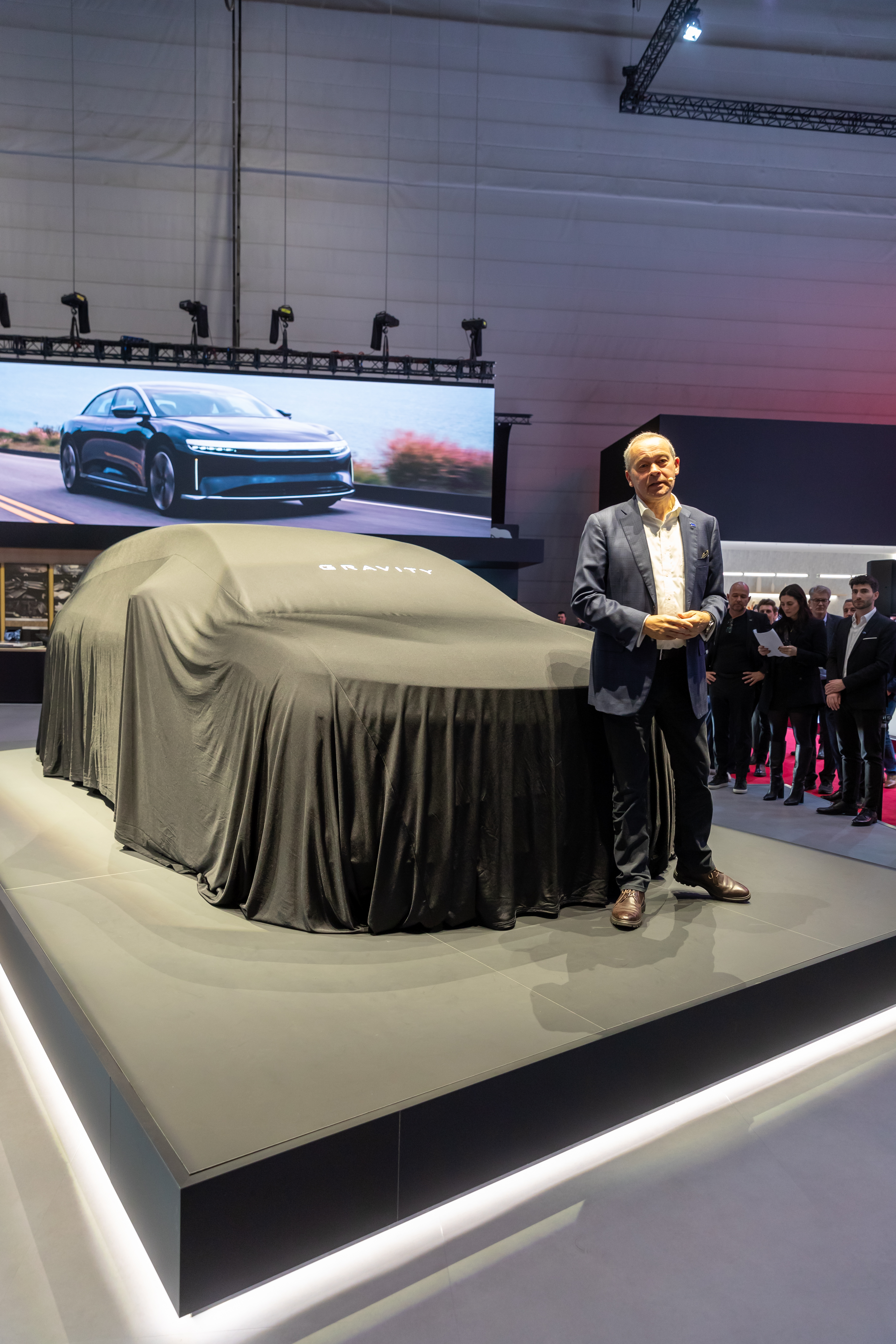
Lucid EV manufacturer that it's looking at the price for the starting price for the Gravity, which was going to be its low cost model, is seventy nine to nine.
Speaker 2: Eighty grand the low cost model, And so they.
Speaker 4: Pulled their guidance son with they're going to be producing this coming Cortant.
Speaker 2: It's just like, why, Look, their sales are are not happening.
They've they've way over built, they have all these cars in inventory. They've got a second plant that they're bringing
up in Saudi Arabia even though they can't fill the plant that they've got here. And they've got a new CEO.
And the beauty of the new CEO is that person can come in and call it like it is because he or she can blame everything on their predecessor. And
the new CEO is saying, we can't even sell what we got on the lot so to speak. I know
it's direct sales, but you know what I mean. And
I think he just said, hey, Wall Street, we're yanking our guidance. And plus, look at all the other automakers
that have reported this week.
Speaker 3: You know BMW, Daimler truck was there.
Speaker 2: Lucid Boy, it was a bloodbath there's red ink all over the place.
Speaker 4: Okay, So, so Greg do you think I mean Lucid's cars and its technology. I mean they're both wonderful. I
mean it's just but with such low numbers, can they continue to exist?
Speaker 6: I don't think so. I think they have two pretty
big problems. One is pricing. I think when your low
cost car is still eighty grand, like that's a lot of money. Even given the current pricing structure of you know,
what is it around forty nine to fifty average price, I think that's still too expensive. And I don't think
Lucid is currently resonating. I mean, you could be a
startup brand like Rivian. People know Rivian is kind of
cool for some folks. I don't think Lucid has any
of that brand awareness. And I mean, you guys have
driven the products. I mean, the gravity was pretty good,
I thought, I don't think it was eighty grand necessarily good.
And I really liked the air of the Sedan beautiful car one of the best cars I drove in like twenty one, twenty two whatever that launch was. So I
think some of their products are pretty good, but I think they need to invest in some marketing, some awareness, because right now it's not there.
Speaker 3: Right now, I think you nailed it, Greg awareness.
Speaker 2: I mean, if you're in the market and let's say you got eighty grand to burn in your pocket and you're looking at what's out there, where do you see a Loocid?
Speaker 3: Yeah, how do you know about Elucid? Maybe you've seen.
Speaker 2: One on the road maybe Yeah, there's no dealerships around, and so I think they're just invisible. Contrasts that to
you know, Tesla launching. Elon Musk is the CEO Elon Musks.
You know, headlines around the world. Everybody knows him. You
look at RJ. Scrine, He's not quite to Elon's level.
But they're selling all these electric vans to Amazon. They're
getting five billion dollars from Volkswagon for their textack, They're getting a billion from Uber, so you know, they're much more aware. And they have a very distinctive looking truck.
You know, the headlights, I mean bloom, people notice it, and then Lucid it's where's Lucid.
Speaker 6: They're beautiful cars. I mean, if you look at a
Lucid Air versus like a Hyundai Sonata, which has a very similar light strip in the hood, I mean you tell me from it like thirty yards which is which?
So they do have I think, just a really deep brand summer.
Speaker 4: Derek Jenkins, designer of the Lucid err is now feeling this pain somewhere from that statement were not a look.
Speaker 6: But this is not is a great looking car though it.
Speaker 3: Is a great looking car.
Speaker 2: And you know, to the public that doesn't know anything about cars, you know.
Speaker 4: You see, but that's I mean, that's the thing you're talking about, all these characteristics of Rivian. So it's the
public that doesn't know about cars, doesn't know about Uber giving them money, doesn't know about Volkswagen giving them money.
I mean, just doesn't know about the you know, like that Amazon truck was built by Lucid or I mean built by Rivian. It's you know, going to build this
pickup truck for you or this suv for you. And
I mean I begin to wonder, is you know, even though they now are and plant down in Georgia, I mean, what is the scale that these people actually need to have in order to become viable continuing?
Speaker 2: They need to sell three hundred thousand a year of one of their models.
Speaker 3: That's the magic.
Speaker 2: The reason I say that, and I've said this on the show many times before. When Tesla turned the corner. Remember,
Tesla lost money for a decade. Everybody seems to forget
that they lost billions. But Elon was able to pick
up the phone and get more money when I needed.
Speaker 4: It, and arguably he was creating an industry. Correct, So
the industry now exists, so no one.
Speaker 2: Needs to do that right right, But what I'm getting at is when Tesla's finances changed from losing money to being net profitable is when they started selling fifty thousand cars a quarter i e. Two hundred thousand a year
and that was largely threes and whys and that that's so to.
Speaker 3: Me, that's the magic number.
Speaker 2: I mean, if that's what it took Tesla to do, that's what it's going to take others to do.
Speaker 6: It's interesting too with with Lucid, it's like what exactly is there?
Speaker 2: What does Lucid met too?
Speaker 6: Whereas with Rivian people kind of I think like this off road adjacent lifestyle vibe. Tesla of course became you know,
ubiquitous with evs. What's Lucid just like the fourth or
fifth guide of the party. I mean, that's a tough identity.
Speaker 2: I mean, I think it was a mistake for Lucid to launch with the Sedan h You should have launched with the Gravity have an suv out there.
Speaker 3: It's just bigger.
Speaker 2: And to your point, you know, if your cheapest car is eighty thousand, you know the market shrinks dramatically. Yeah,
once you get over eighty thousand dollars, there's just not that much volume.
Speaker 6: Well, also, rich people tend to be rich because they're good with money, and that means making smart choices with reliable brands that have been around for one hundred years.
Speaker 4: So they mean these smart people at our own driving Fiskers right now are said that they.
Speaker 6: Well, uniformly, not uniformly, And Fisker is sort of like that's another good analogy with Lucids. They're kind of trending
towards that like Fisker line of Okay, you've got some cars out there, some people have heard of you, but you've got to do like you've got to cross that line and get scale and make money and have people know who you are. And they're right now, Yeah, they're
probably closer to Fisker than they are Rivian or Tesla.
Speaker 3: Well, the real question is how.
Speaker 2: How much stick to witness does the Saudi Investment Fund have, Because the Saudi Investment Fund is what's keeping Lucid alive right now. And I'm sure you guys are aware the
l IV Live Golf odd series that was all Saudi money.
They're pulling the plug on that, and it's going to go down in a heap of flames. That looks like
and you look at all the problems that are going on in Saudi Arabia now because of the war in Iraq, and how much longer is that investment fund going to keep putting money into lose it.
Speaker 6: I was just going to bring up live golf too, because I think golf is probably something different, probably how like the PIF calculates the ROI here, Like I think a car company is something different, but it's maybe not that much different if they're losing perhaps even more money like a golf league. Yeah you can lose money. Yeah
you can have Phil Nicholson kind of hacking around your courses for a while, but that could go away kind of quickly. Whereas like you know, this car company, it's
this shiny object, I don't know five years. Does that
seem realistic? And then maybe they get the golf treatment.
Speaker 2: Who knows. Speaking of the of the war.
Speaker 4: So we've mentioned this, there occasions that it just isn't gasoline that it affects. It affects materials like aluminum. And
you know, you're talking about people that Forard reported recently and apparently Aluminus is having a big effect on their profitability.
I mean, they're taking a big hit in terms of what's out there.
Speaker 2: Look, they can't make enough F one fifties. They can't
get enough illuminum. This is a key reason why they
killed the lightning, the electric F one fifty because they're losing money on it. They can't build enough of the
ones that they can make money on. That aluminum goes
into the lightning just as much as it does into the ice F one fifteen. It's like kill the ll
just get it and let now let's take all that aluminum and go make some trucks where we can make money.
Speaker 4: So seven percent of the world's aluminum supply comes from the Middle East, and it's not coming from the Middle East, and you know, I mean it has ramifications on things just you know, like the F.
Speaker 2: One fifty and that's just aluminum. We know, plastic feedstocks,
you know, are being affected by the streets that where moves being closed off. Even helium, which I never knew before,
is critically important to making micro chips. Much of that
comes through the streets of horror moves and that's been affected as well. Yeah.
Speaker 4: So Sherry House, the CFO of Ford, told analysts that she expects that commodity headwinds will be just above two billion dollars, about a billion dollars higher than our previous estimate.
Speaker 2: Well, so that's it, yeah right, I mean, and by the way, even if you get that aluminum through the streets of horror moves, then you get slapped with a terriff when you bring it into the US. Yeah.
Speaker 4: Speaking of which, so apparently this very day, the twenty five percent tariffs are going to be slapped on vehicles coming into the US from Europe.
Speaker 2: So I was looking at that.
Speaker 4: So last year European imports to the US fell by twenty one percent because of the terror and those were fifteen percent tariffs, and now they're going to be twenty five percent tariffs. So how are BMW and Volkswagen and
Mercedes feeling right now?
Speaker 2: Well, they're feeling terrible obviously, And what they're doing is putting a lot of pressure on the European Union to settle this trade deal with Trump because it goes back to literally last August, where the US and Europe agreed we would not do the twenty five percent tariffs, we would lower it to fifteen as long as they opened up their markets and lowered tariffs on US goods. And
so this is one area where I kind of do agree with that. The way it's going is that the
US held up it's end of the bargain. The Europeans
have not. They have not enacted any of the tariff
reductions that they were talking about doing. So you know
how Trump is, It's like, oh yeah, watch this boom, I'm going to raise your tariff to twenty five percent.
And this has lit a fire under them. I'll bet
it's resolved before this month is out. I think.
Speaker 6: I think, yeah, I'd agree with that. These things usually
have a bit of like a flash and the pan kind of characteristic to them. But I think for BMW,
Mercedes and Audi take a fifty or sixty thousand dollars suv or something, maybe they eat part of that, maybe they pass a little along consumer. Your BMW customer is
going to be okay. But if you're Volkswagen, this is
a big problem, you know, because I'm not going to pay ten thousand dollars more for my Jetta or something.
So it could be a rough second quarter here for some of the mainstream like German brands.
Speaker 2: Right well, any of the Europeans you know, Vovo is in there too, and you know, even the exotic brands Maserati, Lamborghini, all of them.
Speaker 6: It's really bad for Fiat when you think about it.
There's a company that can't afford to take ahead.
Speaker 2: Yes, how would we know? Yeah? True?
Speaker 3: Come on.
Speaker 4: So it occurred to me that this is this is the crew that was here when we had the Great Racing debate, and I will I will say, and Shawn will be very happy to hear this that okay.
Speaker 2: I'm looking at it right now.
Speaker 4: Mercedes, when we look into Constructor Championship for Formula One, which was the big series of debate, Mercedes one hundred and eighty points, Cadillac zero. But I looked into this
a little more deeply. In the first quarter, Mercedes one
hundred and eighty f one points sold seventy five hundred vehicles in the United States. Cadillac zero points sold thirty
one thousand, ninety eight vehicles in the United States. So
obviously this F one thing's working for Mercedes.
Speaker 6: They made that a little bit of momentum heading into that.
But I'm just saying, and then, do you retract your argument as that I'm.
Speaker 4: Saying that, Yeah, I mean, because one of my arguments was that, you know, tell me how to affects sales.
Speaker 4: You know, everybody's going to the Mercedes store, Yeah, you know, more than twice as many, and as going into the Cadillac store.
Speaker 2: Three point zero parts.
Speaker 6: And hats and everything, and yeah, buying new classes.
Speaker 4: So then I see that there was an announcement made that that Formula one is switching from the six cylinder hybrids to V eight engines in twenty thirty one. That's
now Jim Farley called, and I will quote him, called F one quote a marketing platform for evs.
Speaker 2: What are they going to do now?
Speaker 4: Well, look, because these V eights, by the way, will only be minor electrification.
Speaker 2: That's a quote from F one. Yeah, yeah, we'll see
what actually happens yeah, this is and I can't remember the guy's name, el say It or something like that who runs F one. In remarks to reporters, said oh yeah,
which was we'll see what happened, actually happens. I would
love to see them go back to V eights, and I would love to see them develop this carbon free fuel which they're actually using right now. But I also
think I remember talking to a racing for Honda Research and hrd Onna Racing Division, and we were talking about Indiecar at the time. But because I was asking her,
are you guys going to stay in IndyCar, and he says, if they pull the hybrids, we're out. We are not
going to be in a racing series that does not use hybrids. If that holds true in terms of their thinking,
I could see Honda pull out of Formula one if it does go back to naturally aspirated VIA.
Speaker 4: And they're saying because it's it's an economic plate, it's a lot cheaper for them to produce.
Speaker 2: It's also look that makes it better. We want it,
you know, we want to go back to fifteen thousand rpm engines, sixteen rpm engines. I mean that that's what
that's what racing's about and not these not what they got now.
Speaker 4: So so what about all the money that Ketillac has invested so far in the I believe it is the mg r K hybrid system.
Speaker 3: Well, they're developing it.
Speaker 2: They're using a Ferrari engine, kissing we all.
Speaker 3: You know.
Speaker 2: Somebody else asked Mary Barra about what do you think for F one? You know, she says, we'll go whichever
way they want to go. We're ready.
Speaker 6: I mean nobody, Well, that's motor racing and especially Formula one.
Nobody forced them to enter it. I mean, if the
the ocean, the sea changes changes, then so be it.
You know, I think that's that's what it is. They
may lose money.
Speaker 2: How do you By the way, has two points.
Speaker 4: I just want to make that point because that Sean.
Speaker 2: Was, yeah, well they're in the you know, look, I've said it before. Cadillac should not be expecting to be
truly competitive until they hit their third season. This first
mL changed the in.
Speaker 6: Yeah, of course they are dynamics and everything too.
Speaker 3: No, but I looked you don't.
Speaker 2: It's like starting an NFL team from scratch and expecting to.
Speaker 3: Win the Super Bowl. No, it's going to take years.
Speaker 4: To get there depends on how you build that team.
Speaker 2: It does, it does, but still don't expect to go out there and win in year one, especially. I'm talking
a brand new franchise, totally from scratch new, which is what GM's doing in Formula one.
Speaker 4: You know, as Robert Browning wrote, John, a man's breach should exceed his grasp or what's a heaven for?
Speaker 2: Wow, all of a sudden, we all should end the show on that, because that's pretty good. Garry, I like that.
But Sean, are there any questions from the audience. H Yeah,
we've got.
Speaker 3: Let's do some rapid fire here.
Speaker 2: Yeah, we can do that.
Speaker 3: Well, I thought, uh, who was.
Speaker 9: Mike the car geek had something to say about Cadillac being an F one. If Cadillac did not have any
F one team, they could not sell those twenty black Wings special edition models that they have.
Speaker 2: That's fair, that must be it.
Speaker 6: That's fair.
Speaker 2: There's twenty sales for the program.
Speaker 9: Well, Gary, you mentioned Mercedes Benz and you know how they're doing better than Cadillac. But you know, one of
your things was that you thought that maybe a car company should have a celebrity endorse their thing rather than going into.
Speaker 4: I didn't say that this time though, not this time.
Speaker 9: But I would point out that I believe Timothy shamal At Shamalatt, however he pronounce his name, is the sponsor for Lucid. And you know, obviously we're talking about Lucid
not doing so hot in the market. Maybe having a
celebrity endorser is not the best thing either.
Speaker 4: Well, the star of Dune and Marty Supreme probably isn't the demographic that they know perhaps need.
Speaker 2: The problem with a celebrity like that, what's his tie to automotive? What's his tie to Lucid? It's nothing. You're
just putting up a famous face and going, hey, look at this, and everyone's going to look at that. They're
not going to look at the car. I think celebrity
endorsements only work when when there's a natural tie into the product or the brand.
Speaker 4: John John, if Taylor Swift came out and said I have a Lucid, I love a Lucid. Okaylid Lucid sales
would go like that.
Speaker 2: Yeah. But Timothy Chamalay can say that, but it's like
most people, he's not in her league, right, I mean, as a celebrity he's not in her.
Speaker 4: League, like, oh, he's dating Kyler Jenner. Kylie Jenner.
Speaker 2: Okay, Sean, what else let's see here.
Speaker 9: Some kit gerhart is at th Can you get a manual transmission in the prelude?
Speaker 3: I don't think so.
Speaker 6: I don't think so.
Speaker 4: It's like it's unispec, it's forty two grand.
Speaker 2: It's just there.
Speaker 6: It is simulated shifts, right, Yeah.
Speaker 2: I mean I can understand certify two different packages, you know, a manual automatic, But.
Speaker 3: In my book, any sports car should have a manual.
Speaker 6: Yeah, i'd agree with that.
Speaker 2: You can be more difficult by the moment.
Speaker 3: I know it is, I know it is.
Speaker 9: Yeah, Cake Battered, it's kind of agreeing with some of your talk about the prelude as well, predicting that the prelude will go away in five years.
Speaker 3: Yeah, I think that's safe.
Speaker 6: See.
Speaker 4: And I give Honda credit for having put Remember the Honda del Soul Yeah oh yeah, but that was a fun little car, and then they had the Honda s two thousand, which was awesome to drive. Okay, So what
this company uniquely, I think does is that basically it comes out with cars and then it takes them away because.
Speaker 3: They can't make money on them.
Speaker 4: But but we but you love them, right.
Speaker 3: I love them.
Speaker 2: But you know, if I'm running a car company and everybody comes to me and says I need a billion dollars to do a new program, and I say, well, what's the return we're going to get on that investment?
And they go, well, actually, we're not going to make any return at all. It's like, sorry, I'm not giving
you a billion dollars.
Speaker 4: But all the evs that you're liking, John.
Speaker 2: Well, look when the government's negative money, Well yeah, no.
Speaker 3: No, I totally agree.
Speaker 2: Great, But when the government says you have to do this, then you have to do it. As a car company,
you got if they say here's the emissions and uh efficiency that you have to hit, you got to hit it.
Are they're going to shut you down?
Speaker 4: You make compliance cars and call it good.
Speaker 2: Well they tried that, and then Tesla taught them that's not the way to do it.
Speaker 4: Well, Tesla taught them that Tesla could make money eventually.
Speaker 3: That's right, okay, Sean anymore?
Speaker 2: Uh yeah?
Speaker 9: Igor kV twelve says the biggest mistake that car manufacturers make is comparing US car market to the European or Asian car market, says that's the wrong way of thinking.
Speaker 6: I mean there's a lot of I think, in congruence between especially Europe, just because it's such an entrenched market, so I can see the user's point. But at the
same time, when you'll get like the challenges, the barriers of entry, the like the existing players that I think, there are a lot of parallels, you know, and the fact that they're both at like like a metal level, very hard to get into looking at the US and Europe.
Speaker 2: Yeah, no, Look, look, he's right, the markets are very, very different. But at the end of the day, it's
about making units and selling them and making money on them.
Speaker 3: So there's that similarity.
Speaker 2: But in terms of the products, what people buy and how they drive them, yeah, it's pretty different.
Speaker 4: Yeah, except for the fact that I mean a three series is a three series is a three series and they'll sell that everywhere and people will like it.
Speaker 6: Right, But in Europe, for Taxis, apparently over here we don't have Mercedes and BMW.
Speaker 2: Taxis hometown bias that they have. Sure, no chron Vicks, any.
Speaker 9: Elders, John, I'll just yeah, just last couple of things, Greg, you got a little bit of love.
Speaker 3: In the comments section here.
Speaker 9: Mike the car Geek miss Greg when he hosted Autoblog podcast and would include his beer review of the week, usually a Michigan microbrew, and then Robert Foster also I enjoyed Greg's reviews when he was at auto Week. So
if you've got anything that you got going on that you'd like to tell the audience, it sounds like they'd like to know.
Speaker 6: Well, I appreciate that beer review of the week. I
am actually drinking some NA beers. I don't always drink them,
but they're kind of good during the week. You might
like the Athletic co those are good ones. The IPA
is quite nice. It tastes like a real IPA. And
right now I'm doing freelance things, so follow me on LinkedIn and you can find cor reviews and links to the different sites i'm working for there.
Speaker 2: All good, Yeah, Well let's wrap it up. All right,
So Greg, thanks so much for coming back on the show.
You'll have to have you back on and a future day does what's good, we'll good and Gary, we'll do it next week. On doing it, I want to thank
all of you for having tuned.
Speaker 1: In out online after hours is brought to you by bridge Stone Tires. Solutions for your journey
About this episode
From the Center for Automotive Research to the American Center for Mobility, the conversation maps how policy, China’s rapid progress, and real-world testing shape today’s priorities. They dig into EV adoption hurdles—charging, total cost of ownership, and shifting strategies toward hybrids—while debating autonomy tradeoffs and why headlines can mislead. The discussion also turns to program execution: “top hat” vs ground-up EV timelines, KPI discipline, and even what it takes for EV makers like Lucid to survive.