
AAH #790 - The Never Ending Learning Process of How The Industry Works
About this episode
From the Center for Automotive Research to the American Center for Mobility, the conversation maps how policy, China’s rapid progress, and real-world testing shape today’s priorities. They dig into EV adoption hurdles—charging, total cost of ownership, and shifting strategies toward hybrids—while debating autonomy tradeoffs and why headlines can mislead. The discussion also turns to program execution: “top hat” vs ground-up EV timelines, KPI discipline, and even what it takes for EV makers like Lucid to survive.
American Center for Mobility
"Speaker 2: A American Center for Mobility. [158.6s] Speaker 5: American Center for Mobility. [160.5s] Speaker 7: And then we'll have our actually seminars, the traditional on stage dialogue at the Marriott and Eagle Crest, which has a really nice traversity feel."
They’re talking about a specific place called the American Center for Mobility where the event activities happen. It’s where people can see and try vehicles and related technology.
The American Center for Mobility (ACM) is discussed as the venue for demonstrations and experiences, including opportunities to drive vehicles. In this segment it functions as the event location tied to the “big themes” and technology showcases.

Byd Shark 6
"...e Jammisu seven, the byd sgull will also have the Shark on display GM supercrews, So really looking at th..."
The BYD Shark 6 is a BYD vehicle that’s being talked about as part of a lineup or display. The episode mentions the “Shark” branding, suggesting it’s a named model in their range. The conversation here is mainly about what’s being shown.
The BYD Shark 6 is a BYD vehicle that’s being discussed in the context of a display or reveal, with the “Shark” branding referenced alongside other models. In the podcast excerpt, it appears as part of a lineup conversation about what BYD will show, including the “Shark” nameplate. That makes it relevant as a product/branding topic rather than a deep technical review.
GM
"Over at ACP will have an opportunity to drive in some China vehicles, the Jammisu seven, the byd sgull will also have the Shark on display GM supercrews, So really looking at these technologies."
GM is a big car company in the U.S. They’re mentioned because the event will show GM-related vehicles or tech for attendees to see.
GM (General Motors) is a major U.S. automaker. Here it’s referenced in the context of what will be displayed at the event, alongside Chinese vehicles, to compare or showcase emerging technologies.
hands-on driving
"I've been in the business over thirty years and I've never been in a Chinese vehicle on the road, so this will be I think a very unique experience to have some hands on driving."
They mean people will actually drive the cars, not just look at them. The point is to learn what the cars are like in real use.
“Hands-on driving” refers to attendees getting direct, real-world experience by driving vehicles themselves rather than only viewing them or hearing about them. In this segment, it’s used to emphasize the novelty of experiencing Chinese vehicles on the road.
autonomous technology development
"It's important to point out that American Center for Mobility was really developed for autonomous technology development. And you know, whether you want to bombard the car with electro magnetic interference or you know, simulate traffic or pedestrian crossings or urban driving, and it's all there at that facility."
It means testing cars that can drive themselves or help the driver without constant human input. The goal is to see if the car can notice what’s happening around it and respond safely.
This refers to building and testing systems that can drive or assist driving without a human actively controlling the car. It often includes validating how the car’s sensors and software react to real-world hazards like pedestrians, traffic, and unusual road situations.
electro magnetic interference
"whether you want to bombard the car with electro magnetic interference or you know, simulate traffic or pedestrian crossings or urban driving, and it's all there at that facility."
Electromagnetic interference is like electronic “static” that can mess with a car’s electronics. Researchers test it to make sure the car’s sensors and computers still work reliably.
Electromagnetic interference (EMI) is unwanted electrical signals that can disrupt electronics. In connected and autonomous vehicles, EMI testing checks whether sensors, communications, and control systems keep working correctly when exposed to noisy electromagnetic environments.
simulate traffic or pedestrian crossings
"whether you want to bombard the car with electro magnetic interference or you know, simulate traffic or pedestrian crossings or urban driving, and it's all there at that facility."
Instead of trying every risky situation in real life, teams recreate traffic and crosswalk scenarios in a controlled way. That lets them see if the car would notice people and react appropriately.
Simulation of traffic and pedestrian crossings is a testing approach where scenarios are recreated to evaluate how an autonomous system perceives and reacts. It helps engineers stress-test perception and decision-making without needing to stage every scenario on public roads.
urban driving
"simulate traffic or pedestrian crossings or urban driving, and it's all there at that facility."
Urban driving is a dense, complex environment with frequent interactions—crosswalks, pedestrians, cyclists, stop-and-go traffic, and unpredictable behavior. Autonomous testing in urban driving focuses on how well the system handles those constant changes and edge cases.
live demonstration
"They're working with a company to give warnings and this will be live demonstration there where you can see you know, the vehicles driving. It's far behind and up ahead as a worker on the side of a road with some cones, and you can see how the vehicle technology identifies that and puts a warning far in advance so the car could begin to slow down."
A live demo means the car is actively running the technology while people watch. Here, it’s meant to show the car can detect a hazard and warn the driver and slow down in time.
A live demonstration is a real-time test where the vehicle’s systems are shown actively responding to a scenario. In this context, it’s used to show perception (detecting workers/cones) and the resulting driver-assist behavior like warning and deceleration.
warnings
"They're working with a company to give warnings and this will be live demonstration there where you can see you know, the vehicles driving."
In advanced driver assistance and autonomous systems, “warnings” are alerts generated when the vehicle detects a potential hazard. They’re designed to give the driver (or system) early notice so the car can react—often by preparing braking or reducing speed.
trade policy
"Think about all of the. Trade policy over the past year, Think about just the ev transition and the regulations around greenhouse gas."
Trade policy refers to government rules that affect cross-border commerce, like tariffs and import/export restrictions. For automakers and suppliers, it can change costs, supply chains, and which technologies or components are economically viable.
ev transition
"Think about all of the. Trade policy over the past year, Think about just the ev transition and the regulations around greenhouse gas."
The EV transition is the industry shift from internal-combustion vehicles to electric vehicles. It drives changes in product planning, manufacturing, charging infrastructure needs, and compliance with emissions-related regulations.
greenhouse gas
"Think about just the ev transition and the regulations around greenhouse gas."
Greenhouse gases are emissions that trap heat in the atmosphere, and governments regulate them to reduce climate impact. In automotive, greenhouse-gas regulations influence how automakers design powertrains, improve efficiency, and accelerate electrification.
China surge
"Right They're everywhere, and there's so many different elements of it that I'm calling the China surge and everything that you think of the letters because most of the most of the variables that I'm going to talk about, I'll start with the letter S there's a China surge."
“China surge” means China is moving faster in car technology and new products. The hosts use it to describe how that speed is changing the rest of the industry.
“China surge” is a shorthand for a rapid acceleration in China’s automotive technology and product development. In the episode’s context, it’s used to frame how that momentum affects global competition and the pace of innovation.

Jeep Wrangler
"the jeep, Wrangler and Gladiator. How would you, guys measure [807.1s] the length that it took to do a program and how do you think the Chinese are doing it?"
The Jeep Wrangler is a popular Jeep model built for off-road use. Here it’s just mentioned while they talk about how long it takes to develop new vehicles.
The Jeep Wrangler is a long-running Jeep model known for its off-road-focused design and removable roof/doors on many trims. In this segment, it’s mentioned as part of the broader discussion about how long vehicle programs take to develop.

Jeep Gladiator
"the jeep, Wrangler and Gladiator. How would you, guys measure [807.1s] the length that it took to do a program and how do you think the Chinese are doing it?"
The Jeep Gladiator is Jeep’s truck model. In this part of the show, they mention it while discussing how long vehicle development programs take.
The Jeep Gladiator is Jeep’s pickup truck variant, built on the Wrangler platform and aimed at buyers who want off-road capability with a truck bed. It’s referenced here only to set context for the kind of vehicle programs they’re comparing.
top hat
"A top hat to a top hat? What is a [830.9s] top hat? [831.4s] Speaker 7: Top hat means you've already got your whole you know frame or your skateboard."
“Top hat” is an industry shorthand for doing a mostly-updated vehicle using an existing foundation. The idea is you’re not starting from zero—so the timeline can be shorter than a brand-new design.
In automaker development jargon, a “top hat” is a way of describing a vehicle program where the core underpinnings are already established, and you’re mainly adding a new “top” (like body/packaging) rather than designing everything from scratch. The speaker contrasts this with a ground-up EV program that requires new electrical architecture, structures, and propulsion systems.
propulsion systems
"If it's an electric vehicle and [838.4s] you're just putting a new top hat on it, but the way that that propulsion system runs, the electronics are already developed."
A propulsion system is the set of parts that actually makes the car move. For EVs, that includes the electric motor and the electronics that control it.
Propulsion systems are the components that generate and deliver driving power—such as the motor(s), power electronics, and related drivetrain hardware in an EV. The segment contrasts reusing an existing propulsion system (faster “top hat” approach) versus developing new ones for a ground-up vehicle.
electrical architecture
"But a ground up vehicle where you're developing a new electrical architecture, you're developing new structure, you're developing new propulsion systems. [862.3s] Speaker 5: That's a very."
Electrical architecture is basically how the car’s electrical “wiring and systems plan” is designed. If you have to create that plan from scratch, it takes longer than reusing an existing one.
Electrical architecture is the overall layout and design of an EV’s electrical systems—how power flows, how modules communicate, and how the vehicle’s electronics are organized. The speaker highlights that developing a new electrical architecture is a major driver of longer timelines for ground-up EV programs.
ground up vehicle
"But a ground up vehicle where you're developing a new electrical architecture, you're developing new structure, you're developing new propulsion systems. [862.3s] Speaker 5: That's a very."
“Ground up” means building the vehicle from scratch instead of modifying an existing design. If you’re creating the main systems new, it usually takes more time.
A “ground up” vehicle program means designing the vehicle from the earliest foundations rather than adapting an existing platform. In EV terms, that often includes new electrical architecture, new structure, and new propulsion systems—making timelines longer than a mostly-updated program.
concept phase
"But one thing [874.6s] I can say, and we're breaking that down. You know, [876.9s] we're breaking down all the different pieces because there are some real advantages that the Chinese have and some of it's in that concept phase."
The concept phase is the early stage of product development where requirements, feasibility, and major decisions are formed before engineering and production ramp up. The speaker suggests some advantages in the Chinese approach happen during this phase, affecting overall program speed.
KPIs
"Now we've made all those decisions on [896.3s] what our KPIs are going to be and what the features are going to be, and then just get started and execute."
KPIs are the specific goals a project team sets—like what they want to achieve and how they’ll measure it. They’re talking about locking those goals in before development really starts.
KPIs (key performance indicators) are measurable targets used to define success for a project. Here, the speaker says teams decide their KPIs and features before starting the development “clock,” which affects how quickly programs move.
compress the schedule
"[996.1s] Okay, what are the ramifications, what can we compress, what kind of different operating patterns can we do to be able to deliver that more quickly. The goal is always [1008.0s] to stay on time and within budget and meet those quality deliverables."
It means speeding up the timeline to get a car program done sooner. That can be tough because you still have to test and make sure the vehicle meets quality targets.
“Compress the schedule” means trying to finish a development program faster than originally planned. In automotive engineering, this often forces trade-offs between time, cost, and how much testing/validation can be completed before launch.
operating patterns
"[996.1s] Okay, what are the ramifications, what can we compress, what kind of different operating patterns can we do to be able to deliver that more quickly. The goal is always [1008.0s] to stay on time and within budget and meet those quality deliverables."
In product development, “operating patterns” refers to how a program is run—like how teams schedule work, sequence tasks, and manage parallel activities. When timelines get threatened, leadership may change these patterns to compress the schedule while still meeting quality targets.
quality deliverables
"[1008.0s] to stay on time and within budget and meet those quality deliverables. [1012.4s] Speaker 5: So there's certain things you never."
These are the concrete results the team has to prove to meet standards. Think of them as checkpoints that show the car is good enough to launch.
Quality deliverables are the specific outcomes a development program must produce to prove the vehicle meets requirements—like validated performance, durability, safety, and compliance results. They’re “deliverables” because they’re measurable outputs the program must complete by certain milestones.
trade barriers
"[1023.4s] I think that kind of like piggybacks with something I'm kind of wondering I'd like to hear your thoughts is tariffs, you know, trade barriers aside. If you know Chinese car [1033.5s] companies were allowed to sell their vehicles here, do you think they'd be a success based on their merits?"
Trade barriers are rules that can make it harder to bring products from other countries. For cars, that can mean higher costs or fewer options for buyers.
Trade barriers are policies that make it harder or more expensive to import goods from other countries. For automakers, they can include tariffs, quotas, or regulatory hurdles that affect pricing and market access.
tariffs
"[1023.4s] I think that kind of like piggybacks with something I'm kind of wondering I'd like to hear your thoughts is tariffs, you know, trade barriers aside. If you know Chinese car [1033.5s] companies were allowed to sell their vehicles here, do you think they'd be a success based on their merits?"
Tariffs are extra taxes on imported products. If a country adds tariffs to imported cars, those cars can cost more, which affects sales.
Tariffs are taxes a government places on imported goods. In the auto context, tariffs on imported cars or parts can raise prices and influence whether foreign brands can compete in a local market.
EVs
"[1163.5s] Speaker 4: So one of the things I know that Cardo's research on is the market at large. And you know recently [1170.6s] EV's have been an area of focus, and you and your previous existence were focused also on EV's. What's your [1179.5s] sense of what's going on?"
EVs are electric cars that run on electricity stored in a battery. They don’t rely on gasoline the way most cars do.
EVs are electric vehicles—cars powered primarily by electric motors and rechargeable batteries. The segment frames EVs as a major focus area for market research and industry strategy.
Cardo's
"[1163.5s] Speaker 4: So one of the things I know that Cardo's research on is the market at large. And you know recently [1170.6s] EV's have been an area of focus, and you and your previous existence were focused also on EV's."
They mention “Cardo’s” as the group that did some market research. The discussion is about what that research says about the auto industry.
Cardo’s is referenced as the source of market research mentioned in the discussion. In this context, it’s treated as a company/organization doing research into the auto market and EV trends.
plug and hybrids
"all regulation, all policy pointed towards automakers needing to offer electric vehicles plug and hybrids hybrid technology to meet those regulations"
A plug-in hybrid is a car that uses both gas and electricity. You can charge it by plugging it in, but it can also run on gas when needed.
Plug-in hybrids (PHEVs) combine a gasoline engine with an electric motor and a battery that can be charged from an external power source. They’re often discussed alongside EVs because they can reduce fuel use while still offering gasoline backup.
zero emission mandates
"There were zero emission mandates in certain states."
These are rules that require certain vehicles to produce no exhaust pollution. The episode is saying that these rules influenced what car makers were forced to sell.
Zero emission mandates are government requirements that push automakers toward vehicles that produce no tailpipe emissions, typically meaning EVs (and sometimes fuel-cell vehicles). The episode connects these mandates to how quickly EV adoption and automaker product plans changed.
multipropulsion strategy
"most companies are looking at a multipropulsion strategy, which is very expensive, but they almost need to offer full internal combustion engine."
This is when a car company sells different kinds of powertrains, like gas, hybrid, and electric. The goal is to keep up with what buyers want and what rules require.
A multipropulsion strategy means an automaker offers multiple types of powertrains—such as internal combustion, hybrids, plug-in hybrids, and EVs—rather than betting everything on one. The hosts describe it as expensive but necessary to match shifting consumer demand and regulation.
hybrid technology
"most companies are looking at a multipropulsion strategy... Hybrid technology very popular right now"
A hybrid car uses two power sources, usually gas and electricity. The idea is to get better fuel economy than a regular gas car, without needing to rely entirely on charging.
Hybrid technology refers to drivetrains that use more than one energy source—typically a gasoline engine plus an electric motor/battery. The episode frames hybrids as a “bridge” solution that can be easier for consumers and automakers than a full EV transition.
BEVZ
"I hope it doesn't take twenty years for the politicization of BEVZ to go away."
A BEV is a fully electric car that runs on a battery. The episode is talking about whether people’s negative opinions about EVs will eventually go away.
BEVs (the transcript appears to say “BEVZ”) are battery-electric vehicles—cars that run only on electricity stored in a battery. The hosts are discussing how long it may take for public/political opposition to fade.
electric mode
"I when my vehicle I have a p haven when it's in electric mode, I love it. I mean the power, the quietness and I'm not having to purchase gas and it's charged every morning when I wake up."
Electric mode is when the car is driving using electricity instead of gas. It usually depends on how much battery charge you have.
“Electric mode” means the vehicle is running on its electric drivetrain rather than using a gasoline engine. In practice, it’s controlled by the car’s software and battery state, and it can be limited by available battery charge.
plug it in
"p have is something that could be really good for a lot of people, but so many people don't understand that you have to plug it in for like thirty miles or sixty miles."
“Plug it in” means charging the car using a charger, like at home or at a public station. How much you can drive on electricity depends on how much charge you put in.
“Plug it in” refers to charging the vehicle from an external power source (typically a home charger or public charging station). For many electrified vehicles, how far you can go depends on how much you’ve charged before driving.
price of gas
"As we get more adoption, that should start to happen naturally also. And then the price of gas."
Gas price affects how expensive it is to drive a gas car. For electric cars, you usually think about electricity cost instead.
“Price of gas” matters in TCO because fuel cost is a major part of operating expense for gasoline vehicles. For electric or plug-in vehicles, the comparable factor becomes the cost of electricity instead.
total cost of ownership
"It's so funny because back when I was at JD Power, we were trying to communicate the customer just on that topic total cost of ownership."
Total cost of ownership is the full cost of having a car, not just what you pay to buy it. It includes things like what it costs to power the car and other ongoing costs.
Total cost of ownership (TCO) is the overall cost to run a vehicle over time, not just the purchase price. It typically includes energy costs (gas or electricity), maintenance, and other ownership expenses.
JD Power
"It's so funny because back when I was at JD Power, we were trying to communicate the customer just on that topic total cost of ownership."
JD Power is a company that studies cars and how people experience them. Here, the speaker mentions they were trying to help customers understand the real cost of owning a vehicle.
JD Power is an automotive research and consumer insights company known for vehicle ratings and industry studies. In this segment, the speaker references JD Power work focused on explaining ownership costs to customers.
price of electricity
"It's not just the price of gas, it's the price of electricity. It's how much it, you know, costs you to operate that vehicle."
Electric cars cost money to charge, and that cost depends on your electricity rate. Charging at home versus public chargers can change the total cost.
“Price of electricity” is the energy cost side of TCO for electric and plug-in vehicles. It can vary based on your local utility rates and whether you charge at home or at public stations.
electric vehicle
"savings in an electric vehicle. And it was a very difficult. It was difficult to really explain it to the consumer because it's like I just I just care about my monthly payment and what. I pay at the pump."
An electric vehicle is a car that runs on electricity stored in a battery. Instead of buying gas, you recharge it, so your cost depends on electricity prices.
An electric vehicle (EV) is a car that’s powered primarily by one or more electric motors instead of a gasoline engine. The energy comes from a battery that you recharge by plugging in, and the “fuel” cost is tied to electricity prices rather than gas prices.
electrified
"Toyota sells more than fifty other vehicles are electrified, you know, because now they do have some electric vehicles"
“Electrified” means the car uses electricity in some way. That can include full EVs, but it can also include hybrids that still use gas.
“Electrified” is an industry umbrella term for vehicles that use electricity in some meaningful way, such as hybrids, plug-in hybrids, and battery-electric cars. It’s broader than “electric vehicle” because it can include cars that still use a gasoline engine.
ev hype cycle
"Do you think we're at the bottom of the evy hype cycle now? And how high could up be?"
“Hype cycle” here means people get excited about EVs, then interest can cool down, and later it can rise again. It’s basically describing how enthusiasm and buying behavior change over time.
An “EV hype cycle” is the idea that public excitement and adoption for electric vehicles rises and falls over time. In practice, it reflects how consumer interest, media attention, incentives, and charging infrastructure can shift demand and expectations.
forecast
"we do look at a forecast, along with a lot of other folks look at forecasting, and we're constantly comparing our forecast to others."
A forecast is a prediction of what’s likely to happen later. Here, they’re talking about predicting how many EVs will be sold or used over time.
A forecast is a structured estimate of what will happen in the future, based on data and assumptions. In this context, it means projecting EV adoption or market share and comparing those projections with other analysts’ forecasts.
faster charging
"Speaker 2: ...much lower cost, much better range, much faster charging, and if gas prices state high..."
Faster charging means the electric car can recharge more quickly. That matters because it reduces how long you have to wait at a charger.
Faster charging refers to how quickly an EV can add usable battery capacity during a charge session. In practice, it depends on the car’s onboard charging hardware and the charger’s power level, which affects how long drivers have to wait.
range
"Speaker 2: ...some good stuff coming in the pipeline. That's much lower cost, much better range, much faster charging..."
Range is how many miles an electric car can go before it needs charging. More range usually makes an EV easier to live with.
Range is how far an EV can drive on a full battery before needing to recharge. The hosts argue that upcoming EVs with better range can reduce buyer hesitation and make EVs feel more practical.
EV
"Speaker 2: ...there's a couple of million car buyers who are on the fence. [1748.4s] Speaker 3: They're very interested in an ev."
EV means electric vehicle. It’s a car that runs mainly on electricity from a battery, not gas. They’re discussing what would make more people want to buy one.
EV stands for electric vehicle—cars powered primarily by electricity stored in a battery, rather than gasoline. In this discussion, the hosts are talking about how EV adoption depends on things like charging availability and real-world driving experience.
charging stations
"Speaker 3: They're very interested in an ev. [1750.2s] Speaker 2: They want to see more charging stations, they want to see more of their neighbors driving up."
Charging stations are places where you plug in an electric car to recharge it. If there aren’t enough convenient stations, people worry they won’t be able to charge when they need to.
Charging stations are public (or semi-public) locations where EVs can recharge their batteries. For potential buyers, the number and convenience of charging stations directly affect “range anxiety” and whether they feel confident using an EV day-to-day.
residual basis
"Speaker 2: ...Sales have used evs, so I mean these things have taking a bath for on a residual basis, right?"
Residual value is what a car is expected to be worth later. Saying EVs “took a bath” on residual value means they’ve been dropping in resale/lease value more than people expected.
Residual value is the estimated value a vehicle will have later (often at lease end or after a set number of years). When the hosts say used EVs have “taken a bath” on a residual basis, they mean EVs have been losing value faster than expected, which affects resale and lease economics.
Tesla
"Wondering what they hell have. But look, you know, Tesla dominates the segment. Tesla has extremely good loyalty. It's not as good as but it's still very good."
Tesla is a company that makes electric cars. The hosts are saying that Tesla customers tend to stick with the brand, so Tesla sets the standard for how well an EV brand can keep customers over time.
Tesla is an EV brand known for building large-scale battery-electric vehicles and for strong customer loyalty. In this segment, the hosts use Tesla as the benchmark for how retention can stay high when a company dominates an EV segment.
economies of scale
"And if you can get to those economies of scale like Tesla has where they've been able to lower prices. Yeah, find some more affordable evs."
Economies of scale means making a lot of cars (or parts) so the cost per car goes down. The idea here is that lower costs can lead to lower prices for EVs.
Economies of scale are cost advantages a company gets when it produces something in very large quantities. The hosts connect this to Tesla lowering prices, which can make EVs more affordable and improve adoption.
battery
"the data shows that that battery is going to likely outlast the car, and then we got to find another use for it."
In an electric car, the battery is the big power source that stores electricity. The hosts are saying the battery may last longer than the rest of the car, which makes EVs feel less risky to buy.
In EVs, the battery is the large energy-storage pack that powers the electric drivetrain. The hosts claim the battery is likely to outlast the car, which is a key point for consumer confidence and for planning what happens to retired battery packs.
Bridgestone
"Shout out to our great sponsor, Bridgestone. Knowing that a little rain won't slow down your day... Bridgestone Toronto by attract Tires Confident control in wet conditions?"
Bridgestone makes tires. The sponsor is saying their tires help you stay in control even when the road is wet.
Bridgestone is a tire brand, and the sponsor message focuses on tire performance in wet conditions. The segment uses rain/wet control as the key selling point for their tires.

Tesla roadster
"But it was fast? Is that when Elon shot that Tesla roadster into space?"
The Tesla Roadster is an electric sports car. It’s mentioned here because it was also used in a well-known space-launch stunt.
The Tesla Roadster is Tesla’s early electric sports car that became famous beyond driving because Elon Musk famously launched a Roadster into space as a publicity stunt. In this segment, it’s referenced as part of a broader discussion about Tesla and headlines.

Tesla Model S
"The first recorded US death involving a semi autonomous driving system of the Tesla model S right, that slammed into the semi truck."
The Tesla Model S is an electric car. Here it’s mentioned because a crash happened while the car was using semi-autonomous driving features.
The Tesla Model S is an all-electric luxury sedan that’s been central to public discussions about driver-assistance and autonomous-driving claims. In this segment, it’s referenced in connection with a fatal crash involving semi-autonomous driving features.
semi autonomous driving system
"The first recorded US death involving a semi autonomous driving system of the Tesla model S right, that slammed into the semi truck."
“Semi-autonomous” means the car can help with driving, but it’s not fully driving by itself. The driver is still supposed to watch and be ready to take over.
A semi-autonomous driving system can steer and/or control parts of driving, but it still expects the human driver to monitor and be ready to take over. The key point is that it’s not fully autonomous—so crashes can involve confusion about who is responsible when the system fails.

Tesla Model
"...involving a semi autonomous driving system of the Tesla model S right, that slammed into the semi truck. Speake..."
The Tesla Model Y is an all-electric SUV. It can include features that help with driving tasks, like staying in lanes or adjusting speed. The podcast mentions it because there was a crash involving a semi truck while using a semi-autonomous driving system.
The Tesla Model Y is an all-electric compact SUV that’s frequently discussed for its driver-assistance features and how they’re used in real-world driving. In the podcast, it’s referenced in connection with a semi-autonomous driving system and a crash scenario involving a semi truck. That makes it relevant to conversations about safety and technology behavior.

Tesla Semi
"...peaker 4: The first recorded US death involving a semi autonomous driving system of the Tesla model S ri..."
The Tesla Semi is a large electric truck used for hauling goods. It’s designed for long-distance driving. In this episode, it’s mentioned as part of a discussion about driver-assistance technology and safety.
The Tesla Semi is an all-electric heavy-duty truck intended for long-haul freight. It’s brought up in the podcast in connection with a discussion of semi-autonomous driving systems and a recorded incident involving a Tesla Model S, which is part of a broader safety/technology conversation. That context makes the Semi relevant as part of Tesla’s commercial vehicle push and the role of driver-assistance tech.
AV
"But now it's just like, oh, there was this accident with this autonomous vehicle. Horror among horrors, right, ... But if it's in an avy, it's going to be headlines around the world."
AV stands for autonomous vehicle—cars that use sensors and software to drive with little or no human input. In the episode, AVs are contrasted with human-driven crashes to explain why AV incidents get more attention.
Blue Cruise
"I was in a Lincoln Navigator last week and just the Blue Cruise just kind of like like flashed that little Blue Cruise thing and was like, sure, I'll hit the button and it worked pretty well."
BlueCruise is a system that helps the car drive on some highways. It can take over steering and speed control, but only in specific situations and with the driver still being monitored.
BlueCruise is Ford/Lincoln’s hands-free driver-assistance system for certain highways. It uses a combination of sensors, mapping, and driver monitoring so the car can steer and manage speed within defined limits.

Lincoln Navigator
"I was in a Lincoln Navigator last week and just the Blue Cruise just kind of like like flashed that little Blue Cruise thing and was like, sure, I'll hit the button and it worked pretty well."
The Lincoln Navigator is a large luxury SUV. The point here is that it has a driver-assist feature (BlueCruise) that can help on certain roads.
The Lincoln Navigator is a full-size luxury SUV, and this segment uses it to discuss modern driver-assistance features. The host specifically mentions BlueCruise, a hands-free highway driving system that can reduce driver workload when conditions are met.
Super Cruise
"Super Cruise is pretty good too. Tesla always seems to be the one that's in the headlines, though, you know, for obvious reasons."
Super Cruise is GM’s feature that can help the car drive itself on certain highways. It’s not meant for every road situation, and the driver still has to stay alert.
Super Cruise is General Motors’ hands-free driver-assistance system designed for compatible highways. Like other advanced driver-assistance systems, it’s limited to specific conditions and requires driver attention.
full autonomous vehicles
"full autonomous vehicles, not the hands free stuff. And there's [2124.0s] been some accidents with Blue crews and Super crews, but it's still you know, you have to look at the accident rate and it still looks pretty good."
This means the car can do the driving by itself for the whole trip. It’s not just a feature that helps you—it’s meant to replace the driver’s job.
“Full autonomous vehicles” are cars that can drive themselves for the entire trip without a human needing to supervise or take over. This is different from driver-assist systems that only help with specific tasks like lane keeping or adaptive cruise control.
accident rate
"been some accidents with Blue crews and Super crews, but it's still you know, you have to look at the accident rate and it still looks pretty good."
It’s basically how often accidents happen, adjusted for how much driving is happening. So it’s a fairer comparison than just counting accidents.
“Accident rate” is a way to compare safety by counting crashes relative to exposure—often per miles driven or per trips. It’s used to judge whether a system is safer than another, even if it still has crashes.
decision as a society
"we have a decision as a society. Are we going [2140.8s] to wait until autonomous technology is absolutely bulletproof perfect, or are we going to say, look, we're going to accept it as it is because we can save twenty thirty thousand lives a year."
They’re talking about whether society should allow a technology that isn’t perfect yet, because it could still save more lives than today’s human driving.
The discussion frames autonomous driving as a policy and ethics tradeoff: accept some risk now to prevent more deaths later. It’s essentially weighing “not perfect yet” safety against the current baseline of human driving.

Subaru Outback
"I was in the Super Outback wilderness. Maybe you guys [2216.5s] were in the Outback recently. This is like the new [2218.7s] generation and it's moved away from station wagon status to more like a real mid size suv as they call it."
The Subaru Outback is Subaru’s rugged, all-wheel-drive family vehicle. Here they’re talking about the newer generation and the Wilderness version, which is meant to look and feel more off-road capable.
The Subaru Outback is a crossover wagon/SUV built around Subaru’s all-wheel-drive focus, and the host discusses a newer generation moving away from “station wagon” styling. They also mention the “Wilderness” trim, which is aimed at off-road use with tougher appearance and equipment.

Hyundai Santa Fe
"I think it reminded me a [2238.2s] lot of the Hyundai Santa Fe, where they took like a pretty bland vehicle and went like boxy and almost like a four person's land rover."
The Hyundai Santa Fe is a midsize SUV. They’re comparing its styling change to what they think Subaru did with the Outback’s newer look.
The Hyundai Santa Fe is a midsize SUV that the host uses as a comparison point for how a “bland” vehicle can be redesigned into something more rugged and boxy. The point is about styling direction and how that affects buyer appeal.

Honda Prelude
"So you were in the Honda prelude recently, as as was I. [2257.0s]"
The Honda Prelude is a Honda model name that’s known for being more sporty than a typical family car. In this segment, it’s just another car they’ve driven recently.
The Honda Prelude is a sporty Honda coupe nameplate known for driver-focused handling in its heyday. Here it’s mentioned as another recent car the host has been in, likely as a contrast to the more SUV-like vehicles discussed earlier.
steering settings
"One of the things that they have and they kind of greatly encouraged me to try, is you can do different speedding settings normal sport, GT for steering, for ride, for engine noise."
Some cars let you change how the steering feels. In one mode it may feel more responsive, and in another it may feel calmer or heavier.
“Steering settings” usually refers to drive-mode changes that alter how the steering feels—often by adjusting steering assist and/or steering ratio behavior. In practice, it can make the car feel quicker or heavier depending on the mode.
engine noise
"you can do different speedding settings normal sport, GT for steering, for ride, for engine noise."
Some cars can change how loud the engine sounds inside the cabin. Even if the engine doesn’t change much, the car may add or adjust sound to match the driving mode.
“Engine noise” settings typically mean the car changes how loud the engine (or simulated engine sound) is in the cabin. Many modern cars use active sound design to make the car feel more sporty in “Sport” modes.

Toyota Prius
"...e bit of nine to eleven. Maybe it's got sort of a Prius nose kind of sort of to it, and it's well done. B..."
The Toyota Prius is a car that uses both a gas engine and an electric motor. It’s known for getting good gas mileage compared with many regular cars. In the episode, it’s mentioned because its front design is distinctive.
The Toyota Prius is a hybrid car best known for its fuel efficiency and long-running role in popularizing hybrid technology. It often comes up in design and engineering discussions because it’s recognizable and has a reputation for practical efficiency. In the podcast, it’s referenced as a point of comparison for a “Prius nose” design shape.
throttle response
"I just don't think the throttle response is. ... Well, I'm not saying they shouldn't be, but like when you start the engine, it's already revving at at a higher level and you're driving at low speeds. The throttle input doesn't match what the engine's doing."
Throttle response is how fast the car reacts when you press the gas. If the engine and electric system aren’t working together in the way you expect—especially at low speeds—it can feel delayed or “off.”
Throttle response is how quickly and how predictably the car reacts when you press the accelerator. In hybrids, the engine and electric motor may not be doing the same work at low speeds, which can make the driver feel a mismatch between pedal input and what the powertrain is doing.
S plus button
"So did you push the S plus button? ... I did? Yeah, No, S plus and and that that gives you a nice boost. It was nice for getting on the freeway."
That “S+” button is a driving mode that makes the car act more aggressively. It usually makes the car respond quicker to the gas and feel more eager when you accelerate.
An “S+” (or similar) button typically selects a more aggressive driving mode, often changing throttle mapping, shift behavior, and sometimes steering or stability settings. The host describes it as giving a “nice boost,” especially for freeway on-ramps, which aligns with a mode meant to sharpen response and increase available acceleration.

Honda S2000
"It's not quite that spirit of Honda that I've experienced in other cars, Like, I mean, the S two thousand, I had it in spades."
The Honda S2000 is a small sporty roadster known for revving high and feeling very responsive. They’re using it as a benchmark for how “alive” the throttle and driving feel should be.
The Honda S2000 is a lightweight, rear-wheel-drive roadster famous for its high-revving engine and sharp, driver-centric throttle feel. The host compares their experience in the S2000 to the “spirit of Honda” they’re not quite feeling in the current car being discussed.
power and the last one was like twenty two pounds per
"And speaking of the performance and the power, so I looked and I compared the powder weight ratio of this one versus the last generation. So this one is about sixteen pounds per horse. Power and the last one was like twenty two pounds per."
That “pounds per” number is a simple way to compare how heavy a car is versus how much power it has. A lower number usually means the car should feel quicker because it’s not as heavy for its power.
The “pounds per” figure is a power-to-weight metric expressed as weight per unit of power (often lb/hp). Lower numbers generally mean better performance potential because the car has more power available for each pound it has to move.
pounds per horse power
"Horse Kitty, Wow, yeah, because twenty two pounds that's a slug even sixteen pounds per horse power is you know for a sports cars sort of. ... Yeah, you go look in the powder weight thing when you get down to around twelve pounds per horse power."
It’s a simple comparison of how heavy a car is versus how much power it has. If the car has fewer pounds per horsepower, it usually feels quicker.
“Pounds per horsepower” is a rough way to describe how heavy a car is relative to its power output. Lower numbers generally mean the car can accelerate more easily because it has more power for its weight.
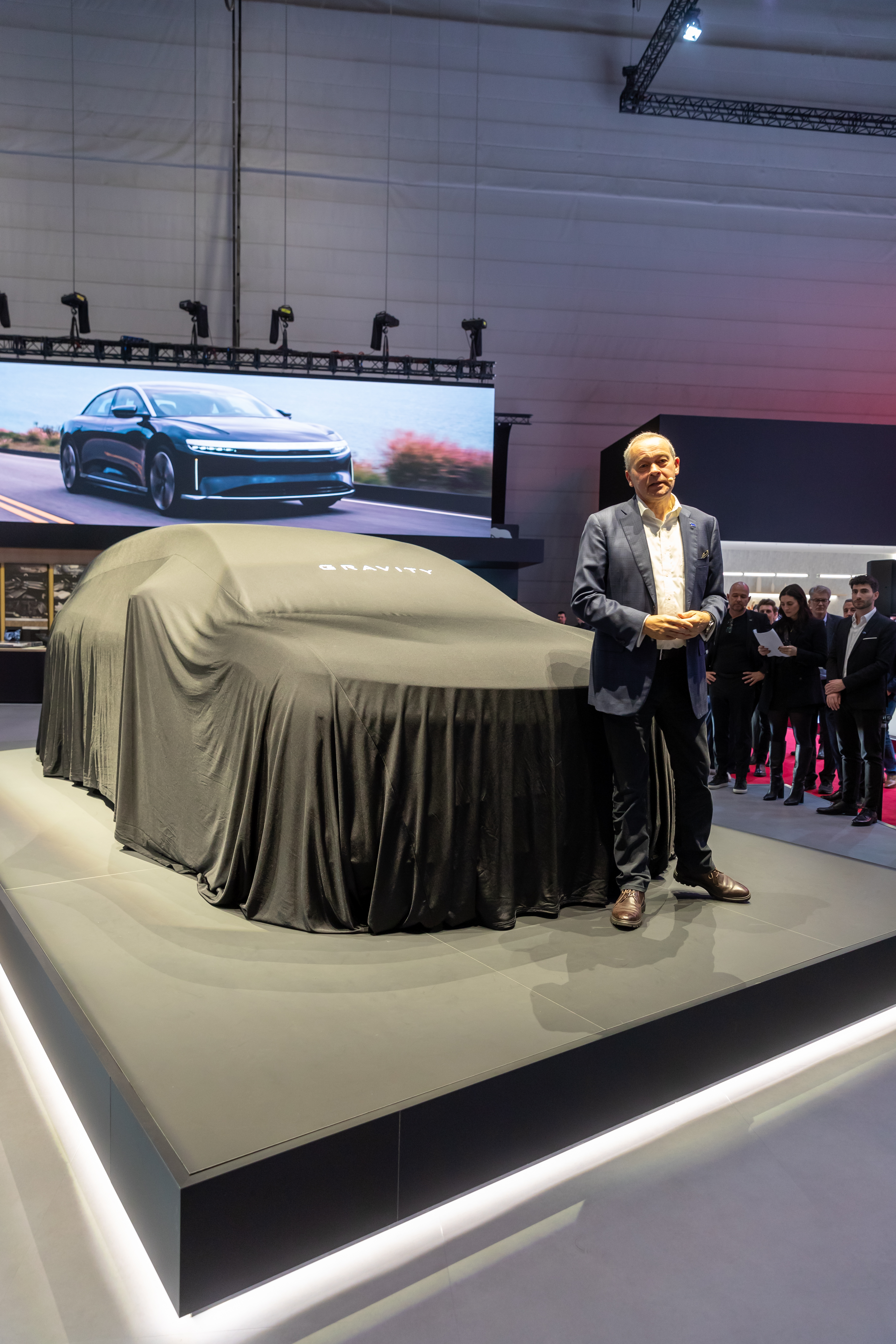
Lucid Gravity
"Lucid EV manufacturer that it's looking at the price for the starting price for the Gravity, which was going to be its low cost model, is seventy nine to nine. ... Eighty grand the low cost model, And so they."
The Lucid Gravity is Lucid’s electric SUV. They’re discussing what it’s supposed to cost and how that affects sales.
The Lucid Gravity is Lucid’s EV model being positioned as a lower-cost option in the brand’s lineup. The hosts mention its starting price and tie that to broader sales and guidance issues.
guidance
"Pulled their guidance son with they're going to be producing this coming Cortant. ... I think he just said, hey, Wall Street, we're yanking our guidance."
“Guidance” is the company’s prediction for the future, like how well it expects to do. If they yank it, they’re admitting the earlier forecast was wrong and updating it.
In automotive business talk, “guidance” is the company’s forward-looking forecast—like expected sales, production, or financial results. When hosts say they’re “yanking guidance,” they mean the company is withdrawing or revising those expectations.
inventory
"They've they've way over built, they have all these cars in inventory. They've got a second plant that they're bringing up in Saudi Arabia even though they can't fill the plant that they've got here."
Inventory is the stock of cars that are already made but not sold yet. If too many cars sit unsold, it can hurt the company’s finances.
Inventory refers to cars already built and sitting at the company or in distribution. If inventory is high and sales are slow, companies may struggle with cash flow and may cut forecasts or adjust production.
Saudi Arabia
"They've they've way over built, they have all these cars in inventory. They've got a second plant that they're bringing up in Saudi Arabia even though they can't fill the plant that they've got here."
They’re talking about building a factory in Saudi Arabia. The issue is that the company doesn’t have enough sales to keep all plants busy.
Saudi Arabia is referenced here as the location for a second manufacturing plant. In the context of the episode, the point is that expanding capacity didn’t match demand.
direct sales
"I know it's direct sales, but you know what I mean. And I think he just said, hey, Wall Street, we're yanking our guidance."
Direct sales means the company sells the car to you without using regular car dealerships. That can affect how pricing and inventory are handled.
Direct sales means the automaker sells cars straight to customers rather than through traditional dealer networks. This can change how inventory, pricing, and marketing are managed.
BMW
"And plus, look at all the other automakers that have reported this week. You know BMW, Daimler truck was there."
BMW is brought up as an example of another automaker reporting bad or challenging news. It’s used to show this isn’t unique to Lucid.
BMW is mentioned as one of the automakers reporting results in the same week as Lucid. The host uses it to suggest the broader industry context is weak, not just one company’s problem.
Daimler truck
"You know BMW, Daimler truck was there. ... Lucid Boy, it was a bloodbath there's red ink all over the place."
Daimler Truck is mentioned as another company dealing with tough financial news. It’s used to support the idea that the industry is struggling broadly.
Daimler Truck is referenced as another company reporting results that week. The host frames it as part of a wider pattern of financial pressure across the auto industry.
red ink
"Lucid Boy, it was a bloodbath there's red ink all over the place."
“Red ink” means the company is losing money. It’s a common way to describe financial trouble.
“Red ink” is a financial metaphor for losses—when a company’s expenses exceed its revenue. The host uses it to say Lucid’s results were negative.

Lucid Air
"Lucid Air versus like a Hyundai Sonata, which has a very similar light strip in the hood, I mean you tell me from it like thirty yards which is which?"
Lucid Air is an all-electric sedan from the brand Lucid. The hosts are talking about how its front lighting design can look similar to other cars, even from far away.
Lucid Air is Lucid’s flagship electric sedan, known for its distinctive lighting signature and aerodynamic styling. In this segment, it’s compared to a Hyundai Sonata to highlight how similar design cues can be hard to tell apart at a distance.

Hyundai Sonata
"Lucid Air versus like a Hyundai Sonata, which has a very similar light strip in the hood, I mean you tell me from it like thirty yards which is which?"
The Hyundai Sonata is a common, everyday sedan model. They’re using it as a comparison to show that some design details—like front lighting—can look similar across different brands.
The Hyundai Sonata is a mainstream midsize sedan used here as a visual comparison point. The discussion focuses on how its front lighting design can resemble Lucid Air’s “light strip” look, making brand identification difficult for non-car people.
net profitable
"But what I'm getting at is when Tesla's finances changed from losing money to being net profitable is when they started selling fifty thousand cars a quarter i e. Two hundred thousand a year"
“Net profitable” means the business is actually making money overall, after paying all its costs. The hosts are using it to explain when EV companies stop losing money and start earning it.
“Net profitable” means the company’s total revenue exceeds its total costs after accounting for everything (not just revenue or gross margin). In the segment, the hosts use this as the key milestone for EV companies to prove they can survive long enough to scale production.
Rivian
"Whereas with Rivian people kind of I think like this off road adjacent lifestyle vibe. Tesla of course became you know,"
Rivian is an electric-vehicle company. They’re known for vehicles that feel built for outdoor and off-road use, and the hosts are comparing that image to other EV brands.
Rivian is an EV brand known for trucks and SUVs that lean into an outdoorsy, off-road-adjacent identity. In this discussion, it’s contrasted with other EV makers’ brand positioning and target customers.
Fisker
"So they mean these smart people at our own driving Fiskers right now are said that they... And Fisker is sort of like that's another good analogy with Lucids."
Fisker is another electric-car company. The hosts are comparing Lucid’s situation to Fisker’s—basically, the challenge of growing enough to make money.
Fisker is an EV brand used as an analogy for how new automakers need scale and brand awareness to survive. The hosts suggest Lucid may be trending closer to Fisker’s trajectory than to Tesla or Rivian.
Saudi Investment Fund
"Well, the real question is how... How much stick to witness does the Saudi Investment Fund have, Because the Saudi Investment Fund is what's keeping Lucid alive right now."
The Saudi Investment Fund is a major investor. The hosts are saying Lucid depends on that money to keep operating, so if the funding changes, Lucid could struggle fast.
The Saudi Investment Fund (often referenced as PIF in media) is described as the backer keeping Lucid financially alive. The discussion frames this as a key dependency: if the fund stops funding, the automaker’s runway can end quickly.
Live Golf
"And I'm sure you guys are aware the l IV Live Golf odd series that was all Saudi money... I was just going to bring up live golf too, because I think golf is probably something different... but it's maybe not that much different if they're losing perhaps even more money like a golf league."
Live Golf is a sports league that got Saudi money. The hosts use it to illustrate how investors might decide to stop funding something if it keeps losing money.
Live Golf is brought up as an example of a Saudi-funded sports venture. The hosts use it as an analogy for how long investors might keep losing money before pulling the plug.
ROI
"I was just going to bring up live golf too, because I think golf is probably something different, probably how like the PIF calculates the ROI here, Like I think a car company is something different, but it's maybe not that much different if they're losing perhaps even more money like a golf league."
ROI means “how much you get back” compared to what you spent. The hosts are wondering how investors would judge whether funding a car company is worth it compared to funding a sports league.
ROI (return on investment) is a way to measure how much profit or value you get back relative to what you put in. Here it’s discussed in the context of how the Saudi investment entity might evaluate funding a car company versus a sports league.
aluminum
"So we've mentioned this, there occasions that it just isn't gasoline that it affects. It affects materials like aluminum. And you know, you're talking about people that Forard reported recently and apparently Aluminus is having a big effect on their profitability."
Aluminum is a metal used in cars to help keep weight down. If aluminum gets more expensive, it can hurt a company’s profits.
Aluminum is a lightweight metal widely used in vehicles, and it can be a major cost driver when commodity prices move. The hosts claim aluminum is affecting profitability for a company they mention as “Forard,” tying materials costs to financial performance.

Volkswagen Jetta
"...not going to pay ten thousand dollars more for my Jetta or something. So it could be a rough second quart..."
The Volkswagen Jetta is a regular four-door sedan meant for daily driving. People talk about it when discussing cost—like whether it’s worth paying more or less for one. In this episode, it’s mentioned as part of a pricing comparison.
The Volkswagen Jetta is a compact sedan that’s often discussed as an everyday, value-oriented alternative in the sedan market. In the podcast context, it’s brought up in relation to pricing and what someone might be willing to pay for a Jetta. That makes it relevant to conversations about affordability and purchasing decisions.
V eight engines
"So then I see that there was an announcement made that that Formula one is switching from the six cylinder hybrids to V eight engines in twenty thirty one."
This refers to a proposed change in Formula 1 engine configuration from the current V6 to a V8. In F1, engine “configuration” matters because it affects packaging, sound/character, and how the hybrid system integrates with the combustion engine.
six cylinder hybrids
"So then I see that there was an announcement made that that Formula one is switching from the six cylinder hybrids to V eight engines in twenty thirty one."
“Hybrid” in F1 means the car uses both fuel and electricity. The “six cylinder” part means the fuel engine is a V6, and the electric system helps add power and recover energy.
In Formula 1, “hybrid” refers to a power unit that combines a combustion engine with an electric motor and energy-recovery system. “Six cylinder hybrids” points to the current F1 layout that uses a turbocharged V6 plus hybrid energy recovery and deployment.
Formula one engine regulation direction (V8 vs V6 hybrids)
"So then I see that there was an announcement made that that Formula one is switching from the six cylinder hybrids to V eight engines in twenty thirty one... I could see Honda pull out of Formula one if it does go back to naturally aspirated VIA."
They’re debating what Formula 1’s next engine rules might be—V8s instead of the current hybrid V6s—and how that could affect who stays in the sport.
This segment focuses on potential Formula 1 rule changes: switching from the current V6 hybrid power units to V8 engines, and what that would mean for electrification levels. It also connects the engine direction to manufacturer participation decisions.
minor electrification
"Well, look, because these V eights, by the way, will only be minor electrification."
It sounds like they’re saying the car would still have some electricity, but not as much as the current hybrid setup. That could mean less electric boost and less energy being recovered.
“Minor electrification” suggests the electric portion of the powertrain would be reduced compared with today’s full hybrid system. In F1 terms, that would likely mean less electric motor assistance and/or less energy recovery and deployment than the current hybrid regulations.
carbon free fuel
"I would love to see them develop this carbon free fuel which they're actually using right now."
They’re talking about fuel that’s intended to produce little or no carbon emissions. The goal is to make racing cleaner without changing the basic idea of using fuel to make power.
“Carbon free fuel” is a fuels concept aimed at reducing or eliminating net CO₂ emissions. In motorsport discussions, it usually refers to alternative fuels (often synthetic or bio-based) that can be produced with lower lifecycle carbon impact than conventional gasoline or diesel.
naturally aspirated
"I could see Honda pull out of Formula one if it does go back to naturally aspirated VIA."
Naturally aspirated engines don’t use a turbo or blower to force air in. The engine relies on its own design and RPM to pull in air and make power.
“Naturally aspirated” means the engine draws air in without a turbocharger or supercharger. In racing, it changes throttle response and the engine’s character, and it can be paired with different fuel and emissions strategies than turbocharged hybrid setups.
Request an Explanation
Heard something you'd like explained? We'll add it to this episode.
Sign in to request explanations for terms you heard.
Want to learn more?
Browse our glossary for plain-English explanations of automotive terms, jargon, and concepts.
Help improve this episode
See something that's not quite right? Our annotations are AI-generated and can sometimes miss the mark. Click the flag icon on any annotation to suggest a correction.