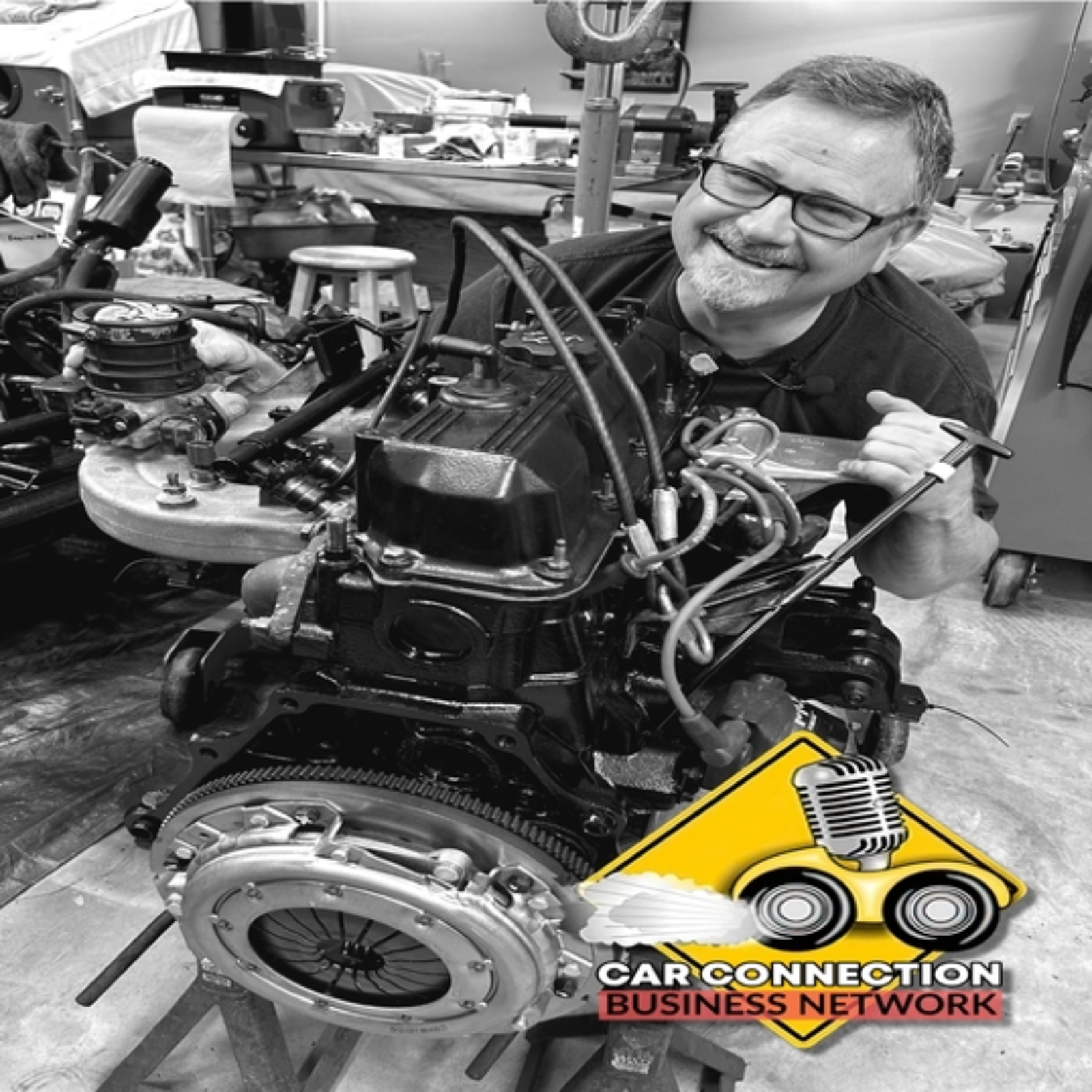
AC Tutorial Part Two: 5 things destroying Your Vehicle's Air Conditioning System
About this episode
Day two of the Car Connection Workshop A/C tutorial zeroes in on “the five things” that can damage a vehicle’s air conditioning system. The hosts warn about expensive repairs and limited parts availability, then get practical about common misuse—like leaving the A/C button on so the compressor keeps engaging, creating head pressure and stressing components. They also explain how compressor failure can contaminate the whole system, and how restricted airflow from a neglected cabin filter can overwork the blower and crack the heat exchanger.
In today's podcast, we continue our AC tutorial series with Part two and cover the things drivers are doing that quietly destroy their vehicle's air conditioning system.
We break down why shutting the AC system off improperly can create dangerous head pressure and damage your compressor, how line pressure contributes to leaks, why a plugged cabin filter can burn out your blower motor, and why "don't fix it if it ain't broke" is one of the worst attitudes when it comes to automotive air conditioning maintenance.
We also discuss why proper evacuation and recharge service matters, how clean refrigerant protects the inside of your system from corrosion and debris, and why maintenance always matters more than mileage.
If your AC isn't cooling properly, smells musty, cycles oddly, or you simply want it to last longer and avoid expensive repairs, this episode is packed with practical information every driver should know.
#MotormouthMorningDrive #CarMaintenance. #ACTutorial
Enjoying our podcast and videos, you'd like to support our channel, here's how,
go to. ☕️: buymeacoffee.com/motormouthnile any amount you give is so appreciated friends, ❤️ Skippy & Motormouth.
Merch available in our online store at: ccbusnet.com all proceeds go to Total Freedom Addiction Campuses Canada & USA, we're helping those ready to knock out their addiction for good get there🚗 join our crew on the ride to help those struggling with addiction. Your support is appreciated❤️
Your Help is Needed to grow our channels here's how, simply: Like , Share, Follow, Subscribe, Leave a Comment, Ring the notification bell so you don't miss our new videos 👍
Follow us on Facebook & Instagram & stevensvilleontheweb.ca 🙌
More Episodes and....project Details & Links are available at Car Connection Business network .com (ccbusnet.com) you'll find everything on our home page if you'd like to follow the build & repair work we do & connect with our program partners, click their logo to meet them, Thank You for supporting them also👍 Nile Motormouth Jenkins.
We'll See you in the Next One 🙌
Happy Healthy Motoring Friends 🚘 Peace Patience Kindness Always❤️ NMJ & Skippy
1983 Toyota short box pickup four-wheel drive
"bringing mole out there with me so that you can have a look at him he's a 1983 that's right so if you you want to know if you can own an older automobile that's still mobile and healthy and yeah it does need a few parts once in a while some maintenance mo is a 1983 short box Toyota four-wheel drive"
It’s an older Toyota truck from 1983 with four-wheel drive, which helps it grip better when roads are slippery or rough. The “short box” just describes the truck bed length.
This is a 1983 Toyota pickup (often called a “short box”) with four-wheel drive, meaning it can send power to both the front and rear axles for better traction on loose or uneven surfaces. In the early 1980s, these trucks were popular for being simple, durable, and capable as daily drivers or weekend workhorses.
limited 500 only edition
"I missed the first one which was a limited 500 only edition that was I think it was 1982"
It means only around 500 of that exact version were made. Fewer cars like that usually makes them more rare and more collectible.
A “limited 500 only edition” means the manufacturer (or importer) produced only about 500 units of that specific variant. Limited runs often become collectible because supply is capped and the configuration may be tied to certain dealers or regions.
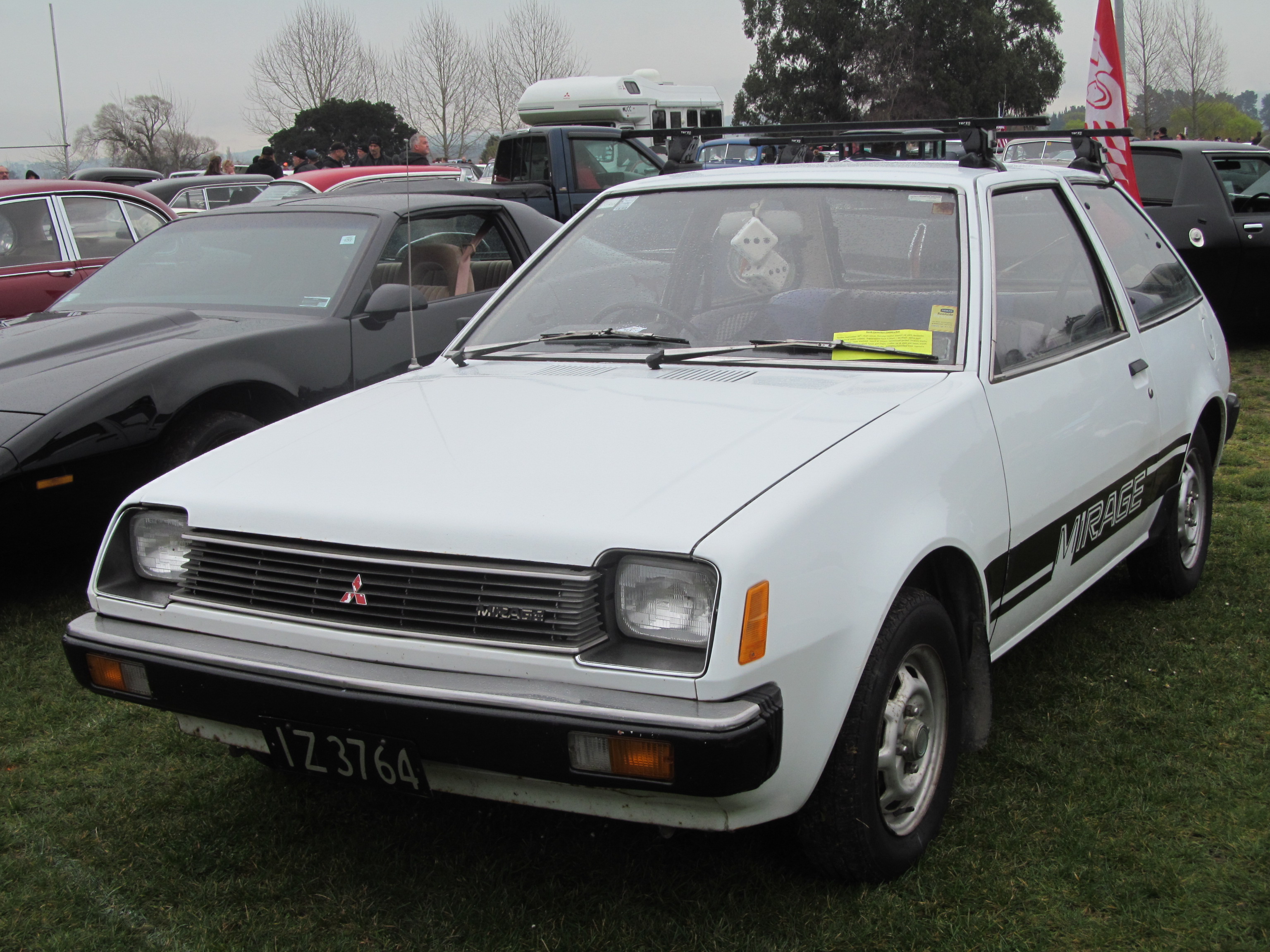
Mitsubishi Mirage
"...ort box pickup four-wheel drive it was called the Mirage and I missed one and then I was really kind of ch..."
The Mitsubishi Mirage is a small car designed to be affordable to buy and cheaper to run. In some places, the “Mirage” name has also been used for other Mitsubishi vehicles, so people can mix up which one they mean. That’s why it might be mentioned when someone is trying to remember a specific vehicle.
The Mitsubishi Mirage is a small, budget-focused car known for being economical and easy to live with. It may come up in a podcast discussion because the name “Mirage” has been used on different Mitsubishi vehicles over time, including some pickup-style and four-wheel-drive variants in certain markets. That makes it a common point of confusion when someone is trying to identify the exact model they saw or drove.
AC compressor
"unless that ac button is in the off position when you crank that engine over the compressor is cranking over too not a good idea ... it's coming just keep doing it because you're gonna blow the compressor right out of the system"
Your car’s AC compressor is the part that makes the air conditioning system actually work. It pressurizes the refrigerant, and if it’s run when it shouldn’t be, it can wear out or break.
The AC compressor is the pump in your vehicle’s air conditioning system that pressurizes the refrigerant so it can move heat out of the cabin. If the compressor is forced to run at the wrong times (like when you leave the AC switch on), it can overwork the system and lead to failure.
head pressure
"it creates head pressure that means there's pressure on the ac compressor that should not be there when you shut it down"
Head pressure is the high pressure side of the AC system. If the AC isn’t turned off the right way, that pressure can stay too high and put extra stress on the parts that keep it running.
Head pressure is the high-side pressure in an air conditioning system. When the system isn’t shut down properly, pressure can remain elevated and stress the compressor and other components, increasing the chance of damage over time.
ac techs
"with shrapnel and we as ac techs we got to take your whole air conditioning system apart and get every little metal particle out of it before we can even run the system again"
“AC techs” are mechanics who work specifically on car air conditioning. After a compressor failure, they have to clean out the system properly so it doesn’t keep getting clogged or damaged.
“AC techs” refers to technicians who specialize in automotive air-conditioning service and repair. In this context, they’re describing why a compressor failure requires disassembly and thorough contamination removal before the system can be safely operated again.
compressor detonated
"2,500 to 3 grand that's problem if that procedure has to take place because the compressor detonated inside filled your entire air conditioning system all the hoses pipes tubes orphuses"
The AC compressor is the part that pressurizes and moves the refrigerant. If it fails badly, it can break apart and send metal bits through the whole AC system, which then needs major cleaning.
When an AC compressor “detonates,” it catastrophically fails internally and can scatter metal debris through the refrigerant circuit. Because the system is a closed loop, that debris can contaminate hoses, the condenser, and the evaporator, forcing extensive cleanup or replacement.
condenser
"and condenser and evaporator with shrapnel all of that the lines need to all come off be flushed out the condenser scrap the evaporator core scrap"
The condenser is the AC part that releases heat outside the car. If the compressor breaks and sends metal through the system, the condenser can get contaminated too.
The condenser is the AC heat exchanger that rejects heat to the outside air, turning refrigerant vapor into liquid. After a compressor failure, metal debris can contaminate the condenser, and technicians may need to replace or thoroughly clean it.
evaporator core
"out the condenser scrap the evaporator core scrap because we can't get all the metal particles out they're trapped in there it's not going to happen no matter how much ac flush we put through it"
The evaporator core is the part inside the car that makes the air feel cold. If metal debris gets stuck inside it, cleaning may not fix it and the core may need to be replaced.
The evaporator core is the heat exchanger inside the cabin that absorbs heat from the air, cooling it as refrigerant boils inside. If compressor debris gets trapped in the evaporator core, flushing often can’t remove it, so replacement may be required.
accumulator
"that's not going to come out the accumulator remember i talked about that yesterday that's the little device that has a decosin bag in it ... that's what the accumulator does in your ac system so it has a big bag inside it filled with ceramic pellets that draw out the moisture in the refrigerant"
The accumulator is a part in the AC lines that helps keep the refrigerant properly controlled before it goes to the compressor. It also helps dry the system by trapping moisture.
An AC accumulator is a reservoir in the refrigerant line that helps manage refrigerant flow and prevents liquid refrigerant from reaching the compressor. It also contains desiccant material that absorbs moisture in the refrigerant system.
expansion valve
"through the accumulator the orifice tube the expansion valve through it those are all the components"
The expansion valve controls how much refrigerant goes into the part of the AC that cools the cabin. If it gets clogged or damaged by debris, the AC won’t cool properly.
An expansion valve (or expansion device) regulates refrigerant flow into the evaporator by dropping pressure and controlling how much refrigerant can boil. If debris contaminates the valve, it can stick or meter incorrectly, leading to poor cooling or further system damage.
orifice tube
"through the accumulator the orifice tube the expansion valve through it those are all the components everything i just spelled it out to you"
The orifice tube is a tiny restriction in the AC line that controls how much refrigerant flows. If metal debris gets in there, it can clog and stop the AC from working right.
An orifice tube is a small restriction device in many automotive AC systems that meters refrigerant flow from the high-pressure side to the low-pressure side. Because it’s a narrow passage, metal debris from a compressor failure can clog it and prevent proper cooling.
the lines themselves
"and the lines themselves we gotta let the system do this ready deep breath in [2001.0s] and out"
The A/C lines are the hoses that move refrigerant through the system. The point here is that the system needs time to settle—otherwise the pressure in those lines can stay too high and cause problems.
In an A/C system, the refrigerant lines are the hoses/tubing that carry pressurized refrigerant between components. The host is emphasizing that pressure needs to be managed so the system can operate normally; abruptly shutting off can leave the system in a high-pressure state longer than it wants.
abusing the car
"okay let it out that's what the system doesn't like so when you just shut off that ignition [2041.8s] key and pile out of the car and run for the punch clock or wherever you're going because you're [2048.7s] running behind you know that's costing you money it's because you're abusing the car"
“Abusing the car” here is being used to describe driving habits that stress systems—specifically the A/C—by turning things off abruptly and not letting pressures stabilize. The underlying idea is that harsh usage can increase wear and contribute to failures in sensitive components like the compressor and refrigerant lines.
line pressure
"when you turn that system off incorrectly and line pressure that creates leakage everywhere [2070.4s] so all seals all rings gaskets it puts too much pressure on those areas and your ac system develops"
Line pressure is the refrigerant pressure inside the AC lines. Excess pressure increases stress on seals, O-rings, and gaskets, which can lead to leaks and refrigerant loss.
O-rings
"and gaskets and little o-rings and keeping the system under pressure and not allowing it to exhale puts a lot of pressure [2120.2s] on those connections"
O-rings are small rubber seals that help keep refrigerant from leaking at connections. If they get stressed or worn, they can start leaking.
O-rings are rubber sealing rings used at joints in the AC system to prevent refrigerant from escaping. When the system is kept under pressure or airflow/refrigerant conditions are wrong, O-rings can be stressed and start leaking.
refrigerant
"and you lose your refrigerant and now you have ac system down okay quickly here uh number four"
Refrigerant is the special fluid that makes the AC cool. If there’s a leak, you lose it and the AC won’t work properly until it’s fixed and refilled.
Refrigerant is the fluid inside the AC system that absorbs heat and releases it elsewhere to cool the cabin. Leaks cause refrigerant loss, which can shut down cooling and require repair plus recharging.
cabin filter
"okay quickly here uh number four if your cabin filter [2142.7s] if your vehicle is equipped with a cabin filter and it hasn't been looked at changed or cared about"
The cabin filter cleans the air coming into the car. If it gets clogged, the fan has to work harder and can cause problems or even damage parts.
A cabin filter traps dust and debris before air enters the vehicle’s interior HVAC system. If it’s clogged, airflow drops, which can overwork the blower fan and contribute to overheating or damage in the heating/cooling components.
blower fan
"so that your blower fan is not going to burn out prematurely because you have a restricted filter [2156.2s] think of it as a furnace filter in your home"
The blower fan is what pushes air through the vents. If the filter is clogged, it can overwork the fan and make it burn out sooner.
The blower fan is the fan that pushes air through the HVAC system and into the cabin. With a restricted cabin filter, the fan can move less air, run hotter, and fail prematurely.
heat exchanger
"question there do you want to damage your heat exchanger and crack it because it can't get enough airflow to cool it down [2177.7s] after the furnace shuts off"
The heat exchanger is the part that helps move heat out of (or into) the air. If not enough air can pass through, it can get too hot and crack.
The heat exchanger is the HVAC component that transfers heat between the refrigerant and the air stream. If airflow is restricted, it can’t shed or absorb heat properly, which can lead to overheating and cracking.
manifold gauges
"you want your tech your ac tech to get on it put our man let's let's get our manifold gauges on [2323.8s] there check the pressures high pressure low pressure we can also determine the health of the ac"
Manifold gauges are special tools a technician hooks up to your car’s A/C to read the pressures. The numbers help them figure out if the A/C is working correctly or if something is going wrong.
Manifold gauges are diagnostic tools used to measure an air conditioning system’s refrigerant pressures on both the high-pressure and low-pressure sides. Those readings help a technician judge whether the system is healthy or has issues like restricted flow, leaks, or failing components.
high pressure
"there check the pressures high pressure low pressure we can also determine the health of the ac [2329.4s] compressor if you're you've been killing it or not if it's almost dead or ready to die"
Your A/C has two pressure zones. The high-pressure side is the part where the refrigerant is pushed through the system, and checking it helps diagnose problems.
In a car’s A/C system, the high-pressure side is where refrigerant is compressed and delivered toward the condenser. Measuring high pressure (along with low pressure) is a key part of diagnosing whether the system is performing correctly.
low pressure
"there check the pressures high pressure low pressure we can also determine the health of the ac [2329.4s] compressor if you're you've been killing it or not if it's almost dead or ready to die"
Your A/C also has a low-pressure side. Checking low pressure helps a technician tell if the system has enough refrigerant and is circulating it properly.
The low-pressure side of a car’s A/C is where refrigerant is typically in a lower-pressure state before it’s compressed again. Low-pressure readings are used with high-pressure readings to spot problems like leaks or weak cooling performance.
evacuate the air conditioning system
"uh we're still going to at that point i've got my [2348.2s] gauge set set up every two years you want to evacuate the air conditioning system get all the old [2354.0s] refrigerant out of there"
Evacuating the A/C system means pulling out unwanted air and moisture before adding refrigerant again. That helps the A/C work correctly and reduces the chance of problems later.
Evacuating the air conditioning system means removing air and moisture from the A/C circuit using a vacuum pump before recharging. This helps prevent contamination and improves how the refrigerant performs.
recharge it
"get all the old [2354.0s] refrigerant out of there it does decay it does break down it is not ready i'm gonna smash the glass [2361.4s] here it's not maintenance free ouch oops ah what no way yeah the what no way guy he's got a great"
Recharging means adding refrigerant back into the A/C. If you don’t, the system may not cool well because it’s not properly filled.
Recharging an A/C system means adding the correct amount of refrigerant back into the system after evacuation or service. The podcast frames it as necessary because refrigerant can degrade over time, and skipping it can lead to poor cooling.
Request an Explanation
Heard something you'd like explained? We'll add it to this episode.
Sign in to request explanations for terms you heard.
Want to learn more?
Browse our glossary for plain-English explanations of automotive terms, jargon, and concepts.
Help improve this episode
See something that's not quite right? Our annotations are AI-generated and can sometimes miss the mark. Click the flag icon on any annotation to suggest a correction.