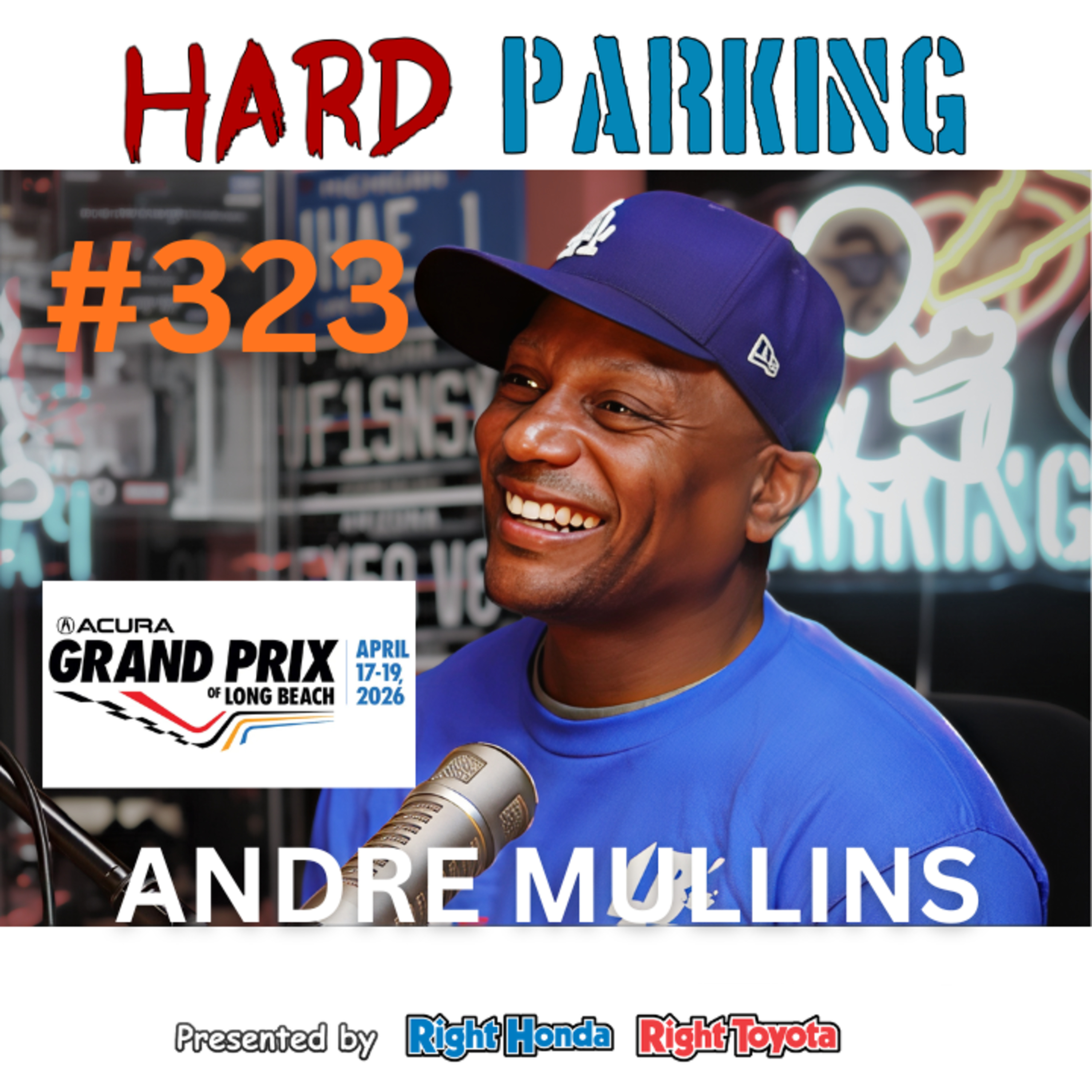
Acura Long Beach Grand Prix with Andre Mullins | EP 323
About this episode
A Long Beach Grand Prix recap mixes garage chaos, bourbon tasting, and a deep dive into Acura hospitality. The hosts talk through an NSX lift mishap, gas-station annoyances, parking-pass confusion, and the logistics of getting into the event. They also highlight the Acura lounge, a 1986-style dealership display, a rebuilt Integra on track, parade-lap nerves, and the easy camaraderie of the NSX crowd and Acura insiders.
Episode 323: Andre Mullins joins Jhae Pfenning in studio for a full recap of their trip to the Acura Long Beach Grand Prix.
In this laid-back, bourbon-fueled conversation, the duo breaks down the last-minute NSX parade team assembly, driving their cars in the 40th anniversary celebration, behind-the-scenes access, celebrity sightings, and all the Honda/Acura community vibes from the weekend.
Pure car guy storytelling at its best on the non-automotive automotive podcast.
Timestamps- 00:00 - Intro & Studio Welcome
- 03:10 - How the Long Beach Trip Came Together Last Minute
- 08:45 - Assembling the NSX Owner Parade Team
- 18:00 - Arrival at Acura Long Beach Grand Prix
- 35:50 - The 40th Anniversary NSX Parade Experience
- 48:20 - Driving the NSX on Track & Streets
- 01:05:30 - Celebrity Sightings & Event Highlights
- 01:22:40 - Bourbon Chat & Weekend Takeaways
- 01:35:10 - Future Honda/Acura Events Talk
- 01:48:00 - Listener Questions & Community Shoutouts
- 01:52:30 - Patreon Thanks & Closing
Contact
Email: [email protected]
Website: www.hardparking.com
Patreon: patreon.com/hardparkingpodcast
Instagram: @hardparkingpod
YouTube: youtube.com/@HardParking
right on and right Toyota
"This is hard parking brought to you by right on and right Toyota out of Scottsdale, Arizona."
That’s the name of a Toyota dealership sponsoring this part of the podcast.
“Right on and Right Toyota” is mentioned as a sponsor for the show segment. It’s a local Toyota dealership brand identity used in the podcast’s ad read.
parade lap
"I was able to assemble a small team of NSX owners to drive our cars out there and the parade lap was awesome."
A parade lap is a non-racing lap where cars drive around the track more for celebration than competition.
A parade lap is a slower, celebratory drive around the track or course—often with cars from a club or brand—rather than a competitive race lap. It’s typically done for fan experience and event promotion.
lift
"[153.8s] But guess what I just did today? [156.5s] I drove my NSX off the lift. [162.2s] Yeah. [163.4s] Dre Mullins is back as promised."
A lift is the machine in a garage that raises a car off the ground for work. “Off the lift” means the car was moved while it was up, which is risky and can cause damage.
A “lift” in automotive settings is usually a two-post or four-post vehicle hoist used to raise a car for service. Driving “off the lift” implies the car was moved while elevated, which can be dangerous and can damage the vehicle or the lift.

Acura NSX
"So what happened was I needed to swap cars. [192.6s] I need to take my Integra off the lift and put my NSX on the lift because I'm about to do some work on my Integra."
The Acura NSX is Acura’s high-end sports car. In the episode, they’re lifting it up so they can work on it safely.
The Acura NSX is Acura’s flagship supercar, known for its high-performance engineering and premium build. The speaker mentions putting the NSX on the lift, which implies they’re doing maintenance or repairs that require the car to be raised.

Acura Integra
"So what happened was I needed to swap cars. [192.6s] I need to take my Integra off the lift and put my NSX on the lift because I'm about to do some work on my Integra."
An Acura Integra is a small sporty Acura. Here, the person is saying they had to move their Integra off a lift before they could put a different car up.
The Acura Integra is a compact performance-focused model from Acura. In this context, the speaker is using it as the car that needs to be moved off a lift so another car can be worked on.
rear tire falls off the track
"And I literally came back at an angle and that rear tire falls off the track. The car is now suspended and teetered on the lift."
They say the back tire left the driving surface. When that happens on a course, the car can get stuck or end up in a dangerous position.
This describes a loss of traction or alignment where the rear tire leaves the intended racing surface. In track or autocross environments, going off the track can quickly lead to a car becoming mispositioned, scraping barriers, or getting hung up.
driver rear
"So is this a driver's rear or passenger rear? Dry is the driver rear. Okay."
They’re talking about which back corner of the car is the problem—on the driver’s side versus the passenger side. That matters because the clearance and obstacles will be different on each side.
“Driver rear” refers to the rear wheel on the driver’s side of the car (as opposed to the passenger side). In a tight incident, identifying which corner is affected helps determine the safest direction to move and where clearance issues are.
reverse
"I'm like, all right, let me just take it out of reverse, put it in first. No move."
They tried changing gears to get the car to move again. They started in reverse, then switched to first gear, but nothing happened because the car was stuck.
“Reverse” is the gear used to move the car backward. The speaker tries shifting out of reverse into first gear to regain movement, but the car doesn’t move—suggesting it’s physically constrained (e.g., stuck on the lift/track) rather than a simple driving mistake.
first
"I'm like, all right, let me just take it out of reverse, put it in first. No move."
First gear is the lowest gear for getting moving slowly. They tried it to make the car move, but it still wouldn’t budge.
“First” is the lowest forward gear, typically used for slow starts and maximum control at low speed. The speaker shifts into first to try to move the car, but it doesn’t move, reinforcing that the car is constrained by the situation rather than lacking power.
jack
"Um, I can't put a jack under there because of how the NSX is, but no, here, let me back up."
A jack is what you use to lift a car off the ground. They couldn’t use one in the usual spot because of how the NSX is shaped, and lifting it wrong could be unsafe or damage the car.
A “jack” is a tool used to lift a car by applying force at a specific point on the chassis. The speaker says they can’t put a jack under the NSX due to its design/clearance, which highlights how critical correct lifting points are to avoid damage or unsafe lifting.
cockpit
"Everybody knows a 90, like a N81 is not the most big cockpit."
They mean the space where the driver sits. They’re saying the driver area isn’t very large, which can make an emergency feel even more cramped.
“Cockpit” here means the driver’s compartment inside the car. The speaker implies the NSX’s cabin is relatively tight (“not the most big cockpit”), which can make it harder to react quickly, reach controls, or get comfortable while stuck.
traction
"So I guess I'm lucky, but I'm looking at the tire and I'm like, well, without traction, we stuck. So I'm like looking like, well, it can't put the hydraulic jack under the car because the post and everything's in the way."
Traction is how well the tires can grip the ground. If there isn’t enough grip, the car can’t move and you can get stuck.
Traction is the grip between the tires and the road or surface. If traction is low, the car can’t move effectively and may get stuck even if the engine is running.
pinch weld
"Now you can't put it the long way because the pinch weld is the lift in the way. So I had to turn it sideways."
Pinch welds are reinforced spots on the car’s frame/body meant for jacking. Putting the jack there helps avoid bending or cracking the wrong part of the car.
A pinch weld is the reinforced seam along the car’s body where the jack is designed to lift. Using the pinch weld helps prevent damage to thinner body panels and keeps the lift point stable.
cranking tools
"And now you can't use the cranking tools because it's up against the list. So you're taking that little fork that you put the little thing and you spin."
Cranking tools are the parts you use to turn the jack’s handle. If the jack is wedged in a tight spot, you may not be able to use the crank normally.
Cranking tools are the handle/gear pieces used to turn a mechanical jack. In this situation, the jack’s position prevents using the normal crank setup, forcing the speaker to improvise for small adjustments.
drip pan
"Now, fortune on my style lift. There's a center metal piece that hangs underneath almost like a drip pan. Heaviest."
A drip pan is a tray that catches oil or other fluids so they don’t spill on the floor. It sounds like the lift has a part underneath that acts like that.
A drip pan is a catch tray placed under a car to collect fluids during maintenance. The speaker describes a center metal piece under the lift that hangs like a drip pan, suggesting a built-in fluid-catch feature.
particle board
"I grabbed some, uh, particle board, some cardboard and some inches. And I crammed it in that little gap. I was like, if anything happens, yeah, just in case, yeah, that's going to take the grunt man."
Particle board is a cheap, flat wood product. They’re using it like a temporary spacer to help the car clear something safely.
The speaker uses particle board as a temporary wedge/shim to fill a gap under the car. In a parking or track setting, people sometimes improvise with rigid material to protect the car or help it clear obstacles.
cardboard
"I grabbed some, uh, particle board, some cardboard and some inches. I crammed it in that little gap... all I see is just a little, nice little brush of where the cardboard brushed against the car."
Cardboard is being used as a sacrificial buffer between the car and whatever it’s contacting. The speaker later notes a “brush” mark where the cardboard rubbed, implying it protected the car from more serious damage.
gear
"So thank you guys for hooking that up. I appreciate the gear. And, you know, so looking it up loosely means they had it."
“Gear” here likely means the event stuff you get—like shirts or other branded items—rather than car parts.
In motorsports and car events, “gear” usually means event merchandise or equipment provided to attendees—often branded shirts, hats, or other promotional items. Here, it’s mentioned as something the hosts were “hooked up” with.
hookup
"No, man, everybody. Some people hear hookup and they're like, oh, where's my order? It's like, I don't know. The way you do that, you go online, you place it and this was a hookup."
“Hookup” here just means a special favor or connection. They’re saying it wasn’t literally free, but it was arranged in a way that made it easier.
“Hookup” is slang for a special connection or favor that gets you something you wouldn’t normally get easily. In this segment, they’re clarifying that it wasn’t free—people still have to order online, but the arrangement was a “hookup” in the social sense.
Torrance Honda cars and bikes
"[1021.2s] He's brought it out to Torrance Honda cars and bikes. [1024.2s] Right on."
They’re talking about a local Honda dealership in Torrance. It’s where the car was shown or used for an event.
This refers to a Honda dealership/showroom in Torrance. The hosts are mentioning where the Acura Type S was brought out for display or an event.
oil life
"[1038.7s] Yeah, I'm due. [1039.6s] I have 20% oil life left. [1042.8s] Oh, by the way, let's get into this Long Beach trip."
“Oil life” is the car’s way of telling you when it thinks the engine oil is getting worn out. If it says you have 20% left, it usually means you should plan an oil change soon.
“Oil life” is a dashboard estimate of how much usable life the engine oil has left. It’s based on driving conditions and time, and it helps you decide when to schedule an oil change.
gas station queueing
"So the morongo trail, the morongo station where there's this gas station... It's so busy... There are cues of vehicles lined up... Then you have these cars just sitting there and you have lines of vehicles out to the road."
They’re talking about what happens when a gas station is really busy—cars line up and it changes how people fuel. They mention ways to avoid getting stuck waiting in line.
The hosts discuss how crowded gas stations create long vehicle lines and how that affects fueling behavior. They compare strategies like prepaying, moving the car, and choosing less congested pumps/locations.
pay at the pump
"So the pet peeve, and I think even you do this, people who don't pay at the pump, I think you had to go in and get your thing... And if I can't be in that situation, I'm going to pay at the pump."
It means you pay for gas right at the pump instead of walking into the store. When it’s busy, paying at the pump usually saves time.
“Pay at the pump” means you pay for fuel directly at the gas nozzle before or during fueling, instead of going inside the station. It’s often faster and reduces time spent in line when a station is crowded.
gas prices
"And the only reason I really use Morongo is because I found out that they're usually kind of relatively close to Arizona gas prices as we start to hump into the city..."
They’re talking about how expensive gas is in different places. If one area’s gas is cheaper, it can make sense to stop there instead of paying more later.
The hosts are comparing fuel costs between states/areas. For road trips, small differences in gas price can change how much you spend and where you choose to refuel.
Morongo
"And the only reason I really use Morongo is because I found out that they're usually kind of relatively close to Arizona gas prices... If you haven't been to the Morongo travel center..."
They’re talking about a specific place called Morongo where they stop for gas. They pick it because the prices are better and it’s easier to get in and out.
Morongo is being referenced as a specific travel center where the speaker stops to buy fuel. The discussion is about choosing that location because its prices are close to Arizona’s and it’s convenient for getting back out of California.
state line
"I can get just enough fuel to give me the state line where I typically fill up there."
They’re talking about refueling right around when you cross into a new state. Gas prices can be different from one state to the next, so it can affect where you stop.
The speaker plans refueling around crossing a state boundary. That matters because fuel taxes and retail pricing can differ by state, so drivers often time stops to minimize cost.
travel center
"The one I, the one you took the travel center part. You did... If you haven't been to the Morongo travel center..."
A travel center is a big roadside stop that usually has gas pumps plus services like food. It’s meant for drivers who need to refuel and keep moving.
A travel center is a roadside complex that typically combines fuel pumps with amenities like food and restrooms. In this segment, it’s used to describe a place designed for quick refueling and easier navigation in heavy traffic.
lines
"If you would think that they have how many people would be stuck in them lines, you know, it's like almost like you said Costco..."
They’re describing how busy the gas station can get, with long lines of cars waiting to pump gas. Even if the price is good, the wait can be a downside.
The hosts mention long queues at fuel pumps, comparing the congestion to Costco. This is a practical road-trip consideration because pump lines can add time even if the gas price is cheaper.
fuel up
"Just go in, fuel up and keep it pushing. So it just makes it way easier."
“Fuel up” just means you stop and put gas in your car. They’re saying the setup makes it easier to get in, fill up, and leave without getting stuck.
“Fuel up” means stopping to add gasoline or diesel to the vehicle. In this context, they’re talking about using the station layout to get in and out quickly during a busy time.
digital
"I'm like, I had no idea this existed and they have these brand new pumps and it's all digital and it's super cool."
They’re saying the gas pumps are modern and electronic. Instead of older manual controls, the pump uses a digital screen to help you pay and pump.
When they say the pumps are “digital,” they’re referring to modern pump controls and displays (often touchscreens or electronic interfaces) rather than older analog dials. This usually makes the fueling process faster and more guided.
tags
"Cause now I got changed in my pocket and I haven't changed in my pockets of that car. I had a situation where my freaking tags slid under my car."
“Tags” here means the car’s identifying plate/registration-style item. The speaker is saying it slipped under the car, so it was hard to deal with.
In this context, “tags” likely refers to license plates or registration/parking tags that can fall loose and end up under the car. The speaker says the tags slid under the car, creating a retrieval problem.
key fob
"Oh, I found my other key fob or something. I was something I had lost years ago."
A key fob is the little remote you use to lock/unlock your car, and often to start it too. If you lose it, the car may not let you drive.
A key fob is a small remote that communicates with the car for functions like locking/unlocking and starting. Losing one can be a hassle because many modern cars require the fob to be present to operate.
parking pass
"it literally, it's, I was amazed that that parking pass somehow found its way and slid right under there."
A parking pass is a ticket/credential that lets you park where you’re supposed to. Here, it somehow slipped under the seat and got stuck in a hard-to-reach spot.
A parking pass is an access credential (often a card or sticker) that lets you park in a specific lot or event area. In this segment, it’s described as having slid under the seat pan, making it difficult to retrieve.
exhaust monitoring
"Cause I remember a lot of like those, so California now has in certain spots, those signs, those, like they don't only have the speed radars, but they got the exhaust noise. [1755.7s] They do. [1756.4s] Yeah. [1756.9s] I saw that sign on the road. [1758.7s] It's like exhaust monitoring or whatever, like the exhaust tickets."
Some areas use cameras or sensors to measure how loud a car’s exhaust is. If it’s louder than the legal limit, the driver can get a ticket.
Exhaust monitoring is a roadside system that measures how loud a vehicle’s exhaust is. In some places it’s used to enforce noise limits by issuing citations when a car exceeds the allowed sound level.
exhaust tickets
"[1756.9s] I saw that sign on the road. [1758.7s] It's like exhaust monitoring or whatever, like the exhaust tickets. [1762.5s] I'm like, well, how, how are they going to know?"
An “exhaust ticket” is a fine for having an exhaust that’s too loud. The police or sensors can tell when a particular car is louder than allowed.
“Exhaust tickets” refers to citations issued for excessive exhaust noise. The enforcement idea is that the system can identify when a specific vehicle is too loud, even if it’s not obvious to the driver how the identification works.
sport plus mode
"And so usually I drive everywhere in sport plus mode. Browse in regular sport or EV mode."
Sport Plus is a button you can press that makes the car feel more “eager.” It usually changes how quickly the car responds when you press the gas and how it drives overall.
“Sport Plus” (or “Sport+”) is a driving mode that typically sharpens throttle response, steering feel, and shift behavior to make the car react more aggressively. It’s usually meant for spirited driving rather than everyday efficiency.
EV mode
"Browse in regular sport or EV mode. And so it doesn't feel like you're going anywhere, even when you are, you know?"
EV mode tries to run the car using electricity only. If the battery isn’t full or gets low, the car may switch back to the gas engine.
“EV mode” is a setting on some hybrid or plug-in hybrid cars that prioritizes electric-only driving. Depending on the vehicle and battery level, it may limit power or restrict how long you can stay in EV.
turbo drive leader
"So coming back, this is why you're a turbo drive leader. I go, Hey, you know where you're going?"
This phrase doesn’t clearly refer to a car setting. It seems like a name for the person who leads the group and helps others follow the right pace and direction.
“Turbo drive leader” sounds like a specific role or nickname in their group driving/track context, but it’s not a widely standardized automotive feature name. In this segment, it’s used as a label for someone who sets the pace and guides others on where to go.
downshift
"[2029.1s] I'm not going to cut somebody off to look like an asshole on the highway. [2031.9s] Well, typically what I do is I'll get in front and then just downshift [2036.0s] and engine break. [2037.2s] So then they start to come up and they'll never see my brake lights."
Downshifting means putting the car into a lower gear. That makes the engine spin faster and can help slow you down without using the brakes as much.
A downshift is when a driver selects a lower gear. It usually increases engine speed and can help slow the car using the engine rather than relying only on the brakes.
engine break
"[2031.9s] Well, typically what I do is I'll get in front and then just downshift [2036.0s] and engine break. [2037.2s] So then they start to come up and they'll never see my brake lights. [2040.3s] And then the person behind me should see like, Hey,"
Engine braking is when you slow down using the engine instead of pressing the brake pedal. It can make your car slow more smoothly, and sometimes your brake lights won’t come on as much.
“Engine break” here refers to engine braking: slowing the car by using resistance from the engine during deceleration. It can reduce brake-light use because the car slows without heavy brake pedal input.
keep right
"Keep right does not apply to everybody. No. And these guys are like left lane, freaking, uh, what is it?"
“Keep right” means if you’re not passing, you should stay in the right lane. The left lane is mainly for going around other cars.
“Keep right” refers to the driving rule (common in many states) that slower traffic should stay in the right lane, while the left lane is reserved for passing. When drivers ignore it, faster traffic can get trapped behind slower vehicles.
left lane squatting
"Well, I can't think of the word, but, uh, left lane, it was left lane squatting. There you go. Just chilling in the left lane, like no consideration for anybody behind you."
It means someone hangs out in the left lane even though they’re not passing anyone. That can make traffic worse for drivers behind them.
“Left lane squatting” is a driving behavior where someone stays in the left (passing) lane without actively passing. It can slow traffic behind them and force other drivers to weave around, especially on multi-lane highways.
radar shield
"We were his radar shield, really. At the end of the day, that's why it's totally bad too. I go, this guy's never going to lead in the world on the same place because we're his radar shield, essentially, but I thought he did"
“Radar shield” is a slang term for when one car in front takes the attention from radar, and the cars behind it are less likely to be targeted. It’s like using the lead car as a buffer.
“Radar shield” is a slang way to describe using another vehicle as a buffer so your car is less directly targeted by radar-based enforcement or detection. In practice, it implies the lead car is the one being “seen,” while the following cars benefit from being in its wake.
cruise control
"So I just try to make the adjustments so I don't have to adjust cruise control or come off the gas to stay away and some people will follow."
Cruise control is a feature that keeps your car at a set speed. Here, the driver is saying they try not to constantly change that setting while matching traffic.
Cruise control is a driver-assistance feature that automatically holds a chosen speed. In this segment, the speaker mentions avoiding having to change it by adjusting their driving instead.
Flying J's
"So that, but that's why I messed up because I, I, at this gas station at flying J's, there's a, uh, a Cinnabon inside. Boy, I love cinnamon rolls."
Flying J’s is a roadside truck stop. People often stop there for gas and snacks, and the speaker uses it as part of their trip routine.
Flying J's is a chain of truck stops and travel centers. In the segment, it’s where the speaker stops for food while traveling, which also ties into planning fuel stops.
Cinnabon
"at flying J's, there's a, uh, a Cinnabon inside. Boy, I love cinnamon rolls."
Cinnabon is a food brand famous for cinnamon rolls. The speaker is talking about stopping for the treat while traveling.
Cinnabon is a branded bakery known for cinnamon rolls. Here it’s mentioned as the reason for a special stop at a truck stop, not as an automotive topic.
Unicale
"Go to the flying J's and sides and grab two cinnamon rolls and go to the next gas station on the other side at the Unicale and then we're going to hop the freeway and keep pushing."
They mention another gas stop right after Flying J’s. The exact name is unclear in the transcript, but it’s part of their fuel-stop plan.
“Unicale” appears to be a mishearing of a gas-station/truck-stop brand name. It’s referenced as the next stop after Flying J’s, but the exact brand isn’t clear from the transcript.

Nsx Type S
"... But I've just learned that an SUV looks like an NSX type S. You just have nice, like clear headlights."
The Acura NSX is a sports car designed for performance. People often recognize it by its styling, including its headlights. In this podcast, it sounds like the NSX is being used as a reference point for how a vehicle looks.
The Acura NSX is a high-performance sports car recognized for its advanced engineering and distinctive styling. It may be mentioned in the podcast because the speaker is comparing visual design details—like headlights—to something else, showing how the NSX’s look is recognizable. That “clear headlights” reference suggests the conversation is about appearance and design cues rather than performance specs.
roundabout situation
"Here's what we did. Oh, the plot thickens. Let's go. So you being the poor drive leader as you are, you get in your car and then we, this was a roundabout situation as people, like you said, but we're out in the middle of the interstate..."
They’re talking about a driving situation like a roundabout, where cars go around in a circle and then take their exit. That kind of layout affects who gets where first and how hard it is to make moves.
A “roundabout situation” refers to navigating a circular intersection or traffic flow where vehicles merge and choose exits in sequence. In racing or group-driving contexts, it changes how drivers line up, where they can pass, and how quickly they can get back up to speed.
driver side tail light
"And you have that gimpy driver side tail light, which, which sucks, by the way. [2427.1s] You don't like my tail light?"
The driver-side tail light is the back light on the same side as the driver. If it’s “gimpy” or not working right, other drivers may not see your car’s signals clearly.
The driver-side tail light is the rear light on the side of the car where the driver sits (left side in most countries). If a tail light is damaged or not working correctly, it can affect visibility to other drivers and may also indicate a wiring or bulb/LED fault.
final drive ratio
"[2953.9s] Well, you guys talk more technical stuff because I'll admit, I don't know. [2956.7s] I'm not a very technical person with cars. [2959.1s] Like, you know, bro, final drive ratio, four, five, five, six, two, you know, part,"
Final drive ratio is a gearing setting that changes how the car’s power gets to the wheels. A “shorter” ratio helps the car feel quicker, while a “taller” ratio can lower engine RPM at highway speeds.
The final drive ratio is the gearing between the transmission and the differential. It determines how many driveshaft revolutions happen for each wheel revolution, strongly affecting acceleration feel and cruising RPM.
Blackhawk crew chief type stuff
"[2985.3s] Right. [2985.8s] Like the engineering, you know, Blackhawk crew chief type stuff. [2990.4s] I don't, you know, I don't know it, but it's fun to appreciate hearing it."
In racing, a crew chief is the person who guides the team’s strategy and technical decisions. When they say “crew chief type stuff,” they mean the kind of detailed racing talk that affects how the car performs on track.
A “crew chief” in racing is the lead engineer/strategist who calls shots on setup and tactics—things like gearing, pit strategy, and how the car should be driven. The phrase “Blackhawk crew chief type stuff” suggests they’re talking about that level of motorsport technical detail.
chassis
"And to really appreciate every motor for where it's at and the power is putting out for the chassis that's in, you just got to kind of be a better driver or find a better chassis that's more capable."
“Chassis” is basically the car’s foundation—its frame and how it’s set up to handle turns. Two cars with similar power can feel totally different because their “foundation” is different.
In performance driving, “chassis” means the car’s overall structure and setup—how it’s built to handle loads, grip, and balance. The same engine power can feel very different depending on chassis stiffness, suspension geometry, and how the car carries that power through corners.
power through turns
"And the way you carry power through turns and doing stuff, it's just more relevant, you know, to have it."
This is about what happens when you’re turning and also accelerating or braking. The tires have to do multiple jobs at once, so the car’s setup matters a lot for how smooth and controllable it feels.
“Power through turns” refers to how the car uses engine torque while cornering—how traction and balance are managed as the tires are loaded laterally. It’s closely tied to drivetrain, suspension setup, and tire grip, because the tires must handle both steering forces and the drive/braking forces at the same time.
horsepower
"and they're not bragging, back in the day, it was bragging about how much horsepower I had in this little car."
Horsepower is a number that describes how much power the engine can make. More horsepower can help, but it doesn’t automatically mean the car is more fun to drive.
Horsepower is an engineering measure of engine power output (how strongly the engine can do work). In enthusiast talk, it’s often used as a shorthand for “how fast it should feel,” but the speaker is arguing that real driving enjoyment depends more on how well the car is driven and set up than raw horsepower bragging.
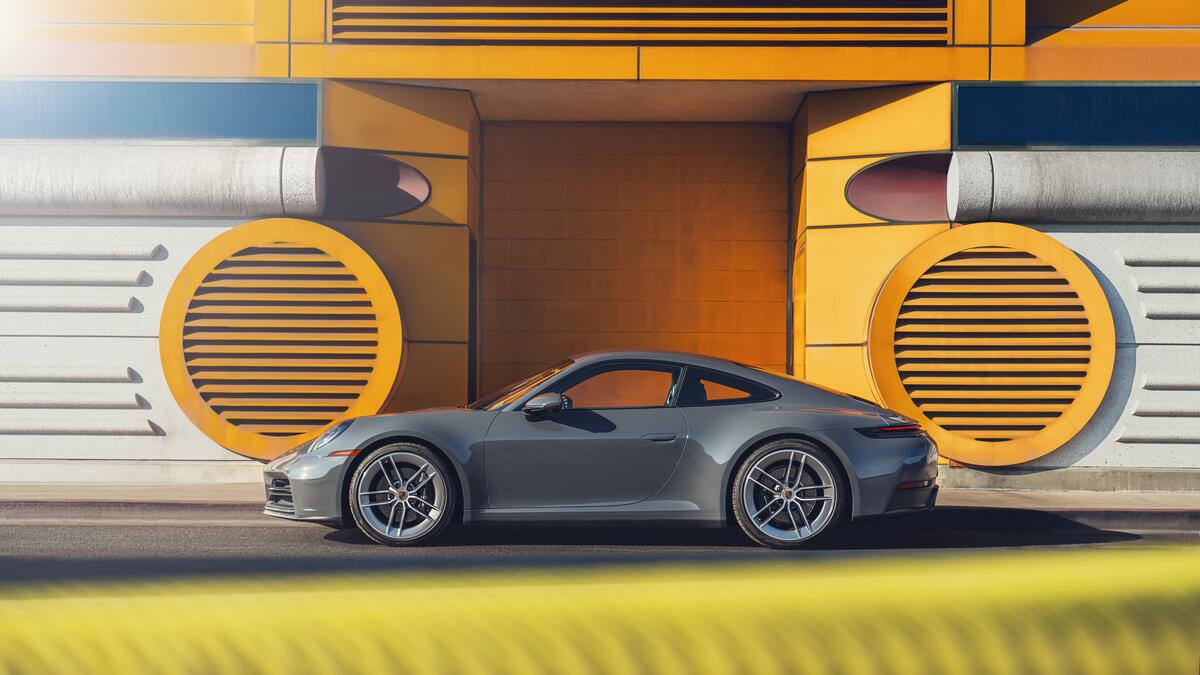
Porsche 911
"[3530.9s] There was another GT three and a GT four. [3534.5s] And then they had a good mix of other, like, uh, like a, uh, Mark four."
“GT4” is another track-focused Porsche 911. It’s built to be fun and capable on a circuit, usually with a bit less hardcore racing focus than the GT3.
“GT4” refers to the Porsche 911 GT4, a more track-oriented variant than a standard 911 but typically positioned below the GT3 in racing intensity. GT4 cars are often used for track days and some racing series.
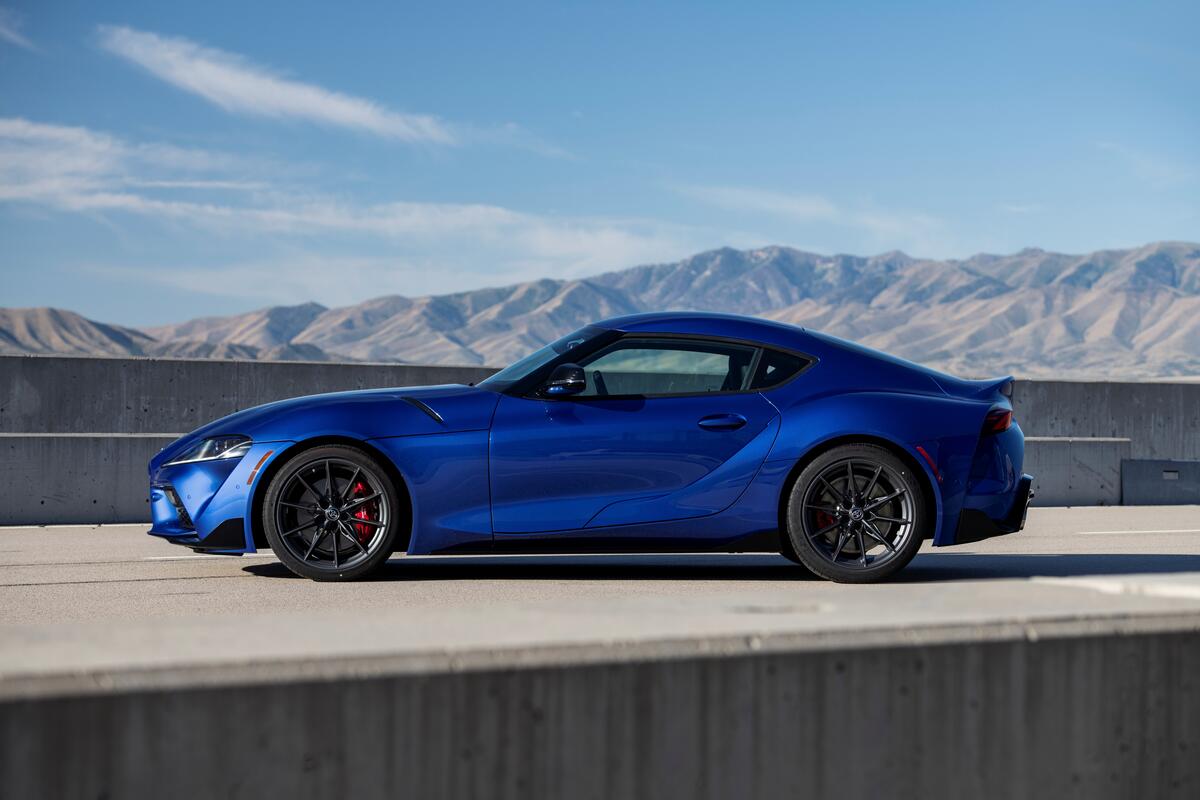
Mark four Supra
"So the Mark four Supra is a super popular one. It's like 93 to 98. Okay. So it was the Mark four."
They’re talking about a Toyota Supra from the 1990s (roughly 1993 to 1998). It’s a very well-known sports car that a lot of car fans modify and talk about.
“Mark four Supra” is referring to the Toyota Supra from the A80 generation (often associated with the 1993–1998 model years). It’s a popular 1990s Japanese sports coupe known for its strong aftermarket support and motorsport/enthusiast following.
Roger
"So by the way, so this is a popular place that people like to take their cars and drive Roger and you need to be very careful because."
They’re mentioning a specific spot/road name (“Roger”) where people like to drive their cars. It’s part of the story about the area and why you have to be careful.
“Roger” appears to be a place/route name in the conversation about where people drive their cars. It’s not a technical automotive term, but it helps listeners understand the specific location being discussed.
Acura lounge
"this year they were being a lot more tougher at the Acura lounge. I saw that it was a lot."
The Acura lounge is a special guest area for the Acura event. They’re talking about how the rules for getting in changed and caused issues for people trying to enter.
The “Acura lounge” is the event hospitality area associated with Acura. The hosts are discussing how entry rules and guest lists affected who could get in and when.
fire marshal
"You know, it's just like everyone's always trying to sneak somebody in and you can't plan for that and fire marshal and shit like that."
A fire marshal is the person who makes sure an event follows fire-safety rules. They can restrict how many people are allowed in an area, so event staff have to follow the limits.
A fire marshal is an official responsible for enforcing fire-safety rules at events. In this context, they’re limiting how many people can enter certain areas, which affects how guests can be “sneaked in” or managed at the venue.
engine block
"[3960.2s] Like, I can look at, which is fine. [3961.5s] And it's okay. [3962.4s] I can look at an engine block and think it's the most exciting thing ever. [3965.3s] While somebody's like, dude, it's a hunk of aluminum."
The engine block is the big main metal part of an engine. It’s where the cylinders are, and it supports a lot of the other engine parts.
An engine block is the main metal housing inside an engine that holds the cylinders and many key internal parts. It’s often made from cast aluminum or iron and is a structural foundation for the rest of the engine components.
Acura Long Beach Grand Prix
"But I mean, as far as the ticket allocation and because these grandstand tickets are $221 a piece... Friday the whole weekend Friday is qualifying. Saturday is qualifying. Sunday is a race."
This is a big racing event in Long Beach. The hosts are describing what happens on Friday, Saturday, and Sunday during the race weekend.
This refers to the Acura Long Beach Grand Prix, a major motorsport event held in Long Beach. The hosts are talking about how the weekend schedule works and what spectators do each day.
grandstand tickets
"But I mean, as far as the ticket allocation and because these grandstand tickets are $221 a piece. Oh my God."
Grandstand tickets are seats in the main spectator stands along the track. They’re talking about how expensive those seats are and how that impacts attendance.
Grandstand tickets are reserved seats in spectator areas designed for viewing the track. The hosts mention the price per seat to explain how ticket allocation and costs affect who can attend.
qualifying
"I'm like, yeah, this is Friday the whole weekend Friday is qualifying. Saturday is qualifying. Sunday is a race."
Qualifying is when drivers race against the clock to earn their starting position for the main race. Faster laps usually mean you start closer to the front.
Qualifying is the session where drivers try to set the fastest lap time to determine their starting positions for the race. Better qualifying usually means a more favorable spot on the grid.
walk around
"but that's when I took advantage of going into the, uh, atrium and, and doing the walk around and looking at the, uh, exhibits or whatnot."
A “walk around” just means walking around the car in person to look closely at it. People do it at events to check out details before/after photos.
A “walk around” is an in-person inspection where you circle a car to look at details like bodywork, fitment, and how components are laid out. At car events, it’s often where people spot differences between race cars and street versions.
Acura Honda
"And shout out to once again, Acura Honda, setting up like Sims, uh, like they had their race cars in there, had people getting them, hopping in and out of cars, a big line for people to get into the car."
They’re talking about Acura Honda as the group putting on the event setup. It’s why people could line up to get into the race cars and take photos.
The hosts mention Acura Honda as the event presence that set up race cars for attendees. In this context, it’s the brand/organization behind the cars and the fan experience at the Long Beach Grand Prix.
NSX Club of America
"Well, my justification for that is I'm the fucking president of the NSX Club of America, so I can, I can get this pass, you know, but even then, you know,"
This is a club for people who really like the Acura NSX. If you’re the president, you’re basically a leader in that community, which can sometimes come with special event access.
The NSX Club of America is a fan organization focused on the Acura NSX. Being “president” implies the speaker is a prominent member of the NSX enthusiast community and can help secure access to event hospitality.
Paralympics
"So right now they have 10, uh, Paralympics, like the, the handicap type, you know, so they have 10 of those athletes..."
The Paralympics are the Olympic-style games for athletes with disabilities. The hosts mention them to explain who the sponsor athletes are and why they’re at the event.
The hosts discuss the Paralympics as part of the sponsor-athlete lineup, referring to athletes with disabilities. This is relevant context for why Honda/Acura athletes are present in the suites.
Pikes Peak
"[5037.1s] He's going to do Pikes Peak again this year. [5040.0s] He just got inducted into the Drift Hall of Fame."
Pikes Peak is a well-known race where cars drive up a steep mountain road as fast as possible. It’s considered a tough test of driving skill and car setup.
Pikes Peak is a famous hill climb in Colorado where drivers race up a mountain road against the clock. It’s known for extreme elevation changes and demanding traction and cooling, so doing it (or repeating it) is a big credibility marker for a driver.
drift
"[5040.0s] He just got inducted into the Drift Hall of Fame. [5042.7s] Long Beach Drift Hall of Fame and he drove the number 40 Integra."
Drifting is a driving style where the car is intentionally steered so the rear tires lose grip while the driver maintains control through the corner. It’s judged on things like angle, smoothness, and how well the driver keeps speed while sliding.
engine room
"He actually took, uh, someone was down into the engine room underneath the boat. I, I looked down the hatch and I go, I'm not going on there. It was dope."
On a boat, the “engine room” is the space where the main engine(s) live. That’s where maintenance and repairs usually happen.
The “engine room” is the enclosed compartment on a boat where the propulsion machinery is housed. In marine setups, it’s often where mechanics access major systems for inspection and service.
diesel engines
"But to have those big huge motor turbo, like diesel engines that were out and exposed as a mechanic, oh, they make it easy to work on this kind of, I mean, granted, you're going to be kind of took down there doing whatever you need to do if you need to service them."
A diesel engine works by squeezing air really hard so it gets hot, then fuel ignites from that heat. It’s often used in bigger vehicles because it can pull strongly and go farther on fuel.
Diesel engines are internal-combustion engines that compress air to very high pressure, then ignite fuel using heat from compression (rather than spark plugs). They’re commonly used in heavy-duty applications because they tend to deliver strong low-end torque and good fuel economy.
Road America
"We're up in Elkhart Lake, Wisconsin at Road America. And it was the last day in Craig."
Road America is a famous race track in Wisconsin. The episode is referencing where the group was during the event.
Road America is a well-known road racing circuit in Elkhart Lake, Wisconsin. It’s a common venue for sports car and racing events, so it often comes up when discussing driving experiences and car culture.
Chromies
"He had the homie Chromies on there. Okay. The fat, the fat five. Fat five. Chromies."
“Chromies” just means wheels with a shiny chrome finish. The person thinks the chrome look doesn’t match the car as well as the original wheel style.
“Chromies” is slang for chrome-finished wheels. Chrome wheels can change the look dramatically, and the speaker is debating whether the chrome finish suits the car’s style.
fat five
"The fat, the fat five. Fat five. Chromies. Nobody likes, by the way. No, no one likes any of the fat fives really."
“Fat five” sounds like a nickname for a certain wheel design, probably a wider five-spoke look. They’re saying most people don’t like it, and they personally prefer the simpler silver version.
“Fat five” appears to be a nickname for a specific wheel design—likely a wider “five-spoke” style—used on the car. The speaker is saying people generally don’t like this wheel style, but they prefer the basic silver version over chrome.
on track
"You get an opportunity to go out on track. They raffle off an opportunity. So 20 of those cars and there were cars there."
“On track” just means you’re driving on the race course, not regular streets. It’s a safer, controlled place where people can drive faster and learn the course.
“On track” means driving or riding on the closed race circuit rather than public roads. In motorsports, it’s usually the most controlled environment for high-speed driving and track-specific practice.
raffle off an opportunity
"They raffle off an opportunity. So 20 of those cars and there were cars there. There were two, three, four million dollar cars."
They’re saying the event randomly picks winners for a chance to do something special. In this case, it’s tied to getting time or access related to the track.
A “raffle off an opportunity” means the event randomly selects people to receive a chance to do something—here, likely a track experience. It’s a common motorsports hospitality format for limited on-track slots.

Vulcan Aston Martin Vulcan
"There was a Aston Martin Vulcan, Valkyrie Vulcan. I don't know. I took a video of one of them."
The Aston Martin Vulcan is a rare Aston Martin supercar built mainly for track use. People recognize it because it looks and sounds like a serious performance machine.
The Aston Martin Vulcan is a track-focused, limited-production supercar from Aston Martin. It’s known for being extremely performance-oriented and visually distinctive, so it stands out at car events.
Highline
"I don't think there was a Senna there. No, no Senna. But there were a lot of these cars that we were kind of spoiled here because you can go to Highline and see a lot of them."
They’re talking about “Highline” as a place where you can go see lots of rare, expensive cars. The point is that it’s easier to see them there than at other events.
“Highline” is used like an event or venue where the hosts expect to see a rotating selection of rare, high-end cars. The discussion frames it as a place where enthusiasts can realistically spot “unattainable” cars.
vintage cars
"Having a lot of these vintage cars out there on track for that one lap or whatever the case, maybe one get two laps next time."
“Vintage cars” are older cars from past eras. At events like this, they’re usually brought out for a limited run or special showcase instead of racing like the newest cars.
“Vintage cars” refers to older, historically significant vehicles being shown or driven at an event. In motorsports, they’re often featured for demonstration laps, parade runs, or special heritage sessions rather than full competition.
turn our cars sideways
"No, you know, as long as we don't turn our cars sideways out there and we follow the direction, I think we should be all right."
This means the car starts to rotate so it’s not pointing where it’s going. Drivers try to avoid that because it can make the car harder to control and slower through the turn.
“Turn our cars sideways” describes a loss of directional control where the car rotates so its body points sideways relative to its travel direction. In racing terms, that’s often associated with oversteer or traction loss, and it’s something drivers try to avoid.
manual mode
"as we're finishing the parade lap, I think, I think I got up to, I don't know what I got up to, but I know I had to switch it into manual mode so I can kind of control it more, you know, for the sound"
Manual mode lets you pick the gear yourself instead of the car automatically shifting. People use it to feel more in control and sometimes to keep the engine sounding the way they want.
Manual mode is a driving setting on an automatic or dual-clutch transmission that lets the driver choose gears instead of letting the car shift on its own. Drivers often use it to hold a gear for better response or to control engine sound during events like parade laps.

Koenigsegg Jesko
"I'm not as loud as this fucking Jesko and these other cars went by. But you got a good tune. You got some, you know, down pipes."
The Koenigsegg Jesko is an extremely expensive, very fast supercar. The speaker is basically saying their car sounded good compared to how loud the Jesko was.
Koenigsegg Jesko is a high-horsepower hypercar known for its track-focused performance and advanced aerodynamics. In this segment, it’s used as a reference point for how loud and exciting the cars sounded during the parade lap.
down pipes
"But you got a good tune. You got some, you know, down pipes. You can hear me kind of going by."
Downpipes are part of the exhaust system that help carry exhaust gases out of the engine. Changing them can make the car louder and sometimes improve how it breathes.
Downpipes are exhaust components that route exhaust gases from the engine (often from the turbo area) toward the rest of the exhaust system. Aftermarket downpipes can change both sound and flow characteristics, which is why the speaker connects them to how the car sounded going by.
stick shift
"[6031.6s] Yes. [6031.7s] Are we about to do this? [6032.6s] I'm in a stick shift car and I know how to drive, but when I start looking around,"
A “stick shift” is a car you drive with a manual gear lever. You use a clutch pedal to change gears, and if you don’t coordinate it right, the engine can stall.
“Stick shift” means a manual-transmission car that uses a clutch pedal and a gear lever instead of an automatic gearbox. Drivers must coordinate clutch, gear selection, and throttle to avoid stalling.
stall
"[6054.4s] I didn't want us to get that close and connected, but oh my God, what an experience. [6059.3s] And I didn't want to stall, bro. [6061.5s] For me, it was getting ready to go out."
A “stall” is when the engine shuts off while you’re driving. In a manual car, it can happen if you let the clutch out too fast or don’t give the engine enough to keep running.
To “stall” is when the engine stops running because it’s not getting enough airflow/fuel or the drivetrain is being held in a way that prevents the engine from turning. In a manual car, stalling often happens during low-speed starts or when the clutch is released too quickly.
Follow the leader
"[6064.1s] Once I got out there, I didn't even, it was just, you know. [6066.7s] Follow the leader at that point. [6067.9s] Follow the leader at that point."
“Follow the leader” describes a driving format where one car sets the pace and the others maintain spacing and mirror the route/inputs. It’s common in events and training to reduce decision-making while building consistency.
SEMA parade
"The only other time I've driven a car in front of a crowd was at SEMA... SEMA ignited the last day you could have the SEMA parade."
SEMA is a big car show for aftermarket parts and enthusiasts. A “parade” here means a group drive through public areas tied to the show.
SEMA is the Specialty Equipment Market Association show, and a “SEMA parade” refers to a public procession/drive associated with the event. The speaker is comparing the crowd experience of Long Beach to the earlier SEMA event.
converted racetrack
"...this was your, like, you're legit on the streets of Long Beach on a converted racetrack. City racetrack, yep."
They’re describing a route that’s temporarily set up for racing. Even though it’s in the city, it gets turned into a track-like course for the event.
A “converted racetrack” in this context means the event route is adapted for racing—using barriers, markings, and closures—so cars can run safely at speed. It’s still a street-based environment rather than a purpose-built circuit.
wristbands
"...and then, and then we got the wristbands. Right. Shout out to Efren for going around making sure we all had wristbands."
Wristbands are how events check who’s allowed into certain areas. The speaker is saying they made sure everyone had them so they could get to the right place.
Wristbands are event access credentials used to control entry to specific areas (like lounges or track-adjacent zones). The speaker mentions getting wristbands to ensure they could move between areas during the event.
HRC
"Yes, he will. And he's over HRC pretty much. And it's just like those people, you know, Vince, very available."
HRC stands for Honda Racing Corporation. It’s the part of Honda that focuses on racing and performance development.
HRC is Honda Racing Corporation, Honda’s motorsports and racing development arm. When the speaker says someone is “over HRC,” they likely mean that person works closely with Honda’s racing organization or leadership.

civic
"So we could be civic owners. Right. You know, we could be Integra, first gen Integra owners."
The Honda Civic is a popular everyday car. They’re just saying you don’t have to be an NSX owner to enjoy the event and talk about cars.
The Honda Civic is a compact car model line. The hosts are using it as an example of a different kind of owner—someone who may not be an NSX enthusiast but still gets the same “time” or connection at the event.
rebuilt and running on that track
"I mean, let me be real with it, that 86, uh, Integra, to watch it being rebuilt and running on that track as, as any other car was,"
They’re saying the car was restored and made to work again, not just look good. And they’re impressed it could actually run on a real track.
“Rebuilt and running” implies the car was restored to working condition—mechanically sorted enough to drive reliably under track conditions. In enthusiast circles, that’s a big deal because many older cars are only maintained for show rather than being actively driven.
Cuy Automotive
"Can't forget our Patreon business supporters. Cuy Automotive out of Wintergarden, Florida."
They thank a company called Cuy Automotive. It’s listed as a supporter of the podcast.
Cuy Automotive is mentioned as a supporter (specifically, a business in Wintergarden, Florida). In the context of the podcast, it’s part of the show’s Patreon/business support acknowledgements.
Request an Explanation
Heard something you'd like explained? We'll add it to this episode.
Sign in to request explanations for terms you heard.
Want to learn more?
Browse our glossary for plain-English explanations of automotive terms, jargon, and concepts.
Help improve this episode
See something that's not quite right? Our annotations are AI-generated and can sometimes miss the mark. Click the flag icon on any annotation to suggest a correction.