AD #4278 - VW To Pay Owners for EV Grid Charging; BYD Aims to Join European Automaker Lobby; Xiaomi Rules Out Building Cheap EVs
About this episode
BYD is seeking to join Europe’s ACEA automaker lobby, aiming to boost its influence as sales surge and mass production ramps up in Hungary. Stellantis and Microsoft are teaming for a five-year digital transformation covering product development, predictive maintenance, and faster software feature rollouts. Volkswagen plans to pay European EV owners for bidirectional home charging (V2G), turning batteries into grid-access storage with potential annual earnings. Other highlights include a Saudi-backed EV startup (Ceer) with Hyundai powertrain tech, Xiaomi ruling out sub-$14k EVs, and Nürburgring lap times—plus Linamar stock guidance and a teaser on explosion/warranty/recall costs.
BYD
"BYD is in talks to join the European Automobile Manufacturers Association or ACEA... Last year, at sales shot up nearly two hundred and seventy percent... and it plans to start mass producing vehicles at its plant in Hungary this quarter."
BYD is a Chinese automaker expanding rapidly in Europe, and the segment highlights its effort to join ACEA for more influence. It also mentions BYD plans to mass-produce vehicles at a plant in Hungary, signaling a major manufacturing push.
ACEA
"BYD is in talks to join the European Automobile Manufacturers Association or ACEA, which is the lobbying group that represents automakers in the region. If the organization accepts its application, it would make BYD the first Chinese automaker to join the group..."
ACEA is a group that speaks for car companies in Europe. If a new automaker joins, it gets more of a voice in how rules and policies get shaped.
ACEA (European Automobile Manufacturers Association) is the main lobbying group representing automakers in Europe. The episode notes BYD joining ACEA would increase its influence with European regulators and industry stakeholders.
Microsoft
"Stillantis is partnering with Microsoft to help accelerate the automaker's digital transformation. As part of the five year collaboration, the two companies will co develop..."
Microsoft is working with a carmaker to help build and improve the software and data systems behind modern vehicles. The goal is to make development and updates faster and smarter.
Microsoft is partnering with Stellantis to support the automaker’s digital transformation. The segment frames it as a multi-year collaboration involving development/validation initiatives, predictive maintenance, and faster rollout of digital features.
predictive maintenance and testing
"...co develop more than one hundred initiatives, including AIP Howard product development and validation, predictive maintenance and testing, and faster deployment of new digital features and services."
Predictive maintenance means using data to guess when something might break before it actually does. That helps the car company test and fix issues earlier.
Predictive maintenance uses data to forecast when parts or systems are likely to fail, rather than waiting for breakdowns. In the segment, it’s part of a collaboration to improve validation and testing as part of automaker digital transformation.
vehicle-to-grid (V2G)
"...an app which unlocks vehicle to grid or V to G capabilities. In other words, not only will VWEV owners be able to charge at home, but also integrate their vehicle with the local energy system..."
V2G means your EV can act like a small power source for the electric grid. Instead of only charging, the car can also send energy back when the grid wants it.
Vehicle-to-grid (V2G) lets an EV send electricity back to the power grid when needed. The segment explains Volkswagen’s program as “vehicle to grid or V to G,” using an app-controlled setup so owners can earn money by making their battery available.
home bidirectional charging package
"...Volkswagen brand are teaming up to offer an entire home bi directional charging package, including the charger, a smart meter installation, and an app..."
This is a set of equipment you install at home so your EV can both charge and (in some cases) share energy. It includes the charger plus the tools needed to measure and manage that energy.
A home bidirectional charging package includes hardware and installation that enable two-way energy flow between the EV and the home/grid. The episode specifies components like the charger, a smart meter installation, and an app to control access and compensation.
Intrepid
"Intrepid we produce network hardware and software solutions... Intrepid specializes in network interfacing, data logging, simulation, and gateway capabilities... remote update deployment."
Intrepid makes tools that help car companies test and connect vehicle systems. It also supports collecting data and pushing updates remotely so cars can be validated for production.
Intrepid is described as providing network hardware and software solutions for vehicle manufacturers, including testing, validation, and data logging. The segment emphasizes its “gateway capabilities” and cloud platform for remote updates and issue analysis.
Fox Con
"There's a new ev startup... It's called Seer, which is spelled Ceer... Fox Con is developing the platform."
Fox Con is described as helping build the underlying platform for this new EV startup. The episode doesn’t go deep into what that platform includes.
Fox Con is mentioned as developing the platform for the Saudi EV startup “Seer” (spelled “Ceer”). The name appears to refer to a major electronics/manufacturing supplier, but the transcript provides limited detail beyond its role in platform development.
BMW
"...Trans which is part of the Hyundai Group, is providing the powertrain. BMW is licensing some of its components..."
BMW is providing some parts under a licensing arrangement. That helps the new EV startup use existing, already-developed technology.
BMW is mentioned as licensing some of its components for the Seer/Ceer EV program. Component licensing is a common approach when a startup needs proven technology without developing everything from scratch.
Hyundai Group
"...Fox Con is developing the platform. Trans which is part of the Hyundai Group, is providing the powertrain."
The Hyundai Group is involved as a supplier for the EV’s powertrain. That means they’re providing the main drivetrain components that make the car move.
The transcript says “Trans,” part of the Hyundai Group, is providing the powertrain for the Seer/Ceer EV startup. This highlights how large automotive groups can supply core drivetrain components to newer entrants.
Saudi Private Investment Fund
"BMW is licensing some of its components, and the Saudi Private Investment Fund is paying for it all. We don't know much"
The Saudi Private Investment Fund is funding this EV startup. Big EV projects usually need major money up front, and this is the source mentioned in the segment.
The Saudi Private Investment Fund is described as paying for the EV startup’s effort, indicating a government-linked or institutional funding role. This is relevant because early EV ventures often rely on large capital backers to cover platform, tooling, and early production costs.

Ford Mustang GTD
"Ford engineers must not have been happy when Chevrolet took the title of fastest American manufacture at the nurberg Ring with the Corvette ZR one X, lapping the famous racetrack about nine seconds faster than the Mustang GTD."
They mention a Mustang GTD as another high-performance Ford being compared on track speed. It’s part of the lap-time “who’s fastest” discussion.
The transcript compares the Nürburgring performance of the Corvette to a Mustang GTD. The key idea is that Ford’s track-focused variants are being measured against each other using lap-time benchmarks.
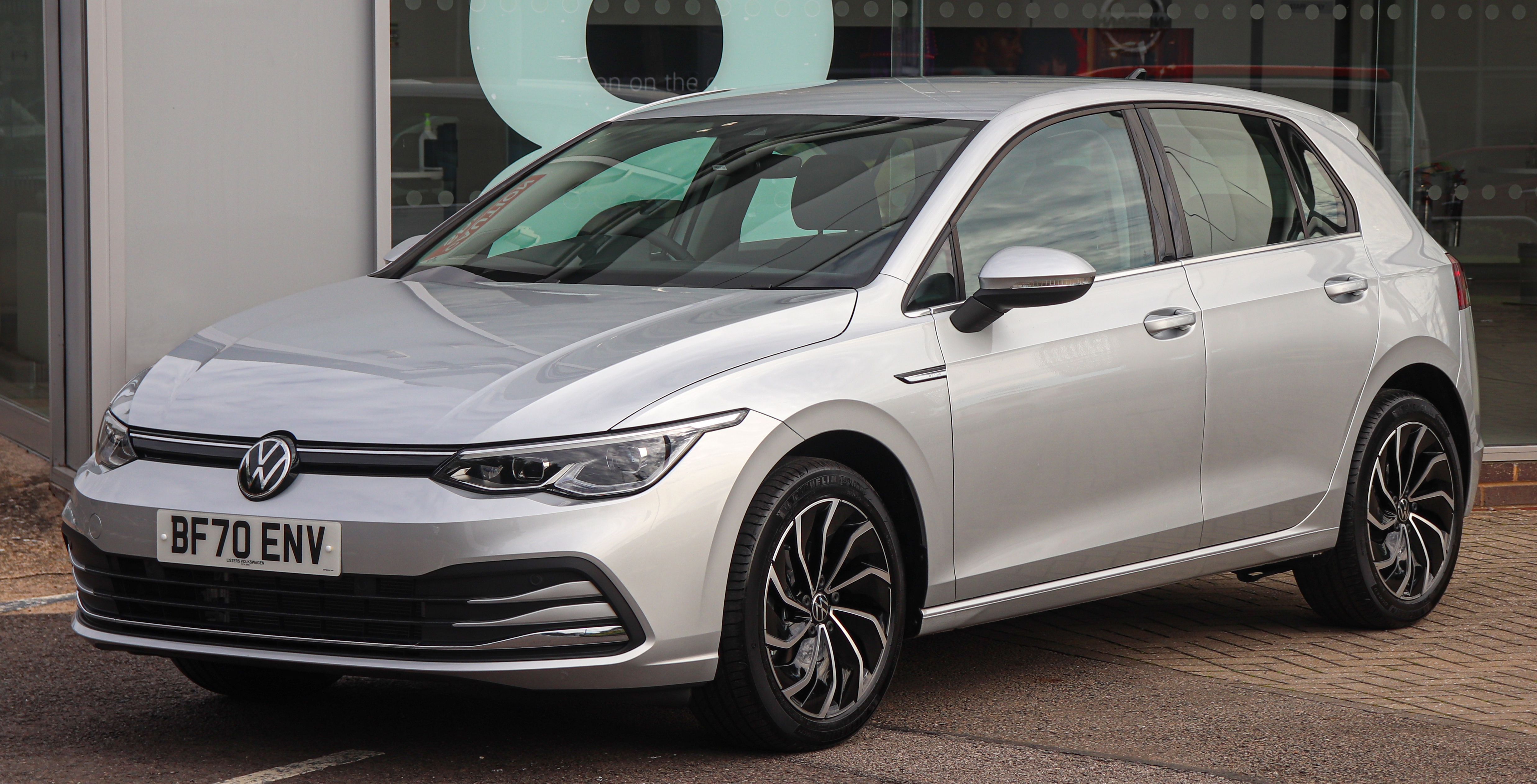
Golf Gtd
"...etrack about nine seconds faster than the Mustang GTD. The Ford Racing team just went back to the nurbu..."
The Golf is a compact car model that comes in different versions. In the podcast, it’s mentioned because a particular version is being compared on a race track, focusing on how fast it can go. The key point is the performance difference measured by track time.
The Golf is a compact car line that’s commonly discussed for its broad range of trims and motorsport-inspired versions. In the podcast context, it’s being referenced in a performance comparison where lap-time or track pace is the focus, including mentions of seconds faster than another performance car. That kind of discussion typically highlights how the Golf’s specific variant and setup perform on a circuit.

Chevrolet Corvette
"Ford engineers must not have been happy when Chevrolet took the title of fastest American manufacture at the nurberg Ring with the Corvette ZR one X, lapping the famous racetrack about nine seconds faster than the Mustang GTD."
They’re talking about a high-performance Corvette that went really fast around the Nürburgring. The discussion uses it as a benchmark for other cars’ lap times.
The speaker is referencing a Chevrolet Corvette variant that set a record at the Nürburgring. The point is to compare lap times and show how performance-focused engineering can translate into faster track results.

Ford GTD
"The Ford Racing team just went back to the nurburg Ring with the GTD and slashed nearly seventeen seconds off its previous lap, hitting a time of six minutes and forty seconds, which also happens to be about nine seconds faster than the Corvette."
They’re talking about Ford’s GTD and how it improved its Nürburgring lap time. It’s basically an example of a race-track development process.
The Ford GTD is discussed in the context of Nürburgring lap times. The speaker says the team returned to the track, improved the lap, and made hardware and tuning changes to increase performance.
magnesium wheels
"engineers added hardware and an aggressive tuning that pushed output... They also made a number of arrow updates, threw on magnesium wheels, carbon bucket seats, a lighter damper system, and..."
Magnesium wheels are lighter than many other wheel materials. Being lighter helps the car handle better because the suspension has an easier time controlling the wheels.
Magnesium wheels are lightweight alloy wheels that reduce unsprung mass. Lower unsprung mass can improve acceleration response, braking feel, and suspension control—especially on track.
lighter damper system
"They also made a number of arrow updates, threw on magnesium wheels, carbon bucket seats, a lighter damper system, and quote additional actions helped reduce weight."
The damper system controls how the car moves over bumps. Making it lighter can help the car react faster and feel more controlled.
A damper system refers to the shock absorbers and related suspension components. Using a lighter setup can reduce weight and improve how quickly the suspension responds to bumps and load changes.
carbon bucket seats
"They also made a number of arrow updates, threw on magnesium wheels, carbon bucket seats, a lighter damper system, and quote additional actions helped reduce weight."
These are lightweight, race-style seats made to hold you securely. They can reduce weight and help you stay in place when driving aggressively.
Carbon bucket seats are race-style seats designed to be very light and supportive. They help reduce weight and keep the driver positioned firmly during hard cornering.
Linamar
"Our autoline stock of the day is Linamar, the Canadian supplier that specializes in forging, casting, hydroforming and machining. Its stock was up four point seven percent yesterday..."
Linamar is a company that makes parts for other automakers. The hosts talk about its stock because news and tariffs can change how investors view its future.
Linamar is a Canadian supplier involved in metal forming and machining. The segment uses Linamar’s stock performance to illustrate how investor sentiment can shift with guidance updates and tariffs on key materials.
forging, casting, hydroforming and machining
"Our autoline stock of the day is Linamar, the Canadian supplier that specializes in forging, casting, hydroforming and machining. Its stock was up four point seven percent yesterday..."
They’re describing different ways to make metal parts. Some methods shape the metal, and machining is used to make the final part precise.
These are manufacturing processes used to create metal components. Forging and casting shape parts, hydroforming forms metal using fluid pressure, and machining finishes parts to tight tolerances.
tariffs on components made from steel, aluminum, and copper
"Despite the Trump administration announcing new tariffs on components made from steel, aluminum, and copper, Linimar's stock is up sixty nine percent over the last year..."
Tariffs are extra taxes on certain materials. If cars or parts use steel, aluminum, or copper, tariffs can make them more expensive and change business outlooks.
Tariffs are taxes imposed on imported goods, and here they’re applied to materials used in automotive components. The segment highlights how such policy changes can affect costs and investor expectations across the supply chain.
warranty and recall costs
"be on the lookout for a video we're posting tomorrow morning about the explosion and warranty and recall costs over the last five years. It's affecting every automaker in the world, including the Evy startups, and you'll be shocked by the numbers."
Warranty and recall costs refer to the money automakers spend to fix defects after sale and to address safety issues. The segment says a future video will cover how these costs have added up across the industry, including EV startups.
Request an Explanation
Heard something you'd like explained? We'll add it to this episode.
Sign in to request explanations for terms you heard.
Want to learn more?
Browse our glossary for plain-English explanations of automotive terms, jargon, and concepts.
Help improve this episode
See something that's not quite right? Our annotations are AI-generated and can sometimes miss the mark. Click the flag icon on any annotation to suggest a correction.