
tariffs on auto imports
Tariffs are taxes applied to imported goods, and in this segment they’re being discussed not just for finished cars but also for steel, aluminum, copper, and auto components. The key point is that raising tariffs further—or adding requirements like minimum U.S. content—can materially increase vehicle costs and complicate automakers’ sourcing and pricing strategies.
minimum amount of US parts
It sounds like a rule that would require cars sold in the U.S. to use a certain amount of parts made locally. That can push companies to source differently, which can raise costs.
USMCA trade deal
USMCA is a trade agreement between the U.S., Canada, and Mexico. It includes rules about how much of a car has to be made in those countries to get better tariff treatment. If those rules get stricter, importing cars can get more expensive.
Mercedes-Benz
Mercedes-Benz is the luxury automaker in this story. The hosts discuss how investors think Mercedes may be focusing too much on luxury instead of mass-market needs, especially in China.
Beijing Auto Show
The Beijing Auto Show is a big car event in China. Companies use it to launch new cars and tech so lots of people hear about them at once.

Mercedes C-Class
Mercedes-Benz is showing a new electric version of the C-Class. It’s designed to charge quickly and includes features that help it drive better in cold weather and turn more easily at low speeds.
eight hundred volt electric architecture
This is the EV’s electrical “power system.” Higher voltage can let the car accept more power during charging, which helps it charge faster—if the charger is compatible.
ninety four kilowad hour battery pack
That number is how much energy the battery can hold. More battery energy usually means you can drive farther, but it still depends on how efficiently the car uses that energy.
WLTP test cycle
WLTP is a standardized test used to estimate how far a car can go on a charge. Different countries use different tests, so the range number you see in Europe may not match what you’d see in the U.S.
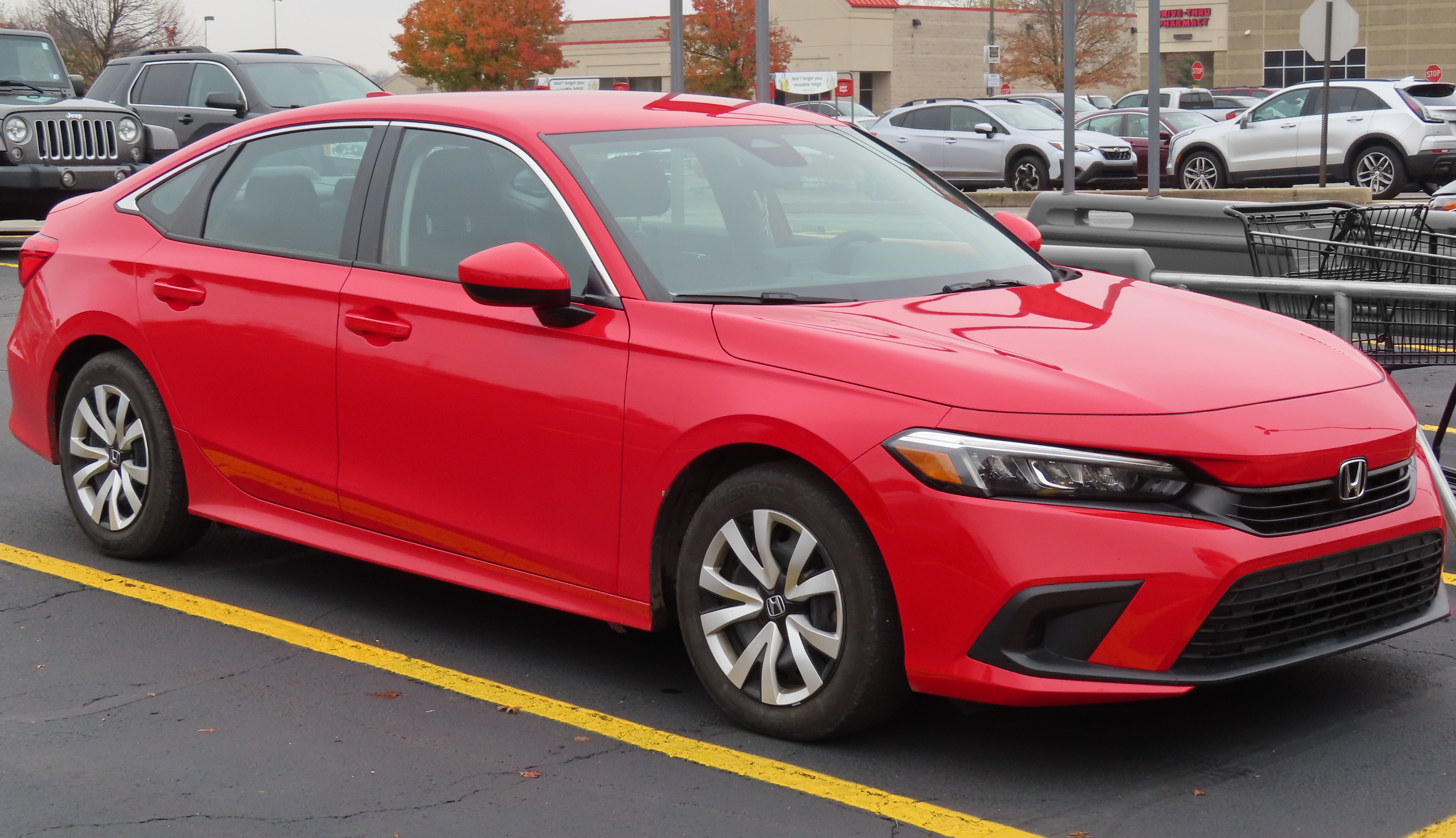
Honda Civic
The Honda Civic is a common compact car that many people use for everyday driving. In the podcast, it’s mentioned because it has a heat pump, which helps warm the inside of the car in colder weather. The point is that it can be comfortable without relying only on traditional heating.
rear wheel steering
Rear-wheel steering means the back wheels can turn too. That can make the car easier to steer in tight spots and can improve stability when driving.
heat pump
A heat pump is a more efficient way to heat the cabin in cold weather. Instead of using lots of energy to make heat, it helps move heat around, so the car can stay comfortable while using less battery.
OTAs
OTAs are software updates that download to your car over the internet. Instead of going to a shop for updates, the car can improve itself over time.
Mercedes SDV
SDV means the car is built around software. That can let Mercedes update features and fix issues remotely instead of only through hardware changes.
pillar to pillar screen
This is a big screen that stretches across the dashboard area. It’s meant to make the car’s controls and information feel more like a tablet or smartphone.
UAW labor costs
UAW is a union for many U.S. auto workers. The idea here is that union labor can be more expensive than labor at some non-union factories, which affects how much profit automakers can make on certain car types.
transplants
In this context, “transplants” means car companies that built factories in the U.S. from outside the U.S. The hosts are comparing how those factories’ costs affect car pricing and profits.
sedans lower profit margin
They’re saying sedans often don’t make as much money per vehicle as SUVs or trucks. So automakers shifted their effort toward the models that sell with better margins.
sedan market
They’re talking about car companies trying to sell more sedans again. The challenge is doing it without spending a ton of money on brand-new designs.
Hyundai Group
They mention Hyundai because it’s selling a lot of cars in the US and is closing in on a major competitor. The broader point is that automakers are reacting to shifting sales trends.
Stalantis
This looks like a misheard name for Stellantis, the big automaker group. They’re being compared in US sales, which is part of the discussion about who’s winning and who needs to adjust.
Level three driving
Level 3 is when the car can drive itself for certain situations, but it still expects you to be ready to take control if something changes. It’s not full self-driving all the time.
BMW
BMW is mentioned because it’s not pushing Level 3 self-driving right now. The idea is that the technology still needs to be more dependable before it’s offered broadly.
GM
GM is described as continuing to pursue Level 3 capabilities and investing in tools for controlled fault injection in its camera pipeline. The segment frames GM’s approach as a way to improve validation precision and accelerate debugging of advanced driver-assist features.
stress test its camera system
Instead of only testing cameras by driving around normally, engineers intentionally create “bad data” or errors to see if the system can handle them. The goal is to find weaknesses earlier and make the system more reliable.

Cadillac Escalate
The Cadillac Escalade is a large luxury SUV, designed for comfort and space. The podcast mentions a new Escalade coming in 2028 and connects it to fuel prices, which can change how expensive it is to drive a big SUV. It’s being discussed because operating costs matter a lot for this type of vehicle.
software defined vehicle platform
A software-defined vehicle means more of the car’s features are controlled by software. That can make it easier to improve or update the car over time, instead of changing hardware for every improvement.
war in Iran boosted EV sales in Europe
They’re saying a war-related fuel-price increase made gas more expensive, which pushed more people toward EVs. When driving costs change, buying decisions often follow.
EV registrations
Registrations are basically the official paperwork count of new EVs entering the road. When that number jumps, it usually means EV sales and adoption are rising.
Emobility Europe
They’re citing a European EV-related group for data. The point is to back up the claim that EV sales are rising.
New Automotive
They cite a research firm to support the numbers they’re quoting about EV registrations. It’s basically the source behind the statistics.
EVs are now cheaper than gas powered cars in the UK
They’re saying EVs are becoming cheaper than gas cars in the UK. That can make it much easier for buyers to switch.
Auto Trader
Auto Trader is where people shop for cars online. They’re using its listing prices to show EVs are, on average, cheaper than gas cars.
The Guardian
They cite The Guardian for a report about EV prices. It’s being used to support the claim that EVs are cheaper than gas cars.
emission targets
Emission targets are rules set by governments about how clean cars must be. If automakers need to meet those rules, they may offer incentives to sell more EVs.
incentives
Incentives are discounts or financial help that make EVs cheaper to buy. When they’re big enough, more people are willing to switch from gas cars.
China Association of Automobile Manufacturers
They cite a major Chinese auto industry group for export numbers. The takeaway is that China is shipping a lot more vehicles abroad than last year.
battery cell value chain
Think of the battery like a recipe with many steps. The “value chain” is all the steps from making the ingredients to testing the finished battery. Using AI means the company tries to make those steps faster and cheaper while keeping quality high.
electrode production
Inside a battery, there are materials called electrodes that do the actual “work” of storing energy. How those materials are made can change how well the battery performs and how expensive it is.
end of line testing
After a battery is built, manufacturers test it at the end of the production line to make sure it works correctly. It’s like a final inspection before the battery gets shipped.
direct recycling
Recycling a battery usually means taking it apart and reusing the valuable materials. “Direct recycling” is a method that tries to reuse those materials more directly, so it can be cheaper and faster.

Ford Mustang
Ford is using AI to make older Mustang concept images look more realistic by adding color. The colors are chosen to match what’s available on today’s Mustang, so it’s not random—it's tied to real paint options.
Intrepid Control Systems
Intrepid Control Systems makes tools that help car makers test cars and software before they go into production. The company’s platform helps find problem codes and figure out which cars have the wrong software or defects.
diagnostic trouble codes
A car computer can notice when something isn’t right and saves a code that describes the problem. Those codes help people figure out where to look instead of guessing.
software versions
Cars today run on software, and different cars (or even different modules inside the same car) can have different software builds. Knowing the exact software version helps determine whether a car meets requirements or needs correction.
NEOVI cloud platform
NEOVI is a software service that helps car makers connect “what the car reported” (trouble codes) with “what software it has.” That makes it easier to quickly spot which cars have problems.