
AD #4279 - Detroit Automakers Scramble to Re-Enter Sedan Market; Trump Admin Considers Tougher Import Rules; Mercedes Debuts New Electric C-
About this episode
Trade policy tensions are heating up as the Trump administration weighs even tougher North American import rules—potentially requiring a higher minimum share of US content and limiting tariff relief under the USMCA. Mercedes meanwhile reveals an all-electric new C-Class with an 800-volt system, fast charging claims, rear-wheel steering, and heavy software/OTA focus. The show also debates Detroit’s sedan comeback challenge amid high labor costs and shrinking margins. Elsewhere: GM’s approach to stress-testing Level 3 camera systems, Europe’s EV surge driven by pricing and incentives, and China’s export boom. AI use cases from BMW to Ford round it out.
tariffs on auto imports
"The Trump administration has put tariffs on imported cars, steel, aluminum, and copper, as well as imported components, but it still looks like it's not satisfied."
Tariffs are taxes applied to imported goods, and in this segment they’re being discussed not just for finished cars but also for steel, aluminum, copper, and auto components. The key point is that raising tariffs further—or adding requirements like minimum U.S. content—can materially increase vehicle costs and complicate automakers’ sourcing and pricing strategies.
minimum amount of US parts
"Officials have discussed requiring car imports to have a minimum amount of US parts, as well as limiting the ability of automakers to lower tariff rates under the US MCA trade deal."
It sounds like a rule that would require cars sold in the U.S. to use a certain amount of parts made locally. That can push companies to source differently, which can raise costs.
This refers to a potential “local content” requirement—mandating that imported vehicles include a minimum percentage of parts made in the U.S. (or North America, depending on the rule). Such rules can force automakers to change supply chains and manufacturing locations, which can increase costs and reduce flexibility.
USMCA trade deal
"Under current US MCA rules, seventy five percent of a vehicle's content must come from the US, Canada, or Mexico, and the three countries will decide by July first whether to extend the agreement."
USMCA is a trade agreement between the U.S., Canada, and Mexico. It includes rules about how much of a car has to be made in those countries to get better tariff treatment. If those rules get stricter, importing cars can get more expensive.
The USMCA (United States–Mexico–Canada Agreement) sets rules for how much of a vehicle’s value must come from North America to qualify for lower trade treatment. In this segment, officials are discussing changes that could reduce automakers’ ability to benefit from those tariff reductions, raising the effective cost of importing vehicles into the U.S.
Mercedes-Benz
"Mercedes is showing off its. Newest ev just days before the Beijing Auto Show opens."
Mercedes-Benz is the luxury automaker in this story. The hosts discuss how investors think Mercedes may be focusing too much on luxury instead of mass-market needs, especially in China.
Mercedes-Benz is the brand being discussed as it prepares to debut a new all-electric C-Class and as investors question its strategy. The episode frames Mercedes as a prestige/luxury brand that faces competitive pressure in China.
Beijing Auto Show
"Mercedes is showing off its newest ev just days before the Beijing Auto Show opens."
The Beijing Auto Show is a big car event in China. Companies use it to launch new cars and tech so lots of people hear about them at once.
The Beijing Auto Show is a major international venue where automakers often debut new models and technology. Timing a reveal “just days before” the show signals a strategy to capture global attention and media coverage.

Mercedes C-Class
"The all electric C class is equipped with an eight hundred volt electric architecture and a ninety four kilowad hour battery pack, which Mercedes says can be charged in as little as ten minutes."
Mercedes-Benz is showing a new electric version of the C-Class. It’s designed to charge quickly and includes features that help it drive better in cold weather and turn more easily at low speeds.
Mercedes-Benz is debuting an all-electric C-Class with an 800-volt electrical architecture and a large battery pack. The segment also highlights fast-charging claims, WLTP range figures, and features like rear-wheel steering and a heat pump, positioning it as a technology-forward EV aimed at competing in China and beyond.
eight hundred volt electric architecture
"The all electric C class is equipped with an eight hundred volt electric architecture and a ninety four kilowad hour battery pack, which Mercedes says can be charged in as little as ten minutes."
This is the EV’s electrical “power system.” Higher voltage can let the car accept more power during charging, which helps it charge faster—if the charger is compatible.
An 800-volt EV architecture uses higher-voltage electrical systems to reduce charging and power-transfer limitations. In practice, it can enable faster charging and more efficient high-power operation compared with lower-voltage designs, assuming the charging infrastructure supports it.
ninety four kilowad hour battery pack
"The all electric C class is equipped with an eight hundred volt electric architecture and a ninety four kilowad hour battery pack, which Mercedes says can be charged in as little as ten minutes."
That number is how much energy the battery can hold. More battery energy usually means you can drive farther, but it still depends on how efficiently the car uses that energy.
A 94 kWh battery pack is the amount of electrical energy the EV can store. Larger battery capacity generally supports longer range, though real-world results also depend on efficiency, vehicle weight, aerodynamics, and driving conditions.
WLTP test cycle
"The car delivers seven hundred and sixty two kilometers of range based on the WLTP test cycle, which we estimate would be about four hundred and thirty five miles on the EPA test."
WLTP is a standardized test used to estimate how far a car can go on a charge. Different countries use different tests, so the range number you see in Europe may not match what you’d see in the U.S.
WLTP (Worldwide Harmonized Light Vehicles Test Procedure) is a standardized method used to estimate EV range and fuel economy. It often produces different range numbers than the U.S. EPA test cycle, so comparing WLTP to EPA requires careful conversion and expectations management.
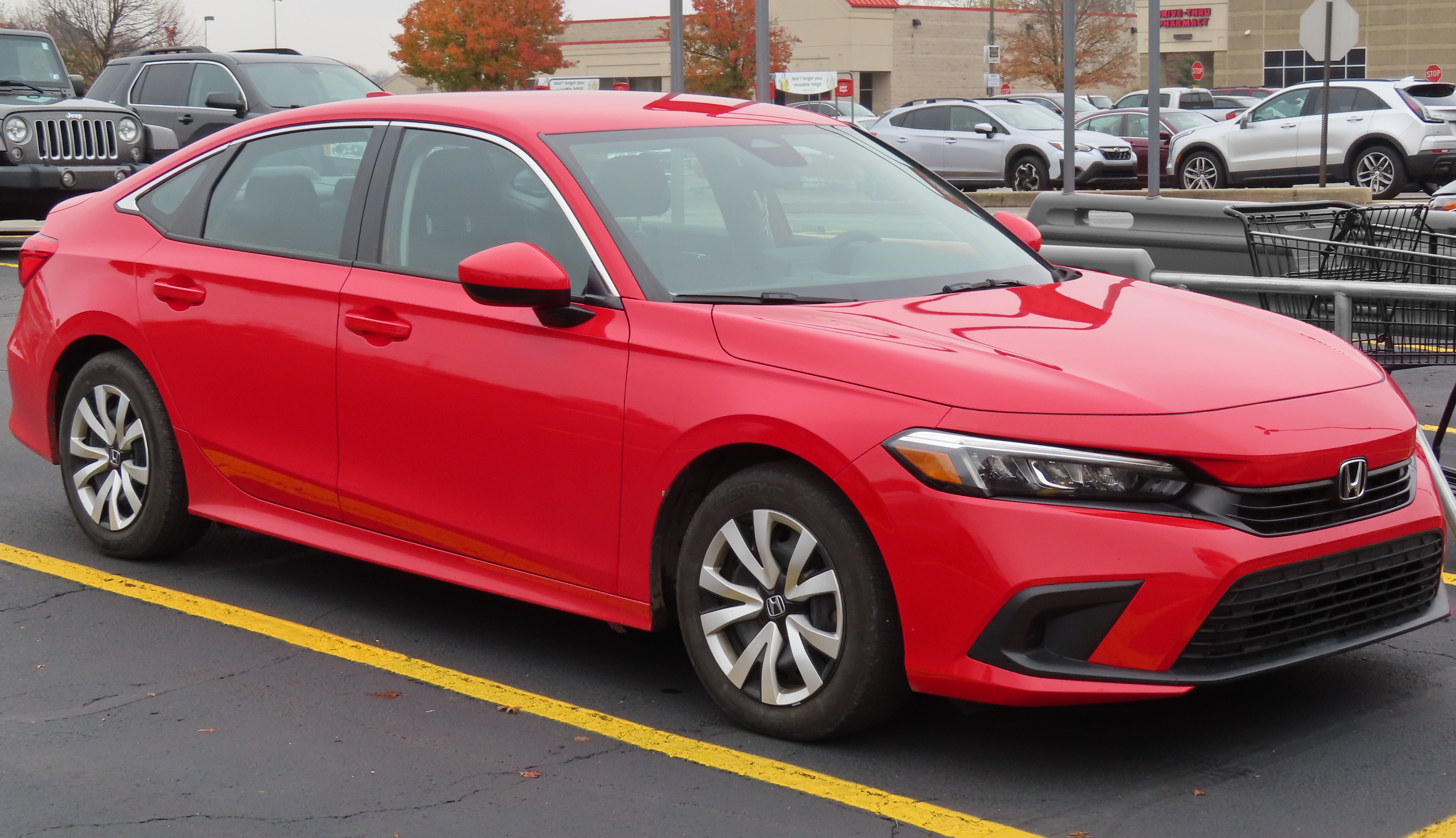
Honda Civic
"...nt two meters, which is about the same as a Honda Civic. It also has a heat pump which warms up the inter..."
The Honda Civic is a common compact car that many people use for everyday driving. In the podcast, it’s mentioned because it has a heat pump, which helps warm the inside of the car in colder weather. The point is that it can be comfortable without relying only on traditional heating.
The Honda Civic is a compact car known for being practical and widely used, which is why it often comes up as a reference point for size. In this podcast context, it’s mentioned alongside interior comfort features like a heat pump, which helps warm the cabin more efficiently in cold weather. That makes it relevant when discussing real-world usability and efficiency details.
rear wheel steering
"It also has rear wheel steering, which gives it a turning radius of eleven point two meters, which is about the same as a Honda Civic."
Rear-wheel steering means the back wheels can turn too. That can make the car easier to steer in tight spots and can improve stability when driving.
Rear-wheel steering helps the car rotate more easily at low speeds and can improve stability at higher speeds. The segment ties it to a tighter turning radius, which is especially useful for parking and maneuvering in tight urban spaces.
heat pump
"It also has a heat pump which warms up the interior in half the time it takes for an ice vehicle at negative seven degrees celsius, which is about nineteen degrees fahrenheit."
A heat pump is a more efficient way to heat the cabin in cold weather. Instead of using lots of energy to make heat, it helps move heat around, so the car can stay comfortable while using less battery.
A heat pump is an HVAC system component that moves heat rather than generating it from scratch, improving efficiency in cold weather. The segment claims it warms the interior faster than an ICE vehicle at very low temperatures, which can help EVs maintain comfort without draining the battery as quickly.
OTAs
"The C class also gets the Mercedes SDV, the architecture called Mercedes Benz Operating System, which allows all software to be updated with OTAs."
OTAs are software updates that download to your car over the internet. Instead of going to a shop for updates, the car can improve itself over time.
OTAs (over-the-air updates) let the vehicle receive software updates without a dealership visit. The segment connects OTAs to Mercedes’ SDV approach, implying ongoing improvements to features, performance, and potentially bug fixes after purchase.
Mercedes SDV
"The C class also gets the Mercedes SDV, the architecture called Mercedes Benz Operating System, which allows all software to be updated with OTAs."
SDV means the car is built around software. That can let Mercedes update features and fix issues remotely instead of only through hardware changes.
SDV typically stands for software-defined vehicle, meaning the car’s functions rely heavily on software that can be updated and configured. In this segment, Mercedes’ SDV/operating system is presented as enabling full software updates via OTAs, which supports longer-term feature evolution.
pillar to pillar screen
"The interior features a pillar to pillar screen, and to dazzle people at night, one thousand and fifty illuminated dots are embedded into the grill."
This is a big screen that stretches across the dashboard area. It’s meant to make the car’s controls and information feel more like a tablet or smartphone.
A pillar-to-pillar screen refers to a wide, continuous display spanning much of the dashboard area, often integrating multiple functions into one visual interface. It’s a design and user-experience choice that can make the cabin feel more “digital” and modern.
UAW labor costs
"And with UAW labor costs which are significantly higher than those at the transplants, GM, Ford and Stilantis couldn't make a profit selling cars, but that gave away twenty percent of the US market..."
UAW is a union for many U.S. auto workers. The idea here is that union labor can be more expensive than labor at some non-union factories, which affects how much profit automakers can make on certain car types.
UAW refers to the United Auto Workers, and “UAW labor costs” points to the higher wage and benefits structure associated with unionized labor in the U.S. The segment argues that these costs make it harder for Detroit automakers to profitably sell sedans compared with lower-cost “transplant” plants.
transplants
"And with UAW labor costs which are significantly higher than those at the transplants, GM, Ford and Stilantis couldn't make a profit selling cars..."
In this context, “transplants” means car companies that built factories in the U.S. from outside the U.S. The hosts are comparing how those factories’ costs affect car pricing and profits.
“Transplants” in U.S. auto talk usually means foreign automakers’ manufacturing plants located in the U.S. The segment uses it to contrast labor cost structures and profitability versus Detroit’s domestic unionized production.
sedans lower profit margin
"Sedans have a lower profit margin than those other vehicles, and with UAW labor costs... GM, Ford and Stilantis couldn't make a profit selling cars..."
They’re saying sedans often don’t make as much money per vehicle as SUVs or trucks. So automakers shifted their effort toward the models that sell with better margins.
The segment argues that sedans have lower profit margins than pickups, crossovers, and SUVs, which pushed Detroit automakers to shift focus. This is a business-model explanation for why many manufacturers reduced sedan offerings even when consumer demand still existed.
sedan market
"and US sales, with the Hyundai Group getting close to Ford, and with Honda out selling Stalantis, the d three are scrambling to figure out how to get back into Sedan's that's going to take some very clever engineering with minimal investment costs."
They’re talking about car companies trying to sell more sedans again. The challenge is doing it without spending a ton of money on brand-new designs.
The segment discusses automakers “scrambling” to re-enter the sedan market, implying that sedans have become strategically important again. It frames the challenge as needing clever engineering while keeping investment costs low.
Hyundai Group
"and US sales, with the Hyundai Group getting close to Ford, and with Honda out selling Stalantis, the d three are scrambling to figure out how to get back into Sedan's that's going to take some very clever engineering with minimal investment costs."
They mention Hyundai because it’s selling a lot of cars in the US and is closing in on a major competitor. The broader point is that automakers are reacting to shifting sales trends.
The Hyundai Group is referenced in the context of US sales momentum, getting close to Ford, while other brands scramble to re-enter the sedan market. It’s a market-competition point rather than a technical deep dive.
Stalantis
"and US sales, with the Hyundai Group getting close to Ford, and with Honda out selling Stalantis, the d three are scrambling to figure out how to get back into Sedan's that's going to take some very clever engineering with minimal investment costs."
This looks like a misheard name for Stellantis, the big automaker group. They’re being compared in US sales, which is part of the discussion about who’s winning and who needs to adjust.
“Stalantis” appears to be a transcription error for Stellantis, referenced in a US sales comparison. Stellantis is the automaker group being out-sold by Honda in this segment’s market snapshot.
Level three driving
"For now, both BMW and Mercedes are giving up on Level three driving, which is hands off and eyes off in certain conditions, but still being ready to take over when needed."
Level 3 is when the car can drive itself for certain situations, but it still expects you to be ready to take control if something changes. It’s not full self-driving all the time.
“Level 3” driving refers to a semi-automated system where the car can handle driving in specific conditions, but the driver must be ready to take over when the system requests. It’s “hands off/eyes off” only within the system’s defined limits, which is why automakers are cautious about real-world reliability and legal/regulatory acceptance.
BMW
"For now, both BMW and Mercedes are giving up on Level three driving, which is hands off and eyes off in certain conditions, but still being ready to take over when needed."
BMW is mentioned because it’s not pushing Level 3 self-driving right now. The idea is that the technology still needs to be more dependable before it’s offered broadly.
BMW is mentioned as one of the automakers stepping back from Level 3 “hands off/eyes off” driving in certain conditions. This highlights how even major brands are adjusting timelines based on safety, system maturity, and real-world readiness.
GM
"However, other automakers like GM are still moving forward to hit level three capabilities, and the company says it's benefiting from intentionally breaking."
GM is described as continuing to pursue Level 3 capabilities and investing in tools for controlled fault injection in its camera pipeline. The segment frames GM’s approach as a way to improve validation precision and accelerate debugging of advanced driver-assist features.
stress test its camera system
"GM invested in tools that allow engineers to introduce faults like shorts or random errors into its entire camera pipeline in a controlled manner, instead of waiting for them to happen naturally within vehicle testing."
Instead of only testing cameras by driving around normally, engineers intentionally create “bad data” or errors to see if the system can handle them. The goal is to find weaknesses earlier and make the system more reliable.
The segment describes a validation approach where engineers deliberately inject faults (like shorts or random errors) into the camera software/processing pipeline to see how the system behaves. This kind of controlled fault injection helps teams test edge cases faster and more precisely than waiting for rare failures to occur naturally during vehicle testing.

Cadillac Escalate
"...el three capabilities, first launching in the new Cadillac Escalate in twenty twenty eight. The jump in fuel prices c..."
The Cadillac Escalade is a large luxury SUV, designed for comfort and space. The podcast mentions a new Escalade coming in 2028 and connects it to fuel prices, which can change how expensive it is to drive a big SUV. It’s being discussed because operating costs matter a lot for this type of vehicle.
The Cadillac Escalade is a large luxury SUV, typically known for high-end features and strong capability for family and passenger use. In this podcast context, it’s mentioned in relation to a “new” Escalade launching in 2028 and the discussion includes factors like fuel prices and how that affects consumer decisions. That makes it relevant to talk about because large SUVs are especially sensitive to operating costs.
software defined vehicle platform
"GM says the investment will pay off with its next gen software defined vehicle platform, which is supposed to have Level three capabilities, first launching in the new Cadillac Escalate in twenty twenty eight."
A software-defined vehicle means more of the car’s features are controlled by software. That can make it easier to improve or update the car over time, instead of changing hardware for every improvement.
A “software-defined vehicle” is built so major functions can be updated or improved through software rather than relying entirely on hardware changes. In this context, GM ties its next-gen platform to Level 3 capabilities, implying that perception, driver-assist behavior, and validation can evolve via software updates.
war in Iran boosted EV sales in Europe
"The jump in fuel prices caused by the war in Iran boosted EV sales in Europe in the first quarter."
They’re saying a war-related fuel-price increase made gas more expensive, which pushed more people toward EVs. When driving costs change, buying decisions often follow.
The segment links higher fuel prices from geopolitical conflict to increased EV sales in Europe. The underlying idea is that when gasoline/diesel get more expensive, EVs become relatively more attractive financially.
EV registrations
"Those registrations represent fifteen European markets, which accounted for ninety four percent of all b EV sales last year, and in March alone, b EV registrations were up over fifty percent to two hundred and forty thousand units, or are around twenty one percent of the overall market."
Registrations are basically the official paperwork count of new EVs entering the road. When that number jumps, it usually means EV sales and adoption are rising.
“EV registrations” are a measure of how many electric vehicles were newly registered in a given period, which is often used as a proxy for market demand. The segment uses registration growth across European markets to argue that EV adoption is accelerating.
Emobility Europe
"According to data from trade group Emobility Europe and research firm New Automotive, five hundred and sixty thousand bvs were registered in Q one, up thirty percent from a year ago."
They’re citing a European EV-related group for data. The point is to back up the claim that EV sales are rising.
“Emobility Europe” is cited as a trade group contributing data on EV registrations in Europe. It’s part of the evidence base for the segment’s claim that EV adoption is accelerating.
New Automotive
"According to data from trade group Emobility Europe and research firm New Automotive, five hundred and sixty thousand bvs were registered in Q one, up thirty percent from a year ago."
They cite a research firm to support the numbers they’re quoting about EV registrations. It’s basically the source behind the statistics.
“New Automotive” is mentioned as a research firm used alongside Emobility Europe for EV registration data. This supports the segment’s market-growth statistics.
EVs are now cheaper than gas powered cars in the UK
"And here's another reason why EV sales are up in Europe. Evs are now cheaper than gas powered cars in the UK."
They’re saying EVs are becoming cheaper than gas cars in the UK. That can make it much easier for buyers to switch.
The hosts claim EV pricing has crossed a key threshold in the UK, where EVs are cheaper than comparable gas cars. They connect this to incentives and the absence of restrictive tariffs on Chinese-made EVs, which can affect supply and pricing.
Auto Trader
"According to a report from The Guardian, the average EV listed on Auto Trader is one thousand dollars less expensive than an ice vehicle."
Auto Trader is where people shop for cars online. They’re using its listing prices to show EVs are, on average, cheaper than gas cars.
Auto Trader is referenced as the marketplace where EV listing prices are compared against gas vehicles. Using listing data helps illustrate real-world price differences consumers see when shopping.
The Guardian
"According to a report from The Guardian, the average EV listed on Auto Trader is one thousand dollars less expensive than an ice vehicle."
They cite The Guardian for a report about EV prices. It’s being used to support the claim that EVs are cheaper than gas cars.
The Guardian is cited as the source of a report comparing EV listings on Auto Trader versus internal-combustion vehicles. This is a credibility/source mention tied to the pricing argument.
emission targets
"There's several reasons for the difference. Many automakers are offering big incentives on evs in an effort to meet emission targets."
Emission targets are rules set by governments about how clean cars must be. If automakers need to meet those rules, they may offer incentives to sell more EVs.
Emission targets are regulatory goals that limit pollutants from vehicles, pushing automakers to sell more lower-emission vehicles like EVs. The segment connects incentives for EVs to meeting those targets, implying policy is a major driver of pricing and sales.
incentives
"The UK is now offering up to three thousand, seven hundred and fifty pounds to buy an EV And lastly, the UK doesn't ban or places a specific tariff on Chinese made evs, so there's plenty."
Incentives are discounts or financial help that make EVs cheaper to buy. When they’re big enough, more people are willing to switch from gas cars.
The segment discusses government and market incentives that reduce the effective purchase price of EVs, such as UK purchase support. These incentives can shift consumer demand by narrowing the price gap between EVs and internal-combustion cars.
China Association of Automobile Manufacturers
"And speaking of Chinese vehicles, exports out of China surged in March. According to the China Association of Automobile Manufacturers, vehicle exports reached eight hundred and seventy five thousand units, up seventy three percent from a year ago."
They cite a major Chinese auto industry group for export numbers. The takeaway is that China is shipping a lot more vehicles abroad than last year.
The China Association of Automobile Manufacturers is cited for export figures, including a large year-over-year increase in vehicle exports from China. This supports the segment’s broader point about Chinese automakers expanding global reach.
battery cell value chain
"now using AI to help optimize its entire battery cell value chain, from electrode production to end of line testing and in house direct recycling. The company says it expects to see savings in raw materials, costs, and time."
Think of the battery like a recipe with many steps. The “value chain” is all the steps from making the ingredients to testing the finished battery. Using AI means the company tries to make those steps faster and cheaper while keeping quality high.
A battery cell value chain covers every step needed to make battery cells, from making the raw materials and electrodes to assembling cells and testing them. When a company uses AI across the whole chain, it’s trying to reduce waste and cost while improving throughput and quality.
electrode production
"now using AI to help optimize its entire battery cell value chain, from electrode production to end of line testing and in house direct recycling."
Inside a battery, there are materials called electrodes that do the actual “work” of storing energy. How those materials are made can change how well the battery performs and how expensive it is.
Electrodes are the key battery materials that store and release energy during charging and discharging. Improving electrode production can affect cell performance, consistency, and cost.
end of line testing
"now using AI to help optimize its entire battery cell value chain, from electrode production to end of line testing and in house direct recycling."
After a battery is built, manufacturers test it at the end of the production line to make sure it works correctly. It’s like a final inspection before the battery gets shipped.
End-of-line testing is the quality check performed after a product is fully assembled, to confirm it meets specifications. For batteries, it helps catch defects before cells move on to vehicles or further processing.
direct recycling
"now using AI to help optimize its entire battery cell value chain, from electrode production to end of line testing and in house direct recycling."
Recycling a battery usually means taking it apart and reusing the valuable materials. “Direct recycling” is a method that tries to reuse those materials more directly, so it can be cheaper and faster.
Direct recycling refers to processes that recover battery materials while preserving more of their original structure, aiming to reduce the cost and complexity versus traditional recycling routes. The goal is to bring material back into new cell production more efficiently.

Ford Mustang
"at the other end of the spectrum, Ford is using AI to bring new life to old designs. It took the negatives of photos of Mustang concepts from the nineteen sixties which were in black and white and asked AI to add color only this time using shades that are available on the current Mustang lineup."
Ford is using AI to make older Mustang concept images look more realistic by adding color. The colors are chosen to match what’s available on today’s Mustang, so it’s not random—it's tied to real paint options.
The Ford Mustang is being used as an example of how AI can be applied to automotive design and marketing. In the segment, AI takes old black-and-white Mustang concept photos and colorizes them using shades from the current Mustang lineup.
Intrepid Control Systems
"Speaker 5: Ad Intrepid we produce network hardware and software solutions enabling vehicle manufacturers to innovate and design the next generation of modern mobility... Intrepid's NEOVI cloud platform helps manufacturers quickly identify diagnostic trouble codes and defects..."
Intrepid Control Systems makes tools that help car makers test cars and software before they go into production. The company’s platform helps find problem codes and figure out which cars have the wrong software or defects.
Intrepid Control Systems is described as providing vehicle testing and validation software and hardware solutions for automakers. In this segment, their NEOVI cloud platform is used to analyze diagnostics and software versions to identify defects and isolate non-compliant vehicles.
diagnostic trouble codes
"Intrepid's NEOVI cloud platform helps manufacturers quickly identify diagnostic trouble codes and defects by pinpointing which vehicles have specific software versions."
A car computer can notice when something isn’t right and saves a code that describes the problem. Those codes help people figure out where to look instead of guessing.
Diagnostic Trouble Codes (DTCs) are standardized identifiers stored by a vehicle’s onboard computer when it detects a fault. They help engineers and technicians pinpoint what system is malfunctioning and guide troubleshooting.
software versions
"Intrepid's NEOVI cloud platform helps manufacturers quickly identify diagnostic trouble codes and defects by pinpointing which vehicles have specific software versions."
Cars today run on software, and different cars (or even different modules inside the same car) can have different software builds. Knowing the exact software version helps determine whether a car meets requirements or needs correction.
Modern vehicles often have multiple software versions across ECUs (electronic control units), and compliance can depend on the exact build. The segment describes using AI/analytics to match DTCs and part numbers to specific software versions to isolate non-compliant vehicles.
NEOVI cloud platform
"Intrepid's NEOVI cloud platform helps manufacturers quickly identify diagnostic trouble codes and defects by pinpointing which vehicles have specific software versions. This allows them to isolate non compliant vehicles in real time..."
NEOVI is a software service that helps car makers connect “what the car reported” (trouble codes) with “what software it has.” That makes it easier to quickly spot which cars have problems.
NEOVI is presented as a cloud platform that helps manufacturers correlate diagnostic trouble codes and defects with specific software versions and part numbers. That correlation can speed up identifying which vehicles need to be held back from production.
Request an Explanation
Heard something you'd like explained? We'll add it to this episode.
Sign in to request explanations for terms you heard.
Want to learn more?
Browse our glossary for plain-English explanations of automotive terms, jargon, and concepts.
Help improve this episode
See something that's not quite right? Our annotations are AI-generated and can sometimes miss the mark. Click the flag icon on any annotation to suggest a correction.