AD #4303 - Ford Becoming a Holding Company?; Oil Changes Could Get Expensive; Mitsubishi Shrinking in the U.S.
About this episode
Ford is expanding beyond vehicles, with a pivot of its EV battery plants toward energy storage for utilities and other businesses, plus moves into banking via Ford Credit Bank. The show also connects global oil supply and refining constraints to potentially higher synthetic oil and oil-change costs. Mitsubishi’s U.S. presence is shrinking, while BMW highlights EV “vehicle-to-grid” and “vehicle-to-home” features in Germany. Listeners debate whether Chinese automakers should be allowed into the U.S. market.
Ford Credit Bank
"In January, Ford created an industrial bank called Ford Credit Bank that is headquartered in Salt Lake City. It will offer savings, accounts and time deposits in addition to car loans and leases."
Ford Credit Bank is Ford’s new banking operation. The episode says it will handle things like car loans and leases, and also offer savings-style accounts. It’s part of Ford building more financial services around buying and owning vehicles.
Ford Credit Bank is described as an industrial bank created by Ford. The segment says it will offer savings and time deposits in addition to car loans and leases. That matters because it shows Ford expanding its financial services footprint alongside vehicle sales.
holding company
"General Motors and Stilantis are also creating industrial banks, and this has got some insiders in Detroit thinking that over the next decade Ford is going to evolve into a holding company, one that owns an energy company, a banking company, and of course a car company."
A holding company is basically a company that owns other companies. Instead of one business doing everything, it owns separate businesses under one umbrella. Investors may value it differently because each part can grow or earn money in its own way.
A holding company is a parent business that owns other companies rather than primarily making products itself. In this segment, the idea is that Ford could own separate businesses like energy and banking alongside its car operations. That structure can change how investors value the group because different subsidiaries may perform differently.
direct lithium extraction technology
"They're gonna use DLLE, or direct lithium extraction technology, which uses a closed loop system that returns the water to the lake."
Direct lithium extraction (DLE) is a lithium-mining approach that pulls lithium from brine using a more controlled process than traditional evaporation ponds. In the segment, DLE is described as a closed-loop system that returns water to the Great Salt Lake. That’s important because it’s presented as reducing environmental impacts like lowered water levels and dust.
brine
"Up until now, lithium mining and the Great Salt Lake involved pumping brine into evaporation pools to get the lithium."
Brine is salty water that’s very concentrated. The episode says older lithium mining methods use brine and let the water evaporate in ponds to concentrate the lithium. It’s mentioned because that process can affect the local environment.
Brine is highly concentrated salt water, and it’s the source material for many lithium extraction processes. The segment contrasts DLE with older methods that pump brine into evaporation pools so the water evaporates and lithium is left behind. That older approach is linked here to environmental side effects like dust and shrinking water levels.
synthetic oil
"it turns out that the base oil that's refined into synthetic oil for car engines mostly comes from the Middle East."
Synthetic oil is a type of engine oil that’s made to work well across a wider range of temperatures. The episode connects synthetic oil supply and refining to how expensive oil changes could become. So it’s part of the story behind rising maintenance costs.
Synthetic oil is an engineered lubricating fluid formulated to provide more consistent performance across temperature ranges than conventional oils. The segment focuses on synthetic engine oil used in the U.S., tying supply and refining constraints to the cost of oil changes. For listeners, it’s relevant because oil-change pricing can be influenced by global feedstock and refining capacity.
prepaid, in-lifetime maintenance programs
"A big spike in engine oil won't only hurt motorists, it will hurt fleet operators and car dealers who offer prepaid, in lifetime maintenance programs."
These are service plans where you pay ahead of time for maintenance for as long as you own the vehicle. The episode says higher oil prices can hurt the businesses that promised that service at the old price. That could lead to changes in pricing or coverage.
Prepaid, in-lifetime maintenance programs are dealer or fleet offerings where customers pay upfront for ongoing service coverage. The segment argues that if engine oil prices spike, these programs can become financially painful for fleet operators and dealers because they’re locked into providing service at a fixed price. That can indirectly affect what customers pay later or whether programs change.
diagnostic trouble codes
"identify diagnostic trouble codes and defects by pinpointing which vehicles have specific software versions. This allows them to isolate non compliant vehicles in real time using analytics, part numbers, DTCs, and organized secure cloud based data."
A diagnostic trouble code is like a “check engine” message with a specific label. It tells the car’s computer what kind of problem it thinks it found, which makes it easier to diagnose.
Diagnostic trouble codes (DTCs) are standardized identifiers stored by a vehicle’s onboard computer when it detects a fault. They help technicians and software systems pinpoint what system is misbehaving and, in modern setups, which software version is involved.
DTCs
"using analytics, part numbers, DTCs, and organized secure cloud based data. All of these steps ensure vehicles are cleared for production and ready for the road"
DTCs are just the short name for diagnostic trouble codes. They’re the specific fault labels the car’s computer records.
DTCs is an acronym for diagnostic trouble codes. In the context of vehicle software validation, DTCs can be used to quickly identify which cars are showing faults tied to certain software versions.
vehicle-to-grid
"In March, it launched a vehicle to grid solution in Germany that allows IX three owners to earn up to seven hundred and twenty euros a year by giving energy providers access to their vehicle's battery."
Vehicle-to-grid (V2G) lets an electric vehicle send energy back to the power grid. That enables utilities to use the car’s battery as a flexible energy resource, often with compensation for the owner.
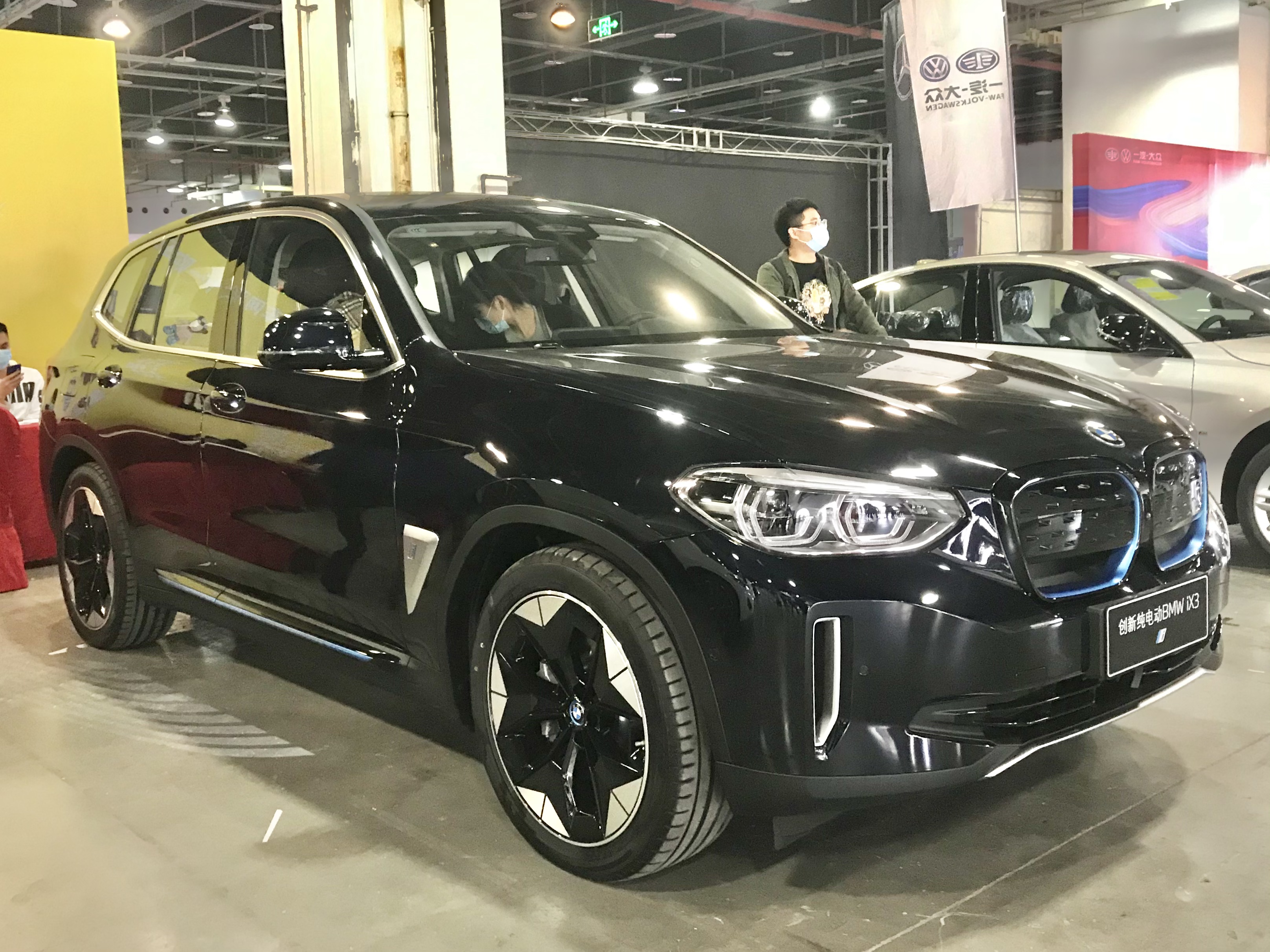
BMW iX3
"In March, it launched a vehicle to grid solution in Germany that allows IX three owners to earn up to seven hundred and twenty euros a year by giving energy providers access to their vehicle's battery."
The BMW iX3 is BMW’s electric SUV. Here, it’s mentioned because it can connect its battery to the grid so the owner can potentially earn money.
The BMW iX3 is BMW’s electric SUV built on the X3 platform, notable for bringing BMW’s EV tech into a more mainstream, utility-focused shape. In this segment, it’s specifically tied to BMW’s vehicle-to-grid capability in Germany.

BMW i3
"to launch a vehicle to home function also in Germany that will allow both IX three and I three owners to integrate their vehicle's battery with their other home energy solutions like solar and stationary storage"
The BMW i3 is BMW’s electric small car. The segment mentions it because its battery can be used with home solar and storage setups.
The BMW i3 is BMW’s compact electric car known for its EV-first design and lightweight construction approach. In this segment, it’s included as another BMW EV that can integrate its battery with home energy systems via vehicle-to-home.
vehicle-to-home
"partnering with a company called solar Watt to launch a vehicle to home function also in Germany that will allow both IX three and I three owners to integrate their vehicle's battery with their other home energy solutions like solar and stationary storage"
Vehicle-to-home means your EV can act like a backup power source for your house. Instead of only charging the car, you can also use the car’s battery to help run home energy systems.
Vehicle-to-home (V2H) is a system where an electric vehicle’s battery can power a home directly. It’s designed to let owners use stored battery energy alongside household solar and stationary storage.
BMW Alpina
"At the beginning of the year, BMW made to Lpina, an exclusive standalone brand within the group. The company knows for making souped up BMWs with nicer materials and a few unique touches."
BMW Alpina is Alpina’s upgraded, standalone brand identity inside the BMW group. Alpina is famous for making BMWs feel more special with better materials and distinctive tuning.
BMW Alpina refers to Alpina’s new standalone brand positioning within the BMW group. Alpina is known for taking BMW models and tuning them with higher-end materials, unique styling, and performance-focused engineering.
Request an Explanation
Heard something you'd like explained? We'll add it to this episode.
Sign in to request explanations for terms you heard.
Want to learn more?
Browse our glossary for plain-English explanations of automotive terms, jargon, and concepts.
Help improve this episode
See something that's not quite right? Our annotations are AI-generated and can sometimes miss the mark. Click the flag icon on any annotation to suggest a correction.