Adjusting the Valves, Why Tires May Lose Air, Unexpected Labor Rates
About this episode
Road-trip prep kicks things off with a mechanic from Lloyd’s Automotive, then the show dives into practical maintenance questions. A listener asks whether “valve adjustment” is real, and the hosts explain how valve clearance is checked and why it often lines up with timing-belt service. Tire topics follow—air loss from bead/seal issues, underinflation damaging sidewalls, and how tire size changes can affect fitment and speedometer accuracy. The segment also covers dealer labor rates, plus troubleshooting items like check-engine codes and no-start fuel problems.
oil change
"And one I assume one of the main things people are [137.8s] going to want to get done is an oil change and you and I've talked about [141.4s] this before for example if and I'm going to be in this coming week but if"
An oil change is when the shop replaces the engine oil (and usually the filter). It keeps the engine lubricated so parts don’t wear out as quickly.
An oil change is scheduled maintenance where the engine oil is drained and replaced, usually along with an oil filter. Fresh oil helps lubricate internal engine parts and carry away heat and contaminants.
oil and filter
"Not [155.0s] just the oil and filter. Yeah obviously the oil and filter they're gonna we call [160.4s] shake down the front end"
The oil filter is like a screen for the engine oil. When you change the oil, shops usually replace the filter too so the oil stays cleaner.
The oil filter is a replaceable element that traps particles and sludge so they don’t circulate through the engine. During an oil change, replacing both the oil and the filter helps restore filtration and lubrication.
steering suspension components
"they're gonna we call [160.4s] shake down the front end you know the steering suspension components we look [163.9s] at the tire wear."
Steering and suspension components are the parts that control how the car turns and how it rides over bumps. Worn or damaged components can affect handling, tire wear, and steering feel.
visual inspection
"This is a really good thorough visual inspection look for [168.1s] anything that might be due check the history for any kind of maintenance"
A visual inspection is when the technician looks over the car for obvious problems. It can spot early wear or damage before it becomes a bigger repair.
A visual inspection is a hands-on check where a technician looks for signs of wear, damage, leaks, or misalignment without relying only on computer diagnostics. It’s often used to catch issues early, like uneven tire wear or suspension problems.
tire wear
"components we look [163.9s] at the tire wear. This is a really good thorough visual inspection look for [168.1s] anything that might be due"
Tire wear is how your tires get worn down over time. If the wear pattern is uneven, it can be a clue that something like alignment or suspension isn’t right.
Tire wear refers to how quickly and in what pattern the tires degrade. Uneven tire wear often points to alignment issues, suspension problems, or incorrect tire pressures.
maintenance interval schedule
"check the history for any kind of maintenance [171.3s] items check the maintenance interval schedule based on the mileage you see [175.6s] there's anything in those items do so it's kind of a multiple different"
A maintenance interval schedule is the car maker’s recommended plan for when to do services. It helps prevent small problems from turning into expensive repairs.
A maintenance interval schedule is the manufacturer’s recommended timetable for service items (often based on time and mileage). Following it helps ensure wear items are serviced before they cause secondary damage.
valve adjustment
"I've heard about this [208.2s] before but there's listeners that I have heard from a friend that some cars [213.5s] maybe mine theirs might need a valve adjustment is that a real thing and what [220.5s] is it? It is a real thing and essentially what they're doing is the"
Valve adjustment is a service where the mechanic sets the correct spacing in the engine’s valve system. If it’s not set right, the engine can run rough and parts can wear out faster.
A valve adjustment is maintenance that sets the correct clearance (or “lash”) between the camshaft and the valve train components. If the clearance is off, the engine can run poorly and may increase wear on valve-related parts.
timing belt
"it goes hand-in-hand if the 237.4s vehicle's equipped with the timing belt so while you're taking the side of the 241.6s motor part of the top of motor or access in those areas is the time to make 246.3s those adjustments"
The timing belt helps coordinate the engine’s moving parts so the valves open at the correct moments. Shops often combine related work—like valve adjustments—because they’re already getting into the same area of the engine.
A timing belt synchronizes the crankshaft and camshaft so the engine’s valves open at the right time. Many manufacturers recommend doing valve adjustments around the same service interval as the timing belt because the engine top/front access is already underway.
filler gauge
"you 254.2s pull the valve cover off some cases use a filler gauge if you remember that what 258.2s those are you kind of adjust those rockers to the appropriate depth"
A filler gauge (feeler gauge) is a set of thin metal blades used to measure the clearance between valve train components. During a valve adjustment, the technician uses it to confirm the gap is within the manufacturer’s specification before tightening everything down.
rockers
"you kind of adjust those rockers to the appropriate depth and 263.3s it's just a maintenance item things will tighten up a time or loosen up a 267.1s time so we just want to make sure that they're right where they need to be"
Rockers are part of the engine’s valve system that push the valves open. When the shop adjusts them, it’s to make sure the valves are timed and spaced correctly.
In many valve-train designs, rocker arms transfer motion from the camshaft to the valve. During a valve adjustment, the rocker position/clearance is set so the valve opens and closes correctly and consistently.
Honda
"Are we talking about all cars that need 274.4s that from time to time? No, honestly it's mostly Honda's and you know it's just 279.9s the way they design them"
They’re saying some Honda engines are more likely to need periodic valve adjustments. The best rule is to check your own car’s maintenance schedule for what your engine requires.
The hosts note that valve adjustments are “mostly Honda’s,” pointing to how some Honda engine designs are more likely to require periodic valve clearance checks. The takeaway is that you should follow the specific maintenance interval for your exact engine rather than assuming all cars are the same.
spark plugs
"when you do have your spark spark plugs replaced that we're using the original equipment meaning the plug that came out is the same one going back in"
Spark plugs are the parts that make the engine’s fuel ignite. Using the right replacement plug (the same type/spec as the original) helps the engine run the way it was designed to.
Spark plugs are the ignition components that create the spark needed to ignite the air-fuel mixture in a gasoline engine. Replacing them with the correct “original equipment” (OEM) plug helps ensure the engine’s ignition timing and heat range stay matched to the design.
original equipment (OEM)
"that we're using the original equipment meaning the plug that came out is the same one going back in somebody might say oh these are better"
OEM means “the same kind/spec as what the car came with from the factory.” Using OEM-style parts helps avoid compatibility issues.
Original equipment (OEM) parts are the exact specifications supplied by the vehicle manufacturer. When the host says to replace spark plugs with OEM equivalents, they mean matching the part number/spec so the engine’s calibration and operating conditions remain correct.
tire fitment
"there's a lot a lot that goes into it you know you don't realize that the differentials the transmissions all that's designed based on that tire fitment"
Tire fitment is whether a tire size will physically fit and work correctly on your car. Bigger or different tires can rub on parts or change how the car’s systems behave.
Tire fitment is how a tire’s size and shape physically and mechanically work with a specific vehicle—clearance to the wheel well, alignment, and compatibility with nearby components. Changing tire size can affect rubbing, braking clearance, and how the drivetrain and suspension are loaded.
differentials
"you don't realize that the differentials the transmissions all that's designed based on that tire fitment"
A differential is the part that lets the wheels turn at different speeds, like when you’re turning. If you change tire sizes, the car’s gearing can act differently than intended.
A differential is a gear mechanism that allows wheels to rotate at different speeds while still transferring engine torque. Because gear ratios and overall rolling circumference are designed as a system, changing tire size can alter how the differential and drivetrain behave.
transmissions
"the differentials the transmissions all that's designed based on that tire fitment"
The transmission is how the car changes gears to match driving conditions. If you change tire size, the car may “feel” like it’s geared differently because the tires cover more or less distance per rotation.
The transmission is the gearbox that changes engine speed and torque through different gear ratios. Tire size affects the effective gearing (via rolling circumference), which can shift how the transmission’s ratios translate into vehicle speed and drivability.
brake caliper
"if you change the size will it fit with the brake caliper in that area will it rub in the wheel well"
The brake caliper is part of the braking system that squeezes the brake pads to stop the car. The tire has to clear it, so tire size changes can create fitment problems.
A brake caliper is the component that clamps brake pads onto the rotor to slow the vehicle. Tire size and wheel/tire clearance must account for the caliper’s position; otherwise, the tire or wheel can interfere or rub.
speedometer might be off
"then the speedometer might be off so that I would I would probably advise against it quite honestly"
Your speedometer is based on how fast the tires spin. Different tire sizes change how far the car moves per rotation, so the speed reading can become wrong.
The speedometer uses wheel-speed information to estimate vehicle speed, which depends on tire circumference. If you install different-size tires without recalibration, the indicated speed can be inaccurate.
reprogram the computer
"if you have the tooling and equipment you can reprogram the computer you can make all those proper adjustments"
Cars have a computer that uses sensor data to figure out things like speed. If you change tire sizes, you may need to update the computer settings so it reads everything correctly.
Modern vehicles use an onboard computer to calibrate systems like speed sensing, transmission behavior, and stability/traction logic. When tire size changes, recalibration (often via software updates or configuration) may be needed so the car’s calculations match the new rolling circumference.
different size tires front and back
"I didn't realize it there were two to the front and back of the tires were different this was that is that also"
Putting different tire sizes on the front and back can change how the car measures speed and how it grips. It’s not always a problem, but it needs to be set up correctly.
Running different tire sizes on the front and rear is sometimes done for specific handling or clearance reasons, but it complicates drivetrain and stability calibration. It can also increase the chance of speed-sensor mismatch and uneven wear if not engineered and set up correctly.

Lincoln Town Car
"say I have a chance to acquire a couple older Lincoln town cars the problem is they do not have keys [624.9s] the owner can't locate the keys"
A Lincoln Town Car is a big, comfortable luxury car. Here, the host is talking about how to deal with an older one when the keys are missing.
The Lincoln Town Car is a full-size luxury sedan from Lincoln (Ford’s luxury brand), known for comfort and long-distance cruising. In this segment, it’s specifically mentioned as an older car the caller wants to save from being scrapped.
ignition unlocked
"the toll company does not want to deal with the cars if they can't unlock the ignition is there any trick to getting the ignition unlocked"
This means the car’s starting switch can’t be accessed because there’s no key. If the ignition can’t be unlocked, it can be harder to tow or move the car safely.
“Ignition unlocked” refers to getting the key cylinder/ignition switch to accept a key so the car can be started or moved. The caller is dealing with a situation where the car won’t be unlocked, which affects whether towing or locksmith services will take the job.
VIN
"you can actually have a key made based on the VIN number you're gonna have to show proof of ownership"
VIN is like your car’s fingerprint number. It can be used to help a locksmith or dealer identify the exact vehicle so they can make the right key—usually after you prove you own it.
VIN (Vehicle Identification Number) is a unique 17-character code assigned to a specific vehicle. The host says you may be able to have a key made using the VIN, but you’ll typically need proof of ownership.
wheel lift
"somebody will be willing to maybe just wheel lift it versus a flatbed so they can get the drive wheels up the ground"
Wheel-lift towing lifts the car by the wheels instead of putting it fully on a trailer. The idea is to keep certain wheels off the ground so the car can be moved without causing problems.
A wheel-lift tow uses a lifting mechanism that raises the vehicle by its wheels rather than lifting the entire car onto a flatbed. The host suggests wheel-lifting so the drive wheels are off the ground, which can reduce the risk of drivetrain damage during transport.
flatbed
"somebody will be willing to maybe just wheel lift it versus a flatbed so they can get the drive wheels up the ground"
A flatbed tow puts the entire car onto a trailer. It keeps the wheels from turning on the road, which can be safer when a car can’t be started or moved normally.
A flatbed tow loads the whole vehicle onto a trailer, keeping all wheels off the ground. The host contrasts this with wheel-lift towing, implying flatbed is often the simplest option when the car can’t be unlocked or safely moved otherwise.
recoded
"but you can you'll have to remove the cylinder have it recoded"
Recoded means the car’s security system has to be programmed to accept the new key. Without that, the key might physically fit but the car may still refuse to start.
“Recoded” means reprogramming the vehicle’s lock/immobilizer-related electronics so they recognize a new key or cylinder. The host implies that if you remove the cylinder, it may need to be recoded to match the car.
ignition switch
"you can do the ignition switch but they want about the door lock"
The ignition switch is what the key turns to let the car power up and start. The host is saying the work might not stop there—it could also involve the door lock system.
The ignition switch is the electrical switch that the key activates to power the car’s starting and accessory functions. The host notes that you can do the ignition switch, but the job may still require additional work related to the door lock.
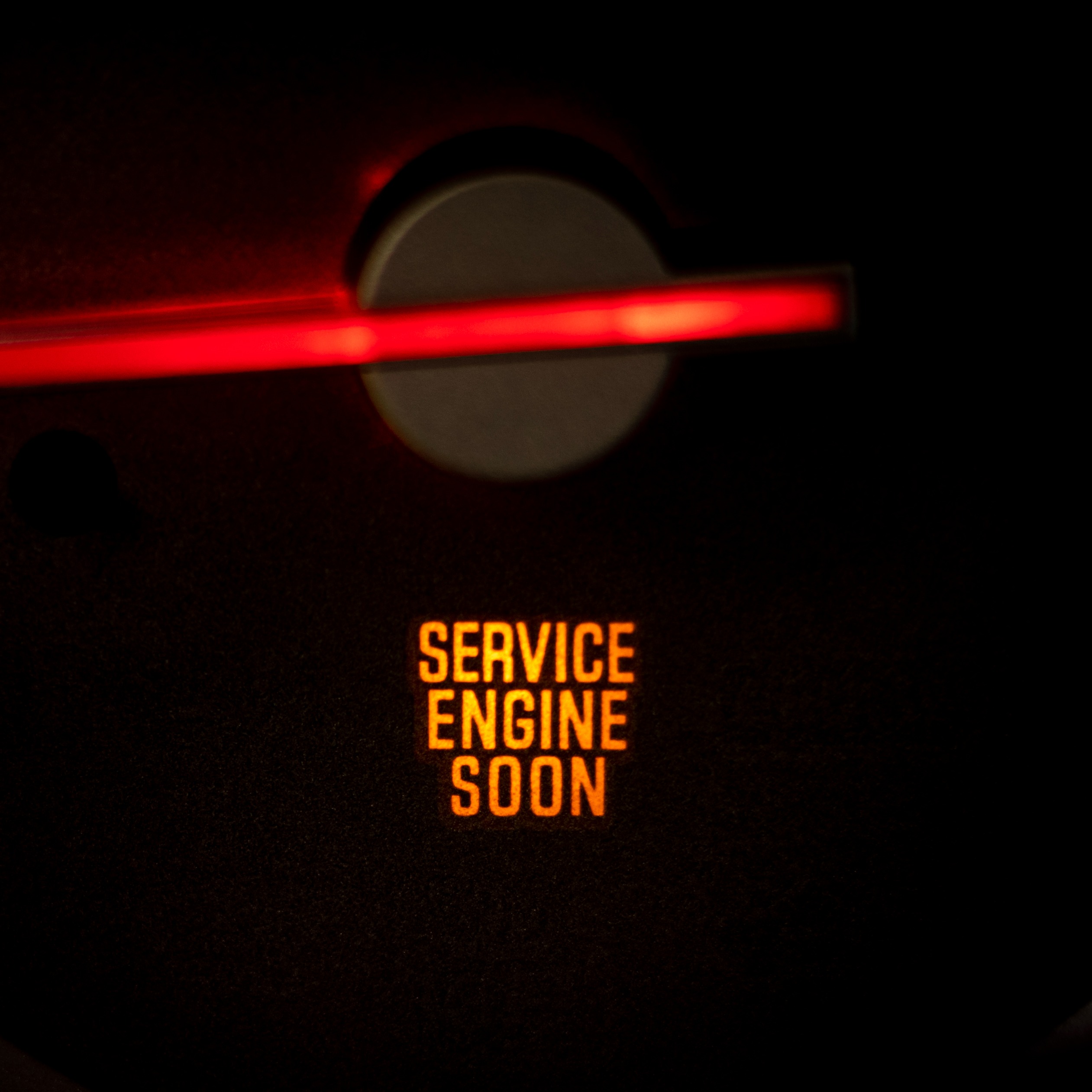
check engine light
"uh the texter says this Nick the check engine light came on after filling with gas when we were 110 miles from home"
That light means the car has noticed something wrong and stored a code. A mechanic can plug in a scanner to see what the code says.
The check engine light is the dashboard warning that the vehicle’s engine or emissions system has detected a fault. It’s triggered by stored diagnostic trouble codes, which a shop can read to pinpoint what system is acting up.
codes read
"but if it doesn't go out and the minimum get the codes read do the basic diagnostic this to determine what what path you had it down"
“Codes read” refers to using an OBD-II scanner to pull diagnostic trouble codes from the car’s computer. Those codes help identify whether the issue is related to fuel, emissions, or another system.

2021 ram truck
"there's another text for you Nick uh texter says I just bought a 2021 ram truck out of the blue one tire lost 10 pounds of pressure"
They’re talking about a 2021 Ram truck where one tire lost pressure quickly. That usually points to a leak or a sealing problem.
The speaker mentions a 2021 Ram truck with a sudden tire pressure loss. This matters because tire pressure drops can indicate a leak at the valve, puncture, or an issue sealing the tire to the wheel.
tire pressure
"one tire lost 10 pounds of pressure I filled it up it's been good since you think I should need to have the tire looked at it"
Tire pressure is how much air is inside the tire. If it drops a lot in a short time, there’s probably a leak.
Tire pressure is the air pressure inside the tire, typically measured in psi. If pressure drops quickly, it often signals a leak rather than normal temperature-related changes.
bead
"get that look that makes you not a puncture somewhere or something with the bead that might be allowed to lose a little bit of air"
The bead is the tire’s edge that sits on the rim. If it doesn’t seal tightly, air can leak out slowly or sometimes fairly quickly.
The tire bead is the part of the tire’s edge that seats against the wheel rim to form an airtight seal. If the bead isn’t sealing correctly, the tire can lose air even without a puncture.
contraction
"if if especially in the winter time when there's that contraction and if the the wheels the rims are um calcified"
In cold weather, things can shrink a bit. That can sometimes make a tire seal worse and cause air loss to show up more.
In this context, contraction refers to how cold temperatures can shrink materials slightly, which can change how the tire sits and seals on the wheel. That can make small leaks more noticeable in winter.
mating surface
"you to clean the actual wheel if there's a leak around the bead correct that that mating surface between the rubber of the tire and the aluminum"
It means the contact area between the tire and the wheel. If that area has corrosion or moisture, the tire may not seal well and can leak air.
The mating surface is where the tire contacts the wheel rim—especially around the bead area. Corrosion, moisture, or debris on that surface can prevent a proper seal and contribute to air loss.
running a tire low on air
"when you drive that tire low on air a decent amount not like one or two psi but if it's [870.3s] you know 510 psi pounds of pressure low on air it'll start to damage the sidewall [882.7s] because the weight of the vehicle is really pushing on the side of that tire"
Driving on an underinflated tire makes it flex more and wear out faster. It can get damaged inside even if the outside looks okay, and that can end up costing more later.
Running a tire low on air increases sidewall flex and heat, which accelerates wear and can cause hidden damage. Even if the tire doesn’t immediately fail or “fold over,” the rubber can deteriorate internally, leading to repair or replacement.
tire sidewall
"when you drive that tire low on air a decent amount not like one or two psi but if it's [876.7s] you know 510 psi pounds of pressure low on air it'll start to damage the sidewall [882.7s] because the weight of the vehicle is really pushing on the side of that tire"
The sidewall is the outer part of the tire. If you drive with the tire too low, that outer wall bends too much and can get damaged even if nothing looks wrong at first.
The tire sidewall is the flexible outer “wall” of the tire that supports the vehicle’s weight and helps resist impacts. When a tire is run low on air, the sidewall flexes more than it’s designed to, which can create creases and weaken the rubber over time.
cabin filter
"if I a text wants to buy these washable filters not only a cabin filter but the air filter element [933.6s] and he's been contemplating he or she buying a washable filter"
A cabin filter cleans the air that comes into the car’s heating and air-conditioning. It helps keep dust and pollen out of the cabin.
A cabin filter cleans the air that enters the vehicle’s interior through the HVAC system. It helps reduce dust, pollen, and other airborne particles inside the cabin.
air filter element
"if I a text wants to buy these washable filters not only a cabin filter but the air filter element [933.6s] and he's been contemplating he or she buying a washable filter"
The air filter element is the part that filters the air going into the engine. Cleaner air helps the engine run properly and protects it from dirt.
The air filter element is the replaceable filter media in the engine’s air intake. Its job is to trap dirt and debris so the engine can breathe clean air for proper combustion.
washable filters
"if I a text wants to buy these washable filters not only a cabin filter but the air filter element [933.6s] and he's been contemplating he or she buying a washable filter what's your opinion of those"
Washable filters are reusable filter media that are cleaned instead of replaced on a fixed schedule. Whether they work well depends on the filter design and whether they’re cleaned properly without damaging the media or leaving contaminants behind.
used motor
"yet I'm looking at a few I'm having a used motor installed texture says in a 2007 Nissan Maxima 3.5 liter what should I have done to that motor before it is installed"
A “used motor” is an engine taken from another car and installed in your car. Since you don’t know how it was treated before, it’s smart to ask what was checked or replaced and whether there’s any warranty.
A “used motor” means a replacement engine taken from another vehicle (often from a salvage yard or a remanufacturing supplier). Because its prior history is uncertain, the segment emphasizes checking what work was done before installation and whether any warranty is included.

Nissan Maxima
"yet I'm looking at a few I'm having a used motor installed texture says in a 2007 Nissan Maxima 3.5 liter what should I have done to that motor before it is installed"
A Nissan Maxima is a regular family sedan with a V6 engine. Here it’s mentioned because someone is planning to install a used replacement engine in one.
The Nissan Maxima is a mainstream sedan known for its V6 power and everyday drivability. In this segment, it’s used as the example car for a “used motor” (replacement engine) question, which is a common scenario when an engine fails or is too expensive to repair.
warranty
"they'll even offer you a really a really aggressive warranty which I would probably do because you just don't know the history they don't know the history"
A warranty is a guarantee from the seller that they’ll help pay if something goes wrong after you install the engine. With a used engine, that protection can be especially important because you don’t know its past.
In this context, a warranty is the seller’s promise to cover certain failures or repairs after the engine is installed. The host recommends considering an aggressive warranty when buying an unknown-history used engine to reduce the risk of expensive repeat failures.
oil filter
"you just don't know the history they don't know the history so it's a real big unknown but you know spark plugs obviously a new oil filter maybe a thermostat"
The oil filter cleans the engine oil as it moves through the engine. When you install a replacement engine, using a fresh oil filter helps protect it right away.
An oil filter removes contaminants from engine oil as it circulates. The segment suggests installing a new oil filter with a replacement engine to ensure clean lubrication from the start.
thermostat
"spark plugs obviously a new oil filter maybe a thermostat but it's really based on I guess I would talk to the folks you're buying it from"
A thermostat helps control engine temperature by regulating how coolant flows. If you’re installing a replacement engine, swapping in a good thermostat can help the engine run at the right temperature.
A thermostat is a temperature-controlled valve in the engine’s cooling system that regulates coolant flow. Replacing it during an engine swap can help ensure the engine reaches and maintains the correct operating temperature.
cylinder engine
"now wanting your opinion or thoughts on Ford's 1.53 cylinder engine you know anything about that I don't know [1144.8s] too much about it you know there's been 33 cylinder engines in the past"
A cylinder engine is an engine with multiple chambers where fuel is burned. More cylinders can change how the engine feels and how it’s built and repaired.
A cylinder engine is an internal-combustion engine where combustion happens in multiple cylinders. The number of cylinders (and how they’re arranged) affects smoothness, power delivery, and how the engine is serviced—especially when discussing newer engine families.
Ford
"some days looking at a text on wanting your opinion or thoughts on Ford's 1.53 cylinder engine you know anything about that I don't know"
Ford is a car company. In this part of the show, they’re talking about a Ford engine and whether it’s a good idea to wait and see how it lasts.
Ford is an automotive brand that designs and sells vehicles and engines. Here, the host is discussing Ford’s “1.53 cylinder engine,” which is a reference to a specific engine concept/size and invites questions about how it performs and how it holds up over time.

2017 Chevy Malibu
"now Warren good morning thanks for calling what what can we help you with [1200.0s] I got a 2017 Chevy Malibu with a two liter but I took it into the dealer the Ford dealer a Chevy dealer this week and they said I had a small oil leak"
A 2017 Chevy Malibu is a regular everyday car. The hosts are talking about it because the owner was quoted a high price to fix an oil leak.
The 2017 Chevrolet Malibu is a mainstream midsize sedan that commonly uses a modern, efficient four-cylinder engine. In this segment, it’s the specific car whose oil leak diagnosis and repair cost are being discussed, including dealer labor pricing.
two liter
"I got a 2017 Chevy Malibu with a two liter but I took it into the dealer the Ford dealer a Chevy dealer this week"
“Two liter” refers to engine displacement—how much air/fuel the engine can move in one cycle—measured in liters. It helps identify the engine size, which can affect parts availability, labor time, and how common certain issues are.
oil leak
"this week and they said I had a small oil leak but they say came up they said it was [1219.6s] like 10000 dollars to do the job"
An oil leak is when oil is leaking out of the engine. If it’s not fixed, the car can run low on oil, which can cause damage.
An oil leak means engine oil is escaping from somewhere in the engine or its seals/gaskets. Even a “small” leak can become expensive because it may require locating the source and replacing the leaking component, and oil loss can lead to lubrication problems.
labor rates
"I just thought of they said your labor rates two had $250 an hour I just thought that was pretty high [1233.3s] I wanted to get your opinion opinion of it well well labor rates kind of depend on the market"
Labor rates are what a shop charges per hour for the mechanic’s time. Different shops and different areas charge different hourly prices.
Labor rates are the hourly charges a shop or dealership bills for technician time. They vary by region and by whether the work is done at a dealership versus an independent shop, which is why the same type of repair can cost very different amounts.
1986 Ford eight cylinder
"texter wants to know about this procedure they have a two-year-old gas that's in the tank it will not start doesn't say what it is it's in 1986 Ford eight cylinder will not start it may need new fuel pump also it's about 14 gallons in the tank"
They’re talking about an older Ford (from 1986) that won’t start. When a car like this won’t start, mechanics usually check the fuel system first—things like whether fuel is getting to the engine.
The speaker is describing a starting problem on a 1986 Ford with an eight-cylinder engine. On older cars like this, a no-start condition is often traced to fuel delivery issues before moving on to other systems.
fuel pump
"it may need new fuel pump also it's about 14 gallons in the tank what would you do about that situation ... still not starting something how to do some diagnosing to make sure that the pump isn't either powering up or not producing any pressure"
The fuel pump is what sends gas from the tank to the engine. If it fails, the engine won’t get the fuel it needs to start.
A fuel pump is the component that moves fuel from the tank to the engine under pressure. If the pump isn’t running or can’t build pressure, the engine may crank but still won’t start.
siphon
"you have to get the fuel out of the tank you have to siphon it you can recycle it and don't hold me to this but I think the fire departments will take fuel"
A siphon is a method to move liquid out of a tank. Here, they’re suggesting draining the old gas out first so you can fix the problem without leaving bad fuel in the system.
To siphon is to transfer liquid from one container to another using suction or gravity flow. In this context, siphoning is suggested as a way to remove old fuel from the tank safely before diagnosing or repairing the no-start issue.
additive
"get it cleaned up put some new good quality fuel in there maybe an additive in there to try to help kind of clean things up"
A fuel additive is something you mix into gas to help it work better or clean the fuel system. They’re suggesting it might help if the gas has gotten old.
A fuel additive is a chemical product mixed with gasoline to help clean deposits or improve fuel performance. The speaker suggests an additive as a possible way to help “two-year-old” fuel that may have degraded and is contributing to a no-start condition.
diagnosing
"still not starting something how to do some diagnosing to make sure that the pump isn't either powering up or not producing any pressure so one step at a time"
Diagnosing is the step-by-step process of figuring out why a problem is happening by checking likely causes in a logical order. Here, the speaker emphasizes not jumping straight to replacing parts and instead verifying whether the fuel pump is powering up and producing pressure.
catalytic converters
"you and I once in a while talk about the theft of catalytic converters which we haven't talked about in a for a while you're not supposed to talk about it last time"
A catalytic converter is part of the exhaust system that helps reduce pollution. People sometimes steal them because the materials inside can be valuable.
A catalytic converter is an emissions-control device that helps convert harmful exhaust gases into less harmful ones. The segment references theft of catalytic converters, which is a common issue because they contain valuable metals.
fuel tank
"yeah it's uh unfortunate and it's expensive because you need a new tank independent how it's put in there and no you cannot patch it or plug it"
The fuel tank holds the gasoline your car needs. If someone damages it by drilling holes, it usually has to be replaced because it’s not safe to just patch it.
A fuel tank is the sealed container that stores gasoline for the vehicle’s fuel system. If it’s drilled or punctured, it typically can’t be safely patched or plugged, so replacement is often required—making it expensive and labor-intensive.
refrigerant
"yeah wow here we go we had a question I think it was last week about refrigerant in ac systems and vehicles and a tester wants to know is there a new in this quote new freon did you mention"
Refrigerant is the “coolant” inside your car’s A/C. It’s what makes the air conditioner blow cold air, and the shop has to use the right kind and charge it the right way.
A refrigerant is the chemical in an air-conditioning system that absorbs heat inside the cabin and releases it outside. When the refrigerant type changes (or the system is serviced with a different one), the technician needs the correct equipment and procedures to charge it properly.
R-134a
"well there's um refrigerant it seems to evolve every decade or so maybe a little bit longer um and our 134a is the most common and most of our vehicles there is a"
R-134a is a specific type of A/C coolant used in many cars. If a shop uses the wrong refrigerant, the A/C won’t work correctly and it can be unsafe.
R-134a is a specific refrigerant used in many older car A/C systems. It’s commonly referenced because newer refrigerants may require different charging equipment, service procedures, and leak-testing/evacuation steps.
A/C charge
"this the thing it's much more expensive but it's a smaller quantity and the testing and the procedures are much more refined you know the the machine that we use is much more expensive"
An A/C charge is how much refrigerant the shop adds to your air conditioner. Too much or too little can make it cool poorly or not work right.
An A/C charge is the amount of refrigerant added to the system during service. The technician measures it carefully because the correct mass (and the correct refrigerant type) is what allows the system to reach the proper pressures and produce cold air.
vacuum
"the procedure is much longer because you really have to make sure it's not a leak in the system you put it on the vacuum you put a little charge in it you you know recover it again"
In A/C service, pulling a vacuum removes air and moisture from the refrigerant lines and system. This helps prevent poor cooling performance and reduces the risk of internal corrosion or contamination.
recover it again
"you put it on the vacuum you put a little charge in it you you know recover it again so it's a very"
Recovering refrigerant means the technician pulls the A/C coolant back out and stores it properly. It prevents releasing it into the air and supports correct recharging.
Recovering refrigerant means collecting it back out of the A/C system rather than venting it. It’s part of proper service and environmental compliance, especially when the system is being tested and recharged.
Request an Explanation
Heard something you'd like explained? We'll add it to this episode.
Sign in to request explanations for terms you heard.
Want to learn more?
Browse our glossary for plain-English explanations of automotive terms, jargon, and concepts.
Help improve this episode
See something that's not quite right? Our annotations are AI-generated and can sometimes miss the mark. Click the flag icon on any annotation to suggest a correction.