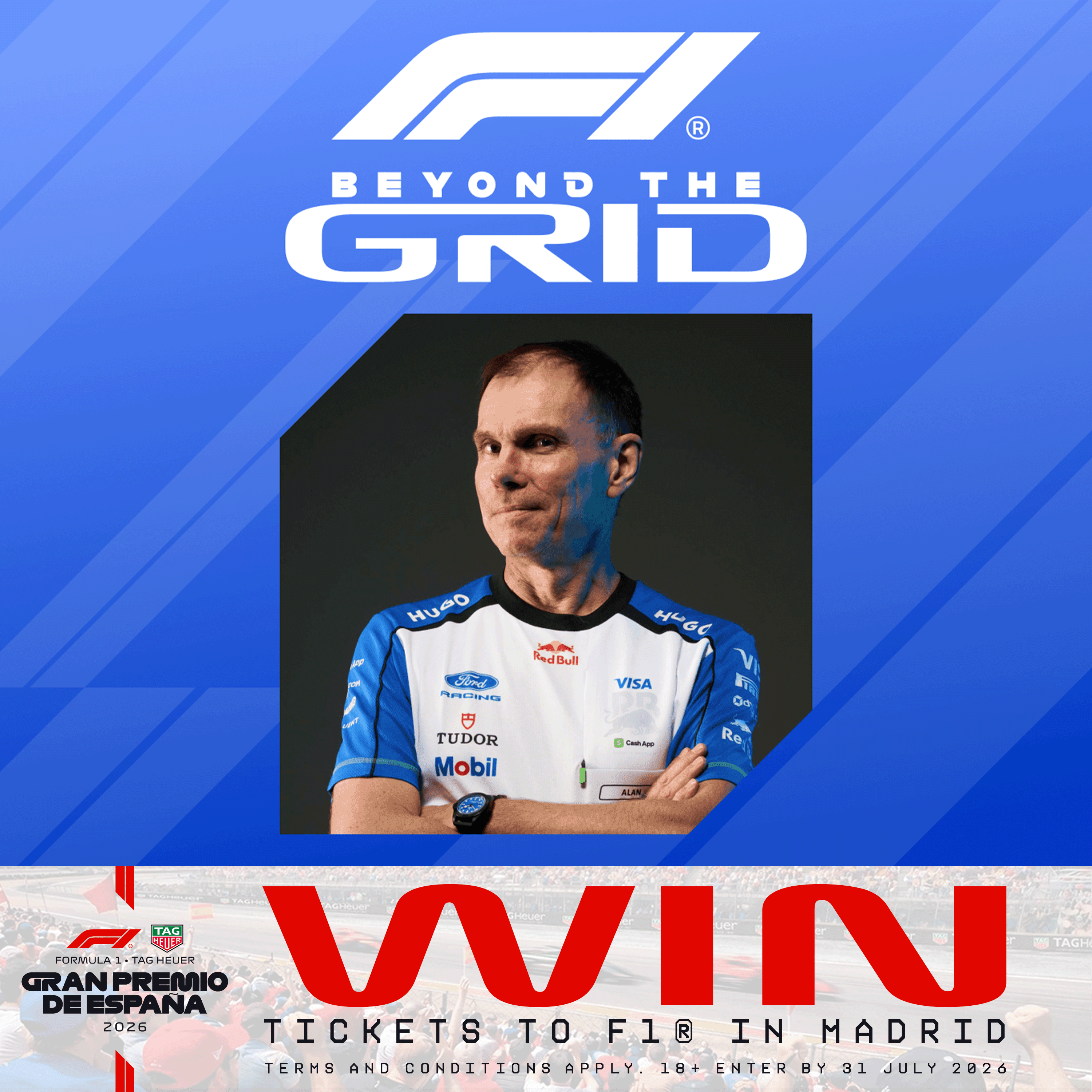
Liam Lawson is an F1 driver. The episode discusses a setback in his career and then how he bounced back to get his best F1 finish.
Term
racing pools
“Racing pools” is a way teams manage drivers who aren’t in the main race seat right now. They’re kept active and evaluated so they can step up when an opportunity opens.
Suzuka is a famous race track in Japan where big motorsport events happen. The hosts mention it to set the timeline for what Lawson was like at that time.
“Wheel-to-wheel racing” means cars are racing very close together, trying to pass without backing off. It’s hard because you have to be fast and precise at the same time.
A fuel cell is a device that turns fuel into electricity. Here it’s mentioned to show that even big F1 teams can’t realistically build every kind of energy-related component in-house.
A radiator helps keep the car from overheating by moving heat out of the cooling system. In this discussion, it’s used as an example of a component they’re not producing themselves.
F1 teams have a spending limit called the cost cap. “Cost cap efficiency” just means using that limited budget in the smartest way—like building more parts themselves—to save money and still keep up performance.
Red Bull Austria is part of the Red Bull organization behind the F1 effort. The guest is saying that Red Bull’s support helps the team build facilities and make more parts themselves.
“Young drivers” means up-and-coming racers being trained for the future. The speaker is saying the team’s main goal has stayed focused on developing new talent, not just winning right away.
Zach Brown is a top executive in Formula 1, associated with McLaren. In this segment, he’s mentioned because he spoke up about whether it’s fair or sensible for one group to have interests in more than one team.
Toto Wolff is a major F1 team leader connected with Mercedes. Here he’s mentioned because the conversation is about whether one company can hold ownership interests in multiple teams.
A minority stake means owning a smaller share of a company—less than half. It’s mentioned here because partial ownership can still give influence, even if it’s not full control.
Term
open letter
An open letter is a message meant for the public, not just one person. In racing, people use it when they want to make a dispute or complaint visible to everyone.
Gardening leave is when someone stays on the payroll but is not allowed to start working for a rival team right away. It’s meant to prevent sharing or using inside information during a transition.
“FI regulations” here means the official rules for Formula 1 set by the FIA. They include requirements about how team staff can change jobs and when they’re allowed to start at another team.
Concept
customer-supplier relationship
A customer-supplier relationship means one side provides something to the other under an agreement. In racing, it can change how teams handle staffing and information when people move around.
The front suspension is the set of parts that connects the front wheels to the car. It helps the wheels stay in contact with the road and strongly affects how the car turns and brakes.
The rear suspension connects the back wheels to the car. It affects how well the car grips the road when you accelerate and how stable it feels in corners.
The gearbox is what lets the engine use different gear ratios. That helps the car accelerate efficiently and keeps the engine in the right range for power.
The steering rack is the mechanism that turns the steering wheel’s motion into turning the front wheels. How it’s built affects how quickly and precisely the car responds to steering.
A wind tunnel is a big testing setup where air is blown around a car model. Teams use it to understand aerodynamics—how the car cuts through air and how much grip it gets from downforce.
Technical regulations are the official rules that limit what teams can build and modify. They’re meant to keep the competition fair by restricting certain parts of the car.
Aerodynamicists are the people who focus on how air flows around the car. Their job is to help the car generate grip (downforce) without creating too much drag.
A model shop is the workshop where teams build physical models used for aerodynamic testing and development. In F1, it often supports wind-tunnel work and prototype fabrication at both small scale and full-size mockups.
Full-size car design refers to developing and working on aerodynamic and engineering details at the actual vehicle scale, not just small models. This supports integration work—ensuring parts fit together correctly on the real car.
James Allison is an important engineer in Formula 1. He’s known for helping design and improve race cars so they perform better on track.
Term
lump of carbon, titanium and rubber
He’s talking about the main materials in an F1 car. Carbon fiber makes parts strong and light, titanium is used for tough components, and rubber is mainly the tires—so the car’s behavior depends on all of them.
Lap time is just how long it takes to drive around the track once. If one team’s lap times are faster, that usually means their car is quicker over a full lap.
This means the team’s “work setup”—things like their buildings, equipment, and testing resources. In racing, having better facilities can help a team improve the car faster.
Concept
extract more from it
“Extract more from it” is a development concept in motorsport: using the same underlying resources (like budget and assets) to get more performance out of the car. In F1 terms, it usually points to how effectively a team turns data, tools, and processes into faster lap times.
In racing, “metrics” are the numbers teams use to judge how well the car is doing. Instead of guessing, they look at data like lap times and consistency to see if upgrades are working.
“Race pace” means how quickly the car can go for the whole race, not just one fast lap. It depends on things like tire wear and how the car behaves as the race progresses.
“Q3” is the last part of F1 qualifying where only the fastest cars get to run. If you make it to Q3, it usually means you’re among the quickest in one-lap pace.
Term
sets
“Sets” here means sets of tires used for runs. Teams plan tire usage so they can be fast when it matters without running out of usable tire performance.
“Downforce” is the aerodynamic grip that helps the tires stick to the road. More downforce usually means better cornering, but it can also make the car slower on straights because of extra drag.
Ground effects are the aerodynamic tricks under an F1 car that push it down onto the road. More downforce usually means more grip, but it only works well within a certain ride-height range.
A stiff rear end is when the rear suspension is set up to move less. That can help the car stay stable so the aerodynamic grip (especially from under the car) stays consistent.
This is about what it’s like to be a young driver in Formula 1 today. The episode is talking about how much attention and noise there is around you, and how that can be tough to handle.
“Sim” is short for simulator. It’s a high-tech setup where drivers and engineers can test changes to the car virtually before trying them on the track.
Arvid Lindblad is the driver Permane says is joining as a new teammate. Permane’s point is that Lindblad wants to do a lot and ask for everything, but still needs to choose the right moments to push.
Qualifying laps are the fast laps drivers do to decide where they start the race. Because they may do more than one, the team has to keep the tires and car conditions in the right state for each attempt.
It means warming and conditioning the tires so they have the grip the driver needs. If the tires aren’t at the right temperature, the car won’t feel as fast or predictable.
In F1’s hybrid era, the battery state (how full it is) affects how much electrical energy the car can deploy and recover. Teams manage battery charge levels so the driver has the right power at the right time during qualifying and race stints.
“Switches” means the controls the driver uses to change how the car is set up moment-to-moment. In hybrid F1, those settings can affect how much power you have and how the energy system is used.
This is when teams run older versions of their cars in testing. It helps the driver and engineers understand how the car behaves and what changes might be needed before the new season.
TPCs is a shorthand for testing older cars. The idea is to help the driver learn the team’s approach and the car’s behavior before the main season starts.
They’re saying the team got much more practice time than normal before the season. That extra track time helps both the driver and engineers learn how the car behaves.
This means they were in a position where they were expected to score points, and the margin was small. So they didn’t want to take risks that could cost them those points.
A pit stop is when the race car comes into the pit lane during the race. The team changes tires (and sometimes makes adjustments), and when you pit can strongly affect who ends up ahead.
An undercut is a pit-stop strategy. You pit earlier than the car you’re trying to beat, then use fresher tires to go faster and take track position before they pit.
“Medium tyres” are a specific type of racing tire compound. Softer compounds usually grip more but wear faster, while harder ones last longer. Teams pick the compound based on how they want the car to feel and how long the tyres will last.
“Spa” is an F1 track in Belgium (Circuit de Spa-Francorchamps). It’s known for big elevation changes and changing conditions, so teams often need to adapt their car setup and upgrades.
A “cooling package” is the car’s upgraded system for keeping important parts from getting too hot. Better cooling can help the engine and other systems run more consistently during a race.
A “front brake duct” is a shaped opening on the car that sends air to the front brakes. That airflow helps keep the brakes from overheating, so they work better for longer.
The “rear wing” is the spoiler on the back of the F1 car. It helps press the car onto the track so the tires can grip better, especially when cornering.
Term
roll hoop entry
A “roll hoop” is a structural safety element designed to protect the driver in a rollover or heavy impact. “Roll hoop entry” here likely refers to the mounting/attachment area and related bodywork integration that can be part of a safety-and-structure upgrade package.
Term
switch to 2027
Formula 1 rules change on a schedule, and teams have to prepare their cars for the new rules. “Switch to 2027” means they’re planning for the big rule change coming in 2027.
They’re talking about Audi as a team that can be fast, but hasn’t turned that speed into enough results. In racing, being quick isn’t the same as scoring consistently.
Lewis Hamilton is one of the most famous and successful Formula 1 drivers ever. Here, they’re talking about how he’s thinking more about how lucky he is to keep racing.
They’re talking about Fernando Alonso, a veteran F1 driver. The point is that even when things are hard, he still works hard and seems to be driving at a very high level.
LIVE
He's really pushy. Do you know what, but that's great.
Liam Lawson brutally demoted back to racing pools.
What kind of a man walked through the door at Suzuka last year, right? His head was down
and he won't thank me for saying this. We obviously knew him from the year before we
could tell he certainly wasn't the same guy. Lawson will get his best ever Formula One
result in fifth. Don't say we rebuilt him because that's a little bit dramatic. We're
there to help him, but he made a turnaround. Hello and welcome to F1 Beyond the Grid with
me Tom Clarkson and Racing Bull's team principal, Alan Permay. I've known Alan for many years
and I followed his career closely through both the highs and the lows. He tells me in
this chat he was devastated when he left Alpine in mid-2023. He'd worked at Team Endstone
for more than 30 years, winning multiple world championships with Michael Schumacher and
Fernando Alonso, but he also calls it a defining moment in his career, one that led him to
becoming a team principal for the first time. A year on since taking that job, Alan explains
why the role wasn't a natural fit for him initially, the challenges he's faced and
the changes he's made. And he gives great insight into Liam Lawson and Arvid Lindblad
and how he manages their wheel-to-wheel racing on track. And he describes the unique way
they decided which driver would receive all of the team's latest big upgrade first. Alan's
in great form and gives fascinating insight into life at Racing Bulls. Plus, keep listening
for your chance to win tickets to this year's Spanish Grand Prix in Madrid.
Great to see you. It's been six years since you were last on the show. I think it was in
Covid times, wasn't it? We did something in Istanbul, since we vaguely remember and chatting
for two or three hours. And we could have gone longer. Yes, it was good fun. Good fun. Well,
it's great to have you back on the show. Thank you, mate. And we're speaking at Spa
Frankal Shore, 12 months on from your first race as TP of RB. I just wanted to start by asking
you how you reflect on the last 12 months. So it was a big step. And I think I've said
before I've certainly said to you, it's not something I'd imagined doing. It's not something
I'd had ambitions to do, but it's something I'm loving. Honestly, I'm thoroughly enjoying it.
There's bits of it that I enjoy more than other bits of it. But I'm also very conscious of the
fact that there's 11 team principals and it's a privilege. It's an honour. And I need to try and
enjoy it as well, even when the bits that are not quite so much fun, let's say, I'm trying to
make the most of that as well. You say you weren't expecting it. Can you just take us back to the
moment in terms of how was the job offered to you? It wasn't so much offered as we need you to do this.
You are doing this, aren't you? It wasn't quite like that either. But we need your help.
This has happened. Laurent is moving up to Rebel Racing and we'd like you to step up to this. And
I must admit, and I think I've told the story, I've certainly said it to others. It wouldn't
be my first choice of things. And why? Why? Because you know me, I'm not one for the limelight. I'm
absolutely shy away from it in my previous roles as much as possible. And certainly, that's one
aspect of this job that's been the most, maybe not the most challenging, but it's been challenging
is stuff like this. Doing press conferences, talking a lot with media, talking a lot with
sponsors and not to play it down. I don't want to say that's not difficult, but it's not something
that comes naturally. And it's something that I put a lot of effort into. I feel I have to
prepare well, just make sure I'm on top of things like that. You know, standing up in front of
800 people who work for us to talk to them. That's something that a year ago put the absolute
fear of God into me. And now? Well, everyone said, and I was quite open with it when I got the job.
I said, that scares the life out. I mean, people said, ah, you'll come to love it. And I don't
say I love it, but also it certainly doesn't, it's not, it's not something that consumes,
you know, a week before and doesn't consume my every thought anymore. And I like to think I'm
doing a decent job of it. At the end of the day, I'm trying to give people what they want to hear.
I don't want anyone to come to a meeting of, you know, of everyone, all our staff and feel
that, oh my God, we've got to go and listen to him again. I want to try and impart some knowledge
maybe from the track, what we've done a little bit more of an insight
or what's coming in the future and people to want to come to that. Because otherwise, what's
the point? Now, you've done so many senior roles in Formula One. Just what extra pressures are on
you now that weren't on you before? I think the financial side of it is much more you playing
with. I try to see this as an extension of what I've done before. So most of my career has been
about finding performance. So whether you're a race engineer or a chief race engineer or even
sporting director, which is the big roles I've done. In those roles, you've got, let's say,
some aerodynamics or you've got some suspension set up or you're always trying to find performance
and trade-offs and things like that. I'm trying to use that experience in this
team principle role to do the same. It's about finding performance. And again, it's a very
simple thing to say. We only really care about two things. We care about going fast and we care
about not stopping. So performance and reliability. And those two are intrinsically linked as well.
Without reliability, you can't have performance. So I'm now using some different building blocks.
Instead of roll bars and front-wing angles, it's people and money, if you like, and making sure
that we're spending what we have wisely in the right areas and making sure people have,
firstly, that they're happy in their roles and we have a nice working environment,
but also they've got what they need to do the job that they want to do. I'm not going to go and tell
the head of aerodynamics how to do his job, but I just need to be there to support him and make
sure that he's got everything he needs to do his role. And that's how I see it. And I'm guessing,
as well as all of that, you're getting insight into bigger picture, Formula One as well,
in the role as TP. How has the job changed your perspective on Formula One as a whole?
That's an interesting question. I'm not sure it has. Yes, I now go to an F1 commission meeting,
which is all the other team principles, but I've sat in the... And that's a very grown-up version
of the sporting committee that I sat on for many, many years. So it's, of course, at a much
high level. And at the moment, I'm very much at a listening stage rather than jumping in with
me campaigning for the way that I think Formula One should be. Whereas, I guess,
when I was in that sporting, I was far more vocal and trying to drive that sporting group
being one of the more senior members in it, let's say. And now I'm certainly one of the junior
members in the F1 commission group. So I'm much more in listening to 90% of it and maybe talking
10% instead of the other way around. Take us into one of those commission meetings, right? Which of
your peers impresses you? Oh, come on, TC. I can't... That's not fair. They're all impressive in some
ways or another. When you look at the big guys, the Toto's, Fred's, Flavio's, those are the guys who
are driving that sort of thing. And they're the guys with the biggest investment with big teams
and engine supplies. But of course, Laurent as well. And they're all in their way. Everyone,
of course, everyone brings something to that group. And there's something to learn from everyone.
Alan, you've got 30 years plus in Formula One behind you, right? Is there any advice you'd give
your younger self knowing where your career is now? Or has it all been useful?
Yeah, my career has all been useful to come into this point. As we said before, I didn't know it
was coming to this point. And there's things I would have done differently in the past, I think.
But to change anything, no, I don't look back any of it and think, oh, what I've done,
you shouldn't do that or you shouldn't do this. I mean, I've ended up as Tim Principal. It's
gone pretty well. It's gone better than I could have imagined. Maybe there's little specific
things I would have done differently. But as a trajectory, it's very nice. I have to say that,
and I'm sure you want to touch on it, the leaving Alpine and going to, or not really leaving Alpine,
but moving on from Alpine, shall we say, and going to racing balls was a defining moment,
of course. And without that, I probably wouldn't be where I am now.
Alan, let's talk about that because that was another spa moment for you as well,
your last race for Alpine 2023 right here. I remember being shocked, known you for years.
How tough was it for you? Very.
Why so? Because that was my life. Okay, of course, I've got more life than that. I've got a life
away from the track, but I'd been at Alpine for 34 years. I started there when I was just,
I'd just turned 22. I'd done an apprenticeship, and that was my job. After I finished my
apprenticeship, I went to work there. I went to work at Benetton, and the team went from Benetton
to Renault, to Lotus, Alpine, and I'd been there, and it completely came out of the
blue. So yeah, I was devastated, really, and it was hard. It was a hard, certainly, it was,
it was a, it certainly support the summer break, that's for sure.
Did you think about just walking away from Formula One completely, and getting involved in
another arena? No, honestly, I was very fortunate. My phone rang that day a couple of times.
People saying, what the hell's going on, and let's have a chat, and let's have a catch up.
Christian Horner was very gracious. I think in the press conference at Spa,
he spoke very nicely about me, which was nice. And he then came and spoke to me on the grid,
and said, give me a call when all the dust has settled, give me a call.
So Christian was pivotal in you coming to... I don't know, because I also spoke with Laurent,
who has also had also been confirmed as team principal for Alphatoria, as it was at the time.
But I spoke to a few other places, and I had, I was very fortunate to have some options. So no,
I didn't ever consider anything outside of Formula One. I don't think I could do anything outside of
Formula One. I don't know. And I don't think I wanted, I would want to either. I love, you know,
I love what I do. I really enjoy being in this environment and the competitiveness of it. I
absolutely love. But you did have a bit of time out. Any new hobbies in that time? No, I remember
my wife saying to me, what are you going to do with yourself for, you know, she was working.
We were in the UK, and I remember it was the, I think it was the very first day of the cricket
World Cup. And I said, look at the TV, look, this is day one of 45. So I'm good for the next 45 days.
She said, you cannot sit and watch cricket for 45 days. And I think I did a little bit. I said,
look, I'm just going to, I need to just do nothing for a little bit and reset. As I say, we had a,
we had a bit of a miserable, miserable summer holiday that year. And bless her, she's been great.
She's a massive support. So without her just doing the team principal role as well, she's been,
she's, she's there behind me and helping me and supporting me in that.
Once you've been institutionalised by Formula One, which people who have been here for a long time
in a way have been, is life outside F1 a little scary? I don't know. I've not really been outside
it. So I've had those five months, but within two, I knew what I was doing. And within,
certainly within three months, it was all signed and sealed for me coming to racing balls. So there
was a month, definitely where it was unpleasant. And I didn't really know what I was doing.
And just changing jobs, you know, I hadn't started a new job. So my job when I went to
Alpha Torrey as, or racing balls as racing director was the second job. No, third, there's
third job I'd ever had, ever. That was scary. That was daunting, going somewhere new, walking
through the doors to a new place for the very first time. But again, it's made a little bit
easier because it's Formula One. As soon as you walked in, I remember walking through the doors
of the, it was Bista. We had a sort of aero facility in Bista at the time. And straight
away, you see three or four faces, you know, people you've worked with in the past, people from the
pit lane. So that makes it a little bit easier. This episode is sponsored by Wayfair. I don't
think I know anyone who hasn't looked around their home and thought, this room's nearly there.
It just needs that one final piece to bring it all together. Then you start looking and
everything's either the wrong size, not quite your style, or far more expensive than you were
hoping to spend. Well, that's exactly what brought us to Wayfair in the first place.
There's so much choice to the extent that I'm still looking through everything on their website
and working out what to order. I love all the possible bathroom additions, like the mirrors
and the freestanding cabinets. And what about the orthopedic luxury pet bed for the dog?
And with the kids all at university at the moment, I love what they call the bed edit.
For things like duvet's bedsheets and pillows, all of which they need. And what about one of the
gorgeous photo frames for the kids to put by their beds to remind them of a special moment
while they're living away from home for the first time? There really is so much to choose from.
And one thing I really like is Wayfair Verified. Their team hand checks products for things like
quality, functionality, and even how easy they are to put together. That's really reassuring
when you're buying something online and haven't had a chance to see it in person.
And whether you're looking for furniture, lighting, storage, or decor, they've got
something for every room in the house. Plus, if you'd rather not put it together yourself,
they can even take care of delivery, installation, and assembly.
Ready to upgrade your home for Wayless? Head to Wayfair.com right now to shop all things home
and get your space ready for less. That's Wayfair, W-A-Y-F-A-I-R, dot com.
Right now on F1 Beyond the Grid, it's competition time.
Formula One is heading to Madrid this September and we're giving you a chance to be there.
Because we have a pair of grandstand tickets for the 2026 Spanish Grand Prix to give away.
The winner will see Formula One cars racing at the sports newest circuit from the Team
55 Grandstand, which is going to be filled with fans cheering for home hero Carlos Sainz.
The competition is free to enter and here's how you do it. Go to f1.com forward slash podcast
dash win dash Madrid and follow the instructions and fill in the form.
The competition is open to listeners of all three official F1 podcasts, F1 Beyond the Grid,
F1 Nation, and F1 Explains. The entry deadline is midnight UK time on Friday, the 31st of July
2026 and the prize is a pair of grandstand tickets only for the Formula One Spanish Grand Prix
2026 in Madrid. You must be aged 18 or over to enter. For full terms and conditions and your
chance to win, go to f1.com forward slash podcast dash win dash Madrid. Good luck.
Right, let's bring it back to these last 12 months. All of the experience you've just been
talking about, how has the team changed since you've had the keys effectively with your experience
over the last year or so? I don't know really. We have made some changes and I have had to make
some changes. They've been a little bit forced. We lost very early on in my team principal tenure.
We lost one of our very senior technical people. So I had a little bit of a reshuffle in that area.
That's when we brought in Dan Fallows to be technical director, whereas before we had two
deputy technical directors, if you like, reporting to Tim. Now we just have Dan as
technical director reporting to Tim and that I think has been certainly is working well.
Whether it's better or worse, I don't know, but things are working very well in that area.
When I speak to the chief aerodynamicist, who's a super, super guy, he seems very happy
in how things are. He's happy in the way that the team runs, certainly his team runs or he's
able to run his team. So I try and let the people run their team. And when people like that come
to me or I'll give you another example, we had a change right in the top of HR, which reports to
me. And the girl who's now HR director at the time said, how do you want me to do things? I said,
I have no idea. I know nothing about HR, but it's more what do you need from me? So you're
the expert. You do that. But if there's something you need from me or something more you need in
your department, come to me and let's talk about it. So I'm definitely not a micromanager,
shall we say. And I'm very happy to admit that my life has been at the track. And that's what I
know. So there are lots of new things I'm learning, but I don't feel I need to learn. Honestly, I don't
feel that's a good use of my time to know about every department that reports to me, to know the
ins and outs of that at all. So I'm much rather happy to let people run it and me support them
where they need it. And how would you describe the atmosphere inside the team? How does it
compare to Alpine, for example? How different is it? So Alpine is a tricky one because the last
few years were a bit tough. Certainly it was a fantastic place and I'm sure it's getting back
there under Steve now, but the last few years were a bit tough there. I think we have a great
atmosphere. You certainly feel it when you go in on a Monday morning after a good result. The whole
place is lifted and is buzzing. I spend a little bit of time in Milton Keynes, but most of my time
I spend in Fianza in Italy. It's a big place. We're touted as a small team, but it's a big
place. There's 600 people there, something like that. So I try and at least once a month get around
and have a wander around everywhere and say hello to people and that sort of thing, rather than being
stuck in my office if you like. It's good. It feels good there. Alan, it's amazing how it's
changed. I first went to the team in 1998 when it was Minardi and it really was just a couple of
small little buildings. And now it is, as you say, it's a bona fide big Formula One team.
Yeah, and we just started another big construction project there to expand production
with the aim to be able to make every single part that we're capable of making to make in-house. So
we can't make a fuel cell. We can't make a radiator and no teams are doing that sort of thing, but
everything else we want to make ourselves. And that's an efficiency that enables you to make
parts faster, enables you to make parts cheaper. It's a cost cap efficiency. It's a sign the team
is still growing and I'm incredibly grateful for the support from Austria to enable us to do that
sort of thing. And that's one of the things that I certainly didn't appreciate. I appreciate it a
bit when I was racing director, but being team principal, you really appreciate the support
from Red Bull Austria. What is the brief from Red Bull Austria? Because, of course, when it became
Torrosso back in, I think, 2005, it was very much about developing young drivers, even young
engineering talent as well. And it still is. That is still the brief. Yeah, absolutely. It
absolutely is. At some level, is that a frustration to you? No, because I know that's the brief.
If you told me I could have Max and Fernando, of course, but I can't. And I know that.
No world exclusive. Exactly. It's not a frustration. It's absolutely not. And there's
definitely a satisfaction in bringing on young drivers. There's certainly one of the very few
nice things about getting older is giving experience and help to young engineers. And
I hope and I think we're having some success in that area.
What do you make of, I think it was Zach Brown, who was quite vocal at a few races back about,
one entity owning two Formula One teams. I think he was referencing Toto Wolf trying to buy the
minority stake in Alpine. Of course, Red Bull has these two teams, has had these two teams for
more than 20 years. What's your take on Zach's comments? Well, you won't be surprised to hear
that. I don't agree with Zach, funnily enough. Look, I think Zach is doing what Zach should be
doing, which is fighting the fight on all fronts. He's fighting on the track. He's fighting off
the track and he's not fighting us. Of course, he's fighting with Red Bull there. With our
current performance, we're not a threat to McLaren. We're away off them, especially in the race.
You see it, there's a very healthy gap, but I think he's doing what he can to just
unsettle things, make things a little bit unstable. I think the way he went about it wasn't
particularly nice writing an open letter instead of coming. I've been super happy if he'd picked
the phone up and we have a chat. He wrote this open letter that had several inaccuracies in it,
saying that our staff are leaving with minimal or no notice periods and that's just not true.
It's absolutely not true. He specifically talks about a guy, and it's who I talked
about earlier. We had this deputy technical director and then he's gone to Red Bull Racing
and said, oh, this all happened within a couple of months. It's not true at all. I knew about that
in September last year that he wanted to leave and he wanted to go to Red Bull Racing and I
specifically didn't let him leave until I think it was April time and then he had to serve three
months. Gardening leave as well, which is in FI regulations. Any teams that have a relationship,
it's very clearly governed in the regulations, what you have to do. We followed that. There's
inaccuracies there, but I also see it from Zach's point of view. I see what he's doing.
No offense taken, but I see why he's doing it. Honestly, to be on this side of it and see the
steps we go to to make sure that we are operating fairly and within the rules. To operate within
the rules and what we take from Red Bull is, I don't want to say it's a burden because that's
not quite the right word, but we put a lot of effort into making sure that we are respecting
the regulations and more so than I would have done in a previous team. You don't have to worry
about that side of things. I mean, how different is your relationship, say, to Hasses with Ferrari?
Are there similarities there? I mean, I guess so because I think they take, and I don't actually
know what Hasses relationship is right, but ours is very much a customer-supplier relationship.
So we take Red Bull's front suspension. We take Red Bull's rear suspension. We take Red Bull's
gearbox. And on the car, that's about the limit of it. And there are a few other bits and bobs
of steering wheel and I think the steering rack, but whatever is allowed in that. It sounds very
part of the technical regulations we're taking. Now, we also share a wind tunnel with them. But
again, that is, in a perfect world, if we had a magic wand, we'd have our own wind tunnel. Of
course, you'd both have a state-of-the-art wind tunnel, but we don't. And there are certain
good reasons to do that in terms of financial reasons. You don't want to build 200 million plus
facilities, but it's definitely a lot of effort. A huge amount of effort goes in to making sure
that those two teams are kept separately during wind tunnel running. Absolutely. And that brings
an additional burden, as I say. And that is the bit that is based in Milton Keynes. It's just aero.
No, not quite anymore. It started off as just an aero design, but now it's aerodynamicists.
Our model shop is there, but we also have some full-size car design there. We have some race
engineers there. We have some strategists there. And I think that's, we've got two sites. And we're
trying to use the advantages, any potential advantages of that. So if someone particularly
wants to work in the UK, they can. If someone particularly wants to work in Italy, they can.
We're trying to use that to our advantage where we can. We like to think we're
location free, but it's not quite location free. It's Italy or England.
All that hard work is paying off this year. 2026 has been going really well at the time of this
chat for consecutive double points finishes. A man who's done so much racing in his life as you
have, what pleases you the most about the performances this year? So much. You know,
having competitive Sundays and Sundays, of course, is magnificent. It's just,
it's what we come here to do. Me and James Allison always used to laugh back in the day
when we were working together. We used to say, how's the, how's the lump of carbon,
titanium and rubber treating you? Because it's, your mood is governed by that car
of the track. And it's tragic to say it, but it really is. And I'm very conscious of the fact
that we've had four fantastic races. There would be a point, I guess, when we don't get both cars
in the points. And that will be part of my role is to keep everyone buoyed and keep their heads
up and that sort of thing. We can't catch those top four at the moment. They're a bit too far away.
I think McLaren were the closest car to us at Silverstone and they're in the race.
They're nearly a seconder lap quicker than us. So to talk about Mercedes and Ferrari,
they're even a bit further away. But if we can move ourselves a bit away from the Audi's and
just have a boring races, that would suit me very well.
You raise a good point about the top four teams, right? How far away are you from being a top four
team? You talk about lap time, but just in terms of infrastructure and facilities, you've won
world championships back in the day, right? Yeah, but it's a very different, that was 20 years ago.
So it's moved on a lot from there. I think, and I don't know, I haven't worked at McLaren,
I haven't worked at Red Bull Racing or Ferrari, Mercedes, you know, but we are operating at
Coscap. So we have the same kind of budget as people. But I think what those guys have done
over the years, over many, many years of being far better funded than the other teams is their
systems, their tools, that just enables them to extract more from what they have. So from a fixed
asset, if you like, they can extract more from it. And I also think without being
unkind to any one we have, because we have an incredibly talented group of people,
the top teams like the top football teams, they attract the best players, the best people,
the best of the best are naturally going to gravitate to those top teams. And I'm very proud
of what we're doing here in producing the car we're producing. It's with, I don't want to say
without the top talent, because that's wrong, that does a disservice to the people we have,
because we have some incredible people. But we also have some juniors that are coming through
and showing their talent and growing that side of it. And you talked about drivers and engineers,
and are we just a junior team? Well, we're not, but it's certainly part of what we do.
Can we talk drivers then? One question I've always wondered about you guys is,
why don't you just put Max in it for a test? Just to see.
Does he what? I don't know just what he makes of it, what he thinks of the car,
would that achieve anything? No, it would just fuel you guys and your press,
your press speculation, and it would just be a massive distraction. So there's never been
any talk or hint or anything like that. Look, we know where we are. We know the drivers we've got,
we know the car we've got, and we're just trying to make steps every week, every time the car goes
on the track, not just every weekend, every run, we're trying to improve that and do a better
job. And I think we can see so far this year, we're doing that. If we look at the metrics that
we record each race, we've improved the car since Melbourne. And if we measure ourselves against
the quickest cars, we are certainly in both quality pace and race pace. And race pace has been a big
focus of us of the last few races, we're making improvements. And we're certainly, if you go
back to Barcelona, we had a very quick car in Barcelona, we got into Q3, super easy, both our
cars. In fact, I think we ran one set in Q1, and against a lot of teams around two or three sets,
we were fine. We got trounced in the race, Alpine were much quicker than us in the race. So we had
a little think about things, we bought some new parts to Austria, and really made a big jump in
Austria, and that carried through to Silverstone. And some of that is some new parts that gave us
more downforce, but some of that is a little bit of a philosophy in setting the car up as well.
Some of it is driving style that we spent a lot of time with the drivers. So we've certainly
improved over the last couple of races, our race pace. This episode is sponsored by Cargurus.
Buying a car is one of those decisions where you always end up wondering if you're making
the right choice, don't you? Is it actually a good price? Has it been looked after? Am I missing
something important? Looking back, I wish I'd known about Cargurus when I was last looking
for a car, because rather than having to figure it all out yourself and second guess what you're
looking at, Cargurus puts all the important information in one place so you can make a much
more informed decision. It's the only site in the UK that shows a deal rating on every car,
from great deal to overpriced. So you can quickly see whether a car is fairly priced based on its
condition, mileage and features. And it's not just the price. You can also see vehicle history,
price changes and verified dealer reviews up front so there are fewer surprises later on.
With hundreds of thousands of cars available from top rated dealers, plus alerts for price
drops and new listings, Cargurus is designed to put you in the driver's seat so you can buy your
next car with confidence. Join the millions who have already found their best deal. Go to Cargurus
dot co dot UK for complete vehicle details without any surprises. That's Cargurus, C-A-R-G-U-R-E-U-S
dot co dot UK, Cargurus dot co dot UK, Cargurus search buy sorted.
Let's talk about the two race drivers, right? Liam, first of all, what kind of a driver, what
kind of a man walked through the door at Suzuka last year, right? He'd been through the ring,
hadn't he? He'd had a tough couple of races. Just what sort of condition was he in?
So he didn't really say much about it to start with, honestly, you're right, his head was down
and he won't thank me for saying this because he, I think at the time he was, no, everything's fine
but you could tell. We obviously knew him from the year before we could tell. He certainly wasn't
the same guy and I don't want to say we rebuilt him because that's a little bit dramatic but we
just supported and helped him where he could. He works incredibly hard and he works incredibly
well with his engineering team and he did it. We're there to help him but he made a turnaround.
He worked hard in the simulator, he worked hard off track and on track and I think we saw that
culminating with some really, really good performances. Could you, with all of your
experience of working with great drivers, world champions, could you say anything to him that
helped him? So what I said to him last year was forget anything outside of this, especially after
we confirmed him for 2026. I said there's nothing that should be more important than this. Don't
worry about this flight or that flight or this hotel or you want to go here and I said forget
all that and just focus on this and you can see that within this year. He's definitely
done that. He's laser focused because it's a bit of a cliché but he is and I'm really pleased
that you can see that in his driving. Honestly, he's much more aware of the car. He's much more,
he works, I think he works better and closer with his engineers. He knows what he wants from the car.
He's able to drive it in a way to get the best out of the car and it's something I've often said
about people talk about driving style and this driver has a particular style or that driver has
a particular style. I think the very best drivers, they don't have a style. I don't think Fernando
has a driving style. I don't think Max has a driving style. I think they just drive the car.
However, it needs to be driven to go quickest and I think you very much saw that with Max
in these previous years with the ground effects and you had to have a car with a massively stiff
rear end to get the best out of it and other drivers couldn't necessarily cope with that.
I think Liam is doing a little bit of that this year. He's figuring out how to drive these cars
as quick as what's the best way to get everything out of this car and he's doing that and I think
he's able to do that because he's just concentrating on driving and he's not worrying too much about
the outside world. When it comes to the outside world and social media and all these kind of things,
more of a sort of philosophical question, I suppose, but do you think the Formula One environment
is particularly harsh now for a young driver to come into because there's so much noise,
way more than 20 years ago, right? How tough is it for them?
But I guess they grow up with that and they're part of it, aren't they? They're part of that
social media. That's what they're used to. I know Liam has, as he says, he's knocked down the head.
He doesn't look at Instagram. He doesn't look at any of that stuff. He doesn't
I don't know. I don't look at any of it myself, so I don't know, but I guess that's part of
the distraction. Just focus on what's in front of you, what you can change, affect
and he's doing that. You make the point about being laser focused, but I remember, was it
Austria last year where you guys introduced something on the car and I remember you being
very happy actually. I bumped into you in the paddock and you were like, this has worked. What
happened that week? It was a front suspension geometry that Liam and his race engineers have
been working on in the simulator. I have to say, I'm really super happy to prove wrong because
they said this is two tenths in the sim, clear two tenths. Every time we change it, he goes two tenths
faster. Fantastic. Let's put it on. But I said, honestly, it's unlikely to be, maybe I wouldn't
go as far as saying, forget the two tenths. I said it's unlikely to be two tenths because
it's a feel thing for the driver, you know, but it was and he loved it. He absolutely loved it
and that definitely, I don't want to say it was a turning point of his season, but I think it was
a nice thing that he then felt the trust of us as well. It's something that he wanted. We said,
okay, you've found this in the sim. Let's do it. Let's put it on the car and it worked and I think
that was a, that just was another step in his development. It was another step in his trust
of us as well, I think. He's got a new teammate this year in Arvid, Arvid Lindblad. When I mention
Arvid's name to you, what's the first thing that comes to mind? He's really pushy.
Do you know what? But that's great. What do you mean by that? Well, he just wants,
he wants to do everything, he wants everything, which is how a driver should be. And I've said
that to him. I said, it's great. You've got to keep that. You've got to keep pushing the
engineers. You've got to find the right balance. You don't want to be too much, but driving people
and you've also got to, I think in the first few races, he's just in all areas. He's trying to
understand everything. He's trying to get the maximum amount of everything. And I think I said to him,
you need to pick your battles because you can't, you absolutely can't be in control of the whole
thing. So you need to find out where is the right areas to do. But he's certainly a guy who's not
shy, who's not scared to be demanding. But I think that's good. I think we want that. We want that
from a driver. And he's bright, isn't he? We had him on the show earlier in the year.
He's super bright. But I think you have to be now. There's so much going on. That's part of being a
Formula One driver these days is intelligence, for sure. And do you think the 26 regs lend
themselves to that even more? I don't know. There's a lot going on, but then there's always a lot
going on. And drivers have always had, I remember we used to talk about Sebastian and how he had
such capacity. I remember people saying from Red Bull saying to me, this guy, he can drive a lap flat
out and still talk calmly on the radio and adjust switches. So I think it's always, certainly in
let's say the modern era, there's always been lots to do and lots to think of. Maybe there is
more so now. I think that they have a lot to think about in terms of when they're not doing a quick
lap. So if you're doing a sequence of multiple qualifying laps, when you're doing that slow
lap, there's lots of things to do and think about and getting your tyres in the right shape, getting
your battery in the right levels and switches and that sort of stuff. So I think there's certainly
not less this year put it that way. All they're trying to do is still ring as much performance
out of it as they can. And how much potential has Arvid got? You've seen so many drivers,
you work with Isaac last year and I remember you being very complimentary about him. Is Arvid in
the same bracket? Yeah, I think so. I think it's early. It's early. Where are we now? He's done
nine races, so it's difficult. I don't want to do him a disservice and I don't want to create a
headline where, you know, Permain doesn't think Limblad doesn't have it, but I think he has every
indication he does. He certainly has the pace and that's the thing we want, isn't it? We want all
the other stuff. We want him to be good at feedback. We want him to be good with the media. We want
him to be great with sponsors. We want all that sort of stuff, but at the end of the day what we
want more than anything is pace over single lap and race pace and all the indications are that he
has that and I'm sure that's only going to improve. Well, and let's go back to Melbourne, right,
that point's finished and what was he, P3 on the opening lap? Did any of that surprise you or did
you, from the moment he first drove the car, did you see that potential? I think we've seen it.
So he's driven our car in a couple of TPCs, as we call them, testing of previous cars last year.
He'd driven the Red Bull, I think, on two occasions on Friday and been very quick. So I don't think we
had any question over his pace, honestly, and the winter tests had gone well this year. I think
it was a good year to come in as a rookie. I know we talked about being a complete new formula, but
we had tripled the amount of testing. So instead of one and a half days, he got four and a half days,
which I think really helps as a rookie coming in. So no, no, I wasn't surprised at any of that,
honestly. And do they complement each other well, Liam and Arvid? Yeah, absolutely. They work well
together on that. Well, let's not say on track, maybe not so well. But actually, Alan, that's a
beautiful segue. I wanted to ask about, so are we going to see the competition ramping up? You
know, what we saw in Austria, there was that one at Silverstone as well, wasn't there? They are
sort of fighting over the same bit of tarmac a lot of the time, right? Absolutely, yeah.
And are the conversations after races like that difficult, awkward?
No, not at all. Absolutely And Austria was a little bit unfortunate where
Arvid, honestly, didn't listen to what we said. And I think it was an unfair situation on Liam.
And I think if you look at that race, and I talked before about being in a boring midfield
position where we don't have a challenge from behind, but we can't challenge in front, we were
a little bit like that. We were, Liam was in front of Arvid, Arvid was in front of Bortletto,
and we had enough of a gap that we just sat there and waited for Bortletto to pit.
And then as soon as he pitted, we pitted Arvid because we knew we had enough gap that Bortletto
couldn't undercut him. And we knew then we could pit Liam because Liam had enough of a gap that
Arvid couldn't undercut him. Of course, the three cars came out very close together. And that's
when Arvid did his move, which was a bit unfortunate, honestly, but all we did is we swapped from
round to the next pit stop. So it wasn't too bad. We had some words after the race.
But I think it's a healthy situation to be in that they're pushing each other.
Silverstone was a completely different situation to Austria. Austria, we had,
and I think everyone was at a similar situation. It's very hard track on brakes. It's a very hard
track on tyres. We got ourselves into those two-point scoring positions, and we didn't want to
jeopardise that. We didn't want to run, inevitably, if your two cars are fighting, they're slowing
each other down. They're using their brakes more than they need to. They're using their tyres more
than they need to. And we had an Audi not very far away. Silverstone was a different situation.
And we'd gone into the Silverstone race saying, look, we're going to need a little bit of management
on the medium tyres. And we said, 10 laps. Let's do 10 laps of management. Let's see
how things are if everything's good after that. And I said, go race each other. No problem.
Do it nicely and do it fairly. And I don't want to see you touch in or getting penalties or anything
like that. But I want you guys to be out of race. And that's what we did. Spa this weekend,
you've got a new cooling package on one of the cars. And the other one's going to get the upgrade
in Hungary next week. How do you decide when you've got two hungry young drivers? Who gets what?
Who gets the new kit? Is it rock, paper, scissors? How do you work it out?
It's not quite like that. So first of all, it's very unusual for us to not bring
enough kit for two of them. And you're right. We have three things here this weekend. We've got a
new front brake duct and we've got a new rear wing that's on both cars. And then we have a new
cooling pack, new bodywork and roll hoop entry. And we just, we just couldn't do that to both cars.
So just physically wasn't time to do it to both cars. So I sat down, the three of us sat down.
I think it was Austria actually, maybe I think it was Saturday after qualifying it in Austria.
And I said to them, look, this is the situation. We've got a very decent upgrade to come into
Spa, but we can only put it on one car. So there are a few options we can do. We could either delay it
and you both have it in Budapest. How seriously did you consider that? Not at all.
Just out of interest, why not? Because you want to bring your performance as soon as you can.
That's the ultimate fair way to do it. Then everyone has it, but you miss out on a race and
there's no way we would have done that. So that was a bit of a, and both of them said,
we're not doing that, are we? And I said, no, of course we're not doing that. I said, we can flip a
coin. I said, or we can make it a little bit more interesting and say whoever's in front
in Silverstone in qualifying gets the upgrade. And I think if you say in the race, there's too
many variables in the race. So we said, and they both agreed. So it's a, let's say it's a light
hearted way. I didn't have a preference who got it. So Arvid has it here in Spa because he was in
front in qualifying in Silverstone and Liam will have it next week, but it's a small part of the
upgrade. So Liam still has an upgrade here. I love hearing you talk about drivers. And I guess
it leads me on to the sort of Helmut Marco role, right? Helmut is no longer involved in the Young
Driver program. Are you getting more involved? Are you looking at who's coming through and sort of
thinking about future seasons, who you're going to put in? Yes, absolutely. I wouldn't say I was
deeply involved in it. And Rocky looks after that and does a, you know, that's Gio and Rocky
out. Vettel's old engineer. Yeah, exactly. And he's been part of the Red Bull family for a long
time. And he does an amazing job of that. So is Rocky going to kart races and all sorts?
I don't know. Honestly, I'm not certainly not that far in it, but I certainly look,
watch F3 and F2 every weekend. And we're very lucky to have an extreme talent in F2 at the moment
in Nicola Solov is doing an amazing job. I think now he's leading the championship,
but you can see after a couple of unfortunate races at the start of the year when things didn't
go his way, now things have clicked. And then he had the pace before, but he didn't, he got punted
off or he had a failure in qualifying or something like that. But now things are going well. He's,
I think, last week in Silverton, he won both. He won the reverse and the feature race. So
and that's going to give you a headache? Of course. And that's a lovely, that's a lovely
headache to have, but it's not one I'm thinking about or we're thinking about at the moment.
I think we're focused on, we're absolutely focused on what we're doing here and the time will come
to think about drivers for next season. Alan, it has been such a treat to catch up with you again.
And it looks like you're all set for P5. What are your thoughts on that?
No, my thoughts and this is what I say to, it's very dangerous to have targets like that.
But target, I say, and when I do this thing, when I stand up in front of people that I've
told you, I'm not super comfortable doing, but getting better at it, I think, is let's just
target doing everything perfectly. And that's enough of a target, you know, that's, and again,
to ask 800 people to operate at their perfect level, he's already asking a huge amount. But if
we do that, then the results will look after themselves. So let's do that. And let's not
worry about the position in the championship. We can worry about that later in the year. But,
you know, you don't change anything you're doing. You don't say, are we going to be P5, right? Let's
all work a bit harder. Everyone's working. But does it change strategy in terms of when you
switch to 2027? Yes, quite possibly. We're in a tight battle with two other teams at the minute.
Okay, Audi haven't been, Audi have a quick car, but they certainly haven't capitalised on it. And
we have a very healthy points lead on them. But with Alpine, it's massively close. So I think
we just need to keep doing what we're doing. And again, we're still full steam ahead on this car.
Well, and you keep doing what you're doing. Do you know, how do you keep yourself motivated after?
You clearly still love Formula. Oh my God. I love, yeah, of course.
Like more than ever, right? I think this is season 38. So yes, of course I do. I absolutely love it.
And I realise it's a massive privilege. You know, I was so excited to come here this weekend.
And that to be excited to come and do your job, I realised that is a hugely privileged position
to be in because lots of people don't have that. So I'm very, very lucky to be able to have that.
Alan, I feel like I'm sad opposite Lewis Hamilton. Lewis is saying very similar things.
With every year that passes, he's realising more and more how privileged he is to keep doing this.
Let's talk about longevity quickly with drivers. You've worked with Fernando.
When you look at his current situation, obviously it hurts. It must be incredibly tough for him.
Because I know what an absolute first competitor he is and for Fernando to keep
getting up and still, he will be giving 100% every week. I'm very sure. So
yeah, it's impressive to see that he does that. So I worked with him last, was it 21 or 22? I can't
remember in Alan Alpin. And honestly, I didn't see any, if anything, he's just better.
He was better in 21-22 than when he was winning World Titles.
Yeah, I think so. I think there's certainly hadn't lost any speed or it didn't look to me
like he'd lost any speed. Certainly in races, he was honestly devastating me quick. He would just,
it's like he didn't lose any pace from qualifying at all. He could churn out lap after lap after
lap. And I think that's one of his real strengths. I've always said one of the strengths with Fernando.
Firstly, he doesn't have a driving style, I don't think. And that's my opinion. I've not even spoken
to him about that. But I've seen him change his driving style to whatever the car needs.
But I think his other strength is when he gets comfortable with a set of engineers,
there's a real trust there. He'll come in after a session, he'll debrief, and then he'll disappear.
And he'll let the engineers do their job, do their work, and then come back again before
the start of the next session and say, okay, what have we changed? This, this, and this? Okay.
And then he goes out and drives it. So there's a real lovely trust between him and engineers. And
I imagine, let's say it's been a few years since I worked with him, but that's how he was doing it
in those couple of years when he was at Alpin. He was operating like that, which is impressive,
I think. Well, let's hope the car comes for him, at least to see Fernando back towards the front,
right? Yeah, let's not add too much for that. We'd take a little bit of pleasure out of his
misery as well. Come on. You've worked with so many great drivers, Reichenans and people like
that. Is Fernando still the benchmark? Is he the best you've ever worked with?
I think so, yeah. I think certainly on the engineering side, I was very fortunate to
work with Michael. Early in my career, I was much more on the team side then. I was looking
after electronics on his car back in those two champions in 94-95 season. And again,
talk about privilege. What a privilege to do that, to be able to say you've won two world
championships with Michael Schumacher. There's a small part, but nevertheless a part of that team.
But I think on the one side, moved into the engineering side, Fernando is a pretty complete
driver, yeah. Alan, well, look, thank you very much for your time. It's been great to catch up.
Can we do this in less than six years? I think we'll have to, if you want to catch me again.
Let's see. All right, great stuff. Thank you and good luck for the rest of the year. Thanks, mate. Cheers.
It would be lovely to have Alan on the show again in less than six years' time, wouldn't it?
But what a fascinating conversation. I hope you enjoyed it as much as I did.
Alan was really interesting about many topics, but I'd have expected nothing less from a man
with so much F1 experience who's currently in his 38th season of Grand Prix racing.
Great insights into Liam and Arvid too, and of course, Fernando Alonso at the end there.
Alan, many thanks for your time, and I'll see you again very soon.
I had a brilliant chat with Arvid Lindblad on this podcast earlier in the year, so do scroll
back down beyond the grid feed to give that a listen, or you can watch on the F1 YouTube channel.
And don't forget to enter our competition to win grandstand tickets to the Spanish Grand Prix
in Madrid. You can only win if you enter. A few parish notices before I go. F1 Nation's review
of the Belgian Grand Prix is out now. I'm joined by Laura Winter and Alex Brundle to reflect on
Kimi Antonelli's sixth win of the season, and George Russell's latest setback in the title
fight. And Carlos Sainz and Gabriel Bortoletto answer your questions about Formula One on the
latest episode of F1 Explains. Both of those pods are on the F1 Nation feed right now.
Thanks very much for listening. I will of course be back next week with another
great guess from the world of Formula One. F1 Beyond the Grid is produced by Formula One
and AudioBoom Studios. Until next time, keep it flat out.
About this episode
Alan Permane, Racing Bulls’ team principal, walks through how he shifted from technical work to leading people, budgeting, and reliability—“We only really care about two things. We care about going fast and we care about not stopping.” He explains Racing Bulls’ driver management with Liam Lawson and Arvid Lindblad, why race pace has been the focus, and how upgrades are allocated. Permane also covers F1 governance, cost-cap-driven in-house production, wind-tunnel sharing, and the rules around staff moves.
Racing Bulls Team Principal Alan Permane says his exit from Alpine in 2023 was both ‘devastating’ and a ‘defining moment’ in his career. ‘Devastating’ because he’d been with Team Enstone for more than 30 years, winning World Championships with Michael Schumacher and Fernando Alonso. But ‘defining’ as it led to his first role as a Team Principal in Formula 1 – his biggest job yet. One year since taking the reins, Alan tells Tom Clarkson why the role was not initially a natural fit for him, how he’s risen to the challenge and what changes he’s made at Racing Bulls. He also shares fascinating insight into his drivers. What state of mind was Liam Lawson in after his demotion from Red Bull Racing? How did he produce such an impressive turnaround in form? Why does Alan describe rookie Arvid Lindblad as ‘very pushy’? And how has he dealt with some intense moments between Lawson and Lindblad on track?
Alan also talks about the unique way they decided which driver would receive the team’s latest upgrade first, whether they’d ever give Max Verstappen a test in the Racing Bulls car, and what he makes of Red Bull junior driver and F2 championship leader Nikola Tsolov.
This episode is sponsored by:
Wayfair: ready to upgrade your home for way less? Head to wayfair.com right now to shop all things home and get your space ready for less.
CarGurus: go to cargurus.co.uk or complete vehicle details without any surprises.