Sometimes the wind blows sideways across the runway. That makes the plane want to drift sideways, so the pilot has to steer and line it up carefully to land safely.
Concept
turbo prop
A turboprop is a plane engine that uses a turbine to spin a propeller. It’s common on regional flights and smaller aircraft.
Concept
go-around
If the landing doesn’t look safe, the pilot can stop the attempt and climb back up to try again. That’s called a go-around.
Concept
circling for fuel
Sometimes the plane can’t land right away, so it has to keep flying around in a holding pattern. That uses fuel, so pilots watch their fuel carefully.
Concept
holding pattern
A holding pattern is like a planned “wait loop” in the sky. The plane keeps flying that route until it’s cleared to land.
The Chevrolet Equinox is a small SUV/crossover from Chevy. The speaker is talking about a specific version of it and why people online have strong opinions. They also describe what it’s like inside and what screens/tech it has.
“EVA” here seems to be a label for a particular version of the Equinox. The hosts are using it to distinguish which model people are criticizing, not as a general car feature.
Range means how far the car can go before you need to recharge. The speaker says this one is around 315 miles, but the exact number changes depending on which version you buy.
Even if it’s the same car model, different versions can go different distances. The battery and other choices (like wheels and features) can change how efficiently the car uses energy.
The car has multiple screens—one big one and two smaller ones. More screens can mean more features, but it also changes how easy it is to use the controls while driving.
A digital instrument cluster replaces traditional analog gauges with screens that can display speed, battery/charge info, navigation, and other driving data. It often allows different layouts by mode or trim, and it can make the dashboard feel more modern.
“LT1” sounds like a specific trim level (a version) of the Equinox. Different trims usually come with different features, and the speaker is saying this one starts at a lower price than the higher trim.
“RS” here is another trim level of the Equinox. The speaker is saying it costs more than the base trim and likely adds extra features.
Term
interiors can look kind of cheap
This is a subjective but common buyer concern: perceived interior quality. It often comes down to materials, fit-and-finish, and how surfaces reflect light—things that can affect how “premium” the cabin feels even if the car drives well.
Front-wheel drive means the front tires do the work of moving the car. It’s common on SUVs because it’s efficient and usually good in everyday weather.
Horsepower is a way to describe how strong the engine is. More horsepower usually means it can accelerate more easily, but it’s not the only thing that matters.
Cargo volume tells you how much space you have for luggage and groceries. “57.2 cubic feet” is the amount of room when you fold the back seats down.
Concept
EVs getting a bad rap
They’re talking about how some people don’t like EVs and spread negative opinions about them. The point is that the criticism isn’t always fair, and EVs can still make sense for everyday driving.
Range is the distance an EV can go before the battery runs low. Saying “300 miles” is meant to reassure listeners that the car can handle most trips without constant charging.
They’re saying most people don’t take long trips all the time. So if an EV can handle the occasional road trip, it may still be a good fit even if it’s not perfect for every extreme situation.
The point here is that most people can plug in at home and only need to charge occasionally. If you don’t drive huge distances every day, home charging covers your routine.
When it’s cold outside, an EV usually can’t go as far on a full charge. The battery works less efficiently and the car uses extra energy to keep you warm.
Public charging is the network of chargers you use when you’re not at home. More chargers and better reliability make longer trips and backup charging easier.
The speaker is describing how charger sites are being upgraded—adding more stalls/ports so more vehicles can charge at the same time. This reduces bottlenecks during peak usage and improves the odds you’ll find an available plug.
The Subaru BRZ is a small sports car that’s meant to feel fun to drive. Here, the host is talking about using it for trips and how it fits into their routine while gas prices are high.
DC fast charging is the “quick charge” option for electric cars. Instead of waiting a long time, you can add a useful amount of battery power relatively quickly at public stations.
They’re using an official data source to talk about how many EV charging stations exist. The point is to show that charging is becoming easier to find.
The Hyundai Ioniq 5 is an all-electric car. They’re talking about it in the context of EVs being easier to charge and whether it’s something they’d consider.
Smartphone projection is when your phone connects to the car so you can use apps on the car screen. If the car doesn’t support it, you usually have to rely on the car’s own built-in menus instead.
Android Auto lets you use certain Android phone apps on the car’s screen. If the car doesn’t support it, you lose that option and have to use the car’s built-in system instead.
Apple CarPlay lets you use your iPhone apps on the car’s screen. If a car doesn’t support it, you can’t use that familiar iPhone interface in the same way.
Brand
BOS
“BOS” is mentioned alongside Mercedes as another example of a car system that doesn’t require CarPlay. The exact brand name is unclear from the transcript.
“Google built in” means the car’s screen can use Google features without you having to rely only on your phone. It’s mainly about navigation and voice help.
A Google account link lets the car remember your settings and connect your navigation features to you. They’re saying you set that up through your Google account.
This describes a workflow where you plan a route on your phone or computer and then transmit it to the vehicle’s navigation system. It’s a convenience feature for long trips because it reduces fiddling with settings after you’re already driving.
Destination charges are the cost to get the car shipped to the dealer. Depending on the website, that fee might be included in the price you see or added later at the end.
Chevy.com is where you can look up Chevrolet pricing online. They’re using it to show that the price shown may already include the delivery fee.
Concept
MSRP vs out-the-door pricing
MSRP is the sticker price number the company starts with. The “out-the-door” price is what you actually pay after adding delivery, taxes, and other fees.
The speakers are reacting to unexpected add-on costs that change the final “out-the-door” number (the total you pay including certain fees). This is a common shopping issue: the advertised price can differ from what you actually end up paying once all fees and charges are included.
All-wheel drive means the car can send power to more than one set of wheels. That usually helps you stay in control on slippery roads because the tires can grip better.
They’re talking about the price difference between two versions of the same car. It’s basically “how much more you pay” to move up a trim level.
Concept
$53,000 when all is said and done
“When all is said and done” usually refers to the out-the-door (OTD) price—what you actually pay after adding taxes, registration, and dealer fees. It’s different from the sticker price because those extra costs can move the final number.
A 12.3-inch touch screen refers to the infotainment display size, which often controls navigation, media, and vehicle settings. Larger screens are common in newer refreshes and can also affect usability and driver interaction.
This is the engine type and size: it’s a V6 with 3.5 liters of total displacement. Bigger displacement often means the engine can make stronger power, depending on tuning.
Trail Sport is a version of the car meant for more rugged driving. Here, it’s described as having extra height so you’re less likely to scrape on uneven roads.
Three rows of seats means there’s room for more passengers—usually families or carpooling. The downside is that the back seats can be a bit cramped, and you may have less space for luggage.
The BMW Z3 is a small sports car, usually a two-seat roadster. The podcast is talking about how it can feel a bit hard to manage depending on the situation. Like any car, it has wheel bearings that can wear out over time.
A three-row SUV is the kind of SUV with an extra row of seats for more people. Sometimes they feel big and hard to drive, but the host says this one doesn’t.
They’re talking about the Honda Pilot, a family SUV with three rows. The main idea is that it rides smoothly and quietly, which helps keep kids comfortable on trips.
“Road tripping” here highlights how ride comfort and noise matter over long distances, especially with children. The host connects bump absorption, braking events, and changing pavement to whether kids wake up and stay comfortable.
Those numbers are how efficiently the car uses gas in different types of driving: city, highway, and an overall average. The point is that the three-row SUV still gets decent mileage.
A 35th anniversary edition is a limited version of a car made to celebrate a milestone. Usually it’s special because of the paint, interior, and features, not because the engine is completely different.
They’re reviewing a special 2025 Mazda Miata/MX-5. It’s a limited 35th anniversary version, mostly known for its look and interior rather than a brand-new design.
The Mazda CX-90 is a larger SUV. The podcast is talking about a special 35th anniversary version, mainly focused on different color and interior trim. Even with different styling, it still has wheel bearings that can wear out like on other SUVs.
This is the name of the car’s paint color. The speaker says it’s a deep red and that the paint is built up in layers, which helps it look especially good in the sun.
Term
try coat
They’re talking about how the paint is applied in layers. Doing multiple color coats and then a clear coat can make the color look deeper and shinier, especially in bright sun.
Napa leather is a higher-end type of leather used for seats and trim. They’re pointing out that the tan leather (and tan top) looks great with the darker red paint.
They’re referencing Mustangs as another car type that’s often about quick acceleration. Their point is that the Miata can still feel quicker in real driving because it handles so well.
They’re using Corvettes as an example of a faster, more powerful sports car. The point is that the Miata doesn’t need huge power to feel quick because it handles well.
This describes the engine: it’s 2.0 liters, has four cylinders, and it doesn’t use a turbocharger. That usually means the car’s response to your gas pedal feels smooth and straightforward.
The belt line is where the side windows meet the body. They’re saying the newer Miata sits you in a way that feels different—more like you’re sitting on the car than down inside it.
Cup holders are where the car stores your drinks. This host is saying the Miata’s cup holders are positioned in a way that can get in the way of your arm while driving.
A daily driver is the car you’d use most days for errands and commuting. The host’s point is that the Miata can be a great everyday car if you’re comfortable in it.
The Ford Excursion is a very large SUV. The podcast is using it as a comparison to describe how much more room it feels like. Bigger vehicles can also put more load on parts like wheel bearings.
A 360 camera system shows a top-down view of the car using cameras around it. They’re saying the Miata is small and easy to see, so you might not rely on that feature.
An inflation calculator helps you compare money from different years. It answers: “If that car cost $X back then, what would it be worth in today’s dollars?”
The Mercedes-Benz GLE is a luxury SUV. Here they’re basically saying it can handle off-road situations better than you might expect for a comfort-focused SUV.
WLTP (Worldwide Harmonised Light Vehicles Test Procedure) is a standardized testing method used in Europe to estimate fuel economy and electric range. Because it’s measured under specific lab conditions, WLTP range numbers often don’t match real-world driving exactly.
M256 M Evo is Mercedes’ name for a particular updated engine/motor design. Here they’re using it to explain what kind of power unit is powering the hybrid setup.
The camshaft is like the engine’s timing controller for the valves. If you change it, you can change how the engine breathes at different speeds, which can make it pull harder or rev higher.
The cylinder head sits on top of the engine. It controls how air and fuel enter and how exhaust leaves, so improving it can help the engine breathe better and make more power.
The exhaust is how the engine sends out the gases after combustion. A better exhaust setup can help the engine “empty out” more easily, which can improve power.
The intake is how the engine gets air. If the intake is improved, the engine can get the right amount of air more easily, which can help performance and efficiency.
Torque is the twisting force that gets you moving. An “extended torque curve” means the engine makes strong pulling power across more of the RPM range, so it’s easier to drive without constantly revving.
EQ is Mercedes-Benz’s line of electric cars. The speaker says early EQ models didn’t match what some buyers expected a Mercedes to look like, which hurt acceptance even if the tech was good.
CCS (Combined Charging System) is a common DC fast-charging standard for many plug-in hybrids and EVs. It determines the connector type and charging communication so the car can draw high power from compatible chargers.
Car
AMG version
AMG is Mercedes’ performance division. An “AMG version” usually means the car is set up to feel quicker and more sporty than the regular model.
LIVE
[SPEAKER_01]: This is episode 449 of Wheelbearing.
[SPEAKER_01]: I am Sam Obwell Samage from Telemetry.
[SPEAKER_05]: I am the co-equal from test smiles and top speed.
[SPEAKER_05]: And I'm Roberto Balder from SAE International.
[SPEAKER_05]: and uh... welcome back everybody uh... and after last week when you both had some travel challenges and if he asked go i had a red eye home that i was supposed to be home by ten o'clock and i ended up on a red eye in the morning halfway through because they converted a flight and it was bumpy and everyone was sick it was awesome
[SPEAKER_02]: We landed in Chicago and the twisting of the plane was so, it was the most severe sort of twisty I've ever had like landing somewhere that these women, there's these three women, there's it like next and behind me, they were losing their minds, they were grabbing onto everything, they were kind of, and then once we landed, they were like that relief that just created all this like joy and laughing and it was delightful.
[SPEAKER_05]: We, we diverged.
[SPEAKER_02]: Almost died.
[SPEAKER_05]: We diverged to a tiny thing.
[SPEAKER_05]: What was it?
[SPEAKER_05]: Grand Junction, which is an airport the size of opposed to stamp.
[SPEAKER_05]: And I really am convinced that our right Colorado.
[SPEAKER_05]: Yeah, we were going to Salt Lake.
[SPEAKER_01]: That's all.
[SPEAKER_01]: Oh, OK.
[SPEAKER_01]: I think you were heading back from Minneapolis back to.
[SPEAKER_05]: No, we were stopping from LA and we're supposed to go to Salt Lake.
[SPEAKER_05]: We had to up in Grand Junction.
[SPEAKER_05]: But I don't know what that plane is ready for for the required length of a runway and what the actual length of that runway is.
[SPEAKER_05]: Beyond the actual requirement because that pilot hit that runway and literally my feet bounced off the floor I'm like oh my god, and we like stopped on the dime So and then we sat there for a couple hours, which was interesting But it was the and we're laughing hours.
[SPEAKER_05]: I had the best road people though I also this lovely lady named lady named Bobby who was 86 So chill next to me.
[SPEAKER_05]: We had the most lovely conversation.
[SPEAKER_05]: I thought well [SPEAKER_05]: You're going to get stuck on an airplane in Grand Junction.
[SPEAKER_05]: Bob, he wasn't a bad person to be stuck next to you.
[SPEAKER_02]: Yeah, that's, that's, yeah.
[SPEAKER_02]: Anyway, yeah, travel sucks and I'll be on a plane at 5 a.m. tomorrow.
[SPEAKER_05]: Hmm, 755.
[SPEAKER_01]: I'm seeing the air.
[SPEAKER_01]: I'm not on the plane until 2 p.m. tomorrow.
[SPEAKER_01]: Heading out.
[SPEAKER_02]: Yeah, but you're going somewhere cool.
[SPEAKER_01]: Yeah.
[SPEAKER_05]: Where are you off to, Sam?
[SPEAKER_01]: Tokyo.
[SPEAKER_05]: Tokyo, that's right.
[SPEAKER_02]: Boo, boo, because I'm not going to Tokyo.
[SPEAKER_05]: We're going to the Robert, where are you going?
[SPEAKER_02]: Robert, who the hell is he?
[SPEAKER_05]: I don't know, because this is, I know, Roberto, as soon as I said it, I'm like, that's not right.
[SPEAKER_02]: I'm going to, I'm going to the, I'm going to the, I'm going to the Hyundai Meta plant.
[SPEAKER_02]: Oh, you're doing Alan?
[SPEAKER_02]: Yeah, which is cool because I haven't been to the Meta plant.
[SPEAKER_02]: I wasn't interested in it.
[SPEAKER_01]: No, you get to watch the, uh, the spot, robot dog, swapping around.
[SPEAKER_01]: Well, they showed me that in Singapore, man.
[SPEAKER_05]: Well, you had to see me again.
[SPEAKER_05]: It's actually one of the coolest plans we've ever seen.
[SPEAKER_05]: It's really nice.
[SPEAKER_05]: You would think, yeah, that's the light and the openness.
[SPEAKER_05]: I am going to Nashville for infinity.
[SPEAKER_02]: Forever.
[SPEAKER_05]: forever.
[SPEAKER_05]: Never coming back.
[SPEAKER_01]: Never coming back from national.
[SPEAKER_01]: Never coming back.
[SPEAKER_01]: But one more thing flying related, you know, one thing that's always interesting to watch on YouTube is videos of planes doing crosswind landings when you got heavy crosswinds and the planes are basically coming in sideways back in the early 90s.
[SPEAKER_01]: In the wintertime, I had to fly up to international [SPEAKER_01]: and there was one time, and the flight that we took, you know, we'd fly from Detroit to Minneapolis and then hop on a little sob 340 that would make like two or three stops, you know, to get to international falls, so go to like Minneapolis to be midgi.
[SPEAKER_02]: So just like a bus.
[SPEAKER_02]: Yeah, basically a bus with wings.
[SPEAKER_02]: And one time, yeah, the pool of cord while you're in the sky, you're like, [SPEAKER_01]: coming in there was such a strong crosswind you know and this is you know this is like a 15 20 seat you know turbo prop to in turbo prop and you know so basically everybody's got a window seat and so I'm looking out the window of this this relatively small airplane and as I'm looking out the window I realize I'm looking down the runway as we are approaching the runway [SPEAKER_02]: Oh, yeah, yeah, that's not good ways.
[SPEAKER_05]: So we were coming in and it was like so bummed me and all it was like oh it doesn't salt lake or in and grab it in salt lake we couldn't land we're supposed to land in salt lake and couldn't and then he and even said we've been circling for like an hour a good amount of fuel so we're going to make one more pass and if not we're going to grand junction I'm like way to comfort the plane buddy and then so then we didn't land and as soon as we didn't land it was funny you could tell who was really used to flying is there a whole bunch of [SPEAKER_05]: hanging on like well they're also doing like okay so really like you know we're going up again are you sure we're and we're we're going up we are not late it's not like and the people that we're panicking oh my god what's gonna be like that said the freak of fires like nip hmm i'm glad that we've been flying a terrifying experience for everyone listening today
[SPEAKER_02]: Exactly.
[SPEAKER_02]: These are my guys.
[SPEAKER_02]: These are my guys.
[SPEAKER_02]: These are my guys.
[SPEAKER_02]: These are my guys.
[SPEAKER_02]: These are my guys.
[SPEAKER_02]: These are my guys.
[SPEAKER_02]: These are my guys.
[SPEAKER_02]: These are my guys.
[SPEAKER_02]: These are my guys.
[SPEAKER_01]: These are my guys.
[SPEAKER_01]: These are my guys.
[SPEAKER_01]: These are my guys.
[SPEAKER_01]: These are my guys.
[SPEAKER_01]: These are my guys.
[SPEAKER_01]: These are my guys.
[SPEAKER_01]: These are my guys.
[SPEAKER_01]: These are my guys.
[SPEAKER_01]: These are my guys.
[SPEAKER_01]: These are my guys.
[SPEAKER_01]: These are my guys.
[SPEAKER_01]: These are my guys.
[SPEAKER_05]: These are my guys.
[SPEAKER_05]: These are my guys.
[SPEAKER_05]: These are my guys.
[SPEAKER_05]: These are my guys.
[SPEAKER_05]: These are my guys.
[SPEAKER_05]: These are my guys.
[SPEAKER_05]: These are my guys.
[SPEAKER_02]: No one loves forever.
[SPEAKER_01]: Welcome to Little Bear, he's positive.
[SPEAKER_01]: No, that just means that you got to live every day for, you know, as if it's the last because you never know.
[SPEAKER_05]: Why do you want?
[SPEAKER_05]: Because you never know, okay, that's it.
[SPEAKER_01]: Exactly.
[SPEAKER_01]: And joy with to the limit.
[SPEAKER_01]: Enjoy your life.
[SPEAKER_05]: Enjoy your life.
[SPEAKER_01]: Don't live in fear.
[SPEAKER_01]: Don't live in fear.
[SPEAKER_01]: Yeah, what do you gotta do?
[SPEAKER_01]: Okay.
[SPEAKER_01]: Speaking of which.
[SPEAKER_01]: Nicole, what do you even drive us?
[SPEAKER_05]: Well, I missed a week so we'll start with the car that I had last week, which, if ever there was a car that caught flack on social media when I posted about this man, this poor thing, there was a lot of heat for this and I wasn't couldn't decide if it was EVA hate or it was actually EVA hate and Chevy hate, very weird.
[SPEAKER_01]: The Chevy Equinox EVA, why would that catch flack on social media?
[SPEAKER_05]: Everyone was hating on it people weren't meant I like you just put up the normal videos I do like hey here's the inside here's how it looks Here's how it looks Right no they were like I got emails or messages like DM's is such a bullshit card Even know why they who I swore in the show.
[SPEAKER_05]: I don't even know why they have you driving this this is terrible blah blah blah blah Chevy's our garbage blah blah EV's our garbage blah blah Lose or why did you buy that and I'm like I didn't but okay Yeah, I'm like some sort of weird bot thing [SPEAKER_05]: It was, they were real people.
[SPEAKER_05]: I'm pretty sure they were real people, but it was very strange, like, I'm used to it.
[SPEAKER_01]: No, you don't understand.
[SPEAKER_01]: There are no real people on the internet anymore.
[SPEAKER_01]: It's just us and bots.
[SPEAKER_05]: It's just us and bots.
[SPEAKER_05]: Three of us and bots.
[SPEAKER_05]: So I have Equinox TV, which I actually enjoyed driving.
[SPEAKER_05]: It has 315 miles-ish of range depending on the trim that you're getting.
[SPEAKER_05]: There's a really big 17-inch, 7-inch, 7-inch screen.
[SPEAKER_05]: You have a digital instrument cluster.
[SPEAKER_05]: It starts, there's the LT1, which starts at 3495, there's the RS, which is 44,95.
[SPEAKER_05]: So it's like reasonably priced.
[SPEAKER_05]: This is a nice little crossover SUV-ish sized.
[SPEAKER_05]: It has actually, I really like the interior of this because the mine was this really bright blue and it had a white roof inside it sort of had these blueish trim it looks very purple in the videos It's more like a sort of an erodessing kind of blue that's like bits of it on the dashboard bits of it on the doors bits of it on the center console [SPEAKER_05]: So it looks really good.
[SPEAKER_05]: I think my biggest criticism of Chevy is normally that the interiors can look kind of cheap.
[SPEAKER_05]: This one didn't.
[SPEAKER_05]: I thought the interiors this actually look good.
[SPEAKER_05]: Cudos to Chevy for that.
[SPEAKER_05]: I thought they deserved that little like go Chevy.
[SPEAKER_05]: So if you have the front wheel drive, it's 220 horsepower, 143.
[SPEAKER_05]: pound-feet-a-torque.
[SPEAKER_05]: The owl drive, which is what I have, is, or had, was 300 horsepower and 335 pound-feet-a-torque.
[SPEAKER_05]: So it's a little bit more of, in many ways, drives like me via a mash the, I guess, I won't call it gas anyway, so it looks like it's so pompous.
[SPEAKER_08]: Go pedal.
[SPEAKER_05]: Mash the go pedal.
[SPEAKER_05]: And it goes.
[SPEAKER_05]: It's very responsive.
[SPEAKER_05]: It was nice to drive a nice ride, even taking it back and forth to Boston.
[SPEAKER_05]: It was not too bumpy.
[SPEAKER_05]: It was, because this is the worst season.
[SPEAKER_05]: I'm sure it is in Michigan right now, Sam.
[SPEAKER_05]: The pad holes are like the size of canyons, and they could swallow your entire car if you're not careful.
[SPEAKER_05]: I hit a couple of them.
[SPEAKER_05]: Sorry, Chevy.
[SPEAKER_05]: The car is still fine.
[SPEAKER_05]: It still manages it really well.
[SPEAKER_05]: You feel it, because you're nailing a pad hole, but it's still well-mannered and easy [SPEAKER_05]: matters.
[SPEAKER_05]: There's cargo room 57.2 cubic feet if you fold the second row.
[SPEAKER_05]: That's plenty cargo room and if you have those rear seats up, there's still enough for me to put a family's bags back there easily, you know, for two cases, for roller bags, some random stuff.
[SPEAKER_05]: So it's, I like the Equinox TV overall.
[SPEAKER_05]: I think it's, you know, EVs are getting a bad rap with the woman, a lot of people are showing anti-evish.
[SPEAKER_05]: I am not, I like this one.
[SPEAKER_05]: I would buy this one.
[SPEAKER_05]: I thought it was nice.
[SPEAKER_05]: I think it's a good price.
[SPEAKER_05]: I think you're gonna decent value for what you're getting.
[SPEAKER_05]: 300 miles of range.
[SPEAKER_05]: I feel like it's three, 15 divert hate.
[SPEAKER_05]: That's more than enough, like that's enough.
[SPEAKER_05]: You don't road trip every single day of your life.
[SPEAKER_05]: You road trip a couple of times a year, if that.
[SPEAKER_05]: You're not probably maybe, maybe.
[SPEAKER_05]: Like if you're a sales guy, maybe you're driving 300 miles in a day, if you're covering a territory or something, most people are not driving 315 miles in a day.
[SPEAKER_05]: Maybe in a week?
[SPEAKER_05]: I don't even know.
[SPEAKER_05]: Depends on the person.
[SPEAKER_05]: So...
[SPEAKER_02]: six or thirty eight is the average miles.
[SPEAKER_05]: So what's the mass jam do real quick, a fire break out of calculator.
[SPEAKER_05]: The average person times seven is 196.
[SPEAKER_01]: Wait, you two are talking over each other.
[SPEAKER_01]: What was the question?
[SPEAKER_01]: You said, well, I heard you say what was the math?
[SPEAKER_01]: I didn't hear what the.
[SPEAKER_05]: 30.
[SPEAKER_05]: A number is worth?
[SPEAKER_05]: Yeah.
[SPEAKER_05]: 38 miles a day, seven days, 266 miles a week, then is the average person serving?
[SPEAKER_01]: Yeah.
[SPEAKER_01]: You can charge once a week and you'd be good.
[SPEAKER_05]: Once a week is all you need to do.
[SPEAKER_01]: In winter, maybe twice.
[SPEAKER_05]: Right.
[SPEAKER_05]: Because your mileage, your range will come down.
[SPEAKER_05]: So, cool your jets about freaking out about the range.
[SPEAKER_05]: You can charge us in your driveway all the time.
[SPEAKER_05]: Cool your jets.
[SPEAKER_05]: Cool your jets, people.
[SPEAKER_05]: So, it's got plenty of range.
[SPEAKER_05]: I know there's vehicles out there with more range.
[SPEAKER_05]: you don't really need that, like how many times do you road trip?
[SPEAKER_05]: How many times do you really drive more than 350 miles in a single adventure?
[SPEAKER_05]: Not very often.
[SPEAKER_05]: So I don't really worry about that in over ancient societies, still technically is a thing, but I feel like it's sort of a weird thing because [SPEAKER_05]: vehicles do well enough that you can just charge them at home.
[SPEAKER_05]: You don't need to go places.
[SPEAKER_01]: And you know what?
[SPEAKER_01]: There's a there's a lot more public charging up there now than it was six months ago, a year ago, two years ago, and it's getting more reliable too.
[SPEAKER_05]: It's continually increasing the number places where you can charge even some of the charging stations near me where there were [SPEAKER_05]: say two charging chargers at it, or maybe four, they have actually gotten a little bit bigger.
[SPEAKER_05]: The two's are now fours, the fours are now sixes.
[SPEAKER_05]: So they've upgraded some of the ones that are there.
[SPEAKER_05]: So it's getting an easier and easier to charge in like her vehicles.
[SPEAKER_02]: So that just doesn't, it doesn't, it's being an anti-evise when people are anti-self-owned.
[SPEAKER_02]: Remember people had cell phones and some people didn't.
[SPEAKER_02]: They're like, look at that person with their cell phone.
[SPEAKER_02]: We all have cell phones now.
[SPEAKER_01]: You know, you know, you know, what's great to have when gas is four or five six dollars a gallon and Evie What are gas prices so what are gas prices by you right now Sam?
[SPEAKER_02]: uh... generally around three ninety four bucks a gallon for regular and what about you wrote here in California six bucks yeah about six twenty i think i think i still have the brz and when i go to the airport that's what i drive and because i've had a bunch of shows i had a i had a big show with my band and i had a bunch of stuff i've been driving the brz more recently which means i'm like oh this sucks
[SPEAKER_02]: Which is I'm driving the BRZ on the highway, which is like okay, it's fine.
[SPEAKER_01]: No matter how fast or where you are in that car, you're having fun But I'm like I wish we had a second UV Right right right now according to the alternative fuels data center Across the US and Canada there are 17,585 DC fast charging locations with 79,739 charging ports That's a lot [SPEAKER_05]: So basically, you can find a place to charge your car.
[SPEAKER_05]: That's what we're talking about.
[SPEAKER_02]: I mean, I've wrote chapter Ionic five a bunch of times.
[SPEAKER_05]: Yeah.
[SPEAKER_05]: So I like the ion.
[SPEAKER_05]: I mean, I like the ion.
[SPEAKER_05]: I like the ion.
[SPEAKER_05]: I like the ion.
[SPEAKER_05]: I like the equinox.
[SPEAKER_05]: Both.
[SPEAKER_05]: It's still a true statement, just completely irrelevant.
[SPEAKER_05]: So I do like the equinox.
[SPEAKER_05]: It's something that I would consider buying if I was looking at a movie right now.
[SPEAKER_05]: I think the interest nice, the ride is nice.
[SPEAKER_05]: The range is plenty.
[SPEAKER_05]: It's comfortable.
[SPEAKER_05]: I like the style of it inside and out.
[SPEAKER_05]: So thumbs up for the equinox, EV.
[SPEAKER_01]: and there's a lot of room in the back seat too.
[SPEAKER_01]: It's it's shockingly roomy.
[SPEAKER_05]: It is a surprisingly roomy car.
[SPEAKER_05]: There's so I pushed the like I always looked to see when Russ sits in the front seat because he's six three how much room is left in the back.
[SPEAKER_05]: Could you fit Russ behind Russ?
[SPEAKER_05]: And I think you could.
[SPEAKER_05]: I looked at it.
[SPEAKER_05]: It wouldn't be a huge amount of room.
[SPEAKER_05]: for someone that's tall but you could say it's not one of those or when she puts the seat back you're literally can't sit back there because the surprising number of cars if there's someone six feet plus in the front you can't use that back seat unless you sit with your knees sort of like sideways around the seat or you just lay down on the seat you have no comfy uh so this is really hard so thumbs up for the Equinox TV that's when I had um last week and it was nice [SPEAKER_01]: Okay, so before you continue to the next one, you mentioned that you would consider buying this.
[SPEAKER_01]: There's one thing you did not bring up in all your discussion of this.
[SPEAKER_01]: It's the fact that this is one of the GM EVs that does not have support for smartphone projection.
[SPEAKER_01]: So that means no car play, no Android Auto.
[SPEAKER_01]: Does that impact your feelings about whether or not to, that you would consider buying something like this?
[SPEAKER_05]: So, you know, I like having Apple CarPlay and Android out on a car, um, I don't know honestly if it'd be a deal breaker for me for the right car.
[SPEAKER_05]: I like having my app.
[SPEAKER_02]: You get to have a really good car.
[SPEAKER_05]: That's the right car.
[SPEAKER_05]: The right car.
[SPEAKER_05]: There was a time when I felt like everything that natively that the OEMs had was so horrible.
[SPEAKER_05]: He just didn't want to use it.
[SPEAKER_05]: But I feel like they're not on par, but they're still decent.
[SPEAKER_05]: So for the right car, I would give that up.
[SPEAKER_05]: for the right car, I would say it's okay, yeah.
[SPEAKER_02]: Currently, the only infotainment system that I think works without having to use car play is Mercedes and BOS.
[SPEAKER_02]: Our M-box, sorry, M-BOS is the platform.
[SPEAKER_02]: M-box, M-B-U-X, that's the only one.
[SPEAKER_02]: Just because it's like, here's a giant map, here's a couple of widgets, that's it.
[SPEAKER_02]: Oh my god, this is exactly what I want, my god, that's one of the few things I just wanted to be able to drive.
[SPEAKER_05]: And it does have, so the thing with the Equinox 2, it has, um, [SPEAKER_05]: Google built in.
[SPEAKER_05]: So you can do the hey Google.
[SPEAKER_05]: Take me to my favorite ice complaints, whatever.
[SPEAKER_05]: And I really like the Google Assistant and the Google voice.
[SPEAKER_05]: I like being able to say that I feel like it's really good at hearing.
[SPEAKER_05]: It's really good in interpreting you.
[SPEAKER_05]: So if I can't have in my Apple CarPlay, Google built in, I like it.
[SPEAKER_01]: And it does, it does pretty good root planning now.
[SPEAKER_01]: And the other thing you can do is, because using Google Maps, you've got Google Maps on your phone, either Android or Apple, you can do your root.
[SPEAKER_01]: You can have the vehicle tied to your Google account.
[SPEAKER_01]: You can set it up in your Google account.
[SPEAKER_01]: You can do your route on your phone or on your computer and then just send it to the car.
[SPEAKER_01]: Mm-hmm.
[SPEAKER_01]: So, you know, if you're planning a long trip, you can just, you know, figure everything out beforehand.
[SPEAKER_01]: You know, or you can, you can make it up as you go along.
[SPEAKER_05]: Mm-hmm.
[SPEAKER_05]: Yeah.
[SPEAKER_05]: So, that wouldn't be a deal breaker for me.
[SPEAKER_01]: Okay.
[SPEAKER_02]: For the right car.
[SPEAKER_05]: For the right car.
[SPEAKER_05]: All right.
[SPEAKER_01]: Cool.
[SPEAKER_01]: Okay.
[SPEAKER_05]: I'm going to see.
[SPEAKER_05]: I'm officially closing the Equinox screen.
[SPEAKER_05]: I have open.
[SPEAKER_05]: I'm right with me.
[SPEAKER_05]: Equinox click.
[SPEAKER_05]: Okay.
[SPEAKER_01]: Do you want to do destination charges on Alan?
[SPEAKER_05]: Yeah.
[SPEAKER_05]: And I love it before you did that.
[SPEAKER_01]: Go ahead.
[SPEAKER_05]: Same.
[SPEAKER_01]: Think it's 16.95, but I could be wrong.
[SPEAKER_05]: my notes say 18.
[SPEAKER_05]: I didn't have I didn't have a I didn't have a I raised it money so that was what my Google food showed it could be wrong by the time we that much because that much it should have a couple weeks ago it should have apple car play.
[SPEAKER_02]: Now it's a do breaker for Roberto he's like I'm done if we're going to charge him was $2,000 for destination.
[SPEAKER_01]: Well, to be fair, you know, to give Jim a little bit of credit for one thing, you know, when they advertise prices, like when you like right now, I just pulled up Chevy.com.
[SPEAKER_01]: Yeah, GM does say like the price that they show right off the top includes the destination charge.
[SPEAKER_01]: So the 2026 Equinox EV, it says from 36, 795 and that's including the destination charge.
[SPEAKER_01]: So they don't show you an MSRP and then [SPEAKER_01]: way down at the end of the process.
[SPEAKER_01]: Tell you what the, what's a, it's really nice.
[SPEAKER_01]: Like you told the price.
[SPEAKER_05]: Yeah, you know, because if you're looking, you build the whole darn thing.
[SPEAKER_05]: And then you think, you know, where you are, and you get to the end.
[SPEAKER_05]: And there's a lovely surprise of like that was being so careful.
[SPEAKER_05]: And now there's an extra $2,000 on there that I didn't know was going to happen.
[SPEAKER_05]: Dang it.
[SPEAKER_05]: You know, that's just not cool.
[SPEAKER_05]: This was, you know, I'm looking at, oh, this is a $1,000.
[SPEAKER_01]: It does say it.
[SPEAKER_01]: It says $1,800 right now.
[SPEAKER_01]: I have to say it.
[SPEAKER_05]: You want to say it.
[SPEAKER_05]: Okay.
[SPEAKER_05]: That's what I was looking at.
[SPEAKER_05]: Okay.
[SPEAKER_05]: So yeah, hi destination, at least it's in there so you're not surprised.
[SPEAKER_05]: They're being really upfront about that, which I appreciate.
[SPEAKER_01]: I mean, that's still 200 bucks less than the destination now on a, like, on a macky, macky's 1995 now, I think.
[SPEAKER_05]: Is it really?
[SPEAKER_01]: Yeah.
[SPEAKER_08]: All right.
[SPEAKER_05]: Look at that soak in for a second, everybody.
[SPEAKER_05]: So I'm already, are you ready to hear about the second car that I had, which was actually this week, it was two weeks.
[SPEAKER_05]: This week, I had the 20, 26, 100 pilot all wheel drive leaked.
[SPEAKER_05]: So that's it's kind of a national.
[SPEAKER_05]: The only one cooler than that is I think there's a black edition, I think that comes and actually the pricing didn't come up when I was trying to find it, but there are 1, 2, 3, 4, 5, 6, technically 7 terms of this.
[SPEAKER_05]: They're all standard.
[SPEAKER_05]: All wheel drive.
[SPEAKER_05]: The base sport starts at 44, 2, 9, 5.
[SPEAKER_05]: My elite comes in at $53,495.
[SPEAKER_05]: So there's about a $10,000 price bread between them.
[SPEAKER_05]: And I cannot read the destination on this.
[SPEAKER_05]: It's very blurry.
[SPEAKER_05]: I actually haven't been ready, but the print is terrible.
[SPEAKER_05]: But it's like, it's the printer score.
[SPEAKER_01]: So you're your local fleet, they get you either way.
[SPEAKER_01]: If they either don't give you a Roman Roney or they give you one that's really bad copy that you can't actually read it.
[SPEAKER_05]: You can actually read it.
[SPEAKER_05]: So I should probably look it up or like for realsies, wait, let's see if.
[SPEAKER_05]: Wait, I think it's 14.
[SPEAKER_05]: I can't tell.
[SPEAKER_05]: because it's weird.
[SPEAKER_05]: Okay, I know when I'm going with, but I'm just gonna say it, I think it's 14.95.
[SPEAKER_05]: I think it's 14.95.
[SPEAKER_05]: Like parts of it are blurry, parts of it aren't when I went to look and like shit, that's one of the blurry parts.
[SPEAKER_05]: So, because it's like, it's like it got squished in the printer.
[SPEAKER_05]: Yeah, you know.
[SPEAKER_05]: So anyway, so you're looking at about for this one, about $53,000 when all is said and done.
[SPEAKER_05]: So it's like that a light refresh to the share.
[SPEAKER_05]: It's nothing like dramatically different.
[SPEAKER_05]: There's now a standard 12.3 inch touch screen.
[SPEAKER_05]: You get a tempo to inch digital instrument cluster.
[SPEAKER_05]: You do get wireless Apple Carpling and Android Auto along with Google built in, which is cool.
[SPEAKER_02]: Cool.
[SPEAKER_05]: There's like new colors.
[SPEAKER_05]: Also, I decided I love 360 degree cameras, the ones that show you all the way around the car.
[SPEAKER_05]: I think those are the best thing ever.
[SPEAKER_05]: I would pay for that as an upgrade anytime it's something because it makes it so easy when you're in a tight spot.
[SPEAKER_05]: And when someone posts like parks really, really close to you and you're trying to back out in there and you think as I'm backing out I'm going to click that guys bumper is I make this turn it's just so nice that little extra view extra something something I love that we like to something something yeah and if I was someone you drove in cities all the time especially.
[SPEAKER_05]: I would absolutely have that on my car so I could see it was going on.
[SPEAKER_05]: So I really like that.
[SPEAKER_05]: There is a 3.5 litre v6, 285 horsepower, 262 pound feet, 10-speed automatic.
[SPEAKER_05]: You get a bunch of drive modes, including snow moan, which thankfully, I'm not going to get to try again until next, let's hope December, because snow is still melting, hopefully.
[SPEAKER_05]: And we haven't had me snow in a week, so I'm going to call it done.
[SPEAKER_01]: Is it raining there?
[SPEAKER_01]: But you just do yourself.
[SPEAKER_05]: But it's a bit of April.
[SPEAKER_05]: I'm normally pretty close by mid-April.
[SPEAKER_01]: Like, are you guys having a lot of flooding there?
[SPEAKER_05]: We're having a lot of flooding, but we are, yeah, you guys are having serious flooding.
[SPEAKER_05]: We're just having a lot of rain, but nothing that's caused any flooding just yet.
[SPEAKER_05]: So thankfully, that's not an issue.
[SPEAKER_05]: Are you can tow 5,000 pounds on the olive drama model, so you can tow a good bunch.
[SPEAKER_05]: The ground clearance, they have a trail sport in this, trail sport gets an extra inch.
[SPEAKER_05]: So at 7.3 in the regular one, 8.3 on the trail sport.
[SPEAKER_05]: Road off-road vehicle, but you can't get up to cabin.
[SPEAKER_02]: It's good for 95% of what you're going to do.
[SPEAKER_05]: Exactly.
[SPEAKER_05]: For most people are going to do, you're just fine with it.
[SPEAKER_01]: If you're not going to Mollab or If you're fine, you're fine, you're fine.
[SPEAKER_02]: You can probably do it in a camera to be honest, but go ahead.
[SPEAKER_01]: So in most cases, yes.
[SPEAKER_05]: So you get three rows of seating.
[SPEAKER_05]: You're gonna get either seven or eight passenger.
[SPEAKER_05]: So it depends.
[SPEAKER_05]: There's captains chairs that take it down to seven or you have a seating for eight.
[SPEAKER_05]: It's actually really roomy and as I'm saying this I just realized last night's left over.
[SPEAKER_05]: You're still sitting in the second row of the Honda pilot got the omit.
[SPEAKER_05]: No, no, it happens.
[SPEAKER_05]: I just realized that I'm not kidding.
[SPEAKER_01]: I'm kidding, it's like we either walk out and leave it sitting on the table.
[SPEAKER_01]: Yes, or else we could sitting in the back scene.
[SPEAKER_05]: It's like, oh man, we were so bad.
[SPEAKER_02]: We were all in half left.
[SPEAKER_05]: They were chicken.
[SPEAKER_05]: There were barbecue chicken wings in there.
[SPEAKER_02]: Oh, yeah, that's you're going to die if you.
[SPEAKER_05]: I'm going to say, oh, yeah, I'm not eating.
[SPEAKER_05]: I'm barbecue chicken wings.
[SPEAKER_05]: I think there was a bit of a German pretzel.
[SPEAKER_01]: He can probably eat the pretzel.
[SPEAKER_02]: Yeah, he probably.
[SPEAKER_02]: You're proud of him.
[SPEAKER_01]: Took it in the microwave for 10 seconds.
[SPEAKER_01]: I know it didn't.
[SPEAKER_01]: The chicken wings there.
[SPEAKER_05]: I was going to have those for lunch today.
[SPEAKER_05]: Okay.
[SPEAKER_05]: The coolest problems.
[SPEAKER_05]: Dang it.
[SPEAKER_05]: It seems like it rose.
[SPEAKER_05]: It was like our rose.
[SPEAKER_05]: Chicken wings in it.
[SPEAKER_05]: So there's.
[SPEAKER_05]: You have a good amount of space in here to you get up to 113.7 cubic feet depending, you know, fold everything down.
[SPEAKER_05]: So you get a good amount of space.
[SPEAKER_05]: This is a pretty roomy vehicle.
[SPEAKER_05]: And it's nice to drive.
[SPEAKER_05]: So what I like about this is sometimes you get that larger SUV Z3 rows.
[SPEAKER_05]: They get a little unwieldy feel like just heavy and they don't.
[SPEAKER_05]: It's not even underpowered.
[SPEAKER_05]: It's just the way they're balanced.
[SPEAKER_05]: You've suddenly feel like you're driving a three row.
[SPEAKER_05]: This doesn't feel like it actually drives really nicely.
[SPEAKER_05]: It still has plenty of power.
[SPEAKER_05]: If you mash on the go pedal, as we've called it now, the go pedal makes it go.
[SPEAKER_05]: It is perfectly fine and responsive driving on a highway.
[SPEAKER_05]: This did a fabulous job of soaking up all the rough pavement that we have.
[SPEAKER_05]: It was better than the equinox.
[SPEAKER_05]: It's [SPEAKER_05]: quieter overall.
[SPEAKER_05]: It's just smoother.
[SPEAKER_05]: You know, you know, when I when I hit a hot pot on the equinox, you suspected I hit one when I was in the pilot.
[SPEAKER_05]: That's the difference.
[SPEAKER_05]: So you still know it's on one.
[SPEAKER_05]: Right.
[SPEAKER_01]: I'll just a little thump.
[SPEAKER_05]: Right, like did I actually stare out of the way?
[SPEAKER_05]: I may have caught, yeah, we're in the equinox you knew so but I so I really like driving and that's what you kind of want in a in a three row.
[SPEAKER_05]: You've got family presumably you have kids and keeping those kids comfortable and asleep once they fall asleep.
[SPEAKER_05]: It's important, especially if you're road tripping, you don't want to have your kids waking up just because you went over a bump or because the pavement changed on the highway or because you had to slam on the brakes or whatever.
[SPEAKER_05]: So I generally like the pilot.
[SPEAKER_05]: I generally like Honda's.
[SPEAKER_05]: I feel like they're solid vehicles.
[SPEAKER_05]: I feel like they're pricing is sometimes a little on the high side like for this though.
[SPEAKER_05]: The elite 50, the 53,495 dollars.
[SPEAKER_05]: the interior is comfortable and it doesn't feel overpriced to me, it feels really reasonable.
[SPEAKER_05]: And for fuel economy on this, because we were talking about things, it is rated 19 city 25 highway 21 combined.
[SPEAKER_05]: Not bad for 3 row.
[SPEAKER_05]: I mean, think what they were rated.
[SPEAKER_05]: five ten years ago right what the numbers would have been they are getting better so you don't have to assume that every three row gas vehicle is going to be a gas gussler you can still budget for your family's road trip and you know not go broke [SPEAKER_05]: Even with gas prices where they were like we talked about earlier.
[SPEAKER_05]: So I overall I do like this I think it's a good vehicle I think it's comfortable.
[SPEAKER_05]: I think it does exactly what you want a Fam leave vehicle to do and Honda has a good reputation and their reliability is good So your worries about being stuck on the side of the road on a road trip are [SPEAKER_05]: Minimal could always happen, but I feel like buying a Honda reduces the chances of that likelihood.
[SPEAKER_05]: So overall, I really enjoyed driving this, and I recommend the pilot for anybody who needs those three rows for the kiddos.
[SPEAKER_09]: Excellent.
[SPEAKER_08]: All right.
[SPEAKER_01]: Well, I had one of my all-time favorite cars, of course.
[SPEAKER_01]: And it came just as the weather got really nice here in Michigan.
[SPEAKER_01]: We got some [SPEAKER_01]: drop the top and drive around in a meata that wasn't mine.
[SPEAKER_01]: I did spend time driving my on.
[SPEAKER_01]: I did spend time with mine, but I had a car that's actually been in the press leap for a little while, but just finally made it around to me.
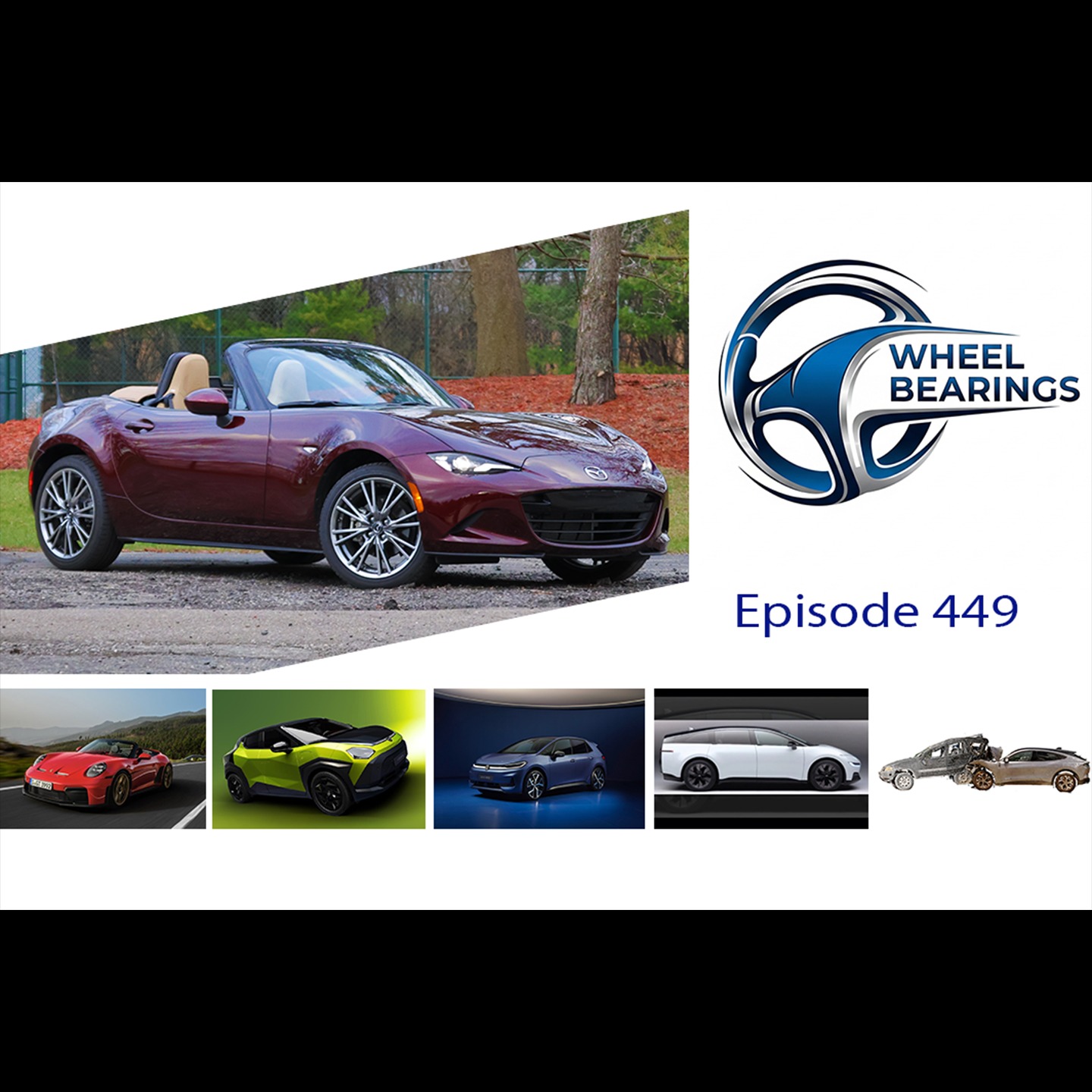
[SPEAKER_01]: This was actually a 2025 Mazda Miata MX-5, a 35th anniversary edition.
[SPEAKER_01]: So you cannot actually buy one of these new anymore.
[SPEAKER_01]: And what made the 35th anniversary special distinct from other meadows is the color and trim combination.
[SPEAKER_01]: You know, it, you know, mechanically it's the same as every other mehata, but the the 35th anniversary special is finished in the artisan red metallic, which is that deeper burgundy red that they introduced on the CX 90 a couple years ago.
[SPEAKER_01]: So, you know, obviously, you know, Soul Crystal Red is still the best one, but this is a very nice color, and, you know, it's a, it's a try coat, you know, so they do three base coats of the color, and then clear coat it, and, you know, especially in the sun, it looks fabulous.
[SPEAKER_01]: It's not as noticeable, the color's not as noticeable, but in the sun it really pops and it looks fantastic.
[SPEAKER_01]: So, you have the Artisan Red Metallic and then Tan Napa leather interior and also the top.
[SPEAKER_01]: So, the Tan top against the dark red paint is a great combination.
[SPEAKER_01]: Like all current me out is, it's got a two liter naturally aspirated four cylinder or an 81 horsepower or 51 pounds feet of torque, which for a car that weighs barely over 2,200 pounds, perfectly adequate, you know, it's not going to win drag races against Corvettes or Mustangs, but it doesn't have to, because it's going to get around corners faster than most of them anyway.
[SPEAKER_01]: It's the 17-inch wheels, 17-inch alloy wheels on this one, they're silver finish on there.
[SPEAKER_01]: It looks like a 10-12, like a eight double spokes, so eight thin double spokes, and looks really sharp.
[SPEAKER_01]: And it's funny, you know, driving this back to back with mine, you know, the original [SPEAKER_01]: again, you know, the performance is a little bit better with this one, it's got more power.
[SPEAKER_01]: Only ways, but less than a hundred pounds more than mine, but [SPEAKER_01]: You know, the overall characteristics, it still feels very much like a mehata, very nimble.
[SPEAKER_01]: You know, it goes exactly where you point it.
[SPEAKER_01]: But the modern mehata is, you know, the belt line is a lot higher, again, mine when I sit in it.
[SPEAKER_01]: The belt line comes up to, you know, below my shoulder.
[SPEAKER_01]: And I feel, I almost feel like I'm sitting on it rather than in it.
[SPEAKER_01]: And the doors are thinner than on the old ones.
[SPEAKER_01]: Even overall dimensions on the current generation of fourth generation are very similar to the first one.
[SPEAKER_01]: It you feel a lot more enclosed in it, which from a safety perspective is probably a good thing.
[SPEAKER_01]: It certainly feels a lot more solid, mine feels more delicate in a lot of ways.
[SPEAKER_01]: But they're both equally a blast to drive.
[SPEAKER_01]: and on the interior, you know, in addition to the tan covering on the doors on the dashboard and on the seats.
[SPEAKER_01]: uh... there's a panel across the top of the doors that stretches from the the dashboard uh... across the top of the doors that is in the same uh... artisan red coloring uh... uh... matches the the exterior uh... the uh... the steering wheel uh... the uh... the uh... shift knob is covered in black leather uh... stitched you know kind of almost like a baseball uh... contrast stitching on there
[SPEAKER_01]: My only complaint about the interior of the Miata is the cup holders, which, you know, be honest driving this car, you're probably not going to use the cup holders much anyway, but where the cup holders are placed is, it's on the amount of the rear bulkhead between the seats.
[SPEAKER_01]: So, you know, if you pull your arm way back, you will hit them with your elbow.
[SPEAKER_01]: But that's a that's a minor thing.
[SPEAKER_01]: I can I can live with that.
[SPEAKER_01]: I could easily live with one of these cars as a daily driver It's just it's just so much fun to drive They of course, you know, there's always that caveat.
[SPEAKER_01]: It's so much fun to drive if you fit it if it fits you you're golden if it doesn't [SPEAKER_01]: Then you're out of luck.
[SPEAKER_01]: Then you got to go.
[SPEAKER_01]: This is a good idea.
[SPEAKER_01]: This is a good idea.
[SPEAKER_01]: This is a good idea.
[SPEAKER_01]: This is a good idea.
[SPEAKER_01]: This is a good idea.
[SPEAKER_01]: This is a good idea.
[SPEAKER_01]: This is a good idea.
[SPEAKER_01]: This is a good idea.
[SPEAKER_02]: This is a good idea.
[SPEAKER_02]: This is a good idea.
[SPEAKER_01]: This is a good idea.
[SPEAKER_02]: This is a good idea.
[SPEAKER_02]: This is a good idea.
[SPEAKER_02]: This is a good idea.
[SPEAKER_02]: This is a good idea.
[SPEAKER_02]: This is a good idea.
[SPEAKER_02]: This is a good idea.
[SPEAKER_02]: This is a good idea.
[SPEAKER_02]: This is a good idea.
[SPEAKER_02]: This is a good idea.
[SPEAKER_02]: This is a good idea.
[SPEAKER_02]: This is a good idea.
[SPEAKER_02]: This is a good idea.
[SPEAKER_02]: This is a good idea.
[SPEAKER_02]: This is a good idea.
[SPEAKER_02]: This is a good idea.
[SPEAKER_02]: This is a good idea.
[SPEAKER_02]: This is a good idea.
[SPEAKER_02]: This is a good idea.
[SPEAKER_02]: This is a good idea.
[SPEAKER_02]: This is a good idea.
[SPEAKER_02]: This is a good idea.
[SPEAKER_02]: This is a good idea.
[SPEAKER_02]: One of the main ones is when the top is up.
[SPEAKER_02]: The crossbar is right where my head is.
[SPEAKER_02]: And so my head is resting like a centimeter below it.
[SPEAKER_02]: So every bump, every just like, well, hold time I'm just getting smacked in the head.
[SPEAKER_02]: So with the, with the NDs going, they've sort of moved it and I actually fit in it.
[SPEAKER_02]: I will say that after when I had the ND, like a year ago, when I got back into my BRZ, my BRZ felt like a like a Ford excursion.
[SPEAKER_02]: There's just so much more room.
[SPEAKER_02]: So it is it is still tight, but I do fit in it.
[SPEAKER_01]: Like it is I You fit in the RF.
[SPEAKER_02]: No, I don't I don't even bother trying.
[SPEAKER_02]: Yeah, I tried like the the The NC RF and they're like now like that's not a saying so I haven't even tried the NDRF.
[SPEAKER_02]: It's not even and then what's the point?
[SPEAKER_02]: Why are you getting them me out of exactly?
[SPEAKER_01]: Absolutely.
[SPEAKER_01]: You know, the whole point of having a Miata is to put the top down.
[SPEAKER_01]: And the great thing about having a Miata, it doesn't matter if you have a 360 degree camera view.
[SPEAKER_01]: You don't need it because you just get around.
[SPEAKER_01]: You can see everything.
[SPEAKER_01]: You have 360 degree vision all the time.
[SPEAKER_01]: It's perfect.
[SPEAKER_01]: So as long as you fit, as long as you're not so tall that you can't fit, and to be fair, there's plenty of people that do not fit the meata, but if it fits you, it's absolutely a great time.
[SPEAKER_02]: It's like having the same height, I say, like Russ, like I'm 63, he's 63, I've never, like it doesn't mean that we all, it automatically exclusives from fitting in certain cars, because some of us are, like, I have really long legs and really long arms.
[SPEAKER_02]: Um, so that sort of like kind of messes with like how I, it depends on your proportions.
[SPEAKER_02]: Yeah, so your proportions aren't, you know, we're not all like proportioned exactly the same based on our height.
[SPEAKER_01]: So, the great thing about the Miata, still even in 2026, yeah, it's obviously more expensive than it was when it was new, or when it first came out, like my car was $13,000 when it first came out, but when you run that through an inflation calculator, [SPEAKER_01]: actually not a whole lot different today because the 2026 Miata starts at 30,430 dollars which I think the original price let's see that 13,000 and 20 and in 1990 I should say
[SPEAKER_08]: In 1990, equates to $33,695.
[SPEAKER_01]: And so the current gen Miata, the base sport model starts at 30,430, the mid-level club starts at 33,930.
[SPEAKER_01]: So it's basically just slightly, it's about the same price as it was 35 years ago.
[SPEAKER_02]: And even the loaded grand touring, you just don't pay it as much as you did 35 years ago.
[SPEAKER_01]: Robbie gets it, but you're both way over.
[SPEAKER_01]: It was $1185.
[SPEAKER_02]: Why isn't way anything?
[SPEAKER_02]: We should have known better.
[SPEAKER_01]: Yeah, it's small.
[SPEAKER_02]: Mm, nope.
[SPEAKER_02]: We just shove it in the back of the MF-150, and then take it.
[SPEAKER_01]: Pretty much, yeah.
[SPEAKER_01]: At least it's a super-duty.
[SPEAKER_01]: Alright, so let's carry on.
[SPEAKER_01]: So first up, let's talk about Mercedes-Benz.
[SPEAKER_02]: Let's talk about Mercedes-Benz.
[SPEAKER_02]: Yeah.
[SPEAKER_02]: They're busy, busy beavers over there at the Mercedes-Benz recently.
[SPEAKER_02]: Yeah, I guess that's, oh, that's the throw to me, huh?
[SPEAKER_02]: Yeah.
[SPEAKER_02]: So I went to Telling, tell, tell, tell, tell, tell, tell, tell, tell, tell, tell, tell, tell, tell, tell, tell, tell, tell, tell, tell, tell, tell, tell, tell, tell, tell, tell, tell, tell, tell, tell, tell, tell, tell, tell, tell, tell, tell, tell, tell, tell, tell, tell, tell, tell, tell, tell, tell, tell, tell, tell, tell, tell, tell, tell, tell, tell, tell, tell, tell, tell, tell, tell, tell, tell, tell, tell, tell, tell, tell, tell, tell, tell, tell, tell, tell, tell, tell, tell, tell, tell, tell, tell, tell, tell, tell, tell, tell, tell, tell, tell, tell, tell, tell, tell, tell, [SPEAKER_02]: But yeah, so we, you know, this was a very much a gas vehicle event.
[SPEAKER_02]: They also had factory tours, I didn't have time to do that, unfortunately, boo-hoo-hoo me.
[SPEAKER_02]: We did get to go off-roading though in the GLE.
[SPEAKER_02]: I didn't get to drive, but it was really impressive how well this thing handled doing some really weird, crazy off-roading that again, no one's ever going to do in a GLE.
[SPEAKER_02]: I mean, they wouldn't even do it in a G-wagon to be honest, and the G-wagon could like deal with this, like, no problem.
[SPEAKER_02]: That said, the new G-L-E-G-L, what Mercedes has been doing recently is essentially just sort of revamping their motors for these vehicles, which is quite impressive.
[SPEAKER_02]: This one has a new, I think, a new cam shaft, and just a bunch of cool new stuff.
[SPEAKER_02]: The G-L-E is available in a bunch of different flavors.
[SPEAKER_02]: five hundred E, and all of the ones we're getting in the United States are all well-drive, so they're all formatic.
[SPEAKER_02]: So the JLE is their plug-in hybrid, and it will do probably, okay, so there's a lot of confusion on the range for this when they had the event.
[SPEAKER_02]: The person who was giving us the presentation was from Europe.
[SPEAKER_02]: They were given us numbers based on the Europe thing, but they were saying miles of kilometers.
[SPEAKER_02]: You know, they're surrounded by a bunch of journalists.
[SPEAKER_02]: It's a very, we're unnerving people to be around because they're quite annoying.
[SPEAKER_02]: We ask a lot of like really hard questions at an opportune times, and finally after I looked it up, this vehicle brought based on the WLTP number that they gave us with kilometers.
[SPEAKER_02]: Well, they didn't give it to us, they give us the wrong number, but based on the official number that they have in the press release, it's likely this thing's probably going to do about 40, 40 to 50 miles of range with for electric only, which is pretty nice, you know, you're going to get in Mercedes, you're going to be able to drive a long way, which, you know, we talked about 36 or 38 was the average driving distance of the average person.
[SPEAKER_02]: in their average life.
[SPEAKER_02]: That means that you're never going to use gas.
[SPEAKER_02]: Are you very rarely going to use gas?
[SPEAKER_02]: If you plug in your vehicle at night, it's in a, it has a three-leaders inline six.
[SPEAKER_02]: Before it's your horsepower, four-and-a-four.
[SPEAKER_02]: It's we pound a feet of torque, let me double check.
[SPEAKER_02]: No, wait, it's totally different.
[SPEAKER_02]: Sorry, it's 429 horsepower at 502 pound feet of torque.
[SPEAKER_02]: That was just the the motor itself, which is the M256 M Evo.
[SPEAKER_02]: Again, this is one of their updated motors.
[SPEAKER_02]: They did the same thing with the the CLA, the hybrid.
[SPEAKER_02]: That's an updated motor, it's on a Miller, Miller cycle.
[SPEAKER_02]: These are different.
[SPEAKER_02]: It has a new cylinder head, improved intake, exhaust, ports, new, a new cam shaft.
[SPEAKER_02]: I already talked about.
[SPEAKER_02]: it's higher revving, they have extended torque curve, it's got turbo, it's just they've done a lot to these motors, these gas motors in order to increase power and efficiency because I did an interview with Hola talking about electrification and their sales guy who's a name I also forget, but they are, I think when you see places like Ford who's pulling back [SPEAKER_02]: But then you see GM and Hyundai, and they continue to push forward.
[SPEAKER_02]: Mercedes is in the same bucket as GM, and they're going to continue to push forward with electrification.
[SPEAKER_02]: They don't see, they like, well, if we're playing a game, and then, you know, we have like a, you know, suddenly, you know, we get kind of pushed back a little bit.
[SPEAKER_02]: You don't just stop playing the game.
[SPEAKER_01]: Like you want to do the long term, you're thinking long term.
[SPEAKER_02]: And to be honest, they didn't really, I think they fumbled, and they talked about this.
[SPEAKER_02]: I think their biggest issue was the EQ lineup initially.
[SPEAKER_02]: They didn't look like a Mercedes.
[SPEAKER_02]: And they were very forthcoming.
[SPEAKER_02]: And people want a Mercedes to look like a Mercedes regardless of the power train.
[SPEAKER_02]: And that's where we're delivering going forward.
[SPEAKER_02]: People don't want a sort, when you design a car, 10, 5 years before it comes out, you don't know if people are going to like it.
[SPEAKER_02]: You just hope, you know, like, okay, well, the zeitgeist is this, you know, we're seeing this, let's design this car and it looks cool to us, you know, five years before anyone else sees it and then it comes out and suddenly it doesn't just doesn't look cool.
[SPEAKER_02]: It's like whatever flavor, whatever, you know, excitement that might have been five, six years ago, within the company is gone by the time it comes to the market because [SPEAKER_02]: you know people have you know designers to the aesthetics just change all the time like what we thought was cool in the 90s what we thought you know if you're just looking at fashion is is a great way to sort of for some people for some reason people thought that putting vent controls in the touch screen interface was cool but they were wrong seemed like a good idea it seemed like oh there's no it was never a good idea
[SPEAKER_02]: Yeah, if people are going to love this, it's going to be great.
[SPEAKER_02]: Or people are going to be so excited.
[SPEAKER_02]: No, so what is interesting about this vehicle is it has a it's a it's going to have a a CCS.
[SPEAKER_02]: It's not going to have an axe and a charge AC at 9.6 kilowatts, which okay.
[SPEAKER_02]: Yeah, it's plug in hybrid, but let's search at 60 kilowatts DC fast charging.
[SPEAKER_02]: which is on the plug-in hybrid?
[SPEAKER_02]: Yeah.
[SPEAKER_02]: Wow.
[SPEAKER_02]: Yeah, that's something I know, I know.
[SPEAKER_02]: Crazy.
[SPEAKER_02]: So you know, you can go into pretty much everything by the Tesla station at this point.
[SPEAKER_02]: And if you're shopping, like all of that.
[SPEAKER_01]: So if you plug in one of these GLE plug-in hybrids on a CCS station, you can top it up and what, probably about 15, 20 minutes?
[SPEAKER_02]: If that, yeah, I run.
[SPEAKER_02]: You got to run into the system.
[SPEAKER_02]: Yeah, so yeah, so I think of the vehicles, you know, they also have an AMG version.
[SPEAKER_02]: I didn't get to drive any of these vehicles.
[SPEAKER_02]: They're not driveable yet.
[SPEAKER_02]: These are all like, oh, these is an unveiling.
[SPEAKER_02]: The GLS looks really nice.
[SPEAKER_02]: All of them have physical, uh, what do you call them?
[SPEAKER_02]: events.
[SPEAKER_02]: They all have physical events.
[SPEAKER_02]: So there's no no concern about that.
[SPEAKER_02]: They do all still have the passenger side screen, which again, I talked to them about it.
[SPEAKER_02]: I talked to regular people.
[SPEAKER_02]: I think we've talked about it.
[SPEAKER_02]: The average in the United States we don't seem to care about those screens.
[SPEAKER_01]: Well, it's funny.
[SPEAKER_01]: The one time, the one vehicle had been in the passenger screen that my wife actually liked using was in the EQS [SPEAKER_01]: Yeah, because you know, she was able to go in there and mess around with the the audio and and the navigation Everything without the number saying over.
[SPEAKER_02]: Yeah.
[SPEAKER_02]: Yeah, we're some of them are very like you can only do these certain things You could pretty much just run the whole car.
[SPEAKER_02]: You can adjust like, you know, where you're going, what you're doing, etc.
[SPEAKER_02]: The audio, the media, anything you want to do, you can do it and you can watch videos which all of them have that.
[SPEAKER_02]: Uh, that's it, you know, it's like, again, they, they, these screens are very much, uh, uh, a play for Asia, especially China where you, you, you, you know, this is what, this is what people want.
[SPEAKER_02]: They're building global cars, you know, if you're an automaker right now, especially right now, because, uh, you know, automotive sales are having down.
[SPEAKER_02]: Um, I know when people was like, oh, no, they're selling less EVs.
[SPEAKER_02]: I'm like, you know, if you look at the whole market, [SPEAKER_02]: everyone and everything is down so yeah if you're building a global car you know it makes more sense just to put all the things in it for everyone versus you know trying to you know sort of piece me out well this could this market gets this this market gets this especially when you're doing it makes it a lot more expensive when you have to do a whole bunch of different variations so you know you try you try and get something that's going to be usable everywhere [SPEAKER_02]: Yeah, I think an Audi was really smart with the new A5, where they've gotten rid of like the four engine choices, and they're like, we have one engine, it's the best one, you're like, oh, okay, cool, that's fine, like there was no real, I could understand, like, oh, you know, you want to upsell to the higher engine, but now you're just like, you know what, this is one engine, one essentially one engine skew that we put in all the cars is supposed to have an inventory for four different types of engine.
[SPEAKER_02]: Um, you know, Mercedes, like BMW before it is looking at their their manufacturing as, you know, we're going to be able to build a gas, a hybrid and an EV all with the same car all in the same line.
[SPEAKER_02]: Just sort of consolidating and being a little bit smarter about how you build these vehicles.
[SPEAKER_02]: Yeah, I think how many cars they show.
[SPEAKER_02]: So there's four GLEs, let me GLS is others.
[SPEAKER_02]: Two GLSs, the GLAs you've got a 350, which is the only one, it's got an Inline 4, the 450 and the 500E, both have the same engine.
[SPEAKER_02]: Those are Inline 6s and then the 580, which is the GLA, it's got a V8 for the GLS, [SPEAKER_02]: You got an inline 6, the 450 is an inline 6, and of course the GLS 580 is a 4-liter V8.
[SPEAKER_02]: So, you know, for the GLE, you got three different engine choices, one of the engines also, it's part of a hybrid system, and so yeah, the GLS, you get a two engine choices, but yeah, it's the same, the inline 6 is the same.
[SPEAKER_02]: Both of them were comfortable to sit in, they looked nice, they looked like Mercedes, I think the GLE's more exciting, just because that's just me.
[SPEAKER_02]: At the end of the day, if you need a lot of room, you got the GLS, if you got kids, I guess.
[SPEAKER_02]: Fancy children, you get the three-room GLS, if he's ever regular children, KTGLE, or a pilot.
[SPEAKER_01]: Or depends on how many children you have.
[SPEAKER_02]: That's true.
[SPEAKER_02]: That's true.
[SPEAKER_01]: Yeah.
[SPEAKER_02]: So, yeah.
[SPEAKER_02]: No, I think the...
[SPEAKER_02]: It's very interesting to talk to Mercedes about their power trains because they are making fundamental changes to these motors with the latest generation of vehicles and they are still like, yes, we have gas vehicles but we are still very much an EV company and so it'll be interesting to see where they are in a couple of years but even they were like five years ago [SPEAKER_02]: Which, you know, I think everyone was following Ford's lead Who was following the cyber trucks lead so it was all sort of like whoops?
[SPEAKER_02]: Um, so yeah, so it's, you know, but but again, you're paying a lot of money for Mercedes.
[SPEAKER_02]: You still get some buttons.
[SPEAKER_02]: They put the rockers on the steering.
[SPEAKER_02]: We'll back on the steering wheels.
[SPEAKER_02]: And you get physical controls for the, for the vents.
[SPEAKER_02]: So that's, I mean, that right there is worth the, however much these vehicles will cost when they come to market.
[SPEAKER_02]: Want to be by the end of this year, I believe.
[SPEAKER_01]: Cool.
[SPEAKER_01]: All right, there was another bit of news that came out from Mercedes in the last couple of weeks as well, which was around the steering system on the EQS, so they've got a revamped version of the EQS coming.
[SPEAKER_01]: It still has the same basic shape, the photos that they released are it's wrapped in camo, but it looks like they're making, especially the front end, look a little more, slightly [SPEAKER_01]: real airflow through it.
[SPEAKER_01]: And one thing about all these, the GLE and the the new EQS and the GLS, they're all adopting these similar signature headlights, you know, that started on the CLA, where you've got the Mercedes 3.8 star lit in, as you're, you're running laps in the, in the light clusters.
[SPEAKER_01]: But on the EQS, they're not showing the whole car yet, but they showed off the new stir-by wire system that's on there.
[SPEAKER_01]: And like the one on the cyber truck, there's no mechanical connection between the steering yoke and yes, there's a yoke now, no steering wheel and the wheels.
[SPEAKER_01]: You know, it's got a limit the total lock to lock during angle to about 170 degrees.
[SPEAKER_01]: So it's just short of going to, you know, 90 degrees, you know, in either direction of a steering of angle from the yoke and, uh, [SPEAKER_01]: Yeah, it's going to be interesting to try this out.
[SPEAKER_01]: I mean, I've tried this stuff out on a couple of demo vehicles from suppliers over the last few years.
[SPEAKER_01]: And it's fascinating to try it.
[SPEAKER_01]: I haven't had a chance to spend time with anything on the road that has a full steer by wire system like this, because I never drove a cyber truck.
[SPEAKER_01]: But I've never [SPEAKER_01]: I'm not crazy about the yoke, but if you only, if it only turns 170 degrees from one end to the other, you're never going to go hand over hand with the thing, so it doesn't really matter.
[SPEAKER_01]: And getting rid of the top half of the steering wheel means that you get better visibility of your instrument cluster, but it's also going to potentially pose a problem in China.
[SPEAKER_01]: They may not be able to [SPEAKER_01]: few weeks back about the regulation changes in China because of the way they test through the crash testing for the steering wheels.
[SPEAKER_01]: You know, it's specifically looking at the impact on the the top part of the steering wheel itself.
[SPEAKER_01]: And if there's no top part, then they can't test it and it fails.
[SPEAKER_01]: The way the regulations are written.
[SPEAKER_01]: Maybe the Chinese will change that regulation.
[SPEAKER_01]: I don't know.
[SPEAKER_01]: Or maybe Mercedes will just put a standard steering wheel in the cars for the [SPEAKER_02]: I mean, I, I, I, I'm fine with stir by, stir by wire.
[SPEAKER_02]: I know it's, it's even more, you know, sort of, uh, remove from the road, um, which I'm not a fan of for me personally, but I think most people aren't doing driving like I drive to be honest.
[SPEAKER_02]: I didn't think people are driving any sort of luxury vehicle.
[SPEAKER_02]: They're fine with something like this.
[SPEAKER_02]: I'd said it unless it's like an AMG or something like that.
[SPEAKER_02]: I just don't the yoke just like sort of like it just reminds like like in the 80s we all watch night writer We're like oh, that's cool.
[SPEAKER_02]: And then after that we're like, oh, you remember the 90s with um Ladies early 90s like every car every concept car had a joystick [SPEAKER_02]: Yeah, you remember that was the cool like we were all gonna drive with joysticks in now They're like, man, that's not that bad.
[SPEAKER_02]: Maybe not.
[SPEAKER_02]: Oh, that's those lights.
[SPEAKER_02]: I forgot the the new lighting system as fitch Presley um it has a larger light field so you're getting more of a spread with these new lights and all these vehicles and they're using 5% less energy so it's a bunch of little teeny tiny LEDs so it's pretty so that's kind of cool But they're thinking about you know [SPEAKER_02]: how much energy they're using.
[SPEAKER_02]: Especially when you're looking at vehicles that at some point they want to have level 3 and level 4, which means that computing is in a cyclopalado power.
[SPEAKER_01]: Yeah.
[SPEAKER_01]: So they need to reduce power consumption wherever they can.
[SPEAKER_02]: But the flatter steering, well, I don't know, just give us a regular steering wheel and give it an option.
[SPEAKER_02]: That's my only thing.
[SPEAKER_02]: I'm like, yeah, if someone wants to drive with this weird thing, it looks like a butterfly cool.
[SPEAKER_02]: That's there.
[SPEAKER_02]: But I would give me the option.
[SPEAKER_02]: I'm just having a steering wheel because I like a steering wheel.
[SPEAKER_01]: I mean, you know, Tesla did eventually go back to a conventional steering wheel in the Model S and Model X, but they didn't have, they didn't, those cars didn't have steer by wire.
[SPEAKER_01]: You know, they, when they did the last refresh of those, they put in a yoke, but, you know, you had to actually go hand over hand.
[SPEAKER_01]: which just didn't work very well with that yolk.
[SPEAKER_01]: So we'll see what happens.
[SPEAKER_01]: All right.
[SPEAKER_01]: General Motors.
[SPEAKER_01]: They've got two assembly plants in Lansing, Michigan.
[SPEAKER_01]: Grand River assembly plant is where they currently produce the Cadillac CT-4 CT-5, although I think the CT-4 They may have ended production of that, but they're building the CT-5 there.
[SPEAKER_01]: They used to build the last the 6th gen Camaro there and they're now getting ready for the next revamp They're doing updated a new version of the CT-5 They have supposedly Greenlit a new seventh generation Camaro [SPEAKER_01]: That's going to be built there, and apparently a new sedan for Buick.
[SPEAKER_01]: If it's not the Grand National, this is a shut Buick down.
[SPEAKER_02]: No car.
[SPEAKER_02]: No buick has had a bigger impact, especially recently in this sort of culturally than the grand national.
[SPEAKER_02]: Like I wanted to buy a grand national since I was a little kid.
[SPEAKER_02]: My uncle had one and I was like this car is rad and so ever since I've wanted one and you're like you getting older and like okay if I could say what's enough money I can buy one they're getting sort of [SPEAKER_02]: you know, inexpensive and then run the jewels and Kendrick Lamar ruin that for me.
[SPEAKER_01]: So if they're not building a grand national, what are they even doing?
[SPEAKER_01]: So do you think they should bring back the old turbocharged 3.8 liter V6?
[SPEAKER_02]: I don't think they put it.
[SPEAKER_02]: They just have something that people they need like a seller.
[SPEAKER_02]: It's something cool.
[SPEAKER_02]: If you make a grand national and you only tweak it just a little, the design just a little.
[SPEAKER_02]: just a little bit.
[SPEAKER_02]: Oh, they also had one in the watchman.
[SPEAKER_02]: It was electric.
[SPEAKER_02]: They had a electric grand national and the watchman.
[SPEAKER_01]: That's true.
[SPEAKER_01]: Yeah.
[SPEAKER_02]: And I really wanted that car.
[SPEAKER_02]: So they gave us an electric grand national.
[SPEAKER_01]: Well, I don't think this is going to be electric.
[SPEAKER_02]: Well, that's definitely not going to be electric.
[SPEAKER_01]: Yeah.
[SPEAKER_01]: But, you know, it's going to, it's going to be on the same alpha platform as the CTS or the CT5 and the, um, the [SPEAKER_01]: Yeah, would a four-door grand national be acceptable to you though?
[SPEAKER_02]: I don't think I have a choice.
[SPEAKER_02]: It's like a Ford or Acura.
[SPEAKER_02]: Yeah, it's like, well, this is the way, this is the way of the world now.
[SPEAKER_01]: This is how, you know, the world doesn't want to buy two door cars anymore.
[SPEAKER_02]: Yeah, the world is very picky about that.
[SPEAKER_02]: It's two big worlds.
[SPEAKER_02]: Stupid world.
[SPEAKER_02]: I got my two door car.
[SPEAKER_02]: I make people, if they want to get in the back of the BRZ, they got to open it, put the seat down, slide it forward, shut things down.
[SPEAKER_01]: But how many people do you know that her's tall is Jelsome and Ella that can actually fit [SPEAKER_02]: So, the drummer for my band.
[SPEAKER_02]: Oh my gosh, really?
[SPEAKER_02]: He's not as small as Joe Smith.
[SPEAKER_02]: So, he and the bass player who is about the same height as me, sometimes I give him a right to bark after band practice.
[SPEAKER_02]: And so, and like half the time I have the BRZ and they have time I have the Onic fight.
[SPEAKER_02]: Well, for this band practice, I always had the BRZ because my wife has work.
[SPEAKER_02]: So, he, I mean, he doesn't fit back there, but he's back there.
[SPEAKER_02]: But Keith, I think he's sideways and it's only a few blocks.
[SPEAKER_02]: Okay, well, that's not so bad.
[SPEAKER_02]: Yeah, no, we wouldn't drive him for like an hour.
[SPEAKER_02]: That would just kill him.
[SPEAKER_02]: I think he'd be dead.
[SPEAKER_02]: He'd be dead.
[SPEAKER_01]: You know, I once sat in the back seat of a Hyundai Tibbaron.
[SPEAKER_01]: How?
[SPEAKER_01]: If you remember the Tibbaron.
[SPEAKER_02]: I do remember Tibbaron.
[SPEAKER_02]: How'd you do that?
[SPEAKER_01]: Was it magic?
[SPEAKER_01]: It was all kind of scrunched up.
[SPEAKER_02]: You were younger.
[SPEAKER_01]: It was a different time.
[SPEAKER_01]: Different time.
[SPEAKER_01]: All right.
[SPEAKER_01]: So last week, Chad and I did discuss the, you know, as we were recording it, it was just before the event that Nissan did in Japan last Tuesday night or Monday night, Monday night at our time here, it was Tuesday morning in Japan when they did it.
[SPEAKER_01]: And we did talk about the new rogue, which is coming this fall, and is going to be initially [SPEAKER_02]: Hybrid system on there which I drove we can talk about that.
[SPEAKER_02]: I drove the power.
[SPEAKER_02]: It's very nice It's I've drove it in Japan.
[SPEAKER_02]: I drove it recently in L.A.
[SPEAKER_02]: It is a very nice like you should be people at Nissan should be very proud of themselves for this for this This high-bits of the year that's yeah, it's it's like I tried to do the thing where you rev it So it's made trying to make it sound like a Toyota and it wasn't nearly as loud as it took It is much more plethora.
[SPEAKER_01]: I haven't driven it in the rogue drove it in the cash-guy [SPEAKER_01]: Yeah, I drove in the past that I know Fumber and it is really, really good.
[SPEAKER_01]: I was very impressed with it.
[SPEAKER_01]: Have you driven in the e-powered vehicle?
[SPEAKER_05]: Uh, I don't know that I have.
[SPEAKER_01]: Did you go to the the Nissan event last fall in Nashville?
[SPEAKER_05]: You're asking me about last fall, and I have the world's worst cold.
[SPEAKER_05]: I can't remember what I did when I was ago.
[SPEAKER_05]: I don't think, did I, I don't know that I did.
[SPEAKER_05]: I can't remember, honestly, I'm just going to be honest.
[SPEAKER_05]: I can't remember.
[SPEAKER_01]: OK. Well, in addition to the rogue, what you talked about last week, well, first of all, do you guys, do either of you have any thoughts on the design of the rogue?
[SPEAKER_05]: I like how it looks.
[SPEAKER_01]: Yeah, it's quite different from the current one.
[SPEAKER_05]: Yeah.
[SPEAKER_05]: I think it's a nice change.
[SPEAKER_05]: I think it makes it more updated.
[SPEAKER_05]: It makes it look a little bit more current.
[SPEAKER_05]: Not as doubty as it kind of looked before.
[SPEAKER_05]: Yeah, it was looking bad before.
[SPEAKER_05]: And I like the road.
[SPEAKER_05]: I think it's a great little crossover.
[SPEAKER_02]: So well, I think at the I think they've done a good job as sort of.
[SPEAKER_02]: taking a car that you like you say was pretty met and and making it look a little bit more more exciting a bit more I mean it still looks like every other you know medium size as you but the front end looks really nice I think they take a lot from the ria which was a car that I think was [SPEAKER_02]: better than people said it was, especially in theory, the idea was amazing, and the EAP there for E4, they're all well drives system was really nice on that vehicle, which again, unfortunately it just didn't resonate really with folks here in the United States.
[SPEAKER_01]: Well, they also showed off the new Nissan juke, which we are not getting, unfortunately.
[SPEAKER_01]: And it's going to be an EV, and like prior generations of juke, it's a little different looking.
[SPEAKER_05]: Yeah, every version of the juke so far has been a little out there and feel like if they made it look just like a car everyone is it wouldn't have technically been a juke it had to be a little bit a little bit It's not a juke.
[SPEAKER_02]: That's the law.
[SPEAKER_05]: So mission completion then if it has to be weird [SPEAKER_01]: Well, they definitely achieve that.
[SPEAKER_01]: Looking at this, it does adopt a lot of the design language from the hyperpunk concept that they showed at the 2023 Tokyo Show.
[SPEAKER_01]: It's obviously toned down somewhat from that one.
[SPEAKER_05]: but they got rid of the funky I used I like the way the headlights just to be on the old jute the lights were weird like it were.
[SPEAKER_01]: Yeah.
[SPEAKER_01]: Yeah.
[SPEAKER_01]: These funky weird headlights now they're these are these are these what are these what is shape is that is that would be uh two three four five six hexagon it's sort it's sort of an uneven head it's not it's an irregular hexagon.
[SPEAKER_05]: Okay, thank you, engineer, and right, but then there's so many, there's so many creases in the angles in the doors, the sheet metal is not flat.
[SPEAKER_05]: It's like crease crease crease crease crease crease.
[SPEAKER_02]: It's a little long day gone car.
[SPEAKER_02]: It's a car from the video game Star Fox from the end.
[SPEAKER_05]: It makes me think of the Epcot ball.
[SPEAKER_05]: Sorry.
[SPEAKER_05]: It's like if you go like, there's so many angles to it.
[SPEAKER_05]: But I weirdly like it though.
[SPEAKER_01]: Yeah, but I kind of like it.
[SPEAKER_01]: I actually like it better than the old.
[SPEAKER_01]: I was never a fan of the, like the first generation Duke that they sold here.
[SPEAKER_01]: I never, I was never a fan of the way it looked.
[SPEAKER_01]: I was, it just did not work for me.
[SPEAKER_01]: But I like, actually really liked driving it.
[SPEAKER_01]: It was, because I, I, I want to show off a Duke nismo, which was a hoot to drive.
[SPEAKER_01]: I just, you know, as long as I just got close my eyes till I got inside the car, then it was great.
[SPEAKER_02]: Just bumping into things like, yeah, like Mr. McGoo, who is it?
[SPEAKER_01]: But I do like the look of this one.
[SPEAKER_01]: I like this origami look to it.
[SPEAKER_05]: I think it looks cool.
[SPEAKER_05]: It's very different, but I like it every now and then when they go a little different with a car, I think that's neat.
[SPEAKER_02]: Yeah, I think I talked to the Nissan design dude, who's again, who's named I can't remember because I'm old and I'm also a bio.
[SPEAKER_02]: Yeah, and he was saying like in the United States, we don't have like a lot of...
[SPEAKER_02]: Like, like, charm doesn't, or, or, or, or whimsy.
[SPEAKER_02]: Like, we're talking about whimsy.
[SPEAKER_02]: It doesn't really work in the United States.
[SPEAKER_02]: Like, it just, it's, it's not a, We're not whimsical.
[SPEAKER_02]: We're not whimsical people.
[SPEAKER_02]: We're, you're like, ah, um, we're, I see this doing well in Europe.
[SPEAKER_02]: Like, I can see, like, you know, 5,000 units being sold here in Europe.
[SPEAKER_02]: Because it's two, every United States is so much like high school like everyone wants to be just like everyone else like you pick your click and then you're just going to you're going to put that uniform on and you're going to drive that car and you're going to go to those restaurants and you're going to eat that food and you're going to listen to that mute like yeah, there's it's very we're very click and none of us what we're the home or Simpson I'm not cool enough to be weird or something [SPEAKER_01]: Yeah, you're going to need it, Applebee's, and shop at Target, and get all your tools and outdoor stuff at Home Depot.
[SPEAKER_01]: Everything's got to be the same.
[SPEAKER_02]: Yeah.
[SPEAKER_01]: We're all going to drive a gray or white car.
[SPEAKER_01]: Yeah.
[SPEAKER_02]: Could they show the blue one, the blue one's like, man, yeah, I mean, the blue one's like nice, but it looks cooler and it's crazy green.
[SPEAKER_01]: Yeah.
[SPEAKER_05]: Their pictures of the blue one I've only seen the green one.
[SPEAKER_01]: There's there's a video doesn't even look like it's embedded on.
[SPEAKER_01]: Wow.
[SPEAKER_01]: That's embedded in the inside EV story that's in the show.
[SPEAKER_05]: I missed that.
[SPEAKER_05]: Let's see if I watch it, will everyone hear it?
[SPEAKER_05]: No, let's see.
[SPEAKER_01]: So, this is apparently going to be using the same platform as the Leaf.
[SPEAKER_01]: So, same 52 kilowatt hour and 75 kilowatt hour batteries, saying up to 386 miles of WLTP range.
[SPEAKER_01]: So, it'll probably be around 305, 310 similar to the Leaf if you were ever to test it on the EPA cycle, which since they're not going to sell it here, probably no reason to do that.
[SPEAKER_01]: probably front wheel drive only although it could support all wheel drive and all wheel drive version of this could be fun.
[SPEAKER_01]: You know, put this up against the Toyota CHR.
[SPEAKER_01]: That would be interesting.
[SPEAKER_02]: Nissan makes really good inexpensive cars that's my my big takeaway from Nissan is they just they make these really fun power trains that that sort of And it's mid you know like mid price cars which people don't seem to want for whatever reason are people haven't traditionally wanted to last 10 15 years They're entry level like inexpensive cars are so good [SPEAKER_02]: like you know the kicks is better than the ultima the leaf is better than the leaf was better than the area the you know it's just you know all right anything else on the on the juke any other comments on it for removing
[SPEAKER_01]: It's fold-tastic at the opposite end of the spectrum.
[SPEAKER_01]: Or she introduced, get another, I think this is about the 378 different variation on the 9-11.
[SPEAKER_01]: This is the 9-11 GT3 SC, which is the first time they've done a convertible version of a 9-11 GT3.
[SPEAKER_01]: Yeah, it's got, you know, all the, the GT3 goodness, but it's, it's a convertible.
[SPEAKER_01]: It's available with a manual transmission.
[SPEAKER_01]: Yeah, which is, which is outstanding.
[SPEAKER_01]: And it's a naturally aspirated four liter flat six, 102 horsepower at 9,000 rpm.
[SPEAKER_02]: This is a party mobio.
[SPEAKER_02]: Yeah, it is.
[SPEAKER_02]: And I see a lot of people by GT3s who have no business behind the wheel of a GT3.
[SPEAKER_02]: They can drive me so, like they don't have to do it, they don't have to corner, they don't have to do anything.
[SPEAKER_02]: I think this is, and I think some people are going to get all upset because like, well, the GT3, you know, you're losing some of the rigidity because it's a convertible setup.
[SPEAKER_02]: the way you drive a GT3 they won't matter even the way you drive whoever you are you're not doing real 10 10s on this car because you know there's no way you can do that to be honest unless you take it to a track yeah if you take it to a track and then you know if you're a person is going to track you're going to buy you know [SPEAKER_02]: You're gonna buy the hardtop anyway.
[SPEAKER_02]: Yeah, you're gonna buy the hardtop.
[SPEAKER_02]: So I support this manual convertible GT3.
[SPEAKER_02]: That's a loot to Porsche.
[SPEAKER_02]: Remember, every time they sell a Macon, every the the 5,000 variants of the 9, 11 are all because they sell a lot of Macons and guys.
[UNKNOWN]: Yep.
[SPEAKER_02]: So anytime someone hates on those those Porsche SUVs and like you need to check your mouth because those SUVs pay for this You know that there's now a variant for every 911 owner at each individual owner has their own very own variant There's gonna be a bill that's just picking your own colors, but you know there's a unique trim level for everybody who does Just yeah for everyone if they can sell one of every different type of 911 and satisfy the market [SPEAKER_01]: Well, I mean, I suspect that at the price as they charge for this, it probably pays for itself anyway.
[SPEAKER_01]: The GT3SC 273,350 dollars starting price starting.
[SPEAKER_02]: That's starting price.
[SPEAKER_02]: Wow.
[SPEAKER_01]: Then when you bring in your paint chip and say, I want it to be this color, then they'll charge you another 30 grand or so for that, you know, for painting it and whatever custom color you want.
[SPEAKER_01]: And, you know, doing unique contours, I do like the red plaid interiors on these press photos.
[SPEAKER_02]: Yeah, the red plaid is really nice.
[SPEAKER_01]: Yeah, that is cool.
[SPEAKER_05]: that looks really cool.
[SPEAKER_05]: I'm a sucker for a plaid interior.
[SPEAKER_05]: Those just they just look cool.
[SPEAKER_02]: This is the car for everyone's like, well, there's no phone cars anymore.
[SPEAKER_02]: I'm like, well, if you have $300,000.
[SPEAKER_05]: I just was with somebody.
[SPEAKER_02]: You can buy 10 me at us or one of these.
[SPEAKER_05]: I was in LA last week and I visited a friend who has 9 11 and he has a tan like that dark saddle kind of interior and he had a green plaid like a green and blue plaid.
[SPEAKER_05]: Oh my gosh, [SPEAKER_01]: All right, let's see, Volkswagen, the ID3 Neo has now been revealed, so this is a significant update to the ID3, and they're now, you know, as they did with the ID2 Polo, they're putting actual names on their EVs, so this is this is a pretty big update for VW.
[SPEAKER_01]: And it has, you know, the exterior doesn't look dramatically different, you know, it's a revised the front fascia and the lights and stuff.
[SPEAKER_01]: The interior is where they make the big difference on this one.
[SPEAKER_01]: And we were talking a couple of weeks ago about Thomas Schaffer saying, buttons everywhere, you got to have buttons in a car, [SPEAKER_01]: Well, they certainly did that in this one.
[SPEAKER_05]: Look at all the buttons.
[SPEAKER_05]: A whole row of buttons.
[SPEAKER_01]: And look at the driver side of the house.
[SPEAKER_05]: I'm six, seven, eight, nine buttons on the center.
[SPEAKER_01]: Count the number of windows, which is on the driver side armrest.
[SPEAKER_05]: Where's my garage?
[SPEAKER_02]: Look at that.
[SPEAKER_02]: 1, 2, 3, 4.
[SPEAKER_05]: 1, 2, 3, 4.
[SPEAKER_05]: How many are on there?
[SPEAKER_05]: I can't snap.
[SPEAKER_01]: 1 for every window.
[SPEAKER_01]: There's no front or rear button now.
[SPEAKER_05]: Look at that.
[SPEAKER_01]: It realized what a dumb idea that was.
[SPEAKER_05]: for buttons in a childbook button and buttons to elk and elk lock and they're all right there.
[SPEAKER_01]: Yeah.
[SPEAKER_01]: And on the steering wheel, you got actual buttons there too instead of the touch, the haptic touch controls they had before.
[SPEAKER_02]: I like the design of this button layout.
[SPEAKER_02]: It's very eighties.
[SPEAKER_05]: I just see the very square, like so soft on the steering wheel, that's kind of cool.
[SPEAKER_01]: Yeah, it's very eighties Volkswagen.
[SPEAKER_01]: Yeah.
[SPEAKER_02]: And then the dash, no, I think, of course, we're not getting this car.
[SPEAKER_02]: But we're going to see it.
[SPEAKER_05]: I was about to see that.
[SPEAKER_05]: Not that we'll ever get your drive in the end.
[SPEAKER_02]: And he's going to lift in the ID4 and then update it ID buzz.
[SPEAKER_02]: And yeah, that's better, et cetera.
[SPEAKER_01]: And even though they have stopped production of the ID4 in Chattanooga, they have said that we're going to get an updated ID4 at some point.
[SPEAKER_01]: And so it will undoubtedly have this interior in it, which is a good thing.
[SPEAKER_02]: The idea for isn't bad, it's just, I think I wrote, I think I did a video about it's a bore, it's sort of a boring car.
[SPEAKER_01]: Yeah.
[SPEAKER_02]: But it does the thing and he's the dude, but you know what else is, how many boring gas cars are on the market?
[SPEAKER_01]: Yeah, you don't know what else is boring?
[SPEAKER_01]: A Toyota RAF4.
[SPEAKER_01]: And it's the best selling name plate in America.
[SPEAKER_02]: It is, it's, it's, it's a very boring car, but it's, it's, it's.
[SPEAKER_05]: We're not to dinner last night.
[SPEAKER_05]: There were three RAF4s in the parking lot with dealer plates.
[SPEAKER_05]: Like the new, like you just bought the car.
[SPEAKER_05]: Three.
[SPEAKER_05]: Like everyone got one yesterday.
[SPEAKER_02]: Everyone bought a new red for good car good boring not exciting.
[SPEAKER_02]: It's I call it a red for because you I want to give it a little extra something something for it.
[SPEAKER_05]: You called the white rad four rad four.
[SPEAKER_02]: Oh, okay Yeah, I mean, it's not it's not it's not a fun car But it's funny what it is.
[SPEAKER_02]: It's pretty rad.
[SPEAKER_02]: It just sounds really well [SPEAKER_01]: yeah so the uh... the uh... the uh... the three uh... kneel you know they've uh... they've made some other updates to it as well uh... it's uh... let's see where's uh... yeah and so they've improve the efficiency of the motors they've upgraded the batteries and everything
[SPEAKER_01]: up to 630 kilometers WLTP, which is about 385ish 390 miles, so over 300 miles of range on the top models, faster charging, they've upgraded it across the board.
[SPEAKER_02]: It's still 400 volt, but it's still like it's the [SPEAKER_01]: Yeah, so hopefully we will get an ID4 with all these upgrades before too long.
[SPEAKER_01]: All right, Uber, you know, back in 2018, Uber was the first company to have somebody killed with one of their autonomous vehicles, autonomous development vehicles, and then [SPEAKER_01]: They abandoned their whole AV development program, sold it off to Aurora, and then in the last couple of years, they've been throwing money at just about everybody that's working on AVs to get rubbo taxis into their fleet as soon as possible.
[SPEAKER_01]: And that number now adds up to a grand total of about $10 billion that they are investing in rubbo taxis, which is [SPEAKER_01]: it's a lot of money.
[SPEAKER_02]: It's a lot of money for something that isn't going to be profitable for about 10 years.
[SPEAKER_02]: Then again, Uber was profitable for whatever.
[SPEAKER_02]: And when you, you see these companies like, oh, we're going to we're doing autonomous whatever.
[SPEAKER_02]: A lot of that is just sort of appeasing shareholders.
[SPEAKER_02]: Rivians, Rivian could do anything in the world to be, they could have made the best EV truck on the planet, but until they started talking about EVs, then they got a spike in their stock price.
[SPEAKER_02]: Just because they said autonomous [SPEAKER_01]: Yeah, so Uber is planning to spend $7.5 billion on buying Robotexies for its fleet.
[SPEAKER_01]: So that's a fundamental shift for Uber, going from an asset-light model where they rely on drivers to bring the vehicles to them and to owning their own fleets.
[SPEAKER_01]: And, you know, they've partnered with a bunch of companies that, you know, they're running Wamos in Austin and Atlanta.
[SPEAKER_01]: They're running AV Ride, Robo Taxis in Dallas and Houston.
[SPEAKER_01]: They're running MAMO Buildie Robo Taxis in Atlanta.
[SPEAKER_01]: They're running emotional Robo Taxis in Las Vegas.
[SPEAKER_01]: They've got partnerships in Japan.
[SPEAKER_01]: In the Middle East, they're going to be [SPEAKER_01]: to start testing vehicles from wave in the UK.
[SPEAKER_01]: So they're throwing money at all these companies.
[SPEAKER_01]: They've also invested in lucid and Rivian.
[SPEAKER_01]: They initially put $300 million in the lucid.
[SPEAKER_01]: $300 million in dino who's their partner for rubbo taxis they last week they put another they invested they participated in another $650 million round for lucid and also they put several hundred million into Rivian for their rubbo taxis so they're throwing money around you know like there's no tomorrow It's a lot of money for the hope that it's gonna pay off soon but yeah you said not probably [SPEAKER_02]: It's got to be, uh, especially now they have, you know, they have, now they have all these things on their books, all this inventory that they have to deal with now that includes like taking care of these that includes, you know, are they taking care of the tele control, you know, who does that is that the individual companies is that Uber who takes care of that like who wouldn't when the car gets confused and you have to call home and someone's like looking through a little.
[SPEAKER_02]: you know, a monitor and controlling the car who does, and there's so many things that are going on with these, this Robotaxi stuff that we don't, you know, and they, again, for, for the sake of shareholder, you don't talk about stuff like that.
[SPEAKER_02]: You just like, look at this, we're all going to be able to ride in, in Robotaxi's, and like, yeah, but remember when Uber came to San Francisco or really any other [SPEAKER_02]: like they made traffic work.
[SPEAKER_05]: Oh, the stories of the traffic jams that happened because of all the things that they do, and yeah.
[SPEAKER_02]: And that's just, well, that's just, I mean, we're talking about the human drivers.
[SPEAKER_02]: They did, they did research and it turns out that increasing the amount of cars on the road made more traffic, because we increased more taxis, which were ubers, more funnier that works.
[SPEAKER_02]: Yeah, traffic got worse, and some of this money, like, sort of like a 1% of this money at, like public transportation, and that would be a lot better.
[SPEAKER_01]: Yeah, let's see.
[SPEAKER_01]: All right.
[SPEAKER_01]: So Doug Field.
[SPEAKER_01]: Doug Field left Ford is leaving Ford.
[SPEAKER_01]: They announced it a couple of days ago.
[SPEAKER_01]: And remember when Ford did this big reorganization, they created two separate business units, one called Ford Blue, which was all their traditional stuff and Ford Model E, which was all their EVs and software and digital electronic stuff.
[SPEAKER_01]: Well, Doug, Doug leaving Ford, they're reorganizing again, and they've created something called the called now, the product creation and industrialization group, which is being...
[SPEAKER_02]: Does that even mean?
[SPEAKER_02]: Is that every group?
[SPEAKER_01]: that's like saying science and technology we'll be building our company with technology like basically what what it is there there even though you know i i reached out to forward when this announcement came out and i said so does this mean that model is going to go away [SPEAKER_01]: It's a not a model, it's still there, not going anywhere, at least not this week.
[SPEAKER_01]: Not today, because basically, you know, what it says here in the announcement, the new structure which integrates Ford's electric vehicle digital and design team with its global industrial system.
[SPEAKER_01]: Well, electric vehicle, digital and design, that is basically all that was model-E.
[SPEAKER_01]: Pretty much everything that was part of model-E is now being integrated into this new group, which is reporting to.
[SPEAKER_01]: Yeah, it was reporting to Kumar Golhatra, who's the chief operating officer for Ford.
[SPEAKER_01]: Alan Clark, his new title, he had been leading the advanced EV program, the skunk works.
[SPEAKER_01]: He's now Vice President of Advanced Development Projects, and he'll continue to leading the Advanced Electric Vehicle Development Team in Long Beach, and working on launching the Universal Electric Vehicle Platform.
[SPEAKER_01]: So he's now reporting to Kumar.
[SPEAKER_01]: So what, you know, what exactly is left of Model E?
[SPEAKER_01]: I'm guessing that within the next few months, we will see forward and now set, yeah, we're just gonna go back to one automotive business.
[SPEAKER_01]: And I think what they're the way I'm interpreting this right now is that they've seen what's going on with the Scum Works program.
[SPEAKER_01]: And they're confident enough that it is working so well.
[SPEAKER_01]: that they're just going to roll it right back into the main organization because some of the stuff they talk about in here is they want to bring the new electronic architecture that the stock works developed across the board to all their vehicles so they can have full OTA updates on everything they build, you know, whether it's got gas, hybrid, diesel, whatever, it's all going to be updateable.
[SPEAKER_01]: They're going to have all the new software in there so that they can support [SPEAKER_01]: the new level 2 plus and level 3 ADAS systems, they're basically just taking everything from the scum works and from latitude A.
[SPEAKER_01]: Everything knows done in modally and finally bring it into the rest of the organization, which is going to be interesting to watch how that plays out over the next couple of years.
[SPEAKER_05]: I mean, deep sigh, I rubbed it your side, some did all that.
[SPEAKER_05]: We don't even need to say anything.
[SPEAKER_02]: This is, this is, this is, okay.
[SPEAKER_02]: Sport has some wonderful engineers.
[SPEAKER_02]: Just absolutely, you know, gangbusters smart engineers.
[SPEAKER_02]: And how many of them are going to quit in the next two and a half years when they're, when they look at what is possible at other automakers, [SPEAKER_02]: That's going to, yeah, it's going to be, you know, there's people who are going to bleed blue forever.
[SPEAKER_02]: That's like, I'm forward no matter what, but there's people who are also like, oh, look at GM's doing.
[SPEAKER_02]: Look what, ton days doing.
[SPEAKER_02]: Look what, you know, look at what all the Mercedes is doing.
[SPEAKER_02]: I mean, Mercedes is building, you know, look at what all these other companies are doing.
[SPEAKER_02]: And it seems they have a focus and they have a business plan that doesn't change every three months.
[SPEAKER_02]: are you implying that uh... for this uh... fantastic to a plan i i just don't under i mean uh... i just as a cosh i just wish to see yo it's not making podcasts and starts the e-oing c-oing
[SPEAKER_02]: I just, I just want, I want, you know, these, these are people's jobs.
[SPEAKER_02]: This is, you know, for the huge, you know, American company.
[SPEAKER_02]: The F-150 Lightning, it was a bad, I mean, it was a bad decision.
[SPEAKER_02]: Like the amount they thought they were going to make.
[SPEAKER_02]: But it's still a wonderful vehicle, the M-F-Grade vehicle, the E-transit was great.
[SPEAKER_02]: And I have a whole video about the E-transit that is now dusting the wind because if I get, I'm not going to do that anymore.
[SPEAKER_05]: It actually doesn't matter.
[SPEAKER_02]: I'm like you you're your your business plan shouldn't like this rub people just making a video So yeah, I don't I just I mean yeah, I there's there is a When you look at the way Hyundai operates where everyone like this is the plan This is what we're gonna do and then they focus and stick to that plan and then you look at Ford we're like yeah [SPEAKER_02]: For me and my college years, like, I should do this homework, I should do this thing, I should do this.
[SPEAKER_05]: I, you know, I, the only caveat I put to this, you know, it is the, the industry is so messed up right now trying to decide what to make and the whole push for EVs and not a push for EVs and people want to buy them and people don't want to buy them and there's an incentive and there's not an incentive and it was a tough call.
[SPEAKER_05]: It was tough to figure out.
[SPEAKER_05]: I mean, think about all the losses, a lot of them have taken and pulling back.
[SPEAKER_02]: I think a lot of those losses were just bad management to be honest.
[SPEAKER_05]: I would have, some of it, some of it definitely, but it was also just, you don't be, yes, right?
[SPEAKER_02]: You just don't be more bad management.
[SPEAKER_02]: They just dumping more bad ideas on top of the other.
[SPEAKER_02]: That's opposed to like, you know, [SPEAKER_05]: For sure, I think that I think a lot of them, like look at the hot, like who hasn't canceled EVs of some kind at this point.
[SPEAKER_05]: I mean, well, they've been sentled cars to be honest, but cancel whole companies.
[SPEAKER_05]: What was the one, the Sony, if you'd look think?
[SPEAKER_01]: Yeah, well, that was that was a boom.
[SPEAKER_01]: That was one that never should have started.
[SPEAKER_01]: I mean, that's well with the smartest thing to haunt a day.
[SPEAKER_02]: So the smartest thing that Sony ever did was allow Honda to cancel the car that no one was going to buy.
[SPEAKER_02]: So, yeah, it's, I just wish Ford would just, I don't know, pick, find a plan, it's stick to it.
[SPEAKER_02]: I mean, the companies have seemed to find a plan and stick to it, seem to be doing pretty well.
[SPEAKER_02]: And the ones that are sort of floundering, and like, we have a meeting once, and then we're like, that's the thing plan.
[SPEAKER_02]: Those are, those are the ones that are, you know, having a little more trouble.
[SPEAKER_02]: Listen, they have the F series to keep them going for decades.
[SPEAKER_02]: Exactly.
[SPEAKER_02]: Ford could cancel everything.
[SPEAKER_02]: They could mess up nonstop and that F series will keep them roll in for a different decade So it does give them a really nice cushion.
[SPEAKER_02]: They have a sure thing right there ever they want but the same time When you're someone who's buying a car and there's like what right?
[SPEAKER_02]: Okay?
[SPEAKER_02]: All right, I guess at the fact that the F-150 Lightning is not a huge fleet vehicle But the GM's the Silverado EV is [SPEAKER_02]: I mean, GM is very, I've talked to GM a couple of times about their EVs and some of them were like, we are pushing really hard for these to be in fleets because it makes a lot of sense for fleets.
[SPEAKER_02]: And then I look around and there's a lot of silver autos and a lot of fleets.
[SPEAKER_01]: That's, frankly, most of the, most of the silver autos I've ever seen, the silver auto EVs are fleet vehicles of some sort.
[SPEAKER_02]: That should, those should be F-150s to be honest because you can just transfer whatever you have on your other F-150 on this vehicle onto this vehicle and instead there's something else and I'm just like, that is.
[SPEAKER_05]: You know what the only sleep in money on the table the only fleet evi truck of ever seen there is a Paving company around here that uses rivians and they have a little fleet of rivians that do They you'll see the rent and they've been using them since I'm or some first time last summer And their trucks are everywhere and we have one neighbor in our neighborhood who has an um alightening one [SPEAKER_05]: Good truck.
[SPEAKER_02]: It is a lot of cow trance, silver out of EVs, lot of local municipalities in the California, silver out of EVs, and I'm just like, those should be F1, 50 light needs to be honest.
[SPEAKER_07]: Yeah.
[SPEAKER_02]: Yeah, I mean, GM was smart about like, okay, well, we accidentally told everybody these were gonna be $100,000, so that we kind of shot ourselves in the foot that way, but if we can sell these to a lot of fleets, we're making money.
[SPEAKER_01]: Well, back when Doug Field first came back to Ford in like 2021 or 22, whenever that was, they did an event in Dearborn where he introduced his new leadership team there.
[SPEAKER_01]: He had brought in a bunch of people from outside Ford to lead software and lead electronics development and all kinds of other stuff.
[SPEAKER_01]: And I say it was almost all people [SPEAKER_01]: because there were people from July Packard and elsewhere.
[SPEAKER_01]: At the time, you know, Ford was saying, yeah, we're going to, you know, they had launched the Lightning, they had launched the Maki, and we're going to do this next generation EV that's going to be a three-row electric crossover is going to be on a new platform with a new electronic architecture, a new software, it's going to be all updateable.
[SPEAKER_01]: And then they delayed it and eventually just canceled it entirely.
[SPEAKER_01]: It was supposed to be in production by the end of 2024.
[SPEAKER_01]: and they in August of 2024 they canceled the entire program and they canceled most of the other stuff and now they're using the stuff from the skunk works which is maybe a step beyond what they were doing who knows but they they never publicly showed the what what they were doing with a three row uh... cross over the only hint we had gotten up until this week was the link in star concept from 2022 and if you remember that
[SPEAKER_01]: And that was supposed to be a preview of what the Lincoln version of this was going to look like.
[SPEAKER_01]: So kind of an electric replacement for the aviator.
[SPEAKER_01]: Well, [SPEAKER_01]: It turns out that there's been a picture of the Ford that's been sitting online for over a year, that nobody noticed until this week.
[SPEAKER_01]: It was the banner image on Doug feels linked in page.
[SPEAKER_01]: And this is apparently the Ford arrows.
[SPEAKER_01]: This is apparently the crossover that they were building, that they were going to build in Oakville, Ontario.
[SPEAKER_01]: What do you think?
[SPEAKER_02]: I, what do I say, it looked like cross-door, the haunted cross-door.
[SPEAKER_05]: It's just, the back end is just, it's this thing, just like somebody went with like just like a cake note and cut it off the back.
[SPEAKER_02]: After my long, after my long rant about Ford, like, not sticking to something, um, good job not making this.
[SPEAKER_02]: Good job, that's taking this.
[SPEAKER_05]: You're not going to stick to something, make this a thing you don't stick to.
[SPEAKER_02]: Yeah, sometimes I mean, even, yeah, sometimes you're like, well, maybe we don't build this.
[SPEAKER_02]: Uh, I think this is...
[SPEAKER_01]: It is clearly very aerodynamic.
[SPEAKER_02]: Yeah.
[SPEAKER_01]: But the third row in this thing would have definitely been a child only.
[SPEAKER_01]: Third row.
[SPEAKER_02]: Just a bunch down.
[SPEAKER_05]: Yeah, there's no way that could have been usable by anybody.
[SPEAKER_05]: It's a Jill's been a low third row.
[SPEAKER_02]: Yeah, I think much, really, you should bring back the Dodge Magnum.
[SPEAKER_02]: Make that a movie.
[SPEAKER_02]: Absolutely.
[SPEAKER_02]: Hey, yeah.
[SPEAKER_02]: Dodge Magnum, that was a dope man, that thing was perfect.
[SPEAKER_02]: I remember, that thing was everywhere here in Northern California.
[SPEAKER_02]: I don't know about the rest of y'all.
[SPEAKER_05]: Yeah, a lot of them once upon a time.
[SPEAKER_02]: Yeah, I mean, I think they all just fell apart after about 5-10 years.
[SPEAKER_02]: That probably weren't, you know.
[SPEAKER_02]: But I think when they were still seeing them around every once in a while, I see a couple.
[SPEAKER_02]: There's a couple left, but when they were being sold, man, those are everywhere.
[SPEAKER_02]: And I like, that's a dope man.
[SPEAKER_02]: Good job, Todd's making a wagon to people want.
[SPEAKER_02]: Just make the Dodge Magnum.
[SPEAKER_02]: Yeah.
[SPEAKER_01]: Oh, this.
[SPEAKER_01]: Not.
[SPEAKER_01]: Not this, huh?
[SPEAKER_01]: Okay.
[SPEAKER_01]: All right.
[SPEAKER_01]: What else do we have here?
[SPEAKER_01]: Oh, Honda also killed another EV.
[SPEAKER_01]: The E and Y1.
[SPEAKER_01]: I'm not sure how you're supposed to pronounce that.
[SPEAKER_05]: Why?
[SPEAKER_01]: This is basically, [SPEAKER_01]: I mean this this was to initially develop for the Chinese market it's basically an electric version of the HRV that they sell in the rest of the world so we we have a fundamentally different HRV from what everybody else gets you know the HRV they sell here is based on the civic and everywhere else they get one that's based on the Honda Fit or jazz as it's called called in some markets.
[SPEAKER_01]: Um, and then this one was developed for the Chinese market, the E.N.Y.1.
[SPEAKER_01]: I don't even know what heck that's supposed to mean.
[SPEAKER_05]: I'm trying to figure it out, and it literally just says it's pronounced E.N.Y.1.
[SPEAKER_02]: Everything about this car was cursed though, like it was too expensive.
[SPEAKER_02]: Yeah.
[SPEAKER_02]: It was, it wasn't really that great.
[SPEAKER_02]: It wasn't, it's not a Honda of a Honda.
[SPEAKER_02]: It's the bad Honda.
[SPEAKER_01]: Yeah.
[SPEAKER_01]: It had all the all the traits that we disliked about the original BZ4X, like taking 45 minutes to charge from 10 to 80 percent on a DC charger.
[SPEAKER_01]: Yeah.
[SPEAKER_01]: So they were selling it in the UK.
[SPEAKER_01]: They've not deserved to die.
[SPEAKER_01]: But on the plus side, the British are soon this summer are going to get the Honda Super Ant instead.
[SPEAKER_01]: that's the one I drove it in in Japan the last October uh... it's based on a k-car on the n-1 uh... and uh... you know it's got wider fenders it's a hot hatch version of the the n-1 uh... and uh... that so that that thing is going to be i think very strivers will be much happier with the uh... with the super end
[SPEAKER_02]: Yeah, I'm all for selling a bad car and making a good car.
[SPEAKER_02]: Yeah.
[SPEAKER_02]: Although I still, I'm sad about day on XX.
[SPEAKER_02]: It's just no one.
[SPEAKER_02]: It just wasn't at it.
[SPEAKER_02]: Okay, it was ugly.
[SPEAKER_02]: That's just saying.
[SPEAKER_02]: People thought it was ugly.
[SPEAKER_02]: It's a good car.
[SPEAKER_02]: Just don't look at it.
[SPEAKER_05]: Just don't look at it.
[SPEAKER_05]: Close your eyes.
[SPEAKER_01]: uh... couple weeks ago we talked about uh... still at us making a pitch to build uh... leap motor e-vees and they're a brampton Ontario assembly plant which the original plan you know that that's the plant that used to build the charger challenger crisis three hundred and they were going to build the new the new generation compass there
[SPEAKER_01]: And then last spring, after tariffs, they decided to kill that plan, even though they had already started retooling the plant.
[SPEAKER_01]: And as part of that, they had gotten a bunch of incentives from the provincial government in Ontario.
[SPEAKER_01]: And so, they've been trying to figure out what to do with that factory now.
[SPEAKER_01]: and they proposed a plan to assemble lead motor EVs in that factory.
[SPEAKER_01]: So this plan is just west of Toronto.
[SPEAKER_01]: And the government and the union, uniform, the Canadian auto workers union, rejected that plan.
[SPEAKER_01]: Because it turns out that what still antes actually wanted to do there was build these lead motor vehicles from complete knockdown kits.
[SPEAKER_01]: which, you know, what that is basically is they partially assemble and put together a kit with all the parts for a car, put it in a crate, ship it to some plant overseas, and then do the final assembly there.
[SPEAKER_01]: So they can say, yeah, it's assembled, it's assembled here.
[SPEAKER_01]: Um, and, um, [SPEAKER_01]: That plan, instead of the 3,000 people that were previously working there, and that would have been working there building the compass, that plan would have employed about 2,300 people.
[SPEAKER_02]: Like four guys with those torques wrench that comes with the IKEA stuff?
[SPEAKER_02]: Yeah, you're just rebuilding IKEA furniture, but cars.
[SPEAKER_01]: Well, and they would have had impact ranches to put the wheels on.
[SPEAKER_01]: Um, so that that plan has now been killed, uh, so now they're trying to get in, so we'll see I mean, the land is just having an investor day next month here in Auburn Hills, and that's what we're supposed to lay out there strategic plan going forward, um, we'll see if they keep any EVs at all, and they're lined up or, you know, just cancel everything and just build [SPEAKER_02]: Everything's a heavy can happen.
[SPEAKER_02]: Dodge Magnum him me.
[SPEAKER_01]: Yeah, and there we are.
[SPEAKER_02]: No Everything him me just put slapped that badge on all the cars.
[SPEAKER_01]: Yeah So we'll see if they have anything to say about the Brampton plant then Brampton It's finally [SPEAKER_01]: Yeah, National Transportation Safety Board recently released the report back in early 2024.
[SPEAKER_01]: There were two fatal crashes involving Mustang Lockies operating on blue crews.
[SPEAKER_01]: And the NTSB did an investigation into those and came up with some good recommendations as they usually do.
[SPEAKER_01]: Sadly, you know, this is America in 2026.
[SPEAKER_01]: So probably none of this will actually get implemented.
[SPEAKER_02]: To be fair, like Nitsa hasn't done anything about anything for like 15 years.
[SPEAKER_05]: Right, that's not a new phenomenon, that's true.
[SPEAKER_02]: Yeah, that's not that new.
[SPEAKER_01]: The two crashes were interesting, you know, one involved, there was a vehicle that was stopped in the lane on the highway.
[SPEAKER_01]: Aki was following another car, which saw the stop vehicle pulled over into the adjacent lane.
[SPEAKER_01]: Neither of the occupants of the Tumaki's were seriously injured, and either of these crashes, but the one in Philadelphia ran straight into the vehicle.
[SPEAKER_01]: And then the other one was involved in a Maki going almost 75 miles an hour in a construction zone that was marked for 45 miles an hour.
[SPEAKER_01]: And again, ran into a stationary vehicle.
[SPEAKER_01]: Turns out the driver of the Machi was in fact impaired.
[SPEAKER_01]: And, you know, was not paying proper attention.
[SPEAKER_01]: And so, you know, NTSB made some recommendations.
[SPEAKER_01]: You know, they're calling on improvements to the driver monitor systems to better be able to detect [SPEAKER_01]: when drivers are impaired or non-responsive, more stringent performance testing protocols, which right now there are none.
[SPEAKER_01]: There's none at all in the US.
[SPEAKER_01]: And let's see.
[SPEAKER_01]: Oh, they also say that these vehicles, when they're when they're operating in hands free mode, that it should not disable things like automatic emergency braking systems.
[SPEAKER_01]: So it should still be able to detect and stop the vehicle or at least hit the brakes.
[SPEAKER_05]: When you're on autonomous move, those things get disabled.
[SPEAKER_05]: I don't think I do that this minute.
[SPEAKER_01]: Apparently on on the Ford's they did at least at the time, you know, with the version that was on these vehicles in 2024 That apparently was the case because they did not did not engage the automatic emergency braking They also said that a lot they should have Intelligent speed assistance that should not allow the vehicle to go, you know when you're using a hands-free mode Should not allow the vehicle to go more than 20 miles an hour over-posted speed limits
[SPEAKER_01]: They, you know, they recommend against allowing the hands free automation to work in construction zones with reduced speed limits, so some good, some good overall recommendations, which again, you know, NTSB has made a lot of really good recommendations about these various systems over the years, especially for Tesla autopilot and FSD, because they've investigated a number of those crashes.
[SPEAKER_02]: I went to the hearing for the, the accident, the NTSB hearing for the Athe, the final sort of conclusion for the gentleman who died the Apple in the near future model, model, wire, accident, thank you.
[SPEAKER_02]: And NTSB, like they did their thing, and then they spent a good 15, 20 minutes just railing against NTSB for not doing their job.
[SPEAKER_02]: Just absolutely just calling them out for doing, for not doing their job, [SPEAKER_02]: Yeah, which is scary because Nitsa makes the rule Nitsa speak and say, hey, you guys should really do this stuff and then they're like, right?
[SPEAKER_05]: It's like, yeah, and this is, you know, this again, this is the long size for being yeah for being so slow moving to change things and make regularly, you know, a regulation that should have been changed years ago, finally sees it's it's time in the [SPEAKER_01]: And you know under the current administration, they're not going to introduce any new regulations.
[SPEAKER_01]: All they want to do is eliminate existing regulations.
[SPEAKER_01]: Yeah.
[SPEAKER_01]: Yeah, I mean Jennifer Hammondy, who is the current chair of the NTSB, you know, she in various speeches over the last couple of years she has been.
[SPEAKER_01]: extremely critical of nitsa so just for those that don't know you know we've got two different bodies here there's the National Transportation Safety Board which is an investigatory body and they they investigate all kinds of transportation crashes so that includes you know road vehicles but also trains aircraft marine anything you know they they investigate those and they make recommendations [SPEAKER_01]: enforcement authority.
[SPEAKER_01]: That's up to the National Highway Traffic Safety Administration to make the rules and enforce those rules.
[SPEAKER_01]: And NTSB has always been exceptional at what they do in terms of investigating crashes and finding determining root cause and making recommendations [SPEAKER_01]: The National Highway Traffic Safety Administration, whose responsibility is to take those recommendations and put them into rules, they have been utterly negligent for at least the last ten or fifteen years.
[SPEAKER_01]: They've done just absolutely.
[SPEAKER_01]: Nothing.
[SPEAKER_02]: It's absolutely worthless.
[SPEAKER_02]: Yeah.
[SPEAKER_02]: Anyway, let's get on some planes next week, you have a lot of things.
[SPEAKER_02]: That's F.A.
[SPEAKER_02]: Yeah, that's a totally different that's not to do with Nitsa.
[SPEAKER_01]: Fair enough.
[SPEAKER_01]: Yeah.
[SPEAKER_01]: All right, so that's all we've got for this week.
[SPEAKER_01]: We do have two interviews that Nicole has recorded over the last couple of weeks.
[SPEAKER_01]: We had posted a couple last week, including awesome weather spoon, the CMO of Nissan.
[SPEAKER_01]: This time, we've got, first up, it's going to be Jennifer Morrison, who is, she's a director of safety strategy and communications for Mazda in North America.
[SPEAKER_01]: And then after that, we'll be Rob Whitley, who you talked with at the New York Auto Show and I forget what Rob's title is.
[SPEAKER_05]: His actual title is product planning, product, what is the head of product, pricing and lucid air production marketing and management, it says in here.
[SPEAKER_01]: Okay, and so both of those conversations that the Rob Whitley conversations in New York, I don't show, I'm not sure where you've talked with Jennifer Morrison.
[SPEAKER_05]: Jennifer Morrison, I just talked to her at the other last week, I just chat with her on the phone.
[SPEAKER_01]: Alright, so both of these, you know, if you're a patron, thank you so much for your support for the show.
[SPEAKER_01]: You've already heard these.
[SPEAKER_01]: They've been in the Patreon feed for a while now, and for the rest of you.
[SPEAKER_01]: Well, you know, come on, get with the program, but you can hear those in her money.
[SPEAKER_02]: You can hear money.
[SPEAKER_01]: You can hear those in her views now, starting off with Jennifer [SPEAKER_03]: Tell me, what is your title at Mazda first?
[SPEAKER_03]: Yes, I'm the director of Vehicle Safety Strategy and Communications.
[SPEAKER_07]: Mazda is on quite a roll.
[SPEAKER_07]: You have, unless it's changed since I last got this.
[SPEAKER_05]: 8, 20, 26, I, I, H, as top safety pick plus the Fools in your lineup, which is the most of any automakers that's still correct.
[SPEAKER_03]: It's still correct.
[SPEAKER_03]: In fact, the crystal awards themselves, I think, will grab one from the hall.
[SPEAKER_03]: And they just arrived in the DC office, we just unboxed them and put them out on display on our console table in our lobby.
[SPEAKER_03]: So yeah, 8 is a lot.
[SPEAKER_03]: They're very heavy.
[SPEAKER_03]: And they're really hard to earn.
[SPEAKER_03]: So that's another thing that [SPEAKER_03]: I'd love to talk a little bit more about it.
[SPEAKER_07]: Yeah, so eight is a big number.
[SPEAKER_05]: I mean, there's not a makers of how cars for ages that they cannot get that award on certain vehicles because they just can't swing it because it's not just one or two things, it's a huge number of things you guys have to hit in order to get that top safety rating.
[SPEAKER_04]: So talk to me a little bit about what Mazda does to manage to get all those awards for his vehicles.
[SPEAKER_03]: Right, if it really is a stack up, what we do, like big picture a long term answer how we do this is we're aligning internally on what truly does affect.
[SPEAKER_03]: vehicle road safety in real-world crashes.
[SPEAKER_03]: So we're internally already doing our own research.
[SPEAKER_03]: What types of crashes are people getting most injured in?
[SPEAKER_03]: What types of scenarios can we create crash avoidance technology or occupant production systems to really address?
[SPEAKER_03]: So we're looking at that at all times on a big picture.
[SPEAKER_03]: And the thing that aligns really nicely here is so as IHS.
[SPEAKER_03]: they're doing that same thing.
[SPEAKER_03]: They're using the insurance plan data to look at what's happening in the real world or typically using crash data to look at what's happening in the real world.
[SPEAKER_03]: And those two things often align.
[SPEAKER_03]: So that's what happened when I just updated their side impact testing about four years ago.
[SPEAKER_03]: And Mazda's our CX5 was the very first and only small S2D to do well in that test for a few years.
[SPEAKER_03]: Yeah, others caught up.
[SPEAKER_03]: It was an incredible moment for us.
[SPEAKER_03]: But the reason we built our vehicle so strong and done that work on the side and packed and on the side and packed air bags and seat belt pretensioners and just overall the structure of the cage to work for a side impact so well, which is the part of still getting in the eye to us.
[SPEAKER_03]: Thank you.
[SPEAKER_03]: The reason we've done this, because we've seen that there were more aggressive side-of-pat crashes, vehicles that were hitting our vehicles were getting bigger and faster.
[SPEAKER_03]: and we've already taken that into consideration.
[SPEAKER_03]: And I just was on this handout.
[SPEAKER_03]: So our paths often converge because of our internal safety research and philosophy to always improve, regardless of what the other agencies say.
[SPEAKER_03]: But it's really nice when those two things align and what they're asking us to do is something we've already started working on.
[SPEAKER_03]: So that's behind really truly what's behind a lot of this.
[SPEAKER_04]: So you mentioned in that that part of what made that more challenging the side impacts was it's no longer today.
[SPEAKER_04]: I'm sitting sit hands.
[SPEAKER_04]: It's sometimes a giant SUV hitting a small sedan across over.
[SPEAKER_05]: How much did that force you guys to make some changes and how you looked at things?
[SPEAKER_03]: that's exactly what that tested.
[SPEAKER_03]: It was more momentum overall.
[SPEAKER_03]: It was a larger moving.
[SPEAKER_03]: That one, it's a stationary vehicle that it's hit by a moving barrier and that barrier got bigger and faster.
[SPEAKER_03]: So it was more energy to absorb.
[SPEAKER_03]: So what we really had to do was think about how we absorb that, how do we dissipate the energy?
[SPEAKER_03]: So the steel structure, we use the ultra-high strength tensile steel.
[SPEAKER_03]: And it's a kind of steel that when you hit it, it doesn't steel can break pretty quickly.
[SPEAKER_03]: So rather than [SPEAKER_03]: Breaking it bends and when you bend you can move the forces outward versus just letting them in that's called And what you just let the forces in it's like intrusion into the octagon apartment So great display down in IHS which shows this where the the steel frame of a competitor vehicle that's shown nest to a monster vehicle Separates and you can see that the energy would just be let into the octagon apartment where was with the most of vehicle It just kind of bends into forms and just it's outward [SPEAKER_03]: So it really is not just airbags and seepults, although that is a component of this as well, it's about energy dissipation as a strategic approach to crash-worthiness.
[SPEAKER_03]: And that also helps with the new moderate front overlap crash.
[SPEAKER_03]: So that's a vehicle that hits the stationary barrier at 40 miles an hour with a 40% overlap.
[SPEAKER_03]: That one is also a lot about energy dissipation, but even more maybe about seat belts in that one, because for a crash is a lot about seat belts.
[SPEAKER_05]: So in addition to seat belts, which are like the thing that everybody hates to wear, I'm still surprised by the number of people that hate wearing seat belts.
[SPEAKER_05]: Like I can't even drive without one.
[SPEAKER_05]: It makes me uncomfortable to not have a seat belt on.
[SPEAKER_05]: But if that's like a big one, seat belts are huge.
[SPEAKER_05]: That will save a lot of lives.
[SPEAKER_05]: This strengthening that you've done to the vehicles, how much do just all the fancy new tech?
[SPEAKER_04]: play into things like the ADAS systems.
[SPEAKER_05]: How much does that impact you getting these ratings, and how much does it improve the safety overall due to think of Mazda's vehicles?
[SPEAKER_03]: It's almost 50-50 at this point.
[SPEAKER_03]: Is it okay if I share a graphic?
[SPEAKER_03]: I think that's a great way.
[SPEAKER_03]: Yeah, really to show this.
[SPEAKER_03]: I am just going to go into [SPEAKER_03]: bring this out and just excuse me from inverting my eyes towards the camera for a second because this is going to be on a screen.
[SPEAKER_05]: That's so nice.
[SPEAKER_05]: And you have to get me in this graphic so I can include it.
[SPEAKER_05]: Yeah.
[SPEAKER_05]: Absolutely.
[SPEAKER_03]: This is a public-facing graphic.
[SPEAKER_03]: You have to use this as any of your discussion.
[SPEAKER_03]: So basically, this is what I meet because this is not easy to communicate to people, right?
[SPEAKER_03]: It's pretty technical, but honestly, it's not that hard to understand when you see it in graphical form.
[SPEAKER_03]: it's a stack up of these of all of these requirements and if you get good ratings, good or acceptable ratings and some of these categories.
[SPEAKER_03]: So these are all the crash testing ones.
[SPEAKER_03]: There's this small overlap, the moderate front overlap, that's the updated one, that has the rear seat dummy now, that's the one we've been writing a lot, the update aside.
[SPEAKER_03]: So in the here's the category.
[SPEAKER_03]: So if you do all of these things, you get one of these.
[SPEAKER_03]: If you do, [SPEAKER_03]: you know, there's a couple of different nuances here.
[SPEAKER_03]: You can get good or acceptable in the pedestrian for a crash prevention test, where it's with the top safety pit plus one, you have to have only good.
[SPEAKER_03]: So you can have this in study at a little bit more.
[SPEAKER_03]: Yeah.
[SPEAKER_03]: So in master's cases, [SPEAKER_03]: is that we did everything we needed to do in these categories.
[SPEAKER_03]: You can see that there's these crash testing elements, but let's not forget about headlights, right?
[SPEAKER_03]: Headlights are a really important and almost foundational component of crash avoidance.
[SPEAKER_03]: The best way the safest system in the vehicle is still the driver.
[SPEAKER_03]: And the best way to truly avoid crashes is for the driver to be able to see things.
[SPEAKER_03]: is clearly as they can.
[SPEAKER_03]: And that's why IHS includes headlight.
[SPEAKER_03]: in their top safety pit plus criteria.
[SPEAKER_03]: So it's really half in half.
[SPEAKER_03]: You've got three categories here that are crash testing and three that are crashable items.
[SPEAKER_03]: The pedestrian front cross prevention that's now done in daytime and nighttime, which means we have to have smarter, better cameras that can see in all of those conditions because pedestrians can't really be seen that well with radars.
[SPEAKER_03]: So we need really good cameras to see those pedestrians [SPEAKER_03]: And then the Front Craft Prevention 2.0, which is now a trailer target, a lower cycle target, and a car target.
[SPEAKER_03]: The radar is a huge component of that for those types of targets and there are higher speeds.
[SPEAKER_03]: So you can see that Mazda has [SPEAKER_03]: not gotten a good rating and not test yet.
[SPEAKER_03]: It is the newest crash of Windows test.
[SPEAKER_03]: We are working on it.
[SPEAKER_03]: I hope that's a better news one now.
[SPEAKER_03]: You can see me thought our newest CX by the one you saw out in California.
[SPEAKER_03]: Yes, it hasn't been tested.
[SPEAKER_03]: You can see my little coming soon here.
[SPEAKER_03]: Sorry, I didn't move to the next line.
[SPEAKER_03]: You don't need to know how I just ratings are done.
[SPEAKER_03]: There we go.
[SPEAKER_03]: That one hasn't tested at all yet, so we look forward to giving like all a whole green column here, but we haven't achieved that yet.
[SPEAKER_03]: Okay.
[SPEAKER_03]: So we're, we're, we're fingers crossed for all greens when that one comes out.
[SPEAKER_03]: That's a show.
[SPEAKER_03]: Yeah.
[SPEAKER_03]: Well, the headlights because there are two trims of headlights that is pretty normal to have both good and acceptable, because our adaptive front headlights are the ones that do the turning with the steering wheel and those are on the upper trim.
[SPEAKER_03]: And I have the fact that I believe those are the upper trim for CX by that there's not two different I'm more positive there's two different trims because I know that I just need to test it.
[SPEAKER_03]: Yeah, in two different ways.
[SPEAKER_03]: So that one would be pretty common for all of these the width and without the adaptive front.
[SPEAKER_03]: So I'm [SPEAKER_03]: When it imagined, hopefully, a good and next to the pool sitting here inside by side.
[SPEAKER_03]: But yes, we are always hopeful to get all good ratings.
[SPEAKER_03]: And this will be our new updated electrical architecture, a new all-new sensor suite, new front facing camera, new logic in our crash avoidance technology.
[SPEAKER_03]: It's all stormed new sequfire.
[SPEAKER_03]: with some more advanced to really it's logic and it's it's hardware and it's software.
[SPEAKER_03]: So we're open for another group and glad I never I can't make any promises Should be done later this summer.
[SPEAKER_03]: Okay, so we're gonna be thrashed testing it on May 27th So this test will be done We actually runs these two tests the the small overlap and the side impact we're allowed to run those internally now [SPEAKER_03]: And submit all of that data, the dummy sensor data, and the video data to IHS.
[SPEAKER_03]: They have to run this one at their facility, because it's the newest one.
[SPEAKER_03]: They run this in-person at their facility.
[SPEAKER_03]: We have that already scheduled for late May.
[SPEAKER_03]: And then they will also run their own headlight testing.
[SPEAKER_03]: It's very unique.
[SPEAKER_03]: No one else does it.
[SPEAKER_03]: And then we run these at a contracted laboratory in the United States.
[SPEAKER_03]: That's also scheduled for some time this spring.
[SPEAKER_04]: So as you're talking about trying to meet some of these new things, you know, to keep changing them, they keep updating them, all the interest is of keeping us safer, right?
[SPEAKER_05]: As things change, vehicles get bigger, all these different things, what is your biggest challenge in continuing to get all those nice little green boxes on this list of safety features?
[SPEAKER_03]: Yeah, I mean, the biggest challenge is truly keeping pace [SPEAKER_03]: There's a lot of technologies out there that can help solve these problems, but we have 8 models, right?
[SPEAKER_03]: So sometimes you've just reinvented a model, you've just done your updates and then you need to move on to the next product cycle in next model.
[SPEAKER_03]: And keeping pace with all eight models is something that Mazda has really done an outstanding job on.
[SPEAKER_03]: I think that's why you often see some of these other companies only have one or two top safety pit plus the words.
[SPEAKER_03]: Because in their products cycle, I do give credit to many of our competitors.
[SPEAKER_03]: They are also safety focused and they're able to add the state technology in.
[SPEAKER_03]: But the thing that's really differentiated Mazda is that we're doing it further upstream.
[SPEAKER_03]: Maybe it's helpful that we only have eight models and not 25, right?
[SPEAKER_03]: So some of our competitors have a much more diverse set of products, where we can do it a little bit further upstream and get the technology baked in a little earlier so that we can hit these marks right as I test [SPEAKER_03]: But it is still a big challenge, the timing of it because often times we're getting that criteria two years ahead of time, but our product cycle is four years generally.
[SPEAKER_03]: So we have to be thinking, [SPEAKER_03]: two years ahead of what we're doing for your predictions on a two-year criteria, this is what I'm trying to say.
[SPEAKER_07]: Yeah.
[SPEAKER_03]: And we do that by having a really close relationship with the high chest, like going to conferences and events where they're talking, because even though they're not publishing their criteria to two years out, they're talking about it and they're bloating ideas with us, and we're listening really closely to that.
[SPEAKER_07]: So it's kind of like you have a little bit of a hint of where their mindset is, and where you might want to focus.
[SPEAKER_07]: Right.
[SPEAKER_03]: And our internal, the internal work we're doing of what we want to do anyway to help produce crashes and their victories they cause.
[SPEAKER_03]: That helps provide us that internal compass.
[SPEAKER_03]: So, okay, well, even if I just doesn't include this in their criteria, right, away, it's still a really good idea.
[SPEAKER_03]: And let's go ahead and do it.
[SPEAKER_04]: How often do you think that happens?
[SPEAKER_04]: So when you talk about things, you know, IHS didn't say you have to do it to make a test or to make get a score.
[SPEAKER_04]: But you find something that's like, this is really good.
[SPEAKER_04]: This is really helpful.
[SPEAKER_04]: How often do those kind of things you look at them and say, we're just gonna put that in there anyway.
[SPEAKER_04]: No one's gonna test it, no one's gonna take the physical old star, we're just gonna put that in my car.
[SPEAKER_03]: all the time.
[SPEAKER_03]: And I have three really good examples of how that's even happening today.
[SPEAKER_03]: So the first which ties the consumer reports athlete is blind spot monitoring.
[SPEAKER_03]: It's nowhere in this list.
[SPEAKER_03]: It's not required for IHS at all.
[SPEAKER_03]: But for consumer reports, it's just one of their foundational requirements that we have blind spot monitoring systems, which have no federal [SPEAKER_03]: federal motor vehicle safety standard that requires those that's a price is a lot of people.
[SPEAKER_07]: Yeah.
[SPEAKER_03]: They're great.
[SPEAKER_03]: You love them.
[SPEAKER_03]: Everyone loves them.
[SPEAKER_03]: They're great.
[SPEAKER_03]: Yeah.
[SPEAKER_03]: There's no standard on them.
[SPEAKER_03]: But we've put them.
[SPEAKER_03]: We found that they were just really helpful to a crash avoidance, a bugway departure, size white crashes in particular, and that they were reducing insurance claims and damages.
[SPEAKER_03]: And we've put them standard equipment in Mazda vehicles since I want to say 2023 model [SPEAKER_03]: So at least three full model years in now, and that's also packaged with the rear cross traveler.
[SPEAKER_03]: It's the same general technology.
[SPEAKER_03]: It uses side-brain ours.
[SPEAKER_03]: So that's a technology that I just doesn't say anything about.
[SPEAKER_03]: The government doesn't say anything about.
[SPEAKER_03]: We think it's great.
[SPEAKER_03]: Our customers think it's great.
[SPEAKER_03]: on Mazda, it's standard.
[SPEAKER_03]: You do not have to pay extra for that technology.
[SPEAKER_03]: That's kind of core safety principle.
[SPEAKER_03]: And that's really what helped as a big differentiator for us, but that consumer reports report.
[SPEAKER_03]: Another one is traffic sign recognition.
[SPEAKER_03]: It's the speed technology that says like that's able to use either mapping data or camera and see if the [SPEAKER_03]: If the speed of the vehicle is matched, it's been the rowing and providing a series of different alerts.
[SPEAKER_03]: That's a technology that is standard on the new CX5, and I just is thinking about it, and they've mentioned it as part of they have this program called 30 by 30.
[SPEAKER_03]: They would like to reduce 30% of crashes by 2030.
[SPEAKER_03]: It's an optimist default, but we agreed that that would be wonderful, and the speeding is a huge part of that, trying to get people to reduce their speed, so we've already started to roll that out as standard technology.
[SPEAKER_03]: It's available on all of our other products, and now it's standard on the CFS5.
[SPEAKER_03]: There was one more that I was going to bring up speed, blind spot, [SPEAKER_03]: And now I'm going to lose the third one, but it'll come back.
[SPEAKER_03]: It's going to come back to you after we finish talking.
[SPEAKER_03]: Let me leave you with the two and they're the third one.
[SPEAKER_03]: Okay, we'll go with two and when I get that one, when you're, I'm sorry, it came back like, oh, what is it?
[SPEAKER_03]: The seat belt reminder.
[SPEAKER_03]: So, I was going to have a seat belt reminder icons in our vehicle since I think 2018 model year.
[SPEAKER_03]: And the government has been saying they were going to regulate that for many years, but then never did.
[SPEAKER_03]: And then finally, just published their final rule.
[SPEAKER_03]: It's kind of like mute to us now, because we did that.
[SPEAKER_03]: That was like so yesterday.
[SPEAKER_07]: It's nice to see thinking that when the government catches, I'd be like, and we did that already.
[SPEAKER_07]: Nothing to change.
[SPEAKER_07]: God, I don't have it.
[SPEAKER_03]: It's just reassuring because we did that.
[SPEAKER_03]: So those are just some examples of how we tend to be ahead of the curve.
[SPEAKER_03]: It really is based on just following your own internal compass of what you believe is the right kind of technology to deploy regardless of being told what to do.
[SPEAKER_05]: And for people who put most people put a priority on safety, but especially people, I think when you have kids, then it becomes super, super your priority.
[SPEAKER_05]: You'll take risks with yourself that you'll never take with your children.
[SPEAKER_05]: What do you hope families take away from seeing this [SPEAKER_03]: I hope parents really get that clarity that there is a new leader in a safety that safety is not something that is always standard.
[SPEAKER_03]: You have to do your research when it comes to buying consumer products.
[SPEAKER_03]: Whether that's a dishwasher or a sofa, whatever, you could say where products are not created equal, right?
[SPEAKER_03]: We all know that from the things that we purchase those that are in our daily lives.
[SPEAKER_03]: And that's true with cars.
[SPEAKER_03]: I think that a lot of people are surprised to know that these crash-avoided technologies are unregulated.
[SPEAKER_03]: and that they have to do their research to protect their families and really have a wonderful drive and not when it involves an accident, right?
[SPEAKER_03]: In their vehicle with their children, it is not all products are not equal and Mazda is the new standard and safety.
[SPEAKER_03]: There may be some of those other brands out there that have been synonymous with safety for years and years because they did [SPEAKER_03]: and it's stock, but those that do their research now can see very clearly that most it is the safest new car brand in America.
[SPEAKER_07]: Excellent.
[SPEAKER_07]: Thank you so much, Jennifer.
[SPEAKER_07]: This was perfect.
[SPEAKER_05]: Also fun to talk about things for things my skids in.
[SPEAKER_05]: Okay.
[SPEAKER_05]: We do one more.
[SPEAKER_05]: Okay, pleased.
[SPEAKER_05]: Name and title.
[SPEAKER_05]: So I have it officially.
[SPEAKER_05]: Yes.
[SPEAKER_00]: I'm Rob Whitley.
[SPEAKER_00]: W. H. I. T. L. A. Y.
[SPEAKER_00]: And I'm there.
[SPEAKER_00]: Yes.
[SPEAKER_00]: I have learned.
[SPEAKER_00]: And I'm the air and gravity product and price demands it.
[SPEAKER_05]: product and pricing and as you're so talk a little bit about you just guys just won the world car work for the gravity.
[SPEAKER_00]: Yes.
[SPEAKER_05]: How excited are you?
[SPEAKER_00]: Super excited.
[SPEAKER_00]: Thank you again for that.
[SPEAKER_00]: We can add it to our list behind the vehicles here.
[SPEAKER_00]: We have have many so add it to our area stand.
[SPEAKER_04]: We have to really do that whole sign now before the outer show will do it.
[SPEAKER_00]: We have to really do that whole sign now before the outer show will do it.
[SPEAKER_00]: We have to do it.
[SPEAKER_04]: We have to stick around there with one question.
[SPEAKER_00]: Exactly.
[SPEAKER_00]: Or the actual word itself.
[SPEAKER_05]: a podium to like put in him kind of there.
[SPEAKER_00]: Nick Nick Tork was actually saying we he thought about ordering another case, another display case.
[SPEAKER_00]: That's okay because we bought we've run on right and so.
[SPEAKER_04]: I mean that's that's the kind of problem that you want.
[SPEAKER_04]: We were at a room for our turf.
[SPEAKER_00]: Yes, so he has some of his desk and he needs to wear his desk.
[SPEAKER_00]: That's all.
[SPEAKER_04]: That's all.
[SPEAKER_04]: That's all.
[SPEAKER_00]: That's all.
[SPEAKER_00]: very happy for that, and you know, we're air.
[SPEAKER_00]: We won for Rabbi obviously this morning, but you know, for air, we, you know, were it's time at the most awarded new Ultra Gapel, you know, hurricane.
[SPEAKER_00]: Really?
[SPEAKER_00]: And yeah, the number of words that we have is just a man.
[SPEAKER_00]: He said, now we're still up at the most awarded most incoming over the past three years.
[SPEAKER_05]: Why do you think that is?
[SPEAKER_00]: It's the work of our engine and design teams, and certainly how they were able to optimize so much to enable cars that have all the superlatives that they have, it makes my job easier.
[SPEAKER_00]: So we have the longest range, fastest charging, and in many cases, in their school, as vehicles in their segments, or in the entire industry.
[SPEAKER_00]: So, it's back up all the way to that company.
[SPEAKER_00]: It's like they didn't, they didn't, they feel it's something that there's a view like the tour was a moment, it's almost seed, I mean, at the end of the day, [SPEAKER_00]: And with something wrong, David, I'm just putting it in more product.
[SPEAKER_00]: Yeah, like you said, onto our next circular product.
[SPEAKER_06]: The next time soon.
[SPEAKER_06]: Have you said anything about the third product?
[SPEAKER_06]: I'm not trying to fool you.
[SPEAKER_00]: What have you said about that?
[SPEAKER_00]: Yeah.
[SPEAKER_00]: We don't have provided the name.
[SPEAKER_00]: So you did.
[SPEAKER_00]: You did.
[SPEAKER_00]: First, excuse me.
[SPEAKER_00]: Classmates, please.
[SPEAKER_06]: Okay.
[SPEAKER_00]: Let's see.
[SPEAKER_06]: Have you said what they are yet?
[SPEAKER_06]: Do you know what, okay?
[SPEAKER_00]: Procedures.
[SPEAKER_00]: So it's the mid-size processors.
[SPEAKER_00]: And we now, it's the starting price of the under-50s.
[SPEAKER_00]: Yes, it's a good thing.
[SPEAKER_06]: That's a big thing.
[SPEAKER_04]: So I actually love the first loose thy drove was the error.
[SPEAKER_04]: And I remember driving it and thinking it was amazing as I know this is incredible.
[SPEAKER_04]: It's super impressive and it's just beautiful and drives beautifully and the styling, but crossovers are kind of where it's at right now, right?
[SPEAKER_04]: So you're going to get in the lower price.
[SPEAKER_06]: What's the decision behind taking the price a little lower for what is very much a luxury brand?
[SPEAKER_00]: I think way.
[SPEAKER_00]: It means a luxury brand.
[SPEAKER_00]: You know, we're going to put on just not, you know, it's a really mainstream, so yeah, and it's a luxury electric part and, you know, perfect.
[SPEAKER_00]: I think the lecture is second, so you don't know where the lecture is from, and you may be best of always, they happen to be a lecture, and we need, obviously, a con-class to be very many customers from our many big, high-level, but what we're seeing is, especially, where there are these adage-implugs of the ice of their three low-end SUV, and I promise you, so do you know how much of a percentage of ice people coming in versus other EV people coming in?
[SPEAKER_00]: So the number one trade-in for air is test them out of us, so that is why it twice the amount of the number two.
[SPEAKER_00]: We are having a lot of a lot of, and I think some of that's due to the recent cancellation, which was announced on the last next.
[SPEAKER_04]: Yeah.
[SPEAKER_00]: But, you know, we do see, um, percentage-wise I have to follow up with you on that.
[SPEAKER_00]: That's okay.
[SPEAKER_00]: We do see a lot of, like, ice, like BMW 5 series Mercedes 8-class going into air, and similarly with gravity, the data is still, there's a lag of that data that we use for a few months, but we do have a few months of data to go on.
[SPEAKER_00]: I'm more saying that, you know, those GLS Mercedes GLS customers, BMW X7 customers are coming into gravity.
[SPEAKER_00]: So that's something [SPEAKER_04]: you're pulling from a lot of real.
[SPEAKER_04]: And you know those are two luxury brands that are established and they're saying you're first, did you know if they're first E.B.
[SPEAKER_04]: buyers, like the first?
[SPEAKER_00]: Yeah, so many are and I whole have that static.
[SPEAKER_00]: Oh, that's okay.
[SPEAKER_04]: I think you have a real number.
[SPEAKER_00]: I should be on the spot.
[SPEAKER_00]: Then we are seeing more gravity buyers.
[SPEAKER_00]: choosing gravity as they're first to be even in the air.
[SPEAKER_00]: I think that's why because of early adopters, you know, they are in more focused on the EV to begin with.
[SPEAKER_00]: They've created adopters in Tesla's monolus and they're flying into air.
[SPEAKER_00]: But gravity is actually really pulling from those three really luxury assets.
[SPEAKER_00]: It is.
[SPEAKER_00]: It is.
[SPEAKER_00]: It's really, really, really the new single there, which is exactly what we want.
[SPEAKER_00]: Because that's the broader market.
[SPEAKER_00]: So of course even though we tell ourselves many monolux vehicles, the bulk of that segment are still ice-free, of course.
[SPEAKER_05]: So for the crossovers, SUVs that are coming.
[SPEAKER_04]: Who's your target for that?
[SPEAKER_04]: Anything is going to want that one.
[SPEAKER_00]: So that is the buyer who was really good at it.
[SPEAKER_00]: Really be cool that can do everything.
[SPEAKER_00]: So it's well maintained our DNA of performance, driving great handling dynamics.
[SPEAKER_00]: But you know, someone that is a bit more pragmatic.
[SPEAKER_00]: A lot of that efficiency, efficiency is key.
[SPEAKER_00]: You know, one thing that we can state is that, you know, air is the most efficient vehicle sold today is rated by the EPA.
[SPEAKER_00]: Okay.
[SPEAKER_00]: Specifically, it has a miles per kilowatt hour rating of five, which is unprecedented despite that the size of the car, the performance capability.
[SPEAKER_00]: You know, it's not a, you know, a super lightweight two-seater that's the most efficient sold in America.
[SPEAKER_00]: and gravity is the most efficient SUV, so what you'll see is a distillation of that DNA that part of DNA into mid-size, mid-size is always to be an artificial sink leader as well, but again those key attributes of high range fast charging and great performance dynamics are going to be a key to that vehicle as well.
[SPEAKER_00]: You know, like I mentioned, we have our third and fourth vehicles that we've announced the names of.
[SPEAKER_00]: What you'll see is that one is a bit more on-road focused for that traditional buyer and that's the model by, for example, and the fourth will be a little bit more of a rugged effect.
[SPEAKER_00]: You know, because that is a popular trend, customers like that sort of go off the beaten path.
[SPEAKER_00]: Sort of things.
[SPEAKER_04]: Everyone's doing that.
[SPEAKER_04]: That's a thing.
[SPEAKER_04]: Do you know, do you know, do you know, do you know how quickly those are coming?
[SPEAKER_04]: Do we have ETAs on those yet?
[SPEAKER_05]: the end later this year okay and start of cells and come with me that's a reveal so it's coming so how much of a challenge is it bringing out new EVs right now because two reasons why there's more more competition there's more more EVs out there and also people are a little bit soft on the EVs you know there's a how like how are you prep to handle that.
[SPEAKER_00]: But on the first point, it is very true, as you know, in Maud-Maud-Maud-Maud-Maud-Maud-Maud-Maud-Maud-Maud-Maud-Maud-Maud-Maud-Maud-Maud-Maud-Maud-Maud-Maud-Maud-Maud-Maud-Maud-Maud-Maud-Maud-Maud-Maud-Maud-Maud-Maud-Maud-Maud-Maud-Maud-Maud-Maud-Maud-Maud-Maud-Maud-Maud-Maud-Maud-Maud-Maud-Maud-Maud-Maud-Maud-Maud-Maud-Maud-Maud-Maud-Maud-Maud-Maud-Maud-Maud-Maud-Maud-Maud-Maud-Maud-Maud-Maud-Maud- [SPEAKER_00]: And you know, in terms of the ED one toward the summer mentioning, it had early adopters did largely by the reviews, you know, already a few years ago, but what remains is that that study increase in ED market penetration.
[SPEAKER_00]: We were 2035.
[SPEAKER_00]: So by 2035, [SPEAKER_00]: The expectation is that EVAs will comprise three and a half times the mix has been right now for some time.
[SPEAKER_00]: So it's not a steady state or even a decline in our penetration and that's a third-party data source which is showing with that pumping and going through it will get us to about 3.5 to where it is the market share of EVAs and the next 10 or so years.
[SPEAKER_00]: So that's going to be huge for us and we're here to capitalize on that especially with our expanded portfolio.
[SPEAKER_00]: And in terms of current events, what's up in S2?
[SPEAKER_00]: And you sign up for our emails, you may have seen it.
[SPEAKER_00]: I, of course, get all of our emails, see them at a time.
[SPEAKER_00]: But you know, and all the computer emails, you know, you may have seen this, but based on current fuel prices, there are immense savings with our products.
[SPEAKER_00]: Again, customer EVs, but also because they're the most efficient EVs, either in the industry, or in their segment as a place to gravity.
[SPEAKER_00]: So, gravity versus its main ice competitor, a buyer could save about $10,000, and then a full energy class over five years.
[SPEAKER_00]: So that is huge.
[SPEAKER_00]: And strictly the one by Delment data, there is, you can save about $6,000 over five years, at friendship, I said so.
[SPEAKER_00]: So at fuel prices, what they were six months ago, that's about $4,000,000.
[SPEAKER_00]: But with what they are now on, you know, well over $5, $6,000.
[SPEAKER_00]: So you're not in California, the savings are huge.
[SPEAKER_00]: And even the quick customers that can afford and Mercedes GLS, or BMW X7, when you have the opportunity to have a far in which a performance better has most face.
[SPEAKER_00]: It has more fun to drive, and say, as you 10,000 over 10,000 or five years, that's hard to drive.
[SPEAKER_06]: I think everybody would take $10,000 when they're positive regardless of what your income is, right?
[SPEAKER_00]: Yes.
[SPEAKER_00]: So we see a lot of opportunity for all of those reasons.
[SPEAKER_06]: So for someone looking for an EV right now, first of all, being never had one to.
[SPEAKER_06]: What should make them look at Lisa?
[SPEAKER_00]: I immediately go to my first ear that I released and I just loved the convenience.
[SPEAKER_00]: My sister was looking into a loose ear-magnar reason as she does not want to touch a gasket.
[SPEAKER_00]: That's it.
[SPEAKER_00]: That's it.
[SPEAKER_00]: That's it.
[SPEAKER_00]: Thank you.
[SPEAKER_00]: Thank you.
[SPEAKER_00]: Charged at home only and ever had to read in line.
[SPEAKER_00]: I have been turning it so even a two-pronged 120 gold outlet.
[SPEAKER_00]: That's all I used.
[SPEAKER_00]: I never got home chargers installed in an era.
[SPEAKER_06]: We never had a hand charger inside.
[SPEAKER_00]: I only charged at home because with air you can add a hundred miles of dinghy.
[SPEAKER_00]: Just on a regular [SPEAKER_00]: like $120, so it was, yeah, and most people don't realize that, they think, oh, I meant have to spend $2,000 for a home charger.
[SPEAKER_00]: Yeah.
[SPEAKER_00]: You don't.
[SPEAKER_00]: So the convenience is amazing.
[SPEAKER_00]: I, you know, of course on road trips, you know, I drove from Tampa to Wally.
[SPEAKER_00]: I, I'm going to stop once with an error, which is pretty amazing.
[SPEAKER_00]: Not fast.
[SPEAKER_00]: 600 miles.
[SPEAKER_00]: But so I did public charge sometimes, never had issues, but, you know, I just love the convenience.
[SPEAKER_00]: But, [SPEAKER_00]: in terms of like coming to the brand also, you know, that's anecdotal, you know, I love the convenience, but I also love the power, you know, there's like you said me for a struggling air that's something like that.
[SPEAKER_00]: And just to see what's the, you know, the cohesive feeling of everything, you know, that design, it's a timeless, it's a very elegant design, something that's not [SPEAKER_00]: You know, brash and end your face with that, you know, a flood the line that comes up.
[SPEAKER_00]: Yes, it's, you know, it will age well, the design team did a tremendous job with that.
[SPEAKER_00]: And that's where we're saying number one purpose reason for error is often exterior styling.
[SPEAKER_00]: So it's a beautiful far back and forth a bit, between an exterior styling and the sort of technical innovations.
[SPEAKER_00]: Yeah.
[SPEAKER_00]: Reason, but yeah, and ultimately, you know, I'm to the brand for all of the vehicle offers.
[SPEAKER_00]: I mean, you have a super car.
[SPEAKER_00]: and an SUV form that can see seven people, and you can fit a refrigerator in the back with the two.
[SPEAKER_00]: Where did somebody do that?
[SPEAKER_00]: Guess where you can actually test it.
[SPEAKER_06]: Some poor guys have to put a fridge back there.
[SPEAKER_00]: So when you fold second and third row seats and gravity, you can fit a refrigerator yet.
[SPEAKER_00]: The gravity grantory still does zero to 16, three, four seconds, you know, it's all will drive great and great off the beaten path and great in foul weather.
[SPEAKER_00]: And in ultimately the convenience too, because if you're on that road trip, you know, with all of your stuff, you can add two hundred miles of range, and only 11 of them.
[SPEAKER_00]: That's a true thing.
[SPEAKER_00]: So, I covered air prior to gravity.
[SPEAKER_00]: And I'm so used to saying, air is the fastest charging vehicle sold.
[SPEAKER_00]: And it's not anymore because gravity is.
[SPEAKER_00]: So, gravity has a max charge.
[SPEAKER_00]: Or it's a max charge.
[SPEAKER_00]: Or it's a max charge.
[SPEAKER_00]: Yes, it's a max charge.
[SPEAKER_00]: So, air is faster charging for, yeah, my goal vehicle is exactly the gravity.
[SPEAKER_06]: Thank you so much.
[SPEAKER_00]: Yes, thank you.
[SPEAKER_00]: It was different with you.
[SPEAKER_00]: Thank you so much.
[SPEAKER_00]: Do we need to follow up with any stats?
[SPEAKER_00]: No, I didn't have.
[SPEAKER_00]: You don't have it.
[SPEAKER_04]: If you had it, pull.
[SPEAKER_04]: Yes.
[SPEAKER_04]: Put it up.
[SPEAKER_04]: But if you don't, that's fine.
About this episode
Travel chaos opens the show with stories of bumpy flights, diversions to tiny airports, and tense crosswind landings. The hosts then pivot to vehicle reviews: a Chevy Equinox EV gets praise for interior quality, ride comfort, and “enough” real-world range, while the lack of native Apple CarPlay/Android Auto becomes the big caveat. A Honda Pilot AWD is praised as a smooth, quiet, family-focused three-row with strong practicality. The rest of the discussion covers Mazda safety strategy, Mercedes’ evolving electrified lineup and steer-by-wire, GM/Ford/Nissan EV program shifts, plus Robotaxi investment skepticism and NHTSA/NTSB autopilot oversight.
After last week's travel challenges, Robbie and Nicole are back. Nicole has driven the Chevrolet Equinox EV and the Honda Pilot Elite while Sam had the Mazda MX-5 Miata 35th Anniversary Edition.
Robbie tells us about the new Mercedes-Benz GLE and GLS and we discuss the company's new drive by wire system. GM is apparently going to build a new Buick sedan as well as a new Camaro. Nissan has a new electric Juke for the rest of the world and Porsche has a convertible 911 GT3 S/C with a manual transmission. Uber is pouring $10 billion into robotaxis. VW has a revamped with ID3 Neo with all the switches. Doug Field is leaving Ford and that might signal the end of the Model E division as it basically gets rolled back into the main Ford. Ford's cancelled 3-row electric crossover has been visible on Field's linkedin page for at least a year. Honda is killing it's e:Ny1 in the UK and the Ontario government and Unifor have rejected Stellantis' plan to assembly Leap Motor knockdown kits in Canada. The NTSB has issued its report on a pair of fatal BlueCruise crashes. Nicole interviews Mazda director of safety strategy and communications Jennifer Morrison and Lucid head of Air and Gravity product Rob Whitley.