The NTSB is a U.S. safety agency that investigates serious crashes. When they look at a car system, it can change how those features are tested and regulated.
Level 2 means the car can help with steering and speed, but you’re still responsible for driving. “Hands-free” doesn’t mean the car drives by itself—it still needs you to pay attention.
A naming strategy is how a company decides what to call its cars. Here, Volkswagen is changing the names of its electric SUVs so customers can recognize them more easily.
This highlights that EV popularity isn’t uniform across the U.S.; it can be higher in certain cities or states due to local incentives, charging infrastructure, and consumer demographics. That regional variation can influence how quickly automakers roll out or expand EV offerings.
The Volkswagen ID4 is an all-electric SUV. They’re talking about where it will be built and whether Volkswagen might bring production back to the U.S. in the future.
UAW is a workers’ union in the auto industry. A contract is the agreement about pay, rules, and job terms, and it can influence what happens at a factory.
Future product commitments are basically promises about what cars will be made at a factory later. They can help protect jobs if the current model is ending.
Employee retention is how well a dealership keeps employees over time, which is especially important for technician staffing and service department stability. The episode lists it as a category because turnover can disrupt operations and increase training costs.
Dealers have to decide which cars to buy, how many to keep, and how to price them. When the market changes quickly and profits get smaller, those decisions get harder.
Rather than making separate decisions car-by-car, the idea is to manage the whole process together. That helps dealers sell more efficiently and avoid costly mistakes.
Pricing is what you charge for the car. Acquisition opportunities are the chances to buy cars at good prices or good timing. Doing both together helps prevent losing money.
“Turn” is shorthand for inventory turnover—how quickly a dealership sells through its stock. Higher turnover generally means less cash tied up in unsold vehicles and fewer markdowns, which supports profitability.
“Protect profitability” in this context means maintaining healthy gross margins and avoiding costly actions like excessive discounts, reconditioning, or holding inventory too long. The episode ties it to better visibility and more intentional inventory decisions.
A data-driven approach means using numbers and trends to make better decisions. Instead of guessing, dealers look at what’s actually happening with sales and inventory.
Store growth means dealership groups open new locations or buy more dealerships. The episode also points out that you can grow sales even without adding new stores.
Instead of only looking at the whole dealership company, they also look at how individual stores are doing. That helps show which dealerships are performing well.
A raffle is being used as a sales promotion to attract buyers and create urgency around a specific inventory unit. In dealership terms, it’s a way to control demand and reward qualified customers while generating foot traffic.
MSRP is the “sticker price” the manufacturer sets for a car. If someone can buy at MSRP, it usually means they’re not paying extra just because a dealer can.
Consolidation is when big dealership companies buy up smaller ones. That can change how cars are sold, but it doesn’t automatically guarantee better results.
Customer retention is keeping customers coming back for future purchases and especially for ongoing service. For dealerships, retention often drives steadier revenue than relying only on new-car sales.
Customer loyalty refers to repeat patronage and preference for a dealership over competitors. In dealership terms, loyalty is strongly tied to service department experience, responsiveness, and trust.
“Service” here refers to the dealership’s maintenance and repair business, which can be a major profit and retention driver. The segment links strong service performance to customer loyalty and overall revenue strength.
They’re comparing car service to a dentist visit: you want it to be fast and not miserable. The goal is to make the process feel easier and more trustworthy.
Buick is a car brand from General Motors. They’re talking about Buick possibly bringing back a sedan, and whether that could help sedans sell again.
LIVE
The NTSB is digging deeper into fatal crashes involving Ford's Blue Cruise.
On this week's episode of the Automotive News Shift podcast,
I'm joined by Kristin Poland, Deputy Director of the NTSB's Office of Highway Safety.
When a crash does occur, what's our awareness of these types of systems because we're seeing
those differences across the manufacturers? We talk about why the agency is investigating the
2024 Blue Cruise crashes, including what's different about regulating hands-free level 2
and how camera-based driver monitoring was inadequate in these cases.
I'm Molly Boygon. Join me on Shift, available this Sunday wherever you get your podcasts.
Experience more profitable end-to-end inventory management,
pricing precision with real shopper data, efficient sourcing aligned to your strategy,
AI-powered vehicle descriptions that save time and drive engagement.
Experience more with V-Auto by Cox Automotive.
Welcome to Daily Drive. For Friday, April 10th, 2026, I'm Kellan Walker in Las Vegas.
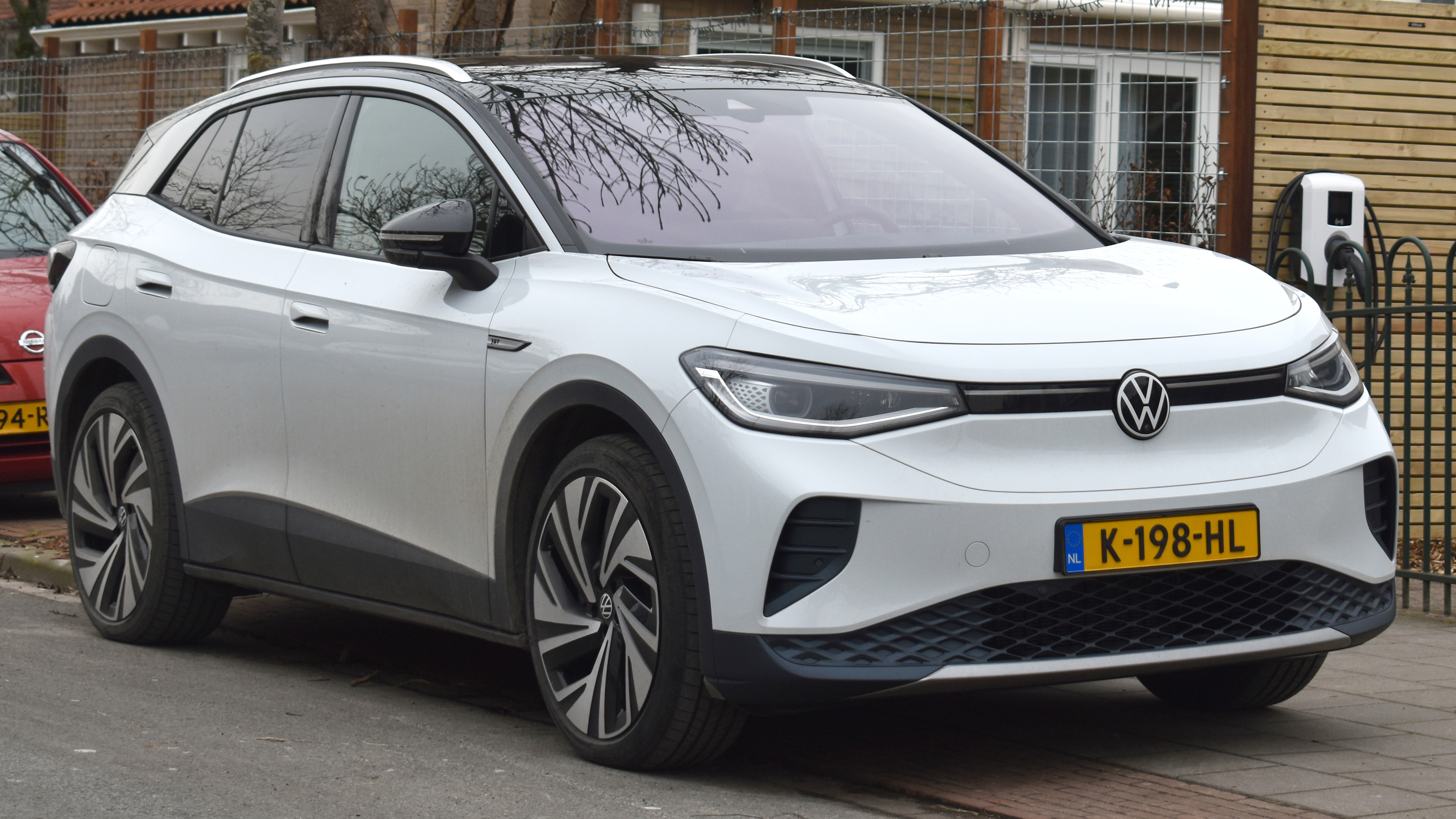
Today on the show, Volkswagen ends U.S. production of the ID.4 electric crossover.
Tesla is reportedly developing a smaller, cheaper SUV and cars.com lays off 11% of its workforce.
Plus, we'll get a preview of this year's automotive news top 150 dealership groups.
We want to be the best supplier to the customer we can be. We want to be the absolute best employer
to the employee we can be. And if we do those three things, eventually we'll get taken care of.
Let's run through all the news you need to know to keep up in the auto industry.
Volkswagen is ending ID.4 production in Chattanooga mid-April.
It's another sign the EV market is hitting the brakes after federal tax credits ended.
The company says a future ID.4 is still in the cards for North America,
but for now, they're not saying when or where it'll be built.
Instead, VW is doubling down on what it's actually selling, the Atlas.
The redesigned 2027 model launches this summer as the automaker shifts to higher volume vehicles
that can sustain growth. We'll have more on this story in a minute with our own Jack Wallsworth.
Meanwhile, Tesla is developing a new, smaller, cheaper electric SUV. That's according to
four people familiar with the matter who spoke with Reuters. The compact SUV would be about 14
feet long, noticeably shorter than the Model Y. And here's the key part. Tesla wants to price it
substantially lower than the Model 3 sedan, which starts at $37,000 in the U.S.
Three sources say production would happen at Tesla Shanghai factory, but don't expect to see it this
year. And Cars.com is laying off about 11% of its workforce. It's part of new CEO Toby Hartman's push
to streamline the company. The cuts hit management especially hard, about 20% of the jobs being
eliminated are management positions, including two executive roles. The company is also flattening
its reporting structure to speed up decision making. Cars.com says the restructuring will save
$25 to $30 million a year starting in 2027. It plans to finish the layoffs early in the second
quarter. And those are today's headlines. You can find more details on all those stories at
autonews.com. Joining me now to talk about the ID for production halt is our own Jack Wallsworth,
who covers Volkswagen Group and its brands for us at Automotive News. Jack, welcome back to Daily
Drive. Hi, Kel. Good to be here. All right, Jack. So VW says a future ID for is still planned. How
realistic is that given what we're seeing across the industry right now? Yeah, I would say it's
very realistic. You know, it's worth remembering that in this moment, EVs in the U.S. aren't super
popular, but Volkswagen, of course, is a global company. They sell the ID for other markets.
It's also made in Germany. Our colleagues at the local have reported that ID for will get
facelifted this year and also will become the ID Tiguan because Volkswagen is changing their
their naming strategy. So I think further down the road, it seems plausible that the next iteration
of the ID for or the ID Tiguan will come to the U.S. You know, there are some pockets in this
country where EVs are popular, like where I live in Seattle, I see ID force all the time that
they're fairly fairly common. And I would imagine Volkswagen would probably like to keep some of
those customers in the brand fold. When and how that looks is the big question, you know, it might
be kind of a longer wait, you know, they're importing a vehicle from Germany, it's probably not the
best timing given the whole tariff situation. So maybe it's something that happens down the road.
Volkswagen hasn't said where that future ID for will be built. It seems unlikely that they would
bring production back to the U.S. because of the volumes are so low. But again, you know, it's kind
of a wait and see. But I would be more surprised if it was gone for good than it coming back,
I guess, as I would put it. The workers in Chattanooga recently ratified their first ever
UAW contract. Now any word on if that has anything to do with this decision? And what does this mean
for the Chattanooga plant and its workers? Yes, so Volkswagen in their comments yesterday, it was
very clear that this was about, you know, focusing on higher volumes like the Atlas, which was just
redesigned and also acknowledging that the EV market is very challenged. So I took that as
this had nothing to do with the union vote. You know, one thing that is interesting is
back when the tentative agreement was announced, the UW noted that between Volkswagen's most recent
proposal and the tentative agreement, they the UW was able to add some language that there was some
future product commitments. And that was something that Volkswagen did mention when this was announced
that they are looking for pathways to add additional main plates to Chattanooga.
So long story short, I think longer term, this could probably be a good thing for Chattanooga
and the people that work there, because in theory, if they're adding another name plate,
it's going to be something that's built in higher volumes, that's more in demand, that probably
means busier lines, more shifts, things like that. It's probably not great right now, because some
people probably have to get moved around within the plant. And the UW did point out that workers
becoming UW members probably saved some jobs or saved people from getting what they called left
behind. So, you know, short term, probably not great when the plant loses a product, but longer
term, if it is replaced with something that's higher volume or something that's more profitable,
that's probably when for Volkswagen, the UW and the people that work in Chattanooga.
Perfect. Jack, thank you so much for joining me.
Yep, anytime.
Coming up, we'll preview this year's automotive news top 150 dealership groups. That's next on
Daily Drive. Are you a dealer creating a workplace culture your employees are proud to be part of?
Applications are now open for the 2026 automotive news best dealerships to work for program. This
isn't just an award, it's a chance to get real insight into what's working at your dealership
and where you can improve. And we've expanded the categories this year, recognizing everything from
technician experience and leadership development to AI enablement and employee retention.
The registration deadline is April 17th. Find out more and apply at autonews.com.
Running a dealership today isn't just about finding the right cars. It's about finding the right cars
consistently, efficiently and at the right price. While the market keeps shifting around you,
inventory management has become more complex. Vehicles come from more sources, margins are
tighter and every buying decision carries more risk than it used to. Yet too often,
inventory decisions are still made with fragmented data, disconnected tools and limited visibility
into what's actually working. The most successful dealerships are approaching inventory differently.
They're managing it as a system, not a series of one-off decisions. They're looking at market
data, demand signals, pricing and acquisition opportunities together. So every move is more
informed and more intentional. When inventory is managed end-to-end, teams spend less time reacting
and more time acting. They can see what's selling, what's stalling and where the next opportunity
is coming from. That clarity helps reduce aging, improve turn and protect profitability.
The right vehicles are out there. The difference is having a smarter, more connected way to find
them, price them and move them. Learn how dealerships are rethinking inventory management with the auto
and what a more confident, data-driven approach can do for your business.
Welcome back to Daily Drive. I'm Kellan Walker.
Every year, Automotive News ranks the top 150 U.S.-based dealership groups by new vehicle
retail sales. Our own Rudy Shorke and Riley Hodder previewed this year's list,
which you'll be able to find on AutoNews.com and the Automotive News print edition next week.
Every year, Automotive News ranks the top 150 U.S.-based dealership groups by new vehicle retail
sales. Our top 150 package offers a snapshot into these groups, but this year, we did more than
just tell you where groups landed on the list. The top 150 dealership group package is about
what changed, what the data reveals and what those shifts may say about the auto retail market.
Alongside the rankings, we at Automotive News take a look at some of the biggest themes behind the
list. This year, those themes included competition, consolidation, store growth, and the different
ways dealership groups are driving performance. The rankings are the starting point, but we go
deeper into the stories behind the numbers. This year's data showed that adding stores was not the
only path to growth. Some dealership groups increased new vehicle sales without significantly
changing their store counts. That tension is one of the key storylines running through this year's
package. We also take a look at how groups compare in different ways. We go beyond overall size and
help show how dealership groups are performing at the store level. The dealership leaders that
we interviewed for this year's package talk about how they approach performance as a product of
culture, consistency, and long-term thinking, not just scale. We want to be the best supplier to
the customer we can be. We want to be the absolute best employer to the employee we can be. And if
we do those three things, eventually we'll get taken care of. Brian McCafferty is the owner of
one automotive. He spoke with her own John Hutter. Well, so it's this focus on believing in those
principles, never wavering from them ever. And I mean, never, ever. My next door neighbor comes
in, buys a car. He pays when everybody else is paying. We say we're never going to charge over
MSRP for a car. COVID comes. We get a GRMN. It's one of a couple hundred cars on the planet.
We're not charging over sticker for the car. But can I give you this as an example?
One of my favorite examples. The GRMN came out and everyone's like, well, what are we going to do?
What are we going to do? We're leaving 20 grand on the table. And actually, my guys don't even
think like that. My guys are like, you know, how do you want to handle this? And I'm like,
why don't we invite the street racing crowd into our store? Let's have, let's have an event
where we invite the guys that would want to buy this car and let's have a raffle and whoever
wins the raffle gets to buy it for MSRP. So we had hundreds of people home to this car show.
And there were eight guys that put their name in a hat that said, hey, if I can buy this for MSRP,
I'll buy it right now. Yeah. And put the name in the hat, pulled the name out. The guy bought it,
traded it in a car. We sold his trade on the spot. We sold, we sold like eight other cars to
people that were there. They were just blown away that,
John, they're just blown away that in this world right now, there's something real
and authentic. And I tell you what, I have a team that is so bought into what we do that
what I always preach to my guys is that if we can provide this unique experience
to the factory, to the customer and to the employee,
we will achieve a level of sustainability in our customer base that few others have.
That's just one example of how some groups are defining success in their own terms
and why this package is worth looking beyond the list itself. Our reporting also raises a
broader question, how much growth comes from getting bigger and how much can come from execution
at the store level? Things like consolidation or things like that in the market,
not really a concern or anything like that. Dude, every time a guy gets bigger, he gets weaker.
The bigger everybody gets, they have to manage to the lowest common denominator.
I get to hand pick excellence. So I can pick the best guy in the world
and explore his potential with him versus, hey, I just need you to suck and be mediocre
so nobody else feels bad and we don't rock the boat because if you become smarter than
the guys at corporate, that's a threat. Our reporting also raises a broader question,
how much growth comes from getting bigger and how much can come from execution at the store level?
That's one perspective, not a universal rule, but it speaks to one of the debates we explored
in this year's coverage. This conversation is more important than ever as the industry
continues to consolidate. We also highlight dealership groups that emphasize long-term
customer relationships, service and operating discipline as part of their performance.
Those voices show what some operators believe drives strong results over time
and what might have driven the changes you see in our top 150 list.
So is there a particular part of your guys' operation that you feel is really strong from a
revenue perspective? I think that what takes us apart from other automobile leaderships
is that I think that we have great people, outstanding people that do not look short-term,
but we're always looking long-term, long-term answers, long-term relationships. So
yesterday happened maybe four years ago and tomorrow happened maybe three years ago,
but it was part of the history of the company and the commitment for customer relations
and all of that things. We're human nice people, so we'd like to deal with human nice people.
And I think that might be overtaken, but I think that we're probably the only Toyota dealer
in for the area that has won the JD Power's excellent or Diamond Award for the last seven years.
But that was not hard for us because that's the way that we do business. We like to make friends,
we like to establish relationships. Our sales team, they're not salespeople, they're
account relationship managers. So we want to be next to those customers life, we want to be able
to help them out, we want to invite them to come and throw by and drink free coffee or whatever.
And that's our forte. The companies that probably sell more than we do,
but we don't want to be the biggest, we just want to be the best.
That mindset appears throughout this year's rankings. Many of our top 150 dealers believe
performance is shaped not just by size, but by consistency, customer retention, and long-term
execution. Those strengths show up especially clearly in service and customer loyalty in
some cases. So another metric that you guys also performed really well on was revenue per store.
Obviously, new sales drive revenue, but what other areas are really strong for you guys in
terms of revenue? I think that we're very strong with service. We have a lot of customer loyalty.
We have a lot of service that we have taken out of other same brand dealers.
And again, it goes down to the way that we treat people. One of our philosophers in service area,
and again, all of these are very simple, is that we look at services like going to the dentist.
You want to get in and out fast, you want it not to hurt, and if you're coming in for a clingson,
there's no need to put implants, which was the philosophy that still happens in the industry,
and we're honest, hardworking family company. We like to do what's right, but it's usually service.
Beyond the rankings and analysis, we also take a look at how dealership groups can be considered
for the top 150 list, and what goes into the reporting behind it. That gives readers a behind
the scenes look at how the project comes together each year. Taken together, the package offers a
broader view of the dealership's landscape right now, from the rankings themselves to the growth
strategies, competitive pressures, and operating approaches shaping the market. This is just a
taste of some of the themes behind this year's top 150 dealership groups package. For the full
rankings, deeper analysis, interactive tools, and additional reporting, visit autonews.com.
You can find the 2026 automotive news top 150 dealership groups list next week,
and join us for a live talk about the list at 1pm Eastern time on Monday, April 13th.
That's daily drive for today. I'm Kellan Walker. Thanks to automotive news executive producer Jake
Neer, as well as our own Jack Wallsworth and Mark Homer for their reporting for today's podcast.
You can get the latest news on auto retail, Volkswagen's EV strategy,
and everything happening in the auto industry at autonews.com. Come back over the weekend for our
weekend drive edition of the show, our own Larry Veliquette and Michael Martinez talk about the
week's biggest news stories, including whether Buick's plan to put out a new sedan could mean
a broader comeback for that segment in the U.S. It was a stupid decision to get out of it in the
I'm talking about GMN Ford and the others that abandon the segment because you look there is
still plenty of consumer demand. We'd love to hear from you. Let us know what you think of the show
and the topics we cover today. Send us an email at dailydrive at autonews.com or leave us a voicemail
at 313-444-2774. And if you enjoy the podcast, remember to like, leave a review, and subscribe
so you never miss an episode.
About this episode
NTSB investigators are digging into fatal crashes tied to Ford’s BlueCruise, with Kristin Poland explaining how hands-free level 2 rules and camera-based driver monitoring fell short in those cases. The show then pivots to industry shakeups: Volkswagen ends U.S. ID.4 production in Chattanooga, while Tesla reportedly develops a smaller, cheaper SUV aimed below the Model 3 price point. Cars.com cuts about 11% of staff under a streamlining push. The episode also previews Automotive News’ Top 150 dealership groups, focusing on growth strategies beyond store count—culture, consistency, and long-term customer retention.
A look at the trends and changes in Automotive News’ upcoming 2026 top 150 dealership groups rankings. Volkswagen halts ID4 production in Chattanooga as EV demand slows. Plus, Tesla is reportedly developing a smaller, cheaper electric SUV for production in Shanghai.